Garuda Indonesia is rumored to be increasing the number of new aircraft in line with public interest for travel in and around Indonesia. Garuda Indonesia Director Irfan Setiaputra stated that the airline is targeting to increase the number of aircraft in its fleet from 61 to 120 by the end of the year.
He said that at this time the public is more interested in travel.
“We have a target of 120 aircraft by the end of the year in order to meet the needs of people who are currently having difficulty getting tickets,” he said at the IDX Channel Market Review event in Jakarta on Aug. 29. He also continued that occupancy on each flight had increased by 80%. Flights at convenient times to popular destinations are departing with load factors close to 98% with only very few seats left.
Allocation of Aircraft
Furthermore, Irfan stated that the additional aircraft will be allocated for domestic flights and destinations to Mecca. He hopes that domestic flights to certain areas which are usually only once a day can increase in time, and for international flights to Mecca not only from Jakarta. “We hope that those who do Umrah do not need to stop by again in Jakarta so they are not too tired and don’t spend a long time,” he concluded.
Funding Source and Its Impact
One of the things that Garuda Indonesia will do is buy 59 new aircraft to complement its current fleet. Currently, Garuda Indonesia and Citilink have 61 aircraft of various types.
Funds amounting to 7.5 trillion rupiah ($500 million) in the form of State Capital Participation (PMN) will be disbursed in the near future. This was conveyed by the country’s Minister of State Owned Enterprises Erick Thohir when delivering a statement in late August. By the end of the year, Thohir estimates that the number of Garuda Indonesia and Citilink’s fleet will be doubled compared to the current fleet.
“Garuda after the PKPU restructuring will begin to increase the number of its aircraft again, where currently Garuda and Citilink number only 61, at the end of the year it will reach 120,” he said.
With this addition, Thohir hopes that the price of national airline tickets can be reduced to become cheaper according to President Jokowi’s instructions. “We hope this balance can improve national ticket prices,” he continued. He also is seeking to ensure that the rental price of the new Garuda Indonesia fleet will be in accordance with the average global market rental price.
Thohir said that the plan could be implemented thanks to the success of Garuda Indonesia’s restructuring so that the corporation could move more healthily.
He said the government needed to maintain momentum of economic growth, which currently has reached 5.44%. One of them is by keeping the price of plane tickets more affordable so as to encourage the economy.
Putu Deny Wijaya was always an aviation enthusiast by heart, growing up in Indonesia where air transport is very vital. His first love is The Queen of The Skies, serving the trunk routes between Jakarta and Denpasar. He brought along this passion with him throughout college by conducting his bachelor study abroad in the Netherlands for the purpose of experiencing a nonstop 14-hour long-haul flight. For Putu the sky's the limit when talking about aviation. He hopes that he would be able to combine his passion for aviation and knowledge of finance at the same time.
Ethiopian Airlines Records Higher Profits, Expands Presence in Middle East
Ethiopian Airlines reported 79 percent revenue growth for its fiscal year that ended on July 30. According to Mamo Mihretu, the CEO of Ethiopian Investment Holdings, in a tweet, the state-owned airline recorded $5 billion in revenue this fiscal year, a growth of 79% over last year. Additionally, profits rose 90 percent to $937 million, despite headwinds from the deteriorating global economic outlook, rising costs and the global pandemic.
While the financial report document is not publicly available to glean more details from it, it is understood that Ethiopian Airlines will have transported more than 6 million international air travelers during the reporting period.
Founded in 1945, Ethiopian Airlines is one of Africa’s oldest and most trusted airlines. It has also remained one of the most profitable, especially since the pandemic disrupted global travel and the recent global energy crisis which sent the price of aviation fuel skyrocketing.
Kenya Airways — one of Ethiopian Airlines’ competitors — posted a loss of $82.4 million for its half-year ending June 2022. A recent forecast by the International Air Transport Association (IATA) predicts that African airlines will record net losses of around $700 million in 2022. Airlines recorded a revenue loss of $8.6 billion in 2021 and previously reported a staggering $10.21 billion revenue loss in 2020.
The Airline’s Middle East Network
To meet the soaring demand for air travel, various airlines are adding routes to beef up their schedules. Ethiopian Airlines recently confirmed plans to add Jordan to its Middle East network in September — becoming the ninth country served by the carrier in the region.
Flights from the airline’s Addis Ababa hub to Amman, Jordan’s Queen Alia International will begin on Sept. 19 and will operate three times per week. The airline plans to use the Boeing 737-800 to operate the 2,544km route.
Ethiopian Airlines Group CEO Mesfin Tasew said, “With the commencement of our new flight to Amman, passengers departing from/to the middle east can enjoy the extensive Ethiopian network worldwide with convenient connectivity and smooth transfer at Addis Ababa. Our new flight will also further strengthen the economic ties between Ethiopia and Jordan.”
The airline originally intended to start flights to Amman in July 2019, but the launch was initially delayed until October before being scrapped altogether. It then revived the plans in July 2021, saying flights would begin in August. However, the launch failed to materialize until this year.
Ethiopian Airlines will be the sole carrier to offer nonstop service between Ethiopia and Jordan once the route begins — with Amman becoming its 11th destination in the Middle East.
BMI British Midland was the last airline to serve the Addis Ababa-Amman, Jordan route in June 2012. The now-defunct carrier operated flights from London Heathrow’s Airport to Amman via Addis Ababa to Amman and back to London’s Heathrow Airport.
Ethiopian Airlines will serve Amman from Addis Ababa on Mondays, Wednesdays and Saturdays, departing from Ethiopia’s capital at 10:30 p.m. and arriving in Jordan’s capital at 2:05 a.m. the following day. The return service operates on Tuesdays, Thursdays and Sundays, departing Amman at 3:05 a.m. and arriving in Addis Ababa at 6:44 a.m.
Victor Shalton's love for aviation can be traced to when he was 11-years-old. As a seasoned aviation writer, he takes pride in providing the best aviation coverage around the globe and is passionate about advancing his skills in the aviation space. In addition, he loves travelling, writing, arts and while his speaking engagements have taken him around the world, he is proud to call Nairobi home.
Pipistrel Velis Electro electric aircraft.
(Photo: Pipistrel Aircraft)
Last week Icelandair, Iceland’s national airline, made the first flight in Iceland operated by an electric aircraft.
Participating in this event as the first passengers to fly on the 100% electric aircraft were the President and Prime Minister of Iceland. The aircraft used was a Pipistrel Velis Electro, license plate TF-KWH, from the Slovenian manufacturing company Pipistrel. The Velis Electro was the first two-seat, electric-powered aircraft ever certified, fully approved for pilot training in daytime VFR operations and whose dimensions are similar to the aircraft that flight academies use for flight training.
The plane will be used for flight training, but it is also expected that tourist flights with this electric plane in Iceland can be purchased and the experience of traveling in a zero-emission plane can be experienced.
These are the first steps on an important path toward more environmentally friendly aviation, and pilot training for these electric aircraft is seen as the first step in a broader transformation of the aviation industry globally.
Icelandair has set ambitious new targets to reduce carbon emissions, committing, in line with the entire aviation industry, to achieve net zero emissions by 2050, including setting a medium-term target to reduce the airline’s carbon emissions by 50 percent per operational ton kilometer (OTK – measuring carbon emissions against passengers and cargo carried) by 2030 compared to 2019 levels.
Iceland is a perfect country for the transition to electric aircraft due to its short domestic routes, location between Europe and North America, and access to green electricity in the country. Iceland generates 100 percent of its electricity from renewable sources: 75 percent from large hydroelectric plants and 25 percent from geothermal energy.
Safety Always Comes First
The safety standard for this type of electric aircraft is clearly the same as for “traditional” ones. As stated on the Pipistrel website, one battery pack is placed in the nose of the aircraft and the second behind the cabin. This ensures redundancy of the power source: if a battery fails, the malfunctioning one is automatically disconnected from the system. A single battery is capable of operating autonomously and has sufficient power capacity to sustain the ascent and continuation of the flight.
The Rafmagnsflug ehf. company, founded in late 2021 by Matthías Sveinbjörnsson and Friðrik Palsson, who had previously worked on importing this type of aircraft to Iceland, brought the first electric plane to Iceland with the goal of taking an initiative toward aviation energy exchange, training personnel in this new technology and making it known to the nation.
The event’s major sponsors come from aviation, airport operations, power generation, and tourism, such as Icelandair, Isavia, Landsvirkjun, and Hotel Rangá. Other sponsors include Landsbankinn, Geirfugl ATO, the Reykjavik Flight Academy and the Iceland Aviation Academy, along with Matthías, Friðrik and Herjólfur Guðbjartsson.
Vincenzo graduated in 2019 in Mechanical Engineering with an aeronautical curriculum, focusing his thesis on Human Factors in aircraft maintenance. In 2022 he pursued his master's degree in Aerospace Engineering at the University of Palermo, Italy. He combines his journalistic activities with his work as a Reliability Engineer at Zetalab.
The apron at Milan's Linate Airport (photo SEA Aeroporti Milano)
After over 20 years of limitations that prevented any flights to destinations outside of the E.U., Milan’s Forlanini Airport located in the suburb town of Linate will be subject to a new regulation imposing a perimeter rule similar to those regulating traffic at New York La Guardia and Washington National.
According to the new framework approved last week by the European Commission that will need to be translated into law by the Italian legislator, all destinations within 1500 kilometers (approximately 810 nautical miles) of great circle distance from the airport will be allowed to be served from Linate by direct flights.
New perimeter for Linate Airport (photo Aviazionecivile.it)
The European Commission however struck out an article in this proposal that required airlines serving Linate to stop selling itineraries to destinations that could not be served directly, therefore preventing them to use the airport for their hub-and-spoke networks feeding their hubs for their international services.
Until today, only destinations within the European Union (with the inclusion of Switzerland, which is considered part of the European Skies as far as commercial aviation is concerned) could be served from the airport, preventing non-E.U. airlines to even code-share on flights to and from Linate.
Some restrictions currently in place will also remain: the airport will maintain an artificial cap of 18 movements per hour and flights will only be operated by “single aisle” aircraft.
The Tale of Two Airports in Milan
Traffic at Linate started to be restricted in 2000, when the city built a new terminal at the old Malpensa Airport to develop it into a big international airport. However, Malpensa is almost 50 km (approximately 30 miles) away from the city center, and at the time there was no train connecting the airport to the city and the only highway leading to the new terminal was heavily congested. On the other hand, Linate is just 8 km from Milan’s business district and can be easily reached by bus or taxi.
Therefore, in order to facilitate the development of the new airport, the Italian Government started introducing limitations on which destinations could be served from Linate, imposing limits on capacity and frequencies. Throughout the year those restrictions have been progressively modified, but as Malpensa failed to deliver on its potential, Linate’s traffic kept being regimented by progressively less restrictive regulations.
In 2016 it was decided that frequencies and destination limitations were to be scrapped, but Linate had to remain dedicated to intra-E.U. traffic. The runway is not long enough to allow for long-haul flights and cannot be extended as it is located in a heavily populated area.
The problem came when the United Kingdom decided to leave the E.U., therefore placing London outside of the list of allowed destinations. London is by far the most profitable destination from Linate for ITA Airways, the Italian flag carrier detaining the rights to almost 70% of the slots at the airport. After selling most of its London Heathrow slots to generate cash, the then-Alitalia (now become ITA Airways) started operating up to three flights a day to London City Airport relying on their Embraer 170 aircraft that can operate from the constrained airport in East London.
This change in regulation is coming to save the possibility to connect Milan’s most convenient airport to London and preventing the need to relocate all flights to Malpensa.
The new regulation will to open up the possibility to serve other destinations in the U.K., Tunisia, Algeria and the countries outside the E.U. in eastern Europe all the way to Moldova and Western Ukraine.
Vanni fell in love with commercial aviation during his undergraduate studies in Statistics at the University of Bologna, when he prepared his thesis on the effects of deregulation on the U.S. and European aviation markets. Then he pursued his passion further by obtaining a Master’s Degree in Air Transport Management at Cranfield University in the U.K. followed by holding several management positions at various start-up carriers in Europe (Jet2, SkyEurope, Silverjet). After moving to Canada, he was Business Development Manager for IATA for nine years before turning to his other passion: sports writing.
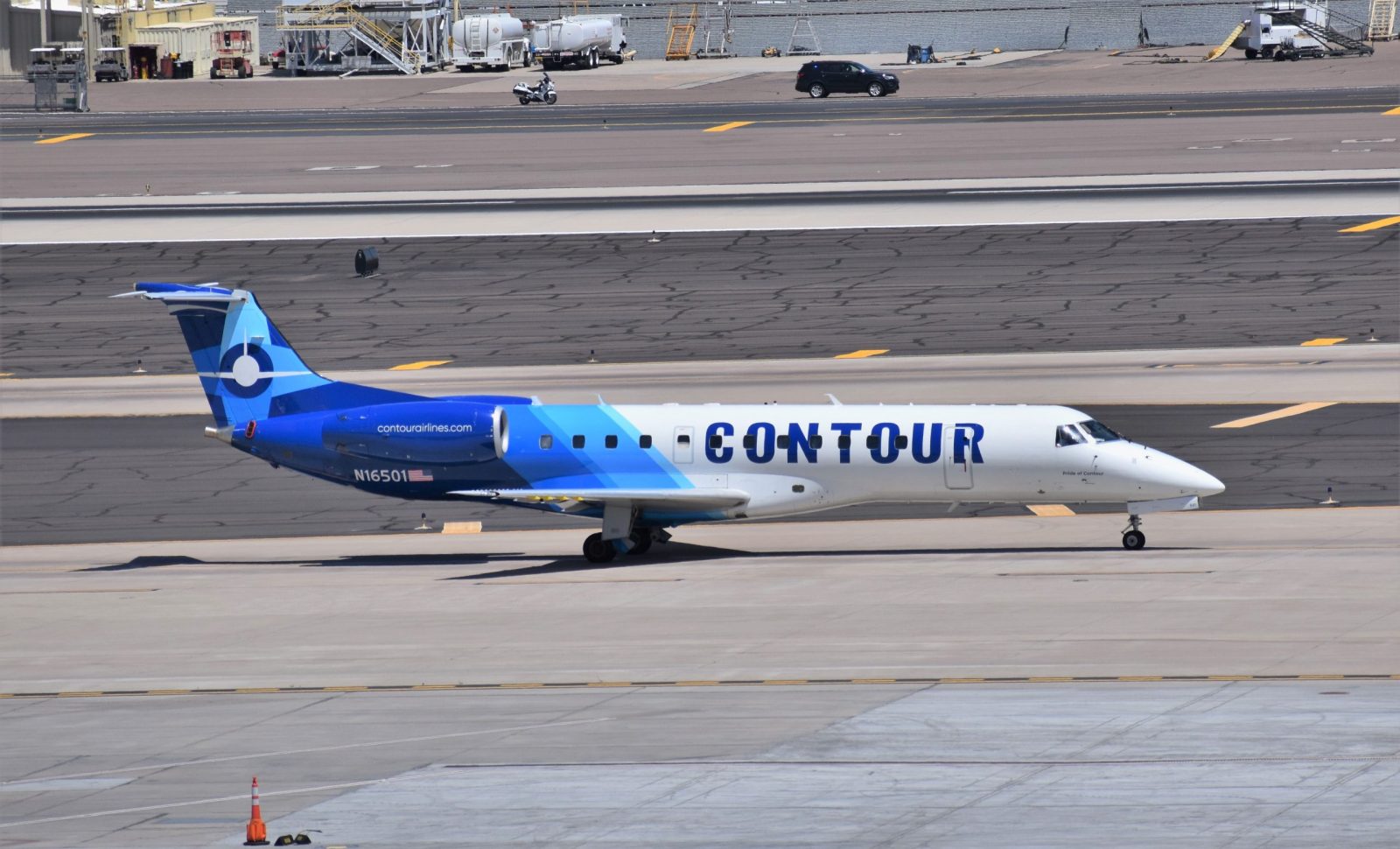
A Contour Embraer E135 nicknamed "Pride of Contour." (Photo: AirlineGeeks | Joey Gerardi)
SkyWest has had a rough couple of months, they requested to end 31 EAS contracts in the spring of 2022 and have combined about a dozen other communities into tag flights. It is seen in the industry that when one airline has its troubles, other airlines will step in and reap the reward. This was seen back in 2018 when Great Lakes Airlines collapsed, Boutique Air and SkyWest took over most of the EAS contracts from that airline; now it’s another airline’s turn.
A United Express CRJ-200 arriving into Chicago O’Hare (Photo: AirlineGeeks | Joey Gerardi)
Out of the 31 EAS communities that SkyWest has requested to terminate, 11 have officially chosen a new airline up to this point, and seven of them have gone to Contour Air. Plattsburgh and Ogdensburg in New York state were the first two and were chosen early on in the process and the carrier has already started serving both communities from Philadelphia.
The rest of the new Essential Air Service and Alternate Essential Air Service contracts are below and include what service they will get and when they will start. All flights are scheduled to operate on the carrier’s 30-seat Embraer E135’s.
A Contour Embraer E135 nicknamed “Pride of Contour” (Photo: AirlineGeeks | Joey Gerardi)
Fort Leonard Wood, Missouri – TBN
This community is very familiar with Contour Air and has been served by them in the very recent past. SkyWest hasn’t even been in this community even a year as they had started service to the this airport in October of 2021. Even though this is technically a resumption, it is counted as a ‘new service’ because the contract was awarded to a different airline since the last time they flew here.
Contour Air will begin flights to Fort Leonard Wood on Oct. 1, 2022, and will fly 12-weekly flights to Nashville. These flights will operate under regular EAS at a rate of $4,449,693 for the first year, $4,761,172 for the second year, and $5,094,454 for the third year, with the contract running until Sept. 30, 2025.
Altoona, Pennsylvania – AOO
Altoona actually isn’t part of the mass SkyWest termination request and is the only community in this article with this being the case. However, it was part of a termination request by San Francisco-based Boutique Air, which wanted to terminate its contract due to rising costs and had plans to re-bid for the same service but at a higher cost. The airline did re-bid for a higher cost like they said they would, but they lost, and the community looked for a different option and went with Contour instead.
This is an Alternate Essential Air Service city, or AEAS, meaning the government pays the community through a grant, and the community then pays the airline directly for service to their community. It allows for more flexibility on the part of the airline and they can alter flights based on demand. It also means they don’t have to file for an ‘alternate service request’ if the airline needs or wants to switch service.
Altoona flights will operate to Philadelphia, and although the amount of flights isn’t specified in the document the carrier’s website is showing about 12-weekly flights. The contract will go until Sept. 30, 2024 with up to $4,280,002 being paid to the airline each year. This is another interesting aspect, the contract also gives the option for CRJ-200 service in addition to Embraer E135 service, given the airline doesn’t currently operate CRJ-200 in a 30-seat configuration this seems unlikely.
Lewisburg, West Virginia – LWB
This community starts on Nov. 1, 2022, and will receive 12-weekly flights to Charlotte. This is an EAS contract and will last until Oct. 31, 2025 at a subsidy rate of $5,971,353 for the first year, $6,389,348 for the second year, and $6,836,602 for the third year. This will be Contour Air’s third airport in the state of West Virginia.
Shenandoah, Virginia – SHD
This community will also start Contour service on Nov. 1, 2022, and will receive 12-weekly flights to Charlotte. This city will be almost identical to Lewisburg with the contract end date also being on Oct. 31, 2025. The EAS contract and subsidy rates are also very similar at $5,415,033 for the first year, $5,794,085 for the second year, and $6,199,671 for the third year. This will be Contour Air’s first airport in the state of Virginia.
Clarksburg, West Virginia – LWB
This community starts on Dec. 1, 2022, and will receive 12-weekly flights to Charlotte. This is an EAS contract and will last until Nov. 30, 2025 at a subsidy rate of $5,511,849 for the first year, $5,897,679 for the second year, and $6,310,516 for the third year. This will be Contour Air’s fourth airport in the state of West Virginia.
Paducah, Kentucky – PAH
This community starts on Dec. 6, 2022, and will receive 12-weekly flights to Charlotte. This is an EAS contract and will last until Nov. 31, 2025 at a subsidy rate of $5,554,654 for the first year, $5,943,479 for the second year, and $6,359,523 for the third year. This will be Contour Air’s first airport in the state of Kentucky.
The Facts
Paducah, Clarksburg, Lewisburg, Shenandoah, and Fort Leonard Wood will be Contour Air’s first group of EAS communities as every other city they operate to is an Alternate Air Service contract. This is due to the fact that Contour operates as 14 CFR Part 380 Public Charter, and one of the rules of EAS contracts is the carrier must be ‘scheduled air transportation’. This is because Contour Air is technically called ‘Corporate Flight Management Inc. a/b/a Contour Aviation’ and that’s how they have been operating as a public charter to their current cities for this long.
For all of their contracts, they will be getting a waiver from the DOT 49 U.S.C. § 41732(a) which states that “that basic Essential Air Service (EAS) is scheduled air transportation”, meaning they can now operate these flights as 14 CFR Part 135 under the name Contour. Behind the scenes, these two airlines will be different in terms of regulations and rules as they will be operating under different DOT parts, but from the passenger side, these flights will look identical.
Contour does also have a baggage and interline agreement with American Airlines, so the communities that will offer flights to the Charlotte and Philadelphia hubs do have a lot to gain from this transition as both are significant American hubs. Nashville doesn’t have a huge American operation, but passengers can still connect to American hubs from there and beyond that with two stops.
These new Contour routes will bring the total number of EAS/AEAS contracts for the airline up to 16, which is now more than the number of Delta Connection branded SkyWest operated contracts which currently sits at 15. It also jumps Contour up to the third largest EAS Airline, behind United Express-branded EAS which stands at 29 services, operated under a mixture of SkyWest and CommutAir, and Massachusetts-based Cape Air which sits at 18.
There is still a lot that isn’t certain in the EAS community realm. A hand full of SkyWest EAS communities still haven’t had new carriers awarded officially by the DOT, and with Boutique Air and Cape Air both also posting termination requests for a few communities, there are a few airlines that still look to gain ground, or in this case sky, over the coming months and into the new year. Contour Air is definitely going to be one of these airlines to watch, as I am certain they will gain at least one or two more additional cities by the end of the year
The map below is Contour Air’s current route map in the eastern part of the United States, and includes routes that have been announced before, or on Sept. 3, 2022. It does not include their two routes out west, which are Phoenix to Page, Ariz.; and Oakland to Crescent City, Calif.
Contour Air’s Eastern US Route Map as of Sept. 3, 2022 (Map: AirlineGeeks | Joey Gerardi)
All flights and schedules in this article are subject to change, and all information was taken from publicly accessible documents on regulations.gov or the carriers’ website.
Joey has always been interested in planes for as long as he can remember. He grew up in Central New York during the early 2000s when US Airways Express turboprops ruled the skies. Being from a non-aviation family made it harder for him to be around planes and would only spend about three hours a month at the airport. He was so excited when he could drive by himself, the first thing he did with his driver's license was get ice cream and go plane spotting for the entire day. He graduated from Western Michigan University in 2022 with a B.S. in Aviation Management & Operations and a Minor in Business, and currently works for a major airline in his hometown.
This past week, Emirates announced an expansion of their premium economy offering, making it available across more routes. Premium Economy was initially not a focus for the airline, but over the years its popularity has been growing and airlines have quickly come to see the dollar signs tagged to it.
Emirates dove head first into Premium Economy with an initial debut of the cabin on flights to London, Paris and Sydney. Now, the airline is expanding its Premium Economy offering service to five more cities in its route network starting in December.
The airline will bring its premium economy cabin and service to the United States on December 1 to New York’s JFK airport with its newly retrofitted Airbus A380 aircraft. Additionally, the carrier will start offering the cabin on flights to San Francisco starting next year on February 15.
Flights to Auckland, New Zealand will have the Premium Economy Product offering starting on January 15.
Then Melbourne on EK 406 and EK 407 on February 1, 2023. This would be the second destination in Australia where premium economy is offered after Sydney.
The expansion is rounded off with the addition on Singapore starting on March 1, 2023 and operating as EK 354 and EK 355.
Along with the new premium cabin offerings on the routes mentioned above, there will also be a further expansion to follow.
Sydney: Emirates will offer premium economy on all flights to the city starting on December 15, 2022
London: Heathrow will see its third daily service with premium economy on January 1, 2023 on EK 005 and EK 006.
New York: JFK will have a second A380 offering premium economy on EK 201 and EK 201 starting March 15 2023
Aircraft Retrofit Completion Expected by 2025
This is all part of a massive multi-billion dollar fleet retrofit program that will overhaul a significant portion of the fleet. From November, the airline will start cabin interior upgrades and retrofits of 67 Airbus A380 and 53 Boeing 777 aircraft. The entire retrofit will is expected to be completed by 2025 and will include the installation of nearly 4,000 premium economy seats, upgrades to over 5,000 business class seats, and the refurbishment of 728 first-class suites.
Alongside the cabin upgrades, the airline is also revamping onboard service offerings with the addition of unlimited caviar in first class. New menus across all cabins with a focus on adding vegan options for flyers to sample.
All coming at a time of a revival in demand, Emirates is close to recovering 75 percent of its pre-pandemic A380 network. The airline plans to serve close to a third of its network with A380s with service to cities like Houston, Bengaluru, Perth, Auckland, Hong Kong, and Kuala Lumpur.
The airline is focusing on using the recovery from the pandemic as a time to continue to push boundaries on offerings and grow into new and existing markets.
Hemal took his first flight at four years old and has been an avgeek since then. When he isn't working as an analyst he's frequently found outside watching planes fly overhead or flying in them. His favorite plane is the 747-8i which Lufthansa thankfully flies to EWR allowing for some great spotting. He firmly believes that the best way to fly between JFK and BOS is via DFW and is always willing to go for that extra elite qualifying mile. Hemal's opinions are his own and do not reflect those of his employer.
Allegiant and Viva Aerobus Submit New Joint Venture Proposal to DOT
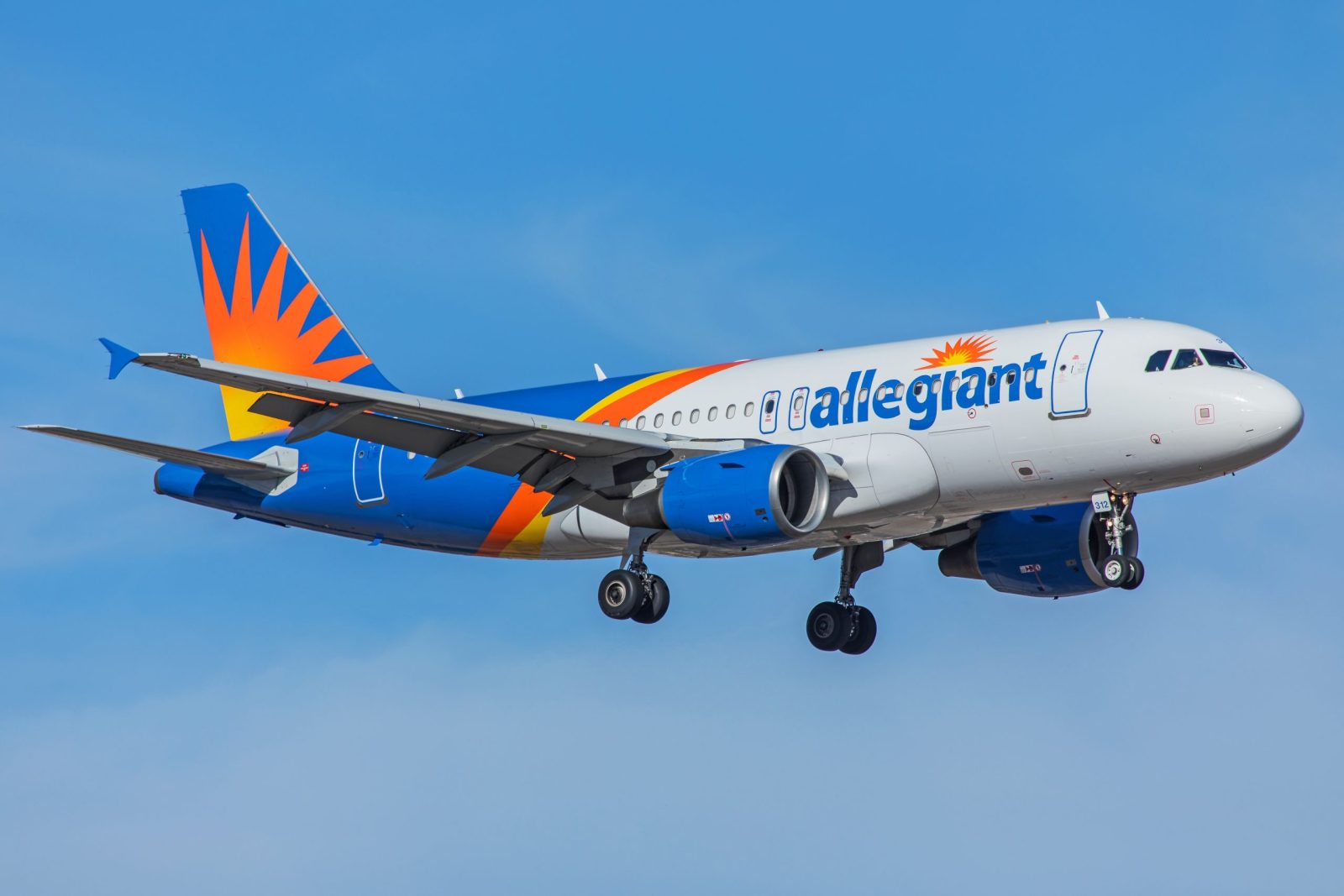
An Allegiant A319 in Las Vegas. (Photo: AirlineGeeks | William Derrickson)
Allegiant and Viva Aerobus have submitted to the U.S. Department of Transportation (DOT) under Docket DOT-OST-2021-0152, a new proposal to expedite the approval of their cross-border Joint Venture.
The two airlines are requesting expedited JV approval by the fall and to begin their partnership by the first half of 2023. Both airlines will start new routes once Mexico is restored to Category I status, thus providing new nonstop and affordable services to the Aztec country.
This partnership of the two low-cost carriers seeks to expand travel options between the United States and beach destinations in Mexico, not to coordinate schedules to connect passengers between North and South America.
Once Antitrust Immunity (ATI) is obtained, both operators seek to expand non-stop routes between both countries, thus offering greater point-to-point travel options, unlike legacy airlines, which offer a large part of their flights for connecting passengers.
The proposed alliance between the two companies will increase seat capacity in the market and increase the passenger load factor between the U.S. and Mexico’s vacation markets, as well as create 900 new jobs during the first two years of the JV’s approval.
The Allegiant and Viva Aerobus partnership will not monopolize the market between the two countries either, the JV between Delta Air Lines and Aeromexico has a large share of the cross-border segment; on the other hand, American and United are the largest air carriers between Mexico and the United States.
Route Proposals
Allegiant proposes to initiate several non-stop services to Mexico from multiple cities in the U.S.: Austin, Baltimore, Chicago, Cincinnati, Fresno, Fresno, Houston, Las Vegas, Los Angeles, Memphis, Nashville, Newark/New York, Nashville, Rockport, San Antonio, South Bend, St. Louis and Southwest Florida.
The Nevada-based low-cost airline plans to initially share routes with Viva Aerobus being the operator and Allegiant part of Marketing, because the U.S. company will make an estimated investment of $15 million to improve its computer systems and to start its own flights to Mexico in 2025, with the announcement of new routes in 2024.
Viva Aerobus’ initial plans include launching non-stop services to the United States from several Mexican cities: Tampico, Queretaro, Torreon, Merida, Guadalajara, Mexico City, Chihuahua, Veracruz, Monterrey, Bajio and Morelia, thus offering a wide range of cross-border vacation destinations to the U.S. at affordable prices.
The Mexican low-cost airline also responded to the DOT that it has no common shareholder with Colombian carrier VIVA, ruling out any plans to coordinate operations in South America.
If the JV is approved both companies request the relocation of their airport facilities to select airports: Cincinnati (CVG), Chicago (MDW), Las Vegas (LAS), Nashville (BNA), Orlando – Sanford (SFB), Mexico City (MEX), Monterrey (MTY), Cancun (CUN), Puerto Vallarta (PVR) and Los Cabos (SJD).
Effects of Proposals
Both airlines are seeking major benefits from terminal co-location: significant cost savings from sharing terminal facilities, gate and ground handling services, joint purchasing and other efficiencies of scale.
Allegiant, with the implementation of the Joint Venture, seeks to lend expand its operations in the most congested Mexican airports: Mexico City (MEX) and Cancun (CUN) both destinations with strong demand from U.S. leisure passengers, with the partnership with Viva Aerobus it will be able to enter these markets with ease and operate with convenient slots.
The U.S. company ruled out operating in the Felipe Angeles International Airport (NLU) and Toluca (TLC) due to the lack of public transportation and other infrastructure limitations, making its operation not viable. The company mentioned that other U.S. operators offered flights to TLC and withdrew from the market in a short period of time.
Puerto Vallarta (PVR) also has slot limitations on certain days of the week, this restriction limits airlines from making substantial changes to their flight schedules. The partnership will allow Allegiant to take advantage of Viva Aerobus’ slots and coordinate schedules to optimize the use of slots.
The partnership that Allegiant and Viva Aerobus have agreed to is a long-term alliance, the applicants believe that the ATI for 15 years or more is necessary to enable and encourage a necessary investment in new aircraft, digital platforms and maximization of operations that will allow for a favorable expansion in competition on multiple routes between the United States and Mexico.
This article was written by Rainer Nieves Dolande for Aviacionline.
Benjamin has had a love for aviation since a young age, growing up in Tampa with a strong interest in airplane models and playing with them. When he moved to the Washington, D.C. area, Benjamin took part in aviation photography for a couple of years at Gravelly Point and Dulles Airport, before dedicating planespotting to only when he traveled to the other airports. He is an avid, world traveler, having been able to reach 32 countries, yearning to explore and understand more cultures soon. Currently, Benjamin is an Air Transporation Management student at Arizona State University. He hopes to enter the airline industry to improve the passenger experience and loyalty programs while keeping up to how technology is being integrated into airports.
U.S. Department of Transportation Releases Airline Customer Service Commitments Dashboard
American's Boeing 737-800 aircraft at Washington Reagan National Airport (Photo: AirlineGeeks | Ryan Ewing)
The U.S. Department of Transportation (DOT) released a new dashboard to advise airline passengers of the policies airlines have in place as a result of flight disruptions from circumstances within the airline’s control. Two weeks ago, U.S. Transportation Secretary Pete Buttigieg had written to the chief executives of U.S. airlines and advised of the impending release of the dashboard. Airlines were encouraged to make any amendments to policies prior to the release of the dashboard. Accessibility to the dashboard comes ahead of the U.S. Labor Day holiday that traditionally signals the end of summer.
The airlines featured on the dashboard are Alaska Airlines, Allegiant Air, American Airlines, Delta Air Lines, Frontier Airlines, Hawaiian Airlines, JetBlue Airways, Southwest Airlines, Spirit Airlines and United Airlines.
Buttigieg stated, “Passengers deserve transparency and clarity on what to expect from an airline when there is a cancelation or disruption. This dashboard collects that information in one place so travelers can easily understand their rights, compare airline practices and make informed decisions. The department will continue to support passengers and to hold airlines responsible for adhering to their customer obligations.”
Aviation has seen widespread disruptions over the northern hemisphere summer period as the industry struggled to restart against pent-up passenger demand after the lifting of travel restrictions. CNN reported Thursdays that data from the flight tracking site FlightAware shows that an estimated 55,000 flights or 2.2 percent of flights will have been canceled in the U.S. this summer with an additional 23 percent delayed. By comparison in the summer of 2019, there were about 50,000 flight cancellations or 1.7 percent of flights and a further 18 percent of flights were delayed.
According to the Department for Transportation, the airlines featured on the dashboard account for ‘approximately 96 percent of the domestic scheduled passenger air traffic.’ Passengers can find out at-a-glance what ten domestic carriers and their regional operating partners will offer in the event of ‘controllable delays’ and ‘controllable cancellations.’
The DOT defines a controllable flight cancellation or delay as “essentially a delay or cancellation caused by the airline.” Examples include maintenance or crew problems, cabin cleaning, baggage loading and fueling.
In addition to providing passengers with the two dashboards, the DOT’s “Airline Customer Service Dashboard” site provides links to the customer service plans of all ten airlines.
Buttigieg said to CNN, “I understand that you’re never going to have zero cancellations. There is always going to be a storm somewhere, a surprise somewhere, an issue somewhere. But we need a stronger system. And we’re expecting airlines that collect revenue by selling tickets to be prepared to service the tickets they sell.”
John has always had a passion for aviation and through a career with Air New Zealand has gained a strong understanding of aviation operations and the strategic nature of the industry. During his career with the airline, John held multiple leadership roles and was involved in projects such as the introduction of both the 777-200 and -300 type aircraft and the development of the IFE for the 777-300. He was also part of a small team who created and published the internal communications magazines for Air New Zealand’s pilots, cabin crew and ground staff balancing a mix of corporate and social content.
John is educated to postgraduate level achieving a masters degree with Distinction in Airline and Airport Management. John has held the positions of course director of an undergraduate commercial pilot training programme at a leading London university. In addition he is contracted as an external instructor for IATA (International Air Transport Association) and has been a member of the Heathrow Community Fund’s ‘Communities for Tomorrow’ panel.
Regional Express Receives 7th 737 As Australian Industry Turmoil Continues
Rex's seventh Boeing 737-800NG after arriving in Brisbane, Australia. (Photo: Regional Express)
Australian regional airline Regional Express has made further headway in its growth by receiving its seventh Boeing 737-800NG. Rex, as the airline is more commonly known, made the announcement Aug. 31, after it took delivery of the aircraft the previous evening.
Rex’s newest Boeing flew into Brisbane, Australia from Montpellier, France after undergoing a scheduled heavy maintenance check before departure. With its new registration VH-MFM, the aircraft is slated to commence service with Rex sometime in early September, and will enable the airline to increase its services on the so-called “Golden Triangle” between Sydney, Brisbane and Melbourne.
In a statement, Rex Deputy Chairman John Sharp said their “seventh aircraft allows us to meet the ever-increasing demand for Rex’s services given the shocking reliability of both Qantas and Virgin Australia.” He further added that the demand is so great that “we are urgently looking for another two Bowing 737-800NGs,” with the goal of deploying the aircraft by somewhere between the second and third quarters of this financial year.
Australian Airline Crisis
Australia’s airline industry continues to face a crisis of staff shortages and sick flight crew. Since the nation’s domestic and international borders were opened earlier this year, Australian airline giant Qantas has copped the heaviest criticism, with its CEO Alan Joyce last week apologizing and attempting to redeem the airline by offering its frequent flyers 50 Australian dollar ($34) vouchers for use on its flights.
The latest government statistics paint a picture of poor reliability for Qantas, Jetstar and Virgin Australia, with each reporting cancellation rates of 6.2%, 8.8% and 7.7% respectively. Rex, for its part, reported the lowest cancellation rate of just 2.1%.
The issues faced by Jetstar – a budget subsidiary of Qantas – reveal themselves by a comparison with Rex, which had similar scheduled flights to the former in the month of July 2022. Jetstar, with a total of 7,201 scheduled flights, and Rex, with 6,559, show a difference in cancellations of 6.7%.
Qantas Faces Public Outrage
The Australian public’s view of its flag carrier airline, Qantas, this week took another dive after major news outlets Bloomberg and Australia’s ABC delivered further scathing criticism of the airline. This criticism, adding to that of Rex – which claims Qantas acts unethically – has further fanned the flames of irate customers.
While Qantas was found to have illegally fired it workforce in what appears to be a bid to save costs, despite having received large government bailouts, its passengers have been left with high cancellations and a poor refund system which prevented over $1 billion AUD from being returned to customers.
While other airlines around the world have strong competition between themselves, such as the US and Europe, Australia is mostly dominated by Qantas and its budget subsidiary Jetstar. In essence, the monopoly has allowed Qantas to deliver services to already dry routes only to shut out its competition and then close the route itself later.
ABC’s upcoming “4 Corners” episode, scheduled for Sept. 5, claims to further describe an airline which is facing increasing turbulence from both outside and within.
Mike’s love affair with flight and mechanical objects in the sky began at an early age, fascinated by space documentaries and the vintage Flight Simulator ’95. He currently works as an instructor for UAVs and is training to receive his Private Pilot Licence with the goal of working in manned flight instruction. An avid reader of all things aviation and manned space flight, Mike stays close to developments in aerospace while reminiscing and sharing the rich history of flight with others. He loves writing, engineering and science.
An ITA Airways Airbus A330-200 at Rome Fiumicino Airport.
(Photo: ITA Airways)
The future of ITA Airways, the airline created by the Italian state to succeed Alitalia, will finally be in the hands of the consortium formed by private capital firm Certares, Delta Air Lines and Air France-KLM, after it was announced on Aug. 31 that it was chosen by the government to continue with an exclusive negotiation.
This leaves out the MSC-Lufthansa consortium, which until now seemed most likely to take over ITA.
The key issue that tipped the balance in favour of Certares, Delta and Air France-KLM, according to Italian media, was that this group intends to leave 45% of ITA’s shares to the Italian state, while MSC-Lufthansa would not budge from 20%.
With a contribution of 600 million euros, ITA would be divided up in the consortium as follows: Certares with 40.1%, Air France-KLM with 9.9% and Delta with 5%. The Italian state would retain two of the five board members with broad veto powers over strategic decisions and the possibility of appointing the chairman.
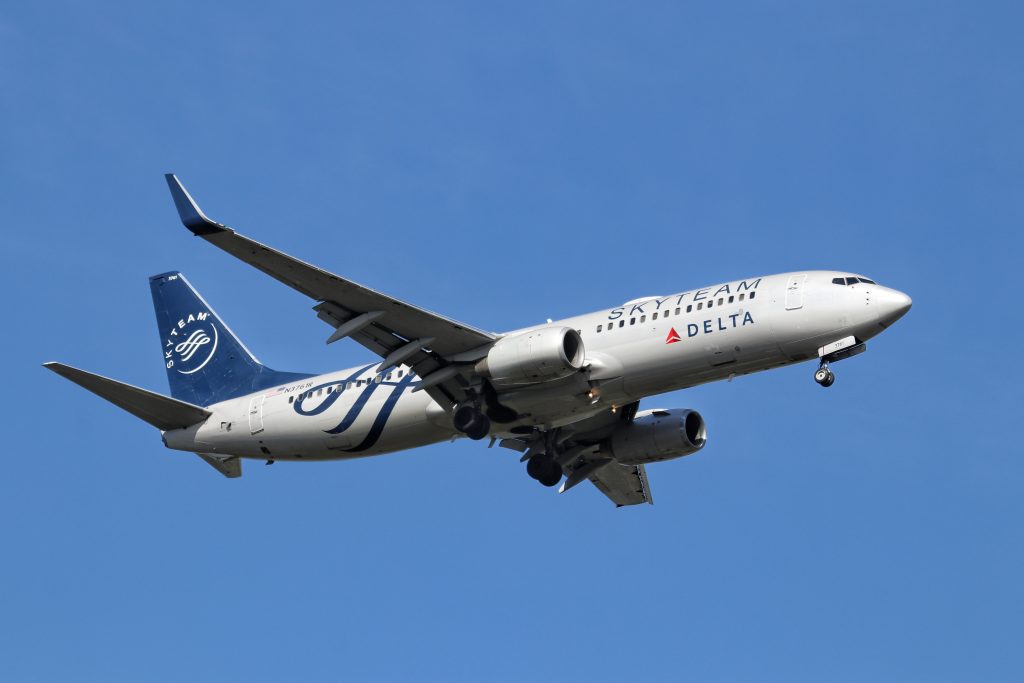
A Delta 737-800 in Seattle. (Photo: AirlineGeeks | Katie Bailey)
Lufthansa
“We take note of the decision of the Italian government. Our joint offer together with MSC was the better solution for ITA, from our point of view. Apparently, a path is now being chosen that allows for more state influence and does not provide for a complete privatization of ITA,” said Lufthansa in a statement.
“Even without a cooperation with ITA, the Lufthansa Group remains excellently positioned in Italy. With our own Italian airline Air Dolomiti and with all our airline brands we already have a strong position in Italy with around 4 million passengers and over 130 daily departures from 21 destinations. We will continue to expand this position by our own efforts and further develop our market position,” they concluded.
This article was written by Edgardo Gimenez Mazó for Aviacionline.
Parker joined AirlineGeeks as a writer and photographer in 2016, combining his longtime love for aviation with a newfound passion for journalism. Since then, he’s worked as a Senior Writer before becoming Editor-in-Chief of the site in 2020. Originally from Dallas and an American frequent flyer, he left behind the city’s rich aviation history to attend college in North Carolina, where he’s studying economics.
Sign-up for newsletters & special offers!
Get the latest stories & special offers delivered directly to your inbox