Jet2 has ordered 36 Airbus A321neo aircraft, with flexibility to expand to 60 aircraft. (Photo: Airbus)
Jet2.com — one of the U.K.’s prominent leisure carriers — is capitalizing on the rise of passenger demand by putting its 2023 and 2024 winter programs of flights and holiday packages on sale. The airline operates to ‘over 65 sun, city and ski destinations across Europe and beyond with Jet2holidays offering over 4,100 hotels. Steve Heapy, chief executive officer of Jet2.com and Jet2holidays, said, “In response to this demand, we are putting our winter sun program on sale from all ten of our UK bases.”
Heapy stated, “We are pleased to be offering a fantastic selection of Winter Sun destinations and with more customers than ever wanting to give themselves something to look forward to next year, we have no doubt that these hotspots will be extremely popular with both customers and independent travel agents.”
The airline is adding six new routes: Belfast, Ireland to Malaga, Spain; Belfast, Ireland to Faro, Portugal; Newcastle, U.K. to Malta; Bristol, U.K. to Malaga; Bristol to Malta and Bristol to Palma Majorca, Spain. In addition, capacity is being added across the airline’s established network of sun and ski destinations. The Canary Islands will benefit from over 230 weekly flights and holidaymakers destined for Mainland Spain can choose from over 80 weekly services.
Jet2.com is the U.K.’s third largest airline, and amidst the continuing travel chaos of the European summer, was the only U.K. airline not to cancel any flights in July. According to aviation analysis site OAG, the carrier operated 12,063 flights during the month an increase of 14 percent over the summer of 2019.
“This summer is proving to be incredibly busy and because we prepared well in advance, it means we are flying millions of happy holidaymakers to and from their destinations without having to cancel their plans,” Heapy said. Over the weekend of Jul. 23 and Jul. 24 when English schools commenced summer holidays, Jet2.com had the busiest weekend in the company’s history operating over 800 flights. Two million passengers were carried in July positioning 2022 as potentially the airline’s busiest season ever.
The airline attributes the robustness and resilience of its operation to ‘proactively recruit well ahead of the bounce back and as such have a very visible uniformed presence in place (referred to as the Red Team) in U.K. airports as well as in main overseas airports and in resorts.
Heapy added, “There has been a lot of focus on the disruption affecting our industry, but this data shows that it is not all bad news. Thanks to our team of brilliant colleagues, we can proudly say that we operated every single flight despite July being the busiest month in our entire history.”
Jet2.com operate over 100 aircraft from bases in Belfast, Ireland; Birmingham, U.K.; Bristol, U.K.; East Midlands, U.K.; Edinburgh, Scotland; Leeds Bradford, U.K.; London’s Stansted Airport, Manchester, U.K. and Newcastle, U.K. In 2021, the airline announced an order for 36 Airbus A321neos with the first originally scheduled to arrive in 2023.
John has always had a passion for aviation and through a career with Air New Zealand has gained a strong understanding of aviation operations and the strategic nature of the industry. During his career with the airline, John held multiple leadership roles and was involved in projects such as the introduction of both the 777-200 and -300 type aircraft and the development of the IFE for the 777-300. He was also part of a small team who created and published the internal communications magazines for Air New Zealand’s pilots, cabin crew and ground staff balancing a mix of corporate and social content.
John is educated to postgraduate level achieving a masters degree with Distinction in Airline and Airport Management. John has held the positions of course director of an undergraduate commercial pilot training programme at a leading London university. In addition he is contracted as an external instructor for IATA (International Air Transport Association) and has been a member of the Heathrow Community Fund’s ‘Communities for Tomorrow’ panel.
Emirates To Introduces Third Daily Flights to Mauritius From October, Announces $2 Billion Upgrade to Cabins
An Emirates A380 lands in London (Photo: AirlineGeeks | William Derrickson)
Due to increased travel demand to and from Mauritius, Emirates will boost connectivity to the island nation with additional evening frequency to Mauritius which will operate until January 31, 2023. Emirates will be commanding the traffic between Dubai and Mauritius with the new third-daily frequency which supplements the existing 2X-daily flight to the island nation operated by an Airbus A380.
The flights will boost seat capacity to and from Mauritius by approximately 35%, catering to the surge in demand and providing added support to the tourism industry during one of the busiest travel seasons.
Sheikh Ahmed bin Saeed Al Maktoum, Chairman and Chief Executive, Emirates Airline & Group said, “We thank the Mauritian authorities for considering our request to operate a third daily flight. Air connectivity is critical to international tourism, and these extra seats will help us bring even more visitors from across our network to Mauritius, and accommodate rising demand. Emirates is committed to playing a key role to promote inbound travel, and support the government in achieving its goal of hosting 1.4 million tourists by June 2023.”
Emirates to Improve its Soft Product
Meanwhile, Emirates is investing over $2 billion to enhance its inflight customer experience, the Dubai-based carrier said in a statement on Wednesday. The improvements include a massive program to redesign the interiors of 120 aircraft, along with other services across all cabins starting this year. Passengers can look forward to “elevated meal choices, a brand new vegan menu, a ‘cinema in the sky’ experience, cabin interior upgrades, sustainable choices and a generous approach to the little touches that make travel memorable,” Emirates said.
Sir Tim Clark, President of Emirates Airlines said: “While others respond to industry pressures with cost cuts, Emirates is flying against the grain and investing to deliver ever better experiences to our customers. Through the pandemic, we’ve continued to launch new services and initiatives to ensure our customers travel with assurance and ease, including digital initiatives to improve customer experiences on the ground. We’re rolling out a series of intensive programs to take Emirates’ signature inflight experiences to the next level.”
Additionally, every cabin class will be refreshed with new, first-of-a-kind Premium Economy cabins installed.
“With its first aircraft scheduled to roll into the Emirates Engineering Centre for retrofitting in November, planning work and trials have begun in earnest,” the airline added.
Passengers will also be recipients of fresh produce on board, from the world’s largest $40 million hydroponic farm set up by the airlines in Dubai.
Victor Shalton's love for aviation can be traced to when he was 11-years-old. As a seasoned aviation writer, he takes pride in providing the best aviation coverage around the globe and is passionate about advancing his skills in the aviation space. In addition, he loves travelling, writing, arts and while his speaking engagements have taken him around the world, he is proud to call Nairobi home.
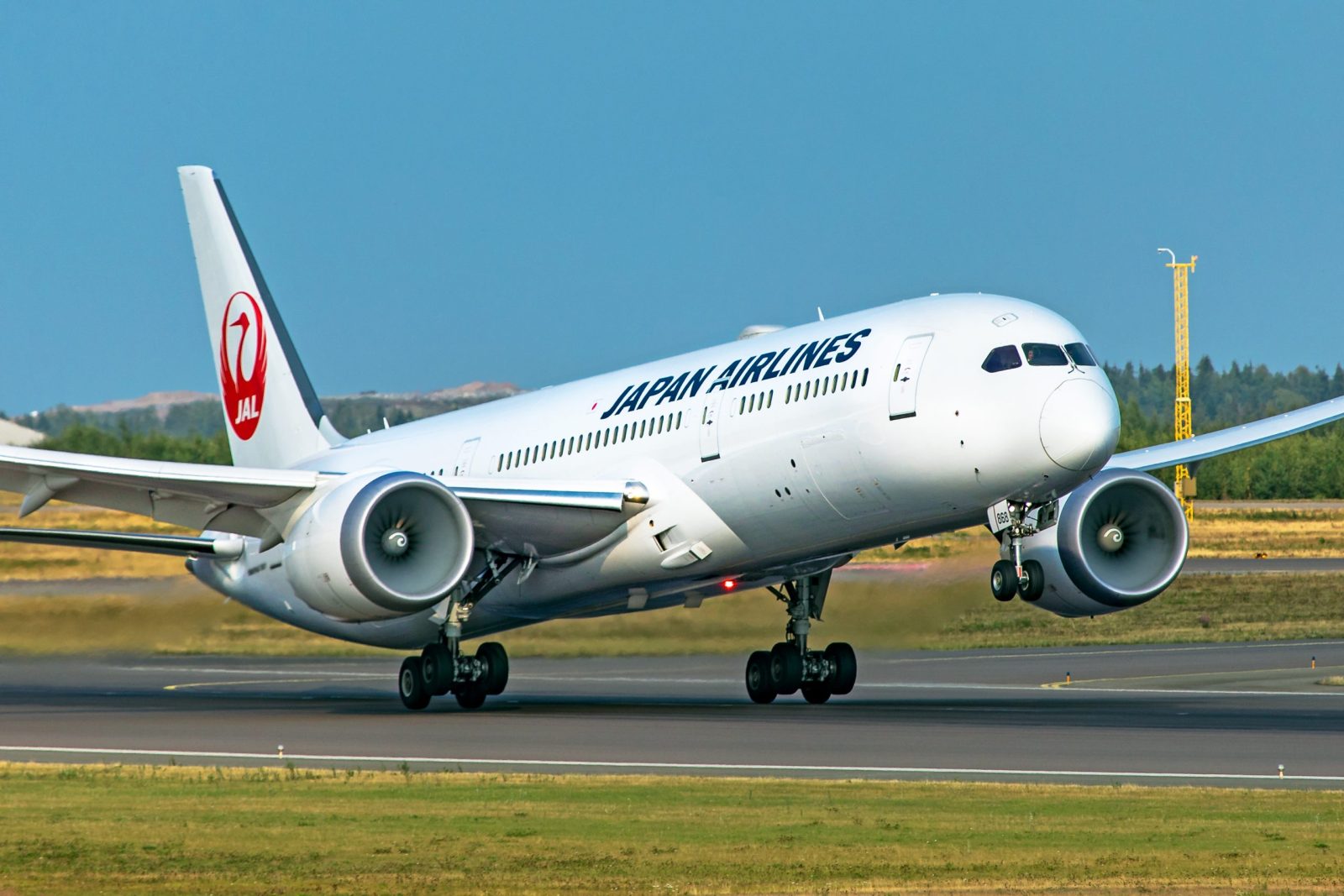
A Japan Airlines 787-9 departing. (Photo: AirlineGeeks | William Derrickson)
As of early October, Japan Airlines is increasing its intercontinental operations in Europe, Oceania and North America, restoring most of its pre-pandemic frequencies, after sanitary restrictions in Japan and globally being gradually reduced.
The company expects to operate 3,840 flights on 53 routes in October, representing a 48% reduction from its schedule operated prior to the COVID-19 crisis.
(Photo: GCMap)
Oceania
Starting in October, the Japanese airline increases its operations on the Tokyo Haneda (HND) – Sydney (SYD) route to daily flights operated on a Boeing 787-9 Dreamliner with a 195-seat capacity in three classes, thus restoring its capacity to 2019 levels. This service is complemented by the nonstop connection between Narita (NRT) and Melbourne (MEL)
Flight itinerary between Haneda (HND) and Sydney (SYD)
Flight JL 51 HND 19:20 – SYD 07:10+1
Flight JL 52 SYD 17:25 – HND 13:35+1
According to data obtained by Aviacionline through the Department of Infrastructure, Transport, Cities and Regional Development, Japan Airlines moved 224,258 passengers in Australia between June 2018 to June 2019 with an occupancy factor of 86.8% and 11,345 tons of cargo and mail in 1,459 air operations.
Europe
The company will increase its services between Tokyo Haneda (HND) and Helsinki (HEL) from 4 to 5 flights a week operated on Boeing 787-9 Dreamliner. Japan Airlines will have an offer of 1,950 weekly seats in Finland:
Japan Airlines from Europe offers flights to London Heathrow (LHR), Paris (CDG) and Frankfurt (FRA), services to Russia remain suspended.
North America
The Japanese airline increases to daily flights with its routes between Narita (NRT) – Vancouver (YVR) and Haneda (HND) – Dallas (DFW). The latter will have a greater supply of seats with respect to 2019 levels:
Flight Itinerary to Vancouver (YVR).
Flight JL 18 NRT 18:30 – YVR 11:40
Flight JL 17 YVR 13:45 – NRT 16:30+1
The flights will be operated on a Boeing 767-300ER aircraft with a capacity of 199 seats in two classes (24 Business Class/175 Economy).
Flight schedule between Haneda (HND) and Dallas (DFW)
Flight JL 12 HND 10:55 – DFW 08:40
Flight JL 11 DFW 11:10 – HND 14:25+1
The flights will be operated on 195-seat Boeing 787-9 Dreamliner aircraft in two classes and 244-seat Boeing 777-300ER aircraft in four classes (8 First Class/49 Business Class/40 Premium Economy/147 Economy).
In addition, Japan Airlines will continue to operate its service between Narita (NRT) and Dallas (DFW) with four weekly flights on 787-9s, the carrier will offer 11 flights per week between Tokyo and North Texas, it will be the airline’s largest offering in this segment surpassing the offering offered in 2019.
This story was originally published by Rainer Nieves Dolande on Aviacionline in syndication with AirlineGeeks.
Ryan founded AirlineGeeks.com in February 2013 and has spent more than a decade covering the airline business. His work has been featured by CNN, WJLA, CNET, and Business Insider. His aviation experience spans airport operations, Part 135 regulatory compliance, and airline crew workforce planning, along with time behind the yoke of a Cessna 172 and interviews with airline executives. Ryan now serves as Group President of Firecrown Media’s Aviation Group. He holds a B.S. in Air Transportation Management and an MBA from Arizona State University and teaches Airline Management at Embry-Riddle Aeronautical University.
The first Boeing 787 to be delivered since the shutdown (Photo: Boeing)
Dallas-based carrier American Airlines announced on Tuesday that it had finally begun to receive Boeing 787s roughly 14 months after the FAA had suspended Boeing’s Charleston, South Carolina plant from delivering the type. The FAA had put a halt to Boeing’s 787 operations following alarming information on the manufacturer’s inspection processes in Charleston.
The hiatus meant more bad news for Boeing, who had said early this year that the halt in production would cost them $5.5 billion. The delivery today not only signaled that help was on the way to airlines relying on 787s for capacity but also Boeing’s revenues for the rest of this year. The manufacturer had made the 787 its economical, top-of-the-line widebody offering over the past decade with nearly 1,500 of the type on order across three variants.
Stan Deal, Boeing’s CEO of Commercial Airplanes said in a note to employees that, “every action and decision influences our customers’ trust in Boeing — we build trust one airplane at a time, we’ll continue to take the time needed to ensure each one meets our highest quality standards.”
Boeing’s Quest to Regain Its Reputation
As much as airlines need increased capacity and just want the planes they ordered, Boeing needs the revenue and chance to rebuild its reputation. Boeing has had its fair share of crises the past few years with the 737 MAX tragedies tarnishing the company’s reputation and leaving its future very much unknown.
Airlines only brought the 737 MAX back into service in early 2021 and passenger trust is something that Boeing will have to earn back and it will take a long time. It’s one thing for a corporation to damage its image with low-quality products that don’t stand up well, it’s another to knowingly build aircraft that have issues and then watch as hundreds die because of carelessness.
Boeing knows that the first step to getting customers and airlines to want to buy and fly on their planes is by being able to deliver them in the first place. The 787s still presents a fantastic option for carriers offering great fuel efficiency, range and comfort. Their size means they can be operated on long-haul flights between major and secondary markets which adds great flexibility for airlines.
Resumption of 787’s deliveries could also help to alleviate a lot of the issues related to capacity in the aviation industry right now. Not having one of the most important aircraft on the market in a standstill when it comes to deliveries has hurt numerous airlines. With almost 500 units still sitting on order books, most being the mid sized -9 variant while and longer -10, the return of the 787 is one that many airlines have been waiting for.
Ezra Gollan is a student, photographer and aviation enthusiast based in New York, New York. He has spent over half a decade around New York City’s airports as a photographer.
British Airways to Land for First Time in Aruba and Guyana
A British Airways 777-200 taxing to its gate after landing in Austin. (Photo: AirlineGeeks | Mateen Kontoravdis)
British Airways announced that it will connect London with Georgetown (GEO) in Guyana and Aruba (AUA) for the 2023 northern hemisphere summer season. It will be the first time that both destinations will be part of the airline’s network of destinations.
The flights will be operated from Gatwick (LGW), via Saint Lucia (UVF) for Guyana, and via Antigua and Barbuda (ANU) for Aruba, using fifth-freedom rights.
Aruba adds a new player
The route between London and Aruba will start on March 26, will have twice weekly flights operated on Boeing 777-200ER aircraft with a capacity of 336 and 332 passengers depending on the variant.
London/Gatwick (LGW) – Antigua and Barbuda (ANU) / Flight BA 2157 / LGW 10:00 – ANU 13:35 Thursdays and Sundays.
Antigua and Barbuda (ANU) – Aruba (AUA) / Flight BA 2157 / ANU 14:35 – AUA 16:00 Thursday and Sunday.
Aruba (AUA) – Antigua and Barbuda (ANU) / Flight BA 2156 / AUA 08:30 – ANU 20:15 Thursdays and Sundays.
Antigua and Barbuda (ANU) – London/Gatwick (LGW) / Flight BA 2156 / ANU 21:15 – LGW 10:15 (+1) Thursdays and Sundays.
The United Kingdom is Aruba’s third most important market: in 2019 they received 10,882 British tourists. Currently, the only airline operating between the two markets is TUI Airways, with a weekly flight between March and October.
British Airways will be the fourth airline to connect the island with Europe, as KLM and TUIfly Netherlands also operate from Amsterdam (in addition to the TUI Airways schedule).
(Photo: GC Mapper)
A historic milestone for Guyana
On the other hand, Guyana will have for the first time in its history a direct connection to Europe. Usually, to reach the South American country one had to fly through Barbados or Trinidad and Tobago.
The service will start on March 27, will have two weekly flights and will be also operated by Boeing 777-200ER aircraft with the same capacity configurations than the Aruba flight: 336 and 332 passengers.
London/Gatwick (LGW) – St. Lucia (UVF) / Flight BA 2159 / LGW 11:35 – UVF 15:35 Monday and Thursday.
St. Lucia (UVF) – Georgetown (GEO) / Flight BA 2159 / UVF 16:25 – GEO 18:05 Monday and Thursday.
Georgetown (GEO) – St. Lucia (UVF) / Flight BA 2158 / GEO 19:50 – UVF 20:15 Monday and Thursday.
St. Lucia (UVF) – London/Gatwick (LGW) / Flight BA 2158 / UVF 22:15 – LGW 11:45 (+1) Thursdays and Sundays.
Guyana’s Minister of Public Works, Juan Edghill, had expressed in 2021 during the landing of interCaribbean that they were negotiating with British airlines to connect Cheddi Jagan International Airport with London.
Both countries have a particularly important cultural link, given that Guyana is the only South American country that was a former British colony.
In 2019, 7,630 Britons arrived in the country and more than 27,000 Guyanese reside in the United Kingdom, according to the UK Department of Migration.
This story was originally published by Gaston Sena of Aviacionline in syndication with AirlineGeeks.
Ryan founded AirlineGeeks.com in February 2013 and has spent more than a decade covering the airline business. His work has been featured by CNN, WJLA, CNET, and Business Insider. His aviation experience spans airport operations, Part 135 regulatory compliance, and airline crew workforce planning, along with time behind the yoke of a Cessna 172 and interviews with airline executives. Ryan now serves as Group President of Firecrown Media’s Aviation Group. He holds a B.S. in Air Transportation Management and an MBA from Arizona State University and teaches Airline Management at Embry-Riddle Aeronautical University.
A Delta Air Lines A319 holds short as an American Airlines A321 departs Los Angeles. (Photo: AirlineGeeks | James Dinsdale)
The second quarter of 2022 brought with it all the murkiness and uncertainty that have become standard in the airline industry since March 2020. The three-month period from April to June was headlined by JetBlue Airways and Frontier Airlines staging a public battle to purchase Miramar, Fla.-based Spirit Airlines, which after months of higher bids and canceled shareholder votes, JetBlue finally won at the end of July.
Underlying the stress and excitement of the fight to become the fifth largest airline in the U.S., however, was an industry-wide struggle to overcome the turmoil the broader economy is leaving airlines and passengers to deal with.
Airlines including United Airlines and Frontier Airlines reported their first quarterly profits since the Covid-19 pandemic took hold of the industry in 2020, while others like Spirit and JetBlue posted losses as costs continued to outweigh increased revenues.
Even with a mixed bag of results, some clear trends have emerged, ones that will shape the industry into the third quarter and beyond.
Losses At the Hands of High Gas Prices
Spirit rounded out second-quarter earnings announcements for major U.S. airlines on Tuesday when the airline reported a net loss of $52.4 million on revenues that were 35% higher than the same period in 2019, a clear sign of the growth that has come to the airline as the industry emerges from the pandemic.
However, the airline’s bottom line took a hit as it saw expenses go up by 66%. That includes fuel expenses which more than doubled compared to the second quarter of 2019, despite only flying 9.9% more capacity on an available seat mile basis.
Breaking it down further, the airline paid an average of $4.30 per gallon of jet fuel during the three months ended June 30, a massive jump from the $2.16 the company paid in the same period three years ago.
That story is not a unique one. Looking just at the big three U.S. carriers in United Airlines, American Airlines and Delta Air Lines, only Delta managed to pay below $4 per gallon of jet fuel during the quarter, but that was only as a result of the airline’s own refinery operations, which it said brought its adjusted fuel costs down by 31 cents per gallon.
A United Boeing 767-300 departing Berlin Tegel. (Photo: AirlineGeeks | James Dinsdale)
Airlines are looking to a sort of reprieve in the third quarter, as Spirit said it is expecting to face an average fuel cost of $3.55-$3.60 in the third quarter, approximately a 17% drop versus the prior quarter. (Those prices would represent an increase of more than 70% over the per-gallon costs the airline faced in 2019).
Other airlines are projecting similar decreases, but bottom lines across the industry are likely going to see the effects of higher fuel prices for quarters to come as carriers continue to put out schedules as robust as they can reliably operate.
Ex-Fuel Pressures
Analysts and industry insiders often look beyond fuel to understand how efficiently airlines are operating. By stripping out fuel prices, which are beholden to market-driven commodity price swings, it becomes easier to make comparisons with regard to how costs are changing from quarter to quarter and from year to year.
Though fuel has been a key player in the eye-popping cost figures airlines have posted in recent weeks, they have also shown they are succumbing to similar pressures elsewhere.
Delta’s troubles perhaps played out most publicly, as staffing shortages throughout the early summer months (which would then spill into July) forced the airline to invest heavily in rebooking passengers and shuffling bags to make up for accompanying operational struggles.
But even for airlines that saw the quarter go by without such flareups, the troubles were much the same. Even Southwest, which has long put intense focus on its operational efficiency, saw its cost per available seat mile excluding fuel (CASM ex-fuel) climb 13.1% compared to the second quarter of 2019 as a result of what CEO Bob Jordan called, “inflationary pressures and headwinds from operating at suboptimal productivity levels.”
A Southwest Airlines 737-700 pushing back at Pittsburgh. (Photo: AirlineGeeks | William Derrickson)
Looking forward, carriers are not seeing much of a reprieve. American is projecting costs excluding fuel for the third quarter will be 12-14% above where they stood in late 2019, a result of shelling out money for labor, parts and nearly every other good the airline needs to operate on a daily basis.
In an airline with the Associated Press this week, American Airlines Chief Financial Officer Derek Kerr qualified that figure, saying it would be closer to a 2% increase if the airline was operating at full capacity, but he said low training capacity has prevented the airline from getting the pilots its needs ready to put together a full schedule for the coming months.
A Saving Grace in Higher Fares
Despite all the difficulties rising costs brought airlines in the second quarter, many carriers were able to produce a decent financial performance at the hands of their customers.
Throughout the period, customers seemed to deliver the message that they wanted to travel at nearly any cost, and airlines capitalized. Emblematic of that was Delta, which partially as a result of staffing shortages flew 18% less capacity than it did in the second quarter of 2019. But the airline still managed to bring in 10% more revenue than in the same period, a difference that is largely attributable to higher average fares paid by passengers in nearly every market the carrier served.
Those dynamics pushed Delta to a second-quarter profit, joined by competitors American and United on the backs of their customers, too. The Chicago-based behemoth said it saw its CASM ex-fuel jump by 17% over 2019, but it more than made up for that with unit revenue that rose by an even more massive 24%, enough to counter the additional costs brought on by fuel price increases.
The same has been true outside the sphere of full-service carriers. Even ultra-low-cost provider Spirit said its revenue per passenger increased 24% compared to 2019. That figure is inclusive of ticket prices as well as fees paid for ancillary services like baggage and seat selection but is emblematic of the same trend.
A Spirit A319 in Las Vegas (Photo: AirlineGeeks | William Derrickson)
Those dynamics may not be sticking around for the long term. Bloomberg reported in mid-July that average fares in the U.S. had fallen by $70 from their mid-May peak, relieving some of the pressure that had been put on consumers but also putting airlines on notice.
How those dynamics will interplay with lower fuel prices and similarly high costs for labor and other goods in the third quarter and beyond remains to be seen, but there will be an intense focus on whether airlines can continue to hold the same pricing power they have displayed this year.
All the while, carriers will need to continue to navigate self-imposed capacity constraints, limits airlines have put on themselves to avoid the over-scheduling issues that have plagued Delta, American, United and others in recent years.
Parker joined AirlineGeeks as a writer and photographer in 2016, combining his longtime love for aviation with a newfound passion for journalism. Since then, he’s worked as a Senior Writer before becoming Editor-in-Chief of the site in 2020. Originally from Dallas and an American frequent flyer, he left behind the city’s rich aviation history to attend college in North Carolina, where he’s studying economics.
Boeing Looks to First Movers Coalition to Reduce Aviation Industry’s Carbon Footprint
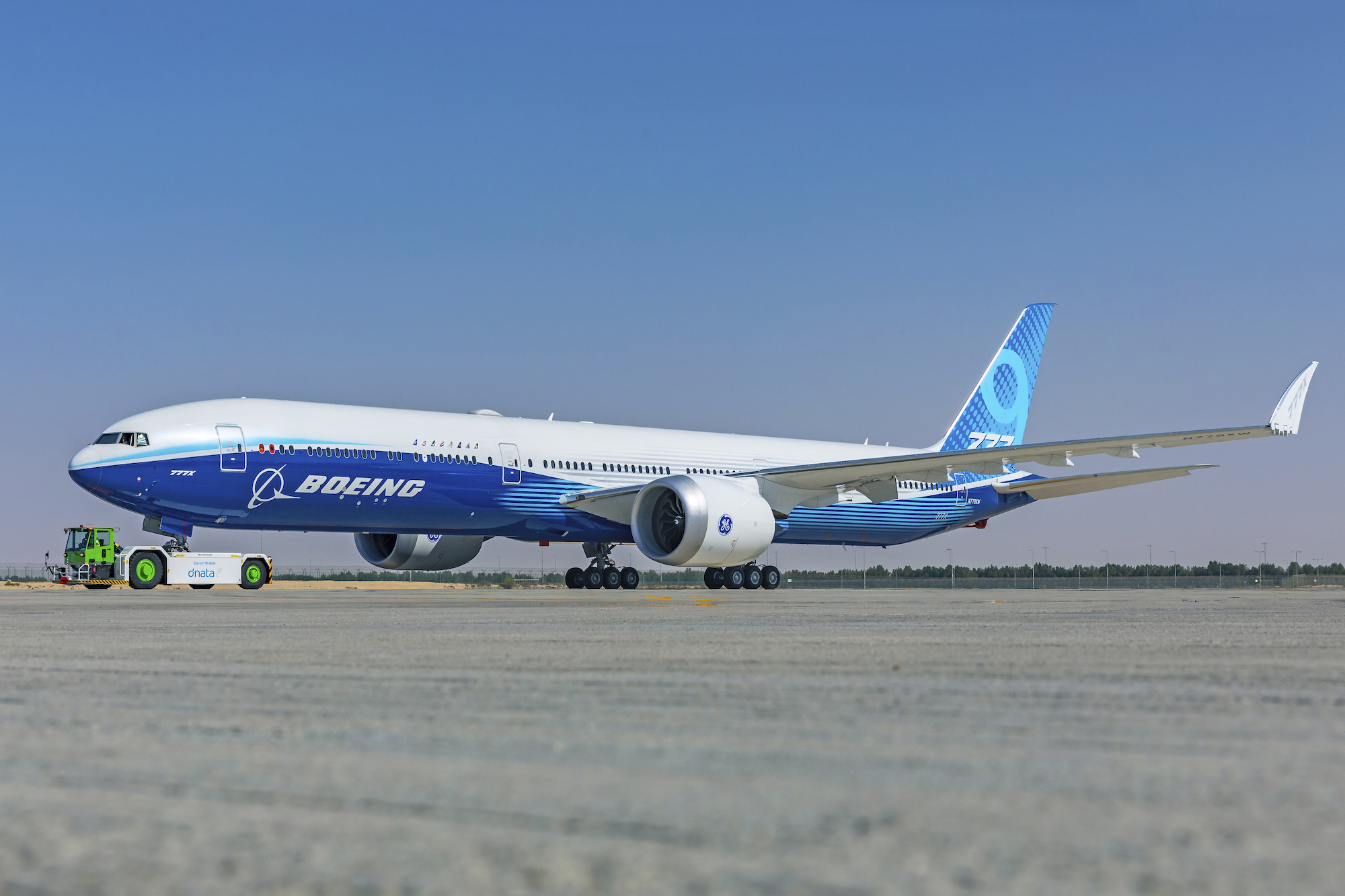
Boeing's 777X on display at the Dubai Airshow (Photo: AirlineGeeks | William Derrickson)
U.S. aircraft manufacturer Boeing, the world’s second-largest civil aircraft manufacturer, will take on a new role within the First Movers Coalition (FMC) to help reduce aviation emissions faster.
The FMC was created in November 2021 to reduce greenhouse gas emissions to zero by 2050, seeking to bring to commercial scale within the next decade the right technologies to keep the planet’s temperature rise below 1.5 degrees Celsius. To do this requires low-carbon technologies that are not yet competitive with current carbon-intensive solutions, but must reach commercial scale by 2030 to achieve net zero emissions globally by 2050.
The FMC is a global initiative that harnesses corporate buying power to decarbonize seven “hard-to-burn” industries that currently account for 30% of global emissions — aluminum, aviation, chemicals, concrete, shipping, steel and trucking — along with innovative carbon removal technologies.
Changing Aviation
Boeing will serve as a “champion” for the aviation sector. It will work to increase industry partnerships to expand sustainable supplies of aviation fuel while defining strategies for developing new solutions. Boeing’s “collaboration with the more than 50 member companies of the FMC (of which Boeing is a founding member) will help scale sustainable aviation fuels (SAF) and accelerating low-carbon technologies to decarbonize aviation,” said Brian Moran, Boeing’s vice president for global sustainability policies and partnerships.
To pursue these goals Boeing, hired one of the leading experts in the field of SAFs, Robert Boyd, an aviation decarbonization specialist who worked for nearly nine years at the International Air Transport Association as Assistant Director of Energy Transition and Policy, Environment and Sustainability. He served as a member of the United Nations’ International Civil Aviation Organization Alternative Fuels Task Force and sat on the advisory board of the Carbon War Room and Canada’s Biojet Supply Chain Initiative (CBSCI). Prior to joining IATA, Boyd was the Principal Economist for Virgin Australia Airlines and co-lead of the airline’s renewable jet fuel team.
Boeing had already shown its commitment to aviation decarbonization in 2018 with the ecoDemonstrator program (the world’s first commercial flight using 100% sustainable fuels with a 777 Freighter, in partnership with FedEx Express) and with its joint venture, Wisk, (soon first fully electric, self-flying aerotaxi in the U.S.).
It is worth mentioning that Boeing became a founding member of the MIT Climate and Sustainability Consortium in February 2021, and in December of that year, it conducted a successful test with NASA and DARPA on a large, fully composite, linerless cryogenic fuel tank with the capacity to hold 16,000 gallons (over 60,500 liters) of liquid hydrogen.
Vincenzo graduated in 2019 in Mechanical Engineering with an aeronautical curriculum, focusing his thesis on Human Factors in aircraft maintenance. In 2022 he pursued his master's degree in Aerospace Engineering at the University of Palermo, Italy. He combines his journalistic activities with his work as a Reliability Engineer at Zetalab.
An Air India 777-300ER departing from New York-JFK. (Photo: AirlineGeeks | Ben Suskind)
Air India plans to bolster its fleet by leasing six Boeing 777 aircraft in the coming months, with the aircraft expected to be delivered by October and held by the airline for a period of two years.
According to local media, Air India needs the new aircraft to improve its service. In July, one of the airline’s flights between Delhi and Vancouver was delayed by 11 hours due to the “faulty seats,” a potentially recurring problem the airline is reportedly trying to get ahead of in the coming months.
“Taking into account the impact on the airline operations, it has been decided that the airline will lease six [777s] to operate its ultra-long-haul flights (lasting over 16 hours),” the airline said in a prepared statement.
The flag carrier insisted that the aircraft involved in the Vancouver flight debacles have no other issues, and the new aircraft will add to its fleet and not replace any current aircraft. The new aircraft could be paving the way for the airline to expand its route map after the pandemic.
In response to the popular demand, Air India will increase frequencies between Delhi and Vancouver from three flights per week to a daily service starting from Aug. 31. The route will be operated by Boeing 777 in a three-class configuration.
“We are pleased to mark this significant milestone, and the team at Air India is hard at work to enable more expansion in the near future,” said Campbell Wilson, the airline’s managing director and chief executive officer. Tata Group, the new parent company of Air India, announced Wilson’s appointment in May.
Earlier, Air India has tapped the Airbus A350-900 XWB as another fleet addition in the months ahead. It is expected that the new aircraft could be delivered by next year and used to expand the carrier’s North American route network. The carrier has requested its pilots begin preparing for training on A350-900.
Meanwhile, the airline is planning to sell its Boeing 777-200LRs, which were manufactured in 2009, to make way for the newer aircraft to enter the fleet. Air India owns three the type and currently owns a fleet of 128 aircraft, according to its website.
New Operational Targets
In the wake of the expansion in the near future, the airline has decided to extend its retirement age for pilots from 58 to 65. India’s Directorate General of Civil Aviation (DGCA) allows pilots to operate aircraft until the age of 65, so this move will bring the airline in line with the country’s maximum.
“Allowing pilots to fly till the age of 65 is a practice followed by most airlines in the industry. The contract would be issued for a period of five years extendable up to 65 years [of age],” the airline said in a statement.
In the meantime, Wilson is determined to improve the airline’s on-time performance. Air India recorded 75-80% total on-time performance in the most recent quarter, a figure that lagged behind that of other Indian airlines during the same period. Outside the country but in the surrounding region, AirAsia has ranked first in the performance for the last three months.
An Aeroflot 777-300ER landing at Paine Field after a test flight. (Photo: AirlineGeeks | Katie Bailey)
Since the beginning of the war between Russia and Ukraine, commercial aviation has been one of the sectors that have been impacted the most by the hostilities. The Ukrainian airspace is closed to commercial traffic, and both the European Union and Russia have imposed economic sanctions on each other. As a result, the airspace above Russia is not accessible to registered aircraft from the west, making trips between Europe and the Far East much longer than they used to be prior to the conflict.
However, the illegal re-registration of aircraft owned by western leasing companies onto the Russian aeronautic registry, so that Russian airlines can operate them, has created the greatest economic impact on commercial aviation.
A number of close to 600 Western-built aircraft with an original market value of approximately $13 billion are currently operated in Russia, research group Russell Group reported. Last March, approximately one month after the start of the war, the Russian government passed a law “allowing the country’s airlines to place airplanes that were leased from foreign companies onto the country’s aircraft register,” according to Reuters.
This situation — which has caused Western lessors to write off hundreds of millions of dollars due to their inability to access their assets — is in blatant violation of Article 18 of the Chicago Convention, ICAOstated last June. The International Civil Aviation Organization (ICAO) is a United Nations agency that helps 193 countries to cooperate together and share their skies for their mutual benefit.
Last week, the European Commissionwelcomed the decision by ICAO to condemn the practice to re-register aircraft onto the Russian registry, as well as the continuous Ukrainian airspace violations in the context of Russia’s war of aggression.
Adina Vălean, Commissioner responsible for Transport, said: “[…] Russia continues to disrespect the fundamental rules of international aviation and to instruct its airlines to work against these rules. I welcome the ICAO Council’s clear condemnation, which reflects the gravity of the actions undertaken by Russia.”
The Chicago Convention
According to Article 18 of the Chicago Convention, the treaty governing international civil aviation since 1944, states that “an aircraft cannot be validly registered in more than one State, although its registration may be changed from one state to another. Once a State has registered an aircraft, a number of safety-related obligations fall upon it by virtue of the Chicago Convention and its Annexes.”
The dual registration causes a number of concerns, first and foremost about its safety, since these aircraft are operating without a valid Certificate of Airworthiness, according to the European Commission.
ICAO is going to bring Russia’s violation of these basic principles of international aviation law to the attention of its 193 Members States during its General Assembly. This meeting is scheduled to take place in Montreal between Sept. 27 and Oct. 7.
Vanni fell in love with commercial aviation during his undergraduate studies in Statistics at the University of Bologna, when he prepared his thesis on the effects of deregulation on the U.S. and European aviation markets. Then he pursued his passion further by obtaining a Master’s Degree in Air Transport Management at Cranfield University in the U.K. followed by holding several management positions at various start-up carriers in Europe (Jet2, SkyEurope, Silverjet). After moving to Canada, he was Business Development Manager for IATA for nine years before turning to his other passion: sports writing.
Saudia Set to Operate Year-Round Barcelona Flights
Saudia for this northern winter season will have available flights between Jeddah (JED) and Barcelona (BCN); with this the company will offer non-stop services to the Catalan capital throughout the year, this connection will complement its service to Madrid (MAD).
This route is subsidized by the Saudi Arabian Ministry of Tourism under its Air Connectivity Program with the aim of increasing and boosting the country’s connectivity. Spain recently received the first batch of 100,000 Saudi students enrolled in the Tourism Pioneers Program arrived at les Roches International School of Hotel Management in Marbella, Spain.
“The training programs directly contribute to honing the skills of the beneficiaries, providing them with knowledge and tools for professional development and enhancing the job seekers’ chances of obtaining job opportunities that match their skills to contribute to the achievement of the Kingdom’s vision goals,” said Eng. Anas Al-Shae, Director General of the General Administration to Support Innovators and Entrepreneurs at the Ministry of Tourism.
During this summer Saudia is offering services from Jeddah (JED) and Riyadh (RUH) to Madrid (MAD), Barcelona (BCN) and Malaga (AGP), the latter will only be operated seasonally, Spain is positioned as one of the destinations with the largest supply of seats and routes of the company.
Saudia’s flight schedule at El Prat Airport (BCN)
Data obtained by Aviacionline through Cirium indicate that the Saudi flag carrier will offer 2,384 seats per week in eight operations to the Catalan capital, the schedule is as follows:
Flight SV 229 RUH 08:55 – BCN 13:55 Monday and Thursday.
Flight SV 229 BCN 15:35 – RUH 22:00 Monday and Friday.
All services are operated on Boeing 787-9 Dreamliner aircraft with a capacity of 298 seats in two classes (24 Business Class/274 Economy).
According to Aena Statistics indicate that in 2019 between Spain and Saudi Arabia 76,594 passengers and 3,559.95 tons of cargo were mobilized in 599 air operations.
This story was originally published by Rainer Nieves Dolande on Aviacionline in syndication with AirlineGeeks.
Ryan founded AirlineGeeks.com in February 2013 and has spent more than a decade covering the airline business. His work has been featured by CNN, WJLA, CNET, and Business Insider. His aviation experience spans airport operations, Part 135 regulatory compliance, and airline crew workforce planning, along with time behind the yoke of a Cessna 172 and interviews with airline executives. Ryan now serves as Group President of Firecrown Media’s Aviation Group. He holds a B.S. in Air Transportation Management and an MBA from Arizona State University and teaches Airline Management at Embry-Riddle Aeronautical University.