








Stories

UK Aviation Industry Welcomes Revision of International Travel Restrictions

An aircraft lands at Heathrow Airport (Photo: London Heathrow Airport)

The U.K. government will abolish its much-maligned “traffic light system” for international travel to England starting in early October. In an announcement released on Friday, the government said it will replace the current system that has been in effect since May 17 with “a single red list of countries and territories and simplified travel measures for arrivals from the rest of the world.” In recognition of the vaccination rollout around the world, travellers who meet the U.K. definition of “fully vaccinated” will not be required to undertake expensive PCR tests upon arrival and in some cases departure to destinations.

“Today’s changes mean a simpler, more straightforward system,” Transport Secretary Grant Shapps said in a statement. “One with less testing and lower costs, allowing more people to travel, see loved ones or conduct business around the world while providing a boost for the travel industry.”

The current system had been roundly criticized by the industry and public alike for its confusing array of testing and quarantine requirements. A three-times-weekly review saw countries moving up and down on the three-tier scale with additional levels such as “amber plus” and “green watch” being added that further confused the public, leading to reduced passenger confidence in international travel. Some countries were arbitrarily moved into more restrictive categories leading to chaotic scenes as passengers sought to arrive in England before quarantine measures were imposed.

“Today we have simplified the travel rules to make them easier to understand and follow, opening up tourism and reducing the costs to go abroad,” Health and Social Care Secretary Sajid Javid said in a statement. “As global vaccination efforts continue to accelerate and more people gain protection from this dreadful disease, it is right that our rules and regulations keep pace.”

Industry executives welcomed the moves, which will come into effect on Oct. 4 at 4 a.m., though some commented that this review was needed several weeks prior.

Tim Alderslade, CEO of Airlines U.K., said in a statement that the move “will provide a real shot in the arm for a sector that until now has not been allowed to trade properly. That said, the insistence on keeping Day 2 testing still leaves us as an outlier across Europe, given most EU countries long ago removed this as a requirement for vaccinated passengers, and it is unclear why the UK has chosen to remain a special case. Until all restrictions are removed for the fully vaccinated the recovery can never be complete.”

Dale Keller, chief executive of BAR UK, said that the change “is to be applauded, however the revised system can only work effectively – and without discrimination, when fully vaccinated status is recognised for all travellers to the UK. Testing requirements for many remains costly and excessive, and a significant number of inbound markets for the UK will still remain unfairly treated.” This is in reference to the announcement that only passengers from specific countries will have their vaccination status recognized. Travellers from South American and African nations will not see their vaccination status recognized in the same way as passengers from other countries even if the same vaccines were administered.

Further good news for the aviation industry is that passengers transiting “red list” countries on their way to England will no longer have to quarantine if their origin country fulfils the U.K. vaccination criteria. It should be stressed that those who plan to travel to the devolved nations of Scotland, Wales and Northern Ireland are not currently included in Friday’s announcement as the governments of those nations determine travel rules.

John Flett

John has always had a passion for aviation and through a career with Air New Zealand has gained a strong understanding of aviation operations and the strategic nature of the industry. During his career with the airline, John held multiple leadership roles and was involved in projects such as the introduction of both the 777-200 and -300 type aircraft and the development of the IFE for the 777-300. He was also part of a small team who created and published the internal communications magazines for Air New Zealand’s pilots, cabin crew and ground staff balancing a mix of corporate and social content. John is educated to postgraduate level achieving a masters degree with Distinction in Airline and Airport Management. John has held the positions of course director of an undergraduate commercial pilot training programme at a leading London university. In addition he is contracted as an external instructor for IATA (International Air Transport Association) and has been a member of the Heathrow Community Fund’s ‘Communities for Tomorrow’ panel.

Avianca Continues Transition to Low-Cost Structure

An Avianca 787 preparing for its first flight at Paine Field. (Photo: AirlineGeeks | Katie Zera)

Everything seems to indicate that Avianca will be changing in its traditional operating model for the low-cost model. As announced In recent weeks, the Colombian carrier has put major focus on drastically reducing its expenses, working on cutting costs while, according to all reports, scaling back its service significantly.

Apparently now, Avianca is destined to become a low-cost airline, likely abandoning the idea of ​​competing with high-level airlines in Latin America.

In this new “Avianca low-cost,” the Colombian airline would be leaving in the background the quality of service, comfort and modernity of its aircraft that it had become known for throughout the continent, thus prioritizing prices, which would be cheaper.

The reason for this change in the model of one of the historically largest airlines in Latin America is due to the level of Avianca’s debts and the Chapter 11 restructuring process it is currently undergoing, which is not be allowing it to compete in the market to the same degree it has been. Due to this situation, the only real way out is to become a low-cost airline.

The changes recently announced by Avianca — with respect to the simplified structure with which it flies and the new efficiency that this will lead to — allow the Colombian carrier to compete with other airlines in the Colombian market as well as in the region.

Recently, Avianca announced that its domestic flights in Colombia will now operate with a single cabin, which will have different seat configurations.

The airline has indicated that this change constitutes an advance with the process of implementing the new business vision to be an airline where everyone can fly.

In order to have a simpler offer to fly within Colombia, the company will market a simpler fare scheme of four sizes — XS, S, M and L — for flights to as of Oct. 20, which allow the passenger to purchase other services in addition to the predetermined attributes of each fare, including the seat.

“We have the firm intention to increase the number of our passengers, and to achieve that goal, we need to offer the best prices in the market, as well as a more customizable service. With our four new fares: XS, S, M and L, the traveler will have the possibility to choose their flying experience and will also be able to select additional services. Our XS rate will offer even better prices and all complimentary services will be optional; while the L fare includes carry-on and hold luggage, the possibility of changes, greater accumulation of miles and access to any available chair at the time of check-in. Thus, all our clients will be able to decide what type of service they want to buy. It’s like going to a fast-food restaurant: if you want the combo, you order it and pay for it, but if you only want potatoes and soda, you order and pay only that,” explained Manuel Ambriz, Chief Commercial Officer.

In addition, the Colombian carrier will complete the process of total reconfiguration of the cabins of its aircraft in 2022, in which different types of seats will be available to passengers who will be able to access one or the other depending on their need and preference.

Juan Pedro Sanchez Zamudio

The three things Juan Pedro loves most about aviation are aircraft, airports, and traveling thousands of miles in just a few hours. What he enjoys the most about aviation is that it is easier and cheaper to travel around the world and this gives you the opportunity to visit places you thought were too far away. He has traveled to different destinations in North, Central, South America and Asia. Born, raised and still living in Perú, Juan is a lawyer, soccer lover, foodie, passionate traveler, dog lover, millennial and curious by nature.

How Airline Marketing And Advertising Has Changed

A Delta Airbus A321 rockets out of Reagan National Airport in Washington, D.C. (Photo: AirlineGeeks | William Derrickson)

The ongoing Covid-19 complication remains a significant disturbance to the airline industry, forcing several notable airlines to alter and modify their operations to adapt and overcome the disruption. The airlines are poised to constantly monitor and respond to the fluctuations in passenger travel demand while adjusting flight schedules, frequencies and inaugurating new routes within route networks, in the process. For most, it is a clear opportunity to capture as much of the remaining passenger market as possible and attempt to encourage passengers to return to the skies while observing other ongoing trends, after a lengthy period of low passenger travel demand. As a result, because of the quickly evolving and dynamic nature of the airline industry, several carriers have adopted diverse marketing and advertising strategies to convey to the passengers.

Regardless of the current trends ranging from climate change and sustainability to safety and cleanliness practices enacted during COVID-19,  airlines create marketing tactics and advertisements for more than just routinely promote the airline’s business and simply inform the public of the airline’s significant presence. During the notable “Golden Age of Travel”, several major carriers of the era focused on promoting the luxury of air travel and the enhanced level of relaxation and leisure upon arrival. Nevertheless, the marketing has shifted and evolved into a method of expressing concern and empathy for ongoing societal issues, which gives the airline the opportunity to express its commitment and brand image, while instilling confidence in the passengers to travel.

Airlines’ Dedication And Promise

Several notable carriers such as Delta, American, Southwest, Alaska and JetBlue have embraced newer and different marketing techniques to represent the company’s brand and image, through social media. While the marketing and ads follow the usual process of engaging and targeting the passengers, the messages that are creatively conveyed stand for the carrier’s vow to tackle a prominent issue.

For instance, in the airline industry – usually recognized as harmful to the environment and a major source of air pollution – Delta recently unveiled its marketing project in a video, which is an expansion of its carbon-neutral pledge. This advert included a powerful and dramatic soundtrack, an assertive tone and a variety of footage from nature such as the forests, beaches and mountains.

“Being the brand that connects the world means we also have a meaningful opportunity and responsibility to protect that world,” Molly Battin, Senior Vice President, Marketing Communications, said. “No one should feel torn between experiencing the joy of travel and being a good steward of the earth. In fact, we believe seeing more of the world encourages caring more for the world.”

Meanwhile, cleanliness and safety continue to be major focuses that the carriers express to the passengers during this dilemma. They have created partnerships to complete COVID-19 testing for passengers who are eager to travel and cleanliness affiliations to sanitize the aircraft. As a result, these promises have played a huge role in restoring confidence in the passengers.

Clearly, airline marketing and advertisements are changing step-by-step as air travel becomes different than it once was and how it was viewed prior to this era. Safety, empathy, and awareness are now the forefront of how airlines attract their passengers and encourage them to return to the skies. Ultimately, the carriers have shifted towards being aware of the bigger picture, gaining new perspectives and focusing more on the passengers’ experience en-route.

Benjamin Pham

Benjamin has had a love for aviation since a young age, growing up in Tampa with a strong interest in airplane models and playing with them. When he moved to the Washington, D.C. area, Benjamin took part in aviation photography for a couple of years at Gravelly Point and Dulles Airport, before dedicating planespotting to only when he traveled to the other airports. He is an avid, world traveler, having been able to reach 32 countries, yearning to explore and understand more cultures soon. Currently, Benjamin is an Air Transporation Management student at Arizona State University. He hopes to enter the airline industry to improve the passenger experience and loyalty programs while keeping up to how technology is being integrated into airports.

United Airlines Announces The Start of Lagos, Nigeria Services

A United Airlines Boeing 787 at San Francisco.
A United Airlines Boeing 787 at San Francisco. (Photo: AirlineGeeks | William Derrickson)

This week United Airlines filed flights between Lagos, Nigeria and Washington Dulles from November 29, 2021. Initially, these flights were announced in September 2020, with a scheduled launch date in the Spring of 2021. However, United Airlines received Nigerian government approval for the route to the Nigerian city recently.

On the leg from Washington Dulles to Lagos, United Airlines Flight 612 departs at 6:30 P.M. and arrives at 10:40 A.M, for a total flight time of 10 hours and 10 minutes. The aircraft sits in Lagos for 13 hours, before flying the return leg from Lagos to Washington Dulles. The Chicago-based carrier departs at 11:50 P.M. and arrives at 6 A.M, for a total flight time of 12 hours and 10 minutes.

On the departure leg to Lagos, United Airlines operates on Mondays, Thursdays and Saturdays, arriving on the next day. Meanwhile, on the return leg, United Airlines operates on Tuesdays, Fridays and Sundays, arriving the next day. 

These flights will utilize United Airlines’ Boeing 787-8 Dreamliner, which features a new retrofit seating 243 passengers. Specifically, the aircraft includes 28 seats in a 1-2-1 configuration in its Polaris business class; 21 seats in a 2-3-2 configuration in its Premium Plus cabin; 36 seats in a 3-3-3 configuration in its economy plus cabin and 158 seats in a 3-3-3 configuration in its economy class cabin.

History In Africa

Lagos, Nigeria will become the fourth point on United Airlines’ Africa route map. Currently, United Airlines flies from Washington Dulles to Accra, Ghana and from Newark to Johannesburg. A flight from Newark to Cape Town, South Africa will resume in early December 2021, after its initial launch in December 2019.

In the past, United Airlines began its first flights to Africa in 2010, connecting Washington Dulles with a daily connector route to Accra, Ghana and Lagos, Nigeria, using a Boeing 767-300. Due to Nigerian government approval, the launch of the connection to Lagos was postponed until December 2010, per AirlineRoute. 

Ultimately, this flight was replaced with a daily connection between the energy hubs of Houston and Lagos, Nigeria, in late 2011, using a Boeing 777-200ER. Meanwhile, flights to Accra, Ghana were cut in July 2012. The sole flight to Africa lasted five years until 2016 when it was terminated due to a weak energy sector at the time. Per a memo from United Airlines, the airline pulled the route due to poor financial performance over the last several years, investing in it due to its importance with Houston’s business customers.

Winter Expansion

Earlier this month, United Airlines announced three new leisure flights from Cleveland, Chicago and Denver to destinations in Latin America and the Caribbean. From Cleveland, the Chicago-based carrier added a flight to Nassau using its Embraer E175. Additionally, United Airlines will operate new flights from Chicago to Guatemala City and Denver to Roatan, Honduras.

Furthermore, or the winter of 2021/2022, United Airlines has added two new flights from Barbados to Newark and Washington Dulles in December, and increased the frequency of its Latin American, Caribbean and Mexican portfolio. In total, the Chicago-based carrier intends to operate 167 daily flights during the wintertime to Mexico, Latin America and the Caribbean, representing a 26 percent capacity increase compared to winter 2019.

United Airlines is improving its portfolio to “warm-weather” destinations for the winter of 2021/2022, adding over 137 weekly flights domestically to destinations like Florida, Arizona, Nevada and more. For example, the Chicago-based carrier is flying 25 additional daily flights through its hub in Newark and up to 14 additional daily flights from its Newark hub.

Winston Shek

Ever since Winston was a toddler, he has always had a fascination for airplanes. From watching widebodies land at Washington Dulles to traveling the world, Winston has always had his eyes towards the skies. Winston began aviation photography in 2018 and now posts his photos occasionally on his Instagram account. He previously wrote for a blog. In his free time, Winston loves to play chess, do recreational activities, and watch sports. Looking into the future, Winston plans to service the aviation industry.

Cubana Drops Buenos Aires, Gets Suspended From IATA’s BSP

A stored Cubana IL-96 in Havana, Cuba (Photo: AirlineGeeks)

The national flag carrier of Cuba, Cubana de Aviación, announced via Facebook that it would suspend flights from Havana to Buenos Aires, Argentina. According to the post, the cessation of service is due to the current health situation stemming from Covid-19 and also mentioned a continuing measure to “restrict passenger quotas.”

Argentina flights will not operate out of Cuba from October 2021 until mid-November 2021. Flights are tentatively scheduled to resume on Nov. 20, 2021, from Havana, using flight number CU360, flights out of Buenos Aires back to Havana will resume on Nov. 22, 2021, using the flight number CU22. Passengers that are booked on an affected flight are urged to contact the airline to change their itinerary.

It is currently unclear which routes Cubana actually does operate at this point in time as the website only shows Bogota and Mexico City, but the search engine shows at least 20-cities although none produce flight options. When we reached out to the carrier via Facebook messenger which routes it currently flies, they responded with just the thumbs-up emoji.

Suspended from IATA BSP of Spain

IATA, or the International Air Transport Association, was actually created in Havana, Cuba in 1945 and the airline was one of the founding members. The ‘BSP’ or ‘Billing Settlement Plan’, is an electronic system that is used to make it easier to shift money between airlines, agencies, and travel agents. The BSP makes it easier for not only money, but data to go between the airlines and other parties that book flights for people.

According to the ACTA, Association of Canadian Travel Agencies, they said that Cubana de Aviacion “has been suspended from BSP Spain due to the impossibility for our Clearing Bank to provide services to Cubana de Aviacion, as a consequence of United States economic sanctions”.

The airline then posted on its Facebook page that “The bank that files the compensations has informed that it can’t continue due to the American embargo. This suspension doesn’t hold us from honoring the contractual compromises we have with our clients. The airline will adjust its commercial strategies in the market”. Cubana mentioned again at the end of the post that, “This measure doesn’t prevent the honour of commitments made to customers. The Company adjusts its trade strategies in the market.”

Flights and scheduled are subject to change.

Joey Gerardi

Joey has always been interested in planes for as long as he can remember. He grew up in Central New York during the early 2000s when US Airways Express turboprops ruled the skies. Being from a non-aviation family made it harder for him to be around planes and would only spend about three hours a month at the airport. He was so excited when he could drive by himself, the first thing he did with his driver's license was get ice cream and go plane spotting for the entire day. He graduated from Western Michigan University in 2022 with a B.S. in Aviation Management & Operations and a Minor in Business, and currently works for a major airline in his hometown.

Emirates Adds A380 to Istanbul Flights

An Emirates A380 arriving in London. (Photo: AirlineGeeks | William Derrickson)

The summer — normally when passenger travel demand is at its peak — is gradually coming to an end, but this past summer was like no other as there was a significant surge in leisure travel demand compared to the year prior. Fall is right around the corner, and the holiday season at the end of the year is another period when travel demand is high — especially compared to past slumps resulting from the COVID-19 pandemic — and passengers are eager to continue traveling for the festivities. However, this fall will be significant for Emirates as the carrier will reach a special milestone for its fleet and route network as certain international borders reopen and travel restrictions are eased.

The carrier plans to start operations to Istanbul using its Airbus A380 on Oct. 1. Previously, the airline has only used smaller aircraft on the route. Flights on the superjumbo, one of the powerhouses in the airline’s long-haul international fleet, will operate in the morning as part of the carrier’s schedule featuring 17 weekly flights between the cities.

“We are excited to finally bring our flagship to Istanbul to join many other top cities we currently serve with the A380. Since Emirates started operating to Turkey 34 years ago, we have carried six million customers on more than 23,000 flights,” Adnan Kazim, Emirates Chief Commercial Officer, said in a statement. “Bringing the A380 service to Turkey is a major milestone for Emirates and we would like to thank all our partners and stakeholders for their support in making this a reality.”

Istanbul’s new airport officially opened in late 2018, and the complete transfer of commercial airlines from the old airport to the newly built airport finished in spring 2019. After the transition period, the airport is now the city’s hub for passenger airlines commercial flights including Emirates, while the former airport is currently solely used for international cargo flights.

“Since we moved to our new home at Istanbul Airport on April 6, 2019, Emirates’ A380 entry is another milestone for us. I am proud that the world’s largest A380 operator, Emirates, will operate the Dubai-Istanbul route with their flagship, making it the first-ever A380 operation at Istanbul Airport and Turkey,” Majid Khan, Vice President of Aviation Development for iGA Istanbul Airport, said in a statement. “This increase will help to boost traffic between our two nations. In the post-Covid-19 era, through Emirates’ extensive network, it will bring more inbound tourism to Istanbul and Turkey from currently unserved or underserved destinations.”

A380s To South Africa

As Emirates continues to operate and hold on to its extensive route network with the current dilemma, the carrier will keep its A380s in service and has recently announced service on other long-haul routes such as its flight operations to and from South Africa. The introduction of the A380 on one of two daily flights to Johannesburg is scheduled to be on Oct. 31, which will become double on Jan. 1. The carrier also plans to increase frequencies to Cape Town and Durban.

Several other international carriers such as Air France, Lufthansa, British Airways, Singapore Airlines, Etihad, Korean Air and Qantas, among many others, have questioned the use of using the A380 as part of their long-haul fleets. In addition, due to the Covid-19 pandemic and the drastic drop of demand that it caused, many were forced to move the aircraft in their fleet to storage, and the aircraft has been out of service on many routes. Additionally, Airbus announced the end of the program in 2019 and constructed its last A380 in spring 2021.

Clearly, Emirates is one of the last carriers to continue using the superjumbo jet as part of its fleet. The airline’s decision to operate the aircraft and observe the upcoming special milestone will play a significant role in sustaining the operations of the iconic aircraft. While the rest of the industry will potentially shift in favor of twin-engine aircraft, Emirates will firmly hold on to its over 100 A380 aircraft in the post-pandemic world.

Benjamin Pham

Benjamin has had a love for aviation since a young age, growing up in Tampa with a strong interest in airplane models and playing with them. When he moved to the Washington, D.C. area, Benjamin took part in aviation photography for a couple of years at Gravelly Point and Dulles Airport, before dedicating planespotting to only when he traveled to the other airports. He is an avid, world traveler, having been able to reach 32 countries, yearning to explore and understand more cultures soon. Currently, Benjamin is an Air Transporation Management student at Arizona State University. He hopes to enter the airline industry to improve the passenger experience and loyalty programs while keeping up to how technology is being integrated into airports.

LATAM Projects Pre-Pandemic Levels of Profitability in 2024, Receives Offers for $5 Billion in Financing

A LATAM Brasil A350-900 lands in São Paulo/Guarulhos. (Photo: AirlineGeeks | João Machado)

LATAM Airlines Group and some of its debtor subsidiaries in Brazil, Chile, Colombia, Ecuador, the U.S. and Peru released their five-year business plan along with various advances related to their exit financing process.

LATAM projects, by 2024, a recovery of profitability to the levels of 2019 and an increase in operating income of 78% by 2026 compared to the pre-pandemic period.

According to a press release, the Chilean carrier announced that it has received several offers from its main creditors and majority shareholders to contribute more than $5 billion of new funds, reaffirming the market’s confidence in LATAM.

The business plan includes a vision of the recovery of demand, the fleet plan and financial and operational projections until 2026, among other factors.

Regarding the projected capacity in available set kilometers, LATAM expects to return to pre-pandemic levels in 2024 and a growth of 7% by 2026 compared to 2019. These results would be explained by a total recovery of the domestic and international markets by 2022 and 2024, respectively, in line with what was announced by the industry.

This recovery is led by LATAM Airlines Brazil, where the domestic market reached operational capacity — measured in ASK — of 77% of 2019 levels in August and is expected to exceed 2019 levels to early 2022.

The domestic markets in Colombia, Ecuador, Peru and Chile already reached 72% of 2019 capacity in August, while the international recovery of the group — both regional and long-range — continues to be affected by restrictions ordered by the governments of the region.

LATAM projects an operating margin of 11.2% in 2026, its highest since 2010. This will come as it substantially cuts expenditures.

A New Plan

Costs reduction initiatives during the Chapter 11 process have included improving efficiency using digital investment, contract renegotiation with suppliers and restructuring of the fleet. These cost reduction strategies are expected save the group over $900 million and allow LATAM to structurally modify its cost base.

Total revenue would increase 13% by 2026. Revenue from passengers would grow 8% while that from of cargo would increase 59% compared to 2019.

Currently, LATAM is negotiating with various stakeholders to agree on a reorganization and exit plan to successfully emerge from Chapter 11 in compliance with all applicable laws.

During the last few months, as part of the Chapter 11 process, LATAM has developed and made available certain material non-public information to interested parties that are under confidentiality agreements.

This information includes five-year projections and an initial estimate — with high and low scenarios — of the total claims.

This initial estimate amounts to approximately $8 billion in the low scenario — $14.2 billion including intercompany claims — and $9.9 billion in the high scenario — $16 billion including intercompany claims.

Juan Pedro Sanchez Zamudio

The three things Juan Pedro loves most about aviation are aircraft, airports, and traveling thousands of miles in just a few hours. What he enjoys the most about aviation is that it is easier and cheaper to travel around the world and this gives you the opportunity to visit places you thought were too far away. He has traveled to different destinations in North, Central, South America and Asia. Born, raised and still living in Perú, Juan is a lawyer, soccer lover, foodie, passionate traveler, dog lover, millennial and curious by nature.

British Airways Adds New Destinations to 2022 Summer Network

BA-A320N-LHR-William-Derrickson
A British Airways A320neo landing. (Photo: AirlineGeeks | William Derrickson)

British Airways announced on Wednesday the expansion of its 2022 summer schedule with the addition of flights to the Portuguese archipelago of the Azores. The airline will connect its hub at London Heathrow’s Airport with the islands of São Miguel and Terceira, Portugal. Flights will be operated on a weekly basis with an Airbus A320 with up to 180 seats.

Operations to the islands will initially begin with flights to the island of São Miguel from July 2 until Sept. 3 through Ponta Delgada Airport, operating on Saturdays. The flight will depart from London Heathrow at 9:35 a.m. before arriving at Ponta Delgada at 12:40 p.m. The return flight to the U.K. will leave the island at 1:35 p.m. and arrive at 6:25 p.m.

Meanwhile, operations to the island of Terceira will begin slightly later and for a shorter period of time, kicking off on July 10, 2022, and running through Aug. 28, 2022. Flights will depart London Heathrow every Sunday at 7:55 a.m., arriving in Terceira at 11:10 a.m. The return leg will leave the archipelago at 12:10 p.m. and arrive back in the U.K. at 5:05 p.m.

The islands are known for their food and wine dishes, popular among British tourists along with scenic views of both the Atlantic and lush untamed forests. The island of Terceira is a UNESCO World Heritage site while São Miguel is considered one of the seven natural wonders of Portugal.

“After a difficult 18 months, it’s fantastic to be in a position to launch two new routes next summer from Heathrow,” British Airways’ Director of Network and Alliances Neil Chernoff said in a statement. “These two Islands in the Azores will be the perfect addition to our network, offering more choice in one of the most popular regions in Europe for British sunseekers.”

British Airways has already disclosed the starting prices for the flights. Flights to both destinations will start at 79 pounds ($110) in economy class and 208 pounds in business class. Passengers in economy class are able to pre-purchase items from Speedbird Cafe or order directly onboard through the airline’s new buy-on-board program, announced earlier this year. Meanwhile, passengers flying business class will continue to have access to priority check-in, lounges and complimentary onboard dining.

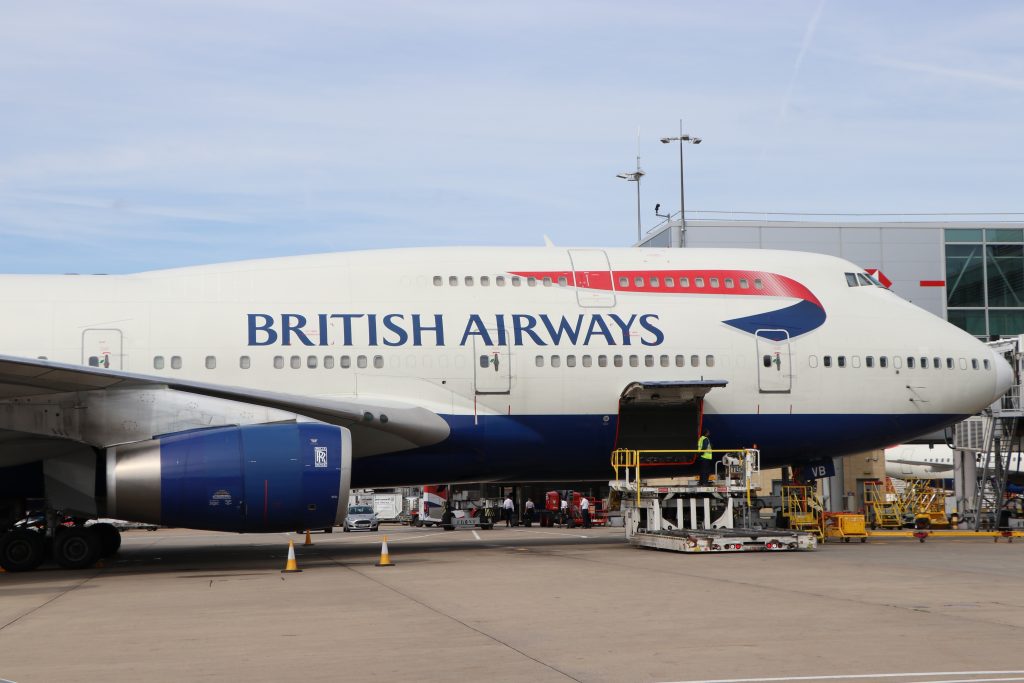
A British Airways 747 at London’s Heathrow Airport (Photo: AirlineGeeks | James Dinsdale)

Shift Away from Gatwick

British Airways is currently considering closing its operations out of its London Gatwick hub in favor of consolidating operations from its largest hub at London’s Heathrow Airport. The broad majority of flights operating out of its Gatwick Airport hub are leisure destinations that would otherwise be unviable from Heathrow due to various constraints such as runway capacity.

However, the very recent announcement of the addition of leisure flights to the Azores from Heathrow could foreshadow a definite shift of operations away from Gatwick.

Matteo Giardini

Originally from Italy, Matteo has spent the majority of his life living in Asia. He had his first flight when he was less than a year old on an MD-11 from Milan Malpensa to Osaka Kansai. When he was younger, airplanes would fly over his school on their way to Shanghai Pudong International Airport and he would spend much of his recess time plane-spotting. Today he is continuing with his passion for aviation and is now finishing his Master in Air Transport Management at Cranfield University in the United Kingdom.

Finnair Bolsters Schedule as Travel Demand Grows

A Finnair Airbus A320 on a runway
A Finnair A320 in Austria (AirlineGeeks - William Derrickson)

Finnair has announced it will add frequencies and destinations to its network this Winter in response to rising travel demand.

The news follows the airline’s growth of both passenger and cargo traffic in August. In August, passenger levels grew by 24.5% compared to the previous month and 38.1% versus 2020.

Asia

The oneworld carrier has said it is continuing to serve key destinations in Asia. The airline currently has daily flights to Tokyo, Seoul and Bangkok alongside many weekly services to Singapore and Hong Kong.

Finnair’s Osaka service will resume in October. Furthermore, its Japanese portfolio will expand in February with a new route from Helsinki to Nagoya.

The airline will also begin to serve Dubai with a widebody aircraft. Finnair has previously used Boeing 757s and, more recently, Airbus A321s to operate the service.

Finnair will also begin new services from Stockholm to Phuket and Bangkok, as previously reported. These services will start in late October and use Airbus A350s aircraft.

North America

The airline currently operates daily flights to New York from its hub in Helsinki. In addition, it serves Los Angeles and Miami three times a week.

Finnair will grow its North American services in anticipation of the winter schedule. The strengthening includes making its Chicago service year-round rather than only serving the city in the summer.

The airline’s new Stockholm hub will also receive a route to Miami, again served by the A350 starting in October.

Europe

Finnair’s European network will increase throughout the winter. Amsterdam, Munich, Dusseldorf, Berlin and Frankfurt are among the cities Finnair will serve twice a day. Moreover, the airline will connect Helsinki with London and Paris three times a day.

Finnair is also increasing frequencies to St. Petersburg to support traffic flows to its North American destinations.

The airline is also introducing Krakow and Gdansk in Poland for the winter season. In addition, it is adding services to Spanish holiday destinations such as Malaga, the Canary Islands, Madrid and Barcelona.

Finnair reports that winter travelers continue to be attracted to the Finnish Lapland. As such, it will offer four daily connections to Rovaniemi, Ivalo and Kittilä from Helsinki. Furthermore, there will be two daily services to Kuusamo.

In an airline press release, Finnair’s Chief Commercial Officer, Ole Orvér, said, “We are excited to be able to expand the breadth and depth of our network, enabling better connections for customers as travel continues to pick up.”

“We are also re-introducing services to support a smooth and convenient travel experience. We opened our Schengen lounge already in August, and Finnair’s Non-Schengen Lounge at Helsinki airport will open in early October,” Orvér commented.

“Our customers can enjoy our newly refreshed onboard food and drink service where we combine Nordic flavours with tastes borrowed from our friends abroad,” continued Orvér.

Connor Sadler

Connor has been in love with flying since the first time he boarded a plane when he was 5 years old. He loves all things aviation, and he hopes to make that his full time career in the future.

Bombardier Announces Challenger 350 Revamp

Bombardier unveils the Challenger 3500 (Photo: Bombardier)

Bombardier introduced their super mid-size Challenger 3500 aircraft at their production facility in Montreal on Tuesday morning. The aircraft is a revamp of their already-existing Challenger 350 aircraft, originally introduced in 2014.

While maintaining many of the 350’s features relating to performance, reliability and comfortability of ride, the manufacturer looks to modernize the aircraft by incorporating aspects seen on Bombardier’s larger Global family aircraft. “We are raising the bar on our competition with a refreshed product,” says Bombardier Chief Executive Officer Eric Martel. 

The announcement of the upgraded jet comes at a time where private air travel is booming due to the pandemic, and Bombardier looks to capitalize on that in the midsize segment. “We have been leading that market segment,” Martel states. “The changes we are making now will keep us leaders in that position for a long time.”

The 3500 will continue utilizing the 350’s twin Honeywell HTF7350 engines capable of producing 7,323 pounds of thrust and carrying the 3500’s eight passengers and two crew members 3,400 miles at top speeds of Mach 0.83.

Upgrades and Enhancements 

One improvement that will be utilized on the aircraft includes a reduction in the plane’s cabin-altitude pressure.

“We are pumping more air into the bubble,” states Mathieu St Cyr, Manager of Sales and Engineering. “At 41,000ft, it is going to feel as if you are sitting on the ground in Denver.”

This is done through the reinforcement of the jet’s baggage-compartments bulkhead. “When cruising at 41,000ft, that pressure will be equivalent to 4,850ft – about 2,000ft less than the 350’s cabin-altitude pressure,” St Cyr said.

In the cockpit, the aircraft will utilize a new autothrottle system, allowing the pilot to control the power setting of the aircraft’s engines by specifying a specific flight characteristic rather than manually controlling the fuel flow. It will also incorporate four cockpit display screens, synthetic vision and a dual flight management system with Localizer Performance with Vertical Guidance (LPV) and Required Navigation Performance (RNP) approach. 

The 3500 will also join the Global 7500 in making use of Bombardier’s Smart-Link-Plus feature free-of-charge. Developed by GE Aviation, the Smart-Link-Plus feature allows real-time data-driven decisions in-flight to effectively dispatch, troubleshoot and track their aircraft service needs, resulting in quicker, more efficient fixes. 

Cabin upgrades is where Bombardier plans to capture the attention of its buyers. One of the aircrafts biggest eye-catchers is its “Nuage” leather seats, first introduced in the 7500. They employ a patented tilt link system to provide a deep recline position for additional comfort, as well as a “floating base” for ease of movement and tilted headrest.

“It’s the first time that a seat of this calibre is in the medium category,” says Laurence Casia, manager of industrial design and cabin innovation. 

The aircraft will also include a voice-controlled cabin management system for lighting, sound and temperature; wireless charging pads and standard 24-inch 4K displays. The cabin features an “audio sweet spot,” a feature also transferred from the Global 7500 cabin.

“Our immersive sound system offers an audio sweet spot that lets passengers center the sound of their precise location in the cabin,” Martel said.

Some other improvements include a complete redesign of the aircrafts forward galley area which will include a glass wine cooler, an oven hidden by tri-fold doors, an area for a large espresso machine, soft-close drawers, etc. 

Sustainability

The 3500 is also in line with the company’s sustainability efforts. The aircraft will become Bombardier’s second aircraft and first ever super-midsize plane sold with a “Environmental Product Declaration” (EPD), a document disclosing the plane’s complet environmental impact, including CO2 emission, water consumption, noise, etc.  

With all of its new features and technologies on the 3500, the aircraft lists at an extremely competitive price of $26.7 million, the same price as its 350 predecessor, contributing to the Canadian manufacturer’s advantage on the midsize market. The Challenger aims to take flight in the latter half of 2022.

Chase Hagl

Chase Hagl grew up in Twin Falls, Idaho. His love and passion for Aviation landed him in Orem, Utah where he obtained a B.S. in Aviation Management with a minor in Business Management from Utah Valley University. Chase currently works as a flight attendant in Charleston, SC and is also the primary Inflight ASAP ERC representative for startup airline, Breeze Airways. His experience in the aviation industry spans back four years, working in areas including agriculture application, customer service, maintenance, and flight ops. In his free time, Chase enjoys road biking, astronomy, and flying.
Sign-up for newsletters & special offers!

Get the latest stories & special offers delivered directly to your inbox

SUBSCRIBE

Uh-oh! It looks like you're using an ad blocker.

Our website relies on ads to provide free content and sustain our operations. By turning off your ad blocker, you help support us and ensure we can continue offering valuable content without any cost to you.

We truly appreciate your understanding and support. Thank you for considering disabling your ad blocker for this website