Stories

Breeze Adds Three New Destinations

Carrier announces new markets, plus dozens of new and returning routes starting this summer.

Breeze A220
A Breeze A220 aircraft. (Photo: AirlineGeeks | William Derrickson)

Breeze on Wednesday announced a wide-ranging route expansion that will add new destinations, restore previously served markets, and introduce dozens of new and seasonal routes across its network beginning this summer.

The expansion includes new service to Atlantic City, New Jersey; Brownsville, Texas; and Nassau, Bahamas, along with the carrier’s return to San Antonio after a four-year absence. 

Atlantic City will join Breeze’s network with new nonstop service to Charleston, South Carolina, beginning May 6, and to Raleigh-Durham starting June 11. The carrier will also offer one-stop BreezeThru service between Atlantic City and Tampa beginning June 11.

A Breeze A220
A Breeze A220. (Photo: Shutterstock | Wenjie Zheng)

Brownsville will receive new nonstop service to Orlando starting May 15, marking Breeze’s entry into the South Texas market.

International Expansion

Breeze will also add new international service between Tampa and Nassau, Bahamas, beginning June 11. The route will operate twice weekly and will become the airline’s fourth international destination.

The airline will restore service to San Antonio, Texas, with new nonstop flights from Memphis and Raleigh-Durham beginning May 8. Additional seasonal nonstop service from Pensacola will launch June 10, along with one-stop BreezeThru service from Tampa.

Additional Routes

As part of the expansion, Breeze is also introducing several new and seasonal domestic routes, including:

  • Columbus–Greenville-Spartanburg nonstop service beginning May 8
  • Huntsville–Fort Lauderdale nonstop flights starting June 12
  • Seasonal Hartford–Louisville nonstop service launching May 29
  • Seasonal Los Angeles–Louisville nonstop flights beginning May 6
  • Seasonal Pittsburgh–Louisville nonstop service starting May 7
  • Seasonal Madison–Raleigh-Durham nonstop flights beginning May 8

Several routes will also be offered as BreezeThru services, including Columbus–Orlando and Raleigh-Durham–San Antonio.

Ryan Ewing

Ryan founded AirlineGeeks.com back in February 2013 and has amassed considerable experience in the aviation sector. His work has been featured in several publications and news outlets, including CNN, WJLA, CNET, and Business Insider. During his time in the industry, he's worked in roles pertaining to airport/airline operations while holding a B.S. in Air Transportation Management from Arizona State University along with an MBA. Ryan has experience in several facets of the industry from behind the yoke of a Cessna 172 to interviewing airline industry executives. Ryan works for AirlineGeeks' owner FLYING Media, spearheading coverage in the commercial aviation space.

Aer Lingus Confirms It Will Close U.K. Base

Service between Manchester and New York-JFK will end in February.

Aer Lingus A330-300
An Aer Lingus Airbus A330-300 (Photo: AirlineGeeks | William Derrickson)

After months of deliberations, Irish flag carrier Aer Lingus has decided to shutter its long-haul base in Manchester, England.

In a message posted on its website, the airline said the base will close permanently on March 31. Nonstop transatlantic service between Manchester and New York-JFK will end earlier, on Feb. 23.

Aer Lingus also serves Orlando, Florida, and Bridgetown, Barbados, from Manchester, and those routes will also end, though it was not immediately clear when.

“We understand that this is disappointing news and apologize for the disruption to our customers,” the carrier’s message read. “All impacted customers are being informed of the cancellation of flights directly and provided with reaccommodation and refund options.”

Aer Lingus said it will operate flights between Dublin and Barbados in April and May to reaccommodate some affected customers. Short-haul service between Manchester and destinations in Ireland will not be impacted by the base closure.

The airline also serves New York-JFK and Orlando from Dublin.

Aer Lingus acknowledged last year that Manchester was underperforming relative to its Ireland-based long-haul operations. Officials said they were considering their options, including shutting down the base.

Earlier this month, the carrier ended transatlantic ticket sales to and from Manchester. The step was taken “to minimize customer disruption in the event of a closure of the Manchester base,” Aer Lingus said at the time.

Zach Vasile

Zach Vasile is a writer and editor covering news in all aspects of commercial aviation. He has reported for and contributed to the Manchester Journal Inquirer, the Hartford Business Journal, the Charlotte Observer, and the Washington Examiner, with his area of focus being the intersection of business and government policy.

NTSB Blames ‘Systemic Failures’ For Deadly D.C. Collision

The agency will issue a final report on the accident in the coming weeks.

DCA aircraft
Aircraft at Reagan National Airport. (Photo: Ryan Ewing)

Longstanding problems with route design, air traffic control practices, and safety protocols contributed to last year’s fatal collision of a commercial jet and a U.S. Army helicopter over Washington, D.C., the NTSB said this week.

The agency capped an over eight-hour hearing Tuesday by voting to approve 74 findings and 50 recommendations to prevent similar accidents in the future. The FAA and the Army were singled out for “systemic failures” that made the airspace around Ronald Reagan Washington National Airport particularly dangerous.

“This complex and comprehensive one-year investigation identified serious and long-standing safety gaps in the airspace over our nation’s capital,” NTSB Chair Jennifer Homendy said in a statement. “Sadly, the conditions for this tragedy were in place long before the night of Jan. 29.”

American Airlines Flight 5342, operated by PSA Airlines, was approaching Washington National when it collided with a UH-60 Black Hawk helicopter over the Potomac River. All 67 people on both aircraft were killed.

The NTSB’s investigation found that the FAA’s helicopter route design in the Washington area did not provide necessary separation between helicopters and fixed-wing aircraft. The route structure at the time allowed helicopters to fly directly beneath an active approach corridor for commercial aircraft without sufficient risk mitigation measures, the agency reported.

NTSB graphic
An NTSB graphic showing the paths of the two aircraft. (Credit: NTSB)

The FAA’s guidance on helicopter route altitudes and boundaries was also deficient, the NTSB found, and unclear information created space for misinterpretation. Charts for fixed-wing pilots did not depict nearby helicopter routes that intersected approach paths.

Another major point of contention since the crash has been staffing at air traffic control facilities, and investigators said high workloads contributed to the accident by reducing controllers’ focus on potential or developing problems.

The NTSB also faulted the FAA for lacking effective strategies to reduce the risk of collisions around Washington National, even though close calls between commercial aircraft and helicopters were a recurring issue in the area.

The Army was criticized for failing to identify and address hazards associated with helicopter operations in congested civilian airspace. Investigators found that the Army did not have a flight data monitoring program for helicopters operating near major airports and had only limited participation in safety reporting systems.

Reagan National Airport
Ronald Reagan Washington National Airport. (Photo: Shutterstock | TJ Brown)

NTSB personnel also determined that neither aircraft was equipped with collision avoidance technology capable of providing effective alerts at the low altitude where the accident occurred. If the American flight had been equipped with an airborne collision avoidance system that used ADS-B In, the crew would have had better position information about the Army helicopter, the agency said. Such a system could have provided a first alert 59 seconds before the collision took place.

The NTSB’s recommendations – issued to the FAA, the Army, the U.S. Department of Transportation, the Department of Defense Policy Board on Federal Aviation, and the RTCA – call for reforms to helicopter route design, air traffic control procedures, data sharing and safety management systems, and collision avoidance technology.

Regulators have already implemented a number of safety measures intended to prevent military-civilian collisions at and around Washington National, with some taking effect within days of the crash. A helicopter route in the area was canceled, and new broadcasting requirements were imposed on military aircraft operating around the airport. An interim rule recently published by the FAA prohibits helicopters and powered lift aircraft from operating in certain areas around Washington National.

The NTSB is expected to issue a final report on the collision in the coming weeks.

Zach Vasile

Zach Vasile is a writer and editor covering news in all aspects of commercial aviation. He has reported for and contributed to the Manchester Journal Inquirer, the Hartford Business Journal, the Charlotte Observer, and the Washington Examiner, with his area of focus being the intersection of business and government policy.

Breeze Adds Learjets to Fleet

The aircraft will fly crew members, technicians, and aircraft parts.

A LearJet 45
A LearJet 45 (Photo: Shutterstock | Jonny Photo)

Breeze is adding two Learjet 45 business jets to its fleet, but they will not be used by commercial passengers.
Breeze founder and CEO David Neeleman told Aviation Week that the airline will use the two aircraft to transport crew members, technicians, and parts. By flying technicians directly to problem aircraft, the company can reduce downtime and improve overall efficiency and reliability, he said.

The jets will be based at the low-cost carrier’s maintenance center in Charleston, South Carolina. They are expected to enter service in February.

According to Aviation Week, Breeze has so far hired five pilots for the aircraft, and expects to increase that number to eight. They will begin training next month.

The pilots are being given seniority numbers, Neeleman noted, which has helped the carrier attract more experienced applicants.

Breeze’s current fleet consists of Airbus A220s and Embraer E190s.

Zach Vasile

Zach Vasile is a writer and editor covering news in all aspects of commercial aviation. He has reported for and contributed to the Manchester Journal Inquirer, the Hartford Business Journal, the Charlotte Observer, and the Washington Examiner, with his area of focus being the intersection of business and government policy.

American Flight Attendants Call For Change in Airline Leadership

The APFA slammed executives over the carrier’s latest earnings report.

American 787
An American Boeing 787-8. (Photo: AirlineGeeks | William Derrickson)

The labor union representing flight attendants at American Airlines is calling for a change in corporate leadership after fourth-quarter and full-year earnings fell short of industry expectations.

In a statement released Tuesday, the Association of Professional Flight Attendants said the latest financial results show American is falling further behind its main competitors, namely United and Delta.

“This is no longer an anomaly, but rather a pattern of failure under the leadership of CEO Robert Isom and the American Airlines Board of Directors,” the APFA said. “American’s workforce is not the problem. Leadership is.”

The union noted that while American’s and Delta’s full-year operating revenues were somewhat in line – $54.6 billion and $58.3 billion, respectively – Delta produced pre-tax profits of $5 billion, while American generated $352 million.

“It is easy to see why employees, investors, and Wall Street are deeply concerned, and it is no surprise why CEO Robert Isom has ended all labor-management meetings, employee town halls, Crew News sessions, and, perhaps most telling, the question-and-answer session at today’s State of the Airline,” the union said. “They don’t have answers, and the excuses have run out.”

The organization pointed out that American ranks below United and Delta in several metrics measured by J.D. Power North America’s Airline Satisfaction Study and The Wall Street Journal’s 2025 Best and Worst Airline Rankings. For Overall Best Airline, American fell from fifth place in 2023 to last in 2025, according to the union.

American A321
American A321 at Reagan National. (Photo: Ryan Ewing)

The statement expressed support for recent upgrades to American’s premium cabins but noted that coach cabins, “where many of our most loyal customers are seated,” remain “outdated, uncomfortable, and far from competitive.”

“For years, CEO Robert Isom and his team have solely focused on accountability, reliability, and profitability, ignoring investment in our product and the overall customer experience,” the APFA said. “During that time, our competitors focused on all aspects of their airlines, while American now stumbles to pick up the pieces.”

“The employees at American Airlines, our passengers, and the investors can no longer wait for Robert Isom and the American Airlines Board of Directors to deliver on their empty promises,” the union continued. “As the entire industry leaves American Airlines in the dust, it is time for new leadership and a new vision for American Airlines.”

Looking For a Rebound

The carrier on Tuesday reported fourth-quarter net income of $99 million, down from $590 million in the year-ago period, and full-year net income of $111 million, down from $846 million in 2024. American lost about $325 million in revenue in the fourth quarter due to the federal government shutdown, officials said.

Executives acknowledged the difficult quarter but said the airline is well positioned going into 2026, with years-long investments in aircraft, network, and premium offerings beginning to bear fruit. Projections call for nearly $2 of improvement in adjusted earnings per diluted share compared to 2025.

Zach Vasile

Zach Vasile is a writer and editor covering news in all aspects of commercial aviation. He has reported for and contributed to the Manchester Journal Inquirer, the Hartford Business Journal, the Charlotte Observer, and the Washington Examiner, with his area of focus being the intersection of business and government policy.

British Airways Flight Loses Wheel During Takeoff

The aircraft landed safely in London.

A BA A350-1000 in London.
A BA A350-1000 in London. (Photo: AirlineGeeks | William Derrickson)

A British Airways Airbus A350-1000 lost a wheel while departing Harry Reid International Airport in Las Vegas on Monday.

The takeoff was captured by an automated livestream of the airport’s runways Monday night. The wheel can be seen falling to the ground as the aircraft climbs and its landing gear retracts. It appeared to fall from the right landing gear.

It was not immediately clear what caused the separation.

The airport confirmed to KVVU-TV that the wheel was located on airport property. It did not injure anyone or cause any damage to airport facilities, officials said.

The flight landed safely at its destination, London Heathrow.

“Safety and security underpins everything we do and we’re supporting the authorities with their investigations,” British Airways said in a statement.

Zach Vasile

Zach Vasile is a writer and editor covering news in all aspects of commercial aviation. He has reported for and contributed to the Manchester Journal Inquirer, the Hartford Business Journal, the Charlotte Observer, and the Washington Examiner, with his area of focus being the intersection of business and government policy.

Delta Orders Over 30 Widebody Aircraft

Deliveries are set to begin in 2029.

Delta A350
A Delta A350-900. (Photo: AirlineGeeks | William Derrickson)

Delta has ordered 31 new Airbus aircraft as part of its fleet renewal and network expansion strategy.

The carrier said Tuesday that it committed to purchasing 16 more A330-900s and 15 more A350-900s, with options for 20 additional widebody aircraft.

Deliveries are set to begin in 2029.

Delta leaders said the new airplanes will enable growth in long-haul markets such as Asia, Africa, the Middle East, and the South Pacific. Recently announced and launched routes to Taipei, Melbourne, Hong Kong, and Riyadh are using or will use A350s.

The new jets are also expected to help expand premium capacity, an increasingly important revenue channel for the airline.

“As we grow our international footprint and prepare our fleet to serve expanded long-haul markets, these aircraft will enhance our capabilities and elevate our premium offerings,” CEO Ed Bastian said in a statement. “We value our long-standing partnership with Airbus, and with these widebody aircraft we will see long-term growth and cost benefits for years to come.”

Delta A330-900neo
A Delta A330neo (Photo: Shutterstock | Markus Mainka)

The A330-900s will be powered by the Rolls-Royce Trent 7000 engine, while the A350-900s will utilize the Trent XWB-84 EP. Delta said it entered into a long-term maintenance agreement with Rolls-Royce to service the engines.

With this week’s orders, Delta’s A330-900 fleet will increase to 55 aircraft, officials said, and the A350 fleet will reach 79 aircraft, including 20 A350-1000s that the airline expects to begin receiving in early 2027.

Zach Vasile

Zach Vasile is a writer and editor covering news in all aspects of commercial aviation. He has reported for and contributed to the Manchester Journal Inquirer, the Hartford Business Journal, the Charlotte Observer, and the Washington Examiner, with his area of focus being the intersection of business and government policy.

American Projects Revenue Growth in 2026

The carrier said it is seeing an encouraging increase in bookings this month.

An American Airlines Boeing 777-300ER aircraft.
An American 777-300ER aircraft. (Photo: AirlineGeeks | William Derrickson)

American Airlines said it is poised to grow revenue this year after absorbing a financial blow from the federal government shutdown and a late-year softening in bookings.

The carrier said Tuesday that systemwide revenue intakes for the first three weeks of 2026 are up double digits year over year, driven by strong performance in the premium cabins and corporate channels. Based on those bookings, officials said, the company expects positive first-quarter unit revenue growth between 7% and 10%.

Executives expect that momentum to continue as American begins to benefit from what they described as years-long investments in its aircraft fleet, network, premium products, and loyalty program. Projections call for nearly $2.00 of improvement in adjusted earnings per diluted share compared to 2025.

“American Airlines is positioned for significant upside in 2026 and beyond,” CEO Robert Isom said in a statement. “We have built a strong foundation, and we look forward to taking advantage of the investments we have made in our customer experience, network, fleet, partnerships, and loyalty program.”

American on Tuesday posted fourth-quarter operating revenue of $12.6 billion, up slightly from the year-ago period, and net income of $99 million, down from $590 million over the same interval. The federal government shutdown – which led to significant delays and cancellations at some of the nation’s largest airports – cost the carrier about $325 million in revenue in the quarter, officials said.

Full-year revenue amounted to $49.6 billion, while net income came out to $111 million.

Zach Vasile

Zach Vasile is a writer and editor covering news in all aspects of commercial aviation. He has reported for and contributed to the Manchester Journal Inquirer, the Hartford Business Journal, the Charlotte Observer, and the Washington Examiner, with his area of focus being the intersection of business and government policy.

Avelo Launches Credit Card

Users will get Avelo Cash back on purchases, a free carry-on bag, and other perks.

Avelo Boeing 737
An Avelo 737-800. (Photo: Avelo)

Avelo on Tuesday announced the launch of its own branded credit card, known as the Avelo Airlines World Elite Mastercard.

The ultra-low-cost carrier is partnering with credit card platform Cardless to introduce and manage the cards.

Airline officials said the Mastercard gives cardholders 5% in Avelo Cash back on Avelo purchases and 2% Avelo Cash back on all other purchases. Avelo Cash is the carrier’s digital travel credit system.

Other benefits include a free carry-on bag, priority boarding, and standard seat selection capabilities.

“Our customers have been asking for a loyalty program with unique perks for Avelo travelers, [and] the Avelo Airlines Mastercard offers just that,” Avelo founder and CEO Andrew Levy said in a news release. “This is the future of airline financial products, and we’re bringing it to our customers today while continuing our purpose of inspiring travel through convenience, affordability, and industry-leading reliability.”

Avelo leaders said Cardless’ platform allows for faster approvals and more intelligent management of benefits and offers than a card issued by a legacy bank. The partners said they will continuously review data from the cards to optimize rewards and use AI to personalize the card for users.

Zach Vasile

Zach Vasile is a writer and editor covering news in all aspects of commercial aviation. He has reported for and contributed to the Manchester Journal Inquirer, the Hartford Business Journal, the Charlotte Observer, and the Washington Examiner, with his area of focus being the intersection of business and government policy.

United Adds Five Routes, Expands Others

Service will start this spring.

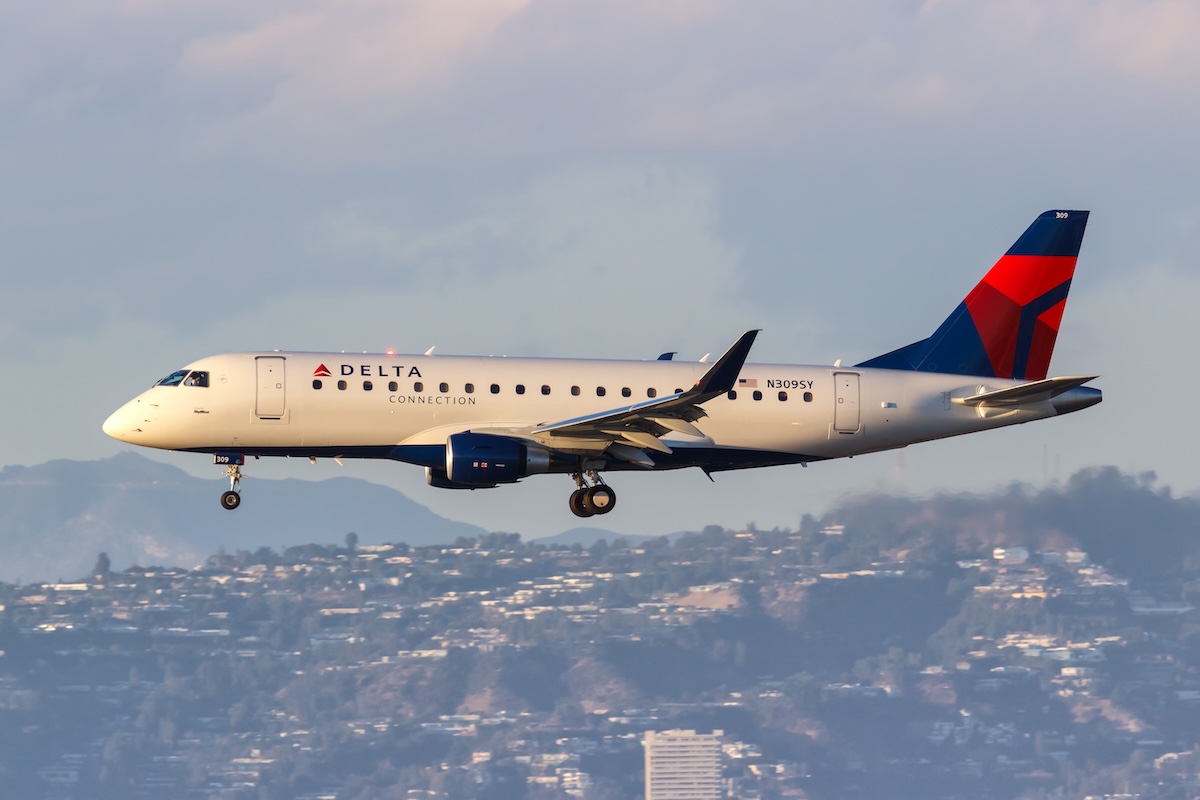
A United Express Embraer E175 operated by Republic Airways
A United Express Embraer E175 operated by Republic Airways. (Photo: Shutterstock | oasisamuel)

United is again building up operations in its hometown ahead of the spring and summer.

The carrier said Tuesday that it will add nonstop service from Chicago O’Hare to Champaign/Urbana, Illinois; Kalamazoo, Michigan; La Crosse, Wisconsin; Lansing, Michigan; and Bloomington/Normal, Illinois.

Service to Champaign/Urbana and Kalamazoo will start April 30, while service to La Crosse, Lansing, and Bloomington/Normal will commence May 7.

Each new connection will operate four times daily, airline officials said.

United also plans to add flights on over 80 existing routes from Chicago. The carrier did not name them all but said destinations such as Boston, Nashville, Tennessee, Los Angeles, San Francisco, and Dallas/Fort Worth are included.

The airline also plans to connect Chicago with Guadalajara, Mexico, between June 8 and 27 to help fans attend soccer games during the 2026 FIFA World Cup. The temporary service to Guadalajara will operate daily.

With these additions, United expects to operate up to 750 flights per day from Chicago O’Hare this summer. The carrier’s Chicago hub will become the third-largest hub operated by any airline in the U.S., executives said.

“We have spent the past decade building and executing a strategy that is focused on winning brand loyal customers by giving them more value when they fly United – and nowhere is that more apparent than in Chicago,” Omar Idris, United’s vice president for Chicago O’Hare, said in a statement. “This growth at O’Hare highlights our commitment to invest in our network, customers, and hiring in the city we call home.”

United is also in the process of adding new destinations from Chicago announced late last year, including Santa Barbara, California; Eugene, Oregon; Monterey, California; Bristol/Tri-Cities, Tennessee; Erie, Pennsylvania; Rochester, Minnesota; Wausau, Wisconsin; and Marquette, Michigan.

Zach Vasile

Zach Vasile is a writer and editor covering news in all aspects of commercial aviation. He has reported for and contributed to the Manchester Journal Inquirer, the Hartford Business Journal, the Charlotte Observer, and the Washington Examiner, with his area of focus being the intersection of business and government policy.
Sign-up for newsletters & special offers!

Get the latest stories & special offers delivered directly to your inbox

SUBSCRIBE

Uh-oh! It looks like you're using an ad blocker.

Our website relies on ads to provide free content and sustain our operations. By turning off your ad blocker, you help support us and ensure we can continue offering valuable content without any cost to you.

We truly appreciate your understanding and support. Thank you for considering disabling your ad blocker for this website