










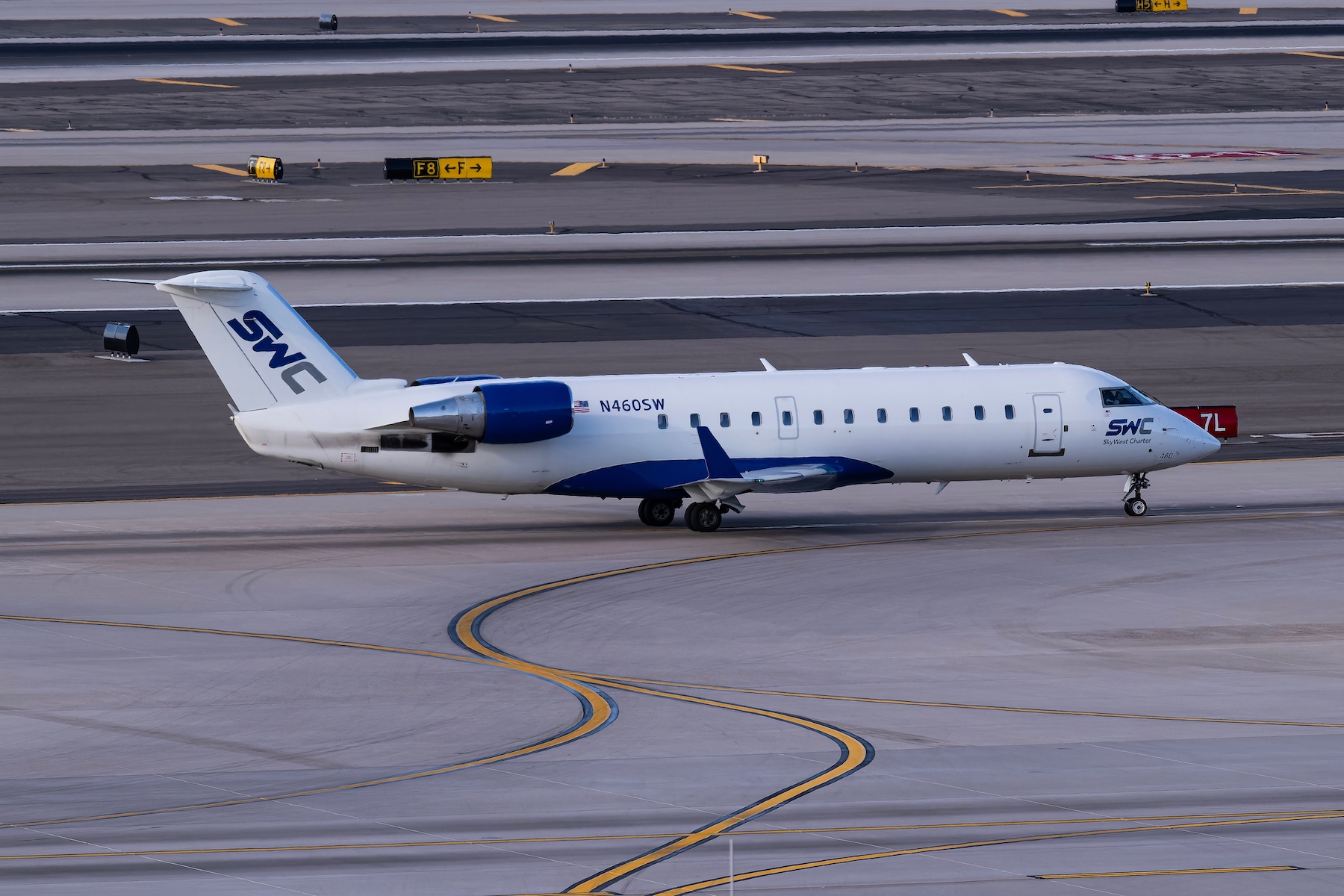

The U.S. Department of Transportation (DOT) has tentatively approved SkyWest Charter’s application to operate as a commuter air carrier, subject to certain conditions. This decision comes after nearly three years of regulatory challenges for the SkyWest subsidiary.
SkyWest Charter (SWC) plans to operate public charter flights using 30-seat CRJ-200 aircraft under Part 135 regulations. The carrier aims to serve small communities that have seen reductions in air service, potentially including Essential Air Service (EAS) markets.
In addition, the carrier currently offers on-demand charter services. It operates 18 aircraft and plans to serve 25 markets within the first year.
The DOT’s decision comes despite objections from the Air Line Pilots Association and other groups that argued that SWC’s proposed operations could undermine safety standards. However, the DOT noted that current FAA regulations allow public charter operations using aircraft with 30 or fewer seats under Part 135 rules.
In its filings, the carrier said it would exceed basic requirements for Part 135 operators. This includes operating with two ATP-rated captains, implementing safety management systems, and following Part 117 rest rules. The carrier also plans to only operate from airports with TSA checkpoints.
Continued Optimism
SkyWest CEO Chip Childs expressed optimism regarding the venture, stating the company is “reengaging” with the FAA on this “incredibly important strategic opportunity” to better serve communities.
Interested parties have 14 days to file objections to the DOT’s tentative findings. If no substantive objections are received, the agency will issue a final order, subject to SWC meeting all requirements.
Starting under the Biden administration, the FAA began reviewing regulations governing public charter operators, with potential changes that could impact carriers like SWC and JSX. It remains to be seen whether this push for regulatory change continues under Trump.