










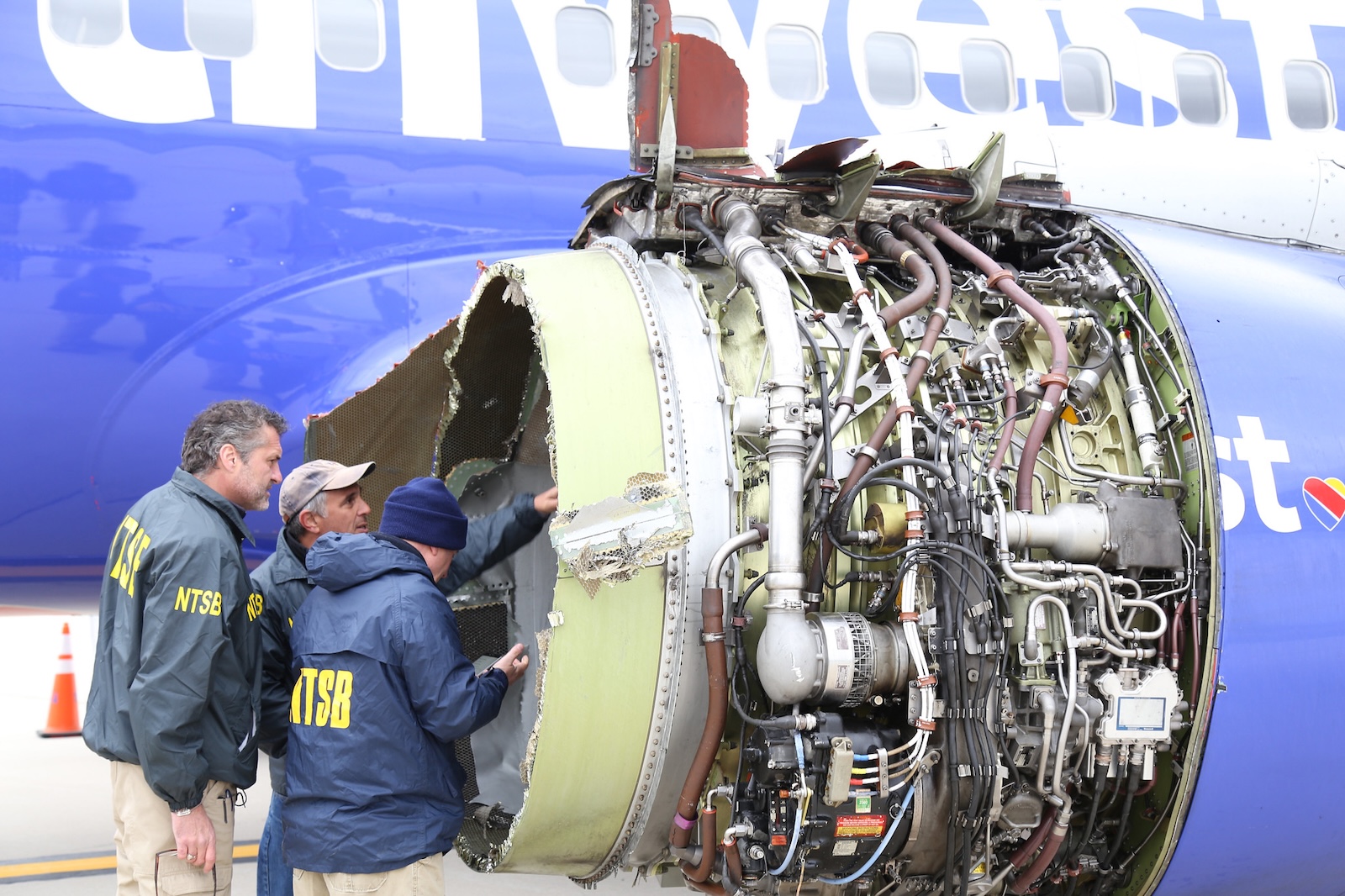

The FAA has issued a new airworthiness directive (AD) to address the unsafe condition of CFM56-7B engines on several different types of Boeing aircraft.
The AD applies to Boeing 737-600, -700, -700C, -800, -900 and -900ER series airplanes. It was adopted after two engine fan blade-out events caused the separation of engine inlet cowl and fan cowl parts from airplanes.
“In one event, fan cowl parts damaged the fuselage, which caused loss of pressurization and subsequent emergency descent,” the AD stated.
One passenger was killed in that particular incident during a 2018 Southwest flight from New York to Dallas.
Per the AD, operators are required to replace specified inlet cowl aft bulkhead fasteners for certain airplanes. Other airplanes will need to have their inlet cowl aft bulkhead fastener inspected and replaced if rivets are found.
Additionally, all airplane models addressed will need their crushable spacers – used to attach the inlet cowl to the engine fan case – replaced. Installing a serviceable inlet cowl is also permitted.
“The FAA is issuing this AD to address inlet cowls that are not strengthened, which could, in the event of an FBO occurrence, depart the airplane potentially damaging the airframe structure or striking the fuselage and windows,” the AD stated. “The unsafe condition, if not addressed, could result in loss of control of the airplane, and a hazard to window-seated passengers aft of the wing.”
“In addition, the unsafe condition could result in significantly increased drag of the airplane, which, during an extended operations (ETOPS) flight, could lead to fuel starvation and a forced off-airplane landing,” the AD continued.
The FAA estimated that this AD affects 1,979 airplanes registered in the U.S. and could cost operators up to $18 million to conduct inspections and replace fasteners. Crushable spacer replacements are estimated to cost U.S. operators $32 million.
