










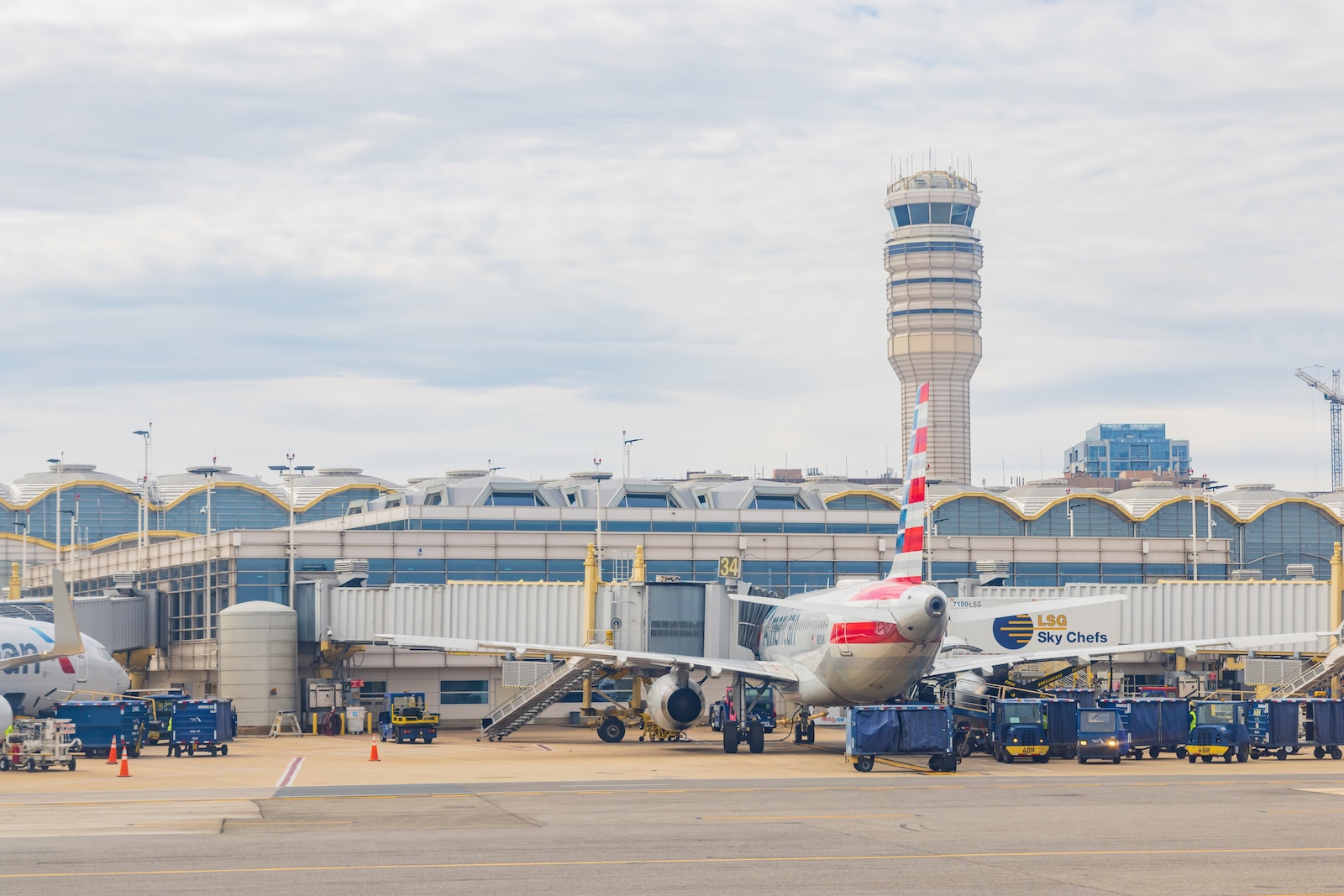

The Ronald Reagan Washington National Airport has seen a substantial decrease in passengers following January’s midair collision in Washington D.C.
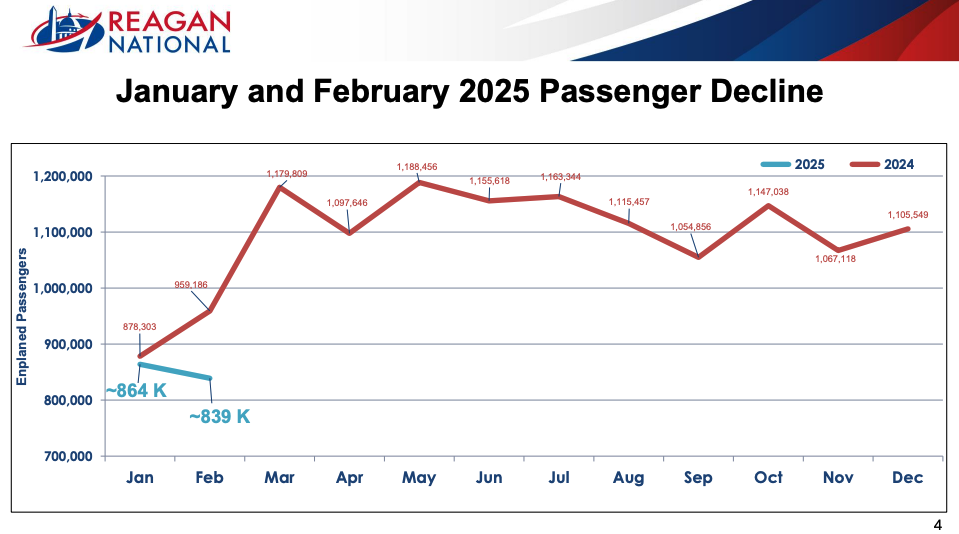
According to a recent report by the Metropolitan Washington Airports Authority (MWAA), the airport saw over 120,000 less enplaned passengers in February 2025 compared to the same month a year prior.
Aside from the 12% drop in passengers, February also saw a substantial decrease in on-time arriving flights from 88.7% last year to 58.5%. Arriving flight delays increased from 10.8% in February 2024 to 33.9% in February 2025.
Cancelled arriving flights also increased from 0.5% to 7.6% between the two years.
The report attributed this decline in travelers to the deadly midair collision between a PSA Airlines flight and a U.S. Army Black Hawk helicopter on Jan. 29. It also noted winter weather and economic challenges.
The Washington airport saw over 14 inches of snow in January and February, the report stated, leading to flight cancellations and delays. The weather brought on unplanned expenses totaling $1.65 million.
The report diagnosed “uncertain economic confidence” from the Middle East and Ukraine conflicts, and government downsizing in Washington, D.C. as other factors to the decline in travelers.
A graphic included in the report indicated that expenses per passenger are likely to increase as passenger numbers, non-airline revenue, and the customer experience suffer.
Operational Impact of Jan. 29 Collision
The report also gave a timeline of significant events from Jan. 29’s accident causing diversions, airfield and runway closures, to Feb. 11, when the remaining runways were reopened.
The crash caused several operational impacts for the D.C. airport. The Federal Aviation Administration capped the airport’s normal arrival rate of 32 flights per hour to 28 per hour one day after the incident.
On Jan. 31, the FAA mandated a pause on all flights at Reagan National whenever a helicopter was operating in close proximity. This order also restricted helicopter operations in the area to law enforcement, medical flights, and VIP transports.
On Feb. 6, the FAA dropped the airport’s arrival rate from 28 flights per hour to 26. The rate was later raised back to 28 when Runways 15/33 and 4/22 reopened on Feb. 11.
Flight rates were bumped up again to 30 flights per hour on Feb. 28.
FAA Ups Air Traffic Controller Support
In an emailed statement, the FAA said it is increasing support and oversight for air traffic controllers at Reagan National, and is evaluating the current arrival rates at the airport.
“To support the well-being of controllers, a Critical Incident Stress Management (CISM) team will visit DCA in early April, offering confidential support for staff following stressful events,” the FAA stated. “The FAA will also conduct regular wellness checks at the facility.”
This move follows a bloody brawl between controllers in the tower last week. One controller has been placed on leave and charged by authorities following the fight.
The FAA said it is increasing operational supervisor staffing at the airport from six personnel to eight. It is also reviewing staffing numbers for certified professional controllers.
The agency will also review scheduled flight times that are disproportionately gravitating to the beginning and end of each hour, a topic also covered in the MWAA report.
