










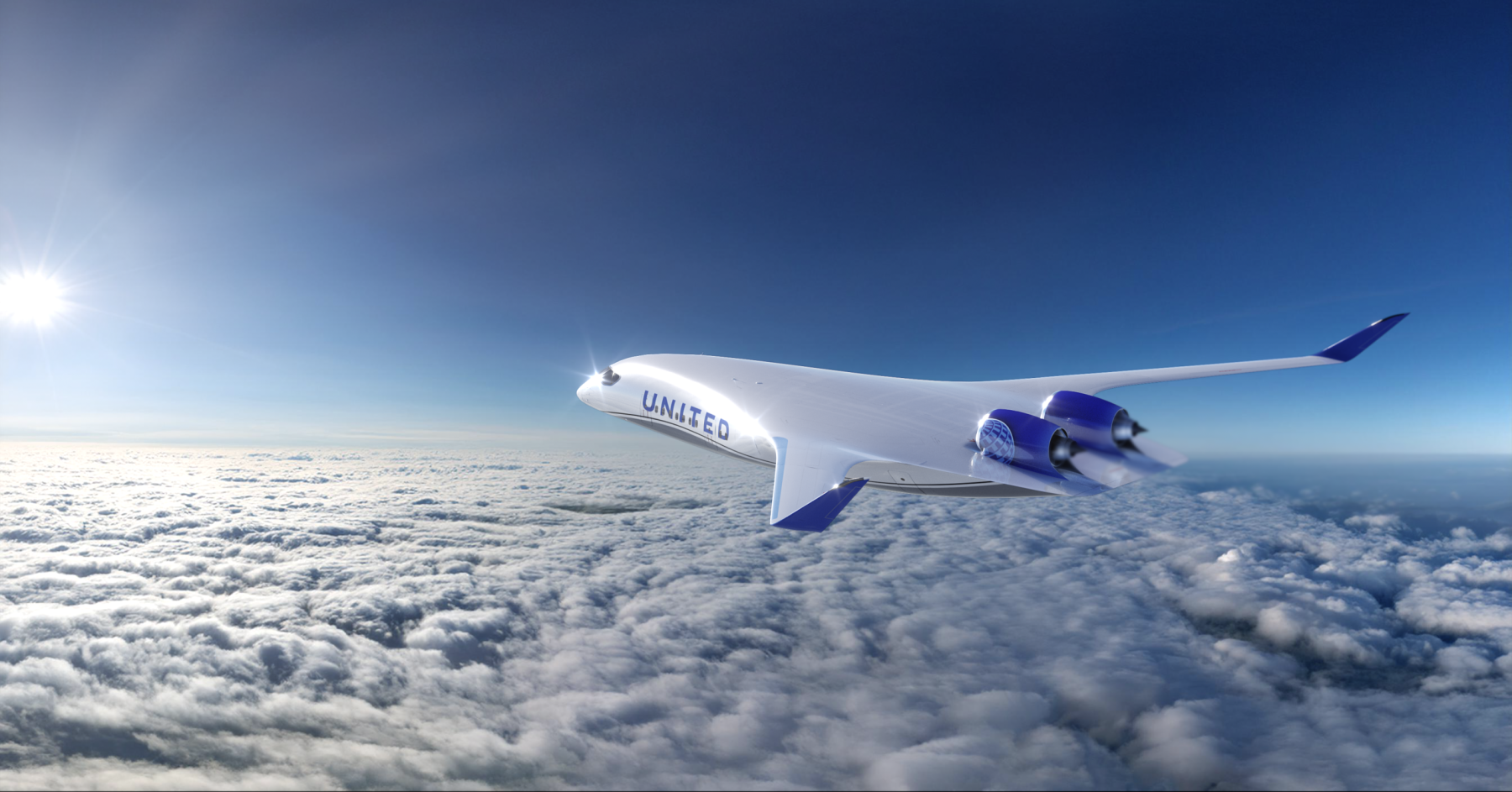

United has made an investment in JetZero, an aerospace startup developing blended wing body (BWB) aircraft. The agreement includes a potential order for up to 200 of JetZero’s next-generation aircraft, consisting of an initial purchase of 100 airplanes, with an option to acquire an additional 100 units.
This deal is contingent on JetZero meeting key development milestones, which include the successful completion of the full-scale demonstrator by 2027.
JetZero’s Z4 design promises to significantly reduce fuel burn, with estimates suggesting a 50% reduction in fuel consumption per passenger mile compared to conventional aircraft of similar size. The Z4 is designed to operate on both traditional jet fuel and sustainable aviation fuel (SAF).
“The investment reflects our vision to innovate in areas that not only benefit our operational efficiency but enhance the overall customer experience,” said Andrew Chang, head of United Airlines Ventures (UAV). “JetZero’s BWB design offers a unique opportunity to improve fuel efficiency while providing a larger, more comfortable cabin for passengers.”
In addition to United, other major carriers have also expressed interest in JetZero’s aircraft design. Alaska has made an investment through its Alaska Star Ventures program, supporting the startup’s sustainable aviation goals. Delta has partnered with JetZero to provide operational expertise for the Z4 model, while EasyJet is exploring how the BWB design can be integrated with hydrogen-powered technology to further reduce carbon emissions.
Fuel Efficiency and Seamless Integration
The Z4’s unconventional airframe shape — merging wings and fuselage — reduces drag and increases lift, helping to minimize fuel usage, particularly on long-haul flights. For instance, a flight from New York/Newark to Palma de Mallorca, Spain, would use up to 45% less fuel compared to current twin-aisle aircraft operating the same route.
This agreement comes on the heels of a $235 million contract JetZero received from the U.S. Air Force in 2023 to develop the full-scale demonstrator. The Air Force sees potential in the BWB design for military applications such as air transport and refueling tankers.
