










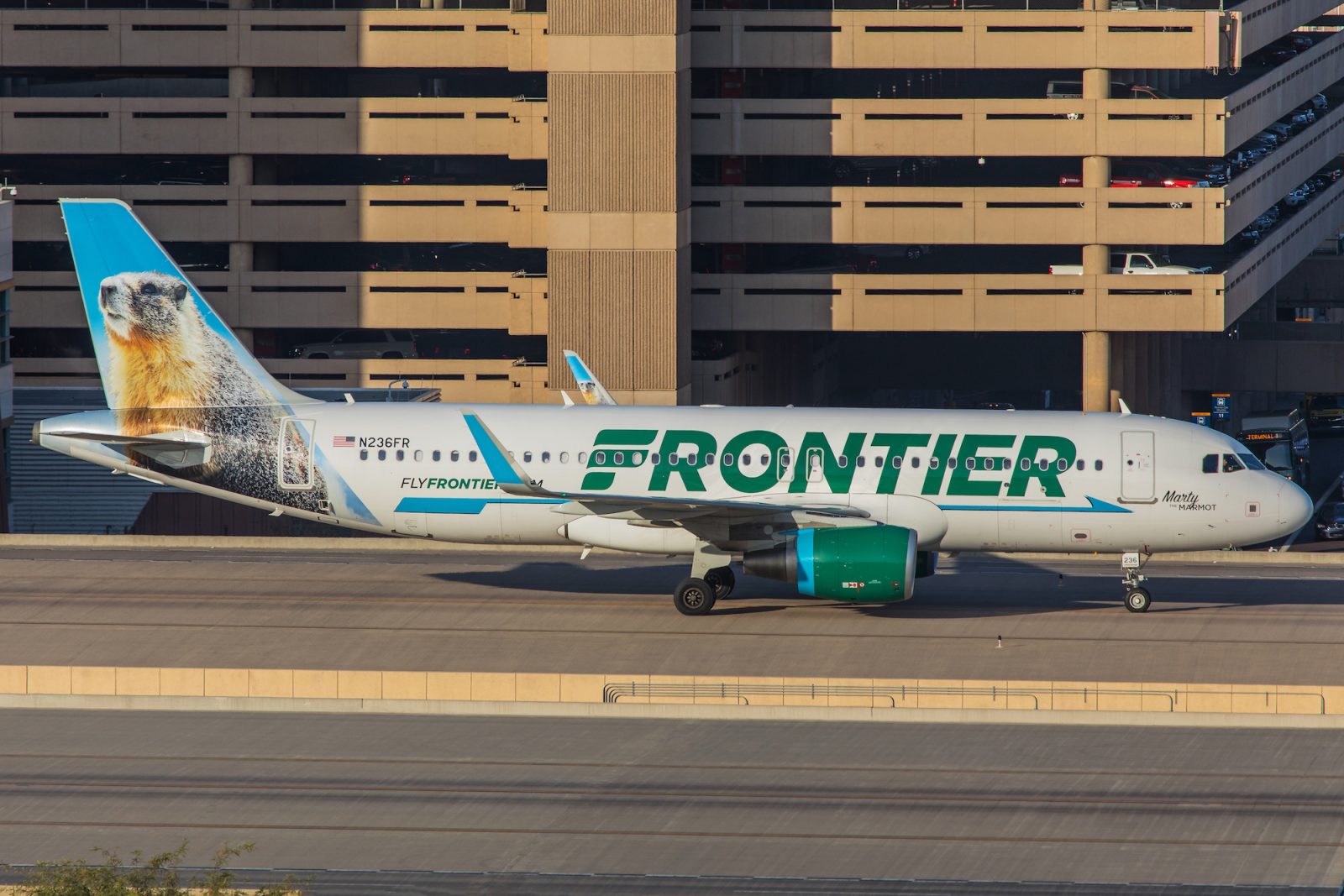

Frontier has reaffirmed its second-quarter financial guidance ahead of an investor conference set for Thursday. The company said it expects an adjusted loss per share in line with projections originally announced in its May 1 earnings release.
According to the 8-K filing made on May 20, the reaffirmation is based on improving travel demand following a dip in March and April. Frontier said revenue per available seat mile (RASM), adjusted for a 1,000-mile stage length — a non-GAAP metric it uses to normalize for flight distance — is expected to increase slightly in the second quarter compared to the same time last year, even with reduced capacity.
“Current booking trends suggest demand for May and early summer travel has stabilized,” Frontier CEO Barry Biffle said during a May 1 earnings call.
As of Sunday, load factors were slightly above last year’s numbers, and RASM was up by a low-single-digit percentage. The airline expects similar trends to continue through the rest of May. The average flight length in the second quarter is projected to be about 4% longer than in the same period last year.
Frontier said its plans to reduce capacity for the remainder of 2025 are unchanged. The reductions will focus on off-peak travel days and are expected to be in the low single digits compared to 2024 levels.
The ultra-low-cost carrier also said it is still targeting a return to profitability in the second half of 2025. This outlook is based on what it described as “moderating industry capacity,” benefits from recent commercial investments, and tight cost and capital spending controls.
Despite “macro uncertainty,” the airline stated that recent booking activity supports its expectations for the quarter.