











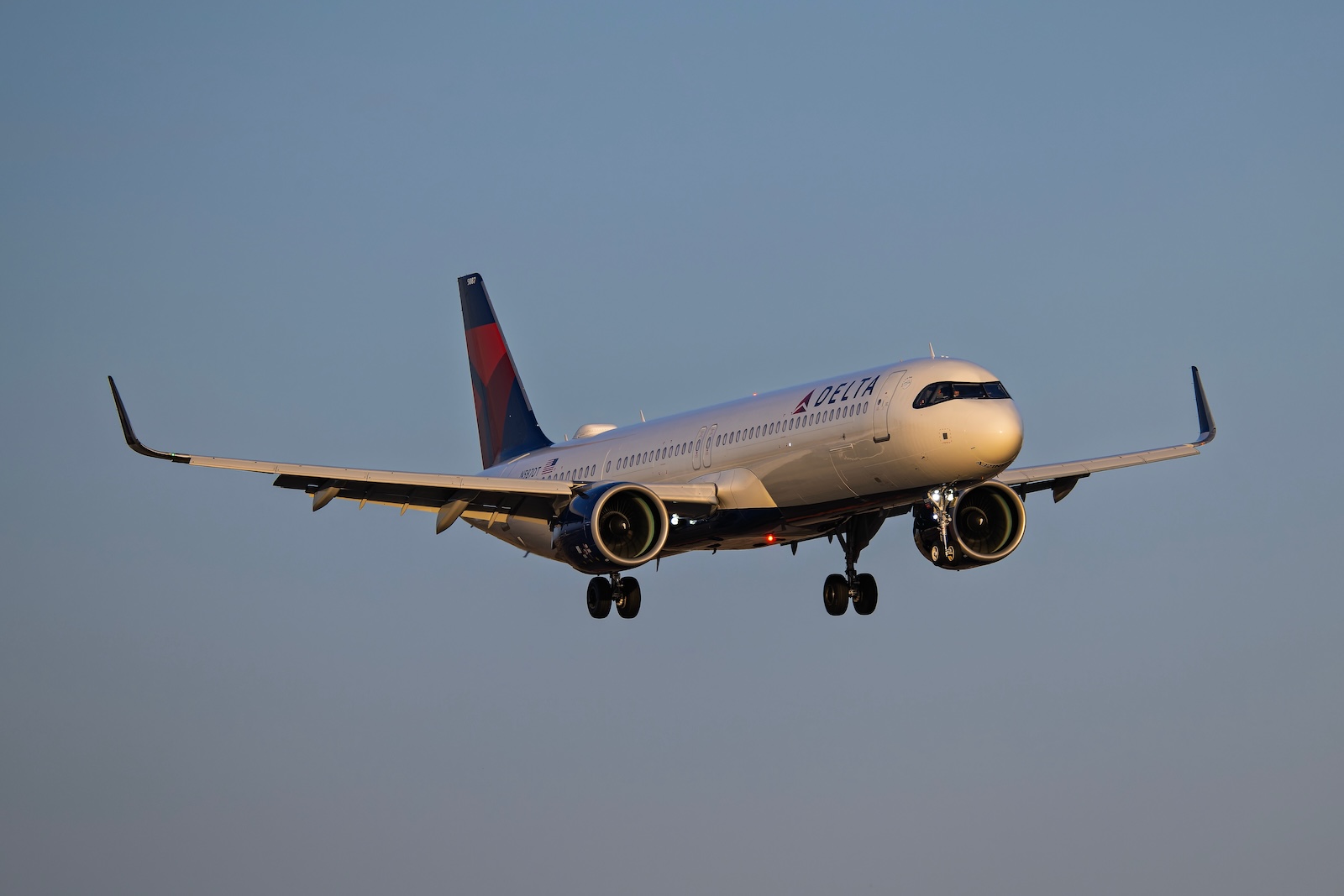

Delta is stripping engines off of Airbus jets in Europe and using them to get grounded airplanes in the U.S. back in service, according to a report from Bloomberg.
The airline is taking Pratt & Whitney powerplants from European-built A321neos and sending them to the U.S. duty-free to compensate for a lack of usable engines stateside, sources with knowledge of the matter told the business outlet. The information was confirmed by Delta CEO Ed Bastian, who told Bloomberg that a “very small” number of new engines were being shipped from Europe to the U.S. When asked if the carrier plans to keep taking parts from new airplanes, he said Delta “will continue that.”
The sources said Delta has A320neo-family aircraft in the U.S. it cannot use due to engine troubles. These airplanes will be returned to service when the new engines are installed.
Airlines around the world are coping with a shortage of aircraft engines owing to supply chain problems, increased labor costs, and a mass recall of Pratt & Whitney powerplants that began in 2023. Pratt is inspecting and repairing affected engines, but hundreds of aircraft worldwide remain grounded as the process continues.
By shipping engines to the U.S., Delta is also skirting, or at least delaying, the payment of tariffs imposed by the Trump administration.
If the airline were to take delivery of the A321neos in Europe, it would have to pay the baseline 10% tax on European imports. But because the engines were built in the U.S., Delta can move them without incurring extra costs, and the carrier gets to grow its operating fleet without taking possession of tariffed European aircraft.
Delta can keep the now engineless A321neos in Europe until a new trade agreement between the U.S. and the EU cancels the tariff permanently, as many industry watchers and analysts expect.
Bastian said last week that Delta is “not planning to pay tariffs on aircraft deliveries,” suggesting the carrier will continue seeking workarounds until the global trade environment settles.
In April, Forbes reported that Delta was having its new A350s sent from Airbus’ factory in Toulouse, France, to Tokyo, instead of the U.S. The carrier reportedly planned to use the aircraft in international service, keeping them away from U.S. airports, to avoid paying the 10% tariff.