











Air North is well known for its outstanding onboard experience, and for being one of the few airlines left in Canada that gives free meals to all passengers on every single route. For years, it has slowly been expanding from its home base in Whitehorse, Yukon, to places that make sense for Yukoners.
Back in 2022, the airline expanded flights to the country’s most populated city, Toronto, from Whitehorse with twice weekly flights during the peak summer months. However, that flight to Toronto made an intermediate stop for fuel in Yellowknife in the Northwest Territories, as they were operated on the Boeing 737-500. In the summer of 2024, the airline received its first Boeing 737-800, which boasts larger capacity and longer range.
This summer, Air North decided to convert one of those one-stop flights via Yellowknife to a nonstop flight, which began during the second week of June. We were fortunate enough to go on this inaugural nonstop flight out of Toronto on what is now the longest scheduled flight in the airline’s 48-year history. Just like the one-stop flight, this nonstop flight from Whitehorse to Toronto operates outbound one day, and then returns to Whitehorse the next day so they can use the same crew.
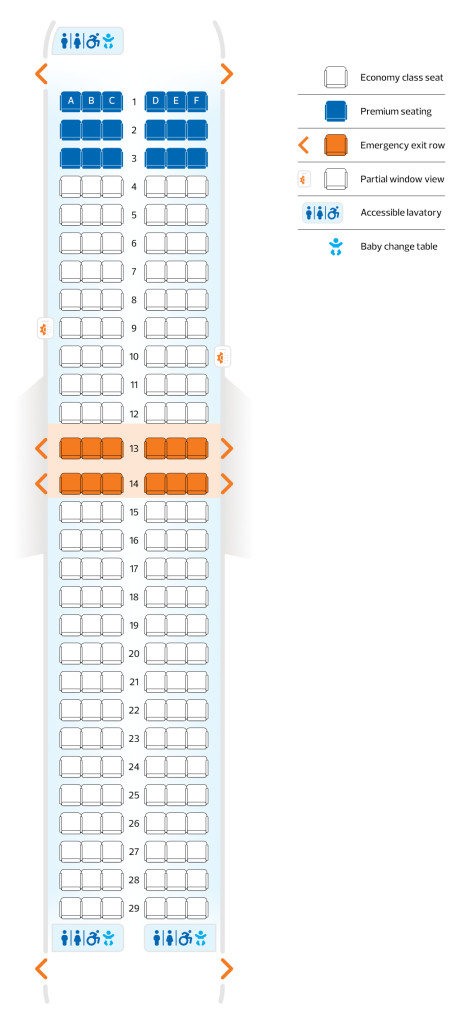
When selecting your seat on the flight, Air North does a really good job of showing which seats have windows and which don’t. As an AvGeek we all know the pain of selecting a window seat, and then getting on the plane and finding a blank windowless wall where your seat is. With Air North you avoid this, as their booking site has seat maps for every aircraft in their fleet showing what seats have windows, which don’t, and which have partial windows.
Day of the Flight
I was already in Toronto, so I headed to the airport about three hours before departure time. With only one nonstop flight a week from Toronto to Whitehorse, you don’t want to miss it, so make sure to arrive early. Air North operates from Terminal 1 at Toronto Pearson International, and at this time of the morning there weren’t a lot of flights leaving, so security wasn’t awful.
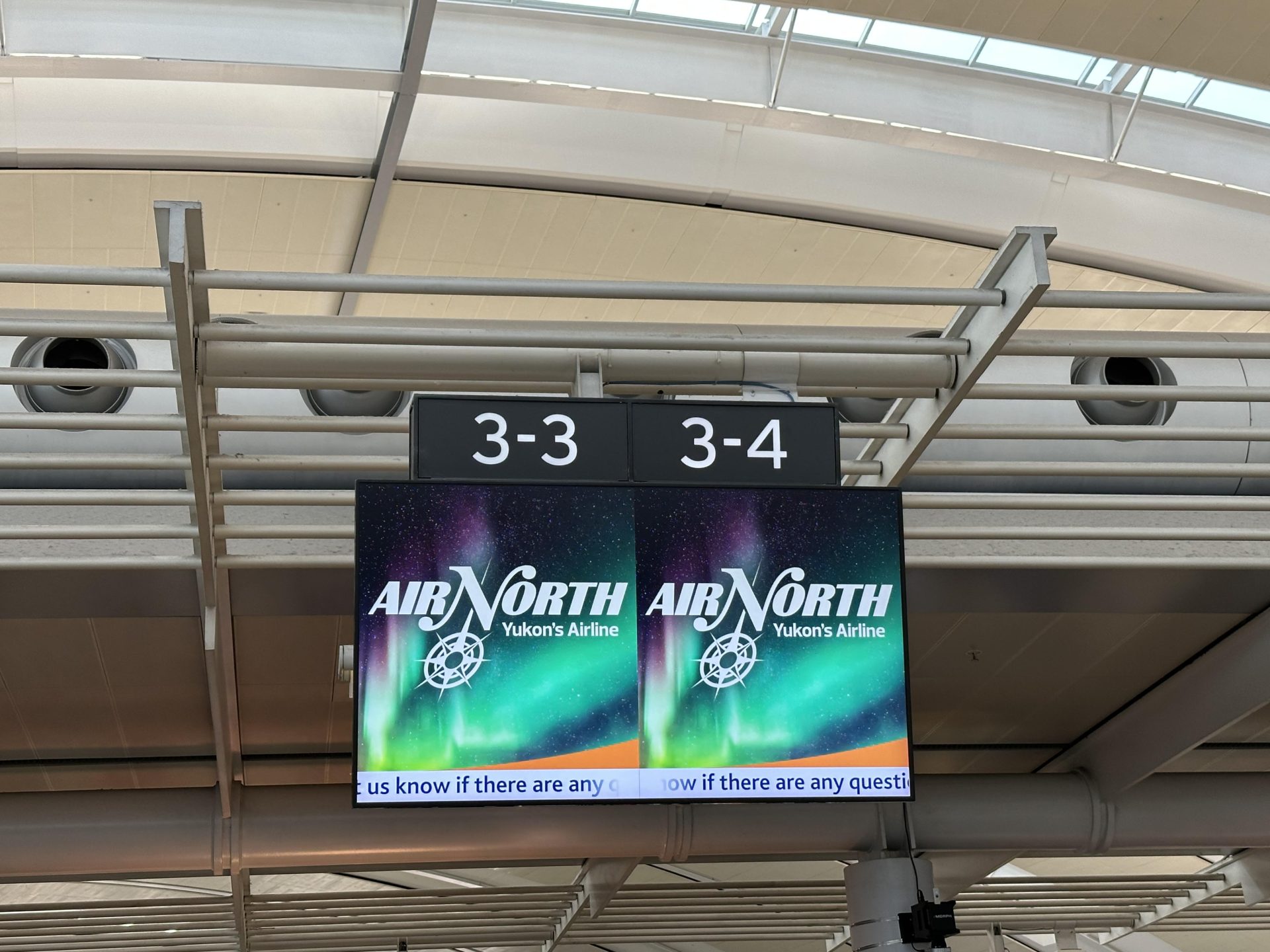
As mentioned, the aircraft sits at Toronto overnight, so about 1.5 hours before the flight it was towed into our departure gate. Although this was an inaugural flight, Toronto is not a new city for the airline, so there was no fanfare at the gate or on board. Even so, it was still fun being a part of this event in the airline’s history.
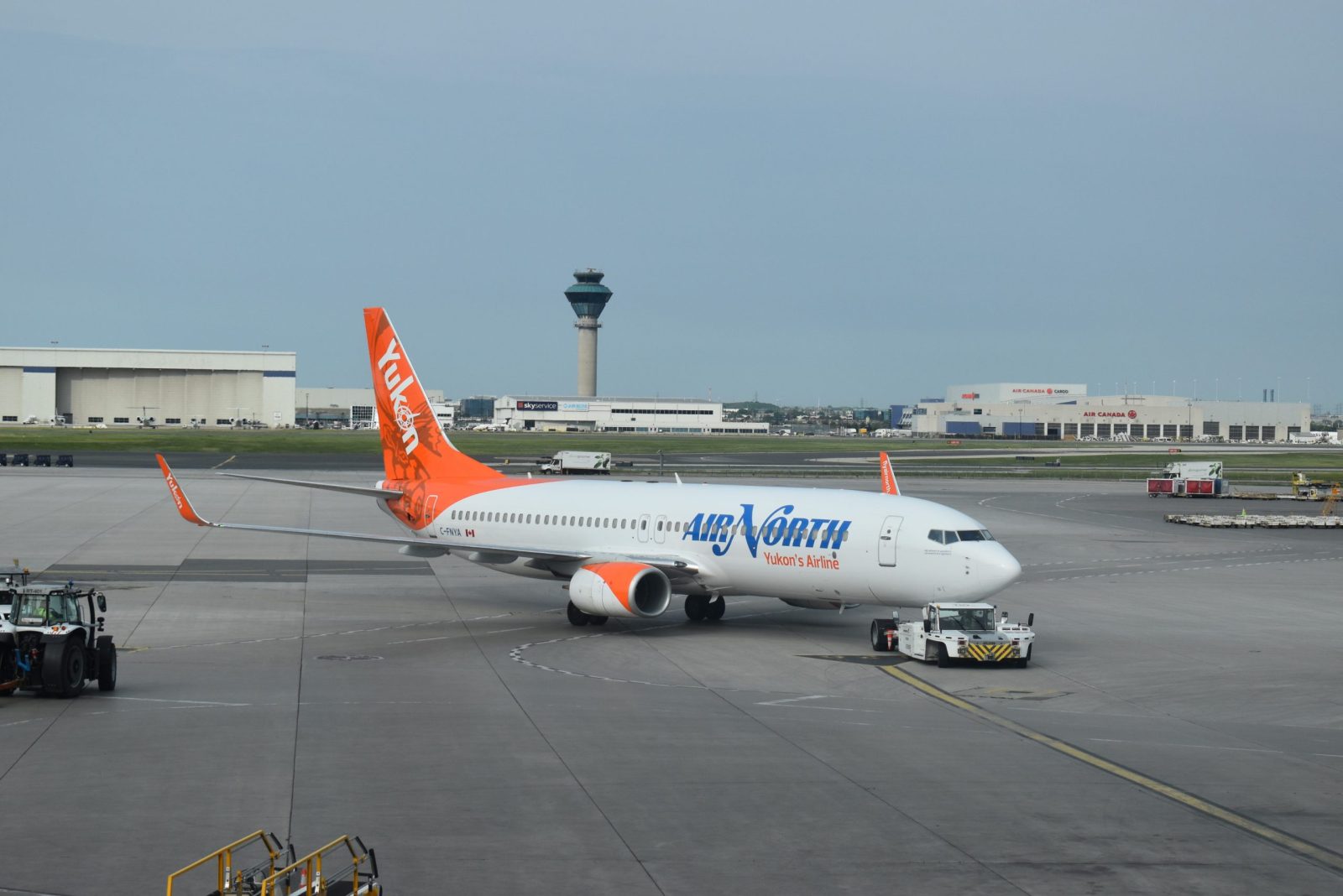
My aircraft for the flight up to Whitehorse would be C-FNYA, a Boeing 737-800 that was originally built in 2011 and came to Air North in October 2024, as the airline’s second Boeing 737–800. The aircraft has something interesting painted on the front of it: “Jidii nakhwats’oo gogwijiłcheii nakhwadrii ts’at tr’agwanah’in,” which is Gwich’in for “Vision the heart sees,” a phrase that was selected by the Vuntut Gwitchin First Nation, which owns 49 percent of Air North. This name is painted on the nose of both the airlines’ Boeing 737-800s.
Boarding begins about 40 minutes before departure. Since Air North boards aircraft from back to front, and because my seat was toward the front of the cabin, I was one of the last passengers on board the airplane.
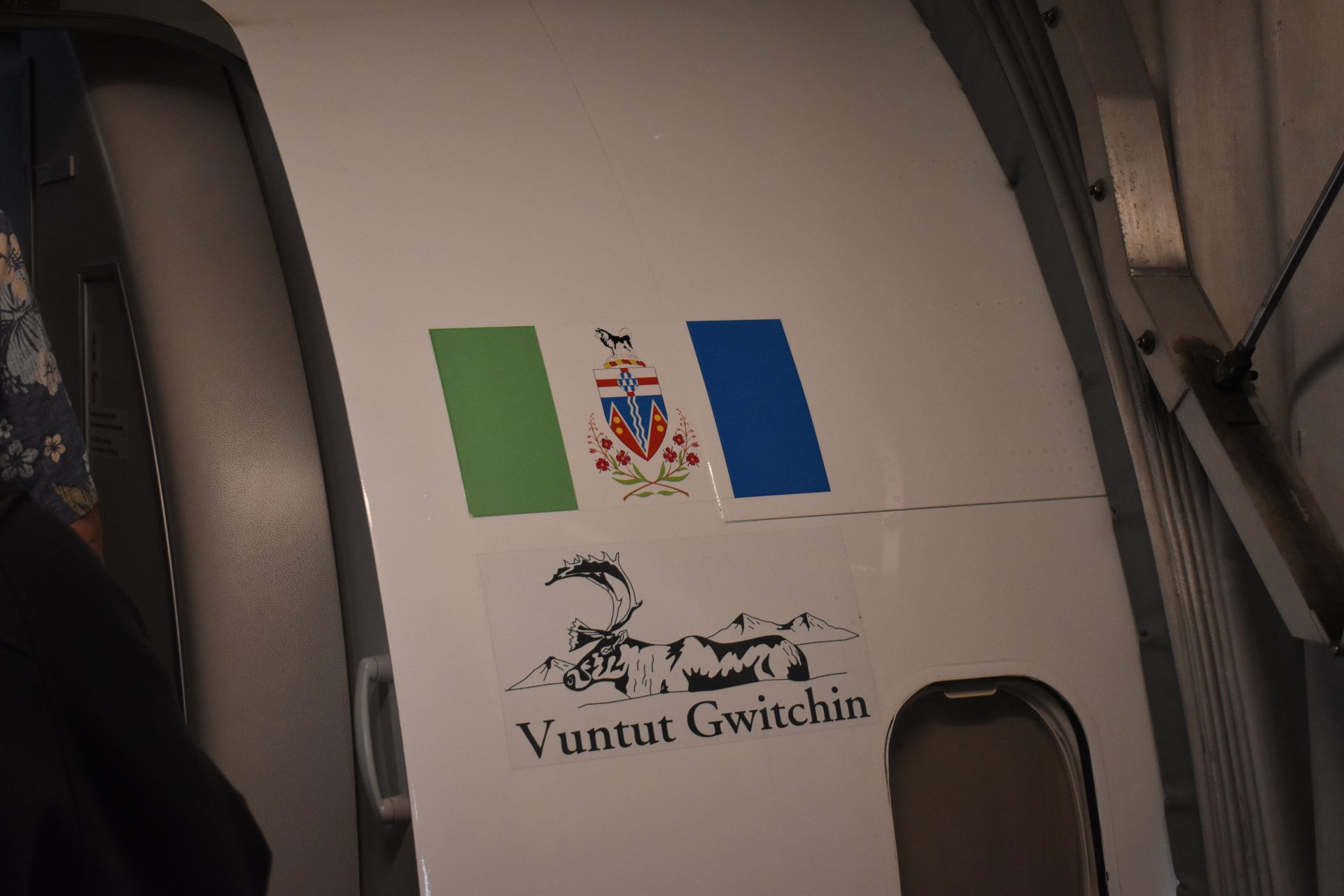
Next to the door of the aircraft was the Yukon flag, the words “Vuntut Gwitchin,” and a picture of a caribou, a symbol of survival, pride, and strength for the Vuntut Gwitchin for thousands of years.
This was a Boeing Next Generation aircraft, so the cabin was newer looking, with blue mood lights along the ceiling. My seat was 5F, a window seat on the right side of the aircraft.
Start-up and pushback didn’t take very long at all, and per Canadian regulations, all of the announcements were made in English as well as French.
After a quick taxi to the runway, we were in the air for the long flight up to Whitehorse. It was a nice day in Toronto, and I could even see downtown in the distance.
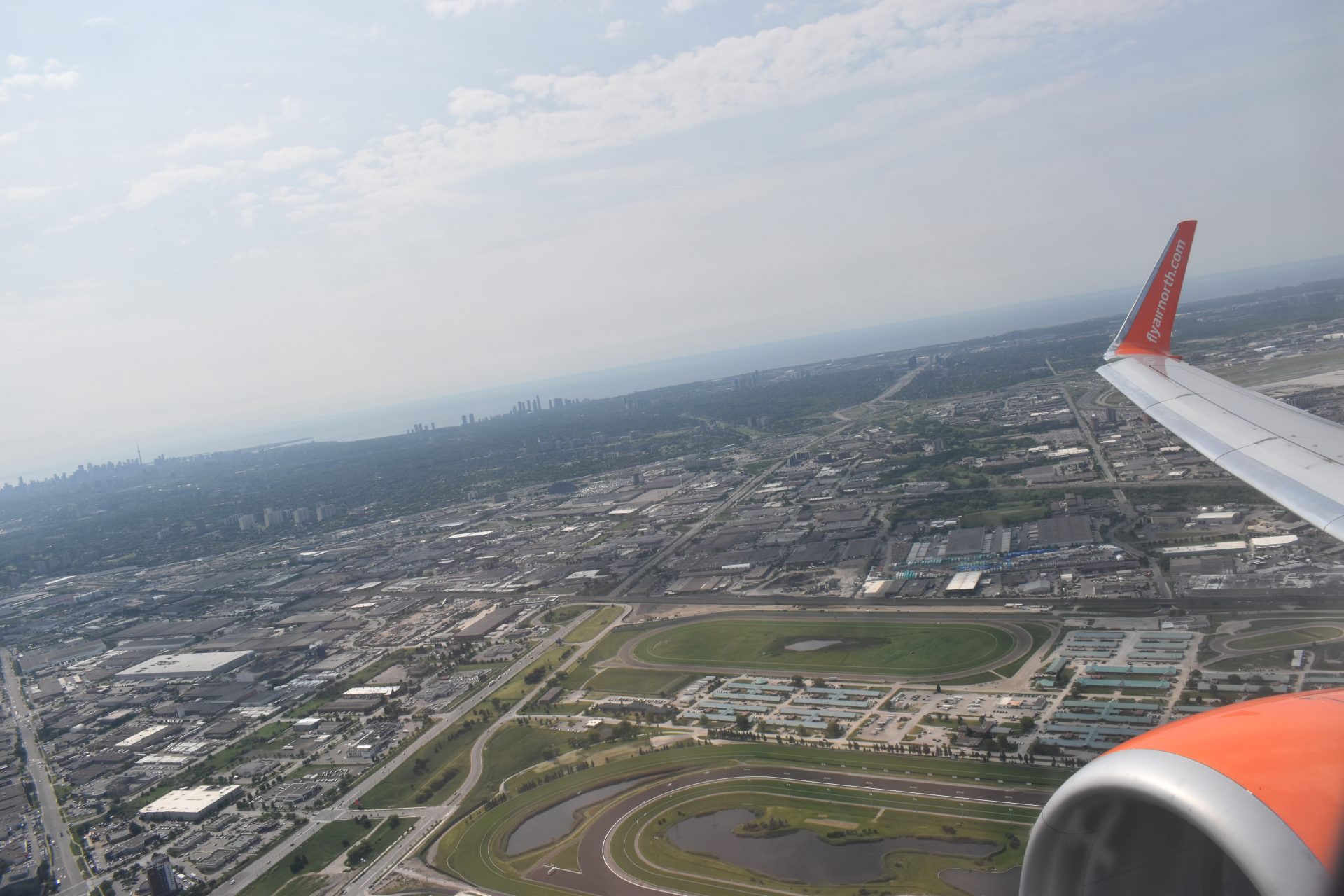
It didn’t take us very long to climb up to a cruising altitude of 36,000 feet, after passing through a handful of clouds on the way up.
There was a decent amount of space on board the plane, including at my feet, even when there was a bag under the seat. In the seatback pocket, there’s a magazine as well as a sick bag and of course, a safety card. In the magazine, there is information about the aircraft in the fleet as well as the route map, which does not yet have the Toronto to Whitehorse nonstop line, though I imagine the next issue will.
In the Air
First to come out was the drink cart, and they offered many free drink options like roasted coffee, soft drinks, and juice. They also offer alcohol, but that you have to purchase. The meal choices for the main course were then explained. They had chicken Alfredo pasta, beef brisket, or tofu.
I chose the beef brisket as I was curious how an airline would prepare it. This option came with Brussels sprouts and mac and cheese, with bread and butter on the side, as well as a salad and a brownie for dessert. I will say it was nice seeing the meals being handed out using actual oven mitts, as it gave it that extra homemade touch.
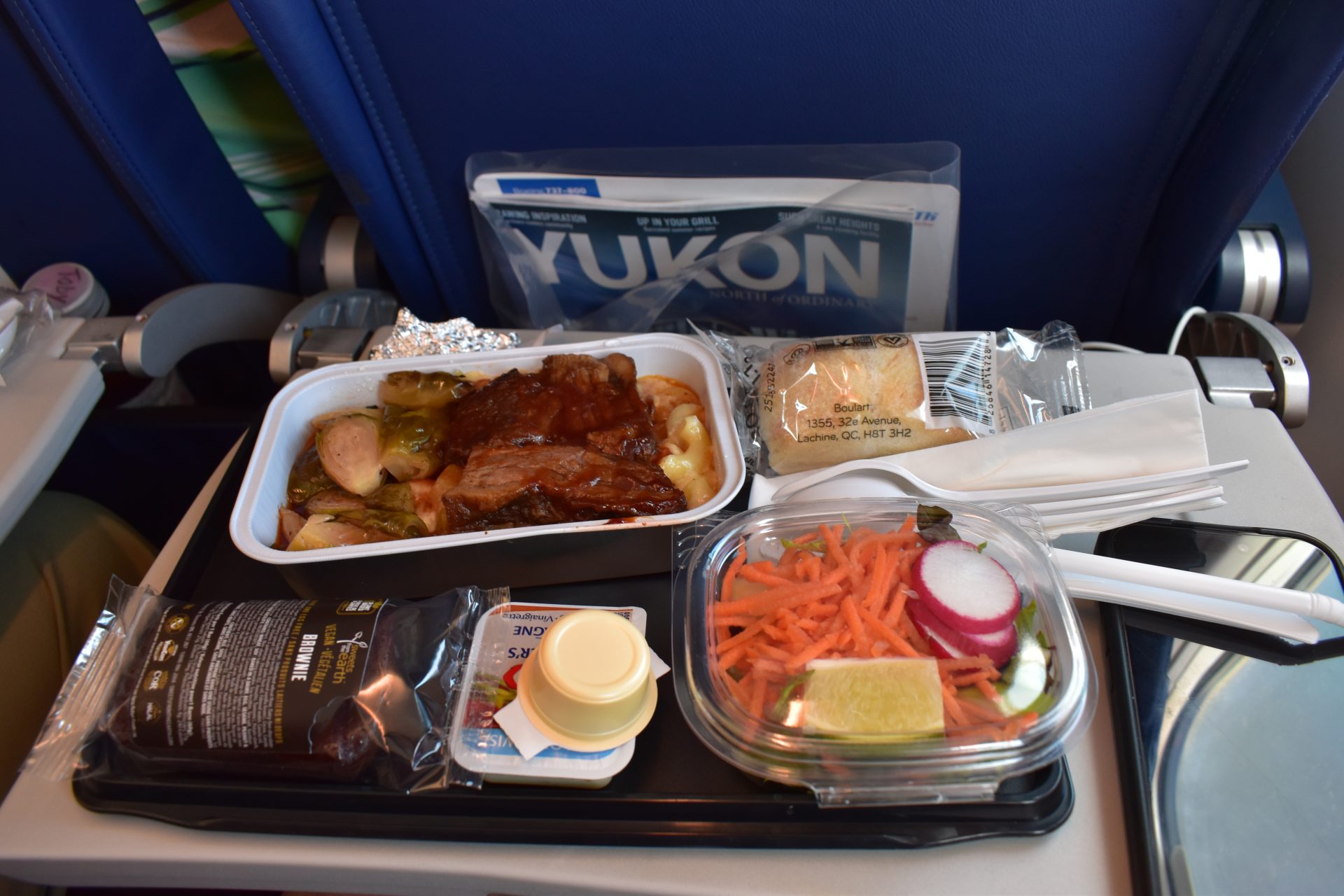
The food was super good, and it isn’t very often you find hot meals for all passengers, let alone with multiple options, on flights that aren’t long-haul flights with widebody aircraft.
Not very long after the food was cleaned up, the sky was covered with clouds and smoke due to some fires in southern Canada. I fell asleep without realizing it, and I woke up just before starting our descent into Whitehorse.
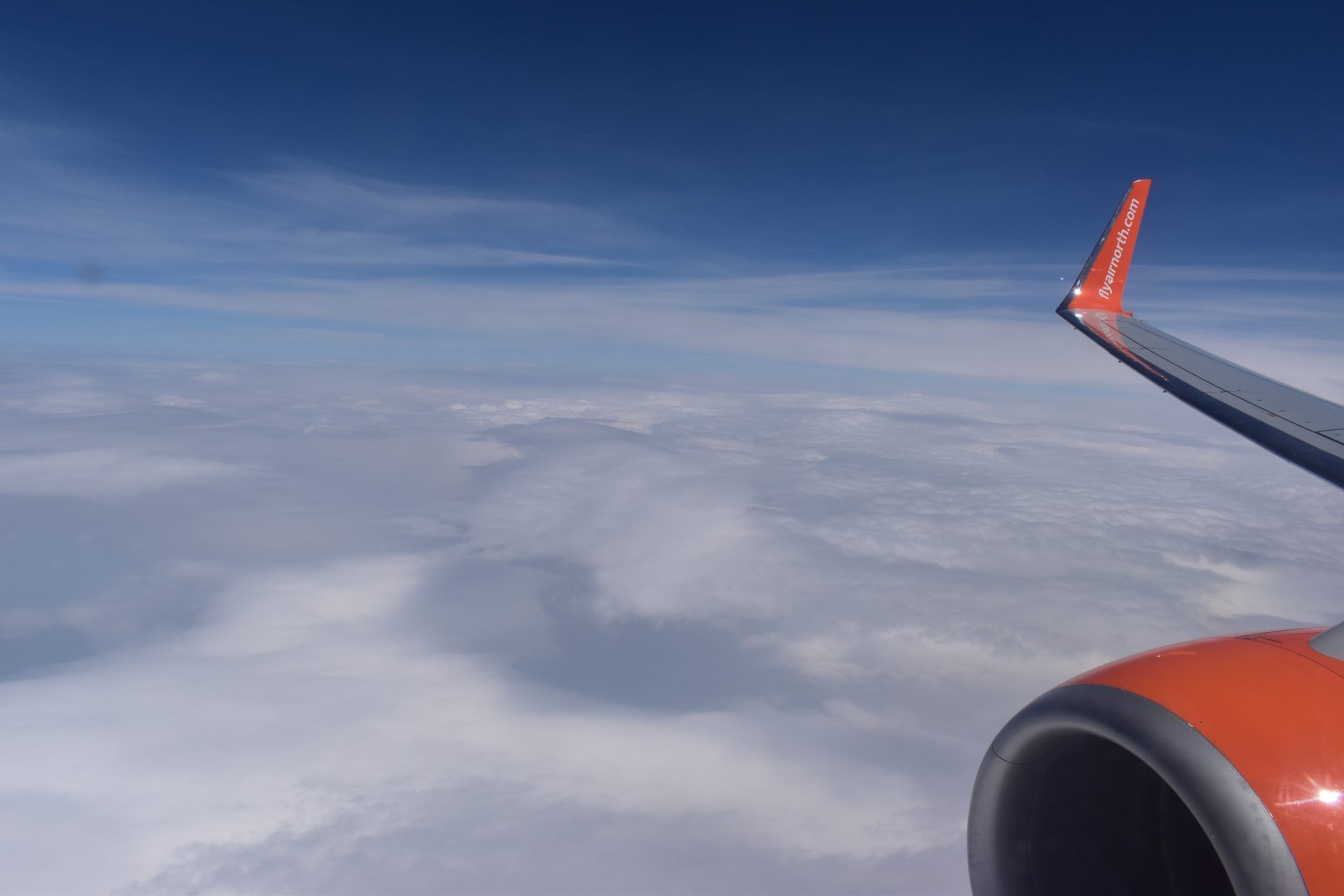
Another thing the airline is widely known for is its warm cookies before landing. Unfortunately, I slept through it on this particular flight, but I did get one on another Air North flight I took a couple of days later, which was from Whitehorse down to Vancouver.
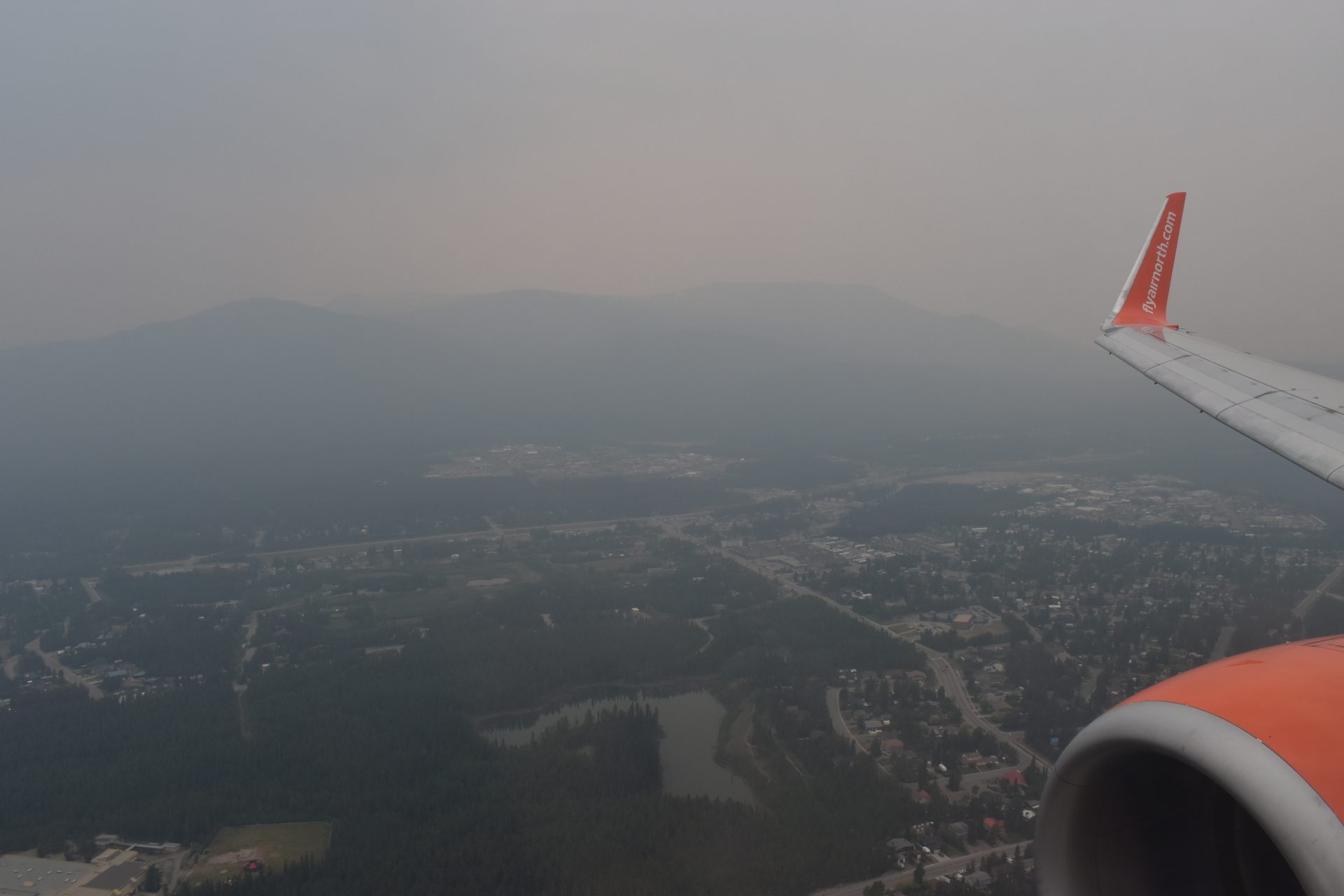
Due to the fires, the view wasn’t the greatest going into Whitehorse, but I was still able to see the outline of mountains in the distance as well as the Yukon River.
Had there been no smoke, I would’ve been treated to some beautiful views of snow-capped mountains, even in mid-June, as we are relatively close to the Arctic Circle.
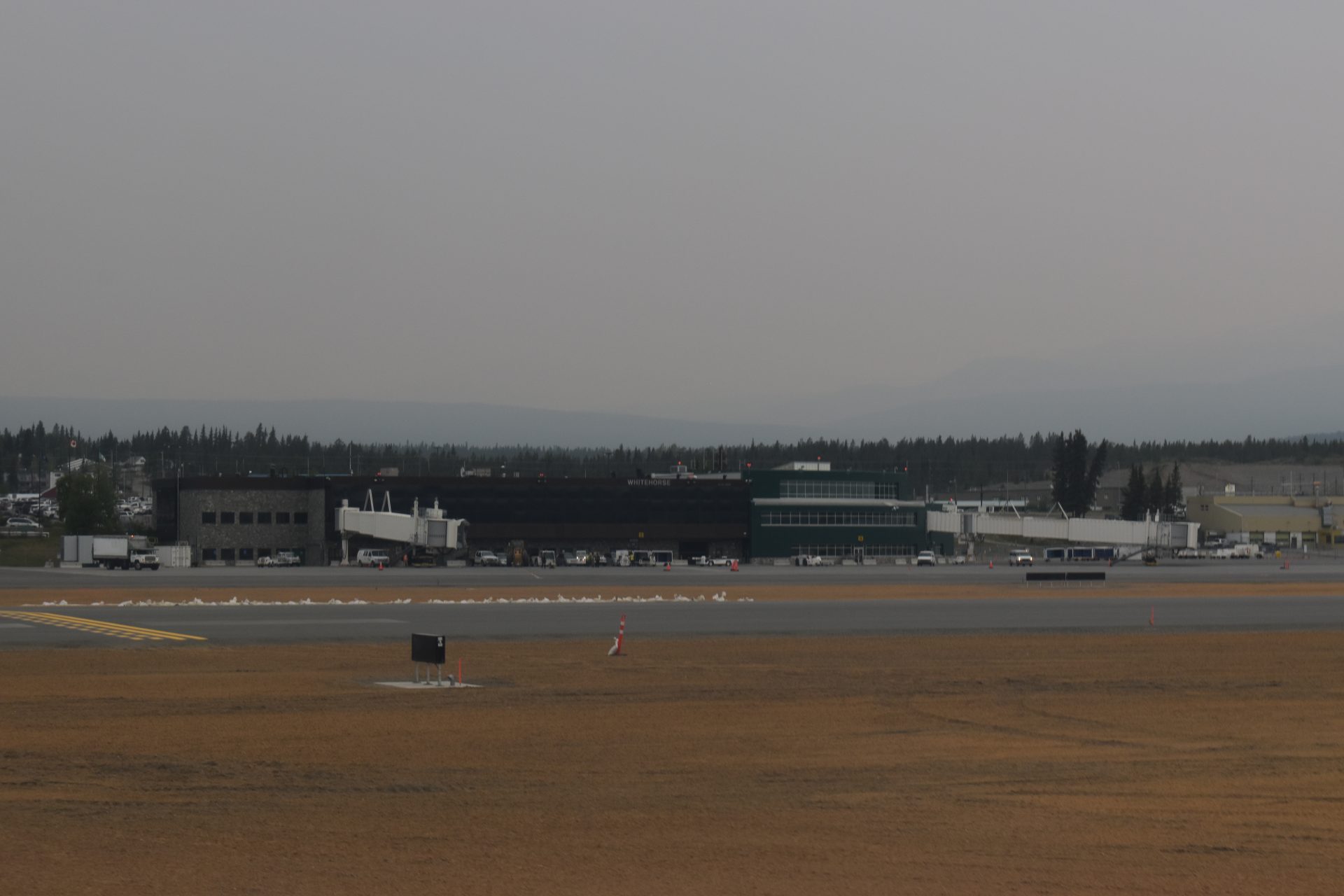
We landed just before 1 p.m., after 5 hours and 37 minutes of flying time from Toronto. The airport had a handful of construction projects going on so we used the shorter runway, and we also had to go to the end and turn around before back-taxing along the runway to get to the terminal.
Conclusion
I had an absolutely fantastic time on board this inaugural nonstop flight from Toronto to Whitehorse, and although there wasn’t any fanfare or celebration for the flight, I’m glad I got to be on board.
The food was fantastic, and the crew was amazing as well. I wish more airlines would have free hot meals for all passengers on longer flights that cross the country like these, as they give passengers the feeling of an elevated experience and make them want to come back.
I would like to mention that I talked to a couple people on board who had been on the flight from Toronto to Whitehorse when it stops in Yellowknife, and they were not aware they had booked themselves a nonstop flight from Toronto to Whitehorse. But they said they were very happy they did, as the stop in Yellowknife adds an hour or two to this already long journey.
The outbound flight from Whitehorse to Toronto operates on Thursdays, with the return to Whitehorse occurring on Friday.
This nonstop Toronto to Whitehorse route began in mid-June 2025 and continues until the middle of August 2025, at which point the nonstop will end for the season and will convert back to a one-stop flight via Yellowknife for the rest of the season, which ends in October. While the airline can’t say for certain, they did mention that this nonstop flight was hugely successful and they imagine it will be back again for the peak summer season next year.
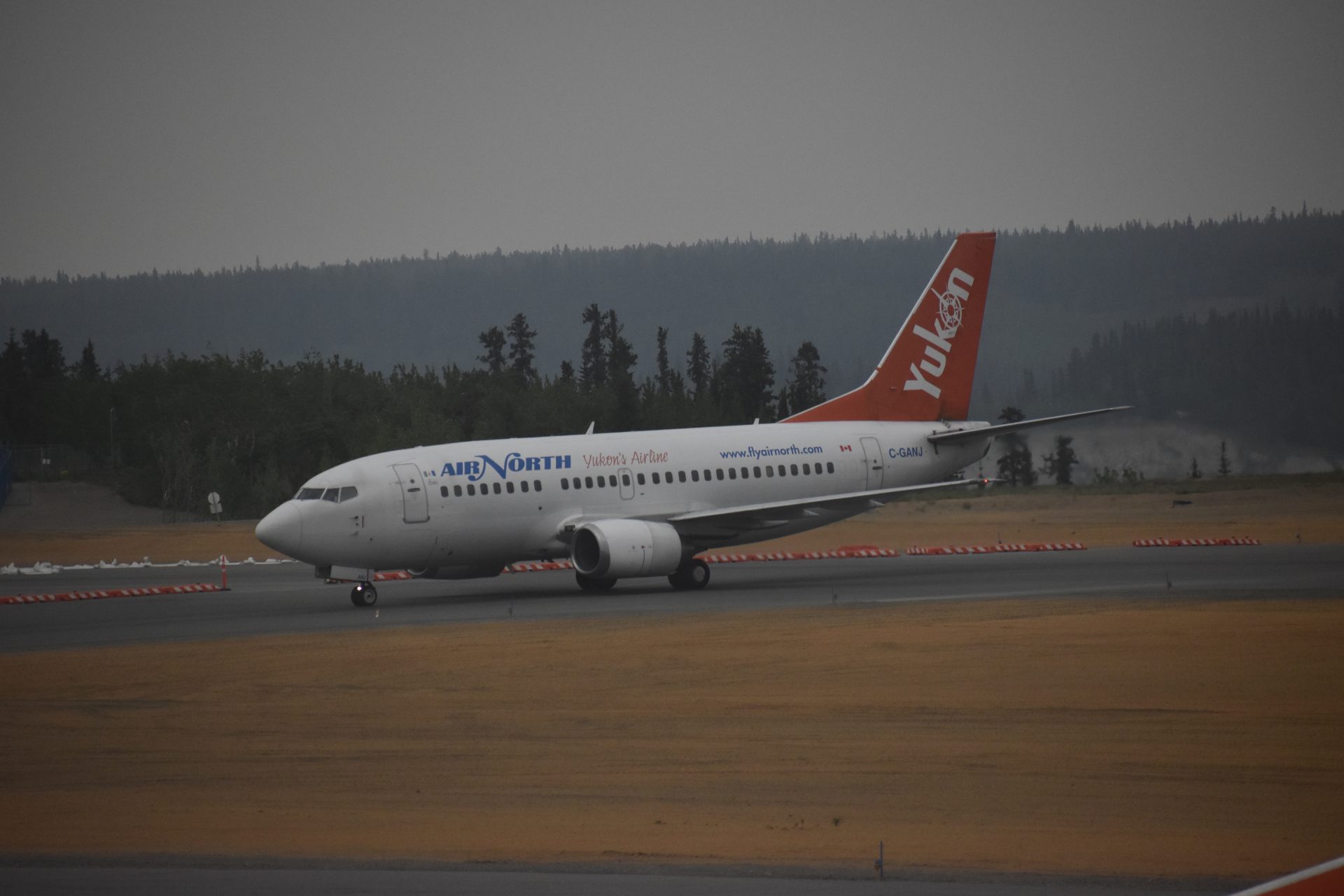
While in Whitehorse, I was able to go on a couple more of Air North’s flights, including their classic Boeing 737–500 and ATR, along with an awesome interview with the airline’s CEO, Joe Sparling. Articles for all of these will be out in the near future.
A video account of this trip report can be found below.
Editor’s Note: Air North provided AirlineGeeks with a seat on this flight, but this trip report is an objective portrayal of events and is in no way swayed.