










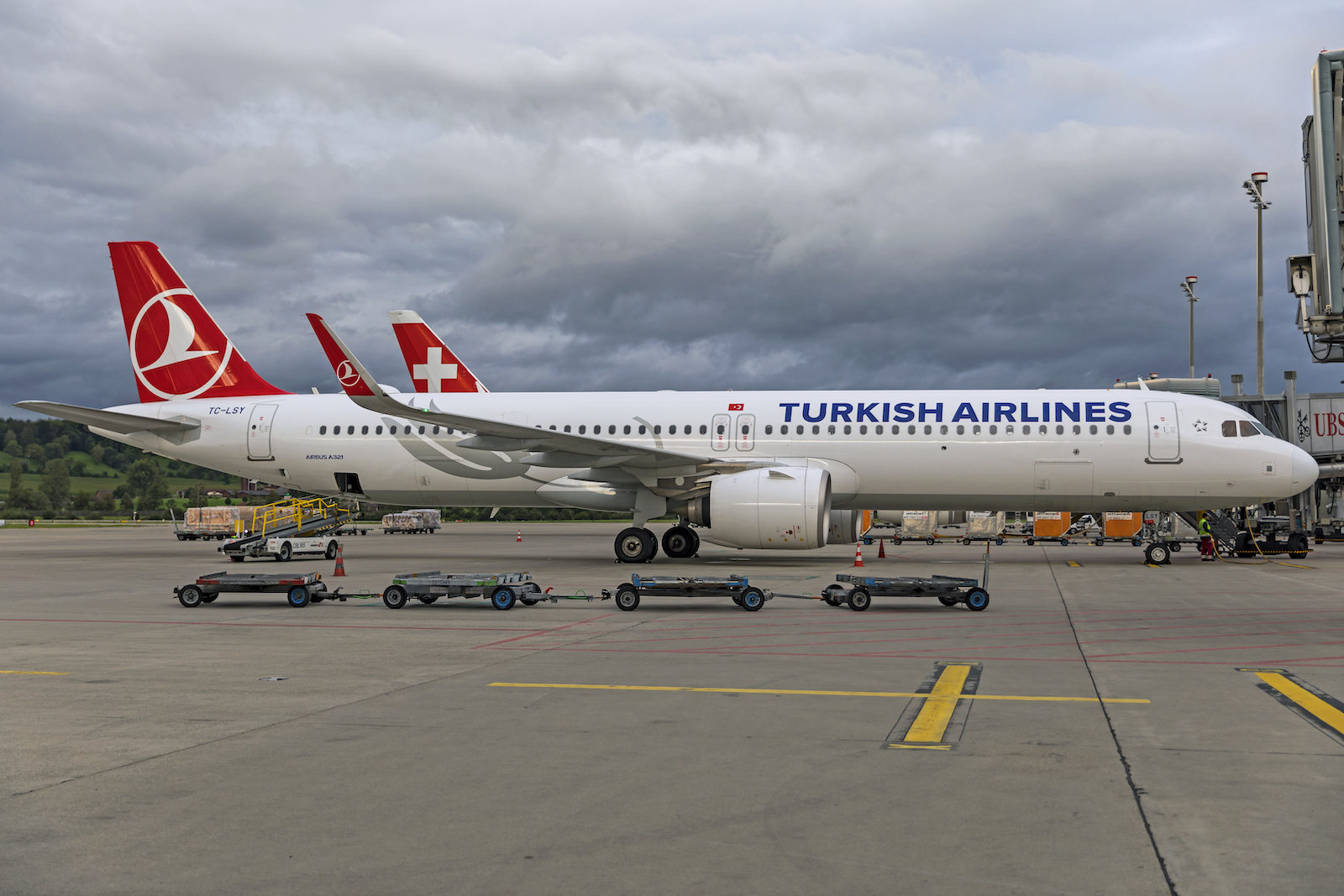


The crew of a Turkish Airlines Airbus A321neo made dual inputs while attempting to land at Václav Havel Airport in Prague earlier this year, causing a tail strike.
According to FlightGlobal, which cited a report by Czech investigators, the incident occurred on May 11 as the flight from Istanbul touched down on runway 12. The aircraft landed hard, and to prevent an “unwanted bounce,” the captain ordered the first officer, who was acting as the flying pilot, to execute a go-around.
The captain made the order three times before the first officer initiated the go-around, but instead of taking control of the aircraft, the captain intervened on their side stick, which caused the dual input. Investigators found this resulted in a nose-up pitch, which caused the aft fuselage to strike the runway. The impact damaged the aircraft’s tail section and left behind a roughly 50-foot score mark.
After the strike, the aircraft climbed and repositioned for another landing attempt on runway 12, and this one was completed successfully.
No one on the flight was injured.
The A321neo was taken out of service for an inspection and maintenance work. That day’s return flight, from Prague to Istanbul, was canceled.
The tail strike was caught on camera. The footage shows the rear fuselage hitting the runway and a small burst of sparks.
On May 23, the Czech Republic’s civil aviation agency rated the incident serious and said it would investigate the cause.