











For those who have been around the airline industry for a while, it is well known that change is a constant, and even minor updates to procedures or systems can have a significant impact on front-line operations.
As a flight crew training instructor, I often work with pilots who do not meet the required standards during training, and most failures are linked to change fatigue. Yes, there is such a thing as too much change, and when faced with frequent, complex, or poorly managed updates, it can lead to poor performance.
So, how can you offset the impact of change on your operational and training performance? Let’s explore the advantages and disadvantages of home-based flight simulators and how they can help maintain your skills in the ever-changing airline environment.
Pros of Home-Based Flight Sim Training
Maintaining peak proficiency is non-negotiable for airline pilots. Regardless of the effects of change fatigue, continuous learning is essential to safe operations.
In recent years, home-based flight sims have evolved into competent tools that can complement your company’s training. Let’s explore the advantages of leveraging a home-based simulator to refine your techniques, stay sharp, and prepare for upcoming changes and training events.
Training Preparation Using Home-Based Sims
Whether you are beginning initial training, returning for recurrent training, or resuming after a leave of absence, airlines offer comprehensive training programs that utilize simulators and devices designed to help you complete your training successfully.
However, the devices and tools used by airlines are often only available during your scheduled training sessions. Therefore, your preparation for these events is crucial to ensure a successful outcome within the designated timeframe.
A home-based simulator can allow you to practice procedures, checklist flows, and system familiarization at your own pace as you prepare for your training. Additionally, home-based simulators do not need to be complex to achieve the desired results.
Cost-Effectiveness of Using Home-Based Sims
When I first began instructing at a major airline, I was told it costs approximately $10,000 to train a crew each day. Several factors drive this cost, including the use and maintenance of advanced flight simulators, participant salaries, and other logistical expenses. A home-based simulator can help minimize these costs by allowing you to prepare for your airline training and stay on schedule without needing additional training.
Reinforcing SOPs Using Home-Based Sims
With the constant changes to airline standard operating procedures (SOPs), callouts, checklist flows, and systems, a home-based simulator can help you adapt to the changes before executing them in the flight deck. Practicing these in a home-based sim can help reinforce your muscle memory and minimize errors when the stakes are higher. Even with the most basic setup, you can run through configuration changes, automation logic, and failure management routines in a calm, pressure-free environment.
Practicing Non-Normal Scenarios Using Home-Based Sims
Although standard operating procedures are routine, pilots may go years without encountering a major non-normal situation in line operations. Therefore, airlines place significant emphasis on managing these failures during simulator training.
However, while airline training covers key failure scenarios, a home-based simulator can offer you the flexibility to dig deeper. You can walk through various emergency checklists, such as engine failures, fires, or pressurization problems, to build procedural confidence. Practicing these without time limits or performance pressure can help solidify your responses that are critical in high-pressure situations.
Practicing New or Complex Scenarios Using Home-Based Sims
Airlines frequently operate at complex airports, where weather, terrain, and traffic can increase your workload. Additionally, newly published or modified procedures, such as STARs, approaches, and SIDs, are distributed regularly, which can further increase the workload in an already high-stress environment. Using home-based simulators, you can practice these procedures in advance, boosting situational awareness and overall performance during actual line operations.
Staying Current with System Updates Using Home-Based Sims
As modern jets continue evolving with advanced avionics and system updates, home-based simulators can help you stay familiar with the latest changes. Additionally, for pilots transitioning to new aircraft or operating in unfamiliar regions, home-based flight simulators can offer a low-stress environment for developing technical proficiency.
Enhancing Confidence and Mental Fitness Using Home-Based Sims
Flying is a high-performance cognitive activity. Therefore, repetition can help build your confidence, sharpen your focus, and enable you to recall things promptly under pressure. Just as an athlete reviews game footage or rehearses plays, you can utilize a home-based simulator to maintain mental agility and composure, especially in the ever-changing airline environment.
Cons of Home-Based Flight Sim Training
While there are many apparent benefits to home-based simulators, for complete transparency, let’s also consider some of the common criticisms.
Lack of Certification of Home-Based Flight Sims
Home-based simulators are not FAA-certified; therefore, they cannot be used for official currency or qualification. This is because they lack the dynamic movement, tactile control feedback, and instructor interaction that define advanced flight simulators.
However, with structured scenarios, disciplined use, and high-fidelity aircraft models, home-based flight simulators can be a powerful supplement to formal airline training. Think of them as reps in the mental gym, preparing you to perform when it matters.
Limited Realism of Home-Based Flight Sims
Simulators help pilots sharpen procedural fluency, muscle memory for cockpit operations, and even recognize non-normal scenarios. However, flying in the real world introduces variables you cannot fully script in a home-based flight simulator. Therefore, a simulator can only serve as a supplement to official training.
Building a Home-Based Flight Simulator
A home-based flight simulator can be as simple or complex as you want it to be.
Basic Home-Based Flight Simulator Setup
At its most basic, a home-based flight simulator should include components such as:
- Software (Microsoft Flight Simulator 2024 – Premium Deluxe Edition)
- Gaming console (Xbox Series S Console)
- Monitor (Samsung 27” Essential S3 Series Curved Monitor)
- Chair (GTPLAYER Gaming Chair)
Advanced Home-Based Flight Simulator Setup
For someone looking to elevate their home setup, you can assemble the ultimate flight simulator with components such as:
- Software (Microsoft Flight Simulator 2024 – Aviator Edition)
- Computer (DogHouse Systems Flying Edition Gaming Desktop)
- Monitor (SAMSUNG 49″ Odyssey G93SC Series OLED Curved Gaming Monitor)
- Seat or frame (TR8 Pro Flight Simulator)
- Avionics (RealSimGear G1000 NXi Suite)
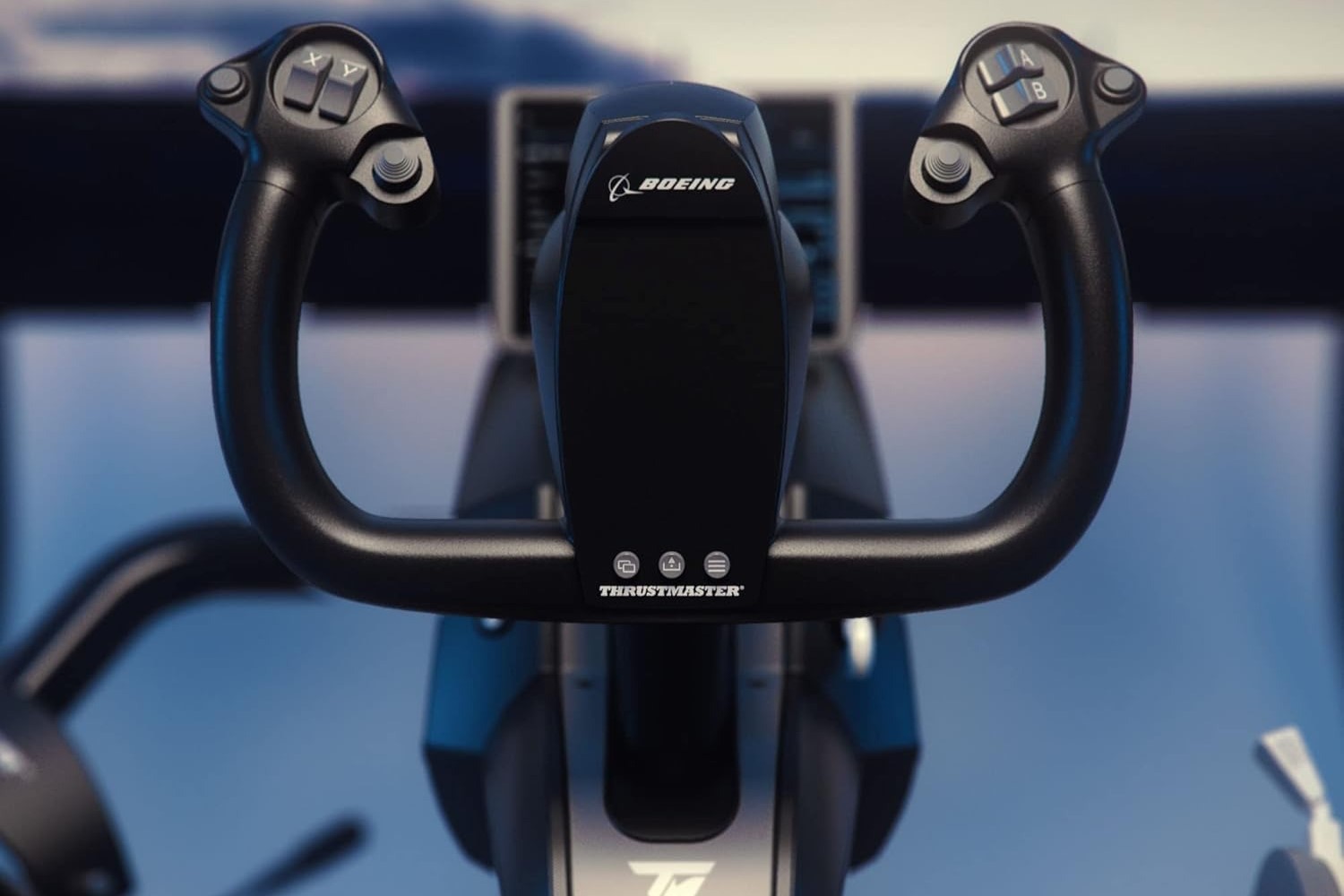
- Flight controls (Thrustmaster TCA Yoke and Throttle Pack – Boeing Edition and Thrustmaster TPR Pedals)
- Sound system (Q Acoustics M20 Bluetooth Speakers)
- Virtual reality (VR) systems (Meta Quest 3)
- Head tracking (TrackIR 5 Head Tracking System and Clip Bundle)
- Haptic feedback pad (Next Level Racing Haptic Feedback Gaming Pad)
Staying Sharp Year-Round from Home
The advantage of a home-based setup is that it can be tailored to fit your specific training needs. From simulating normal flight crew flows in a virtual Boeing 737 cockpit to practicing engine failures with VR and tactile feedback, it is this flexibility that truly gives home-based flight simulators their edge.
In the ever-changing airline environment, your professional development does not have to begin and end in the airline training center. Home-based flight simulation can provide a valuable way to prepare, review, and enhance performance on your own schedule.
Whether you are looking for a simple home setup or the ultimate flight simulator, start building it today to help you elevate your next training experience and stay sharp year-round.
AirlineGeeks may earn revenue from the products available on this page and participate in affiliate programs.
