










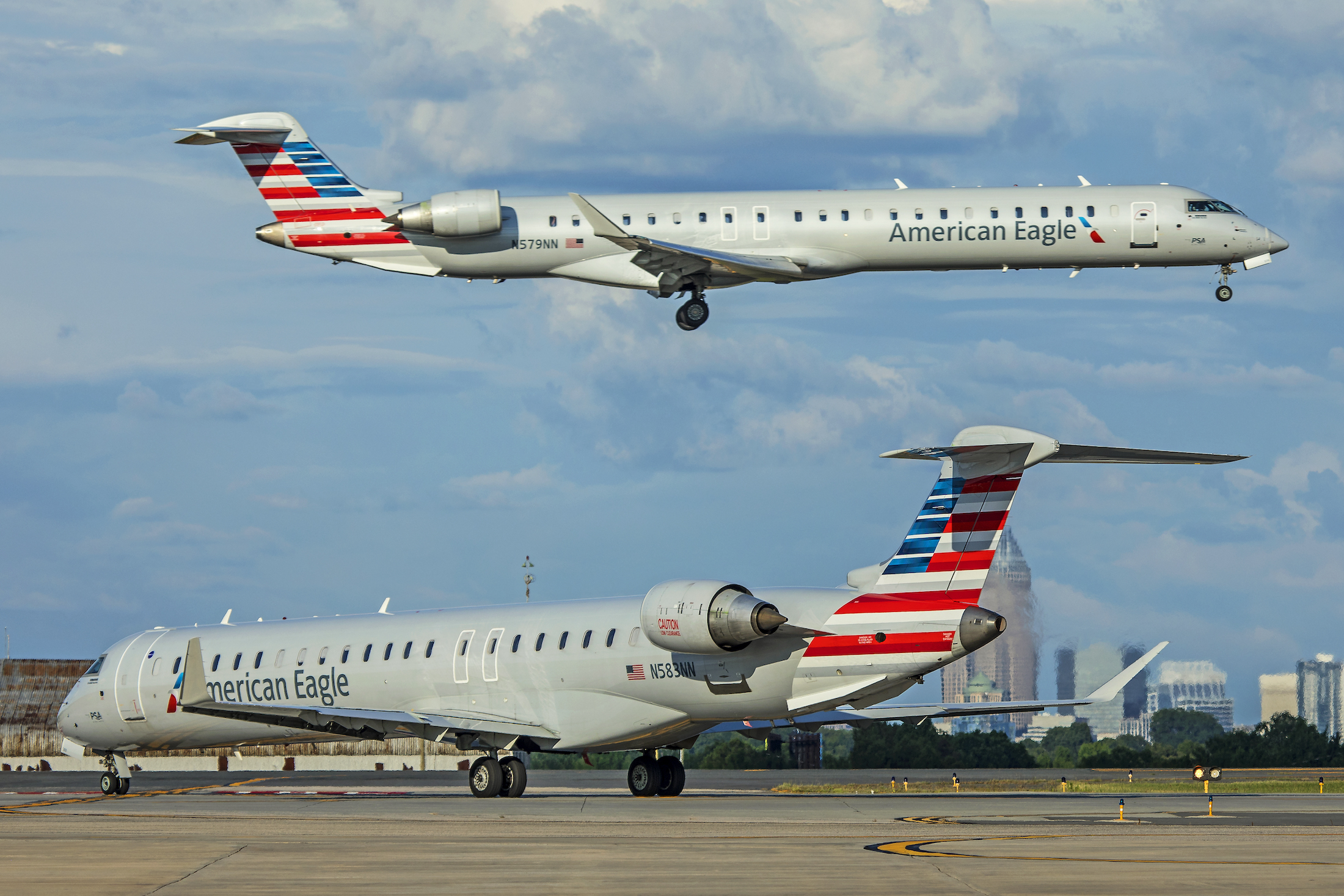


The Federal Aviation Administration (FAA) has issued a new airworthiness directive (AD) addressing potential hardware failures in the horizontal stabilizer assembly of the CRJ family of regional jets.
The rule, published Wednesday, stems from reports of missing bolts and loose fittings that could jeopardize flight control integrity.
The order covers CRJ-550, CRJ-700, CRJ-900, and CRJ-1000 types. Investigations by Transport Canada found that bolts securing the horizontal stabilizer’s anti-yaw steady fitting block had worked loose during maintenance.
According to the FAA, the issue involves the anti-yaw steady fitting block bolts on the horizontal stabilizer.
In its notice, the agency wrote that “loose or missing bolts on the anti-yaw steady fitting block, which, when combined with a bird strike or gust loading, may result in loss of the horizontal stabilizer and consequent loss of control of the airplane.”
Under the FAA’s directive, operators must conduct detailed torque checks on the affected bolts and replace any missing or loose components before further flight. Repetitive inspections are required at intervals not exceeding 2,200 flight hours.
The FAA estimates that 597 U.S.-registered aircraft are subject to the rule, with compliance costs of about $510 per airplane.
The directive takes effect on Nov. 20.