











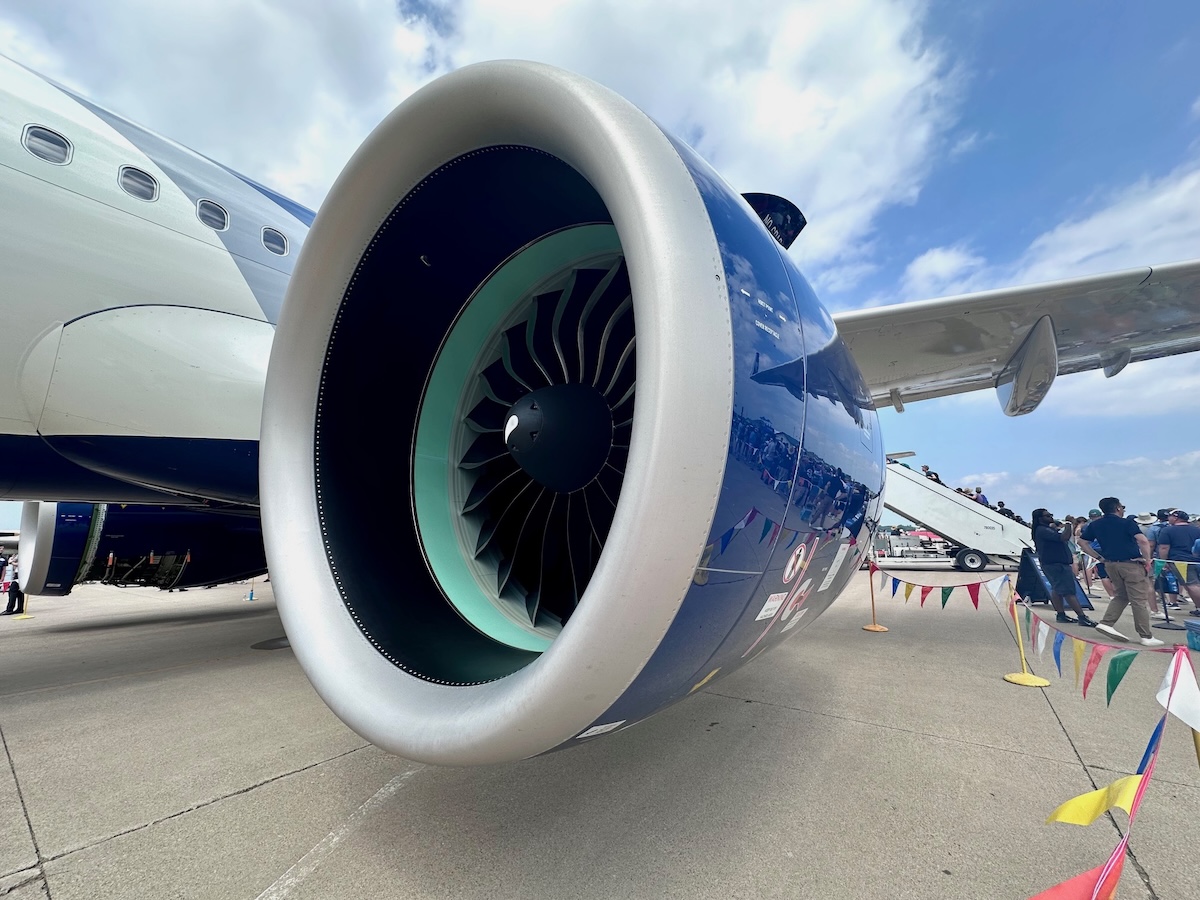


The FAA this week ordered modifications to Pratt & Whitney’s PW1100G geared turbofan engine after receiving reports of fan blade breaks and fires.
An airworthiness directive issued on Monday requires airlines to replace thermal management system mounts within an estimated 586 engines.
“This AD was prompted by multiple reports of fan blade fracture events, three of which resulted in an engine under cowl fire or pool fire,” the agency wrote. “The FAA is issuing this AD to prevent a fuel leak resulting from a fan blade fracture. The unsafe condition, if not addressed, could result in an uncontrolled engine fire and damage to the airplane.”
The order is effective as of Feb. 17, and operators will have 30 days from that date to complete the modifications.
The PW1100G is used to power Airbus A320neo-family aircraft.
The FAA noted that Pratt has already made maintenance recommendations to customers to address the issue.
Specifically, the directive “requires removal of one loop cushion clamp from the hydraulic fuel pressure fuel oil cooler fuel tube assembly (CP09 tube assembly), replacement of the thermal management system (TMS) clevis mounts with redesigned TMS clevis mounts, and reinstallation of the loop cushion clamp.”
The FAA estimates the modifications will take 125 work-hours to complete.