











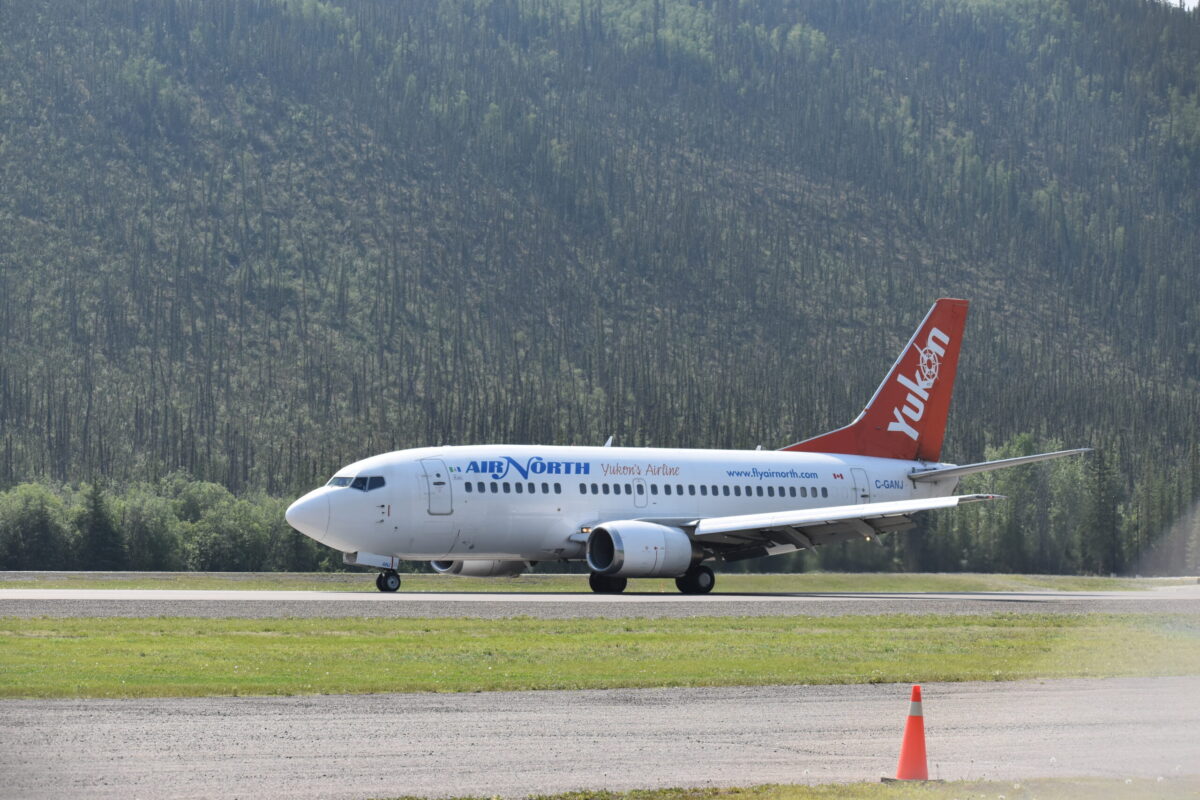

The Boeing 737–500, with almost 400 of the aircraft in the sky since the program was launched in 1987, is the last 737 variant in the Boeing Classic series. It was a direct replacement for the 737-200, and is the second smallest Boeing 737 variant by length, only beating out its -200 predecessor, and only by a single foot.
Now seeing fewer than five operators worldwide, the aircraft type is becoming a dying breed. With BahamasAir retiring the aircraft back in October 2022, Air North, located in Canada‘s Yukon territory, is the only commercial operator of the type left in North America.
The -500 can be seen operating on the airline’s routes in the western part of Canada across the Yukon, British Columbia, and the occasional quick hop up to Dawson City from Air North’s home base in Whitehorse.
The airline operates charters pretty consistently throughout the summer from Dawson City, Yukon, to Fairbanks in Alaska. Since the carrier has to get the aircraft to Dawson City anyway, it sells tickets on the Whitehorse-to-Dawson City portion of the trip. The flight usually has a pretty low passenger load.
Being an AvGeek, of course, I had to make a special trip up to Dawson City to fly on this aircraft type.
Day of the Flight
Dawson City Airport is very small, like a lot of the smaller regional airports in northern Canada. There is no security checkpoint for flights within the territory/province, meaning you only need to get to the airport in time to meet the check-in requirement for the airline.
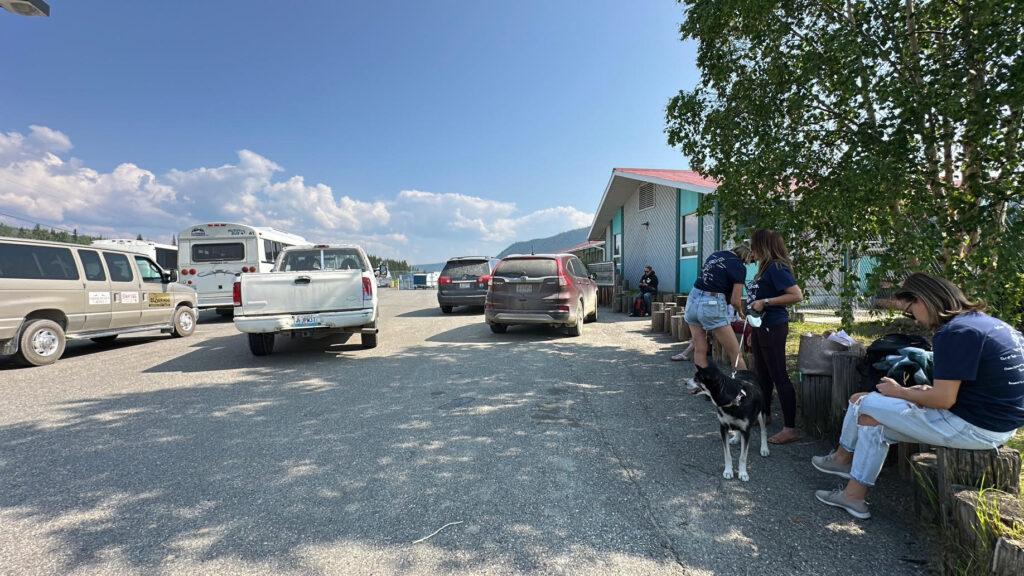
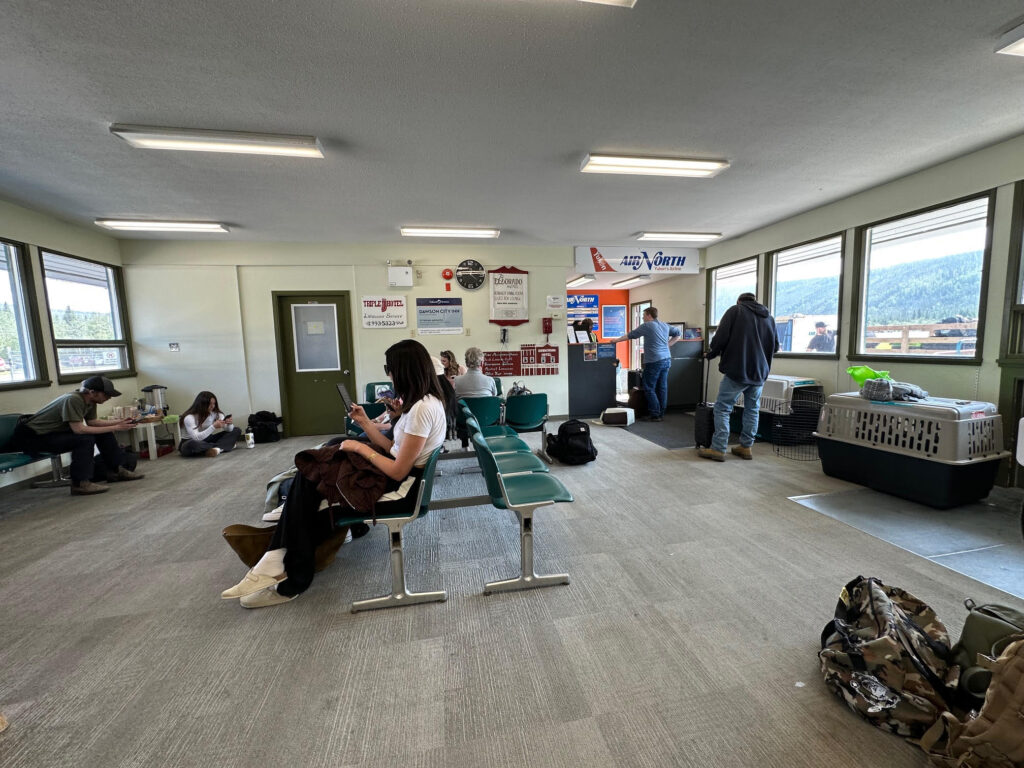
The terminal usually only needs to handle the capacity of the airline’s ATR 42s, which is why the terminal in Dawson City is only about the size of a large bedroom. The good news is that during the warm summer months, a lot of people decide to sit outside in the sunshine once they’re fully checked in.
On the day of my flight, there happened to be some wildfire smoke rolling through Whitehorse, causing visibility to go to near zero and delaying the 8 a.m. flight to about the same time as my flight in the early afternoon, which made the terminal unusually busy.
It wasn’t very long before my aircraft arrived in Dawson City after its charter flight from Fairbanks. Given the small size of the airport, there isn’t room to park a larger jet like this directly next to the terminal, so it is parked on the opposite side of the runway, and passengers are taken to it by bus.
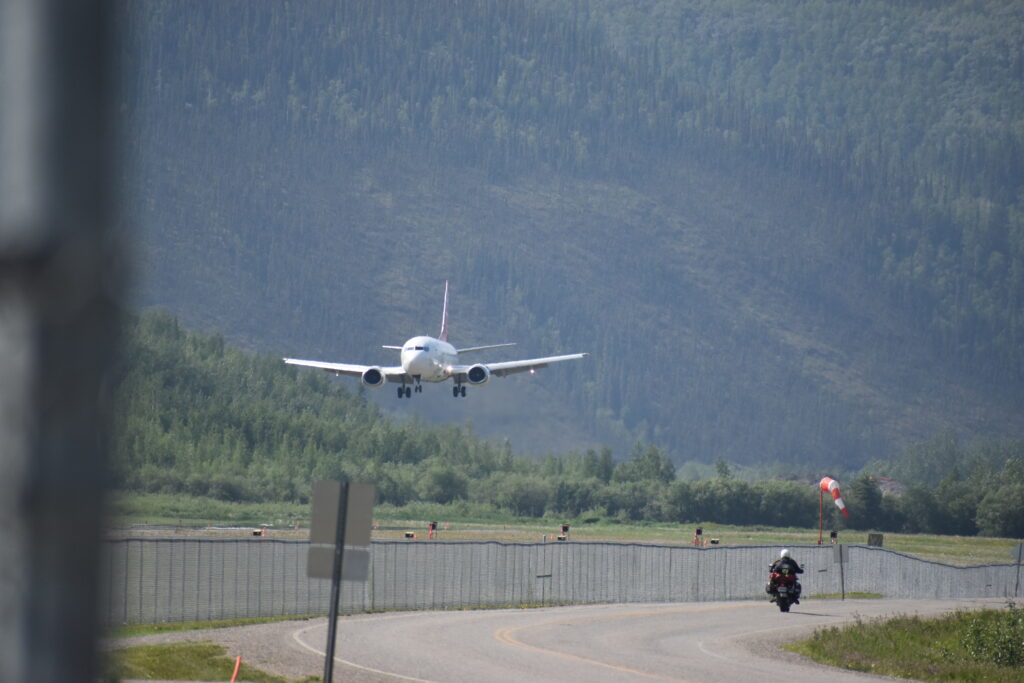
My aircraft for this flight would be C-GANJ, a Boeing 737-500 that was originally delivered to Aer Lingus back in 1993, and flew for a handful of airlines before coming to Air North in August 2012.
I was so excited as this was the first time I’ve ever flown on a Boeing Classic aircraft, and luckily, I didn’t have to wait too long. About 15 minutes after the aircraft arrived, the agent called for boarding of the jet flight down to Whitehorse.
It was only about a five-minute ride from the terminal to the “satellite terminal,” which is essentially just a plastic tent with a fold-up table inside of it so the airline can check bags if needed.
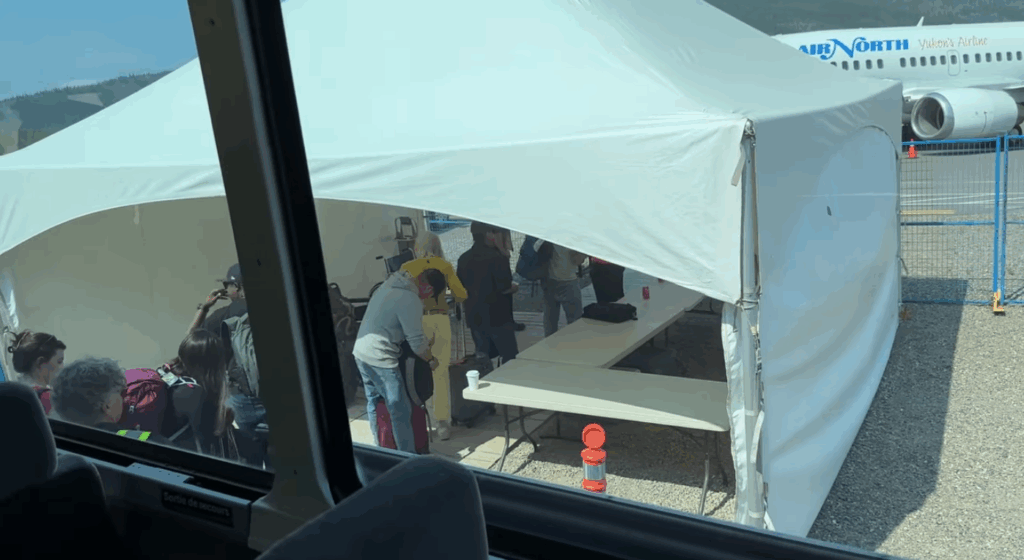
They checked our IDs one more time after getting off the bus, and we headed out to the aircraft. Out of the four 737-500s that the airline has, half of them have winglets, and half of them do not, and for this flight down to Whitehorse, I would be on one of the non-winglet aircraft.
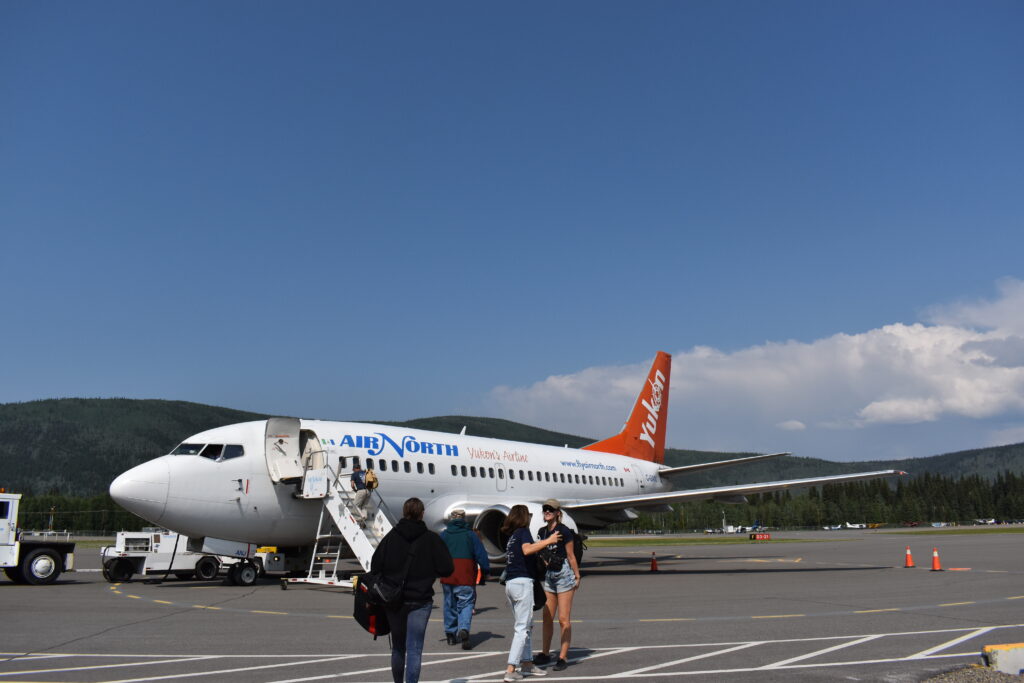
The Boeing 737-500s at Air North have a seating capacity of 122 passengers, but for these flights in and out of Dawson City, they have to weight restrict them to around 90 passengers due to the runway length and the surrounding terrain. This number can vary slightly due to weather conditions in the area, as well as runway conditions. Luckily, there was no issue with that on this flight as it was a pretty light load, with only 27 of us on board headed down to Whitehorse.
It’s always so frustrating when you book a window seat, and then you get on board, and there is no window at your seat at all, but instead a blank wall. Fortunately, that is not a problem with this airline, as on its website it specifically shows which seats have windows and which do not.
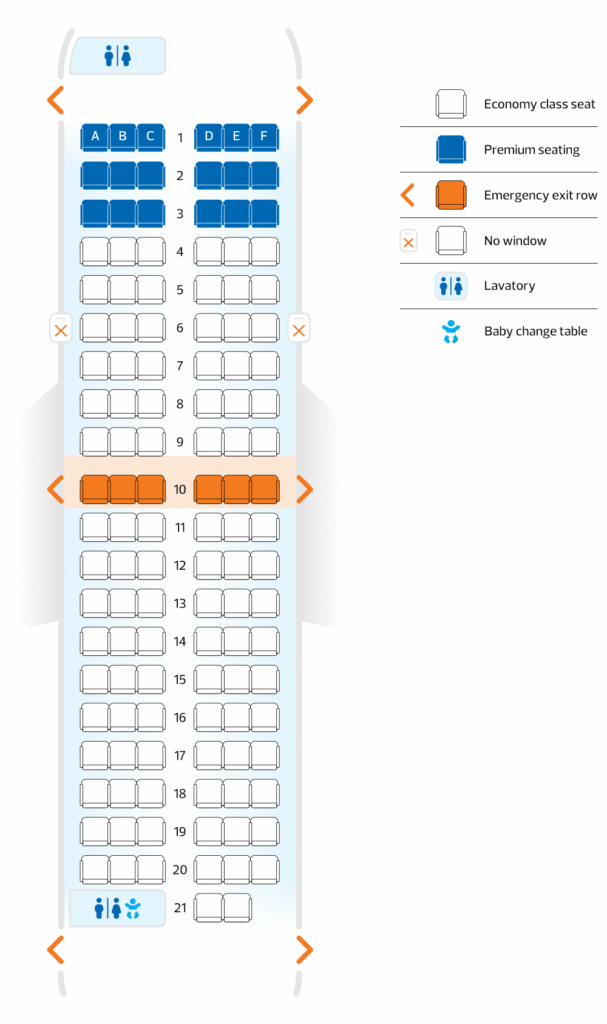
Unless you’re on one of Air North’s ATR 42 flights, the airline does offer assigned seating on all of its flights, and despite this being a very empty flight, I chose a window at the back so I could get a nice view of the flaps on the aircraft.
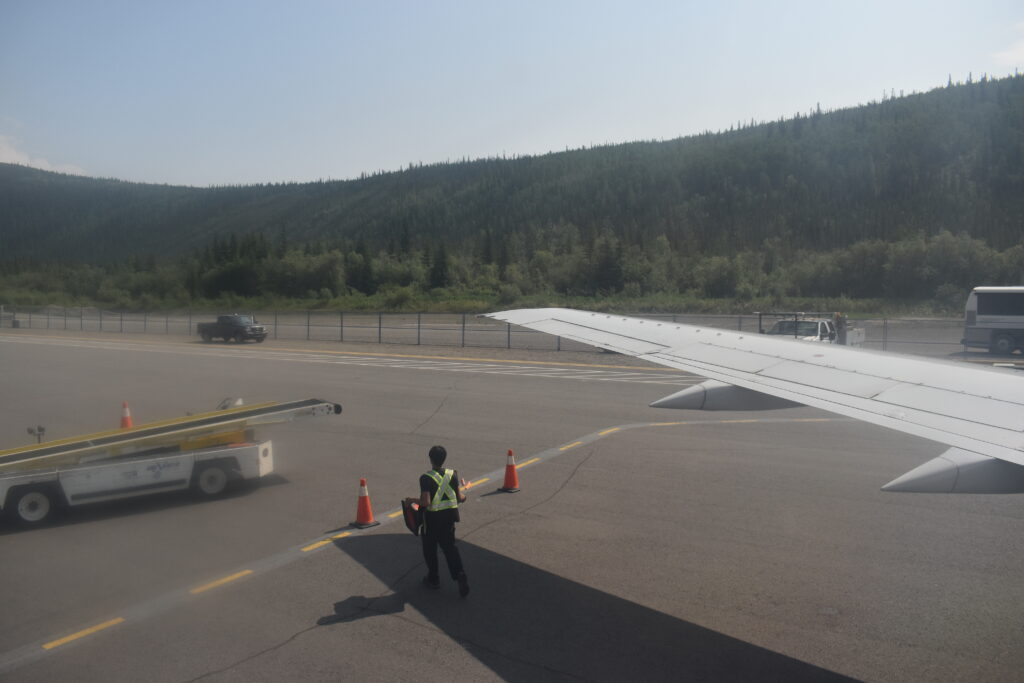
Paperwork, along with weight and balance calculations, took about 15 minutes more or so, and before I knew it, the classic GE CFM56-3C1 engines whirred to life, and we taxied out to the runway.
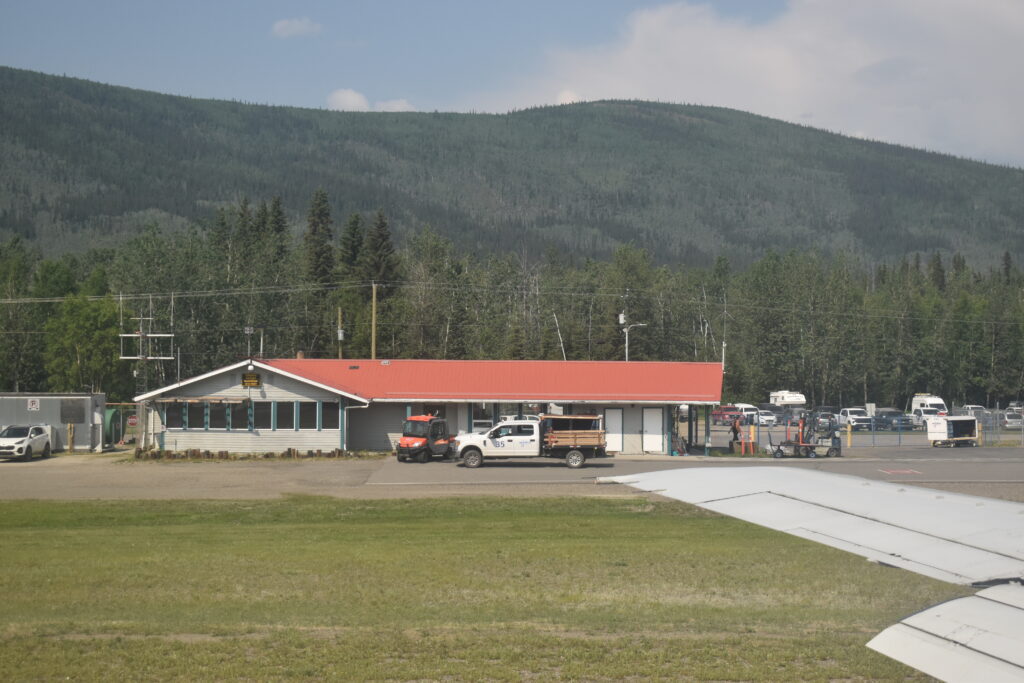
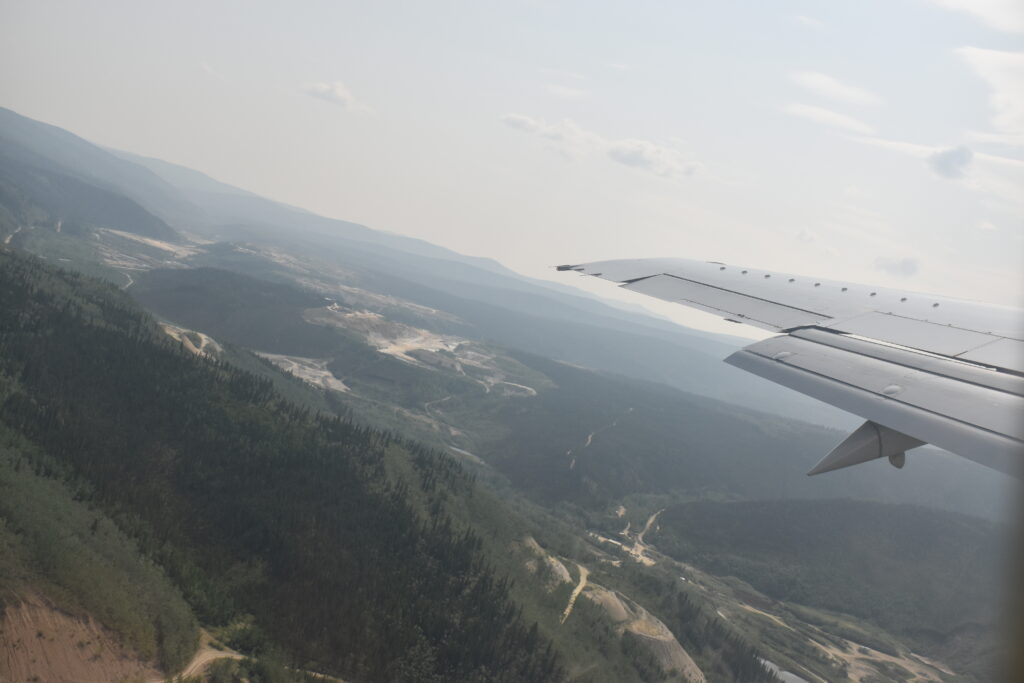
With such an empty aircraft, it didn’t take much runway for us to get into the air, and we were off. After takeoff, we made a 90-degree left bank and headed for Whitehorse while heading up to our cruising altitude.
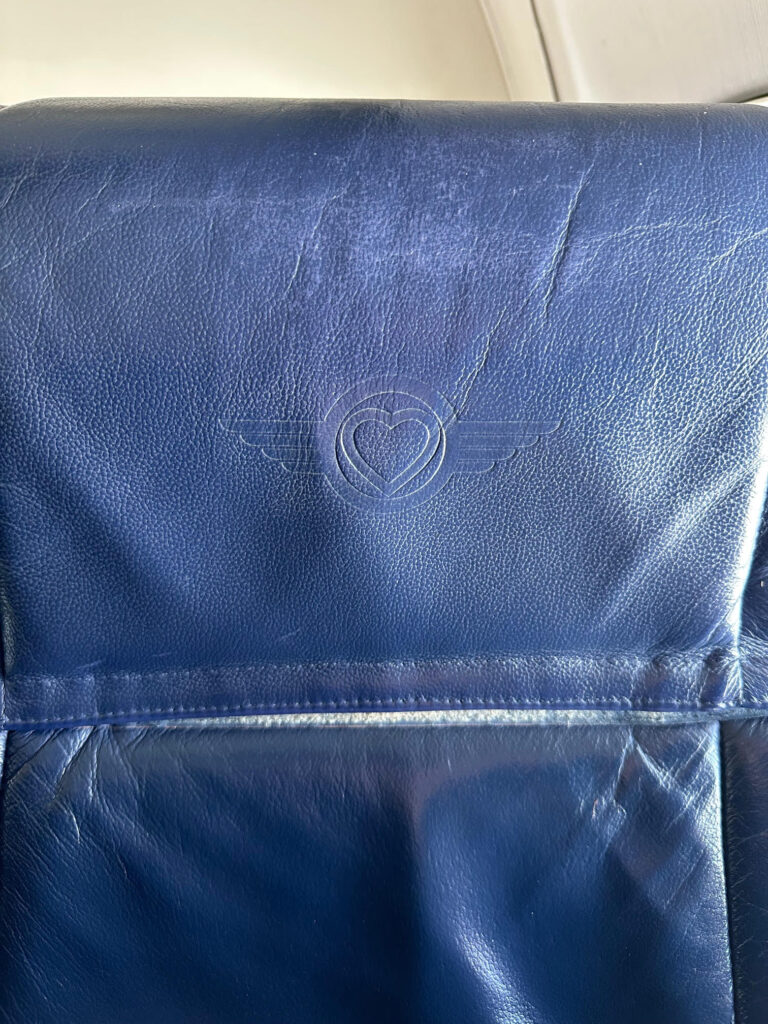
One thing I noticed was the embroidery on the seats, and it looked like the old Southwest Airlines logo. This struck me as odd, especially considering this specific aircraft tail number never flew for that airline. Southwest was the launch customer for the 737-500 back in the late 1980s, however, and it was a great AvGeek treat to see that on board.
As we continued to climb, I noticed the landing light retracting back into the track fairing on the wings, which you can see better in the video of this flight found at the bottom of the article.
Due to the wildfires, the skies weren’t as clear as they could’ve been, but I still got a wonderful view out of the window.
The seats had a good amount of room between them, and they were very comfortable as well, as is common with older seats on older generation aircraft.
Although this was a relatively short flight from Dawson City to Whitehorse, I’m sure the airplane would’ve been comfortable for a longer flight as well. Before Air North received its Boeing 737-800s in recent years, these -500s used to operate all of the airline’s longer flights, including the multi-hour flights from Whitehorse to Ottawa and Toronto via Yellowknife.
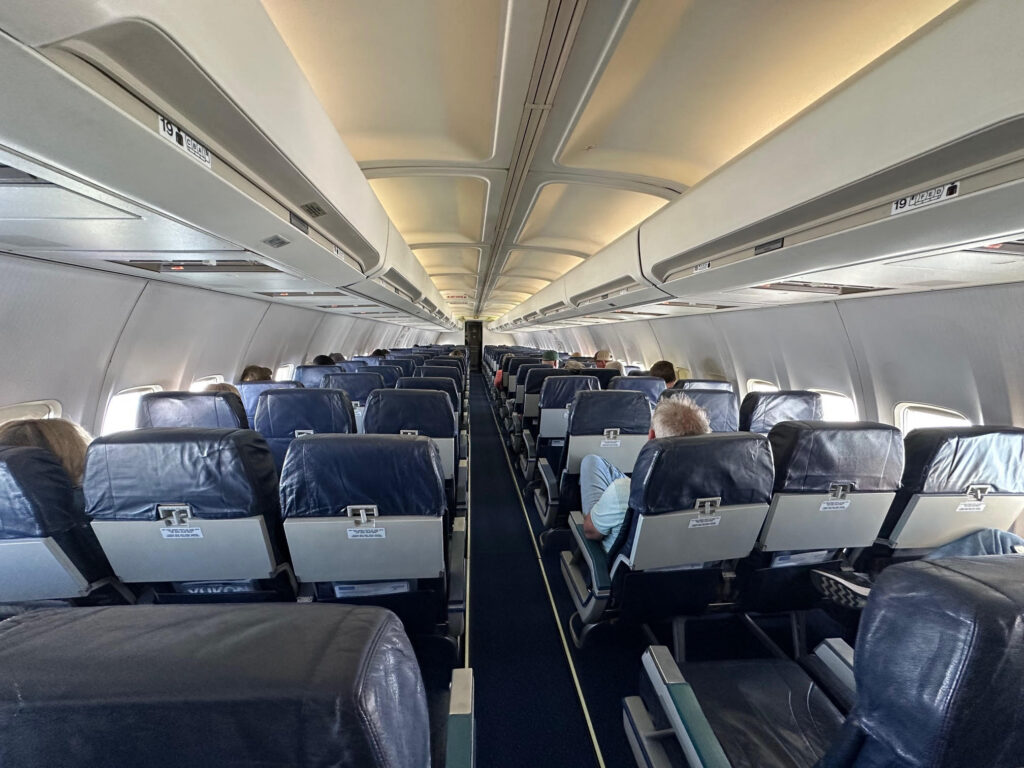
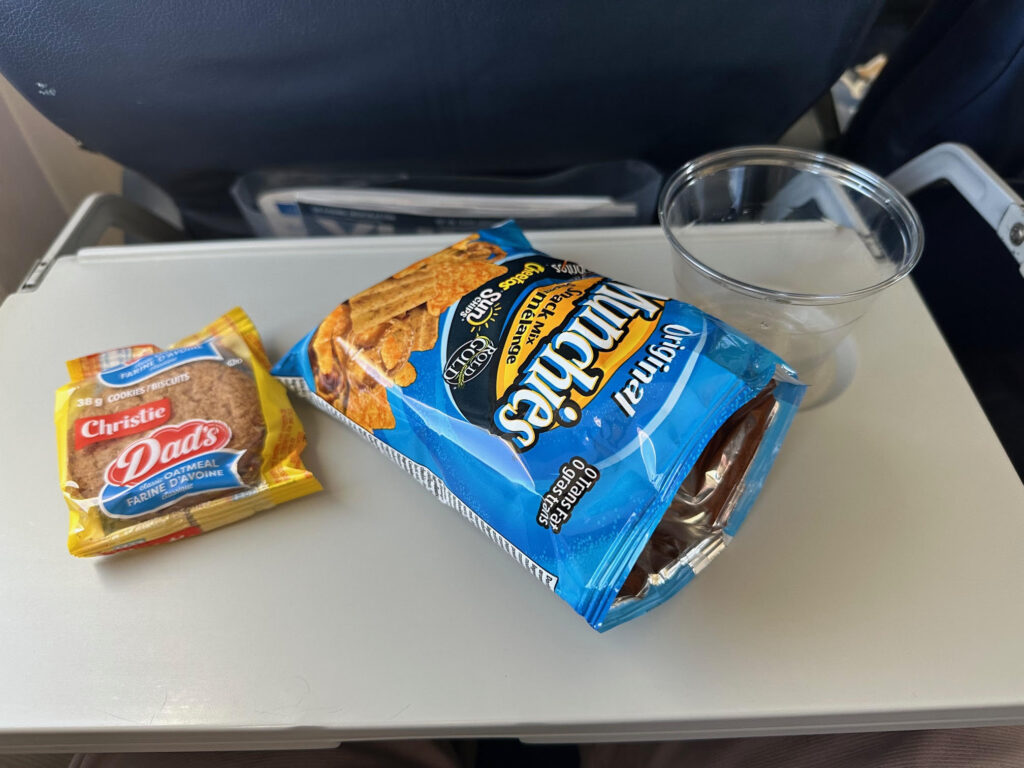
With the short flight, the flight attendants didn’t waste any time and came out with snacks as well as drinks pretty quickly. And with there being so few people on the flight, instead of pulling out the big and bulky galley carts, they came around and personally took each of our orders at our seats with a menu and a clipboard.
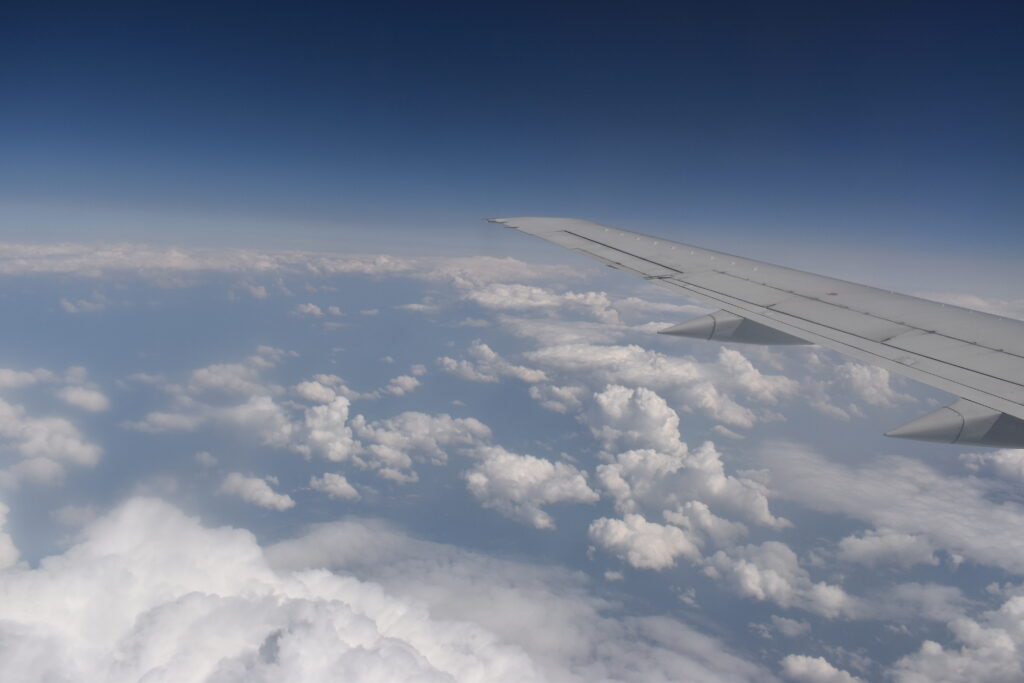
We made it up to our cruising altitude of 35,000 feet, or 10,668 meters, but we didn’t stay there for long and began our descent not long after.
For pretty much the rest of the flight, I sat back and enjoyed the sights and sounds of the Classic Boeing 737-500.
The descent into Whitehorse was quick and turbulent due to the fires in the south, so the crew cleaned up the cabin a little earlier than normal and took their seats for landing.
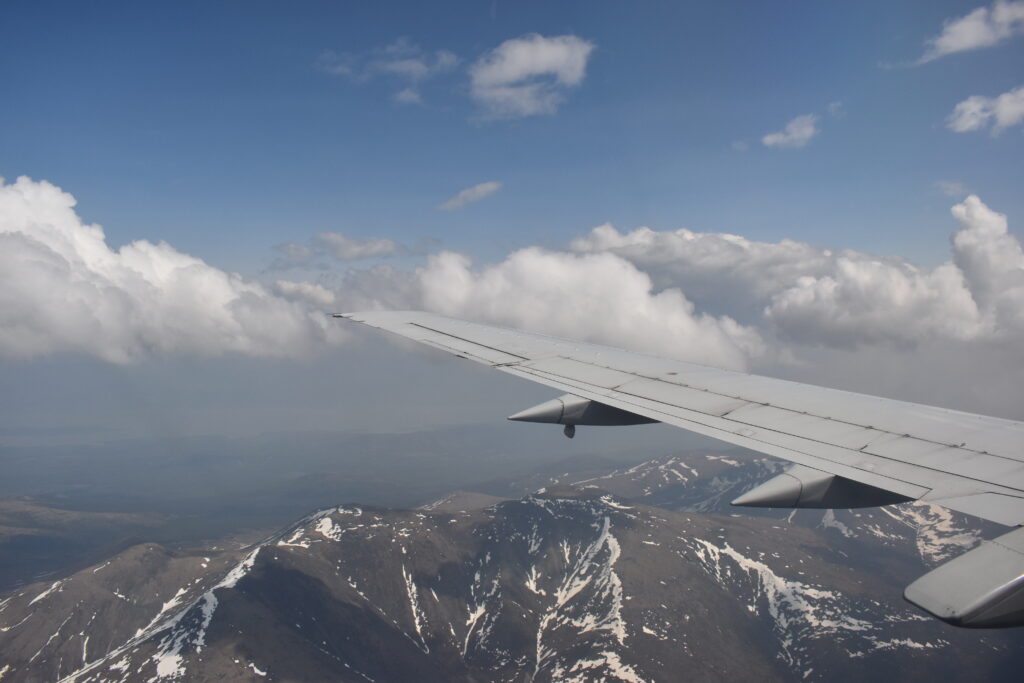
As we got closer to Whitehorse, I could once again see the landing light come out of the track fairing on the wing, signaling our final approach into the capital of the Yukon. Luckily, the smoke had cleared up enough to get some rather wonderful views of the city on the final approach to the airport.
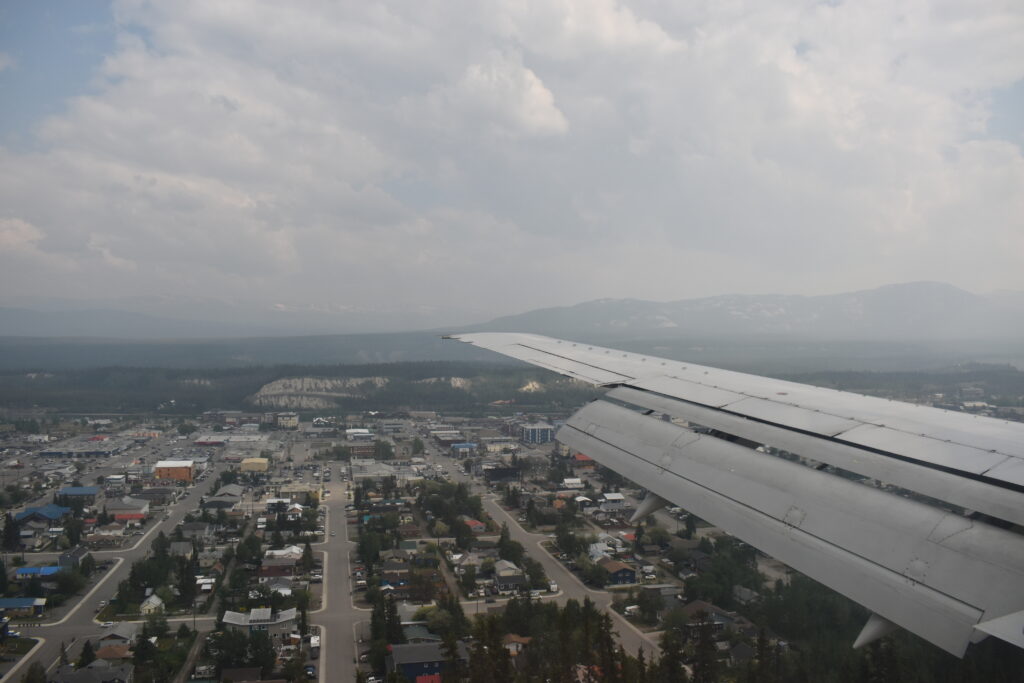
We landed at around 2:20 p.m. local time, after a quick 41 minutes of flying time. One funny fact: the delayed ATR flight leaving around the same time as us left Dawson City before us, but we actually arrived in Whitehorse about 10 minutes before it, since we were in a jet aircraft.
With the airport being under construction at the time of my trip, we used the shorter runway for landing, and then had to back taxi on the runway to exit towards the terminal.
I had an absolutely fantastic time on the Boeing 737-500 aircraft, and of course, I made sure to stop by the cockpit to get some quick pictures before disembarking.
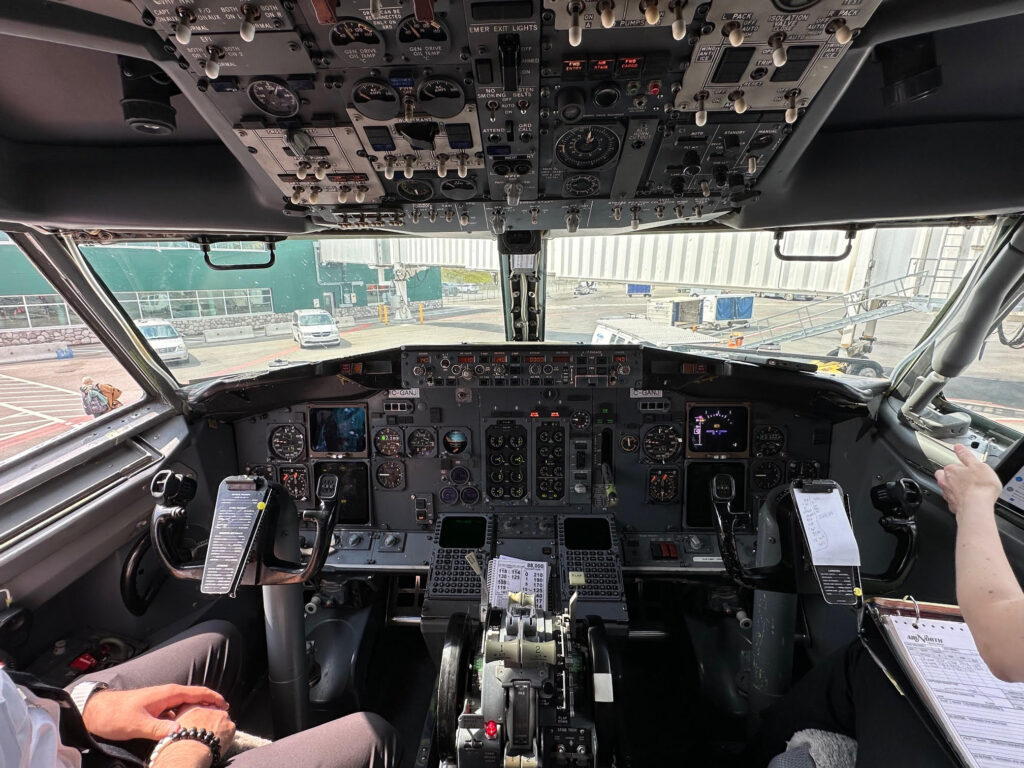
The Boeing 737-500 is one of the few classic aircraft left in the skies over North America for passenger flights, and while getting up to the Yukon might be a long journey, it is still 100% worth it as Air North is by far the easiest way of getting on the -500 if you have yet to fly on one.
Right after I landed, I had the pleasure of interviewing Air North’s CEO, Joe Sparling. The day after this, I had planned to fly on another classic aircraft, the Boeing 737-400 with Air North, but it got swapped out at the last second to another Boeing 737-500. The article for that will be out soon.
A video account of this trip report on Air North’s 737-500 can be found below.
Editor’s Note: Air North provided AirlineGeeks with a seat on this flight, but this trip report is an objective portrayal of events and is in no way swayed.