











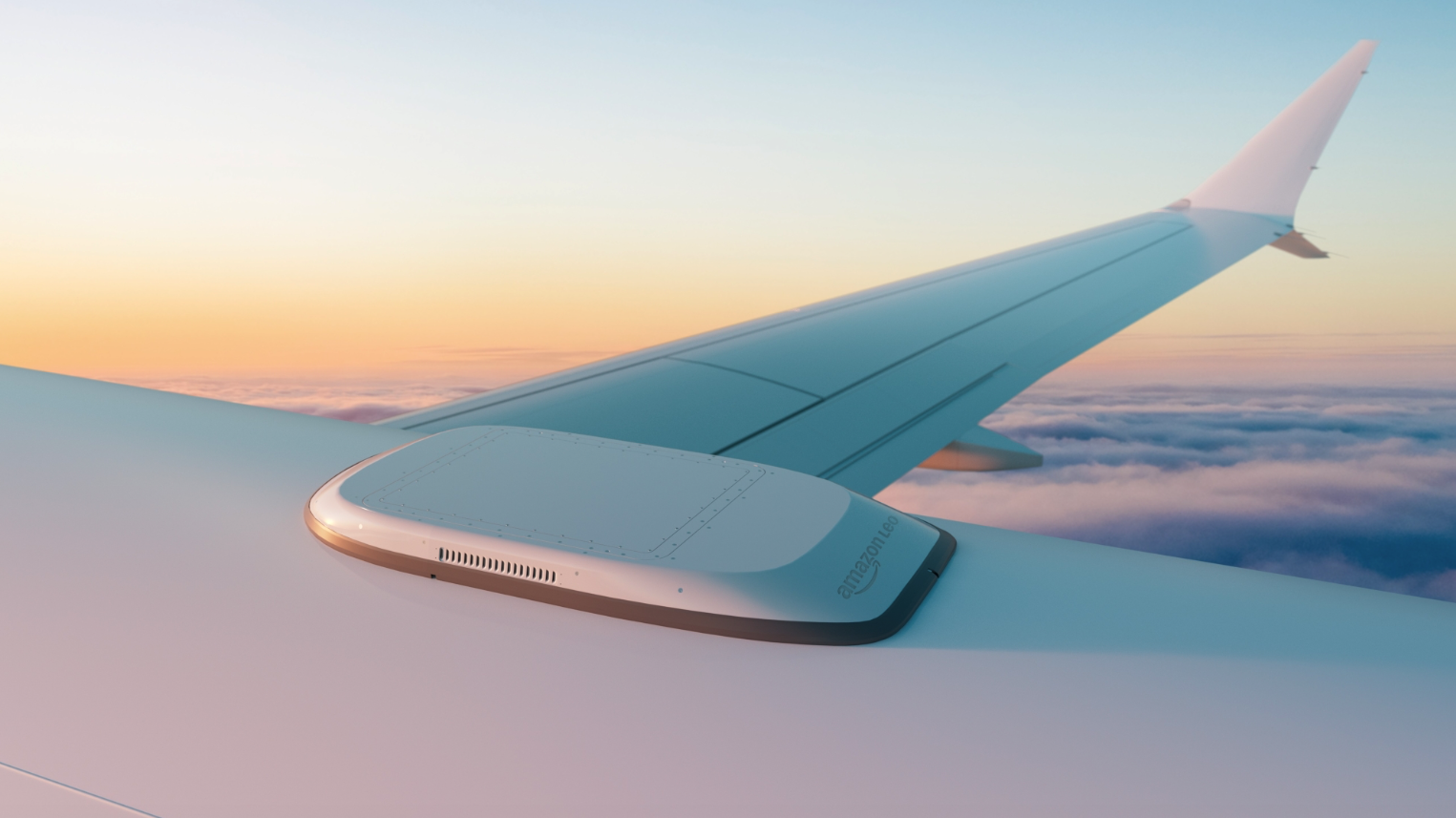


Amazon Leo this week debuted the antenna that it says will enable high-speed satellite internet on in-flight commercial aircraft.
The new array will deliver simultaneous speeds of up to 1 gigabit per second for downloads and 400 megabits per second for uploads, the company said Monday. A single unit is expected to provide enough bandwidth for every passenger in every cabin of an aircraft, as well as the crew.
The antenna works by connecting a flight to the nearest available Amazon Leo satellite, then passing off the connection as the airplane travels.
So far, Delta and JetBlue have agreed to use the company’s satellite constellation, which now consists of over 200 satellites in low-Earth-orbit. Officials recently said that they have another 200 satellites assembled and ready for launch.
“Amazon Leo can connect a full plane of passengers and crew with speeds that handle any activity seamlessly, whether passengers want to game, watch a movie, listen to music, or collaborate with colleagues on a project,” Trevor Vieweg, director of global business for Amazon Leo, said in a news release. “We expect our service to be so fast and reliable that passengers will seek out flights featuring Leo connectivity.”
The new antenna is flat and rectangular, only 2.6 inches high to reduce drag, and will be attached to the top exterior part of an aircraft’s fuselage. Amazon Leo said the device was engineered to withstand high speeds, harsh weather, and extreme temperatures. To cut down on maintenance, there are no moving parts.
The company has said its constellation will come online in mid-2026. Its service will compete directly with SpaceX’s Starlink, which has signed deals with carriers such as United, Southwest, and Lufthansa.