











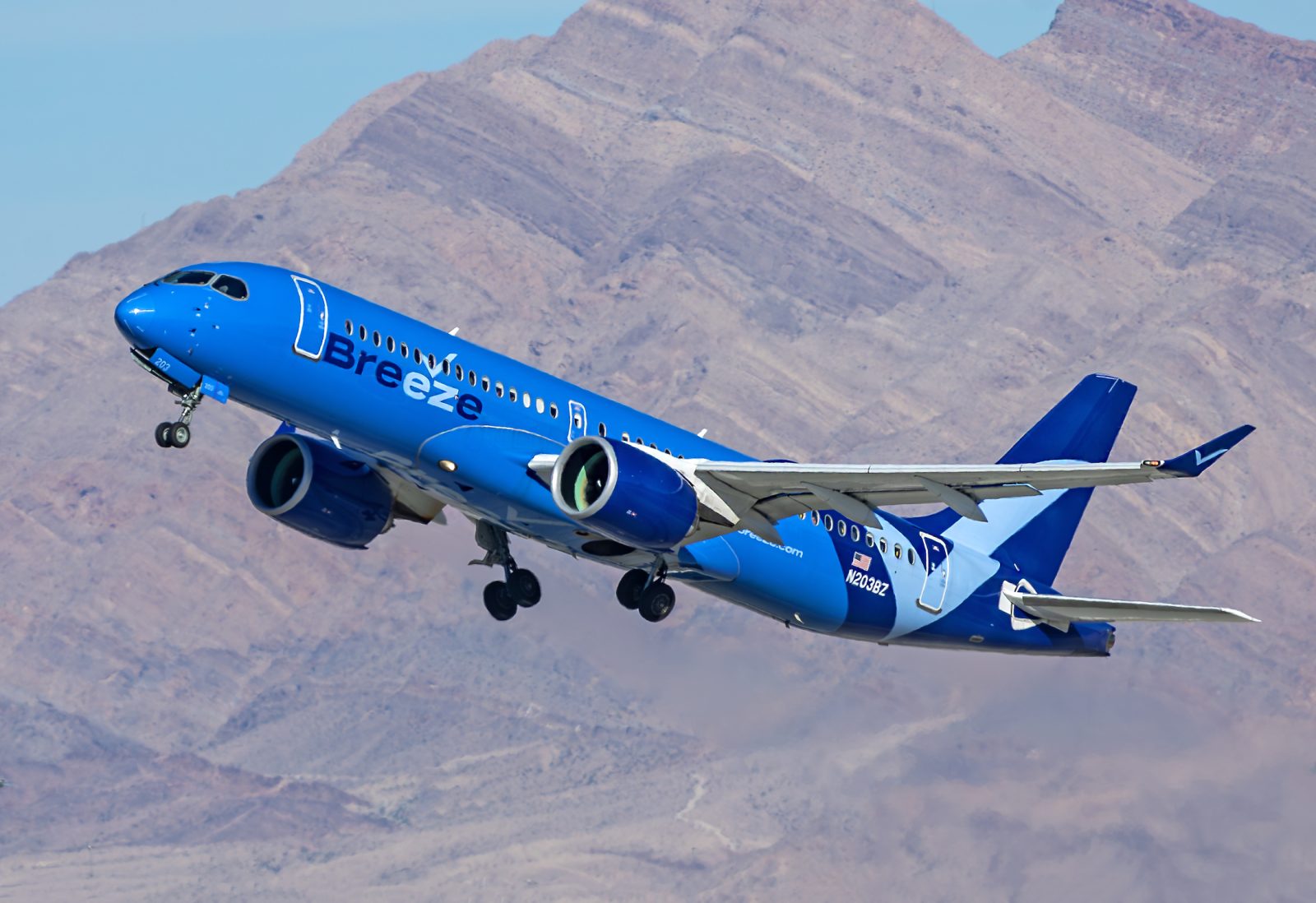


Breeze Airways is rolling out a new flight-following solution designed to streamline critical information for its dispatchers.
The platform, known as Maverick Dispatch, was developed over the last year by The Weather Company with input from Breeze’s teams. It folds together numerous data streams, including weather imaging, into a single and more easily digestible interface, attributes the airline believes will improve efficiency, mitigate operational disruptions, and reduce the mental burden on dispatchers.
“One of the biggest tasks when it comes to dispatching is that you have so much information that you’re trying to compile and make decisions on, and really reducing that cognitive load is the biggest focus of the solution,” said Garrett Urry, manager of flight dispatch at Breeze. “Now we’re condensing and compiling it down into a single interface so that dispatchers are not trying to find multiple tabs, multiple URLs, that help them make those decisions.”
According to Urry, a typical dispatcher might have between 22 and 25 different browsers open at any one time with software and websites needed to help make a single decision about a flight.
“Reducing that to a single display really relieves that burden and cognitive load on the dispatchers and assists them in making those education decisions,” he said.
Maverick Dispatch comes with enhanced weather visualization, a consolidated alert dashboard, predictive modeling for storms, analytics tools, and a new NOTAM viewer, among other features. The Weather Company’s meteorological data and forecasting capabilities are directly integrated into the system.
“Dispatchers don’t have to go through other experiences to find the best weather,” said Chris Oak, aviation product leader at TWC. “They can trust that we have integrated the best-in-class weather directly into the experience, and they know that’s what’s driving the insights that are coming out of the platform.”
Breeze has already been using TWC’s flight tracker Fusion. Maverick Dispatch expands on Fusion, moving from an app-based solution to a cloud-based platform accessible from a web browser, officials said.
A group of Breeze employees provided feedback to TWC as Maverick was developed, helping guide decisions about functionality and display methodologies.
“We can figure out which ideas are hitting and which aren’t,” Oak said. “We could talk about a solution for an hour, but with a picture in front of someone, they can tell you, ‘That’s what I need.’ So that is what some of those sessions helped flesh out.”
AI is blended into several of the features offered by Maverick, including weather modeling. Meteorologists continuously check the forecasts to ensure accuracy, creating a system that dispatchers can use comfortably without having specialized knowledge about artificial intelligence.
AI is also used in Maverick’s Smart NOTAMs tool to help organize information.
“You click on NOTAMs, we take all the airport NOTAMs in context, and we’ve sorted them and filtered them and within two seconds we can start streaming a Smart NOTAMs summary based off what dispatchers have told us is the most important thing,” Oak said. “They don’t have to worry about, ‘How is this happening?’ They just know they click and get a quick AI summary.”
“That’s how we want some of our AI tooling to be in Maverick,” he continued. “We want to show AI transparency, but we don’t want people to have to be experts in AI to use the product.”
Breeze said it completed training of dispatchers on Maverick earlier this month.