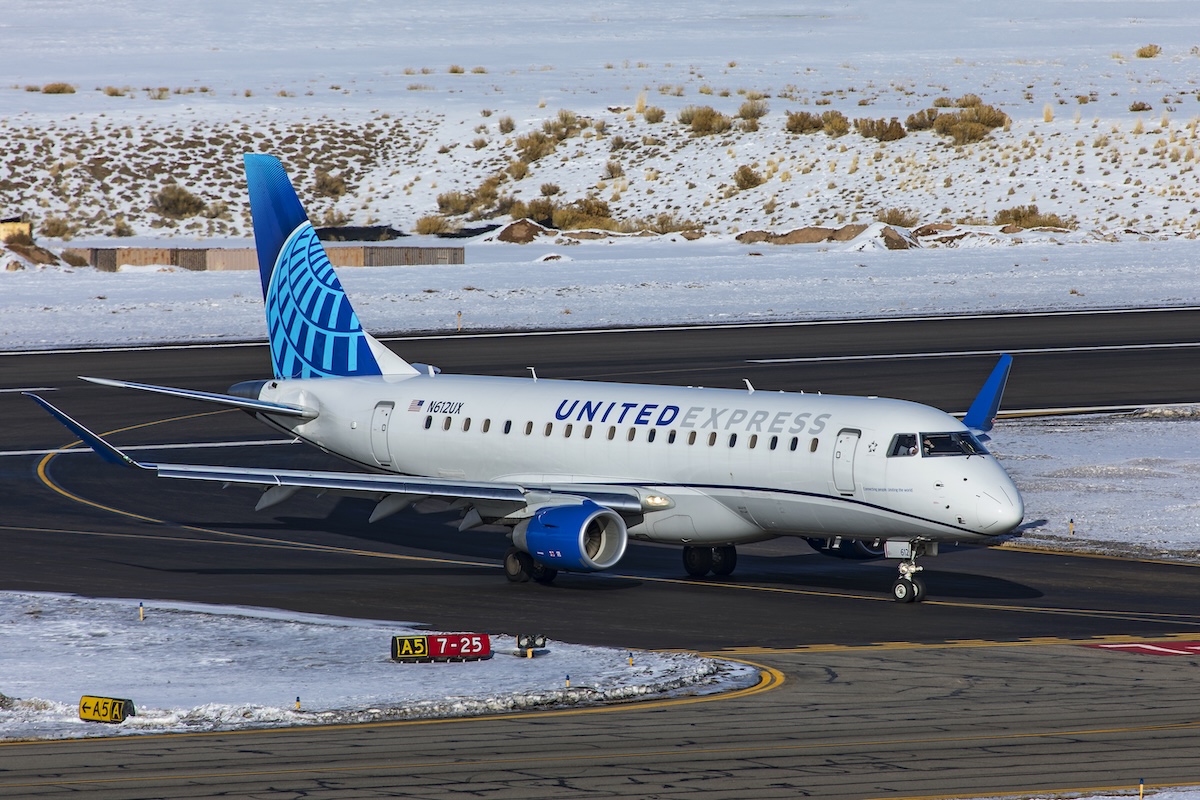
A United Embraer E175 operated by SkyWest (Photo: AirlineGeeks | William Derrickson)
United will add another airport to its route map in 2026, becoming the second U.S. airline to regularly serve it. The Chicago-based airline last served this airport over a decade ago.
Beginning on March 30, the carrier will relaunch flights to McClellan–Palomar Airport in Carlsbad, California. Twice-daily flights are scheduled from United’s Denver and San Francisco hubs on SkyWest Embraer E175s.
The airline’s network planning chief, Patrick Quayle, confirmed the carrier’s newest airport addition on Instagram.
“Carlsbad is a bit different for the United network. It’s not Bangkok. It’s not Bari. It’s a small domestic airport, and there’s something special about connecting it to the world,” he said in a post. “One of the things that makes Carlsbad different is that it only handles two scheduled commercial departures every day – the rest are general aviation.”
American launched flights to Carlsbad in February, which is located just over 30 miles north of downtown San Diego. Currently, it is the only major airline serving the airport, with flights to its Phoenix hub.
Semi-private operator JSX also flies to McClellan-Palomar.
United last flew to the California airport in April 2015 with service to Los Angeles.
Ryan founded AirlineGeeks.com in February 2013 and has spent more than a decade covering the airline business. His work has been featured by CNN, WJLA, CNET, and Business Insider. His aviation experience spans airport operations, Part 135 regulatory compliance, and airline crew workforce planning, along with time behind the yoke of a Cessna 172 and interviews with airline executives. Ryan now serves as Group President of Firecrown Media’s Aviation Group. He holds a B.S. in Air Transportation Management and an MBA from Arizona State University and teaches Airline Management at Embry-Riddle Aeronautical University.
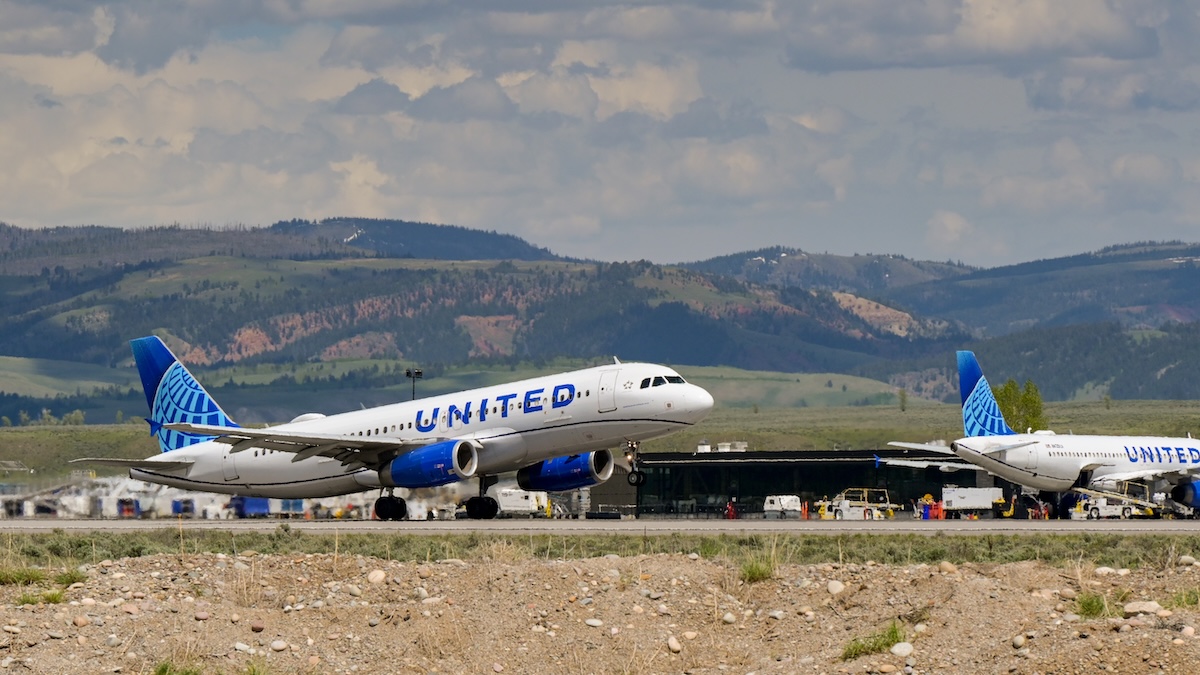
A United Airbus A320 (Photo: Shutterstock | Ceri Breeze)
United is slated to phase out its fleet of Airbus A319s and A320s as it takes delivery of newer aircraft.
Currently, the Chicago-based airline has 78 A319s and 70 A320s in active service, according to fleet data from Cirium. Roughly a dozen aircraft have been retired or placed in storage.
The A319s have an average age of 24 years, while the A320s are nearly 26 years old.
The airline’s chief commercial officer, Andrew Nocella, shared that United plans to retire the “lower-margin” A319 and A320 aircraft by 2030.
“This gauge increase is a proven formula for margin growth and accelerates as we retire smaller, lower-margin A319 and A320 aircraft from our fleet by 2030,” he said during a recent earnings call, noting an increased pace in A321neo deliveries.
‘Critical Mass’
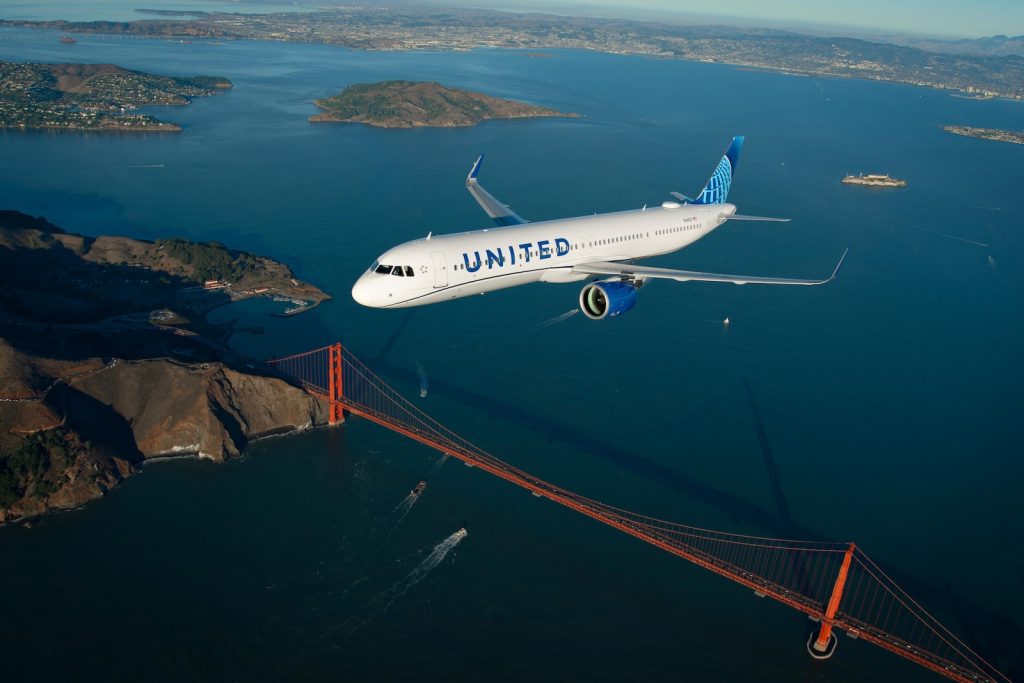
United’s 200-seat A321neo fleet will reach “critical mass” in the coming years, Nocella added, “helping drive better customer experience, but also creating cost convergence with others.” The airline took delivery of its first A321neo in October 2023, and now has 49 in active service.
A United A321neo. (Photo: United Airlines)
“United’s hubs can support this higher gauge and allows us to accept more basic economy passengers at a profit,” he continued.
Ryan founded AirlineGeeks.com in February 2013 and has spent more than a decade covering the airline business. His work has been featured by CNN, WJLA, CNET, and Business Insider. His aviation experience spans airport operations, Part 135 regulatory compliance, and airline crew workforce planning, along with time behind the yoke of a Cessna 172 and interviews with airline executives. Ryan now serves as Group President of Firecrown Media’s Aviation Group. He holds a B.S. in Air Transportation Management and an MBA from Arizona State University and teaches Airline Management at Embry-Riddle Aeronautical University.
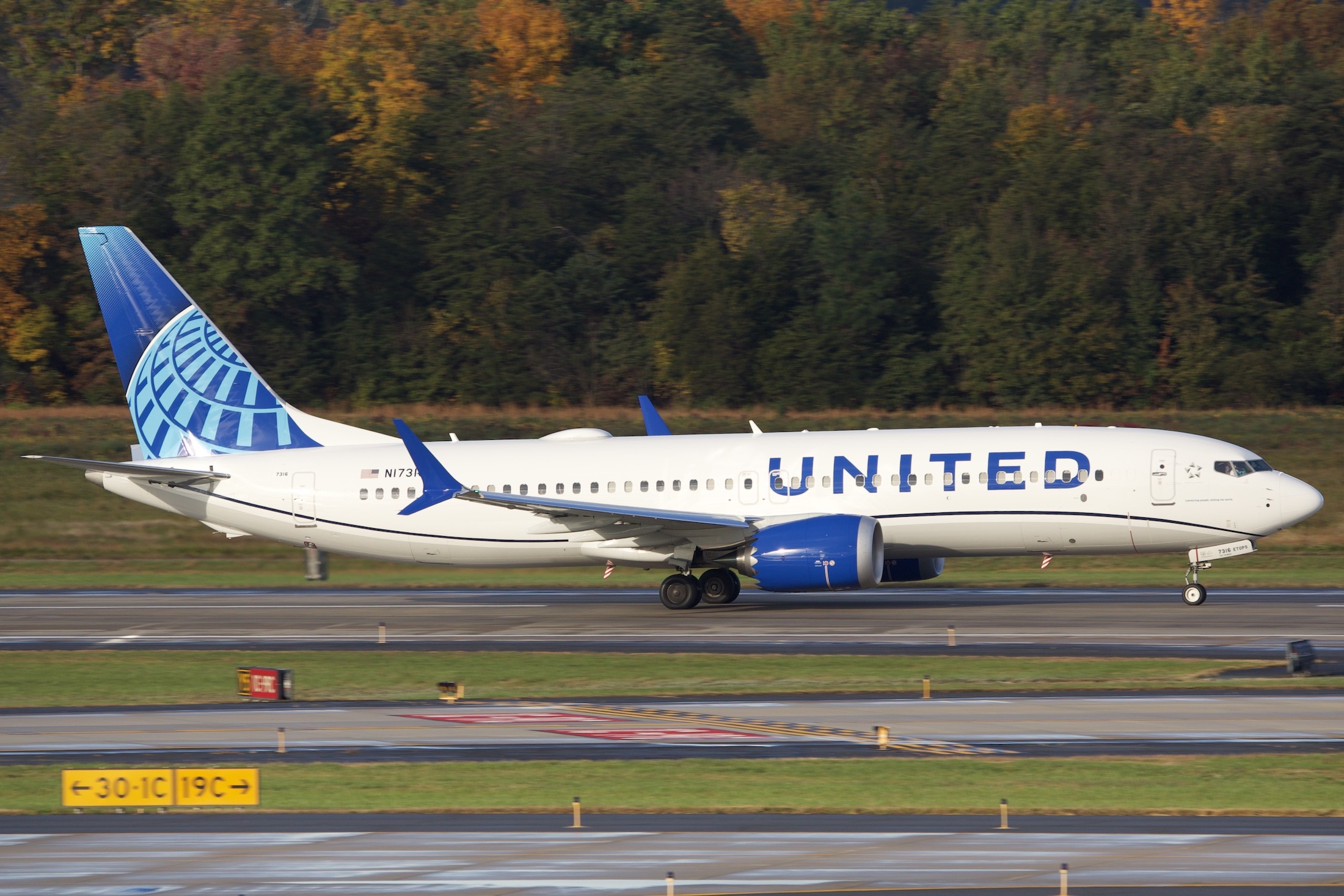
A United 737 MAX 8. (Photo: AirlineGeeks | Noah Escobar)
The leader of an atmospheric data collection and weather prediction company believes one of his weather balloons could be the cause of a smashed windscreen that forced a United Airlines flight to make an emergency landing last week.
United Flight 1093, operating with a Boeing 737 MAX 8, was flying from Denver to Los Angeles on Thursday when the pilots reported a cracked windscreen at cruise altitude over Moab, Utah. The flight landed safely in Salt Lake City, and the NTSB is now investigating.
While not verified by either United or the NTSB, photos circulating on social media site X show what appears to be the heavily damaged windscreen and scorch marks on the aircraft’s exterior above and around the windscreen.
The marks, combined with the aircraft’s reported cruise altitude – far higher than most birds can fly – prompted some social media users to speculate that a small meteorite or piece of space debris may have caused the damage. But on Monday, science and space YouTuber Scott Manley suggested that a weather balloon could have struck the 737 MAX.
Here's what the operational part of the @WindBorneWx weather balloon looks like – they use sand as ballast. And here's the plane, I now understand why the paint on the window frame looks like it's been sand blasted.
“Here’s what the operational part of the @WindBorneWx weather balloon looks like,” Manley wrote on X. “They use sand as ballast. And here’s the plane, I now understand why the paint on the window frame looks like it’s been sand blasted.”
“It does look like WindBorne are doing all the right things, but I’m guessing the controllers just didn’t get the location information they were sharing?” he added.
John Dean, CEO of WindBorne Systems, answered Manley on X.
“Hi Scott, cofounder/CEO of @WindBorneWx here,” his post read. “Yes, I think this was a WindBorne balloon. We learned about UA1093 and the potential that it was related to one of our balloons at 11 p.m. PT on Sunday and immediately looked into it. At 6 a.m. PT, we sent our preliminary investigation to both NTSB and FAA, and are working with both of them to investigate further.”
WindBorne makes and deploys long-duration “smart” weather balloons to produce weather forecasts.
In a statement on Monday, the company said the “foreign debris object” that hit the United aircraft “was likely a WindBorne balloon.”
“WindBorne has conducted more than 4,000 launches,” the message said. “We have been coordinating with the FAA for the entire history of the company and file NOTAMs (aviation alerts) for every balloon we launch. The system is designed to be safe in the event of a midair collision. This is the purpose of the FAA Part 101 and ICAO weight limits. Our balloon is 2.4 pounds at launch and gets lighter throughout flight.”
The company also said it immediately rolled out changes to minimize time its weather balloons spend between 30,000 and 40,000 feet.
The NTSB has not commented on WindBorne’s statement.
Zach Vasile is a writer and editor covering news in all aspects of commercial aviation. He has reported for and contributed to the Manchester Journal Inquirer, the Hartford Business Journal, the Charlotte Observer, and the Washington Examiner, with his area of focus being the intersection of business and government policy.
The company said its new $70 million facility will boost its capacity to serve E-Jet customers in the U.S. by 53%. The center is expected to open in 2027.
Embraer began operations at Alliance Airport in June at an existing hangar.
“This moment marks a new chapter in Embraer’s journey in the United States, a country where we’ve been for over 46 years,” Embraer President and CEO Francisco Gomes Neto said in a news release. “With an investment of up to $70 million and the creation of 250 new skilled aviation jobs, this facility is a symbol of our long-term commitment to the U.S. market.”
The company hosted a ceremonial groundbreaking at the airport on Monday, attended by Fort Worth and Denton County officials, representatives of the Fort Worth Economic Development Partnership, and real estate developer Ross Perot Jr.
Embraer first announced plans to open a new MRO center in Fort Worth in October 2024. Company leaders said additional infrastructure is needed to support the growing number of E-Jets operating in North America.
Embraer has more than 80 authorized service centers and 13 Embraer-owned service centers worldwide.
Zach Vasile is a writer and editor covering news in all aspects of commercial aviation. He has reported for and contributed to the Manchester Journal Inquirer, the Hartford Business Journal, the Charlotte Observer, and the Washington Examiner, with his area of focus being the intersection of business and government policy.
Pan Am Returning to the Seas
Holland America’s Zuiderdam will retrace the carrier’s original routes through the Caribbean.
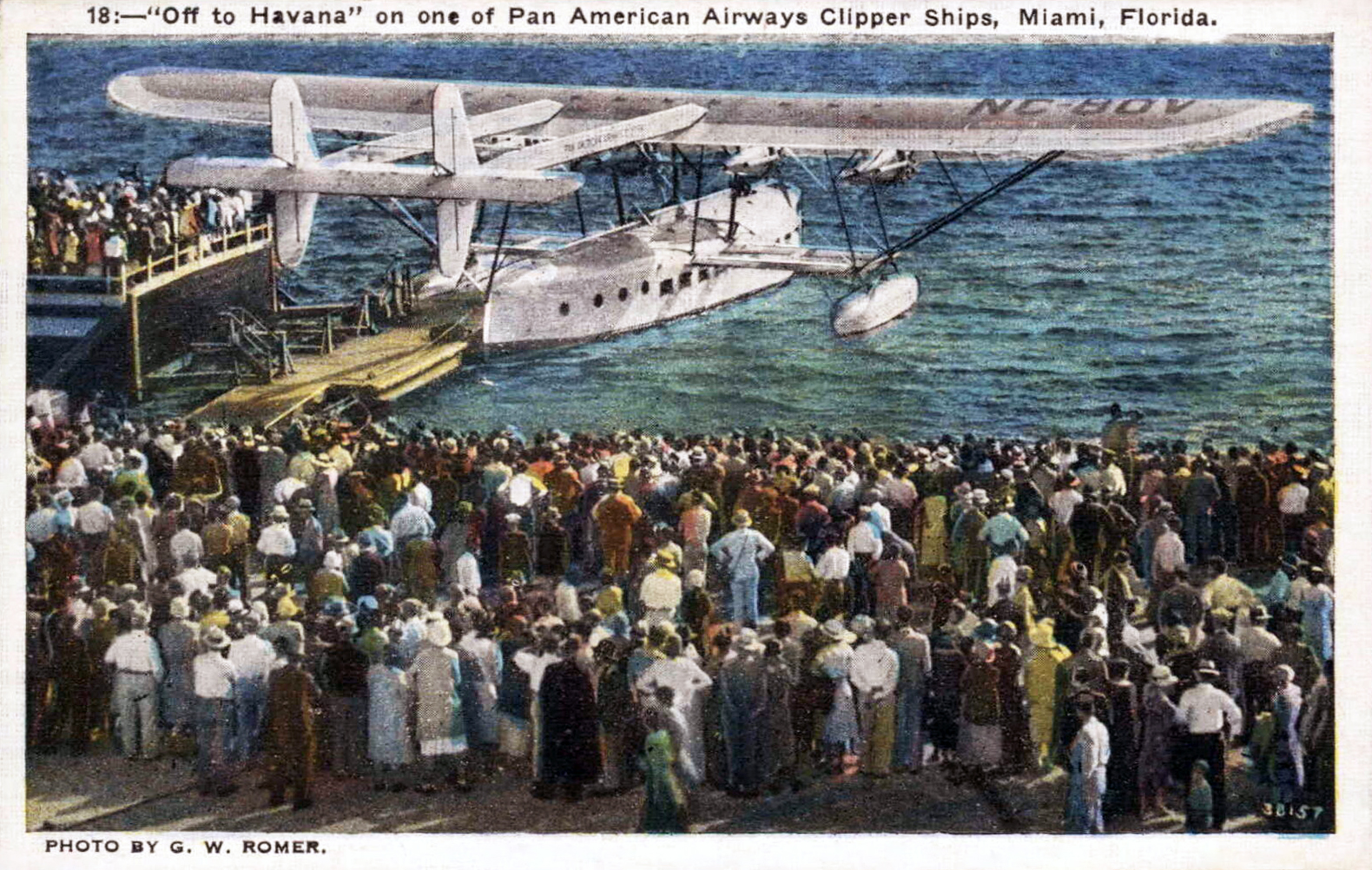
A 1935 print ad for Pan Am. (Photo: Gleason Waite Romer/Dade County Newsdealers, made available through Wikimedia Commons)
Cruise line Holland America is partnering with the Pan Am brand to launch a nearly month-long trip at sea commemorating the defunct airline’s 100th anniversary.
The 28-day Pan Am 100th Anniversary Legendary Voyage will retrace original Pan Am Clipper routes in and around the Caribbean and Latin America, visiting 18 ports of call. The cruise will depart from Miami, Pan Am’s longtime base, on the Holland America ship Zuiderdam on Oct. 30, 2027.
Organizers said the journey will call back to Pan Am’s most glamorous era with themed meals, period-inspired décor, and historical programming.
“Pan Am and Holland America Line both helped pioneer modern travel – Pan Am in the skies and Holland America Line at sea,” said Paul Grigsby, vice president of itinerary planning and deployment for Holland America, in a statement. “With roots that reach back more than a century, both brands share a legacy of connecting people to the world with impeccable service and a spirit of discovery. This collaboration is a tribute to the golden age of travel and humanity’s enduring drive to explore.”
According to Holland America, the cruise will launch from Miami and stop at Nassau, The Bahamas; RelaxAway, Half Moon Cay, which is Holland America’s private island; Ocho Rios, Jamaica; Santo Domingo, Dominican Republic; San Juan, Puerto Rico; Charlotte Amalie, St. Thomas; St. John’s; Castries, Saint Lucia; Port of Spain, Trinidad and Tobago; Willemstad, Curaçao; Oranjestad, Aruba; Santa Marta and Cartagena, Colombia; Colon, Panama; Puerto Limon, Costa Rica; Belize City, Belize; and Cozumel and Progreso, Mexico, before heading back to Miami.
Nine of the ports – Nassau, San Juan, Charlotte Amalie, St. John’s, Castries, Port of Spain, Colon, and Progreso – were original Pan Am destinations.
Pan Am used the name “Clipper” for several types of “flying boats” that could land on water. The aircraft helped Pan Am expand and dominate international air travel in the 1930s and ‘40s.
Comeback in the Works
Holland America is collaborating with Pan Am Global Holdings, which manages the intellectual property rights for the long-defunct Pan American World Airways. Pan Am has not operated as a commercial airline since its bankruptcy in 1991.
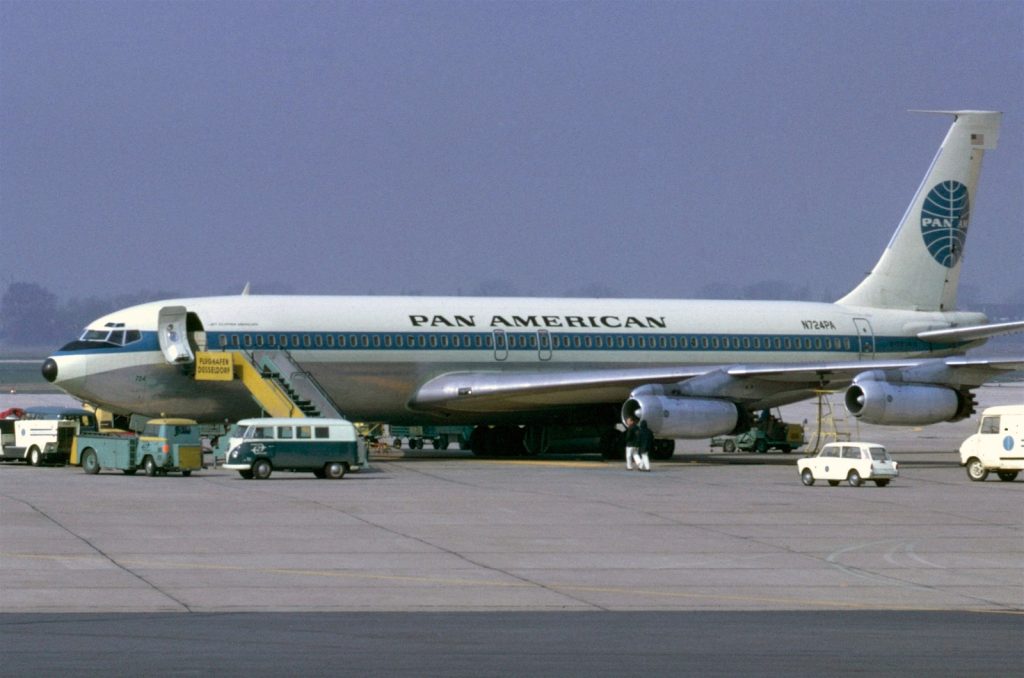
A Pan Am 707. (Photo: Shutterstock | Peter Scharkowski)
Separate from the cruise, however, Pan Am’s successor company is planning a possible return to the skies. Earlier this month, Pan Am Global Holdings and aviation merchant bank and consulting firm AVi8 Air Capital announced they have formally started the airline certification process with the FAA, which could reestablish Pan Am as a Part 121 scheduled carrier.
The partners said that, once certified, the new Pan Am plans to operate a fleet of Airbus aircraft. The company will be headquartered in Miami.
Zach Vasile is a writer and editor covering news in all aspects of commercial aviation. He has reported for and contributed to the Manchester Journal Inquirer, the Hartford Business Journal, the Charlotte Observer, and the Washington Examiner, with his area of focus being the intersection of business and government policy.
Airlines Told to Disregard ‘X’ Mark on U.S. Passports
U.S. Customs and Border Protection said carriers should input an “M” or “F” into their passenger data systems.
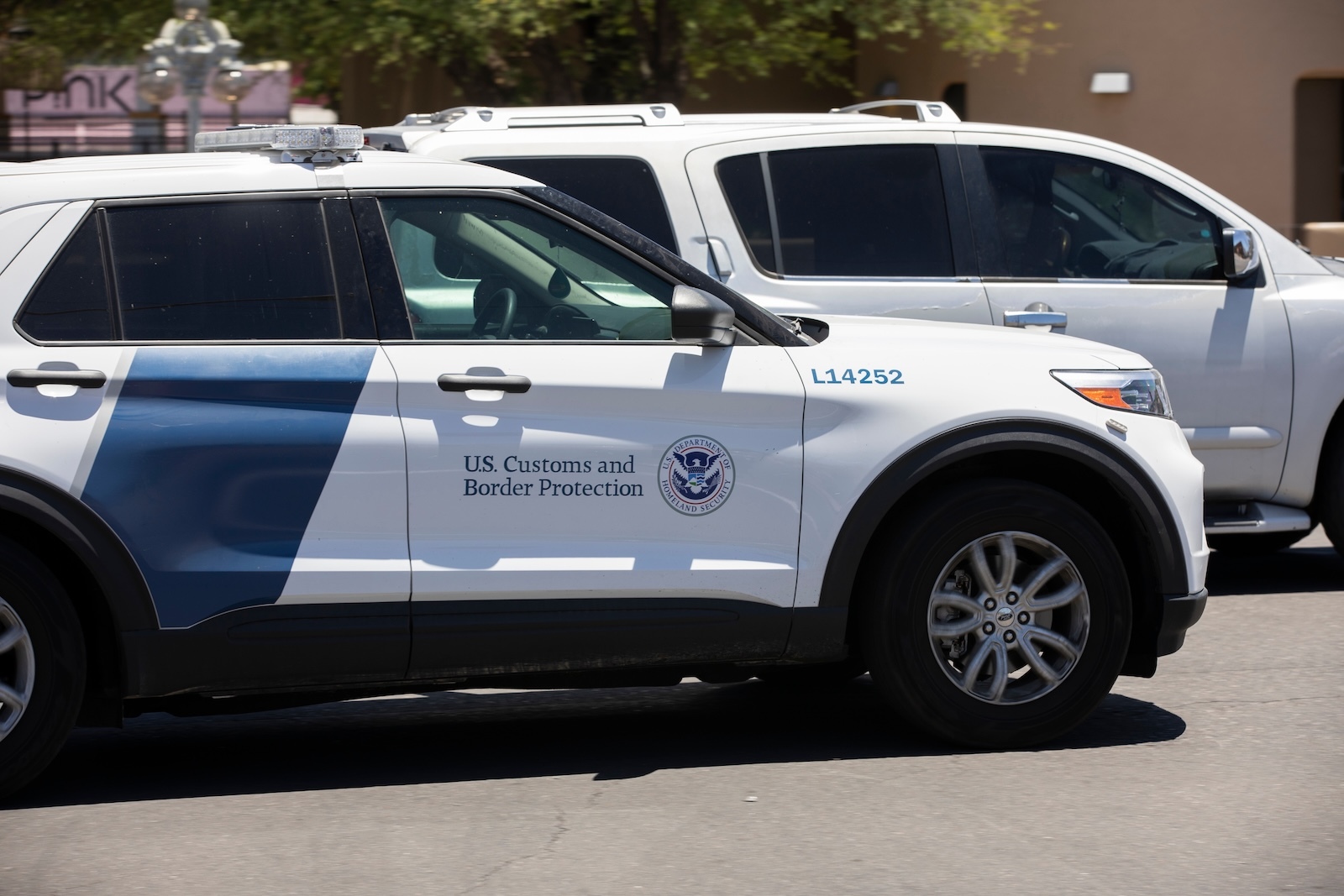
A U.S. Customs and Border Protection vehicle in Nogales, Arizona. (Photo: Shutterstock | Matt Gush)
A new rule that will require airlines to disregard gender-neutral “X” marks on U.S. passports and input either an “M” or an “F” into their passenger data systems has come into effect.
U.S. Customs and Border Protection announced plans in July to abandon official recognition of the X mark, but airlines had a 90-day window to prepare for the new policy. That window closed late last week, meaning airline employees reviewing an X-marked passport holder’s booking will have to select either male or female as they submit information to the Advance Passenger Information System, or APIS, which Customs uses to screen for possible security threats.
“If the travel document presented by a traveler for an international flight to or from the United States has a sex indicator other than ‘M’ or ‘F’ or does not otherwise indicate the sex of the traveler, the carrier or the traveler should select either ‘M’ or ‘F,’” a Customs memorandum states. “Submitting ‘M’ or ‘F’ in the sex field, in place of the value reflected on the travel document, will not subject the carrier to penalty.”
The document does not suggest that citizens with the X mark are barred from flying internationally, only that airline employees will have to make an independent guess or judgement about customers with X-marked passports that likely contradicts their wishes and self-described identity.
The State Department issued the first X passport in 2021 following a federal anti-discrimination lawsuit and introduced the option for all U.S. citizens the following year. The Biden administration said the X mark was needed to properly recognize non-binary, intersex, and gender-nonconforming Americans.
But on the first day of his second term in office, President Donald Trump issued an executive order titled “Defending Women from Gender Ideology Extremism and Restoring Biological Truth to the Federal Government,” which withdrew federal recognition of transgender people and requires all federal agencies to use the male-female binary in their official documents.
A federal court in Massachusetts has blocked some aspects of the executive order from taking effect, including provisions that would do away with the X mark entirely. The court’s ruling also ensures that existing X-marked passports remain valid.
Zach Vasile is a writer and editor covering news in all aspects of commercial aviation. He has reported for and contributed to the Manchester Journal Inquirer, the Hartford Business Journal, the Charlotte Observer, and the Washington Examiner, with his area of focus being the intersection of business and government policy.
Hawaiian Brings Back Auckland Service
The carrier has served New Zealand’s largest city on a seasonal basis since 2013.
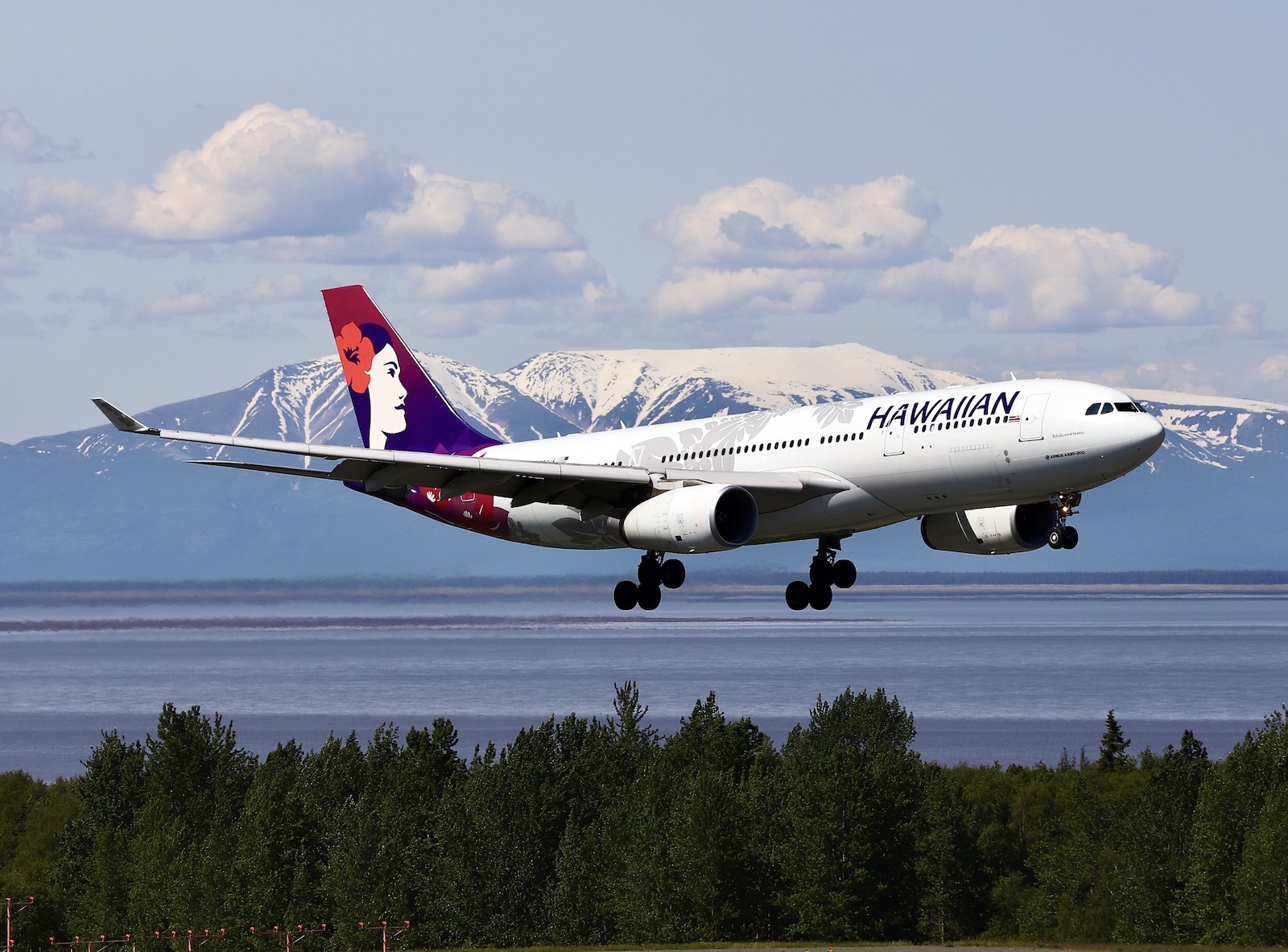
Officials with Alaska Airlines, which is in the process of merging with Hawaiian, said flights between Honolulu and Auckland will start Nov. 16 and continue through April 20, 2026. The service will operate three times weekly using Airbus A330 aircraft.
“We know Kiwi travelers have long awaited the return of our seasonal service, and our crews are thrilled to welcome them onboard once again with the authentic hospitality and care for which Hawaiian Airlines is known,” said Andrew Stanbury, regional director for the South Pacific for Alaska and Hawaiian, in a news release. “Now, thanks to the strength of our combined global network, every guest flying from Hawaii, the U.S. mainland, and New Zealand will have more options than ever to explore the world.”
Hawaiian has offered seasonal service to Auckland since March 2013.
Alaska officials pointed out that the Honolulu-Auckland service will operate during the Southern Hemisphere summer, allowing residents of Hawaii and the continental U.S. to explore New Zealand at its warmest and most active.
Zach Vasile is a writer and editor covering news in all aspects of commercial aviation. He has reported for and contributed to the Manchester Journal Inquirer, the Hartford Business Journal, the Charlotte Observer, and the Washington Examiner, with his area of focus being the intersection of business and government policy.
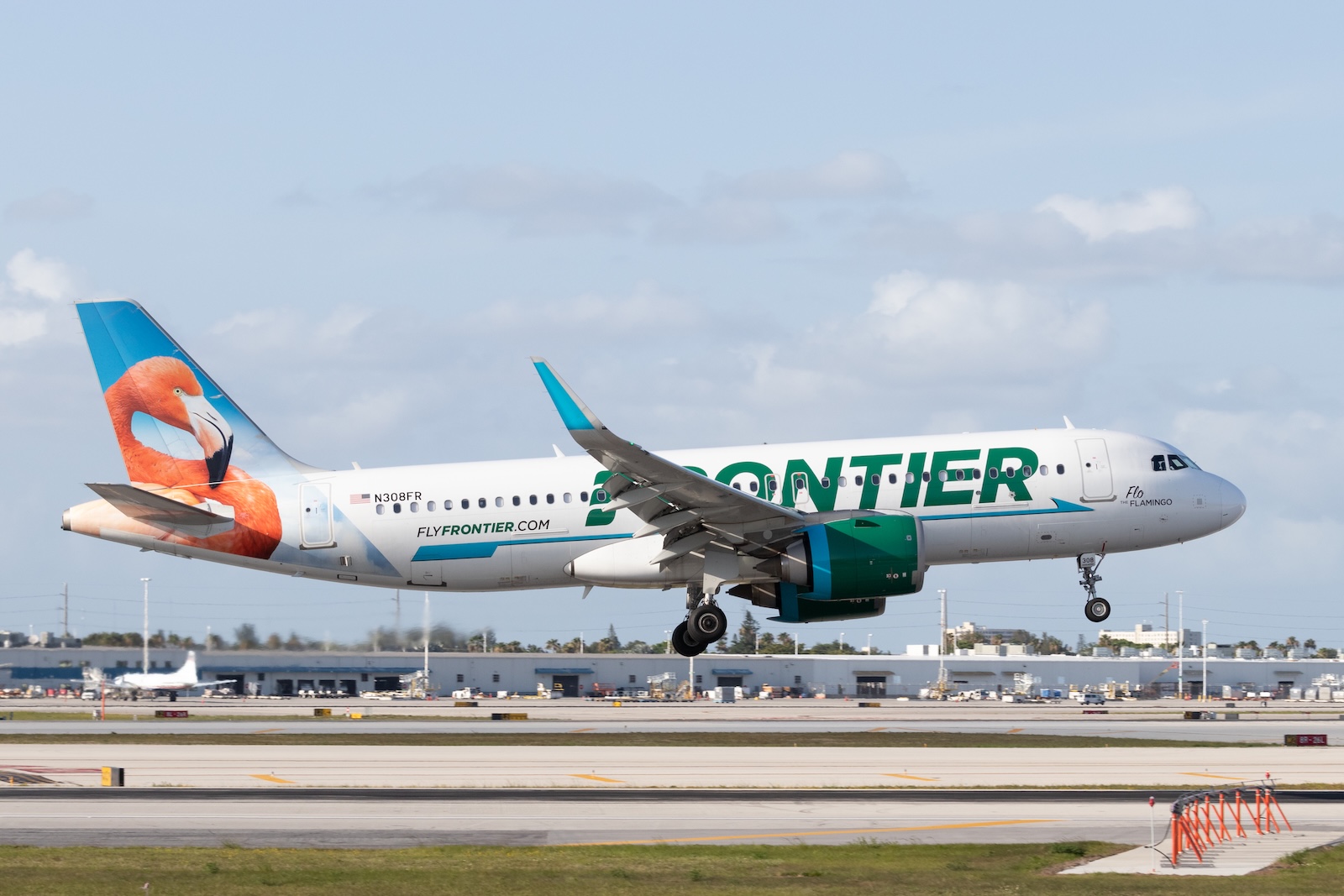
Frontier Suspends Service to California Airport
The ultra-low-cost carrier cites “current market demand” for the cut.
A Frontier A320neo aircraft. (Photo: Shutterstock | Omar F Martinez)
Frontier plans to halt service to an airport it has served for over a decade. The carrier confirmed the cut on Monday.
According to last weekend’s Cirium Diio schedule update, the airline will no longer serve Palm Springs, California, effective next month. A Frontier spokesperson later confirmed the market exit.
The airline’s flights between Palm Springs and San Francisco will end on Nov. 17, while service to its Denver hub is slated to be suspended starting on Nov. 29.
“We are pausing our service at PSP at the end of next month in response to current market demand, but will continue to monitor conditions for opportunities to resume service,” the spokesperson said in a statement. “We greatly appreciate our partnership with the airport and the greater Palm Springs community.”
Ryan founded AirlineGeeks.com in February 2013 and has spent more than a decade covering the airline business. His work has been featured by CNN, WJLA, CNET, and Business Insider. His aviation experience spans airport operations, Part 135 regulatory compliance, and airline crew workforce planning, along with time behind the yoke of a Cessna 172 and interviews with airline executives. Ryan now serves as Group President of Firecrown Media’s Aviation Group. He holds a B.S. in Air Transportation Management and an MBA from Arizona State University and teaches Airline Management at Embry-Riddle Aeronautical University.
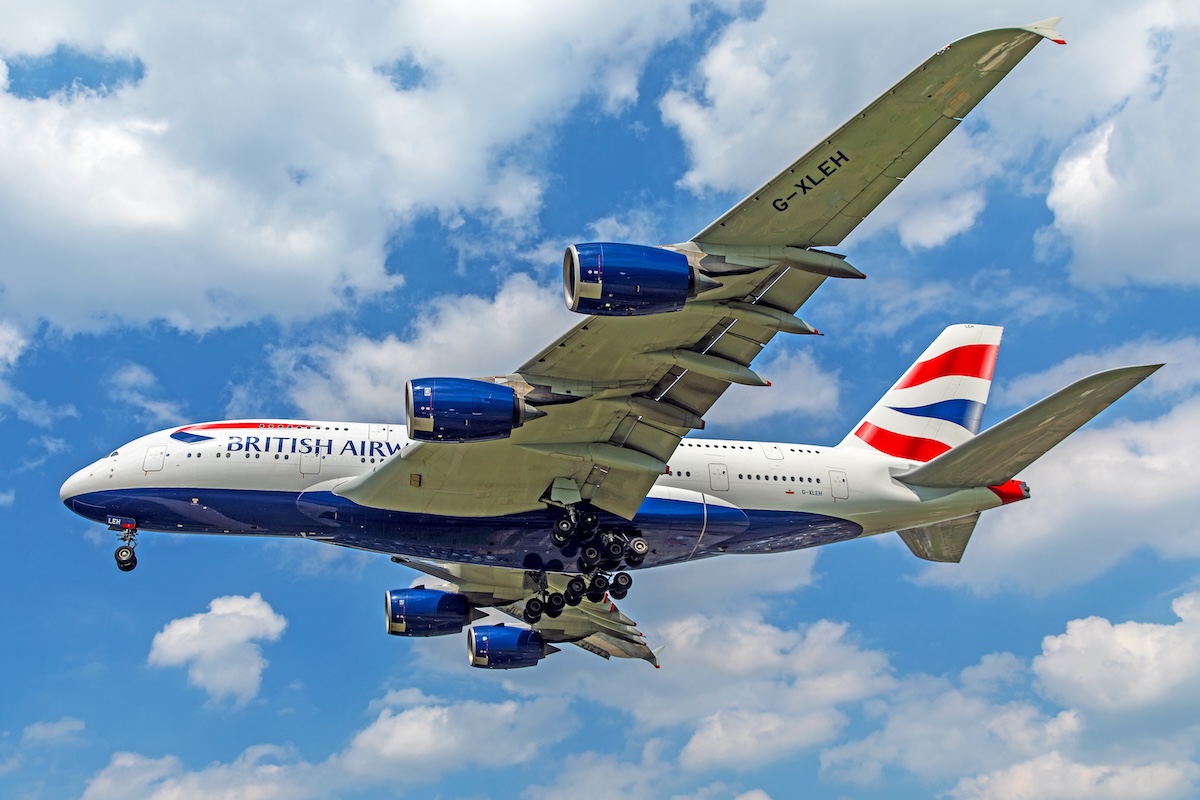
According to Ishrion Aviation on X and Cirium Diio schedule data, the airline will end A380 service between London Heathrow and Washington Dulles on Nov. 7, 2025.
In Washington, British Airways will continue to serve the market with a mix of A350-1000s, 787-9s, 787-10s, and 777s.
Double-Daily A380 Service
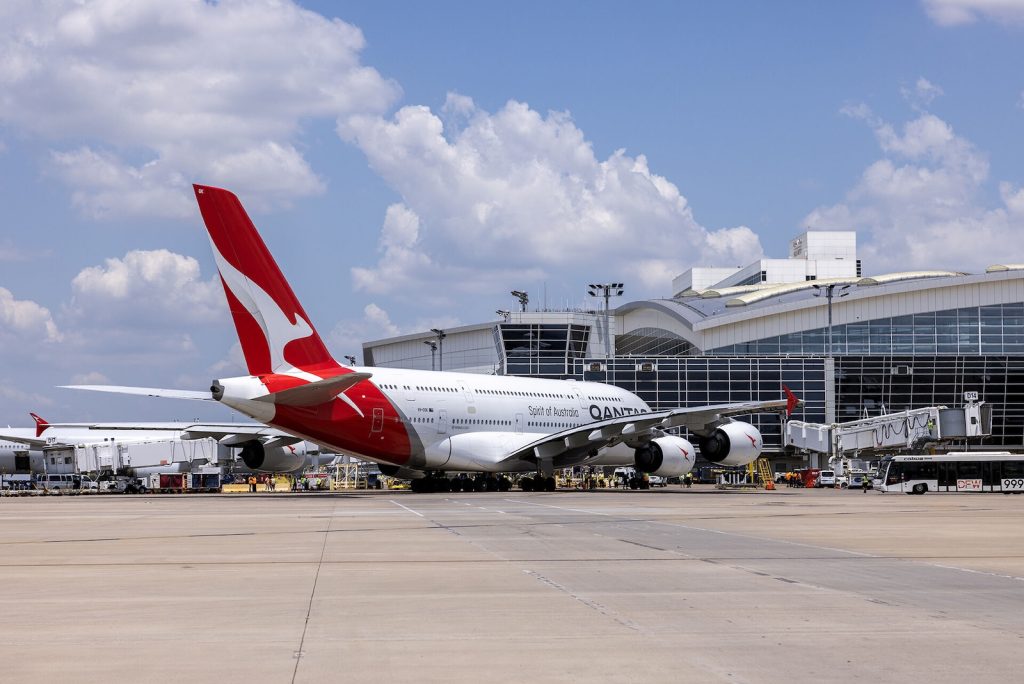
For Dallas/Fort Worth, the resumption of British Airways’ A380 service means the airport will see two daily superjumbo flights starting in June. Qantas also operates the A380 between Sydney and Dallas/Fort Worth.
Qantas’ A380s return to Dallas/Fort Worth (Photo: Qantas)
The Texas airport last saw double-daily A380 flights in 2014 when both Emirates and Qantas used the type on their respective routes.
British Airways currently operates its 12-aircraft A380 fleet to several North American destinations, including Los Angeles, Miami, and San Francisco.
Ryan founded AirlineGeeks.com in February 2013 and has spent more than a decade covering the airline business. His work has been featured by CNN, WJLA, CNET, and Business Insider. His aviation experience spans airport operations, Part 135 regulatory compliance, and airline crew workforce planning, along with time behind the yoke of a Cessna 172 and interviews with airline executives. Ryan now serves as Group President of Firecrown Media’s Aviation Group. He holds a B.S. in Air Transportation Management and an MBA from Arizona State University and teaches Airline Management at Embry-Riddle Aeronautical University.
The damaged Air ACT aircraft at Hong Kong International Airport. (Photo: Airport Authority via RTHK)
Two workers at Hong Kong International Airport were killed early Monday after an Emirates cargo flight skidded off the runway and hit their patrol vehicle.
According to a report from Reuters, the Emirates 747 was arriving from Dubai around 4 a.m. local time when it veered off the runway, crashed through a perimeter fence, and hit the patrol vehicle, pushing it into the sea surrounding the airport. Both staff members inside the vehicle died, the airport’s operator said.
The Emirates aircraft also fell into the water and was partially submerged, but all four crew members escaped. The airline confirmed that the crew members were safe and no cargo was on board the flight.
The aircraft involved in the accident was leased from and operated by Turkish carrier Air ACT.
Authorities in Hong Kong are investigating the cause of the crash.
The runway where the accident occurred is closed, but two other runways are open and operating as normal. Several cargo flights scheduled to land at Hong Kong International Airport on Monday were canceled.
Steven Yiu, the airport’s executive director of operations, told the BBC that the 747 made an unexpected turn away from the runway and toward the sea while landing. He said the two airport workers were driving on a road outside the closed-off runway area and “definitely did not run out onto the runway.”
The flight’s crew did not send out a distress signal prior to or during the botched landing, Yiu added.
Authorities said they are still looking for the aircraft’s flight data recorder and cockpit voice recorder, which apparently fell into the water.
Zach Vasile is a writer and editor covering news in all aspects of commercial aviation. He has reported for and contributed to the Manchester Journal Inquirer, the Hartford Business Journal, the Charlotte Observer, and the Washington Examiner, with his area of focus being the intersection of business and government policy.
Sign-up for newsletters & special offers!
Get the latest stories & special offers delivered directly to your inbox