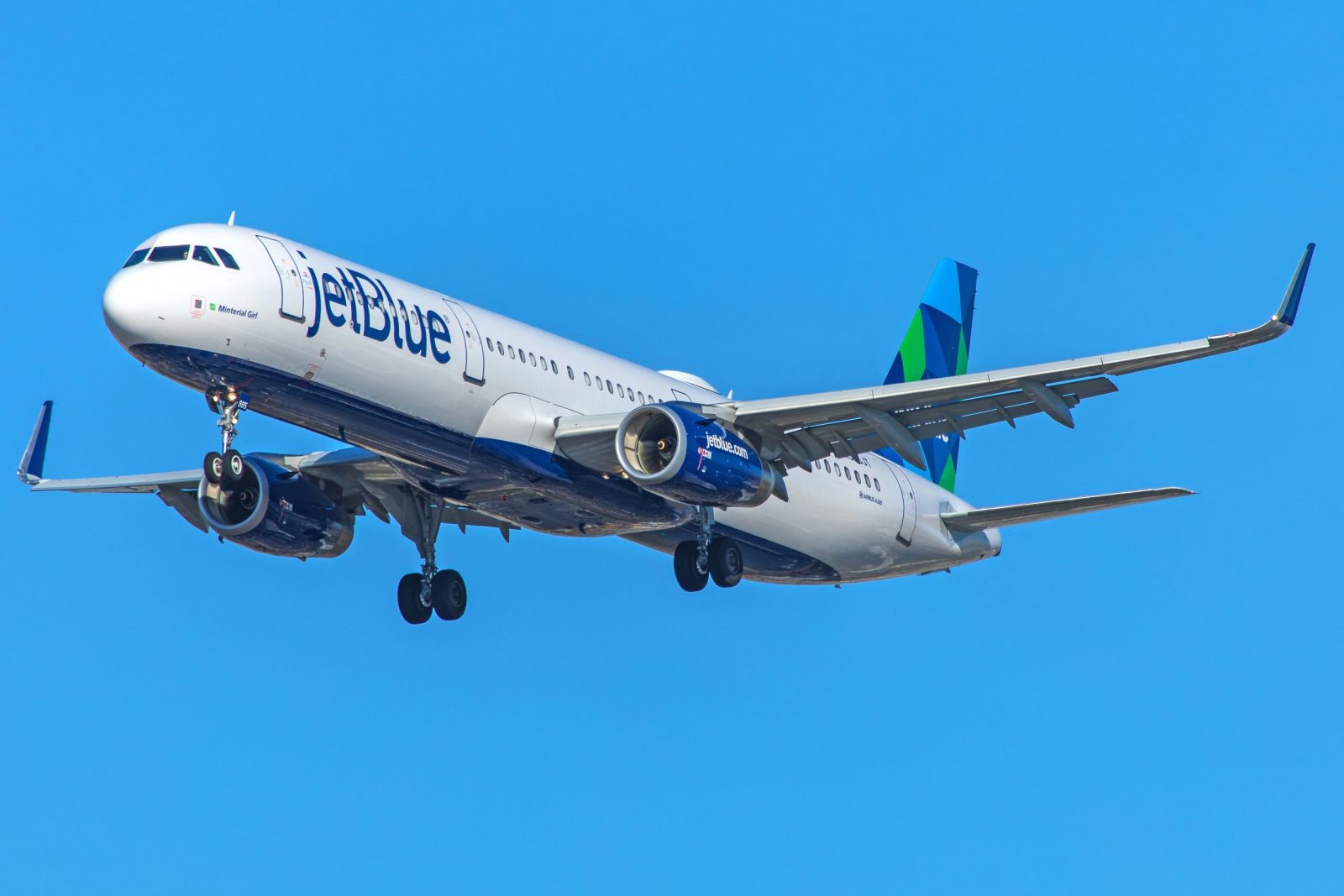
A JetBlue Airbus A321. (Photo: AirlineGeeks | William Derrickson)
United and JetBlue launched the first phase of their “Blue Sky” partnership this week, which allows loyalty members to earn and redeem points across the carriers’ networks.
The benefit applies to members of JetBlue’s TrueBlue program and United’s MileagePlus. TrueBlue passengers will be able to earn and redeem points across United’s global network, including on flights operated as United Express, while MileagePlus members will enjoy similar benefits on most, though not all, JetBlue flights.
When searching for flights with points or miles on JetBlue or United’s websites and mobile apps, eligible customers will now see flight options across both carriers’ networks.
The Blue Sky alliance, first announced in May, envisions other forms of cooperation between the two carriers, including reciprocal passenger perks, revenue booking, and slot sharing at airports. These benefits are expected to come into effect in 2026 and 2027.
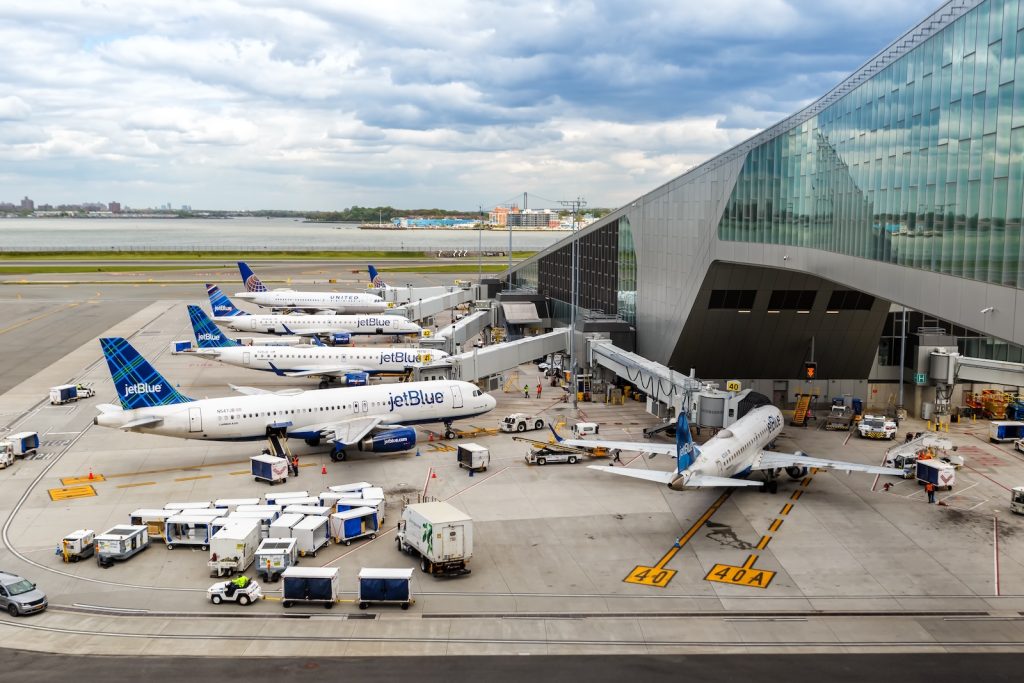
United and JetBlue aircraft. (Photo: Shutterstock |
Markus Mainka)
“With reciprocal earning and redemption now available, Blue Sky is officially taking flight,” the airlines said in a joint statement on Thursday. “We’re excited to give our loyalty members the ability to use the program of their choice when traveling across our complementary networks.”
As part of the partnership, United will reestablish its presence at New York-JFK using JetBlue’s slots at Terminal 6. The slots will allow United to operate up to seven daily round trips from the airport starting “as early as 2027,” officials said this week.
Zach Vasile is a writer and editor covering news in all aspects of commercial aviation. He has reported for and contributed to the Manchester Journal Inquirer, the Hartford Business Journal, the Charlotte Observer, and the Washington Examiner, with his area of focus being the intersection of business and government policy.
United Adds 10 Domestic Routes
The expansion includes seven year-round and three seasonal connections.
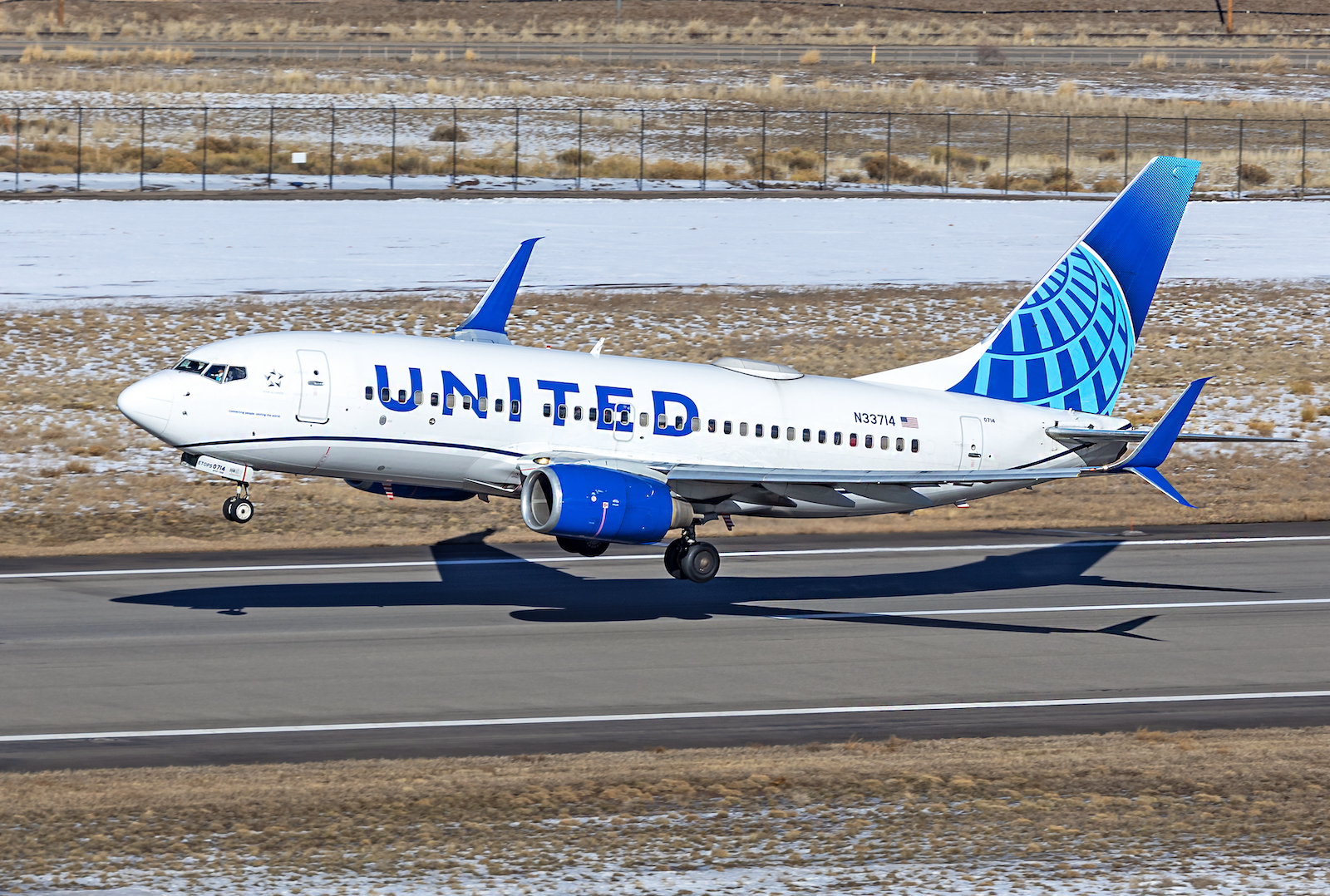
A United Airlines Boeing 737-700. (Photo: AirlineGeeks | William Derrickson)
United is adding 10 new and resuming domestic routes after securing additional gates at Chicago O’Hare earlier this year.
The airline confirmed Thursday morning that it is launching new year-round and seasonal flights, mostly targeting smaller markets in the West and Midwest.
Starting in the spring of 2026, United will connect Chicago with Santa Barbara, California; Eugene, Oregon; Paducah, Kentucky; Lynchburg, Virginia; Rochester, Minnesota; Wausau, Wisconsin; and Marquette, Michigan. Each of the routes will operate daily.
Wausau, Eugene, Paducah, and Santa Barbara were last served by the airline in 2022, according to schedule data from Cirium. The airline’s last scheduled flight between Chicago and Rochester was in 2021.
In the summer, new weekly seasonal service to St. George, Utah; Monterey, California; and Idaho Falls, Idaho, will begin. End dates for those routes were not given.
Currently, no other airline serves Santa Barbara, Eugene, Paducah, Lynchburg, St. George, or Monterey from Chicago O’Hare.
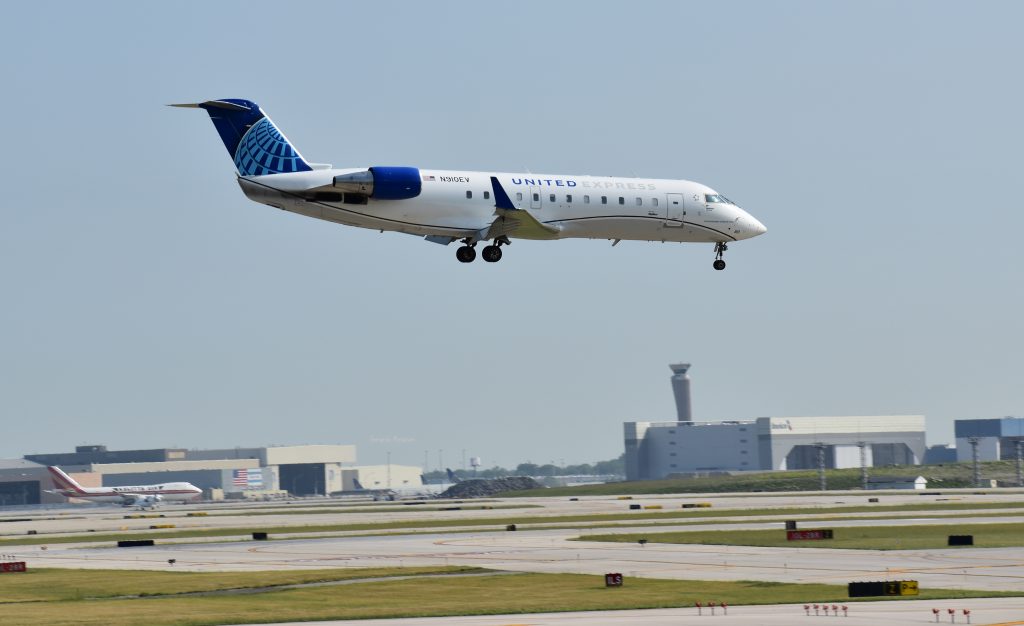
A United Express CRJ-200 arriving into Chicago O’Hare (Photo: AirlineGeeks | Joey Gerardi)
“United is already flying its busiest schedule in history at O’Hare, and now these additional gates have unlocked new opportunities to intertwine cities across the country, serve more customers in Chicago, and strengthen our hometown hub,” said Patrick Quayle, senior vice president of global network planning and alliances, in a news release.
United also said it will expand several weekend-only routes to daily service starting next summer. These destinations include Hilton Head, South Carolina; Halifax, Nova Scotia; Sun Valley, Idaho; Aruba; and Nassau, Bahamas. Additionally, West Palm Beach Florida will go from seasonal service to year-round daily service.
With the new routes factored in, United will serve 212 destinations from Chicago O’Hare in 2026. That total is up slightly from a pre-pandemic high of 208.
Zach Vasile is a writer and editor covering news in all aspects of commercial aviation. He has reported for and contributed to the Manchester Journal Inquirer, the Hartford Business Journal, the Charlotte Observer, and the Washington Examiner, with his area of focus being the intersection of business and government policy.
American to Retrofit Boeing 777-200s
The airline's oldest and largest widebody sub-fleet is slated for a facelift.
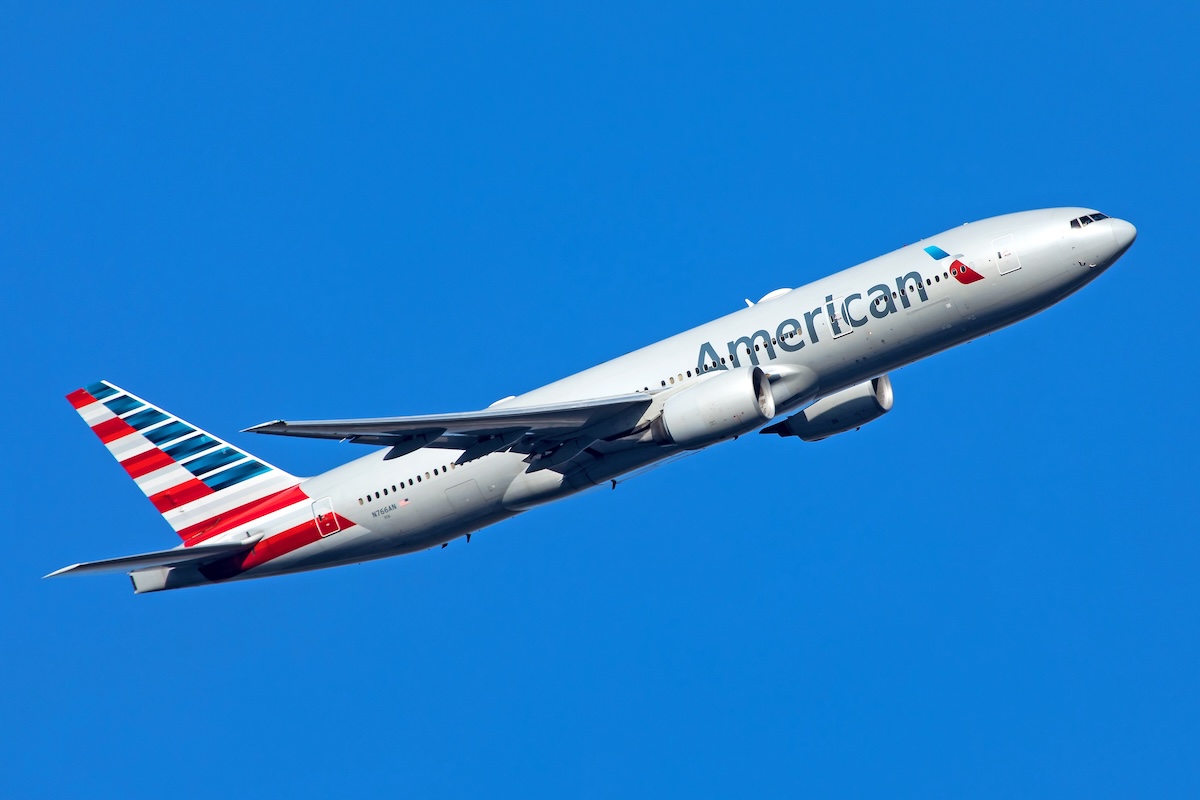
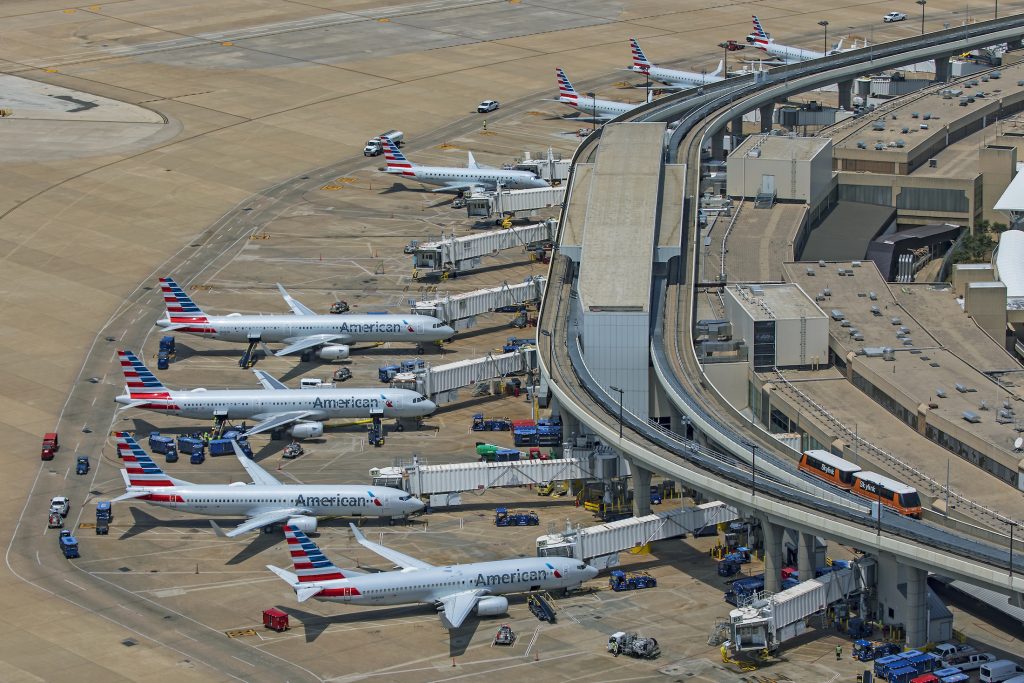
An American Boeing 777-200 (Photo: AirlineGeeks | William Derrickson)
American Airlines plans to retrofit its Boeing 777-200ER fleet, marking the next phase in its widebody cabin updates. The airline confirmed the initiative during its third-quarter earnings call this week, noting that work will focus on updating interiors and improving cabin consistency across its long-haul fleet.
The Fort Worth, Texas-based carrier operates 47 777-200ERs, which have an average age of nearly 25 years old. American is also in the process of retrofitting its larger 777-300ERs to include its new Flagship Suites product.
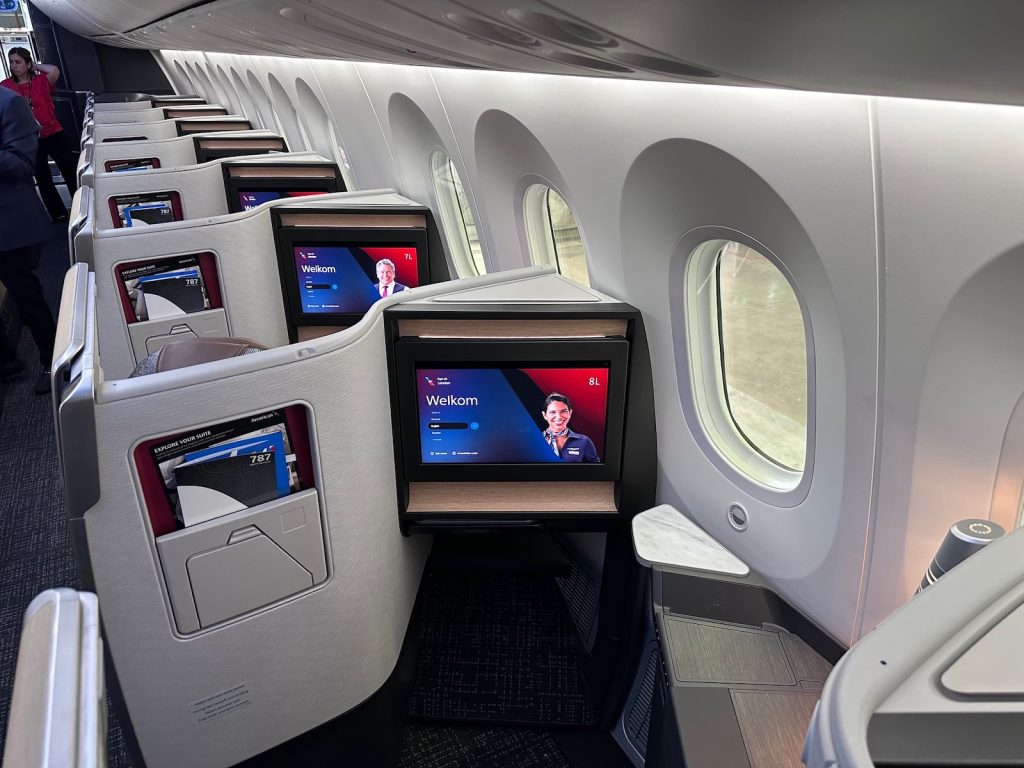
Flagship Suites on American’s 787-9P (Photo: AirlineGeeks | Ryan Ewing)
“We’re excited to announce that we’ll continue scaling our new Flagship product on our 777-200 aircraft,” the carrier’s CFO, Devon May, said during the call.
These aircraft will see a 25% increase in lie-flat and premium economy seats, May added, as part of a “nose to tail retrofit.” A new inflight entertainment system will also be installed.
Executives said the retrofit will introduce an updated cabin layout and align the aircraft with newer long-haul types in the fleet, including the Boeing 787-9P and forthcoming Airbus A321XLR.
Additional details, including configuration changes and a completion timeline, were not shared.
American CEO Robert Isom called the 777-200 retrofits a “big deal” during the Thursday call.
“Extending the lives of those [aircraft] and putting those into service really gives us a capital spending holiday in terms of fleet replacement,” Isom shared. “So it’s a win-win-win-win for our customers, for our company, and most certainly our investors.”
B/E Aerospace seat on American’s 777-200 fleet (Photo: Alex Navitsky)
The airline’s current 777-200 configuration includes 273 total seats with 37 in business, 24 in premium economy, and 212 in economy.
May stated that the retrofits are “something we’ve been planning on doing for a while.”
“This is an aircraft we think we can run well into the next decade,” he continued.
Premium Push
American continues to add more premium capacity to align with its competitors. Earlier this year, it took delivery of its first Boeing 787-9P, which features 51 Flagship Suites. Its first A321XLR also arrived in the U.S. on Wednesday.
“Premium continues to perform well with year-over-year premium unit revenue outpacing main cabin by five points in the third quarter,” May continued. “Capitalizing on this demand, American is continuing to invest in expanding our premium offerings across the customer journey.”
The carrier will also increase the number of first class seats on its Airbus A319 and A320 aircraft.
Ryan founded AirlineGeeks.com in February 2013 and has spent more than a decade covering the airline business. His work has been featured by CNN, WJLA, CNET, and Business Insider. His aviation experience spans airport operations, Part 135 regulatory compliance, and airline crew workforce planning, along with time behind the yoke of a Cessna 172 and interviews with airline executives. Ryan now serves as Group President of Firecrown Media’s Aviation Group. He holds a B.S. in Air Transportation Management and an MBA from Arizona State University and teaches Airline Management at Embry-Riddle Aeronautical University.
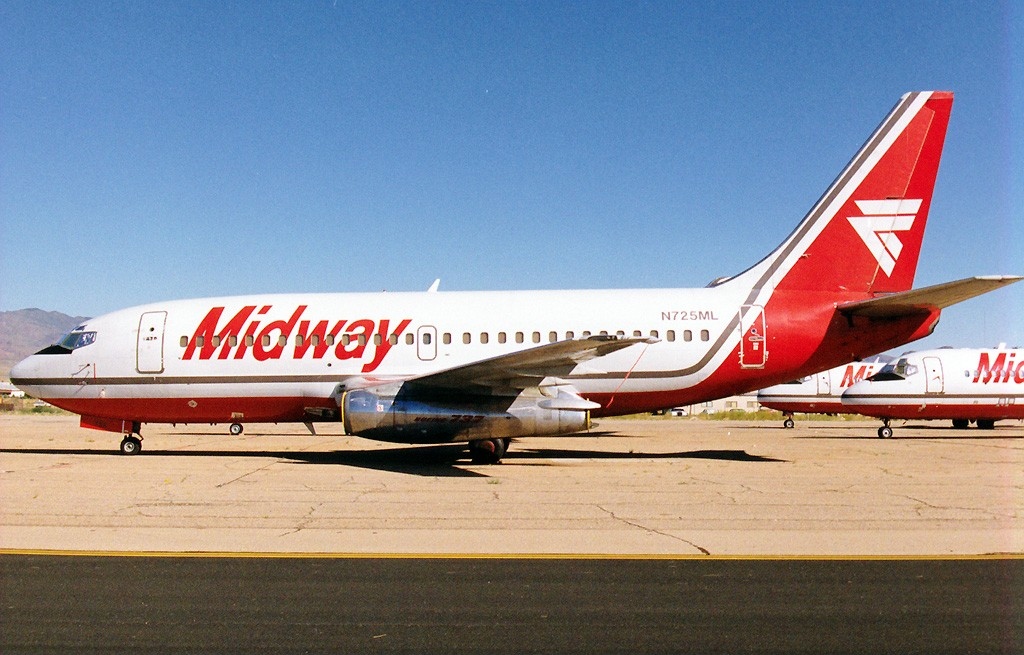
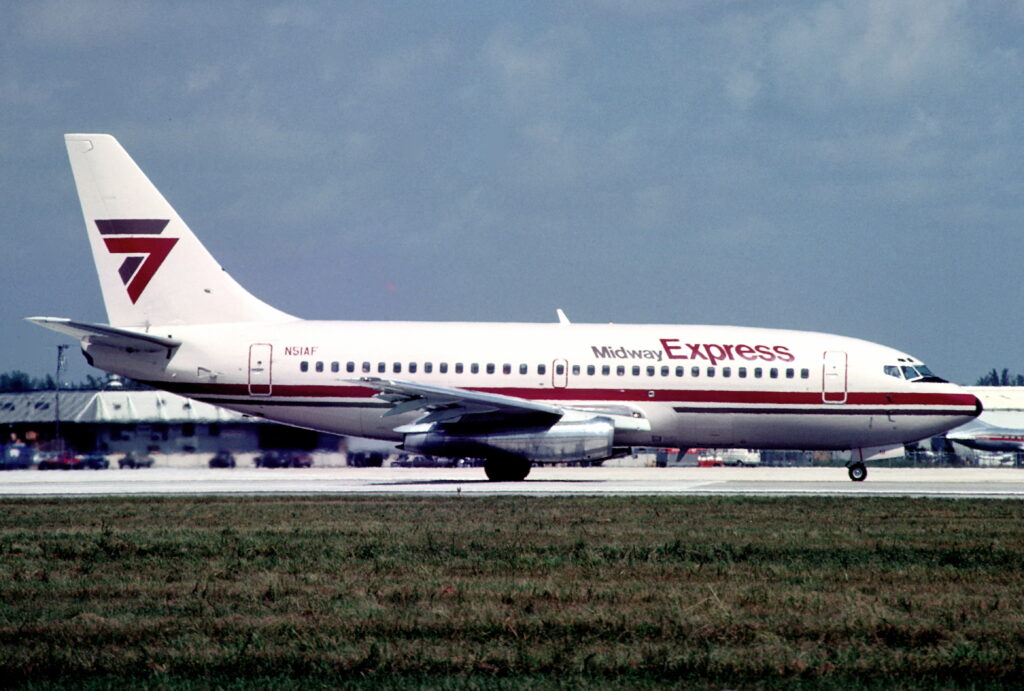
A Midway Airlines Boeing 737. (Photo: JetPix via Wikimedia Commons)
The airline executives and consultants who founded Midway Airlines wanted to do for Chicago’s Midway International Airport what Southwest Airlines had done for Dallas Love Field in Texas – that is, breathe new life into what had become a “ghost town.”
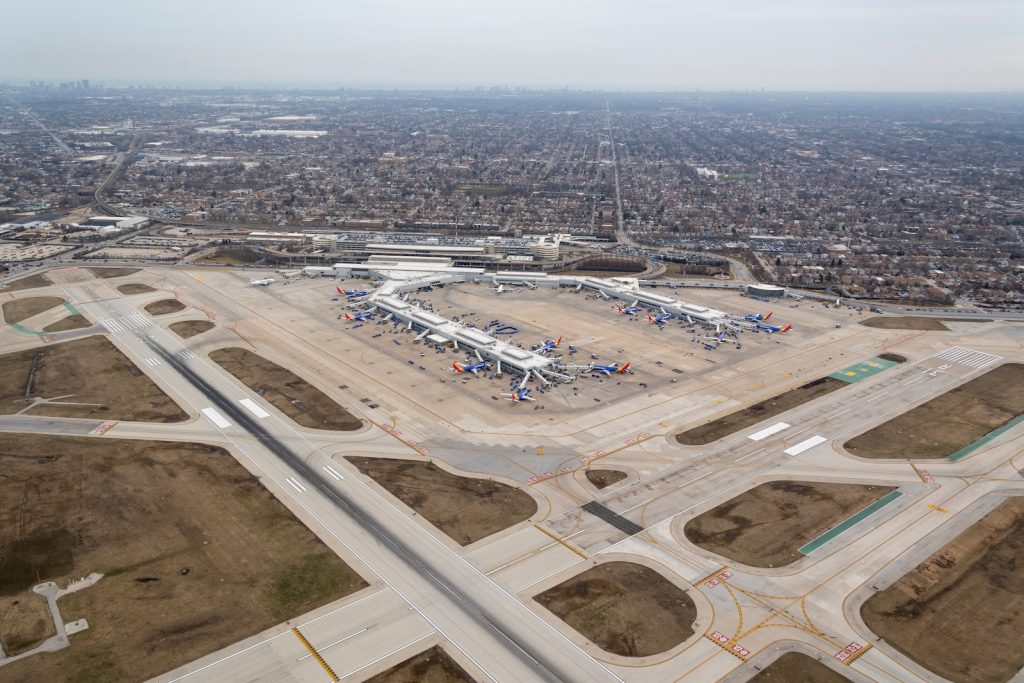
Midway, nestled on the city’s southwest side, had been one of the busiest airports in the U.S. But by the mid-1970s, most of the carriers serving Chicago had shifted operations to the much larger O’Hare, leaving Midway all but deserted.
Still, local figures in the industry saw an untapped market, and in 1976, led by former Hughes executive Irving Tague, they formed Midway Airlines, taking the name of the airport they hoped to revive.
Finding a Market
Midway’s launch came at an opportune time for startups. In 1978, President Jimmy Carter signed the Airline Deregulation Act, which removed federal control over routes, fares, and other aspects of the airline industry. The law not only sped up the process for certifying new airlines but also gave them much more leeway in determining their route strategy. While Midway was formed prior to the act’s passage, it was widely viewed as the first new carrier to emerge in the post-deregulation era.
An aerial view of Chicago’s Midway Airport. (Photo: Shutterstock | Henry C Jorgenson)
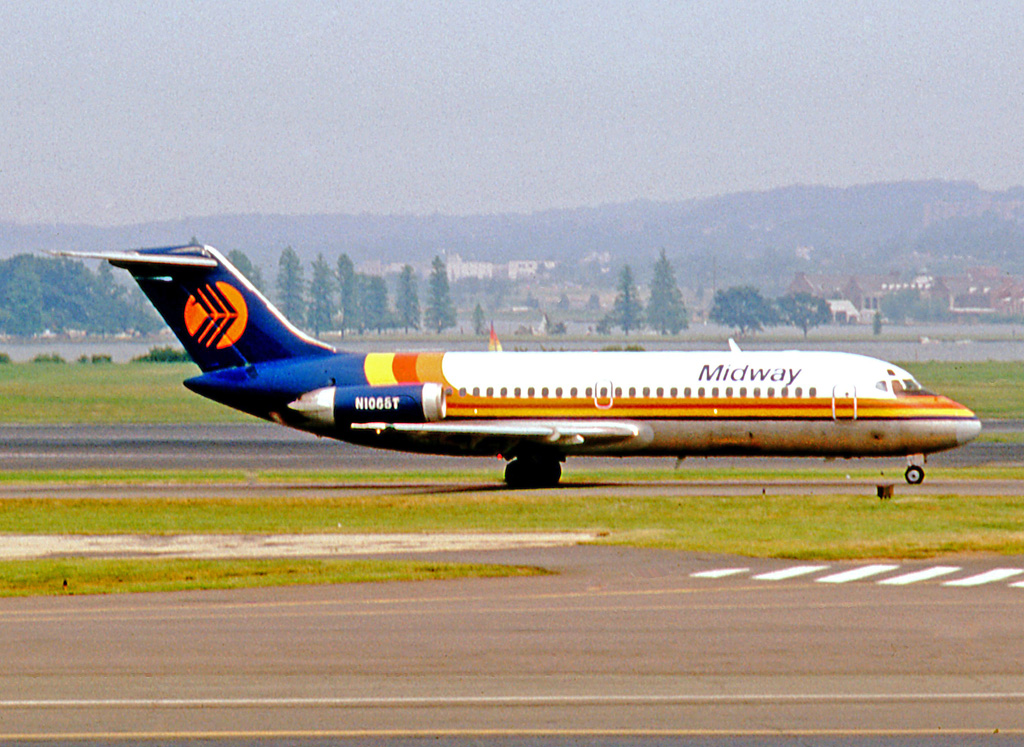
Midway started operations in 1979 with a fleet of three McDonnell Douglas DC-9 aircraft. Its first destinations were Cleveland, Detroit, and Kansas City.
The carrier found immediate success marketing no-frills service to travelers in Chicago and the Midwest more broadly who wanted to avoid the bustle and congestion of O’Hare. An early selling point was that Midway Airport, its base of operations, is located about 11 miles from downtown Chicago, while O’Hare is 18 miles away, which made a noticeable difference to customers using the city’s crowded and sometimes slow-going expressways and public transit.
Within a matter of years, Midway added St. Louis, New York-LaGuardia, Omaha, Washington National, Minneapolis, Philadelphia, and Tampa, Florida, to its route network, and acquired the assets of the failed low-cost carrier Air Florida.
By 1985, the airline had 17 destinations, a fleet of 26 aircraft, and over 2,000 employees.
With profits rolling in, Midway sometimes overextended itself. It launched additional subsidiaries like Midway Metrolink, which offered all-business class flights, and Chicago Airlink, which aimed to start helicopter service between Midway Airport, O’Hare, and Meigs Field on Lake Michigan. These ventures were canceled within a matter of years.
Peak Years and Restraint
The mid- to late 1980s were a difficult time for U.S. airlines, and a number of large carriers, including Eastern Air Lines, Pan Am, and People Express, recorded heavy losses. Midway was no longer as profitable as it once had been but it still continued to expand, carefully adding service to destinations that its leaders figured would be immediately rewarding, like Las Vegas, Miami, Phoenix, St. Croix, and St. Thomas.
A Midway DC-9 in Washington, D.C. (Photo: RuthAS via Wikimedia Commons [https://creativecommons.org/licenses/by/3.0/])
The carrier’s operational peak came in 1988-1989, when it was operating over 200 flights per weekday between its mainline service and its regional Midway Connection subsidiary.
Under David Hinson, a Midway founder who took over as chairman in 1985, the airline steered clear of its much larger competitors and looked for modest growth opportunities where it always had – at the margins. Hinson summed up his approach to the industry this way: “If you are careful and prudent, you can survive and do relatively well.”
Gamble on Philadelphia
In 1989, however, Midway made a decision that flew in the face of Hinson’s golden rule. The carrier paid $210 million to take control of the insolvent Eastern Air Lines’ gates and other assets in Philadelphia, where executives saw a chance to break into a new and lucrative market. Midway was reaching the limits of its potential growth in Chicago, they reasoned, and it was as good a time as any to set up a second hub.
Midway’s bet on Philadelphia was supposed to deliver revenue of $2 billion over two years, but world events threw a wrench into the works. The U.S. entered a recession in July 1990, which hurt air travel demand and drove down ticket prices, and in August the Gulf War began, sending the price of oil soaring. Midway pulled out of Philadelphia in October of that year.
The airline struggled to overcome the substantial losses of late 1989 and 1990 and ultimately filed for Chapter 11 bankruptcy protection in the spring of 1991. A last-minute rescue effort from Northwest Airlines fizzled out, and on Nov. 13, 1991, Midway ceased operations for good.
A Midway Express 737 in Miami. (Photo: Aero Icarus via Wikimedia Commons [https://creativecommons.org/licenses/by-sa/2.0/])
Long-Term Impact
While in business for only 15 years, Midway’s impact on air travel in Chicagoland is difficult to overstate. It proved the long-term viability of Midway Airport and gave millions of local residents – particularly those on Chicago’s South Side and in the southwest suburbs – an alternative to the colossal O’Hare.
Southwest earned some local goodwill by taking over Midway’s gates and routes at Midway Airport, and hiring some former employees. Today, Southwest is the dominant airline at the airport, carrying about 90% of passengers there.
Zach Vasile is a writer and editor covering news in all aspects of commercial aviation. He has reported for and contributed to the Manchester Journal Inquirer, the Hartford Business Journal, the Charlotte Observer, and the Washington Examiner, with his area of focus being the intersection of business and government policy.
Spirit in Talks With Potential Buyers
The carrier is currently restructuring its operations under the supervision of a U.S. bankruptcy court.
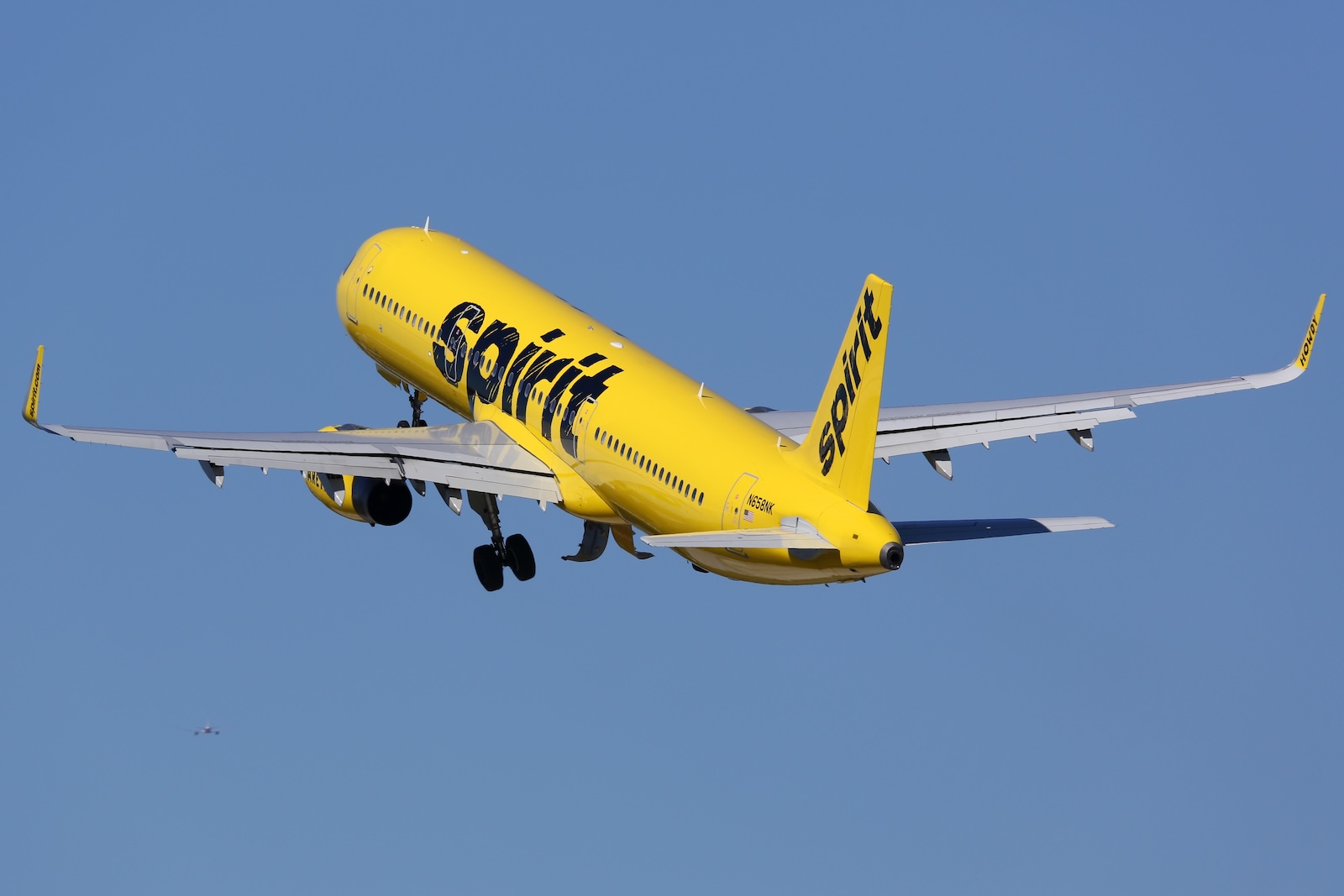
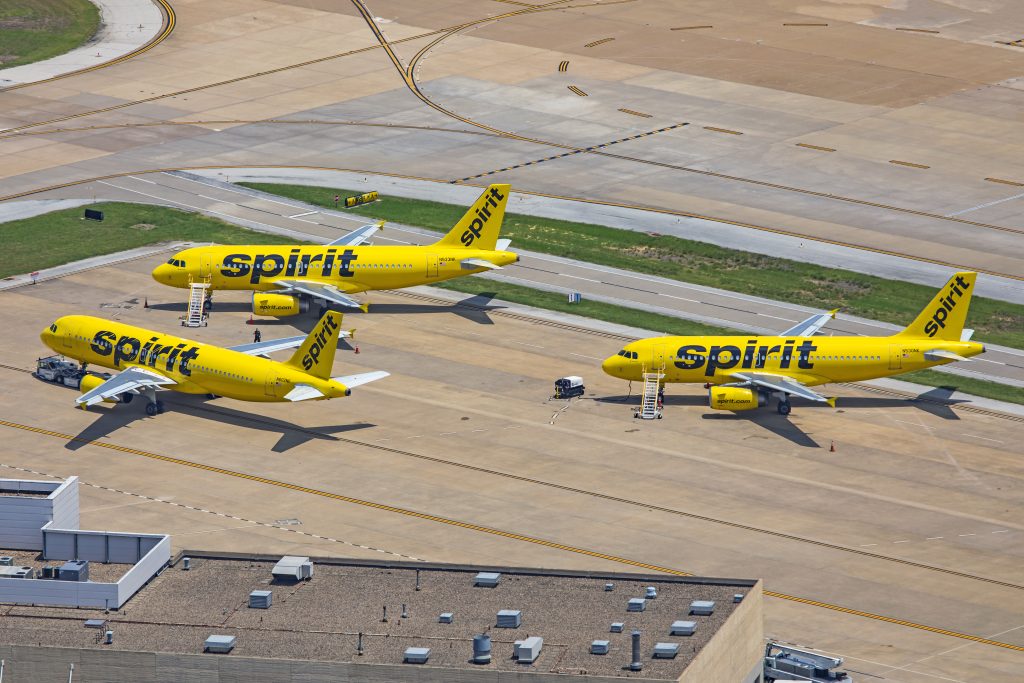
A Spirit Airbus A321 (Photo: Shutterstock | Markus Mainka)
Spirit is looking at merging or selling itself to another airline and is already in talks with some potential partners.
In documents filed with the U.S. Securities and Exchange Commission, the struggling ultra-low-cost carrier said joining operations with a competitor may be the best path forward.
“The value maximizing outcome may be a merger or sale of the company; Spirit is actively working to explore all potential opportunities,” the filing stated. “The company is actively engaged in discussions with a number of interested counterparties.”
Spirit Airbus jets
(Photo: AirlineGeeks | William Derrickson)
Spirit executives say the changes are needed to “right-size” the business and create a more sustainable network.
The carrier’s long-term transformation plan calls for the elimination of all “unprofitable flying,” cutbacks in airport gate rents, advertising spend, and non-core expenses, and a brand repositioning away from “budget travelers” and toward a “value-seeking audience.” Spirit had begun to move in that direction even prior to its second bankruptcy, rolling out extra-legroom seats and other perks as it sought to become the “premium” option among budget airlines.
In the same SEC filing, Spirit said it hopes to return to annual profitability – which it has not achieved since 2019 – by 2027.
Zach Vasile is a writer and editor covering news in all aspects of commercial aviation. He has reported for and contributed to the Manchester Journal Inquirer, the Hartford Business Journal, the Charlotte Observer, and the Washington Examiner, with his area of focus being the intersection of business and government policy.
China Eastern Plans Move to JFK’s New Terminal One
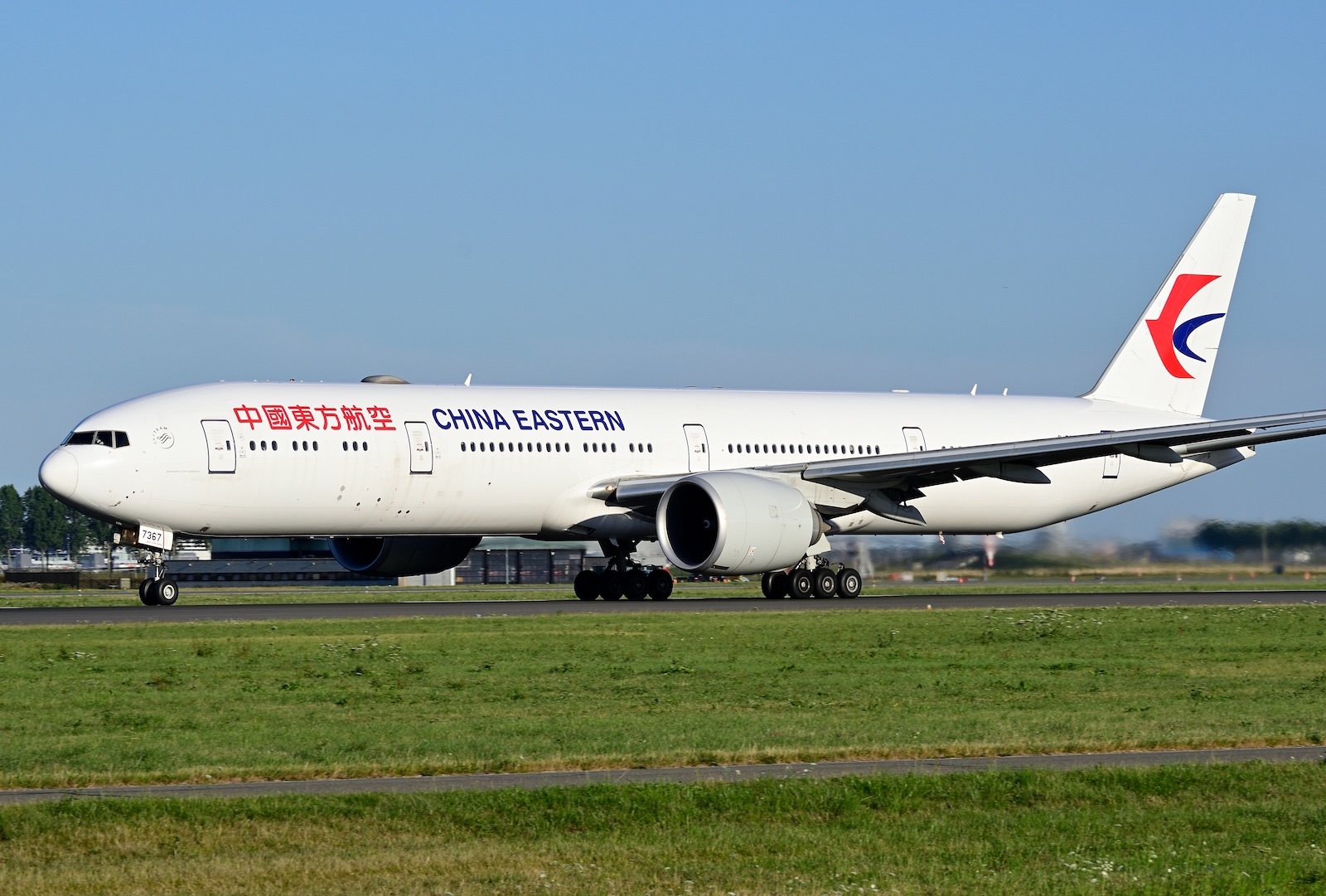
A China Eastern Boeing 777. (Photo: Shutterstock | R.D. de Boer)
Shanghai-based China Eastern Airlines will soon have a new home at John F. Kennedy International Airport.
The consortium behind the Terminal One project at JFK said China Eastern will move to the new facility from its current location in Terminal 1. The new Terminal One is being built on sites now occupied by Terminal 1 and the former Terminal 2 and Terminal 3, where it will anchor the airport’s south side.
“We are honored to serve as China Eastern Airlines’ long-term strategic partner as they continue to grow in New York City,” said Jennifer Aument, CEO of The New Terminal One, in a news release. “China Eastern’s commitment to exceptional service aligns with our vision to transform the international travel experience at JFK. We’re excited to work together to create a premier gateway between New York City and Shanghai.”
The new Terminal One is part of a broader $19 billion transformation project at JFK launched by the Port Authority of New York and New Jersey. The new facility will have 23 gates, departures and arrivals halls, and retail and dining space. The first 14 gates are scheduled to open next year, and airport officials expect the entire terminal will be complete by 2030.
China Eastern launched nonstop service between New York and Shanghai in 2006. Its other destinations in North America are Toronto, Los Angeles, San Francisco, and Vancouver.
A number of international airlines have already committed to gates at the new Terminal One, including Air France, KLM, Korean Air, Etihad, China Airlines, Turkish Airlines, and Air New Zealand.
Zach Vasile is a writer and editor covering news in all aspects of commercial aviation. He has reported for and contributed to the Manchester Journal Inquirer, the Hartford Business Journal, the Charlotte Observer, and the Washington Examiner, with his area of focus being the intersection of business and government policy.
Southwest Reaffirms Plan to Serve DFW
CEO says flights are still on the horizon, bucking an over half-century legacy of only serving nearby Love Field.
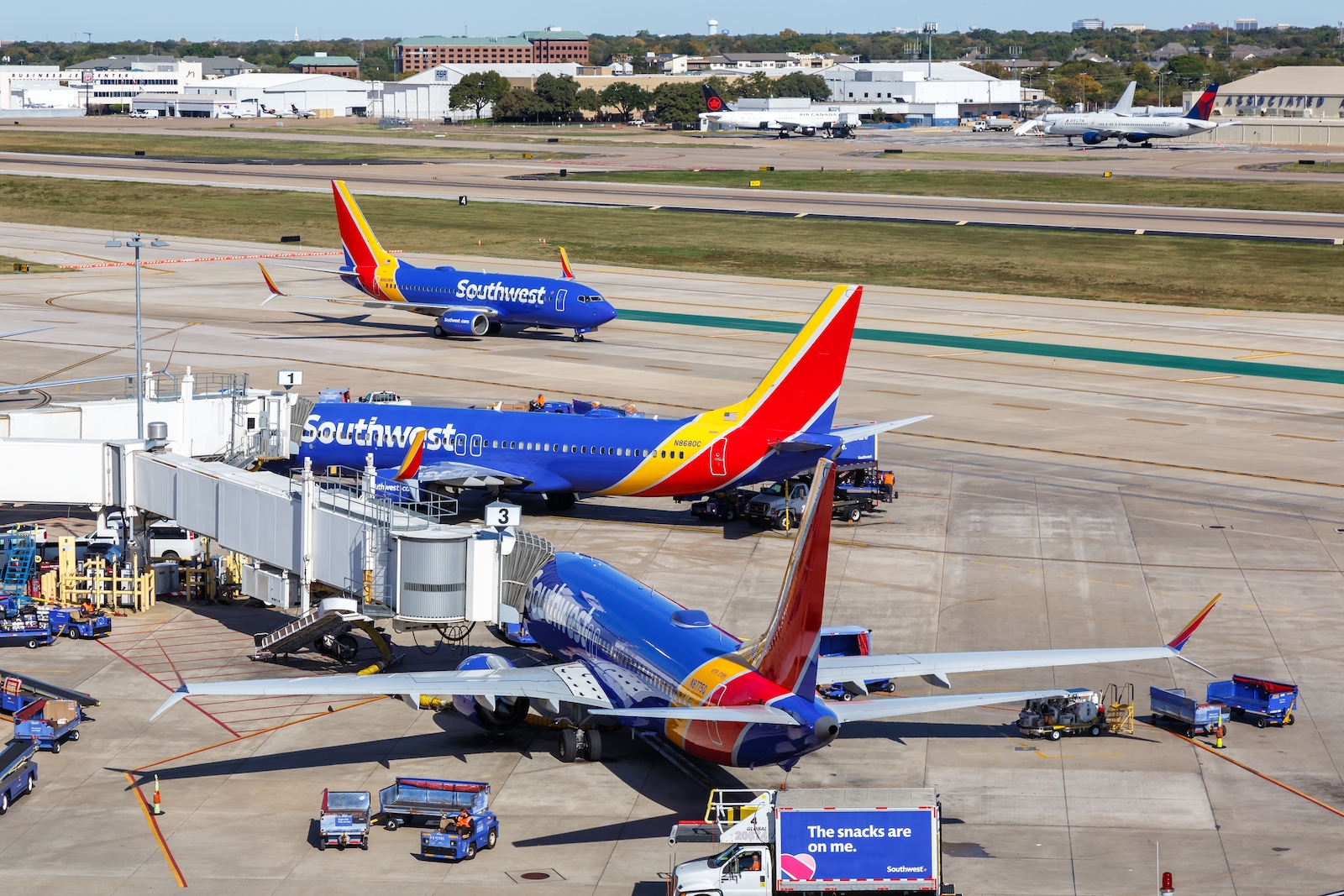
Southwest’s interest in serving Dallas/Fort Worth marks a major shift driven not only by gate limits but also by regulatory and infrastructure barriers at Dallas Love Field. When DFW opened in 1974, Southwest chose to remain at Love Field, sparking years of political and legal battles that culminated in the 1979 Wright Amendment.
With its corporate headquarters located next door, Love Field has long been a staple of Southwest’s legacy. Its first flight took place on June 18, 1971, originating from Love Field to Houston Hobby Airport and San Antonio International Airport.
Though the law’s flight restrictions were fully repealed in 2014, its legacy remains embedded in subsequent agreements that restrict Love Field’s size and capabilities. The 2006 Five-Party Agreement, signed by the cities of Dallas and Fort Worth, DFW Airport, Southwest, and American Airlines, capped Love Field at 20 gates and formally designated DFW as the region’s primary airport for international service.
Overlooking DFW Airport’s Terminal B. (Photo: AirlineGeeks | William Derrickson)
Love Field was designed primarily for short-haul domestic operations and does not include federal customs and immigration facilities. As part of the 2006 agreement, Dallas pledged not to pursue the construction of a federal inspection station at Love Field — effectively barring any airline, including Southwest, from operating international flights.
For Southwest, these restrictions mean its Dallas base cannot support the type of international growth seen in Houston, Phoenix, or other key markets. The carrier operates at maximum gate capacity at Love Field and cannot expand or diversify its route map without breaching the 2006 agreement.
‘A Certain Mission’
With interest in flying internationally, Jordan reiterated that the carrier is still looking for a few gates at DFW. These would “fulfill a certain mission,” he said, with somewhere between 5-to-10 gates planned.
Jordan did not give a specific timeline for Southwest’s plans at DFW, saying the airline has “a lot of priorities.” The airline’s DFW service could still be several years away, he added.
“It’s something that’s been moved out a few years in terms of a priority,” Jordan stated.
Ryan founded AirlineGeeks.com in February 2013 and has spent more than a decade covering the airline business. His work has been featured by CNN, WJLA, CNET, and Business Insider. His aviation experience spans airport operations, Part 135 regulatory compliance, and airline crew workforce planning, along with time behind the yoke of a Cessna 172 and interviews with airline executives. Ryan now serves as Group President of Firecrown Media’s Aviation Group. He holds a B.S. in Air Transportation Management and an MBA from Arizona State University and teaches Airline Management at Embry-Riddle Aeronautical University.
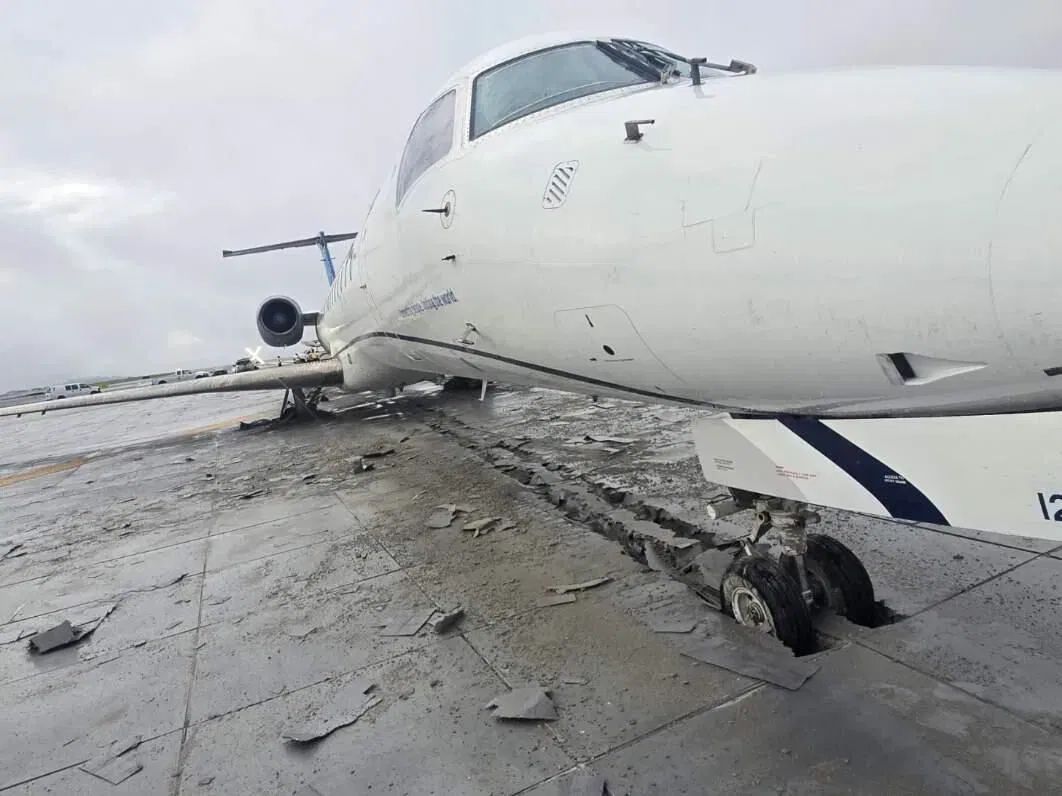
CommuteAir overrun incident in September 2025 (Photo: FAA)
The National Transportation Safety Board’s preliminary report says a CommuteAir Embraer ERJ-145XR operating as United Express flight 4339 continued its landing in Roanoke despite two go-around calls from the first officer before overrunning the runway and stopping in the engineered materials arresting system (EMAS) on Sept. 24.
No injuries were reported among the 50 passengers and three crew members.
According to investigators, the flight — the second leg of day four for the crew — departed Washington Dulles after maintenance-related delays. En route, ATIS for Roanoke indicated calm winds, no precipitation, and Runway 6 in use. The captain initially briefed the localizer 6 approach and declined the first officer’s suggestion to run wet-runway landing performance numbers because ATIS did not report precipitation.
The E145 was stopped by the EMAS (Photo: FAA)
Approach control later advised precipitation along the Runway 6 path and that other aircraft were landing on Runway 34, prompting the crew to set up and brief the ILS 34 approach as rain intensified. The captain then asked the first officer to compute landing performance for a wet surface with a runway condition code of 5; the FO calculated a margin of about 200 feet without thrust reversers.
The captain briefed a go-around and diversion to Greensboro, North Carolina, if needed.
Captain Continued Approach
On final, the crew observed increasing rain. The first officer noted the aircraft was high on the precision approach path indicator and, after crossing runway markings, called for a go-around; about halfway down the runway, the FO called for a go-around a second time, but the captain continued the approach.
The aircraft touched down, and the crew applied maximum braking and deployed thrust reversers. The jet overran the end of Runway 34 and came to rest in the EMAS. Airport firefighters assisted with deplaning via a ladder after the crew completed evacuation checklists; there were no injuries.
The NTSB is continuing to investigate the incident.
Ryan founded AirlineGeeks.com in February 2013 and has spent more than a decade covering the airline business. His work has been featured by CNN, WJLA, CNET, and Business Insider. His aviation experience spans airport operations, Part 135 regulatory compliance, and airline crew workforce planning, along with time behind the yoke of a Cessna 172 and interviews with airline executives. Ryan now serves as Group President of Firecrown Media’s Aviation Group. He holds a B.S. in Air Transportation Management and an MBA from Arizona State University and teaches Airline Management at Embry-Riddle Aeronautical University.
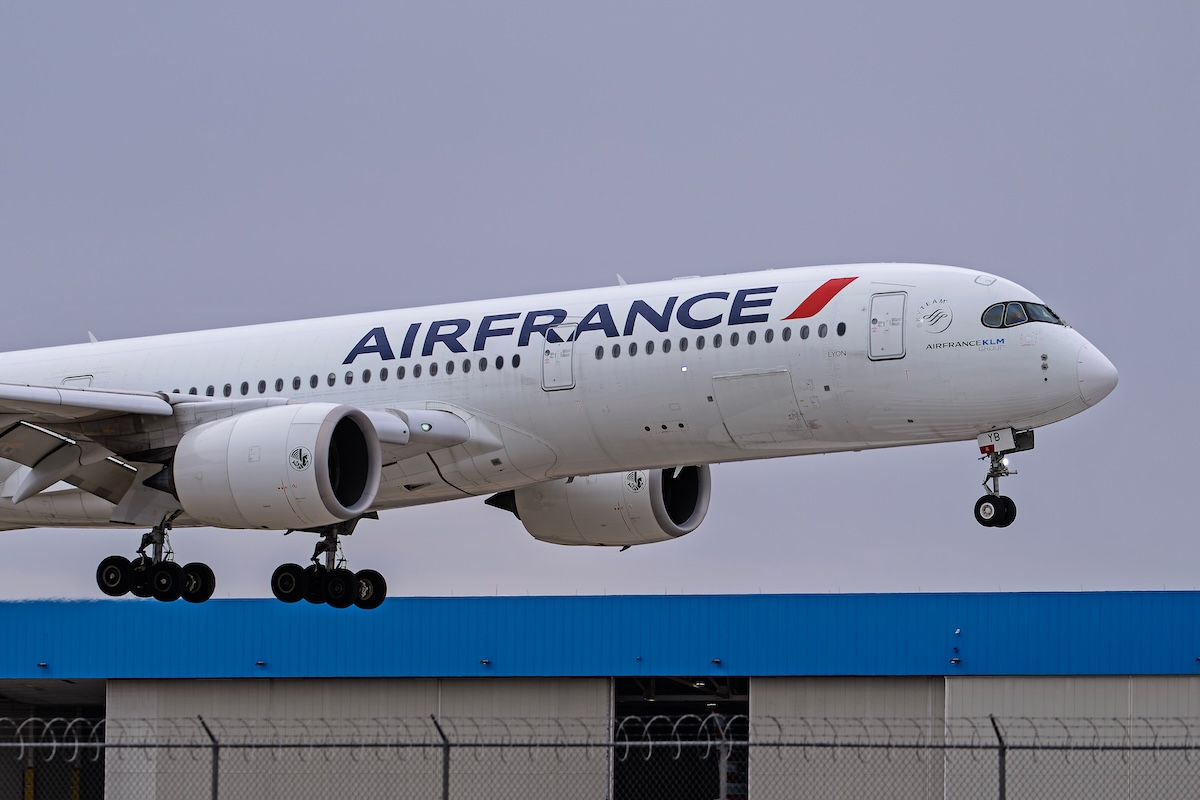
An Air France Airbus A350 (Photo: Shutterstock | Robin Guess)
Air France is continuing to expand its North American presence with plans to launch a new U.S. route in 2026. The service is scheduled to begin on April 15 and will operate three times weekly from Paris–Charles de Gaulle.
The French flag carrier will connect Paris with Las Vegas, marking its 19th destination in the United States and 26th across North America. Flights will operate on Mondays, Wednesdays, and Saturdays using the airline’s Airbus A350-900 aircraft.
According to Air France, flight AF56 will depart Paris at 1:40 p.m. and arrive in Las Vegas at 3:35 p.m. local time. The return flight, AF57, will leave Las Vegas at 5:50 p.m. and arrive in Paris the following afternoon at 1:05 p.m.
Ryan founded AirlineGeeks.com in February 2013 and has spent more than a decade covering the airline business. His work has been featured by CNN, WJLA, CNET, and Business Insider. His aviation experience spans airport operations, Part 135 regulatory compliance, and airline crew workforce planning, along with time behind the yoke of a Cessna 172 and interviews with airline executives. Ryan now serves as Group President of Firecrown Media’s Aviation Group. He holds a B.S. in Air Transportation Management and an MBA from Arizona State University and teaches Airline Management at Embry-Riddle Aeronautical University.
The former leaders of a Miami-based investment firm that backed Australian airline Bonza and Canadian carrier Flair have been charged with wire and securities fraud.
In a statement, the FBI’s New York office said 777 Partners cofounder Joshua Wander and former CFO Damien Alfalla cheated private lenders and investors out of hundreds of millions of dollars by pledging assets the firm did not own, falsifying bank statements and records, and misrepresenting the company’s overall financial condition. The two are accused of stealing around $500 million.
“As alleged, the defendants, through 777 Partners, lied to lenders and investors, double-pledged collateral, and used restricted funds to bankroll risky acquisitions – putting nearly $500 million and the lifelines of structured-settlement beneficiaries at risk,” Homeland Security Investigations Special Agent in Charge Ricky J. Patel said in a news release. “In actuality, the defendants put forth an illusion of stability that was a years-long house of cards. This alleged scheme was self-serving, siphoning funds meant for victims and leaving investors and lenders holding the bag.”
Both Wander and Alfalla were charged with wire fraud, securities fraud, and conspiracy to engage in both crimes. Wire fraud, securities fraud, and conspiracy to commit wire fraud each carry a maximum of 20 years in prison, while conspiracy to commit securities fraud carries a maximum of five years in prison.
The FBI announced Wander’s indictment on Thursday. Alfalla pleaded guilty to a “fraud scheme” involving 777 Partners two days before, on Oct. 14, the agency said, and is now cooperating with the government.
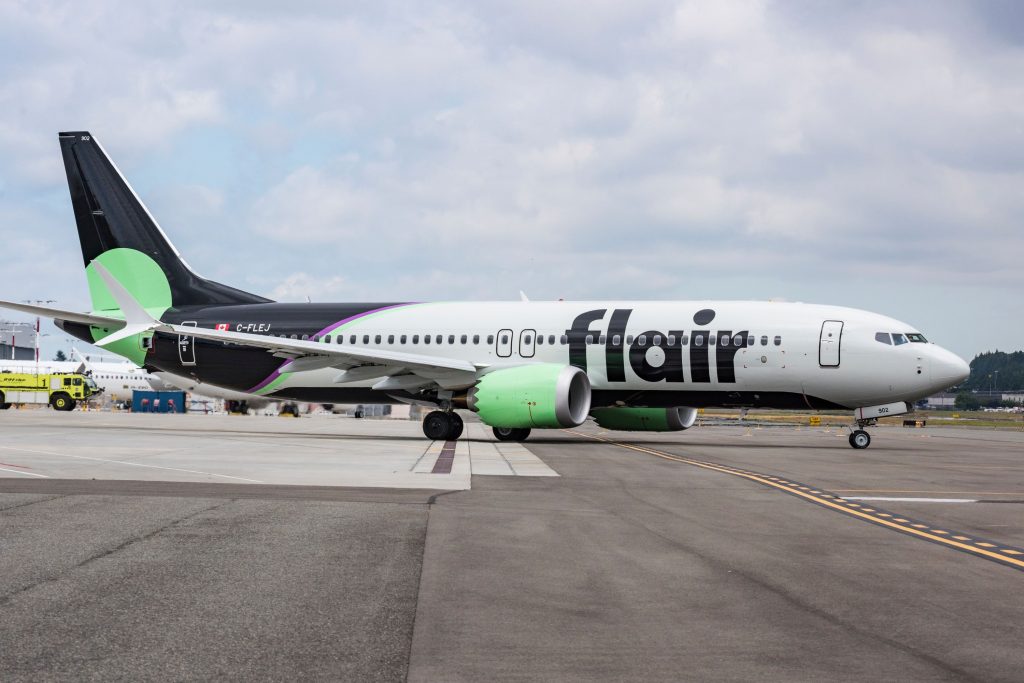
A Flair Boeing 737 MAX. (Photo: Flair Airlines)
Prosecutors said 777 Partners’ original business model involved underwriting and financing structured legal settlements for personal injury victims and lawsuit beneficiaries. Starting in 2018, the firm began investment proceeds from its structured settlements business into other ventures with “less certain cash-flow profiles,” including airlines, streaming services, and the professional soccer teams Sevilla FC and Genoa CFC. 777 Partners eventually overextended itself with these investments and acquisitions, the FBI said, and began pledging assets as collateral that it did not own.
Bets on Budget Airlines
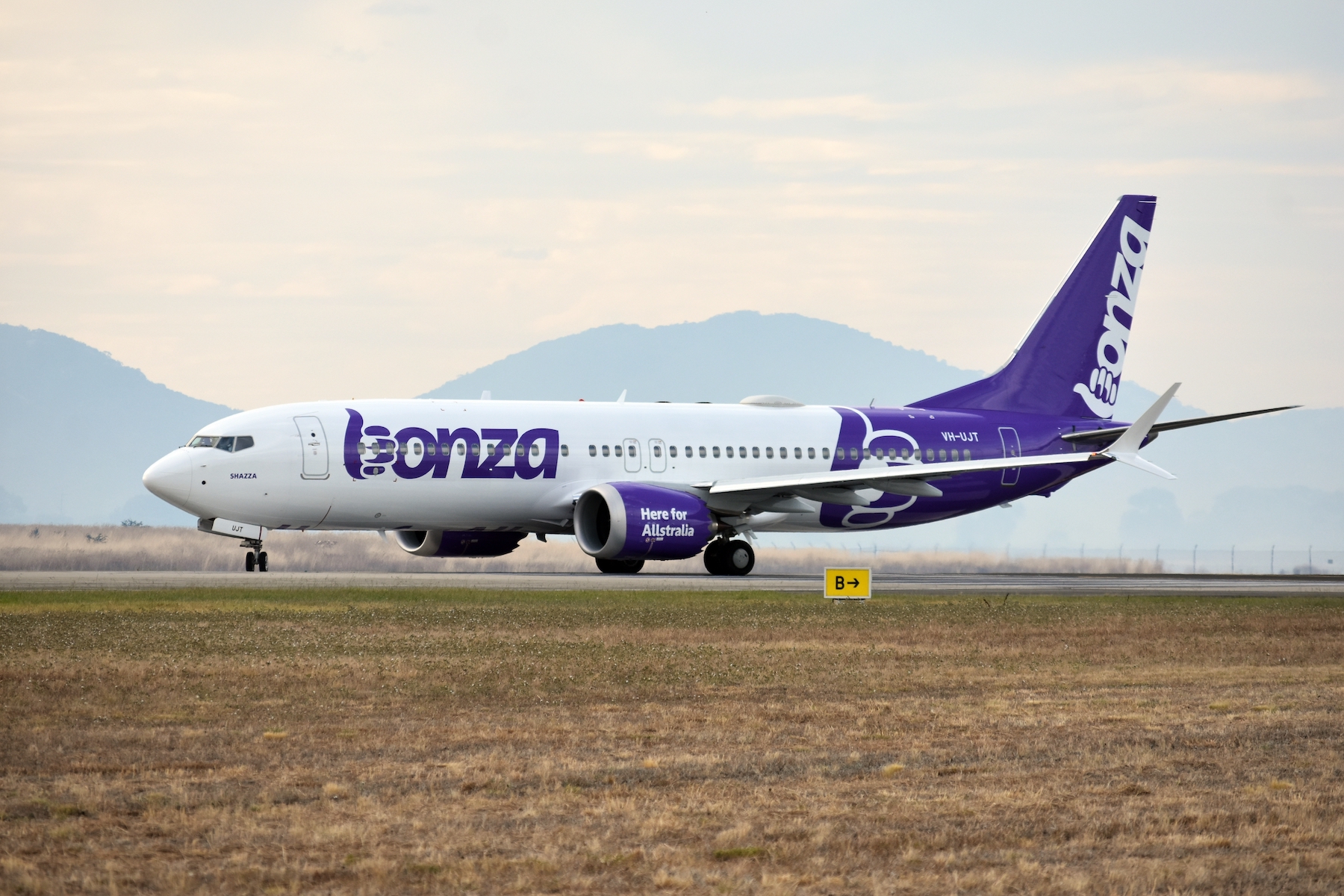
Investigators did not say which airlines 777 Partners invested in, but it is known the company backed low-cost carriers Bonza and Flair.
Bonza, which went out of business in April 2024, had its base in Australia’s Sunshine Coast and aimed to connect underserved markets and underutilized airports. It operated flights for a little over a year before entering voluntary administration, which is similar to bankruptcy protection in the U.S. All of Bonza’s scheduled flights were canceled, and its workforce was laid off.
In July 2024, a court decided that Bonza would be liquidated.
Around the same time Bonza collapsed, an asset management company in the U.K., Leadenhall Capital Partners, sued 777 Partners in New York district court for allegedly double-pledging collateral. Leadenhall alleged that 777 Partners was “operating a giant shell game at best, and an outright Ponzi scheme at worst.”
Wander and 777 Partners were increasingly visible in England after attempting to buy Liverpool-based Everton F.C.
Flair, which launched in 2005, is still operating, though it has faced occasional financial difficulties. In 2023, aircraft lessor Airborne Capital seized four Flair airplanes because the carrier allegedly fell behind on its payments. Flair’s CEO suggested at the time that the repossessions were an attempt by the airline’s competitors to run it out of business.
Three other aircraft leasing companies, which used Airborne Capital to manage their leases for Flair, later sued 777 Partners for $30 million over the missed payments.
Zach Vasile is a writer and editor covering news in all aspects of commercial aviation. He has reported for and contributed to the Manchester Journal Inquirer, the Hartford Business Journal, the Charlotte Observer, and the Washington Examiner, with his area of focus being the intersection of business and government policy.
Sign-up for newsletters & special offers!
Get the latest stories & special offers delivered directly to your inbox