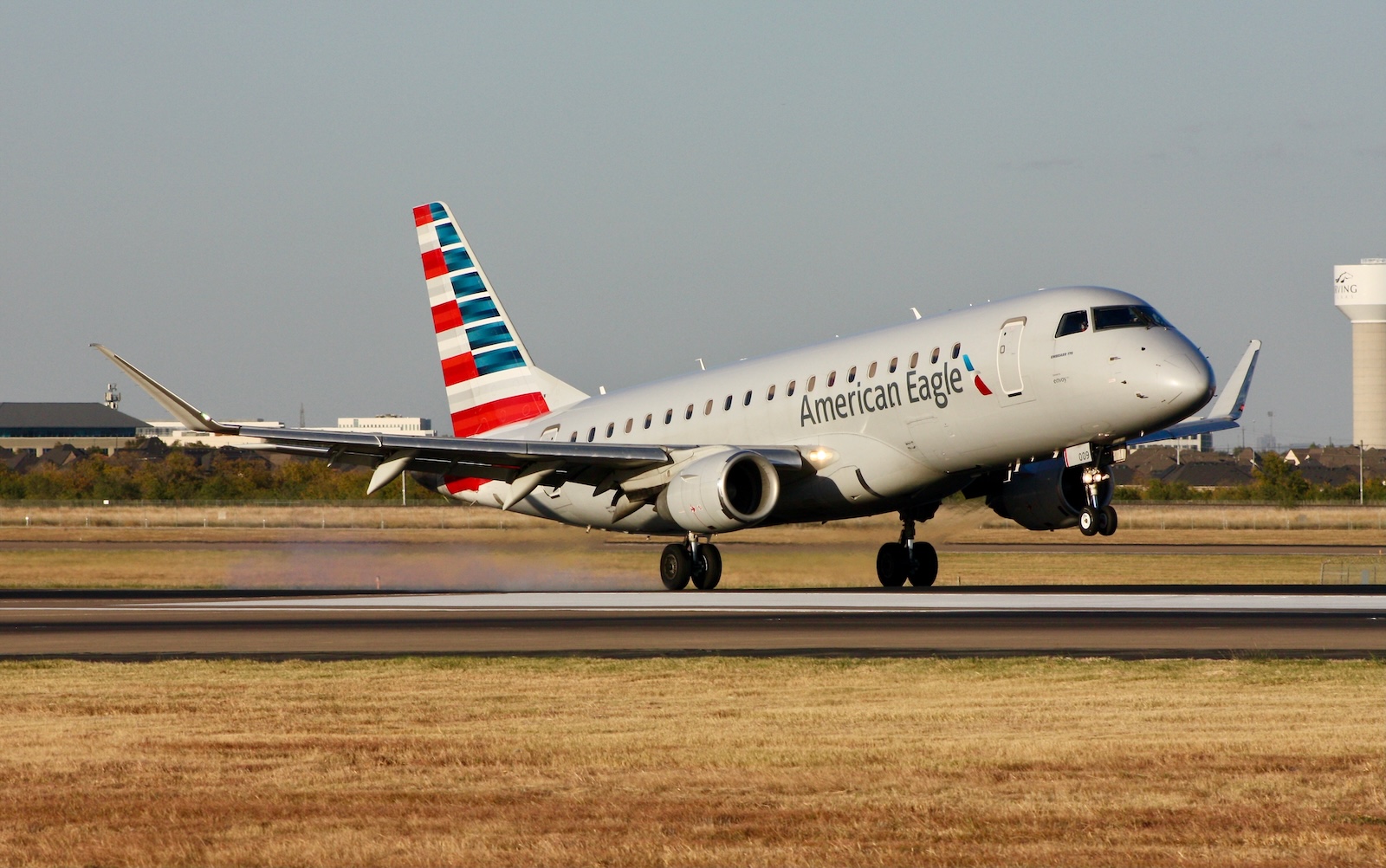
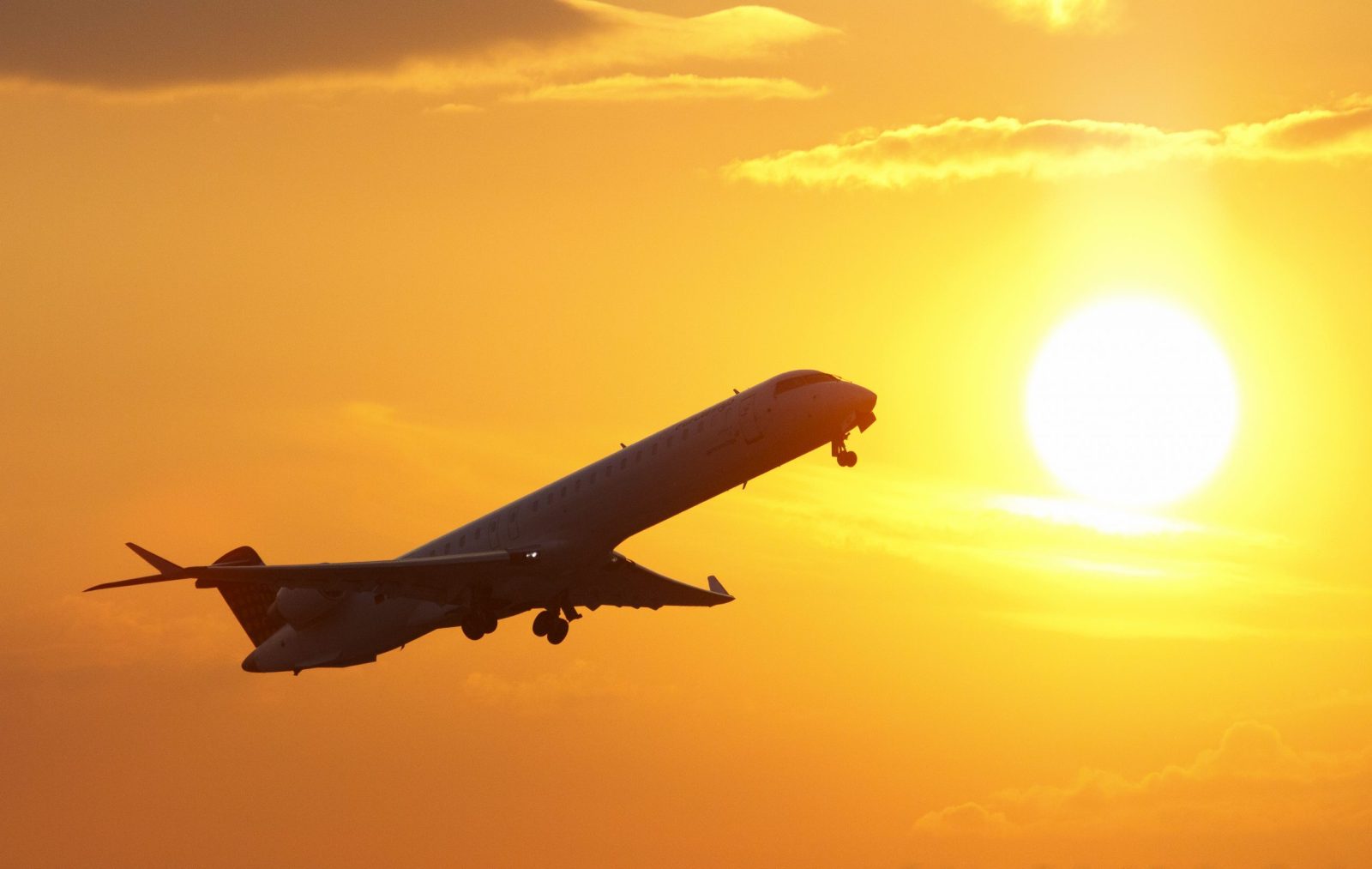
An American Eagle E175. (Photo: Shutterstock | Austin Deppe)
American plans to bolster its intra-Florida network with the return of a route last served in 2009. The Fort Worth, Texas-based carrier plans to link these two cities beginning in late 2025.
On Nov. 3, the airline will resume flights between Miami and Sarasota. This 178-mile trip will be operated by an Embraer E175.
The airline’s flights between Miami and Sarasota – last served in January 2009 per Cirium Diio schedule data – will operate on a daily basis.
“American is pleased to connect Sarasota with our Miami hub,” said Jordan Pack, American’s director of domestic network planning, in a news release from the airport. “Miami is our gateway to Latin America and the Caribbean, and with this service, customers will be able to connect to more than 60 destinations in the region to explore vibrant Puerto Rico, relax on the beaches of Aruba, or taste the coffee in Colombia, and much more.”
The carrier also connects Sarasota with its hubs in Charlotte, North Carolina; Dallas/Fort Worth; Washington Reagan National; Chicago O’Hare; and Philadelphia.
Editor’s Note: Data referenced in this article was provided by aviation analytics company Cirium.
Ryan founded AirlineGeeks.com in February 2013 and has spent more than a decade covering the airline business. His work has been featured by CNN, WJLA, CNET, and Business Insider. His aviation experience spans airport operations, Part 135 regulatory compliance, and airline crew workforce planning, along with time behind the yoke of a Cessna 172 and interviews with airline executives. Ryan now serves as Group President of Firecrown Media’s Aviation Group. He holds a B.S. in Air Transportation Management and an MBA from Arizona State University and teaches Airline Management at Embry-Riddle Aeronautical University.
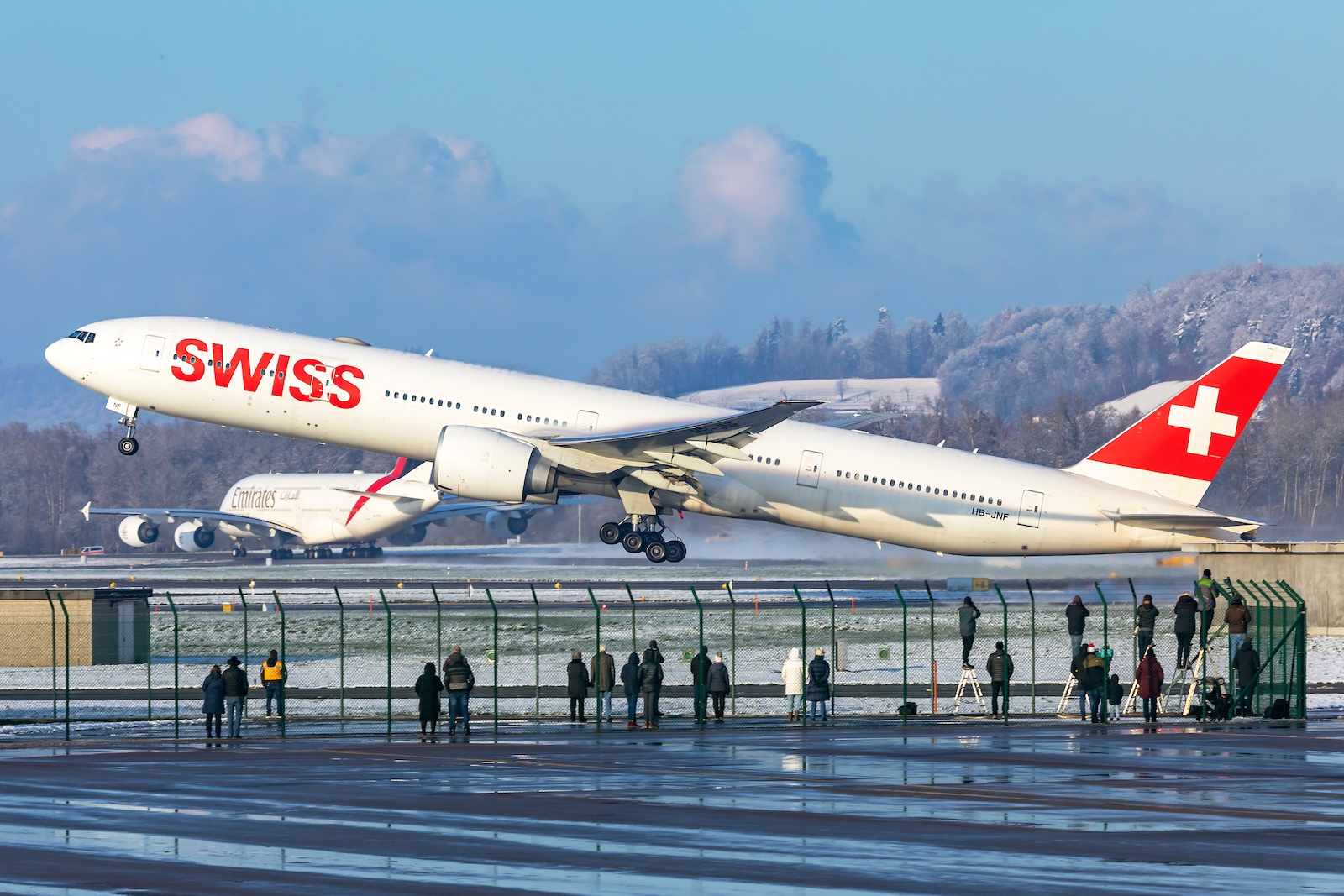
Switzerland business news organization Awp Finanznachrichten (AWP) broke the news Friday, citing a spokesperson from the carrier who confirmed the decision. According to reporting by SwissInfo.ch, the cancellations will impact long-haul, medium-haul, and short-haul services.
The cancellations are reportedly being caused by “an unusually high number of long-term absences.” Capacity is also being held up by retraining pilots for the new Airbus A350.
The 1,400 flights make up about 1.5% of the total volume of the carrier’s flights between April and October, the SwissInfo report stated.
A new collective labor agreement with the airline’s union has also increased demand for staff by about 70 full-time positions due to reconfigured working time regulations.
With some older pilots delaying their retirement to ease the short-term burden on the carrier, SWISS reportedly plans to expand its cockpit training capacity and hire up to 110 new pilots a year.
SWISS’ parent company, Lufthansa Group, stated earlier this year that it aims to recruit around 10,000 new employees across various aviation professions in 2025. Of these new employees, around 800 pilots are expected to be brought onboard.
Over half of this recruitment is planned to take place in Germany, where Lufthansa is headquartered.
AirlineGeeks.com was founded in February 2013 as a one-person blog in Washington D.C. Since then, we’ve grown to have 25+ active team members scattered across the globe. We are all here for the same reason: we love deep-diving into the fascinating realm of the airline industry.
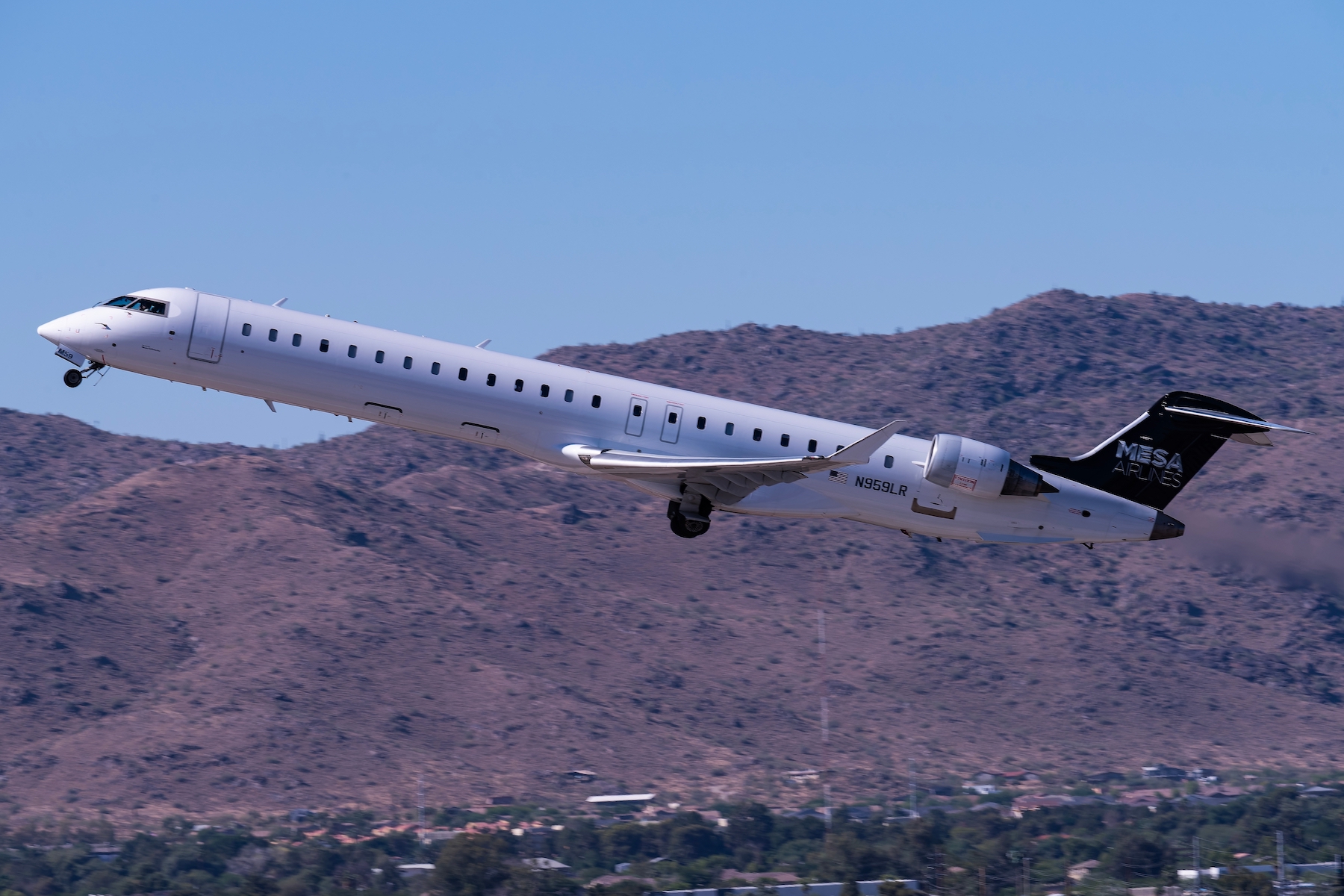
A Mesa Airlines CRJ-900 in Phoenix. (Photo: Shutterstock | Robin Guess)
Phoenix-based Mesa Air Group, the parent company of regional carrier Mesa Airlines, reported a net loss of $114 million in the first quarter of 2025, according to a financial statement released Monday.
The company’s earnings report showed a decline in operating revenue from $118.8 million in Q1 2024 to $103.2 million in Q1 2025. Contract revenue fell from $101.1 million to $80.7 million over the same period.
The airline attributed the results to a decrease in the number of aircraft it is flying under contract for United as part of its regional airline network, United Express. Mesa recently retired its remaining CRJ-900s and sold several Embraer aircraft to United in an effort to reduce its debt and restructure its fleet solely around the Embraer E175. A net loss on those sales further hurt the carrier’s bottom line.
Also a factor is the termination of a partnership between Mesa and DHL Express in 2024. The deal between the two companies ended one year earlier than expected because of a reduction in cargo demand. Mesa had used three Boeing 737s to transport DHL’s cargo.
In a statement, Mesa Air Group CEO Jonathan Ornstein highlighted the airline’s strong operational performance during the quarter, including a 100% controllable completion rate for the United flights it handles.
2024 Results
Last week, the company reported its fourth-quarter and full-year earnings for 2024, including an adjusted net loss of $23 million for the year. Reduced block hours, fewer aircraft under contract, and the cancellation of the DHL deal were the main causes.
Mesa Air Group is in the process of merging with Republic Airways Holdings, the parent company of Republic Airways, a fellow partner in the United Express network. The all-stock deal was announced in April and would leave Republic shareholders with 88% of the combined company’s common shares. Mesa Air Group shareholders will own a minimum of 6% and up to 12% of the new common shares, depending on Mesa meeting certain requirements before the closing date.
If approved by shareholders and regulators, the tie-up is expected to be completed in the third or fourth quarter of 2025.
The new merged company, which will use the Republic name, will have a fleet of about 310 Embraer 170s and 175s flying 1,250 departures daily.
Republic is currently a partner of United, American, and Delta.
Zach Vasile is a writer and editor covering news in all aspects of commercial aviation. He has reported for and contributed to the Manchester Journal Inquirer, the Hartford Business Journal, the Charlotte Observer, and the Washington Examiner, with his area of focus being the intersection of business and government policy.
United Extends E145 Contract to 2028
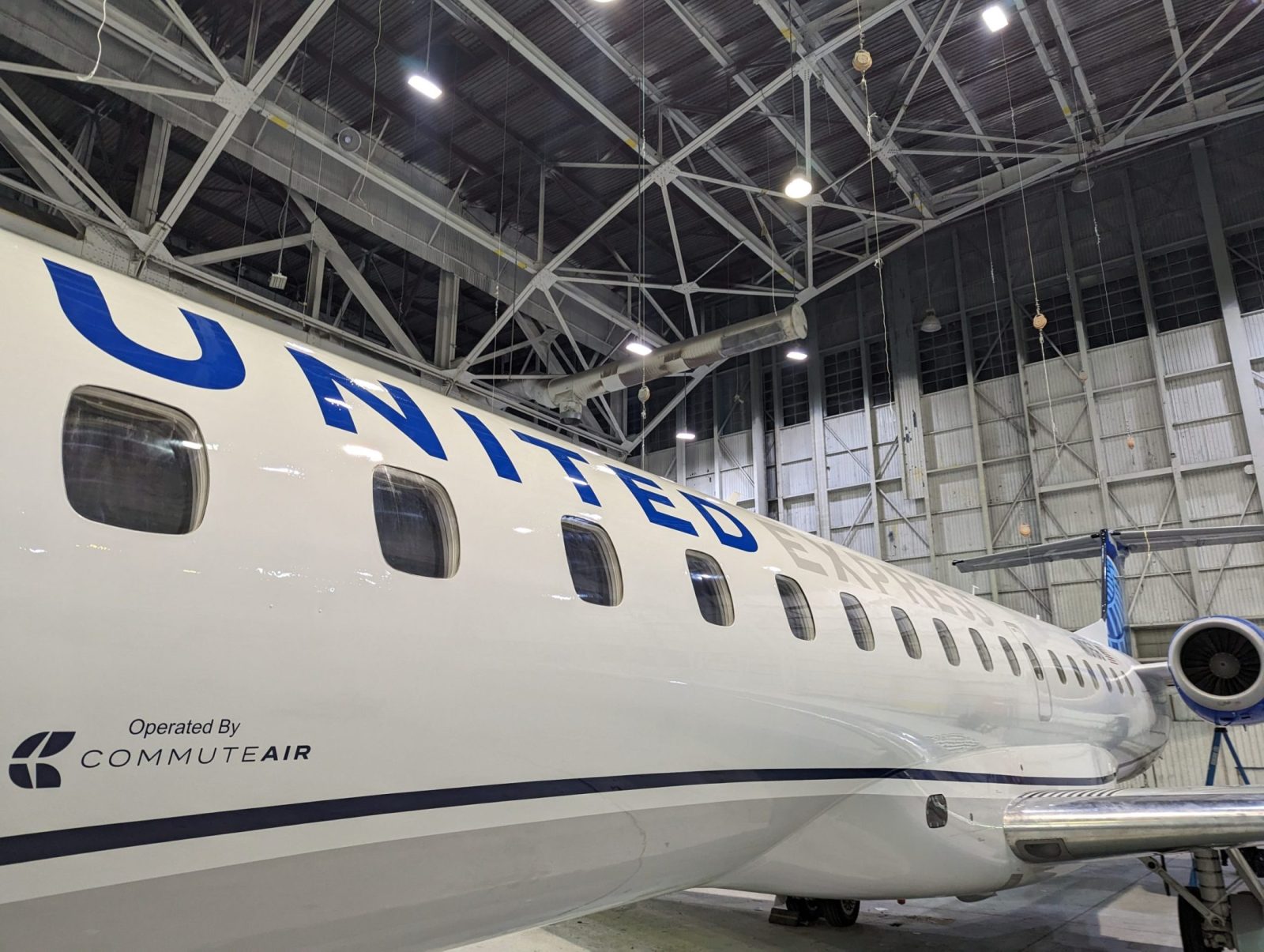
Regional airline CommuteAir will remain an exclusive partner of United through at least 2028, the carrier announced last week.
A CommuteAir Embraer E145 aircraft (Photo: CommuteAir)
Regional airline CommuteAir said it has extended its exclusive contract with United through 2028.
CommuteAir operates over 200 daily flights with its fleet of 59 Embraer ERJ-145s as part of the United Express network. The 50-seat jets mainly fly to and from United hubs at Washington Dulles and Houston, serving destinations across the Northeast and South, as well as Canada and Mexico. CommuteAir became the sole operator of United Express’ E145 fleet in 2020 after United ended a previous contract with the now-defunct ExpressJet.
The interior of CommuteAir’s E145 with its 1-2 configuration. (Photo: AirlineGeeks | Craig Fischer)
The airline also operates a standalone charter service using a 76-seat Embraer E170.
The United Express network connects travelers from small markets to large cities served directly by United. The network includes CommuteAir, GoJet, Mesa Airlines, Republic Airways, and SkyWest Airlines.
CommuteAir has been a United partner since 2010. It was previously affiliated with Continental Airlines and, before that, US Airways.
CommuteAir officially opened its new headquarters in Westlake, Ohio, outside of Cleveland, last week. The airline said it had outgrown its former offices in North Olmsted, Ohio, and needed more collaborative working space. The move brings about 200 jobs to the Westlake area.
Zach Vasile is a writer and editor covering news in all aspects of commercial aviation. He has reported for and contributed to the Manchester Journal Inquirer, the Hartford Business Journal, the Charlotte Observer, and the Washington Examiner, with his area of focus being the intersection of business and government policy.
Qatar Airways Posts Strongest Year In Its History
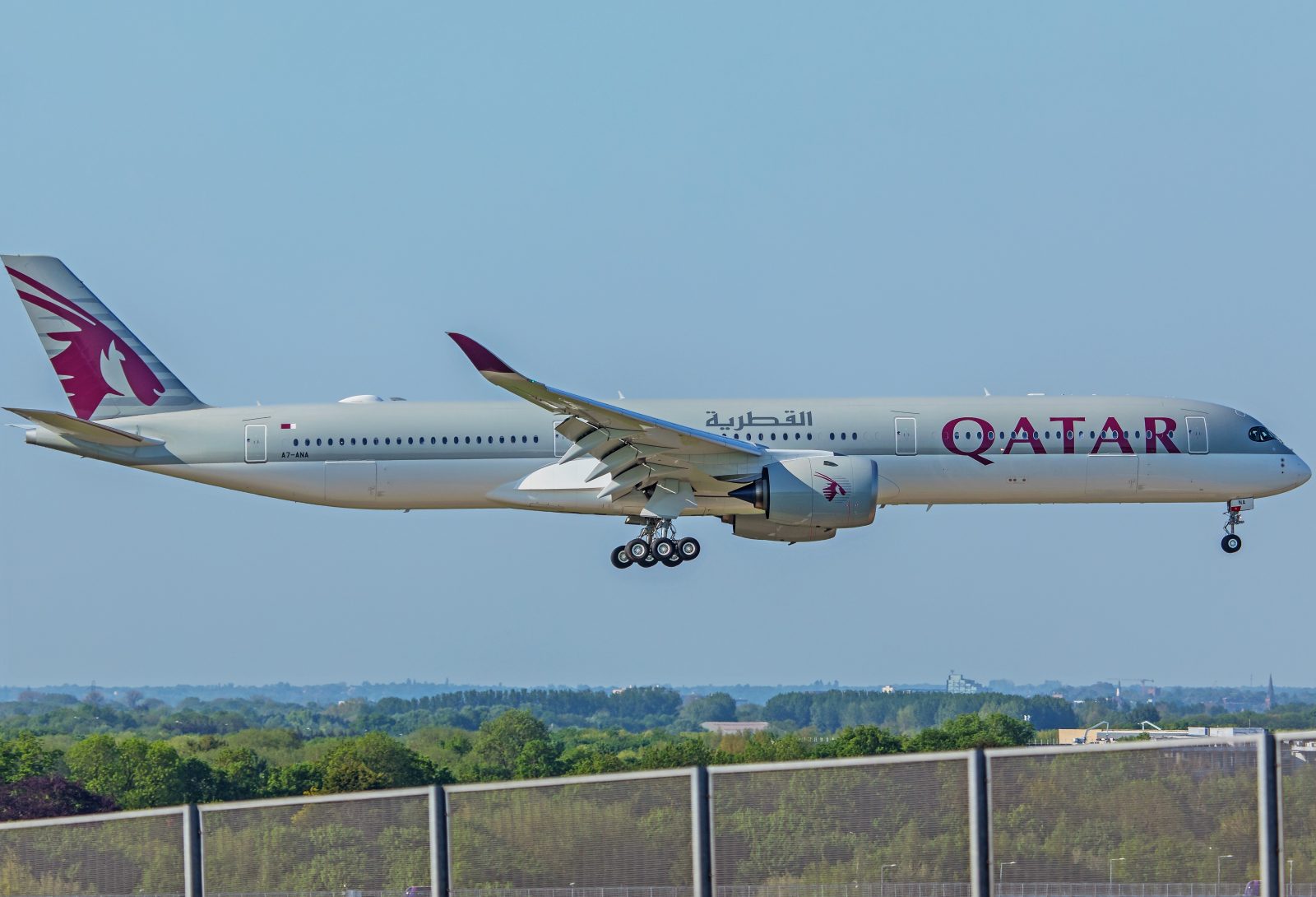
Qatar Airways produced its strongest ever financial results in the 2024-25 fiscal year, mainly due to continued strong demand in its market.
Profits grew by 28% over the prior year, the airline said, mainly due to continued strong demand from travelers and investments in digitization and data analysis that have begun to pay off. The carrier’s cargo division, Qatar Airways Cargo, saw revenue climb by 17%, contributing to its best overall year since the COVID-19 pandemic.
Qatar Airways’s fiscal year ends on March 31.
In a statement, CEO Badr Mohammed Al-Meer said the airline has taken a number of steps to protect itself against possible volatility linked to disruptions in global trade, including diversifying its holdings and forming strategic partnerships throughout the commercial aviation, cargo-handling, and hospitality industries.
Historic Deal
Outside of commercial flights and cargo, Qatar Airways Group operates an in-flight catering service, oversees facilities management at its home base at Hamad International Airport in Doha, and runs duty-free stores, restaurants, and hotels in Qatar.
In the last fiscal year, Qatar Airways acquired a 25% stake in Virgin Australia and a 25% stake in South African regional airline Airlink. It also completed an expansion at Hamad that added 17 new aircraft gates.
The airline was in the news last week after placing an order for 160 Boeing twin-aisle jets, with options to acquire 50 more. The order is the largest ever for widebody Boeing aircraft and the biggest in Qatar Airways’ history. The airline also placed orders for 400 aircraft engines from GE Aerospace.
Zach Vasile is a writer and editor covering news in all aspects of commercial aviation. He has reported for and contributed to the Manchester Journal Inquirer, the Hartford Business Journal, the Charlotte Observer, and the Washington Examiner, with his area of focus being the intersection of business and government policy.
South African Airways to Launch and Revive Various Routes
Speaking at Africa’s Travel Indaba 2025, SAA’s Interim Chief Commercial Officer, Tebogo Tsimane, said that the airline has route expansion plans.
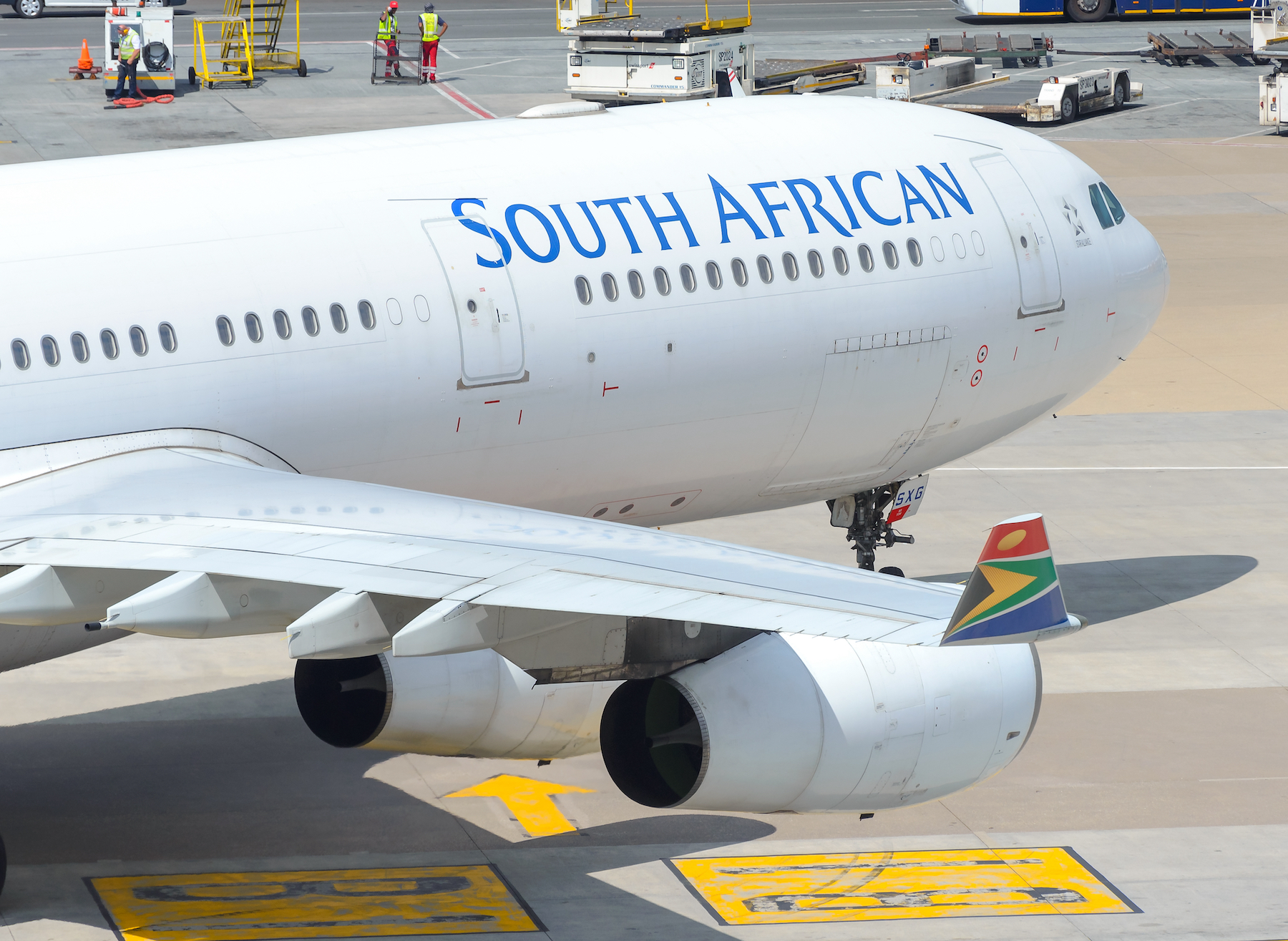
A South African Airways A340-300. (Photo: Shutterstock)
South African Airways will resume services on several routes and introduce some new ones.
Speaking at Africa’s Travel Indaba 2025, a tourism event on the African continent, SAA’s Interim Chief Commercial Officer, Tebogo Tsimane, said that the airline has route expansion plans.
South African Airways intends to start flying to the coastal cities of George and East London. Furthermore, it will relaunch flights between Durban and Cape Town. Johannesburg – George flights are set to resume in April 2026. The date for the relaunch of services between Johannesburg and East London has yet to be announced. The resumption of Cape Town – Durban flights will also be announced soon, the carrier stated.
South African has two new cross-border routes in the pipeline. It intends to start flying between Johannesburg and Gaborone (Botswana) in October this year. Then, the airline also intends to introduce a seasonal service between Cape Town and Mauritius. The route will commence in November this year.
That said, the launch of these new and revived services is subject to aircraft availability. South African Airways has been rebuilding its fleet recently.
The restructured airline resumed scheduled services in 2021 after an extended business rescue process. South Africa’s national carrier now operates scheduled services on over 17 routes.
The airline relaunched scheduled flights in 2021 with just one domestic route: Johannesburg – Cape Town. It has subsequently resumed domestic services between Johannesburg and Durban as well as between Johannesburg and Port Elizabeth.
Lorne is a South Africa-based aviation journalist. He was captivated and fascinated by flying from the day he took his first airline flight. With a passion for aviation in his blood, he has flown to destinations in all corners of the globe. Lorne has traveled extensively and lived in various countries. Drawing on his travels and passion for aviation, Lorne enjoys writing about airlines, routes, networks, and new developments.
Latest Gadgets and Accessories for Airline Pilots
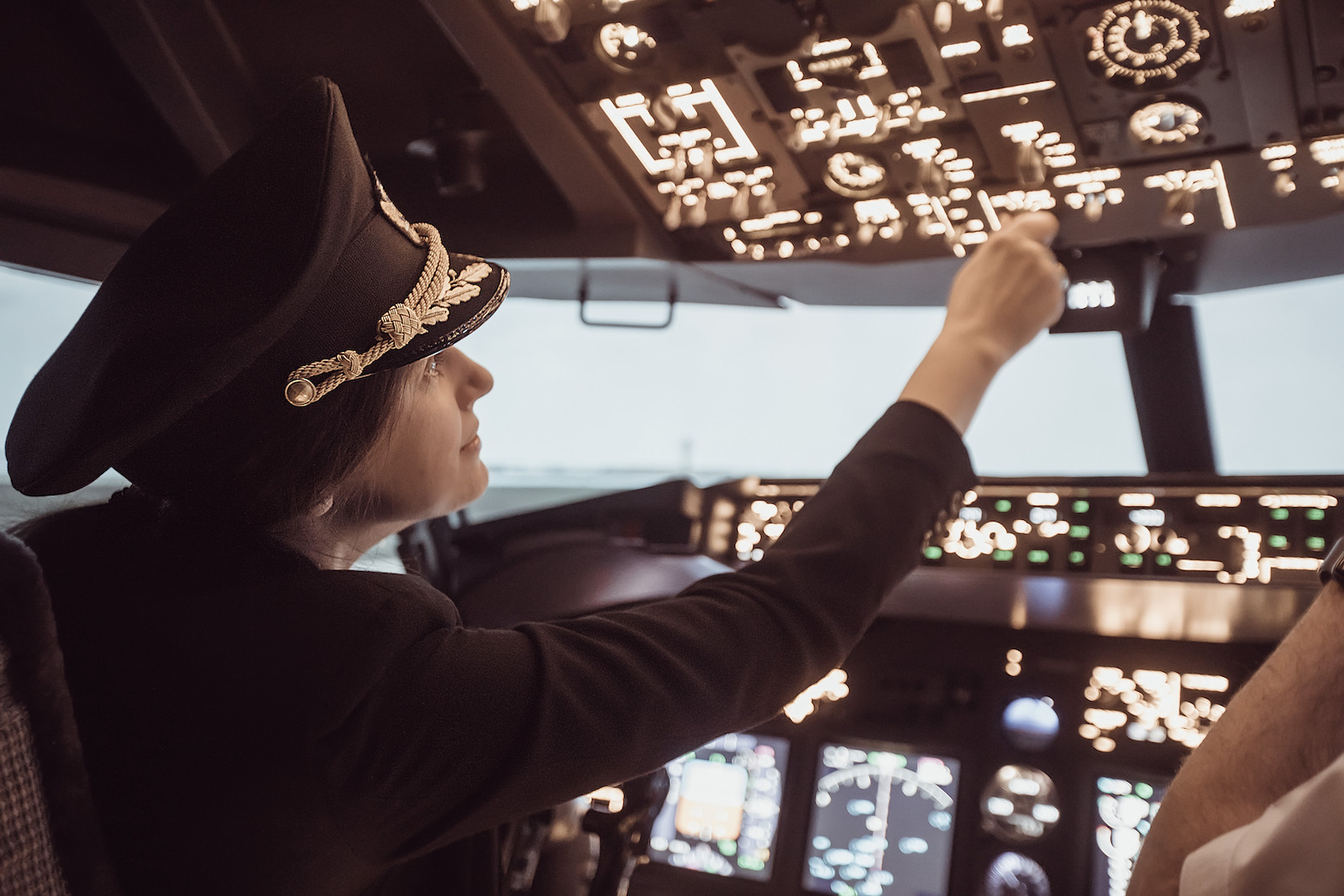
Explore some of the most recent gadgets and accessories that have entered the market for airline pilots.
Pilot prepares aircraft for departure (Photo: Shutterstock | Demkat)
Aviation is an industry that constantly evolves with ongoing updates in technology and equipment. Let’s explore some of the most recent gadgets and accessories that have entered the market for airline pilots, along with some essential everyday tools that can assist you in other areas of your life. Discover some familiar products and new tools to keep you ahead in this ever-changing field.
Quick Look: 10 Latest Gadgets and Accessories for Airline Pilots
10 Latest Gadgets and Accessories for Airline Pilots
Here is a list of the latest gadgets and accessories to include inyour flight bag or carry-on for your next work trip.
Stealth Premier Multi-Purpose Cube
Best of: Flight bags for airline pilots
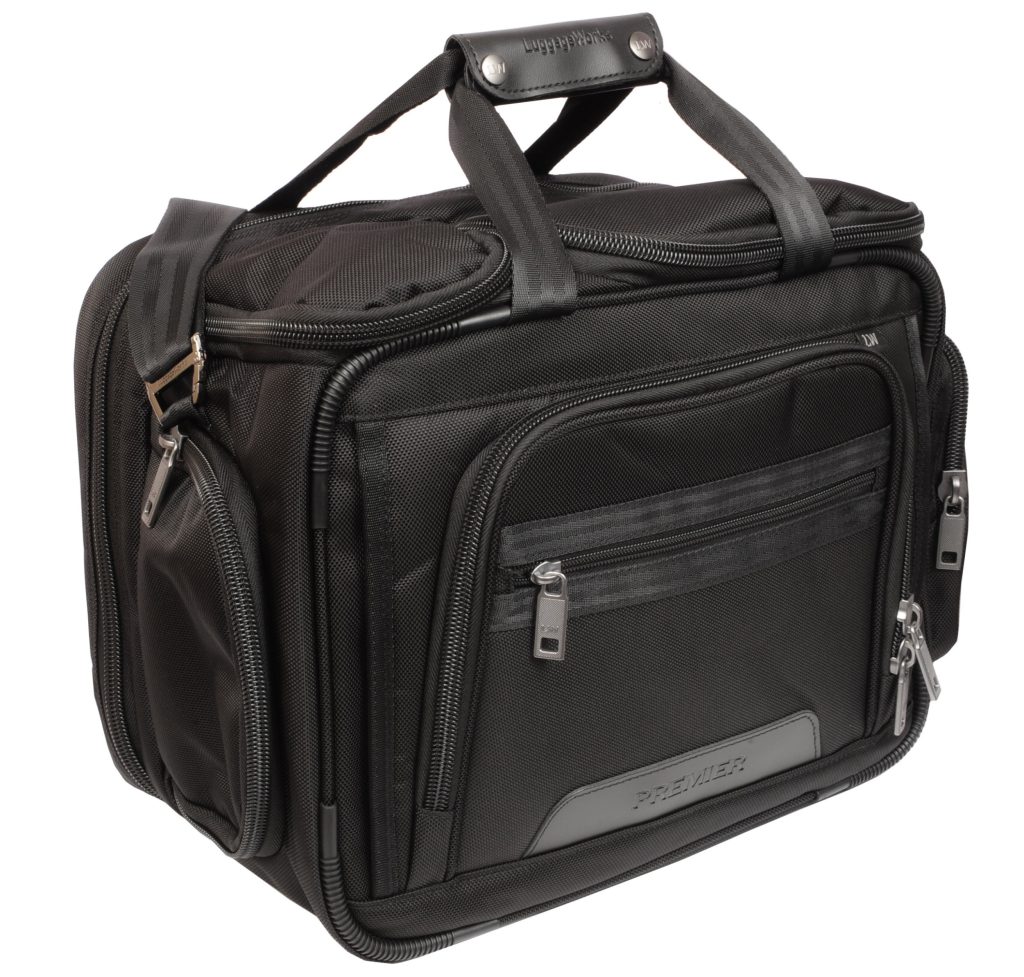
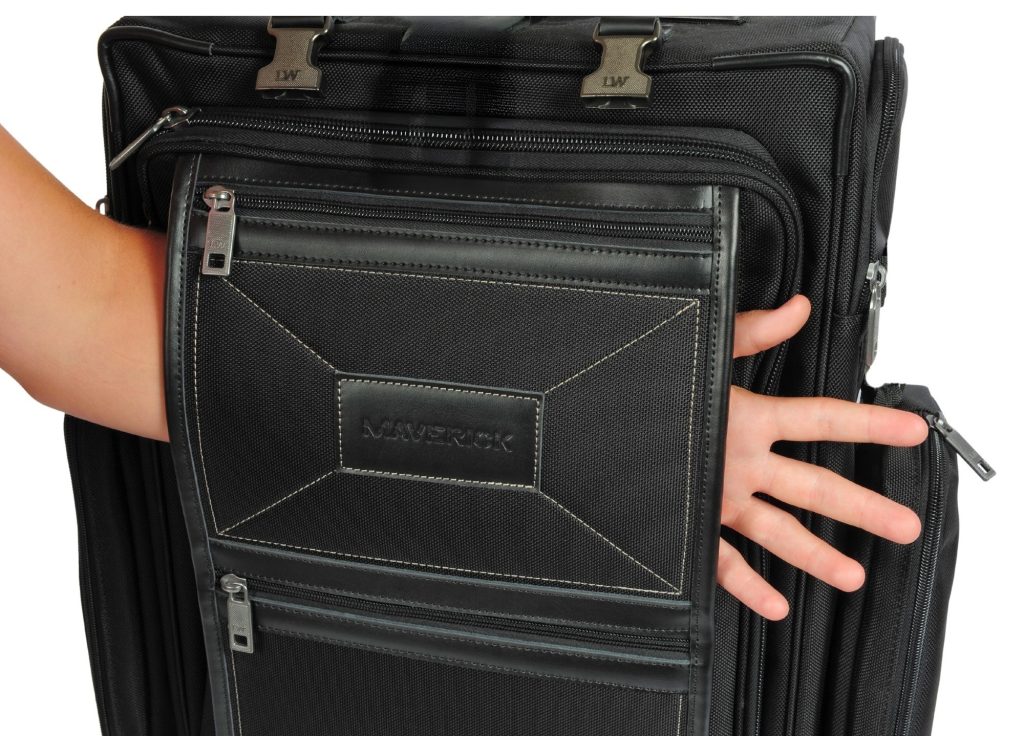
Stealth Premier Multi-Purpose Cube [Courtesy: Crew Outfitters]TheStealth Premier Multi-Purpose Cube is the best-in-class multi-purpose flight bag with ultimate functionality. The bag measures 12 inches by 16 inches by 9 inches and weighs 4.25 pounds. The reinforced pockets protect all your valuables during travel, including headsets, laptops, and tablets. At the same time, the insulated cooler allows you to bring along food from home to maintain a healthy lifestyle. Also included in the purchase price is a Luggageworks flashlight with an attachment strap to enable you to see inside the flight bag during low-visibility operations.
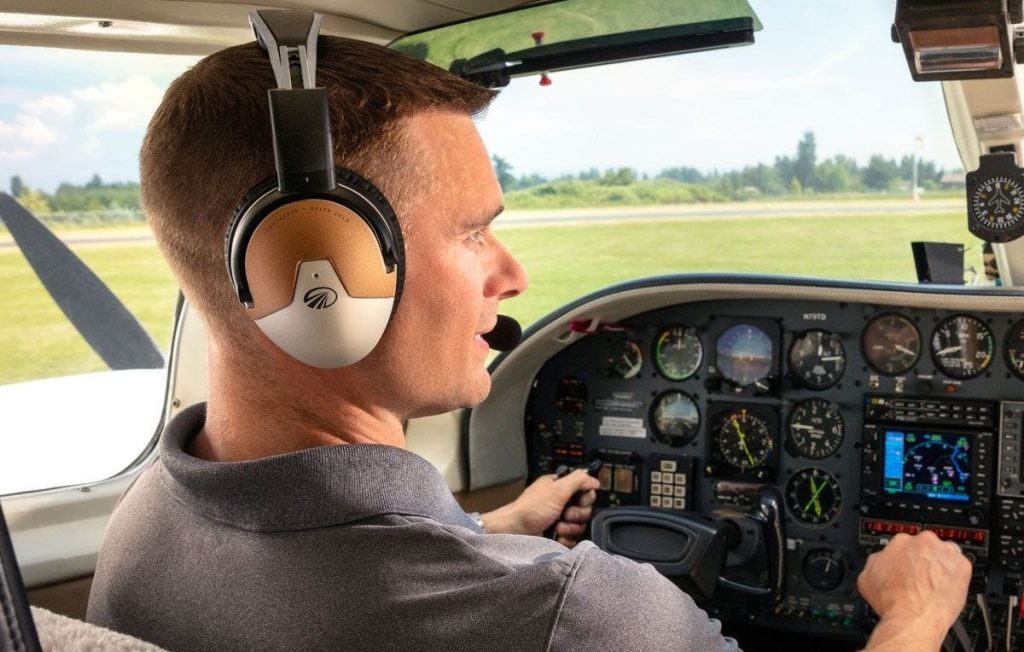
Lightspeed Delta Zulu Headset [Courtesy: Sporty’s]If you’re searching for a headset in a class of its own, look no further than the Lightspeed Delta Zulu Headset. This sturdy noise-canceling headset is constructed with a stainless steel frame and tangle-free wires. It features a built-in carbon monoxide detector and customizable audio profiles. The headset’s battery lasts up to 30 hours on a single charge or 15 to 20 hours with AA batteries. Retailers like Sporty’s Pilot Shop often offer you the option to purchase and take advantage of a risk-free 30-day trial to experience the headset’s unparalleled quality before making a long-term commitment.
Price: $1,199.00
Timex Waterbury Heritage Chronograph
Best of: Watches for airline pilots
The Timex Waterbury Heritage Chronograph is a fantastic aviator’s watch option with timeless elegance to help you stay on time with your busy schedule. This watch is highly durable, as it is built out of stainless steel and measures 39 millimeters in diameter and 13.5 millimeters thick. The lens is made of anti-glare mineral glass, and the leather strap is perforated for ultimate breathability. The watch comes in brown and stainless steel or black and stainless steel.
Price: $259.00
Apple iPad Air 11-inch with M3 Chip
Best of: Tablets for airline pilots
The Apple iPad Air 11-inch with M3 Chip is the ultimate personal iPad for pilots who require ultrafast 5G internet and advanced graphics. The liquid Retina display offers ultralow reflectivity and true color balance, providing clear animations and images. Storage options range from 128 GB to 1 TB. Available in four colors: blue, space gray, purple, and starlight, this iPad is compatible with various accessories that enhance user experience.
Price: $599.00
Apple AirPods 4 Wireless Earbuds
Best of: Headphones for airline pilots
Apple AirPods 4 Wireless Earbuds [Courtesy: Amazon]For ultimate noise-cancelling comfort during those long layovers, the Apple AirPods 4 Wireless Earbuds are the apparent choice for pilots. These AirPods are sweat, water, and dust-resistant, and offer a battery life of up to 30 hours. Adaptive audio customizes the noise from your environment so you can immerse yourself in the world around you while engaging in conversations or listening to music. Apple promotes the AirPods 4 as a smart earbud featuring H2 chip technology that enables users to interact with Siri.
Price: $179.00
Flight Gear Giant Backup Battery
Best of: Power banks for airline pilots
The Flight Gear Giant Backup Battery offers serious backup power. With a storage capacity of 20,000 milliampere-hours, you can charge your personal devices through two 3-amp USB ports. The unit features an auto-shutoff function that protects against high temperatures and high voltage outputs. Purchasing this slim and durable battery pack is essential for any pilot on the go.
Price: $79.95
Charter Ops Flashlight
Best of: Flashlights for airline pilots
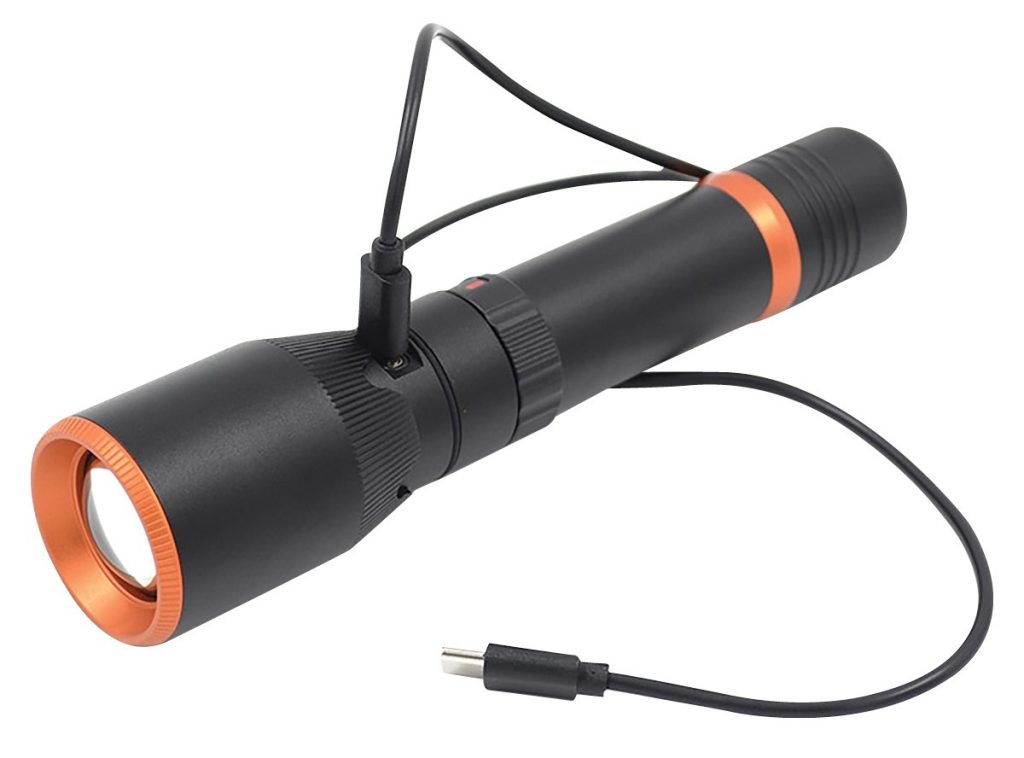
Charter Ops Flashlight [Courtesy: Flight Outfitters]For pilots and avid outdoorsmen, the Charter Ops Flashlight provides several features that place it ahead of the competition. The flashlight includes four light modes: red, white, blue, and green, along with a zoomable top. It has a built-in SOS mode that flashes when the user activates it. The flashlight is waterproof and impact-resistant, up to one meter. When fully extended, it measures 6.75 inches and weighs half a pound.
Price: $59.95
Kinder Fluff Window Shades
Best of: Sunshades for airline pilots
To help beat the heat and UV rays, Kinder Fluff Window Shades are the ultimate product in the window shade market. Marketed as the only product certified to block 99.79% of UVA and 99.95% of UVB rays, these window shades come in standard or jumbo size and can fold into a transportable pouch. Bring them to the airport to create a comfortable environment on the flight deck.
Price: $18.99
Pilot Wallet
Best of: Pilot wallets for airline pilots
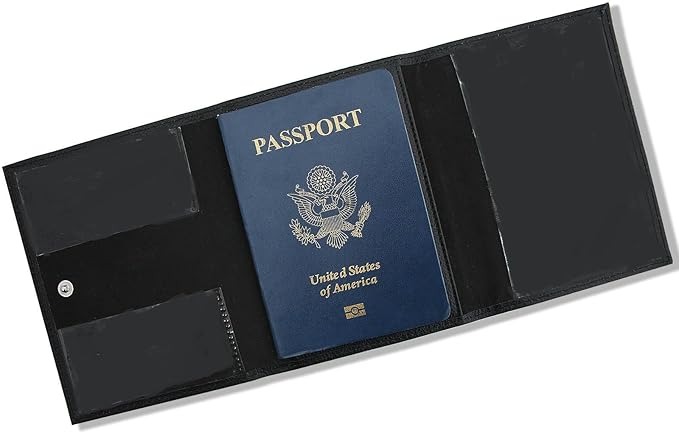
Pilot Wallet Passport Holder [Courtesy: Amazon]Ideal for international pilots, the Pilot Wallet provides exceptional organization and quality. It offers ample space for passports, licenses, medical certificates, and other essential documents. Crafted from leather and weighing just three grams, it presents unbeatable value for this product.
Price: $29.99
Add These Gadgets to Your Virtual Cart Today
All the listed products are available online and, in most cases, allow customization to fit your preferences. Most of these accessories are designed to help ease your workload, while others serve fashion and personal purposes. Either way, explore, purchase, and put these fantastic products to use.
AirlineGeeks.com was founded in February 2013 as a one-person blog in Washington D.C. Since then, we’ve grown to have 25+ active team members scattered across the globe. We are all here for the same reason: we love deep-diving into the fascinating realm of the airline industry.
A Bombardier CRJ Series aircraft. (Photo: AirlineGeeks / Fabian Behr)
Not many industries face the level of regulation and scrutiny that the airline sector does. You have things like passenger screening, and you also have things like perimeter surveillance. Airlines also operate under constant pressure as they must anticipate and neutralize threats. A lot of the time, this also has to be done in real time. Looking beyond airlines, it’s clear to see that the security measures in place can also be used to offer valuable insight into how businesses can better manage their risk overall.
If you want to find out more about security principles that enterprise leaders can borrow from the aviation sector to strengthen their operations, then take a look below.
Layered Security
One thing to know about the aviation industry is that layered security is far more effective than having single barriers. At the end of the day, airlines rarely rely on a single line of defense. You have terminal access points, and you also have different forms of cockpit vision. By using layers, it’s clear that each one can catch what the layer previously might have missed. If you apply this to the business world, it’s possible to take this approach and implement it.
If you have a keypad entry to your building, then this is great, and you may think that this is enough. With that said, if someone knew the PIN, then they could have access to everything in your premises. If you want to elevate your security, then you could pair your PIN code access with a Genetec Synergis access control system. By doing this, you can add an extra layer of security, which would benefit you moving forward. You may also find that you can reduce your insurance costs by having more measures in place.
Strict Access Control
Another thing to take note of is that strict access control is not negotiable. In the world of aviation, not everyone can go everywhere. If you have an engineer, then they cannot go into the secure data center. If you have a baggage handler, then they cannot go into the cockpit. By segmenting your team and what they can access, it becomes clear that security is improved, and this is great, to say the least. Of course, if you adopt role-specific access points, then this makes it easier for you to implement more advanced security measures.
Access is also limited to what is necessary, and if you feel as though someone has abused their privileges, then you can easily revoke them just as fast. In high-risk sectors, pairing things like access control with things like biometrics can help to add even more protection, which is great to say the least.
Security
Airline staff, whether you are a cleaner or a cabin crew member, are all trained to spot behavior that might be suspicious. This helps to create a culture of shared responsibility, and it also helps to reduce reliance on a single team or even a single tool. If you can take the time to invest in security awareness training, then this would help you considerably. If you can, you need to try and recognize unusual activity, and you also need to try and report breaches in any kind of unusual activity. You also need to follow data security protocols. At the end of the day, security isn’t just a department; it’s more of a mindset, and if you can focus on this, then you will be way better for it.
Crisis Preparedness
Airlines rehearse a lot of emergency procedures all the time. They even simulate things like evacuations and cyber incidents. Bomb threats are also monitored to make sure that people are as safe as possible, all the time. When a real crisis happens, this means that people know what to do in the instance, so that extra steps can be taken to ensure that everyone is safe. The takeaway in this instance is to ask if you have an emergency protocol for any physical threats in place and if you have a designated design team. You also need to check to see if you have a crisis response team, and if you have run any drills or tabletop exercises in the last year or so. If you can be prepared, then this will help you quite a lot, and it will also help you to get the result you need.
Use Tech
You need to use tech as much as possible. The best possible airline security systems tend to blend automation with things like human oversight. If you use AI scans, then this will help to identify threat patterns, but at the end of the day, human experts can also validate and respond to them accordingly. Smart surveillance tools can also be used to detect movement, but at the same time, you have teams of security staff who can assess the context of this, so they can act accordingly.
If you can use tech to try and amplify decision-making, then this will help you to avoid replacing human intervention, which is an important part of running a business. If you can, you also need to try and install some smart cameras that come with facial recognition and smart cameras. If you can use AI footage to detect abnormal patterns, then this will help you even more. Of course, you can then have your managers assess things further, which is a major support. If you can, you need to be mindful of the fact that balance is key, and that people can prevent things like false positives. Tech can also be used to stop missed threats as well. If you can, you should also try and make sure that you are always aware of what opportunities you can capitalize on, and the impact of them on your company.
Small things can make a big difference, so keep that in mind if you can, as it will make a major difference to you and your security level. Doing a security assessment is also a very good thing to do, so keep that in mind.
AirlineGeeks.com was founded in February 2013 as a one-person blog in Washington D.C. Since then, we’ve grown to have 25+ active team members scattered across the globe. We are all here for the same reason: we love deep-diving into the fascinating realm of the airline industry.
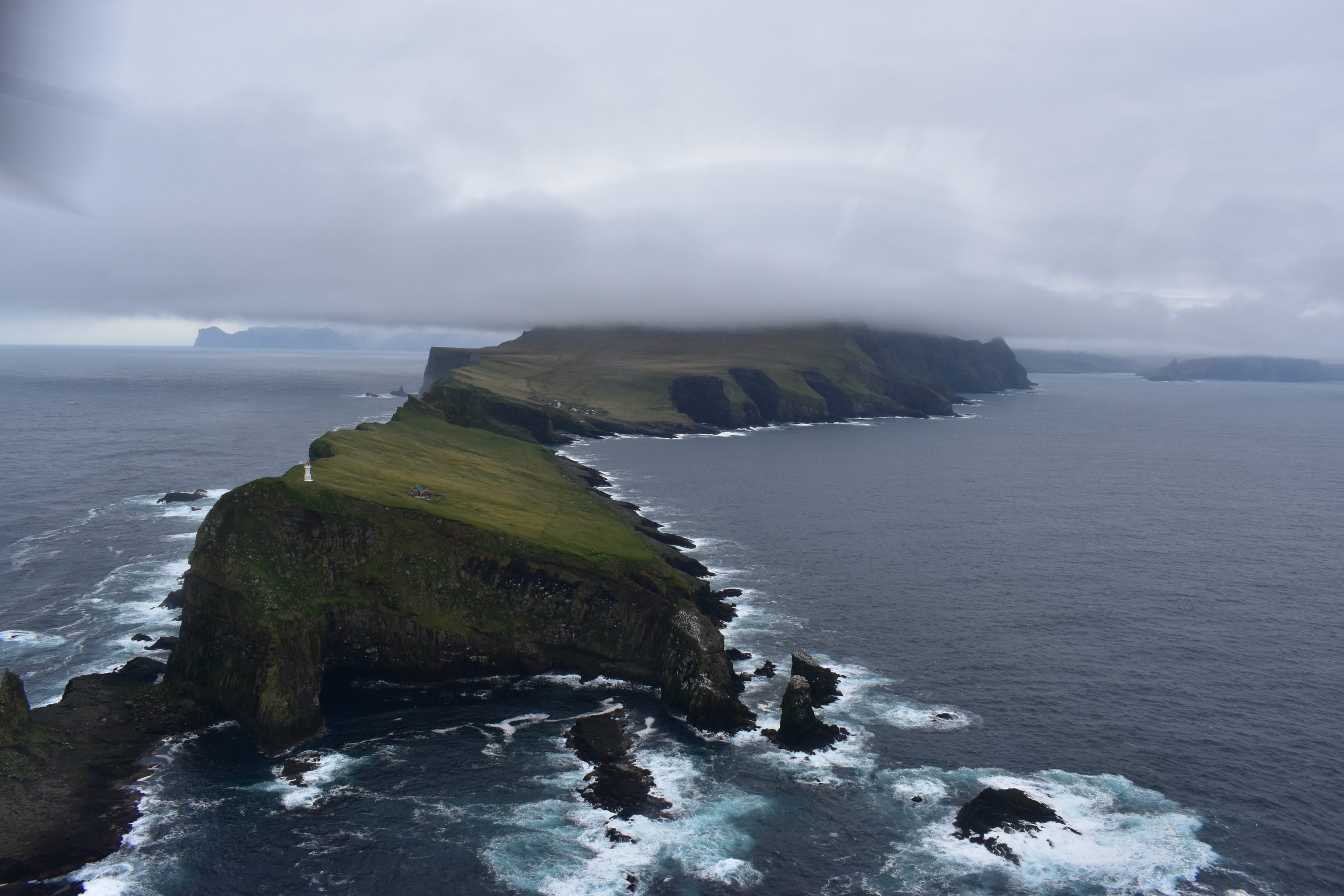
The Mykines Hólmur Lighthouse, and the westernmost point in the Faroe Islands. (Photo: AirlineGeeks | Joey Gerardi)
Airlines operating both commercial fixed-wing aircraft and helicopters are a rarity, but in certain countries, remote locales and difficult terrain all but require it. That’s the case with Atlantic Airways, which operates in the Faroe Islands, a stunning but remote island chain in the North Atlantic Ocean about midway between Great Britain and Iceland.
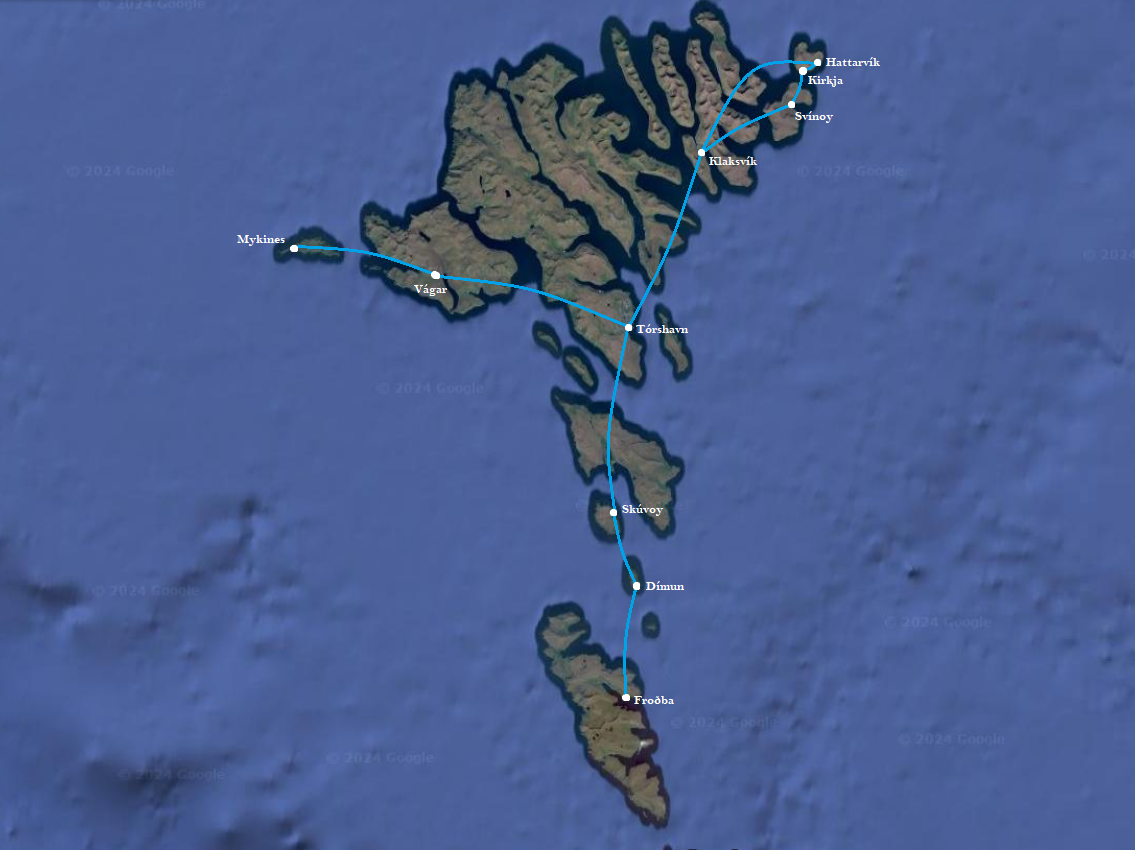
The mountainous country’s only airport has a single runway and no space to build a second, but it does have spread out heliports served by Atlantic’s two AgustaWestland 139s. The airline doesn’t operate a traditional hub-and-spoke network for the helicopters. Instead, they leave the country’s main airport in Vágar and hop between communities before returning to the airport. The services aren’t frequent and only operate a couple of times a week.
It can be somewhat difficult to understand how the network runs, so I also created a map from Google Earth of the approximate routing of these helicopter flights. These are subject to change and could be altered based on the needs of the communities and search and rescue operations.
A depiction of Atlantic Airways’ current scheduled helicopter routes. (Photo: AirlineGeeks | Joey Gerardi)
Atlantic Airways CEO Jóhanna á Bergi said the helicopter flights are meant to support the country’s citizens first and are vital to those needing to get around quickly for appointments and other important needs. Tourists can book these flights, but only about a week out from the departure date and for the most part only as a one-way flight. Residents of the Faroe Islands get to book these seats about a month or so in advance.
“When we have some tourists take a ride on the helicopter, it’s because there is enough space on the helicopter, but the people living on the different islands, they will always have first priority in booking a ticket,” Bergi said.
The helicopters all depart from the main airport of Vágar and hop around to other communities, but there is one route that goes to the small western island of Mykines and right back. While in the Faroe Islands, I had the pleasure of going on a round-trip journey to Mykines and back, which was also my first ever helicopter flight.
Day of the Flight
Check-in for the helicopter flights closes 30 minutes before the scheduled departure time. Passengers gather at a pole marked the “meeting point.”
Once everyone is checked in, they have you watch a safety video.
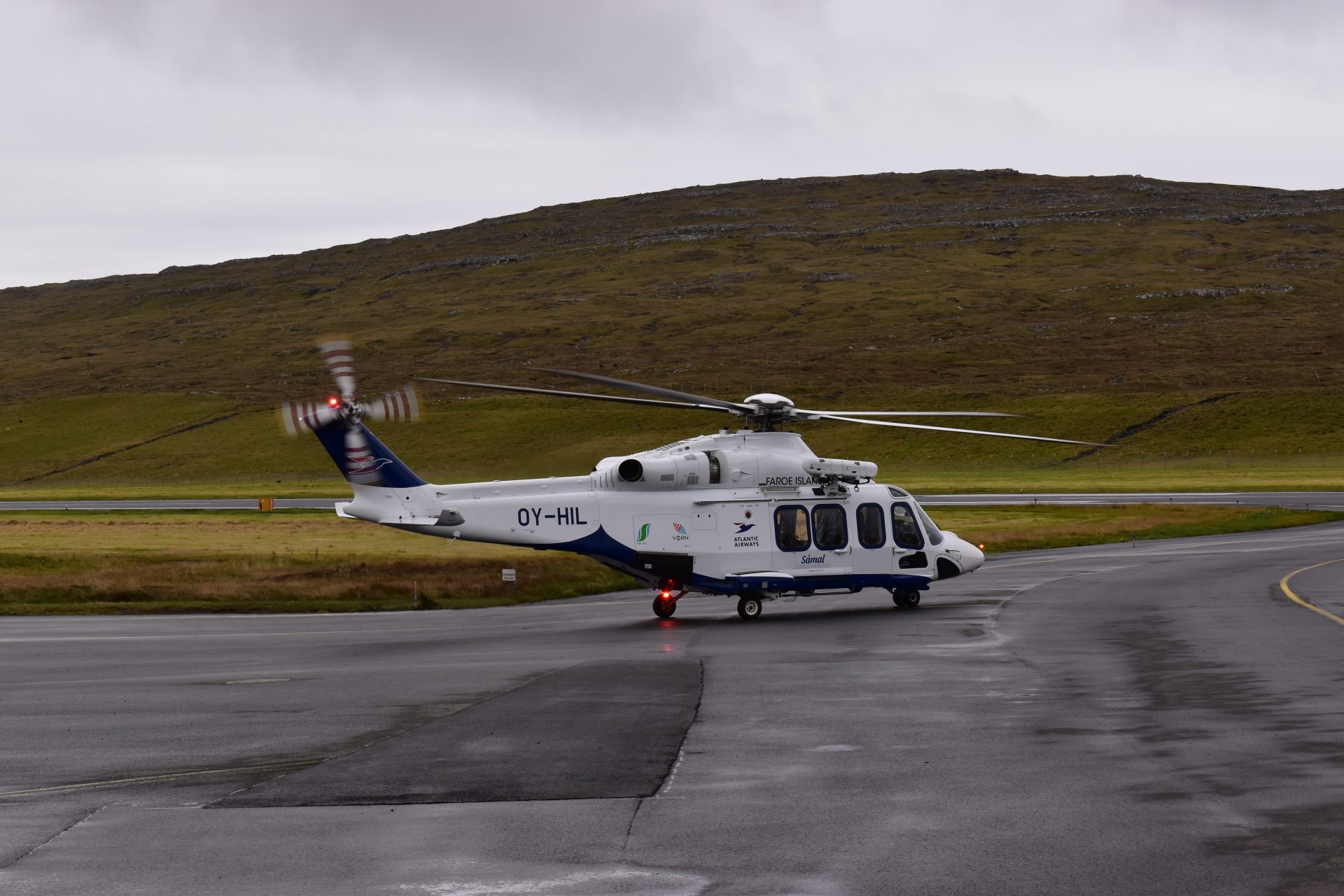
Roughly 10 minutes before departure, they put us all on a small shuttle that brought us out to the helicopter. The AgustaWestland 139 I was taking over to Mykines carried the name “Sámal Joensen-Mikines,” who was a painter born in the Faroe Islands, actually on the exact island I was flying to.
My helicopter for the flight over to Mykines, OY-HIL. (Photo: AirlineGeeks | Joey Gerardi)
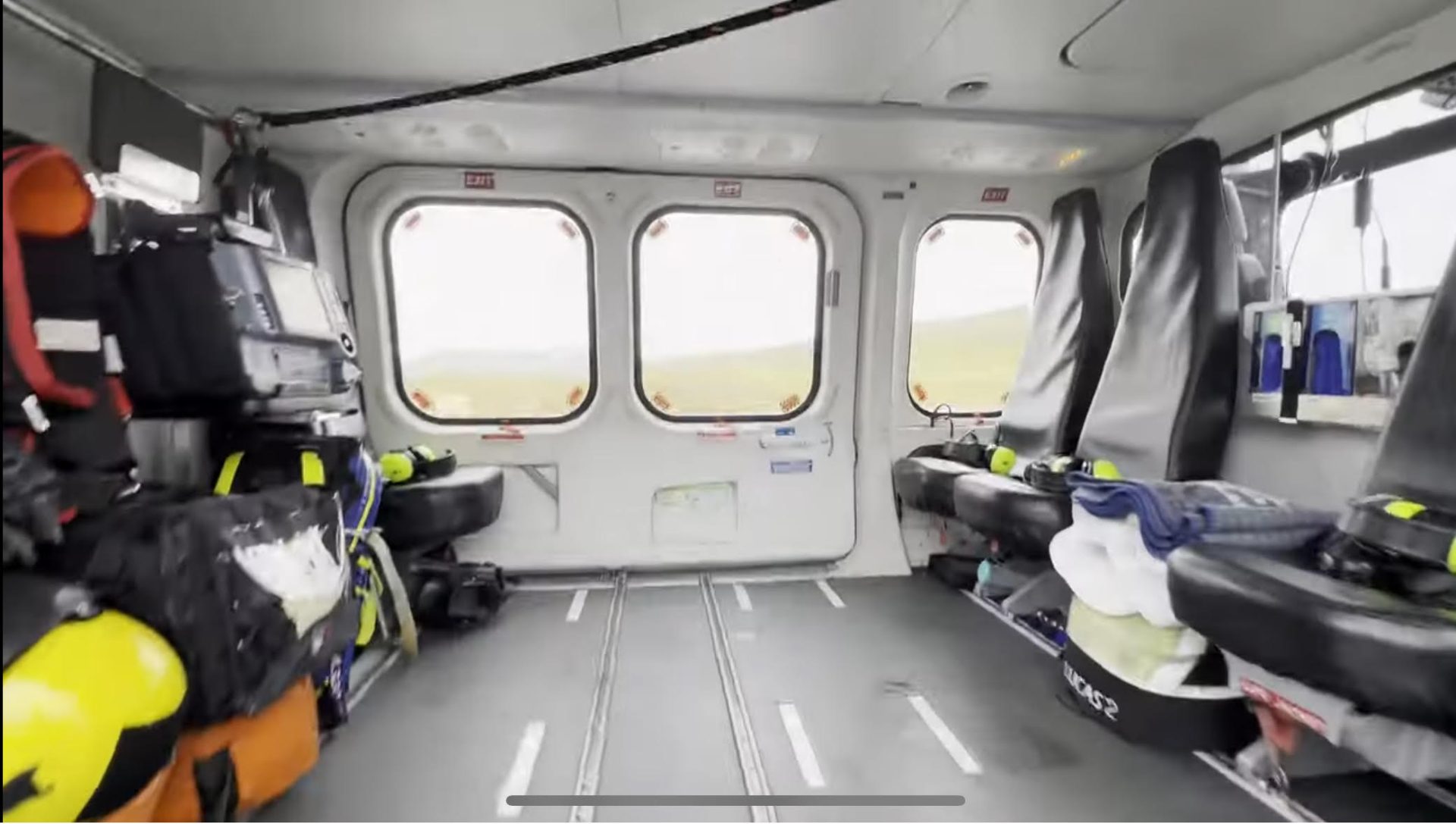
According to the Atlantic Airways website, the helicopters in their fleet can be equipped to carry up to 15 passengers, but my flight had only six passenger seats in it, which added a lot more room and is closer to the configuration used for search and rescue operations compared to commercial passenger operations.
The passenger cabin of the helicopter. (Photo: AirlineGeeks | Joey Gerardi)
After a quick announcement from the pilot, we taxied to the runway and took to the skies.
With this being my first ever helicopter flight, I will say it was a weird feeling going straight up from the runway, but I quickly got over it once I saw the views.
Looking west with Mykines in the distance. (Photo: AirlineGeeks | Joey Gerardi)
Although the day was cloudy and gloomy, the weather made the green hillsides pop in photographs. I spent the entire ride looking out at the amazing Faroese landscape.
The north side of Tindhólmur. (Photo: AirlineGeeks | Joey Gerardi)
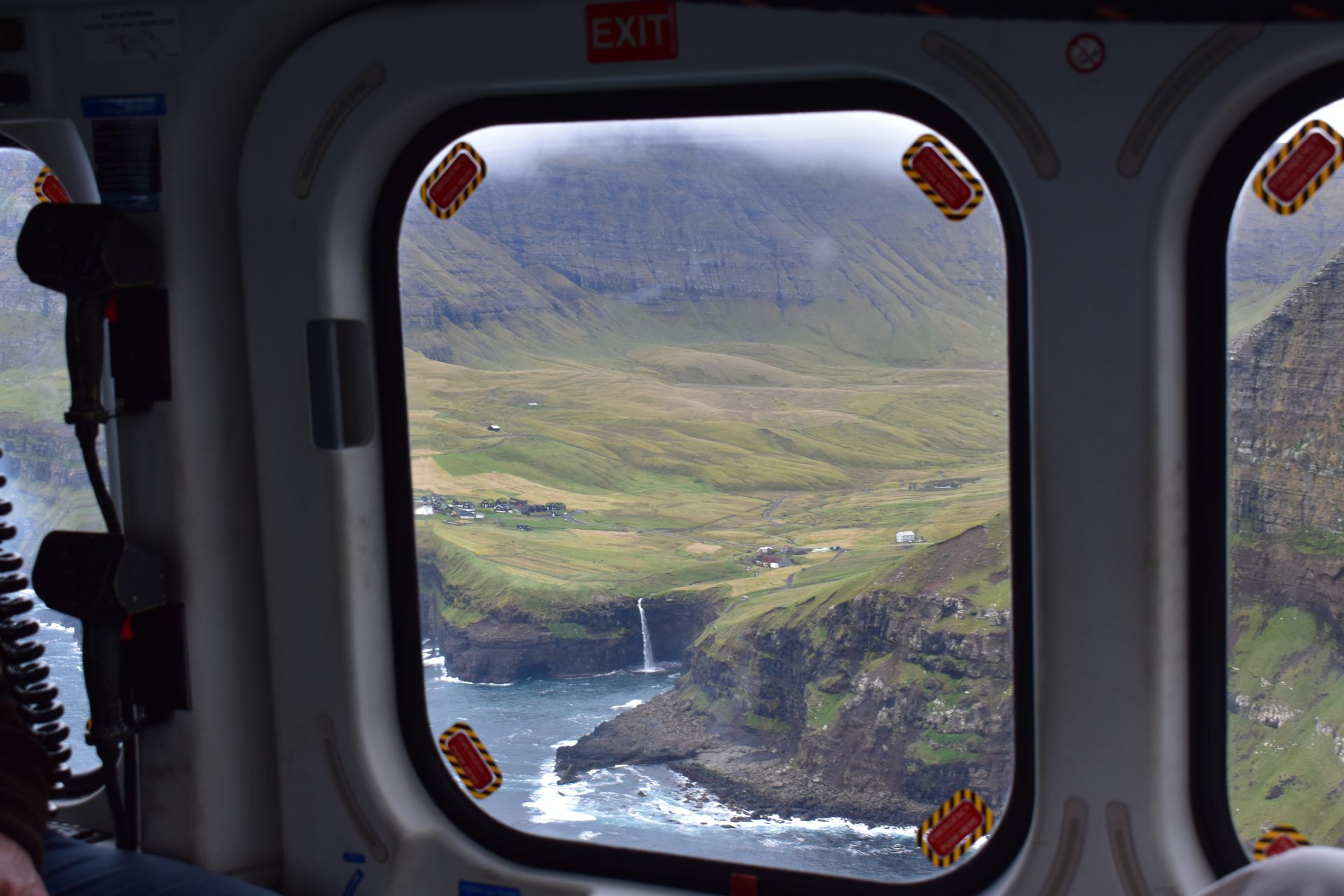
Even though I was on the left side of the helicopter, I could see views out of the right side, including the village of Gásadalur and the famous Múlafossur Waterfall.
Gásadalur and the famous Múlafossur Waterfall. (Photo: AirlineGeeks | Joey Gerardi)
It wasn’t very long before I could see Mykines. We wrapped around the north side of the island and then went south. At one point, we could see Mykines in the right foreground and the Vágar airport in the far middle background.
Mykines in the foreground, Vágar in the background. (Photo: AirlineGeeks | Joey Gerardi)
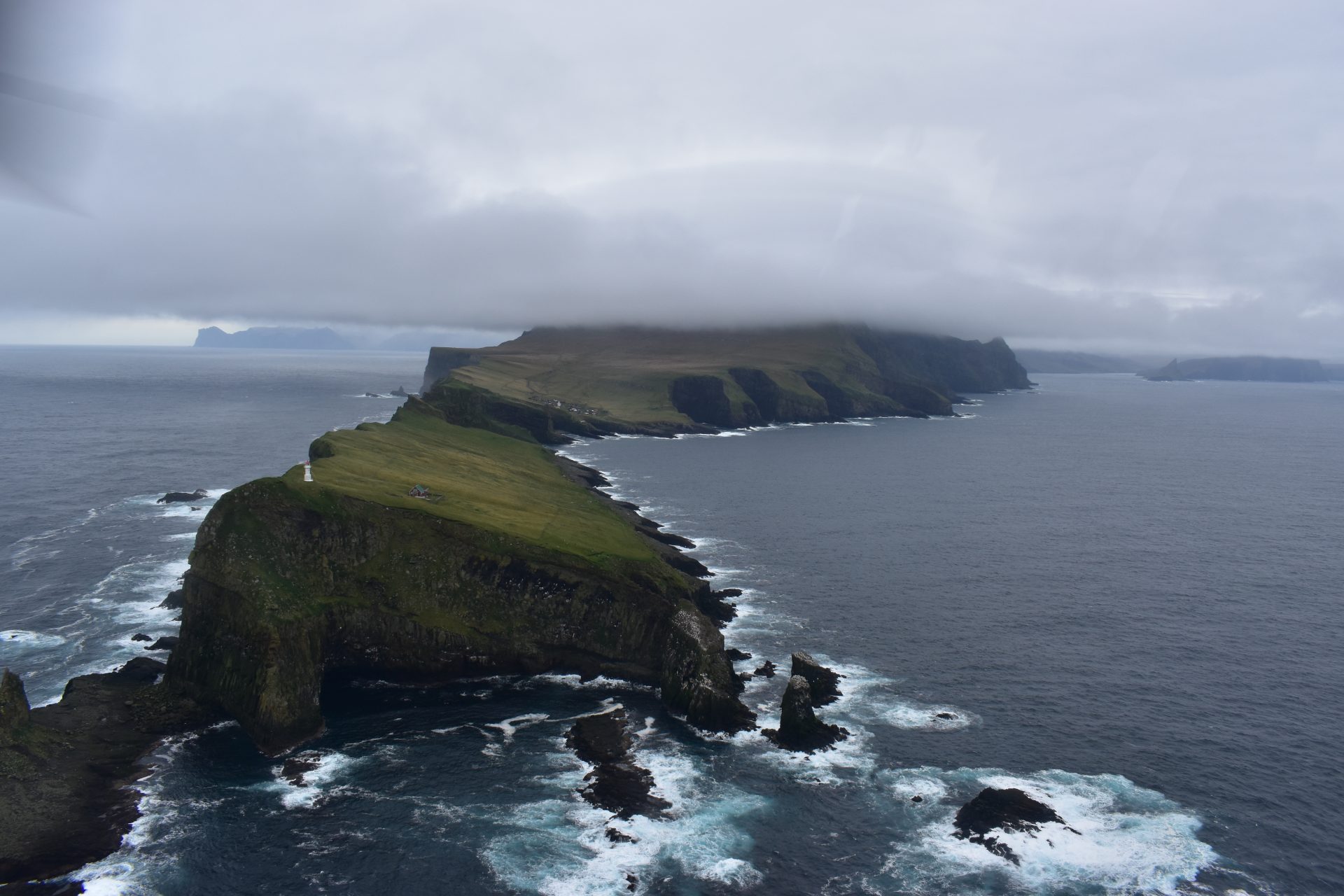
We continued to go south and then flew past the Mykines Hólmur Lighthouse, the westernmost point in the Faroe Islands.
The Mykines Hólmur Lighthouse. (Photo: AirlineGeeks | Joey Gerardi)
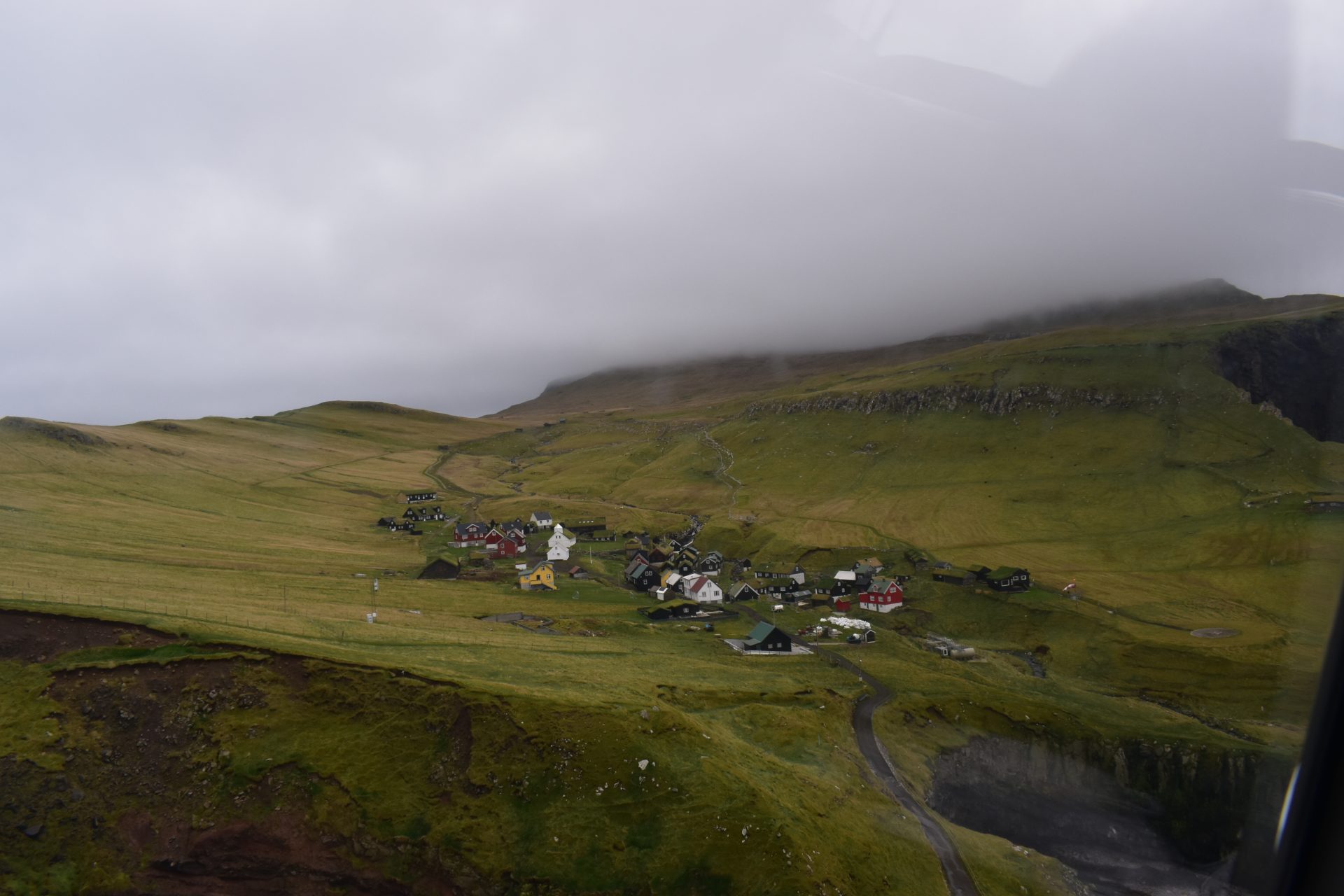
After going around the western tip of the island, we approached Mykines and the single settlement on the island and landed at its heliport.
The single settlement on the island of Mykines. (Photo: AirlineGeeks | Joey Gerardi)
While on the ground in Mykines, the crew unloaded and reloaded passengers as well as cargo, and what looked like bags of mail. We were only on the ground in Mykines for a total of three minutes, and the propellers were never turned off.
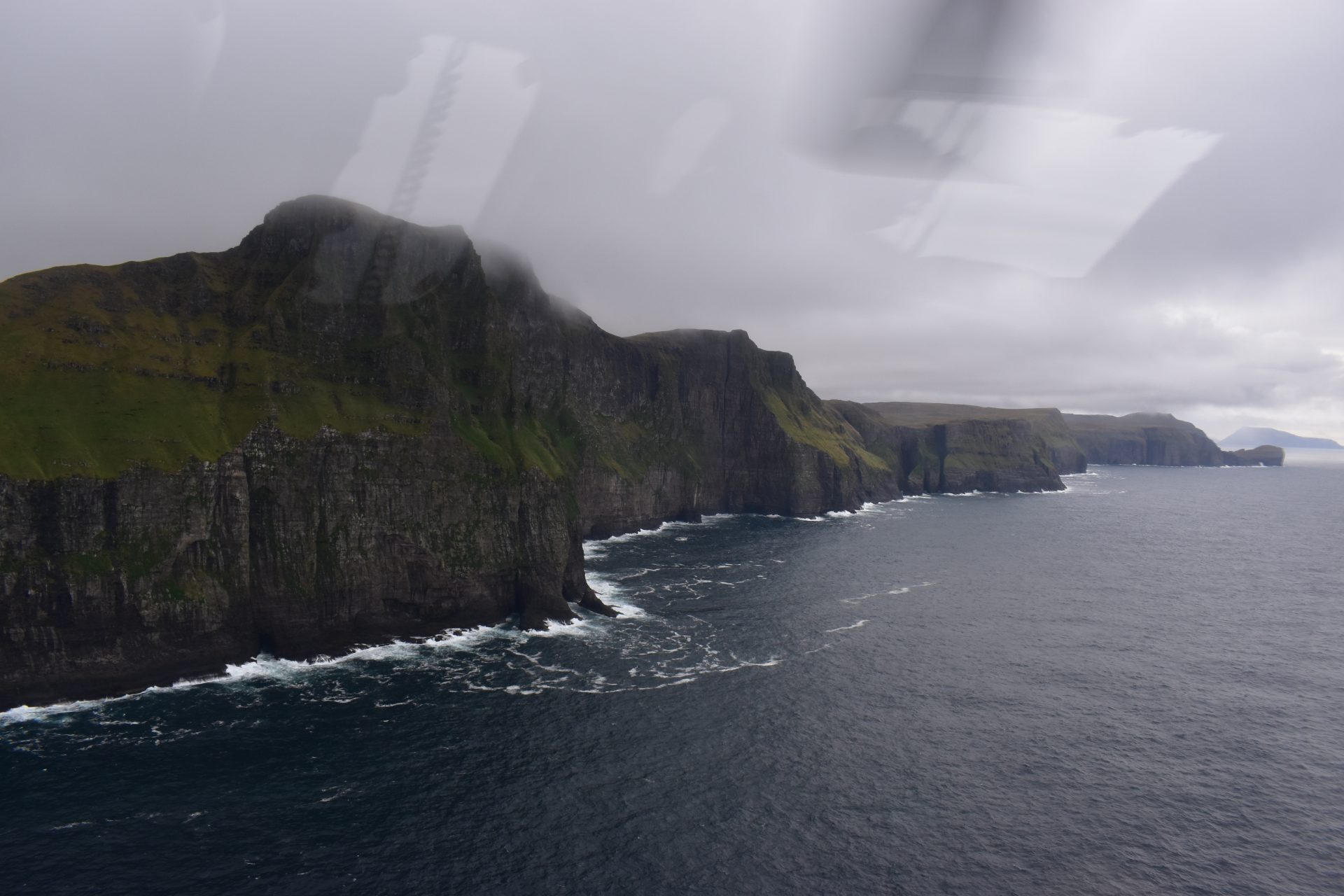
Leaving the island, we went around the south side of Mykines and headed east.
The southern side of Mykines. (Photo: AirlineGeeks | Joey Gerardi)
On the trip back, we flew just to the south of the islands of Gáshólmur, as well as the southern side of Tindhólmur. We continued to fly east and got some amazing views of the southern coastline of Vágar.
The southern coastline of Vágar. (Photo: AirlineGeeks | Joey Gerardi)
We continued to fly east, past a lake called Sørvágsvatn and Bøsdalafossur Waterfall.
Sørvágsvatn and the Bøsdalafossur Waterfall. (Photo: AirlineGeeks | Joey Gerardi)
After passing the falls, we saw the Trælanípa Cliff and even some people standing on the top of it. We then did a right loop back towards the falls, and went directly over the center of Sørvágsvatn.
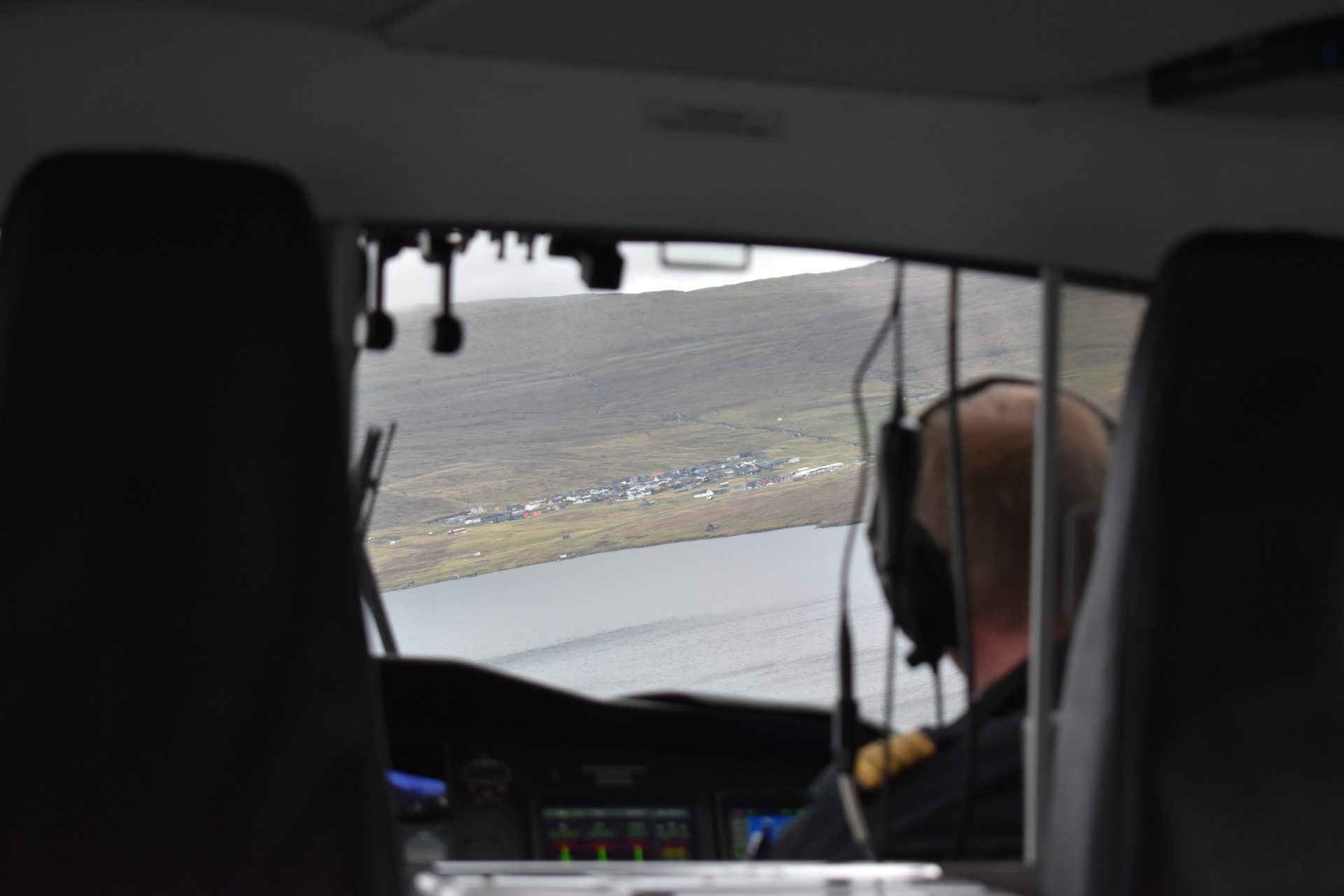
Not long after getting out over Sørvágsvatn, I was able to see Vágar Airport and the country’s single runway, whose approach lights go out over the lake.
Flying directly over Sørvágsvatn. (Photo: AirlineGeeks | Joey Gerardi)
We came into the airport from the north and landed on the runway, and taxied to the helicopter parking spot.
We landed back at the airport only 23 minutes after leaving for Mykines. The journey wasn’t very long, but it was definitely one of the most scenic flights I have ever been on. The clouds helped somewhat because there was no sun shining directly into my face for any of the flight.
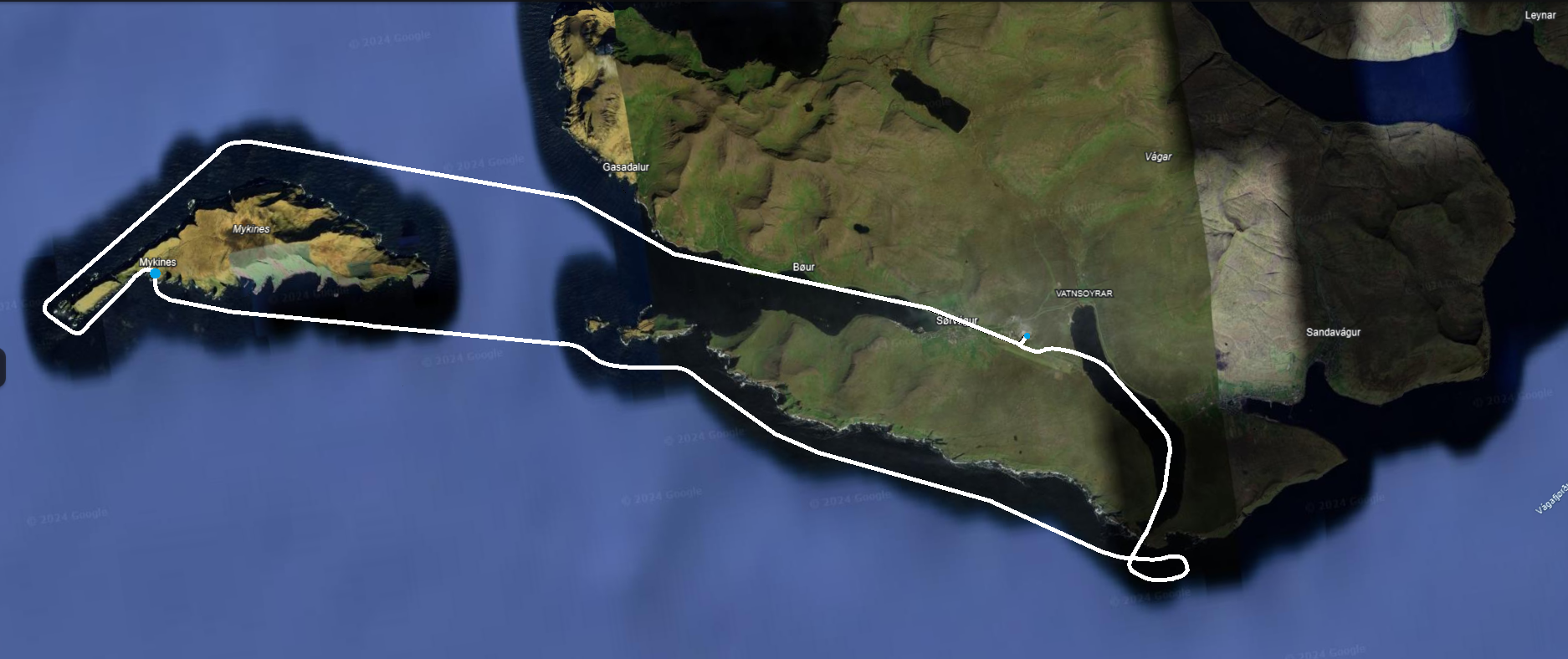
None of the flight trackers were able to pick up our entire route, so I pieced one together on Google Earth using what tracking data I did have, along with picture and video location pins from my phone and camera.
The approximate routing of my helicopter flight from Vágar to Mykines and back. (Photo: AirlineGeeks | Joey Gerardi)
Once we pulled back into the same parking space we left from, they opened the door and we hopped out, with the helicopter immediately leaving again for its next job or mission.
I had a wonderful time, and I could not have had a better first experience on a helicopter, as the views were breathtaking. The residents of the Faroe Islands have first priority on these flights, so I am glad there was room for me to take a ride out to Mykines and back and I definitely recommend it, as it is a nice quick intro to being on a helicopter.
A video trip report of this journey can be found below:
Editor’s Note: Atlantic Airways provided AirlineGeeks with a seat on this flight, but this trip report is an objective portrayal of events.
Joey has always been interested in planes for as long as he can remember. He grew up in Central New York during the early 2000s when US Airways Express turboprops ruled the skies. Being from a non-aviation family made it harder for him to be around planes and would only spend about three hours a month at the airport. He was so excited when he could drive by himself, the first thing he did with his driver's license was get ice cream and go plane spotting for the entire day. He graduated from Western Michigan University in 2022 with a B.S. in Aviation Management & Operations and a Minor in Business, and currently works for a major airline in his hometown.
A321 Flew 10 Minutes With No Pilot Supervision
Lufthansa had previously required a cabin crew member to remain on the flight deck whenever one pilot was absent, a procedure that was later changed.
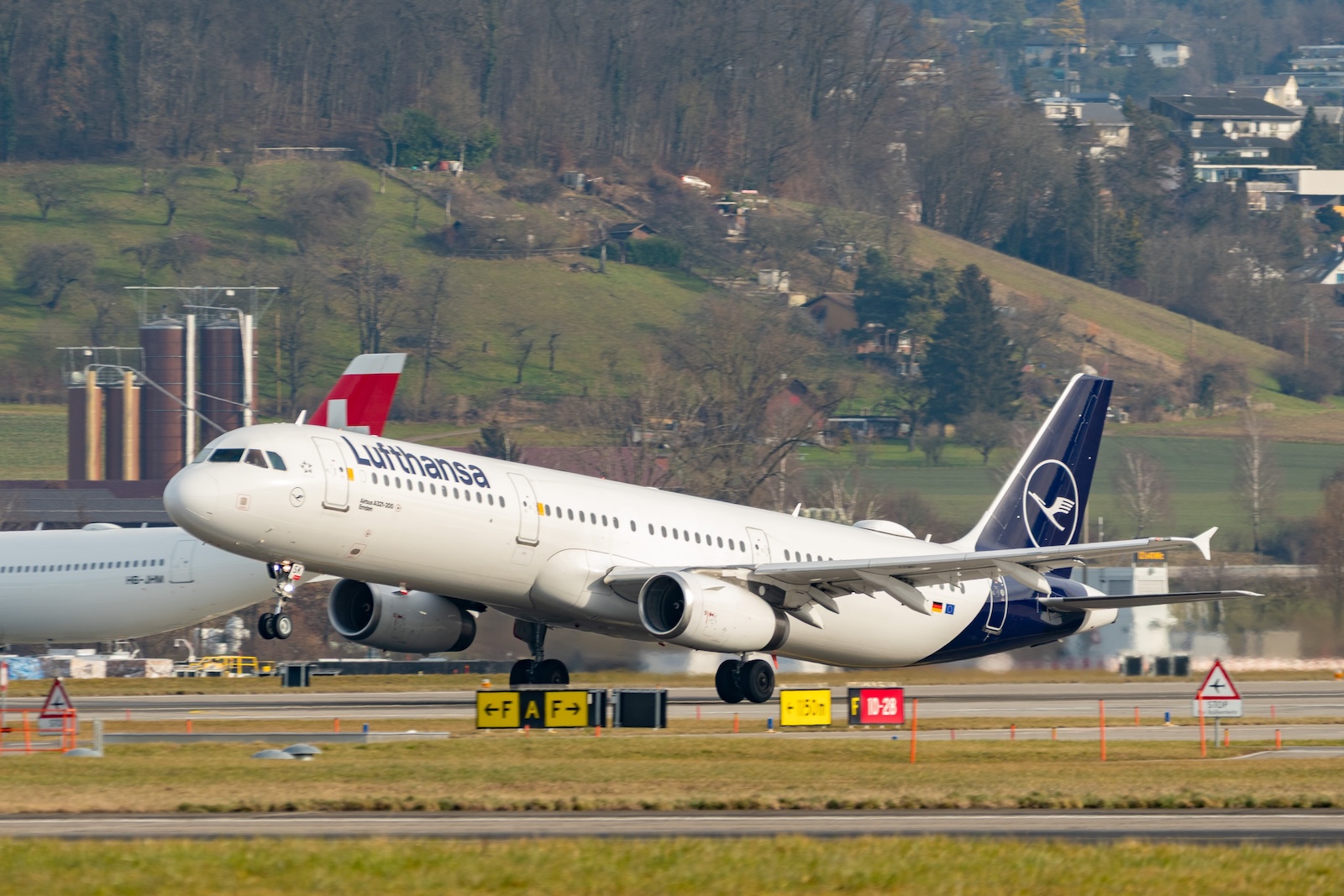
A Lufthansa Airbus A321. (Photo: Shutterstock | Robert Buchel)
A Lufthansa Airbus A321 flight from Frankfurt, Germany, to Seville, Spain, was forced to make an emergency landing in Madrid after the first officer suffered sudden and severe incapacitation while temporarily alone in the cockpit, according to a technical report released by Spain’s national aviation safety agency.
Incident Description
On Feb. 17, 2024, Lufthansa flight LH77X departed Frankfurt en route to Seville with 199 passengers and six crew members aboard. At approximately 10:31 UTC, when the aircraft was cruising over the northeastern region of Spain, about 88 nautical miles northeast of Madrid, the captain left the flight deck to use the forward lavatory.
Prior to leaving, the captain and first officer had discussed weather conditions and aircraft operations, with the first officer appearing “able and alert,” according to the captain’s statements in the investigation.
Eight minutes later, at 10:39 UTC, the captain attempted to reenter the flight deck using the standard entry procedure but received no response. After three unsuccessful attempts and an unanswered intercom call from a cabin crew member, the captain resorted to the emergency access code.
Before the emergency timer expired to unlock the door, the first officer manually opened the door from inside.
Upon entry, the captain found the first officer in distress — pale, sweating, and exhibiting unusual movements. The captain immediately took control of the aircraft at 10:42 UTC and called for assistance from the cabin crew.
Overlooking the flight deck on an Airbus A320 series aircraft over Europe (Photo: James Dinsdale)
A passenger who was a doctor provided first aid and diagnosed a possible heart condition, which prompted the captain to divert to Madrid, the nearest suitable airport, where they landed approximately 20 minutes later.
Findings
The investigation determined that the first officer had experienced “sudden and severe incapacitation” that prevented him from continuing his duties. The pilot later stated he had lost consciousness so suddenly that he was unable to warn other crew members. He recalled flying over Zaragoza but had no memory of events until being attended to by the crew and doctor.
“The investigation has concluded that the cause of the co-pilot’s incapacitation was the manifestation of a symptom of a condition that had not previously been detected either by the pilot himself or during the aeronautical medical examination,” the report stated.
The first officer maintained a valid Class 1 medical with no limitations. His last medical exam was in May 2023.
According to the agency’s aeronautical medical service, the first officer’s illness would only have been detectable in a medical examination if symptoms had been present during the examination or had manifested previously. The report noted that this illness is disqualifying for obtaining or maintaining medical fitness to fly.
The investigation revealed that for approximately 10 minutes, the aircraft flew in cruise phase with autopilot engaged but without proper supervision, as the captain was absent and the first officer was incapacitated.
“This incident has highlighted the benefit of having another authorised person on the flight deck when one of the two pilots leaves for physiological or operational reasons,” the report concluded. The agency deemed it appropriate to issue a safety recommendation to the European Union Aviation Safety Agency (EASA) regarding this matter.
The investigation noted that Lufthansa had previously required a cabin crew member to remain on the flight deck whenever one pilot was absent but had since modified this procedure after determining “it did not increase the safety of its operation.”
“If another authorized person had been present on the flight deck, they could have quickly identified the co-pilot’s incapacitation, alerted the rest of the crew and opened the flight deck security door so that the captain could swiftly take control of the aircraft,” the report stated.
Ryan founded AirlineGeeks.com in February 2013 and has spent more than a decade covering the airline business. His work has been featured by CNN, WJLA, CNET, and Business Insider. His aviation experience spans airport operations, Part 135 regulatory compliance, and airline crew workforce planning, along with time behind the yoke of a Cessna 172 and interviews with airline executives. Ryan now serves as Group President of Firecrown Media’s Aviation Group. He holds a B.S. in Air Transportation Management and an MBA from Arizona State University and teaches Airline Management at Embry-Riddle Aeronautical University.