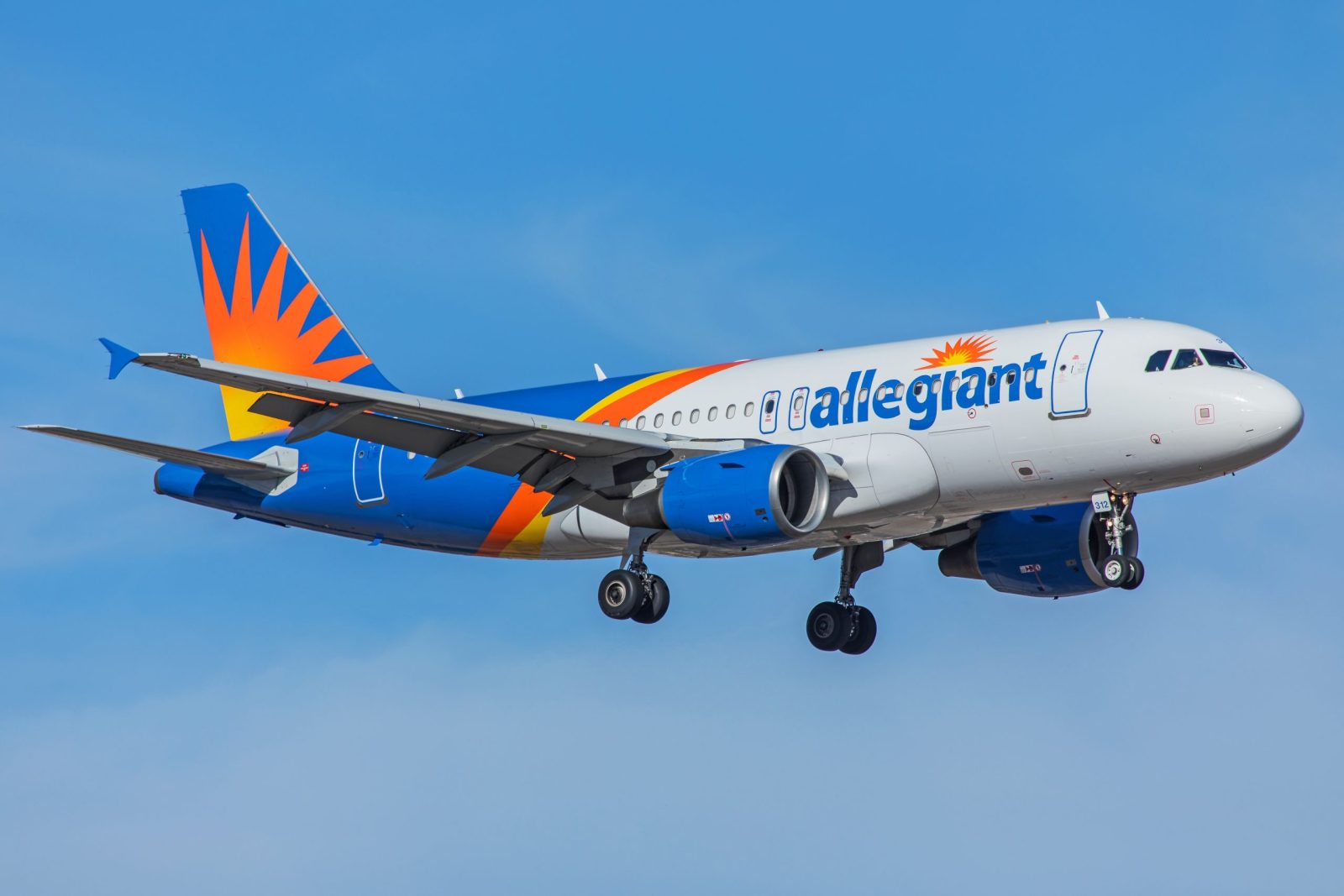
An Allegiant A319 in Las Vegas. (Photo: AirlineGeeks | William Derrickson)
Allegiant announced the addition of five new nonstop routes, expanding its network in eight cities across the United States. The new services are scheduled to commence in the fall.
The airline will introduce service between South Bend International Airport in Indiana and Fort Lauderdale-Hollywood International Airport in Florida, starting on Aug. 29.
Intra-Tennessee Service
In Tennessee, Allegiant will launch two new routes from McGhee Tyson Airport in Knoxville. Flights to Memphis will begin on Sept. 4, while service to Key West, Florida, is set to start on Oct. 3.
Additionally, Gulf Shores International Airport in Alabama will see new links to Appleton, Wisconsin, and Des Moines, Iowa. These routes are scheduled to commence on Oct. 2 and Oct. 3, respectively.
All routes will operate twice per week.
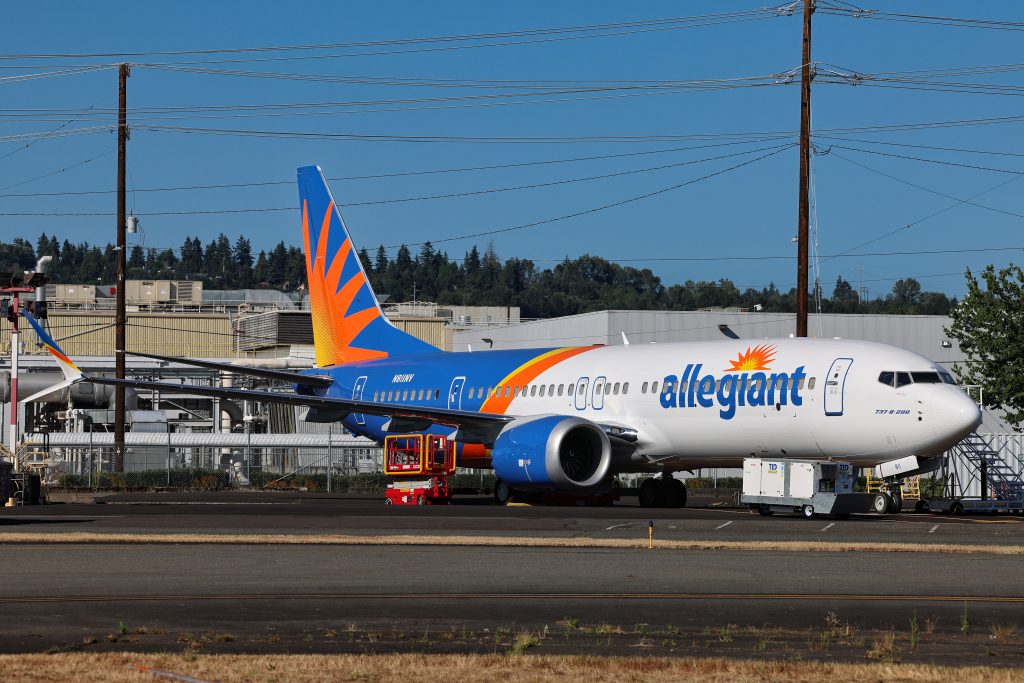
An Allegiant 737 MAX at Boeing Field (Photo: AirlineGeeks | Katie Zera)
“This expansion caters to passengers and communities we feel have been overlooked by other carriers,” said Drew Wells, Allegiant’s chief commercial officer, in a news release. “Allegiant’s unique business model, connecting small-to-medium sized cities to vacation destinations, creates accessible travel options not otherwise available in what we believe are underserved markets. We know travelers enjoy the convenience of nonstop flights departing from their neighborhood airport.”
In addition to these new routes, the ultra-low-cost carrier will offer a series of limited-time flights to Las Vegas for the NFL season. These routes will operate from Chicago, Akron, Ohio, and Nashville, Tennessee.
Ryan founded AirlineGeeks.com in February 2013 and has spent more than a decade covering the airline business. His work has been featured by CNN, WJLA, CNET, and Business Insider. His aviation experience spans airport operations, Part 135 regulatory compliance, and airline crew workforce planning, along with time behind the yoke of a Cessna 172 and interviews with airline executives. Ryan now serves as Group President of Firecrown Media’s Aviation Group. He holds a B.S. in Air Transportation Management and an MBA from Arizona State University and teaches Airline Management at Embry-Riddle Aeronautical University.
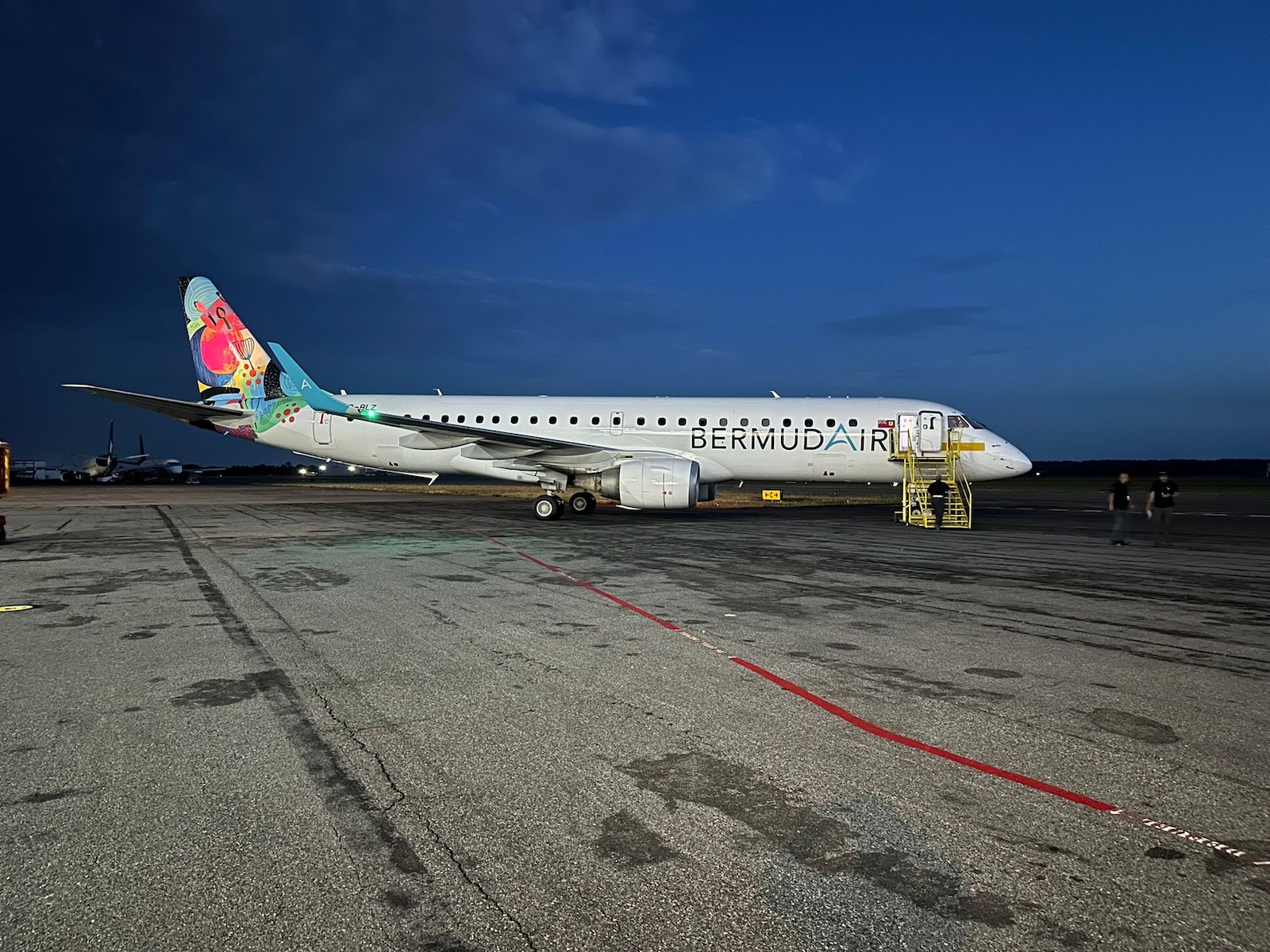
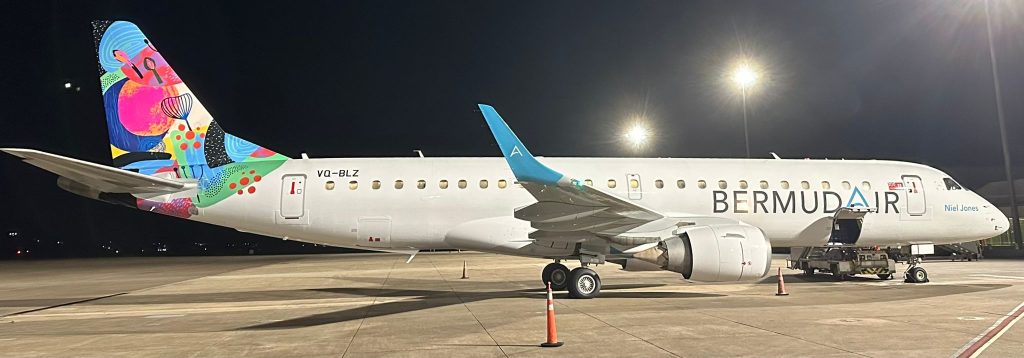
BermudAir, the relatively new flag carrier of Bermuda, took delivery of its third aircraft, an Embraer E190, over the weekend.
The airline said the 96-seat jet – the largest in its fleet – arrived at its home base at L.F. Wade International Airport in Bermuda on Saturday. It joins the BermudAir fleet as the airline gears up to launch new nonstop routes to and from Providence, Rhode Island; Richmond, Virginia; and Montreal, Quebec in the coming weeks.
The carrier is expected to receive its fourth aircraft, another E190, in June. Its two other jets are smaller E175s.
“We are very proud to be doubling our fleet size to enhance our operational capabilities and provide the greatest level of operational resiliency of any airline with a dedicated spare aircraft always on standby,” said Adam Scott, BermudAir’s founder and CEO. “The addition of both our third and fourth aircraft is not only a key step in mitigating operational challenges and enabling continued operational excellence, but enables us to bolster our flight frequencies and to provide increased flexibility in our flight scheduling.”
BermudAir’s third aircraft, an Embraer E190. (Photo: BermudAir)
BermudAir, which has its headquarters in Hamilton, Bermuda, launched operations in August 2023, initially flying nonstop routes between Bermuda and Boston; Fort Lauderdale, Florida; and Westchester County, New York.
It has since expanded its network to cities including Hartford, Connecticut; Orlando, Florida; Charleston, South Carolina; Raleigh-Durham, North Carolina; and Toronto, Ontario, among others.
The carrier’s CEO told AirlineGeeks in November that more destinations may be on the horizon, including long-haul flights to Europe.
Zach Vasile is a writer and editor covering news in all aspects of commercial aviation. He has reported for and contributed to the Manchester Journal Inquirer, the Hartford Business Journal, the Charlotte Observer, and the Washington Examiner, with his area of focus being the intersection of business and government policy.
New Advisory Board Targets AMT Shortage
The Aviation Institute of Maintenance has partnered with carriers to better prepare mechanics as industry labor demand grows.
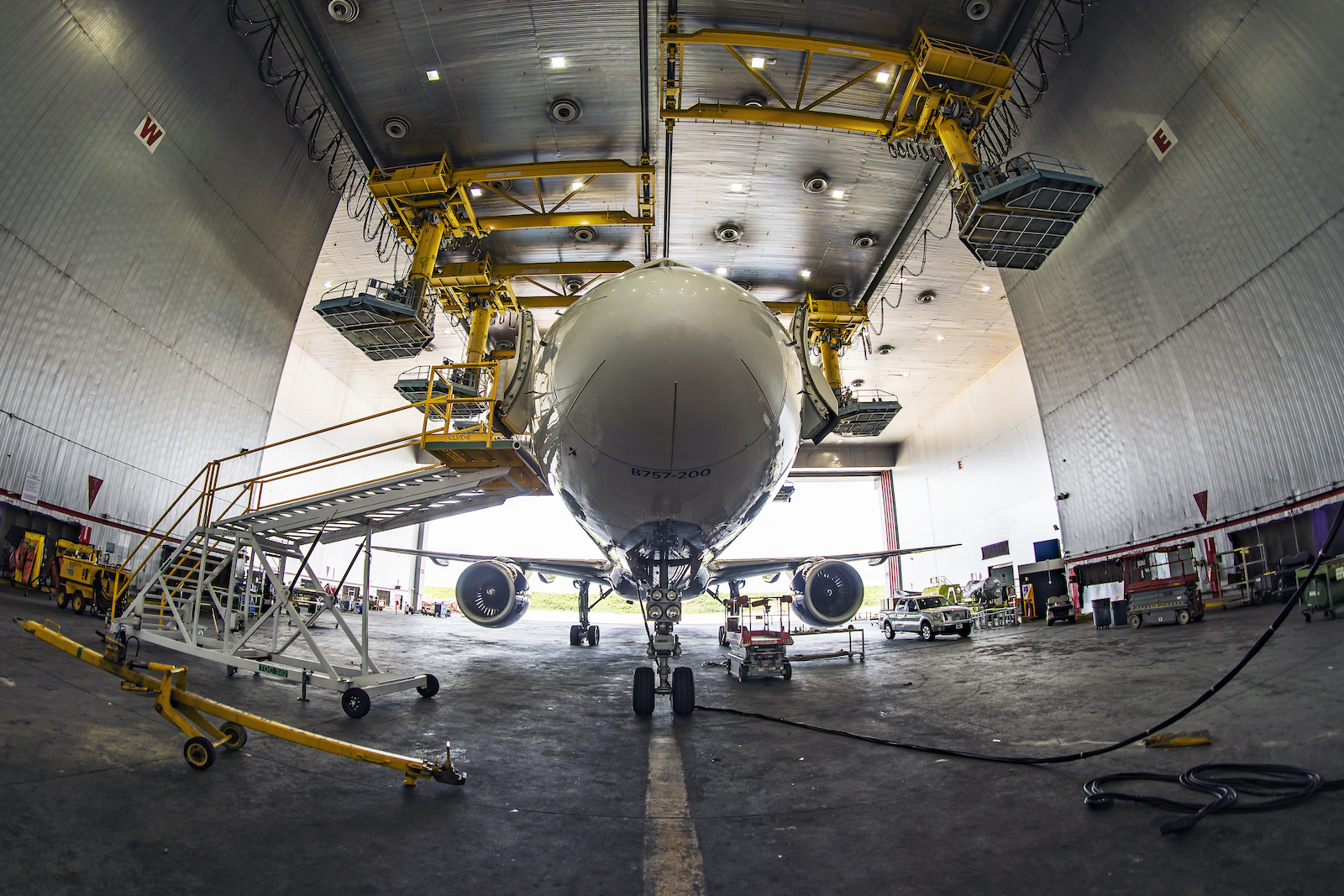
A Delta 757-200 undergoes maintenance at the carrier's Atlanta TechOps facility. (Photo: AirlineGeeks | William Derrickson)
The symbiotic relationship between the Aviation Institute of Maintenance (AIM) and partnering airlines has since culminated in the creation of a new advisory board designed to get more mechanics trained and hired.
AIM has been on the forefront of addressing concerns about a growing aircraft maintenance technician (AMT) labor gap expected to occur over the next decade or two.
AIM is the largest educational institution for aircraft mechanics in the U.S. operating 15 locations across the country. To help solve the shortage, AIM has partnered with a number of carriers to address recruitment and training needs for fresh hires.
Former Mechanic Fine-Tunes the Curriculum
While many retiring mechanics are exiting the industry, former aircraft mechanic Bill Brown has instead left retirement to help improve training and tackle the labor gap.
Brown was recently hired as AIM’s Chief Aviation Officer after a 40-year career spent in aerospace mechanic and executive roles. When he approached AIM’s board of directors, he said he wanted to help better prepare students for the big upcoming job market.
That started with AIM’s hangars.
United maintenance staff (Photo: United Airlines)
“I wanted to really set up a process where everything that [the training mechanics] would have to do when they went to either an airline or MRO, [that] we’re practicing that now in our hangars,” he said during a virtual interview with AirlineGeeks. “I call it the standard code of conduct while you’re operating a hangar. People safety, product safety, and then success.”
Next, it was time to get industry input. Brown met with airline executives from major airlines to help match the school’s curriculum directly with employer needs.
“I brought in key executives from American, United, Southwest, Delta, Launch, [Aviation] Workforce Solutions and Piedmont to advise us,” he said. “And what we really learned from them was, our students weren’t any better or worse than others, but there was a lot of opportunity for improvement.”
Brown got feedback to better teach mechanics little things like interview and test taking skills, as well as more important safety skills. And while this feedback was invaluable, the networking proved just as important.
Not long after meeting with airline executives, Brown established AIM’s advisory board to continue the conversation with monthly meetings on how the institute can better prepare its students for success.
“We’re getting student feedback,” Brown said. “We’re getting airline feedback, and we’re deploying that into curriculum and changes in our hangars.”
“[Airlines] also see us as willing to invest,” he continued. “Our owners are investing significantly into all of our campuses, not only in upgrading equipment and standards, but also curriculum and instructors. So we’re going to become a powerhouse and maintain that long term in the future, and we think that’s going to help solve the problem that’s out there in the future of this huge gap between what [jobs are] going to be needed, and what is available.”
Industry Outlook
Brown said that recent economic tariffs haven’t had much of an impact on the continued demand for AMTs.
“The average age of mechanics at all the major airlines is in the mid fifties and above,” he said.
“So there’s a huge bow wave coming at us. That’s unchanged. Tariffs didn’t really create a reaction from any of the airline executives to change hiring today. I think it’s a wait and see.”
That said, there has been continued enrollment growth so far this year for AIM – a signal to Brown that the institute is “doing the right things.”
“The problem that’s out 10 years from now is unchanged,” Brown said. “Between now and 2034, we’re gonna see the number of aircraft out there flying is going to double. So that’s one demand in [AMTs].”
“The other is the aging workforce,” he continued. “We’re going to get double hit. I think it’s tens of thousands of workers [who will retire] a year. And we at AIM, I think through our advisory board and the number of campuses we have, we’re really positioned well to help the airlines get through this. And with their help and support … I think AIM is gonna be the real leader in the industry at bringing [AMTs] to market.”
AirlineGeeks.com was founded in February 2013 as a one-person blog in Washington D.C. Since then, we’ve grown to have 25+ active team members scattered across the globe. We are all here for the same reason: we love deep-diving into the fascinating realm of the airline industry.
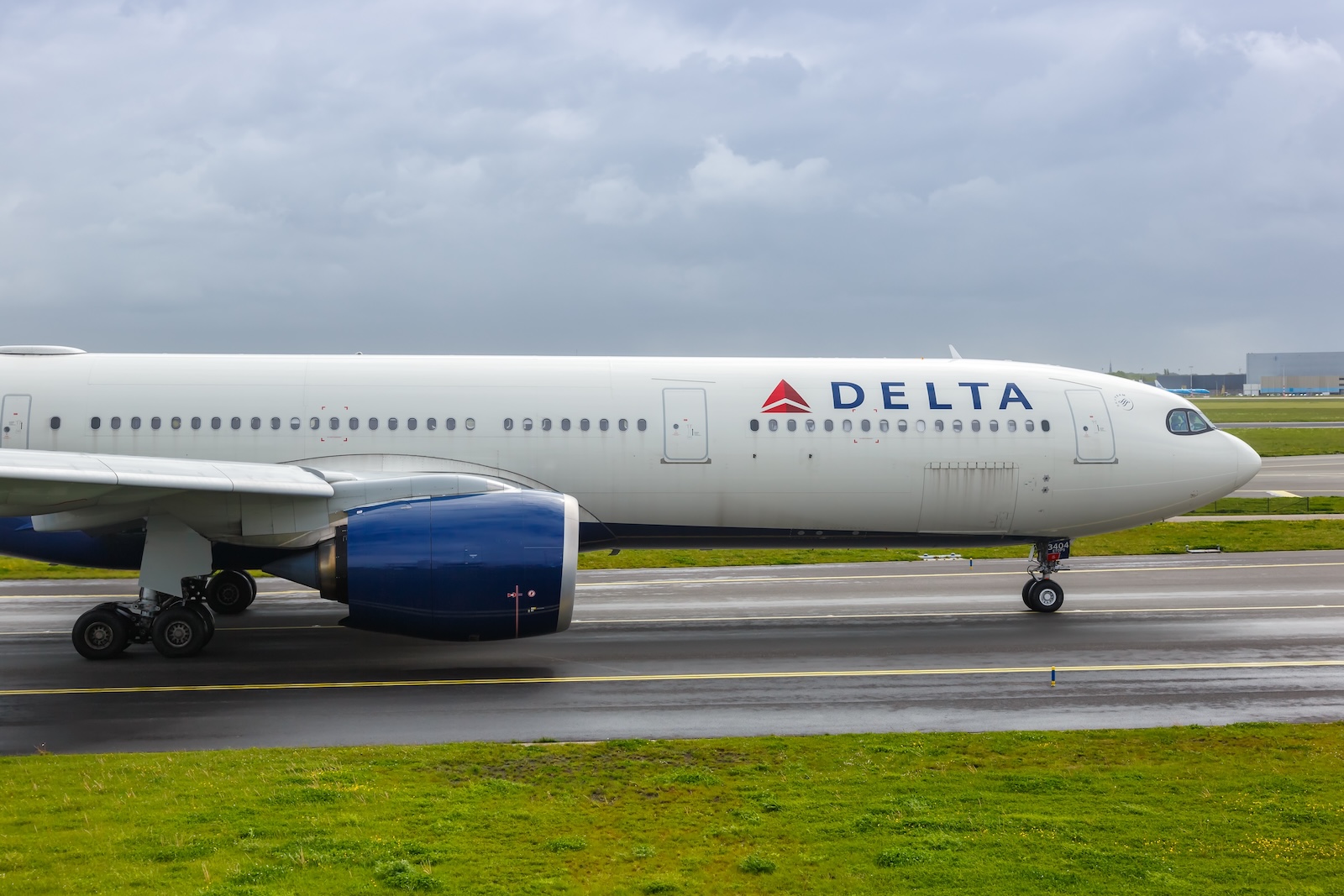
A Delta A330neo (Photo: Shutterstock | Markus Mainka)
Delta is once again offering daily nonstop service to Tel Aviv from John F. Kennedy International Airport after pausing flights due to the ongoing war in the region.
According to a Delta news release, the airline will operate the route on an Airbus A330-900neo starting on Tuesday.
“The decision to resume the route on May 20, which was temporarily suspended in response to ongoing conflict in the region, follows an extensive security risk assessment by the airline,” Delta stated in the release. “Delta is continuously monitoring the evolving security environment and assessing operations based on security guidance and intelligence reports.”
Additionally, a “Middle East Unrest” travel waiver has been issued allowing ticketholders flying to Tel Aviv from May 5 to May 25, to rebook their travel by June 15.
AirlineGeeks.com was founded in February 2013 as a one-person blog in Washington D.C. Since then, we’ve grown to have 25+ active team members scattered across the globe. We are all here for the same reason: we love deep-diving into the fascinating realm of the airline industry.
The carrier – which began operations in 2020 – serves four destinations in America: Los Angeles, San Francisco, and Ontario, California, along with Seattle.
A Starlux A350 in Seattle (Photo: AirlineGeeks | Katie Zera)
Taiwanese startup airline Starlux is poised to add a new route to the U.S. Currently, the carrier – which began operations in 2020 – serves four destinations in America: Los Angeles, San Francisco, and Ontario, California, along with Seattle.
On Tuesday, Phoenix Mayor Kate Gallego and Starlux announced the launch of the first-ever nonstop service from Phoenix Sky Harbor International Airport to Asia.
Beginning early next year, the carrier will operate flights between Phoenix and Taipei, Taiwan. A launch date for the new route has yet to be determined and is subject to regulatory approvals.
The new service marks a milestone for Phoenix, as it will be the city’s first scheduled nonstop connection to Asia. Starlux will offer the route three times per week on an Airbus A350-900XWB aircraft.
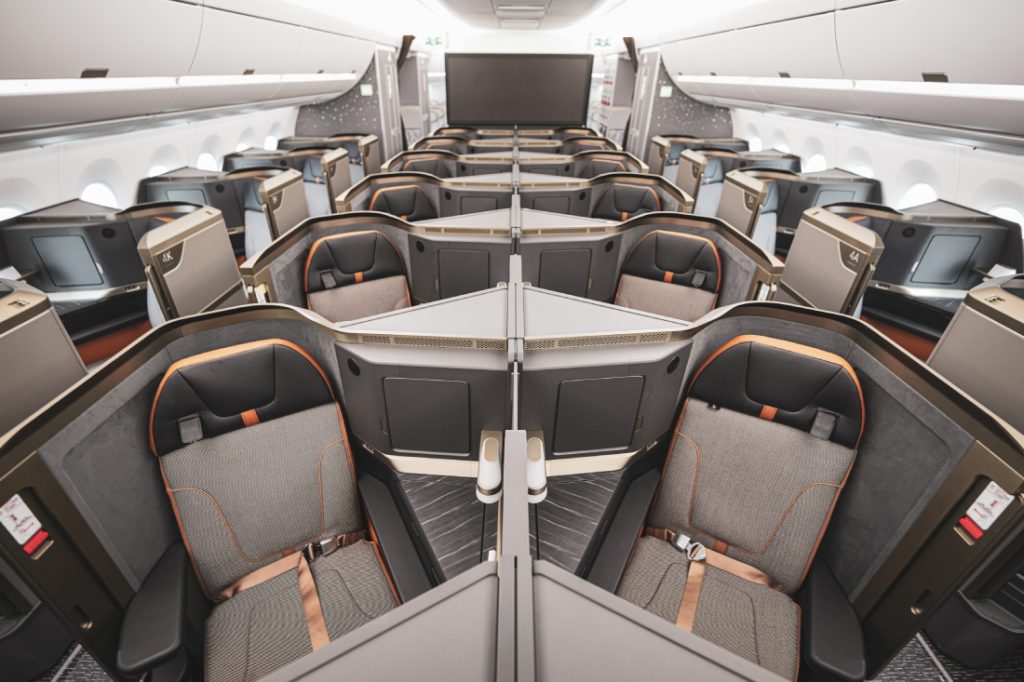
STARLUX Airlines A350-900 business class cabin (Photo: STARLUX Airlines)
Economic Boost
The addition of Starlux’s service is expected to generate substantial economic benefits for the region. According to city officials, nonstop international flights contribute an estimated $33 million annually to the local economy.
“I knew from the moment I set foot in Phoenix that Starlux should make the investment to fly here. Not only is the growth of business between Taipei and Phoenix staggering, it’s a perfect match for our level of service. We are proud and honored to be the first carrier to provide nonstop Asia service for the Phoenix community,” the airline’s chairman, K.W. Chang, said in a news release.
Phoenix has lately seen a jump in international service. Air France recently launched flights from Paris to the city, and Aeromexico resumed service to Phoenix.
Tickets for the Phoenix-Taipei route will go on sale once government approval is finalized, officials stated.
Ryan founded AirlineGeeks.com in February 2013 and has spent more than a decade covering the airline business. His work has been featured by CNN, WJLA, CNET, and Business Insider. His aviation experience spans airport operations, Part 135 regulatory compliance, and airline crew workforce planning, along with time behind the yoke of a Cessna 172 and interviews with airline executives. Ryan now serves as Group President of Firecrown Media’s Aviation Group. He holds a B.S. in Air Transportation Management and an MBA from Arizona State University and teaches Airline Management at Embry-Riddle Aeronautical University.
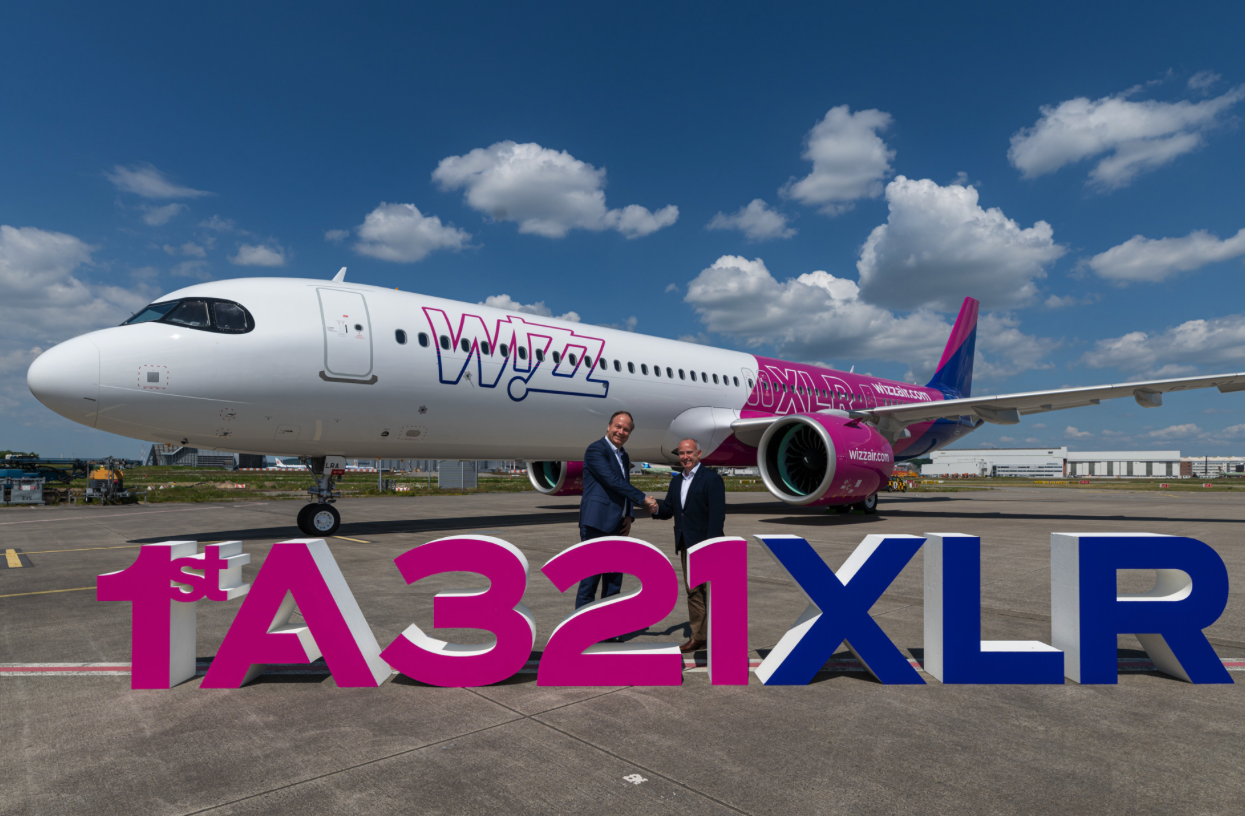
Christoph Zammert, Airbus EVP and head of the A320 family program, and Owain Jones, Chief Corporate Officer of Wizz Air, at the delivery of the first A321XLR to Wizz Air. (Photo: Airbus)
Hungarian low-cost carrier Wizz Air has taken delivery of the first-ever Airbus A321XLR powered by a Pratt & Whitney GTF engine.
The airline announced Tuesday that it had received the first of 47 A321XLRs it has ordered over the past several years. The aircraft made for Wizz have 239 seats in a single-class configuration and a published range of 4,700 nautical miles. Wizz said the long-haul jet will help it establish and service more routes between Europe and the Middle East.
In a statement, Wizz Air CEO Owain Jones called the recent delivery a “defining moment” for the airline and said customers will soon enjoy the upgraded cabins and quieter ride offered by the aircraft.
Wizz has said the jet’s inaugural route will be between London’s Gatwick Airport and King Abdulaziz International Airport in Jeddah, Saudi Arabia. It was supposed to begin that service in late March, but the delivery was held up waiting for an air operator’s certificate.
The A321XLR uses two different types of engines, Pratt & Whitney’s PW1100G and the CFM International LEAP-1A.
Among Wizz’s current fleet, Pratt engines power 100 A321neo family aircraft and 67 A320ceo family aircraft.
Pratt said 13 customers have selected GTF engines to power more than 200 A321XLR aircraft worldwide.
Zach Vasile is a writer and editor covering news in all aspects of commercial aviation. He has reported for and contributed to the Manchester Journal Inquirer, the Hartford Business Journal, the Charlotte Observer, and the Washington Examiner, with his area of focus being the intersection of business and government policy.
Lufthansa Brings Back A380 Route After Five Years
Lufthansa plans to add more Airbus A380 flights to the U.S. this winter. The carrier operates the superjumbo jet in a handful of markets from its Munich hub.
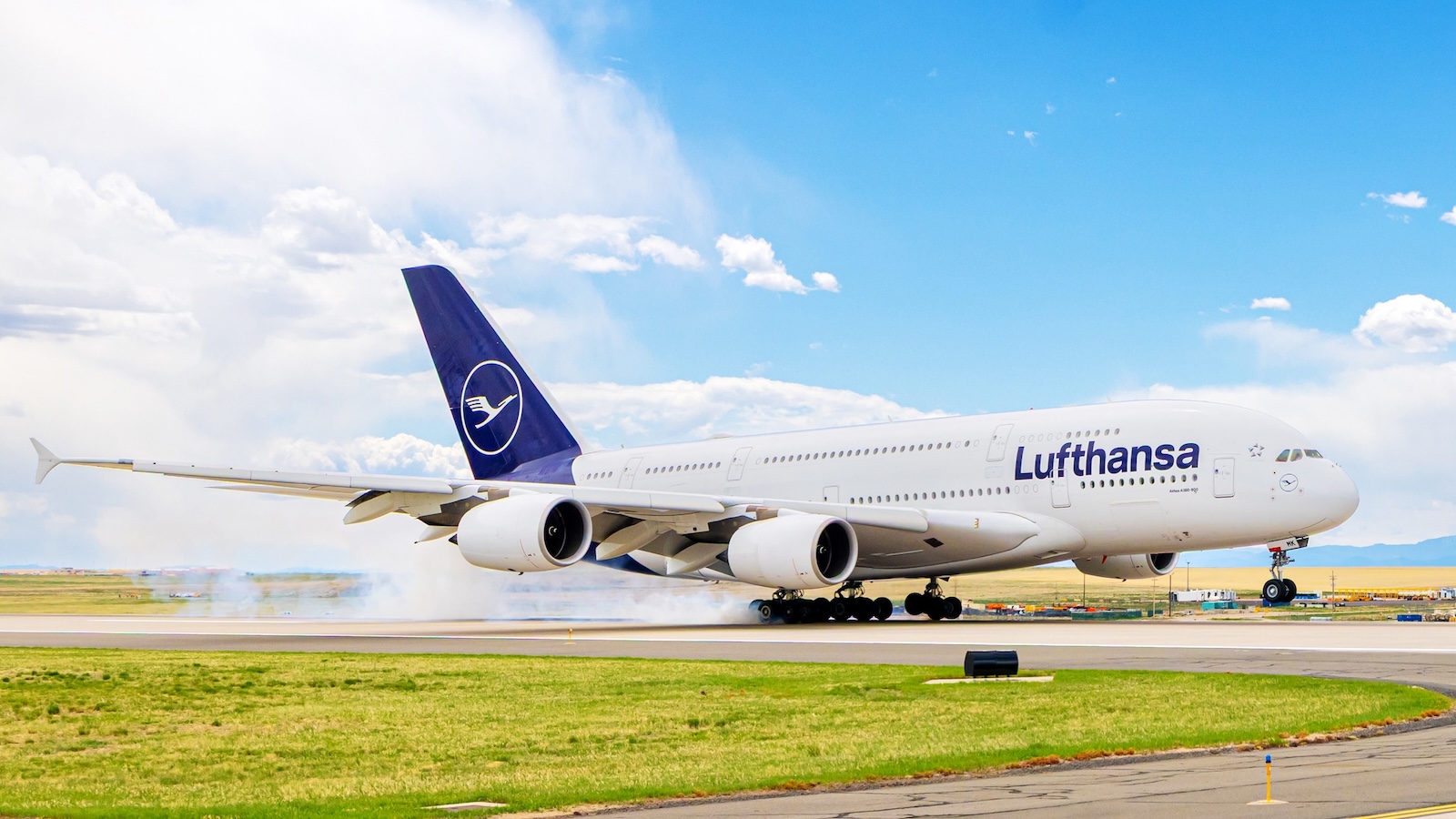
A Lufthansa Airbus A380 (Photo: Denver International Airport)
Lufthansa is planning to add more Airbus A380 flights to the U.S. this winter. The carrier operates the superjumbo jet in a handful of markets from its Munich hub.
During the winter 2025/26 season, which kicks off on Oct. 26, the airline’s A380 fleet will fly to Los Angeles, San Francisco, Bangkok, and Delhi. Lufthansa detailed its winter schedule in a news release on Tuesday.
San Francisco will be a new post-pandemic A380 market for Lufthansa. The carrier previously used the aircraft on flights from Munich until March 2020, according to Cirium Diio schedule data.
Starting on Oct. 26, the outfitted aircraft will fly daily from Munich to New York-JFK; Newark, New Jersey; Chicago; Miami; Shanghai; Cape Town, South Africa; and Tokyo. In addition, Bengaluru in India will be served three times a week.
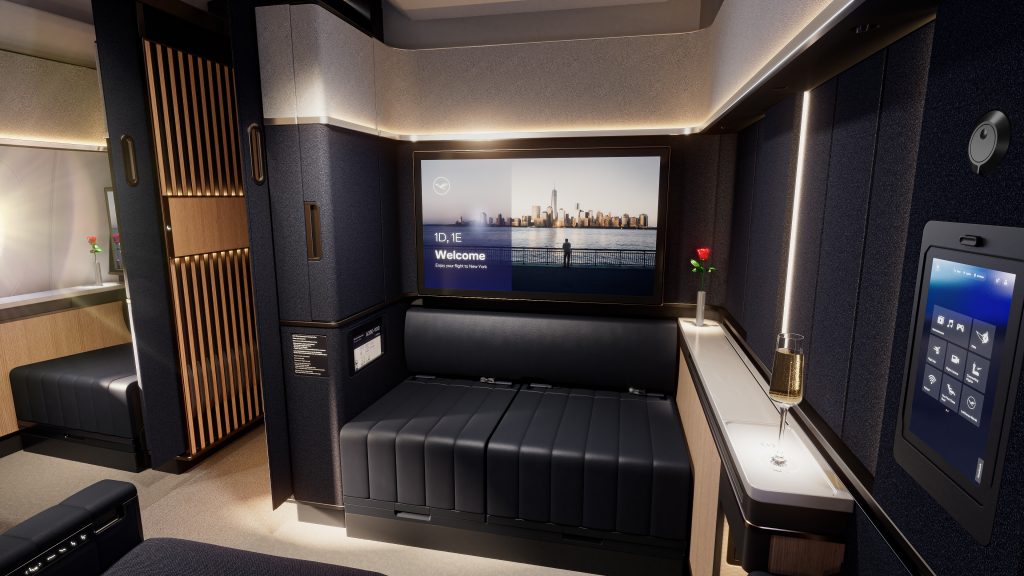
Lufthansa Allegris First Class “Suite Plus” rendering (Photo: Lufthansa)
Lufthansa will also introduce its Allegris cabins from Frankfurt for the first time with its Boeing 787-9 Dreamliners. Existing aircraft will be retrofitted with the new cabin this year as well, beginning with the 747-8i fleet.
Ryan founded AirlineGeeks.com in February 2013 and has spent more than a decade covering the airline business. His work has been featured by CNN, WJLA, CNET, and Business Insider. His aviation experience spans airport operations, Part 135 regulatory compliance, and airline crew workforce planning, along with time behind the yoke of a Cessna 172 and interviews with airline executives. Ryan now serves as Group President of Firecrown Media’s Aviation Group. He holds a B.S. in Air Transportation Management and an MBA from Arizona State University and teaches Airline Management at Embry-Riddle Aeronautical University.
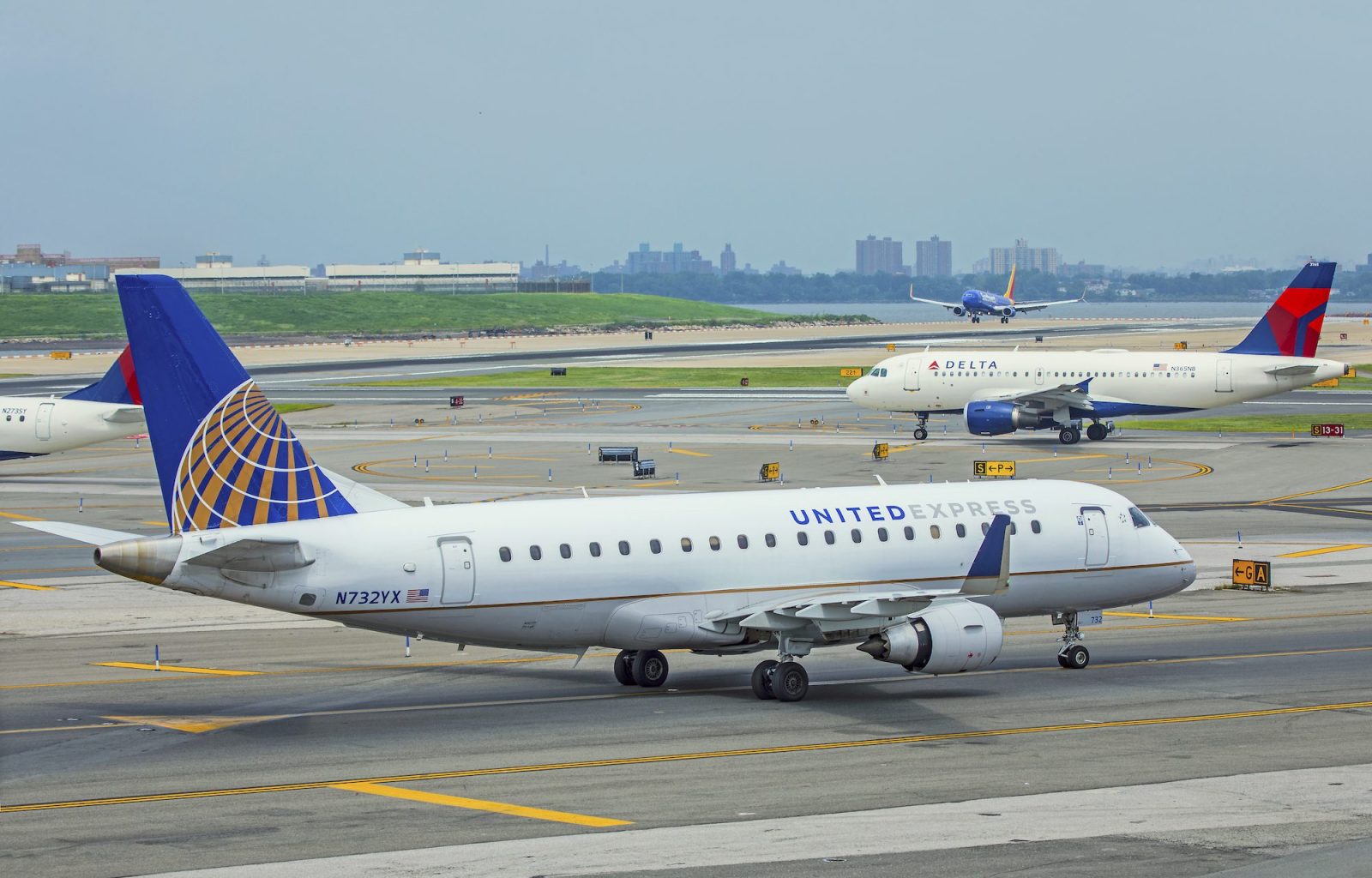
The incident took place on May 6 when an American Eagle flight operated by Republic Airways had to cancel its takeoff because a taxiing United jet crossed the runway on its path. According to the AP, the Republic aircraft had to slam on its brakes to avoid a collision, throwing passengers forward from their seats. One woman who spoke to the outlet said she ended up in the emergency room the next day due to neck pain caused by the sudden stop.
“Sorry about that, I thought United had cleared well before that,” a controller told the Republic pilot in audio obtained from LiveATC.
The United flight, operated with a Boeing 737-800, had arrived earlier from Houston.
The two aircraft were about a quarter mile apart by the time the Republic jet came to a halt, CNN reported.
Zach Vasile is a writer and editor covering news in all aspects of commercial aviation. He has reported for and contributed to the Manchester Journal Inquirer, the Hartford Business Journal, the Charlotte Observer, and the Washington Examiner, with his area of focus being the intersection of business and government policy.
United’s Kirby Backs Calls For Change at Heathrow
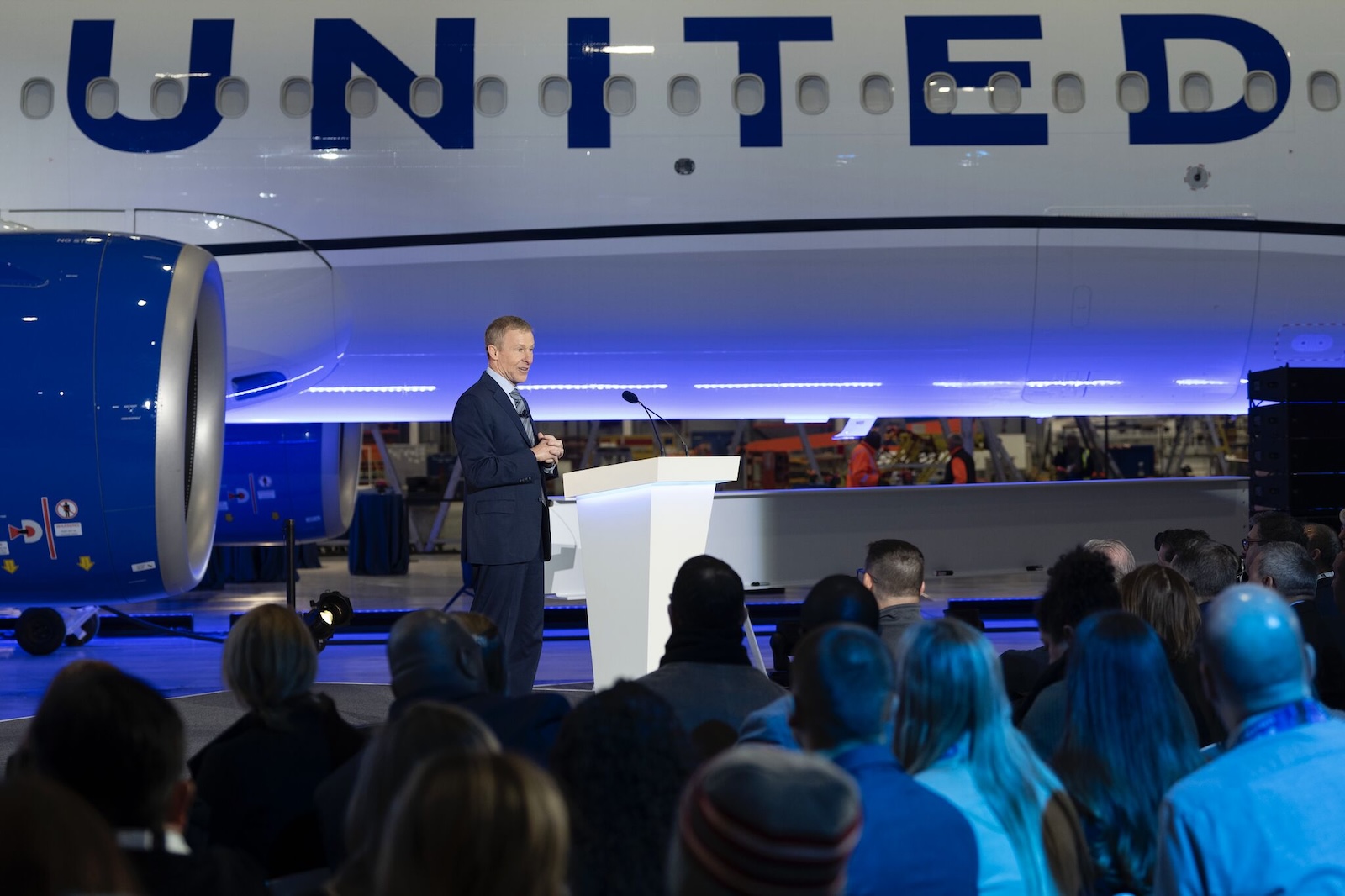
United CEO Scott Kirby told The Times that he supports an effort to give airlines operating out of Heathrow more input in how projects there are funded.
United CEO Scott Kirby is calling for changes at Heathrow Airport as the facility plans to pass on the costs of a new expansion effort to passengers.
Heathrow, one of the busiest airports in the world, is gearing up to build a third runway to relieve air traffic congestion. Estimates of the cost vary wildly, between £14 billion and £63 billion, or from $18 billion to $84 billion.
But no matter what the price tag is, because the airport operates as a regulated monopoly, it can pass on its expenses to airlines and customers, meaning travelers will see a rise in fees attached to their airfares.
Speaking to The Times of London, Kirby said United and other airlines operating at Heathrow should have some input in the way construction costs are passed on.
“Airlines should have a say because we’re the voice of the customer in what happens at all airports, whether it’s Heathrow, whether it’s Newark, whether it’s JFK,” he said. “Across the board, airlines need to have a seat at the table as an advocate for the customer.”
United flies between Heathrow and seven major U.S. cities up to seven times per day. It is the airline’s busiest station outside of North America.
Luis Gallego, the CEO of British Airways parent International Airlines Group, and Virgin Atlantic CEO Shai Weiss told The Times earlier this month that they want to see Heathrow opened up to competition by allowing third parties to operate terminal buildings. The practice is common in the U.S. but not in Britain, and Heathrow officials pushed back at the suggestion it would make their operations more efficient.
“No major hub airport has successfully implemented the model being advocated because it is the wrong approach for consumers,” the airport’s management told The Times. “It incentivises siloed, self-interested, and short-term decision-making that costs resilience while adding inefficient duplication and complexity.”
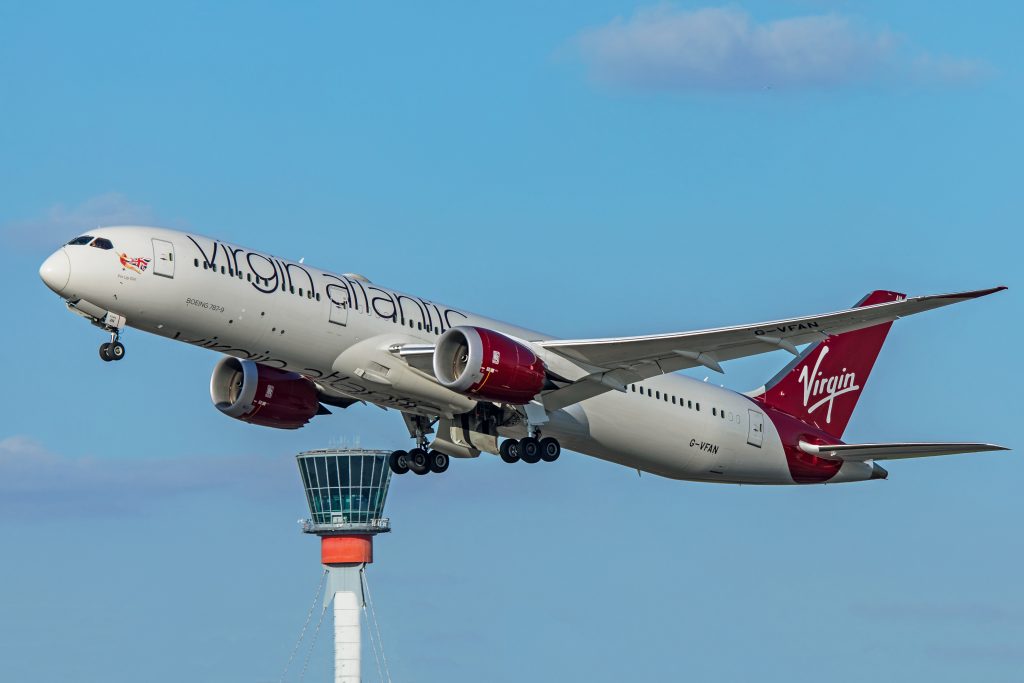
A Virgin Atlantic 787-9 departing London Heathrow. (Photo: AirlineGeeks | William Derrickson)
Gallego and Weiss are also advocating for the creation of a capital investment committee to steer decision-making at Heathrow. They said every airline that operates at the airport would have a seat.
“A third runway, if you take the numbers that are quoted by Heathrow, will be anywhere between £20 billion and £64 billion,” Weiss told The Times. “Shareholders pay for it upfront. But then guess who pays for it in the long run? Virgin Atlantic, British Airways, and the other airlines that operate at Heathrow.”
Regulation of Heathrow has faced criticism for some time, even before the proposal of the third runway, which seems likely to go forward under the current Labour Party government. Airlines, travel companies, and retailers told The Times that Heathrow has been on the “decline” for years, with certain terminals becoming increasingly run down and management growing unresponsive to emergencies, including a fire in March that shut down the airport for days.
Zach Vasile is a writer and editor covering news in all aspects of commercial aviation. He has reported for and contributed to the Manchester Journal Inquirer, the Hartford Business Journal, the Charlotte Observer, and the Washington Examiner, with his area of focus being the intersection of business and government policy.
New York Airport Looks to Regain Air Service
The airport, located in southwestern New York state, has submitted a proposal to the Department of Transportation requesting reinstatement of EAS subsidies.
Chautauqua County Jamestown Airport in New York is seeking to regain scheduled commercial flights through the Essential Air Service (EAS) program after a seven-year pause in scheduled operations. The airport, located in southwestern New York state, has submitted a proposal to the Department of Transportation requesting reinstatement of EAS subsidies, with service potentially beginning as early as next month.
The airport states that it has maintained its FAA Part 139 certification, which is required to support scheduled service, despite lacking commercial service since 2018.
Service Proposal
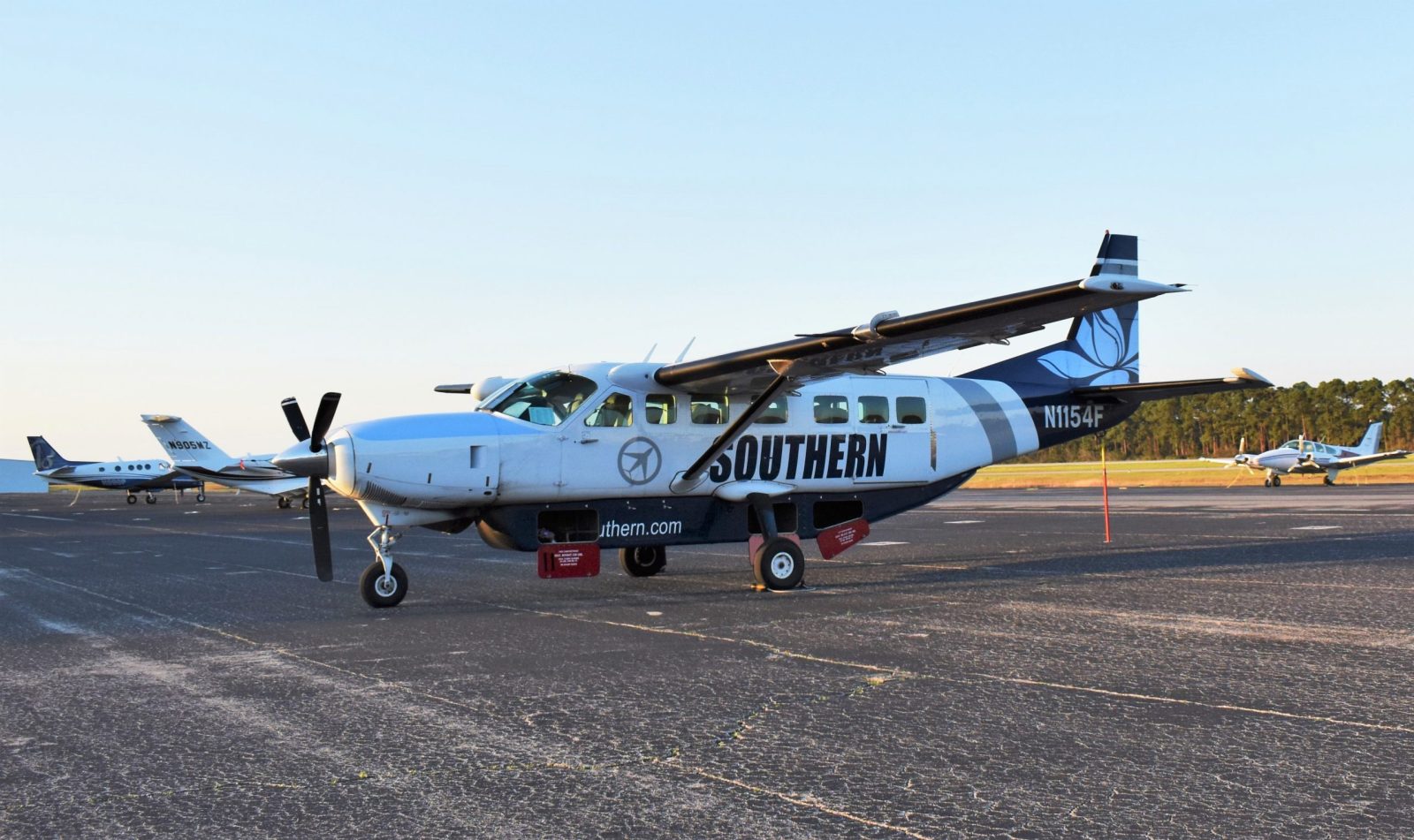
The proposal calls for scheduled air service from Jamestown to Washington Dulles, including two daily round trips Monday through Saturday on Southern Airways Express.
Chautauqua County has identified Southern Airways Express as a strong candidate airline partner for the EAS contract. Southern Airways currently operates over 20 daily departures from Washington Dulles and maintains interline agreements with United. It also previously served the airport until 2018.
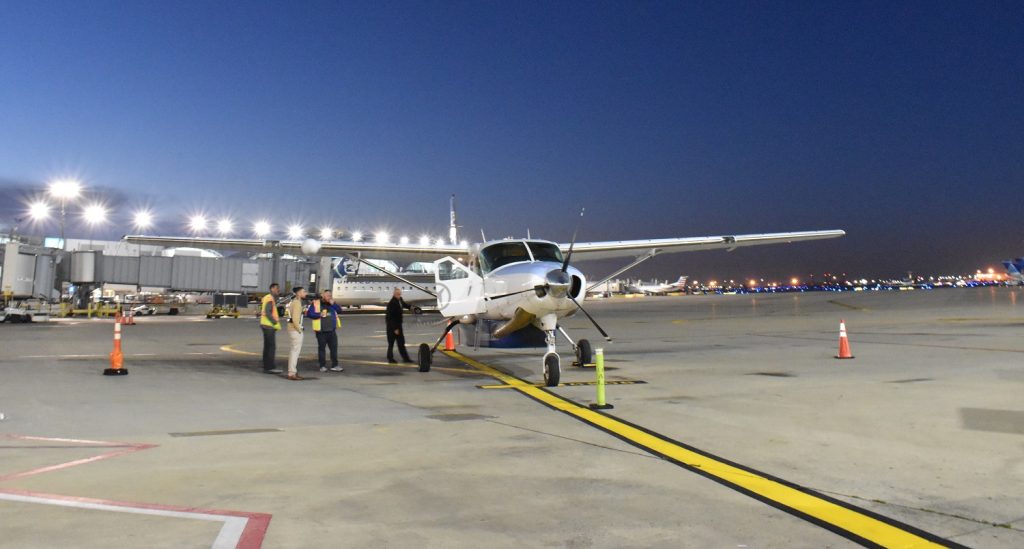
Southern Airways Express’ parking spot at F4 in Chicago (Photo: AirlineGeeks | Joey Gerardi)
The current lack of local air service creates significant challenges for the region, including reduced business competitiveness, limited tourism accessibility, and healthcare access difficulties, said Brian Bates, interim manager of airports for Chautauqua County.
Federal Support Request
In its formal request to the U.S. Department of Transportation, Chautauqua County has asked for reinstatement of the community’s EAS subsidies to restore scheduled air service to Washington Dulles International Airport.
The county is also exploring opportunities for federal and state marketing assistance, public-private partnerships, and regulatory support to expedite the service restart. Based on the proposal’s operational analysis, annual compensation required would range from approximately $3.6 million to $4 million, depending on the service frequency.
“The reinstatement of commercial air service at JHW would represent a transformative economic development opportunity for Chautauqua County and the broader Southern Tier of New York and Northwestern Pennsylvania,” Bates added in the proposal.
Ryan founded AirlineGeeks.com in February 2013 and has spent more than a decade covering the airline business. His work has been featured by CNN, WJLA, CNET, and Business Insider. His aviation experience spans airport operations, Part 135 regulatory compliance, and airline crew workforce planning, along with time behind the yoke of a Cessna 172 and interviews with airline executives. Ryan now serves as Group President of Firecrown Media’s Aviation Group. He holds a B.S. in Air Transportation Management and an MBA from Arizona State University and teaches Airline Management at Embry-Riddle Aeronautical University.