Boeing, recovering from a difficult 2024, said it wants to ramp up production of the 737 MAX to 38 aircraft per month, the maximum currently allowed by the FAA.
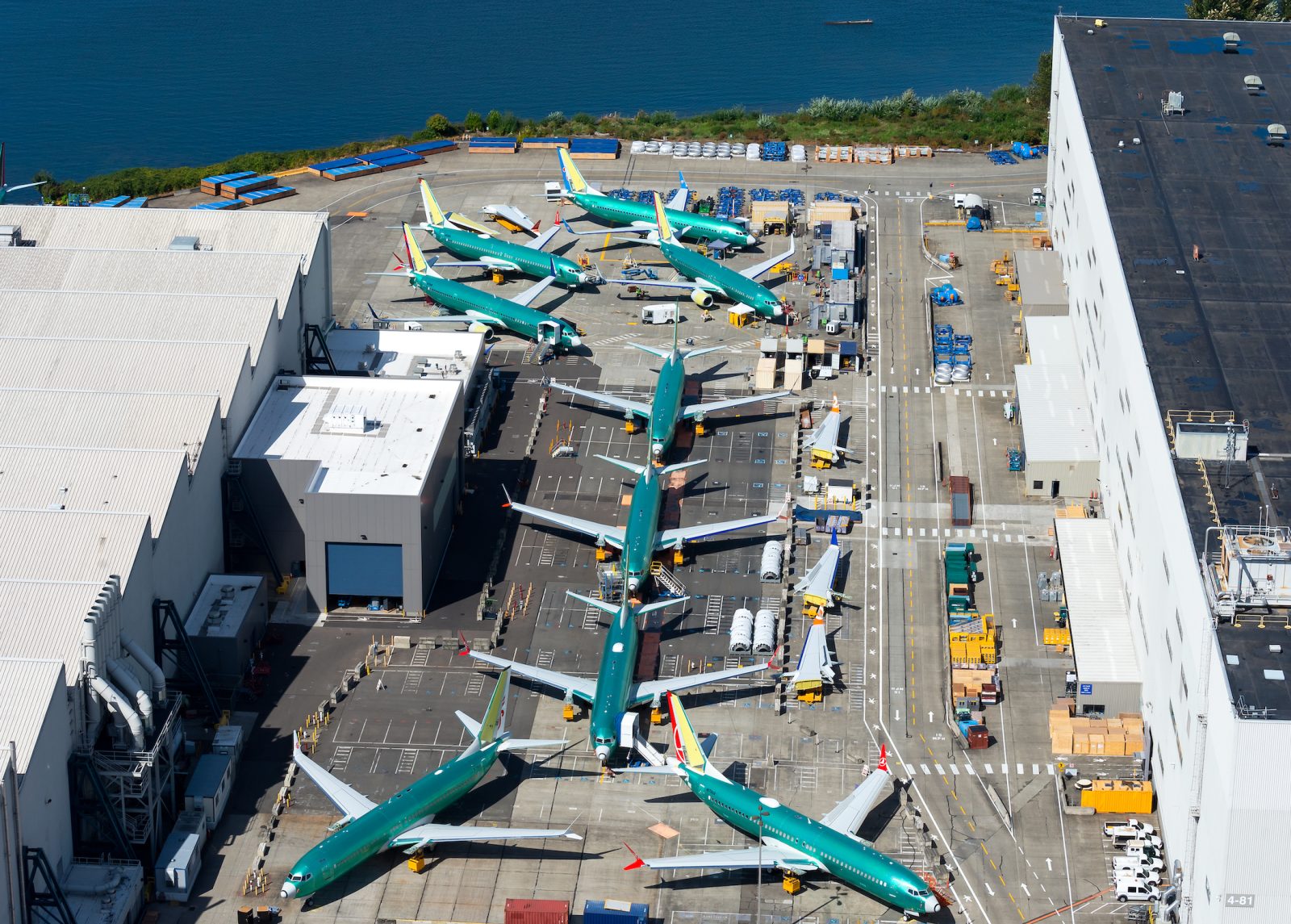
737 MAX aircraft in Renton. (Photo: Shutterstock | Thiago B Trevisan)
Boeing is raising its production target for the 737 MAX to 38 aircraft per month, according to Reuters.
The outlet said Boeing officials communicated the new target to reporters this week. The goal is to stabilize production at 38 jets within the next few months, and possibly as soon as this month.
Production of the best-selling 737 MAX has fluctuated over the last year due to supply chain disruptions and a strike by the company’s machinists that lasted almost two months. Boeing also slowed work and stepped up safety protocols after a 737 MAX door plug blew out on an Alaska Airlines flight in January 2024. After the incident, the FAA capped production of the aircraft at 38 per month and increased inspections and quality audits at Boeing’s facilities.
The cause of the blowout is still under investigation by the National Transportation Safety Board. The Department of Justice also said it is looking into the matter.
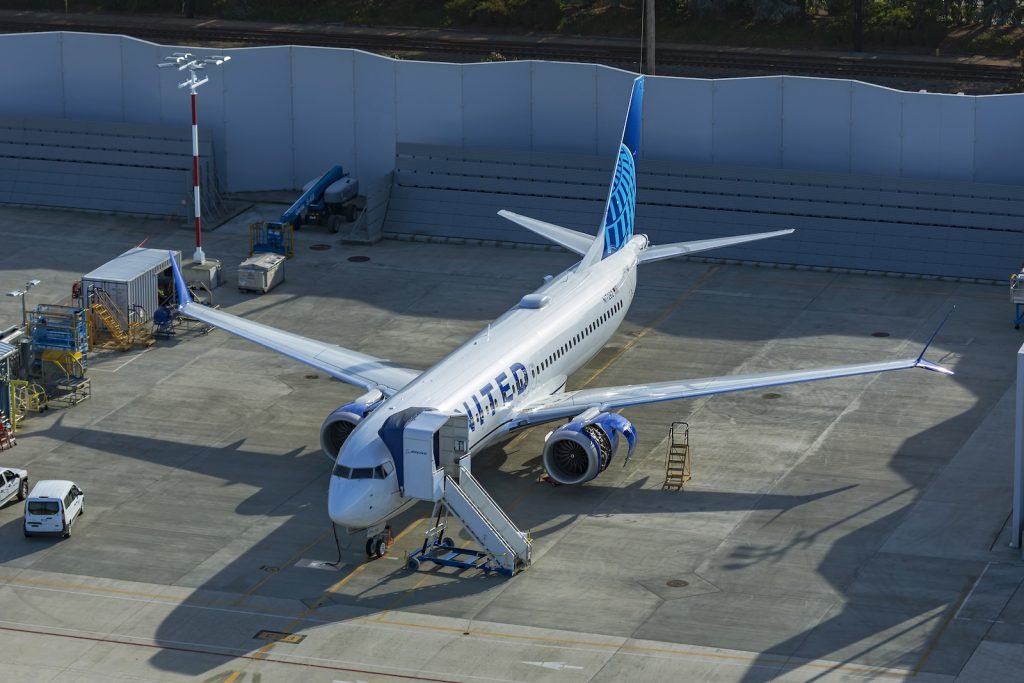
A United Boeing 737 MAX aircraft (Photo: AirlineGeeks | William Derrickson)
It is not clear when the FAA plans to waive the production cap. Last month, Boeing officials said they would eventually like to reach 48 737 MAX jets per month.
New Goal
Now under CEO Kelly Ortberg, Boeing is emerging from one of the most trying years in its history. The manufacturer recorded a nearly $12 billion loss in 2024, largely due to the strike, and CEO Dave Calhoun and board chairman Larry Kellner both stepped down from their posts. Continued fallout from two fatal 737 MAX crashes in 2018 and 2019 has raised concerns about the company’s quality standards and workplace morale.
Production delays at Boeing have forced some of the world’s largest airlines to adjust their plans for new and existing routes.
Zach Vasile is a writer and editor covering news in all aspects of commercial aviation. He has reported for and contributed to the Manchester Journal Inquirer, the Hartford Business Journal, the Charlotte Observer, and the Washington Examiner, with his area of focus being the intersection of business and government policy.
Navy Sailor Arrested for Bomb Threat Hoax on Hawaiian Flight
A U.S. Navy sailor was arrested Tuesday after allegedly falsely reporting a bomb threat while aboard a Hawaiian Airlines flight departing from San Diego.
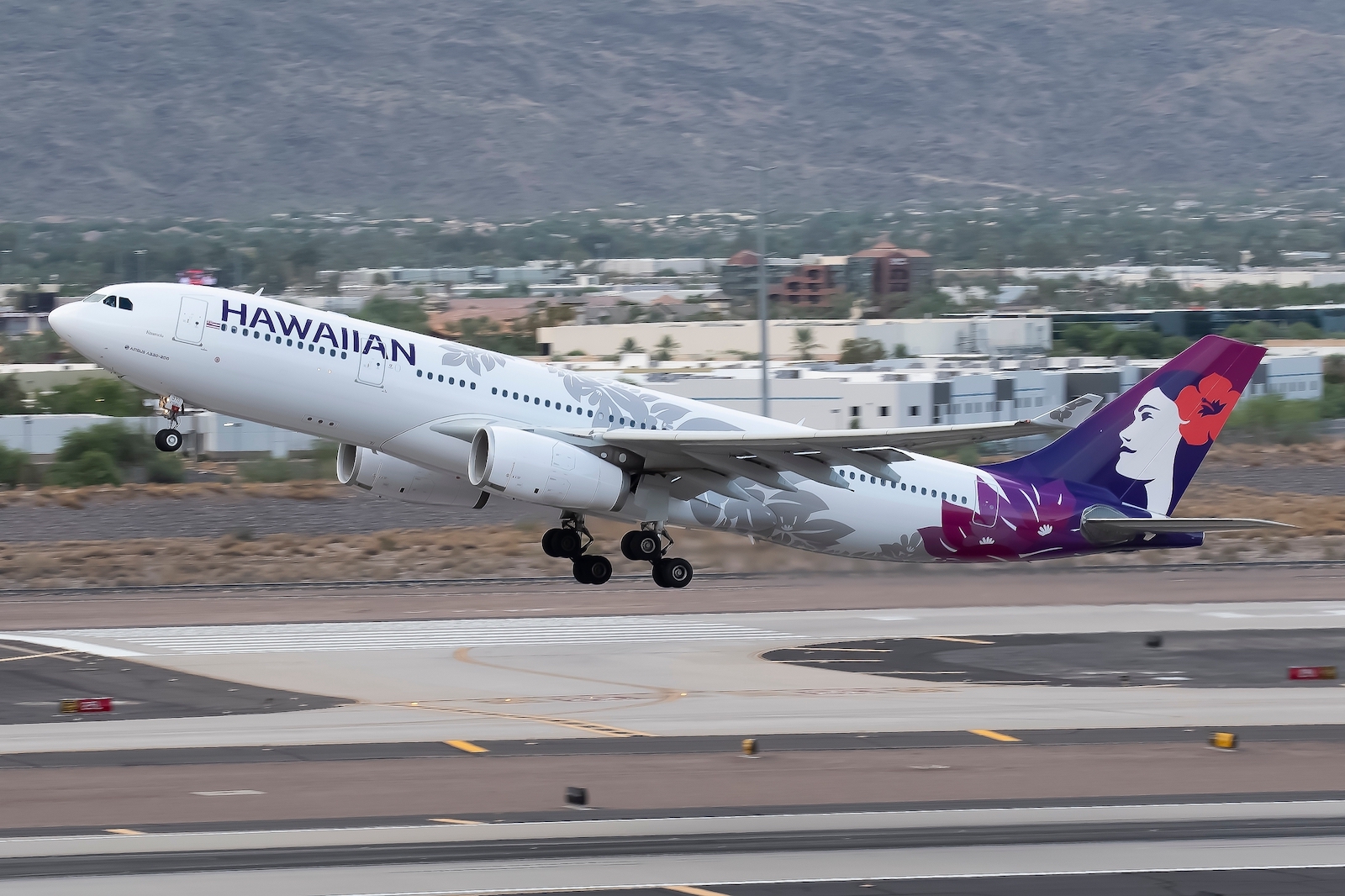
A Hawaiian Airbus A330 (Photo: Shutterstock | Robin Guess)
A U.S. Navy sailor was arrested Tuesday after allegedly falsely reporting a bomb threat while aboard a Hawaiian Airlines flight departing from San Diego.
According to a news release from the Port of San Diego, harbor police arrested and charged 35-year-old John Stea with making a false bomb threat and false report of a security threat.
The release stated that Stea was onboard Hawaiian flight 15 from San Diego International Airport to Honolulu, Hawaii, on Tuesday when he told a flight attendant the passenger next to him had a bomb.
The flight attendant then told the captain of the plane as the flight was pulling away from the jetway.
At around 8:45 a.m. local time, a SWAT team, K-9 team, and the Joint Terrorism Task Force joined several other federal agencies in responding to the scene. The pilot taxied to a safe location on the airfield, and all 293 people onboard were deplaned and transported by bus to a safe area.
One passenger aboard the aircraft recorded and posted a video to social media showing law enforcement leading an individual off the plane in handcuffs.
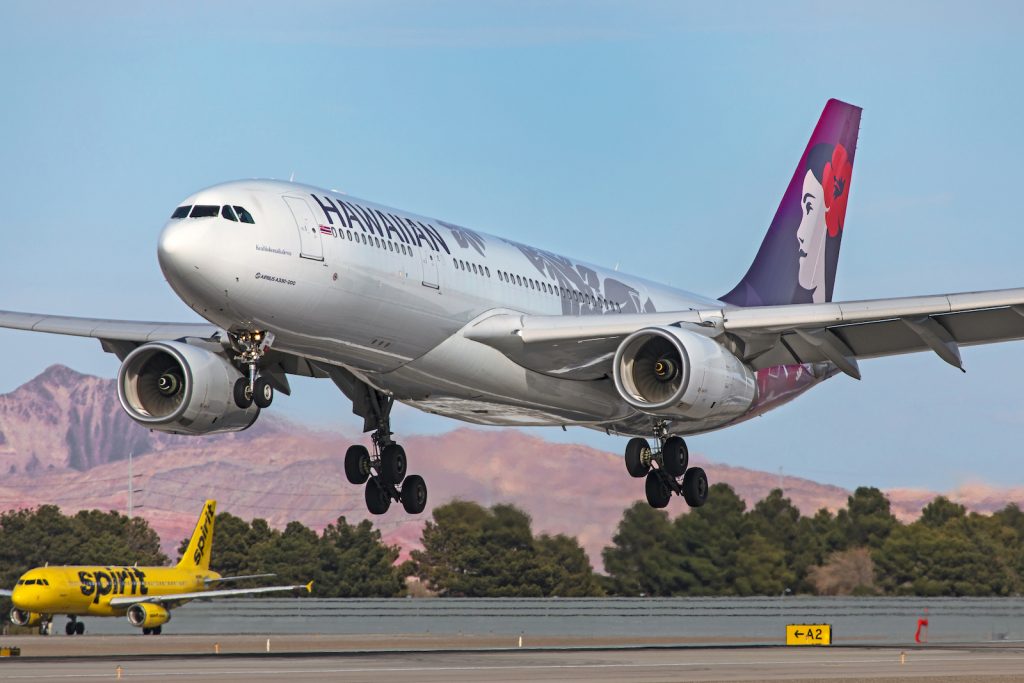
A Hawaiian Airlines A330-200 in Las Vegas (Photo: AirlineGeeks | William Derrickson)
After searching the Airbus A330, K-9s cleared the aircraft and all carry-on and checked luggage. The release stated there is no threat to the public or travelers, and operations at the airport are normal.
“Harbor Police reminds the public that maliciously reporting a false bomb threat is against the law and can result in fines and up to one year incarceration in county jail or state prison if convicted,” the release stated.
A Hawaiian Airlines spokesperson told AirlineGeeks in an emailed statement that all 283 passengers and 10 crew members were reboarded after the incident.
“We appreciate their understanding during this situation and apologize for any concern this may have caused,” Hawaiian’s spokesperson said. “We are grateful for the professionalism and care of our flight attendants and pilots throughout this event.”
The release stated that Stea is a member of the U.S. military. Later reporting by the New York Post confirmed that he is serving as an Electronics Technician 2nd Class for the Navy.
“The safety of the public and our personnel is of utmost importance to the Navy,” Lt. Mohammad N. Issa, deputy public affairs officer and commander in the U.S. 3rd Fleet, said in a statement to the New York Post. “We take all threats seriously and are cooperating fully with local and federal authorities.”
AirlineGeeks reached out to Hawaiian Airlines for comment.
Ryan founded AirlineGeeks.com in February 2013 and has spent more than a decade covering the airline business. His work has been featured by CNN, WJLA, CNET, and Business Insider. His aviation experience spans airport operations, Part 135 regulatory compliance, and airline crew workforce planning, along with time behind the yoke of a Cessna 172 and interviews with airline executives. Ryan now serves as Group President of Firecrown Media’s Aviation Group. He holds a B.S. in Air Transportation Management and an MBA from Arizona State University and teaches Airline Management at Embry-Riddle Aeronautical University.
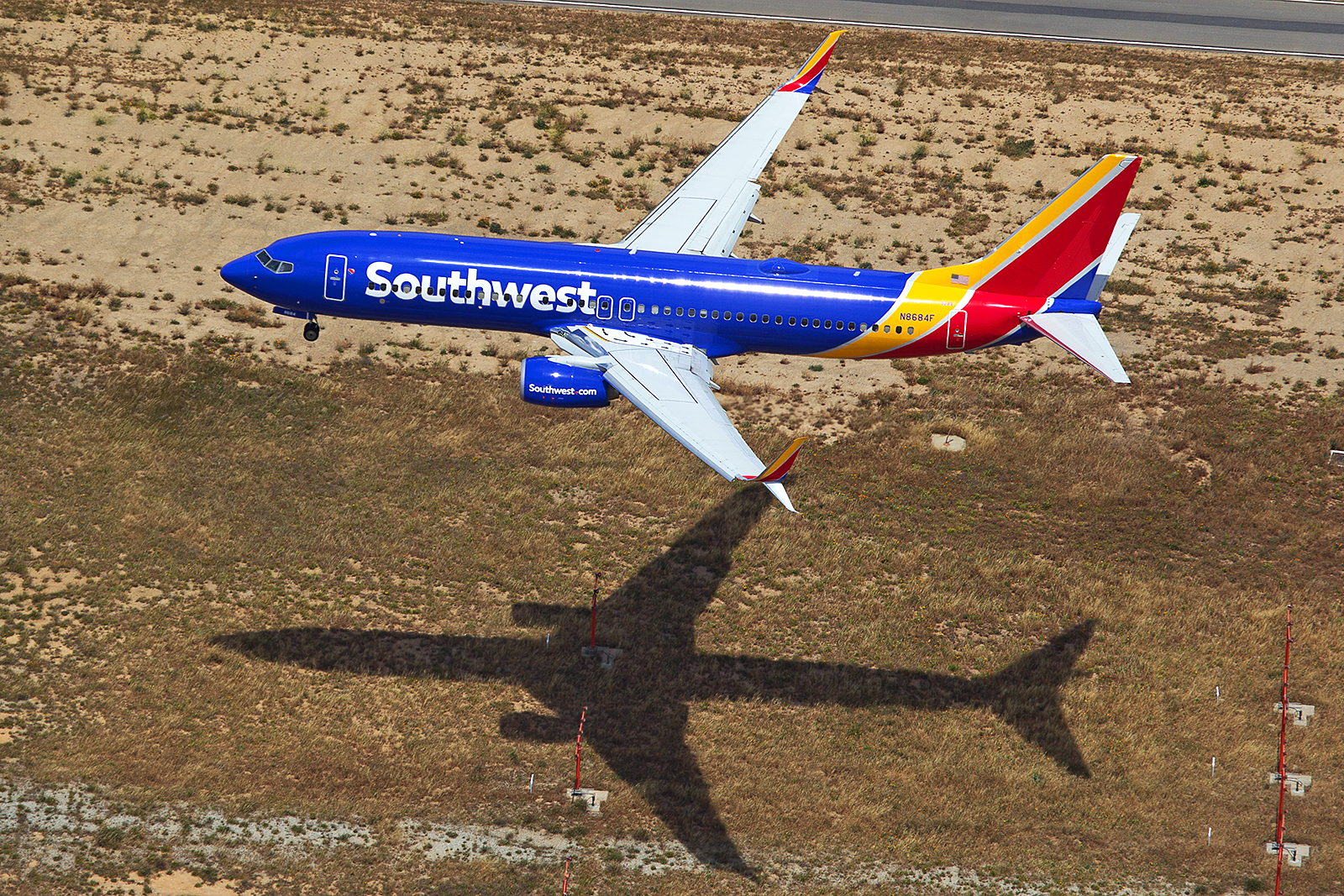
A Southwest Airlines 737 on final approach to Los Angeles International Airport. (Photo: AirlineGeeks | William Derrickson)
The Department of Transportation has dropped its lawsuit against Southwest over the airline’s allegedly chronic flight delays.
The department initiated the lawsuit in January under former President Joe Biden, but with the change in administrations, the case is no longer moving forward.
“This was a lawsuit that should have never been brought forward,” a DOT spokesperson told AirlineGeeks. “Southwest has remedied the underlying issues and USDOT will work with them fairly, not sue them for political gain.”
Reuters reported in March that the Justice Department was in talks with Southwest about resolving the lawsuit. The airline initially had until May 30 to respond to the DOT, but now won’t have to.
“We appreciate the DOT’s decision to abandon its lawsuit against Southwest, which we believe is the correct result in this case,” Southwest said in a statement.
Staying On Time
The Biden-era Transportation Department, helmed by then-Secretary Pete Buttigieg, sued Southwest “for illegally operating multiple chronically delayed flights and disrupting passengers’ travel.”
The agency said the airline was hurting its customers and competition in the industry by promising flights that did not reflect actual departure and arrival times. Southwest was accused of running two chronically delayed flights, one between Chicago Midway International Airport and Oakland, California, and another between Baltimore and Cleveland. Each flight was chronically delayed for five straight months between April and August 2022, resulting in 180 disruptions for passengers.
The Bureau of Transportation Statistics estimated that the airline was responsible for over 90% of the delays on those two routes.
Southwest said the flights highlighted by the DOT took place “years ago when the industry faced unprecedented challenges from the COVID-19 pandemic and were delayed due to issues outside of Southwest’s control in numerous cases.”
The airline said it has made significant investments in its operations since then and improved reliability.
At the same time the DOT sued Southwest, it also fined Frontier for “operating multiple chronically delayed flights.”
Frontier was fined $650,000, but will only have to pay $325,000 if it does not have another chronically delayed flight in the next three years.
Zach Vasile is a writer and editor covering news in all aspects of commercial aviation. He has reported for and contributed to the Manchester Journal Inquirer, the Hartford Business Journal, the Charlotte Observer, and the Washington Examiner, with his area of focus being the intersection of business and government policy.
Avelo Launches New Route in Northeast
Ultra low-cost airline Avelo on Wednesday launched a new nonstop route connecting Portland, Maine, and New Haven, Connecticut.
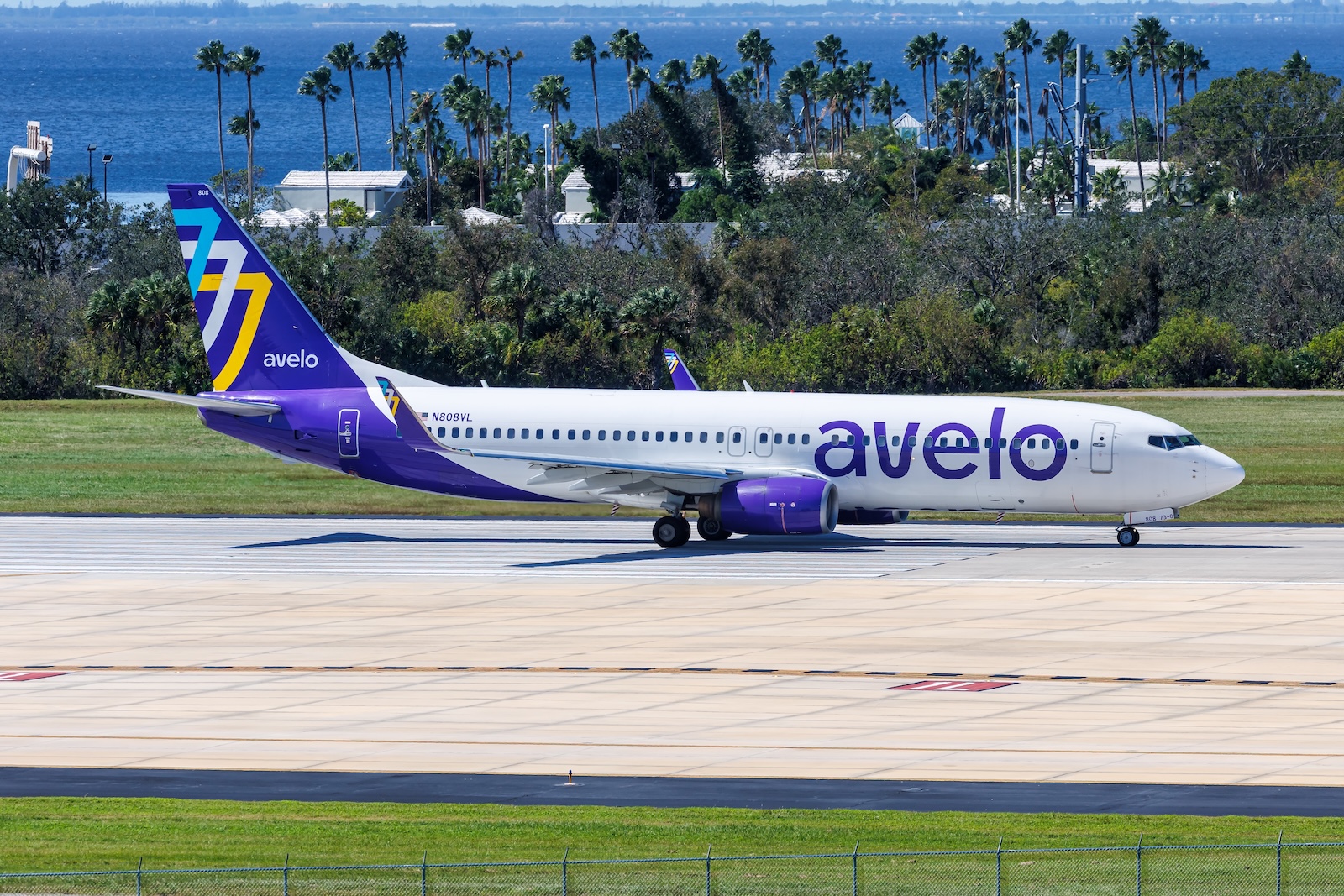
An Avelo Boeing 737-800. (Photo: Shutterstock | Markus Mainka)
Ultra low-cost airline Avelo on Wednesday launched a new nonstop route connecting Portland, Maine, and New Haven, Connecticut.
Flights between Portland International Jetport, Maine’s busiest airport, and Tweed-New Haven Airport will operate twice weekly, on Thursdays and Sundays, Avelo officials said. The route uses a Boeing 737.
Avelo’s Portland-New Haven connection is the only service between Maine and southern Connecticut, the carrier added. It is meant to appeal to travelers in the New York metro area looking to reach coastal New England and Maine residents interested in exploring New Haven and New York City.
Portland International Jetport Director Paul Bradbury said the route will help meet local demand for access to the tri-state area, which is consistently one of the airport’s top markets.
The new route is Avelo’s 30th destination available at Tweed-New Haven, now the largest hub in its network. Most of the airline’s flights from New Haven head south to sunnier climates, including 10 destinations in Florida.
Avelo currently serves 53 cities in 21 states, as well as destinations in Puerto Rico, Jamaica, the Dominican Republic, and Mexico.
Zach Vasile is a writer and editor covering news in all aspects of commercial aviation. He has reported for and contributed to the Manchester Journal Inquirer, the Hartford Business Journal, the Charlotte Observer, and the Washington Examiner, with his area of focus being the intersection of business and government policy.
NTSB: A321neo Exceeded Hard Landing Threshold
Flight 3506, operating from Orlando, experienced a hard landing that resulted in landing gear damage and engine issues during a go-around attempt.
A Frontier Airbus A321neo (Photo: Shutterstock | Robin Guess)
The National Transportation Safety Board (NTSB) has released its preliminary report on the Frontier A321neo incident that occurred in San Juan, Puerto Rico, on April 15. Flight 3506, operating from Orlando, experienced a hard landing that resulted in landing gear damage and engine issues during a go-around attempt.
According to the agency’s initial findings, the incident occurred in the evening when the A321neo – registered as N607FR – attempted to land at Luis Munoz Marin International Airport. The first officer was the pilot flying with the captain serving as pilot monitoring during the night approach.
The approach was reported as stable, though it required a slight lateral correction to maintain centerline while descending through approximately 150 to 100 feet above ground level, the report stated. As the aircraft descended to about 15 feet, the captain noted the jet was too high, prompting the first officer to initiate a correction with a shallow descent followed by a gradual flare.
“The FO recalled that during the approach, she brought the thrust levers back to idle at 20 ft RA while the RETARD aural alert sounded,” investigators shared.
As the aircraft was about to touch down, the captain called for a go-around and took control, believing the “aircraft was running out of flying speed quickly, as the throttles were retarded and the pitch attitude was increasing.”
The airplane subsequently touched down firmly, with flight data recorder information showing a maximum recorded vertical acceleration of approximately 2.2g — exceeding the hard landing threshold of 1.8g specified in Frontier’s aircraft maintenance manual.
Initial Findings
The NTSB investigation revealed that during the go-around attempt, the crew heard a loud bang from beneath the fuselage, and the first officer noted an engine failure displayed on the electronic centralized aircraft monitor. While the air traffic control tower reported an engine fire, the flight crew indicated they only received an engine failure warning.
Post-incident inspection showed the nose landing gear’s left wheel and tire had separated from its axle during the initial hard landing. The report stated that one of the wheel halves had fractured, and numerous scratches and gouges were found on the nose landing gear, along with damage to the tow fitting.
Missing wheel on A321neo (Photo: NTSB)
Metal fragments from the wheel assembly appear to have been ingested by the No. 1 (left) engine, causing damage to the engine’s inlet cowl liner, thrust reverser, fan blades, and guide vanes. The left inboard trailing edge flaps were also damaged, though the NTSB noted that none of this damage met the definition of “substantial” or affected the aircraft’s flight control system.
After the initial touchdown and go-around, the flight crew performed a low pass by the control tower to confirm the landing gear status before successfully landing on runway 8. The 235 passengers and crew were evacuated via airstairs with no reported injuries.
In its report, the NTSB noted that in January 2021, Airbus published an article titled “A Focus on the Landing Flare” in their Safety First magazine, which analyzed operational pitfalls and best practices during the landing flare phase — potentially relevant to the investigation of this incident.
Weather conditions at the time of the incident were reported as visual meteorological conditions with few clouds at 2,500 feet, visibility of 10 miles, and light winds at 3 knots from 100 degrees.
Ryan founded AirlineGeeks.com in February 2013 and has spent more than a decade covering the airline business. His work has been featured by CNN, WJLA, CNET, and Business Insider. His aviation experience spans airport operations, Part 135 regulatory compliance, and airline crew workforce planning, along with time behind the yoke of a Cessna 172 and interviews with airline executives. Ryan now serves as Group President of Firecrown Media’s Aviation Group. He holds a B.S. in Air Transportation Management and an MBA from Arizona State University and teaches Airline Management at Embry-Riddle Aeronautical University.
Etihad Airways turned in its best-ever quarterly earnings on Wednesday with a filing showing a 30% climb in profits in the first three months of 2025.
The airline, one of two flag carriers of the United Arab Emirates, reported revenues of $1.79 billion and after-tax profits of $187 million. Etihad officials linked the performance to steady passenger demand, expanded seating capacity, increased operational efficiencies, and growth in cargo revenues.
Passenger revenues rose 16% to $1.5 billion as the airline’s number of total passengers carried reached five million. Total revenues grew by 15% year-over-year.
CEO Antonoaldo Neves added that Etihad’s customer satisfaction rating, based on surveys given to passengers, rose by 20%.
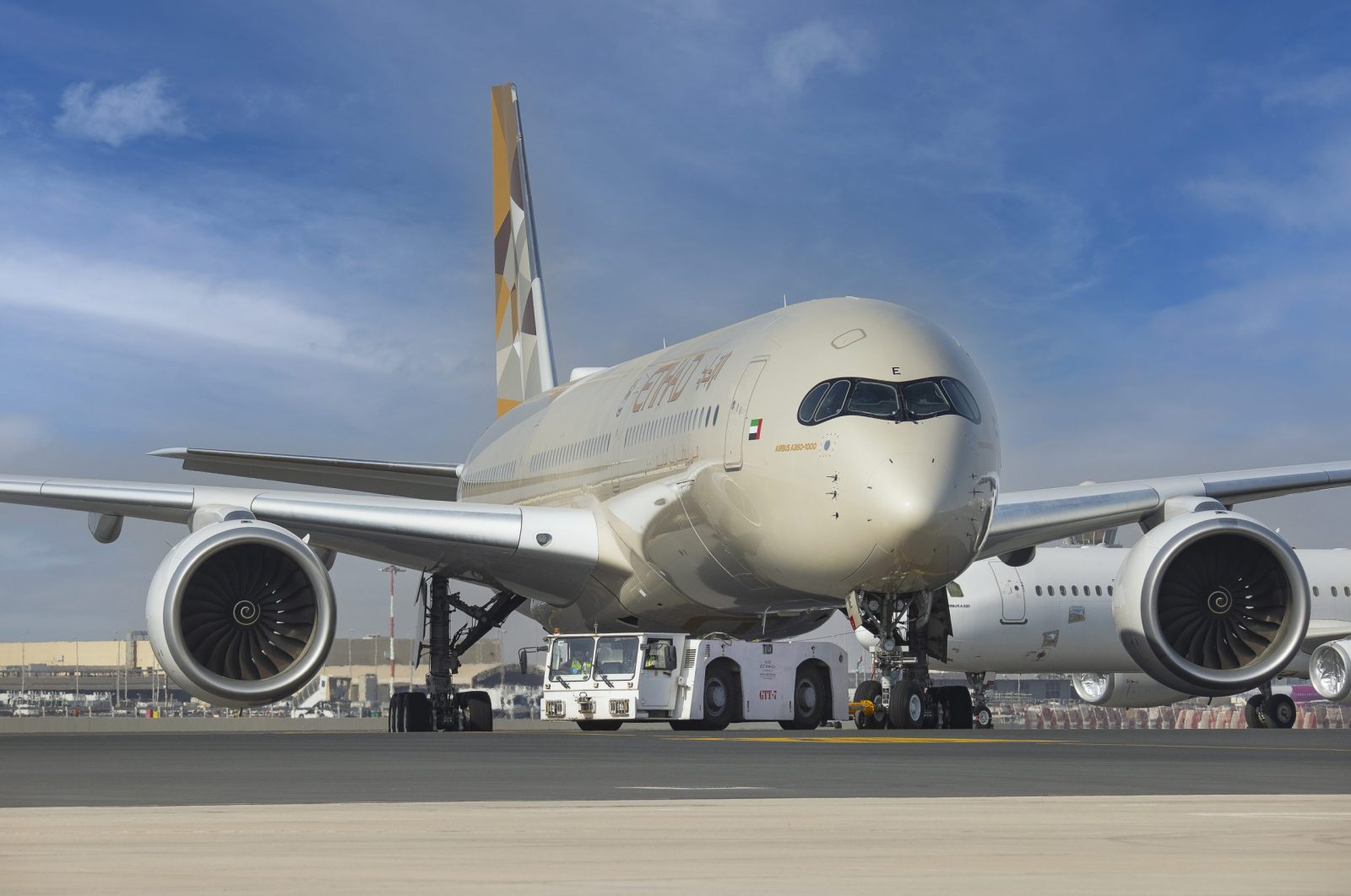
Etihad added nine aircraft to its fleet during the last quarter, expanding its fleet size to 98 jets. The new arrivals included the airline’s sixth Airbus A380 and an additional A350-1000. Etihad is in the process of expanding premium seating throughout its fleet.
The carrier also hired 990 new employees in the first three months of 2025, including 70 pilots.
Etihad, which has its main hub at Zayed International Airport in Abu Dhabi, currently serves 80 destinations worldwide, mainly in the Middle East, Europe, and South Asia. It plans to add 16 new destinations this year, including nonstop routes between Abu Dhabi and Atlanta, Hong Kong, Prague, and Taipei.
Zach Vasile is a writer and editor covering news in all aspects of commercial aviation. He has reported for and contributed to the Manchester Journal Inquirer, the Hartford Business Journal, the Charlotte Observer, and the Washington Examiner, with his area of focus being the intersection of business and government policy.
Judge Says Delta Can Sue Company Linked to 2024 Computer Outage
A judge in Georgia ruled that Delta can move forward with a lawsuit against cybersecurity technology firm CrowdStrike after last year's outage.
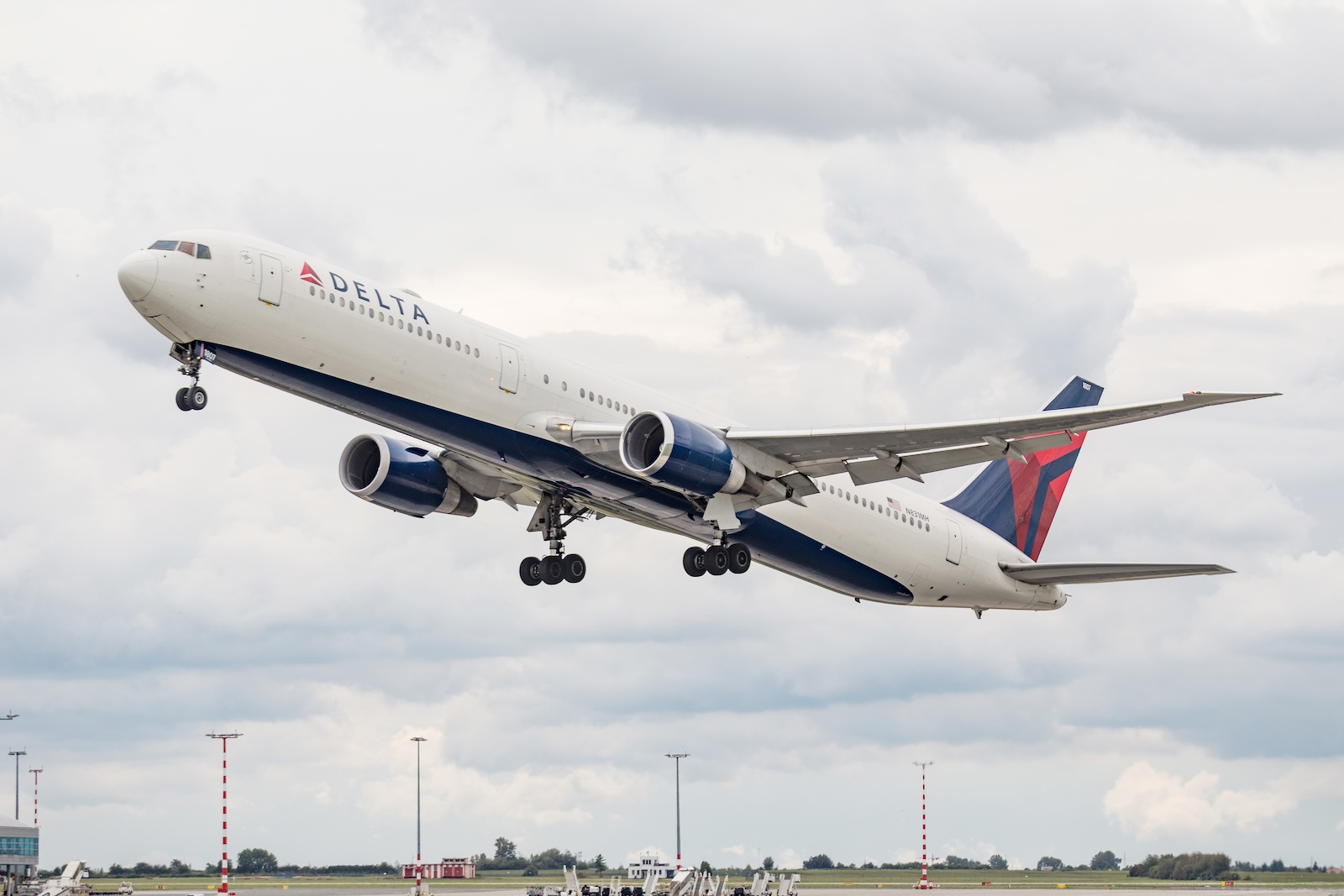
A Delta Boeing 767-400 aircraft. (Photo: Shutterstock | Nadezda Murmakova)
Delta can sue the cybersecurity technology company behind a massive computer outage that crippled the airline’s operations and forced the cancellation of 7,000 flights, a judge in Georgia has ruled.
Fulton County Superior Court Judge Kelly Lee Ellerbe said Atlanta-based Delta can move forward with a lawsuit against CrowdStrike for “gross negligence” in connection with a faulty update of its software to customers, which crashed over eight million Microsoft Windows-based computers worldwide on July 19, 2024.
The outage affected several airlines, but Delta was the worst hit, with its major hubs kept at a standstill for hours. Disruptions to its operations continued for five days.
Delta sued CrowdStrike in October, claiming “over $500 million in out-of-pocket losses.” CrowdStrike filed a motion to have the lawsuit thrown out, arguing potential damages are capped by a contract between the two companies and by Georgia state law, but Ellerbe allowed the majority of Delta’s claims to proceed.
“Delta has specifically pled that if CrowdStrike had tested the July update on one computer before its deployment, the programming error would have been detected,” the judge’s ruling stated. “As CrowdStrike has acknowledged, its own president publicly stated CrowdStrike did something ‘horribly wrong’ with the July update. Construed under the indulgent standards applicable to a motion to dismiss, these allegations are sufficient to state a claim for gross negligence.”
Ellerbe is also permitting Delta to pursue a computer trespass claim over the airline’s allegation that CrowdStrike installed an unauthorized backdoor into the company’s computers and forced through the defective update. She did dismiss some of Delta’s points relating to intentional misrepresentation and fraud by omission, writing that they did not satisfy legal standards.
Laying Blame
Delta told Reuters that it is pleased with the ruling and confident in the merits of its case as it moves forward.
CrowdStrike maintains that Delta refused help while dealing with the outage and had flawed information technology systems in place that only made it worse. A letter sent by CrowdStrike’s attorneys to Delta in August before the lawsuit was filed faulted the airline for its lack of operational resilience and planning.
“Delta will have to explain to the public, its shareholders, and ultimately a jury why CrowdStrike took responsibility for its actions – swiftly, transparently, and constructively – while Delta did not,” the letter read.
A lawyer representing CrowdStrike told ITPro this week that the company is pleased with the court’s decision to throw out some of Delta’s claims and is confident the remaining claims will be capped in the “single-digit-millions of dollars or otherwise found to be without merit.”
A federal judge ruled earlier this month that Delta itself must face a lawsuit from passengers who said the airline refused to offer full refunds for delayed and canceled flights stemming from the CrowdStrike outage.
Zach Vasile is a writer and editor covering news in all aspects of commercial aviation. He has reported for and contributed to the Manchester Journal Inquirer, the Hartford Business Journal, the Charlotte Observer, and the Washington Examiner, with his area of focus being the intersection of business and government policy.
FAA Temporarily Cuts Flights in Newark
The Federal Aviation Administration has mandated a reduction in flight arrival and departure rates at Newark Liberty International Airport.
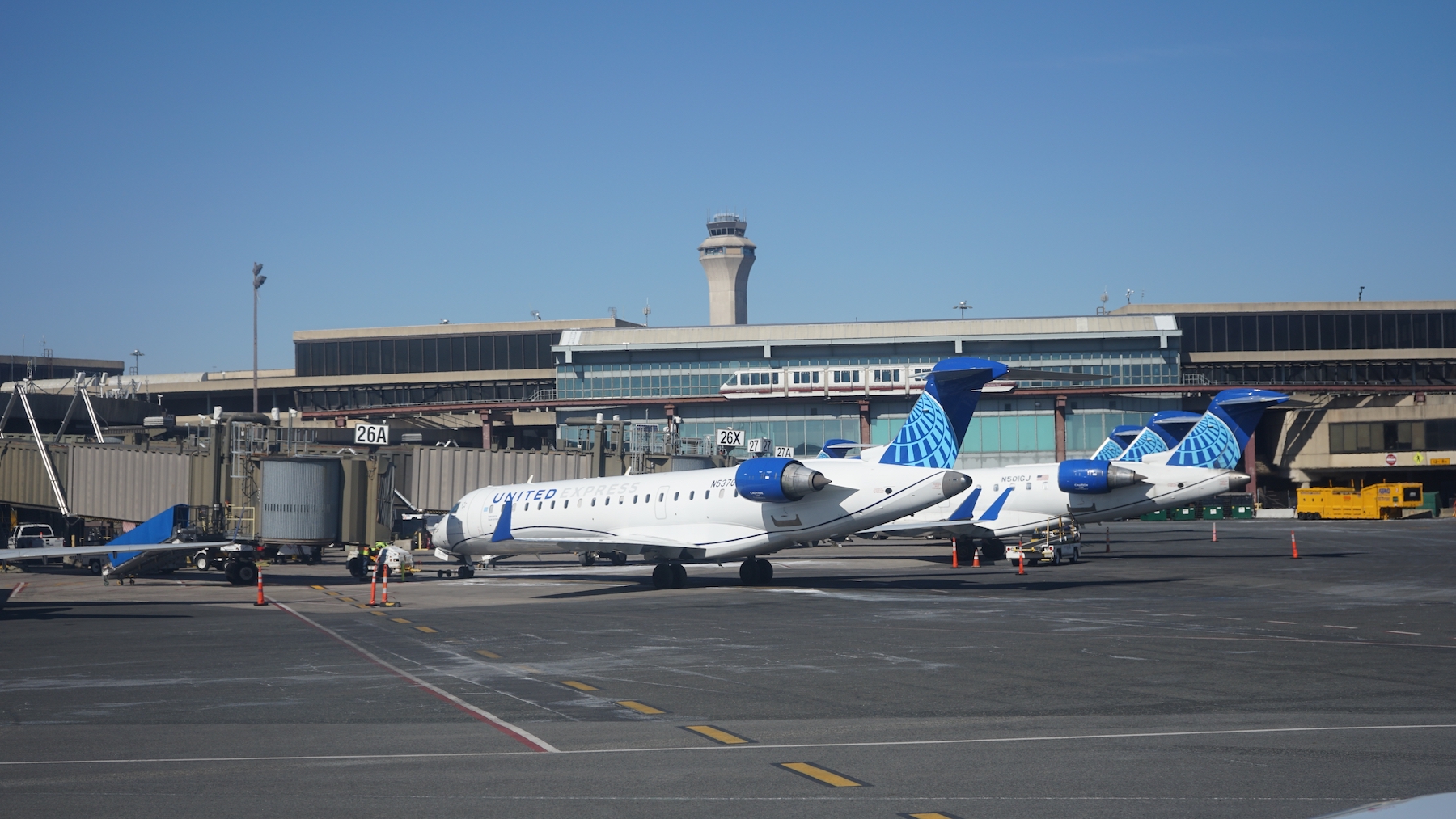
A United Express CRJ aircraft in Newark. (Photo: Shutterstock - Bui Le Manh Hung)
The Federal Aviation Administration has mandated a reduction in flight arrival and departure rates at Newark Airport.
According to an FAA interim order issued on Tuesday, maximum hourly rates at the New Jersey airport will be dropped to 28 arrivals and 28 departures until construction finishes on two of its runways.
A news release from the agency stated that daily construction will end on June 15, but is expected to continue on Saturdays afterward until the end of the year. On days when construction is not occurring, the airport will have a 34 arrival and departure limit until October 25.
The limits took effect on Tuesday after the FAA discussed the plan with airlines during a delay reduction meeting last week.
“Our goal is to relieve the substantial inconvenience to the traveling public from excessive flight delays due to construction, staffing challenges, and recent equipment issues, which magnify as they spread through the National Airspace System,” said acting FAA Administrator Chris Rocheleau in the release.
The FAA stated in its release that it may increase or decrease the limits as deemed necessary.
New Newark ATC Infrastructure
The FAA is currently working to add three new telecommunications connections to the Philadelphia TRACON for more speed and reliability.
The agency stated that it is replacing copper telecommunications connections with updated fiberoptic technology for “greater bandwidth and speed.”
Additionally, the FAA will be creating a STARS hub at the Philadelphia TRACON so that the facility won’t have to depend on telecommunications from the New York STARS hub.
Staffing at Philadelphia TRACON Area C will also be increased, and controllers are being cross trained for multiple positions, the agency said.
AirlineGeeks.com was founded in February 2013 as a one-person blog in Washington D.C. Since then, we’ve grown to have 25+ active team members scattered across the globe. We are all here for the same reason: we love deep-diving into the fascinating realm of the airline industry.
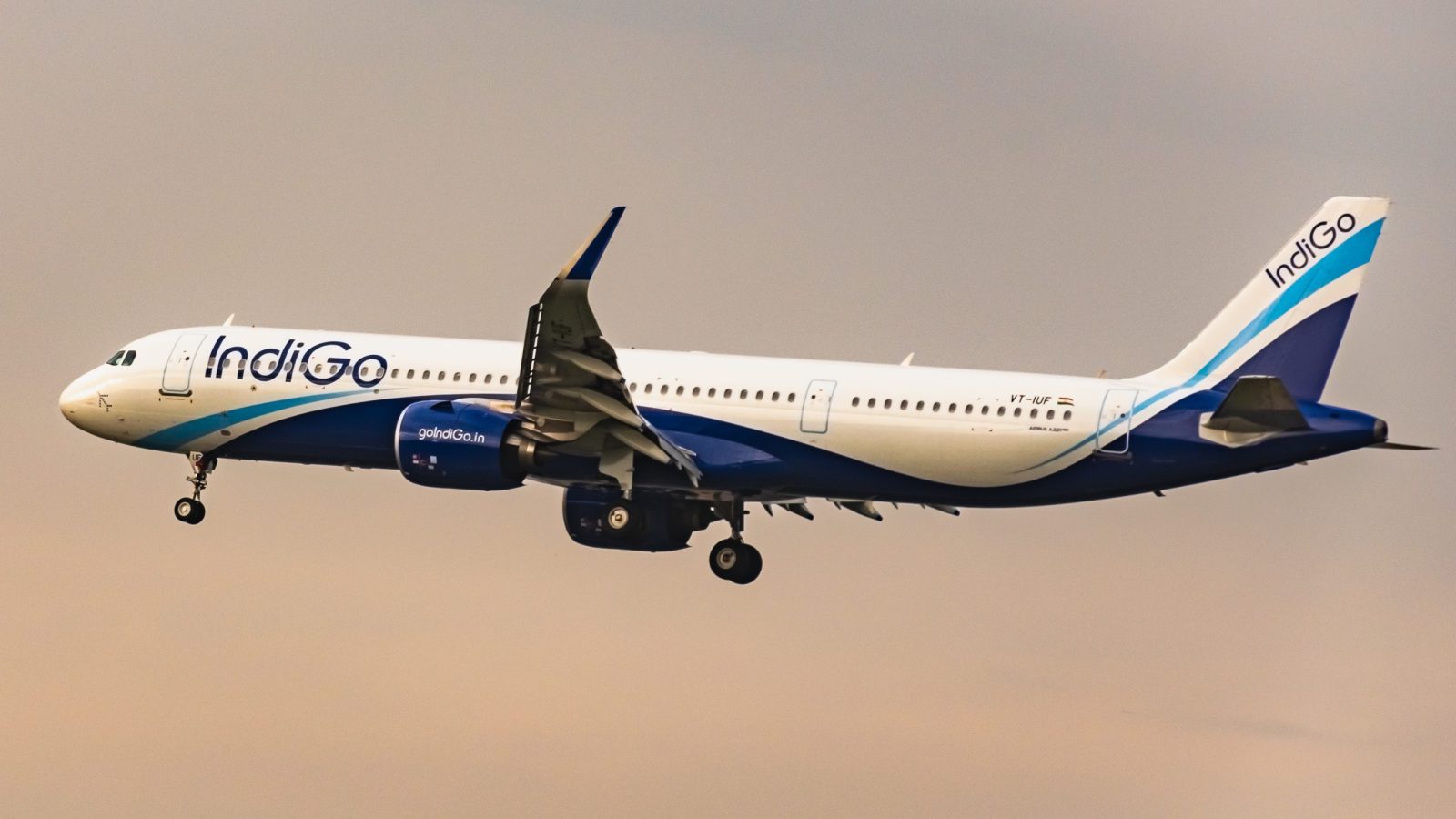
An IndiGo Airbus A321neo at Delhi Airport. (Photo: AirlineGeeks | Vihaan Kushwaha)
Indian low-cost airline IndiGo has announced the debut of its first-ever long-haul flights.
The carrier will begin flights between Mumbai and Manchester in the United Kingdom on July 1 and flights between Mumbai and Amsterdam on July 2. The routes are IndiGo’s first venture into Europe and its first to meet the threshold of a long-haul service.
The Mumbai-Manchester route will operate once a day on Tuesdays, Thursdays, and Saturdays. Flights will depart Mumbai for Amsterdam once a day on Wednesdays, Fridays, and Sundays, while flights leaving Amsterdam for Mumbai will depart once a day on Mondays, Wednesdays, and Fridays.
Dutch flag carrier KLM currently operates a nonstop flight between Mumbai and Amsterdam, but IndiGo is now the only airline with a nonstop Mumbai-Manchester route.
In a statement, airline CEO Pieter Elbers said the new flights will strengthen economic and cultural ties between India and Europe, meet the needs of the growing Indian diaspora in the region, and facilitate the travel of Indian students, professionals, and tourists back and forth from their home country.
International Ambitions
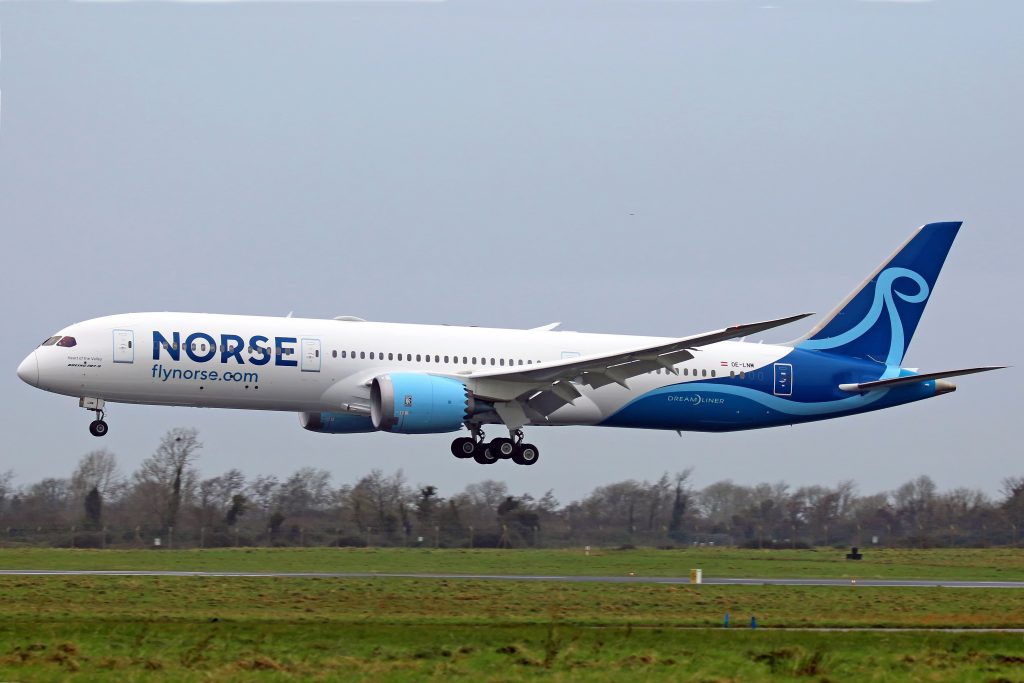
IndiGo plans to fly its new European routes using Boeing 787-9 Dreamliners leased from Norway-based Norse Atlantic Airways. The Boeing aircraft are a stopgap until IndiGo takes delivery of its orders of Airbus A321XLRs and A350-900s. The A321XLRs are expected to arrive later this year, while the A350-900s are scheduled for delivery starting in 2027.
The 787s have a total of 338 seats, 56 premium and 282 economy. IndiGo said it is offering complimentary hot meals for all customers on the Manchester and Amsterdam routes.
IndiGo is the largest airline in India and one of the largest in the world. Most of its destinations are in India, but the airline also serves cities in South Asia, Southeast Asia, and the Middle East, including Dubai, Hong Kong, Jakarta, Istanbul, and Riyadh, Saudi Arabia, among others. Airline officials have said the expansion to Europe is part of a broader effort to shift from short- and medium-haul operations to long-haul international flights.
IndiGo first announced the Manchester and Amsterdam flights in March but did not reveal the start dates.
Zach Vasile is a writer and editor covering news in all aspects of commercial aviation. He has reported for and contributed to the Manchester Journal Inquirer, the Hartford Business Journal, the Charlotte Observer, and the Washington Examiner, with his area of focus being the intersection of business and government policy.
Frontier Reaffirms Loss Guidance as Demand Stabilizes
Despite ongoing “macro uncertainty,” the airline stated that recent booking activity supports its expectations for the quarter.
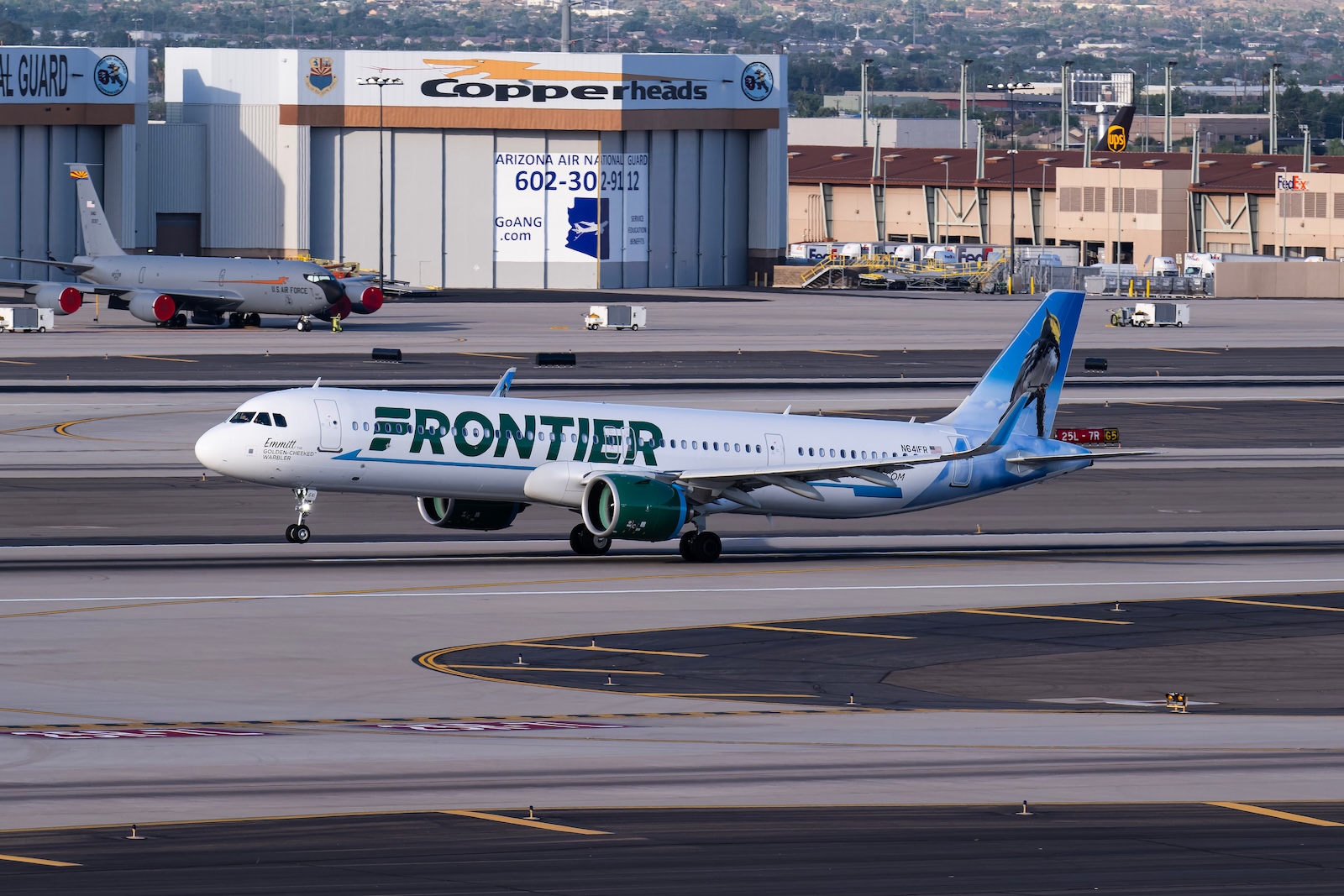
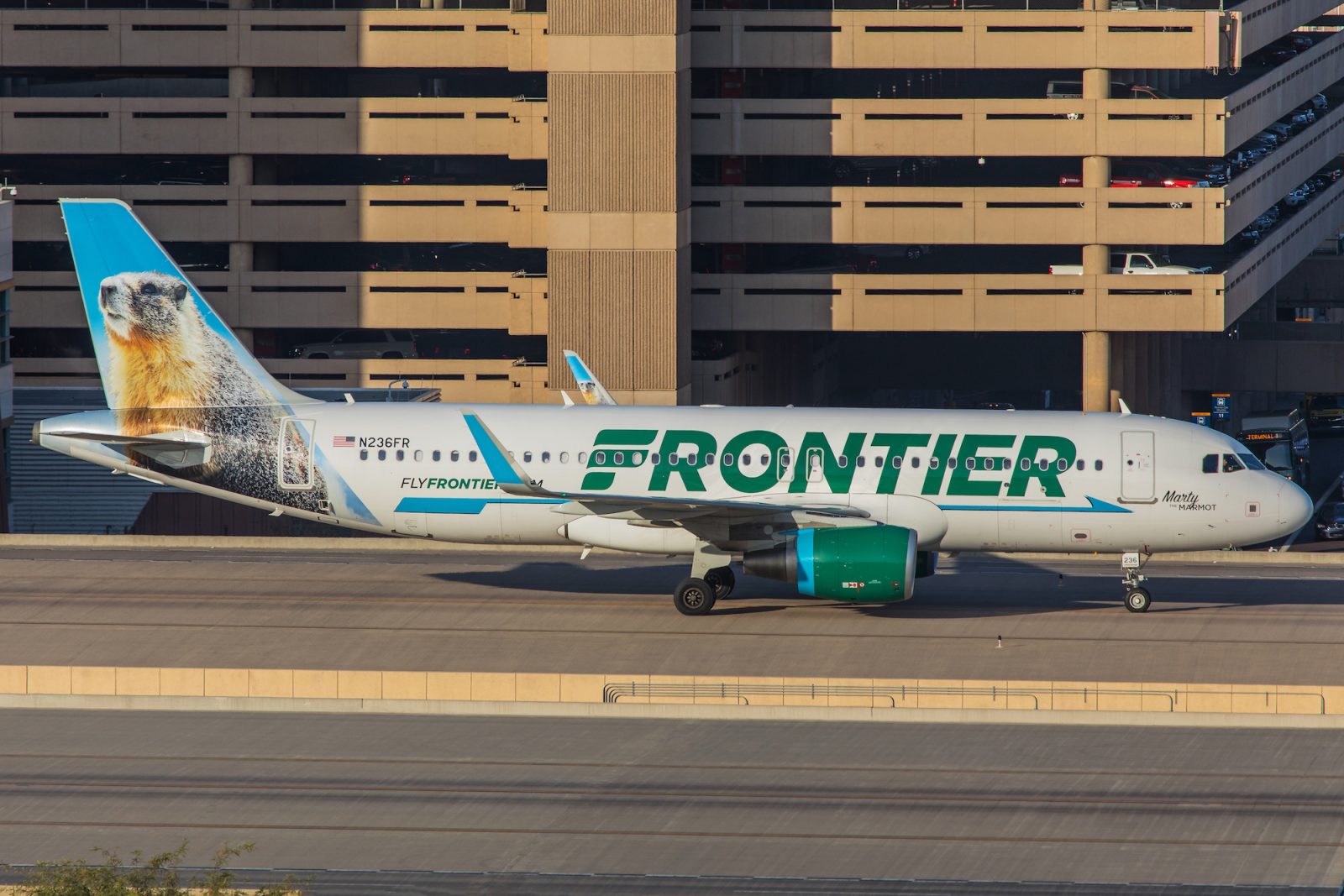
A Frontier A320 in Phoenix (Photo: AirlineGeeks | William Derrickson)
Frontier has reaffirmed its second-quarter financial guidance ahead of an investor conference set for Thursday. The company said it expects an adjusted loss per share in line with projections originally announced in its May 1 earnings release.
According to the 8-K filing made on May 20, the reaffirmation is based on improving travel demand following a dip in March and April. Frontier said revenue per available seat mile (RASM), adjusted for a 1,000-mile stage length — a non-GAAP metric it uses to normalize for flight distance — is expected to increase slightly in the second quarter compared to the same time last year, even with reduced capacity.
“Current booking trends suggest demand for May and early summer travel has stabilized,” Frontier CEO Barry Biffle said during a May 1 earnings call.
As of Sunday, load factors were slightly above last year’s numbers, and RASM was up by a low-single-digit percentage. The airline expects similar trends to continue through the rest of May. The average flight length in the second quarter is projected to be about 4% longer than in the same period last year.
Frontier said its plans to reduce capacity for the remainder of 2025 are unchanged. The reductions will focus on off-peak travel days and are expected to be in the low single digits compared to 2024 levels.
The ultra-low-cost carrier also said it is still targeting a return to profitability in the second half of 2025. This outlook is based on what it described as “moderating industry capacity,” benefits from recent commercial investments, and tight cost and capital spending controls.
Despite “macro uncertainty,” the airline stated that recent booking activity supports its expectations for the quarter.
Ryan founded AirlineGeeks.com in February 2013 and has spent more than a decade covering the airline business. His work has been featured by CNN, WJLA, CNET, and Business Insider. His aviation experience spans airport operations, Part 135 regulatory compliance, and airline crew workforce planning, along with time behind the yoke of a Cessna 172 and interviews with airline executives. Ryan now serves as Group President of Firecrown Media’s Aviation Group. He holds a B.S. in Air Transportation Management and an MBA from Arizona State University and teaches Airline Management at Embry-Riddle Aeronautical University.