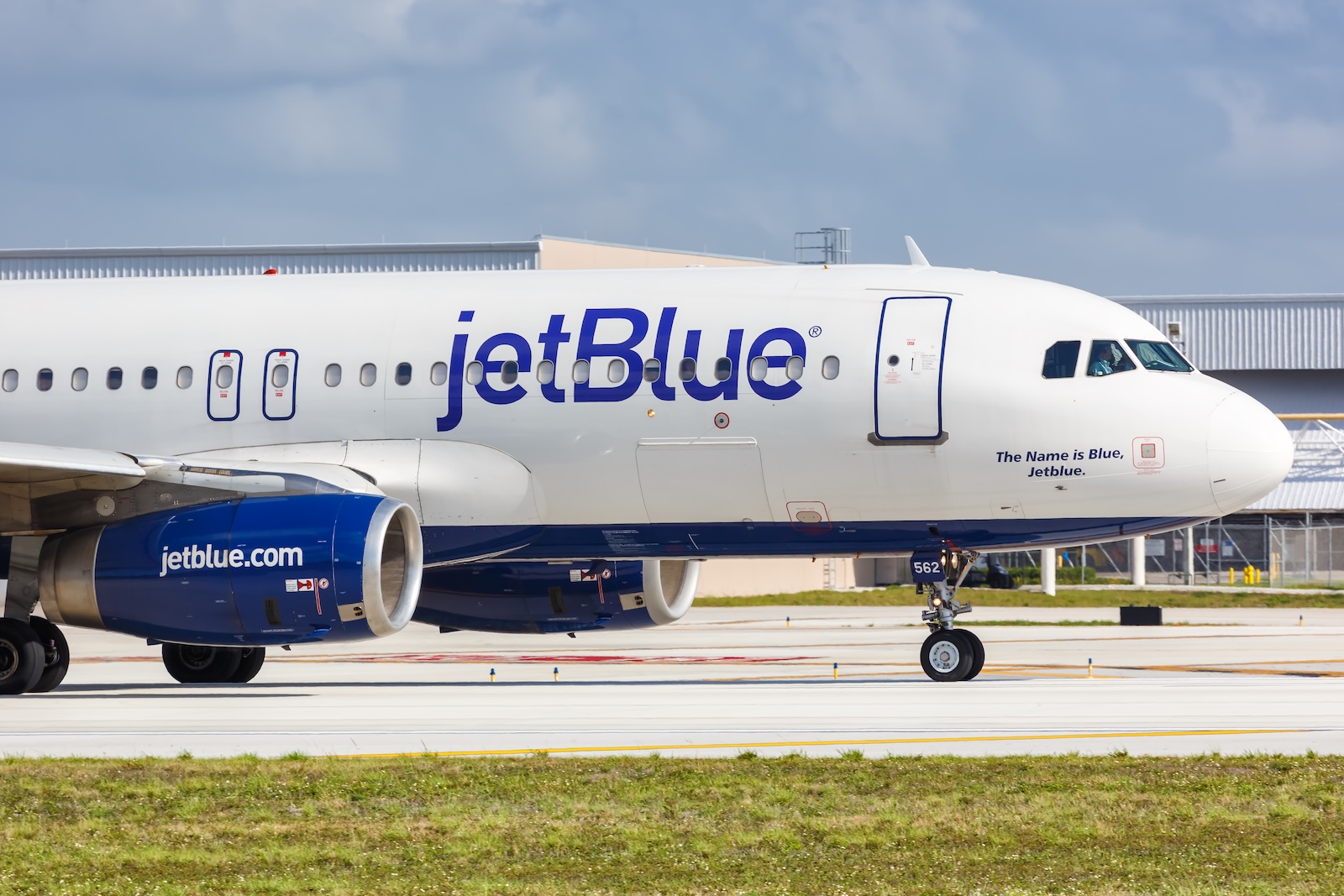
A JetBlue A320 aircraft. (Photo: Shutterstock | Markus Mainka)
A JetBlue pilot killed himself in front of Massachusetts police Friday morning, according to NBC Connecticut. 33-year-old Jeremy Gudorf had been arrested in February at Boston’s Logan International Airport, but later released on bail.
He was flagged by U.S. Customs and Border Protection over a warrant for second-degree sexual exploitation of a minor in North Carolina just before operating a flight to Paris.
As part of bail conditions set by a Massachusetts judge, Gudorf was supposed to turn himself in to North Carolina authorities. But weeks later, a search team of local, state, and U.S. Marshals was tasked with locating him.
Police found Gudorf inside a vehicle in Revere, Massachusetts, on Friday. State troopers approached, which is when he took his own life.
“This is a tragic situation, and our hearts go out to all those affected,” a spokesperson from the airline told NBC. “The crewmember had been placed on indefinite leave after his arrest, and we remain committed to assisting law enforcement in any way possible.”
Gudorf was taken to a hospital and pronounced dead.
Ryan founded AirlineGeeks.com in February 2013 and has spent more than a decade covering the airline business. His work has been featured by CNN, WJLA, CNET, and Business Insider. His aviation experience spans airport operations, Part 135 regulatory compliance, and airline crew workforce planning, along with time behind the yoke of a Cessna 172 and interviews with airline executives. Ryan now serves as Group President of Firecrown Media’s Aviation Group. He holds a B.S. in Air Transportation Management and an MBA from Arizona State University and teaches Airline Management at Embry-Riddle Aeronautical University.
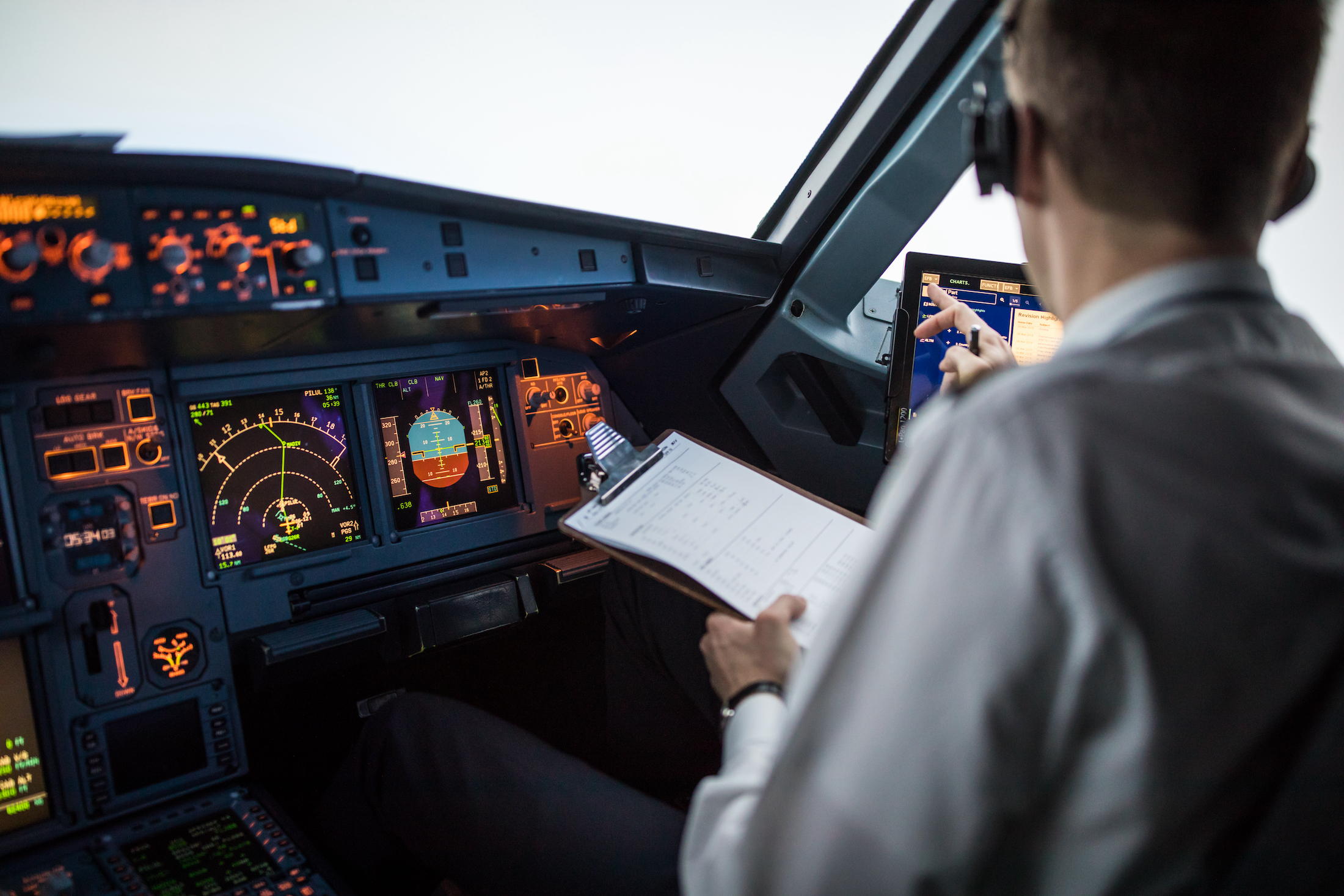
Pilot executing pre-flight procedures in a commercial airliner cockpit before takeoff. (Photo: Shutterstock | l i g h t p o e t)
Logbooks are essential records that document every pilot’s flying history and provide an accurate account of their flight hours, currency, ratings, and more.
While traditional paper logbooks have been dependable tools for recording pilots’ flight hours in the past, recent advancements in aviation technology have revolutionized this process. As a result, electronic logbooks have become the preferred choice for airline pilots’ recordkeeping needs. However, paper logbooks still serve as an adequate method of backup and logging flight time.
Therefore, let’s examine some of the most popular digital and paper logbooks professional airline pilots use and discuss their benefits and drawbacks.
TheLogTen Pilot Logbook is a comprehensive electronic logbook that provides quick flight logging, immediate calculations, in-depth flight time analysis, and comprehensive reporting. Its advanced technology tracks upcoming flights and notifies pilots about their rest periods, duty limits, and currency requirements. Each pilot’s essential flying data is synchronized across all their devices and securely stored in the cloud.
Additional features: Easily import data from other logbooks, spreadsheets, and PDFs at no cost; automatic synchronization across all Apple devices; the Dynamic Time Loupe function detects potential issues with rest, duty, and flight duty period limits proactively; the LogTen feature tracks upcoming flights to spot limit, currency, or certification problems as the legs are flown; presents robust analytical tools for filtering categories like multi-engine, turbine, total instrument, and others; enables flight log sharing functionality; and more
Disadvantages:
After the first 50 flight hours, LogTen requires an annual subscription fee that can accumulate over time.
Because of its comprehensive design, LogTen’s interface and features may require some time to adjust to, particularly for users transitioning from a paper logbook.
Price: First 50 hours of total flight time – Free; Basic – $79.99/year; Pro – $129.99/year; Business – $349.99/year
APDL Airline Pilot Logbook
Best of: 14 CFR Part 117 electronic logbook
TheAPDL Airline Pilot Logbook is specifically developed for 14 CFR Part 117scheduled airline operations, focusing on flight and duty limitations and rest requirements for flight crewmembers. Beyond serving as an electronic logbook, the APDL offers payroll tracking, real-time legality calculations, duty time management, crew tracking, schedule imports, report viewing, alerts, data synchronization, and more. This app is highly customizable, catering to the specific needs of individual airline pilots.
Additional features: Payroll tracking and calculator; alerts for legality and ready-to-fly information; customizable Status Board view; instant logging and flight updates with APDL’s iCloud-backed integrations; gate change and equipment change notifications; APDL Toolkit forseamless schedule importing with Safari integration; comprehensive flight search for deadheading; and more
Disadvantages:
Due to its comprehensive design, APDL’s interface and features may take some time to get used to, especially for users moving from a paper logbook.
APDL is a subscription-based logbook with fees that can accumulate over time.
Price: First 90 days – Free for new users; 30 days – $38.99; 3 months – $77.99; 6 months – $113.99; 1 year – $149.99; 2 years – $269.99
My Pilot Log
Best of: User-friendly electronic logbook
My Pilot Log is an intuitive electronic logbook for pilots. It caters to aviators at all levels, from students to airline pilots. The tool features offline functionality and automatic synchronization, simplifying the tracking and organization of each pilot’s logbook while on the go. Flight data can be imported from various airline operator platforms, including Aims eCrew, Leon, FlightLogger, NavBlue-NOC, and others.
Additional features: Streamlined tracking and management of flight totals, such as flight durations and aircraft types; easy access to details for job and licensing applications; timely alerts enabling pilots to monitor their expiration dates; option to receive email reminders one month before any expiration; tracking currency requirements with customizable options; compliance with EASA, FAA, UKCAA, TCCA, CASA, NZ CAA, and ICAO regulations; and more
Disadvantages:
Transferring flight data to My Pilot Log can be cumbersome when switching from another logbook system.
Price: $13.99-$35.99/year, depending on subscription
FlyGo Pilot Logbook
Best of: Universal electronic logbook
TheFlyGo Pilot Logbook is a globally recognized electronic logbook. It is regularly updated to meet the requirements of theEuropean Union Aviation Safety Agency (EASA) and theFAA. Users can input their flight history from previous logbooks and continue tracking their flights for a complete flight data logging experience. The logbook is fully customizable, featuring intelligent search and auto-fill capabilities.
Additional Features: Automatic logging of day and night flights based on sunrise and sunset times at specified airports; capability to import past flight data and seamlessly continue logging for a complete flight tracking experience; customizable logbook tailored to each pilot’s flight type; intelligent search feature enabling users to filter flights by date range, and aircraft type; and more
Disadvantages:
Some users have reported issues with synchronization across different devices or versions.
Price: First 3 days – Free; update to Pro after three minutes of download – $32.99; Pro – $65.99
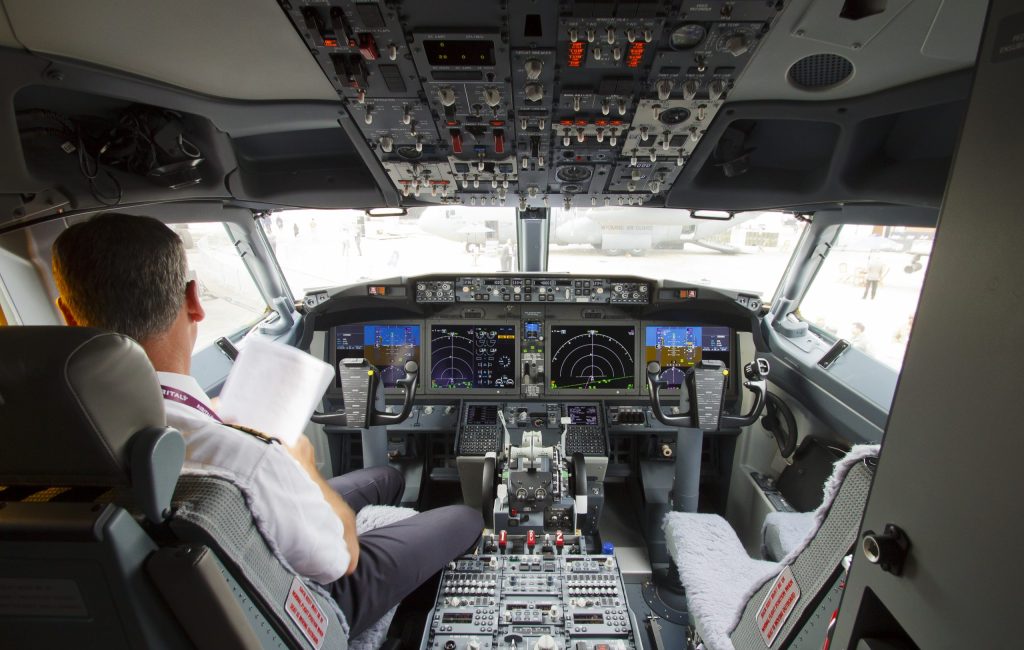
Inside the cockpit of a Boeing 737 MAX. (Photo: AirlineGeeks | Fabian Behr)
ZuluLog
Best of: Versatile electronic logbook
ZuluLog is recognized as the world’s leading electronic logbook. The independent company says it is owned and operated “by pilots for pilots.” Its software is developed, deployed, and supported in the United States while adhering to industry security and FAA standards for electronic information systems. ZuluLog is a versatile electronic tool that not only features flight logging but also serves as a comprehensive electronic flight bag (EFB).
Additional features: Basic and advanced services offer automatic flight logging, VFR sectional charts, IFR charts, georeferenced approach plates, airport diagrams, departure and arrival procedures, in-flight traffic and weather information through ADS-B and FIS-B, pilot currency tracking, automatic night calculations, weight-and-balance assessments, customizable logbook fields, time zone conversions; and more
Disadvantages:
Free basic version of ZuluLog has limitations that can be restrictive for advanced users.
Some users have experienced challenges with the export process.
Many pilots preparing to join airlines have likely used ForeFlight at some point before the transition. The ForeFlight Logbook is seamlessly integrated into the ForeFlight app and is an excellent introductory tool for maintaining electronic flight logs. It is designed to log and share flights effortlessly, track hours and endorsements, review currency, record certificates and ratings, and generate experience reports. The color-coded Currency Summary assists pilots in keeping track of their currency for type ratings, medical certificates, landing currency, and more.
Features:
Compatibility: iOS and Mac devices
Data import: Manual
Data backup: Yes
Additional features: Automatically identifies any missing aircraft profile information to guarantee precise tracking; all data is securely stored in ForeFlight’s cloud; enables bulk import of existing flight time and the ability to export complete logbook data whenever needed; compatible with Apple iOS devices; and more
Disadvantages:
Logbook is only available with a ForeFlight subscription, not as a stand-alone feature.
Price: Basic Plus subscription –$120/year; Pro Plus subscription – $240/year; Performance Plus subscription – $360/year
Jeppesen Professional Pilot Logbook
Best of: Professional paper logbook
Due to its comprehensiveness, the Jeppesen Professional Pilot Logbook has become a tried-and-true favorite of aviation professionals. Its design matches that of the Airway Manual binders and includes simplified pilot and aircraft annual summaries. This logbook can hold up to 10 years of data.
Features:
Size: 11¼ inches by 6¾ inches
Number of pages: 256 total pages
Additional features: Well-made and designed to last for years; comprehensive with easy layout for professional and detailed logging; green bleed-through resistant pages; and more
Disadvantages:
Recent publications of the logbook have been printed with white pages due to materials sourcing issues.
Logbook is larger and heavier than some other traditional paper logbooks due to its comprehensiveness.
Price: $39.42
5 Leg Crew Logbook
Best of: Daily tracking paper logbook
The 5 Leg Crew Logbook is a pocket-sized logbook ideal for real-time flight logging. Each logbook features 200 pages with five flight logs per page, offering plenty of space for recording flight details while on the go. The vinyl cover enhances durability and protects the compact design.
Features:
Size:3½ inches by x 4¼ inches
Number of pages: 200 total pages
Additional features: Allows the user to jot down flight details during the day quickly and transfer them to the main logbook later; economical option for keeping flight records on the go; and more
Disadvantages:
Due to the logbook’s compact size, the amount of detail that can be recorded for each flight is limited. It is, therefore, recommended not to use this logbook as the primary means of recording one’s flight time and training.
Unlike digital logbooks, there is no automatic backup, so users could lose vital records if the logbook is lost or damaged.
Price: $8.25
Paper Logbooks: The Traditional Approach
Advantages of Paper Logbooks
Familiar and established tradition: For many pilots, the familiarity of paper logbooks is comforting, as they have been steadfast companions throughout their aviation careers.
Perceived simplicity and directness: Straightforward nature of recording flight details by hand can sometimes be more concise and less error-prone than digital input, where glitches or system failures occur.
No reliance on technology: Paper logbooks require no dependence on technology, eliminating concerns related to battery life or software issues.
Physical backup in case of system failures: Paper logbooks can be reliable backups to electronic logbooks if digital systems fail or electronic data is lost.
Disadvantages of Paper Logbooks
Prone to human error: One major downside of paper logbooks is their susceptibility to human error, such as typos and miscalculations, which can compromise the accuracy of recorded flight hours.
Time consuming: Manual effort required to calculate totals and track currency in a paper logbook can be time-consuming and tedious.
Difficulty in searching and analyzing flight data: Searching and analyzing flight data within a paper logbook can be cumbersome, making it challenging for pilots to review and utilize their flight information efficiently.
Vulnerable to loss or damage: Paper logbooks are prone to loss and damage. Losing the logbook or spilling a drink on it can cause critical flight history to be unrecoverable.
Electronic Logbooks: The Modern Solution
Advantages of Electronic Logbooks
Enhanced accuracy: Improved accuracy of electronic logbooks throughautomated calculations and data entry is a significant benefit in minimizing human error while tracking flight hours.
Improved efficiency: Electronic logbooks enhance the speed at which flight data is recorded and managed. This, in turn, reduces the time spent calculating total flight hours and conducting complex data analyses.
Greater accessibility and portability: Electronic logbooks enable pilots to access flight records across various devices.
Advanced features: Electronic logbooks offer advanced data analysis and reporting features that enable pilots to meet regulatory standards and keep their qualifications current.
Integration with other aviation software and platforms: Electronic logbooks can integrate with various aviation software and platforms (e.g., flight planning tools), reducing manual data entry and ensuring all flight data information is easily accessible in one place.
Backup and cloud storage for data security: Electronic logbooks provide secure backup and cloud storage options, ensuring data remains safe and easily retrievable during a system failure.
Disadvantages of Electronic Logbooks
Initial investment: Upfront cost and time required to set up electronic logbooks can be substantial and demanding. This might discourage some pilots from transitioning from a paper logbook.
Potential for technical challenges: Electronic logbooks can be prone to technical glitches, interrupting the logging process and causing inconvenience for pilots who rely on the system.
Reliance on electronic devices: Electronic logbooks require regular access to electronic devices, creating dependency issues, particularly during extended periods of use.
Concerns about data privacy and security: Users of electronic logbooks depend on data privacy and security to ensure that their personal and professional information is appropriately safeguarded against unauthorized access.
The Future of Pilot Logbooks
The rapid advancements in aviation technology have reimagined the use and management of pilot logbooks in recent years, gradually making paper logbooks a thing of the past for airline pilots. While paper logbooks still serve as a reliable backup to electronic records, it is time for air carrier pilots to embrace the technological trends of the aviation industry and transition to the future with electronic recordkeeping.
Inside the cockpit of WestJet’s new 787-9. (Photo: AirlineGeeks | Mateen Kontoravdis)
FAQ
What is the best logbook app for pilots?
The best logbook app for pilots varies based on individual needs and preferences. LogTen Pro, for instance, is popular among airline pilots due to its comprehensive features.
Are electronic pilot logbooks legal?
Yes, electronic pilot logbooks are legal as long as they comply with the regulatory guidelines established by the relevant authorities (e.g., FAA, EASA, etc.)
Are aircraft logbooks required?
Yes, aircraft logbooks are required because they contain the official records of maintenance, inspections, repairs, and any modifications made to the aircraft.
How are pilot logbooks verified?
Every pilot is responsible for the accuracy of their logbook. Pilot logbooks are typically verified through self-auditing and cross-checking by authorities or employers.
AirlineGeeks selects products independently. If you purchase something from our articles, we may earn a small commission.
AirlineGeeks.com was founded in February 2013 as a one-person blog in Washington D.C. Since then, we’ve grown to have 25+ active team members scattered across the globe. We are all here for the same reason: we love deep-diving into the fascinating realm of the airline industry.
Germany’s Lufthansa Group expressed “hope” for Russian airspace to reopen, allowing the aviation group’s airline a more efficient route to northern Asia.
A Lufthansa A350-900XWB (Photo: AirlineGeeks | William Derrickson)
Germany’s Lufthansa Group expressed “hope” for Russian airspace to reopen, allowing the group’s airlines a more efficient route to northern Asia.
In an interview published Thursday by Bangkok Post, Lufthansa CEO Carsten Spohr said the company is planning for aviation growth in Asia due to increasing cargo transportation demand and MRO activities in the region.
At the same time, the closure of Russian airspace due to the war in Ukraine has proved a challenge for European carriers looking to grow in Asia.
“Depending on talks between the US, Russia and Europe, we hope the Russian airspace will be reopened, allowing us more efficient operations into northern Asia, where we are currently circumnavigating and experiencing delays,” Spohr told the Bangkok Post.
Russia is also feeling the effects of closing its airspace. A recent Business Insider article stated that the Russian Ministry of Foreign Affairs asked the U.S. to consider allowing air service between the two countries once again.
The potential move to restore air service would signal a winding down of tensions between Russia and the U.S., which both closed their airspaces to each other following the invasion of Ukraine. Most of Europe has also banned Russian aircraft from their airspace.
AirlineGeeks.com was founded in February 2013 as a one-person blog in Washington D.C. Since then, we’ve grown to have 25+ active team members scattered across the globe. We are all here for the same reason: we love deep-diving into the fascinating realm of the airline industry.
Musk, Duffy Sparred Over Controller Firings: Report
During the Thursday meeting, Musk locked in on Duffy. The two bickered over aging air traffic control equipment, along with what improvements would be needed.
Sean Duffy and President Trump (Photo: Shutterstock | Joshua Sukoff)
Elon Musk’s Department of Government Efficiency reportedly pushed to lay off air traffic controllers days after a slew of high-profile aviation accidents. A Friday New York Times report – citing anonymous sources – detailed an “explosive” Cabinet meeting this week, which included Transportation Secretary Sean Duffy and Musk.
During the Thursday meeting, Musk locked in on Duffy. The two bickered over aging air traffic control equipment, along with what improvements would be needed.
Duffy blamed Musk’s DOGE staff for attempting to fire controllers. “What am I supposed to do? Mr. Duffy said. I have multiple plane crashes to deal with now, and your people want me to fire air traffic controllers?” the report stated.
Musk called his claims “lies” and asked for names of those who attempted to fire controllers. Duffy took credit for barring the firings.
The report also said that Musk chimed in by saying controllers hired under diversity, equity, and inclusion-related programs were working in Federal Aviation Administration facilities. President Donald Trump ended the discussion, telling Duffy to hire “geniuses” as controllers.
The FAA continues to face a shortage of air traffic controllers. Last month, Duffy announced a multifaceted plan to “supercharge” controller hiring, including an expedited review process and pay bumps. U.S. airlines praised the move, calling it “a critical first step in mitigating the years-long controller shortage.”
While not commenting on the exchange with Musk, Duffy took to X on Friday, calling the Cabinet meeting “productive.” He also doubled down on his support for DOGE.
Thank you @POTUS for hosting another productive Cabinet meeting @WhiteHouse yesterday. It’s difficult to express just what a change it is to have such a fully engaged and in-command businessman at the helm leading our nation.
“DOGE is doing incredible work helping agencies identify inefficiencies as well as advising us as we work on the critical upgrades to our air traffic control system,” Duffy added. “During the Cabinet meeting, I discussed the importance of safety, particularly at the FAA and with air traffic controllers. The DEI Department at the FAA was eliminated on day 2.”
Ryan founded AirlineGeeks.com in February 2013 and has spent more than a decade covering the airline business. His work has been featured by CNN, WJLA, CNET, and Business Insider. His aviation experience spans airport operations, Part 135 regulatory compliance, and airline crew workforce planning, along with time behind the yoke of a Cessna 172 and interviews with airline executives. Ryan now serves as Group President of Firecrown Media’s Aviation Group. He holds a B.S. in Air Transportation Management and an MBA from Arizona State University and teaches Airline Management at Embry-Riddle Aeronautical University.
A special Nintendo-themed livery on a JetBlue A320 (Photo: JetBlue)
Editor’s Note: AirlineGeeks is proud to present our ‘Livery of the Week’ series. Every Friday, a team member will share an airline livery, which can be from the past, present, or even a special scheme. Some airline liveries are works of art. The complexity associated with painting around critical flight components and the added weight requires outside-the-box thinking from designers. The average airliner can cost upwards of $200,000 to repaint, creating a separate aircraft repainting industry as a result.
Have an idea for a livery that we should highlight? Drop us a line.
JetBlue has launched a new special aircraft livery featuring characters from Nintendo’s Super Mario franchise. The Airbus A320, designated with registration N561JB and named “Cloudtop Cruiser,” showcases Mario, Princess Peach, Luigi, Bowser, Donkey Kong, and Yoshi.
The exterior of the aircraft is designed with bright colors and imagery from the Super Mario world. Upon boarding, passengers will encounter Mario and his friends on the welcome screen of the seatback entertainment systems.
JetBlue’s newest special livery (Photo: JetBlue)
This partnership between JetBlue and Nintendo aims to enhance the passenger experience by incorporating elements of the popular video game franchise. JetBlue emphasizes that its special liveries are created to celebrate significant partnerships and aspects of the airline’s identity.
The initiative builds upon a previous collaboration between JetBlue and Nintendo, which included a “Nintendo Switch On the Go” pop-up and a Mario meet-and-greet at John F. Kennedy Airport’s Terminal 5. JetBlue has stated that the partnership will continue with further activations throughout the year.
Looking for a new airplane model? Head over to our friends at the Midwest Model Store for a wide selection of airlines and liveries.
Ryan founded AirlineGeeks.com in February 2013 and has spent more than a decade covering the airline business. His work has been featured by CNN, WJLA, CNET, and Business Insider. His aviation experience spans airport operations, Part 135 regulatory compliance, and airline crew workforce planning, along with time behind the yoke of a Cessna 172 and interviews with airline executives. Ryan now serves as Group President of Firecrown Media’s Aviation Group. He holds a B.S. in Air Transportation Management and an MBA from Arizona State University and teaches Airline Management at Embry-Riddle Aeronautical University.
The Department of Homeland Security announced that it is ending collective bargaining for security officers at the Transportation Security Administration.
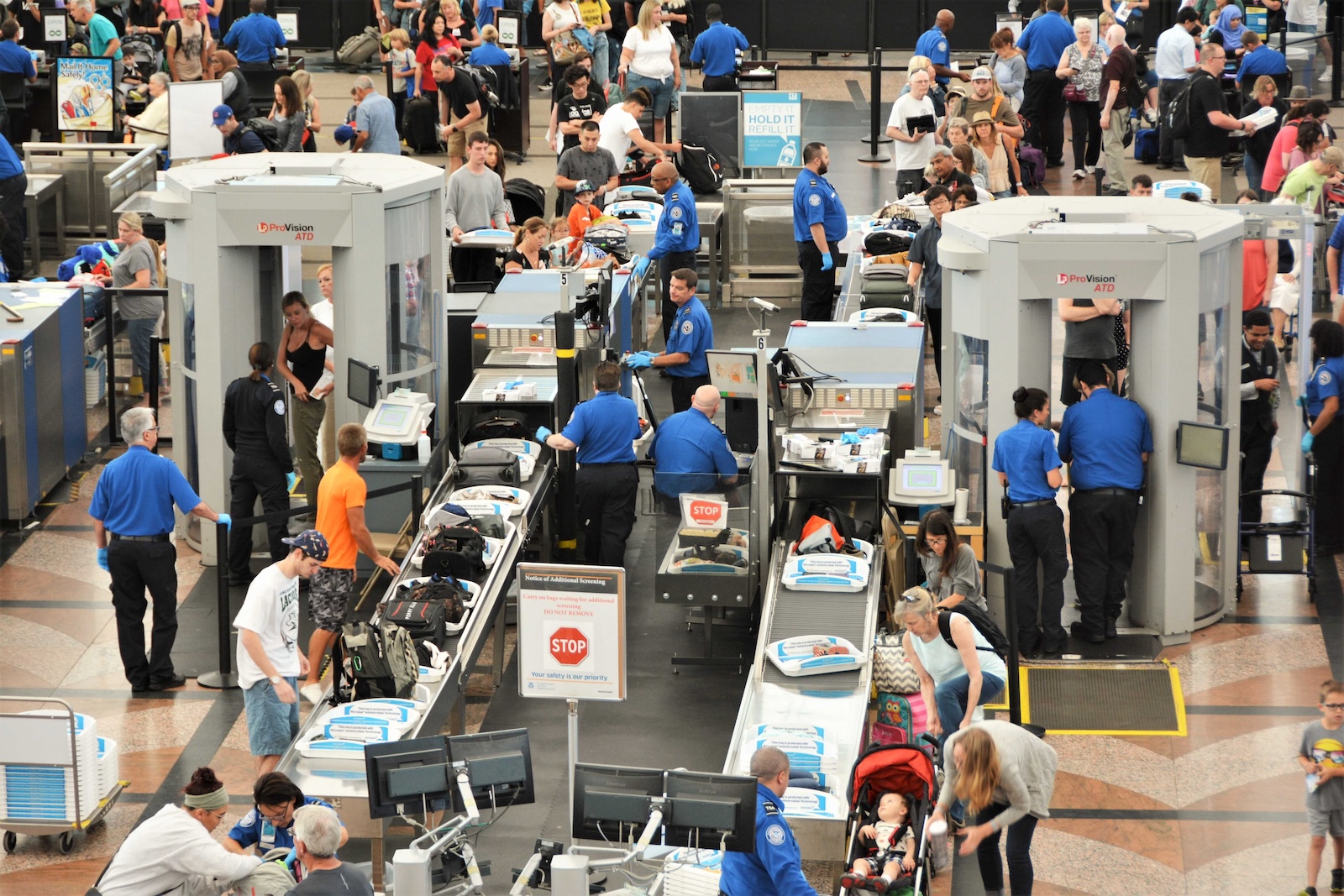
A TSA checkpoint. (Photo: Shutterstock | Jim Lambert)
The U.S. Department of Homeland Security announced Friday that it is ending collective bargaining for security officers at the Transportation Security Administration.
In a DHS news release, the agency stated eliminating collective bargaining would “remove bureaucratic hurdles,” “strengthen workforce agility” and lead to more innovation.
“Gaps in benefit programs, including non-verifiable Family and Medical Leave, are being exploited by a select few poor performers, placing greater burden on [transportation security officers] at the expense of American travelers and taxpayers,” the release stated. “This includes instances, where a [transportation security officers] requested sick leave seven months in advance.
The DHS stated the TSA has more people doing full-time union work than performing screening functions at 86% of U.S. airports. Of the 432 federalized airports, 374 have less than 200 TSA officers to perform screening functions.
The DHS cited a recent TSA employee survey where over 60% said poor performers were allowed to stay employed.
“By eliminating the collective bargaining agreement, Transportation Security Officers will now have opportunities based on their performance, not longevity or union membership,” the release stated.
Union Fires Back
The American Federation of Government Employees (AFGE) responded to the DHS announcement Friday saying that all federal employees who join unions do so voluntarily, and it is not a requirement of working at the TSA or any other federal agency.
AFGE National President Everett Kelley said in an emailed statement to AirlineGeeks that transportation security officers who volunteer as union representatives account for less than half a percent of all work hours performed at TSA. He added that there are fewer union representatives nationwide at TSA than the number of total screeners at 86% of individual federal airports.
“47,000 Transportation Security Officers show up at over 400 airports across the country every single day to make sure our skies are safe for air travel,” Kelley said. “Many of them are veterans who went from serving their country in the armed forces to wearing a second uniform protecting the homeland and ensuring another terrorist attack like Sept. 11 never happens again.
He added that Homeland Security Secretary Kristi Noem and President Donald Trump’s administration violated “patriotic Americans’s right to join a union in an unprovoked attack.”
“They gave as a justification a completely fabricated claim about union officials – making clear this action has nothing to do with efficiency, safety, or homeland security,” Kelley continued. “This is merely a pretext for attacking the rights of regular working Americans across the country because they happen to belong to a union.”
Kelley said that the AFGE will not rest until the rights of TSA workers are acknowledged by the government once again, and he encouraged citizens to contact their elected officials on the matter.
AirlineGeeks.com was founded in February 2013 as a one-person blog in Washington D.C. Since then, we’ve grown to have 25+ active team members scattered across the globe. We are all here for the same reason: we love deep-diving into the fascinating realm of the airline industry.
A United Express Embraer E175 (Photo: AirlineGeeks | William Derrickson)
United has completed the rollout of Starlink Wi-Fi on its first aircraft. The airline plans to start by equipping regional jets, with its entire two-class regional fleet complete by the end of 2025.
The first aircraft to receive Starlink is a SkyWest-operated Embraer E175 with registration N127SY. United says installation of the technology takes an average of eight hours, about 10 times faster than non-Starlink equipment.
United will offer Starlink for free to its MileagePlus members. According to the carrier, passengers on board Starlink-equipped regional aircraft can expect Wi-Fi speeds up to 250 megabits per second (Mbps), which is 50 times faster than current regional aircraft speeds.
In a Friday news release, United touted Starlink’s efficiency, particularly in terms of fuel savings. The Wi-Fi service’s equipment weighs 85 pounds and is weatherproofed.
Starlink Wi-Fi on a United Express E175 (Photo: United Airlines)
“Our ability to roll-out this innovative service with unprecedented speed and scale is a direct result of the advanced equipment, technology and team of experts at United,” said United’s VP of digital technology, Grant Milstead, in the release. “Starlink has been a terrific partner – our combined spirit of innovation and collaboration will enable us to hit our goal of more than 300 regional aircraft installations before the end of this year.”
Ryan founded AirlineGeeks.com in February 2013 and has spent more than a decade covering the airline business. His work has been featured by CNN, WJLA, CNET, and Business Insider. His aviation experience spans airport operations, Part 135 regulatory compliance, and airline crew workforce planning, along with time behind the yoke of a Cessna 172 and interviews with airline executives. Ryan now serves as Group President of Firecrown Media’s Aviation Group. He holds a B.S. in Air Transportation Management and an MBA from Arizona State University and teaches Airline Management at Embry-Riddle Aeronautical University.
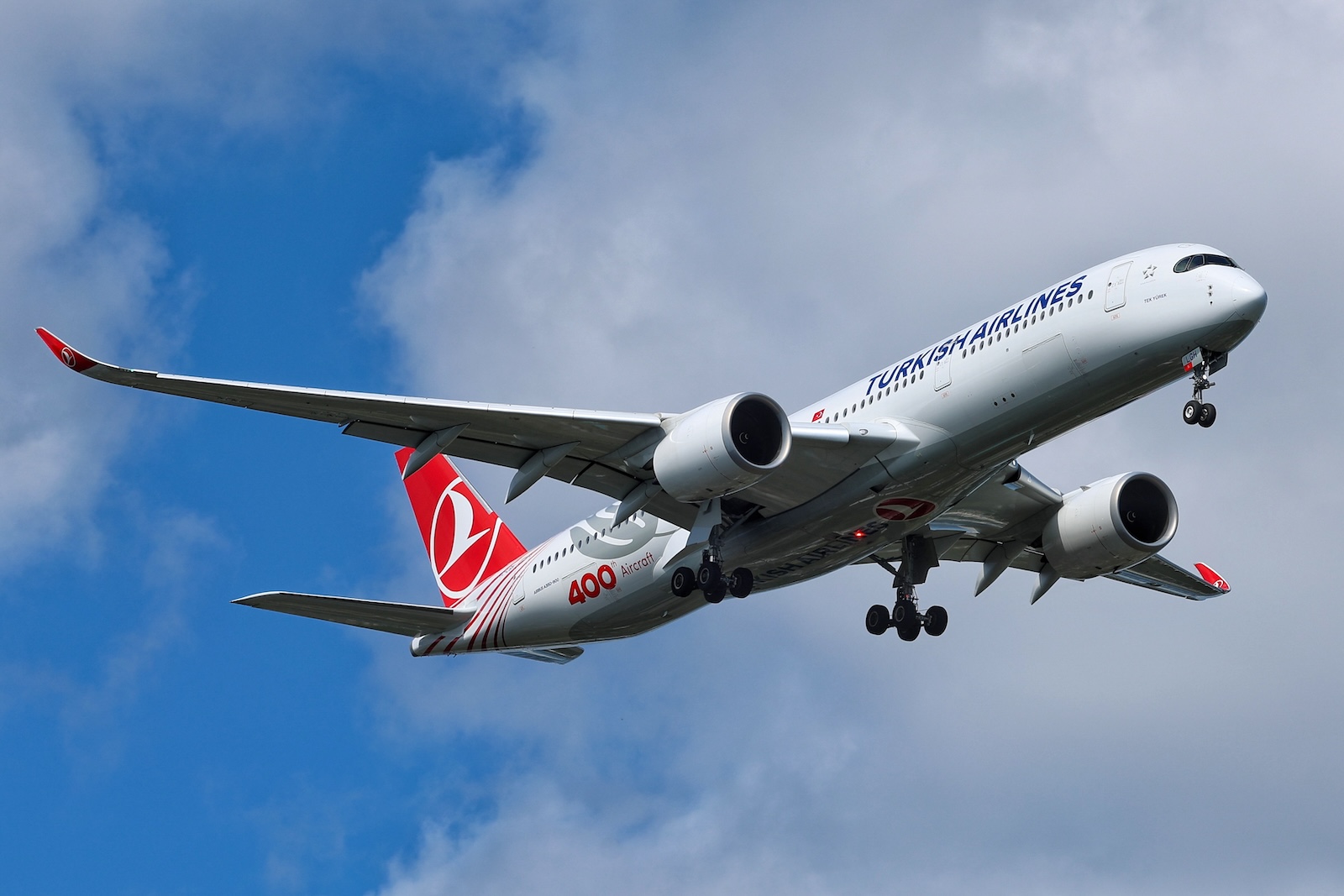
A Turkish Airlines A350-900XWB (Photo: AirlineGeeks | Katie Zera)
Turkish Airlines announced this week that it would launch flights to the Cambodian capital, Phnom Penh.
The flights, which would be routed via Bangkok, Thailand, are set to be operated three times a week. Flights departing Turkey’s largest city, Istanbul, would leave on Wednesdays, Fridays, and Sundays, while the return leg would be operated on Mondays, Thursdays, and Saturdays.
Starting on December 10, 2025, the Turkish flag carrier hopes to capture demand for the winter season, with flights set to end in March.
Turkish Airlines has a long-serving flight to Bangkok, so this flight should also boost capacity on this route, with passengers being able to utilize fifth freedom rules in order to simply fly from Istanbul to Bangkok and vice versa.
Sam Jakobi is a young aviation journalist based in London, U.K. A lifelong Airbus fan, he has adored aviation for as long as he can remember. Sam writes articles and conducts interviews with members of the aviation community.
Spirit Sues DOT Over Reagan National Slot Allocation
Spirit has filed a lawsuit against the U.S. Department of Transportation over its recent allocation of slot exemptions at Reagan National Airport.
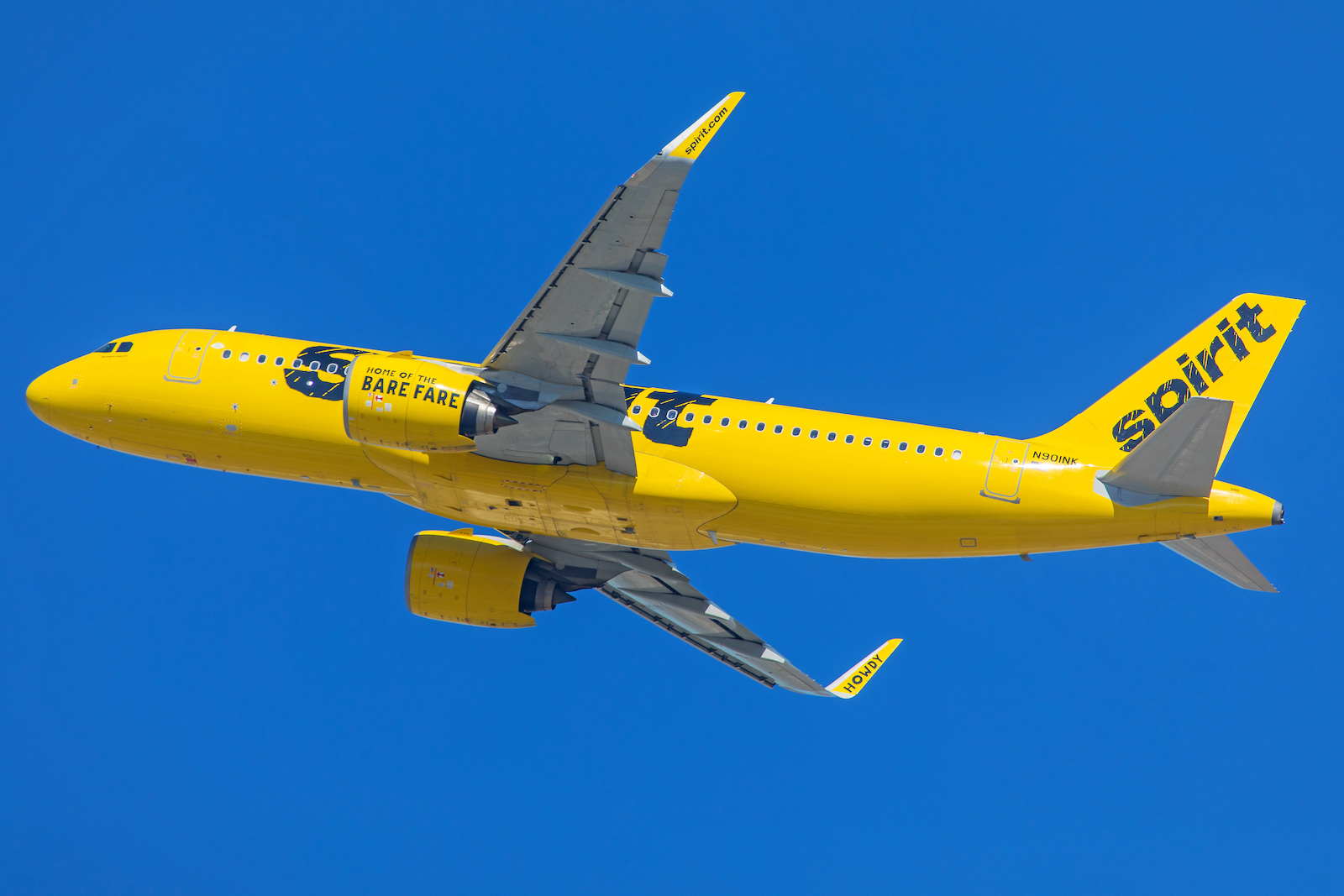
A Spirit A320neo in Los Angeles. (Photo: AirlineGeeks | William Derrickson)
Spirit has filed a lawsuit against the U.S. Department of Transportation over its recent allocation of slot exemptions at Washington’s Ronald Reagan National Airport. The suit challenges the DOT’s decision to award two “limited incumbent” slot pairs to Alaska instead of Spirit.
In its lawsuit, Spirit argues it should have received the limited incumbent slots based on the statutory definitions. The ultra-low-cost carrier contends it qualifies as a limited incumbent because it previously held four permanent slots at DCA, even though it later sold them.
Spirit served Reagan National over a decade ago. The airline claims the DOT misapplied the regulations by requiring carriers to currently operate at the airport to be considered incumbents.
The airline also alleges Alaska should have been disqualified from limited incumbent status due to its extensive codeshare relationship with American, the largest airline at Reagan National.
“By awarding the two slot pairs to Alaska on bogus grounds, the DOT gave them to a carrier that is functionally affiliated with the single largest slot holder at [Reagan National],” the carrier stated.
DOT’s Defense
The DOT defended its decision, stating Alaska does not receive “meaningful access” to the airport through its American codeshare. The agency also said its allocation promotes competition by expanding Alaska’s limited presence at the airport, which includes nonstop service to Portland, Seattle, San Francisco, and Los Angeles.
These airlines had specific destinations in mind for service originating from Reagan National. Spirit aimed to operate a daily nonstop service to San Jose, California.
Frontier sought to establish a new route to San Juan, Puerto Rico. JetBlue was interested in operating a second daily flight to San Juan.
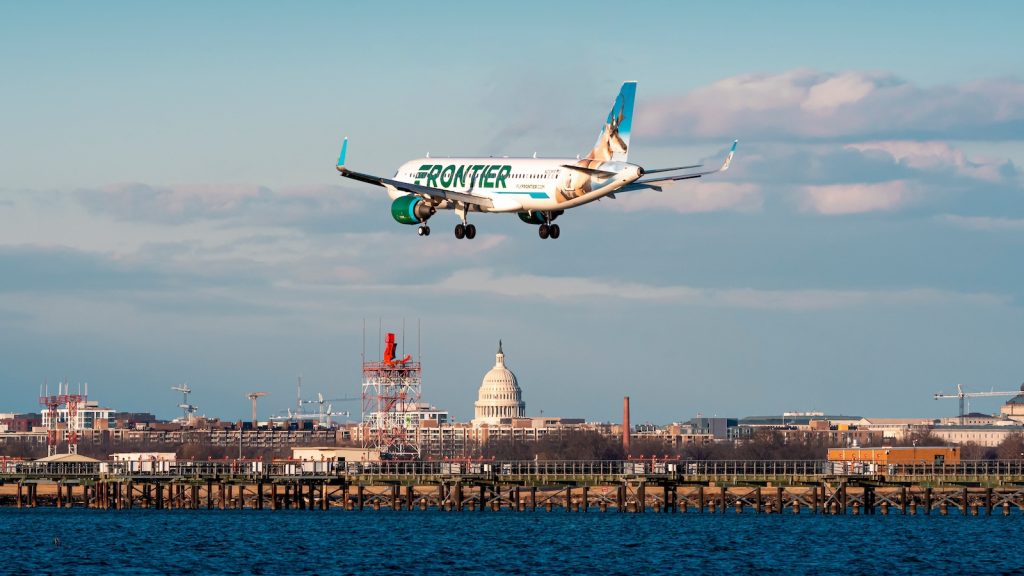
A Frontier A320-series aircraft (Photo: Shutterstock | Andrew Mauro)
Some Routes Already Launched
American’s new daily flights from Washington to San Antonio started last Sunday. Delta plans to begin its service from Reagan National to Seattle on Sunday.
Alaska’s new daily San Diego to Washington service is slated to begin on March 17.
The U.S. Court of Appeals for the District of Columbia Circuit will hear Spirit’s case following the filing on March 3. A ruling could potentially compel the DOT to reconsider the allocation of the contested slot exemptions.
Ryan founded AirlineGeeks.com in February 2013 and has spent more than a decade covering the airline business. His work has been featured by CNN, WJLA, CNET, and Business Insider. His aviation experience spans airport operations, Part 135 regulatory compliance, and airline crew workforce planning, along with time behind the yoke of a Cessna 172 and interviews with airline executives. Ryan now serves as Group President of Firecrown Media’s Aviation Group. He holds a B.S. in Air Transportation Management and an MBA from Arizona State University and teaches Airline Management at Embry-Riddle Aeronautical University.
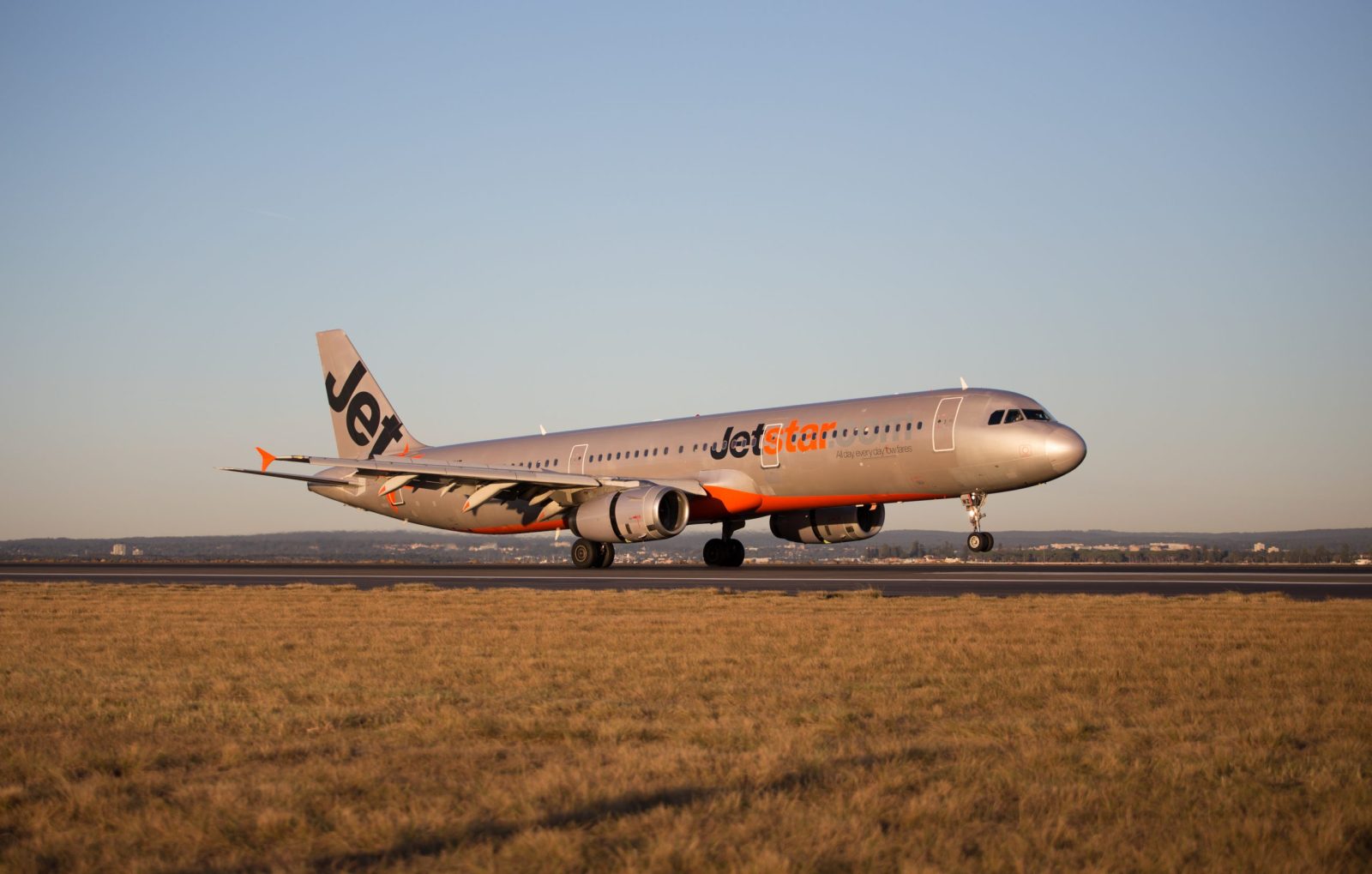
A JetStar A321 in Sydney (Photo | AirlineGeeks | Hisham Qadri)
A 17-year-old male was apprehended by authorities at Avalon Airport in Victoria, Australia on Thursday after attempting to board a Jetstar flight to Sydney while armed with a loaded shotgun, The Guardian reported.
According to Victoria Police, the teenager breached the airport’s perimeter by climbing through a hole in the fence. Dressed as a maintenance worker, he approached the aircraft and attempted to ascend the front stairs leading into the cabin. The Jetstar flight was preparing for departure with approximately 150 passengers on board.
Police arrived and took the teenager into custody. No injuries were reported among passengers or crew members. The identity of the suspect has not been disclosed due to his minor status.
The breach has prompted an immediate review of security measures at Avalon Airport. A Jetstar spokesperson issued a statement regarding the incident, saying: “We’re aware of a security incident at Avalon airport this afternoon and are working with police and the airport to urgently understand what has occurred. The safety of our passengers and crew is our number one priority and we can confirm there are no reported injuries.”
Ari Suss, CEO of Avalon Airport, addressed the incident in a press statement:
“We are deeply concerned about the security breach that occurred today. An individual, disguised as a maintenance worker, managed to access the tarmac and attempted to board a Jetstar aircraft with a firearm. This incident is currently under thorough investigation, and we are working closely with law enforcement agencies to ensure such an event does not happen again.”
Ongoing Investigation
Victoria Police have launched an investigation into the incident, focusing on how the teenager managed to breach airport security and the motive behind his actions. Police confirmed that the teenager was carrying a loaded shotgun and additional ammunition at the time of his arrest. Authorities are also investigating whether he acted alone or had assistance in breaching airport security.
The airport remained closed for several hours following the incident to allow for a detailed security sweep and assessment. Flights were delayed or redirected during this period, but operations have since resumed.
Tolga is a dedicated aviation enthusiast with years of experience in the industry. From an early age, his fascination with aviation went beyond a mere passion for travel, evolving into a deliberate exploration of the complex mechanics and engineering behind aircraft. As a writer, he aims to share insights , providing readers with a view into the complex inner workings of the aviation industry.
Sign-up for newsletters & special offers!
Get the latest stories & special offers delivered directly to your inbox