









Stories

Frontier Makes Another Bid for Spirit

Should a transaction be finalized, Frontier and Spirit would become the fifth-largest U.S. airline with plans to serve 100 million passengers per year. 

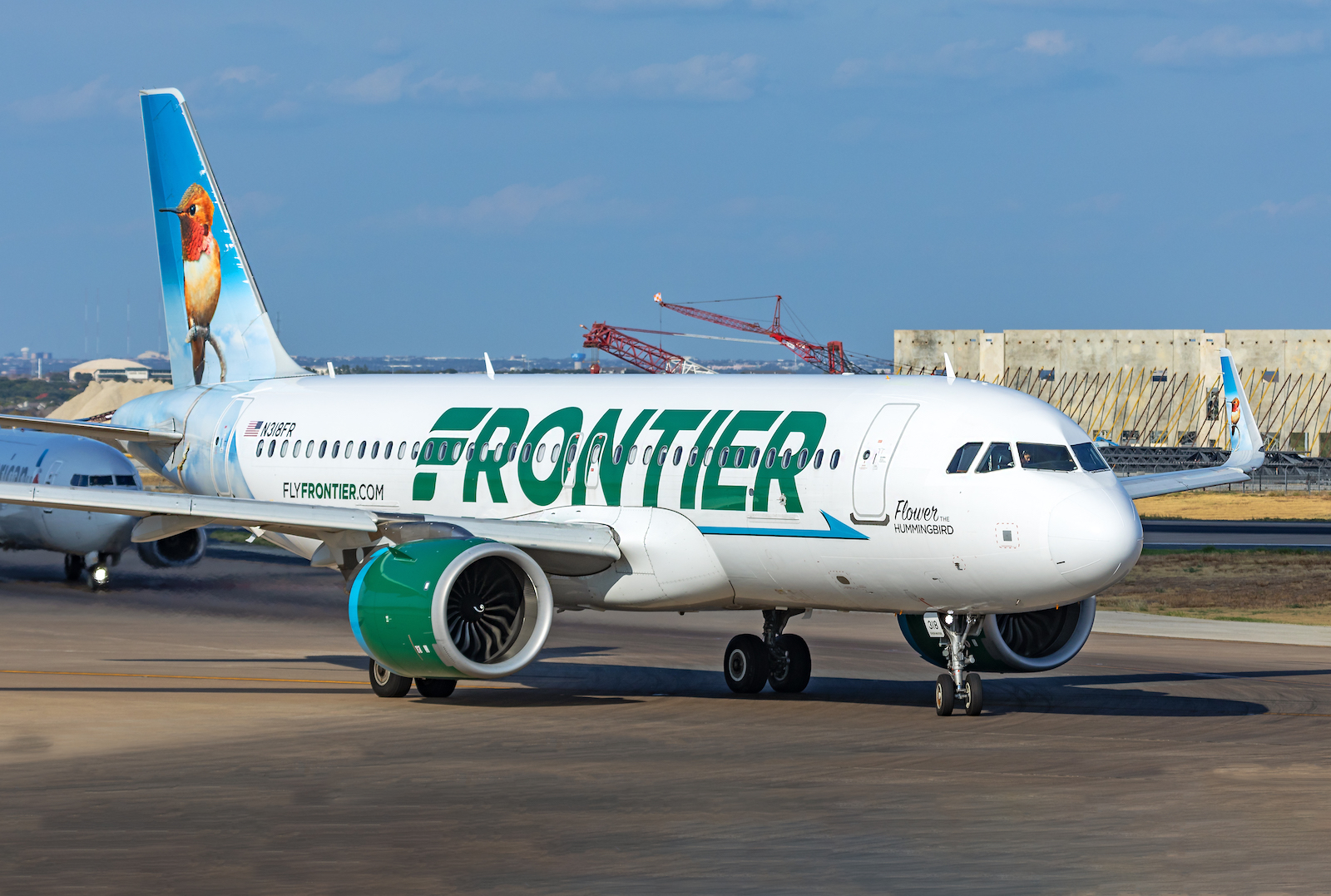
Frontier A320neo
A Frontier Airbus A320neo (Photo: AirlineGeeks | William Derrickson)

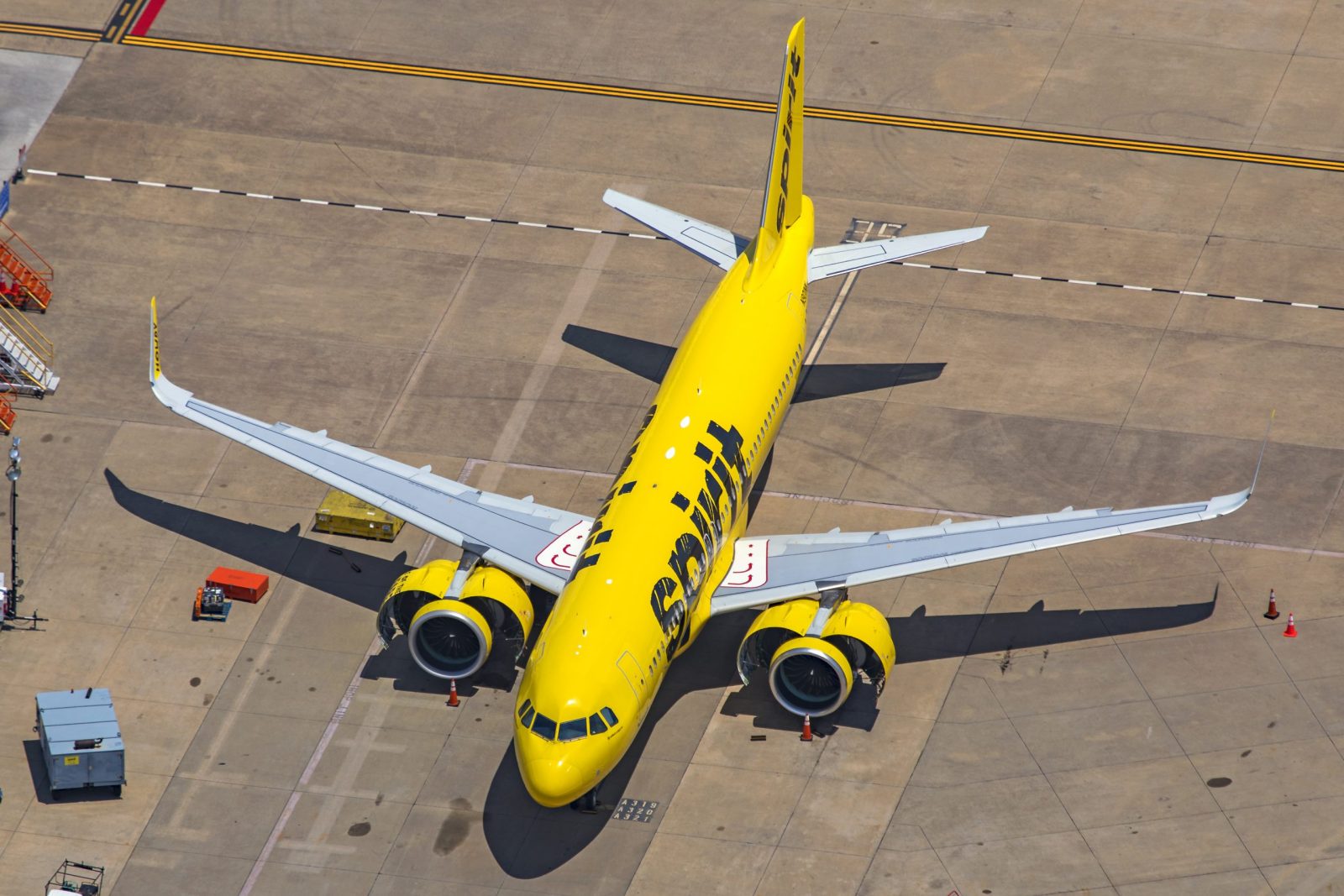
Frontier is looking to acquire Spirit again. In SEC filings on Wednesday, the two ultra-low-cost carriers said they resumed merger talks on Jan. 7.

As part of the deal, Frontier offered the issuance of a $400 million principal amount of debt and 19% of the carrier’s common equity to holders of Spirit’s secured notes.  Frontier added that a combination with Spirit would bring “unmatched benefits.”

“Our Proposal represents a compelling opportunity for your creditors and stockholders to receive a significant premium for their investment in Spirit, with greater value than the proposed transaction as described in the Plan,” a letter said. “We firmly believe that our Proposal is in the best interests of your creditors and stockholders and that they will benefit from your cooperation with us to allow them to realize the benefits of our Proposal.”

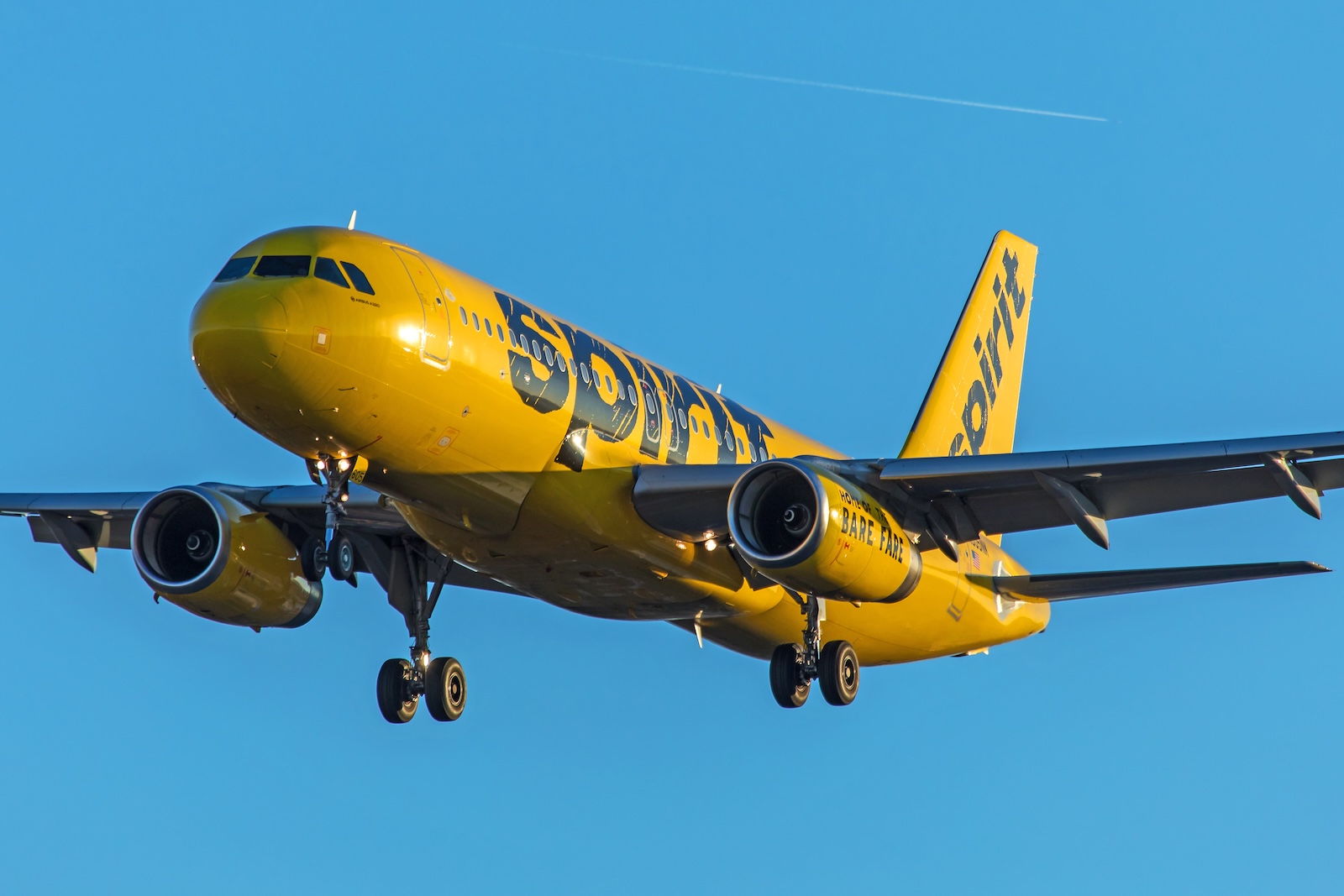
Spirit A320neo jet
A Spirit Airbus A321neo aircraft (Photo: Shutterstock | Kevin Hackert)

A Third Attempt

Frontier and Spirit have engaged in merger talks before and as recently as November 2024. The two airlines confirmed reports of these discussions in their respective filings.

But these talks were later discontinued, and Spirit filed for Chapter 11 bankruptcy protection on Nov. 18.

The two carriers also attempted to merge in 2022. However, JetBlue outbid Frontier in a $3.8 million deal that a U.S. judge ultimately threw out.

A slide from Frontier’s latest proposal to purchase Spirit. (Photo: Frontier Airlines SEC Filing)

In a Jan. 11 response to Frontier’s initial letter, Spirit said the offer “fell short.” $400 million in debt is less than half of what would be provided to creditors under its reorganization plan, the company said.

Frontier noted that no agreement has been reached between the two airlines. Ongoing discussions may not result in a deal, the carrier added in its filing.

Should a transaction be finalized, Frontier and Spirit would become the fifth-largest U.S. airline, with plans to serve 100 million passengers per year.

Ryan Ewing

Ryan founded AirlineGeeks.com back in February 2013 and has amassed considerable experience in the aviation sector. His work has been featured in several publications and news outlets, including CNN, WJLA, CNET, and Business Insider. During his time in the industry, he's worked in roles pertaining to airport/airline operations while holding a B.S. in Air Transportation Management from Arizona State University along with an MBA. Ryan has experience in several facets of the industry from behind the yoke of a Cessna 172 to interviewing airline industry executives. Ryan works for AirlineGeeks' owner FLYING Media, spearheading coverage in the commercial aviation space.

United CEO Says Airline is Committed to ‘Hiring Based on Merit’

United CEO Scott Kirby said the carrier will “continue to hire based on merit” during a Q&A with reporters at the end of last week's earnings call.

United Dreamliner
A United 787-9 Dreamliner. (Photo: AirlineGeeks | William Derrickson)

United CEO Scott Kirby said the carrier will “continue to hire based on merit” during a Q&A with reporters at the end of last week’s fourth-quarter earnings call.

The statement came after a reporter asked Kirby if United was considering following the Department of Transportation and the Federal Aviation Administration in rescinding its own DEI policies.

On Jan. 21, President Trump issued an executive order requiring the FAA to immediately halt all DEI initiatives, stating that those initiatives were discriminatory. The president also ordered all federal employees in DEI-related roles to go on leave, according to NBC News.

While executives at Delta have said the carrier will remain “steadfast” in its DEI initiatives, other companies have elected to dissolve their DEI policies altogether.

While Kirby didn’t say he would dissolve United’s DEI policies, he did affirm a commitment to merit-based hiring.

A ‘High-Quality Employer’

“[W]e are in the fortunate position that we’re a very high-quality employer, and we make efforts to cast a wide net for people coming into United,” he said during the call. “In fact, last year, we had over 600,000 applications for fewer than 10,000 positions. And because of that, we can be incredibly selective about who we pick. And [while] we do hire on merit, we can hire the absolute best of the best and have a naturally diverse workforce.”

Commenting on the shakeups at the FAA and DOT, Kirby said that the most important thing for airline customers is that the FAA is running “effectively and efficiently.” He cited that 68% of United’s blue sky day delays were because of air traffic control restrictions.

“That impacted millions of customers,” Kirby said. “… [W]hen I talk to the President, he knows a lot about airplanes. He knows a lot about the airspace. He is focused even at his level on fixing it. Incoming Secretary [Sean] Duffy, I spoke to this weekend, [is] also focused on fixing it. And I think that they will do the basic blocking and tackling, get the FAA the right resources [and] the right technology to run effectively.”

“That is bigger than everything else combined,” he added. “And I think we are going to be off to the races on that.”

The airline’s flight school, the United Aviate Academy, has created opportunities for women and people of color to pursue careers as commercial airline pilots. According to the flight school’s website, JPMorgan Chase and United partnered to offer $2.4 million in financial aid to people who previously didn’t have the opportunity to pursue careers in aviation.

United CEO Scott Kirby at the Phoenix, Ariz. Aviate Academy (Photo: AirlineGeeks | Ryan Ewing)

“We’re in the business of breaking down barriers and we want the pilot population — some of the highest paying jobs in the industry — to be open to a much more diverse pool of candidates,” the website stated.

In a November 2022 news release, United Aviate Academy stated it aims to train over 5,000 pilots in the next decade – with more than half of them being women or people of color.

AirlineGeeks.com Staff

AirlineGeeks.com was founded in February 2013 as a one-person blog in Washington D.C. Since then, we’ve grown to have 25+ active team members scattered across the globe. We are all here for the same reason: we love deep-diving into the fascinating realm of the airline industry.

Airport Worker Killed in Charlotte Ramp Accident

American Airlines in Charlotte
An American A321 in Charlotte. (Photo: AirlineGeeks | William Derrickson)

An investigation is underway at Charlotte Douglas International Airport after a fatal accident involving an employee and an American Airlines ramp vehicle Monday.

The incident occurred just after 9:30 a.m. EST when an American Airlines employee working on the tarmac was struck by an airline vehicle, USA Today reported. Emergency crews were dispatched immediately, but the employee was pronounced dead.

Neither the names of those involved nor details of the incident have been released. American Airlines and local law enforcement did not respond to FLYING’s inquiries.

“We are devastated by the accident involving a team member at Charlotte Douglas International Airport (KCLT),” an airport spokesperson told FLYING. “Our thoughts and prayers are with the family and our local team members. We are focused on ensuring that all involved have the support they need during this difficult time.”

The International Association of Machinists and Aerospace Workers Union (IAM), which represented the deceased worker, released a statement affirming that the organization would be cooperating with authorities investigating the incident, according to Charlotte’s WBTV.

“The IAM is coordinating with authorities to conduct a full investigation,” the union said. The “IAM has dispatched a safety committee to assist and will provide support to our affected members.”

Editor’s Note: This story first appeared on FlyingMag.com

AirlineGeeks.com Staff

AirlineGeeks.com was founded in February 2013 as a one-person blog in Washington D.C. Since then, we’ve grown to have 25+ active team members scattered across the globe. We are all here for the same reason: we love deep-diving into the fascinating realm of the airline industry.

Boom Goes Supersonic, Makes Civil Aviation History

Company’s XB-1 ‘Baby Boom’ demonstrator breaks the sound barrier at Mojave Air & Space Port in California, where the first supersonic flight occurred in 1947.

The XB-1 gears up for takeoff from the runway at Mojave Air & Space Port in Mojave, California, on Friday, March 22. (Photo: Boom Supersonic)

Tuesday morning at Mojave Air & Space Port in California, almost 80 years after U.S. Air Force ace Chuck Yeager first eclipsed the sound barrier in a Bell X-1, an independently built jet reached supersonic speeds for the first time.

Boom Supersonic’s XB-1 “Baby Boom,” a demonstrator designed as a prelude to Overture—the company’s concept for a supersonic airliner capable of flying anywhere in the world in four hours, for just $100—hit Mach 1.1, or about 750 mph, during its 12th test flight. The feat marks a historic moment for civil aviation, which until now has leaned on outside help to develop supersonic aircraft.

“A small band of talented and dedicated engineers has accomplished what previously took governments and billions of dollars,” said Blake Scholl, founder and CEO of Boom, in a postflight update. “Next, we are scaling up the technology on XB-1 for the Overture supersonic airliner.”

Tristan “Geppetto” Brandenburg, Boom’s chief test pilot, flew the Baby Boom to an altitude of about 35,290 feet before breaking the sound barrier. The flight also served to validate some of the technologies that will appear on Overture, which Boom says will be the first supersonic commercial airliner since its ancestor, Concorde, was retired more than two decades ago. It would be the first American-made civil supersonic jet.

“There we are! XB-1 is supersonic, faster than the speed of sound,” said Mike Bannister, former chief Concorde pilot for British Airways, during the flight, which was streamed live using a chase aircraft and SpaceX Starlink satellites.

Boom in November told FLYING that the XB-1 will be retired after completing a handful of supersonic test flights, and Scholl on Tuesday predicted its swan song will come in February. The campaign kicked off in March, with each flight inching closer to the speed of sound.

“Our discipline and methodical approach to this flight test program created the safety culture that made a safe and successful first supersonic flight possible,” said Brandenburg.

The Baby Boom is only about one-third the size of Overture, which is being developed to carry 64-80 passengers at Mach 1.7—about twice the speed of commercial airliners. But the two share some key similarities: carbon fiber composites, special supersonic intakes, optimized aerodynamics, and augmented reality vision systems to help pilots “see” the landing area.

As the XB-1 test campaign progressed, Boom made key changes to Overture’s design, such as doubling its seating capacity.

“Some ask: ‘what’s the point of the prototype, if the production aircraft design is different?’” Scholl said Sunday in a post on X. “This perspective overlooks learning. If the production design hadn’t changed, it would imply we’d learned nothing from XB-1!”

Overture won’t quite reach Concorde’s speeds but is expected to have a range of 4,250 nm and cruise at about 60,000 feet—high enough to see the curvature of the Earth. Its Symphony engines are designed to run on 100 percent sustainable aviation fuel (SAF). The aircraft’s flight deck is designed around Honeywell’s Anthem avionics suite, and its cockpit will be the first to include sticks that physically respond to aircraft movements and copilot or autopilot inputs.

Boom’s goal is to fly Overture by 2026 and certify it with the FAA as a transport category airplane with special requirements by 2029. That would enable deliveries to customers—such as United Airlines and American Airlines—which have placed a combined 130 orders and preorders, Boom said Tuesday.

The firm still has a long way to go before it reintroduces supersonic commercial flight to the world. But Tuesday marked its biggest achievement yet.

“Beginning in 1905, the National Aeronautic Association [NAA] recognized aviation’s most historic events, including breaking the sound barrier in 1947 and the moon landing in 1969,” said Amy Marino Spowart, president and CEO of the NAA. “XB-1 has continued to prove that [Boom’s] dream is in line with the achievements that have come before.”

Editor’s Note: This story first appeared on FlyingMag.com.

AirlineGeeks.com Staff

AirlineGeeks.com was founded in February 2013 as a one-person blog in Washington D.C. Since then, we’ve grown to have 25+ active team members scattered across the globe. We are all here for the same reason: we love deep-diving into the fascinating realm of the airline industry.

JetBlue Offers Some Pilots $400,000 to Retire Early

Last week, the airline and the Air Line Pilots Association inked a letter of agreement to formalize the voluntary early separations.

A JetBlue A320
A JetBlue A320 aircraft. (Photo: Shutterstock | Markus Mainka)

JetBlue is looking to trim its pilot ranks with voluntary separations for some of the carrier’s more senior aviators. Last week, the airline and the Air Line Pilots Association inked a letter of agreement to formalize the voluntary early separations.

The agreement, which was viewed by AirlineGeeks, states that the early separations will take effect April 1. Bidding opened for the program last week and will close in early February.

Pilots age 59 on or before March 31 and considered “active” will be eligible for the early-outs.

Payouts

For pilots who opt in, JetBlue will pay out 55 hours of their hourly pay rate until their FAA-mandated retirement date or 18 months from the separation agreement’s effective date, whichever is less.

This means that a 12-year A320 captain, for example, who was set to turn 65 on Dec. 12, 2027, could receive a payment of $416,293.02.

The agreement also uses the example of an E190 captain with eight years of seniority and a Dec. 12, 2025, retirement date. With a program effective date of April 1, this pilot could receive a $160,858.91 payout.

Pilots who choose to retire early will also be eligible for certain retiree travel benefits.

In a separate message to pilots, ALPA leadership stated that the early retirements are “intended to help mitigate the impact of Captain reductions in management’s upcoming planned Supplemental System Bid.”

In November, the New York-based carrier said it would downgrade over 300 captains and displace some first officers later this year.

A ‘Win-Win’

During JetBlue’s fourth-quarter earnings call on Tuesday, CEO Joanna Geraghty said the company was “looking forward” to offering early retirements. The airline reported a $44 million loss last quarter.

“I think it’s a win-win for JetBlue and for some of our pilots who are ready to pursue something after they retire,” she added. “So it continues to be a focus on how do we manage some of our elevated labor costs in a world where we have as many aircraft on the ground that we have right now with the Pratt & Whitney issue.”

The airline continues to have multiple Airbus A220 and A321neo aircraft grounded due to Pratt & Whitney engine woes. More groundings are expected later this year.

Ryan Ewing

Ryan founded AirlineGeeks.com back in February 2013 and has amassed considerable experience in the aviation sector. His work has been featured in several publications and news outlets, including CNN, WJLA, CNET, and Business Insider. During his time in the industry, he's worked in roles pertaining to airport/airline operations while holding a B.S. in Air Transportation Management from Arizona State University along with an MBA. Ryan has experience in several facets of the industry from behind the yoke of a Cessna 172 to interviewing airline industry executives. Ryan works for AirlineGeeks' owner FLYING Media, spearheading coverage in the commercial aviation space.

Delta A350 Flies Again After CRJ Collision

The Delta Airbus A350-900 that collided with a CRJ-900 in September returned to service last week after undergoing repairs.

Delta A350
A Delta A350-900 aircraft. (Photo: AirlineGeeks | William Derrickson)

The Delta Airbus A350-900 that collided with a CRJ-900 in September returned to service last week. Registered as N503DN, the 7-year-old aircraft was grounded for over four months while undergoing repairs.

On Sept. 10, the A350 and an Endeavor Air CRJ-900 collided on an Atlanta taxiway, damaging both aircraft. The A350 was headed to Tokyo Haneda before the crew opted to reposition the aircraft to resolve a technical issue.

According to the National Transportation Safety Board’s preliminary report, the A350’s ride-side wingtip then struck the CRJ’s vertical stabilizer. “Substantial damage” was reported on the regional jet, which was holding short of runway 8R awaiting takeoff, while the A350 suffered “minor damage,” investigators stated.

Delta CRJ-900 damaged by an A350 (Photo: NTSB)

One flight attendant on board the CRJ reported minor injuries. The NTSB is continuing its investigation of the incident.

Flightradar24 ADS-B data indicates that N503DN completed a test flight Thursday before operating flight 898 to Los Angeles on Saturday.

As for the CRJ, it remains grounded at the time of writing.

Ryan Ewing

Ryan founded AirlineGeeks.com back in February 2013 and has amassed considerable experience in the aviation sector. His work has been featured in several publications and news outlets, including CNN, WJLA, CNET, and Business Insider. During his time in the industry, he's worked in roles pertaining to airport/airline operations while holding a B.S. in Air Transportation Management from Arizona State University along with an MBA. Ryan has experience in several facets of the industry from behind the yoke of a Cessna 172 to interviewing airline industry executives. Ryan works for AirlineGeeks' owner FLYING Media, spearheading coverage in the commercial aviation space.

Boeing Reports $11.8 Billion Annual Loss

During an earnings call with investors Tuesday morning, Boeing reported revenue of $15.2 billion in the fourth quarter of 2024.

737 aircraft at Boeing's Renton facility.
737 aircraft at Boeing's Renton facility. (Photo: Shutterstock | Thiago B Trevisan)

During an earnings call with investors Tuesday morning, Boeing reported revenue of $15.2 billion in the fourth quarter of 2024—a year that ended with an overall net loss of $11.8 billion for the beleaguered aircraft manufacturer.

The quarter’s revenue results are down 30 percent from $22 billion in Q4 2023 with a loss per share of $5.46. In its Q4 earnings news release, Boeing stated this drop was largely due to union worker strikes by the International Association of Machinists (IAM) last fall as well as costs associated with reducing its workforce.

“We made progress on key areas to stabilize our operations during the quarter and continued to strengthen important aspects of our safety and quality plan,” said Boeing CEO Kelly Ortberg in the news release. “My team and I are focused on making the fundamental changes needed to fully recover our company’s performance and restore trust with our customers, employees, suppliers, investors, regulators, and all others who are counting on us.”

‘Making Steady Progress’

Ortberg said during Tuesday’s call that the aerospace giant was “making steady progress” in its financial recovery. He said that Boeing currently has enough parts—including necessary fuselages—to produce 38 of its best-selling 737 Max aircraft per month.

Additionally, Ortberg spoke about Boeing completing its safety management meeting with the FAA last quarter.

“They reviewed our safety management system and our production status, including spending time on the factory floor,” Ortberg said. “They reported that they saw significant improvement, and I’m pleased that we have an agreed-upon path for rate increases beyond 38 per month.”

He reported Boeing closed out the year producing five 787s per month.

“Like the 737, we’re working to ensure the 787 production system—including the supply chain—is stable prior to making the next rate increase,” Ortberg said.

Ortberg said that Boeing is continuing to focus on getting the 737-7, 737-10, and 777X through certification.

“There are no updates to the timelines we’ve previously communicated on these programs,” he said. “On the 737-7 and 737-10, we’re still working through the testing phase focused on finalizing the icing design solution, which we plan to include in the certification program…The 777X is back in flight test, and we have a good handle on fixing the thrust issue we uncovered.”

Boeing still anticipates first delivery of the 777-9 in 2026.

Ortberg said Boeing is already making progress on its multiyear journey for culture change. He said in 2025 the company will be rebaselining its core values and behaviors for employees.

“Leadership promotions will be grounded not only in what we get done but how we get things done,” Ortberg said. “We’re going to help focus the teams on what it takes to make Boeing successful and promote a culture of unity and accountability by implementing a single enterprise score for all of our annual incentive plans.”

Delivery Overview

Boeing delivered 348 commercial airplanes and recorded 279 net orders in 2024. The total company backlog grew to $521 billion, including over 5,500 commercial airplanes.

Boeing booked 204 net orders for commercial airplanes in Q4, including 100 737-10 airplanes for Pegasus Airlines and 30 787-9 airplanes for Flydubai. Fifty-seven commercial airplanes were delivered in Q4, 36 of which were 737s.

Full information on deliveries for Boeing’s commercial and defense programs for Q4 and full year 2024 can be found here.

Editor’s Note: This story appeared first on FlyingMag.com

AirlineGeeks.com Staff

AirlineGeeks.com was founded in February 2013 as a one-person blog in Washington D.C. Since then, we’ve grown to have 25+ active team members scattered across the globe. We are all here for the same reason: we love deep-diving into the fascinating realm of the airline industry.

A321 Destroyed in South Korea Fire

Early reports indicate that the blaze started in the tail section of the aircraft. Photos on social media show substantial damage to the 18-year-old jet.

An Air Busan Airbus A321 (Photo: Shutterstock | Phuong D. Nguyen)

A fire broke out on board an Air Busan Airbus A321 on Tuesday evening. The jet was preparing for departure from Busan-Gimhae International Airport in South Korea.

Early reports indicate that the blaze started in the tail section of the aircraft. Photos on social media show substantial damage to the 18-year-old jet.

Registered as HL7763, the A321 was bound for Hong Kong with 176 people on board, including 169 passengers, six crew members, and a mechanic. Passengers and crew evacuated via slides, with four non-life-threatening injuries reported.

Air Busan – which is owned by Asiana Airlines – began operations 16 years ago as a low-cost carrier in South Korea. According to the Yonhap News Agency, the carrier has never reported a major accident.

The cause of the fire remains unknown at the time of writing.

Ryan Ewing

Ryan founded AirlineGeeks.com back in February 2013 and has amassed considerable experience in the aviation sector. His work has been featured in several publications and news outlets, including CNN, WJLA, CNET, and Business Insider. During his time in the industry, he's worked in roles pertaining to airport/airline operations while holding a B.S. in Air Transportation Management from Arizona State University along with an MBA. Ryan has experience in several facets of the industry from behind the yoke of a Cessna 172 to interviewing airline industry executives. Ryan works for AirlineGeeks' owner FLYING Media, spearheading coverage in the commercial aviation space.

Lufthansa Braces for Summer Amid Shortage

Lufthansa is reducing its schedule, retaining older aircraft, transferring existing jets, and adding staff to brace for the summer travel season.

A Lufthansa A340-300
A Lufthansa A340-300. (Photo: AirlineGeeks | Noah Escobar)

German carrier Lufthansa continues to struggle with capacity shortages in 2025. The airline is facing delays from aircraft manufacturer Boeing, which is overcoming production challenges, as well as delays from cabin suppliers for its latest Allegris cabin. As a result, Lufthansa will not receive the expected number of 787-9s and the yet-to-be-certified 777X.

To brace for the peak summer travel season, the airline is implementing a series of changes, including schedule reduction, aircraft transfer and reactivation, and additional staffing, to ensure its operation goes as planned.

Service Reductions

Service cancellations and reductions across its network have been progressively implemented by the airline. From Frankfurt, flights to Chennai and Nairobi will see frequency reduction from daily to five weekly flights during the Northern summer season starting starting on March 30.

According to Aeroroutes, frequencies between Frankfurt and Shanghai will also be reduced from 14 to 10 weekly during the summer season. Capacity from its hub in Munich will also be cut, with flights to Sao Paulo and Johannesburg both being suspended for the summer season and flights to Seattle will operate three times a week, instead of daily.

A Lufthansa A350-900XWB (Photo: AirlineGeeks | William Derrickson)

Another way Lufthansa is easing its schedule is by transferring routes to its subsidiaries, a practice that has been fairly common in the Lufthansa Group. For instance, flights between Frankfurt and Minneapolis will be flown by Discover starting in May of this year, taking over from Lufthansa which launched the service in June 2024.

Keeping the Aging Fleet Flying

Lufthansa will also re-activate older aircraft and delay the retirement of aging four-engine types, such as the A340s and 747-400s. This comes at a cost, including the inevitable rise in maintenance expenses. As a result, the airline is keeping every fifth aircraft as a reserve.

Lufthansa operated 14 A380s before ‘permanently retiring’ them during the COVID-19 pandemic (Photo: AirlineGeeks | William Derrickson)

All eight of Lufthansa’s A380s are expected to be ready in time for the summer season after D-AIMA returns from maintenance in Manila. Denver has been added as a new destination for the superjumbo jet, replacing the A350 and giving the airline a much-needed capacity boost. A total of six destinations will be flown by the A380s and two out of eight units will be kept on the ground as reserves, according to aerointernational.

Lufthansa is also transferring six A350s from its Munich hub to Frankfurt. These A350s are expected to fly to Shanghai, Seoul, and Seattle, according to the airline. These A350s will not feature to new Allegris cabin.

Lufthansa hopes that these adjustments, together with the additional staffing, will improve the airline’s reliability and on-time performance over the summer season.

Anthony Bang An

Anthony is an aviation enthusiast who grew up around the world from St. Louis to Singapore, and now lives in Amsterdam. He loves long-haul flying and finds peace in the sound of engine cruising. He aspires to share his passion for the sky though writing and providing another angle on the stories.

United Takes Delivery of 1,000th Jet

In 2025, United says it expects to take delivery of 71 narrowbody and 10 widebody aircraft, down from previous plans of 100 new jets this year.

United 737 MAX 9
A United Boeing 737 MAX 9. (Photo: AirlineGeeks | Katie Zera)

United has received its 1,000th mainline jet, claiming the title of the world’s largest mainline fleet. The aircraft ‒ a 737 MAX 9 with registration N77584 ‒ was delivered by Boeing on Monday.

With this latest delivery, the Chicago-based carrier not only has 1,000 aircraft in its mainline fleet but also has the most airplanes of any airline globally. Data from aviation analytics company Cirium shows that United took delivery of 57 total aircraft last year.

In 2024, the airline achieved a handful of fleet milestones, despite ongoing delivery delays at Airbus and Boeing. This includes its 25th A321neo, which was delivered in December. United also received its first Boeing 787 delivery in 20 months.

United’s newest 787 features a special paint scheme. (Photo: Noah Escobar)

A Quest for Fleet Dominance

The airline now trumps the mainline fleets of both Delta and American, which were the previous titleholders. According to planespotters.net data, Delta has 985 aircraft, while American has 978.

United is slated to maintain its fleet-dominant position as well, with around 700 aircraft still on order, including new types such as the A321XLR and Boeing 737 MAX 10. Both American and Delta each have around 300 jets in their plans.

In 2025, United says it expects to take delivery of 71 narrowbody and 10 widebody aircraft, down from previous plans of 100 new jets this year.

Ryan Ewing

Ryan founded AirlineGeeks.com back in February 2013 and has amassed considerable experience in the aviation sector. His work has been featured in several publications and news outlets, including CNN, WJLA, CNET, and Business Insider. During his time in the industry, he's worked in roles pertaining to airport/airline operations while holding a B.S. in Air Transportation Management from Arizona State University along with an MBA. Ryan has experience in several facets of the industry from behind the yoke of a Cessna 172 to interviewing airline industry executives. Ryan works for AirlineGeeks' owner FLYING Media, spearheading coverage in the commercial aviation space.
Sign-up for newsletters & special offers!

Get the latest stories & special offers delivered directly to your inbox

SUBSCRIBE

Uh-oh! It looks like you're using an ad blocker.

Our website relies on ads to provide free content and sustain our operations. By turning off your ad blocker, you help support us and ensure we can continue offering valuable content without any cost to you.

We truly appreciate your understanding and support. Thank you for considering disabling your ad blocker for this website