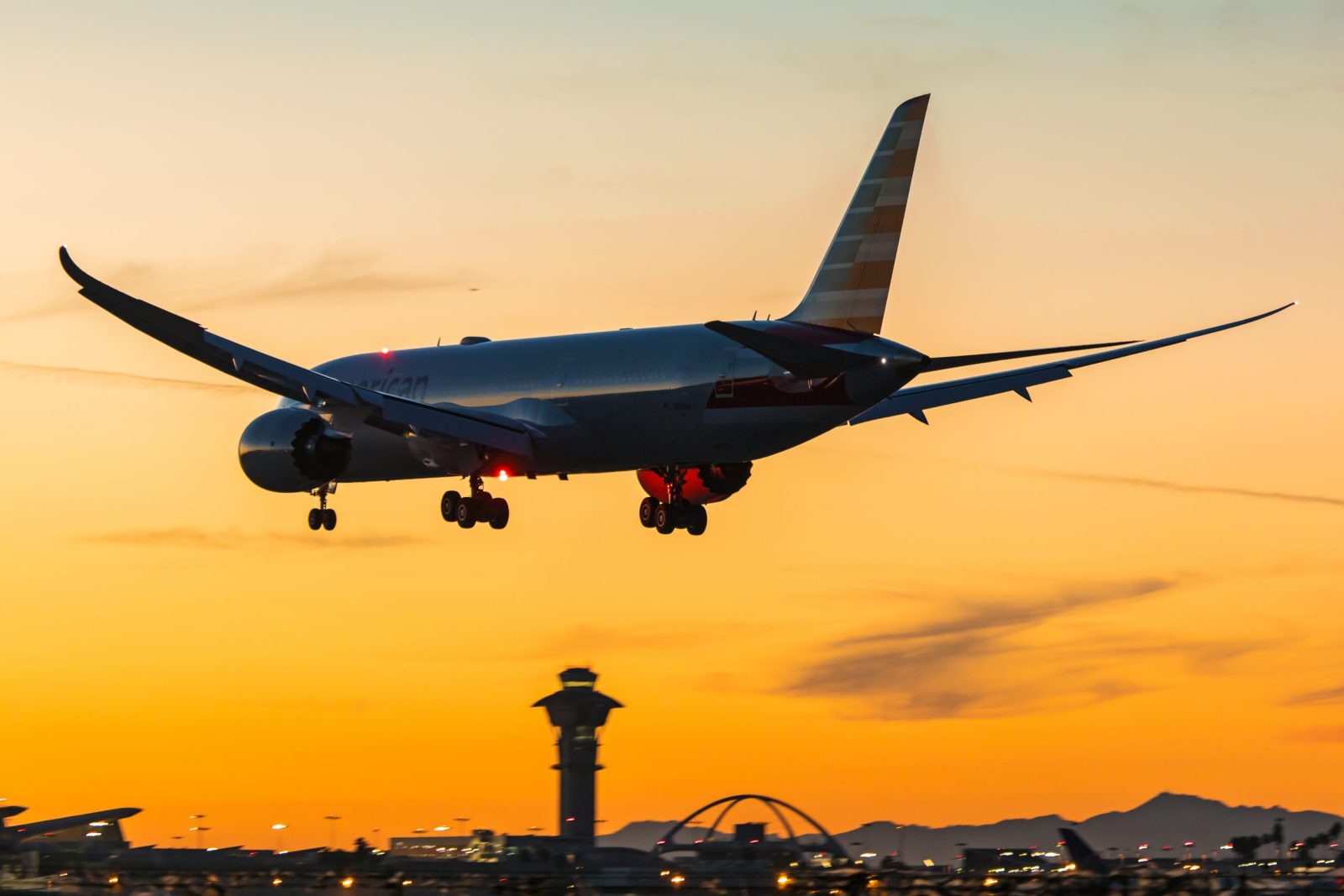
An American Airlines Boeing 787 Dreamliner on approach to Los Angeles.
(Photo: AirlineGeeks | William Derrickson)
The Federal Aviation Administration may be the next target for Elon Musk’s Department of Government Efficiency (DOGE).
In an X post on Wednesday, newly appointed Department of Transportation Secretary Sean Duffy said he recently spoke with the DOGE team about plans to “plug in to help upgrade our aviation system.”
Last week, the FAA’s Notice to Air Mission (NOTAM) system went down again for the second time in roughly a year. A backup system was activated with minimal disruption to air traffic.
The agency is still about 3,000 controllers short of its target. Over 90% of U.S. towers are understaffed, according to a CBS News report.
Last week, Duffy said the agency has resumed hiring for controllers and other safety-related staff, despite a federal moratorium on new employees. He also noted that most safety-related positions at the FAA are not eligible for early buyouts.
In a separate X post, Musk said DOGE will “aim to make rapid safety upgrades to the air traffic control system” with President Donald Trump’s support.
With the support of President @realDonaldTrump, the @DOGE team will aim to make rapid safety upgrades to the air traffic control system.
Ryan founded AirlineGeeks.com in February 2013 and has spent more than a decade covering the airline business. His work has been featured by CNN, WJLA, CNET, and Business Insider. His aviation experience spans airport operations, Part 135 regulatory compliance, and airline crew workforce planning, along with time behind the yoke of a Cessna 172 and interviews with airline executives. Ryan now serves as Group President of Firecrown Media’s Aviation Group. He holds a B.S. in Air Transportation Management and an MBA from Arizona State University and teaches Airline Management at Embry-Riddle Aeronautical University.
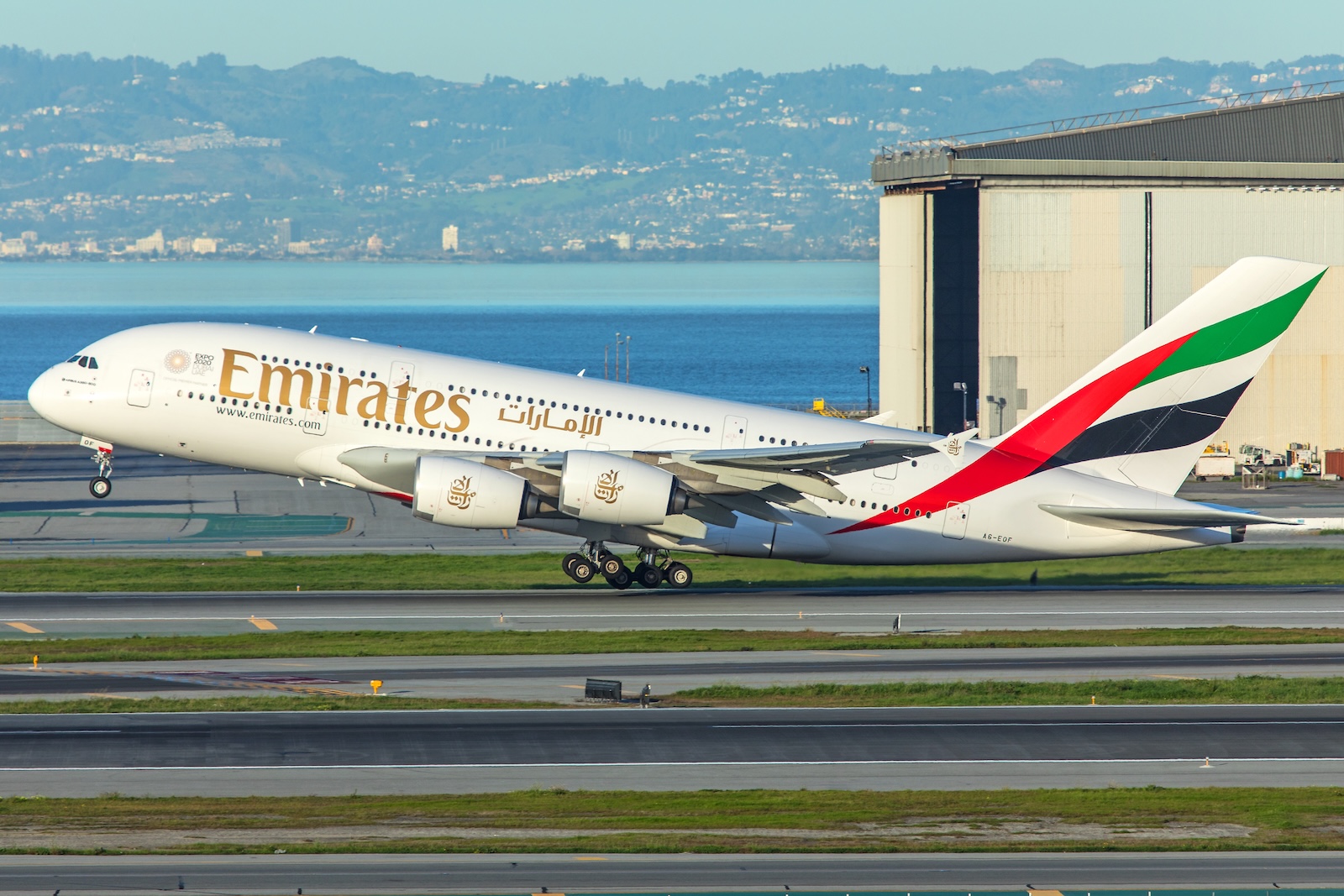
An Emirates A380. (Photo: AirlineGeeks | William Derrickson)
Emirates President Sir Tim Clark says the airline would like to grow its presence in the U.S. But Boeing delivery delays have created some roadblocks.
During an interview with Sky News Australia, Clark hinted at some optimism regarding the new Trump administration. The airline boss believes Trump could help strengthen the U.S. economy, which could open up more opportunities for Emirates to grow in the market.
“That means that probably we will introduce more activity into the United States subject to aircraft availability,” Clark said. “We’d like to do more now, but we can’t because we’re hamstrung by fleet size.”
Boeing 777X Delays
Emirates was initially slated to be one of the launch customers for Boeing’s 777X, which has yet to receive regulatory certification. Boeing now plans to deliver the first 777X in 2026.
Clark has been rather vocal about Boeing’s issues, even suggesting that Chapter 11 bankruptcy might be on the manufacturer’s horizon. Emirates is Boeing’s largest widebody jet customer.
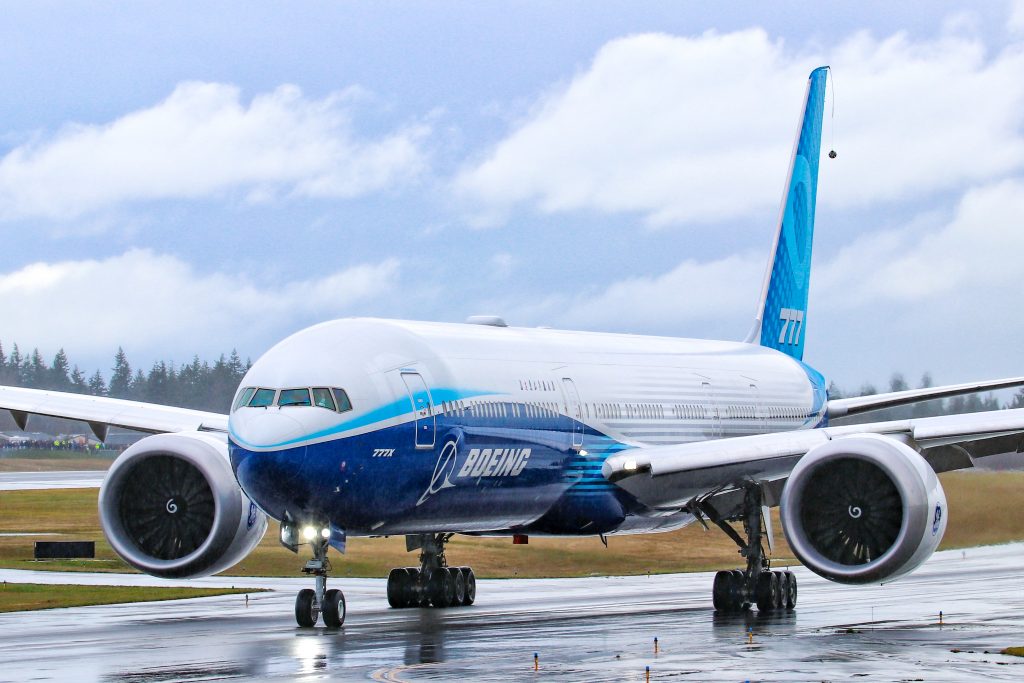
The 777X test aircraft (Photo: AirlineGeeks | Katie Zera)
In his recent Sky News interview, Clark commented that the new administration could put some downward pressure on Boeing to solve quality control woes and meet contractual obligations. He noted that Emirates has 250 aircraft still waiting to be delivered.
“If they don’t perform as well as they should be … I think the administration might be looking at them a little bit more closely,” he said.
Ryan founded AirlineGeeks.com in February 2013 and has spent more than a decade covering the airline business. His work has been featured by CNN, WJLA, CNET, and Business Insider. His aviation experience spans airport operations, Part 135 regulatory compliance, and airline crew workforce planning, along with time behind the yoke of a Cessna 172 and interviews with airline executives. Ryan now serves as Group President of Firecrown Media’s Aviation Group. He holds a B.S. in Air Transportation Management and an MBA from Arizona State University and teaches Airline Management at Embry-Riddle Aeronautical University.
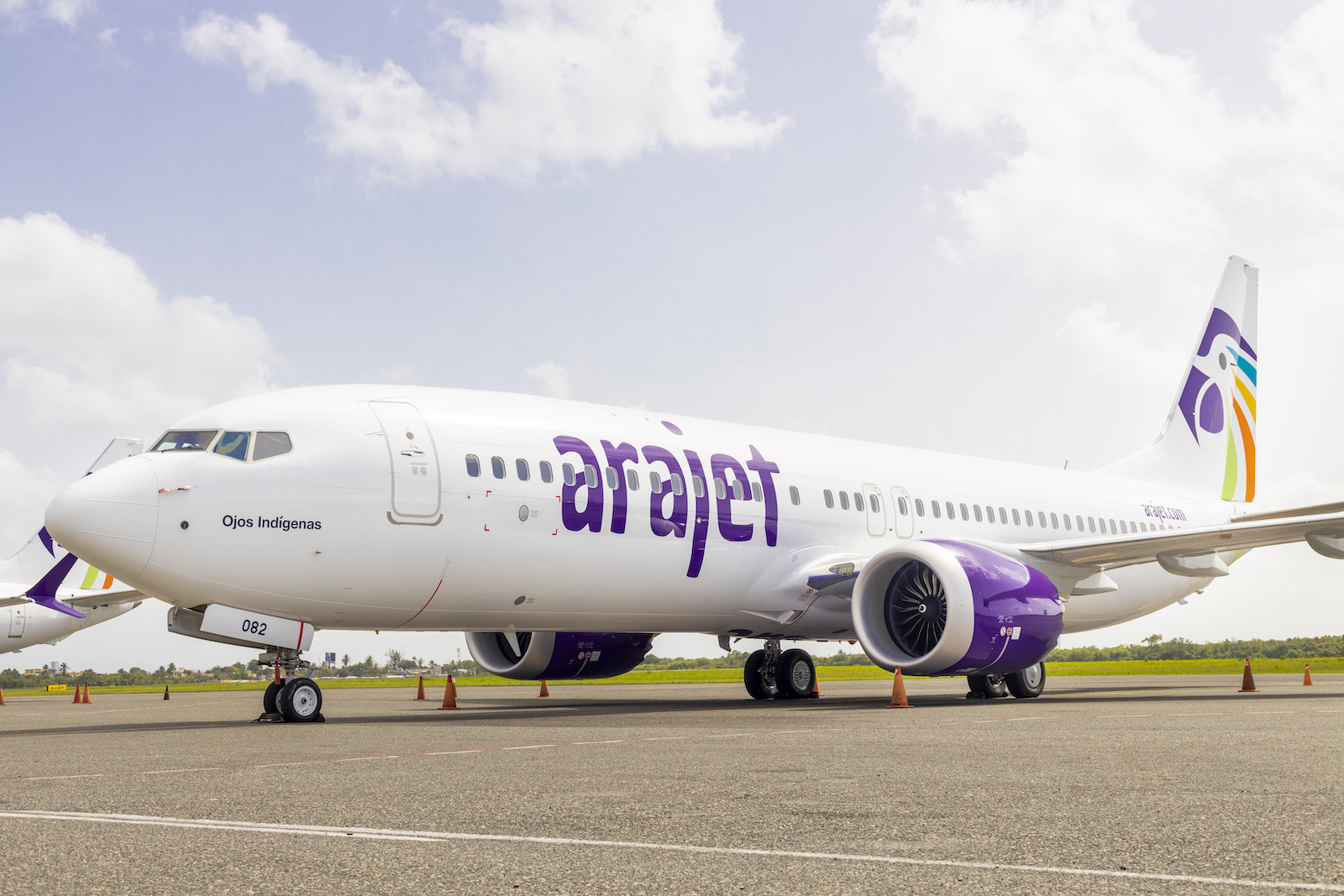
Arajet plans to launch routes to the first of three U.S. locations it was recently approved to serve by the Department of Transportation.
The first U.S. service for the Santo Domingo, Dominican Republic-based airline will begin on April 11, connecting its home base to Miami. This route will operate four times per week.
According to Aeroroutes, Arajet’s second U.S. route will begin in June, also connecting Miami and the Caribbean. Service between Punta Cana, Dominican Republic, and Miami will start on June 14 with four weekly flights.
The carrier also recently announced plans to serve New York and San Juan, Puerto Rico, though it has yet to provide details on those routes.
All flights will be operated with Boeing 737 MAX 8 aircraft.
Ryan founded AirlineGeeks.com in February 2013 and has spent more than a decade covering the airline business. His work has been featured by CNN, WJLA, CNET, and Business Insider. His aviation experience spans airport operations, Part 135 regulatory compliance, and airline crew workforce planning, along with time behind the yoke of a Cessna 172 and interviews with airline executives. Ryan now serves as Group President of Firecrown Media’s Aviation Group. He holds a B.S. in Air Transportation Management and an MBA from Arizona State University and teaches Airline Management at Embry-Riddle Aeronautical University.
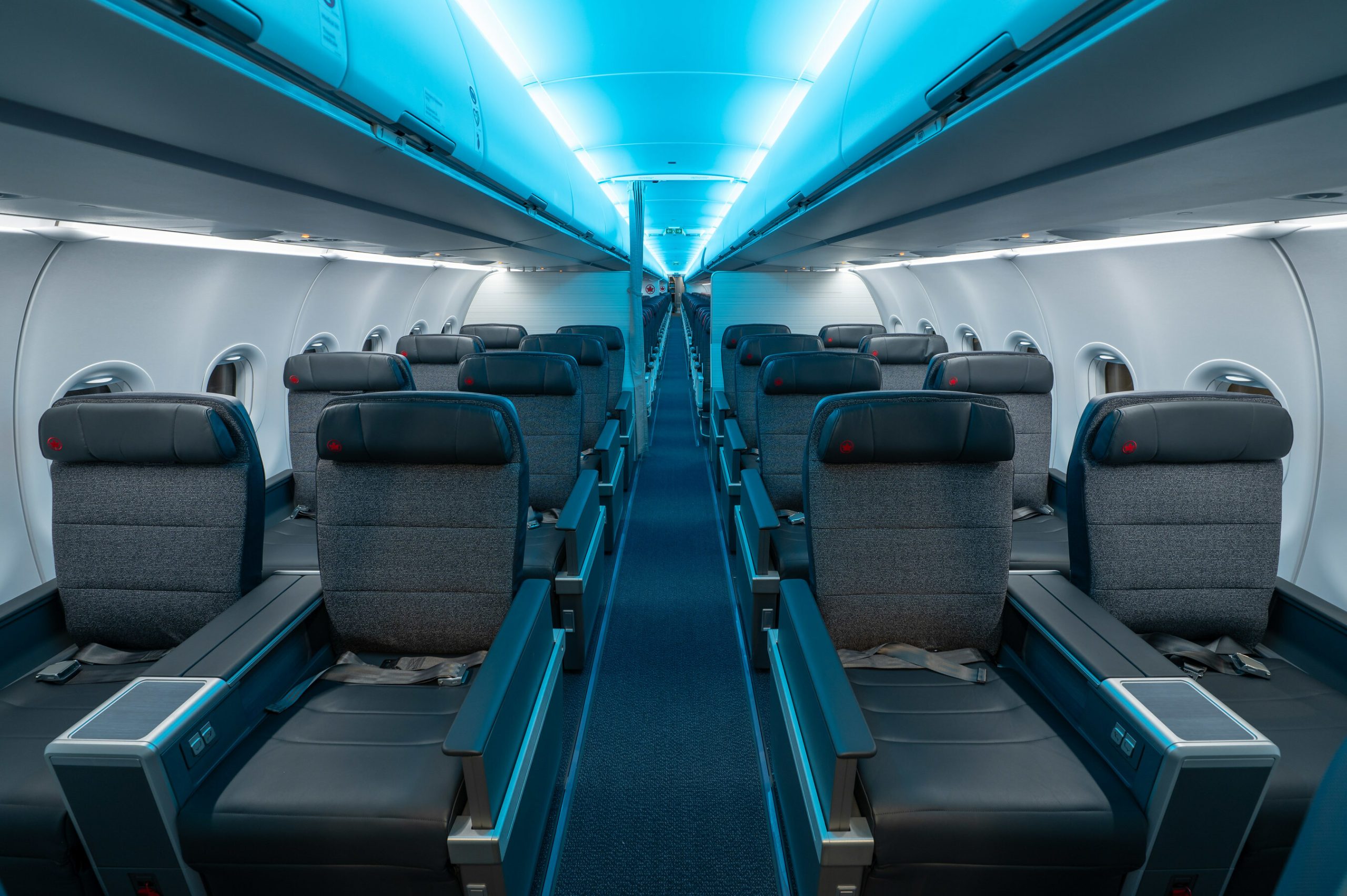
Air Canada's first retrofitted Airbus A321-200 cabin (Photo: Air Canada)
Being a flight attendant can be a glamorous and adventurous career, offering a unique lifestyle filled with excitement and opportunity. The work of a cabin crew member involves flying above the clouds, traveling to different destinations, and meeting new people.
The term “cabin crew” refers to the team of professionals responsible for ensuring the safety, comfort, and well-being of passengers during a flight. While the exact job titles vary between airlines, cabin crew members include flight attendants, pursers, inflight supervisors, and other specialized roles.
The earning potential of a cabin crew member can vary greatly depending on their role, company, and geographical location. This article will delve into the roles with the highest earning potential, looking at factors that influence cabin crew compensation.
Factors Influencing Cabin Crew Salaries
Airline
Each airline has its own cabin crew pay scheme. Generally speaking, full-service mainline carriers tend to have higher cabin crew salaries than regional airlines or low-cost carriers. For example, flight attendants at Delta Air Lines have hourly pay rates ranging from $35.50 to $79.80, depending on seniority. Meanwhile, Frontier Airlines cabin crew members make anywhere from $25.00 to $58.82 per hour.
Airlines also have additional forms of compensation for cabin crew members on top of their base salary. In the United States, cabin crew members typically receive an hourly per diem of a few dollars when they are away from their base. In some other parts of the world, cabin crew receive daily allowances instead. These per diems and allowances are intended to cover meals and other costs that crew members incur their trips.
When airlines are profitable, they may also pay out bonuses to their employees, including cabin crew members. In 2024, Singapore Airlines paid employees bonuses equivalent to nearly eight months’ salary. Alaska Airlines announced bonuses of about six weeks worth of pay to employees in January of 2025.
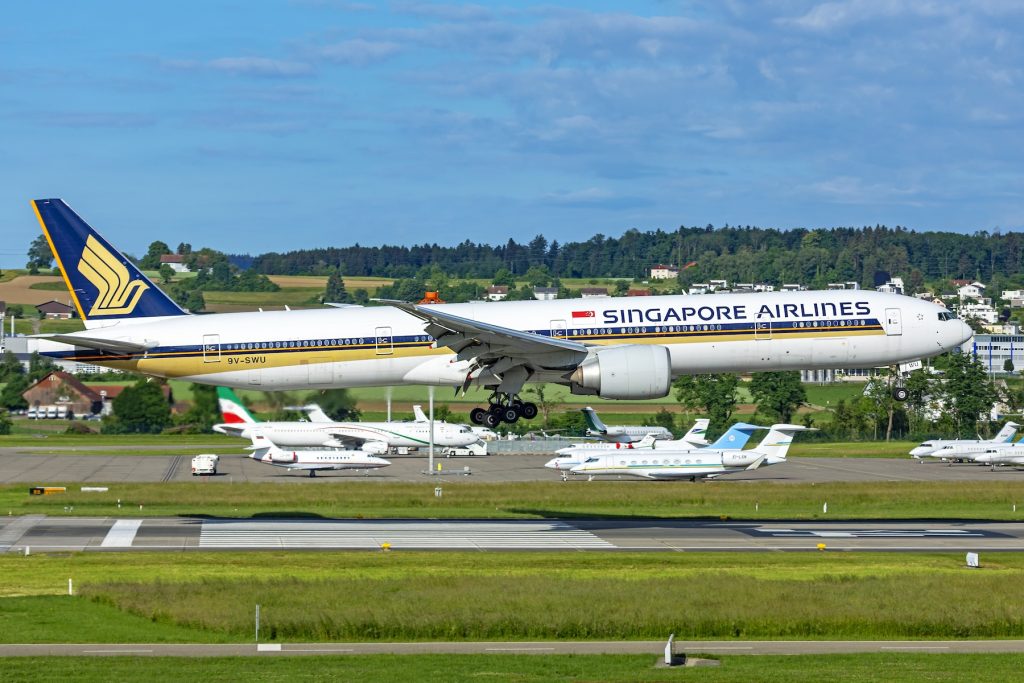
A Singapore Boeing 777-300ER )Photo: AirlineGeeks | William Derrickson)
Experience and Seniority
As is the case with most careers, cabin crew members can expect their pay to increase as they gain more time and experience on the job. In North America, the hourly pay for flight attendants is based on seniority – or time with the airline – with annual pay increases that max out at anywhere from 12 to 20 years, depending on the company.
Other airlines – such as Emirates – have a promotion-based system, where cabin crew members receive promotions and salary increases based on performance. At Emirates, flight attendants start by working in economy class, with promotions also involving moving to premium cabins.
Specialized Roles and Qualifications
Cabin crew have different roles on an aircraft, with the common goal of ensuring safety while also providing customer service. Those in leadership roles receive more compensation. Job titles and responsibilities can vary between airlines, but common leadership positions include pursers, lead flight attendants, and inflight supervisors. Regardless of the title, these jobs involve overseeing other cabin crew members. At airlines in the United States, these positions typically receive additional hourly pay on top of their regular compensation, ranging from around $2.00 to $7.50 per hour.
Some airlines also have additional pay for those who speak additional languages. For example, American Airlines flight attendants receive $2.00 hours per hour on all flights if they are qualified to speak a foreign language, and an additional premium of up to $3.75 if their language skills are required on an international segment.
Geographical Location
Pay rates and pay schemes for cabin crew members vary greatly around the world. While airlines in North America use hourly pay scales, other carriers like British Airways and Emirates pay a fixed base salary with additional variable flying pay.
Differences in compensation can also stem from local labor markets and cost of living, as well as changing industry standards and job markets. Some airlines – particularly those based in the Middle East like Emirates and Qatar Airways – also provide their cabin crew members with accommodations at their bases. These airlines typically have large numbers of flight attendants who are recruited from foreign countries.
Highest Paying Cabin Crew Jobs
International Flight Attendants
Those operating long-haul international flights are typically better compensated due to increased flight time and more hours contributing to their per diems and allowances. At airlines where cabin crew bid for schedules based on seniority – as is the case with airlines in North America – international trips are typically operated by more senior flight attendants. Most low-cost and budget carriers – which generally have lower cabin crew pay rates – do not operate long-haul flights.
Leadership and Supervisory Positions
As previously mentioned, cabin crew members who are pursers, lead flight attendants, or inflight supervisors receive higher hourly pay or base salaries. Cabin crew have to have at least a few years of experience before applying for these roles. Since those in leadership and supervisory roles are more senior cabin crew members, they tend to be paid more even before they take on the additional responsibilities of a purser or supervisor.
Premium Cabins
At some airlines, cabin crew members working in premium cabins or certain positions on an aircraft are better compensated than their counterparts working in economy class. This could be in the form of higher hourly pay or through a promotion system in which crew members need to be promoted to work in premium cabins. Airlines pay these crew members due to the higher service expectations in business class and first class.
Tips for Increasing Cabin Crew Earning Potential
Gain Seniority and Experience: At seniority-based airlines, having more time with the company is the number one way to receive pay increases as a cabin crew member. This also incentivizes employees to stay with the carriers.
Seek Promotions and Supervisory Positions: Increased responsibilities and leadership roles for cabin crew members come with higher pay.
Develop Specialized Skills: Some airlines will pay cabin crew members extra for skills like the ability to speak a foreign language.
Consider the Value of Non-Monetary Compensation: The total compensation package for a cabin crew member extends beyond their base salary. For example, airlines typically offer flight benefits and medical insurance. Other companies may provide housing or pensions.
Look Beyond the Airlines: While many cabin crew members choose to work for an airline, there are other employers with high earning potential, such as private jet and charter companies.
Frequently Asked Questions
How do I get a job as a cabin crew member?
The process of becoming a flight attendant involves understanding the job, meeting the basic requirements, and going through the recruitment process. Hiring processes vary between airlines, but they typically include an online application followed by an interview and evaluation process.
What qualifications do I need to work as a cabin crew member?
While qualifications and requirements differ between companies, carriers typically require new hires to have a high school diploma and some customer service experience. Airlines and governments may also have age and size requirements.
How much do flight attendants make?
As discussed in this article, cabin crew pay can vary greatly depending on a number of factors. However, the median flight attendant salary in the United States in 2023 was $68,370, according to the Bureau of Labor Statistics.
Andrew is a lifelong lover of aviation and travel. He has flown all over the world and is fascinated by the workings of the air travel industry. As a private pilot and glider pilot who has worked with airlines, airports and other industry stakeholders, he is always excited to share his passion for aviation with others. In addition to being a writer, he also hosts Flying Smarter, an educational travel podcast that explores the complex world of air travel to help listeners become better-informed and savvier travelers.
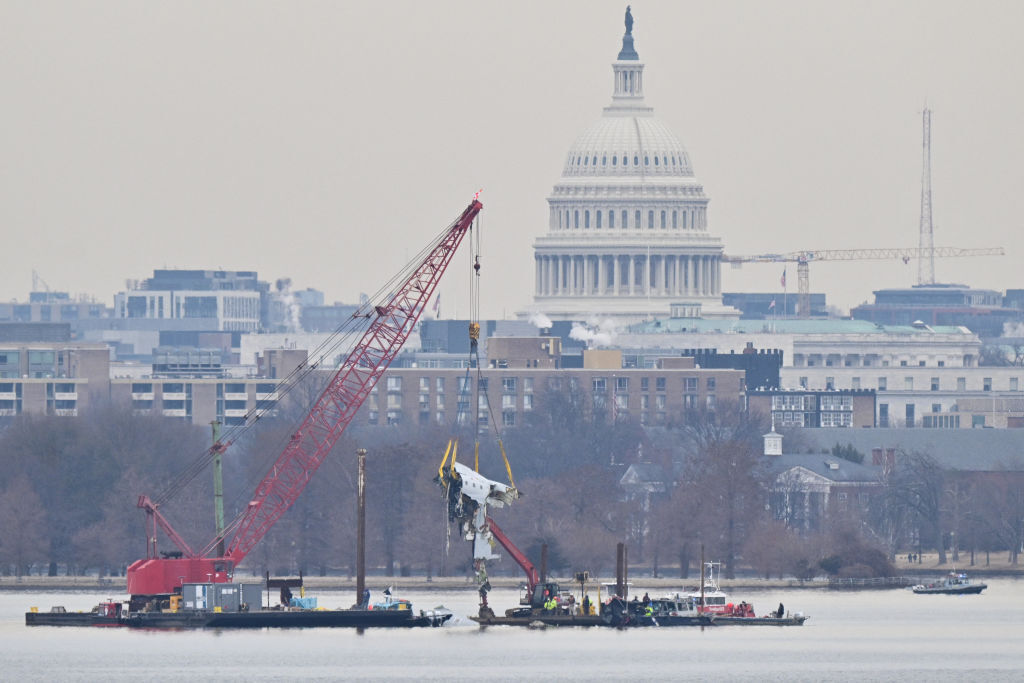
A crane removes airplane wreckage from the Potomac River (Photo: ROBERTO SCHMIDT/AFP via Getty Images)
All 67 victims have now been recovered after Wednesday’s midair aircraft collision between an Army Black Hawk helicopter and PSA Airlines CRJ-700 jet over the Potomac River in Washington, D.C.
According to a Tuesday afternoon post on social media by the D.C. Fire and EMS Department, 66 of the remains have been positively identified. A plethora of military and federal rescue agencies have been retrieving bodies from the river for nearly a week now.
“The Office of the Chief Medical Examiner continues its work to ensure the dignified identification of remains and support the families through this process,” the post stated. “Our hearts are with the victims’ families as they navigate this tragic loss. We extend our deepest condolences and remain committed to supporting them through this difficult time.”
The post stated that while all victims have been identified, salvage operations will continue for any additional remains. After Wednesday, operations will shift to recovering wreckage from the crashed Black Hawk helicopter.
On Monday evening, President Donald Trump spoke with American Airlines CEO Robert Isom and said he was committed to increasing aviation safety, according to a report by CNN. Trump has said DEI hiring practices were to blame for the crash that killed 64 civilians and three Army servicemembers.
AirlineGeeks.com was founded in February 2013 as a one-person blog in Washington D.C. Since then, we’ve grown to have 25+ active team members scattered across the globe. We are all here for the same reason: we love deep-diving into the fascinating realm of the airline industry.
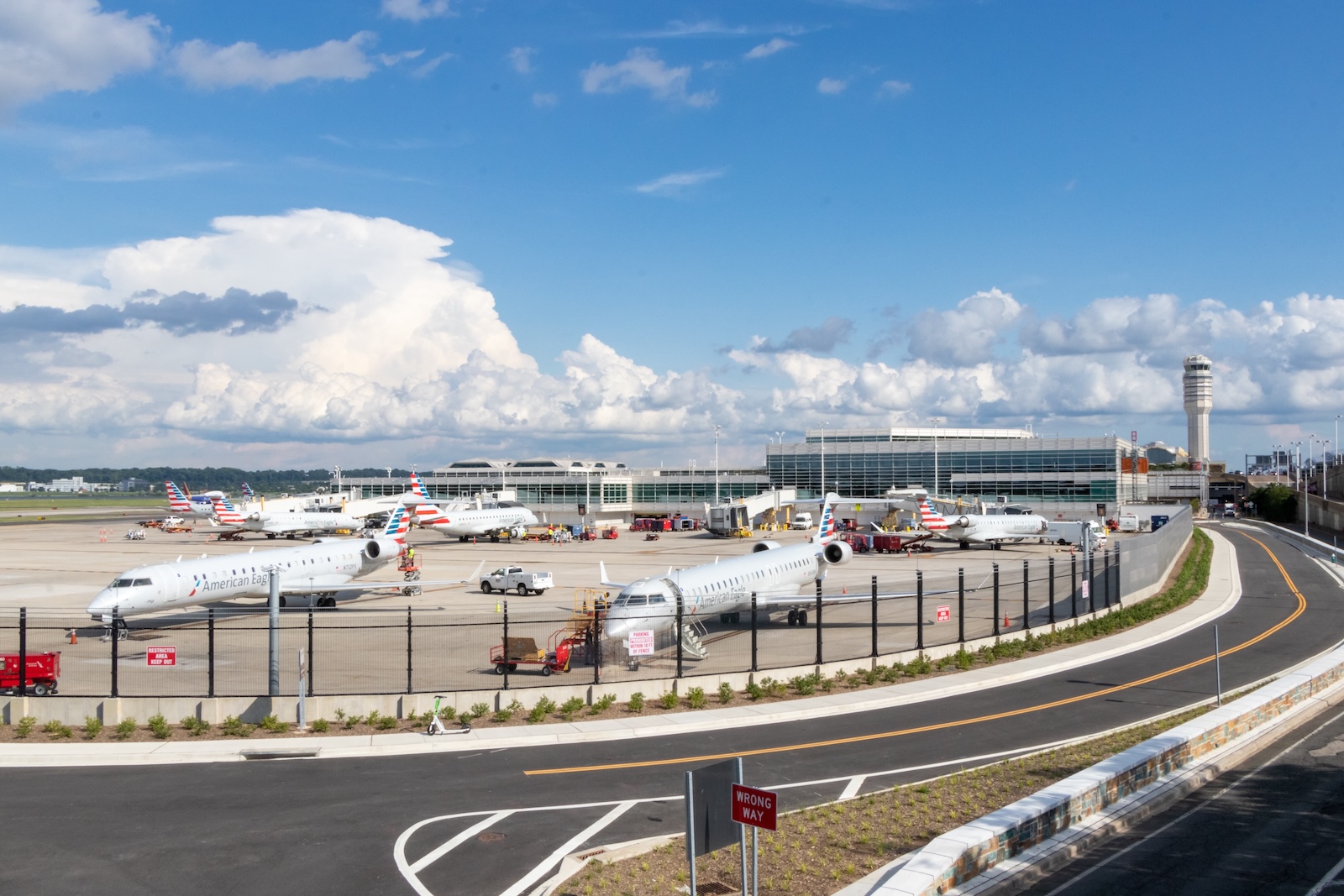
Regional jets at Reagan National Airport (Photo: Shutterstock | Nate Hovee)
The National Air Traffic Controllers Association (NATCA) and other aviation groups have pushed back against President Donald Trump’s suggestion that unqualified controllers were somehow responsible for the fatal midair collision near Ronald Reagan Washington National Airport (KDCA) last week.
Due to an ongoing investigation, the FAA has not been able to share information about control tower staffing on the eve of the crash or the specific controller handling the aircraft. But the agency on Monday shed some light on the rigorous training and certification all controllers must complete before taking over airspace.
“Air travel is the safest mode of transportation,” the regulator said in an FAQ. “The FAA will quickly take any actions necessary based on evidence from the investigation of Wednesday’s accident at DCA.”
According to the FAA, the staffing target for KDCA in Arlington, Virginia, is 28 certified controllers. As of Monday it had 25, about 89 percent of that target, with a further three in training who were certified at other airports. The current nationwide shortage of controllers is partially a product of the COVID-19 pandemic as well as stringent training requirements. For example, less than 10 percent of ATC applicants are accepted into the FAA’s training academy in Oklahoma City.
The FAA recruits controllers from university-level training programs and the general public, as well as a pool of experienced or former military controllers. All recruits must meet physical, medical, and mental requirements, such as good eyesight and the ability to sit or stand for long stretches.
They must also have no history of psychosis, neurosis, or any disorder that could disrupt their work, among other qualifications. People with physical deformities can be accepted, but only if the FAA determines the condition won’t interfere with the “satisfactory and safe performance of duty.”
Experienced and former military controllers are immediately assigned to a facility to begin training. Other applicants must pass the entry-level Air Traffic Skills Assessment (ATSA) and complete medical and security clearances before entering the ATC academy.
After finishing about 16 weeks of training in Oklahoma City, graduates are placed at one of hundreds of FAA air traffic facilities, where they train to manage that specific airspace for two to four years. Only then can they join the group of about 14,000 FAA-certified air traffic control specialists.
Training continues even after controllers reach the tower. Personnel are required to complete routine proficiency tests and an annual medical review to be cleared for work.
Per reports, two controllers were handling the work of four personnel on the night of the fatal midair. According to NATCA president Nick Daniels, that is not unusual given the nationwide shortage of specialists.
Editor’s Note: This story first appeared on FlyingMag.com.
AirlineGeeks.com was founded in February 2013 as a one-person blog in Washington D.C. Since then, we’ve grown to have 25+ active team members scattered across the globe. We are all here for the same reason: we love deep-diving into the fascinating realm of the airline industry.
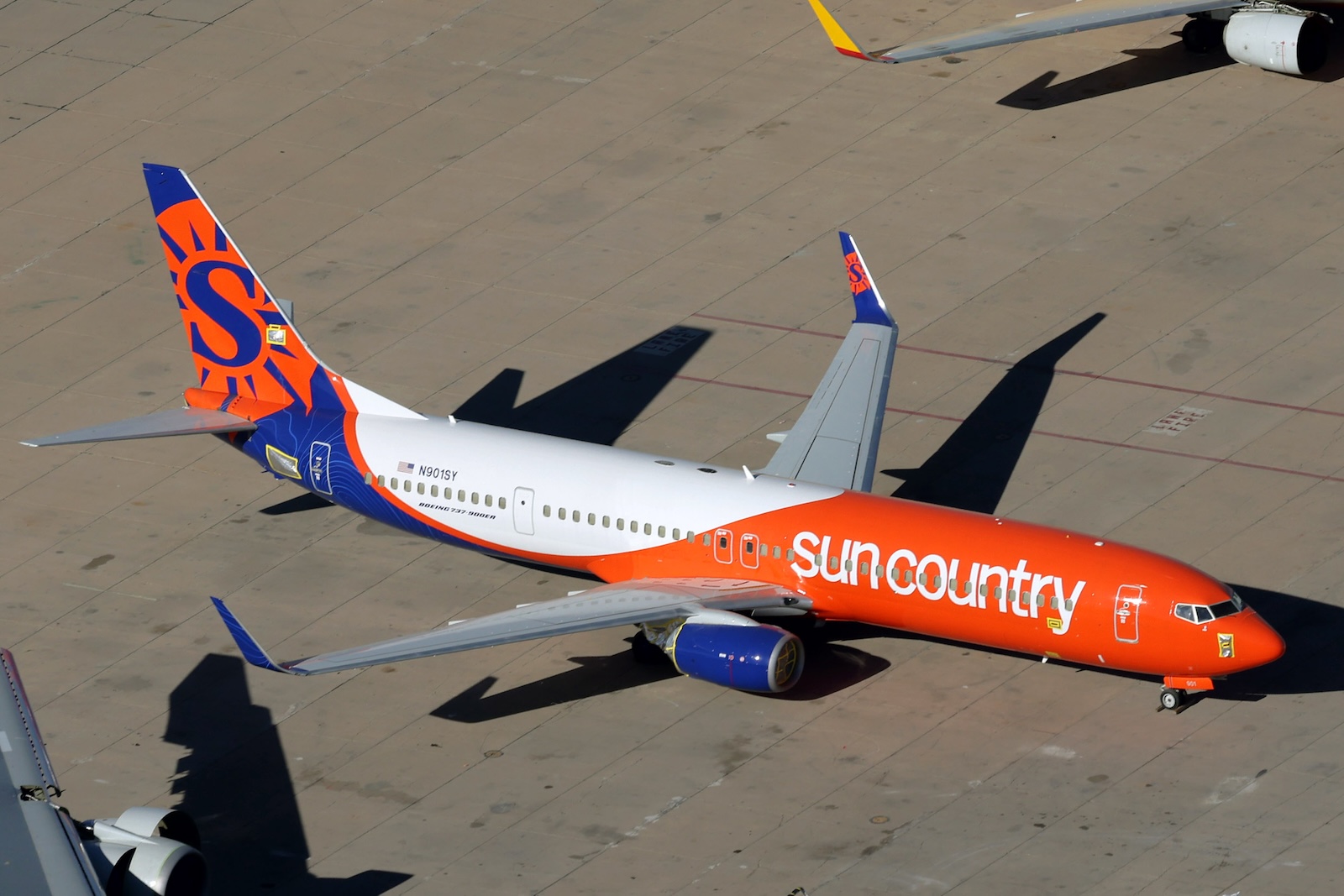
A Sun Country Boeing 737-900ER stored in Marana, Arizona. (Photo: Duncan Kirk)
Sun Country expects to operate its first Boeing 737-900ER this summer. The Minneapolis-based airline owns five of the aircraft type, which are on lease to Oman Air.
In its fourth-quarter earnings report, the carrier said it expects the 737-900ER to enter revenue service within its network by July. Sun Country took delivery of the aircraft off lease in November, and it is currently stored in Marana, Arizona.
The four other 737-900ERs currently on lease are expected to be returned in May, September and November 2025 and November 2026, the airline said. Lease return dates on three aircraft were recently extended.
In 2023, Sun Country inked a deal to acquire the five 737-900ERs. They join its current fleet of 737-800 aircraft.
“The 737-900ER will be a great addition to our fleet,” said Jude Bricker, CEO of Sun Country, in an April 2023 news release. “Relative to our 737-800 aircraft, it will increase the number of seats without a reduction in range or take-off performance. This transaction demonstrates our ability to find creative ways to source the right aircraft in any market environment.”
The 737-900ER will become Sun Country’s largest aircraft type, with a longer range than the 737-800 variant.
Ryan founded AirlineGeeks.com in February 2013 and has spent more than a decade covering the airline business. His work has been featured by CNN, WJLA, CNET, and Business Insider. His aviation experience spans airport operations, Part 135 regulatory compliance, and airline crew workforce planning, along with time behind the yoke of a Cessna 172 and interviews with airline executives. Ryan now serves as Group President of Firecrown Media’s Aviation Group. He holds a B.S. in Air Transportation Management and an MBA from Arizona State University and teaches Airline Management at Embry-Riddle Aeronautical University.
A final report by the National Transportation Safety Board has found that a United first officer was responsible for a “hard landing” nearly two years ago.
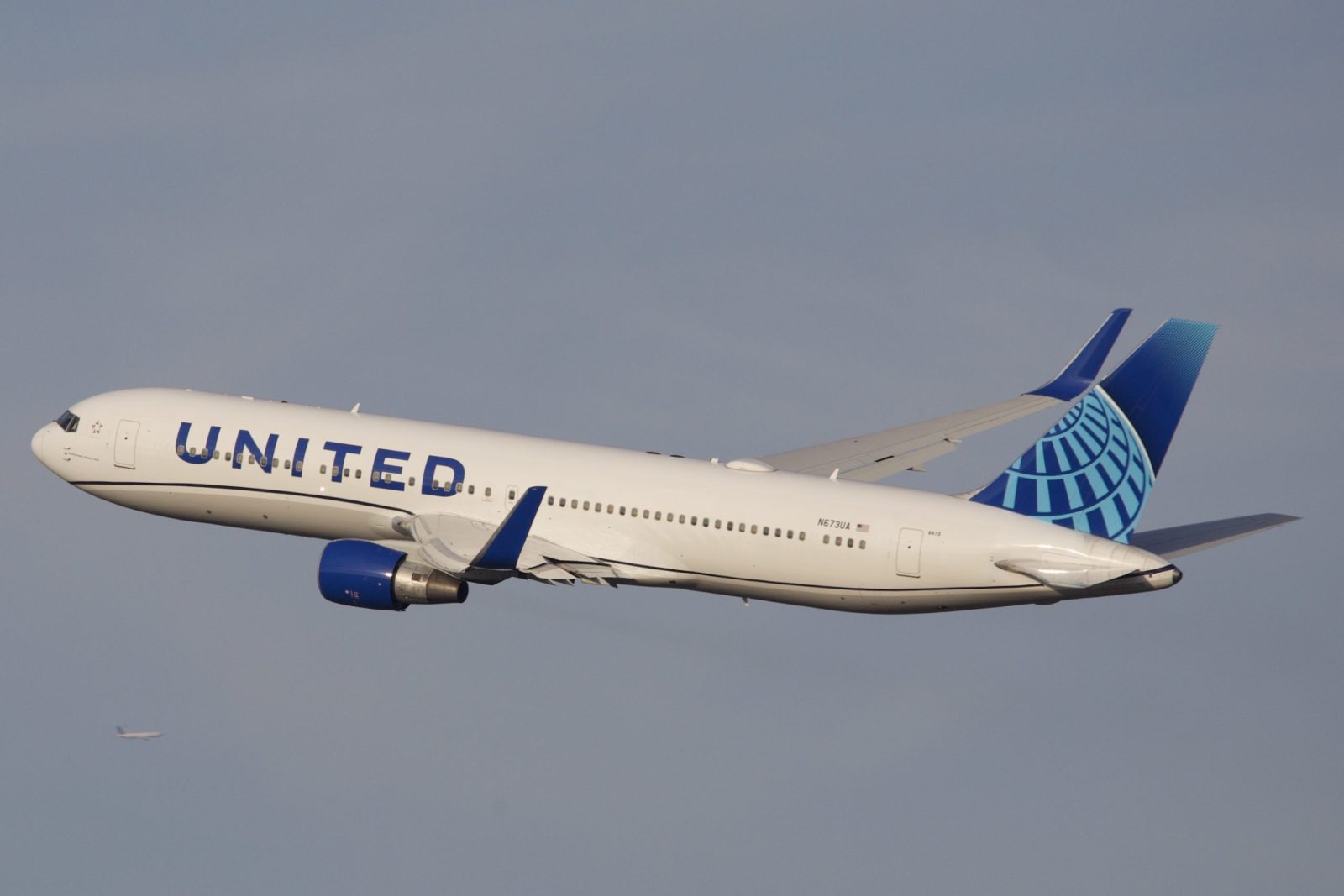
A United Boeing 767 departs Washington Dulles International Airport.
(Photo: AirlineGeeks | Noah Escobar)
A final report by the National Transportation Safety Board (NTSB) has found that a United first officer was responsible for a “hard landing” nearly two years ago in Houston.
The final report, published on January 15, 2025, determined the first officer’s “improper control inputs after the airplane touched down” and the flight crew’s “lack of recognition that the speedbrakes were not armed” caused their delayed deployment.
On July 29, 2023, a Boeing 767-300 operating United flight 702, was damaged while landing at George Bush Intercontinental Airport in Houston. None of the 202 passengers and crew aboard the airplane were injured in the incident.
According to the report, the first officer – identified from his lawsuit against United as Romullo Tadeu Melo Silva – was the pilot flying, and the captain was the pilot monitoring.
After an uneventful departure and cruise segment of the flight, Silva stated he held aft pressure on the control yoke to keep the nosewheel from hitting the runway after the main landing gear touched down. However, the nosewheel hit the runway with “abnormal force” and the airplane seemed to bounce.
That’s when Silva pulled the control yoke back to keep the nosewheel from hitting the runway a second time.
“Flight data recorder (FDR) data indicated that control column inputs ranged from about 5° nose high to 5° nose low during the landing,” the report stated. “Data also indicated that the speedbrakes deployed simultaneously as the thrust reversers transitioned from not deployed to deployed, and the nosewheel bounced a second time. Subsequently, the nosewheel contacted the runway a third time and the airplane began to decelerate.”
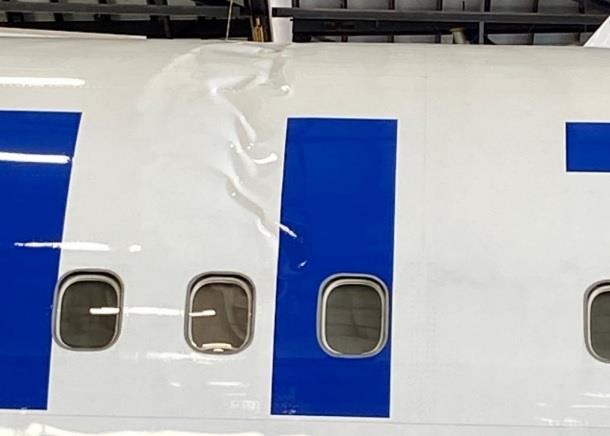
The captain assumed control of the airplane and the remainder of the landing rollout was normal. Photos included in the report show the Boeing 767’s left fuselage was damaged in the landing.
Damaged United 767 following the hard landing (Photo: NTSB)
Silva Sues United
After being pulled from flight duty following the incident – and eventually being terminated – Silva filed a lawsuit against United in December 2024 alleging the carrier falsely reported that he was the pilot in command of the flight.
According to Silva’s complaint filed in the U.S. District Court for the District of New Jersey, Silva was not the pilot in command of the flight. He said that his captain – the other pilot on the flight – was the pilot in command and “failed to arm the speed brake on the aircraft.”
While Silva does affirm that he was landing the jet, he argued that the touchdown “was not hard.”
In his complaint, Silva stated that the airline pulled him from flight duty on July 29, 2023, and he was not allowed to return to service until September 30, 2023. He would later be sent to a landing-only simulator by the carrier.
Silva said that no simulator preparation was provided for the testing, wherein a pilot operates an aircraft with a senior pilot to determine whether the testing pilot is ready to fly passengers. He alleged that the senior pilot he eventually flew with on October 12, 2023, was “hostile, degrading and intimidating.”
After the ride, Silva was failed by the senior pilot and terminated by United. Afterward, Silva alleges United filed a report with the Federal Aviation Administration falsely stating he was the pilot in command on the flight.
“As a result of this report, Mr. Silva’s record with the FAA has been substantially tarnished, and he has been unable to fly for any other air carrier, including private carriers under 14 CFR Part 135,” the complaint stated.
Silva was hired as a first officer at United in February 2023, just seven months before the incident. He was formerly a flight attendant at the airline.
The complaint alleged the carrier defamed Silva through its FAA report and requested payment for damages. United has yet to file its response to the complaint and has an extended deadline until Feb. 19, 2025, to do so.
AirlineGeeks.com was founded in February 2013 as a one-person blog in Washington D.C. Since then, we’ve grown to have 25+ active team members scattered across the globe. We are all here for the same reason: we love deep-diving into the fascinating realm of the airline industry.
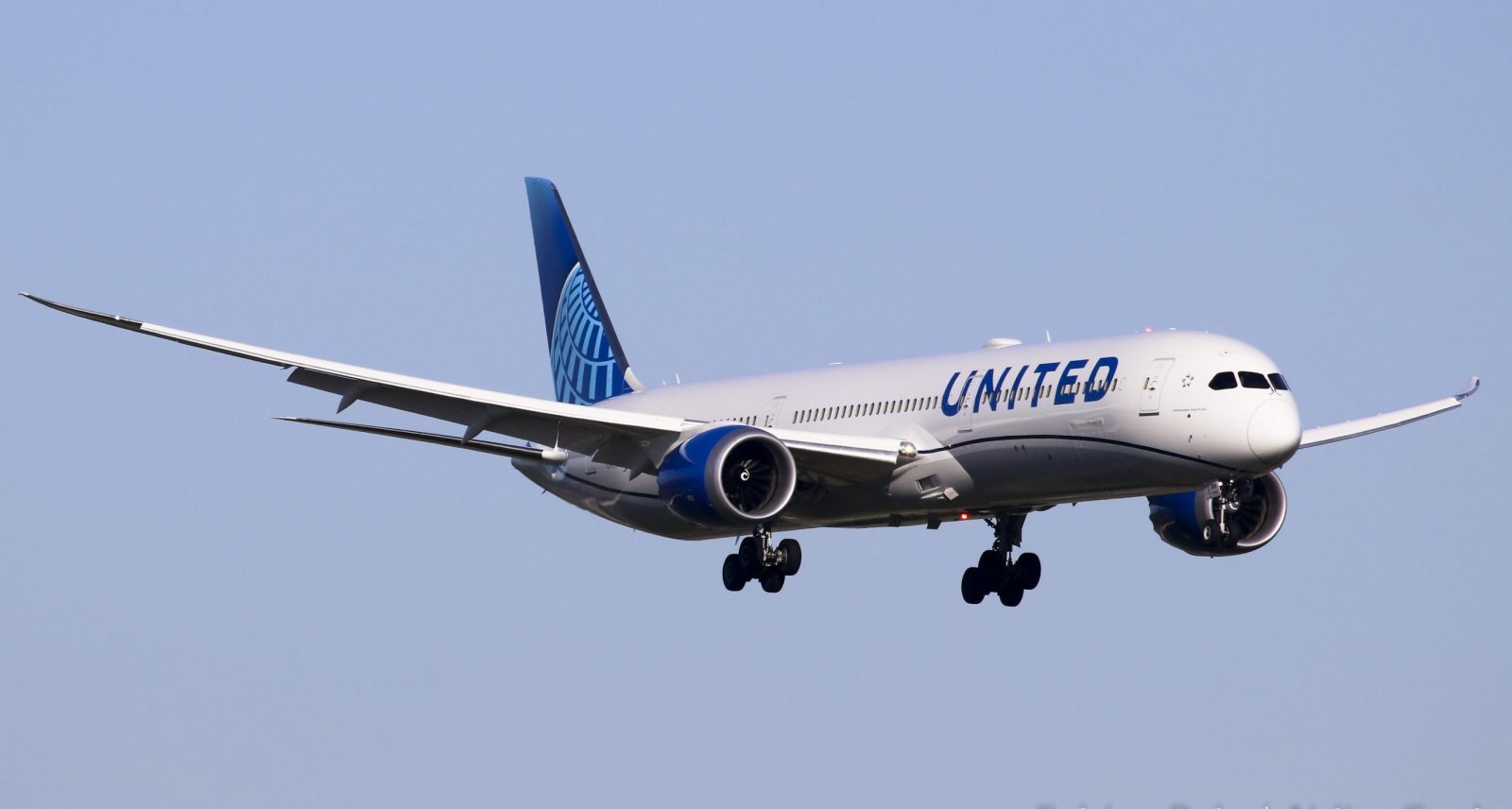
A United 787 Dreamliner descends into Amsterdam. (Photo: AirlineGeeks | Fabian Behr)
United is the latest U.S. airline to announce plans to return to Israel. The Chicago-based airline is slated to join Delta and resume service to Tel Aviv starting next month.
Daily flights from the carrier’s Newark, New Jersey, hub will restart on March 15. A second daily service will begin on March 29.
“This resumption follows a detailed assessment of operational considerations for the region and close work with the unions who represent our flight attendants and pilots,” the carrier stated in a news release.
The airline will operate Boeing 787-10 Dreamliners on the route.
Ryan founded AirlineGeeks.com in February 2013 and has spent more than a decade covering the airline business. His work has been featured by CNN, WJLA, CNET, and Business Insider. His aviation experience spans airport operations, Part 135 regulatory compliance, and airline crew workforce planning, along with time behind the yoke of a Cessna 172 and interviews with airline executives. Ryan now serves as Group President of Firecrown Media’s Aviation Group. He holds a B.S. in Air Transportation Management and an MBA from Arizona State University and teaches Airline Management at Embry-Riddle Aeronautical University.
A pair of employees from the Metropolitan Washington Airports Authority are facing potential felony charges for allegedly leaking video of Wednesday's crash.
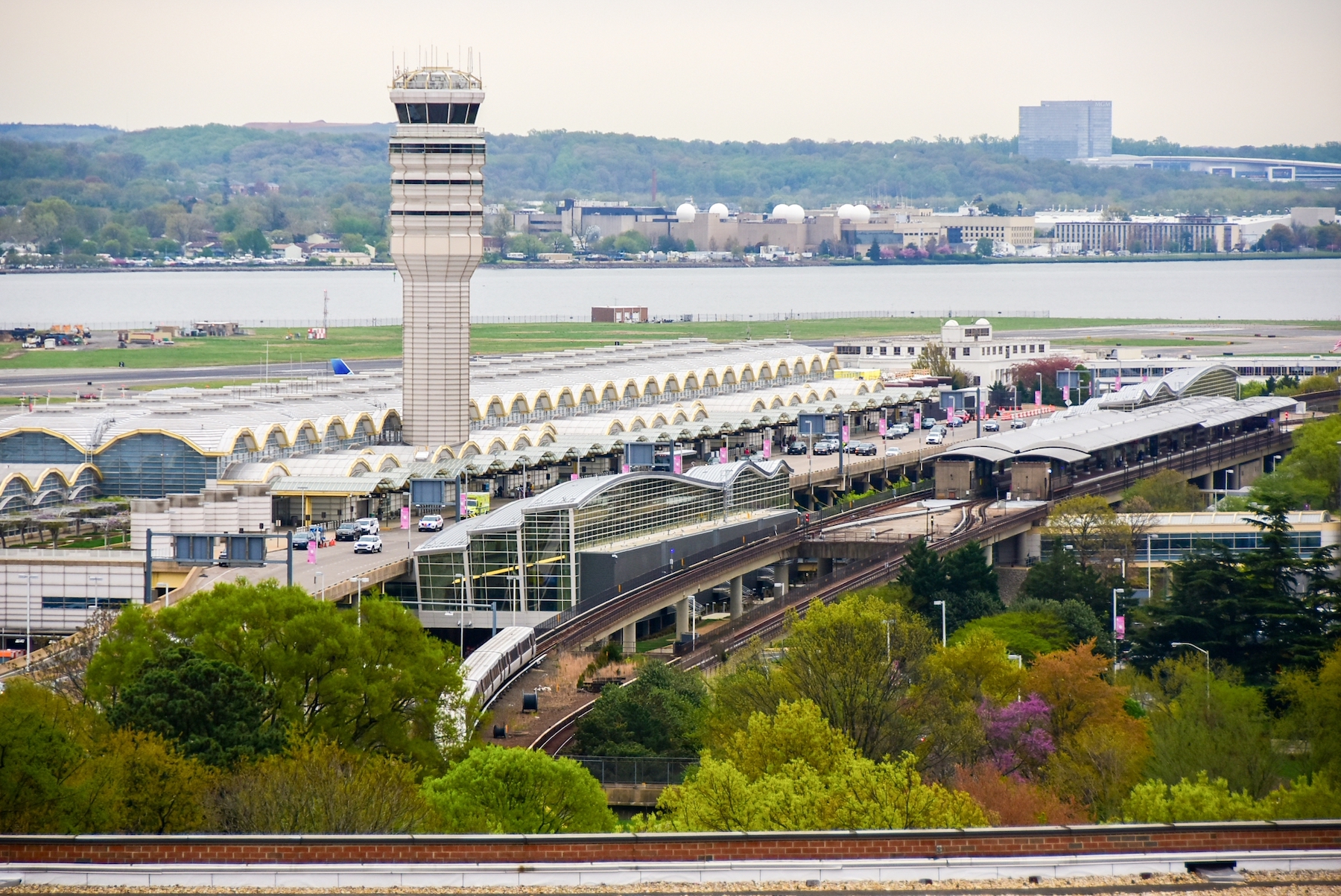
Ronald Reagan Washington National Airport. (Photo: Shutterstock | TJ Brown)
A pair of employees from the Metropolitan Washington Airports Authority are facing potential felony charges for allegedly leaking video of Wednesday’s midair collision. MWAA operates both Reagan National and Washington Dulles airports in D.C.
According to Fox 5, Mohamed Lamine Mbengue, age 21, was arrested on Jan. 31. Authorities also arrested 41-year-old Jonathan Savoy on Sunday.
They are charged with computer trespass in Virginia, which could be a felony. Both individuals were later released pending a court date.
Mbengue and Savoy allegedly created an “unauthorized copy” of MWAA surveillance camera footage which showed the deadly crash involving a CRJ-700 and Army Black Hawk helicopter. The video later aired on CNN.
MWAA officials didn’t say whether more airport workers would face charges, per Fox 5. Details are also not yet known regarding whether the duo sold the video.
Ryan founded AirlineGeeks.com in February 2013 and has spent more than a decade covering the airline business. His work has been featured by CNN, WJLA, CNET, and Business Insider. His aviation experience spans airport operations, Part 135 regulatory compliance, and airline crew workforce planning, along with time behind the yoke of a Cessna 172 and interviews with airline executives. Ryan now serves as Group President of Firecrown Media’s Aviation Group. He holds a B.S. in Air Transportation Management and an MBA from Arizona State University and teaches Airline Management at Embry-Riddle Aeronautical University.