Stories

FAA Administrator Mike Whitaker to Resign After Year in Role

FAA Administrator Michael Whitaker will resign his post early next year, he announced Thursday.

FAA Administrator Mike Whitaker (Photo: Joby Aviation)

FAA Administrator Michael Whitaker will resign his post early next year, he announced Thursday.

An internal email announcing the decision posted on X by CNN transportation reporter Alexandra Skores stated that Whitaker plans to resign on January 20, which is also President-elect Donald Trump’s inauguration day.

Whitaker’s departure will occur 14 months into a five-year term.

“Serving as Administrator of the [FAA]—with this incredible team—has been the honor of my lifetime,” Whitaker said in the email. “The United States is the safest and most complex airspace in the world, and that is because of your commitment to the safety of the flying public.”

Whitaker will cut short his time as administrator just a little over a year after he was confirmed by the Senate in October 2023. His appointment ended a 19-month period where the position was left vacant.

In another X post, Skores quoted Senator Ted Cruz (R-Texas), who thanked Whitaker for his service.

“When he took the job, I asked him to focus on keeping the flying public safe and to stay out of politics, and he has ably led the agency during a challenging period, and I want to thank him for his public service,” Cruz said in the post.

Prior to his confirmation, Whitaker served as the chief operating officer of Supernal, a company designing an electric advanced air mobility (AAM) vehicle. He also served as FAA deputy administrator from 2013-2016, as well as more than a decade in management at United Airlines.

This is a developing story.

Editor’s Note: This story first appeared on FlyingMag.com

AirlineGeeks.com Staff

AirlineGeeks.com was founded in February 2013 as a one-person blog in Washington D.C. Since then, we’ve grown to have 25+ active team members scattered across the globe. We are all here for the same reason: we love deep-diving into the fascinating realm of the airline industry.

Southwest Adds Four Intra-Florida Routes

Southwest plans to grow in Florida next year, namely from its Orlando base, with four short-haul routes starting in August.

A Southwest Boeing 737-700.
A Southwest Boeing 737-700. (Photo: AirlineGeeks | William Derrickson)

Southwest plans to grow in Florida next year, namely from its Orlando base. The Dallas-based airline is adding four short-haul routes.

As first reported by Ishrion Aviation, all of the new routes are less than 200 miles. Southwest extended its flight schedule through Oct. 1, 2025, on Thursday.

Starting in August, the airline will connect Orlando with Fort Myers, West Palm Beach, Miami, and Sarasota. These will join the airline’s other intra-Florida services between Orlando and Fort Lauderdale along with Tampa to Fort Lauderdale.

All flights are slated to operate twice daily. Most of the routes are new to the carrier’s network, except Orlando-Fort Myers, which has operated seasonally in the past.

At 104 miles, Orlando to Sarasota will be among Southwest’s shortest scheduled routes.

In 2023, Southwest pivoted most of its international service from Fort Lauderdale to Orlando, citing better domestic connectivity. The airline remains the largest in Orlando with a 19% market share.

Ryan Ewing

Ryan founded AirlineGeeks.com back in February 2013 and has amassed considerable experience in the aviation sector. His work has been featured in several publications and news outlets, including CNN, WJLA, CNET, and Business Insider. During his time in the industry, he's worked in roles pertaining to airport/airline operations while holding a B.S. in Air Transportation Management from Arizona State University along with an MBA. Ryan has experience in several facets of the industry from behind the yoke of a Cessna 172 to interviewing airline industry executives. Ryan works for AirlineGeeks' owner FLYING Media, spearheading coverage in the commercial aviation space.

Korean Air Completes Merger With Asiana Airlines

The flag carrier announced the acquisition in November 2020. Korean Air will invest 1.5 trillion won ($1.07 billion) to acquire a 63.88% stake in Asiana Airlines.

A Korean Air A380 (Photo: AirlineGeeks | William Derrickson)

After four years of proposing the acquisition, the U.S. has given a green light to the deal. This decision clears the way for the merger between Korean Air and Asiana Airlines.

The flag carrier announced the acquisition in November 2020. Korean Air will invest 1.5 trillion won ($1.07 billion) to acquire a 63.88% stake in Asiana Airlines.

Korean Air could become the world’s 12th largest airline by passenger volume, operating 238 aircraft and employing 27,000.

The airline had to obtain approvals from 14 regulatory authorities, such as the U.S., European Union, the U.K., Australia, and Japan. The flag carrier has made a number of concessions to authorities. In 2023, Virgin Atlantic launched London – Seoul as a result.

Giving Up Four European Routes

Earlier, Korean Air fulfilled the terms of the EU’s agreement as the acquisition costs the airline an arm and a leg. The airline has designated its rival, T’way, as the remedy carrier for the routes to Frankfurt, Paris, Barcelona, and Rome, providing aircraft, flight crew, and maintenance services. Moreover, Air Incheon will purchase Asiana Airlines’ freighter business.

According to Yonhap, Korean Air and Asiana Airlines will be operated separately for the next two years. In addition, Korean Air will appoint a new CEO and key executives for Asiana next month. Meanwhile, the two carriers’ low-cost carrier (Jin Air, Air Busan and Air Seoul) will be merged in the future.

Hawaiian Plans to Hire Over 200 Employees

Hawaiian Airlines is planning to hire over 200 employees to fly and service its new West Coast routes previously flown by its parent carrier Alaska Airlines.

Hawaiian 717
A Hawaiian Airlines Boeing 717 in Kahului (Photo: AirlineGeeks | Joey Gerardi)

Hawaiian Airlines is planning to hire over 200 new employees to fly and service its new West Coast routes previously flown by its parent carrier Alaska Airlines.

Alaska and Hawaiian announced plans to reshuffle their widebody networks on Tuesday, stating that Hawaiian’s Airbus A330 aircraft will begin operating flights from Seattle to Asia and Alaska next year.

A Tuesday report by the Honolulu Star Advertiser stated that Hawaiian Airlines CEO Joe Sprague said the carrier will likely hire over 100 additional flight attendants, another 100 or so ground crew, and “likely fewer than 100” pilots.

He noted that hiring additional pilots should be easy because “Hawaiian had a pool of pre-screened applicants,” the report continued.

The statement comes days before 73 noncontract employees at Hawaiian are planned to be let go on Dec. 17. Following the announcement of these layoffs in October, an airline spokesperson told Daily News that these job cuts mainly affected “duplicative, noncontract operations support roles at airports.”

Alaska Airlines’ leadership has committed to maintaining Hawaiian’s brand since it pitched the merger in 2023. Alaska Air Group CEO Ben Minicucci said during an Investor Day event on Tuesday that flights traveling to, from, and within the islands will remain branded as Hawaiian.

“The Hawaiian brand is here to stay,” he said.

AirlineGeeks.com Staff

AirlineGeeks.com was founded in February 2013 as a one-person blog in Washington D.C. Since then, we’ve grown to have 25+ active team members scattered across the globe. We are all here for the same reason: we love deep-diving into the fascinating realm of the airline industry.

Phoenix-Carlsbad Service Remains in Limbo

The San Diego County Board of Supervisors plans to vote Wednesday on a lease that would revive daily American Airlines service at McClellan-Palomar Airport. 

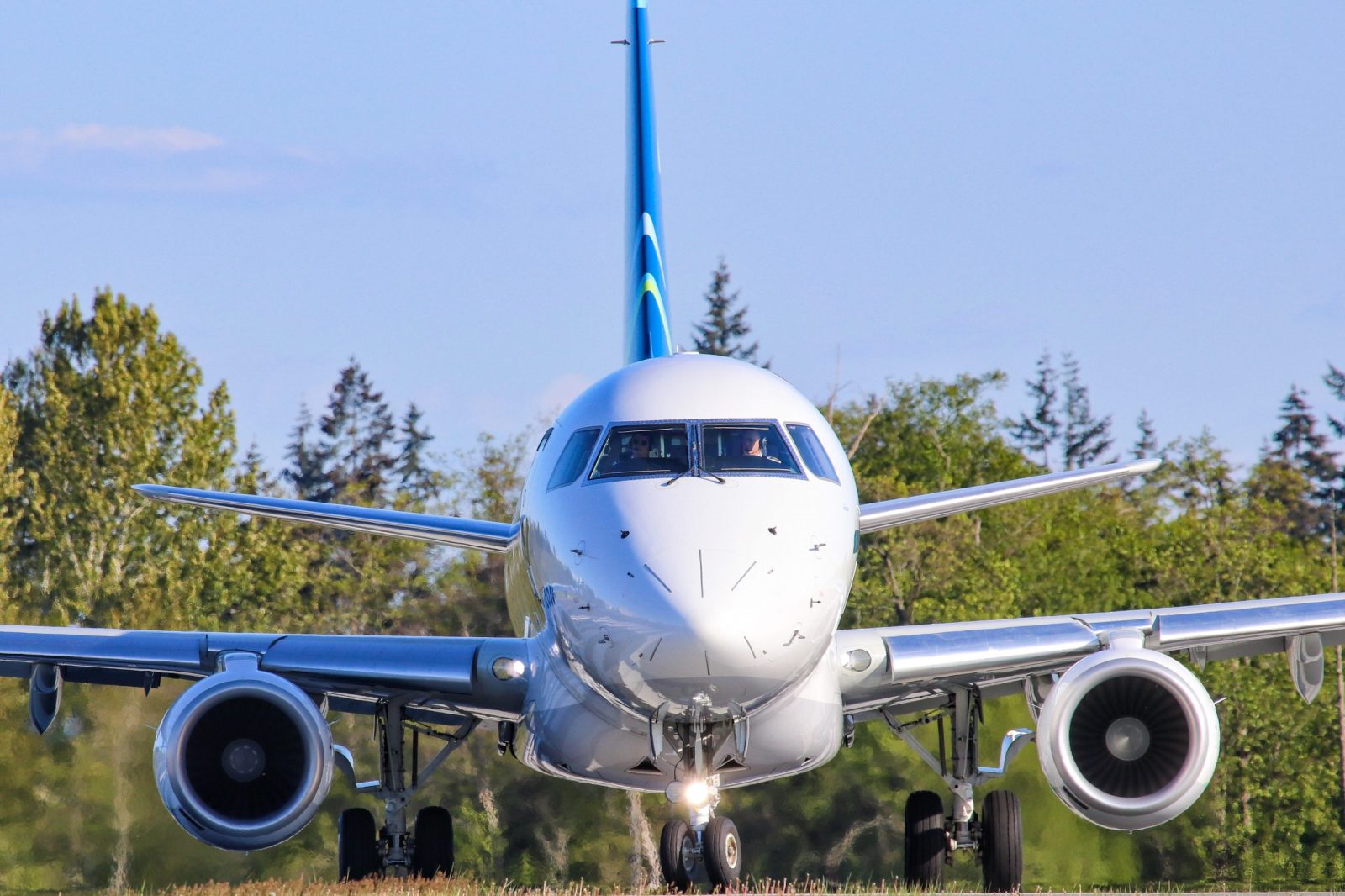
An Envoy Air Embraer E175. (Photo: Envoy Air)

The San Diego County Board of Supervisors plans to vote Wednesday on a lease that would revive daily American Airlines service at McClellan-Palomar Airport.

Approval of the lease with American would allow the airline to begin operating twice-daily flights from Carlsbad, California, to Phoenix beginning Feb. 13. The airport is now mostly used by business jet and general aviation operators.

American plans to operate the 76-seat Embraer 175 aircraft, according to the proposal. San Diego County completed more than $20 million in airport improvements from 2008 to 2011 with the goal of resuming commercial service, which the proposal says will allow “the County to maximize the return on these investments, as well as [strengthen] the economy through job creation, increased access to air travel, and additional infrastructure investments.”

Local group Citizens for a Friendly Airport opposes the plan due to fear of “over operational expansion.” The airport, which opened in 1959, initially served as a connection to major cities after debuting commercial flight service in 1991. United was the last major carrier to serve the airport, dropping its route to Los Angeles in 2015.

The lease would allow American to use two ticket counter spaces, a kiosk, and office space at the passenger terminal to support about 150 employees.

Noise Constraints

One of the flights beginning in February would operate at 6:15 a.m. County officials requested the airline not operate before 7 a.m. but lack the authority to issue a curfew for American.

The airline cannot meet the quiet hours requirements due to the need to connect passengers to other flights in Phoenix, the proposal says. Only the Federal Aviation Administration can enforce a curfew.

In response to this, the county has expanded its noise monitoring efforts by installing additional noise monitors in local communities and taken other measures to minimize noise for residents.

American would pay $606,678 per year for the two-year lease, but the county would partially waive fees during the first year of operations, reducing the first-year revenue to $255,250. The county owns and operates eight airports, and money generated from the American Airlines lease would go into an airport fund.

Resuming passenger service to McClellan-Palomar would help raise the airport’s annual FAA entitlement funding from $150,000 to $1 million once the airport exceeded 10,000 enplaned passengers.

Brinley Hineman

Brinley Hineman covers general assignment news. She previously worked for the USA TODAY Network, Newsday and The Messenger. She is a graduate of Middle Tennessee State University and is from West Virginia. She lives in Brooklyn with her poodle Franklin.

Alaska Airport Could Regain Air Service After 22-Year Hiatus

Following a 22-year pause, Seward, Alaska, may once again have scheduled flights. The town’s airport last had scheduled air service in 2002.

Kenai Aviation
A Kenai Aviation aircraft. (Photo: Kenai Aviation)

Following a 22-year pause, Seward, Alaska, may once again have scheduled flights. The town’s airport last had scheduled air service in 2002.

According to an article on Public Radio for the Central Kenai Peninsula, two carriers are bidding to serve Seward after City Manager Kat Sorensen petitioned the U.S. Department of Transportation to have the town restored to the EAS program.

Kenai Aviation and Reeve Air Alaska are bidding for the contract. If approved, flights to Anchorage would operate up to six times per week during peak months and three times in nonpeak periods.

Per government filings, Kenai is asking for approximately $1 million in federal subsidies to serve the route. Reeve’s proposal has a price tag of around $1.4 million.

A new Native health clinic is slated to open in Seward soon, according to Sorensen’s letter to the DOT. Sorensen believes scheduled flights would help people reach the clinic.

“Adding Seward to the EAS program could ensure access to reliable air service, supporting local businesses, our community, and health services throughout the state,” Sorensen shared.

Located roughly 125 miles from Anchorage, Seward has a population of nearly 3,000 residents. A public comment period will be held until Dec. 19 before the DOT makes its decision.

Ryan Ewing

Ryan founded AirlineGeeks.com back in February 2013 and has amassed considerable experience in the aviation sector. His work has been featured in several publications and news outlets, including CNN, WJLA, CNET, and Business Insider. During his time in the industry, he's worked in roles pertaining to airport/airline operations while holding a B.S. in Air Transportation Management from Arizona State University along with an MBA. Ryan has experience in several facets of the industry from behind the yoke of a Cessna 172 to interviewing airline industry executives. Ryan works for AirlineGeeks' owner FLYING Media, spearheading coverage in the commercial aviation space.

TaxiBot Tows First Passenger Flight

KLM Royal Dutch Airlines has successfully tested using a TaxiBot to tow its first passenger flight to the Polderbaan runway in Amsterdam.

Amsterdam Schiphol Airport (Photo: Amsterdam Schiphol Airport - PHOTO AND COPYRIGHT ROGER CREMERS)

KLM Royal Dutch Airlines has successfully tested a TaxiBot to tow its first passenger flight to the Polderbaan runway for departure at the Amsterdam Schiphol Airport.

According to a post by the airport on X, Tuesday’s test allowed for the KLM aircraft’s engines to remain off until departure, helping to improve air quality and reduce noise on the apron. Additionally, Schiphol stated that the pilot operates the TaxiBot, not a tug driver.

In 2021, Schiphol and several partners in the sector set a goal to make sustainable taxiing standard procedure by 2030. The airport stated in a news release at the time that significant adjustments to infrastructure, processes, and technology would be needed to reach this goal.

“Because many of these essential adjustments are new to aviation, and because Schiphol is the first airport in the world that wants to implement sustainable taxiing on a large scale, it will take some time for the technology and infrastructure to be developed and for it to be certified and approved,” Schiphol stated in the release.

In Comes TaxiBot

In the 2021 news release, Schiphol cited a 2020 TaxiBot pilot study that simulated narrow-body aircraft being taken to and from the runway by a semi-robotic aircraft towing vehicle – a “TaxiBot.”

Provided by Smart Airport Systems and developed by Israel Aerospace Industries, the TaxiBot allowed aircraft to keep their engines off for most of the taxi process.

“This resulted in fuel savings of around 50%, depending on which runway was used,” the release stated. “Fuel savings can be as high as 65% when an aircraft is taxiing to the Polderbaan – the runway with the longest taxi time. “

Cora van Nieuwenhuizen, the Dutch minister of infrastructure and water management, praised the Taxibot testing.

“It’s great that the Taxibot tests have shown that the aviation sector can use significantly less kerosene during taxiing and therefore reduce emissions,” she said in the release. “Now, full steam ahead so that this can become standard in aviation in the foreseeable future!”

AirlineGeeks.com Staff

AirlineGeeks.com was founded in February 2013 as a one-person blog in Washington D.C. Since then, we’ve grown to have 25+ active team members scattered across the globe. We are all here for the same reason: we love deep-diving into the fascinating realm of the airline industry.

What’s Next for the Hawaiian Brand?

Alaska leadership is committing to preserving the iconic Hawaiian Airlines brand, but only on certain flights to The Aloha State.

Hawaiian A330
Hawaiian Airlines aircraft in Honolulu (Photo: AirlineGeeks | Joey Gerardi)

Since the merger’s 2023 inception, Alaska Air’s leadership has committed to maintaining the Hawaiian Airlines brand. At an Investor Day event on Tuesday, the company detailed plans for Hawaiian’s future.

“The Hawaiian brand is here to stay,” said Alaska Air Group CEO Ben Minicucci during the event. But what might be different is how the brand is displayed across the combined airlines’ networks.

Keeping the Brand in Hawaii

According to Minicucci, the brand will be preserved in Hawaii. “What you’ll see is everything that goes to, from, and within the islands will be branded with Hawaiian,” he said.

Hawaiian’s “rich history” and its local recognition led to the decision to keep the brand, Minicucci added. Hawaiian Airlines was founded in 1929, initially connecting the Aloha State’s various islands.

“The dual brand was simply the right choice to make through the merger,” he continued. “Now, I’m not going to say it [will] be easy.”

A Hawaiian Airlines Airbus A321neo Paine Field.
(Photo: AirlineGeeks | Katie Zera)

The Full Hawaiian Experience

The plan, Minicucci says, is to create the full Hawaiian experience even before passengers arrive in the islands.

“So that’s our goal: that your experience begins when you put your foot on that airplane,” he added.

Alaska and Hawaiian are in the process of integrating their networks for 2025. On the domestic side, these changes include bolstered capacity on Hawaiian Airlines aircraft between Hawaii and the mainland.

Alaska will subsequently scale back some service to the state, including Honolulu to Los Angeles; Portland, Oregon; and San Diego, San Francisco, and San Jose, California, among others. Hawaiian continues to serve all of these markets.

An Alaska Airlines 737-800 (Photo: AirlineGeeks | William Derrickson)

Aircraft Shake-Ups

The airlines plan to gain a single operating certificate in October 2025. In the meantime, Alaska has already been shifting some of Hawaiian’s widebodies away from Honolulu.

Alaska will use Airbus A330s on long-haul flights from Seattle to Tokyo Narita and Seoul, South Korea, next year. In addition, the aircraft will operate between Seattle and Anchorage in the summer.

While these A330s are currently under the Hawaiian banner, it remains a bit unclear how the company plans to brand these flights since they don’t touch Hawaii itself.

“I’m excited about some of the things we’re thinking about [regarding the] dual brands,” Minicucci shared. “I think it’s going to be unique.”

Ryan Ewing

Ryan founded AirlineGeeks.com back in February 2013 and has amassed considerable experience in the aviation sector. His work has been featured in several publications and news outlets, including CNN, WJLA, CNET, and Business Insider. During his time in the industry, he's worked in roles pertaining to airport/airline operations while holding a B.S. in Air Transportation Management from Arizona State University along with an MBA. Ryan has experience in several facets of the industry from behind the yoke of a Cessna 172 to interviewing airline industry executives. Ryan works for AirlineGeeks' owner FLYING Media, spearheading coverage in the commercial aviation space.

JetBlue Set to Roll Out Domestic First Class in 2026

The airline’s president, Marty St. George, detailed initial plans for the product in a Wednesday internal memo viewed by AirlineGeeks.

The bulkhead on JetBlue's A220 (Photo: AirlineGeeks | William Derrickson)

JetBlue is planning to debut a domestic first-class product in 2026. The airline’s president, Marty St. George, detailed initial plans for the product in a Wednesday internal memo viewed by AirlineGeeks.

While the New York-based carrier currently offers its premium “Mint” product on certain domestic and trans-Atlantic flights, JetBlue’s shorter routes lack this offering. All of the airline’s non-Mint-equipped aircraft will get domestic first class, St. George shared.

Although final seating configurations are being finalized, the Airbus A220s are slated to feature eight first-class seats. A320s, A321s, and A321neos will have 12 seats.

JetBlue’s domestic first class layout (Photo: JetBlue)

The new cabin will be laid out in a two-by-two configuration. St. George notes that total seat counts will remain “roughly the same as today” with seat pitches in economy varying.

Initial aircraft retrofits are set to begin in 2026, he added.

JetBlue’s announcement comes roughly a week after ultra-low-cost carrier Frontier shared plans to roll out a two-by-two first-class product.

Ryan Ewing

Ryan founded AirlineGeeks.com back in February 2013 and has amassed considerable experience in the aviation sector. His work has been featured in several publications and news outlets, including CNN, WJLA, CNET, and Business Insider. During his time in the industry, he's worked in roles pertaining to airport/airline operations while holding a B.S. in Air Transportation Management from Arizona State University along with an MBA. Ryan has experience in several facets of the industry from behind the yoke of a Cessna 172 to interviewing airline industry executives. Ryan works for AirlineGeeks' owner FLYING Media, spearheading coverage in the commercial aviation space.

Fiji Airways Begins Its Longest Route

The new Nadi to Dallas/Fort Worth flight —the carrier’s longest scheduled service — clocked in at around 6,625 miles or 13 hours.

Fiji Airways arrives in Dallas/Fort Worth (Photo: Fiji Airways)

Fiji Airways began its newest route on Tuesday. The new Nadi to Dallas/Fort Worth flight —the carrier’s longest scheduled service — clocked in at around 6,625 miles or 13 hours.

The airline first announced the route in August, with plans to operate it three times per week: Tuesdays, Thursdays, and Saturdays. Fiji Airways will operate an A350-900XWB between Nadi and Dallas/Fort Worth.

“This new route significantly enhances Fiji Airways’ connectivity in North America, making it easier than ever for Texans and U.S. travelers to explore Fiji’s pristine landscapes, rich culture, and warm hospitality, while also providing seamless access to the wider South Pacific region, Australia, New Zealand and beyond,” said the carrier’s CEO and managing director, Andre Viljoen in a news release.

Fiji Airways’ A350 in Dallas/Fort Worth (Photo: DFW Airport)

The Texas airport will become Fiji Airways’ fifth North American destination, joining San Francisco, Los Angeles, Honolulu, and Vancouver, British Columbia. Dallas/Fort Worth to Nadi is approximately 760 miles longer than the carrier’s second-longest route to Vancouver.

Fiji Airways’ first flight to Dallas/Fort Worth touched down on Tuesday at 3:25 p.m. local time.

Ryan Ewing

Ryan founded AirlineGeeks.com back in February 2013 and has amassed considerable experience in the aviation sector. His work has been featured in several publications and news outlets, including CNN, WJLA, CNET, and Business Insider. During his time in the industry, he's worked in roles pertaining to airport/airline operations while holding a B.S. in Air Transportation Management from Arizona State University along with an MBA. Ryan has experience in several facets of the industry from behind the yoke of a Cessna 172 to interviewing airline industry executives. Ryan works for AirlineGeeks' owner FLYING Media, spearheading coverage in the commercial aviation space.
Sign-up for newsletters & special offers!

Get the latest stories & special offers delivered directly to your inbox

SUBSCRIBE

Uh-oh! It looks like you're using an ad blocker.

Our website relies on ads to provide free content and sustain our operations. By turning off your ad blocker, you help support us and ensure we can continue offering valuable content without any cost to you.

We truly appreciate your understanding and support. Thank you for considering disabling your ad blocker for this website