Stories

World’s Longest Flight Set for Premium Upgrade

Singapore Airlines introduces new business and first class products on its A350s, with first class coming to the A350-900ULRs.

A Singapore Airlines A350 performing the inaugural flight from Seattle. (Photo: AirlineGeeks | Katie Zera)

Singapore Airlines is investing $835 million on new cabin products for its Airbus A350 fleet. The airline will roll out brand new First Class and Business Class products across its fleet. The renewal will start with A350-900 aircraft, with the first refurbished jet expected in the second quarter of 2026, continuing into 2030.

A total of 41 A350s will be refurbished with the new products, which will be the same designs as seats on the future Boeing 777-9s. All four cabins will see new features, together with a new version of the in-flight entertainment system.

Singapore Airlines’ first Airbus A350-900ULR upon delivery in Singapore (Photo: Singapore Airlines)

Longest Flight in the World Gets First Class

The airline’s famous A350-900ULRs (Ultra Long Range), which are used for the world’s longest flights between Singapore and New York, will have a First Class cabin for the first time. The airline previously configured the seven A350s with 67 Business Class seats and 94 Premium Economy seats. Already the most premium A350 with the least seats in the world, the total seat count will go down even further to just 132 seats in total, including four in First, 70 in Business, and 58 in Premium Economy.

These Ultra Long Range jets operate Singapore Airlines’ longest routes to two New York City airports: JFK and Newark. The airline currently operates one daily flight to each airport exclusively deploying A350-900ULRs. Beyond the U.S. East Coast, these aircraft are also used on some flights to the West Coast, including to Los Angeles and San Francisco.

A Singapore Airlines Airbus A350-900XWB departing from San Francisco. (Photo: AirlineGeeks | Parker Davis)

Meeting Industry Standard

The business class will feature a closing door, which is slowly becoming the industry standard. Products such as Delta One, or the recently revealed Aria Suite by Cathay Pacific, Singapore Airlines’ regional rival, all include a closing door in Business Class.

The new Business Class seat will feature sliding doors for privacy. (Photo: Singapore Airlines)

More First Class Seats

As part of the renewal program, Singapore Airlines is introducing a new First Class product on its fleet of A350-900ULRs. The new seat is set to feature new in-flight entertainment screens, sliding doors, and will “set [an] industry benchmark.” The video teaser released by Singapore Airlines also shows electric blinds for the First Class cabin, similar to those on British Airways.

Singapore Airlines’ new First Class cabin (Photo: Singapore Airlines)

With the introduction of First Class seats on the A350-900ULRs, the airline is adding 28 First Class seats to its fleet, representing an 18% increase in the airline’s First Class capacity. The carrier currently has First Class cabins on its fleet of A380s and 777s.

First Class has fallen out of fashion for the world’s major carriers, with most airlines either reducing the number of seats or ditching the cabin altogether, as Business Class seats become increasingly premium and differentiation between cabins proves difficult.

Anthony Bang An

Anthony is an aviation enthusiast who grew up around the world from St. Louis to Singapore, and now lives in Amsterdam. He loves long-haul flying and finds peace in the sound of engine cruising. He aspires to share his passion for the sky though writing and providing another angle on the stories.

Michigan Enters the All-Jet Era

Michigan has entered the age of all-jet service with the last propeller-driven scheduled flight leaving the state in October.

Air Choice One Cessna 208s (Photo: AirlineGeeks | Joey Gerardi)

Most major airlines in the United States have retired turboprop aircraft, with the most recent being Alaska’s Horizon Air subsidiary and its Q400s in January of 2023. The remaining operators of these types are typically small commuter airlines.

A Horizon Air Bombardier Dash 8 Q400. (Photo: AirlineGeeks | William Derrickson)

In the past, since propeller-driven aircraft were usually smaller in size, airlines commonly used them to operate many frequencies between cities. Except for Florida-based Silver Airways and its ATRs, most turboprop aircraft in the U.S. only operate to small communities, and especially the Essential Air Service communities around the country.

There are still a handful of commuter airlines in the U.S. that operate small 8-9 seat prop aircraft on commercial passenger flights to small communities. However, even these EAS communities have slowly been seeing the disappearance of turboprop aircraft with passengers preferring comfort and speed over frequency. Airlines like Advanced Air, Contour, and Denver Air Connection which operate small 30-seat jet aircraft have been thriving in the past few years.

Michigan’s Prop Loss History

There are many EAS airports around the country, with some states having one or two and some having a lot more like Alaska, which due to its remote nature, has over 60 of them. In the lower 48 states, Michigan has the most with nine of the state’s airports being in the federally-subsidized program.

Over the years the state has slowly lost its commercial airline turboprop service. Back when Northwest was still around, Mesaba used the Saab 340 and operated from most of the airports in the state.

Houghton and Muskegon were the first two Michigan EAS cities to lose propeller service. Both in 2009, Mesaba lost the EAS contract in both communities to SkyWest under the United Express brand with 50-seat CRJ-200s to Chicago O’Hare. Muskegon later went back to propeller service for a brief time.

United Airlines CRJ-200 operated by SkyWest at Muskegon-County Airport (Photo: AirlineGeeks | Joey Gerardi)

Iron Mountain, Escanaba, Pellston, Sault Ste. Marie and Alpena were the next to lose prop service, and all at the same time, in December 2011 when Delta retired the Saab 340 from its regional fleet. Delta only gained the Saab due to its merger with Northwest, and all of these aircraft were operated by Mesaba at the time of their retirement.

Mesaba was folded into Pinnacle Airlines not even a month after the Saab 340’s retirement, in January 2012. Service in all of these communities was onboard the SkyWest CRJ-200 until the retirement of the type in late 2023, and are now all on the CRJ-700, CRJ-900, and soon the CRJ-550.

Ironwood is an interesting story; it had Frontier Express service up until March 8, 2012, although it is unclear whether that service was on propeller aircraft or regional jets. Either way, another prop operator started service to the town on March 17, 2012, Great Lakes Airlines with its Beechcraft 1900s, and it continued the flights until Jan. 31, 2014.

Air Choice One was later awarded the EAS contract on board its Cessna 208s or single Beech 1900C, and began service on July 7, 2014, which continued for six years until July 31, 2020.

Boutique Air then started flying to Ironwood on Aug. 1, 2020 using Pilatus PC12s. It was supposed to be the carrier for two years, but the airport board had some safety concerns after a wheel fell off an airplane during flight and a cargo door opened during takeoff, Boutique then requested to terminate the contract on its own. The airport finally lost prop service when Denver Air Connection was chosen as the airline for the EAS contract and began serving the community on October 1, 2021, with a 30-seat Dornier328Jet and 50-seat Embraer E145s.

The next city in Michigan to lose prop service was Manistee which had flights onboard NorthCountry Sky on a mix of Dornier328Jets and Beech 1900Cs. Cape Air began service on Oct. 1, 2020, and AirlineGeeks had the opportunity to go on the inaugural flight.

Cape Air served the community with 8-seat Tecnam P2012s, or Cessna402s when the Tecnam had maintenance issues. The carrier’s last day with propeller aircraft was almost exactly four years later, on Sept. 30, 2024, Cape Air lost the EAS contract in Manistee, and Contour Air began flights on Oct. 1, 2024, with 30-seat Embraer E135s or 50-seat CRJ-200s and E145s.

The last airport in the state of Michigan to have commercial airline flights on a propeller aircraft: Muskegon. As mentioned previously, the airport did lose prop service in 2009 when SkyWest won the contract, but in the summer of 2022, the airline requested to terminate 29 EAS contracts due to a pilot shortage and Muskegon did end up getting cut.

On Oct. 1, 2022, Southern Airways Express began serving the community. Service to Muskegon with the carrier was on its 8-seat Cessna 208s, flying to the community for just over two years, but due to some reliability issues in the community, they decided to recommend a new operator. Denver Air Connection was awarded the contract for Muskegon and is contracted to operate the 50-seat Embraer E145 to the community.

Finally, the last domino fell on Oct. 31, 2024, and the final commercial flight on a propeller-driven aircraft left Michigan. It’s a little unclear when the last flight actually was, but if flight trackers are correct, it looks like Southern Airways Express’ last flight out of Muskegon was cancelled, and the true final flight was later that day.

DAC’s first flight out of Muskegon (Photo: Variable Visuals | MKG Airport Facebook page)

Denver Air Connection’s inaugural departure from Muskegon on Nov. 1 was accompanied by a water cannon salute as it left, and it marks an event in history that not many in Muskegon realized. This was not only a significant event for the community, but the entire state of Michigan as well. The time when prop aircraft ruled the skies over the United States is gone, and jets are slowly taking over.


Joey Gerardi

Joey has always been interested in planes for as long as he can remember. He grew up in Central New York during the early 2000s when US Airways Express turboprops ruled the skies. Being from a non-aviation family made it harder for him to be around planes and would only spend about three hours a month at the airport. He was so excited when he could drive by himself, the first thing he did with his driver's license was get ice cream and go plane spotting for the entire day. He graduated from Western Michigan University in 2022 with a B.S. in Aviation Management & Operations and a Minor in Business, and currently works for a major airline in his hometown.

Boeing Strike Ends After 53 Days

International Association of Machinists and Aerospace Workers union members voted to approve a new contract with Boeing on Monday.

Boeing 737 MAX 10
A Boeing 737 MAX 10 (Photo: AirlineGeeks | William Derrickson)

International Association of Machinists and Aerospace Workers (IAM) union members voted to approve a new contract with Boeing on Monday, putting an end to a lengthy strike in the Pacific Northwest.

Over 26,000 members across IAM Districts 751 and W24 located respectively in Seattle, Washington, and Gladstone, Oregon, voted 59% to approve a 38% pay raise. IAM District 751 streamed the voting results live on their Facebook page.

The new contract ends the 53-day strike, which has resulted in enormous losses by The Boeing Company including planned layoffs for 10% of its workforce.

Jon Holden, president of IAM District 751, said he was proud of the “win” by members.

“Tonight our members had a ratification vote,” Holden said. “…This was a hard-fought strike. There was tough, hard bargaining on both sides. Our members voted to strike and withhold their labor. They stood strong and they stood together. Tonight they secured a victory. They voted by 59% to accept the agreement. They get to move forward, the strike will end and now it’s our job to get back to work and start building airplanes, increase the rates and bring this company back to financial success.”

According to the union, the new contract includes a 38% pay increase – 43% when compounded – over its four-year lifespan as well as a $12,000 ratification bonus.

The contract – previously endorsed by IAM leadership – also increases the company 401(k) match to 100% of the first 8% contributed, along with a 4% automatic company contribution. While a much-coveted pension was not offered, the contract offer promises a $105 monthly increase to employees’ Boeing Company Employment Retirement Plan (BCERP).

“This agreement represents a new standard in the aerospace industry – one that sends a clear statement that aerospace jobs must be middle class careers in which workers can thrive,” said Brian Bryant, international president of IAM, in a news release. “Workers in the aerospace industry, led by the IAM — the most powerful aerospace union in the world — will not settle for anything less than the respect and family-sustaining wages and benefits they need and deserve. This agreement reflects the positive results of workers sticking together, participating in workplace democracy, and demonstrating solidarity with each other and with the community during a necessary and effective strike.”

Monday’s contract approval averts fears over a report that Boeing CEO Kelly Ortberg might have walked back items on previously negotiated offers in the case of a “no” vote. The Seattle Times reported on Friday that if the contract had been rejected, “the next contract proposal will be less generous, with potentially serious consequences for the future,” according to Ortberg.

After Monday night’s results, Ortberg published a memo commenting on the ratified agreement.

“We were pleased to reach a ratified agreement with IAM 751 & W24 tonight,” he said. “While the past few months have been difficult for all of us, we are all part of the same team. We will only move forward by listening and working together. There is much work ahead to return to the excellence that made Boeing an iconic company. This is an important time in our history, and like generations before us, we will face into the moment together, and stronger as one team.”

IAM members are expected to return to work by the beginning of their shift on Nov. 12. Workers are permitted to work as early as the first shift on Wednesday.

AirlineGeeks reached out to Boeing for comment.

Editor’s Note: This story was updated on Tuesday, Nov. 5, 2024 at 10:35 a.m. ET to add quotes from Boeing and the IAM. 

AirlineGeeks.com Staff

AirlineGeeks.com was founded in February 2013 as a one-person blog in Washington D.C. Since then, we’ve grown to have 25+ active team members scattered across the globe. We are all here for the same reason: we love deep-diving into the fascinating realm of the airline industry.

Boeing Strike Hampers Alaska’s Growth Plans

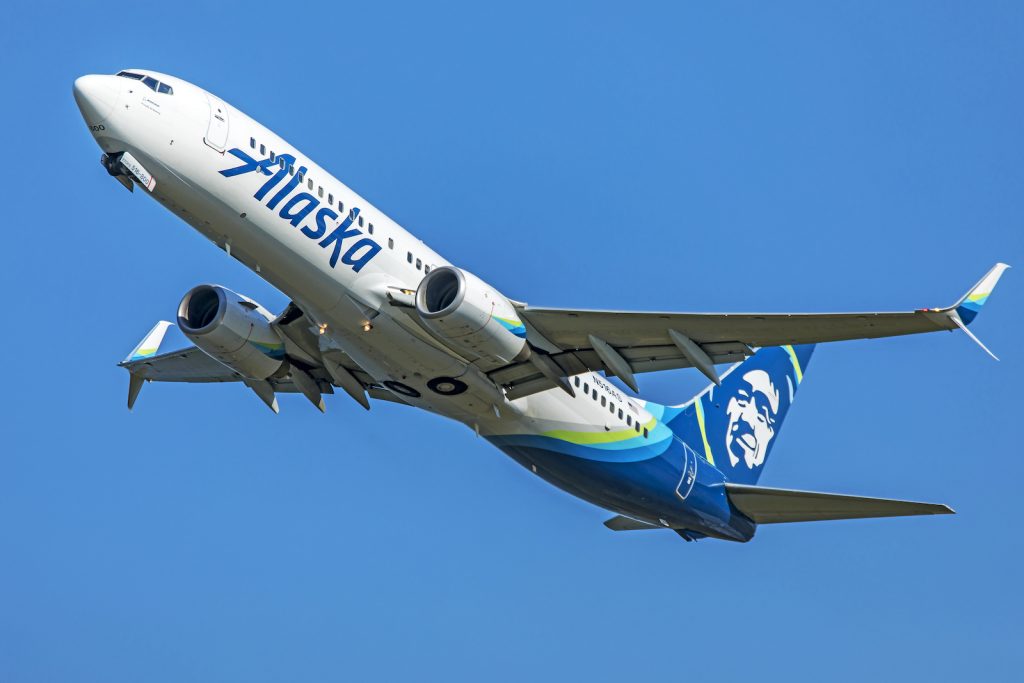
Alaska Airlines reported a negative impact to its capacity growth plans due to continued aircraft delivery delays at Boeing.

Alaska 737 MAX aircraft
Alaska Boeing 737 MAX aircraft (Photo: Shutterstock | Wenjie Zheng)

Alaska Airlines reported a negative impact on its capacity growth due to continued delays caused by an ongoing International Association of Machinists and Aerospace Workers (IAM) union strike at Boeing.

According to a Q&A document published last week, the airline stated it lowered its delivery and growth expectations for 2024 after the MAX grounding earlier this year – but recent strikes have compounded subsequent delivery delays.

As a result, Alaska’s growth expectations have been reduced by approximately two points in Q4, the document stated. The carrier reported it now expects its capacity growth to be less than 2% for the year versus its previous expectation of less than 2.5% growth year-over-year.

“On a combined basis, we expect capacity growth to be approximately 1.5% to 2.5% for the fourth quarter, with the legacy Air Group network roughly flat y/y and the Hawaiian network growing approximately 7-8% y/y,” Alaska stated.

The carrier also didn’t rule out utilizing additional Airbus A321neos in its answer.

“It remains too early to predict our future fleet strategy now that we operate a mixed fleet again,” Alaska stated. “We are familiar with the A321 and its capabilities and our future fleet design will be influenced by Boeing’s ability to restart MAX production and certify the MAX10 aircraft on schedule.”

The hit to Alaska’s capacity growth comes as the airline finalized its acquisition of Hawaiian Airlines in September. With the merger, Alaska Air Group now operates a combined fleet of Airbus, Boeing, and Embraer aircraft. However, the legacy Alaska brand is still an all-Boeing 737 operator.

The machinists strike at Boeing has stifled the manufacturer’s jet production and has had a ripple effect throughout the industry. Striking IAM members are set to vote on a new contract proposal from Boeing on Monday evening.

The latest proposal has been endorsed by the union’s leadership after members voted down a previous offer two weeks prior.

AirlineGeeks.com Staff

AirlineGeeks.com was founded in February 2013 as a one-person blog in Washington D.C. Since then, we’ve grown to have 25+ active team members scattered across the globe. We are all here for the same reason: we love deep-diving into the fascinating realm of the airline industry.

Jet2 Stations New Airbus A321neo in Edinburgh

British low-cost carrier Jet2 has announced that it stationed its first Airbus A321neo aircraft in the Scottish capital city.

Jet2 has ordered 36 Airbus A321neo aircraft, with flexibility to expand to 60 aircraft. (Photo: Airbus)

British low-cost carrier Jet2 has announced that it stationed its first Airbus A321neo aircraft in the Scottish capital. In addition, plans have been put in place for its first commercial flight from Edinburgh to Tenerife.

According to UK Aviation News, the Leeds-headquartered airline already has 10 Airbus A321neo aircraft in the fleet. However, these are leased, rather than the first one which arrived as part of a 146 aircraft order with Airbus.

Edinburgh Airport has been growing and slowly recovering from the pandemic in recent years. As of November 2024, according to Flightradar24, it serves 100 airports across 36 different countries. The long-haul network has been developing, with transatlantic routes to a few U.S. destinations, as well as flights to the Middle East and seasonal routes to China.

Gordan Dewar, Edinburgh Airport’s CEO, claimed that the whole industry is “aware of the need to play its part in the move to Net Zero and an important part of this will be investing in a modern and efficient fleet, something we are seeing today as Jet2.com introduces the first of its A321neo aircraft to operations at Edinburgh Airport.”

Sam Jakobi

Sam Jakobi is a young aviation journalist based in London, U.K. A lifelong Airbus fan, he has adored aviation for as long as he can remember. Sam writes articles and conducts interviews with members of the aviation community.

FAA Investigating Single-Engine Go-Around

Air traffic control recordings indicate that the flight crew reported an engine failure while on approach to Reagan National before initiating a go-around.

American A319
An American A319 in Phoenix. (Photo: AirlineGeeks | William Derrickson)

The Federal Aviation Administration is investigating a Thursday engine failure involving an American Airlines Airbus A319 near Washington’s Reagan National Airport. Flight 1539 from Boston later diverted to Washington Dulles International Airport.

Air traffic control recordings indicate that the flight crew reported an engine failure while on approach to Reagan National before initiating a go-around. The aircraft — registered as N814AW — climbed to the south before opting to divert to Dulles.

The crew later reported that the right-side engine failure likely came as a result of a bird strike.

The A319 remains out of service. An FAA spokesperson said the agency is investigating the incident.

“American Airlines Flight 1539 landed safely at Dulles International Airport in Virginia around 8:40 a.m. local time on Thursday, Oct. 31, after the crew reported a bird strike. The Airbus 319 departed from Boston Logan International Airport and was heading to Ronald Reagan Washington National Airport,” the spokesperson said in a statement on Monday.

ADS-B data from Flightradar24 shows the aircraft went around at approximately 400 feet. Initially, local controllers offered the crew a diversion to nearby Joint Base Andrews.

No injuries were reported following the incident, and the aircraft landed safely at Dulles. An American spokesperson did not immediately reply to AirlineGeeks’ request for comment.

Ryan Ewing

Ryan founded AirlineGeeks.com back in February 2013 and has amassed considerable experience in the aviation sector. His work has been featured in several publications and news outlets, including CNN, WJLA, CNET, and Business Insider. During his time in the industry, he's worked in roles pertaining to airport/airline operations while holding a B.S. in Air Transportation Management from Arizona State University along with an MBA. Ryan has experience in several facets of the industry from behind the yoke of a Cessna 172 to interviewing airline industry executives. Ryan works for AirlineGeeks' owner FLYING Media, spearheading coverage in the commercial aviation space.

Boeing 767 to Rejoin Air Canada’s Passenger Fleet

In a presentation to investors last week, the airline revealed that it is planning on bringing back two airframes in 2025.

An Air Canada Boeing 767-300ER landing in Las Vegas.
An Air Canada Boeing 767-300ER landing in Las Vegas. (Photo: AirlineGeeks | William Derrickson)

The Boeing 767-300ER will rejoin Air Canada’s passenger fleet after being retired during the COVID-19 pandemic. In a presentation to investors last week, the airline revealed that it is planning on bringing back two airframes in 2025.

Air Canada retired the Boeing 767-300ER from passenger service in 2020 amidst the global pandemic. In response to growing cargo demand, the carrier converted a few of its aircraft to freighters to equip its new Air Canada Cargo fleet.

In response to increased travel demand, Air Canada has been ambitiously acquiring both new and used aircraft. In 2024, the airline took delivery of used Airbus A320, A321, and A330 aircraft, as well as new Boeing 737 MAXs, 787s, and A220s.

The company’s latest move to bolster capacity involves bringing back two retired Boeing 767s. The aircraft in question appear to be registered as C-FOCA and C-GLCA. Both aircraft had been stored at Pinal Airpark in Marana, Ariz. until they were ferried to John C. Munro Hamilton International Airport earlier this year.

During a third-quarter earnings call, company leadership called the move “temporary insurance’ in the airline’s short-term fleet plan. “These are two older 767s that used to be part of our passenger mainline fleet,” said Mark Galardo, Air Canada’s executive vice president of revenue and network planning.

“There’s still some life on them…,” Galardo added. He noted that there’s no plan to keep the over 30-year-old aircraft around for the long term.

On board an Air Canada Boeing 767-300ER in 2014 (AirlineGeeks | Andrew Chen)

The two aircraft now seem to be undergoing maintenance at KF Aerospace’s facility in Hamilton. When they were retired in 2020, the aircraft were configured with 211 seats with 24 lie-flat business class seats and 187 economy class seats.

Andrew Chen

Andrew is a lifelong lover of aviation and travel. He has flown all over the world and is fascinated by the workings of the air travel industry. As a private pilot and glider pilot who has worked with airlines, airports and other industry stakeholders, he is always excited to share his passion for aviation with others. In addition to being a writer, he also hosts Flying Smarter, an educational travel podcast that explores the complex world of air travel to help listeners become better-informed and savvier travelers.

Canada-China Flights Set to Increase as Restrictions Ease

The Canadian government has lifted pandemic-era caps on flights between Canada and China, paving the way for an increase in service.

An Air China Boeing 777-300ER (Photo: AirlineGeeks | Noah Escobar)

The Canadian government has lifted pandemic-era caps on flights between Canada and China, paving the way for an increase in service between the two countries. Multiple airlines have already announced service increases and resumptions with more expected to come.

Background: Canada’s China Flight Caps

In 2021, the Canadian Minister of Transportation issued an order that limited the number of flights operated by Chinese carriers to Canada to two scheduled round-trip passenger flights per week. The order was replaced with a new one in 2022, raising the cap to six weekly frequencies. These orders also prohibited non-stop flights between Canada and Beijing.

Last week, the government rescinded the order, thereby removing these frequency restrictions. Until this move, the six frequencies were allocated as follows (with one weekly flight per route and airline):

  • Air China: Beijing–Capital – Vancouver (with a technical stop in Shenyang to avoid the prohibition on direct flights between Canada and Beijing)
  • China Eastern Airlines: Shanghai–Pudong – Toronto
  • China Southern Airlines: Guangzhou – Toronto
  • Hainan Airlines: Shenzhen – Vancouver
  • Sichuan Airlines: Chengdu–Tianfu – Vancouver
  • XiamenAir: Xiamen – Vancouver

Prior to the COVID-19 pandemic, Chinese carriers operated up to 76 roundtrips between the two countries. Meanwhile, Air Canada – the only Canadian carrier flying to China – flew up to 35 weekly frequencies.

Chinese Airlines Bolster Services to Canada

Following the latest announcement removing the frequency restrictions, Chinese airlines have begun announcing increases in their services to Canada.

Air China plans to resume non-stop Boeing 777-300ER service between Beijing Capital International Airport and Vancouver International Airport on November 8, 2024. The flight will replace the existing service that operates via Shenyang. Starting on November 18, 2024, the frequency will increase to three flights per week.

China Eastern will increase its once-weekly roundtrip between Shanghai Pudong International Airport and Toronto Pearson International Airport to four flights per week starting on November 18, 2024. The airline uses its Boeing 777-300ER aircraft on this route.

A China Eastern Airlines Boeing 777-300ER (Photo: AirlineGeeks | William Derrickson)

Announcements from other Chinese airlines are expected to follow in the coming weeks and months. This could include the resumption of routes that ended during the pandemic, such as Beijing Capital Airlines’ service from Hangzhou and Qingdao to Vancouver and China Southern Airlines’ flights between Guangzhou and Vancouver.

Air Canada Ramps Up China Flights

Air Canada has also announced increases to its flights between Canada and China. The Canadian flag carrier’s only existing service to China is a route between Vancouver and Shanghai–Pudong that operates four times per week with a Boeing 787-9. The airline will now operate this route daily starting on December 7, 2024.

Meanwhile, the carrier has also announced a resumption of flights between Vancouver and Beijing–Capital. Daily flights are set to begin on January 15, 2025 with Air Canada’s Boeing 787 Dreamliner aircraft.

Andrew Chen

Andrew is a lifelong lover of aviation and travel. He has flown all over the world and is fascinated by the workings of the air travel industry. As a private pilot and glider pilot who has worked with airlines, airports and other industry stakeholders, he is always excited to share his passion for aviation with others. In addition to being a writer, he also hosts Flying Smarter, an educational travel podcast that explores the complex world of air travel to help listeners become better-informed and savvier travelers.

American Bolsters London Service

Following seven new European route announcements, American is also adding more service to London Heathrow starting next summer.

American 777-300ER
An American 777-300ER at DFW. (Photo: AirlineGeeks | William Derrickson)

Following seven new European route announcements, American is also adding more service to London Heathrow. The carrier is scheduled to operate up to 48 peak day flights between the U.S. and London next summer, per Cirium Diio data.

From Dallas/Fort Worth, the airline will add a fifth daily flight between the two cities. The additional service will begin on March 29, 2025, operated by a Boeing 777-200. American’s other Dallas/Fort Worth-London flights are mostly operated by the larger 777-300ER.

British Airways also serves the route on a daily basis with an Airbus A350-1000. Between the two partner airlines, there will be up to six daily flights from Dallas/Fort Worth to London Heathrow.

Miami-London Boost

As first reported by Ishrion Aviation on Twitter/X, the Fort Worth-based airline plans to restore a second daily flight between Miami and London.

Together, American and British Airways will operate up to four daily flights from Miami to London Heathrow. Virgin Atlantic also serves the route.

British Airways flies a mix of A380s and 787-10s on the route while American uses 777-300ERs for both flights.

Even with these additional flights, American’s U.S.-London summer schedule will be slightly smaller year-over-year. Earlier this year, the airline cut its third daily Los Angeles-London flight and made Phoenix-London seasonal only. 

Ryan Ewing

Ryan founded AirlineGeeks.com back in February 2013 and has amassed considerable experience in the aviation sector. His work has been featured in several publications and news outlets, including CNN, WJLA, CNET, and Business Insider. During his time in the industry, he's worked in roles pertaining to airport/airline operations while holding a B.S. in Air Transportation Management from Arizona State University along with an MBA. Ryan has experience in several facets of the industry from behind the yoke of a Cessna 172 to interviewing airline industry executives. Ryan works for AirlineGeeks' owner FLYING Media, spearheading coverage in the commercial aviation space.

Day One at Your New Airline: What to Expect

Congratulations! You made it. You are hired at an airline and you are now preparing for day one of class. Now what happens?

A350 cockpit
The cockpit of a Virgin Atlantic Airbus A350-1000 XWB. (Photo: AirlineGeeks | Tom Pallini)

Hello, and welcome to the Lessons From the Line column. As a way of quick introduction, we, the authors of this column (Richard, Andrew, and Jolanda) have flown at the regionals and majors, domestically and internationally, in the right and left seats, Airbus and Boeing, civilian and military, and have flight instructed, served as line check pilots, worked in pilot recruiting and interviewing, as well as racking up extensive volunteer experience as pilot union representatives.

We are also the authors of The Airline Transition Manual (www.airlinetransition.org)  – a complete guide to managing your airline career. Collectively we have a century’s worth of experience, and we have been graciously invited by the AirlineGeeks to share our thoughts and life lessons from the line with you.

Congratulations! You made it. You are hired at an airline and you are now preparing for day one of class. But first, reflect back on how you got here: how you set your goals, how you overcame setbacks, what skills you learned along the way, who helped you, and then pat yourself on the back for a job well done.

When you walk through the doors of your new airline, take a moment to appreciate where you are and what you have accomplished. Take a picture of the area, yourself, and your classmates; you will thank yourself thirty years from now when you are creating your retirement photo gallery.

You are now on to the next phase of your career. Although this is a time to celebrate, it is also a time to prepare yourself (and your family and friends) for a busy time ahead. Training is not only time consuming, but can be stressful as well. Below are several things to consider for putting an indoc plan together before heading off to the training center.

Airline Indoctrination and Day One

Airline indoctrination (“indoc”) programs typically run for about two weeks. During this time, you will be introduced to company culture and policy, fitted for uniforms, complete insurance and company forms, get a tour of the facilities, and listen to managers talk about your job, their expectations, and the future of the company. You will receive information from the human resources department on pay, benefits, and leave policies, as well as perform emergency training, complete fingerprinting and drug testing (if not completed prior to arrival), take a picture for your new crew badge, and many more somewhat mundane tasks.

Day one of this program is typically set up to welcome you and introduce you to everything that is going to follow over the next two weeks. Expect the company to makes copies of required documents, pass out company materials including e-tablets, complete badging procedures, and provide you with an itinerary of the events and training that will follow.

During this time, the company will continue to evaluate you as a candidate. This is not the time to go out and party until 3 a.m. for a 6 a.m. get up and to go to class. Moderation is always the key during training. Remember, you are being watched and you are on probation. New-hire pilots can and do get dismissed from training for inappropriate and irresponsible behavior all the time. You worked so hard to get here, do not blow it over a night of $1 tallboys and mechanical bull riding!

Getting to Indoc: Accommodations and Transportation

Each airline runs indoc a little differently and with varying degrees of logistical support. In order to make certain you have a solid plan for getting to and completing indoc, make sure you can answer the following questions:

Does your airline pay for lodging while in training? If not, do they have a recommended hotel or is there a discount available? Will you have a hotel room with a refrigerator for storing some food and drinks – eating out every night for two weeks gets expensive. Does it have a restaurant, is breakfast included, and (if you’re interested) do they have a fitness room? Is there a crew room in the hotel where you will have access to a microwave if you need it, or is one provided in your room? How close is the hotel to the training site – can you walk, or does the hotel or company provide transportation to it? Should you drive your car to training? If not, do you need to rent one? Is the parking area for the hotel or training site safe? If you live in the area, should you go home each night or stay at the hotel?

Generally, airlines provide positive space air transport to their training center’s location – just make sure you know how to book your seat if you intend to travel by air and how to get from the arrival airport to the training facility and hotel.

Food and Drinks

During training, most companies will provide lunch once or twice. This usually happens on the first and last days of indoc and is typically something like sandwiches. A representative of the pilot’s union will also stop by at some point bringing pizzas or sandwiches as well, but for the most part you are on your own for food. There might be an on-site cafeteria, or food trucks outside if you’re lucky; otherwise, it might just be a hallway with some vending machines. So, before you head to indoc, it’s a good idea to figure out what the food situation is at the training facility and do a quick search of the local area to see if there is a grocery store or restaurants nearby should you need it.

And remember, it’s important to stay hydrated, so keep the water coming and try to stay away from too many sugary drinks and overly caffeinated beverages, and moderation with regard to alcohol during the evening gatherings is imperative.

What to Wear

Pack to have comfortable, conservative, rip-free clothing. Except for picture day (usually on day one and or graduation), there will be few formal days. Some airlines have dress codes and require business or business casual attire (no jeans and sneakers); so make sure you know what the requirements are and dress accordingly. This might mean you need to do a little shopping before you head to indoc.

Often the classrooms and flight simulators are either very cold or very warm; therefore consider dressing in layers. Also, have comfortable shoes for the simulator – leave the high heels and long-toed dress shoes for formal events, and save the flip-flops for the beach.

Classmates

Definitely exchange contact information. Consider forming small study groups, especially if you are new to flying larger, more complicated aircraft. Often, someone in the class will start a text group for everyone to join. Not only is this group good for exchanging information on scheduling and training experiences, but after training, for sharing information on Initial Operating Experience (IOE), commuting, parking, crashpads, base and domicile issues, etc.

What You Should Be Doing Now

As soon as you receive notification of your new-hire status and indoc training, put your plan together and follow all instructions provided by the company. There is going to be a lot of information and tasks to be completed coming your way very quickly. Be prepared to show up on day one ready to train and with all pre-indoc tasks completed (as outlined by the company), and with all the required documents – usually pilot and medical certificates, passport and or green card, FCC license, birth and marriage certificates, bank information for direct deposit, etc.

Do not wait until the last minute to complete tasks and put your plan together. There is plenty of stress once you start systems and aircraft training, so don’t add to it by showing up unprepared for indoc.

If you would like more recommendations and a complete explanation on how the airline pilot profession works and how you can best manage it, pick up your physical or e-book copy of The Airline Transition Manual at www.airlinetransition.org

AirlineGeeks.com Staff

AirlineGeeks.com was founded in February 2013 as a one-person blog in Washington D.C. Since then, we’ve grown to have 25+ active team members scattered across the globe. We are all here for the same reason: we love deep-diving into the fascinating realm of the airline industry.
Sign-up for newsletters & special offers!

Get the latest stories & special offers delivered directly to your inbox

SUBSCRIBE

Uh-oh! It looks like you're using an ad blocker.

Our website relies on ads to provide free content and sustain our operations. By turning off your ad blocker, you help support us and ensure we can continue offering valuable content without any cost to you.

We truly appreciate your understanding and support. Thank you for considering disabling your ad blocker for this website