The beleaguered ultra-low-cost carrier (ULCC) plans to sell 23 Airbus A320 and A321 aircraft starting this month, according to an 8-K form filed Thursday.
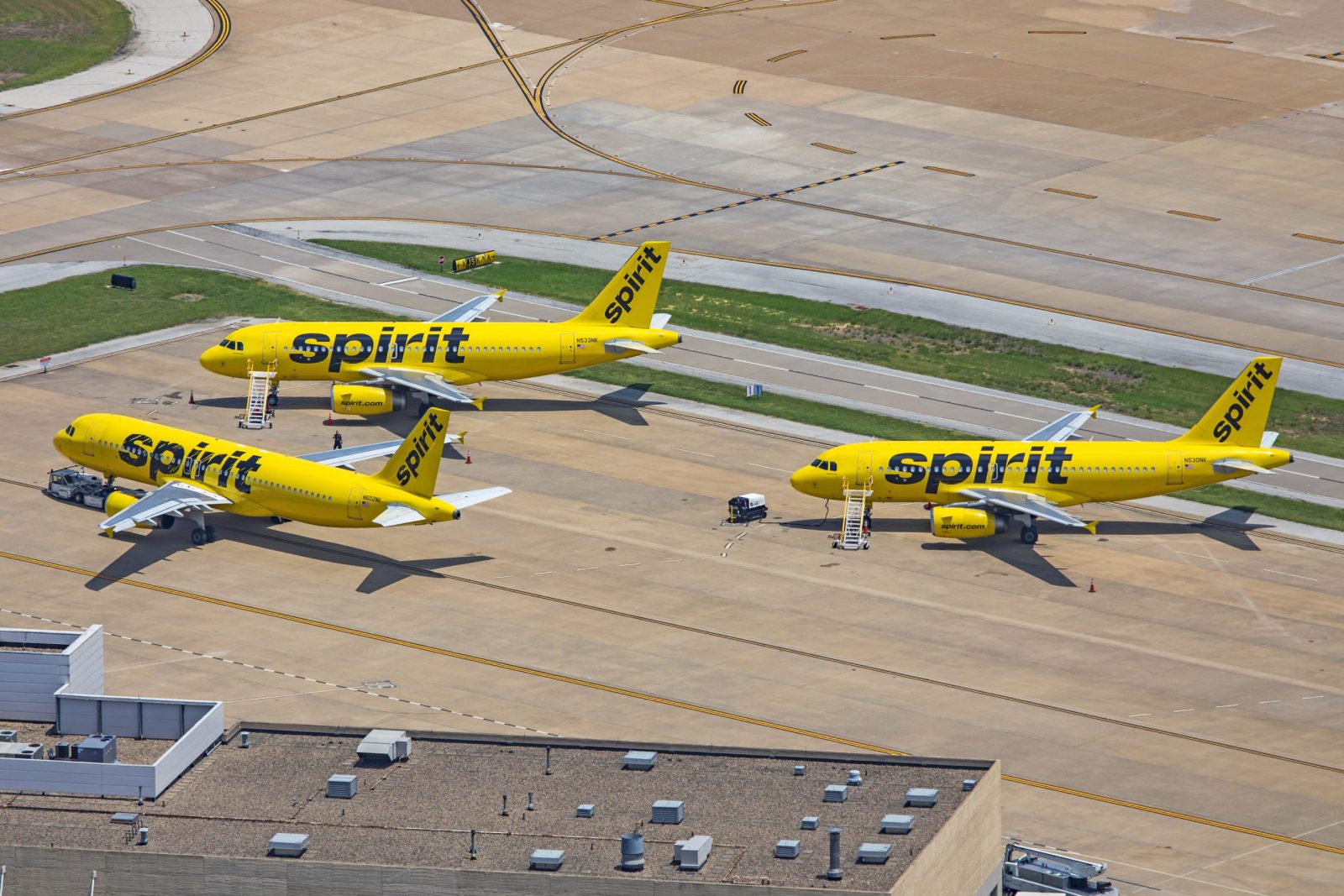
Spirit Airbus jets. (Photo: AirlineGeeks | William Derrickson)
Spirit is cutting its fleet in an effort to conserve cash. The beleaguered ultra-low-cost carrier (ULCC) is selling 23 Airbus A320 and A321 aircraft starting this month, according to an 8-K form filed Thursday.
As part of the sale, the airline said it entered into a binding agreement with aerospace firm GA Telesis on Oct. 18. The transaction’s expected purchase price is $519 million.
“We are thrilled to announce this significant acquisition, which adds a large number of highly sought-after Airbus A320ceo and A321ceo aircraft to our portfolio,” said Marc Cho, president of GA Telesis LIFT Group, in a news release. “The A320ceo family of aircraft is renowned for its efficiency, performance, and reliability, making it an attractive option for airlines across the world. We are confident these aircraft will provide significant value to our customers as they continue their operations.”
The soon-to-be-removed aircraft are older current engine option (CEO) variants. Spirit has 64 A320ceos and 30 A321ceos, data from planespotters.net shows. The sale will reduce the airline’s total fleet by nearly 11%.
With the sale proceeds and subsequent aircraft debt removal, Spirit expects to boost its liquidity by $225 million next year.
Workforce Cuts
In addition, Spirit noted an $80 million cost-cutting plan in 2025, which will primarily be driven by workforce reductions. This announcement comes just weeks after the airline furloughed 186 pilots on Sept. 1.
“As part of its continued strategy to return to profitability, the Company has identified approximately $80 million of annualized cost reductions that it plans to begin implementing in early 2025,” the carrier said in the filing. “These cost reductions are driven primarily by a reduction in workforce commensurate with the Company’s expected flight volume.”
Even with reports of renewed merger talks, Spirit expects capacity to be down in the mid-teens year-over-year. The carrier just recently secured more time to refinance some of its debt, effectively delaying a bankruptcy filing.
Editor’s Note: This story was updated on Oct. 24, 2024 at 8:15 p.m. ET to add comment from GA Telesis.
Ryan founded AirlineGeeks.com in February 2013 and has spent more than a decade covering the airline business. His work has been featured by CNN, WJLA, CNET, and Business Insider. His aviation experience spans airport operations, Part 135 regulatory compliance, and airline crew workforce planning, along with time behind the yoke of a Cessna 172 and interviews with airline executives. Ryan now serves as Group President of Firecrown Media’s Aviation Group. He holds a B.S. in Air Transportation Management and an MBA from Arizona State University and teaches Airline Management at Embry-Riddle Aeronautical University.
Southwest announced plans Thursday to appoint six new independent directors to its board as part of an agreement reached with activist investor Elliott.
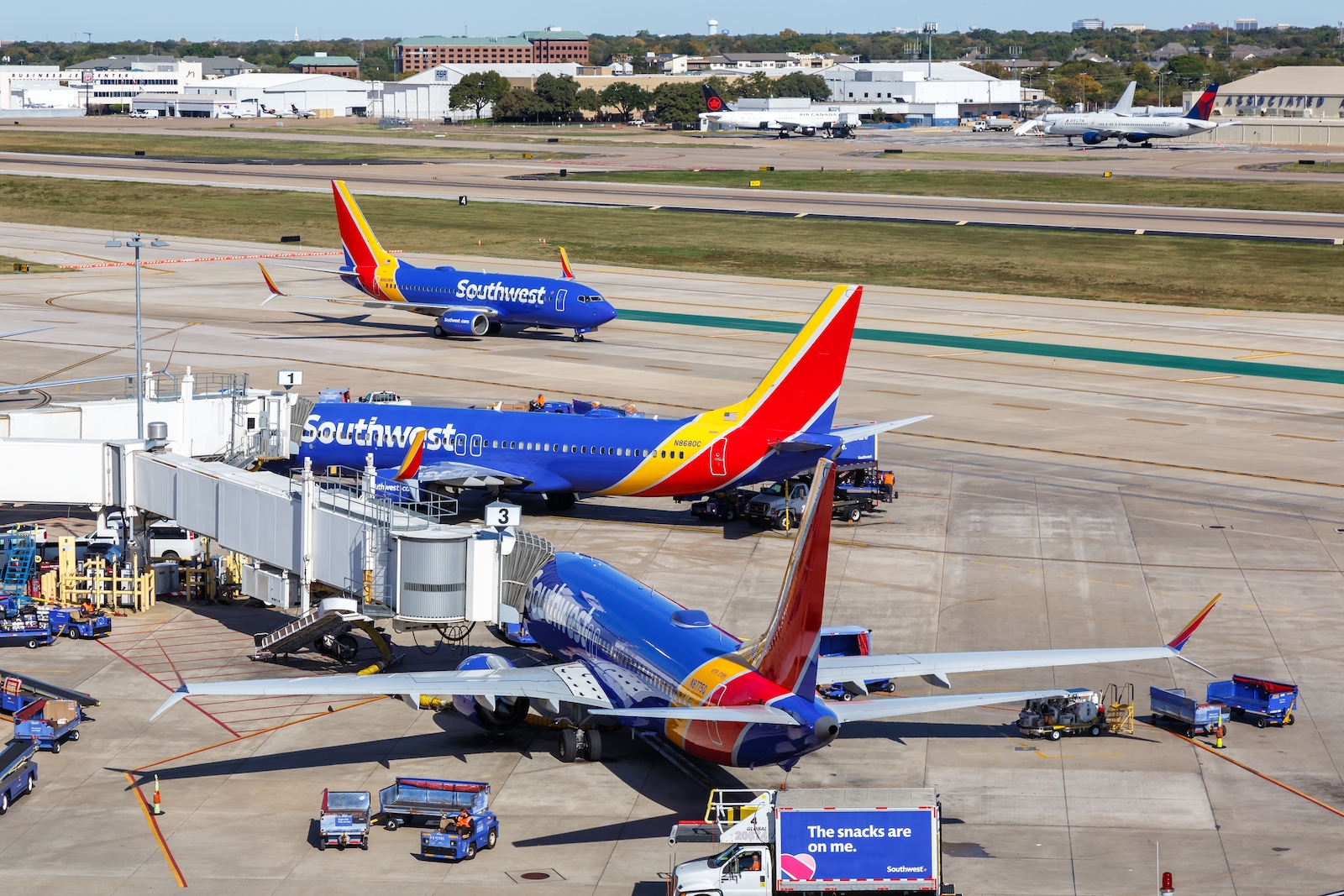
Southwest Airlines Boeing 737 airplanes at Dallas Love Field. (Photo: Shutterstock | Markus Mainka)
Southwest announced plans Thursday to appoint six new independent directors to its board as part of an agreement reached with Elliott Investment Management L.P. to end hostilities between the two sides.
According to a Southwest news release on Thursday, appointees David Cush, Sarah Feinberg, Dave Grissen, Gregg Saretsky and Patricia Watson will become independent directors of the board effective on Nov. 1. Pierre Breber, the former vice president and CFO of Chevron, was also appointed to the board.
Executive Chairman Gary Kelly will accelerate his retirement, which – along with the previously announced retirements of six other Southwest directors – will go into effect on Nov. 1. After his retirement, Kelly will assume the title of Chairman Emeritus.
The new board – reduced to 13 members by Southwest’s 2025 annual shareholder meeting – will appoint a new independent chairman. Saretsky, Cush and three additional Directors to be appointed by the reconstituted Board will serve on the Finance Committee, with Saretsky serving as Chair.
“We are pleased to have reached a collaborative resolution with Elliott, continuing our Board refreshment with the addition of new directors who bring complementary skills and experience,” Kelly said in the release. “I am confident this Board will continue to hold the leadership team accountable for executing its transformational plan and delivering financial performance. It has been the honor of my lifetime to work with our People and serve our Customers in making Southwest the leader it is today. I believe Southwest’s best days lie ahead under the vision and leadership of Bob Jordan and the oversight of this reconstituted Board.”
As part of the collaboration, Southwest entered into a cooperation agreement with Elliott to halt hostilities between the two. Additionally, Elliott has informed Southwest that it withdrew its request to call a special meeting of shareholders. Elliott also no longer intends to nominate candidates to stand for election to Southwest’s board.
Elliott Partner John Pike and Portfolio Manager Bobby Xu provided the following statement:
“We are pleased to have come to an agreement with Southwest on the addition of six new directors that will enhance and revitalize its Board,” they said. “They are all highly qualified and will bring diverse skills and backgrounds to the task of overseeing Southwest under the leadership of a new Board Chairman. We believe the strategic changes Southwest has announced since we commenced our engagement, together with the new independent directors and governance improvements, will position the Company to enhance business performance, drive operational execution and evaluate additional changes to create long-term shareholder value. We are grateful to Southwest’s shareholders, labor groups, and leadership for their constructive engagement, and we look forward to a strengthened Southwest delivering on its full potential.”
During Thursday’s earnings call, Southwest CEO Bob Jordan commented on the recent settlement with Elliott.
“We’re very pleased to have come to a collaborative resolution with Elliott,” Jordan said. “As we welcome our new members to our board – all of whom I had a chance to interview, talk to and get to know – our focus remains on executing our plan, and that’s exactly what we’re going to do. I can promise you it’s all eyes forward here as we work to set up Southwest for success for generations to come.”
AirlineGeeks.com was founded in February 2013 as a one-person blog in Washington D.C. Since then, we’ve grown to have 25+ active team members scattered across the globe. We are all here for the same reason: we love deep-diving into the fascinating realm of the airline industry.
American Airlines chief Robert Isom isn't thrilled with Boeing's ongoing issues, again blasting the manufacturing giant during a Thursday CNBC interview.
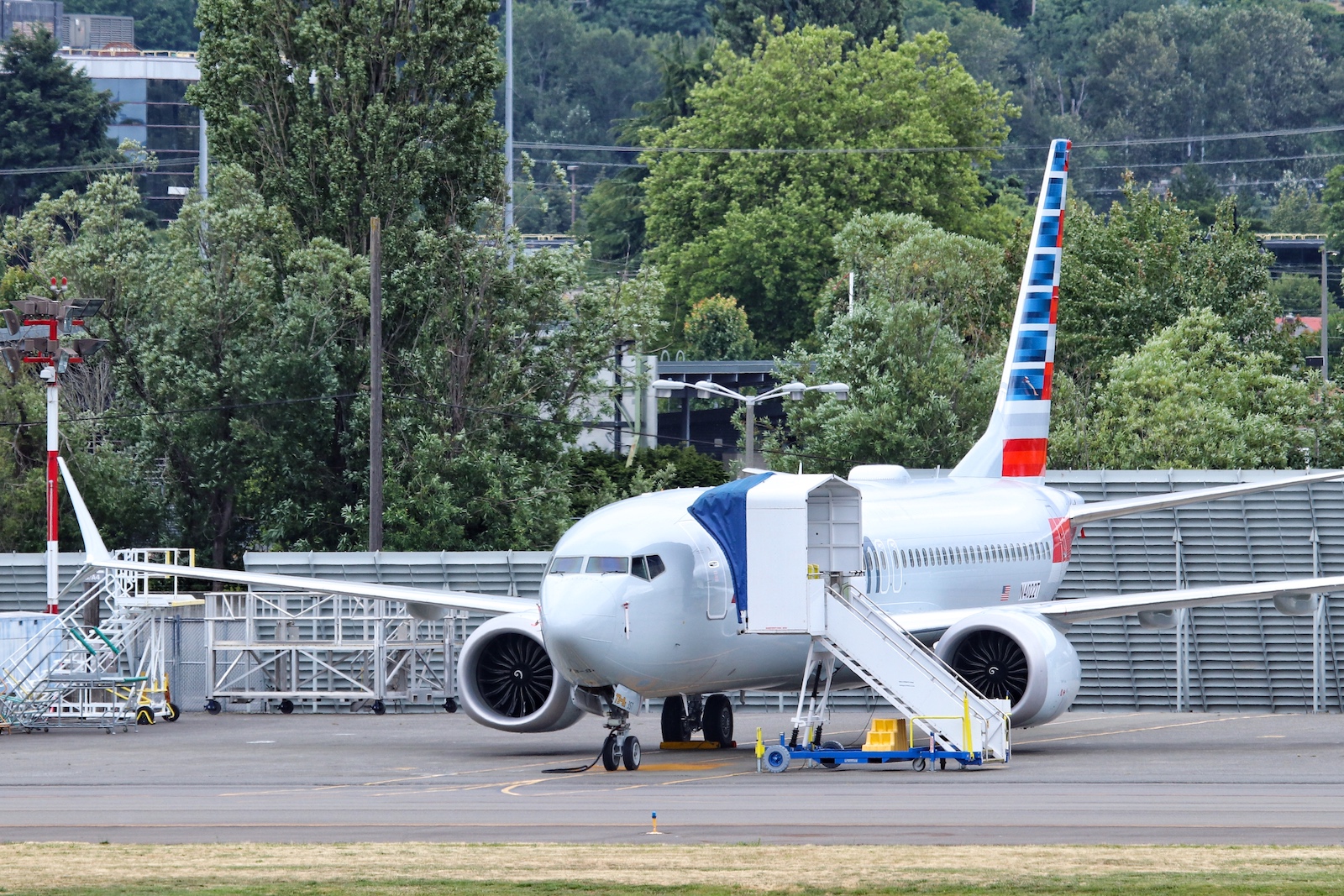
An American 737 MAX 8 in Renton, Washington (Photo: AirlineGeeks | Katie Zera)
American Airlines chief Robert Isom isn’t thrilled with Boeing’s ongoing issues, again blasting the manufacturing giant during a Thursday CNBC interview. Like many carriers, the Fort Worth-based airline has scaled back its aircraft delivery outlook, resulting in some network changes.
In April, American reduced capacity on a handful of long-haul routes, citing Dreamliner delivery delays. Some of these cuts will last into early next year.
“I look forward to the day when they’re not just a distraction,” Isom said referring to Boeing. “We’ve been struggling with them…for over the last five years.”
Despite the delays, Isom stated that he expects the airline to meet its planned capacity for the remainder of 2024 and likely in 2025. “We’re going to make sure [that] we’re protected,” he added.
Isom noted that the 737 MAX only accounts for roughly 1% of the carrier’s total capacity.
“I feel really confident about us being able to deliver and manage our business no matter what is going on at Boeing,” Isom continued.
Earlier this year, American committed to adding 115 737 MAX 10s to its fleet, including a firm order for 85 of the yet-to-be-certified type and a conversion of 30 previous MAX 8 orders. The airline also has 787-9s on order.
“At the end of the day, though, we need [Boeing] to deliver quality aircraft on time and I’ll be welcoming that phone call…,” he concluded.
This is not the first time Isom has sharply rebuked Boeing. In a January earnings call, he told investors that “Boeing needs to get their act together.”
Ryan founded AirlineGeeks.com in February 2013 and has spent more than a decade covering the airline business. His work has been featured by CNN, WJLA, CNET, and Business Insider. His aviation experience spans airport operations, Part 135 regulatory compliance, and airline crew workforce planning, along with time behind the yoke of a Cessna 172 and interviews with airline executives. Ryan now serves as Group President of Firecrown Media’s Aviation Group. He holds a B.S. in Air Transportation Management and an MBA from Arizona State University and teaches Airline Management at Embry-Riddle Aeronautical University.
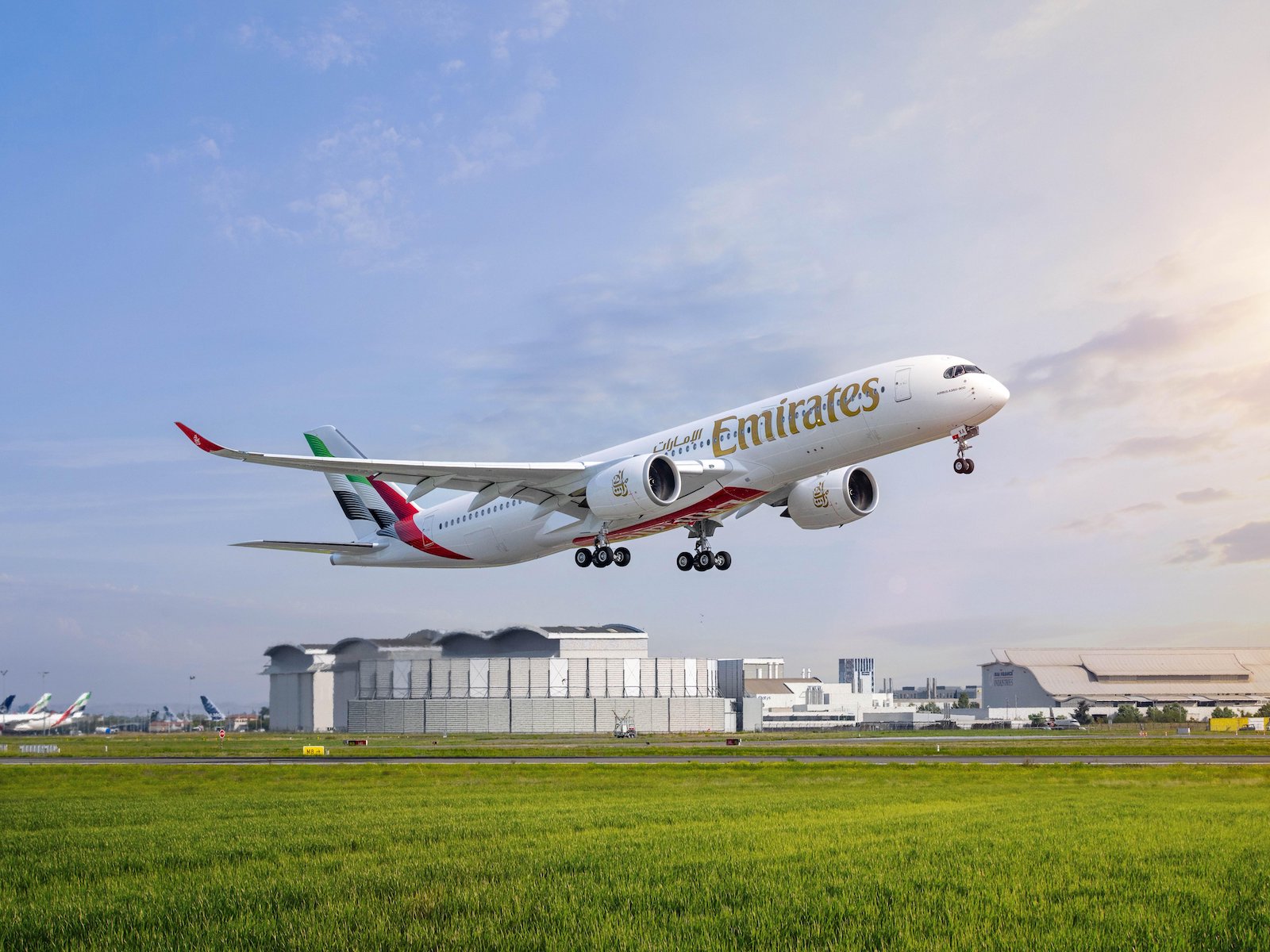
An Emirates A350-900XWB during testing (Photo: Emirates)
Emirates is again delaying planned service entry for its new Airbus A350. The aircraft was previously delayed into December 2024, but that date has now shifted to 2025.
The carrier also plans to serve Ahmedabad, Bahrain, Bologna, Colombo, Kuwait City, Lyon, and Mumbai with the aircraft, most of which will start in February.
Earlier this year, the airline expected to debut the aircraft in September 2024 with plans to take delivery of 10 A350s by the end of March 2025. Emirates has 65 A350-900s on order.
The aircraft will feature a three-class configuration, including business, premium economy, and economy cabins.
Emirates continues to face mounting delivery delays for both Airbus and Boeing aircraft. Earlier this month, Boeing further delayed its 777X program into 2026 of which Emirates is the largest customer.
Ryan founded AirlineGeeks.com in February 2013 and has spent more than a decade covering the airline business. His work has been featured by CNN, WJLA, CNET, and Business Insider. His aviation experience spans airport operations, Part 135 regulatory compliance, and airline crew workforce planning, along with time behind the yoke of a Cessna 172 and interviews with airline executives. Ryan now serves as Group President of Firecrown Media’s Aviation Group. He holds a B.S. in Air Transportation Management and an MBA from Arizona State University and teaches Airline Management at Embry-Riddle Aeronautical University.
Atlantic Airways' final sunset on North American soil (Photo: AirlineGeeks | Joey Gerardi)
Atlantic Airways made headlines last year when it began the first-ever nonstop passenger flights to North America from its home country of the Faroe Islands. The seasonal route started in August 2023 and operated once a week with the westbound flight to North America occurring on Tuesdays and the eastbound flight to the Faroe Islands on Wednesdays. This was also one of the few daytime flights going eastbound from the United States to Europe.
The flights operated until mid-October 2023, but the airline announced that the route would be returning for the 2024 season for seven weeks from the beginning of September 2024 until mid-October 2024. On July 9, 2024, Aeroroutes reported that the airline shortened its New York service season from six weeks to just three with Sept. 17 being the last flight.
Just two weeks later, a Faroese news outlet reported the route to New York “flops” with the carrier’s CEO later confirming that the service would not be returning in 2025.
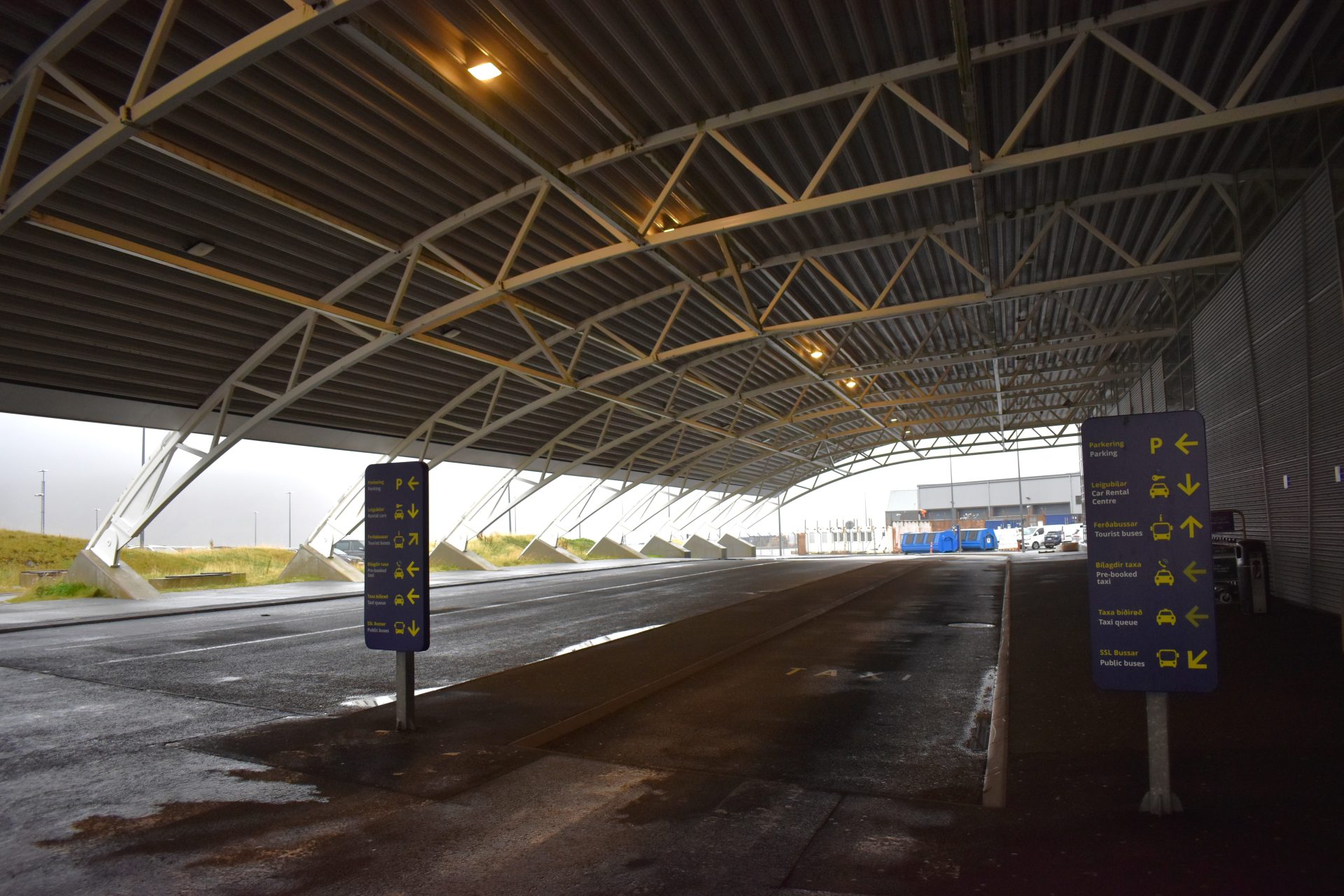
The curbside of Vágar Airport in the Faroe Islands (Photo: AirlineGeeks | Joey Gerardi)
According to the airline’s CEO, Jóhanna á Bergi, the route never got enough demand. The route was originally supposed to start back in 2020 but got delayed due to the pandemic, although she is hopeful that it will resume at some point in the future. Given the rarity of this route, AirlineGeeks flew onboard the last flight.
Day of the Flight
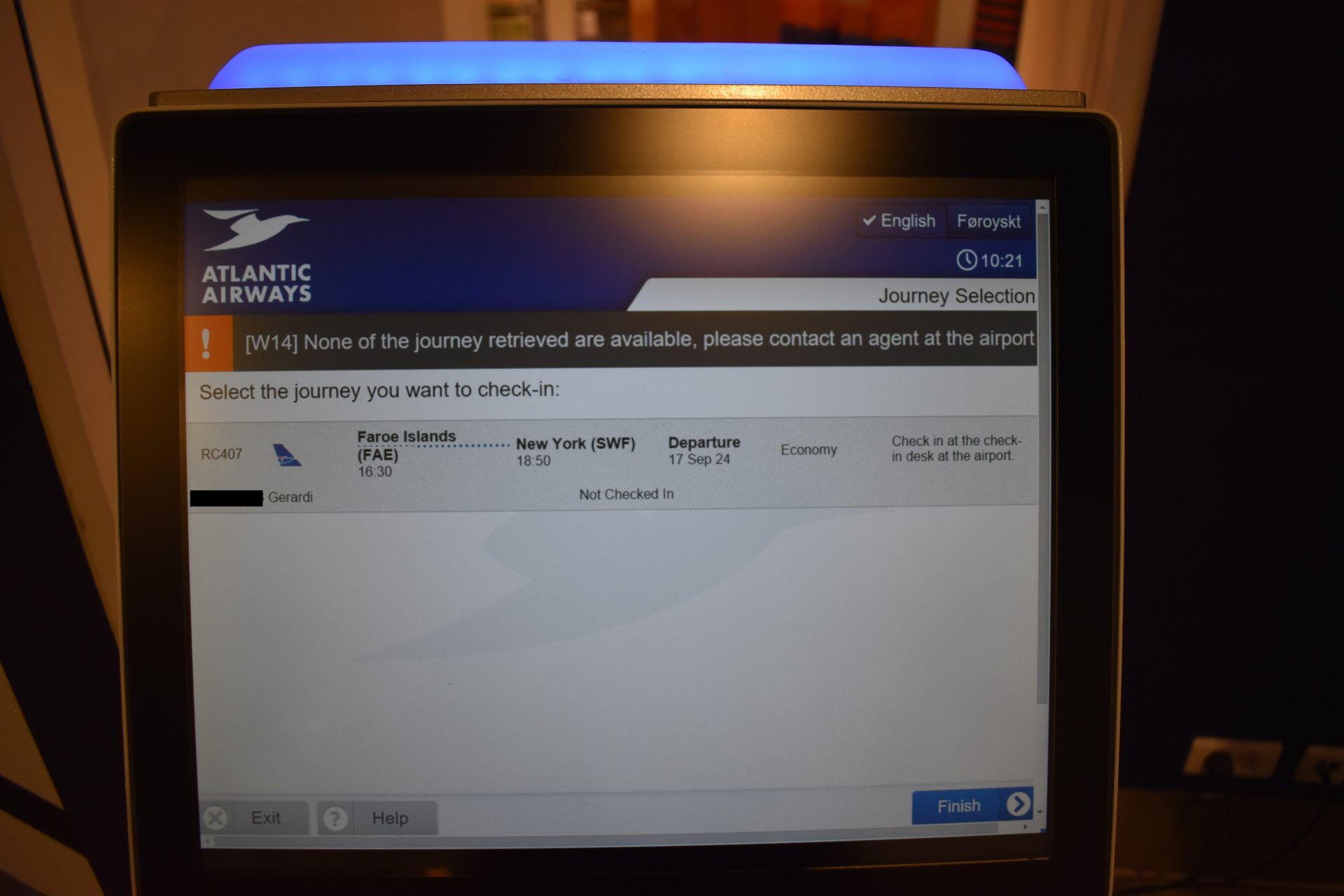
I arrived at the Vágar airport in the Faroe Islands way earlier than needed, especially considering there only ended up being under 30 people on board this flight. The airline does offer online check-in for their flights and I did get a mobile boarding pass for the flight coming into the Faroe Islands, however, due to entry regulations in the United States, I was required to check in at the ticket counter with an agent and get a hard copy of the boarding pass so they could stamp it.
Checking in at the kiosk for my flight to Stewart (Photo: AirlineGeeks | Joey Gerardi)
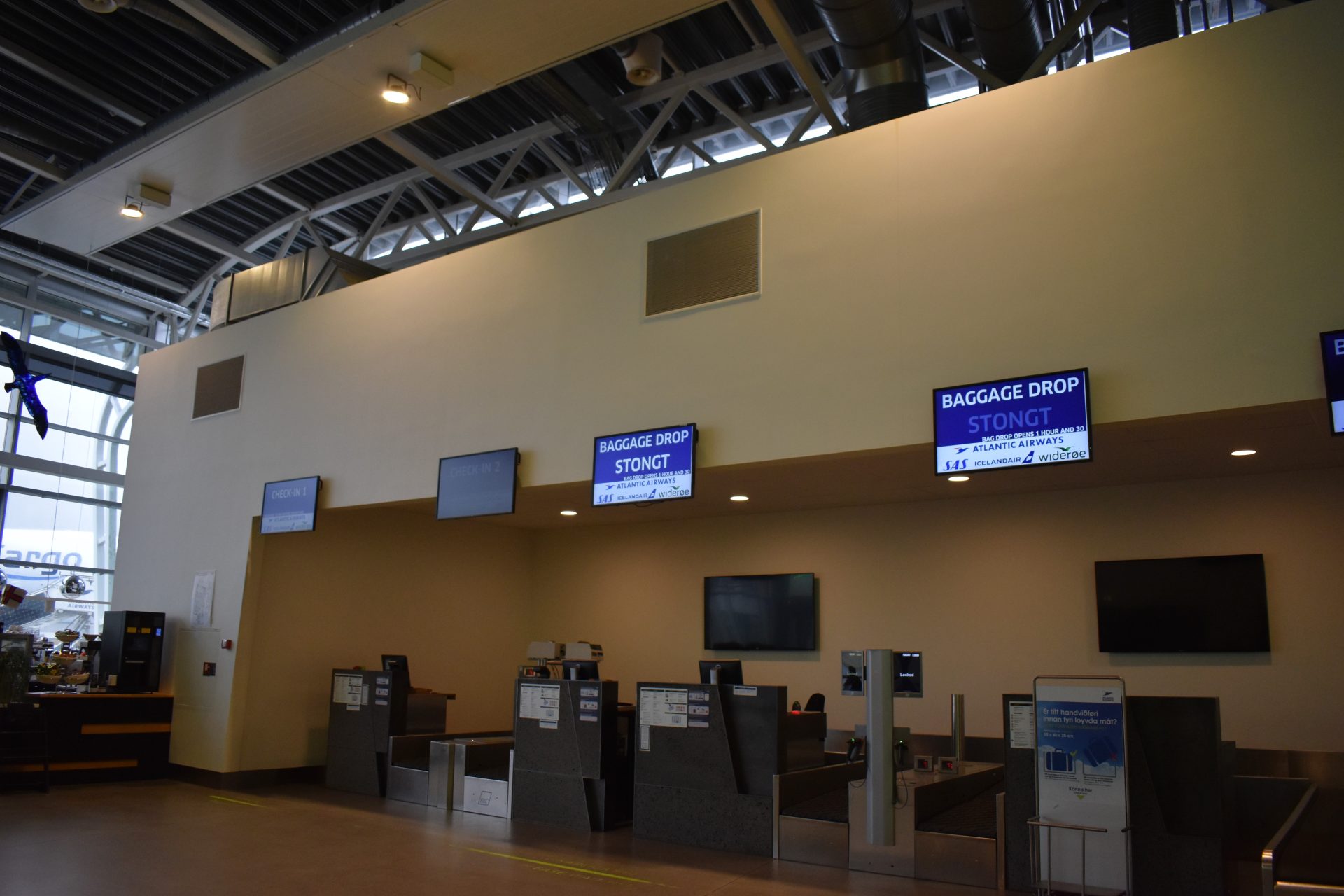
It was a little airport and not much was going on, with all of the ticket counters opening two hours before departure times, and the Atlantic agents ran every single flight with the check-in counters having the logos of every airline that flew to this airport: Atlantic Airways, Icelandair, SAS, and Widerøe. The same goes for the kiosks, all being interchangeable for the airlines that serve the airport.
The ticket counter area at Vágar Airport in the Faroe Islands (Photo: AirlineGeeks | Joey Gerardi)
As this was a pretty empty flight, I decided not to select and pay for my seat ahead of time, and I got assigned a right-side window behind the wing, which was exactly what I wanted. Two hours before departure time is also when security opened, and as this flight was leaving the Schengen area we did have to have our passport stamped.
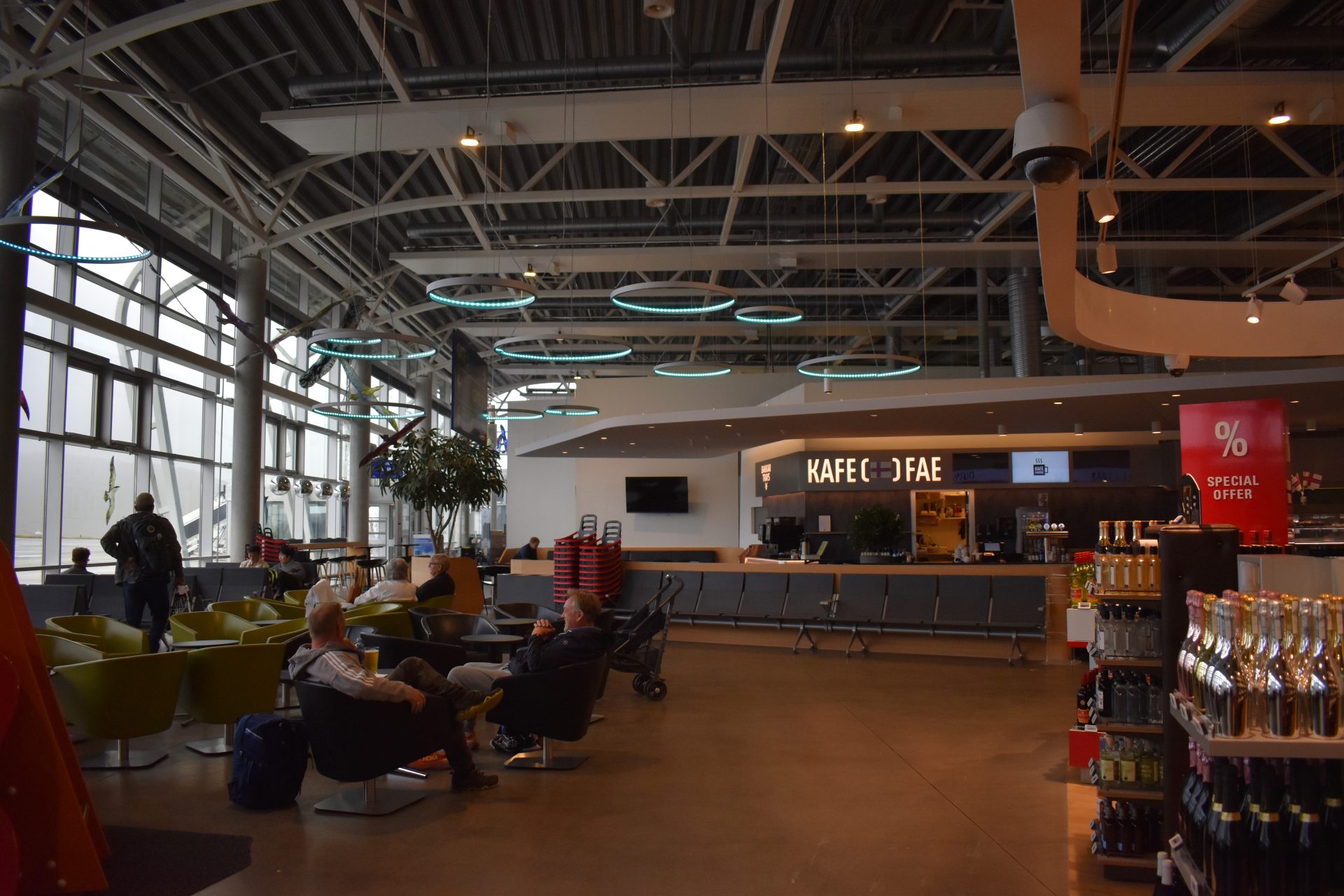
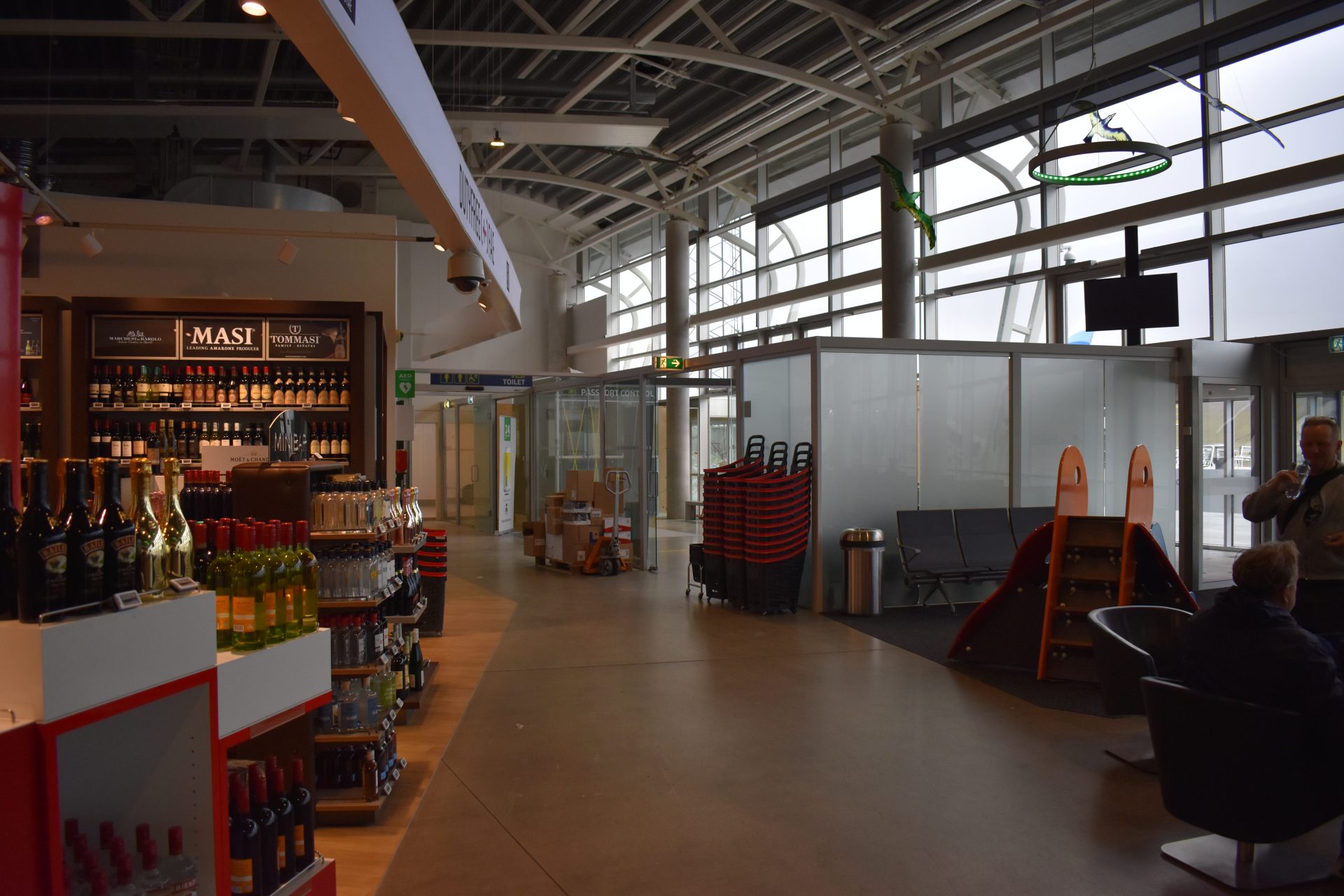
The area after security contained a large duty-free shop compared to the actual gate space, along with three gates. One of the gates was used for flights leaving the Schengen Zone and had a small booth for passport control, which after this flight is just the airline’s route to London.
The gate area at the only airport in the Faroe Islands (Photo: AirlineGeeks | Joey Gerardi)
All 27 of us boarded the aircraft and got our passports stamped with plenty of time to spare, it was really neat to have the EU exit stamp from the Faroe Islands given the very limited number of flights that leave this country to places outside the region.
The gate with the passport control booth (Photo: AirlineGeeks | Joey Gerardi)
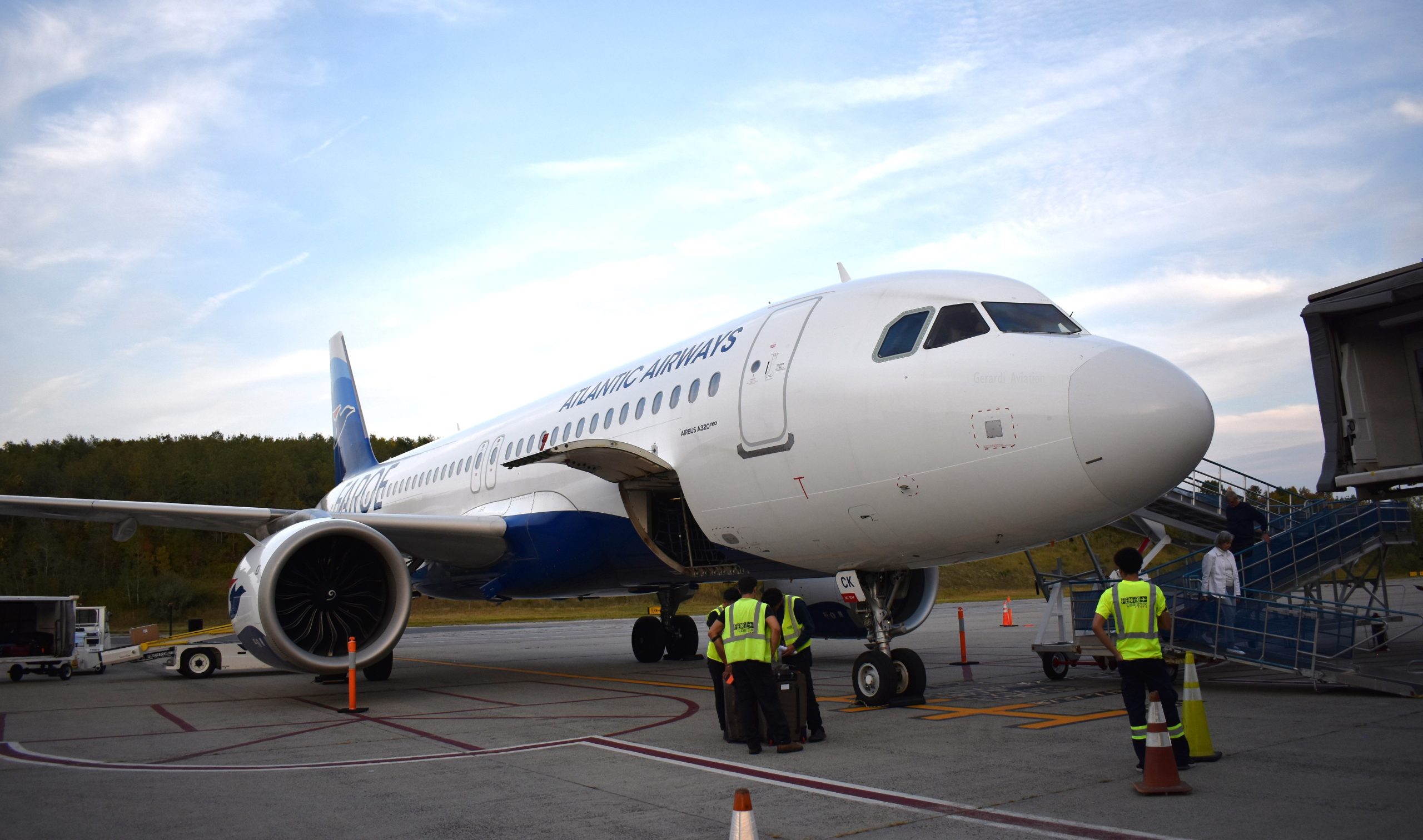
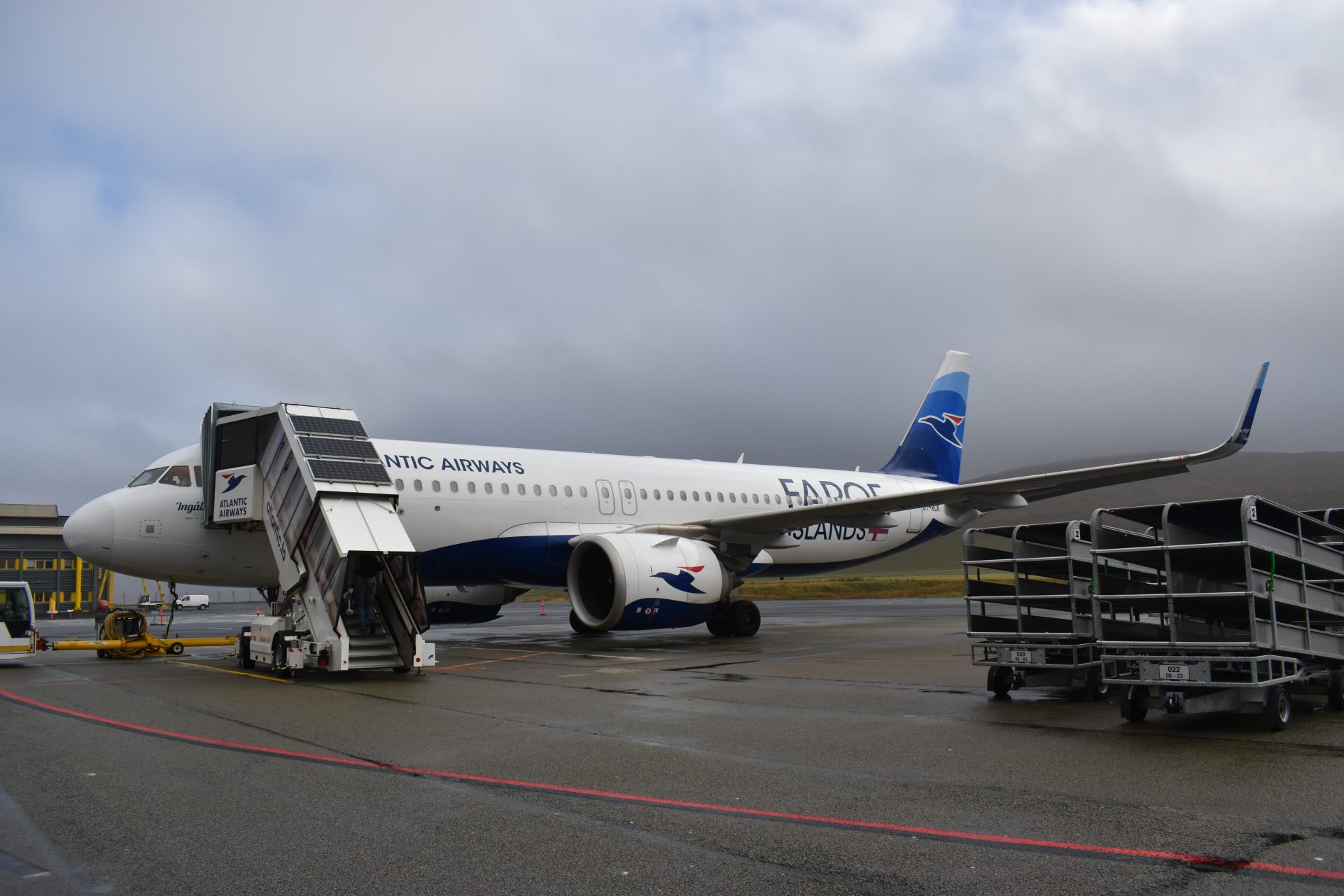
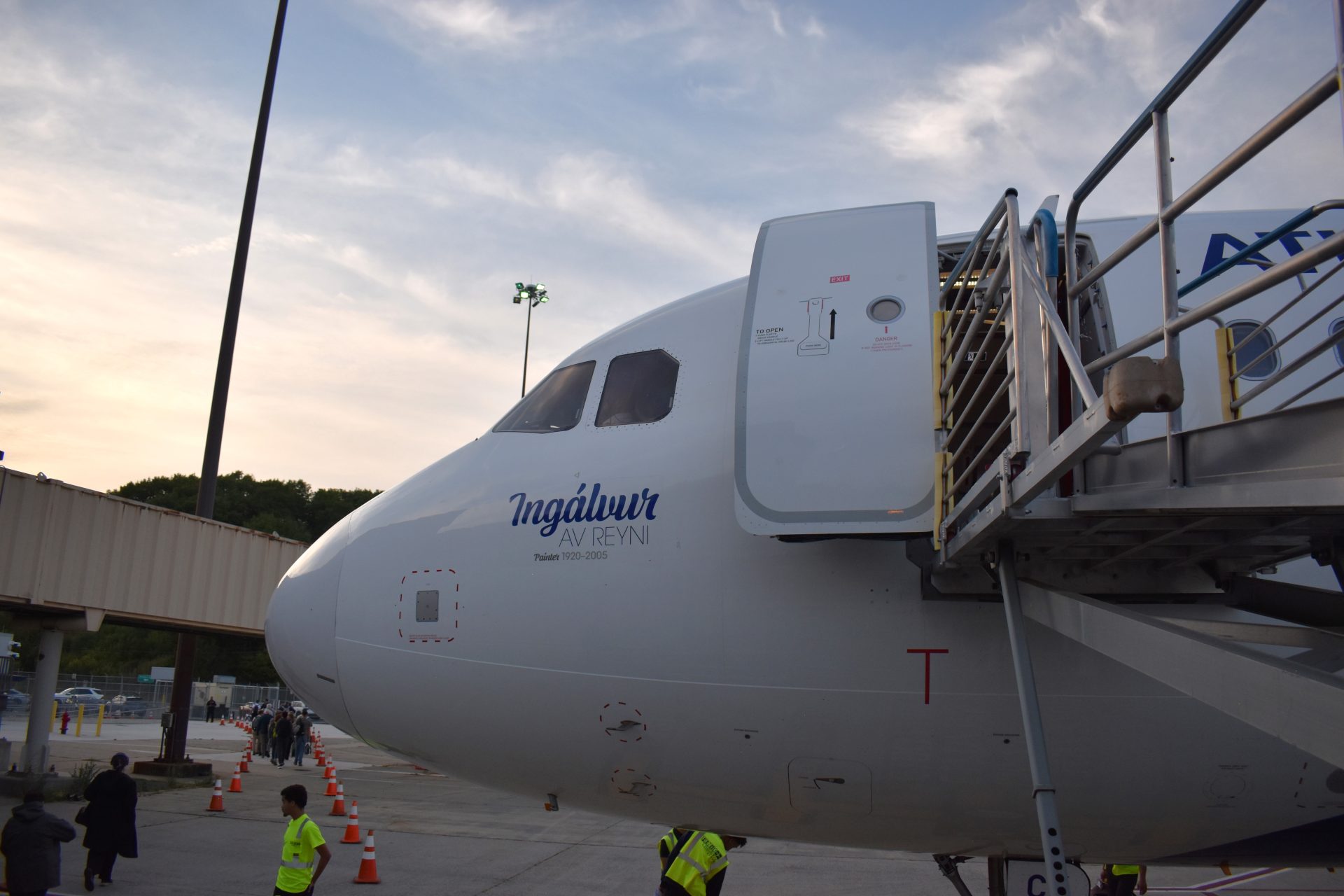
Boarding here is done on the ramp. The aircraft for the last flight between the Faroe Islands is an Airbus A320neo with the registration of OY-RCK and was delivered new to the airline in May of 2022. This aircraft carries the name of a famous Faroese individual: Ingálvur av Reyn, who is a celebrated painter in the Faroe Islands.
The aicraft for the airline’s last flight to North America: OY-RCK (Photo: AirlineGeeks | Joey Gerardi)
If you look at the history of this flight between the Faroe Islands and Stewart, New York, you’ll notice that this tail number has always operated the flight, and that is no coincidence. Out of Atlantic Airways’ fleet of four Airbus A320s (two neos and two ceos), OY-RCK is the only aircraft in their fleet equipped with VHF radios which stands for ‘Very High Frequency.’
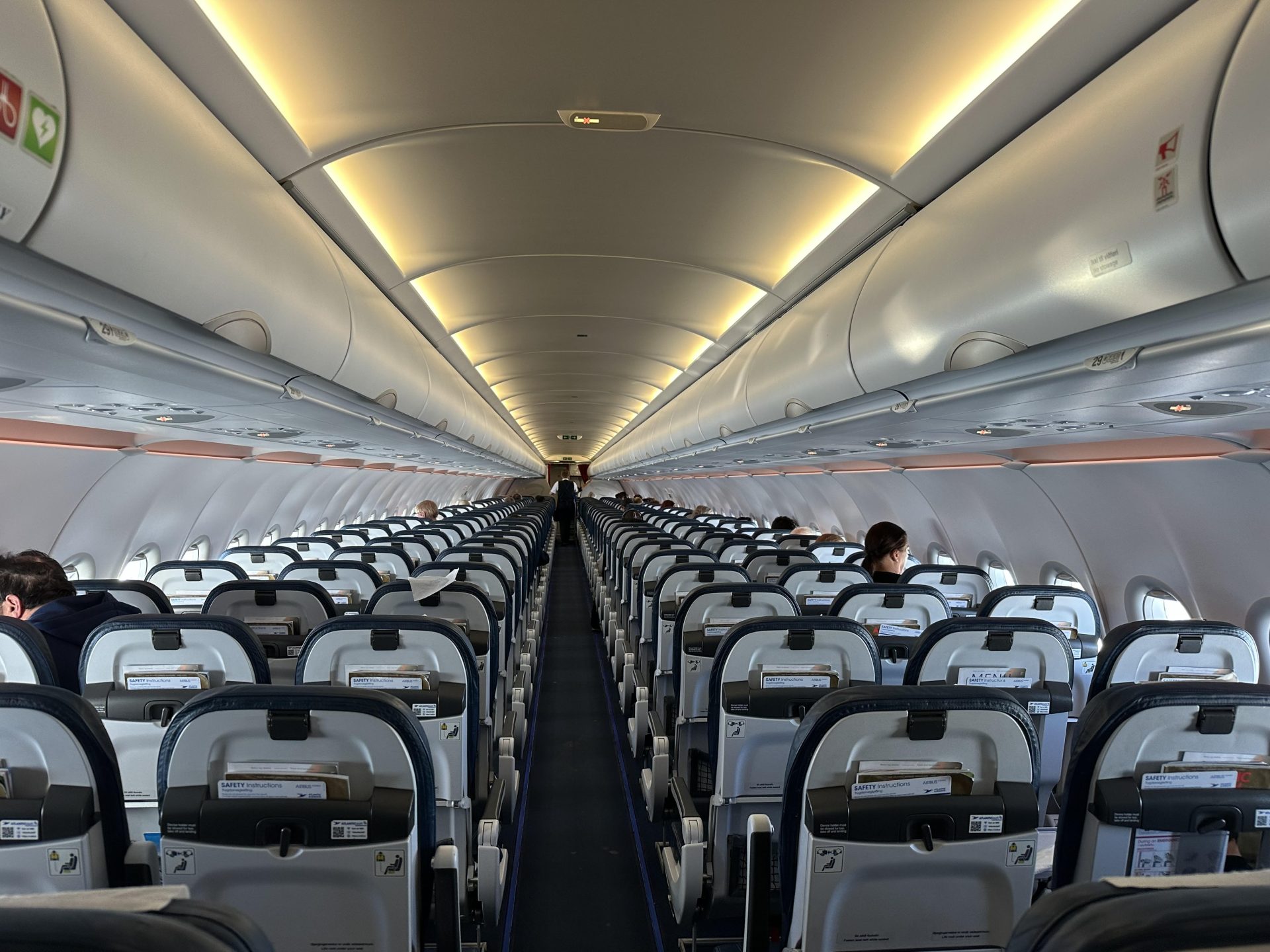
The airline’s A320neos are equipped with 174 physical passenger seats onboard, but had it been a completely booked flight they would need to restrict it to about 150 passengers. They haven’t had to restrict it, though, as over the course of the two years the route operated, the most full flight was about 60 people which was the inaugural back in August of 2023.
The cabin of Atlantic Airways’ Airbus A320neo (Photo: AirlineGeeks | Joey Gerardi)
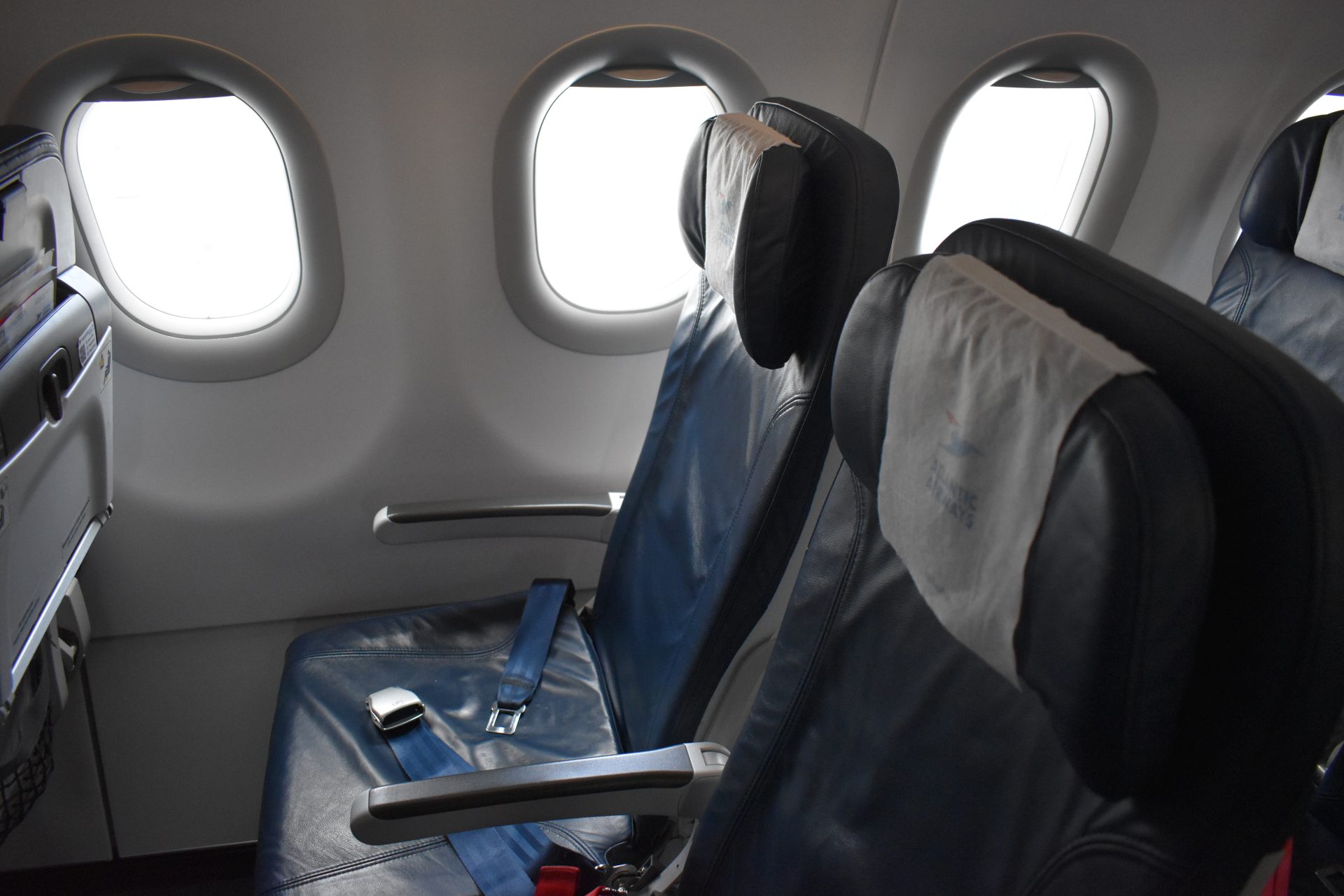
My seat for the flight over the Atlantic is 20F, a window seat on the right side of the aircraft just behind the wing.
My seat, 20F, for the flight to Stewart (Photo: AirlineGeeks | Joey Gerardi)
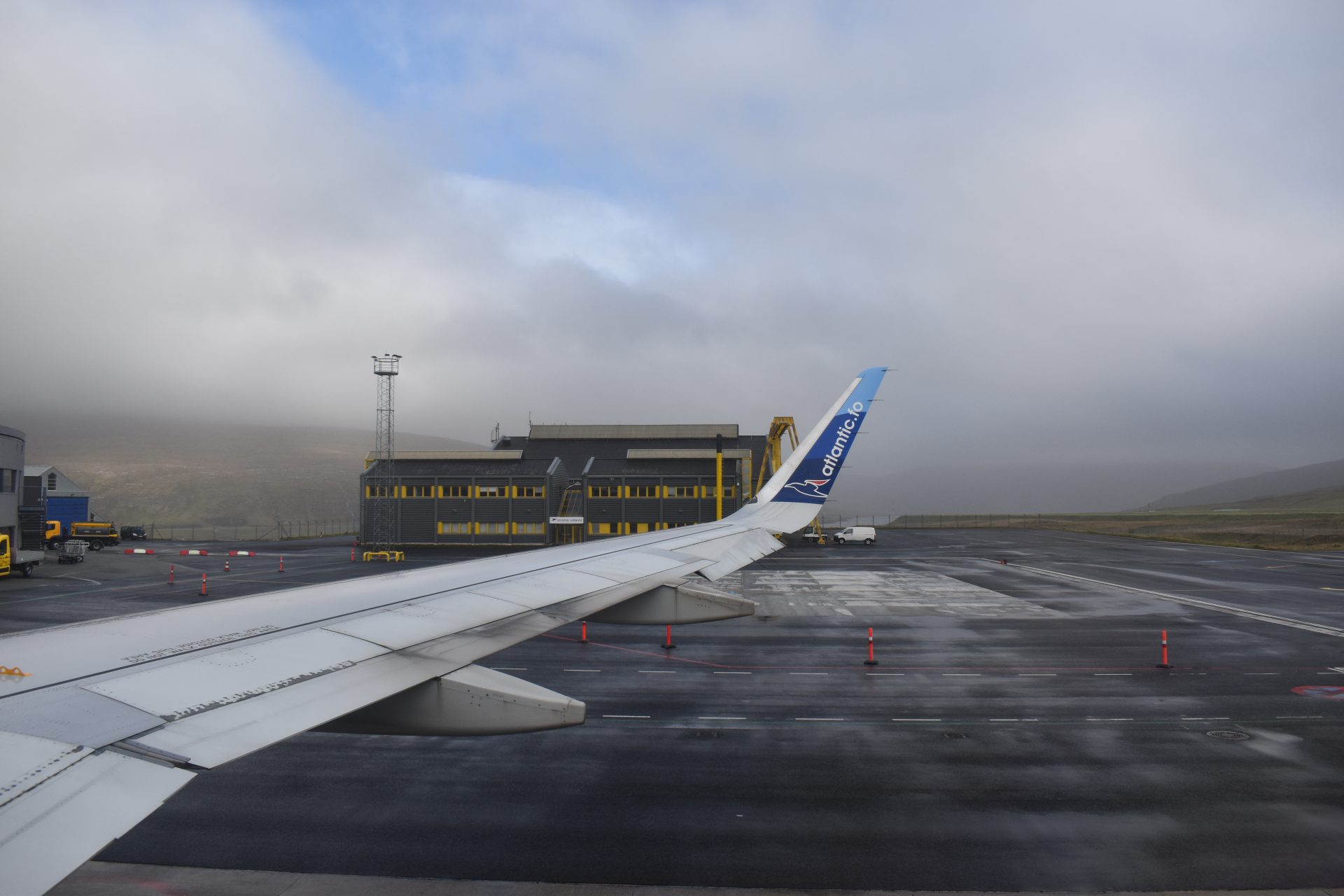
Just before pushing back the captain did mention that this was the last flight for Atlantic Airways to Stewart.
My view from 20F on Atlantic Airways’ A320neo (Photo: AirlineGeeks | Joey Gerardi)
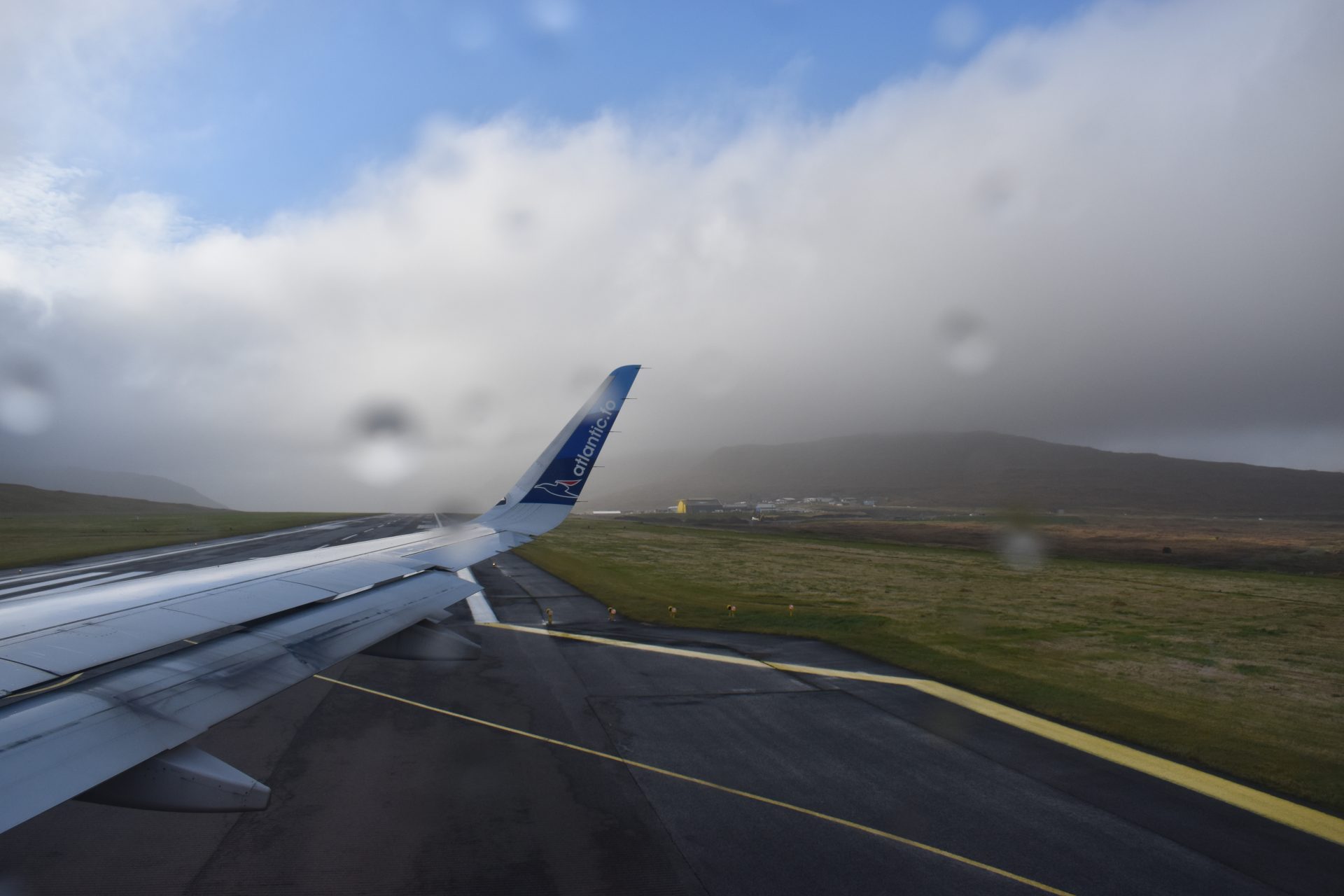
We did have to back taxi to the end of the runway for takeoff, which is normal at a lot of airports that are surrounded by challenging terrain.
Turning around on the runway after back taxiing (Photo: AirlineGeeks | Joey Gerardi)
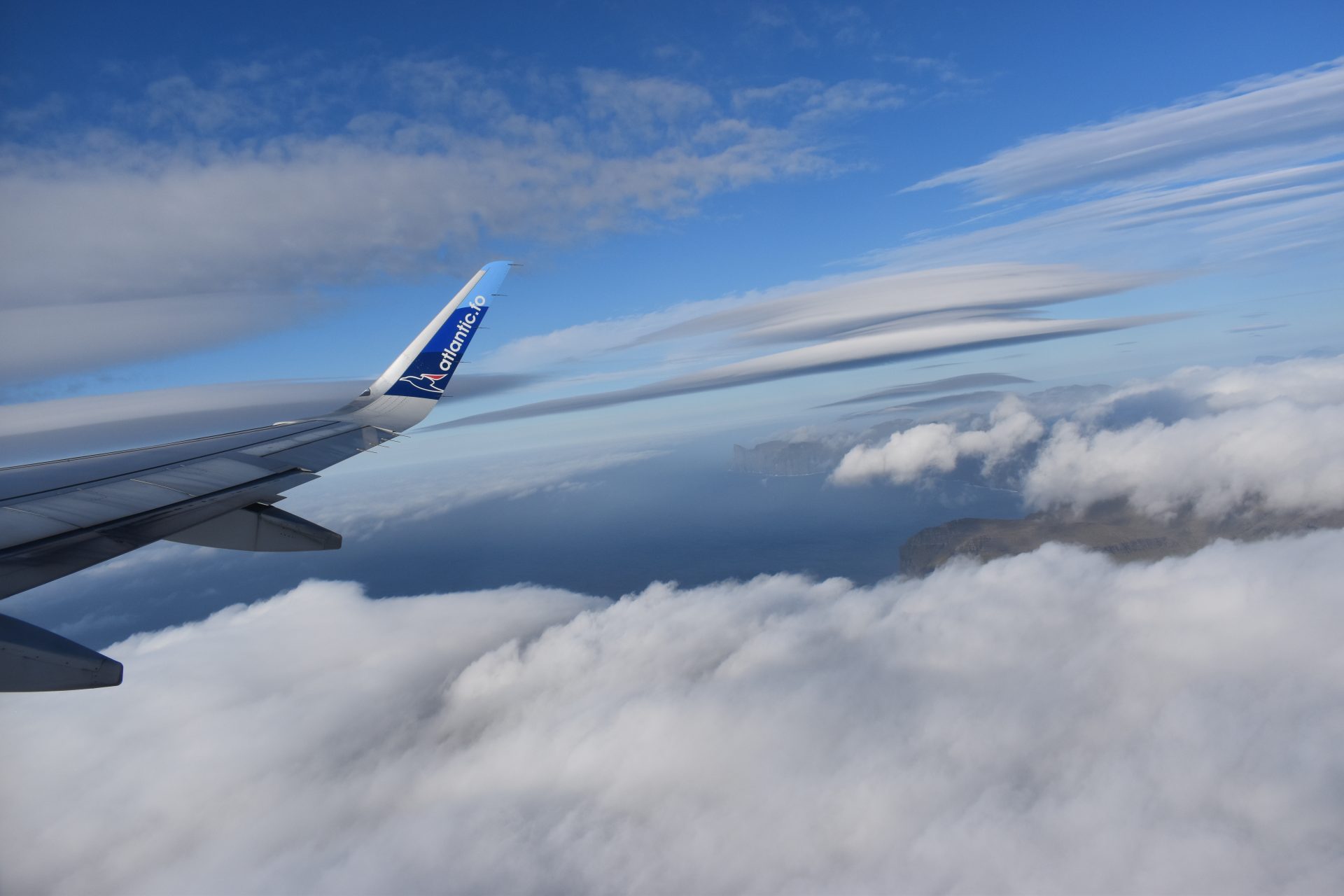
We took to the skies westward for this almost seven-hour flight to Stewart on time. It was a little cloudy when we took off but luckily I was able to see some of the terrain below.
Taking off westward, leaving the Faroe Islands (Photo: AirlineGeeks | Joey Gerardi)
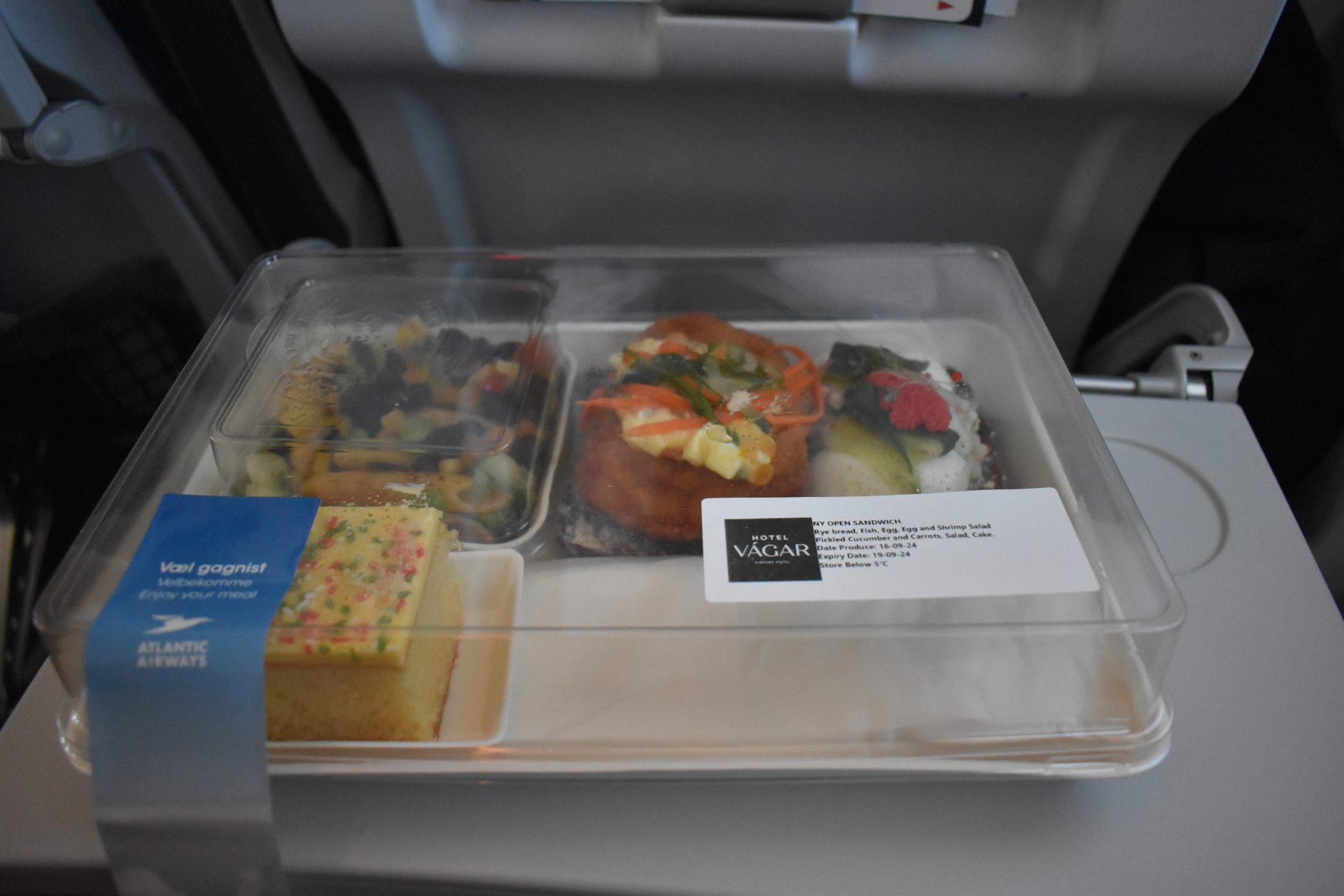
About 15 to 20 minutes after takeoff they brought around the pre-ordered meals for those that had ordered them, as well as the snack and drink cart, and every passenger was entitled to a free cup of coffee, water, or tea. You could also purchase snacks or candy onboard if you hadn’t ordered a meal or brought items with you. The pre-ordered meal I got was a NY-style open-faced sandwich, which had egg, shrimp, salad, pickled cucumber, carrots, and it came with a piece of cake. It appears the airline caters their meals from Hotel Vágar, which is located directly next to the airport.
My NY open-faced sandwich on board Atlantic Airways (Photo: AirlineGeeks | Joey Gerardi)
After the meal, I connected to the aircraft’s internet, which was decent and it worked for the entire flight even when we went way outside of the European coverage zone. They offer a wide selection of movies and TV, an interactive flight map, as well as a survey link, along with a page that translates common phrases to Faroese as it is not one of the languages on Google Translate.
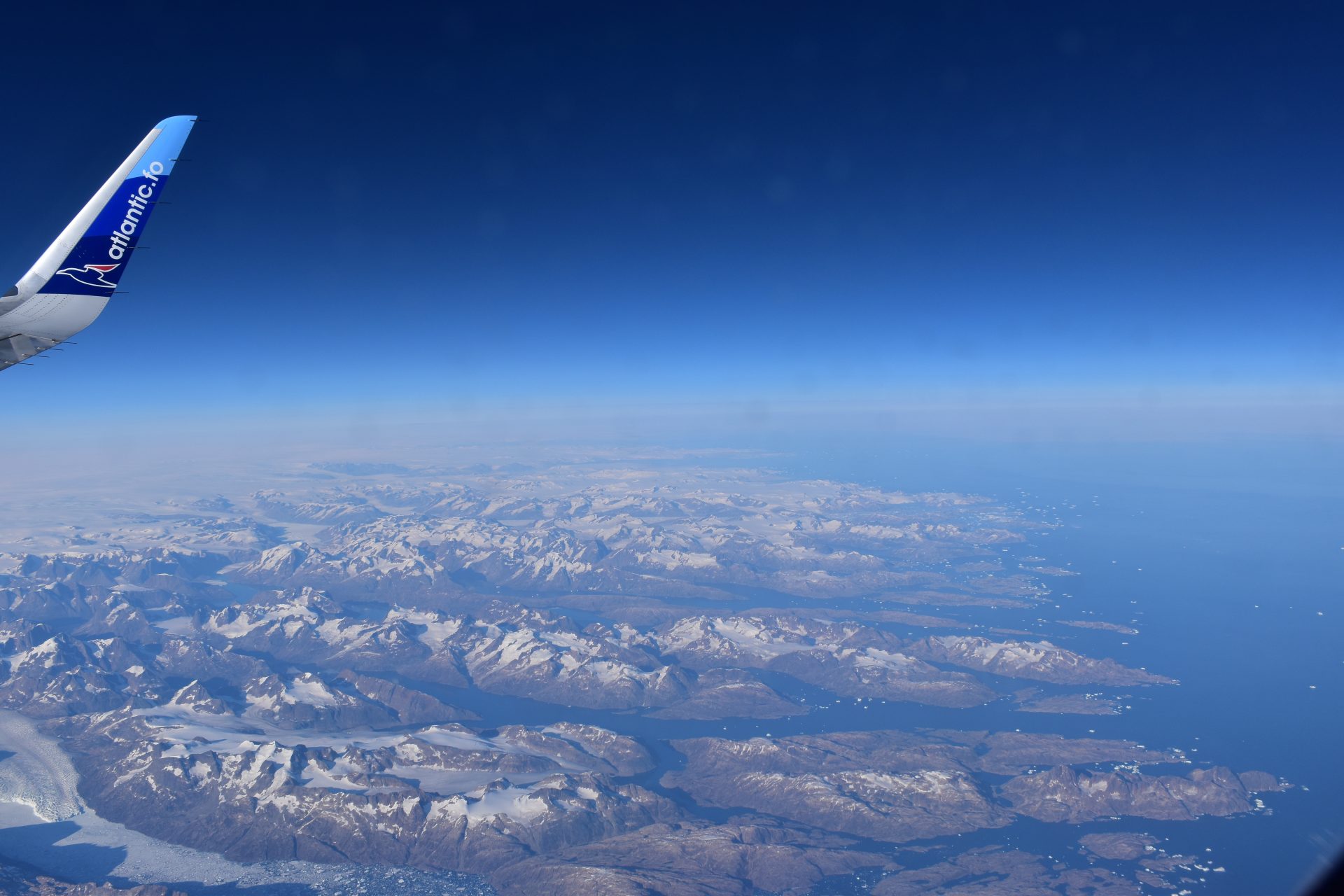
I settled in to watch movies and TV, along with the occasional glance outside of the window at the view below. The captain made a very nice announcement when we were going over Greenland and every single passenger moved to a seat on the right side of the aircraft so they could see the views of the completely clear country below.
Flying over the eastern coast of Greenland (Photo: AirlineGeeks | Joey Gerardi)
For the rest of the flight, I just watched movies and looked out the window at the amazing views below us. At some point, I fell asleep too, and given there was so much room on the flight, I laid down across some seats to sleep.
The crew came around the cabin a few times offering a cup of water or tea to passengers.
The seats were comfortable, and at 5’4 I had a decent amount of room for my knees, and on the airline A320neos, they do offer a device holder at the back of the seat as well.
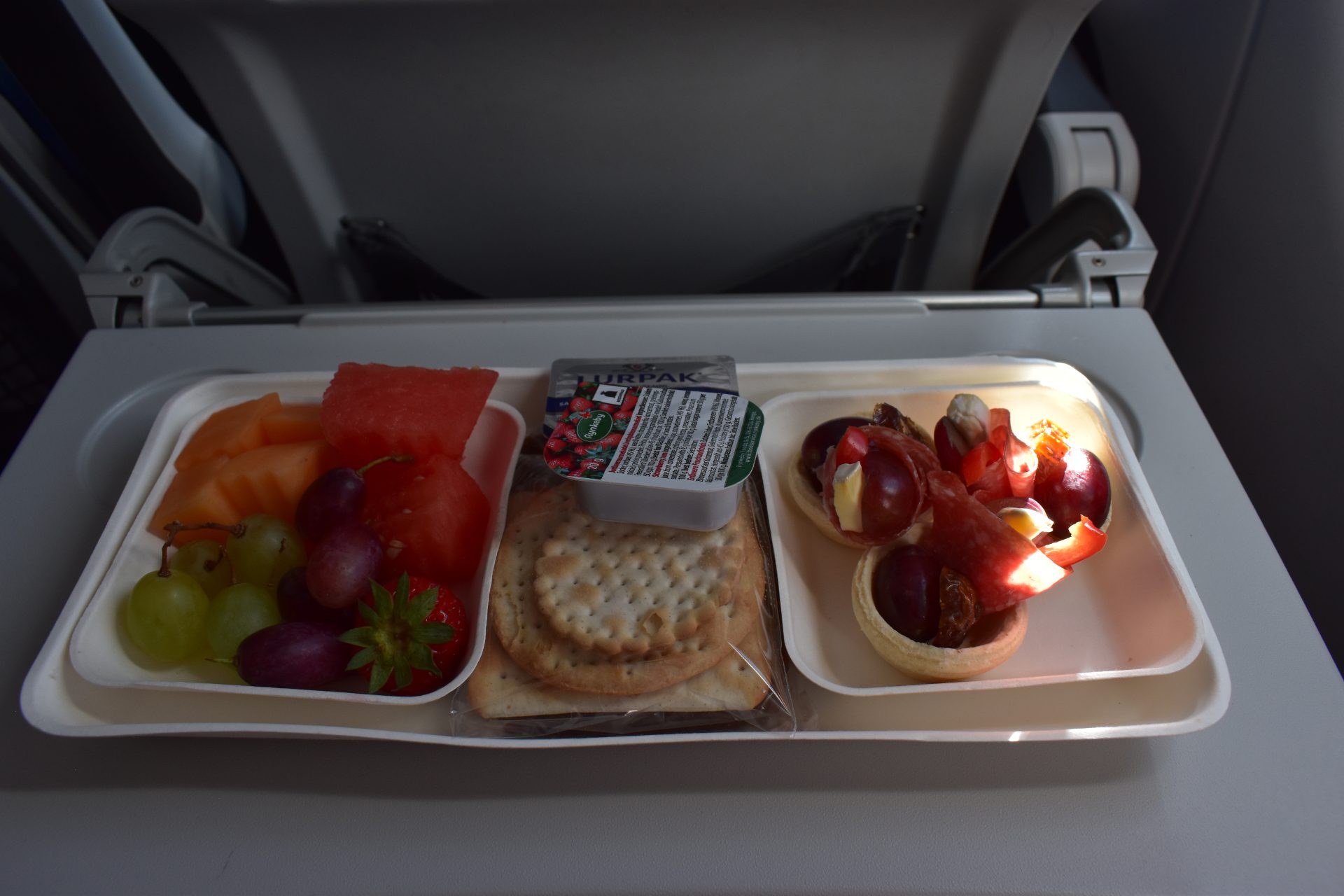
About an hour and a half or so before landing, they came around again with complimentary water and tea, as well as the second pre-ordered meal for those who got them ahead of time, whether it was on the app or their website before boarding. For the second pre-ordered meal I got a NY Tapas, which came with rye bread, butter, biscuits, jam, fruits, and salami.
The second pre-ordered meal on my Atlantic Airways flight (Photo: AirlineGeeks | Joey Gerardi)
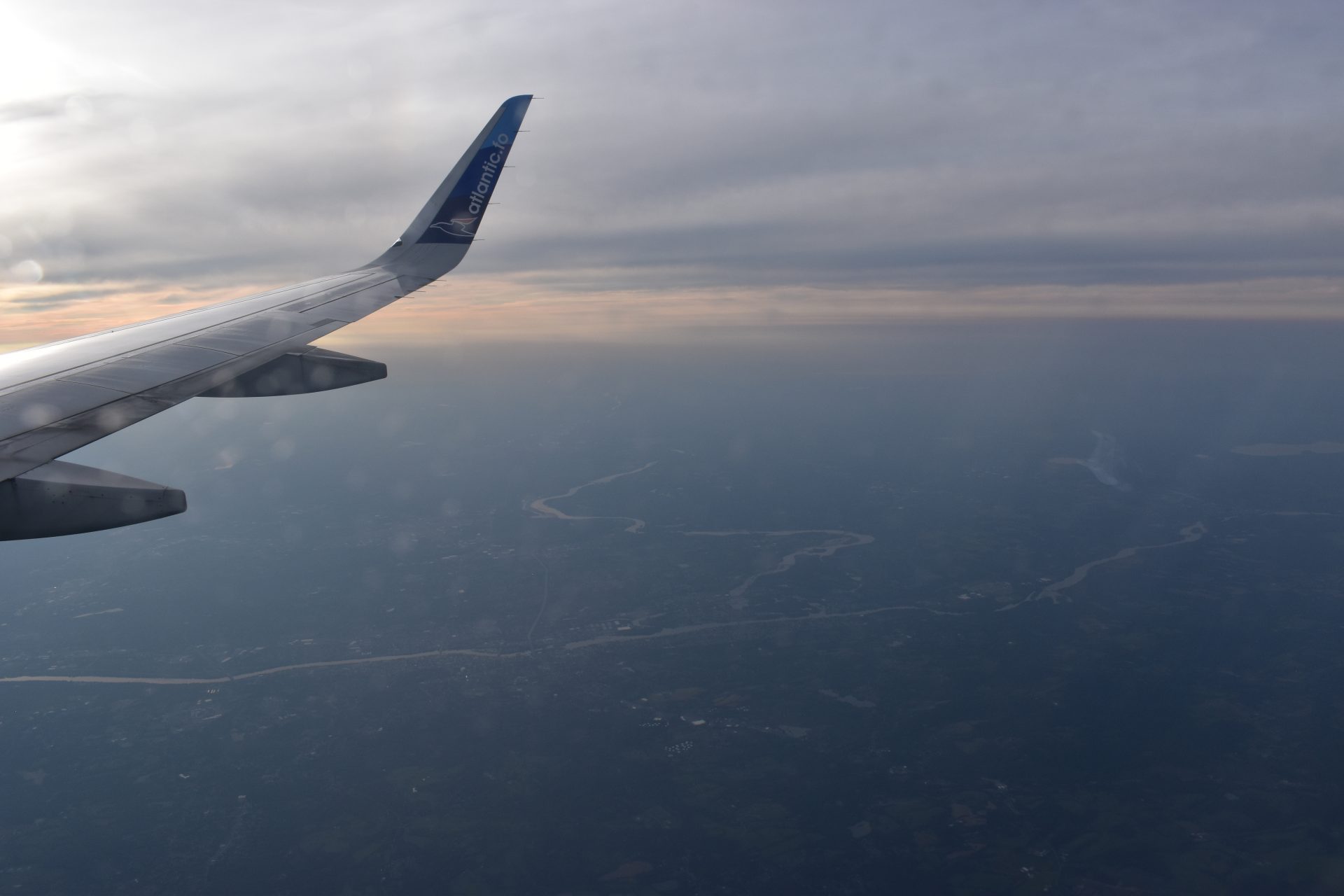
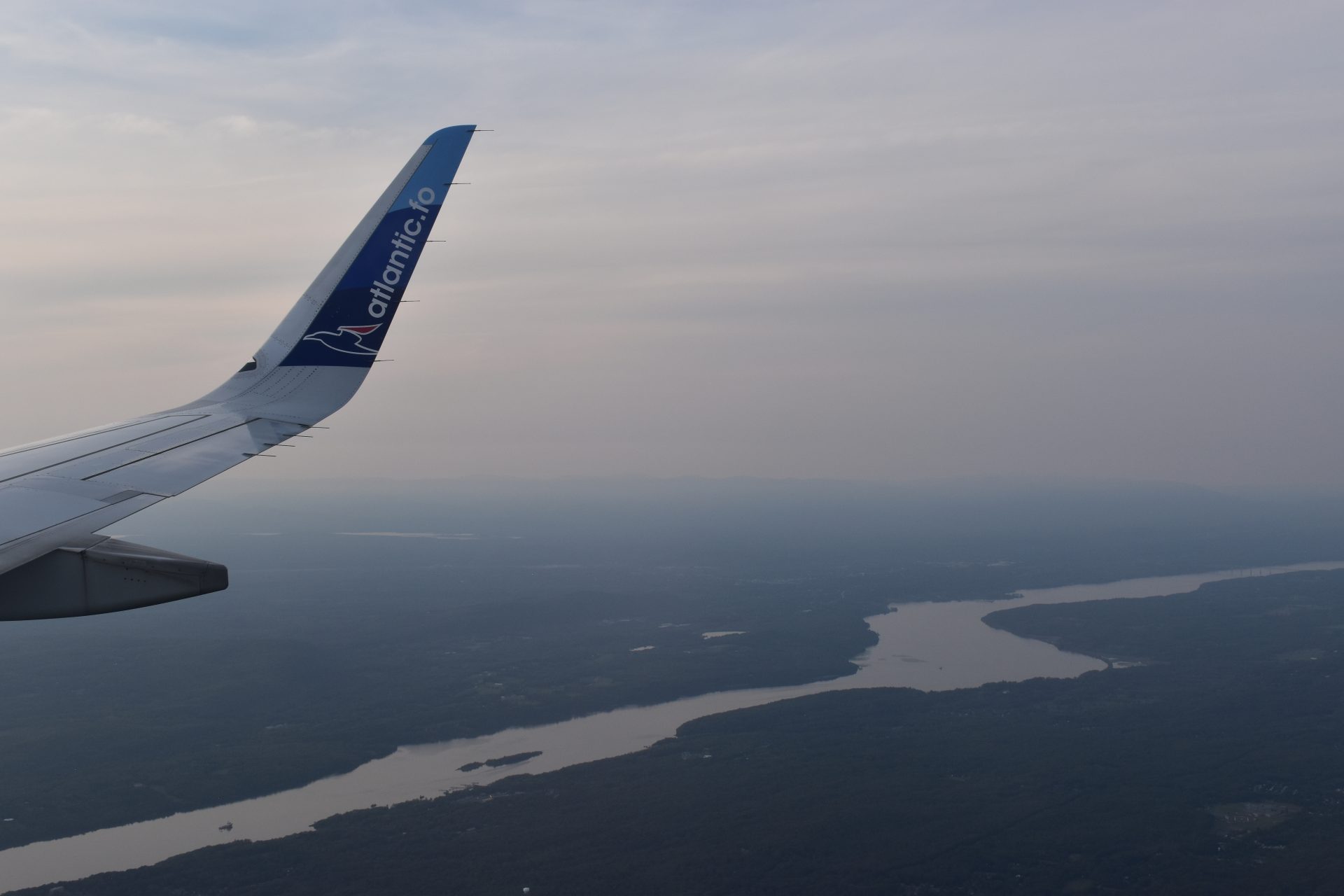
At this point in the day, the sun was slowly beginning to set, and I could see the it reflecting off of the bodies of water we passed below, like the Hudson River, the Mohawk River, and the Erie Canal.
Flying over eastern New York State (Photo: AirlineGeeks | Joey Gerardi)
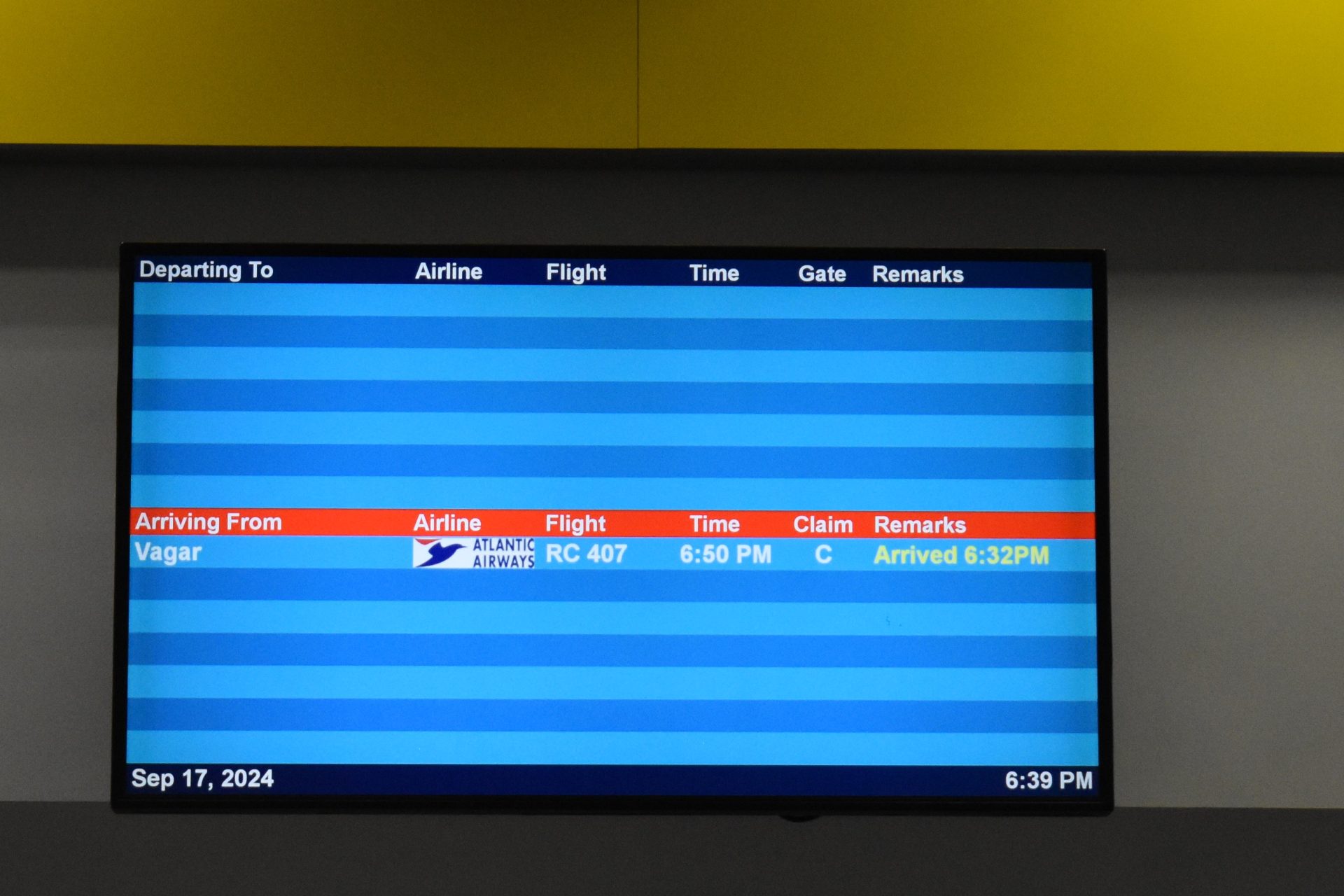
We touched down in Stewart/New York International Airport around 6:30 p.m. after 6 hours and 47 minutes of flying time. The airport was super quiet as this flight was the only one scheduled for the entire day.
Flying over the Hudson River (Photo: AirlineGeeks | Joey Gerardi)
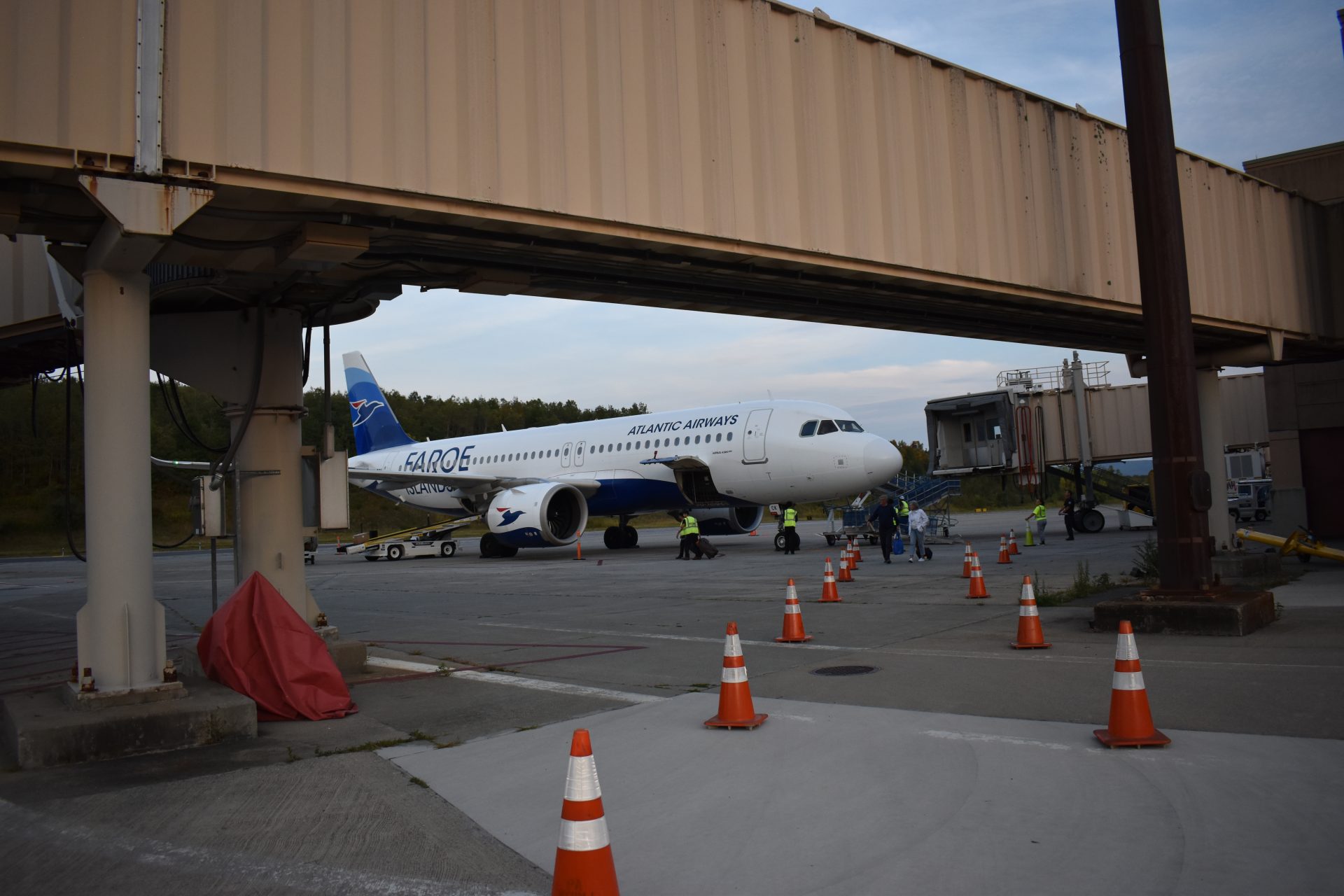
In Stewart, flights are boarded using the jetbridge for the outbound, but for the inbound, we deplaned onto the ramp as the customs center is on the ground floor of the terminal.
Deplaning onto the ramp in Stewart (Photo: AirlineGeeks | Joey Gerardi)
Given it is such a small airport customs took no time at all.
A photo from Atlantic Airways’ final arrival into North America (Photo: AirlineGeeks | Joey Gerardi)
The Faroe Islands to Stewart flight was such a unique route for many reasons. The return flight to the Faroe Islands was also one of the few daytime flights from North America to Europe, given the crew stays overnight in Stewart. The final flight out of North America left the next day with a total of 11 passengers onboard.
The final Atlantic Airways flight to North America (Photo: AirlineGeeks | Joey Gerardi)
For those that do want to visit the Faroe Islands and fly on Atlantic Airways, the airline still offers plenty of connections from east of the Faroe Islands as they fly to 10 destinations in mainland Europe, and for those coming from North America, they also fly to Reykjavik/Keflavik in Iceland so you don’t have to backtrack to get to the country. unique line to put on their personal route map.
The mentioned interview with the Atlantic Airways CEO will be out soon, but in the meantime, a video account of this flight can be found below.
Editor’s Note: Atlantic Airways provided AirlineGeeks with a seat on this flight, but this trip report is an objective portrayal of the events and is in no way swayed by that aspect.
Joey has always been interested in planes for as long as he can remember. He grew up in Central New York during the early 2000s when US Airways Express turboprops ruled the skies. Being from a non-aviation family made it harder for him to be around planes and would only spend about three hours a month at the airport. He was so excited when he could drive by himself, the first thing he did with his driver's license was get ice cream and go plane spotting for the entire day. He graduated from Western Michigan University in 2022 with a B.S. in Aviation Management & Operations and a Minor in Business, and currently works for a major airline in his hometown.
United Bolsters Service to Small California Airport
Together with regional operator SkyWest, United began serving the eastern California airport in December 2021 with seasonal flights.
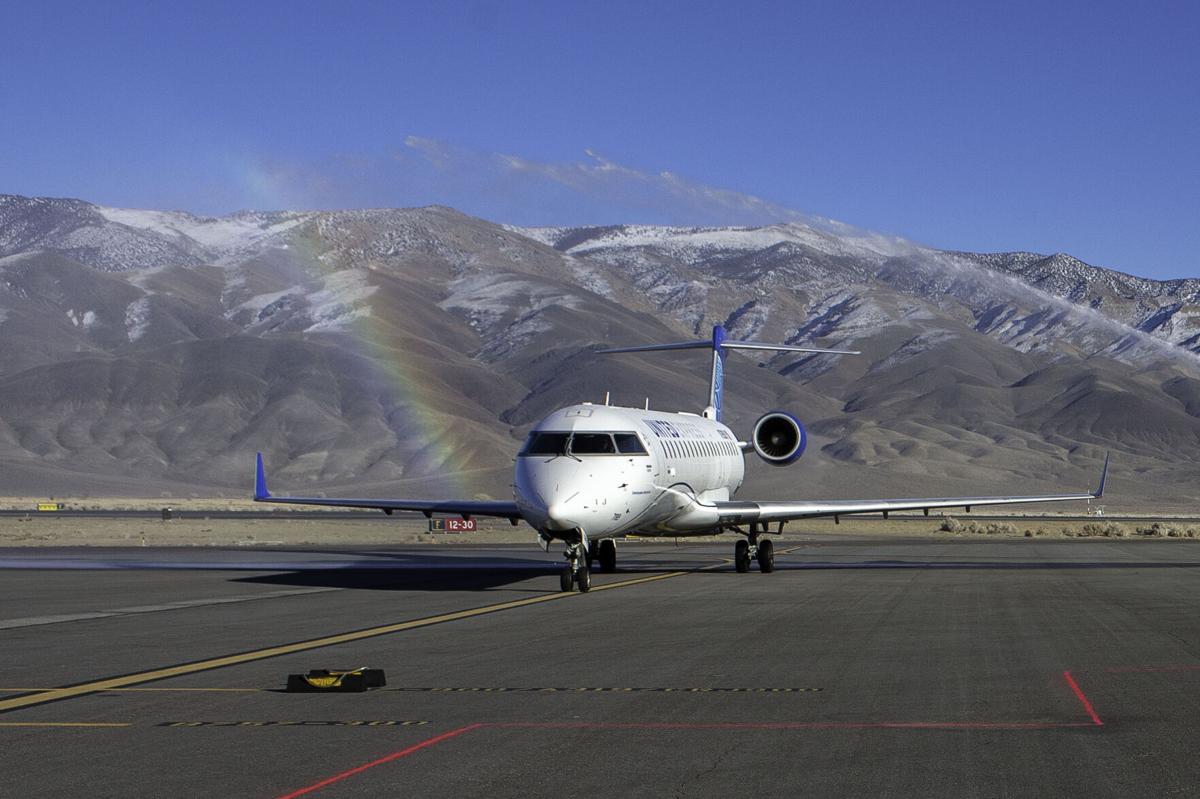
A United Express CRJ-700 at Eastern Sierra Regional Airport. (Photo: Bishop Chamber of Commerce)
United is upgrading its service to a California airport that sees less than 400,000 passengers annually. Eastern Sierra Regional Airport is located near the towns of Bishop and Mammoth, which are popular tourist destinations.
Together with regional operator SkyWest, United began serving the eastern California airport in December 2021 with seasonal flights to Denver, Los Angeles, and San Francisco. The carrier replaced its operations at Mammoth Yosemite Airport and remains the only airline in the market.
Before the airline began serving the market, Eastern Sierra Regional Airport hadn’t seen scheduled passenger service for decades. The airport is owned by the City of Los Angeles’ Department of Water and Power but leased to Inyo County.
Starting on Dec. 12, United will resume seasonal flights to the airport with larger Embraer E175 aircraft. Previously, the airline was using CRJ-700s.
Both Denver and San Francisco will be served with the jet, increasing premium capacity by six seats per flight. The carrier also plans to extend its Denver service with twice-weekly flights through the end of April.
New Embraer E175 Destination
In a Thursday news release, United also confirmed that it intends to begin flying Embraer E175s to Aspen, replacing the CRJ-700s. SkyWest will continue to operate these flights on behalf of the carrier.
Two very busy days in Aspen – testing and training as we prepare for E175 service! Fantastic partnership between our United, SkyWest and Airport colleagues!
The Winter Sports season is coming soon! ⛷️ ? ? ⛄️ ❄️
The E175 will be among the largest aircraft to regularly serve Aspen and the two airlines recently conducted test flights at the airport. Located at nearly 8,000 feet in elevation, Aspen/Pitkin County Airport is surrounded by mountainous terrain.
United notes that E175 service to Aspen is still subject to government approval.
Ryan founded AirlineGeeks.com in February 2013 and has spent more than a decade covering the airline business. His work has been featured by CNN, WJLA, CNET, and Business Insider. His aviation experience spans airport operations, Part 135 regulatory compliance, and airline crew workforce planning, along with time behind the yoke of a Cessna 172 and interviews with airline executives. Ryan now serves as Group President of Firecrown Media’s Aviation Group. He holds a B.S. in Air Transportation Management and an MBA from Arizona State University and teaches Airline Management at Embry-Riddle Aeronautical University.
Boeing's 737 MAX 10 at Boeing Field. (Photo: AirlineGeeks | Katie Zera)
A majority of International Association of Machinists and Aerospace Workers (IAM) members voted Wednesday to reject the latest contract offer from Boeing, continuing the six-week-long strike.
The new contract rejection means a continuation of the month-long strike by union members of IAM Districts 751 and W24 located respectively in Seattle, Washington and Gladstone, Oregon. 64% of members voted against the contract, according to results released by IAM on social media.
“The entire IAM Union, all 600,000 members across North America, stand with our District 751 and W24 membership,” said Brian Bryant, IAM international president, in a news release following the vote. “Their fight is our fight – and we support their decision to continue this strike for fairness and dignity for Boeing workers.”
Both strikes have dealt a crippling blow to Boeing’s operating costs and have effectively halted 737 jet production at the company since Sept. 25.
According to the union, the latest rejected contract included a 35% pay increase – 40% when compounded – over its four-year lifespan as well as a $7,000 ratification bonus.
The contract would have also buffed the company 401(k) match to 100% of the first 8% contributed, along with a guaranteed company retirement contribution of 4%. A one-time $5,000 contribution would have also been made to each eligible member’s Boeing 401(k).
One of the largest points of contention was the refusal by Boeing to re-implement the IAM pension that was removed in 2014’s contract. While the latest contract offer promised a $105 increase to employees’ Boeing Company Employment Retirement Plan (BCERP), it wasn’t enough to win members’ votes.
Jon Holden, president of IAM District 751, and Brandon Bryant, president of IAM District W24, provided the following joint statement in a news release Wednesday night:
“The elected negotiating committee of workers did not recommend for or against this particular proposal. After 10 years of sacrifices, we still have ground to make up, and we’re hopeful to do so by resuming negotiations promptly. This is workplace democracy – and also clear evidence that there are consequences when a company mistreats its workers year after year,” they said. “Workers across America know what it’s like for a company to take and take – and Boeing workers are saying they are fully and strongly committed to balancing that out by winning back more of what was taken from them by the company for more than a decade. Ten years of holding workers back unfortunately cannot be undone quickly or easily, but we will continue to negotiate in good faith until we have made gains that workers feel adequately make up for what the company took from them in the past.”
Boeing said it has no comment on the vote.
Holden told reporters that he was not surprised by the results during a press briefing after the vote count. He said that IAM’s strike fund was robust and the union was confident that workers could continue to strike as long as is necessary to meet members’ demands.
“There is no Boeing production without our members, and our job is to get them back to the table,” Holden said.
Editor’s Note: This story was updated on Oct. 24, 2024 at 11:23 a.m. ET to include statement from Boeing.
AirlineGeeks.com was founded in February 2013 as a one-person blog in Washington D.C. Since then, we’ve grown to have 25+ active team members scattered across the globe. We are all here for the same reason: we love deep-diving into the fascinating realm of the airline industry.
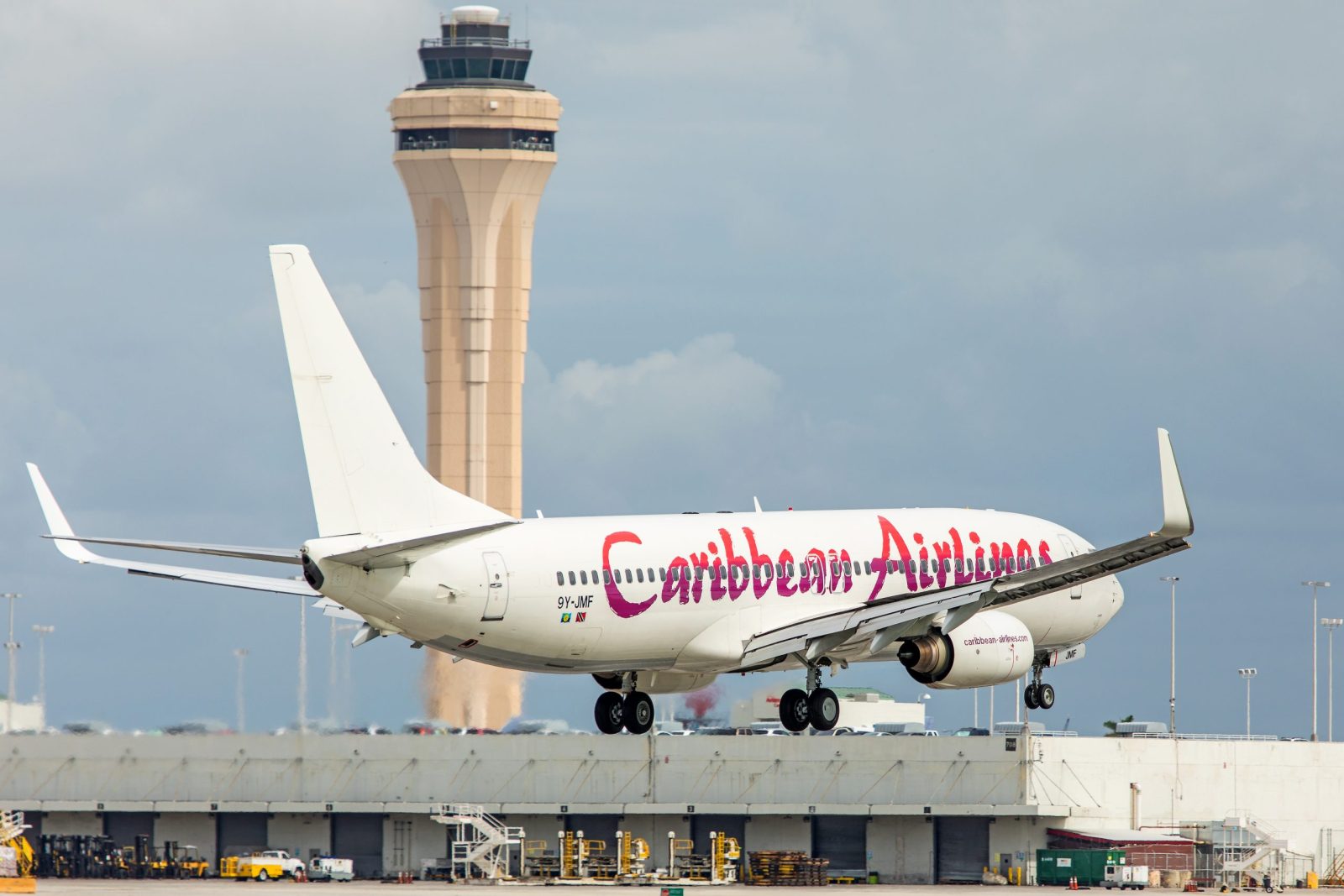
A Caribbean Airlines 737-800 landing in Miami. (Photo: AirlineGeeks | William Derrickson)
Miami International Airport has become a testing ground for new security technology that includes “laser walls” and fiber-optic sensors.
On Tuesday, officials showcased the new $6 million perimeter intrusion detection system (PIDS) designed to enhance airport security.
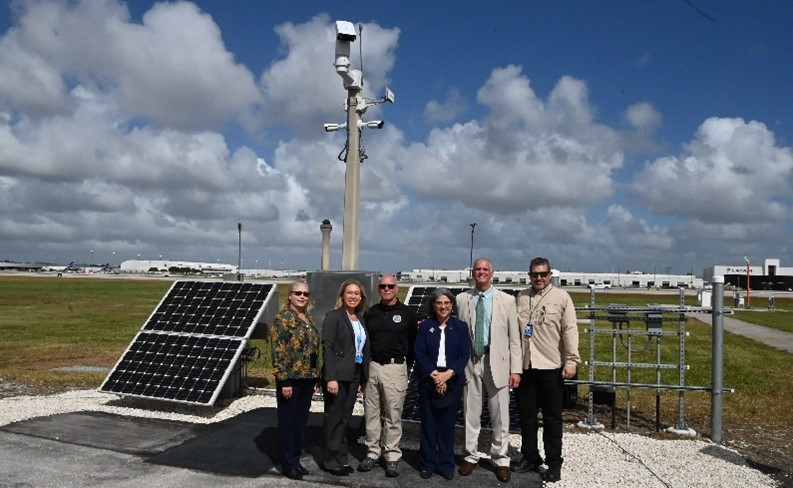
The PIDS, a joint project between the South Florida airport and the Transportation Security Administration, utilizes a combination of fiber-optic sensors, video surveillance, laser walls and ground-based radar to monitor the airport’s perimeter. This advanced system is capable of identifying and responding to potential security breaches in real time, the airport said.
Miami-Dade County Mayor Daniella Levine Cava praised the initiative, stating in a news release, “Our visitors’ and employees’ safety and security have always been our top priorities, which is why I am so proud to see MIA as the first test site for TSA’s newest security technology.”
New federally-funded security tech is debuting at Miami Airport (Photo: Miami-Dade Aviation Department)
Fifty percent of the new technology will be funded by the federal government, while the Miami-Dade Aviation Department will pay for the remaining portion. The PIDS is still in its early stages, with Miami becoming the first U.S. airport to use it; next will be California’s San Jose International Airport, according to NBC 6.
Over 60 cameras have been installed so far. “TSA always looks at new and innovative technologies to protect the traveling public. The work done here will not only help to secure the Miami Airport perimeter, but the lessons learned will benefit all federalized airports nationwide,” added Jim Bamberger, TSA’s multimodal and public area capabilities director, in the release.
Ryan founded AirlineGeeks.com in February 2013 and has spent more than a decade covering the airline business. His work has been featured by CNN, WJLA, CNET, and Business Insider. His aviation experience spans airport operations, Part 135 regulatory compliance, and airline crew workforce planning, along with time behind the yoke of a Cessna 172 and interviews with airline executives. Ryan now serves as Group President of Firecrown Media’s Aviation Group. He holds a B.S. in Air Transportation Management and an MBA from Arizona State University and teaches Airline Management at Embry-Riddle Aeronautical University.
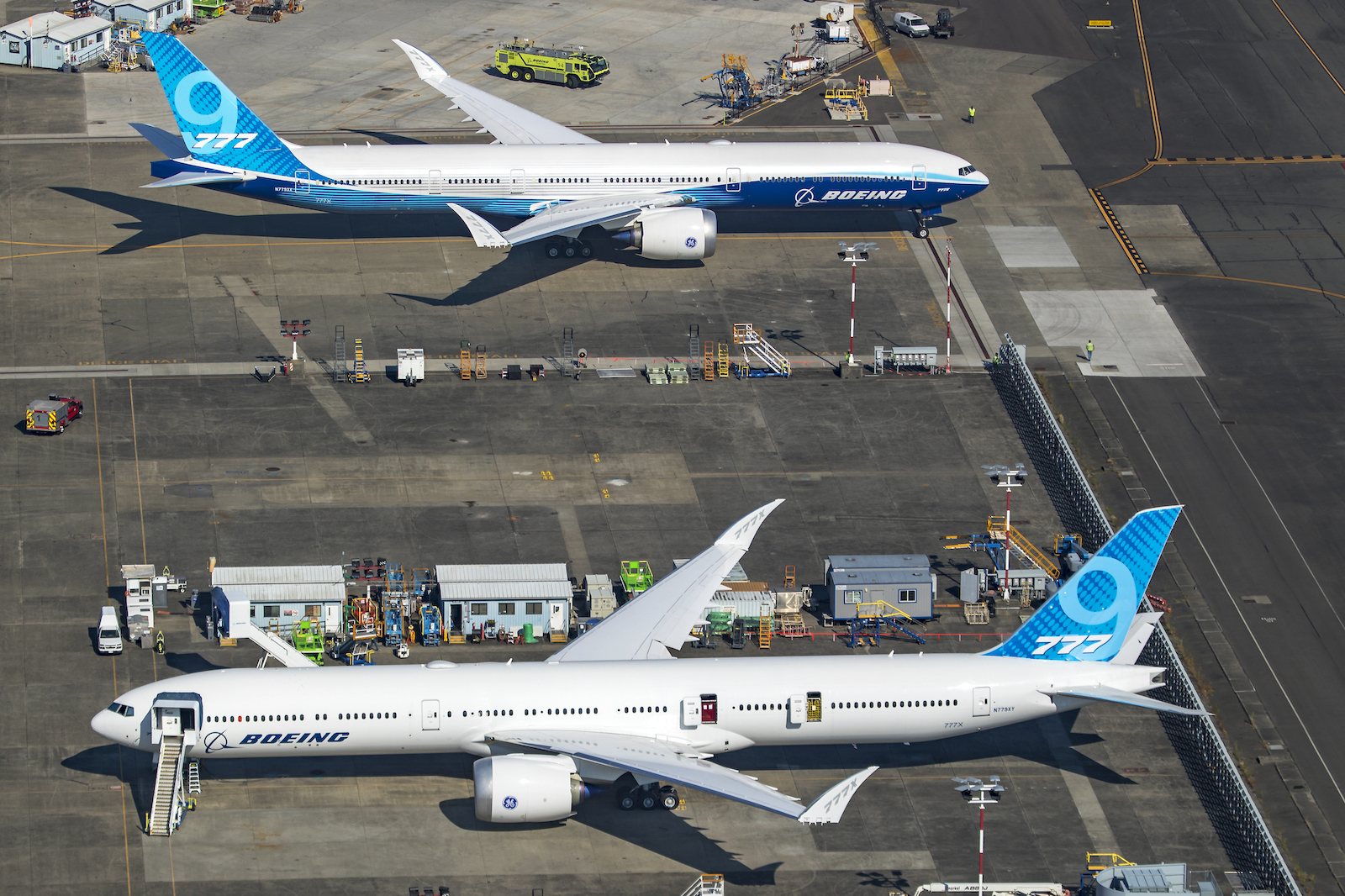
Boeing 777X test aircraft (Photo: AirlineGeeks | William Derrickson)
The Boeing Co. reported a loss of over $6 billion in the third quarter during an earnings call on Wednesday.
The $6.2 billion loss was largely attributed to substantially increased operating costs due to strikes by the International Association of Machinists and Aerospace Workers (IAM) union since Sept. 13. Boeing also cited previously announced program changes as a factor impacting revenue loss.
The loss is about four times larger than last year’s Q3, and Boeing’s year-to-date loss is $8 billion. Deliveries year to date are down 80 from last year to 291.
Boeing CEO Kelly Ortberg sent an emailed statement before the earnings call Wednesday morning, saying the company is at a crossroads.
“The trust in our company has eroded,” he said in the statement. “We’re saddled with too much debt [and] we’ve had serious lapses in our performance across the company which have disappointed many of our customers.”
Ortberg added that his mission is to turn the Boeing ship in the right direction and restore its reputation. To do that, he said that Boeing needed a fundamental culture change in the company, stabilization of the business, improvement in execution discipline on new platform commitments across the company and determination to build “a new future for Boeing.”
“While we are somewhat consumed with the challenges of today, we need to be setting the foundation of the future for Boeing,” Ortberg continued. “Boeing is an airplane company and at the right time in the future we need to develop a new airplane. But we have a lot of work to do before then. This includes stabilizing our business, improving execution on the development programs, streamlining the portfolio to do what we do well and restoring the balance sheet so that we do have a path to the next commercial aircraft. We need to reset priorities and create a leaner, more focused organization.”
IAM Votes on a New Contract
On the machinists’ strike, Ortberg stated that Boeing leadership has been working feverishly to find a solution that works for the company and meets employees’ needs.
“I met with the union leadership the first week on the job and let them know that I was committed to resetting the relationship,” Ortberg said. “And I remain committed to getting the team back and improving our relationship so we don’t become so disconnected in the future.
I’m very hopeful that the package we put forward will allow our employees to come back to work so we can immediately focus on restoring the company.”
Union members of IAM Districts 751 and W24 are voting on a new contract proposal from Boeing on Wednesday and expect to announce the results of the vote later this evening. Details of the offer provided by IAM include a 35% wage increase – 40% when compounded – over the four-year life of the contract and a $7,000 ratification bonus.
Also included is a company 401(k) match increase to 100% of the first 8% contributed, in addition to a special, guaranteed company retirement contribution of 4%. A one-time $5,000 contribution will also be made to each eligible member’s Boeing 401(k).
Absent from the new contract is the reinstatement of the union’s pension, which was given up in 2014’s contract. The Seattle Times reported that this issue has members split on their decision to approve or reject the new contract offer.
Members will vote in person, and a simple majority of over 50% of those voting will determine the outcome. If the vote passes, workers will return to work by the beginning of their shifts on Oct. 31.
AirlineGeeks.com was founded in February 2013 as a one-person blog in Washington D.C. Since then, we’ve grown to have 25+ active team members scattered across the globe. We are all here for the same reason: we love deep-diving into the fascinating realm of the airline industry.
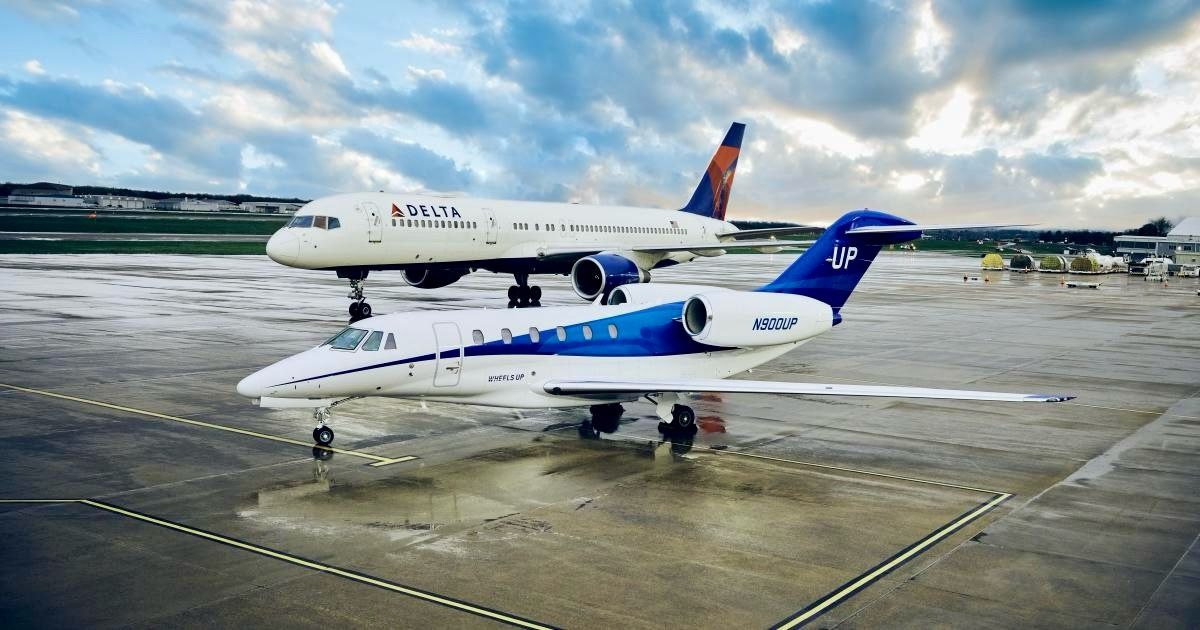
The jet fleet changes include a pivot to Phenom 300 series and Challenger 300 series aircraft, retiring its existing light and midsize jets over the next three years. Wheels Up also secured an additional credit facility of up to $332 million.
Delta is expected to provide credit support for the new financing, Wheels Up shared in a press release.
“In the year since we’ve invested in Wheels Up, their operational performance, financial progress and the successful revamp of their customer offering have validated our decision to embark on this one-of-a-kind strategic partnership,” said Ed Bastian, CEO of Delta, in the release.
Bastian added that he is “more confident than ever” in the private aviation firm. Last year, Delta along with two other investor groups injected $500 million into the financially ailing company.
In August, the company reported a Q2 2024 net loss of approximately $97 million along with year-over-year membership attrition in the 20% range. During the first half of 2024, Wheels Up lost $194 million.
But executives of the firm see light at the end of the tunnel with expectations of posting a profit by the end of this year, according to Private Jet Card Comparisons. Wheels Up saw a 40% reduction in losses during the second quarter.
Editor’s Note: This story was updated on Wednesday, Oct. 23, 2024 at 11:53 a.m. ET to clarify Delta’s ownership stake in Wheels Up as part of a broader group of investors.
Ryan founded AirlineGeeks.com in February 2013 and has spent more than a decade covering the airline business. His work has been featured by CNN, WJLA, CNET, and Business Insider. His aviation experience spans airport operations, Part 135 regulatory compliance, and airline crew workforce planning, along with time behind the yoke of a Cessna 172 and interviews with airline executives. Ryan now serves as Group President of Firecrown Media’s Aviation Group. He holds a B.S. in Air Transportation Management and an MBA from Arizona State University and teaches Airline Management at Embry-Riddle Aeronautical University.