









Stories

Alaska Finalizes Purchase of Hawaiian Air

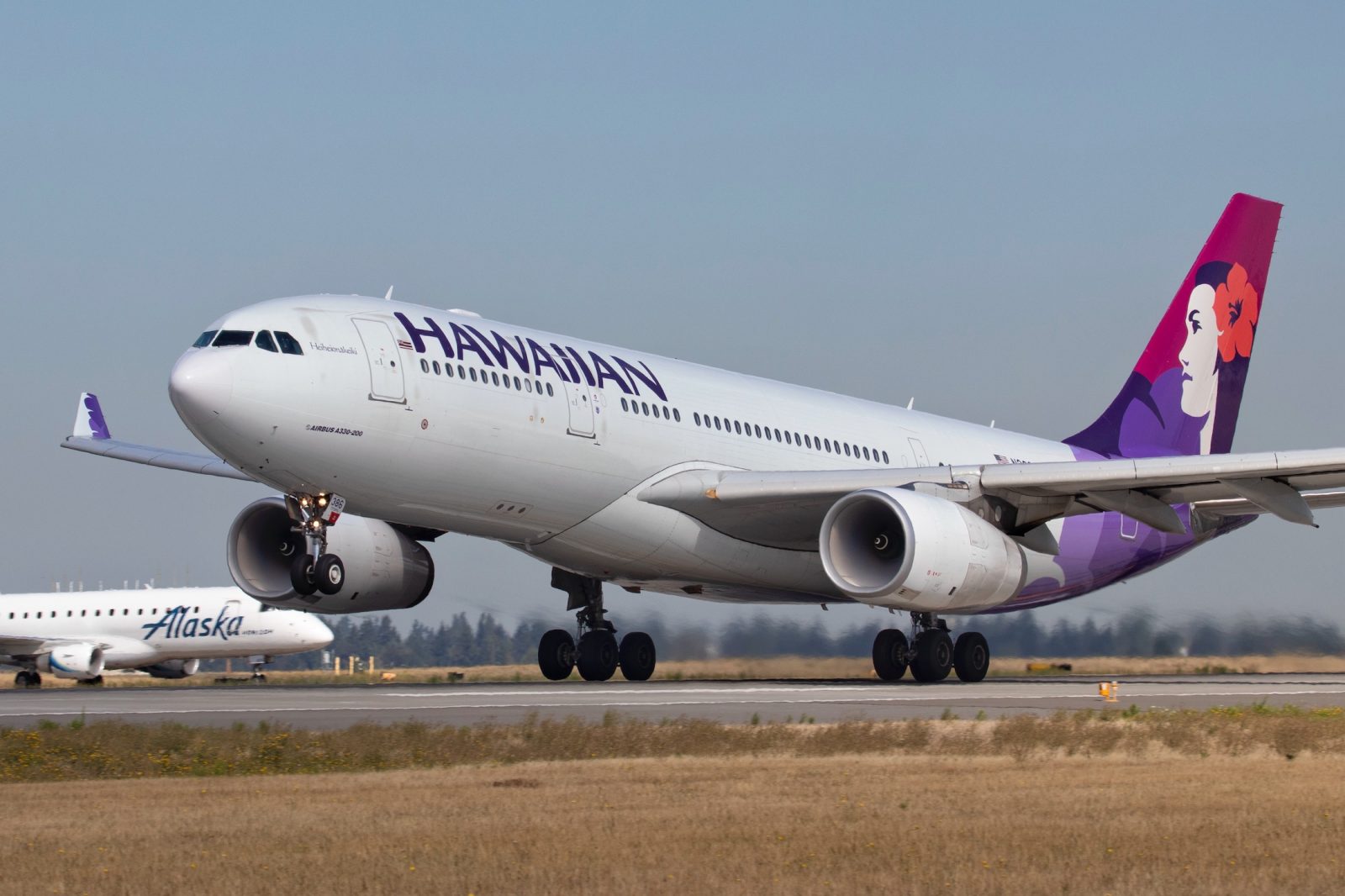
Alaska Airlines has finalized its acquisition of Hawaiian Airlines less than a year after the deal was initially announced.

Alaska and Hawaiian aircraft (Photo Alaska Air Group)

Alaska Airlines has finalized its acquisition of Hawaiian Airlines less than a year after the deal was initially announced. Following the necessary regulatory approvals, the merger was completed on September 18, 2024.

This acquisition will maintain both Alaska and Hawaiian as seperate brands. According to the company, the integration process will take place over the next 18 months, with no immediate operational changes for customers.

Alaska now offers access to 141 destinations, including 29 international markets. In addition, Honolulu will become Alaska’s second-largest hub, following Seattle.

Benefits for travelers, Alaska says, include the ability for HawaiianMiles and Mileage Plan members to transfer miles between accounts and the option to purchase tickets for both airlines on their respective websites. These changes are expected to roll out soon in the coming weeks.

“This is a historic day for Alaska Airlines as we officially join with Hawaiian Airlines,” said Alaska Air Group chief Ben Minicucci in a news release. “Alaska and Hawaiian share tremendous pride in connecting communities with award-winning service, and we look forward to inviting more guests on board to experience what makes both brands unique. Among Alaska, Hawaiian and Horizon Air, we have more than 230 years of history flying guests and serving communities. I know we will build on that legacy and become stronger together – providing the excellent operation guests have come to expect, expanding options to seamlessly travel nearly anywhere in the world, and securing the financial stability and value that inspires investment.”

Alaska and Hawaiian’s combined route map (Photo: Alaska Air Group)

Long-time Hawaiian Airlines CEO Peter Ingram will step down following the acquisition’s completion. Alaska Air Group CEO Ben Minicucci will lead the combined companies.

The carrier’s former regional president of Hawaii/Pacific and president of Horizon Air Joe Sprague will become the chief executive officer of Hawaiian until the FAA issues a single operating certificate.

No Longer an All-Boeing Airline

The completed acquisition means Alaska is no longer an all-Boeing operator, acquiring a fleet of 24 Airbus A330 and 18 A321neos from Hawaiian. Last year, the airline retired the last remaining A321neos that were part of the 2018 Virgin America merger.

With the combined Alaska and Hawaiian fleets, the airline will have a total of 350 aircraft, including 2 Boeing 787s, 24 Airbus A330s, 18 Airbus A321neos, 235 Boeing 737s, 19 Boeing 717s, 44 Embraer E175s, and 8 dedicated freighters (3 Boeing 737-700s, 2 Boeing 737-800s and 3 Airbus A330s).

Hawaiian Airlines will be de-listed from the NASDAQ as of September 18, and the combined entity will continue trading under the ticker ALK on the New York Stock Exchange.

Ryan Ewing

Ryan founded AirlineGeeks.com back in February 2013 and has amassed considerable experience in the aviation sector. His work has been featured in several publications and news outlets, including CNN, WJLA, CNET, and Business Insider. During his time in the industry, he's worked in roles pertaining to airport/airline operations while holding a B.S. in Air Transportation Management from Arizona State University along with an MBA. Ryan has experience in several facets of the industry from behind the yoke of a Cessna 172 to interviewing airline industry executives. Ryan works for AirlineGeeks' owner FLYING Media, spearheading coverage in the commercial aviation space.

Breeze Adds 4 New Routes From Washington Dulles

The nation’s capital is set to receive a brand new air carrier, with Breeze Airways adding flights as early as this month.

A Breeze A220
A Breeze A220 aircraft. (Photo: Breeze Airways)

The nation’s capital is set to receive a new airline, with Breeze adding flights as early as this month. Washington Dulles will be a brand-new airport on the carrier’s route map.

As previously reported by AirlineGeeks, Breeze won the Essential Air Service (EAS) contract in Ogdensburg, New York, with service to Washington Dulles slated to launch Sept. 27.

In addition to this new government-subsidized route, the airline is planning three other services from Dulles. These include Provo, Utah; Vero Beach, Florida; and South Bend, Indiana.

“As we connect more unserved city pairs, Breeze is expanding its premium leisure low cost product to more communities,” said David Neeleman, Breeze Airways’ founder and CEO, in a news release. “With a great Guest experience, including elevated seating options and fast WiFi, and added affordability, Breeze is allowing Guests to more conveniently travel to markets they’ve never seen with nonstop service. These new routes to Dulles will be a huge boost not only for our network, but for Ogdensburg, Provo, South Bend, and Vero Beach.”

Flights to Provo will begin Oct. 1, operating Tuesdays, Wednesdays and Saturdays. On Nov. 8, service between Dulles and South Bend will begin on Mondays and Fridays.

Vero Beach will see service on Thursdays and Sundays starting Nov. 21. None of these routes have received regular service from the D.C. area, Breeze says.


Ryan Ewing

Ryan founded AirlineGeeks.com back in February 2013 and has amassed considerable experience in the aviation sector. His work has been featured in several publications and news outlets, including CNN, WJLA, CNET, and Business Insider. During his time in the industry, he's worked in roles pertaining to airport/airline operations while holding a B.S. in Air Transportation Management from Arizona State University along with an MBA. Ryan has experience in several facets of the industry from behind the yoke of a Cessna 172 to interviewing airline industry executives. Ryan works for AirlineGeeks' owner FLYING Media, spearheading coverage in the commercial aviation space.

Alaska-Hawaiian Merger Moves Forward

The DOT has issued an order granting Alaska Airlines an exemption that allows for the carrier’s merger with Hawaiian Airlines to move forward.

Hawaiian and Alaska aircraft (Photo: AirlineGeeks | Joey Gerardi, Katie Zera)

The U.S. Department of Transportation (DOT) has issued an order granting Alaska Airlines an exemption that allows for the carrier’s merger with Hawaiian Airlines to move forward.

In a news release published Tuesday by Alaska Airlines, the carrier states that the two companies expect to close their $1.9 billion merger transaction in the coming days. This comes nearly a year after the merger was first proposed in December 2023.

On July 15, 2024, Alaska and Hawaiian filed a transfer application requesting that DOT allow them to combine and operate international routes under one certificate as a merged carrier, according to a DOT news release. The two airlines also filed an exemption application asking DOT to permit them to operate under common ownership prior to the requested transfer, which would allow them to close the deal.

The news release stated that by locking in terms from Alaska and Hawaiian upfront, DOT is establishing a more proactive approach to the Department’s merger review process. For the first time, DOT is requiring airlines to agree to binding, enforceable so-called public-interest protections in order to permit them to close their merger.

The Department of Justice’s deadline to review the proposed merger expired in mid-August, allowing the transaction to move forward, and DOT approved the airlines’ exemption on Tuesday.

Exemption Rules

The two airlines and DOT agreed to certain commitments pertaining to the exemption order, including:

  • Protecting the value of miles rewards for Alaska and Hawaiian customers by transferring miles at a one-to-one ratio, maintaining the value of the miles and not allowing for them to expire.
  • Maintaining critical inter-island and continental routes for Hawaii’s rural island communities that were dependent on passenger and cargo services provided by Hawaiian Airlines.
  • Ensuring competitive access to Honolulu hub airport by barring the combined airline from taking actions that would discriminate against new airline entrants or smaller competitors’ access to airport infrastructure at the Daniel K. Inouye International Airport in Honolulu.
  • Guarantee fee-free family seating for adjacent seats with children 13 or under and an accompanying adult at no additional cost for all fare types.
  • Providing alternative compensation for delays and cancellations caused by the airline.
  • Lowering costs for service members and their families through providing at least one free standard carry-on and at least two free standard checked bags for service members and their accompanying spouses and children. Change fees will also be waived for service members and their families who reschedule flights due to a military order or directive.

“Our top priority is protecting the traveling public’s interest in this merger,” said Transportation Secretary Pete Buttigieg in a DOT news release. “We have secured binding protections that maintain critical flight services for communities, ensure smaller airlines can access the Honolulu hub airport, lower costs for families and service members, and preserve the value of rewards miles against devaluation. This more proactive approach to merger review marks a new chapter of DOT’s work to stand up for passengers and promote a fairer aviation sector in America.”

Alaska said in its news release that these commitments “do not impact the synergies of the deal, which will enhance competition and expand choice for customers.”

“We look forward to formally welcoming Hawaiian Airlines’ guests and employees into Alaska Air Group,” said Ben Minicucci, CEO of Alaska Air Group, in the release. “We sincerely appreciate the exceptional care and service that employees of both companies have continued to show for one another and our guests throughout this process, and the support of both airlines’ labor unions, as we proceed to realize the vision for this combination and build a stronger future together.”

The two airlines are expected to maintain separate brands but operate under one certificate.

AirlineGeeks.com Staff

AirlineGeeks.com was founded in February 2013 as a one-person blog in Washington D.C. Since then, we’ve grown to have 25+ active team members scattered across the globe. We are all here for the same reason: we love deep-diving into the fascinating realm of the airline industry.

New Airline Joining Essential Air Service Program

Breeze is the latest carrier to join the Department of Transportation's Essential Air Service (EAS) program with a route to two new airports.

Breeze A220
A Breeze A220 in Phoenix. [AirlineGeeks - William Derrickson]

Breeze is the latest carrier to join the Department of Transportation’s Essential Air Service (EAS) program. The airline — which began operations in 2021 — was awarded its first-ever EAS contract on Tuesday.

The contract will add two new airports to the Utah-based carrier’s route map: Washington Dulles and Ogdensburg, New York. In May, Breeze applied to serve the upstate New York community.

Ogdensburg International Airport saw nearly 11,500 passengers in 2023. Contour Airlines is currently serving the airport under the EAS program with 12 weekly flights to Philadelphia. The carrier operates Embraer E135s on the route and allows for onward connections to American’s network.

With a contract term of two years, Breeze is slated to begin flying from Dulles to Ogdensburg on Sept. 27, 2024 with seven weekly round-trip flights. The carrier will operate an Airbus A220 between the two cities, which features 137 seats.

“It’s official Breeze is landing in Ogdensburg! Breeze expanding its service in the North Country with flights between Ogdensburg and DC is great news for Breeze and the North Country,” said Senator Chuck Schumer in a statement. “I fought to secure an increase in funding for the Essential Air Service Program in this year’s FAA bill because I know how important it is for our smaller communities to stay connected to a key hub and the national travel network. This decision is a win-win-win for Breeze, Ogdensburg, and the North Country’s economy. Ogdensburg International Airport is a gateway for commerce, tourism, and travel for North Country residents, and the sky is the limit for Breeze and Ogdensburg!”

The subsidy rate will exceed $9 million by the contract’s second year. In an earlier filing with the DOT, the airline stated that it is evaluating interline partnerships at Dulles to allow for connections.

The carrier is also planning to launch three additional routes from Washington Dulles this fall, including South Bend, Vero Beach, and Provo.

Breeze joins a short-list of new entrants into the EAS program. Earlier this month, JetBlue launched its first EAS route between Boston and Presque Isle, Maine.

Ryan Ewing

Ryan founded AirlineGeeks.com back in February 2013 and has amassed considerable experience in the aviation sector. His work has been featured in several publications and news outlets, including CNN, WJLA, CNET, and Business Insider. During his time in the industry, he's worked in roles pertaining to airport/airline operations while holding a B.S. in Air Transportation Management from Arizona State University along with an MBA. Ryan has experience in several facets of the industry from behind the yoke of a Cessna 172 to interviewing airline industry executives. Ryan works for AirlineGeeks' owner FLYING Media, spearheading coverage in the commercial aviation space.

Boeing Lays Off ‘Vital’ Contractors in Sweeping Cost Cuts

Boeing is laying off several experienced contractors as part of broad cost-cutting measures announced by the company's finance chief on Monday.

The 777X static model being rolled out in Everett, Wash. (Photo: Boeing)

Boeing is laying off several experienced contractors as part of broad cost-cutting measures announced by the company’s finance chief on Monday. The manufacturing giant said it was considering furloughs for some management and executive-level staff.

The Seattle Times reports that some layoffs have already begun. The manufacturer reportedly removed “dozens” of engineering contractor positions with only a day’s notice.

These contractors are largely retired employees who were brought back to help fix ongoing manufacturing issues with the Boeing 777X, 787 Dreamliner, and 737 MAX. Speaking to The Seattle Times, one engineer described the contractors as “vital,” calling the move “just another very bad decision in a continuing long line of bad decisions.”

Boeing continues to grapple with an ongoing strike of its Machinists. The labor group walked off the jobs on Friday after negotiations with the company fell through.

According to some estimates, the strike could cost Boeing up to $3.5 billion.

Ryan Ewing

Ryan founded AirlineGeeks.com back in February 2013 and has amassed considerable experience in the aviation sector. His work has been featured in several publications and news outlets, including CNN, WJLA, CNET, and Business Insider. During his time in the industry, he's worked in roles pertaining to airport/airline operations while holding a B.S. in Air Transportation Management from Arizona State University along with an MBA. Ryan has experience in several facets of the industry from behind the yoke of a Cessna 172 to interviewing airline industry executives. Ryan works for AirlineGeeks' owner FLYING Media, spearheading coverage in the commercial aviation space.

SAS Adds 5th U.S. SkyTeam Hub

SAS has announced a resumption of service to Seattle. The announcement comes as the first of likely multiple new routes for the Scandinavian carrier.

An SAS Airbus A350XWB (Photo: AirlineGeeks | Ben Suskind)

Early Tuesday morning, European airline SAS formally announced a new route connecting Scandinavia and Seattle with the inaugural flight slated for May 21 of next year. This will be the carrier’s 11th North American destination. 

The newly announced route will be added to the carrier’s Summer 2025 schedule and will be operated five times weekly. The nonstop flight will connect Denmark’s capital Copenhagen to Seattle. The service will be operated by Airbus A330 and A350 aircraft.

However, this is not a new city served by the carrier. According to Aviation Week, SAS served Seattle from 1967 up until 2009. 

The new service announcement comes shortly after the carrier inaugurated service to Atlanta from Copenhagen utilizing an Airbus A330 this past summer.

Change in Alliance

SAS was one of the founding members of the Star Alliance along with Air Canada, Lufthansa, Thai Airways and United Airlines in 1997. However, following a 19.9% stake acquisition of the carrier by Air France-KLM, the airline has made the jump to SkyTeam. In the United States, Delta is the only carrier part of the alliance. 

In a press release provided by the carrier, Seattle is hinted at being the first of an upcoming spree of additional service announcements with the closing remarks stating “Seattle is one of several new routes that SAS will announce soon.” 

AirlineGeeks was on the inaugural Atlanta flight for SAS with the carrier’s CEO stating ambitions to fly to all SkyTeam hubs in the U.S. The carrier currently has service to the SkyTeam hubs of Atlanta, Boston, New York, and Los Angeles. Seattle will be the carrier’s fifth. Other SAS North American destinations include Chicago, Miami, San Francisco, Washington Dulles, and Toronto. 

Zach Cooke

Zach’s love for aviation began when he was in elementary school with a flight sim and model planes. This passion for being in the air only intensified throughout high school when he earned his Private Pilot Certificate. He then attended Embry-Riddle Aeronautical University, earning his certificates and ratings to later flight instruct and share his passion for aviation with others. He now resides in the North East living out his dream as an airline pilot.

Lufthansa Expanding Cooperation With airBaltic, Considering Investment

airBaltic is expanding its cooperation with the Lufthansa Group, including in both ACMI-out operations and codeshare partnerships.

airBaltic Airbus A220-300 at Riga Airport (Photo: airBaltic)

Last week, airBaltic announced the extension of the collaboration with its ACMI-out customer: Lufthansa Group.

The Wet Lease Agreement

Since 2019 airBaltic has been a wet lease provider for Lufthansa Group. Notably, most such operations were implemented into the schedules of Swiss and Eurowings. airBaltic’s Airbus A220s fits very well as the extension of its fleet as the former is an A220 operator itself and the latter operates a significant portion of the schedule by a fleet of close to 30 Airbus A319s that seat the same number of passengers.

The magnitude of the cooperation grew over the years. In its annual report for 2023 airBaltic quoted up to 14 aircraft leased out, primarily for Lufthansa Group. The new agreement is set to extend the cooperation for three years beyond the summer of 2025. It is also said to cover up to 21 aircraft during the summer season and up to five during winter.

With an optimistic fleet expansion forecast provided by the carrier, its fleet should reach 87 units by the end of 2028. This means Lufthansa Group cooperation could take on up to 24% of airBaltic’s fleet.

airBaltic’s ACMI-out operations 2019-2023 (Photo: airBaltic’s 2023 annual report)

European Aviation Chess

Earlier the same week, rumors surfaced, as reported by Reuters, about the Lufthansa Group considering taking a stake in the Latvian company.

Given the abovementioned ACMI cooperation, the investment would not be a far-fetched scenario. Both sides seem to be very content with doing business with each other. airBaltic is also operating codeshare flights for Lufthansa. This gives the German carrier much-needed access to the Baltic States in terms of connectivity where the routes are thin in demand.

It seems a bit early though as the Lufthansa Group is currently concluding its investment in Italy’s ITA Airways. The acquisition took many years and the competitive landscape of the European market was a concern.

On the other side, airBaltic is looking at the timing from an entirely different perspective. During the lean years of 2020-2022, the carrier was supported financially by the Latvian government. Even though the cash was not simply given out, but the state invested in both the equity and debt of the carrier, the expectation is that the airline will make it whole.

Latvian government investments in airBaltic (Photo: airBaltic)

The planned IPO of airBaltic is supposed to be the exact moment for that arrangement to unwind. The airline is rounding up investors to participate and the process might take place with or without Lufthansa Group as part of it.

Filip Kopeć

A passionate aviation enthusiast that started off his career as an aerospace engineer, but found his true calling on the commercial side of the airline business. Now as a finance guy among avgeeks and an avgeek among finance guys, he has experience working in the Revenue Divisions of three airlines. In his spare time he enjoys traveling, but admittedly sometimes is more about the journey than the destination.

Boeing Freezes Hiring, Considers Furloughs as Strike Could Cost $3.5 Billion

Boeing has notified employees of a hiring freeze and is considering furloughs in the coming weeks as experts predict significant cash loss for the company.

Boeing 737 MAX aircraft in storage (Photo: AirlineGeeeks | William Derrickson)

Boeing has notified employees of a hiring freeze and is considering furloughs in the coming weeks as experts predict significant cash loss for the company this quarter due to an ongoing machinist strike.

Over 30,000 machinists and aerospace workers at the company walked off the job Friday after a large majority of them rejected a tentative contract. A Bloomberg Intelligence analysis predicted Monday that Boeing could be out $3.5 billion in cash in Q3 if the strike continues through September.

According to the Bloomberg report, the cash loss could reduce Boeing’s balances to $9 billion – near the minimum for the company. The largest driver of results in sales will be 737 deliveries, which Boeing will have made 78 of for Q3 versus 70 in Q2. The report stated that defense and Global Services are expected to perform similarly to Q2.

Boeing Cuts Costs

Boeing’s finance chief Brian West told employees in an emailed memo that the company would take actions to preserve its cash, including:

  • Starting a hiring freeze across Boeing for all levels, and pausing any pay increases associated with internal executive and management promotions.
  • Stopping any travel that is not for critical customer, program, regulatory or supply chain activity.
  • Suspending nonessential capital expenditures and facilities spending.
  • Suspending outside consultant spending and temporarily releasing nonessential contractors.

“… [W]e are planning to make significant reductions in supplier expenditures and will stop issuing the majority of supplier purchase orders on the 737, 767 and 777 programs,” West said in the memo. “We are also considering the difficult step of temporary furloughs for many employees, managers and executives in the coming weeks.”

Which Airlines Will Be Impacted?

Bloomberg Intelligence stated that airlines most affected by Boeing’s strike will be Ryanair, Southwest, United, and Alaska. While it’s not in the high-demand season, this is expected to predominantly affect U.S. air travel.

The report stated that the most-affected airlines in the near term appear to be Southwest, Alaska, Aeromexico, and Jin Air of Korea, all of which are expecting two deliveries in the remaining half of September. With vacation season waning in the U.S., Bloomberg estimates a minimized impact from delays.

AirlineGeeks.com Staff

AirlineGeeks.com was founded in February 2013 as a one-person blog in Washington D.C. Since then, we’ve grown to have 25+ active team members scattered across the globe. We are all here for the same reason: we love deep-diving into the fascinating realm of the airline industry.

Greeley’s Ambitious Plan to Become Colorado’s Third Major Airport

Greeley-Weld County Airport (GXY) is poised for transformation. City officials envision GXY becoming Colorado's third major airport.

A Boeing 737 on approach (Photo: Photo: Faina Gurevich | Shutterstock)

The City of Greeley is setting its sights on transforming the Greeley-Weld County Airport (GXY) into a commercial facility in a bold move that could reshape air travel in northern Colorado. With plans to pursue Part 139 certification from the Federal Aviation Administration (FAA), city officials are laying the groundwork for scheduled passenger service and increased corporate activity. This ambitious vision aims to position Greeley as a key gateway to the Front Range.

AirlineGeeks had the opportunity to interview Paul Trombino, the current Director of Public Works for the City of Greeley, to help understand his vision and the city’s ambitions for the airport. Trombino assumed the role of Director in June 2021 and has now added the airport to his list of areas where the city has significant growth potential.

The Greeley-Weld County Airport

Greeley-Weld County Airport was built in 1944 as a small regional airport. In the late 1940s, it saw small commercial service operations, with Challenger Airlines serving Greeley as a stop between Billings and Denver along with Salt Lake City and Denver. Ultimately, service ended, and the airport has since become a general aviation airport with around 120,000 operations annually.

In 1996, the airport underwent its most comprehensive expansion since opening in partnership with the FAA. It constructed a new 10,000-ft runway and taxiway system, along with a terminal, administration building, and landside infrastructure improvements to improve accessibility to the airport. Trombino highlighted how this significant investment was a sign of a strong “growth plan since 1996” and added how “[the city] has always seen potential in the airport” with the foundation already being set.

The airport is uniquely positioned because it already has a 10,000-ft runway. According to GlobalAir.com, the only public airports in Colorado with 10,000-ft plus runways are Colorado Springs, Centennial, Denver, Grand Junction, Greeley, Hayden, Montrose, and Pueblo.

But what sets Greeley apart from this short list of airports?

Other than Centennial, which serves as a reliever airport for Denver, all other airports already see commercial service, making Greeley an attractive airport for future service additions. In fact, according to the FAA’s National Plan of Integrated Airport Systems, Greeley is currently the only public airport with a 10,000-ft runway in Colorado that is classified as a General Aviation facility.

Development Plans

As mentioned, Greeley has a unique 10,000-ft runway, but what else can the airport offer for the Front Range? For one, the airport is already profitable as a general aviation airport serving the community.

“Rural airports typically operate in the red, but Greeley is in the black, which is unique,” Trombino stated. The airport is projecting significant growth in the next 10 and 20 years, with revenue jumping from $125,000,000 in 2023 to $360,000,000 by 2033 and nearly $700,000,000 by 2043.

Trombino is adamant that he “wants the current businesses to [stay] successful,” as bringing more operations to the airport “will bring more customers, from maintenance to fuel,” even with the city’s growth plans.

Their operational outlook aligns with this vision, with projections showing growth from 120,000 operations in 2023 to 300,000 by 2033 and 600,000 by 2043.

Another major player spurring this growth is JBS USA Foods, a major meat processing company headquartered in Greeley. The company currently operates its corporate jets out of Fort Collins but is looking to move to Greeley.

JBS is looking to move to Greeley by March 2026 and needs a new hangar and taxiway built for its needs. It also needs the runway to be developed to increase weight limits from the current 45,000 lbs to a minimum of 65,000 lbs, or even 100,000 lbs. Trombino sees this opportunity as “phenomenal for setting us up for success” and believes it will be an excellent platform for the city to present to the FAA as a necessity for an increase in runway weight.

Trombino stated that the FAA “envisions Greeley as one of the main airports in Colorado, alongside Denver and Colorado Springs.”

Furthermore, the airport does not face the same constraints as similar regional airports. Many airports near the Denver metro area suffer from environmental, capacity, and space limitations, but Trombino believes that Greeley’s location is insulated from such issues.

“[The city views] the space in and around the airport [like] a blank canvas,” He added, “The other airports don’t have the length that we do, and more importantly, they all have housing around them, which causes constraints that we don’t face.”

When specifically asked about similar competitor airports like Fort Collins-Loveland and Rocky Mountain, Trombino said that they “have capacity challenges” and don’t necessarily have the “capacity to expand.”

The city also believes there is no better time than now to invest heavily in the airport.

Trombino said, “If the airport doesn’t follow the growth of the city, it will become an economic drag, as we think about the city in the future, including transportation.”

With the recent announcement that the Colorado Eagles are moving to Greeley from Loveland and the University of Northern Colorado is building its Osteopathic Medical School in downtown Greeley. Trombino believes that “all of the things are starting to align for businesses and residents for further growth and jobs.”

With the Greeley-Weld County Airport directly sitting within the Colorado Enterprise Zone, it provides tax advantages for new businesses to invest in and around the airport. The city recently presented its “Strategic Airport Business Plan” to the FAA, highlighting how the airport can also develop an “Agriport” and “Railport” to connect. A major highlight is that the city “has the ability to create a spur off the main [Union Pacific] line,” which, in Trombino’s view, will open the airport and the surrounding area for further freight operations.

Future Airport Vision

It’s clear that the city has a strong vision for the airport, but building it up and making it commercially successful requires more than solid infrastructure. This includes interest from operators in utilizing the airport, alongside facing issues such as not being equipped with an air traffic control tower.

Trombino believes that there are multiple ways for Greeley to tackle this.

The 233rd Space Group is located right next to the airport and already utilizes some areas of the field. Trombino believes that if the city “made improvements, [the airport] could be a great training space for the Air Force National Guard.”

The city is exploring the option of taking advantage of its partnership with Aims Community College. Trombino views Aims as “such a good partner” and potentially “building an ATC tower in partnership with Aims” to allow training to occur at the airport, too.

Other ideas have also been proposed, including utilizing a remote tower system, which would be cheaper for the airport in capital and labor costs.

“I’m not afraid of having Greeley at the forefront of technology. It’s a matter of where we are and where the industry is heading, [so] we haven’t built a new airport in the country since 1995.”

The logical next step is to understand the market dynamics of the surrounding area and how to convince airlines and passengers to select Greeley over Denver and Cheyenne, both of which are an hour away from the city, with all of the developmental plans starting to take place.

Trombino says the city wants to start conversing with carriers like JSX and others “by the end of the year.” His reasoning stems from reduced security costs and a proven model at Rocky Mountain.

A JSX Embraer E-145 on the FBO ramp at Austin-Bergstrom International Airport. (Photo: AirlineGeeks | Mateen Kontoravdis)

Airlines such as JSX “will be important” and “could be competitive” at an airport like Greeley.

He compared the airport to existing models like Chicago-Midway or Orange County, allowing people to get in and out of the busier metro more efficiently than the bigger, more congested airports nearby.

The city “thinks that this needs to be a high-end airport,” with Trombino personally believing that Greeley could “become a primary ancillary airport” in the Front Range.

Trombino proudly concluded, “The airlines have to know who we are and that we are coming.”

“I think we will be the new place to be, and the people in the northern Front Range will be surprised,” Trombino added during the interview.

Arya Karnik

Ever since he was a kid, Arya has been interested in aviation. With his entire family overseas, he has taken many family trips worldwide to places like the United Kingdom and India. He lives in Colorado but attends The University of Alabama, studying Computer Engineering with a minor in Computer Science. He hopes to obtain his PPL and eventually translate his engineering degree to working in operations at an airline.

Southwest Finalizes Its Last Labor Deal

Southwest Airlines announced on Monday that it has concluded its final labor contract negotiation after two years of bargaining.

Southwest aircraft at the airline's Houston Hobby hangar (Photo: Southwest Airlines)

Southwest announced on Monday that it has concluded its final labor contract negotiation, bringing an end to a two-year process of contract renewals for its unionized workforce.

The latest agreement was ratified by the International Brotherhood of Teamsters Local 19, representing the airline’s flight simulator technicians. The contract includes increased pay rates, a new job classification, and enhanced maternity and parental leave benefits, becoming amendable in September 2028.

“At Southwest, we pride ourselves in nurturing an Employee-first Culture, and one of the ways we do that is through the pay and benefits we provide to all of our Employees,” CEO Bob Jordan said in a press release. “We are extremely pleased that all of our union-represented workgroups now have contracts in place to provide for their futures while we continue our work to build a sustainable and profitable future for the airline, our Employees, and all of our Shareholders.”

With the completion of this agreement, Southwest has now finalized labor contracts with all 12 of its unionized workgroups, encompassing approximately 83% of its employees.

Earlier this year, the airline and its pilots – represented by the Southwest Airlines Pilots Association – inked a new collective bargaining agreement valued at $12 billion. In April, the airline’s flight attendants also ratified a new contract, which provided immediate pay increases of roughly 22%.

Ryan Ewing

Ryan founded AirlineGeeks.com back in February 2013 and has amassed considerable experience in the aviation sector. His work has been featured in several publications and news outlets, including CNN, WJLA, CNET, and Business Insider. During his time in the industry, he's worked in roles pertaining to airport/airline operations while holding a B.S. in Air Transportation Management from Arizona State University along with an MBA. Ryan has experience in several facets of the industry from behind the yoke of a Cessna 172 to interviewing airline industry executives. Ryan works for AirlineGeeks' owner FLYING Media, spearheading coverage in the commercial aviation space.
Sign-up for newsletters & special offers!

Get the latest stories & special offers delivered directly to your inbox

SUBSCRIBE

Uh-oh! It looks like you're using an ad blocker.

Our website relies on ads to provide free content and sustain our operations. By turning off your ad blocker, you help support us and ensure we can continue offering valuable content without any cost to you.

We truly appreciate your understanding and support. Thank you for considering disabling your ad blocker for this website