









Stories

Exploring a Job as an Airline Crew Scheduler

Airline crew schedulers have a challenging and dynamic job that requires strong communication and problem-solving skills.

Inside Delta's Operations and Customer Center in Atlanta (Photo: Delta)

On board each airline flight, a small group of pilots and flight attendants are responsible for the safety and comfort of the passengers. But each of these crew members are one of hundreds or thousands of pilots and flight attendants at the airline.

Travelers expect their flights to be properly staffed, but the task is more complicated than it sounds. There is a dedicated team of crew schedulers at each airline working tirelessly behind the scenes to ensure that each flight has the necessary crew to operate.

The job of an airline crew schedule can be challenging but rewarding. Here is what you need to know about being an airline crew scheduler.

What Does an Airline Crew Scheduler Do?

Crew schedulers coordinate and schedule pilots and flight attendants for an airline’s flights, in line with legal requirements and company policies. They are responsible for ensuring that each flight has the proper crew members on board.

At the same time, crew schedulers must ensure that crew members are also being taken care of, ensuring that they do not exceed their allowed working hours and get the necessary rest between shifts. These requirements are set out in government regulations, company policies, and employee collective agreements.

Not only does a flight require a specific number of crew members, but the assigned pilots and flight attendants must be qualified to work that flight. For example, pilots are typically only trained to fly one type or one family of aircraft at a time. At some airlines, flight attendants can fly on all aircraft, but other airlines train their flight attendants on specific aircraft. Crew schedulers therefore must ensure that the assigned crew have the necessary qualifications for a particular flight.

Although many basic scheduling functions are now typically handled by computer software, crew schedulers play an important role when it comes to schedule changes and irregular operations. Crew schedulers handle last-minute schedule changes and monitor scheduling conflicts and issues as they arise.

What Skills Do You Need to Be an Airline Crew Scheduler?

The work environment of a crew scheduler can be challenging and dynamic, particularly when there are many scheduling issues that arise throughout an airline’s network. Crew schedulers therefore need to be able to work well under pressure and have the ability to balance multiple tasks. Similarly, they should be flexible and adaptable.

Given the important legal and safety requirements at play, crew schedulers need to be detail-oriented in their work. The task of scheduling crew members also requires strong analytical and problem-making skills. Crew schedulers will need to be able to analyze problems and make decisions, sometimes in high-pressure situations. At many airlines, crew schedulers work 24/7 and therefore must be willing to work evenings, overnight, and on weekends.

Crew schedulers work closely not just with flight attendants and pilots, but also with other employees at the airline. This means that they need to have strong interpersonal and communication skills.

Since scheduling functions are typically managed through computer systems these days, crew schedulers will also need strong computer skills. Companies typically see previous airline experience and knowledge as an asset as well.

How Much Do Airline Crew Schedulers Get Paid?

The pay for an airline crew scheduler varies between airlines, but pay rates generally range from $20 to $30 an hour, which translates to $40,000 to $50,000 per year. There will typically also be opportunities for career development and progression within the airline.

Andrew Chen

Andrew is a lifelong lover of aviation and travel. He has flown all over the world and is fascinated by the workings of the air travel industry. As a private pilot and glider pilot who has worked with airlines, airports and other industry stakeholders, he is always excited to share his passion for aviation with others. In addition to being a writer, he also hosts Flying Smarter, an educational travel podcast that explores the complex world of air travel to help listeners become better-informed and savvier travelers.

Livery of the Week: Air Canada’s Retro A220

Air Canada, Canada's largest international airline, unveiled a new retro livery on one of its Airbus A220 aircraft in 2021.

Air Canada's retro A220 (Photo: AirlineGeeks | William Derrickson)

Editor’s Note: AirlineGeeks is proud to present our ‘Livery of the Week’ series. Every Friday, a team member will share an airline livery, which can be from the past, present, or even a special scheme. Some airline liveries are works of art. The complexity associated with painting around critical flight components and the added weight requires outside-the-box thinking from designers. The average airliner can cost upwards of $200,000 to repaint, creating a separate aircraft repainting industry as a result. 

Have an idea for a livery that we should highlight? Drop us a line

Air Canada, Canada’s largest international airline, unveiled a new retro livery on one of its Airbus A220 aircraft in 2021. The design is a throwback to the airline’s iconic past, featuring elements from Trans-Canada Air Lines (TCA).

The retro livery showcases a classic color scheme and incorporates vintage logos and designs. The aircraft’s tail features a prominent maple leaf, a symbol of Canada. The livery is a tribute to the airline’s rich history and its commitment to connecting Canada to the world.

Air Canada’s retro Trans-Canada Air Lines A220.
(Photo: Air Canada)

According to Air Canada, the livery took nine days to complete, requiring 350 liters of paint.

The retro-liveried A220-300 replaced a similar A319 that was retired several years ago. Registered as C-GNBN, the aircraft remains in service and can be seen at airports across North America.

Looking for a new airplane model? Head over to our friends at the Midwest Model Store for a wide selection of airlines and liveries.

Ryan Ewing

Ryan founded AirlineGeeks.com back in February 2013 and has amassed considerable experience in the aviation sector. His work has been featured in several publications and news outlets, including CNN, WJLA, CNET, and Business Insider. During his time in the industry, he's worked in roles pertaining to airport/airline operations while holding a B.S. in Air Transportation Management from Arizona State University along with an MBA. Ryan has experience in several facets of the industry from behind the yoke of a Cessna 172 to interviewing airline industry executives. Ryan works for AirlineGeeks' owner FLYING Media, spearheading coverage in the commercial aviation space.

Delta Becomes First U.S. Airline to Serve Sicilian Airport

Delta announced an expansion of its trans-Atlantic flight schedule for the summer of 2025, introducing a batch of new routes.

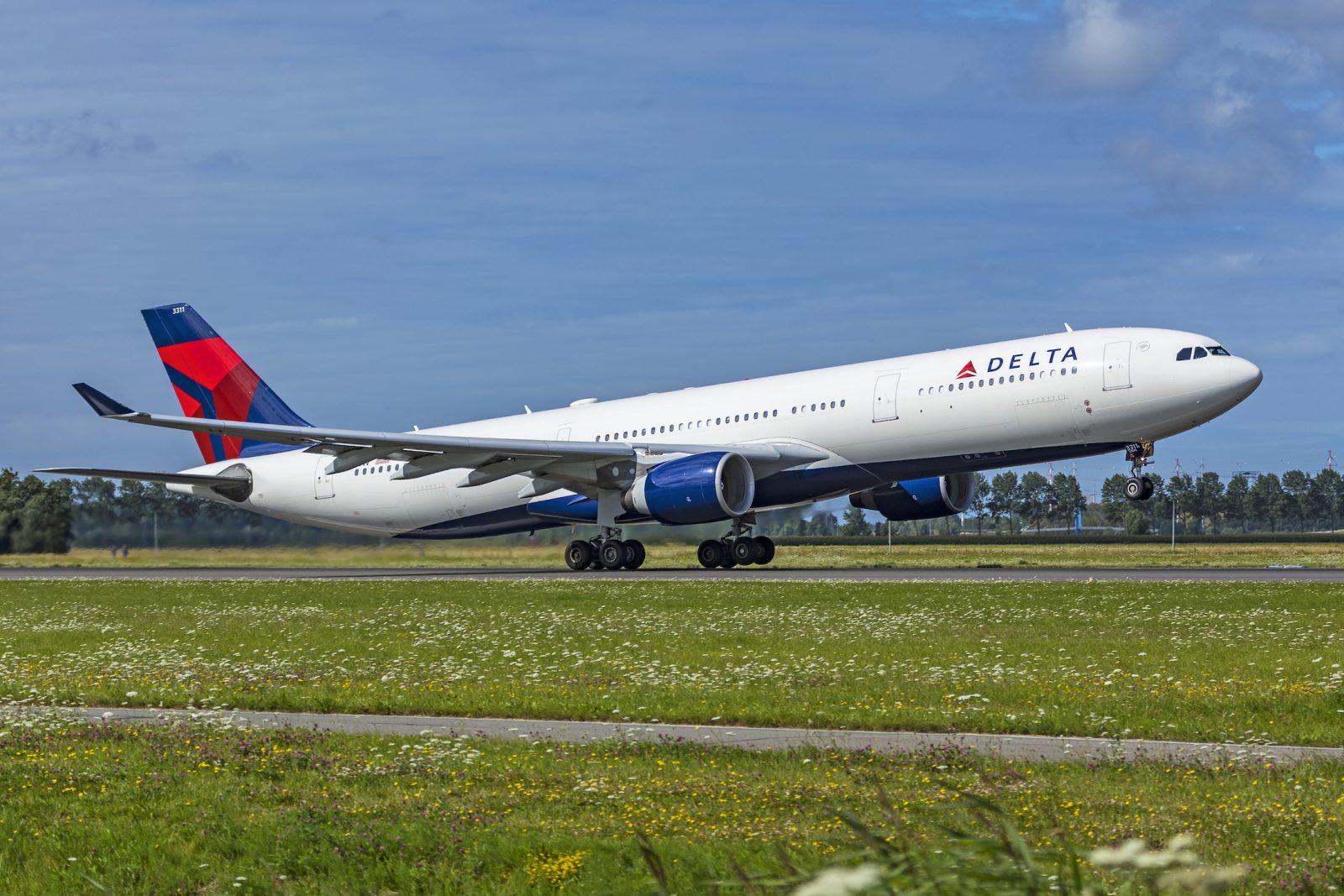
Delta A330-300
A Delta A330-300 (Photo: AirlineGeeks | William Derrickson)

Delta announced an expansion of its trans-Atlantic flight schedule for the summer of 2025, introducing new routes and increasing service frequency to several European destinations from its U.S. hubs.

New Routes

  • Catania, Sicily: Delta will start daily flights from New York-JFK to Catania in May 2025, marking the first time a U.S. airline provides nonstop service to this Sicilian city. Flights will be operated by a Boeing 767-300.
  • Naples, Italy: Four-times-weekly flights from Atlanta to Naples will start in May 2025, complementing the carrier’s existing JFK-Naples service. The route will be served with an Airbus A330-200.
  • Milan, Italy: From Boston, Delta will add four weekly flights to Milan beginning in May 2025. The airline currently serves the northern Italian city from its Atlanta and New York hubs.
  • Rome: The airline will add service between Minneapolis-St. Paul and Rome starting in May 2025. Flights will operate four times per week on an Airbus A330-300.
  • Barcelona, Spain: Boston will also see new three-times-weekly service to Barcelona, adding to Delta’s existing routes from Atlanta and New York-JFK. Flights are slated to begin in May 2025.
  • Dublin: Detroit will connect with Dublin four times a week starting in May 2025.
  • Brussels: New thrice-weekly service from Atlanta to Brussels will join the carrier’s existing service from New York.

Increased Frequencies

Delta is also planning to expand service on several existing routes starting in 2025.

  • Athens: Atlanta will see an increase to 11 weekly flights.
  • Barcelona and Rome: From Atlanta, there will be three extra weekly flights to both cities.
  • Zurich: Atlanta will now have daily service to Zurich.
  • Munich: Detroit increases its service to Munich to daily flights.

“With over 700 weekly flights to 33 European destinations and beyond, we’re expanding access to key cities like Barcelona and Dublin with new routes, while introducing our first-ever nonstop service to Catania, Sicily,” said Joe Esposito, Delta’s senior vice president – network planning, in a news release. “We’ve also recently opened a stunning Delta One Lounge at JFK, with more to come at LAX, BOS, and SEA. Alongside the rollout of free international Wi-Fi and increased premium seating across our fleet, we’re ensuring our customers enjoy the best in connectivity and comfort from the moment they arrive at the airport to when they touch down.”

Ryan Ewing

Ryan founded AirlineGeeks.com back in February 2013 and has amassed considerable experience in the aviation sector. His work has been featured in several publications and news outlets, including CNN, WJLA, CNET, and Business Insider. During his time in the industry, he's worked in roles pertaining to airport/airline operations while holding a B.S. in Air Transportation Management from Arizona State University along with an MBA. Ryan has experience in several facets of the industry from behind the yoke of a Cessna 172 to interviewing airline industry executives. Ryan works for AirlineGeeks' owner FLYING Media, spearheading coverage in the commercial aviation space.

Careers in Airline Network Planning

Airlines have to make many complex decisions on where to fly, how often to operate their routes, and what aircraft to use.

Aircraft on the move at New York's LaGuardia Airport.
Aircraft on the move at New York's LaGuardia Airport. (Photo: AirlineGeeks | William Derrickson)

Airlines have to make complex decisions on where to fly, how often to operate their routes, and what aircraft to use. These decisions are made by a carrier’s network planning team, in coordination with other departments within the company.

Network planning teams offer the unique opportunity to be involved in where an airline will fly. Here is what you need to know about working in airline network planning.

What Network Planning Teams Do

The network planning team at an airline is responsible for designing and developing the carrier’s route network. Network planners analyze and consider many factors to help guide this decision-making.

For example, network planning analysts will examine metrics such as passenger demand, aircraft utilization, and route performance. Factors like consumer trends and customer feedback also play a role in making network decisions. This work is often done in coordination with other teams within an airline, such as revenue management.

Network planners need to work within the confines of limited resources and have to make important decisions on how to best utilize what is available. Airlines only have a certain number of aircraft, crew, and other staff. Similarly, airports have a limited amount of takeoff and landing spots and gates. There may also be limitations due to factors such as air traffic control or international agreements.

Aeromexico’s Boeing 737s lined up at the gates of Mexico City’s Benito Juárez International Airport. (Photo: Shutterstock)

The job also requires coordination with various stakeholders. This can include other employees within the airline, including those from operational, financial, and human resources teams. It also involves working with external parties like airline partners and airports.

What Types of Roles Are Available in Airline Network Planning?

Network planning jobs typically follow a common corporate structure found in airlines and other companies. The entry-level role is usually a network planning analyst, with the next step being a senior analyst. These workers are typically responsible for conducting analysis and preparing reports and presentations. Career progression can include movement to manager and director roles.

What Skills and Qualifications Do You Need to Work in Network Planning?

Valuable skills for network planning include strong problem-solving abilities and a high level of attention to detail. Since network planning requires working with internal and external stakeholders, communication skills are also very important. Similarly, airlines typically seek those who can work well both individually and in a team.

Some employers also require prospective network planners to have a university or college degree. Relevant airline experience and strong proficiency with computers are typically also seen as assets.

How Much Do Airline Network Planners Get Paid?

Network planning analyst jobs typically pay between $50,000 and $100,000, depending on the company and an employee’s experience and qualifications. There are also opportunities to move up in the corporate structure or to other parts of the airline.

Andrew Chen

Andrew is a lifelong lover of aviation and travel. He has flown all over the world and is fascinated by the workings of the air travel industry. As a private pilot and glider pilot who has worked with airlines, airports and other industry stakeholders, he is always excited to share his passion for aviation with others. In addition to being a writer, he also hosts Flying Smarter, an educational travel podcast that explores the complex world of air travel to help listeners become better-informed and savvier travelers.

Delta to Resume Domestic Widebody Route

The airline is gearing up to resume widebody aircraft service on one of its domestic routes starting in October 2024.

A Delta A330 aircraft. (Photo: Airbus)

Delta is planning to resume widebody service on one of its domestic routes starting in October 2024. As first noted by AeroRoutes, the route has not seen widebody service since October 2021.

The Atlanta-based carrier will fly an Airbus A330-300 between its Detroit hub and Phoenix. Operating from Oct. 27, 2024 to March 8, 2025, the aircraft type will serve the route on a daily basis.

While Delta regularly operates widebody jets to Phoenix during the peak winter season, the A330-300 will be among the largest aircraft to serve the market from Detroit. The aircraft can accommodate up to 282 passengers.

In the past, the carrier has operated A330-200s along with Boeing 767-300s and 767-400s on the route. The A330-300 is slated to operate flight 1070 this winter.

Delta has a handful of domestic widebody routes within the continental U.S. this winter, including between its Atlanta hub and Las Vegas along with San Diego. The airline will also operate a mix of Boeing 767-300s, 767-400s, and A330-300s between Atlanta and Phoenix.

Ryan Ewing

Ryan founded AirlineGeeks.com back in February 2013 and has amassed considerable experience in the aviation sector. His work has been featured in several publications and news outlets, including CNN, WJLA, CNET, and Business Insider. During his time in the industry, he's worked in roles pertaining to airport/airline operations while holding a B.S. in Air Transportation Management from Arizona State University along with an MBA. Ryan has experience in several facets of the industry from behind the yoke of a Cessna 172 to interviewing airline industry executives. Ryan works for AirlineGeeks' owner FLYING Media, spearheading coverage in the commercial aviation space.

JetBlue Announces Premium Lounges Opening in 2025

JetBlue is set to introduce its first airport lounges at New York’s John F. Kennedy International Airport and Boston Logan International Airport.

Overview of the JetBlue check-in area at JFK's T5. (Photo: AirlineGeeks | Mateen Kontoravdis)

JetBlue has unveiled plans to launch its first-ever airport lounges. The initial locations are set to open at the airline’s hubs in New York’s John F. Kennedy International Airport Terminal 5 in late 2025, followed by Boston Logan International Airport Terminal C.

The lounges will be available to TrueBlue Mosaic members and the carrier’s soon-to-be-announced premium credit cardholders. “Customers have asked for a JetBlue lounge for years and we can’t wait to unveil our take in New York and Boston,” said Marty St. George, president of JetBlue, in a news release on Thursday.

Lounge Access and Availability

JetBlue says it plans to manage capacity to avoid overcrowding. Lounge access will primarily be reserved for its most loyal customers, including holders of the new premium JetBlue credit card, TrueBlue Mosaic 4 members, and transatlantic Mint customers. Mosaic 4 members and premium credit cardholders will also be allowed one guest. Day and guest passes will be offered for eligible customers, and annual passes will be available for purchase.

At JFK, the new lounge will span 8,000 square feet, while Boston Logan’s will cover 11,000 square feet. Both locations will feature JetBlue’s branding, along with local artwork and personalized amenities.

Customers can “unwind and socialize” in the Play area, where a full-service bar will offer complimentary alcoholic and non-alcoholic beverages. In the Work area, travelers can stay connected with private workspaces, fast and free Wi-Fi, and a barista-made coffee bar. The Lounge area will offer comfortable seating and complimentary food and drink options, providing a welcoming space for both solo travelers and groups.

“Customers love the JetBlue experience, so we’re pulling through those thoughtful touches you find onboard our flights into the lounge experience,” St. George added.

Tolga Karadeniz

Tolga is a dedicated aviation enthusiast with years of experience in the industry. From an early age, his fascination with aviation went beyond a mere passion for travel, evolving into a deliberate exploration of the complex mechanics and engineering behind aircraft. As a writer, he aims to share insights , providing readers with a view into the complex inner workings of the aviation industry.

Emirates Bringing Premium Economy to More U.S. Destinations

Emirates Boeing 777 aircraft are currently undergoing a significant refurbishment process in Dubai as part of a massive cabin interior overhaul project.

An Emirates Boeing 777-300ER aircraft.
An Emirates Boeing 777-300ER aircraft. (Photo: AirlineGeeks | William Derrickson)

Emirates Boeing 777 aircraft are currently undergoing a significant refurbishment process in Dubai as part of a massive cabin interior overhaul project. This overhaul will bring the aircraft up to Emirates brand design standards with new color motifs and seats.

It also brings an updated business class product to the aircraft and the addition of a premium economy cabin.

After the refurbishment, Emirates will have a fleet of Boeing 777 aircraft in a four-class configuration: six or eight first-class seats, 38 or 40 business-class seats in a 1-2-1 configuration, 24 premium economy seats, and 256 economy-class seats.

As these refurbished aircraft return to service, many will be put on flights to the United States from Dubai, expanding the successful Emirates premium economy cabin to more destinations in the country. The airline already offers premium economy to United States destinations serviced by Airbus A380 aircraft such as New York, Los Angeles, San Francisco, and Houston.

The first Boeing 777 aircraft will make its United States debut in Chicago and the aircraft type will rapidly be placed onto other routes to the United States:

  • Chicago – Emirates will introduce its retrofitted Boeing 777 three times weekly on EK 235 and EK 236 starting from November 1, 2024 and will increase to daily from November 22, 2024.
  • Boston – From December 10, 2024, Emirates’ newly-retrofitted Boeing 777 will serve the route three times weekly as EK 237 and EK 238, increasing to daily from December 18, 2024.
  • Dallas Fort Worth – Emirates’ enhanced Boeing 777 aircraft will be deployed three times weekly on EK 221 and EK 222 from January 9, 2025, with daily flights starting from January 15, 2025.
  • Seattle – The newly-configured aircraft featuring four cabin classes, including Premium Economy, will be rolled out on EK 229 and EK 230 from January 24, 2025.
  • Newark/Athens – From February 10, 2025, Emirates’ retrofitted Boeing 777 with refreshed interiors and new cabins will operate daily on EK 209 and EK 210
  • Miami/Bogotá – Emirates’ latest 777 experience will be introduced on EK 213 and EK 214, the service to and from Dubai and linking Miami with the Colombian capital, on four weekly flights from 19 February 2025, expanding to daily from 1 March 2025.

By February of next year, Emirates will be offering premium economy to and from 10 of its 12 gateways in the United States.

Also notable is that the Boeing 777 business class experience will significantly improve with the introduction of new seats that feature all aisle access. The new business class seats, while not an entirely new product, are similar to what is found on the carrier’s A380 fleet.

These seats will bring consistency to the business class product Emirates offers in the United States. By February of next year, passengers can expect relative consistency in terms of cabin seating layouts across all Emirates flights to and from the United States.

Hemal Gosai

Hemal took his first flight at four years old and has been an avgeek since then. When he isn't working as an analyst he's frequently found outside watching planes fly overhead or flying in them. His favorite plane is the 747-8i which Lufthansa thankfully flies to EWR allowing for some great spotting. He firmly believes that the best way to fly between JFK and BOS is via DFW and is always willing to go for that extra elite qualifying mile. Hemal's opinions are his own and do not reflect those of his employer.

Airbus to Establish Johannesburg Customer Support Center

Airbus will set up a customer support center for its African customers. It will be located in Johannesburg, South Africa.

A320neo test flight
The Airbus A320neo performing a hot climate test (Photo: Airbus)

Airbus will set up a customer support center for its African customers. It will be located in Johannesburg, South Africa.

In so doing, the European aircraft manufacturer aims to strengthen its presence in Africa. Airbus is already present in the African countries where its aircraft are operational – through field service representatives, who are available to support customers on a daily basis.

However, the customer support center in Johannesburg will contribute to strengthening Airbus’ local presence and supporting the growth of the African ecosystem. At present, roughly one-third of all commercial aircraft operated in Africa are Airbus aircraft.

Supporting Customers in Africa

Serving as a hub for customers in the region, the new office will provide tailored support and enhance operational efficiency, the company said in a press release.

Furthermore, the Airbus customer support center will drive the development of existing local capabilities ensuring access to maintenance and training resources while fostering a stronger, more collaborative ecosystem in the region.

“We are proud to open this new office to increase our proximity to customers while continuing to support the development of solutions for Africa, in Africa, and by Africa,” said Laurent Negre, Airbus’ VP of Customer Services for Africa and Middle East, in the release.

Demand for New Aircraft in Africa

Airbus’ most recent Global Market Forecast predicts that commercial demand for the African continent will reach 1460 passenger and freight aircraft by 2043. This figure includes 1210 narrowbody aircraft and 250 widebody aircraft.

In addition, Airbus’ Global Services Forecast estimates that Africa will need to introduce 15 000 additional pilots, 20 000 mechanics to meet the surge in air travel demand in the years to come.

“With the rapid expansion of the latest generation aircraft on the continent, Africa requires additional dedicated support and skills to meet the increasing demand for intra-African and international connectivity,” Negre added.

Airbus has not, however, announced the opening date of the new facility, which will also create employment opportunities on the continent.

Lorne Philipot

Lorne is a South Africa-based aviation journalist. He was captivated and fascinated by flying from the day he took his first airline flight. With a passion for aviation in his blood, he has flown to destinations in all corners of the globe. Lorne has traveled extensively and lived in various countries. Drawing on his travels and passion for aviation, Lorne enjoys writing about airlines, routes, networks, and new developments.

Boeing Furloughs Workers as Strike Halts Key Programs in Pacific Northwest

Two days after announcing a hiring freeze, Boeing has told employees that it be moving forward with furloughs in the coming weeks.

787 assembly line
The 787 assembly line in Everett. (Photo: AirlineGeeks | Ryan Ewing)

Two days after announcing a hiring freeze, Boeing has notified employees it will be moving forward with furloughs over the coming days.

This comes after over 30,000 workers with the International Association of Machinists and Aerospace Workers (IAM) rejected a contract renewal with the company and went on strike last week.

The furloughs were anticipated earlier this week as the aerospace company attempts to stop the financial bleeding caused by the strikes. A Bloomberg Intelligence analysis predicted Monday that Boeing could be out $3.5 billion in cash in Q3 if the strike continues through September.

In a memo sent to employees on Wednesday by Boeing CEO Kelly Ortberg, workers were notified that production was paused across many key programs in the Pacific Northwest due to the strike.

“… [O]ur business faces substantial challenges and it is important that we take difficult steps to preserve cash and ensure that Boeing is able to successfully recover,” Ortberg stated in the memo. “As part of this effort, we are initiating temporary furloughs over the coming days that will impact a large number of US-based executives, managers and employees.”

Ortberg stated that all benefits will continue for affected employees. The company is planning for selected employees to take one week of furlough every four weeks on a rolling basis for the duration of the strike.

Along with these steps, Ortberg stated that he and his leadership team will take pay cuts for the duration of the strike. Ortberg is currently one of Washington’s highest-paid CEOs. The Seattle Times reports his compensation package could reach $22 million in 2025. He did not specify in the memo how much his pay would be reduced during the strikes.

“Most important, we won’t take any actions that inhibit our ability to fully recover in the future,” Ortberg stated. “All activities critical to our safety, quality, customer support and key certification programs will be prioritized and continue, including 787 production.”

AirlineGeeks.com Staff

AirlineGeeks.com was founded in February 2013 as a one-person blog in Washington D.C. Since then, we’ve grown to have 25+ active team members scattered across the globe. We are all here for the same reason: we love deep-diving into the fascinating realm of the airline industry.

Nigeria Introduces New Court Guidelines to Boost Compliance

The goal is to eliminate legal challenges and ensure that Nigeria adheres to international standards regarding aircraft leasing and financing.

A rendering of what a Nigeria Air aircraft could look like. (Photo: Nigeria Air)

Last Thursday, Nigeria introduced new guidelines for its Federal High Court to enhance compliance with the Cape Town Convention and its associated Protocol on International Interests in Mobile Equipment, specifically concerning aircraft. The new Practice Directions were signed at a ceremony led by Nigeria’s Vice-President, Senator Kashim Shettima, during a meeting of the Presidential Enabling Business Environment Council (PEBEC) held at the Presidential Villa in Abuja.

In a statement on his X account, Aviation and Aerospace Development Minister Festus Keyamo emphasized that one of the top priorities in his 5-Point Agenda since taking office is to support the growth of domestic airlines while ensuring they maintain global standards.

As part of this initiative, the Minister had to address Nigeria’s low compliance rate with the Cape Town Convention, a critical international framework governing aircraft dry-leasing agreements with manufacturers like Boeing and Airbus. Nigeria’s perceived lack of compliance had led to its blacklisting by the Aviation Working Group (AWG), which monitors adherence to the Convention. According to the AWG, Nigeria’s legal framework posed significant obstacles, particularly in offering timely relief to creditors seeking urgent remedies, sometimes failing to meet the 10-day response time Nigeria committed to under the Convention.

Minister Keyamo, with the full backing of the President, Vice-President, and Attorney-General, collaborated with judicial bodies to remove these legal obstacles. This effort culminated in the signing of the new Practice Directions by the Chief Judge of the Federal High Court.

These new guidelines are expected to boost investor confidence by streamlining the process for Nigerian airlines to acquire aircraft at more competitive rates. Minister Keyamo highlighted that this move will greatly accelerate the aviation industry’s growth, create jobs, and contribute to economic development, positioning Nigeria’s aviation sector to compete more effectively on the global stage.

Nigeria ratified the Cape Town Convention and its Protocol, originally adopted in Cape Town, South Africa, on November 16, 2001. The Convention was incorporated into Nigerian law through the Civil Aviation Act of 2006, with further amendments made in 2022. This obligates the country to ensure its legal framework complies with the Convention’s provisions, including adhering to the timelines and remedies it sets out.

The Cape Town Convention requires aircraft deregistration and export requests to be processed within five days. However, Minister Keyamo has committed to reducing this timeframe to just four days for leased aircraft in default. The Convention, developed by UNIDROIT and the International Civil Aviation Organization (ICAO), is designed to support asset-based financing and leasing of aircraft, with economic benefits largely dependent on a country’s declarations and adherence to the Convention’s terms.

Following Nigeria’s removal from the Aviation Working Group’s compliance list, Minister Keyamo has launched a vigorous campaign to revitalize the aviation sector. As part of these efforts, earlier this year, the Minister visited Airbus in France. More recently, on August 29, 2024, during a visit to Boeing’s Charleston, South Carolina facility, he signed a Memorandum of Understanding (MOU) aimed at further developing Nigeria’s civil aviation sector.

Victor Shalton

Victor Shalton's love for aviation can be traced to when he was 11-years-old. As a seasoned aviation writer, he takes pride in providing the best aviation coverage around the globe and is passionate about advancing his skills in the aviation space. In addition, he loves travelling, writing, arts and while his speaking engagements have taken him around the world, he is proud to call Nairobi home.
Sign-up for newsletters & special offers!

Get the latest stories & special offers delivered directly to your inbox

SUBSCRIBE