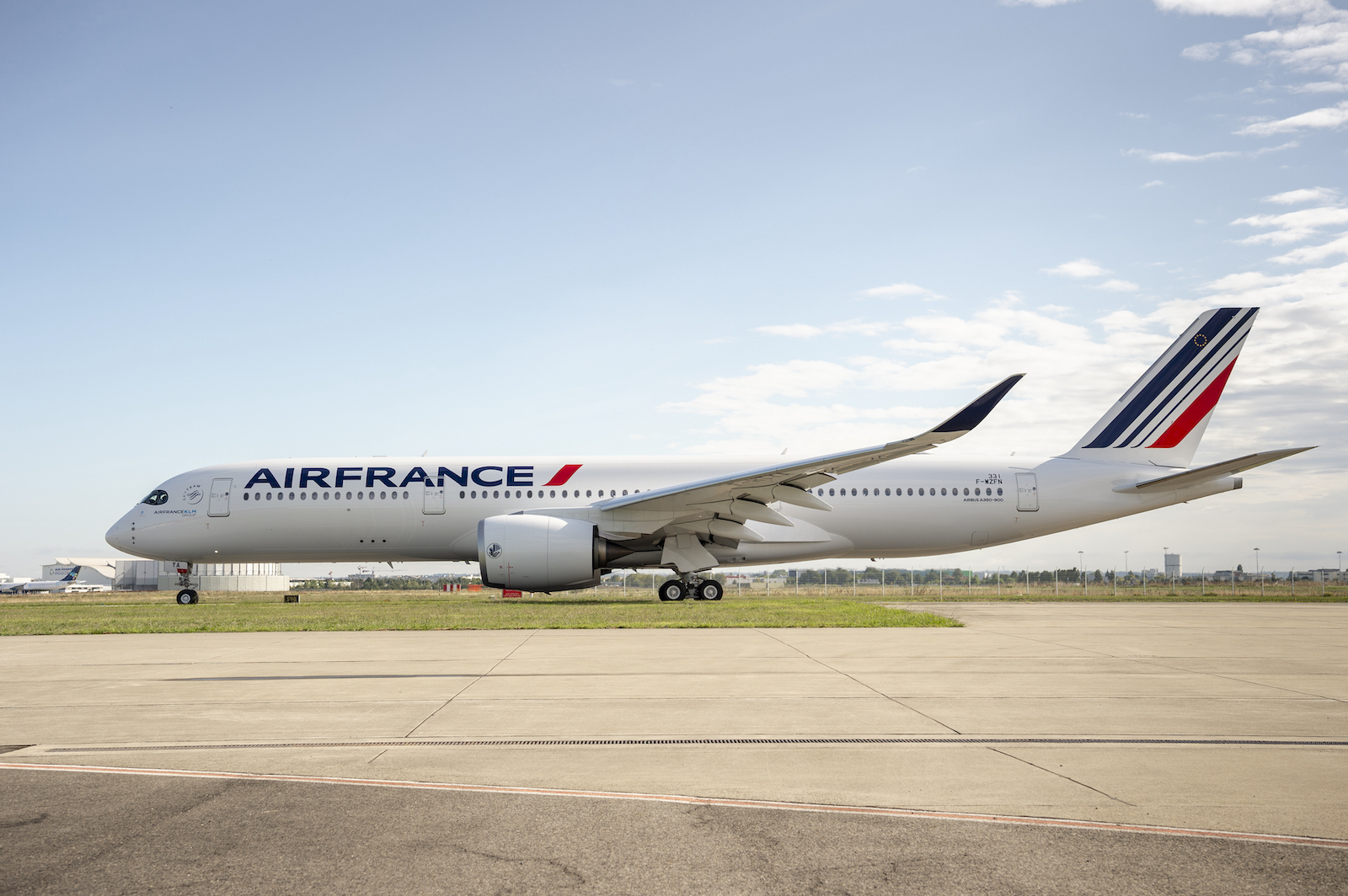
The airline plans to operate an Airbus A350-900 between Paris and Orlando which features 34 seats in business, 24 in premium economy, and 266 in the economy cabin.
Flights leave Paris Charles de Gaulle at 5:05 p.m., arriving in Orlando at 8:45 p.m. local time. The inbound flight to Paris departs Orlando at 11:00 p.m., arriving at 1:30 p.m. the following day.
Air France last served Orlando with regular flights in September 2012. According to Cirium Diio schedule data, the airline has no direct competition on the route.
Ryan founded AirlineGeeks.com in February 2013 and has spent more than a decade covering the airline business. His work has been featured by CNN, WJLA, CNET, and Business Insider. His aviation experience spans airport operations, Part 135 regulatory compliance, and airline crew workforce planning, along with time behind the yoke of a Cessna 172 and interviews with airline executives. Ryan now serves as Group President of Firecrown Media’s Aviation Group. He holds a B.S. in Air Transportation Management and an MBA from Arizona State University and teaches Airline Management at Embry-Riddle Aeronautical University.
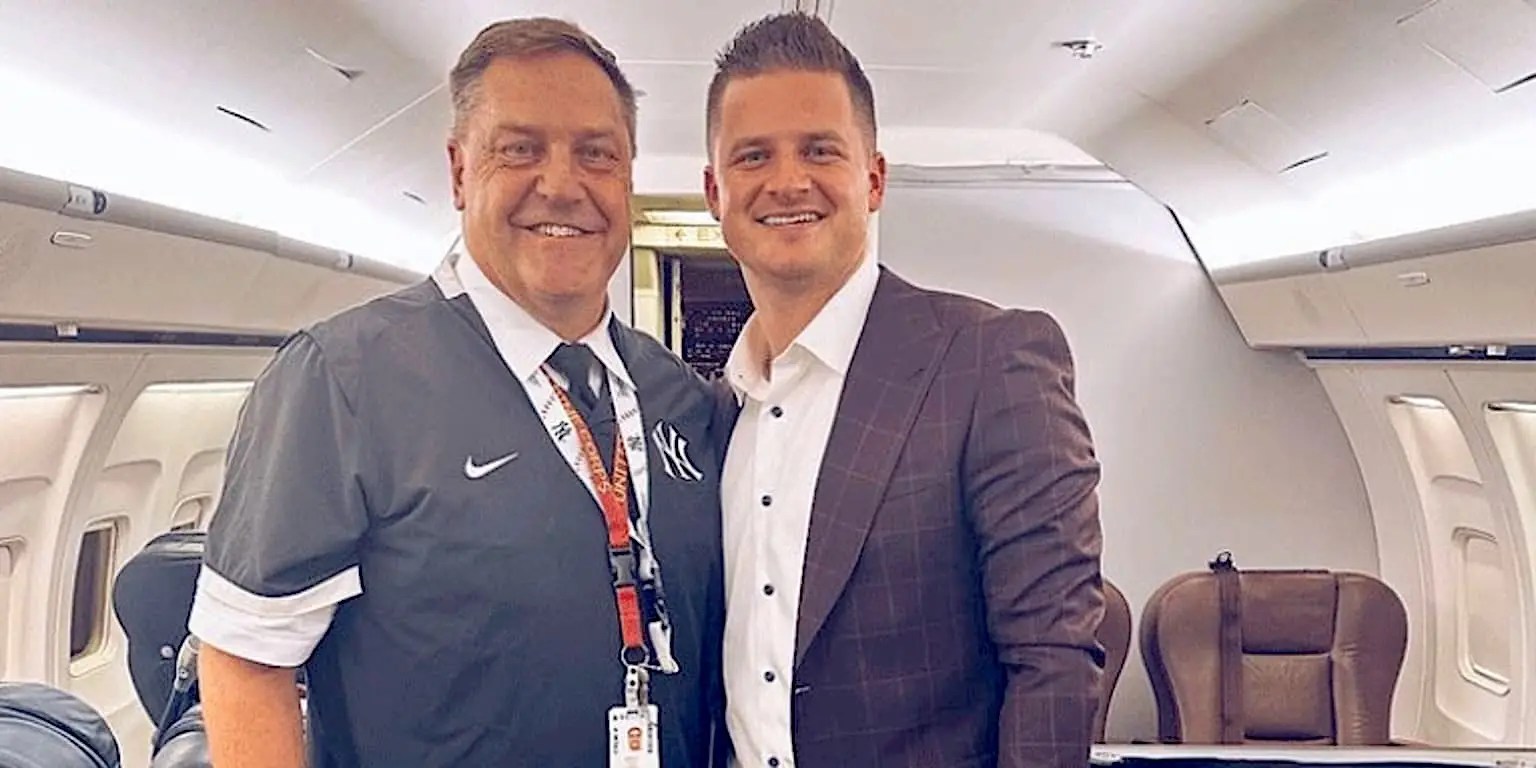
USMC veteran pilot Dwight Schmidt, left, sometimes flies the New York Yankees on charter trips, including World Series games. His son Clarke (right) happens to pitch for the Yankees. (Photo: MLB.com)
Delta Air Lines pilot Dwight Schmidt hopes he will be charter-flying the families of Major League Baseball’s New York Yankees back to Los Angeles for more World Series competition with the LA Dodgers. Though the Bronx Bombers face elimination in Game 4 tonight, down by a daunting three games to none in the best-of-seven World Series, New York fans hope to extend the series to a fifth game in Yankee Stadium tomorrow night (Oct. 30). Should the Yanks win the next two games, the series would move to the West Coast for Games 6 and 7 (if necessary) on Friday and Saturday.
But Schmidt has a special, overriding reason for bidding on the charter trips that Delta flies under contract to transport families of the Yankees’ players. In fact, if he weren’t sitting in the pointy end of the airliner, he’d likely be among the passengers. His son is Clarke Schmidt, 28, the Yankee pitcher who started Game 3 and could be on the mound for one of the upcoming games, should the Yankees manage to get into the win column and stay there.
The elder Schmidt, 59, is a retired U.S. Marine Corps colonel who has flown for Delta for 25 years. According to an Associated Press story, he normally flies long-haul trips to Europe and South America but tossed his name in the hat for the Yankee charter flights. “You bid for those, to try to get a trip,” he said. “That’s how I was able to get it.” His son added, “Everybody feels like the pilot’s a little bit more personally invested [in] the flight, so they feel a little safer.”
Clarke’s older brother Clate, though drafted by the Boston Red Sox in 2015, has decided to follow his father’s career path and recently completed logging the 1,500 hours needed to qualify for the Airline Transport Pilot (ATP) rating. Asked if he shared Clate’s ambition to get into aviation following his baseball career, though he said he enjoyed flying with his father in small airplanes, Clarke said, “That’s a hard ‘No.’”
Editor’s Note: This story first appeared on AvWeb.
AirlineGeeks.com was founded in February 2013 as a one-person blog in Washington D.C. Since then, we’ve grown to have 25+ active team members scattered across the globe. We are all here for the same reason: we love deep-diving into the fascinating realm of the airline industry.
The first Airbus A321XLR was delivered to Iberia on Wednesday. After over a year of delays, the long-range narrowbody jet may enter revenue service as soon as next week.
Due to an ongoing pilot dispute, Iberia was selected as the aircraft’s launch customer over fellow International Airlines Group carrier Aer Lingus. IAG has 14 A321XLR jets on order, including eight slated for Iberia and six for Aer Lingus.
The A321XLR is the longest-range variant of Airbus’ A320 series. Its published range is 4,700 nautical miles, 15% more than the A321LR. According to Airbus, the aircraft can carry up to 220 passengers in a standard two-class configuration. Iberia’s aircraft features 182 seats.
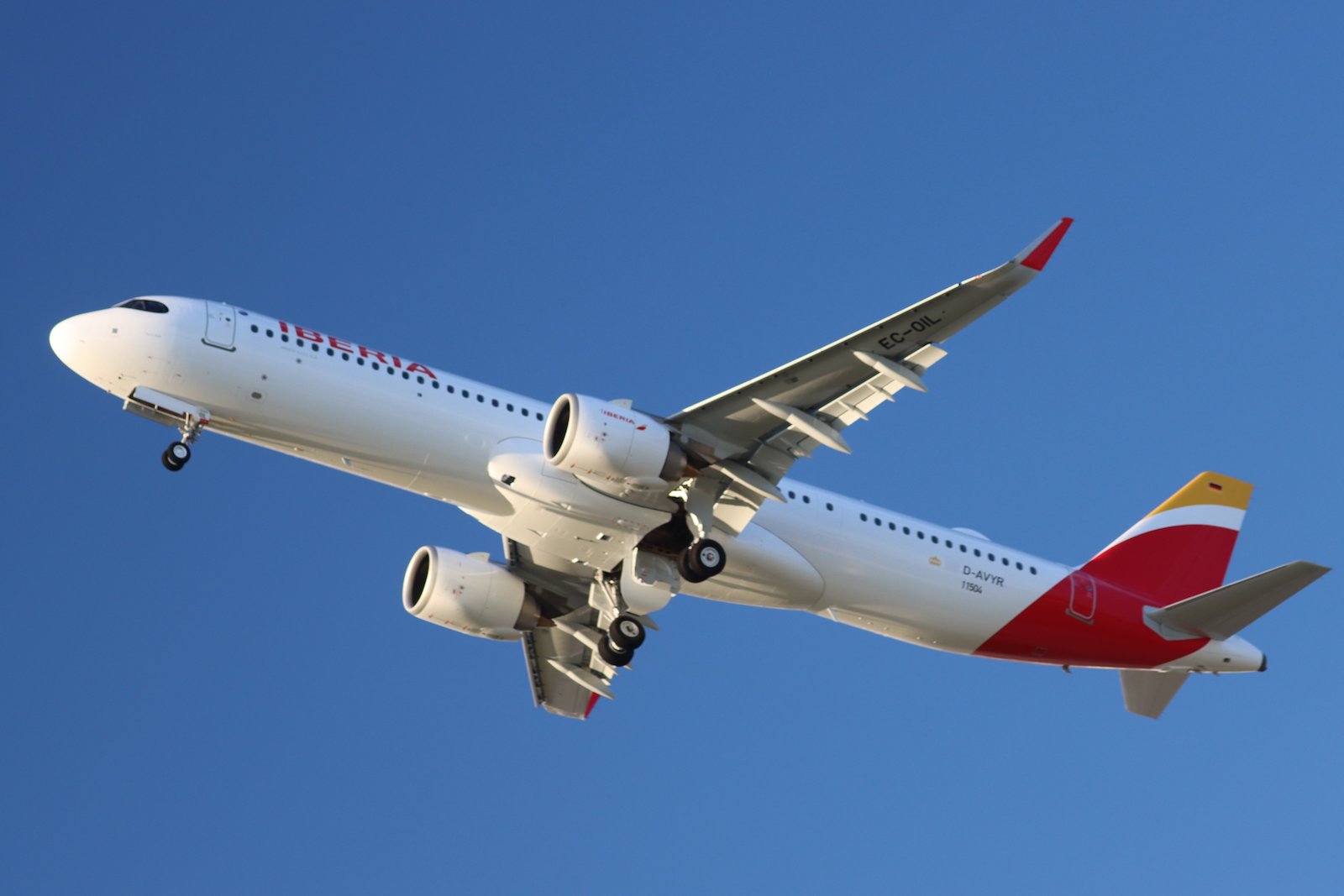
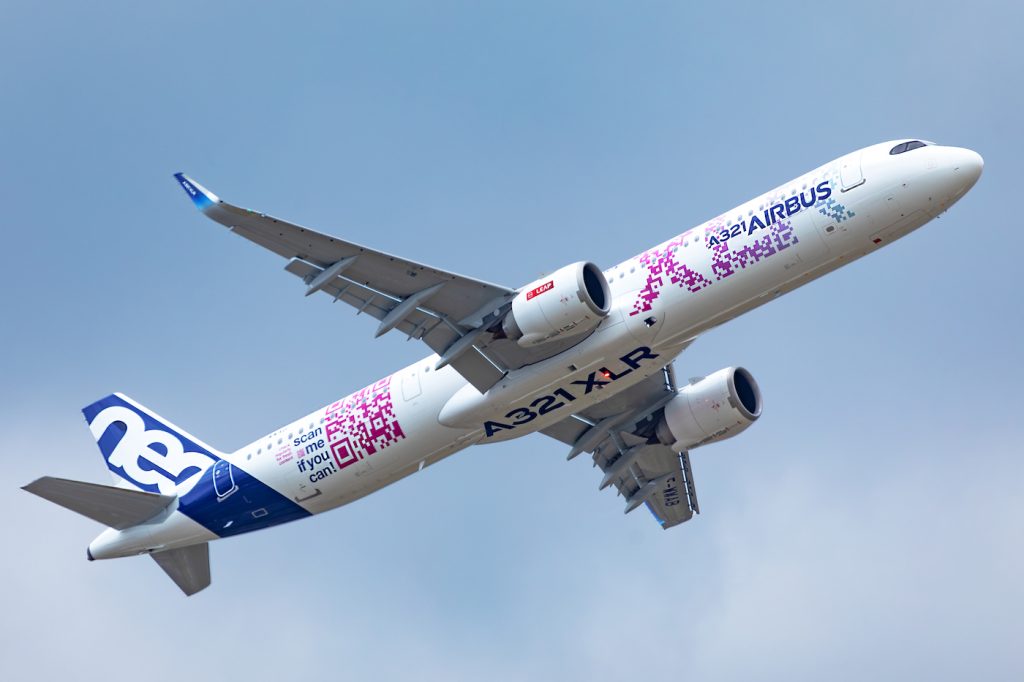
Airbus delivers the world’s first A321XLR to Iberia. (Photo: Airbus)
According to Cirium Fleet Analyzer data, the aircraft has over 100 firm orders. American, United, Air Canada, Icelandair, and Wiizz Air are among the carriers planning to use the aircraft.
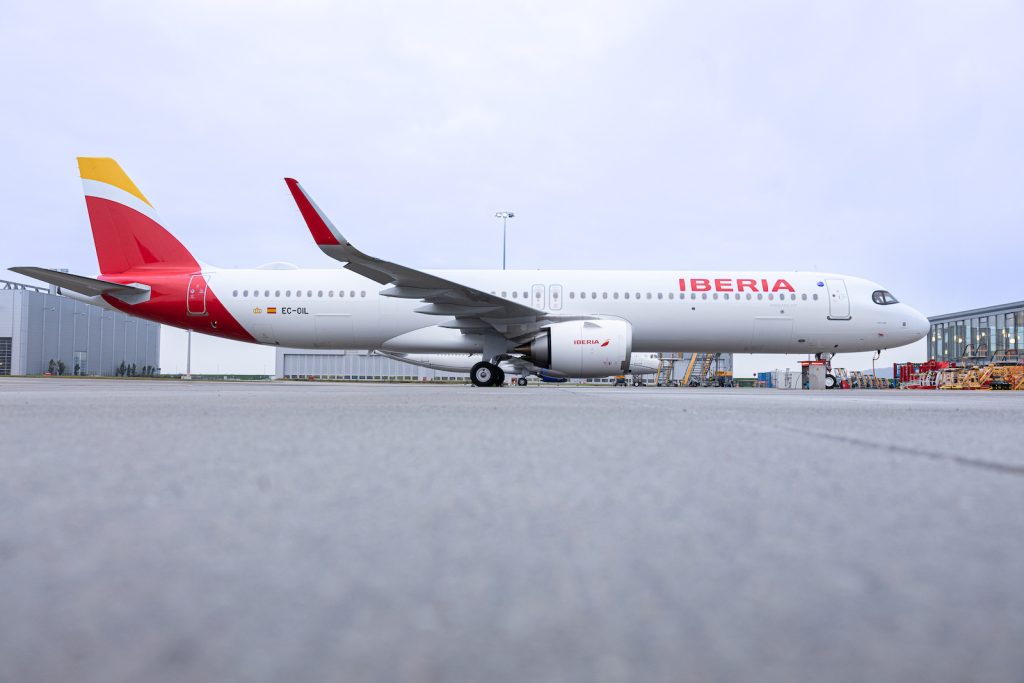
Registered as EC-OIL, Iberia’s first A321XLR is scheduled to ferry from Airbus’ Hamburg manufacturing facility to Madrid on Wednesday afternoon.
“Five years in the making, the newest member of the Airbus family is all set to join its first operator, Iberia,” said Airbus’ commercial aircraft chief Christian Scherer in a news release. “The A321XLR will enable countless new non-stop destinations; it truly opens a new chapter in air connectivity. It is another proud “first” for all of us at Airbus in our constant quest to innovate and bring value to our customers. We are pleased to share this special moment with a special customer: gracias y felicidades Iberia.”
Airbus’ A321XLR on display at the 2023 Paris Airshow (Photo: AirlineGeeks | William Derrickson)
First Flights
Iberia is planning to begin A321XLR flights on Nov. 5 from its Madrid hub to Paris Charles de Gaulle. These flights will operate on multiple days in early November, according to Aeroroutes.
Later, the Spanish airline will stretch the aircraft’s range with transatlantic service between Madrid and Boston starting Nov. 14.
In January 2025, the aircraft will be used on the nearly 4,000-mile flight from Madrid to Washington Dulles.
Ryan founded AirlineGeeks.com in February 2013 and has spent more than a decade covering the airline business. His work has been featured by CNN, WJLA, CNET, and Business Insider. His aviation experience spans airport operations, Part 135 regulatory compliance, and airline crew workforce planning, along with time behind the yoke of a Cessna 172 and interviews with airline executives. Ryan now serves as Group President of Firecrown Media’s Aviation Group. He holds a B.S. in Air Transportation Management and an MBA from Arizona State University and teaches Airline Management at Embry-Riddle Aeronautical University.
Highlights of the now-ratified contract agreement published by TWU are as follows:
A two-year extension beginning Jan. 1, 2025.
Wage increases ranging from 12% to 15% on the effective date and 18% to 26% over the life of the extension.
3% out-year increases.
Several non-economic quality-of-life issues were also addressed as part of the negotiations.
“This action affords our members’ securities and protections now rather than later, and the financial stability to address any unforeseen challenges that may lie ahead,” the union said in an online statement.
The raises are also bolstered by increased crew chief and license premiums, an emailed TWU news release stated.
“We set goals, and we achieved them,” said TWU International President John Samuelsen in the release. “When the International and TWU locals work hand-in-hand, we win.”
“With this new agreement, our TWU-IAM Association-represented team members join their colleagues who have all approved new agreements that underscore American’s commitment to ensuring our team is paid well and competitively,” said American’s CEO Robert Isom in a news release. “I’d like to thank both the Association and company negotiating teams for seeing the important win this contract extension is for our team and for working to reach a deal — one that ensures our team is paid among the best in the industry — so quickly.”
American CFO Devon May said during the carrier’s earnings call on Oct. 24 that the ratification of the new contract covers more team members in a shorter period of time than ever before.
“Not only do these agreements ensure we’re taking care of our team, but they also provide a level of certainty in our planning that will help us efficiently achieve the goals we’ve set for American,” May said. “We’re focused on delivering on our commitments, and we believe achieving our long-term targets will unlock significant value.”
AirlineGeeks.com was founded in February 2013 as a one-person blog in Washington D.C. Since then, we’ve grown to have 25+ active team members scattered across the globe. We are all here for the same reason: we love deep-diving into the fascinating realm of the airline industry.
Lufthansa Introduces Allegris Seating on Cape Town Route
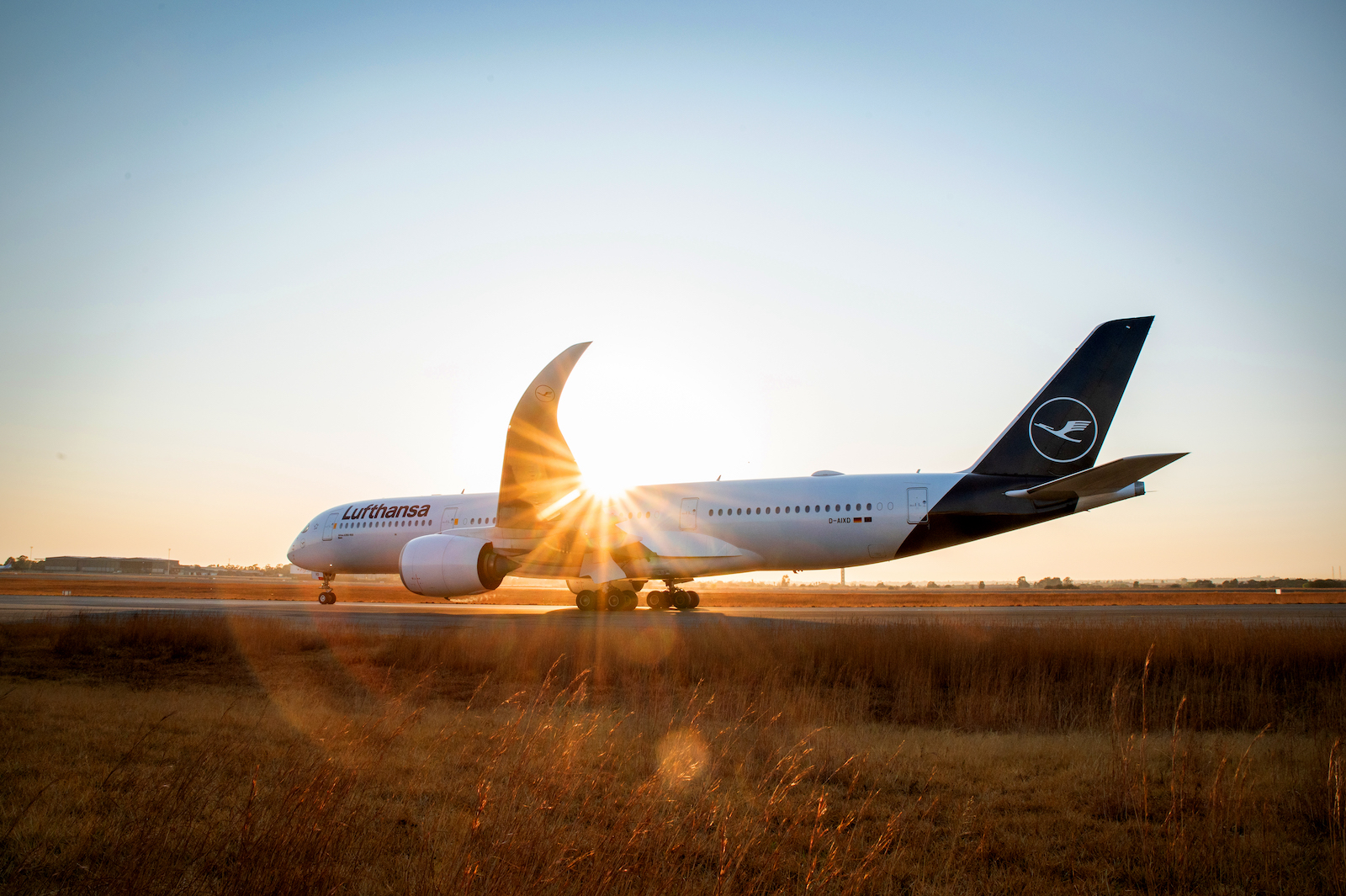
Lufthansa has introduced its upgraded Allegris cabin product on its services to Cape Town, becoming the first African destination to receive the new offering.
Lufthansa has introduced its upgraded Allegris cabin product on its services to Cape Town, becoming the first African destination to receive the new offering.
Sustainability in the Sky reports that the first Lufthansa flight, an Airbus A350 aircraft, offering the Allegris cabin touched down in Cape Town on Oct. 27.
Premium Services to South Africa
This marks a significant milestone for individual and premium travel experiences to and from South Africa.
Lufthansa’s senior director of sales in Southern & East Africa, Nigeria, and Equatorial Guinea, Rene Koinzack, stated that the new seating enhances Cape Town’s appeal.
“The Allegris seat cabins represent a new level of quality and innovation that we believe will not only enhance the international travel experience for South African passengers but also position Cape Town as a key destination for premium travellers. We anticipate a positive shift in travel patterns with more South Africans choosing to fly internationally with us, while also attracting quality-oriented tourists from key global markets to our local tourism sector.” Koinzack shared.
Redefining Premium Travel
According to The South African, this enhancement comes at a time when Cape Town is rising in popularity as a premier tourist destination for visitors from across the globe.
Lufthansa remains committed to growing its presence in Cape Town, with plans for potential further enhancements and routes By offering Allegris cabins on its Munich-Cape Town services, the carrier also expects to attract more tourists and business travellers seeking high-end cabin products.
Lorne is a South Africa-based aviation journalist. He was captivated and fascinated by flying from the day he took his first airline flight. With a passion for aviation in his blood, he has flown to destinations in all corners of the globe. Lorne has traveled extensively and lived in various countries. Drawing on his travels and passion for aviation, Lorne enjoys writing about airlines, routes, networks, and new developments.
Frontier Sued Following Emergency Landing
Three Frontier passengers are suing the carrier saying they were traumatized and injured after an emergency landing on Oct. 5.
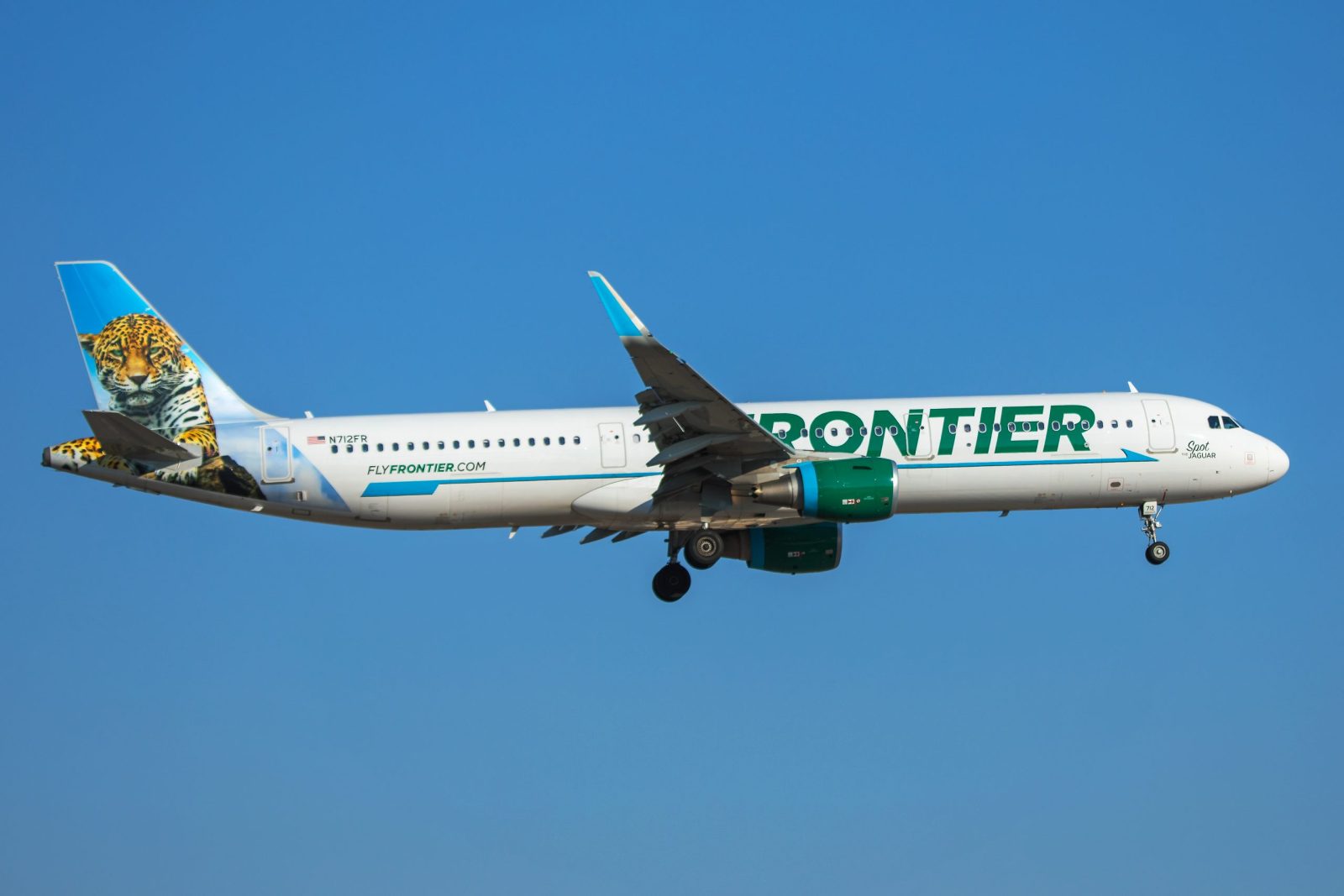
An A321 in Frontier's "Spot the Jaguar" livery on approach into Las Vegas.
(Photo: AirlineGeeks | William Derrickson)
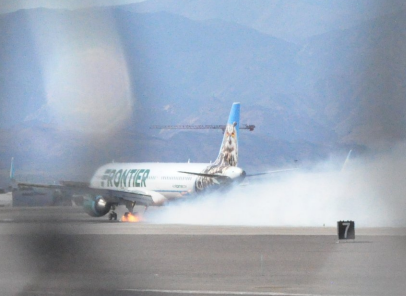
Three Frontier passengers are suing the carrier saying they were traumatized and injured after being stranded inside a smoke-filled cabin during an emergency landing on Oct. 5.
Flight 1326 was traveling from San Diego to Las Vegas at 29,000 feet when a “chemical smell” was detected by flight crew in the forward cabin of the Airbus A321. Pilots were alerted and also later noticed the chemical, mildew-like smell in the flight deck.
An early report by the National Transportation Safety Board after the incident would determine that the crew struggled to communicate with air traffic control after placing the aircraft into an electrical emergency configuration. An emergency was declared and the crew began to descend toward Las Vegas.
According to the report, the aircraft’s pilots described an “increasingly hectic” and “stressful” flight deck. “Aircraft systems began to degrade,’ the crew told investigators.
Frontier flight 1326 in Las Vegas on Oct. 5, 2024 (Photo: NTSB)
Video of the landing showed a plume of smoke and fire around the tires of the aircraft. Initially, none of the 197 passengers were reported to have been injured in the rough landing.
Plaintiffs Eddie Frierson, Alberto Cardoso-Ramirez, and Ana Figueroa-Cueva, all represented by attorney Steve Dimopoulos, stated in their complaint that they were stranded inside the sweltering smoke-filled aircraft for nearly an hour before being evacuated.
The complaint alleges that the landing was caused by Frontier’s failure to properly repair, inspect, maintain, and operate the aircraft in a reasonable and safe manner. The lawsuit cites Transit Inc., v. Chernikoff, stating that Frontier is a common carrier under Nevada law and owed a heightened standard of care to its passengers.
Plaintiffs are seeking $15,000 in general damages and $15,000 in special damages, plus lost wages in an amount yet to be determined.
Bob Harris, corporate communications manager at Frontier, told AirlineGeeks via email that the carrier doesn’t offer comment on pending litigation.
AirlineGeeks.com was founded in February 2013 as a one-person blog in Washington D.C. Since then, we’ve grown to have 25+ active team members scattered across the globe. We are all here for the same reason: we love deep-diving into the fascinating realm of the airline industry.
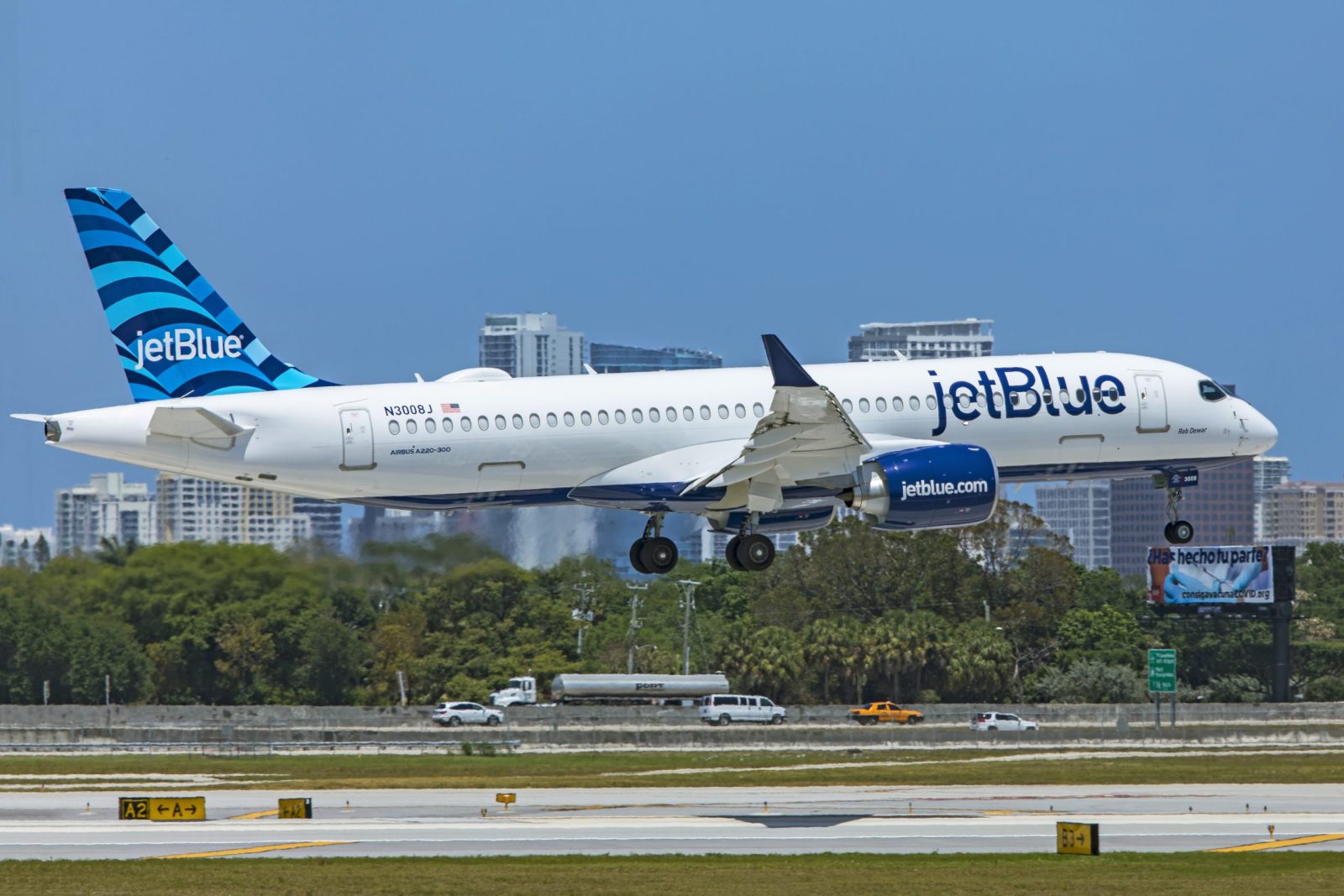
A JetBlue Airways Airbus A220 prepares for landing in Fort Lauderdale, Florida.
(Photo: AirlineGeeks | William Derrickson)
Amid ongoing issues with Pratt & Whitney’s GTF engines, JetBlue expects to ground more Airbus aircraft in 2025. The New York-based carrier joins a long list of global airlines facing troubles with the engine type.
In 2024, the airline averaged around 11 grounded aircraft as a result of engine unavailability. The PW1100G and PW1500G engines power JetBlue’s A220 and A321neo fleets.
According to Cirium Fleet Analyzer data, the airline currently has six A220-300s and eight A321neos out of service. Each engine inspection takes approximately 360 days, the carrier said.
JetBlue expects the number of grounded aircraft to average in the mid-to-high teens in 2025, it stated in a third-quarter earnings report.
“Given that we expect to have a certain number of aircraft groundings into 2024 and beyond, we will continue to assess the resulting impact on our future capacity plans. We are currently working with Pratt & Whitney on compensation arrangements,” the report said.
The airline noted that future impacts of the groundings remain “uncertain” but could include capacity impacts. JetBlue is set to take delivery of 24 aircraft in 2025, including 20 A220s and four A321neos.
“The fleet situation is very…dynamic and we continue to be very frustrated…as far as being able to actually get a good handle on what’s happening with Pratt,” JetBlue President Marty St. George added during a third-quarter earnings call.
Scores of Pratt & Whitney-powered Airbus aircraft have been grounded around the world. Ultra-low-cost carrier Spirit received between $150 million and $200 million in compensation from the engine maker.
Ryan founded AirlineGeeks.com in February 2013 and has spent more than a decade covering the airline business. His work has been featured by CNN, WJLA, CNET, and Business Insider. His aviation experience spans airport operations, Part 135 regulatory compliance, and airline crew workforce planning, along with time behind the yoke of a Cessna 172 and interviews with airline executives. Ryan now serves as Group President of Firecrown Media’s Aviation Group. He holds a B.S. in Air Transportation Management and an MBA from Arizona State University and teaches Airline Management at Embry-Riddle Aeronautical University.
Both carriers are securing strategic links, with Air Canada getting access to the Baltic States and airBaltic to the transatlantic flow to Toronto and Montreal.
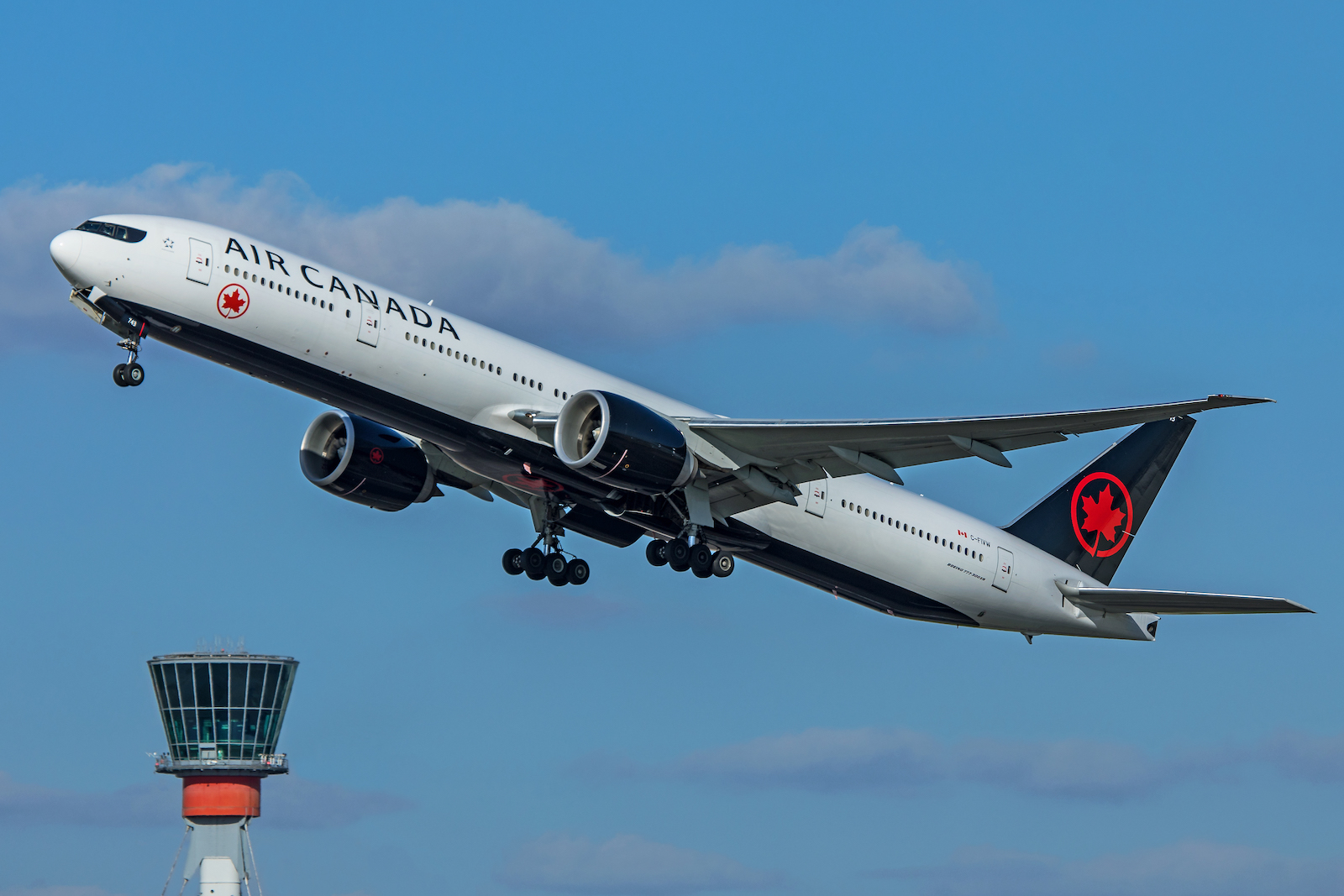
An Air Canada Boeing 777-300ER departing London Heathrow (Photo: AirlineGeeks | William Derrickson)
On October 23, airBaltic, Latvia’s national carrier, announced a new codeshare agreement with Air Canada, expanding connectivity options for travelers in the Baltic region.
Transatlantic Exclusion
All three of the Baltic States’ capitals have no direct transatlantic connection to date. With a population of merely six million inhabitants, the three countries make for thin routes for any carrier to operate. airBaltic, the claimed national carrier of the Baltic States, is providing key connectivity links for the countries.
Few European network carriers are operating to Riga, Vilnius, and Tallinn directly. The group includes Finnair, LOT Polish Airlines, SAS, Lufthansa Group, and British Airways. The last three are relying partially on airBaltic through their codeshare agreements. Two other connectivity providers Air France-KLM and Icelandair do not operate to any of the Baltic capitals with the latter being the only transatlantic carrier allowing airBaltic to put codes on U.S. flights.
Strategic For Both
The agreement is set to give airBaltic access to two Canadian cities; Toronto from Amsterdam, Copenhagen, and Stockholm, and Montreal from Copenhagen and Amsterdam. Air Canada will gain access to all three Baltic capitals through gateways in Western Europe. Riga will be connected through Amsterdam, Copenhagen, Frankfurt, Munich, and Stockholm, Tallinn through Amsterdam, Brussels, Copenhagen, and Munich, and Vilnius through Amsterdam.
“Air Canada is very pleased to expand its longstanding relationship with airBaltic to enable greater connectivity and customer convenience when travelling between Canada and Northern Europe,” said Mark Galardo, executive vice president of revenue and network planning at Air Canada, in a news release.”This new codeshare partnership serves the strong commercial ties between Canada and the Baltic region and builds on Air Canada’s global growth strategy by leveraging its strong, non-stop network from Canada to Scandinavia and key European gateways, including Amsterdam.”
The first codeshare flight is set to begin next week.
The routes of Air Canada (colored maple) and airBaltic (colored green) included in the signed codeshare agreement. (Photo: Filip Kopec with Great Circle Mapper)
Organic Demand for Canada-Latvia Travel
The countries are sharing a longstanding relationship. Canada was a popular emigration destination for Latvian nationals, as well as Estonians and Lithuanians, after the World War II outbreak in 1939.
The Latvian population in Canada is estimated to be close to 30.000 nowadays, with Latvia’s current population of approximately 1.8 million. The significant diaspora in Canada, and also in the United States, makes for a consistent stream of travelers to Riga, the capital of Latvia hosting the biggest airport.
A passionate aviation enthusiast that started off his career as an aerospace engineer, but found his true calling on the commercial side of the airline business. Now as a finance guy among avgeeks and an avgeek among finance guys, he has experience working in the Revenue Divisions of three airlines. In his spare time he enjoys traveling, but admittedly sometimes is more about the journey than the destination.
Lufthansa Axes U.S. Route
The German carrier continues to face ongoing aircraft shortages as it awaits delivery of new Boeing 787 and Airbus A350 jets.
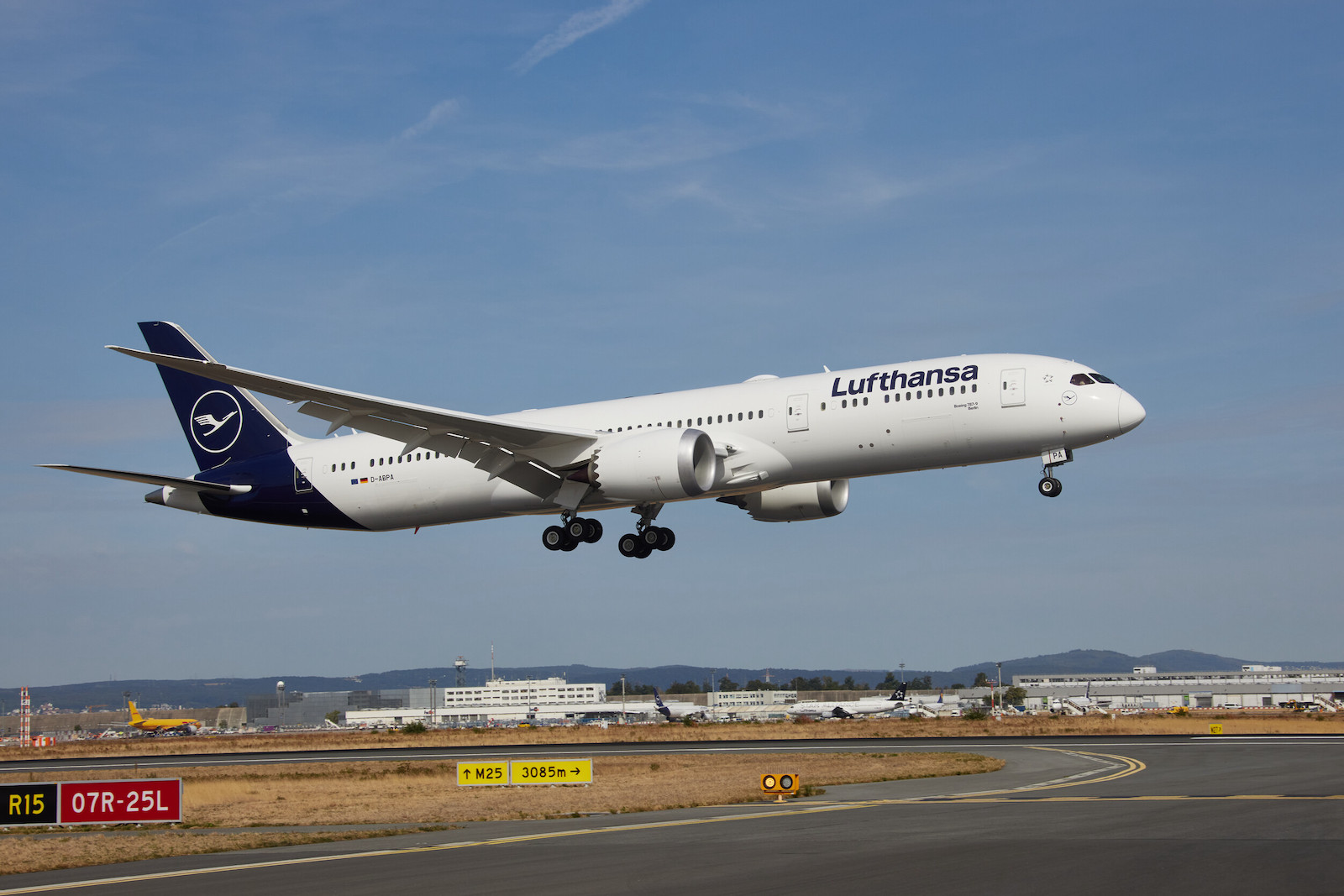
A Lufthansa Boeing 787 Dreamliner. (Photo: Lufthansa Group)
Lufthansa is cutting one of its newest U.S. routes. The German carrier continues to face aircraft shortages as it awaits delivery of new Boeing 787 and Airbus A350 jets.
According to Thrifty Traveler, the airline will halt service to Minneapolis/St. Paul, and its low-cost subsidiary, Discover Airlines, will take over. Lufthansa flights between Frankfurt and Minneapolis will end on April 29, 2025, less than a year after the service launched in June 2024.
Discover will operate an Airbus A330-300 on the route, albeit at a lower frequency. Weekly service will drop from five to four flights.
A Lufthansa spokesperson said aircraft availability constraints drove the decision. The carrier was operating a Boeing 787-9 Dreamliner to Minneapolis.
“At the same time, delayed aircraft deliveries, punctuality issues at our hubs in Germany and regulatory disadvantages are impacting our core brand,” the airline group said in a Tuesday earnings release.”Lufthansa Airlines has therefore launched the ‘Turnaround’ program to address these and structural internal challenges.”
The carrier intends to resume flights to Minneapolis under the Lufthansa brand in the future.
Ryan founded AirlineGeeks.com in February 2013 and has spent more than a decade covering the airline business. His work has been featured by CNN, WJLA, CNET, and Business Insider. His aviation experience spans airport operations, Part 135 regulatory compliance, and airline crew workforce planning, along with time behind the yoke of a Cessna 172 and interviews with airline executives. Ryan now serves as Group President of Firecrown Media’s Aviation Group. He holds a B.S. in Air Transportation Management and an MBA from Arizona State University and teaches Airline Management at Embry-Riddle Aeronautical University.
Delta, CrowdStrike Trade Lawsuits Over July Meltdown
Delta and CrowdStrike sued each other for damages after $500 million in revenue was lost by the airline due to the IT company’s outages over the summer.
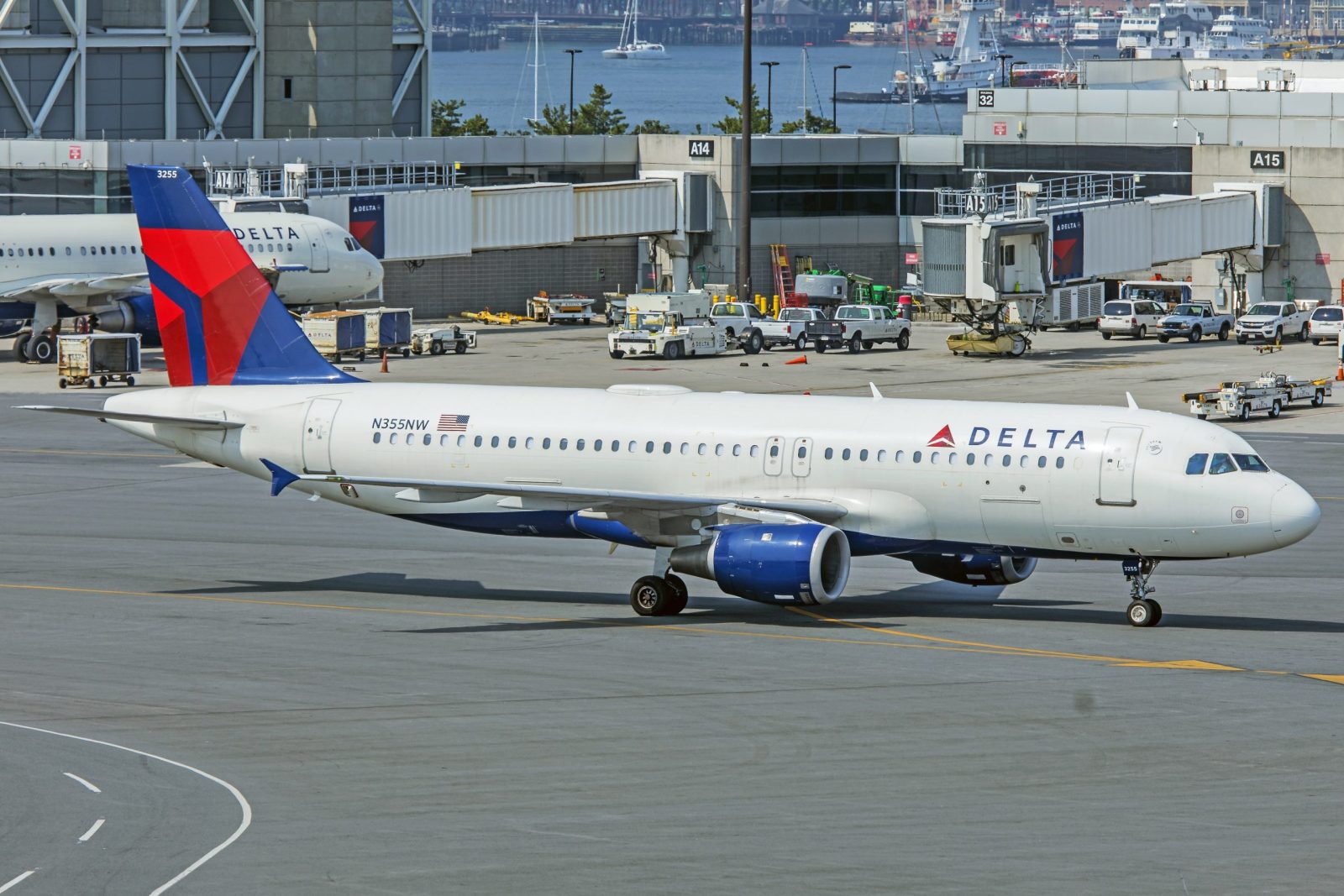
A Delta Airlines Airbus A320 in Boston.
(Photo: AirliineGeeks | William Derrickson)
Delta and CrowdStrike sued each other for damages following public arguments two months ago over which side was responsible for $500 million in revenue lost by the airline during the IT company’s outages over the summer.
A global IT outage on July 19 halted thousands of flights around the world due to a faulty update by the cybersecurity company, which impacted Microsoft operating systems. Delta was one of the last airlines to recover from the incident, which negatively impacted earnings for its third quarter.
A Blame Game
One page from a Fulton County, Georgia, court document posted to X/Twitter by aviation reporter Edward Russell on Friday showed Delta sued CrowdStrike for several offenses, including computer trespass, breach of contract, product defect, gross negligence and more.
In letters sent between the two companies publicly posted by reporters on X/Twitter, Delta previously alleged that CrowdStrike showed no sense of urgency for the damage it caused, and the company’s offers to assist the airline were too late.
AirlineGeeks reached out to the Superior Court of Fulton County requesting a full copy of the complaint issued by Delta. AirlineGeeks also reached out to Delta for additional comments.
Reuters reported CrowdStrike sued Delta in the U.S. District Court for the Northern District of Georgia on Friday stating the carrier’s own response and technology caused delays in its ability to resume operations.
In a copy of CrowdStrike’s complaint obtained by AirlineGeeks, Crowdstrike stated that it moved as quickly as possible to remediate issues caused by a faulty update immediately after the incident. This included reverting the July 19 update 78 minutes after it was first deployed and working with customers to bring systems online as quickly as possible.
On July 22, CrowdStrike said it pushed automated techniques to speed up these repairs.
CrowdStrike stated that Delta’s delayed outage “has drawn regulatory scrutiny and raises concerns with respect to its compliance to federal statutes, rules and regulations.”
CrowdStrike said that as of March 7, 2023, the Transportation Security Administration (TSA) required Delta and other aircraft operators to “[d]evelop network segmentation policies and controls to ensure that operational technology systems can continue to safely operate in the event that an information technology system has been compromised, and vice versa.”
CrowdStrike alleged Delta’s delayed recovery was the result of non-compliance with the TSA’s March 7, 2023 cybersecurity amendment.
“While we aimed to reach a business resolution that puts customers first, Delta has chosen a different path,” a CrowdStrike spokesperson told AirlineGeeks in an emailed statement. “Delta’s claims are based on disproven misinformation, demonstrate a lack of understanding of how modern cybersecurity works, and reflect a desperate attempt to shift blame for its slow recovery away from its failure to modernize its antiquated IT infrastructure. We have filed for a declaratory judgment to make it clear that CrowdStrike did not cause the harm that Delta claims and they repeatedly refused assistance from both CrowdStrike and Microsoft. Any claims of gross negligence and willful misconduct have no basis in fact.”
AirlineGeeks.com was founded in February 2013 as a one-person blog in Washington D.C. Since then, we’ve grown to have 25+ active team members scattered across the globe. We are all here for the same reason: we love deep-diving into the fascinating realm of the airline industry.