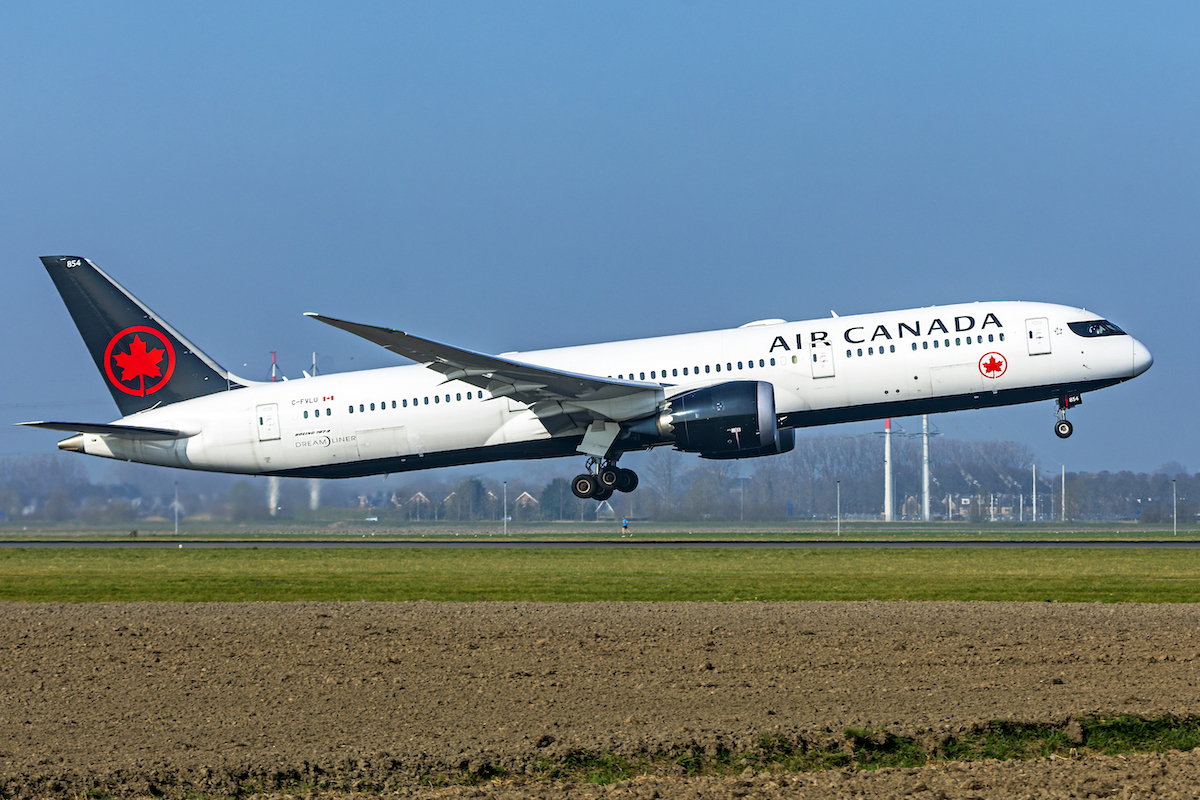
An Air Canada 787. (Photo: AirlineGeeks | William Derrickson)
Air Canada and the union representing more than 5,200 pilots announced Saturday night they have reached a tentative agreement on a four-year contract, averting a threatened strike that could have started within days.
The preliminary deal must still be ratified by members of the Air Line Pilots Association. Air Canada (TSX: AC) said contract terms will remain confidential until the ratification vote, which is expected to take place within a month, and approval of the Air Canada board of directors. Ratification requires approval by a majority of the voting membership.
ALPA said the tentative agreement will deliver an additional $1.9 billion of value for pilots over the length of the contract.
“After several consecutive weeks of intense round-the-clock negotiations, progress was made on several key issues including compensation, retirement, and work rules. This agreement, if ratified by the pilot group, would officially put an end to our outdated and stale decade-old, ten-year framework,” said Charlene Hudy, chair of the Air Canada Master Executive Council who works as a first officer at Air Canada.
A moratorium on either side implementing pressure tactics was set to end on Sunday if there was no resolution to the 15-month labor dispute, allowing the pilots to give three-days’ notice for a threatened strike.
Business groups and Air Canada in recent days asked the government of Canada to intervene and force binding arbitration in the absence of a late agreement. Industry trade associations had warned that a work stoppage at Air Canada, which carries cargo in the belly hold of passenger planes and on six Boeing 767-300 freighters, would harm agricultural, manufacturing and medical supply chains that rely on air transport to move time-sensitive goods.
Air Canada Cargo had stopped accepting specialized types of cargo as the week went on so that customers wouldn’t be subject to having shipments stranded in their network if the airline had to halt operations due to a strike.
One of the main sticking points was the pilots’ interest in achieving wages comparable to U.S. counterparts. Air Canada said it previously offered a 30% wage hike.
Editor’s Note: This story first appeared on FreightWaves.
AirlineGeeks.com was founded in February 2013 as a one-person blog in Washington D.C. Since then, we’ve grown to have 25+ active team members scattered across the globe. We are all here for the same reason: we love deep-diving into the fascinating realm of the airline industry.
Presque Isle has always been one of the more expensive subsidy contracts in the lower 48 and that continues to be true with JetBlue. When United served the airport, its annual subsidy rate for the most recent contract was just over $10.8 million a year. For JetBlue, it’s just over $10.4 million for the first year and just over $11.2 million for the second year.
United served the community of Presque Isle 12 times a week with 50-seat CRJ-550s, meaning it had about 600 seats a week offered to passengers. JetBlue has once-daily flights on board the E190 which seats 100, meaning the airline offers 700 seats a week.
Plus, after the first year of service, JetBlue will be retiring its Embraer E190 aircraft and will begin to serve Presque Isle with the larger and much more modern Airbus A220 which seats 140. Once they go up to that larger aircraft, it will have 980 seats a week.
Day of the Flight
On the day of the flight, I connected from another JetBlue flight so I was in Boston with more than enough time, which also meant I didn’t have to go through security again, and this is true for every flight out of the airport as all gates are now connected on the secure side thanks to a bus and pathways. A couple of hours before the flight, the airline started setting up the podium, balloons, cupcakes, and lemonade.
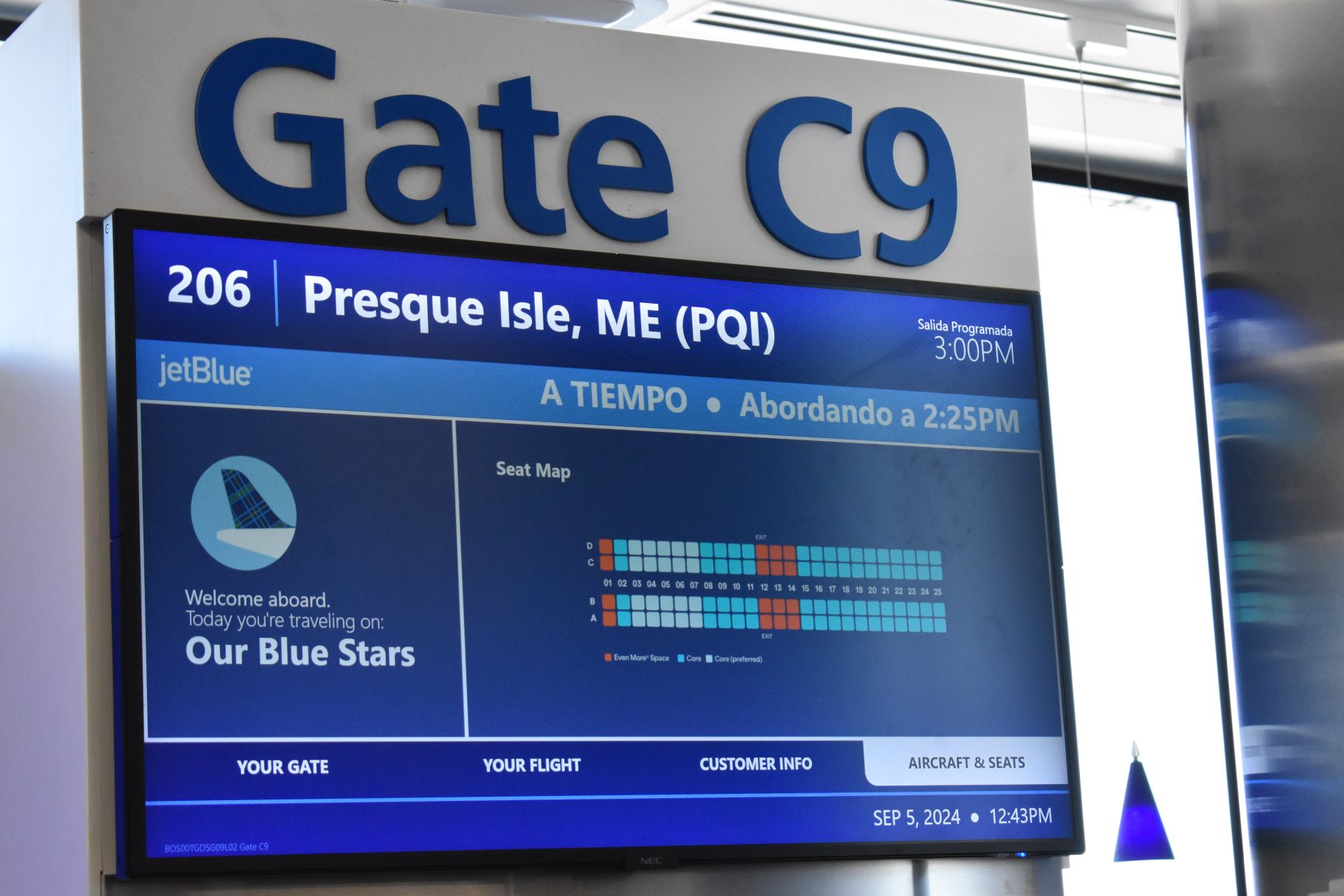
JetBlue’s departure board for the inaugural flight to Presque Isle (Photo: AirlineGeeks | Joey Gerardi)
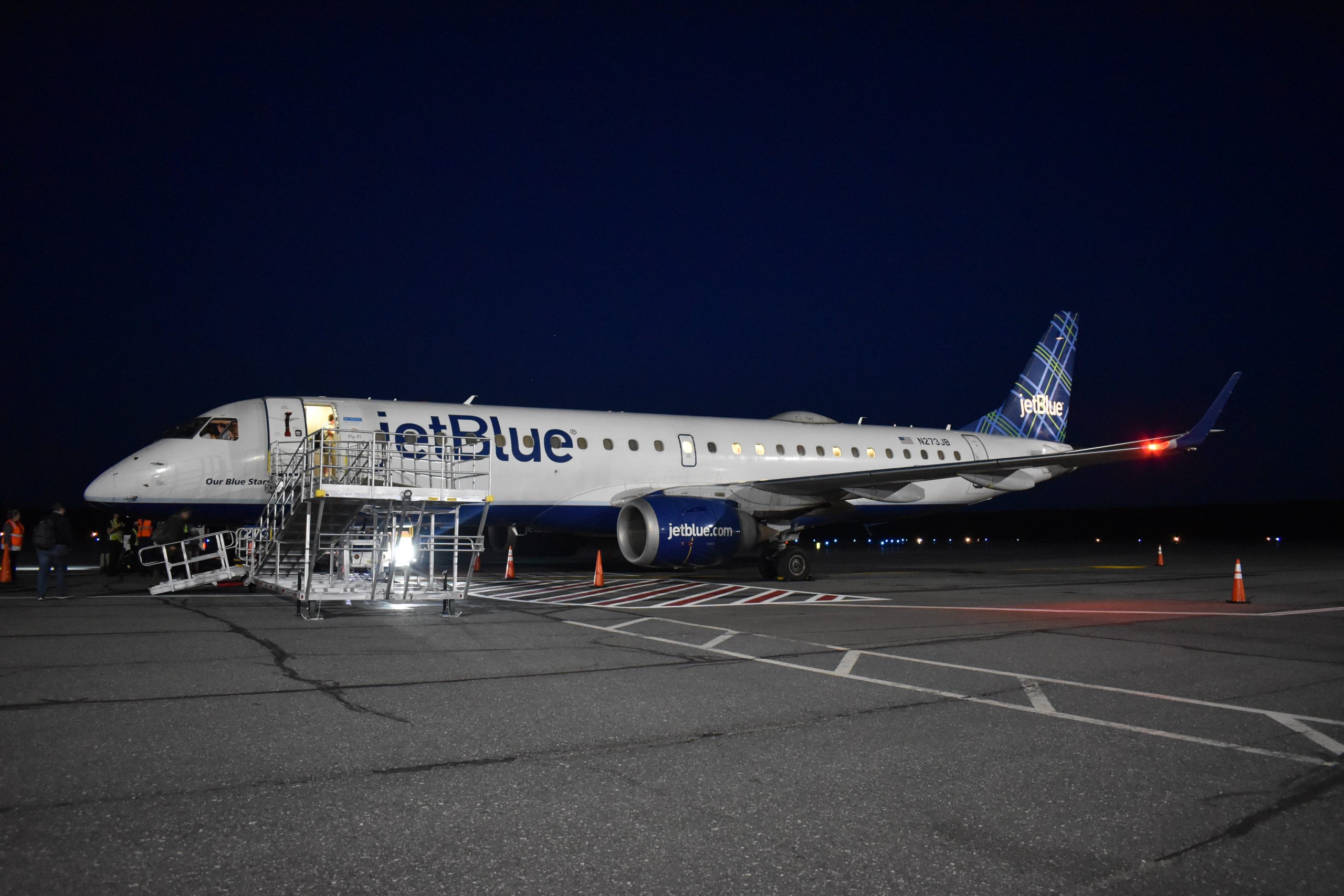
The carrier pulled our plane over from the hangar as it had been sitting in Boston since the night before. It was an Embraer E190 that carried the registration of N273JB and was delivered to the airline in June of 2007. JetBlue was the launch customer for the Embraer E190.
About an hour or so before departure, there were speeches, as well as a giveaway which JetBlue does at the start of all of their flights to new destinations. They pulled two seat numbers out of a hat and gave two random passengers round-trip tickets to any of its destinations.
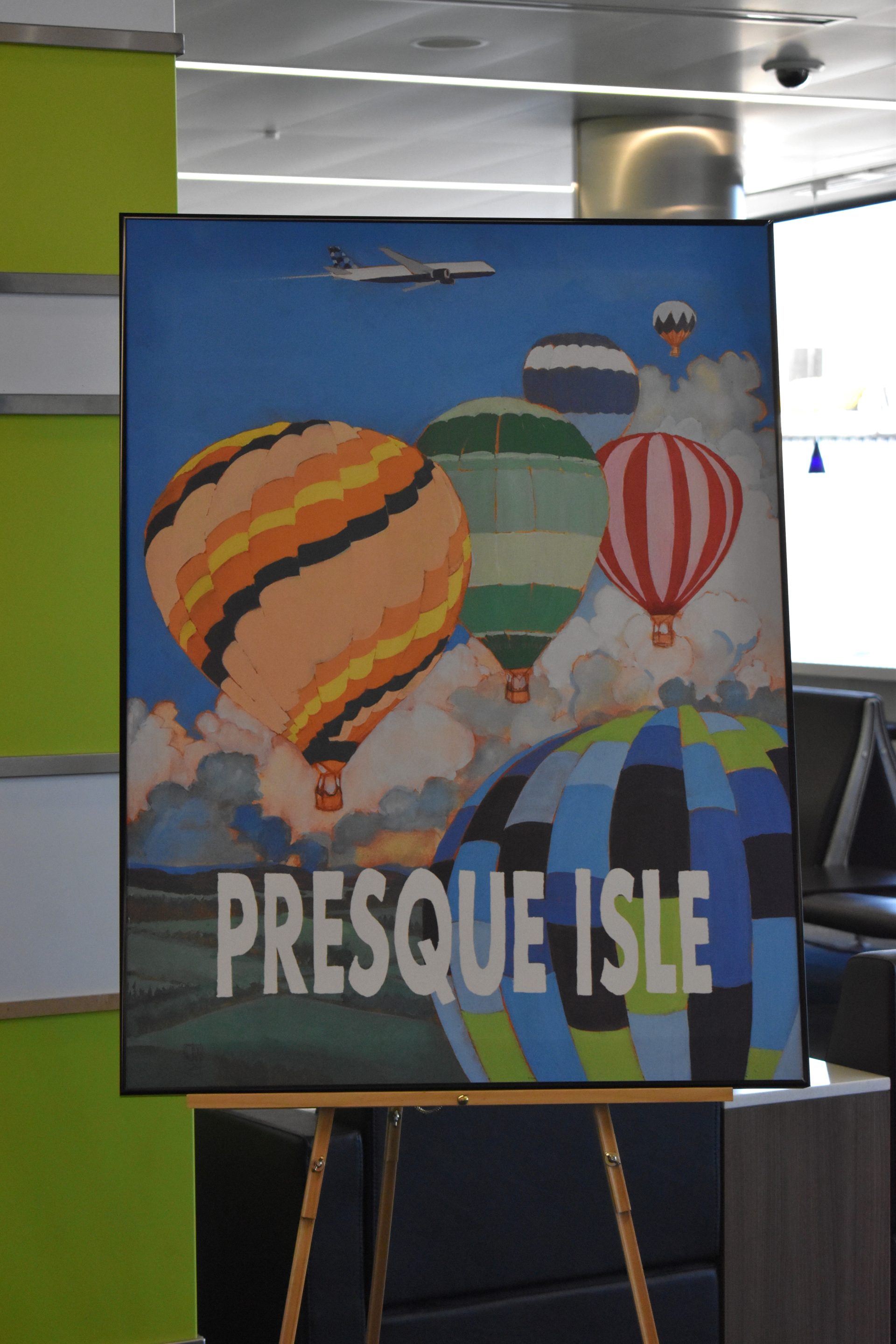
The painting JetBlue commissioned for the first flight to Presque Isle (Photo: AirlineGeeks | Joey Gerardi)
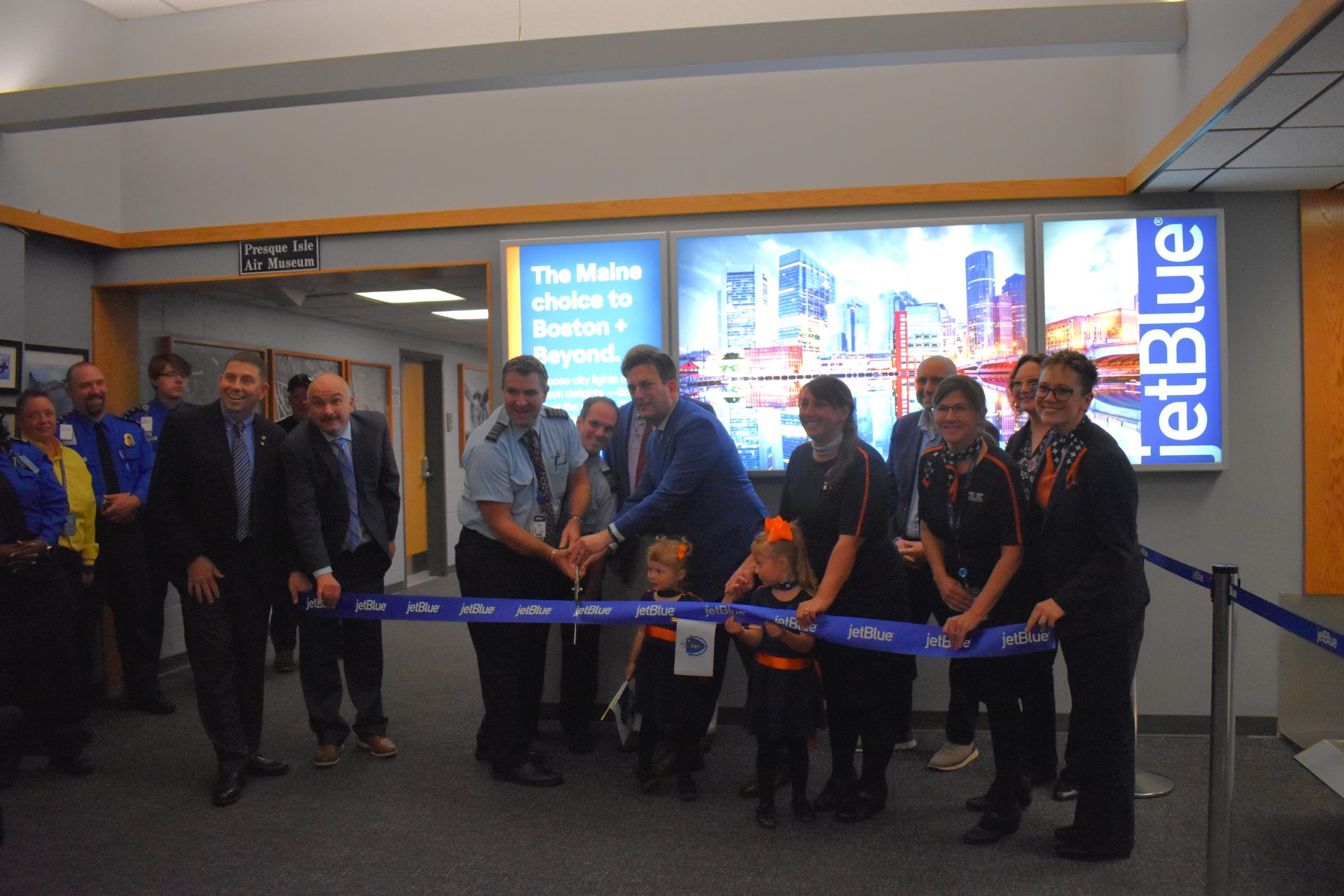
Up at the podium was also a painting that the airline commissions for every new destination. There was also a ribbon-cutting just before boarding the aircraft, and I even managed to snag part of the ribbon for my collection.
A ribbon cutting in Boston for JetBlue’s inaugural to Presque Isle (Photo: AirlineGeeks | Joey Gerardi)
On board, the airplane was laid out in the typical 2-2 configuration just like all of the carrier’s E190 aircraft. The IFE and interiors also haven’t been updated since they were delivered to the airline in the early 2000s.
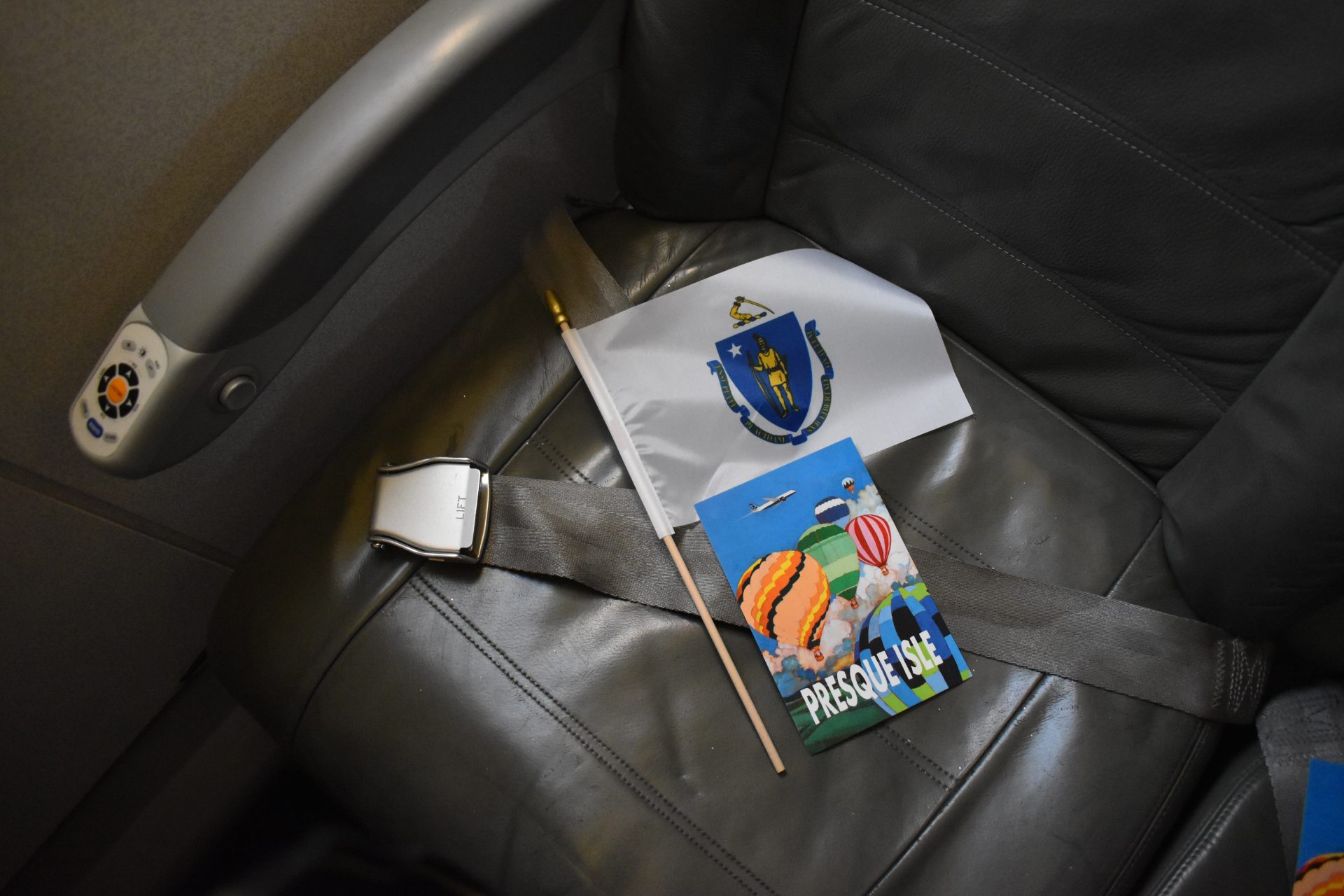
At everyone’s seat was a flag as well as a postcard that was a miniature version of the painting out in the gate area. My seat was 18D, a window on the right side of the aircraft. Pushback and takeoff with a special message from the pilot, and some of the flight attendants, a handful of which were from the northern Maine region or had a connection to the area, making it an extra special flight for them.
A flag and a postcard on all of our seats when we got onto the aircraft (Photo: AirlineGeeks | Joey Gerardi)
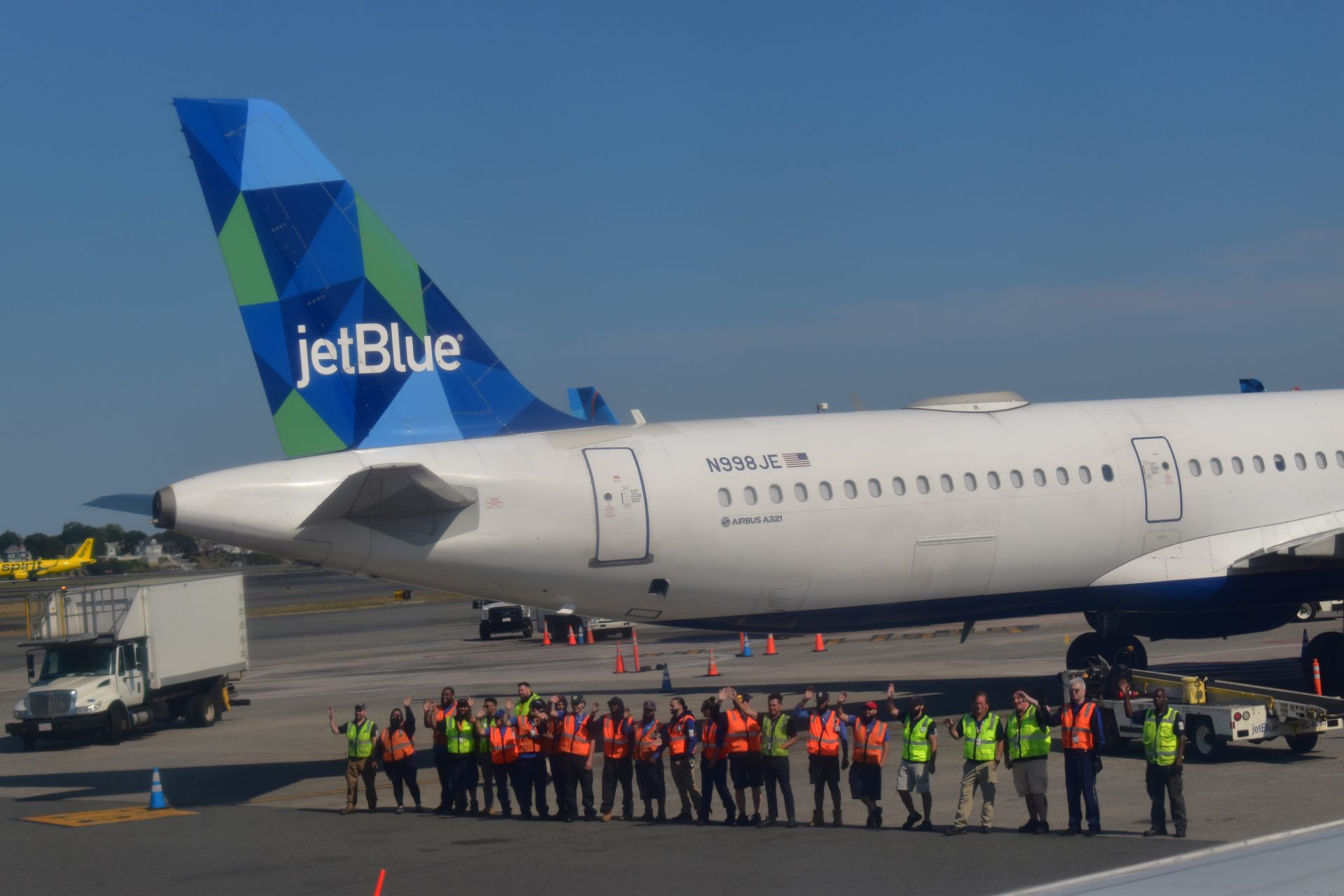
While we were taxiing out, there was a line of about 20 to 30 JetBlue employees waving us off on our inaugural flight which was a nice touch, especially being that this is such a small city. After a couple of minutes of taxiing, we took to the skies and turned north towards JetBlue’s first Essential Air Service community.
JetBlue employees waving at us as we taxied out (Photo: AirlineGeeks | Joey Gerardi)
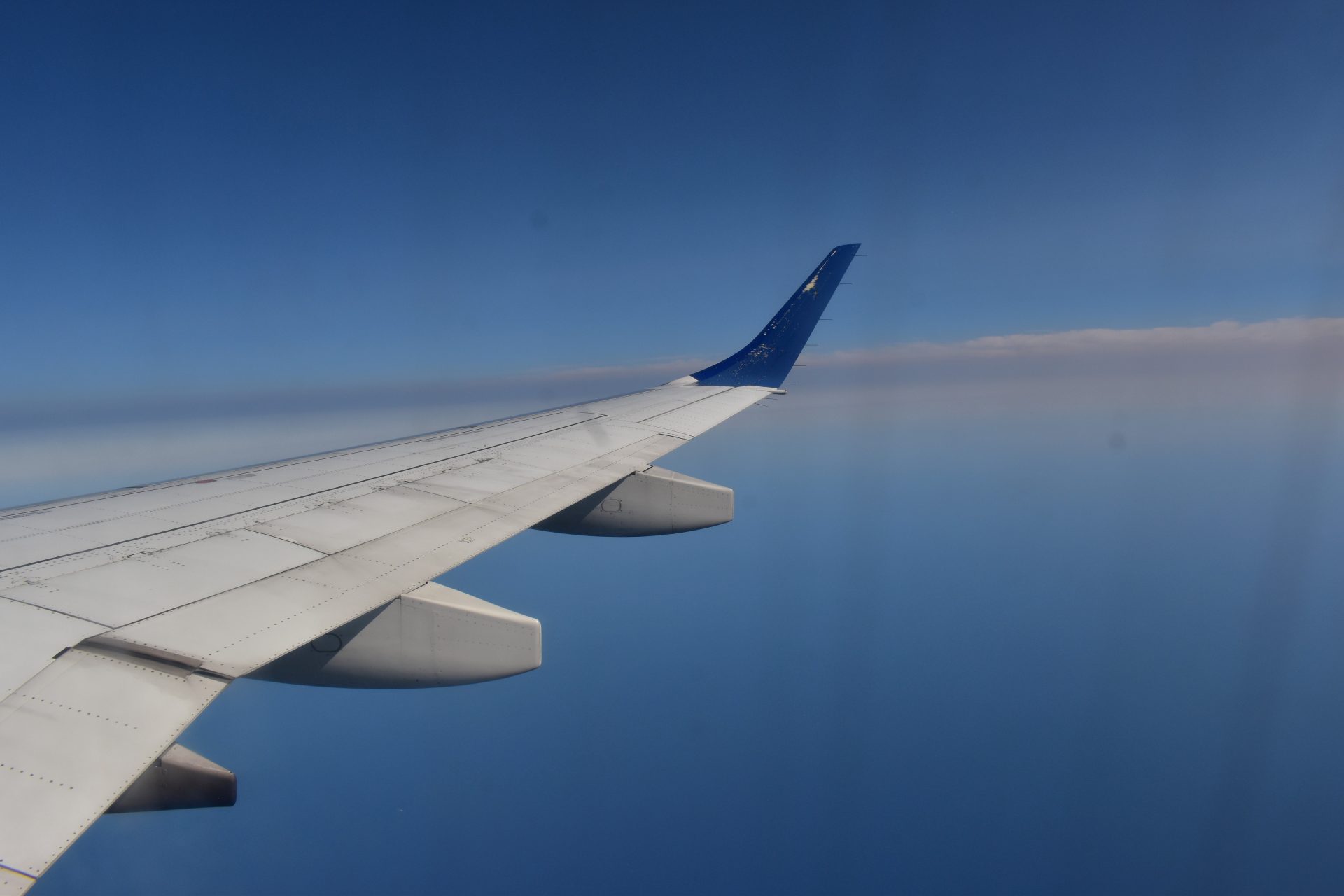
Once in the air, the crew started their famous JetBlue service of brand-named snacks, and I chose pop chips, as well as pretzels. Midflight there wasn’t much in terms of celebrations, but that didn’t matter as it was such a short flight with it being under an hour. We passed over the Maine coastline as well as a few other small airports along the way.
Flying over the water towards Presque Isle (Photo: AirlineGeeks | Joey Gerardi)
It wasn’t long before we were landing in Presque Isle. The airport uses a CTAF which is common for small airports and stands for common traffic advisory frequency, and essentially means that aircraft say where they are and what they are doing on a frequency so everybody can hear it, versus somebody in a tower telling them where to go and what to do.
JetBlue in Presque Isle for the first time (Photo: AirlineGeeks | Joey Gerardi)
We landed in Presque Isle, Maine at 4:10 p.m. local time after just 53 minutes of flying from Boston.
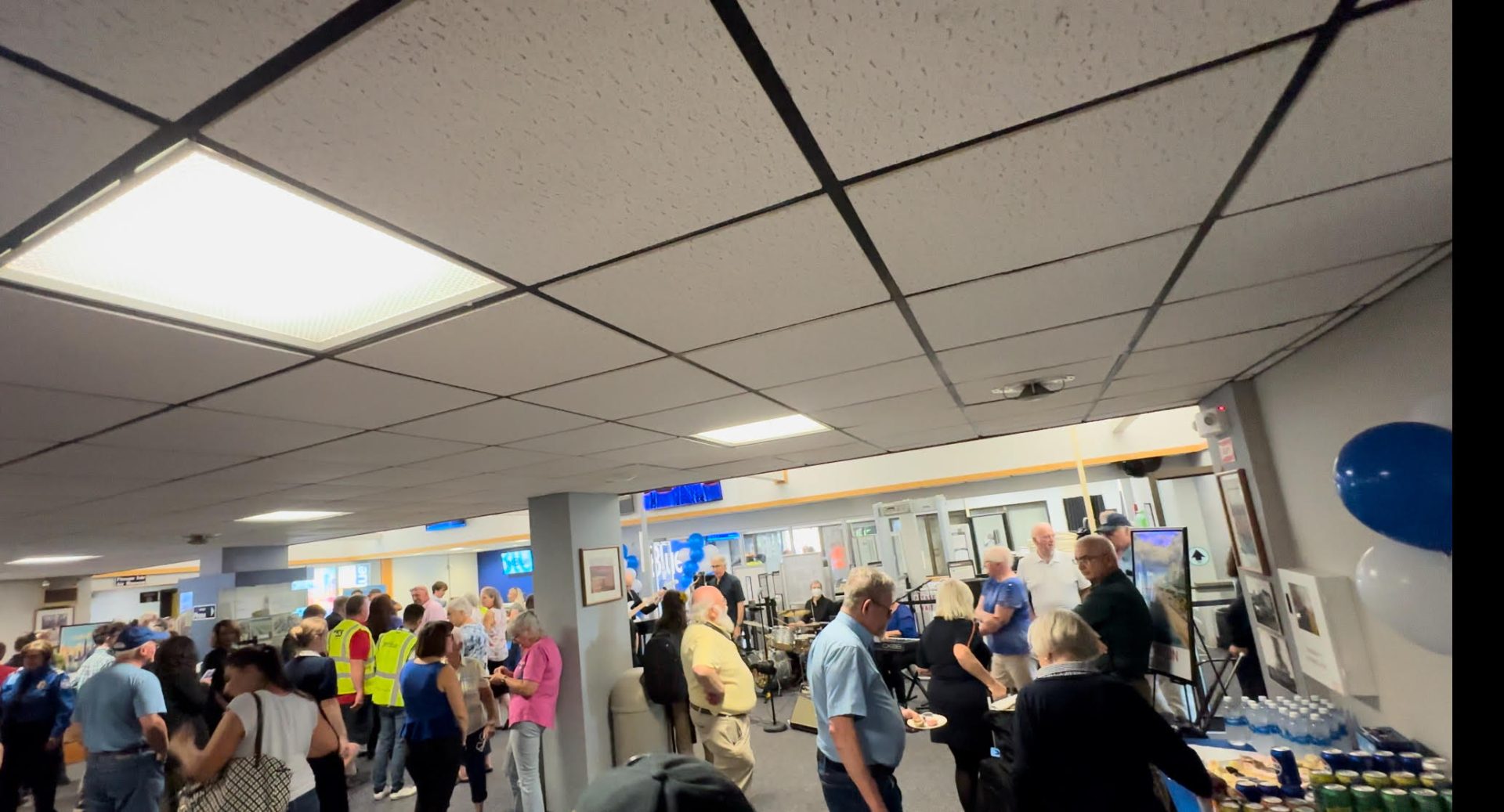
When we got inside the terminal, there was an even bigger party than there was in Boston. However, that does make sense, as this is the first mainline-sized aircraft to have scheduled service to the airport here since 1979, the year right after the Airline Deregulation Act was put into effect.
A band at the inaugural party in Presque Isle (Photo: AirlineGeeks | Joey Gerardi)
They gave every passenger getting off a goodie bag, and inside of it was maple syrup made in northern Maine, potato chips made in northern Maine, JetBlue mints as well as a t-shirt, a hat, chapstick, and a small pin that says Maine as well, and they even had a band.
The party in Presque Isle for the JetBlue inaugural (Photo: AirlineGeeks | Joey Gerardi)
There were also two different food tables with everything ranging from soda and dessert to hot food and sandwiches. This was a major party put on by a small community and it was so fun to attend with the terminal absolutely packed with excited travelers and locals as well. Given that it wasn’t in the secure area of the airport anyone from the town could attend and it definitely looked like a handful did.
A bunch of people spoke here as well, including leaders from the city of Presque Isle, the county, as well as the airline. The speeches lasted roughly 30 minutes, and following that they had another ribbon cutting. Once all of the speeches were over and the party started to disperse, it was about 5:40 p.m., and I went to my hotel to get some sleep for the flight back to Boston early the next morning.
The ribbon cutting in Presque Isle (Photo: AirlineGeeks | Joey Gerardi)
The Next Day
The next morning, I arrived about an hour and 15 minutes before departure time. Even though it is a small city, you still need to obey the airline’s cut-off time for check-in as those apply everywhere they operate no matter the size of the airport.
Presque Isle airport the morning of my flight (Photo: AirlineGeeks | Joey Gerardi)
The check-in area looked just like any other JetBlue counter, just a lot smaller in size, and is probably the smallest ticket counter area in its network. Security had a pre-check lane, which is always a good thing even in small airports where lines are nonexistent.
My seat back to Boston was 8D, which was a window towards the front of the aircraft although the window was a bit misaligned, and sat farther forward.
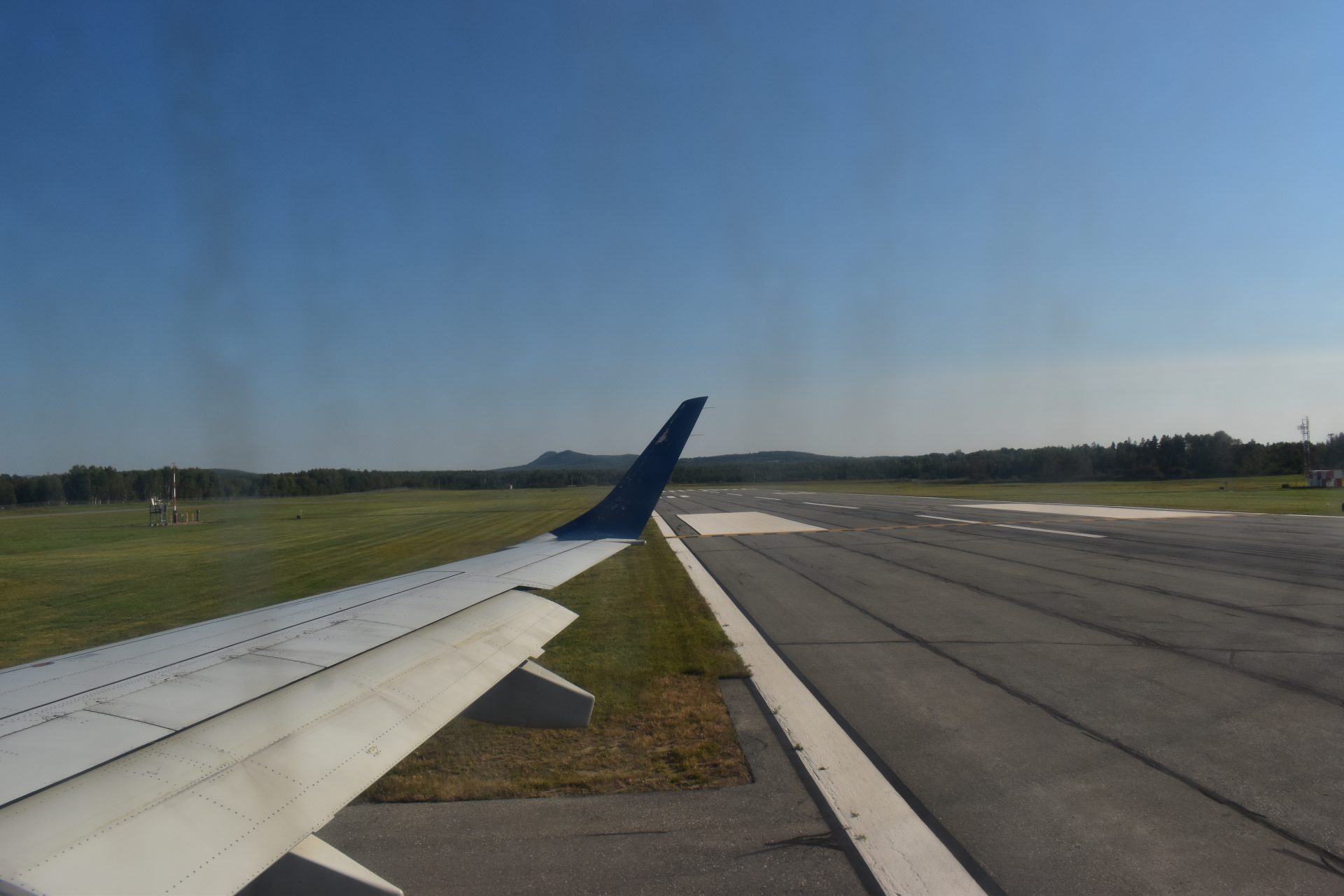
The pilot made another special announcement for this inaugural departure out of Presque Isle. We took to the sky and flew directly south towards Boston. The return flight was also uneventful and was just like any other JetBlue flight in its network.
Taking off out of Presque Isle, south towards Boston (Photo: AirlineGeeks | Joey Gerardi)
We landed at Boston just after 7 a.m. following just over an hour and three minutes flight time, and taxied into the gate for an on-time arrival. Presque Isle is also known for its harsh winter weather, and United struggled with this especially operating out of Newark.
A video trip report of this flight can be found below:
Joey has always been interested in planes for as long as he can remember. He grew up in Central New York during the early 2000s when US Airways Express turboprops ruled the skies. Being from a non-aviation family made it harder for him to be around planes and would only spend about three hours a month at the airport. He was so excited when he could drive by himself, the first thing he did with his driver's license was get ice cream and go plane spotting for the entire day. He graduated from Western Michigan University in 2022 with a B.S. in Aviation Management & Operations and a Minor in Business, and currently works for a major airline in his hometown.
American Adds New Mexican Airport to Route Map
American is bolstering its Latin America network, adding another airport in Mexico to its route map starting early next year.
American is bolstering its Latin America network, adding another airport in Mexico to its route map next year. Starting on March 6, 2025, the carrier will begin flying to Tampico on Mexico’s Gulf Coast.
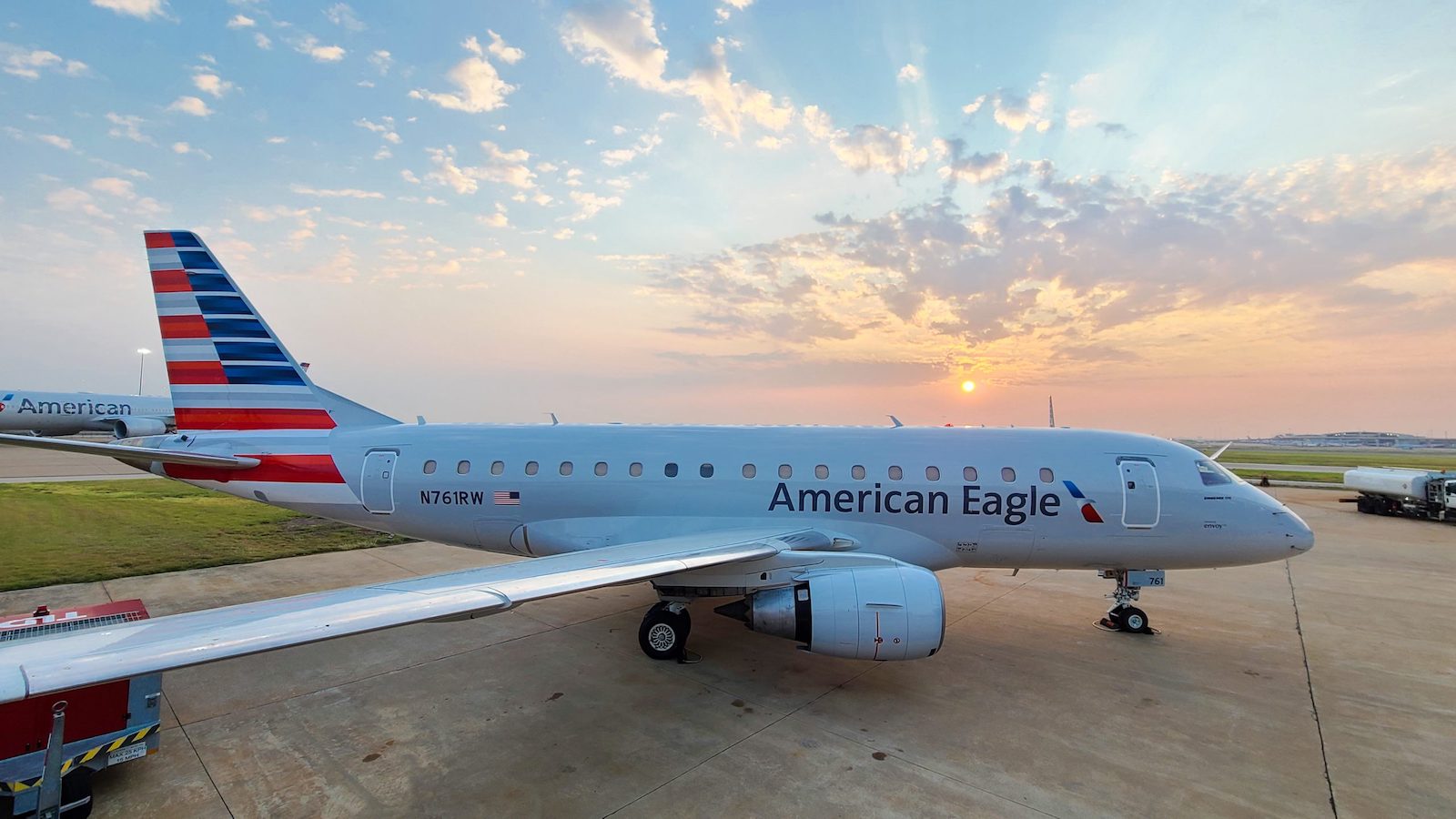
The city will be served from American’s Dallas/Fort Worth hub with daily flights. The 732-mile route will be operated by an Envoy Air Embraer E170 aircraft, per Cirium Diio schedule information.
Tampico International Airport currently sees service from a handful of Mexican carriers along with United offering flights to Houston. The airport sees roughly 600,000 passengers annually.
This is not the first time American has flown to Tampico. The airline last offered service on the same route in January 2009.
According to WFAA, Tampico will become American’s 29th destination in Mexico. Earlier this year, the carrier added service to Tulum and Tijuana.
Ryan founded AirlineGeeks.com in February 2013 and has spent more than a decade covering the airline business. His work has been featured by CNN, WJLA, CNET, and Business Insider. His aviation experience spans airport operations, Part 135 regulatory compliance, and airline crew workforce planning, along with time behind the yoke of a Cessna 172 and interviews with airline executives. Ryan now serves as Group President of Firecrown Media’s Aviation Group. He holds a B.S. in Air Transportation Management and an MBA from Arizona State University and teaches Airline Management at Embry-Riddle Aeronautical University.
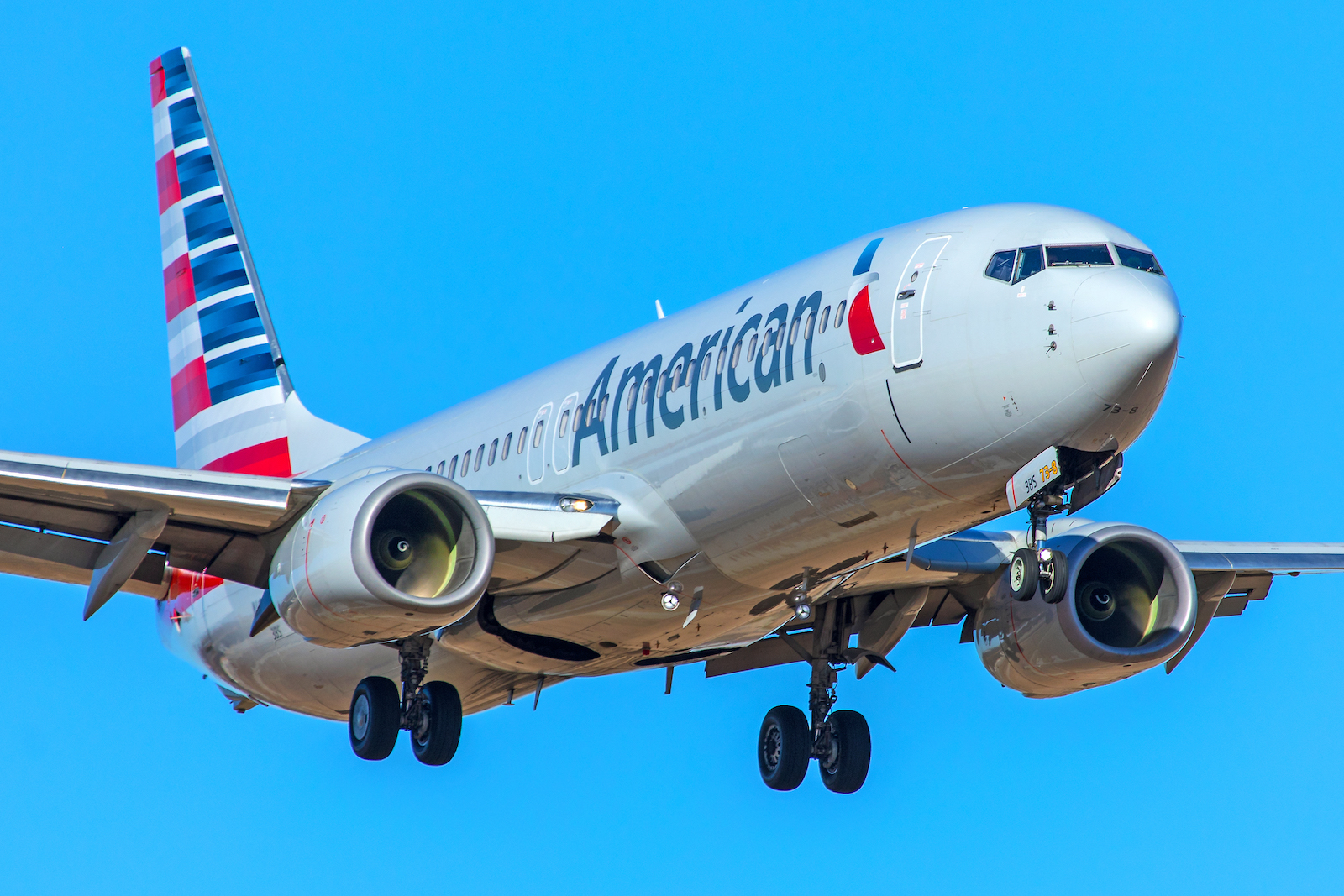
An American 737-800 landing at DFW Airport. (Photo: AirlineGeeks | William Derrickson)
American is ending more routes from Austin starting later this year. Over the last several months, the Fort Worth-based carrier has substantially reduced its point-to-point operations from the central Texas city.
Schedule data from Cirium Diio shows the airline cutting four more routes starting later this year. In November, American will end flights between Austin and Nashville, Raleigh/Durham, along with Boston.
In January 2025, the airline is removing service from Austin to Orange County/Santa Ana. A spokesperson from American confirmed the route cuts on Saturday.
“As part of the continuous evaluation of our network, American will reduce service from Austin (AUS) starting this winter,” the spokesperson said in a statement. “American will continue to offer customers access to our comprehensive global network of more than 350 destinations with one-stop connections. We’re proactively reaching out to impacted customers and apologize for any inconvenience this may cause.”
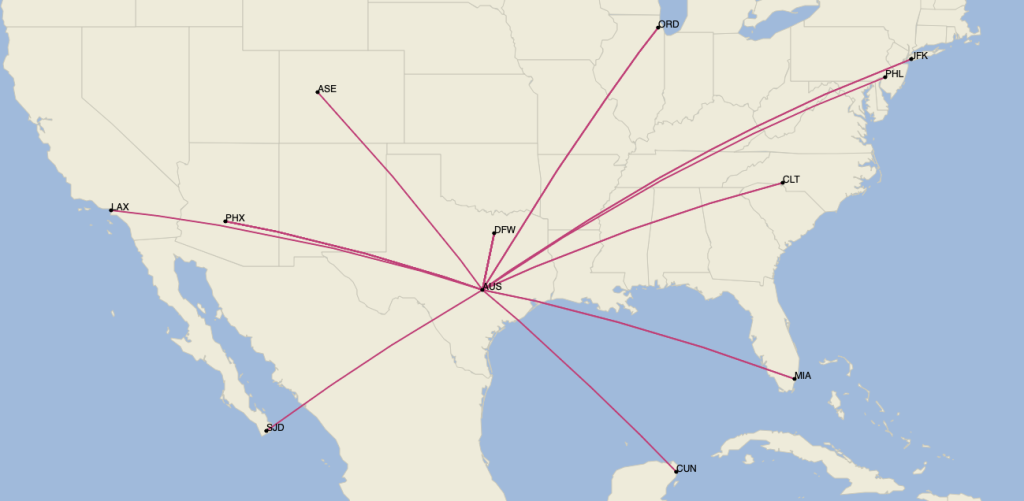
American’s February 2025 route map in Austin (Photo: Cirium Diio)
By early next year, the airline’s route map from Austin will include service to its eight hubs along with Cancun, Los Cabos, and seasonal flights to Aspen. In 2021, American planned to offer up to 100 peak-day departures from the city, a far cry from the roughly 44 in its February 2025 schedule.
Meanwhile, Delta continues to add more routes from Austin. Most recently, the carrier added service to New Orleans.
Ryan founded AirlineGeeks.com in February 2013 and has spent more than a decade covering the airline business. His work has been featured by CNN, WJLA, CNET, and Business Insider. His aviation experience spans airport operations, Part 135 regulatory compliance, and airline crew workforce planning, along with time behind the yoke of a Cessna 172 and interviews with airline executives. Ryan now serves as Group President of Firecrown Media’s Aviation Group. He holds a B.S. in Air Transportation Management and an MBA from Arizona State University and teaches Airline Management at Embry-Riddle Aeronautical University.
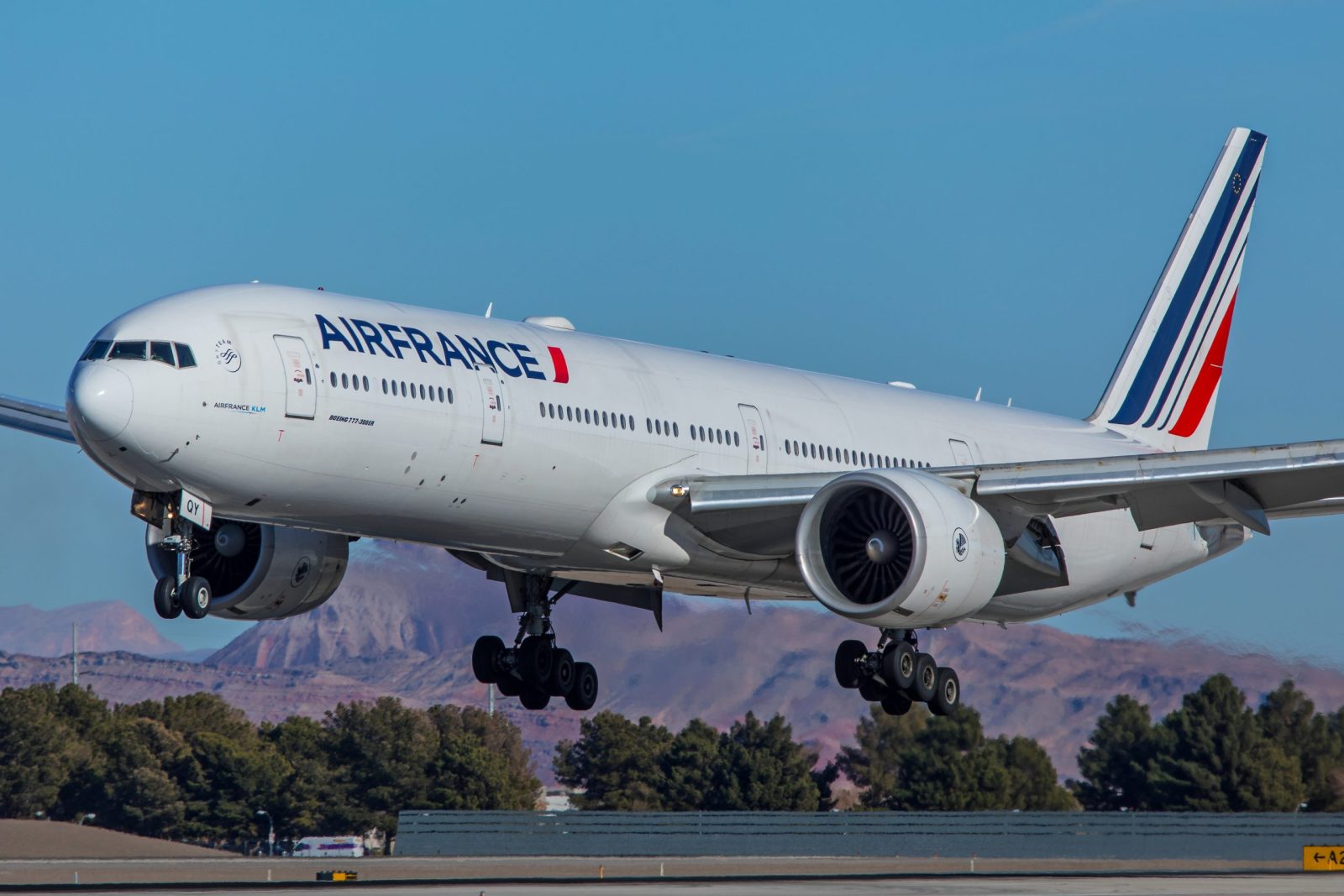
An Air France 777-300 landing (Photo: AirlineGeeks | William Derrickson)
Air France is making changes to its intercontinental schedule in the upcoming winter season, cancelling three destinations and adding Manila as its latest destination.
Route Cancellations
Services to Tokyo Narita will end in October. Air France currently flies to the airport three times a week with Boeing 777-300ERs, its biggest aircraft. The termination was expected as Air France partner airlines Air Calin pulled the connection between Noumea and Narita, which the Air France flight provided a convenient connection for the journey to Paris.
Aircalin’s first A330neo during a delivery ceremony in Toulouse (Photo: Airbus)
Air France and Air Calin have instead ramped up flights to Singapore, which will be the default connection point between the French capital and its overseas department.
Air France still maintains flights to Tokyo’s main international airport: Haneda. The airline flies two daily flights during the summer season of 2024 and plans to increase to 17 weekly frequencies next week. Both ANA and JAL fly to Paris from Haneda, the preferred airport of the city thanks to its proximity to downtown Tokyo. Air France-KLM will also still have a presence at the Narita airport with KLM flying from its hub in Amsterdam.
The airline is also pulling out of Accra, its only destination in Ghana. The airline currently flies three weekly flights on a 777-200ER between Paris and Ghana. With the termination of the flights to Accra, France and Ghana will no longer have a non-stop connection.
It coincides with the launch of a new route by Virgin Atlantic, a SkyTeam partner of Air France, from London to Accra in 2025. Air France-KLM will also maintain a connection via its Amsterdam hub, with KLM operating a daily flight to Accra.
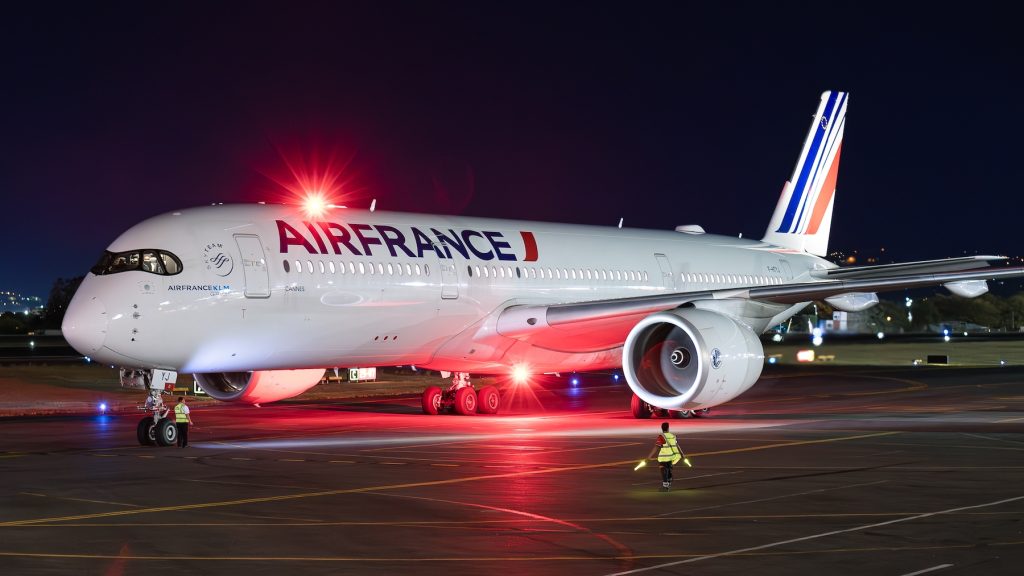
Abu Dhabi will also exit the Air France route map. After one year of connecting the city pair with a daily frequency on its A350, the airline has cancelled the service altogether. Air France has a partnership with Etihad which covers codesharing and passenger operations though its own aircraft will no longer serve the city.
Air France-KLM Group and Etihad Airways collaboration (Photo: Etihad Airways)
Interestingly, the airline was originally scheduled to ramp up capacity to the city by upgaudging to a 777-300ER, according to Aeroroutes, but has instead cancelled the route. Etihad will become the sole carrier between Abu Dhabi and Paris, operating daily.
Manila
From December 7, Air France will resume flights to Manila from Paris Charles de Gaulle with three weekly frequencies. The Filipino destination was last served by the airline in 2004, according to Aeroroutes. Air France’s sister airline KLM currently serves Manila via Taipei.
An Air France A350-900 (Photo: Shutterstock)
Air France will become the only airline serving the nonstop route. In terms of connecting carriers, Paris is connected one-stop from Manila by carriers including Qatar Airways, Etihad, Emirates, Singapore Airlines, Cathay Pacific, and soon Malaysia Airlines with its launch of a Paris route.
Anthony is an aviation enthusiast who grew up around the world from St. Louis to Singapore, and now lives in Amsterdam. He loves long-haul flying and finds peace in the sound of engine cruising. He aspires to share his passion for the sky though writing and providing another angle on the stories.
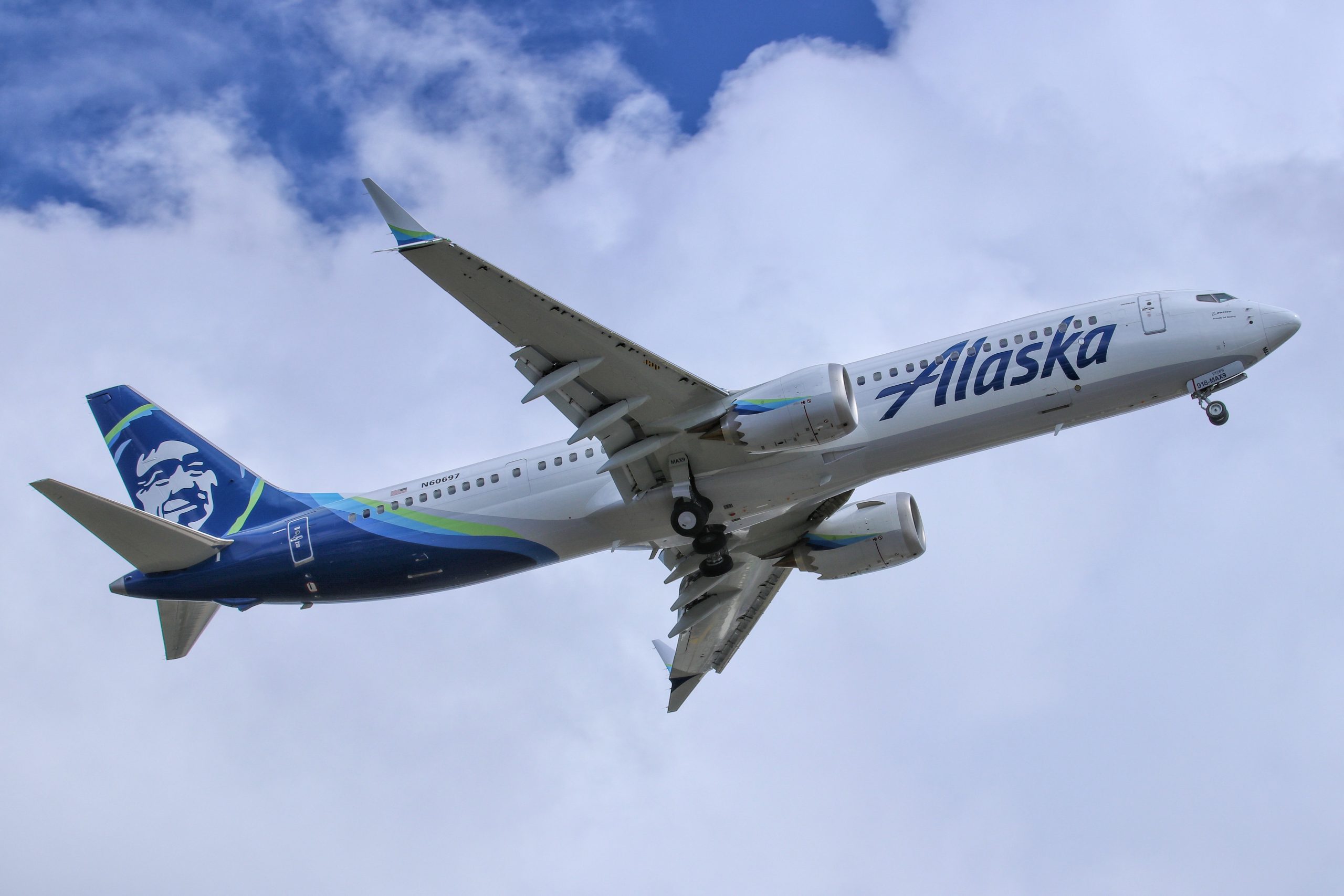
An Alaska Airlines 737 MAX 9 on a test flight at Paine Field.
(Photo: AirlineGeeks | Katie Zera)
Both the Federal Aviation Administration (FAA) and National Transportation Safety Board (NTSB) are investigating a runway incursion that took place Thursday morning in Nashville, Tenn. The incident involved a Los Angeles-bound Alaska Boeing 737 MAX 9 and Southwest 737-700 headed for Jacksonville.
According to reports, the Alaska flight was cleared to depart from Nashville International Airport’s runway 13 before rejecting the takeoff at a ground speed of roughly 100 knots. The Southwest flight was cleared to cross the same runway while taxiing for departure.
“The crew of Alaska Airlines Flight 369 discontinued their takeoff because Southwest Airlines Flight 2029 was cleared to cross the end of the same runway at Nashville International Airport. The Alaska Airlines crew reported blown tires during braking,” an FAA spokesperson told Times Now in a statement.
The NTSB also confirmed that it is investigating the incident.
No injuries were reported as a result of the incursion. Photos on social media show the Alaska aircraft with deflated tires, likely due to the hot brake temperatures.
The FAA is investigating a potential near collision that occurred between an Alaska Airlines Boeing B737MAX9 aircraft (N919AK) and a Southwest Airlines Boeing 737-700 aircraft in Nashville.
The Alaska Airlines deflated the tires in the act of aborting the take-off, to avoid a… pic.twitter.com/RibsttbyH6
Just a day before, the FAA published a statement on its website that said serious runway incursions were trending down during the first half of 2024. The agency stated that serious runway incursion rates (Category A and B) decreased by 62% compared to the same period last year.
Ryan founded AirlineGeeks.com in February 2013 and has spent more than a decade covering the airline business. His work has been featured by CNN, WJLA, CNET, and Business Insider. His aviation experience spans airport operations, Part 135 regulatory compliance, and airline crew workforce planning, along with time behind the yoke of a Cessna 172 and interviews with airline executives. Ryan now serves as Group President of Firecrown Media’s Aviation Group. He holds a B.S. in Air Transportation Management and an MBA from Arizona State University and teaches Airline Management at Embry-Riddle Aeronautical University.
Air Canada is planning to add two new routes to the United States next summer, with one of them being the American airport’s only international flight.
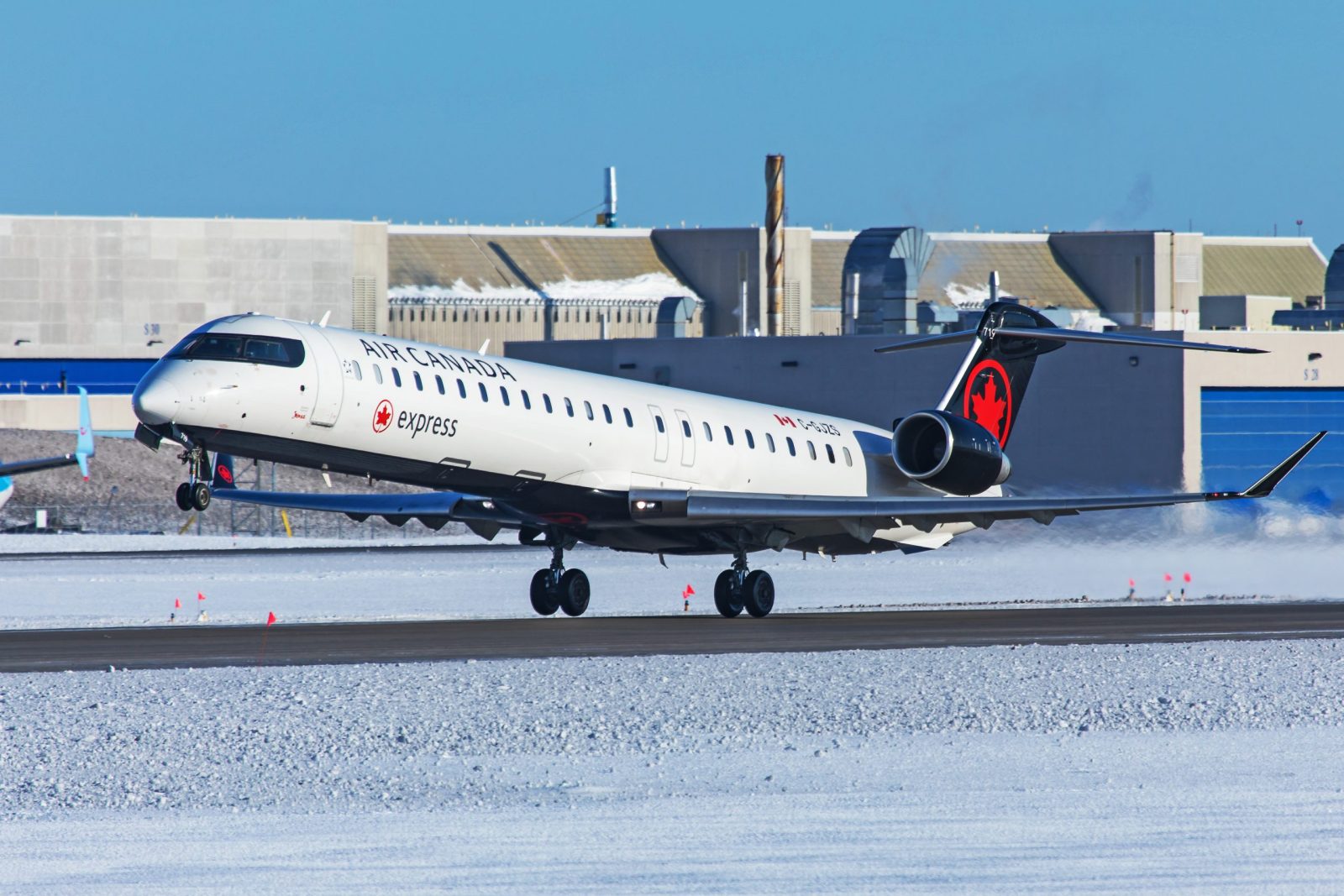
An Air Canada Express Bombardier CRJ-900 operated by Jazz Aviation. (Photo: AirlineGeeks | William Derrickson)
Air Canada is planning to add two new routes to the United States next summer, with one of them being the American airport’s only international flight.
As reported by Ishrion Aviation on X, Air Canada will begin daily service between Toronto Pearson International Airport (YYZ) and Jacksonville International Airport (JAX) on May 22, 2025. On the same day, the airline will also start daily flights between Montréal–Trudeau International Airport (YUL) and Cincinnati/Northern Kentucky International Airport (CVG).
Both routes are slated to be operated under the Air Canada Express brand by regional carrier Jazz Aviation. The airline will use Bombardier CRJ-900 aircraft configured with 76 seats: 12 business class seats and 64 economy class seats.
The route between Toronto Pearson and Jacksonville will be the U.S. airport’s only international service. However, passengers will clear U.S. Customs and Border Protection processing at Toronto Pearson’s preclearance facility, meaning that they will arrive in Jacksonville as domestic passengers. Air Canada last served Jacksonville between 2015 and 2019.
The carrier’s new Montreal–Cincinnati route will supplement Air Canada’s existing service between Toronto and Cincinnati. That route is currently operated twice daily using Jazz’s Bombardier CRJ-900s.
Andrew is a lifelong lover of aviation and travel. He has flown all over the world and is fascinated by the workings of the air travel industry. As a private pilot and glider pilot who has worked with airlines, airports and other industry stakeholders, he is always excited to share his passion for aviation with others. In addition to being a writer, he also hosts Flying Smarter, an educational travel podcast that explores the complex world of air travel to help listeners become better-informed and savvier travelers.
United to Offer Free Starlink Wi-Fi on All Aircraft
United has made a significant leap forward in inflight connectivity, announcing a partnership with SpaceX to bring Starlink's internet service to its fleet.
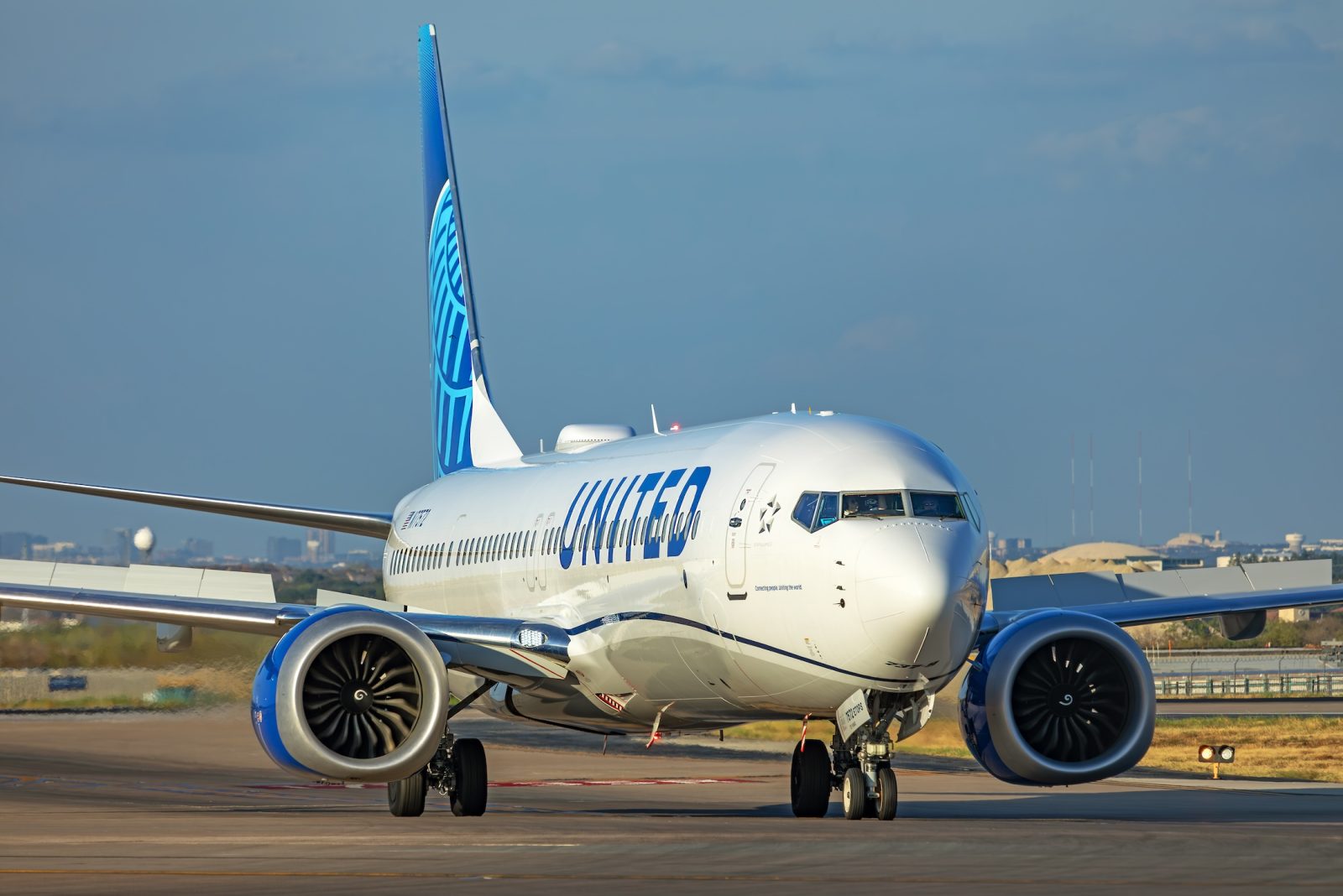
A United 737 MAX 9 aircraft (Photo: AirlineGeeks | William Derrickson)
United has made a significant leap forward in inflight connectivity, announcing a partnership with SpaceX to bring Starlink’s high-speed internet service to its entire fleet. The agreement will provide passengers with Wi-Fi access from gate to gate.
With the new partnership, United becomes the first major U.S. airline to utilize Starlink Wi-Fi. Latvia’s airBaltic uses the technology on its fleet of Airbus A220s, while JSX leverages it on the carrier’s Embraer aircraft.
The airline says that Starlink’s satellite technology will deliver speeds comparable to those on the ground, allowing passengers to stream movies and TV shows, browse the internet, play games, and more without interruptions. The service will be available on both seatback screens and personal devices.
United plans to equip both its mainline and regional fleets with Starlink over the next few years. Testing is scheduled to begin in early 2025, and the carrier says passengers can expect to see the new technology onboard flights late next year.
“Everything you can do on the ground, you’ll soon be able to do onboard a United plane at 35,000 feet, just about anywhere in the world,” said United CEO Scott Kirby in a news release. “This connectivity opens the door for an even better inflight entertainment experience, in every seatback – more content, that’s more personalized. United’s culture of innovation is, once again, delivering big for our customers.”
Starlink’s low Earth orbit satellites offer coverage even in remote areas. The service will be particularly beneficial for those traveling to or from international destinations, where traditional Wi-Fi options may be limited, United notes.
The airline says Starlink Wi-Fi will be free on its flights, joining Delta and JetBlue who also offer complimentary inflight connectivity.
Ryan founded AirlineGeeks.com in February 2013 and has spent more than a decade covering the airline business. His work has been featured by CNN, WJLA, CNET, and Business Insider. His aviation experience spans airport operations, Part 135 regulatory compliance, and airline crew workforce planning, along with time behind the yoke of a Cessna 172 and interviews with airline executives. Ryan now serves as Group President of Firecrown Media’s Aviation Group. He holds a B.S. in Air Transportation Management and an MBA from Arizona State University and teaches Airline Management at Embry-Riddle Aeronautical University.
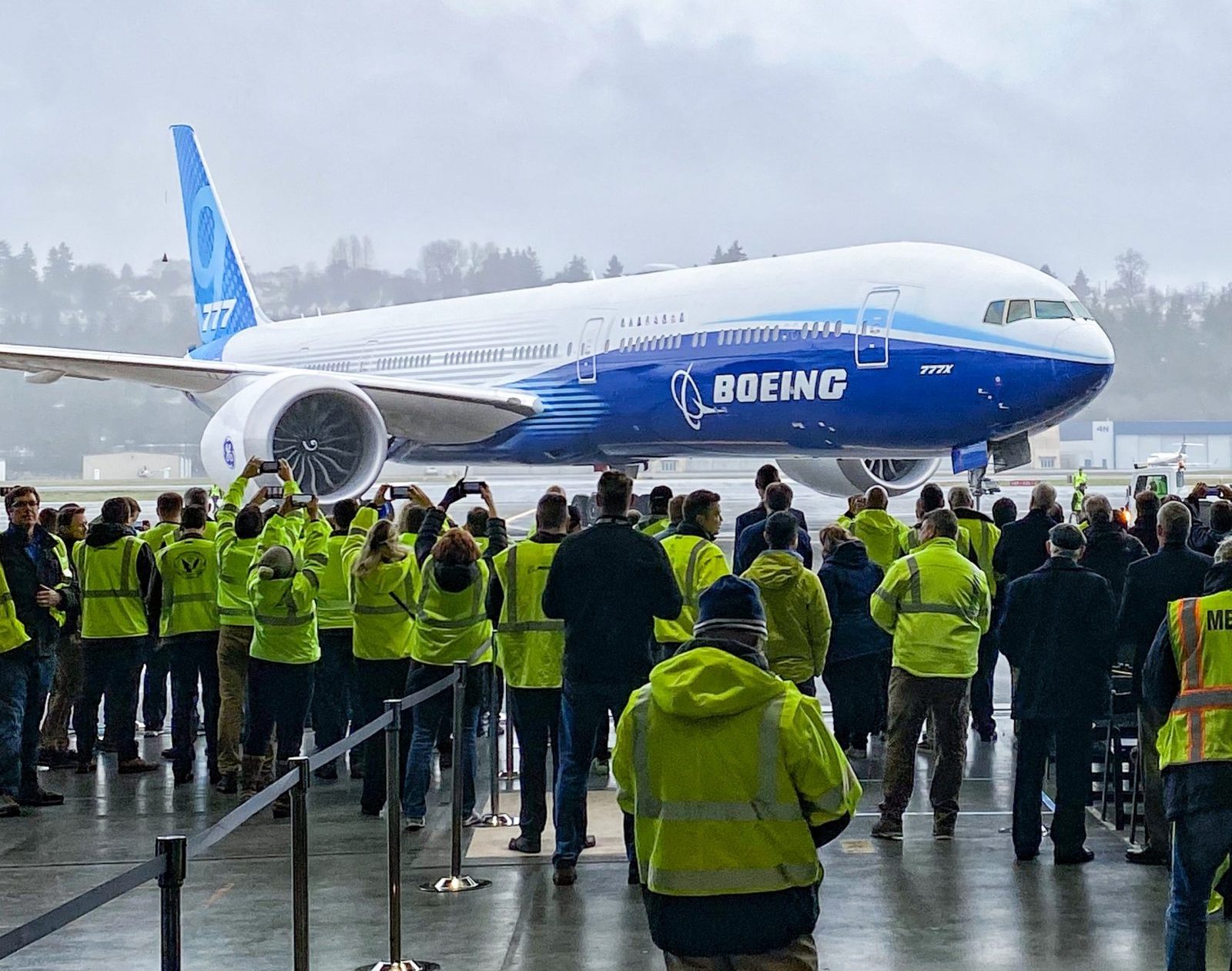
Boeing employees celebrate the launch of the company's 777X (Photo: AirlineGeeks | Katie Zera)
More than 30,000 aerospace workers at Boeing will walk off the job Friday after a large majority of them rejected a tentative contract.
The International Association of Machinists and Aerospace Workers announced the result on its website late Thursday night after vote tabulation was completed. More than 94% of union members voted and 96% of them voted against the deal.
The union said its negotiating team will “regroup and begin planning the next steps on securing an agreement that our membership can approve.”
IAM chief Jon Holden said earlier this week that the tentative deal was the best contract the union has ever negotiated.
Union leaders and Boeing reached a tentative agreement on Sunday, but rank-and-file machinists immediately expressed unhappiness with it. The last contract was ratified 16 years ago. On Monday, workers rallied outside Boeing’s widebody aircraft plant in Everett, Washington.
One of the biggest issues is pay. Boeing is offering a wage increase of 25% over four years, but union members say it doesn’t include their current yearly bonus. Boeing will also put more matching funds into a 401K retirement plan, but won’t restore a pension plan that machinists used to have and gave up in an earlier negotiation. The collective bargaining agreement would also change mandatory overtime so workers will be required to work overtime and weekends less often and it puts in a floating vacation holiday. Workers will also be able to progress through different job responsibilities more easily.
Workers also complain that the wage increase isn’t high enough, that the pension wasn’t restored and that Boeing’s promise to build a future aircraft type in the Puget Sound region only extends for the length of the contract. Workers still feel betrayed about previous rounds of negotiations in which Boeing twice threatened to move jobs outside of Washington.
IAM District 751 strikes historically have lasted about 60 days, but the precedent of Spirt AeroSystems’ negotiated contract in June of 2023 suggests the strike could be as short as a week, Bank of America analyst Ronald Epstein said in a client note. It is likely Boeing will have to make further concessions and move closer to the IAM’s initial proposal of 40% wage gains, he added.
If a strike goes on for an extended period the delivery of aircraft and components would stop. That won’t have an immediate effect on airlines but would exacerbate the current backlog of aircraft and further limit the ability of airlines to modernize or expand their fleets to reach new markets.
A strike comes at a difficult time for Boeing, which has suffered years of losses because of regulatory restrictions following a series of accidents and mishaps, as well as concerns about manufacturing quality and the safety culture that have slowed aircraft production rates. Still, some analysts have said that a production shutdown now isn’t the worst outcome because airlines are grappling with too much capacity as travel demand wanes and aren’t as eager to receive planes as they were last year.
A 10-week walkout in 1995 cost Boeing $100 million per day. The company has lost $27 billion since 2019.
FedEx pilots in the summer of 2023 rejected a labor deal negotiated by union leadership and appear to have lost negotiating leverage since then. The air cargo market softened and the pilot shortfall that allowed pilots at some passenger airlines to win substantial deals eventually lessened, reducing pressure on FedEx to raise compensation beyond its target.
New Boeing CEO Robert “Kelly” Ortberg has been on the job for a little over a month.
Editor’s Note: This story first appeared on FreightWaves.
AirlineGeeks.com was founded in February 2013 as a one-person blog in Washington D.C. Since then, we’ve grown to have 25+ active team members scattered across the globe. We are all here for the same reason: we love deep-diving into the fascinating realm of the airline industry.
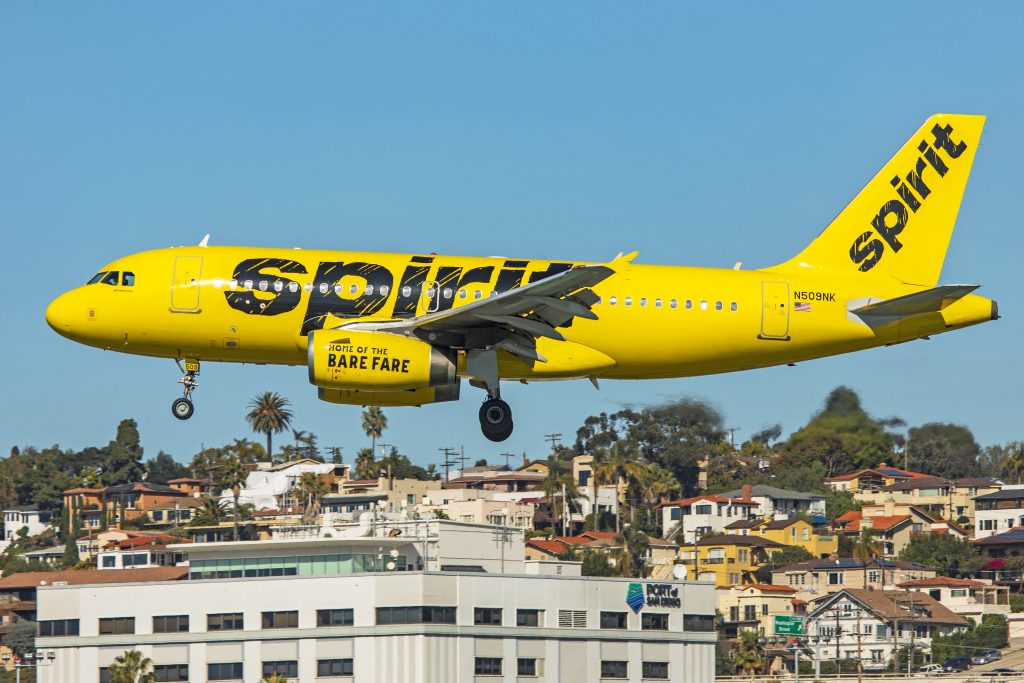
Spirit made a significant change to its livery, introducing a new yellow color scheme that is a stark departure from the traditional blue and white design.
Editor’s Note: AirlineGeeks is proud to present our ‘Livery of the Week’ series. Every Friday, a team member will share an airline livery, which can be from the past, present, or even a special scheme. Some airline liveries are works of art. The complexity associated with painting around critical flight components and the added weight requires outside-the-box thinking from designers. The average airliner can cost upwards of $200,000 to repaint, creating a separate aircraft repainting industry as a result.
Have an idea for a livery that we should highlight? Drop us a line.
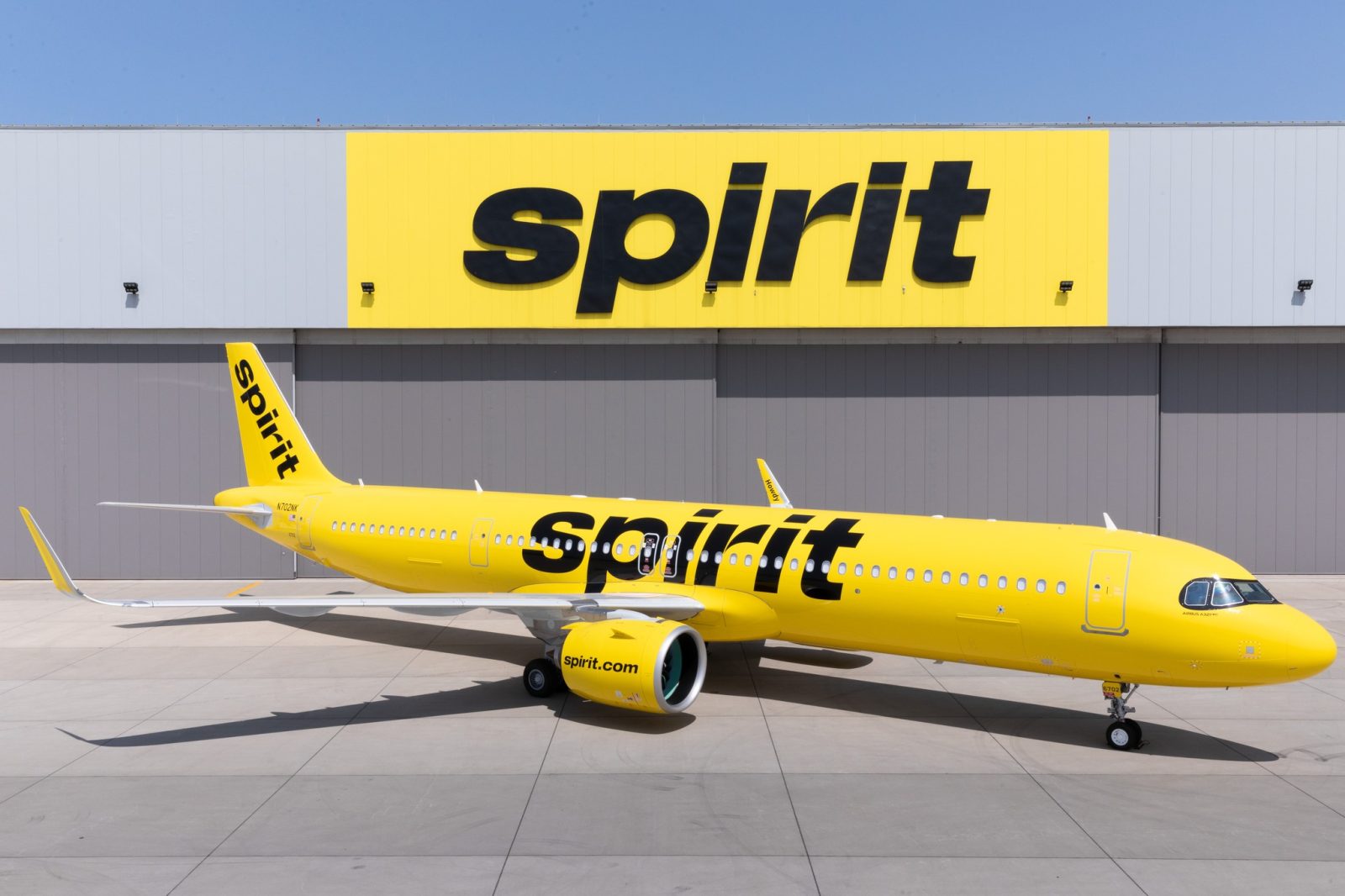
In 2014, Spirit Airlines made a significant change to its livery, introducing a new yellow color scheme that is a stark departure from the traditional blue and white design. This bold and bright yellow hue has generated a great deal of discussion among aviation enthusiasts and travelers alike.
The yellow livery is a striking contrast to the airline’s previous color scheme, which was known for its simplicity and clean lines. The new design features a predominantly yellow fuselage, with dark lettering on the tail and fuselage. While some have criticized the yellow livery as being too garish or attention-seeking, others have praised it for its boldness and originality.
A Spirit Airlines Airbus A319 prepares for landing. (Photo: AirlineGeeks | William Derrickson)
The introduction of the new yellow livery was part of the airline’s ongoing efforts to refresh its brand and appeal to a wider audience. The airline also made changes to its cabin interior and some of its other offerings at the time.
Looking for a new airplane model? Head over to our friends at the Midwest Model Store for a wide selection of airlines and liveries.
Ryan founded AirlineGeeks.com in February 2013 and has spent more than a decade covering the airline business. His work has been featured by CNN, WJLA, CNET, and Business Insider. His aviation experience spans airport operations, Part 135 regulatory compliance, and airline crew workforce planning, along with time behind the yoke of a Cessna 172 and interviews with airline executives. Ryan now serves as Group President of Firecrown Media’s Aviation Group. He holds a B.S. in Air Transportation Management and an MBA from Arizona State University and teaches Airline Management at Embry-Riddle Aeronautical University.