Stories

How President Biden Could Prevent a Flight Attendant Strike This Summer

Several flight attendant unions and U.S. airlines are currently in the negotiating process as they look to ink new collective bargaining agreements (CBAs).

Airline flight attendants threaten strike at Orlando picketing event (Photo: Shutterstock)

“Will my summer travel plans be disrupted because of a flight attendant strike?” I’ve gotten this question several times now. The short answer here is probably not.

But at this rate, it’s not completely impossible.

Several flight attendant unions and U.S. airlines are currently engaged in negotiations as they look to ink new collective bargaining agreements (CBAs). This process is governed by Section 6 of the Railway Labor Act (RLA), a 1920s-era law that regulates labor relations for both railroads and air carriers. In a nutshell, the RLA prioritizes mediation to avoid the effects of a potential labor action on interstate commerce.

The National Mediation Board (NMB) – a federal agency – is in a sense ‘the administrator’ for the RLA. If a union and company are unable to reach an agreement through regular negotiations, the NMB can step in, if requested by either party, to facilitate discussions in an effort to reach a tentative agreement.

Many labor disputes don’t even make it to the NMB and it is rather rare for parties to exhaust the board’s mediation process. Still, it has happened before, and it could happen again.

Roughly 28,000 American Airlines flight attendants – represented by the Association of Professional Flight Attendants (APFA) – are at this juncture. After several years of negotiating, the union and company are being called in by the NMB next week for a ‘last ditch’ attempt at a deal.

With such little progress being made and both parties saying they are still ‘far apart’ on several issues, it is difficult to imagine the NMB forcing the parties into additional mediated sessions. So, what happens next?

The RLA stipulates that if the NMB releases the parties from mediation for ‘self-help,’ it triggers a 30-day cooling-off period, during which time, both parties are prohibited from taking any self-help actions, such as a strike or lock-out. The NMB may proffer final and binding arbitration to both parties as a next step in the resolution process. However, if either party rejects arbitration, the 30-day cooling-off period clock continues ticking.

The NMB might then move to advise President Biden of the impasse between the parties and recommend the establishment of a Presidential Emergency Board (PEB) if it believes that a strike could inflict severe harm on the economy and interstate commerce.

Biden did this with the freight rail workers in 2022, so presidential intervention isn’t uncharted territory for the current Administration. Even so, the parties are not compelled to accept the PEB’s recommendations and would be free to exercise self-help at the end of the PEB’s process.

Following failure of the PEB process, Congress can also step in to pass legislation resolving the dispute, however, this is rare on the airline front. Again, this did resolve the rail workers’ dispute two years ago, which was on the verge of a strike action.

American flight attendants have gone on strike before in 1993. That strike resulted in mass cancellations just days before Thanksgiving. And of course at the time, American was a much smaller airline than it is today. But four days into the strike, President Clinton stepped in and successfully persuaded the parties to return to the table for final and binding arbitration, effectively ending the action.

Biden could certainly help broker a deal in this case, too, although it’s an election year, and he’s one of the most pro-union presidents in recent decades.

Assuming these so-called last-ditch mediation sessions fail next week, Biden will be left with some tough decisions to make and each one carries enormous political ramifications.

On one side, Biden could block a vocal labor group from striking as a pro-union candidate. On the other, he could risk economic harm, even if the world’s largest airline were to shut down for just a day.

Ryan Ewing

Ryan founded AirlineGeeks.com in February 2013 and has spent more than a decade covering the airline business. His work has been featured by CNN, WJLA, CNET, and Business Insider. His aviation experience spans airport operations, Part 135 regulatory compliance, and airline crew workforce planning, along with time behind the yoke of a Cessna 172 and interviews with airline executives. Ryan now serves as Group President of Firecrown Media’s Aviation Group. He holds a B.S. in Air Transportation Management and an MBA from Arizona State University and teaches Airline Management at Embry-Riddle Aeronautical University.

Allegiant 737 MAX Service Entry Slips to Q4

Ultra-low-cost carrier Allegiant is once again delaying its Boeing 737 MAX entry into service, this time by nearly three months into Q4 2024.

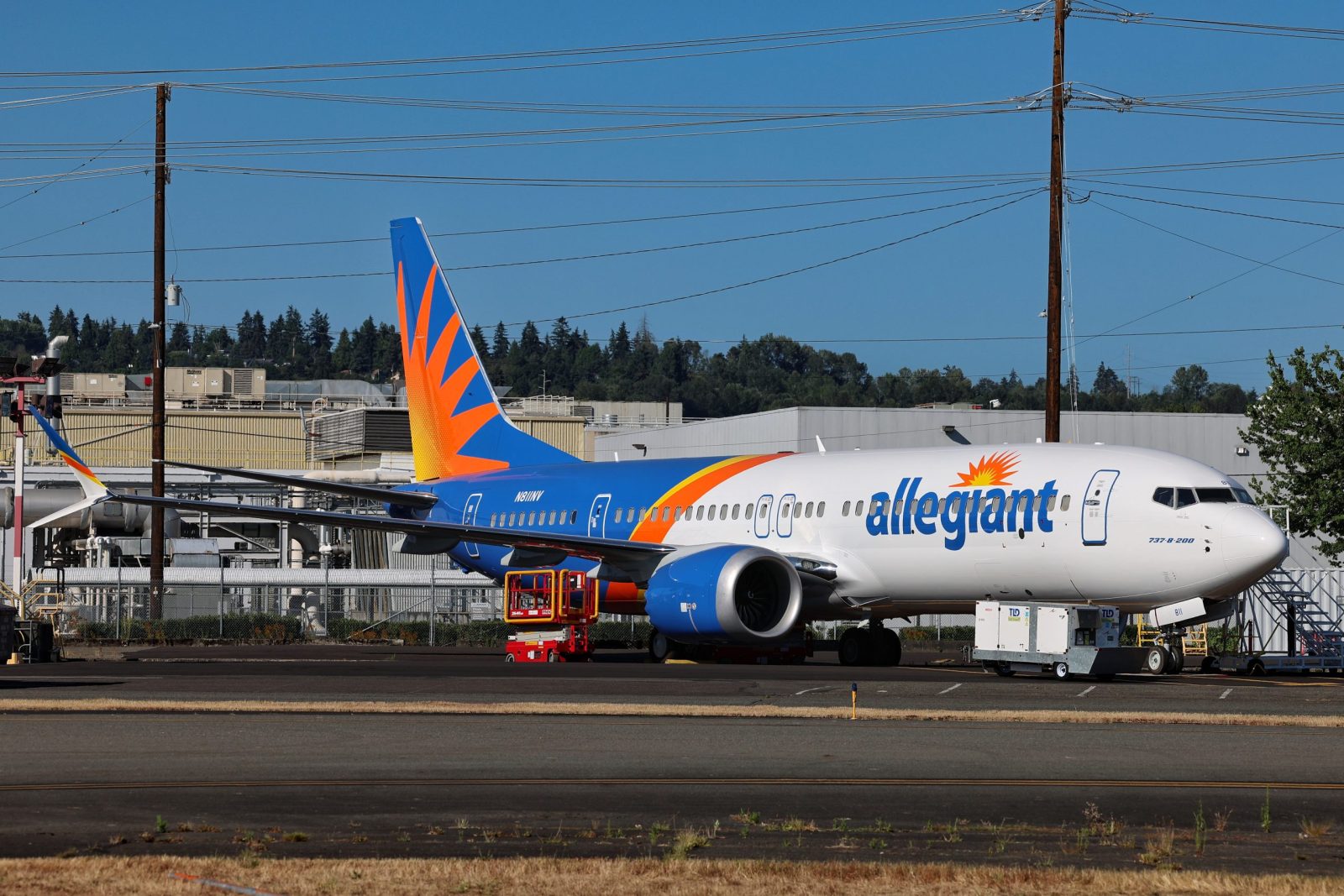
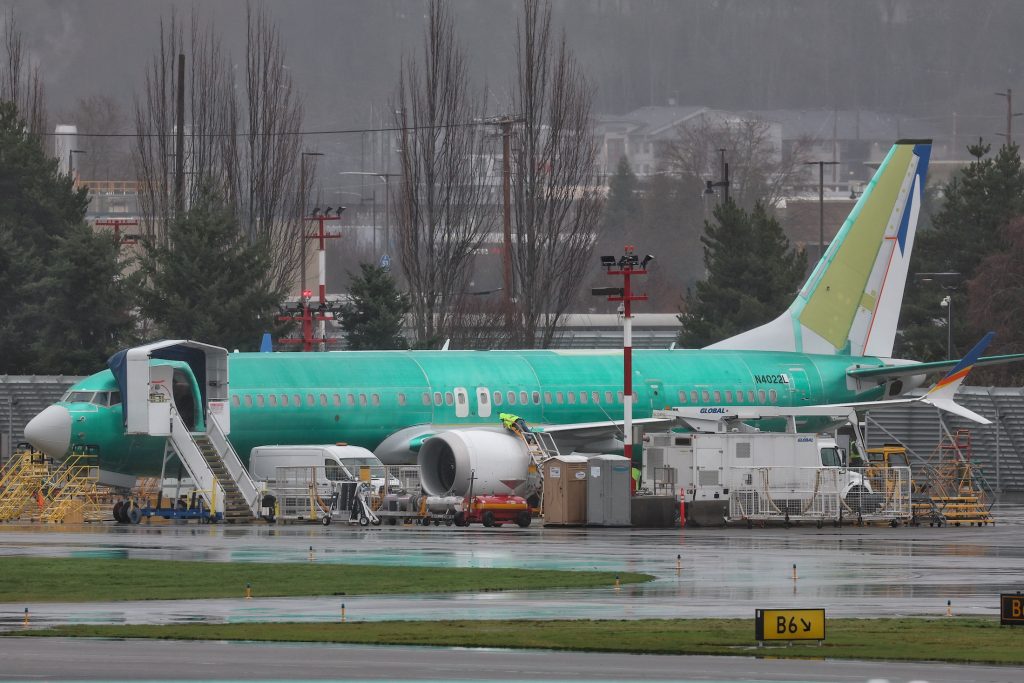
An Allegiant Boeing 737 MAX on a test flight in Washington State (Photo: AirlineGeeks | Katie Zera)

Allegiant is once again delaying its Boeing 737 MAX entry into service, this time by nearly three months. During its Q1 2024 earnings call, the ultra-low-cost carrier (ULCC) initially expected to begin revenue service with the new aircraft by Q3, however, this has slipped to Q4.

According to this weekend’s Cirium Diio schedule update, Allegiant 737 MAX service is now slated for early October, delayed from August. The aircraft’s first scheduled flight is set for October 2.

Earlier this year, the carrier announced that it would cut its Boeing delivery estimates in half with expectations for six 737 MAXs instead of 12. Allegiant currently operates an all-Airbus fleet.

The Las Vegas-based airline planned to receive its first MAX in January 2024, but slowdowns in production and delivery at the manufacturer have created mounting delays. Allegiant has up to 130 Boeing 737 MAX 7 and 737 MAX 8200 variants on order, according to Aviation Week.

“We are updating our delivery expectations and planning the business for delivery of six aircraft this year rather than the 12 previously communicated,” added the airline’s finance chief Robert Neal during a first-quarter earnings call. Neal noted that these were not based on forecasts by Boeing, but rather on the airline’s “best estimate.”

In the latest schedule update, the 737 MAXs will initially fly from the airline’s Orlando Sanford base, replacing older A319 and A320 aircraft. The new jets will feature 190 seats.

Ryan Ewing

Ryan founded AirlineGeeks.com in February 2013 and has spent more than a decade covering the airline business. His work has been featured by CNN, WJLA, CNET, and Business Insider. His aviation experience spans airport operations, Part 135 regulatory compliance, and airline crew workforce planning, along with time behind the yoke of a Cessna 172 and interviews with airline executives. Ryan now serves as Group President of Firecrown Media’s Aviation Group. He holds a B.S. in Air Transportation Management and an MBA from Arizona State University and teaches Airline Management at Embry-Riddle Aeronautical University.

Mesa Sells Six CRJ-900s, Transitions Some E175s to SkyWest

Mesa Airlines announced that it completed the sale of six CRJ-900s; the carrier will also be transitioning several E175s to SkyWest.

Mesa CRJ-900
A Mesa Airlines CRJ-900 in Phoenix. (Photo: Shutterstock | Robin Guess)

Mesa Airlines announced that it completed the sale of six CRJ-900s and 10 associated engines as part of its Regional Aircraft Securitization Program (RASPRO). The batch is part of 15 surplus aircraft and 30 powerplants set to go to two unnamed third parties.

In Q1 2024, the Phoenix-based carrier’s revenue was down 19% compared to the same period last year. The company posted a $57.9 million net loss last quarter.

The airline says it has reduced its lease purchase obligations from $50.4 million to $27.3 million as of late May.

“Addressing the RASPRO lease has been one of the top priorities for our surplus asset sale efforts over the past year-and-a-half,” said Jonathan Ornstein, Mesa’s Chairman and CEO, in a press release. “This is a significant financial obligation that we are putting behind us, and we are increasingly able to prioritize the future of the company for our investors and people. We look forward to enhancing our focus on returning to profitable performance and executing other strategic actions while closing the remaining transactions related to the RASPRO assets in the coming months.”

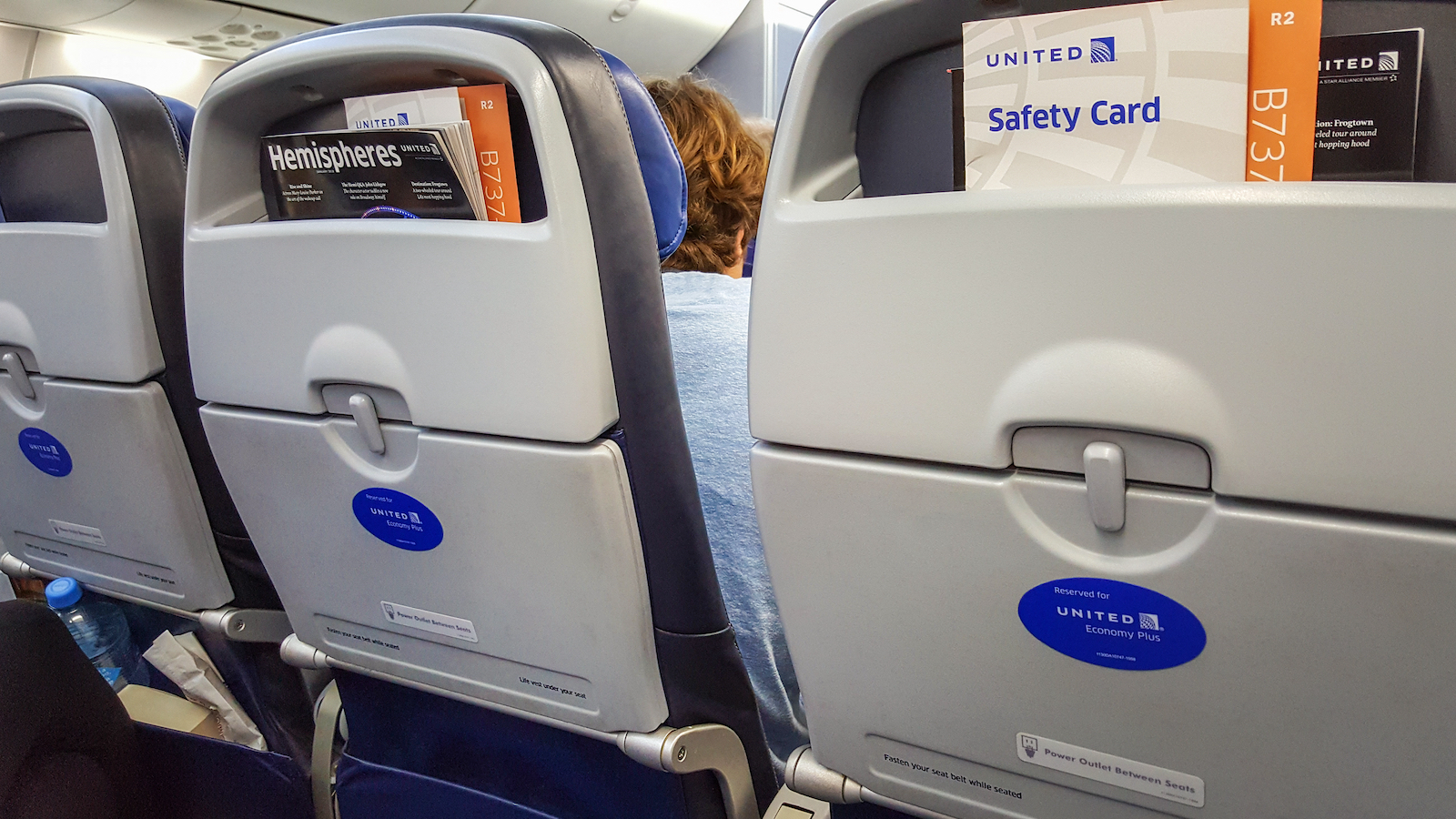
Mesa has 69 active aircraft in its fleet, including 17 CRJ-900s and 52 Embraer E175s. After ending its contract with American in early 2023, the regional carrier exclusively flies under the United Express brand.

In February 2024, Mesa and DHL ‘mutually agreed’ to end their partnership, citing a reduction in cargo demand. Mesa had operated two 737-400s for DHL since 2020.

Transitioning E175s to SkyWest

In its Q1 2024 earnings call, fellow regional operator SkyWest announced that it would receive 20 additional E175s owned by United. The carrier’s commercial chief Wade Steel said these jets would come from another United Express carrier, but did not specify which.

“During the quarter, we announced a new flying agreement for 20 United-owned E175s to replace 20 CRJ200s under our United contract. These aircraft are coming from another United Express carrier,” Steel shared.

Per Cirium Fleet Analyzer data, these aircraft appear to be coming from Mesa. So far this year, nine E175s have been transitioned from Mesa to SkyWest.

The Utah-based regional carrier says it expects to transition all 20 E175s by the end of the year.

Ryan Ewing

Ryan founded AirlineGeeks.com in February 2013 and has spent more than a decade covering the airline business. His work has been featured by CNN, WJLA, CNET, and Business Insider. His aviation experience spans airport operations, Part 135 regulatory compliance, and airline crew workforce planning, along with time behind the yoke of a Cessna 172 and interviews with airline executives. Ryan now serves as Group President of Firecrown Media’s Aviation Group. He holds a B.S. in Air Transportation Management and an MBA from Arizona State University and teaches Airline Management at Embry-Riddle Aeronautical University.

Livery of the Week: Icelandair’s Newest Paint Scheme

Icelandair debuted a fresh look for its aircraft in 2022 as part of a wider brand refresh with the first aircraft being a Boeing 737 MAX 8.

An Icelandair Boeing 737 MAX. (Photo: AirlineGeeks | William Derrickson)

Editor’s Note: AirlineGeeks is proud to present our ‘Livery of the Week’ series. Every Friday, a team member will share an airline livery, which can be from the past, present, or even a special scheme. Some airline liveries are works of art. The complexity associated with painting around critical flight components and the added weight requires outside-the-box thinking from designers. The average airliner can cost upwards of $200,000 to repaint, creating a separate aircraft repainting industry as a result. 

Have an idea for a livery that we should highlight? Drop us a line

Icelandair debuted a fresh look for its aircraft in 2022 as part of a wider brand refresh. The new livery boasts a clean and modern design that pays homage to Iceland’s natural beauty.

An Icelandair 737 MAX (Photo: AirlineGeeks | William Derrickson)

Focus on Bold Branding

The most noticeable change is the prominent placement of the Icelandair name in a bold typeface along the aircraft’s fuselage. This shift ensures clear brand recognition at a glance.

Gone are the previous yellow and gold accents. Instead, the tails showcase the true star of the show: five different accent colors will adorn different aircraft. Each represents different natural Icelandic elements.

The rest of the aircraft is largely painted white, a pivot from the previous dark blue belly.

Icelandair 767 and 757 aircraft (Photo: Icelandair)

Gradual Rollout

The new livery is being implemented gradually across Icelandair’s fleet. The first aircraft, a Boeing 737 MAX 8 named Jökulsárlón after Iceland’s famous glacier lagoon, sported the new look in January 2022. The airline anticipates all aircraft will eventually receive the fresh coat of paint as they undergo regular maintenance.

Icelandair’s new livery is a departure from its previous design, offering a more contemporary and nature-centric look that reflects the airline’s connection to its home country.

Looking for a new airplane model? Head over to our friends at the Midwest Model Store for a wide selection of airlines and liveries.

Ryan Ewing

Ryan founded AirlineGeeks.com in February 2013 and has spent more than a decade covering the airline business. His work has been featured by CNN, WJLA, CNET, and Business Insider. His aviation experience spans airport operations, Part 135 regulatory compliance, and airline crew workforce planning, along with time behind the yoke of a Cessna 172 and interviews with airline executives. Ryan now serves as Group President of Firecrown Media’s Aviation Group. He holds a B.S. in Air Transportation Management and an MBA from Arizona State University and teaches Airline Management at Embry-Riddle Aeronautical University.

IATA Expects Record Airline Revenues in 2024

'The human need to fly has never been stronger,' IATA's Director General said during the association's annual meeting in Dubai.

An Emirates A380 arriving in London. (Photo: AirlineGeeks | William Derrickson)

The International Air Transport Association (IATA) is forecasting total airline revenues for 2024 will reach a record high of $996 billion. This week, the airline trade association held its Annual General Meeting (AGM) and World Air Transport Summit in Dubai, hosted by Emirates Airline. Director General Willie Walsh delivered his report on the air transport industry and indicated how 2024 is shaping up. “With a record five billion air travelers expected in 2024, the human need to fly has never been stronger,” said Walsh.

Recognizing the industry’s current state in relation to the recent past, Walsh said: “The expected aggregate net profit of $30.5 billion in 2024 is a great achievement considering the recent deep pandemic losses.” However, Walsh added: “That’s not a record, unfortunately, and represents a net margin of just over 3%. But considering where we were just a few years ago, it is a major achievement.”

In addition to economic statistics, Walsh reinforced safety as the number one priority of the airline industry. Regarding 2023, Walsh stated: “There were no fatal accidents among our 336 members or the 433 IOSA (IATA Operational Safety Audit) registered carriers. Globally, there was one fatal accident claiming 72 lives—a tragic reminder that safety must be earned with each and every flight.”

During his speech, Willie Walsh addressed a few of the challenges the airline industry has faced and may face in the future. He cited the decision by the government of the Netherlands to cut flights at Amsterdam’s Schiphol by at least 40,000 flights annually as “a major afront to global standards.” The Dutch government’s actions were about noise concerns, though Walsh cited the International Civil Aviation Organization’s (ICAO) Balanced Approach to Noise agreed in 2001 as a standard “enshrined in the Chicago Convention and carries the weight of law in the EU and elsewhere.”

“The Dutch paid no heed to (ICAO’s Balanced Approach to Noise) in their politically motivated effort to cut Schiphol’s slots, without consultation,” he said. “And they had no concern for the Worldwide Airport Slot Guidelines—a global standard that was never intended to accommodate such a retrograde and illegal action. We protested. And when the EU and US joined, the Dutch backed down.”

Further concern was raised at proposed changes to how airlines currently report their corporate tax, in the country where an airline is headquartered. The changes would require airlines to report “in each and every market where revenue is generated.” Addressing the proposals directly, Walsh stated: “Only the battalions of accountants needed to manage the reporting mess will be happy if the change is made. Fortunately, our arguments seem to be gaining resonance. But vigilance is needed to ensure that governments continue to understand that these value-destroying changes serve no purpose for aviation or for their economies.”

This was IATA’s 80th AGM with over 1500 attendees including airline representatives, industry leaders, and government officials. Pieter Elbers, chief executive officer (CEO) of Indian airline IndiGo, began the one-year role of Chair of the IATA Board of Governors. Elbers succeeds RwandAir CEO Yvonne Manzi Makolo as Chair, a role that Luis Gallego Martin, Chief Executive Officer, IAG (representing IBERIA) will assume at the 81st AGM in Delhi, India in June 2025.

John Flett

John has always had a passion for aviation and through a career with Air New Zealand has gained a strong understanding of aviation operations and the strategic nature of the industry. During his career with the airline, John held multiple leadership roles and was involved in projects such as the introduction of both the 777-200 and -300 type aircraft and the development of the IFE for the 777-300. He was also part of a small team who created and published the internal communications magazines for Air New Zealand’s pilots, cabin crew and ground staff balancing a mix of corporate and social content. John is educated to postgraduate level achieving a masters degree with Distinction in Airline and Airport Management. John has held the positions of course director of an undergraduate commercial pilot training programme at a leading London university. In addition he is contracted as an external instructor for IATA (International Air Transport Association) and has been a member of the Heathrow Community Fund’s ‘Communities for Tomorrow’ panel.

Cascade of Events Led to Last Year’s Austin Incursion

A series of critical events led to a near collision involving a Southwest Boeing 737 and FedEx 767 last year in Austin, Texas.

Southwest in Austin
A Southwest aircraft taxis in Austin. (Photo: Shutterstock | Ceri Breeze)

The National Transportation Safety Board (NTSB) concluded that a near-collision between a Southwest Boeing 737-700 and a FedEx Boeing 767-300 at Austin-Bergstrom International Airport last year stemmed from a combination of factors, including limitations in air traffic control technology and miscommunication.

The incident occurred on a foggy February morning in 2023. The air traffic controller, unable to see the Southwest aircraft due to dense fog, cleared both aircraft to use the same runway. While the FedEx flight was on its final CAT III ILS approach, the Cancun-bound Southwest flight was still performing an engine run-up procedure due to icing conditions. The FedEx crew narrowly avoided a collision by initiating a go-around.

“I’d first like to acknowledge that this incident could have been catastrophic, if not for the heroic actions of the FedEx crew,” NTSB Chair Jennifer Homendy said during a Thursday hearing on the incident. “As a result, none of the 131 people onboard both aircraft was injured.”

In a statement, FedEx said, “We greatly appreciate NTSB’s recognition of the heroic actions of our crewmembers in responding to the event that occurred upon landing FedEx Flight 1432 at Austin Bergstrom International Airport on February 4, 2023. We remain extremely proud of and grateful for the exemplary efforts of our flight crew in handling the situation.”

NTSB investigators pointed to the lack of surface detection equipment at the Austin airport as a major contributing factor. This technology would have provided the controller with real-time information on aircraft locations and was credited with preventing another incursion at New York’s JFK airport. The agency reiterated its recommendation to the Federal Aviation Administration (FAA) that all qualifying airports be mandated to install such systems.

The investigation also highlighted potential shortcomings in communication. The Southwest flight crew, aware of the approaching FedEx 767, did not inform the controller of the additional time needed on the runway for an engine run-up procedure. The NTSB emphasized the importance of clear communication between pilots and air traffic control, especially in low-visibility conditions.

Investigators said there was no evidence that low visibility training was ever conducted at the Austin air traffic control tower.

“One missed warning, one incorrect response, even one missed opportunity to strengthen safety can lead to tragedy and destroy public confidence in our aviation system, which is precisely why we must learn from near misses such as these,” Homendy added in a statement. “We are once again calling on the FAA to use technology to prevent runway incursions — something we’ve been doing for decades — because we must back up the humans operating in our aviation system at every level. That is how we save lives.”

As part of the FAA Reauthorization Act of 2024, the FAA has announced plans to equip certain airports, including Austin, with surface detection systems by the end of 2025.

NTSB recommendations include:

  • Equipping all qualifying airports with surface detection systems to provide real-time aircraft location data to controllers.
  • Collaboration between the FAA, aircraft manufacturers, and avionics companies to develop on-board traffic alert systems for pilots.
  • Implementing additional low-visibility operations training for air traffic controllers.

According to FAA data cited by the NTSB, serious incursiona were at their highest level in over a decade last year. In 2023, there were roughly 54.3 million takeoffs and landings in the U.S. and a total of 1,760 runway incursions, the NTSB shared.

“Bottom line: We’re trending in the wrong direction,” Homendy added.

The final investigation report, including findings, causes, and recommendations, will be available in the coming months.

Ryan Ewing

Ryan founded AirlineGeeks.com in February 2013 and has spent more than a decade covering the airline business. His work has been featured by CNN, WJLA, CNET, and Business Insider. His aviation experience spans airport operations, Part 135 regulatory compliance, and airline crew workforce planning, along with time behind the yoke of a Cessna 172 and interviews with airline executives. Ryan now serves as Group President of Firecrown Media’s Aviation Group. He holds a B.S. in Air Transportation Management and an MBA from Arizona State University and teaches Airline Management at Embry-Riddle Aeronautical University.

NTSB: Interruptions, Multitasking Cause of JFK Near Collision

The incident prompted a call from the safety agency for cockpit voice recorders to be required to cover the last 25 hours of audio instead of two hours.

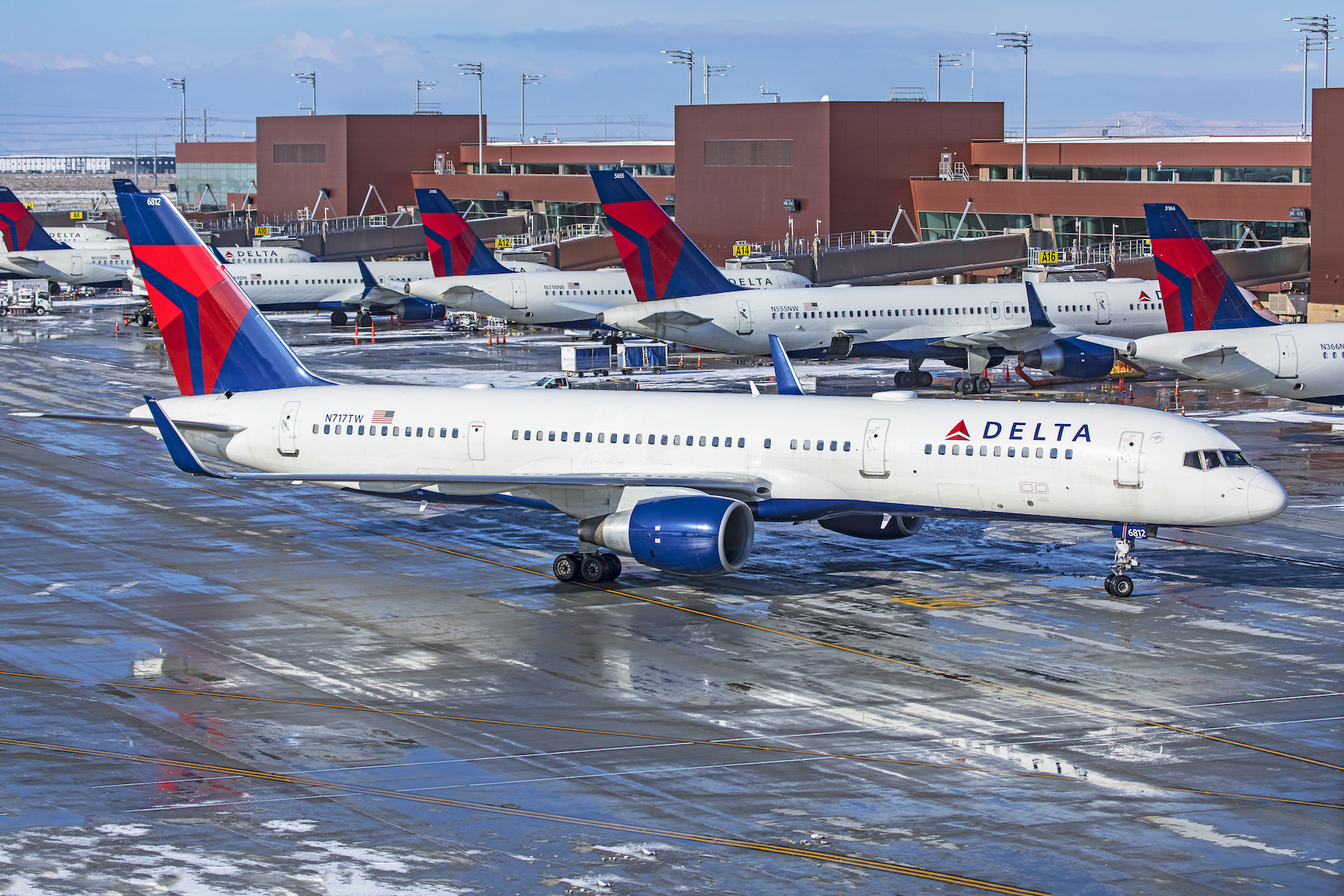
A Delta 737-900ER in Las Vegas. (Photo: AirlineGeeks | William Derrickson)

Interruptions and multitasking resulted in distractions that caused a Boeing 777 crew to cross a runway and nearly collide with a Boeing 737 at John F. Kennedy International Airport (JFK) in New York last year, according to the National Transportation Safety Board (NTSB).

In a preliminary report released Tuesday detailing the January 2023 near collision, NTSB said confusion on the part of the crew of a London-bound Boeing 777 led to mistakenly crossing a runway occupied by the Delta 737 that had been given clearance for takeoff. The aircraft came within 1,000 feet of each other.

Numerous Factors

On the evening of Jan. 13, 2023, Delta Flight 1943 bound for the Dominican Republic was cleared for takeoff from Runway 4L at KJFK. The jet was carrying 145 passengers and 14 crew. Runway 4 is perpendicular to Runway 31.

Shortly before 9 p.m., the B-777 moved along a taxiway when it approached the area where two runways cross perpendicularly, Ross Feinstein, a former spokesman for both the Transportation Security Administration and American Airlines, said at the time after reviewing radar and audio recordings.

An audio recording of an air traffic controller can be heard telling the B-777 to “cross Runway 31 Left,” which would require it to turn right before coming around to line up for departure on Runway 4 Left behind the Delta B-737.

The B-777 made a wrong turn, putting it on Runway 4.

As the B-737 accelerated, Airport Surface Detection Equipment, Model X (ASDE-X) issued aural and visual alerts in the ATC tower, warning of a potential collision. Five seconds after the alerts, the controller canceled the takeoff clearance of the Delta B-737, which quickly decelerated from its top speed of 121 mph as the American Airlines B-777 was crossing in front of it.

The NTSB investigation found the ground controller who provided the taxi instructions to the American B-777 crew didn’t notice the aircraft turned onto the wrong taxiway because he was performing a lesser priority task that involved looking down. The ATC tower team, which was involved with operations related to switching runways, also didn’t prioritize its duties to continuously scan the airport operations environment and did not notice the B-777 on the runway.

NTSB investigators cited numerous factors that contributed to the American captain’s mistake in continuing along the wrong taxiway and crossing the occupied runway without a clearance, including interruptions and multitasking that were happening on the flight deck during critical moments of ground navigation. The other two flight crewmembers didn’t catch the captain’s error because they were both engaged in tasks that diverted their visual attention from outside the airplane.

The investigation also identified safety issues with air traffic control.

NTSB Safety Recommendations

As a result of the event and subsequent investigation, the NTSB made the following recommendations to the FAA to address the risks identified in this investigation:

  • Encourage flight crews to verbalize the number of the runway they are about to cross, unless an automated system already provides an advisory.
  • Encourage air carriers to use their safety management systems to identify flight crew surface navigation errors and develop effective mitigation strategies.
  • Evaluate the effectiveness of the activation logic for runway status light systems, and update the logic as necessary to improve its effectiveness.
  • Collaborate with aircraft and avionics manufacturers to develop a system that would alert flight crews of traffic on a runway or taxiway and traffic on approach to land, and require that both newly manufactured and existing transport category airplanes have such a system installed.
  • Update a long-standing recommendation to require all airplanes be fitted with a cockpit voice recorder (CVR) capable of covering the last 25 hours of audio, up from the current standard of two hours.

The CVR information was not available for this incident because the data was overwritten. As a result, the NTSB had to rely exclusively on flight crew recollections about the incident, however, these were not documented until a month after the incident occurred.

A cockpit voice recording would likely have provided additional details about the content and timing of crew communications, shed light on the crew’s minute-by-minute focus of attention, and revealed any unreported, nonpertinent conversations or other distractions.

“The whole reason U.S. aviation has such an exemplary safety record is because we’ve built in extra layers of protection, which is why we need lifesaving technology at more of the nation’s airports,” NTSB Chair Jennifer Homendy said in a statement. “Our investigation also makes clear why we’ve long supported systems that warn flight crews of risks directly: because every second matters. Thankfully, the controllers acted quickly in this case, but safety shouldn’t be all on their shoulders. Instead, we must back up every single component of the system; direct crew alerts do just that.”

The investigation abstract is available here. The NTSB expects the final report to be published later this year.

Editor’s Note: This story first appeared on FlyingMag.com

AirlineGeeks.com Staff

AirlineGeeks.com was founded in February 2013 as a one-person blog in Washington D.C. Since then, we’ve grown to have 25+ active team members scattered across the globe. We are all here for the same reason: we love deep-diving into the fascinating realm of the airline industry.

Cathay Pacific Expands Network with Flights to Riyadh

Launching in October 2024, a new nonstop flight will bridge the gap between Hong Kong and Riyadh, the capital and financial center of Saudi Arabia.

A Cathay Pacific A350 in San Francisco (Photo: AirlineGeeks | William Derrickson)

Cathay Pacific Airways announced an expansion of its network this week, unveiling new non-stop flights to Riyadh, the capital and financial center of Saudi Arabia. These flights, commencing in October 2024, are expected to bridge the gap between Hong Kong and the Middle East, fostering trade, cultural exchange, and overall connectivity with countries participating in the Belt and Road Initiative.

The announcement was commemorated with a signing ceremony in Hong Kong, attended by high-level officials from both Hong Kong and Saudi Arabia.

Strengthening Partnerships and Regional Ties

The agreement marks a significant milestone for the growing aviation partnership between Hong Kong and Saudi Arabia. Hong Kong Secretary for Transport and Logistics Lam Sai-hung expressed his optimism, stating the new route will expand Hong Kong’s reach in the Middle East, solidifying its position as a premier international aviation hub.

Similarly, the Consul General of Saudi Arabia in Hong Kong SAR, Hamad Aljebreen, emphasized the potential for increased cooperation. He described the route inauguration as a “pivotal step” in strengthening economic, tourism, and cultural ties between the two countries. He further noted its alignment with the goals of Saudi Vision 2030 and the Belt and Road Initiative.

Cathay Pacific Group Chief Executive Officer Ronald Lam highlighted the strategic importance of the new route. Mr. Lam lauded Cathay Pacific’s commitment to the Belt and Road Initiative, noting the airline currently serves 21 destinations in 14 participating countries. He pledged continued development of flight services, focusing on both existing major routes and those connecting Hong Kong with Belt and Road countries.

The route will be operated by the carrier’s Airbus A350-900XWB aircraft, offering Business, Premium Economy, and Economy cabins to cater to diverse traveler needs. Flights will operate three times a week, providing a regular connection between the two economic hubs.

Tolga Karadeniz

Tolga is a dedicated aviation enthusiast with years of experience in the industry. From an early age, his fascination with aviation went beyond a mere passion for travel, evolving into a deliberate exploration of the complex mechanics and engineering behind aircraft. As a writer, he aims to share insights , providing readers with a view into the complex inner workings of the aviation industry.

Etihad Airways, China Eastern Tie-Up in New Joint Venture

After signing a MOU in December 2023, the two carriers are ready to proceed further with the new cooperation in the coming years.

China Eastern Airlines and Etihad Airways officials sign joint venture documents at Etihad Airways in Abu Dhabi (Photo: Etihad)

On Wednesday, Etihad Airways published an announcement about inking an agreement on a joint venture with China Eastern Airlines. The event follows a Memorandum of Understanding (MOU) signed by both airlines in December 2023 in Shanghai.

The Strategic Alliance

Present at the ceremony Chief Executive Officer of Etihad Airways Antonaldo Neves, Chairman of Etihad Aviation Group His Excellency Mohamed Ali Al Shorafa, and China Eastern Airlines Chairman Wang Zhiqing all expressed their content with the next step of the cooperation between the airlines.

A joint venture is a special kind of airline cooperation. It goes beyond the scope of interlining and codeshare agreements which are the most popular ways for airlines to offer interoperability.  The carriers are able to closely cooperate on deploying capacity and managing traffic.

Etihad and China Eastern will implement the joint venture cooperation in early 2025 when both secure all necessary regulatory clearances. Additionally, both airlines will introduce full reciprocity to their existing frequent flyer programs in the final quarter of 2024, allowing passengers to seamlessly earn points and redeem rewards when flying with either airline.

The Chinese Mega Carrier

China Eastern Airlines is one of the big three Chinese carriers with a strong domestic network in China as well as a global presence in Asia, Europe, the United States, and Australia. With a fleet of more than 600 airframes serving a portfolio of more than 200 destinations, it is one of the biggest carriers in the world measured by fleet size.

The airline operates out of many airports in mainland China, including both Shanghai–Pudong and Shanghai–Hongqiao airports in Shanghai, where its headquarters is also located. The partnership will allow China Eastern to offer seamless connectivity between any major Chinese city to all significant destinations in the Middle East, India, and other regions.

China Eastern Airlines network in June 2024 (Photo: flightconnections.com)

Middle Eastern Champion of Growth

Etihad Airways operates out of its hub in Abu Dhabi, the capital of the United Arab Emirates. After the pandemic, it is looking to strengthen its presence in one of the key growing markets, which is China. Likely, the Shanghai–Pudong airport that the airline is currently serving will become a major gateway for the carrier to channel the Middle Eastern local traffic to China, including China domestic, and other destinations in the proximity.

Etihad Airways network in June 2024 (Photo: flightconnections.com)

Filip Kopeć

A passionate aviation enthusiast that started off his career as an aerospace engineer, but found his true calling on the commercial side of the airline business. Now as a finance guy among avgeeks and an avgeek among finance guys, he has experience working in the Revenue Divisions of three airlines. In his spare time he enjoys traveling, but admittedly sometimes is more about the journey than the destination.

United to Resume New Pilot Classes While Slowing Overall Hiring

While pilot hiring is set to resume, the Chicago-based airline expects to hire fewer new employees overall than previously planned.

United 737 MAX 9
A United 737 MAX 9 aircraft (Photo: AirlineGeeks | William Derrickson)

United Airlines has confirmed that it will be resuming new hire pilot classes in July, following a two-month pause. However, the airline also expects to hire fewer employees across the company in 2024 than originally planned per an Associated Press report.

United Resuming New Hire Pilot Classes

Back in March, United revealed that it would be pausing new pilot classes for the months of May and June in response to Boeing delivery delays. A month later, the airline also offered unpaid leave to its pilots, once again citing delayed deliveries of Boeing aircraft.

This week, United Executive Vice President of Human Resources and Labor Relations Kate Gebo confirmed that new pilot classes would resume in July. The news comes amid a slowdown in pilot hiring at major airlines in the United States, and shifting hiring trends in the industry more broadly.

Meanwhile, Boeing continues to be troubled by delivery delays following a January 5 door plug blowout as well as certification delays for its Boeing 737 MAX 7 and MAX 10 variants. Airlines have been forced to adjust their schedules as a result, and United has stated that it is working on plans for its fleet that do not include the 737 MAX 10.

Reduced Overall Hiring at United in 2024

Despite the resumption of pilot hiring, United expects to bring on fewer new employees across the company than expected this year. Gebo stated that the Chicago-based company expects to hire approximately 10,000 employees in 2024, compared to a previously planned 13,000 to 15,000 new employees. The airline once again cited Boeing delivery delays for the reduction in hiring.

The airline also revealed how competitive it can be to be hired at the airline. According to Gebo, United has received 260,000 job applications this year, including over 40,000 applications for 300 internship positions.

Andrew Chen

Andrew is a lifelong lover of aviation and travel. He has flown all over the world and is fascinated by the workings of the air travel industry. As a private pilot and glider pilot who has worked with airlines, airports and other industry stakeholders, he is always excited to share his passion for aviation with others. In addition to being a writer, he also hosts Flying Smarter, an educational travel podcast that explores the complex world of air travel to help listeners become better-informed and savvier travelers.
Sign-up for newsletters & special offers!

Get the latest stories & special offers delivered directly to your inbox

SUBSCRIBE

Uh-oh! It looks like you're using an ad blocker.

Our website relies on ads to provide free content and sustain our operations. By turning off your ad blocker, you help support us and ensure we can continue offering valuable content without any cost to you.

We truly appreciate your understanding and support. Thank you for considering disabling your ad blocker for this website