









Stories

United to Resume New Pilot Classes While Slowing Overall Hiring

While pilot hiring is set to resume, the Chicago-based airline expects to hire fewer new employees overall than previously planned.

United 737 MAX 9
A United 737 MAX 9 aircraft (Photo: AirlineGeeks | William Derrickson)

United Airlines has confirmed that it will be resuming new hire pilot classes in July, following a two-month pause. However, the airline also expects to hire fewer employees across the company in 2024 than originally planned per an Associated Press report.

United Resuming New Hire Pilot Classes

Back in March, United revealed that it would be pausing new pilot classes for the months of May and June in response to Boeing delivery delays. A month later, the airline also offered unpaid leave to its pilots, once again citing delayed deliveries of Boeing aircraft.

This week, United Executive Vice President of Human Resources and Labor Relations Kate Gebo confirmed that new pilot classes would resume in July. The news comes amid a slowdown in pilot hiring at major airlines in the United States, and shifting hiring trends in the industry more broadly.

Meanwhile, Boeing continues to be troubled by delivery delays following a January 5 door plug blowout as well as certification delays for its Boeing 737 MAX 7 and MAX 10 variants. Airlines have been forced to adjust their schedules as a result, and United has stated that it is working on plans for its fleet that do not include the 737 MAX 10.

Reduced Overall Hiring at United in 2024

Despite the resumption of pilot hiring, United expects to bring on fewer new employees across the company than expected this year. Gebo stated that the Chicago-based company expects to hire approximately 10,000 employees in 2024, compared to a previously planned 13,000 to 15,000 new employees. The airline once again cited Boeing delivery delays for the reduction in hiring.

The airline also revealed how competitive it can be to be hired at the airline. According to Gebo, United has received 260,000 job applications this year, including over 40,000 applications for 300 internship positions.

Andrew Chen

Andrew is a lifelong lover of aviation and travel. He has flown all over the world and is fascinated by the workings of the air travel industry. As a private pilot and glider pilot who has worked with airlines, airports and other industry stakeholders, he is always excited to share his passion for aviation with others. In addition to being a writer, he also hosts Flying Smarter, an educational travel podcast that explores the complex world of air travel to help listeners become better-informed and savvier travelers.

American Offers Flight Attendants ‘Unusual’ 17% Pay Bump as Negotiations Heat Up

American is offering an immediate 17% pay increase to its over 28,000 flight attendants as contract talks continue to heat up.

AA B789 LAX William Derrickson (1)
An American 787 Dreamliner in Los Angeles. (Photo: AirlineGeeks | William Derrickson)

American is offering a 17% raise to its flight attendants as contract negotiations continue to heat up. The Fort Worth-based airline told flight attendants that the raise comes with no strings attached and also includes a change to increase flight attendants’ profit-sharing.

“We will be back at the table with APFA leadership next week and a deal is within reach, but I don’t know how long it will take to get to the finish line and I don’t want another day to go by without increasing your pay,” the airline’s CEO Robert Isom told flight attendants in a video message on Wednesday.

Isom said the airline presented the Association of Professional Flight Attendants (APFA) – the union representing American’s 28,000 flight attendants – with the proposal on Tuesday. In a statement, the APFA called the offer a “PR move in the face of a strike deadline.”

The airline and union are set to begin a ‘last ditch’ round of federal mediation next week. If a deal isn’t reached, it is possible that the National Mediation Board (NMB) could release the parties into a 30-day cooling-off period, paving the way for a potential strike action.

“This means we’ve offered increased pay for all flight attendants and are not asking your union for anything in return,” added Isom. “This is unusual. But these are unusual times.”

The APFA board is set to review the offer on Wednesday. “We believe that AA management underestimated the determination and resolve of Flight Attendants to achieve the contract we deserve,” a statement from the union said.

Earlier this year, Southwest flight attendants inked a new collective bargaining agreement (CBA) with the Dallas-based airline, which included a 33% pay increase over four years. Flight attendants at both Alaska and United are also in the process of negotiating new contracts.

Flight Attendants Reject Offer

On Wednesday, the APFA’s board unanimously rejected American’s offer, adding that the company should focus on reaching a full agreement.

“The APFA Board of Directors unanimously rejects management’s proposal and encourages, in the strongest way possible, the company to put all of its attention towards reaching an agreement with our Union and avoiding a crippling strike,” the union said in a statement.

Ryan Ewing

Ryan founded AirlineGeeks.com in February 2013 and has spent more than a decade covering the airline business. His work has been featured by CNN, WJLA, CNET, and Business Insider. His aviation experience spans airport operations, Part 135 regulatory compliance, and airline crew workforce planning, along with time behind the yoke of a Cessna 172 and interviews with airline executives. Ryan now serves as Group President of Firecrown Media’s Aviation Group. He holds a B.S. in Air Transportation Management and an MBA from Arizona State University and teaches Airline Management at Embry-Riddle Aeronautical University.

Air Botswana to Add Three Embraer Aircraft

Gaborone-based Air Botswana has announced that it will take delivery of three Embraer aircraft in an attempt to grow its fleet.

An Air Botswana Embraer jet (Photo: Air Botswana)

Gaborone-based Air Botswana has announced that it will take delivery of three Embraer aircraft in an attempt to grow its fleet. The airline’s CEO Lulu Rasebotsa said that the expansion is part of a broader strategy to transform Botswana’s national carrier. Furthermore, Rasebotsa also said that it was likely that the airline would need a fourth new aircraft. 

“We have identified three aircraft, all fully paid for, and we are in the market for the fourth,” Rasebotsa said.

New Embraer Aircraft

The three new aircraft will supplement the airline’s existing fleet. Currently, Air Botswana’s fleet consists of one Embraer E-170 and two ATR 72-600 aircraft. These are used to service the airline’s flights between Gaborone, Johannesburg, Cape Town, Kasane, Maun, and Francistown. Rasebotsa said that the airline would not dispose of its older ATR aircraft as these would be used to prevent delays in Air Botswana’s flight schedule.

“They’re (the three new aircraft) all Embraer Jets. For the time being, ATRs will remain part of the fleet as the aim is to keep delays to a minimum,” she said.

More Air Botswana Routes

Air Botswana aims to introduce new routes. The new aircraft will enable it to expand its route network. Rasebotsa said that the airline is doing its homework with regard to new route expansion.  She said Air Botswana is benchmarking, to ensure that new routes are implemented effectively, with the aim of meeting customer needs and expanding Air Botswana’s market reach. 

“The airline views the acquisition of the Embraer jets and the expansion of routes as crucial steps towards achieving financial stability and operational efficiency,” Rasebotsa added. 

Botswana’s state-owned airline has experienced financial difficulties for several years. The airline has struggled to make a profit due to low sales and high maintenance costs. The government has tried to privatize the airline several times. However, these attempts have failed as investors withdrew or the government rejected the terms offered.

Creating Employment Opportunities

Rasebotsa said that the addition of the new aircraft would create employment opportunities in the country’s aviation sector. According to Mmegi.bw, new employment opportunities would include positions for cabin crew, pilots, and other aviation personnel. 

Furthermore, in an effort to support young entrepreneurs, Air Botswana has also begun serving snacks produced by locals on its flights. The initiative aims to provide greater exposure to local businesses while offering passengers a taste of Botswana’s culinary offerings. 

Lorne Philipot

Lorne is a South Africa-based aviation journalist. He was captivated and fascinated by flying from the day he took his first airline flight. With a passion for aviation in his blood, he has flown to destinations in all corners of the globe. Lorne has traveled extensively and lived in various countries. Drawing on his travels and passion for aviation, Lorne enjoys writing about airlines, routes, networks, and new developments.

As Major Airlines Scale Back Pilot Hiring, Regional Carriers Still Face Headwinds

Some regional carriers are working to 'build up some momentum' as pilot hiring trends continue to shift at U.S. airlines.

Multiple aircraft
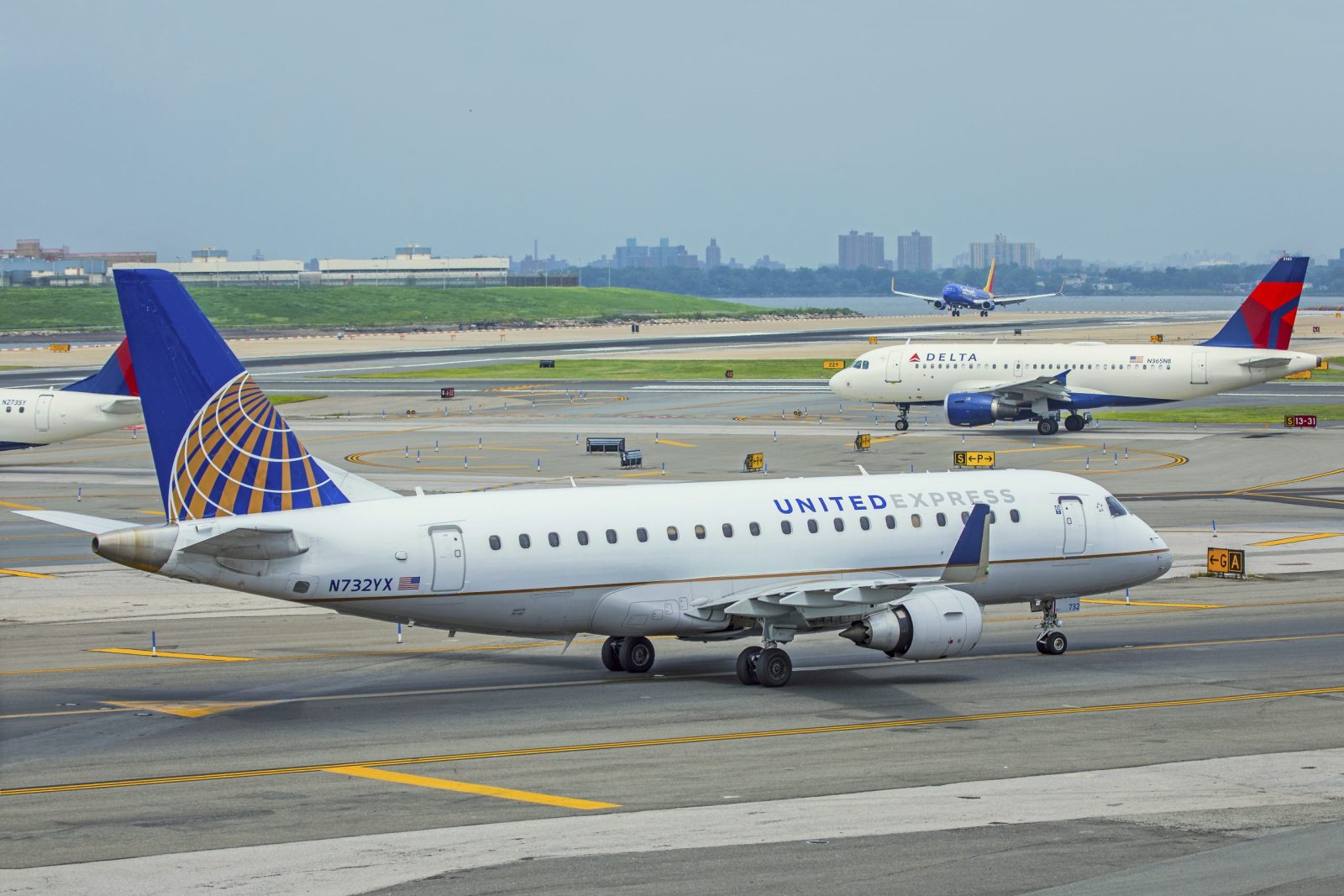
Regional aircraft at New York LaGuardia Airport. (Photo: AirlineGeeks | William Derrickson)

Even as most U.S. major airlines drastically reduce pilot hiring numbers this year, regional airlines aren’t completely out of the woods yet. Major airlines have hired nearly 40% fewer pilots in Q1 2024 compared to the same period last year, according to data from FAPA.aero.

Many regional carriers continue to shell out lucrative sign-on bonuses, mostly for direct-entry captains. In April, United Express operator GoJet announced a new bonus structure for direct-entry captains worth up to $200,000. According to the carrier, a captain could make over $400,000 in their first year.

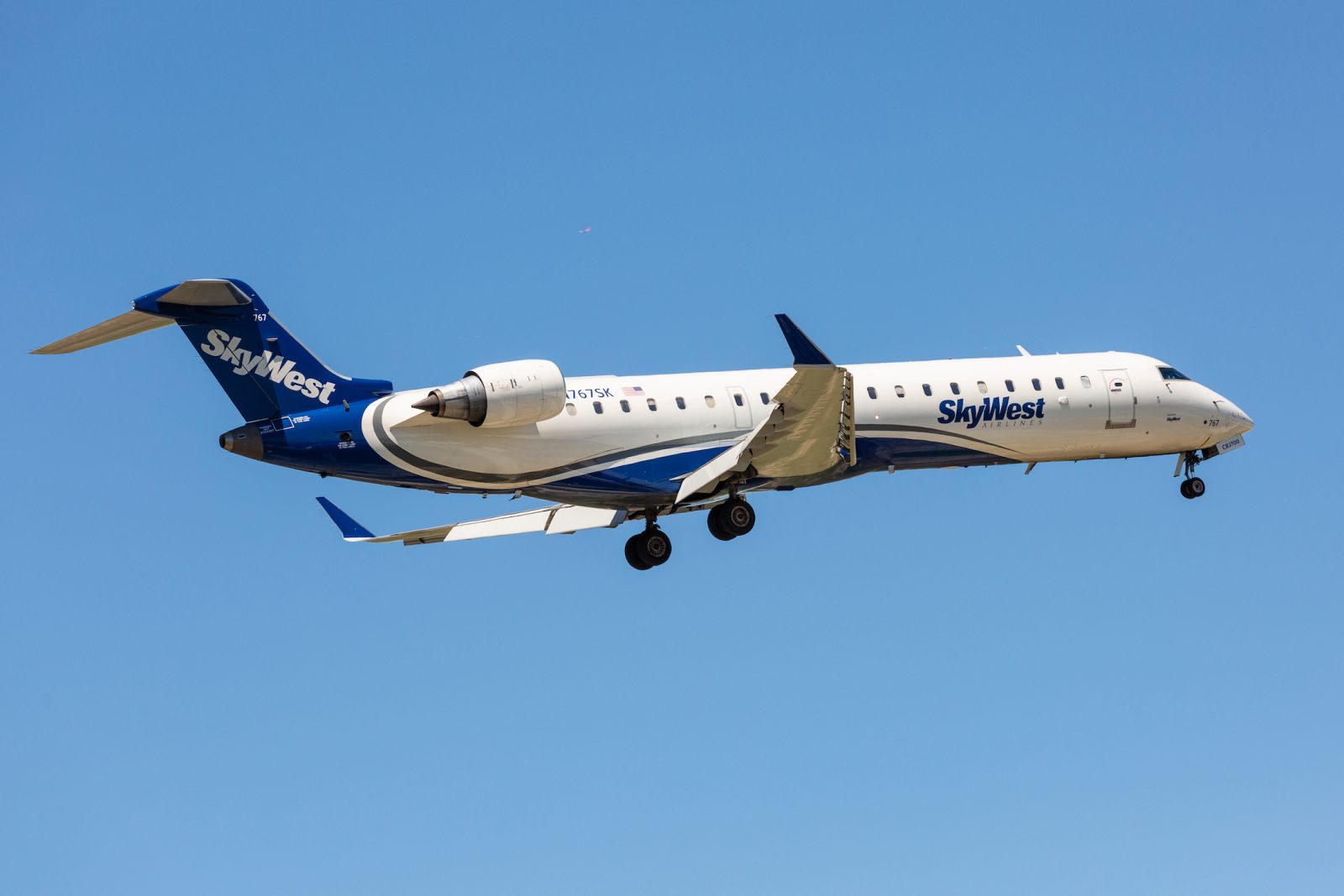
The U.S.’s largest regional airline SkyWest offers direct-entry captains up to $40,000 in bonuses and a so-called year-for-year pay match. While a far cry from some of the signing bonuses offered in 2022 and 2023, many regional airlines remain poised to attract talent to the left seat. 

All of this comes as the Air Line Pilots Association (ALPA) – which represents over 77,000 pilots – has said the pilot shortage “isn’t real.” The union also represents pilots at most U.S. regional carriers.

The Regional Airline Association (RAA) and ALPA have clashed over this narrative. In its Q1 2024 report, the RAA added that changes in pilot hiring were “temporary,” attributing them to aircraft delivery delays at Airbus and Boeing. The trade group further alleges that the pilot supply/demand balance will “rapidly worsen” as deliveries get back on track.

With some airlines scaling back service to small communities coming out of the pandemic, the RAA claims they could still face the brunt of network cuts. Congress bolstered programs designed to attract and retain small community air service as part of the FAA Reauthorization Act.

“So, I think the good news is that if we got the equipment and retirements continue and the economy is strong, we could be back into a shortage situation immediately,” said Kit Darby, President of KitDarby.com Aviation Consulting, in an interview with AirlineGeeks.

Getting Back Into Balance

While captains are largely the flavor of the month at regional carriers now, Darby noted that most are likely to hire first officers again as companies work to rebalance their flight decks.

“But they should catch up and be back in balance and be able to hire [first officers] again if they’ll stop hiring their captains. And they probably have a year or two reprieve right now, which should slow down the off-the-street captains and increase the [first officer] demand,” he added.

Many pilots left regional carriers in droves to chase higher pay at the major airlines between 2021-2023. American, Delta and United set pilot hiring records during this period, But now, regional airlines have been left to catch up and rebalance their captain-to-first officer ratios.

Speaking to AirlineGeeks, GoJet President and CEO Rick Leach said, “There was a major supply and demand issue of pilots just in general, and the barrier of entry was very, very high over the years.” GoJet operates over 60 CRJ-550 aircraft on behalf of United Express.

United Express CRJ aircraft in Newark (Photo: Shutterstock)

“So we as an industry have done some things. Some people would say crazy things by many multiples of salaries that have gone up at this really crazy rate; I mean, nobody’s crystal ball would have been able to totally dictate what has happened,” Leach added. “But nonetheless, it’s done and it’s created a major return on investment that has started to get interest into the profession. And so that’s good…but there’s other symptoms that have been a result of the pilot shortage that [are] still creating problems.”

Reductions in pilot hiring at the major airlines, Leach said, is just a ‘band-aid’ for the St. Louis-based regional carrier as it tries to retain pilots in the left seat.

Bolstering Regional Flying

During Q1 2024 earnings calls, both American and Delta indicated that they plan to double down on regional productivity in the coming years. In 2022, U.S. carriers had roughly 500 regional jets grounded due to pilot supply challenges emerging from the pandemic.

“We’ve been very short on our regionals,” said Delta’s President Glen Hauenstein during the company’s earnings call. “We still have probably at least 50 regionals either not flying or underutilized, probably almost 100 when you include the underutilization.”

American expects to add between 20 and 25 fully-utilized regional aircraft each quarter in 2024, noting improvements in the pilot supply at its wholly-owned operators Envoy, PSA, and Piedmont.

In a 2023 slide deck, the RAA said that 76% of U.S. communities saw some service cuts due to regional productivity constraints.

“If we don’t start getting healthier…I think you’ll just continue to see what we’ve seen, which is some under production,” Leach continued. “But look, I think we as an industry are all very focused on doing everything we can, which is why we’re aggressive in the program that we’ve put out there to attract direct-entry captains, trying to sort of get our classes full and build up some momentum.”

Major airlines hired 2,357 pilots in Q1, which far eclipses pre-pandemic levels. During the same period in 2019, airlines hired 1,395 pilots, representing an over 50% difference.

Ryan Ewing

Ryan founded AirlineGeeks.com in February 2013 and has spent more than a decade covering the airline business. His work has been featured by CNN, WJLA, CNET, and Business Insider. His aviation experience spans airport operations, Part 135 regulatory compliance, and airline crew workforce planning, along with time behind the yoke of a Cessna 172 and interviews with airline executives. Ryan now serves as Group President of Firecrown Media’s Aviation Group. He holds a B.S. in Air Transportation Management and an MBA from Arizona State University and teaches Airline Management at Embry-Riddle Aeronautical University.

JetBlue Awarded First-Ever Essential Air Service Contract

On June 4, 2024, the DOT selected JetBlue as the next EAS carrier in the community of Presque Isle. This will be the first sort of contract for the airline.

JetBlue E190
A JetBlue E190 in Boston (Photo: AirlineGeeks | William Derrickson)

After months of consideration, the U.S. Department of Transportation (DOT) officially has a new air carrier in the EAS game: JetBlue. On June 4, 2024, the DOT selected JetBlue as the next EAS carrier in the community of Presque Isle, Maine. 

The contract of the current carrier, United, ended on May 31, 2024, but given the DOT didn’t come to a decision for this contract until June 4, the current carrier is required to stay until the new contract does start. 

JetBlue will serve the community with the contract starting on Sept. 1, 2024, and will run for two years until August 31, 2026. The annual subsidy rate will be $10,412,703 for the first year with service being offered onboard the 100-seat Embraer E190. Service for the second year will be $11,235,581 onboard the 140-seat Airbus A220. All flights will be operated from Presque Isle to the airline’s hub in Boston. 

This will also mark the first time either an E190 or an Airbus aircraft has been scheduled to fly to an EAS community. Presque Isle also becomes the first EAS community in the lower 48 to receive daily connections onboard a mainline-sized aircraft to a connecting hub. Sun Country does fly mainline-sized aircraft to the EAS community of Eau Claire, but those flights are not daily.

Given the flights were just awarded by the DOT on Tuesday, they have not yet been put on sale yet. But, the start date of the flights is just under three months away so the carrier should be putting them on sale relatively soon.

All documents pertaining to this contract can be found on regulation.gov

Joey Gerardi

Joey has always been interested in planes for as long as he can remember. He grew up in Central New York during the early 2000s when US Airways Express turboprops ruled the skies. Being from a non-aviation family made it harder for him to be around planes and would only spend about three hours a month at the airport. He was so excited when he could drive by himself, the first thing he did with his driver's license was get ice cream and go plane spotting for the entire day. He graduated from Western Michigan University in 2022 with a B.S. in Aviation Management & Operations and a Minor in Business, and currently works for a major airline in his hometown.

IndiGo Adds 10 Destinations in 2025

Following a banner year in 2023, the airline is looking to expand in less competitive markets while unveiling a new business class product.

An IndiGo aircraft (Photo: Shutterstock)

IndiGo is eyeing its next major growth opportunity following a banner year in 2023. The low-cost carrier currently operates to 88 domestic destinations and over 30 international destinations.

“With the growing desire and aspirations of Indians to fly international I think we have a great opportunity for also the more unknown places,” Pieter Elbers, CEO of IndiGo, said to Reuters.

IndiGo is aiming at international destinations. With the A321XLR, the carrier can spread its wings to Europe and farther in Asia. The airline’s European flight operations are under the auspices of codeshare partnership with Turkish Airlines. Elbers believes that Indian airlines have less than their fair share of the market. It is expected to add 10 destinations in 2025, including Mauritius and a new destination in Thailand, but Elers hasn’t gone into detail.

The carrier will go further in launching a domestic business class by the end of the year. Elbers said the new business class could entice passengers who never fly the product offering.

The Indian airline owns a fleet of more than 350 aircraft but 70 aircraft are grounded due to issues with Pratt & Whitney engines. India is best known for being one of the fastest-growing countries as IndiGo operates 2,000 daily flight operations. Last year, IndiGo shocked the aviation industry by inking a deal with Airbus for 500 A320 family aircraft.

IndiGo and Japan Airlines Sign Codeshare Partnership

Meanwhile. IndiGo and Japan Airlines have announced that they have agreed on a codeshare partnership starting later this year. Subject to government approval, Japan Airlines is expected to start codesharing on IndiGo’s domestic flights in the upcoming winter, connecting its Tokyo – India flights.

Japan Airlines currently operates daily services between Tokyo Haneda Airport and Delhi and three times a week services between Tokyo Narita Airport and Bengaluru. However, Indigo doesn’t provide services to Japan yet.

According to the agreement, Japan Airlines could expand its route map to 14 Indian cities, such as Mumbai, Chennai, Kolkata.

“The phase of the partnership expands the choices available to Japan Airlines customers for journeys to/from Japan, using IndiGo’s extensive network in India,” Abhijit DasGupta, Senior Vice President Network Planning & Revenue Management of IndiGo, said.

“With the extensive network, travellers to/from India and Japan will be able to book their flight on one ticket, and experience both IndiGo and JAL’s exceptional service,” Ross Leggett, Managing Executive Officer, Senior Vice President Route Marketing of Japan Airlines, said.

AirlineGeeks.com Staff

AirlineGeeks.com was founded in February 2013 as a one-person blog in Washington D.C. Since then, we’ve grown to have 25+ active team members scattered across the globe. We are all here for the same reason: we love deep-diving into the fascinating realm of the airline industry.

Nigeria Clears 98% of Airlines’ Blocked Funds

Nigeria has emerged as a noteworthy example in the repatriation of revenue from international airlines operating within its borders.

The terminal at Lagos Airport (Photo: PESP/ Wikimedia, CC BY-SA 4.0 , via Wikimedia Commons)

Nigeria has emerged as a noteworthy example in the repatriation of revenue from international airlines operating within its borders. At its peak in June 2023, blocked funds in Nigeria totaled $850 million, significantly impacting airline operations and finances. However, by April 2024, an impressive 98% of these funds have been released.

Despite this progress, airlines still faced challenges due to the devaluation of the Nigerian naira. Kamil Al-Awadhi, Vice President of the International Air Transport Association (IATA) for Africa and the Middle East, highlighted this during the IATA’s general meeting in Dubai from June 2 to 4, 2024.

Kamil Al-Awadhi expressed optimism. According to IATA, which represents over 330 members, the remaining $19 million is expected to be released soon. The blockage in Nigeria is due to the ongoing verification by the Central Bank of claims filed by commercial banks.

“We’ve done relatively really well with Nigeria. So, it kicked off in May last year when the new government stepped in. It has been extremely active, very engaged with the industry. So thankfully today we can actually close the Nigerian chapter,” added Kamil Al-Awadhi, “We’ve made significant strides with Nigeria. The government’s active engagement with the industry allows us to close this chapter.”

Willie Walsh, Director General of IATA, commended Nigeria’s efforts and emphasized the importance of reliable air connectivity. “We commend the new Nigerian government and the Central Bank of Nigeria for their efforts to resolve this issue. Individual Nigerians and the economy will all benefit from reliable air connectivity for which access to revenues is critical. We are on the right path and urge the government to clear the residual $19 million and continue prioritizing aviation,” he said.

Previously, Nigeria struggled with repatriation restrictions, leading some airlines to reduce operations. Even Emirates temporarily suspended flights to Nigeria. However, the carrier plans to resume operations on October 1.

Nigeria’s collaboration with Egypt has contributed to a 28% reduction in globally blocked funds, totaling $1.8 billion as of April 2024. Yet challenges persist in other African countries, including Algeria, CFA franc zone nations, Ethiopia, Eritrea, and Zimbabwe.

Walsh emphasized that efficient revenue repatriation is essential for airlines operating on thin margins. Access to rightfully earned revenues ensures critical connectivity and sustainable business operations.

Victor Shalton

Victor Shalton's love for aviation can be traced to when he was 11-years-old. As a seasoned aviation writer, he takes pride in providing the best aviation coverage around the globe and is passionate about advancing his skills in the aviation space. In addition, he loves travelling, writing, arts and while his speaking engagements have taken him around the world, he is proud to call Nairobi home.

Fiji Airways to Transition Into Full Oneworld Member

Fiji Airways will become the 15th member of oneworld, enhancing the alliance's position in the Pacific and provide more options for its travalers.

A Fiji Airways A330 landing at LAX. (Photo: AirlineGeeks | William Derrickson)

Fiji Airways, the flag carrier of the Pacific nation of Fiji, will join the oneworld alliance as its 15th full member. The carrier, already a oneworld connect partner, announced the move during the IATA Annual General Meeting.

oneworld
Fiji Airways will become a full oneworld member (Photo: Fiji Airways)

Previously, as a oneworld connect partner, travellers with oneworld status enjoyed limited benefits when traveling on Fiji Airways, and vice versa, and Fiji Airways had some collaborations with other oneworld carriers, such as the codeshare agreement with Finnair.

The full accession of Fiji Airways will mean that oneworld frequent fliers will be able to enjoy priority benefits and lounge access when flying the airline. It also means easier mileage and status earning for elite fliers when flying on the airline.

oneworld carriers will also benefit from its network, which can not only give access to the touristic island of Fiji but also link North America to various destinations in the Pacific. The latest member of oneworld can complement the networks of American Airlines and Qantas in the transpacific market.

Strengthening Oneworld in the Pacific

With the move, the alliance will secure its position as the dominant airline group in the Pacific region. Qantas, one of the alliance’s founding members, is the biggest airline in Australia, while its other members, including American, Cathay Pacific, Malaysia Airlines, British Airways, and Qatar Airways all boast considerable networks to the Pacific region.

A Qantas A330 in Auckland. (Photo: Auckland Airport)

It was recently revealed that Hawaiian Airlines would also join the alliance if the proposed merger with Alaska Airlines goes through. The airline would be the third for the alliance in the region.

About Fiji Airways

The airline has a considerable network from Nadi going to Australia and the surrounding islands, including New Zealand. It has also expanded its connections to North America in the recent decade, flying nonstop to Los Angeles, San Francisco, and Vancouver. In Asia, the carrier flies to Singapore, Hong Kong, and Tokyo.

The carrier has a fleet of Boeing 737s for medium-haul operations and a fleet of A330s and A350s for its long-haul network. The airline has a fleet of 14 aircraft, according to planespotters.com.

Growing Oneworld

The alliance will welcome Oman Air later this year, a new member announced at the IATA General Meeting in 2022. Since 2020, the alliance also saw the entrance of Alaska Airlines and Royal Air Maroc. The growth of the airline alliance has been focused on the Arab and Pacific region, where the alliance holds more dominant positions.

The alliance could also see Hawaiian Airlines joining its rank, becoming its third member in the United States, as early as the end of 2024. Several other carriers, including China Southern and MIAT Mongolian, have been rumored to become either full members or connect partners.

The alliance has also opened its first oneworld-branded lounges in Amsterdam and Seoul, where a shared alliance identity is used to better customer experiences.


Anthony Bang An

Anthony is an aviation enthusiast who grew up around the world from St. Louis to Singapore, and now lives in Amsterdam. He loves long-haul flying and finds peace in the sound of engine cruising. He aspires to share his passion for the sky though writing and providing another angle on the stories.

Mexico’s State-Owned Airline Orders Embraer Jets

Mexicana, Mexico's state-owned carrier, announced an order for 20 Embraer E2 jets, becoming the first E2 operator in the country.

A rendering of Mexican's E2 aircraft (Photo: Embraer)

Mexicana de Aviación, Mexico’s state-owned carrier, announced an order for 20 Embraer E2 jets, becoming the first E2 operator in the country.

The order is split evenly between the E190-E2 and the larger E195-E2 models, with deliveries scheduled to begin next year. Mexicana will configure both aircraft with single-class seating, offering 108 seats on the E190-E2 and 132 seats on the E195-E2.

The Mexican carrier is looking to modernize its fleet. Currently, it operates a fleet of former military Boeing 737-800 aircraft and Embraer 145s operated by TAR Aerolineas.

“We welcome Mexicana to the E2 family,” said Priscilla Doro Solymossy, VP of Sales and Marketing for Latin America and the Caribbean at Embraer Commercial Aviation in a press release. “Seeing the success and rapid growth Mexicana has achieved since it restarted operations in December 2023 has been remarkable.”

Mexicana de Aviación relaunched operations in December 2023 as part of the Olmeca-Maya-Mexica S.A. de C.V. Airport Group. The airline currently serves 18 destinations and has transported over 115,000 passengers so far.

Ryan Ewing

Ryan founded AirlineGeeks.com in February 2013 and has spent more than a decade covering the airline business. His work has been featured by CNN, WJLA, CNET, and Business Insider. His aviation experience spans airport operations, Part 135 regulatory compliance, and airline crew workforce planning, along with time behind the yoke of a Cessna 172 and interviews with airline executives. Ryan now serves as Group President of Firecrown Media’s Aviation Group. He holds a B.S. in Air Transportation Management and an MBA from Arizona State University and teaches Airline Management at Embry-Riddle Aeronautical University.

A Next-Generation Suite and the World’s Lightest Seat: Highlights from AIX 2024

Not only is the event a platform for suppliers and airlines to meet, but it is also an opportunity for companies to showcase their cabin interiors.

Airbus A330neo Airspace cabin (Photo: Airbus)

The 2024 edition of the annual Aircraft Interiors Expo (AIX) was held last week from May 28-30 in Hamburg, Germany. Not only is the event a platform for suppliers and airlines to meet, but it is also an opportunity for companies to showcase their cabin interior and inflight entertainment products. Here are some highlights from this year’s event:

A High-Tech Next-Generation Business Class Suite

One of the biggest announcements from Hamburg last week was Panasonic Avionics’ and Collins Aerospace’s joint unveiling of MAYA, a next-generation business class concept. MAYA draws from Collins Aerospace’s expertise in design and Panasonic Avionics’ experience in technology to create a futuristic business class suite.

The suite has a seat comfort technology known as ARISE, which automatically optimizes cushion pressure, regulates environmental temperature, and reduces peak vibration disturbances. Meanwhile, the most visually captivating feature of the product is the 45-inch ultra-wide, ultra-high-definition curved screen with a headphone-less audio system. Panasonic noted that the screen is three times larger than typical business class screens and is in the same 21:9 screen format used in cinemas.

A next-generation business class suite known as MAYA, jointly unveiled by Collins Aerospace Panasonic Avionics at AIX 2024 (Photo: Collins Aerospace)

An All-Business Turboprop

Last year, French–Italian aircraft manufacturer ATR unveiled a collection of cabin configurations for its turboprops known as ATR HighLine. Among these was an all-business class configuration. The company revealed details of the design at AIX last week.

The all-business class interior has a 1-1 configuration with seats that were custom-made for ATR by seating manufacturer Geven. Each seat will have direct window and aisle access and a width of 21.6 inches – a size rarely seen on board turboprop aircraft, which typically feature economy-only seating. Seats will also have a personal side console that serves both as a storage compartment and as a table.

Malaysia-based Berjaya Air will be the launch customer for the product. The airline will operate two ATR 72-600 with the HighLine all-business class configuration from 2025 to serve the group’s luxury hotels and resorts.

ATR’s HighLine all-business class cabin design (Photo: ATR)

The World’s Lightest Aircraft Seat: Expliseat’s TiSeat 2

French seat manufacturer Expliseat produces the world’s lightest lineup of commercial aircraft seats. The current iteration is known as the TiSeat 2 and has different variations for turboprops and larger narrowbody jets.

The company unveiled a third model in Hamburg, known as the TiSeat 2 X. This new product is designed for regional jets and will debut on Embraer 190s operated by Air France subsidiary HOP!. In addition to typical seat features like a tray table and literature pockets, the TiSeat 2 X will also include a personal electronic device holder equipped and USB A and C ports.

Expliseat’s TiSeat 2 X lightweight seat will debut on Air France’s regional subsidiary HOP! (Photo: Expliseat)

During AIX, Expliseat also signed a purchase agreement with Jazz Aviation to renew the cabins of 25 De Havilland Canada Dash 8-400 with the TiSeat 2 V turboprop product. The Canadian carrier operates regional flights under the Air Canada Express brand.

New Airspace Interior Features for the A330neo

Airbus has announced that it will be introducing enhancements to its A330neo Airspace cabin concept. The changes will bring consistency with the Airspace features seen on the A350 and A320 family.

New ceiling lighting at the second set of doors with the Airspace stencil pattern will become standard on all new A330neos delivered from Q1 of 2026. Starting in 2027, airlines will also have the option of having a new “Airspace Hero Light” in the premium cabin space between the first two sets of doors. The lighting system will be customizable with 16 million colors and a unique pattern.

The Airbus Airspace stencil lighting pattern on board an Airbus A321neo (Photo: AirlineGeeks | Andrew Chen)

There will also be a new sidewall and matching ceiling panels consistent with A250 and A320 family Airspace cabins. These elements create five millimeters of extra shoulder clearance for each window seat and 50 millimeters more foot space for passengers. The lighter weight of these panels will also provide weight savings throughout the aircraft for airlines.

Electro-dimmable windows will also become an option on A330neos in the premium cabin area between the first two sets of doors. These windows replace traditional window shades with technology that allows passengers to adjust the level of dimming, while also having the ability to block 99.999% of visible light and the sun’s infrared energy.

Airbus Airspace electro-dimmable windows (Photo: Airbus)

Andrew Chen

Andrew is a lifelong lover of aviation and travel. He has flown all over the world and is fascinated by the workings of the air travel industry. As a private pilot and glider pilot who has worked with airlines, airports and other industry stakeholders, he is always excited to share his passion for aviation with others. In addition to being a writer, he also hosts Flying Smarter, an educational travel podcast that explores the complex world of air travel to help listeners become better-informed and savvier travelers.
Sign-up for newsletters & special offers!

Get the latest stories & special offers delivered directly to your inbox

SUBSCRIBE

Uh-oh! It looks like you're using an ad blocker.

Our website relies on ads to provide free content and sustain our operations. By turning off your ad blocker, you help support us and ensure we can continue offering valuable content without any cost to you.

We truly appreciate your understanding and support. Thank you for considering disabling your ad blocker for this website