Stories

Emirates Plans First Airbus A350 Routes

Emirates unveiled on Monday the first routes to be served by its upcoming Airbus A350-900XWB aircraft, scheduled for launch in September 2024.

An Emirates A350-900 mock-up (Photo: Airbus)

Emirates unveiled on Monday the first routes to be served by its upcoming Airbus A350-900XWB aircraft, scheduled for launch in September 2024. Ten new A350s are expected to join the Dubai-based airline’s fleet by March 2025, offering the airline’s latest cabin experiences on short and medium-haul routes.

The first A350 flight, EK839, will depart Dubai for Bahrain on Sept. 15, 2024. Passengers can expect three cabin classes on the A350: 32 Business Class seats, 21 Premium Economy seats, and 259 Economy Class seats.

The initial deployment of the airline’s A350s will focus on nine destinations across three regions. In the Middle East, Bahrain begins September 15, with increased frequency to twice daily in November. Kuwait begins on September 16, and Muscat starts on December 1.

In Asia, Mumbai and Ahmedabad will begin October 27 while Colombo service begins Jan. 1, 2025 on the fourth daily flight. Emirates also plans to deploy the new jet in Europe with service to Lyon and Bologna on December 1, along with a new route to Edinburgh on November 4.

Emirates says it will announce additional destinations and interior designs for the A350 in the coming months. Bookings for these initial routes are now open.

“The A350 will be a game-changer for Emirates, enabling us to serve regional points with superior operating efficiency and flexibility across the Middle East and GCC, West Asia and Europe,” said Adnan Kazim, Deputy President and Chief Commercial Officer, at Emirates. “With the latest generation cabin products including more of our sought-after Premium Economy to more cities, top-notch in-flight entertainment technologies and an abundance of other customer-friendly features, the Emirates A350 builds on our long-standing commitment of investing in the very best customer experience in the sky. Flying the A350 to 9 cities in such a short span of time adds more premium cabin options and choice across geographies for our customers, and ensures we maintain our competitive edge and industry leading position.”

The carrier has 65 A350-900 aircraft on order with initial deliveries planned for later this summer.

Ryan Ewing

Ryan founded AirlineGeeks.com in February 2013 and has spent more than a decade covering the airline business. His work has been featured by CNN, WJLA, CNET, and Business Insider. His aviation experience spans airport operations, Part 135 regulatory compliance, and airline crew workforce planning, along with time behind the yoke of a Cessna 172 and interviews with airline executives. Ryan now serves as Group President of Firecrown Media’s Aviation Group. He holds a B.S. in Air Transportation Management and an MBA from Arizona State University and teaches Airline Management at Embry-Riddle Aeronautical University.

Icelandair Launches New Service to the Faroe Islands

For the first time ever, an airline now serves Denmark and all kingdom countries at the same time, but it is not the airline you think.

Icelandair Dash 8 at Akureyri International Airport, Iceland. (Photo: AirlineGeeks | John Flett)

The Faroe Islands and Greenland are the last two overseas countries that remain part of the Kingdom of Denmark now in 2024, but other than that the countries have very little in common with each other. They all feature very different climates, populations, and physical size. But now, for the first time ever, they all receive service from one specific carrier: Icelandair.

On May 1, 2024, Icelandair began services to Vágar Airport, the main and only airport located in the Faroe Islands. Flights operate five times a week during the busy summer tourist season onboard the airline’s Q400 from its main hub at Reykjavík/Keflavík Airport in Iceland.

In Denmark, Icelandair serves two destinations: Copenhagen, where it flies two to three times a day onboard a mix of Boeing 737 MAXs, Boeing 757s, and Boeing 767s. The other location in Denmark is Billund, which sees twice-weekly seasonal service on the 737 MAX, which also ends in October just like the new Faroe Islands route.

Taking off out of Copenhagen onboard Icelandair (Photo: AirlineGeeks | Joey Gerardi)

Finally, the third country; Greenland, of which Icelandair flies to four destinations, including Kulusuk, which sees twice weekly service onboard the Dash-8~200; Ilulissat, which is served from June until September, is also on the Dash-8~200 but offers nine weekly flights spread across six days of the week, four of which are redeye flights back to Iceland; and Narsarsuaq, which sees flights twice a week between June and September, with one flight on a Dash-8~200 and the other being the much larger Boeing 737 MAX.

The last city is the country’s capital of Nuuk, which sees service between twice and five times a week depending on the season operated by the Dash-8~200. This route from Nuuk features one of the shortest redeyes in the world scheduled at 3 hours and 20 minutes, and perhaps the only overnight flight on a Dash-8.

It is interesting to note that the first carrier to serve all three Denmark colonies at the same time isn’t based in either of the three countries. But, two of the countries do have very unique tourism sectors and a lower population relative to most countries of similar size, offering very few airlines at all. Greenland only has two airlines offering services to the country; Air Greenland and Icelandair, and the Faroe Islands only has three airlines; Icelandair, SAS, and Atlantic Airways.

5
Air Greenland’s sole Airbus A300-800neo seconds before touching down in Kangerlussuaq (Photo: AirlineGeeks | Joey Gerardi)

There are three airlines that serve two of the colonies; Air Greenland serves its home country of Greenland as well as Denmark via Copenhagen and Billund. Atlantic Airways, serves its home country of the Faroe Islands, as well as Denmark via Copenhagen, Billund, and Aalborg. Finally, SAS serves four cities in its home country of Denmark and it also flies to the Faroe Islands.

It is interesting to point out that while Air Greenland and Atlantic Airways have never served all three countries in the past, SAS has, although it wasn’t at the same time. SAS offered flights to Greenland for more than 50 years until March of 2003, and after a brief hiatus again from 2007 until the carrier left for good in 2009. But, it didn’t start service to the Faroe Islands until March of 2017, meaning service in all three countries didn’t overlap and had a sizable gap.

An Atlantic Airways Airbus A320neo in Vágar, Faroe Islands (Photo: Atlantic Airways)

Transatlantic Flights

Atlantic Airways also offered services to New York last fall, but the service was only offered once a week and only for two months. Those flights will return this season but for a shorter period of time with only six flights spread across six weeks.

With Icelandair now serving the Faroe Islands, it makes them more accessible than ever for people in North America as the flights to Vagar have similar departure and arrival times in Reykjavík/Keflavík to the other destinations they serve in Europe. Atlantic Airways does have interline agreements with multiple airlines in Europe including Icelandair and codeshares with Air France and KLM.

Joey Gerardi

Joey has always been interested in planes for as long as he can remember. He grew up in Central New York during the early 2000s when US Airways Express turboprops ruled the skies. Being from a non-aviation family made it harder for him to be around planes and would only spend about three hours a month at the airport. He was so excited when he could drive by himself, the first thing he did with his driver's license was get ice cream and go plane spotting for the entire day. He graduated from Western Michigan University in 2022 with a B.S. in Aviation Management & Operations and a Minor in Business, and currently works for a major airline in his hometown.

WestJet Issues Lockout Notice to Maintenance Workers

The second-largest airline in Canada issues a 72-hour lockout notification to the union representing its aircraft maintenance staff.

WestJet 737 MAX
A WestJet Boeing 737 MAX 8 at Harry Reid International Airport in Las Vegas. (Photo: AirlineGeeks | William Derrickson)

On Saturday, WestJet issued a 72-hour lockout notification to the union that represents the airline’s aircraft maintenance engineers. Unless the Aircraft Maintenance Fraternal Association (AMFA) can reach a deal and agreement with the carrier, a work stoppage could happen as early as Tuesday, May 7 at noon, according to the airline.

A lockout is an employer-initiated situation where the company prevents employees from entering the workplace and returning to work due to the failure to agree to a contract. This essentially is an attempt to force the union to relent. In this case, WestJet has decided to initiate this lockout as a final resolution and in response to the recent actions of the AMFA.

In a statement, Diederik Pen, President of WestJet Airline and Group Chief Operating Officer, said, “The decision to issue a lockout notice was not one that was made lightly, and we sincerely regret and apologize for the uncertainty this causes for our guests and the communities and regions that rely on us. Despite our unwavering commitment to reach a collective agreement, AMFA continues to show up to the bargaining table with unreasonable demands and expectations.”

AMFA and the WestJet Group have been in labor negotiations for a contract since September 2023, and the initial contract package included a cumulative wage increase of 20 percent, stronger job security, and improved work-life balance, the carrier claims.

However, the aircraft maintenance workers’ union and the airline have not come to an agreement on a contract. Last week on April 30, AMFA issued a referendum email to its members to vote to authorize the union to call for a strike.

“With AMFA publicly issuing a strike vote alert last week and publicly directing guests to fly with other carriers, we can’t allow the unpredictable nature and lack of progress to continue. We are left with no alternative but to issue a lockout notice in an attempt to bring this to a final resolution,” Pen added.

The carrier will attempt to prevent any major operational disruption from occurring due to this recent notion with its maintenance workers and union.

Airline’s Pilot Lockout

WestJet’s recent 72-hour lockout notification for its aircraft maintenance personnel is not its first. In May 2023, the carrier issued a lockout notice to the Air Line Pilots Association (ALPA), the union that represents the company’s over 1,800 pilots. In this instance, the lockout notice was in response to ALPA’s issuance of a 72-hour strike declaration, after voting for a strike in April.

Similar to the ongoing dispute, the airline and union remained at the bargaining table after failing to agree on negotiations a contract. Lockouts or threats to impose one are seen to be used as leverage, when an airline like WestJet intends to block the union from causing disruptions to business, during negotiation disputes.

As a result, the WestJet Group cancelled flights and parked a majority of its Boeing 737 and Boeing 787 Dreamliner fleet, as it anticipated the labor action from the pilots. However, ALPA and the airline reached an agreement on the second collective bargaining agreement (CBA) between both parties, preventing further operational disruptions.

Update May 6, 2024: The company and union reached a tentative agreement early Monday that halts any potential work stoppage. 

Benjamin Pham

Benjamin has had a love for aviation since a young age, growing up in Tampa with a strong interest in airplane models and playing with them. When he moved to the Washington, D.C. area, Benjamin took part in aviation photography for a couple of years at Gravelly Point and Dulles Airport, before dedicating planespotting to only when he traveled to the other airports. He is an avid, world traveler, having been able to reach 32 countries, yearning to explore and understand more cultures soon. Currently, Benjamin is an Air Transporation Management student at Arizona State University. He hopes to enter the airline industry to improve the passenger experience and loyalty programs while keeping up to how technology is being integrated into airports.

Delta Relaunches Flights From Tampa To Amsterdam

The prominent SkyTeam carrier will fly from Amsterdam, offering ten routes after the relaunch of flights to Tampa.

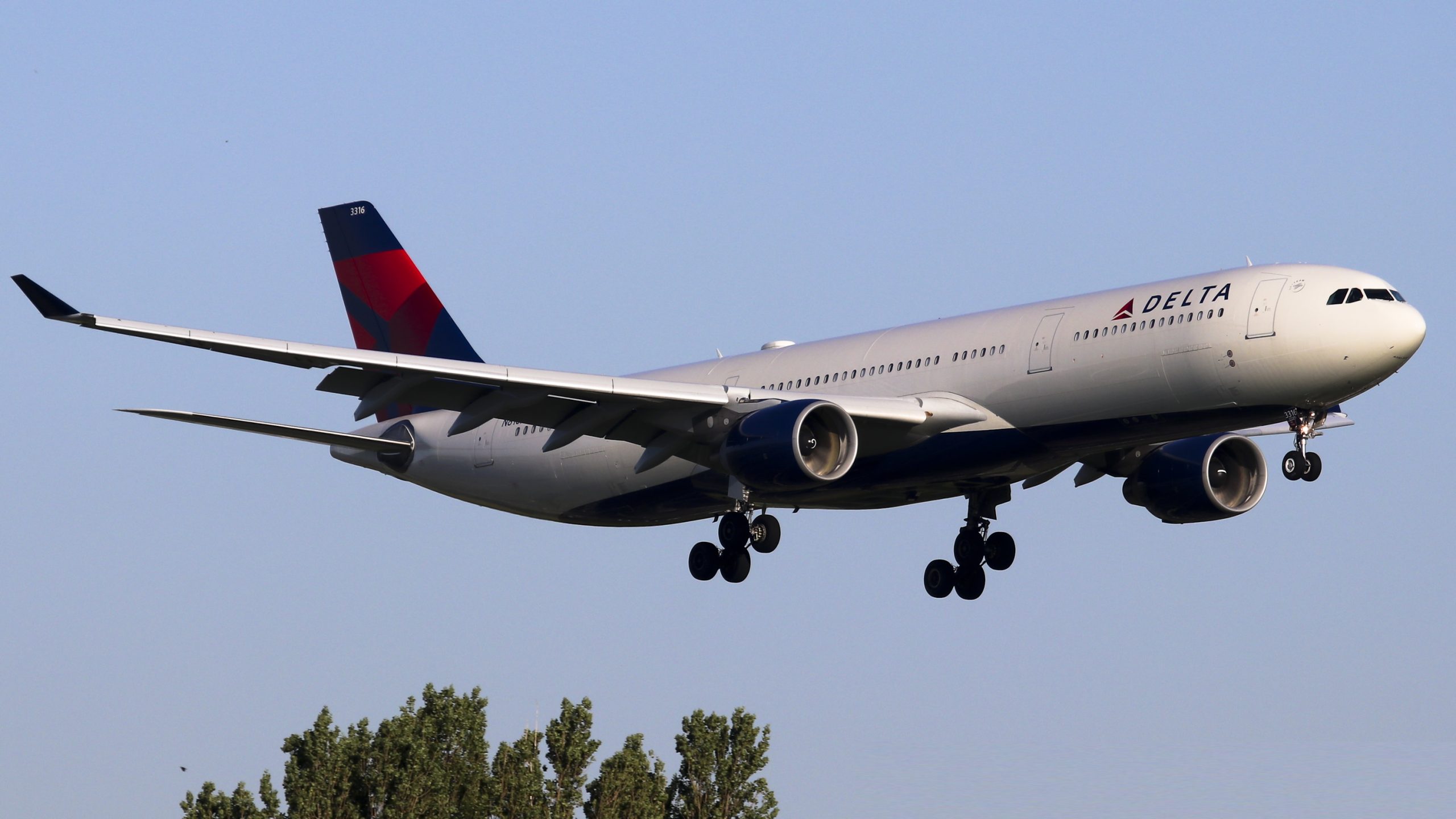
A Delta Airbus A330-300 landing at Amsterdam Airport Schiphol (Photo: AirlineGeeks | Fabian Behr)

Delta Air Lines has announced that it will resume flying between Tampa and Amsterdam later this year, bringing its total number of routes to the Dutch city to ten.

Details: Delta’s New Tampa–Amsterdam Route

Daily flights between Tampa International Airport and Amsterdam Airport Schiphol  are scheduled to begin on October 26, 2024. The route will be a winter seasonal service, with an end date of March 29, 2025.

Delta will deploy its Airbus A330-300 aircraft on the route. The route will be a service resumption, with Delta last flying nonstop between Tampa and Amsterdam in summer 2019.

The fact that the route is being introduced as a seasonal winter service suggests that Delta foresees strong demand from European residents. Although travel demand to Europe is strong among American travelers in the summer, there is significant demand for westbound travel from Europe to Florida in the winter months, as the Sunshine State is seen as a leisure destination for its warmer weather and pristine beaches.

Four other airlines currently offer transatlantic service from Tampa: British Airways flies to London’s Gatwick Airport, Discover Airlines flies to Frankfurt, Edelweiss Air flies to Zurich and Virgin Atlantic flies to London’s Heathrow Airport. As a result, the prominent SkyTeam carrier’s resumption of this route will compete with other carriers across the Atlantic.

Delta’s Expanding Transatlantic Network

Delta’s flights from Tampa to Amsterdam will be its tenth route to the Netherlands’ largest city. The Atlanta-based carrier currently offers year-round flights from Atlanta, Boston, Detroit, Minneapolis/St. Paul, Seattle, Portland, Salt Lake City and New York’s John F.Kennedy International Airport to Amsterdam. The airline also has a winter seasonal route between Amsterdam and Orlando.

Amsterdam serves as a major European connecting hub for Delta passengers, due to the airline’s transatlantic joint venture with SkyTeam partners Air France–KLM and Virgin Atlantic. With Amsterdam being KLM’s home base and main hub, many Delta passengers who fly to the airport from the United States connect onto KLM flights to other European destinations and beyond. The SkyTeam hub is Delta’s most-served airport in Europe.

Andrew Chen

Andrew is a lifelong lover of aviation and travel. He has flown all over the world and is fascinated by the workings of the air travel industry. As a private pilot and glider pilot who has worked with airlines, airports and other industry stakeholders, he is always excited to share his passion for aviation with others. In addition to being a writer, he also hosts Flying Smarter, an educational travel podcast that explores the complex world of air travel to help listeners become better-informed and savvier travelers.

Embraer Delivers 1,800th E-Jet

Brazilian-based jet manufacturer Embraer delivered its 1,800th E-Jet to Royal Jordanian Airlines on Thursday.

Embraer delivered the E190-E2 jet to Royal Jordanian Airlines on Thursday. The navy green jet sports a decal marking the jet manufacturer’s 1,800th E-Jet delivery milestone. (Photo: Embraer)

Brazilian-based jet manufacturer Embraer reached a new milestone by delivering its 1800th E-Jet production aircraft on Thursday.

According to a press release from the company, the new Azorra-owned E190-E2 was handed over to Royal Jordanian Airlines at Embraer’s facility in Sao Jose dos Campos, Brazil.

This delivery marks the third E2 for the airline, which also operates four first-generation E-Jets. Royal Jordanian Airlines will receive a total of eight E2s under its existing deal with Embraer and Azorra.

Since the company’s founding, Embraer’s E-Jets have serviced fleets of 90 airlines and leasing companies from over 60 countries. The E190-E2 is part of a family of advanced-generation E-Jets in the under-150-seat market that are quiet, low-polluting, and fuel-efficient. In 20 years of service, the E-Jets have carried two billion passengers on 26 million flights a distance of nearly 87 million miles.

Arjan Meijer, President and CEO of Embraer Commercial Aviation, attributed the longevity of the E-Jets program to Embraer’s focus on excellence and continuous improvement.

“It’s great to mark this milestone along with two key partners, RJ and Azorra,” Meijer said in a press release. “We’re always looking for ways to make our aircraft better – reducing operating costs, extending maintenance intervals and adding new technology.”

Additionally, Meijer said that Embraer will announce a number of performance improvements for the E2 later this year, noting that it is ready to fly on 100% sustainable aviation fuel.

“The E2 continues to demonstrate its advantages in fuel burn, emissions, quietness, reliability, and passenger comfort, and airlines are taking notice,” Meijer said.

Embraer is the third largest commercial jet manufacturer in the world behind Boeing and Airbus. The company has over 18,000 employees and has delivered over 8,000 airplanes since it was founded 20 years ago.

A report published on Wednesday by The Wall Street Journal claims that Embraer is planning a new 737-sized jet to rival Boeing. Embraer countered this report, however, saying the company has no plans for a major cycle of spending, according to another article published by Reuters that same day.

AirlineGeeks.com Staff

AirlineGeeks.com was founded in February 2013 as a one-person blog in Washington D.C. Since then, we’ve grown to have 25+ active team members scattered across the globe. We are all here for the same reason: we love deep-diving into the fascinating realm of the airline industry.

Etihad Inks Five New Interline Agreements, Expands A380 Network

Etihad Airways has expanded its partnerships with the addition of five new airlines to a growing list of interline agreements.

Etihad's A380 lands at London Heathrow (Photo: AirlineGeeks | William Derrickson)

Etihad Airways has expanded its partnerships with the addition of five new airlines to a growing list of interline partnerships. The U.A.E. carrier announced on Friday that partnerships had been agreed with Kam Air, SKY Express, Rex Airlines, Jeju Air, and Myanmar Airways International.

Kam Air operates from Etihad’s base at Zayed International Airport (AUH) in Abu Dhabi to Kabul, Afghanistan. The interline agreement will give Etihad passengers the opportunity to transit through AUH to Kam Air’s service to Kabul and then connect with the airline’s operations within Afghanistan.

SKY Express operates to 28 destinations on the Greek mainland and Mediterranean islands giving Etihad passengers connectivity through the airline’s twice-daily service to Athens’ Eleftherios Venizelos International Airport (ATH). Similarly, the interline agreement with Australia’s Rex Airlines opens up the continent via Etihad’s gateway destinations, Sydney and Melbourne. Rex flies to 22 Aussie airports including Adelaide, Brisbane, the Gold Coast and Australia’s capital, Canberra.

South Korean carrier Jeju Air self-identifies as ‘Korea’s number one low-cost carrier’ connecting from Seoul’s Incheon International Airport (ICN) to 27 destinations across seven countries in Northeast Asia. High-profile destinations serviced on the airline’s Boeing 737 MAX and 737-800 aircraft from ICN include Busan, Tokyo’s Narita airport, Fukuoka, Japan, and Bangkok, Thailand.

The interline agreement with Myanmar Airways International will give further access to Etihad passengers to Yangon and Mandalay. Myanmar Airways has a significant range of codeshare and interline partnerships including Etihad competitors Emirates, Qatar Airways, and Oman Air.

Arik De, Etihad’s Chief Revenue and Commercial Officer, said: “We continue to broaden our network reach enabling seamless connection across our network, giving our guests a broader range of travel options. These five interline agreements make life easier for guests of all the airlines involved.”

New A380 Service

News of the five interline agreements comes amid several expansion announcements and inaugural flights by Etihad in recent weeks. Included in the recent developments was the introduction to New York’s JFK airport of the airline’s A380. This follows the Airbus aircraft’s utilization on the London Heathrow route, as the second destination for the premium-heavy configured layout with the luxurious ‘Residence’ three-room suite.

Etihad’s chief executive officer Antonoaldo Neves stated: “Introducing the A380 to the popular New York route aligns with our strategy to meet increasing customer demand and expand our network. It comes just three weeks after we launched our new route to Boston, our fourth US gateway, underlining our commitment to serving and growing the North American market.”

The carrier also announced in April that the A380 would be deployed on the AUH to Paris Charles De Gaulle (CDG) route from Nov. 1, 2024.

John Flett

John has always had a passion for aviation and through a career with Air New Zealand has gained a strong understanding of aviation operations and the strategic nature of the industry. During his career with the airline, John held multiple leadership roles and was involved in projects such as the introduction of both the 777-200 and -300 type aircraft and the development of the IFE for the 777-300. He was also part of a small team who created and published the internal communications magazines for Air New Zealand’s pilots, cabin crew and ground staff balancing a mix of corporate and social content. John is educated to postgraduate level achieving a masters degree with Distinction in Airline and Airport Management. John has held the positions of course director of an undergraduate commercial pilot training programme at a leading London university. In addition he is contracted as an external instructor for IATA (International Air Transport Association) and has been a member of the Heathrow Community Fund’s ‘Communities for Tomorrow’ panel.

Emirates Refreshes Amenity Kits for Summer Season

Emirates, in a continuation with their partnership with Bulgari, announced refreshed amenity kits for first and business class during the summer season.

An Emirates Boeing 777-300ER aircraft.
An Emirates Boeing 777-300ER aircraft. (Photo: AirlineGeeks | William Derrickson)

This week Emirates has announced a new collection of Bulgari branded amenity kits for both first and business class passengers for the summer season. This marks a continuation of the partnership Emirates has had with Bulgari for over 15 years.

First Class Amenity Kits

There are four first class amenity kits available for passengers to collect.

There are two individual collectable bags for men containing a slew of Bulgari amenities and other standard products one would find in an amenity kit. The bags come in two shapes, the classic toiletry bag and a handheld pouch. They’re both made of chestnut brown colored synthetic leather with forest green accents and cream trim.

Emirates’ First Class Mens Amenity Kit (Photo: Emirates)

The contents include a 30ml bottle of a new scent developed by Bulgari, called BVLGARI LE GEMME KOBRAA Eau de Parfum. This scent is built around the powerful smoky notes of black incense combined with the clean fresh facets of white incense. Passengers will also be able to enjoy an aftershave balm, a body emulsion, a cleansing towel, and lip blam which will be presented in a Bulgari branded drawstring pouch. Other contents of the kit are more standard such as a shaving razor and cream, a dental kit, deodorant, tissues, earplugs, and a foldaway hairbrush.

Emirates’ First Class Womens Amenity Kit (Photo: Emirates)

For women traveling in first class, there are also two individual collectible bags that feature a different color scheme. These bags are metallic champagne-bronze colored with turquoise trim, accents, and lining. The bags will also come in two shapes, one is a vanity case and the other a clutch. As with the men’s offering these amenity kits will have their own newly developed scents.

Each kit will have a 30ml bottle of BVLGARI LE GEMME OROM Eau de Parfum, a scent built around bourbon vanilla and natural oud wood. Alongside this, passengers will receive a gold-lacquered Bulgari mirror enclosed in a Bulgari pouch. Other Bulgari products such as a face emulsion, body emulsion, cleaning towel, and lip balm will also be included. There’s the standard set of amenities too such as earplugs, a dental kit, deodorant, tissues, a foldaway hairbrush, and a black elastic hair tie.

Business Class Amenity Kits

The business class offerings are also quite impressive.

Emirates’ Business Class Mens Amenity Kit (Photo: Emirates)

The bags for men will be a chestnut brown fabric material with cream accents that will be available in a handheld and classic toiletry bag style. These bags will also feature a fragrance; in this case it will be BVLGARI MAN IN BLACK Eau de Parfum, a best-seller Bulgari masculine scent. This scent highlights vibrant spices and leather. The kits will also contain aftershave and body lotion which are scented using this iconic scent. The standard amenity kit items are also included, a shaving razor and foam, a dental kit, earplugs, deodorant, tissues, and a foldaway brush made from wheat straw.

Emirates’ Business Class Womens Amenity Kit (Photo: Emirates)

There will be a pouch and classic toiletry bag shape for women as well that will feature a soft cream shade with pops of coral. These will feature the iconic BVLGARI OMNIA CORAL Eau de Toilette which uses bergamot essence, goji berries, and hibiscus notes. The kits will also include a face emulsion and body lotion with the same scent along with a lip balm. We also see a dental kit, earplugs, a mirror made from wheat straw, deodorant, tissues, a foldaway brush, and a black hair tie.

These new amenity kits will start to roll out across the fleet as the summer season kicks off.


Hemal Gosai

Hemal took his first flight at four years old and has been an avgeek since then. When he isn't working as an analyst he's frequently found outside watching planes fly overhead or flying in them. His favorite plane is the 747-8i which Lufthansa thankfully flies to EWR allowing for some great spotting. He firmly believes that the best way to fly between JFK and BOS is via DFW and is always willing to go for that extra elite qualifying mile. Hemal's opinions are his own and do not reflect those of his employer.

Livery of the Week: Delta’s First A350 Special Livery

Delta officially revealed its newest Airbus A350 aircraft (N522DZ) featuring a custom Team USA livery design on Thursday.

A special livery on Delta's newest Airbus A350 (Photo: Delta)

Editor’s Note: AirlineGeeks is proud to present our ‘Livery of the Week’ series. Every Friday, a team member will share an airline livery, which can be from the past, present, or even a special scheme. Some airline liveries are works of art. The complexity associated with painting around critical flight components and the added weight requires outside-the-box thinking from designers. The average airliner can cost upwards of $200,000 to repaint, creating a separate aircraft repainting industry as a result. 

Have an idea for a livery that we should highlight? Drop us a line

Delta officially revealed its newest Airbus A350 aircraft featuring a custom Team USA livery design on Thursday. The unveiling ceremony, which was held at Airbus’ facility in Toulouse, France, marks another milestone in Delta’s eight-year partnership with the United States Olympic and Paralympic Committee (USOPC), extending through the 2028 Los Angeles Games. The aircraft is registered as N522DZ. 

The aircraft design, created by Delta’s internal design team, celebrates the carrier’s commitment to Team USA athletes. It features a prominent “Team USA” inscription alongside a red, white, and blue color scheme. 

The livery incorporates elements from the Beijing 2022 Winter Games design while hinting at features to come for Paris 2024 and beyond. Notably, the jet stream design from the Beijing livery has been transformed into the shape of the Eiffel Tower, symbolizing the upcoming Paris Games.

Delta unveils a new special livery on an Airbus A350 (Photo: Delta)

Employees Present at Delivery Event

For the first time, Delta’s Chairman’s Club honorees, a group of the airline’s top 100 employees, were invited to witness the reveal. These employees, nominated by their peers and senior leaders, represent excellence across the airline. The 2023 honorees will be on the aircraft’s ferry flight to Atlanta. 

“Unveiling the Team USA aircraft for the Olympic and Paralympic Games Paris 2024 marks a major milestone for Delta’s support of Team USA as we look toward the start of competition in just a few months,” said Delta’s Chief Marketing Officer Alicia Tillman in a press release. “This plane, designed by our in-house creative team, represents Delta’s commitment to Team USA and our partnership to elevate these athletes to reach their highest potential. As this plane flies around the world in the coming months and years, we hope it is seen as a symbol of hard work, dedication and the upward momentum to being the best that Team USA and Delta innately share.”    

This paint scheme is the first special livery on one of Delta’s A350 aircraft. In 2021, the airline unveiled a special Olympics-themed livery in sponsorship of Team USA on an Airbus A330-900neo. 

Looking for a new airplane model? Head over to our friends at the Midwest Model Store for a wide selection of airlines and liveries.

Ryan Ewing

Ryan founded AirlineGeeks.com in February 2013 and has spent more than a decade covering the airline business. His work has been featured by CNN, WJLA, CNET, and Business Insider. His aviation experience spans airport operations, Part 135 regulatory compliance, and airline crew workforce planning, along with time behind the yoke of a Cessna 172 and interviews with airline executives. Ryan now serves as Group President of Firecrown Media’s Aviation Group. He holds a B.S. in Air Transportation Management and an MBA from Arizona State University and teaches Airline Management at Embry-Riddle Aeronautical University.

Why Pilot Hiring Is Slowing in the U.S.

AirlineGeeks’ first white paper analyzes pilot-to-aircraft ratios, the pilot population, and passenger airline unit economics to explain why hiring is slowing.

A Southwest 737 aircraft
A Southwest 737 in Las Vegas. (Photo: AirlineGeeks | William Derrickson)

A year ago, unionized pilots at Delta Air Lines had just secured a landmark agreement with the company to raise pay by 34% over four years. The March 2023 deal averted any labor action and seemed to enshrine pandemic-era labor tightness in contract form — nine months later, a similarly massive increase in salaries at Southwest Airlines confirmed the trend.

But in 2024, the winds have shifted. First, Delta announced that it would drastically slow pilot hiring, then a leaked internal Southwest memo made clear the company’s plans to pause hiring and defer job offers for the remainder of the year. United froze pilot hiring; Spirit and Amerijet plan to furlough pilots.

In Skywest’s first quarter earnings call, CEO Chip Childs was sanguine about the ‘pilot shortage’ – he noted that while Skywest had a lot of hiring to do in order to grow back to its pre-pandemic capacity, finding pilots was much easier.

“We’re very optimistic about what we have coming up through the pipeline to be able to fill the demand for both fleet types [Bombardier CRJs and Embraer 175s],” Childs said on the call.

What changed? How did the aviation industry go from a desperate shortage of pilots to a plentiful supply?


We collected and analyzed a wealth of data about the pilot population, fleet sizes, and payrolls at the publicly traded airlines, and the unit economics of airline fleet operations to understand why airlines are pulling back on hiring.

We published our findings in the inaugural AirlineGeeks Insights report.

A confluence of factors has forced airlines to slow down hiring, including the Boeing delivery delays that have been widely cited across airline management teams. There are now 12 pilots for every aircraft in the fleets of publicly traded airlines, the highest pilot-to-aircraft ratio in a decade. Growth in pilot headcount has outpaced growth in aircraft counts at fleets and TSA passenger throughput for several years. Load factors have come under pressure as the airlines fly more available seat miles but let growth in revenue passenger miles fall behind. 

Considered from several angles – from the raw number of pilots compared to demand to the actual passenger margin per ASM, which has been negative at many airlines since the pandemic – it makes sense for airlines to fly less capacity and drive utilization higher.

There’s definitely a cyclical rebalancing happening where some airlines are deliberately trying to slow capacity growth and let demand growth catch up. But there’s also reason for longer-term optimism about the pilot labor market loosening. The number of airline transport pilot (ATP) certificates issued each year has exploded, growing more than 100% in the past five years. While the airline industry loses approximately 4,300 pilots each year due to mandatory retirement, in 2022 the industry added more than 9,000 ATPs, and in 2023 more than 11,000 ATP certifications were issued. 

And although airline pilots are older than they were at the beginning of the century – the average ATP holder in 2001 was just 46 years old – the current average age of 50.4 years is the lowest it’s been in eight years. Because many more new ATPs are being issued than pilots are being lost through retirement, we expect the average age of the ATP holder to continue trending downward.

We dive into all of this data and much more in our first AirlineGeeks Insights white paper. Click below to download it and get access to our full analysis of the pilot labor market.

For the best insights on the pilot workforce, go to FindAPilot.com, where you can search hundreds of pilot jobs and tens of thousands of pilots for hire.

AirlineGeeks.com Staff

AirlineGeeks.com was founded in February 2013 as a one-person blog in Washington D.C. Since then, we’ve grown to have 25+ active team members scattered across the globe. We are all here for the same reason: we love deep-diving into the fascinating realm of the airline industry.

Lisbon Set to Receive East Asia Flights

Korean Air's new route to Lisbon will be the airport's first regularly scheduled flight to East Asia, starting in September 2024.

Korean Air 787-10
A Korean Air 787-9 being delivered at Boeing's North Charleston, S.C. facility (Photo: AirlineGeeks | Hisham Qadri)

Korean Air is planning to begin regularly scheduled flights between Lisbon and Seoul Incheon starting in September 2024. The new route is slated to be Lisbon’s longest at 6,474 miles.

According to AeroRoutes, the new Seoul-Lisbon route is scheduled to begin on Sept. 11, 2024, operating three times per week. Flights will be operated by a Boeing 787-9 Dreamliner.

Outbound flights are scheduled to depart Incheon at approximately 1 p.m. local time, arriving in Lisbon around 8 p.m. The return flight departs Lisbon around 10 p.m. local time, arriving in Seoul the next day.

Per Cirium Diio schedule data, Lisbon’s current longest flight is flown by TAP Air Portugal with service to San Francisco, which is planned at 5,681 miles. Korean Air’s new route will also be the airport’s first regularly scheduled flight to East Asia.

Ryan Ewing

Ryan founded AirlineGeeks.com in February 2013 and has spent more than a decade covering the airline business. His work has been featured by CNN, WJLA, CNET, and Business Insider. His aviation experience spans airport operations, Part 135 regulatory compliance, and airline crew workforce planning, along with time behind the yoke of a Cessna 172 and interviews with airline executives. Ryan now serves as Group President of Firecrown Media’s Aviation Group. He holds a B.S. in Air Transportation Management and an MBA from Arizona State University and teaches Airline Management at Embry-Riddle Aeronautical University.
Sign-up for newsletters & special offers!

Get the latest stories & special offers delivered directly to your inbox

SUBSCRIBE

Uh-oh! It looks like you're using an ad blocker.

Our website relies on ads to provide free content and sustain our operations. By turning off your ad blocker, you help support us and ensure we can continue offering valuable content without any cost to you.

We truly appreciate your understanding and support. Thank you for considering disabling your ad blocker for this website