LOT Polish Airlines flight LO16 from New York-Newark airport has broken the carrier's transatlantic record, bringing the passengers one hour early to Warsaw
A LOT 787-8 in Los Angeles (Photo: AirlineGeeks | William Derrickson)
What might be a challenge for some will be an opportunity for others. Storm Ciarán is the most commonly recognized implication of the recent weather conditions above the Atlantic Ocean. Dangerously powerful winds are recking havoc in many regions of Europe, bringing airport operations to a halt, even at major airports like Amsterdam-Shiphol.
Aerial Superhighways
The extreme weather conditions are reinforcing jetstreams – a natural phenomenon occurring in the Earth’s atmosphere. Those are relatively narrow beams of fast-flowing air, typically in a west-to-east direction.
The frame of reference for a flying plane is the air around it. In this kind of setup, the limiting factor for the aircraft is the airspeed. Airspeed determines how much lift and drag – forces that are working to lift the aircraft or slow it down respectively – the aircraft encounters.
A natural threshold that is impossible to cross for airliners is the speed of sound. On the height of a cruising plane, that speed hovers right above 1000 km/h.
Working together with a jetstream, a plane can combine its own airspeed with the speed of the wind, reaching a new, higher ground speed. This way, passenger aircraft, normally flying around 800-900 km/h, can reach ground speeds that look, like it might be breaking the speed of sound.
Jetstream illustration (Photo: Fred the Oyster | Wikimedia Commons)
Bending the Time
Some passengers are usually puzzled when they see that their transatlantic flights are not equal in duration when traveling both ways. The difference in the ground speed between flying eastwards and westwards is the factor contributing most to that occurrence. The difference might be significant; often the scheduled time for the flight eastward, with the help of tailwinds, is 1.5h shorter than the flight in the other direction, which deals with headwinds instead.
Other factors that can contribute to the difference in flight time are the path that the pilots choose or the congestion on air “highways.” With the current Russian airspace closures for the European carriers, it is common to reach the Asian Far East flying southbound but the come back to Europe with a northbound, transpolar route.
At Least One Record Broken
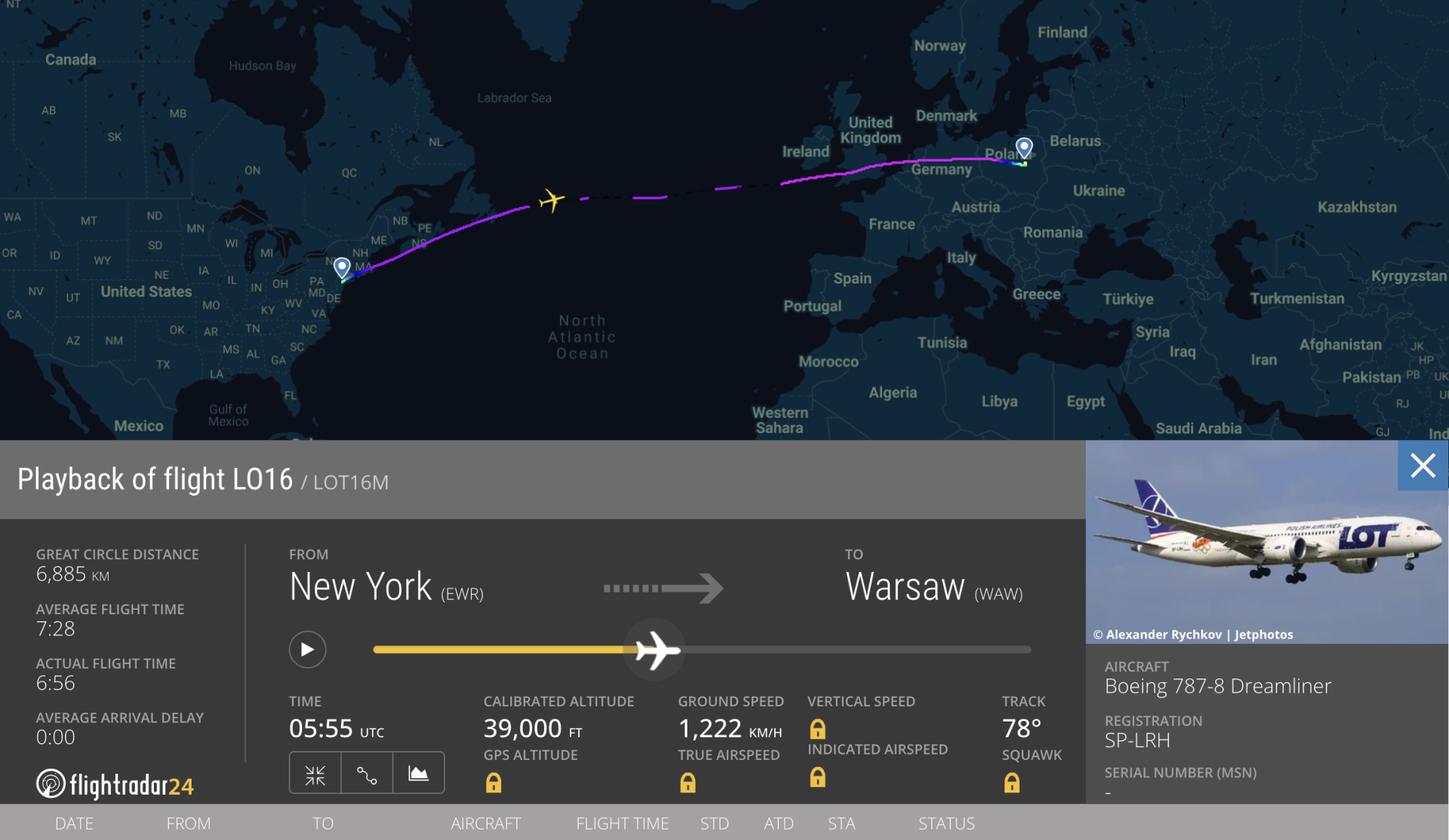
This time, a success is celebrated at LOT Polish Airlines. Flight LO15 from Newark airport landed one hour ahead of schedule. The flight time got down to 6h 55min, marking a record of the Polish national carrier on this route. The ground speed reached 665 kts, or roughly 1230 km/h.
LOT Polish Airlines flight LO16 over the Atlantic on the 1 of November 2023 (Photo: Flightradar24)
The absolute record of passenger transatlantic flights is still standing, though. In February 2020, British Airways flight BA112 set the current record of an estimated 1325 km/h. The news was quickly overthrown on the top news pages by the looming flight cancellations of March 2020.
A passionate aviation enthusiast that started off his career as an aerospace engineer, but found his true calling on the commercial side of the airline business. Now as a finance guy among avgeeks and an avgeek among finance guys, he has experience working in the Revenue Divisions of three airlines. In his spare time he enjoys traveling, but admittedly sometimes is more about the journey than the destination.
American Makes Deep Cuts to 2024 Austin Schedule
The Fort Worth-based airline is making significant cuts to its Austin schedule starting in early 2024, according to a recent schedule update.
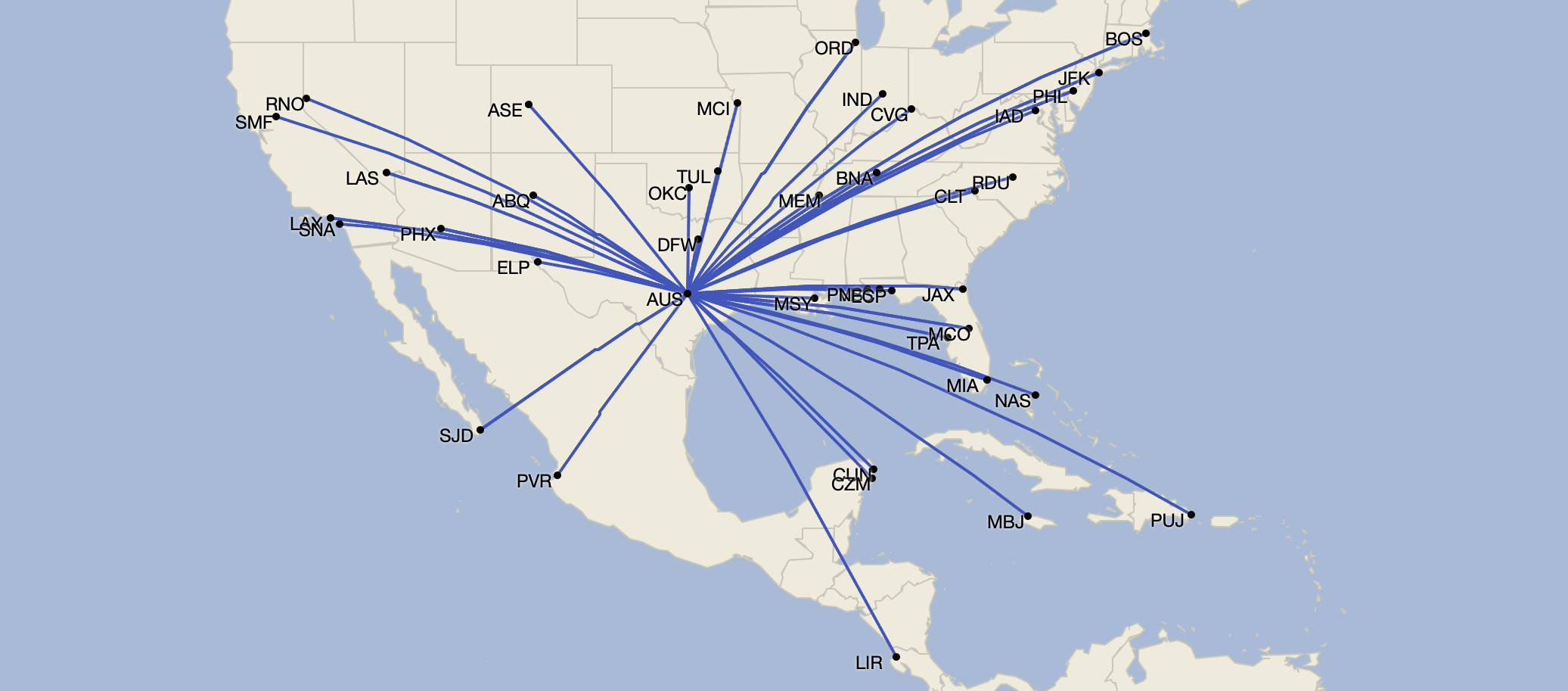
As first pointed out by Adrian Waltz on Twitter (X), American will drop 21 routes from Austin at various points in early 2024. Most of these flights are operated by regional jets. The service cuts include:
Albuquerque (ABQ) after February 2024
Bozeman (BZN) after January 2024
Cincinnati (CVG) after January 2024
Cozumel (CZM) after January 2024
Destin-Fort Walton (VPS) as of 2024
Eagle-Vail (EGE) after February 2024 (possible seasonal return)
El Paso (ELP) after February 2024
Fort Myers (RSW) after February 2024
Jacksonville (JAX) after January 2024
Kansas City (MCI) as of February 2024
Liberia (LIR) after April 2024
Memphis (MEM) as of January 2024
Montego Bay (MBJ) in 2024
Nassau (NAS) after March 2024
Oklahoma City (OKC) after February 2024
Puerto Vallarta (PVR) after April 2024
Punta Cana (PUJ) after March 2024
Sacramento (SMF) after February 2024
Tampa (TPA) after February 2024
Tulsa (TUL) in 2024
Washington Dulles (IAD) after February 2024
Growing Pains?
American placed big bets on the Austin market in 2021 when it added 10 new routes, per Business Insider. Between July 2019 and 2023, the carrier grew the number of seats in Austin by nearly 50%.
In 2022, Southwest controlled a 39% market share in Austin with American following at 20%, according to Department of Transportation BTS data. Less than 200 miles from its DFW super hub, American planned 4,386 flights in Austin for July 2023.
The airline removed the cut flights from its website on Sunday.
So, What is Left?
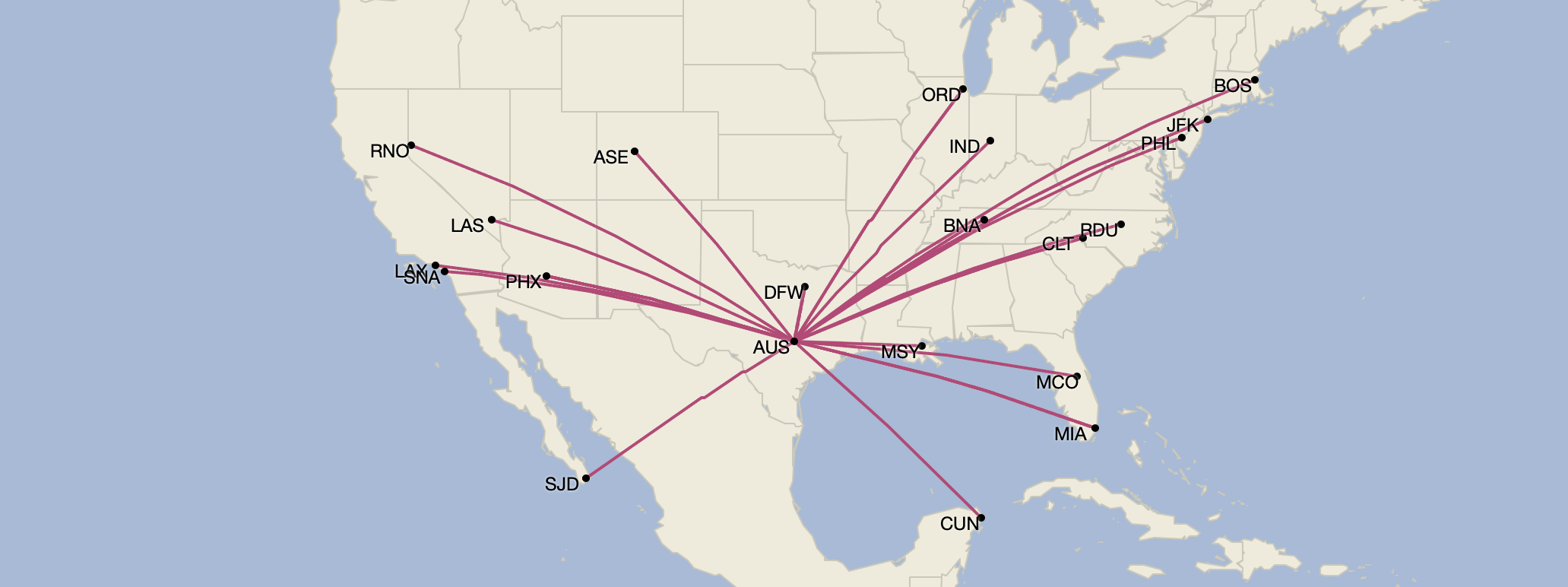
Comparing the peak month of July between 2023 and 2024, these cuts would result in a 1,162 reduction in flights year-over-year, per Cirium Diio data. In the carrier’s July 2024 schedule, only 21 destinations from Austin remain, including:
Aspen (ASE)
Nashville (BNA)
Boston (BOS)
Charlotte (CLT)
Cancun (CUN)
Dallas/Fort Worth (DFW)
Indianapolis (IND)
New York (JFK)
Las Vegas (LAS)
Los Angeles (LAX)
Orlando (MCO)
Miami (MIA)
New Orleans (MSY)
Chicago O’Hare (ORD)
Philadelphia (PHL)
Phoenix (PHX)
Raleigh Durham (RDU)
Reno (RNO)
Cabo San Lucas (SJD)
Orange County (SNA)
In a statement, the airline said that it will offer 53% more seats each day and 19 additional daily departures compared to its 2019 schedule.
American’s July 2023 route map from Austin (Photo: Cirium Diio)
American’s July 2024 route map from Austin (Photo: Cirium Diio)
“Austin remains an important market for American as we continuously evaluate our network. Together with our partners, American will continue to offer customers service to 15 of the top 20 markets from AUS, while continuing to offer one-stop connections across our comprehensive global network to more than 350 destinations around the world,” a spokesperson told AirlineGeeks in a statement.
Ryan founded AirlineGeeks.com in February 2013 and has spent more than a decade covering the airline business. His work has been featured by CNN, WJLA, CNET, and Business Insider. His aviation experience spans airport operations, Part 135 regulatory compliance, and airline crew workforce planning, along with time behind the yoke of a Cessna 172 and interviews with airline executives. Ryan now serves as Group President of Firecrown Media’s Aviation Group. He holds a B.S. in Air Transportation Management and an MBA from Arizona State University and teaches Airline Management at Embry-Riddle Aeronautical University.
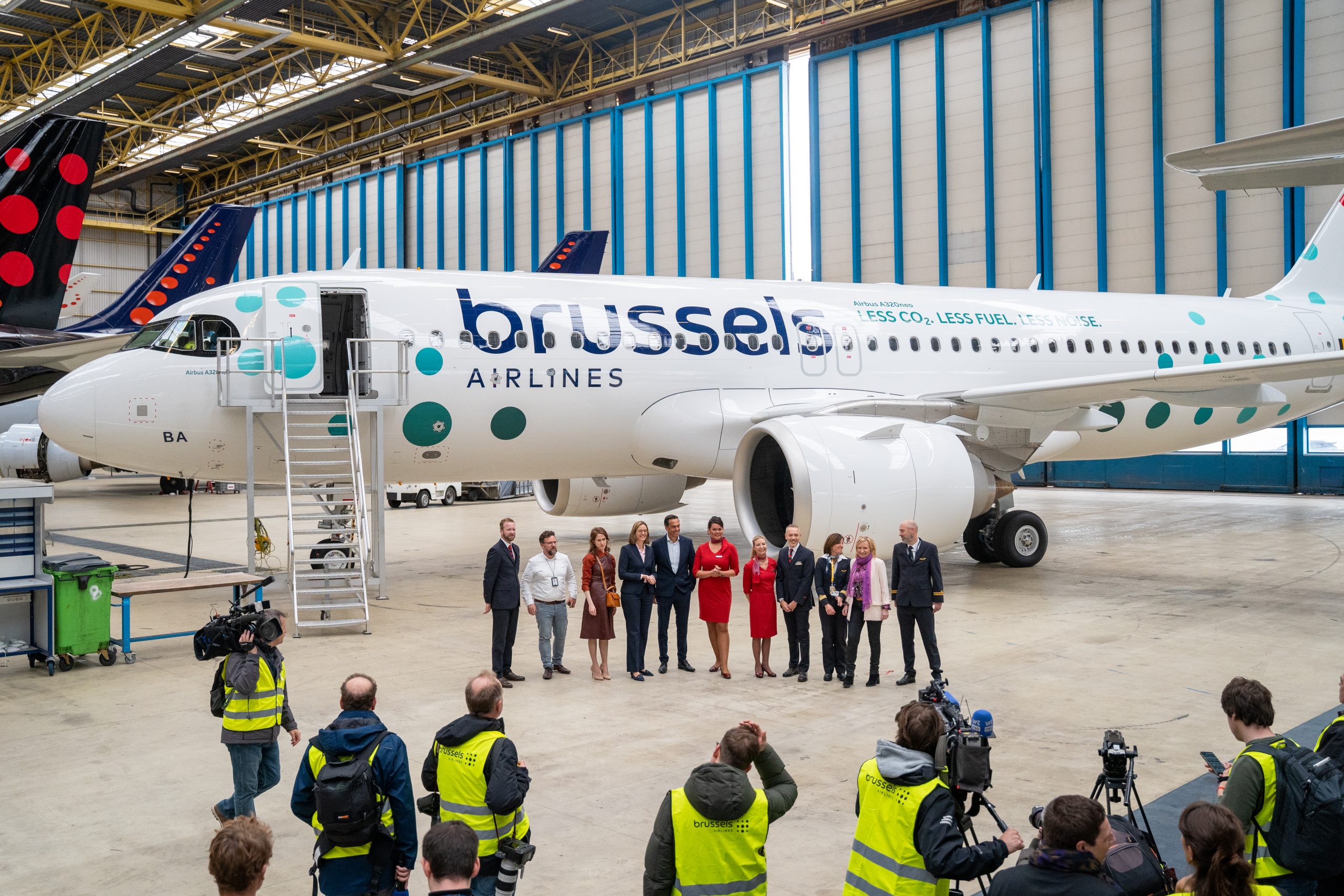
Brussels Airlines First Airbus A320neo. (Photo: Brussels Airlines)
Brussels Airlines, the home carrier of Belgium, recently received its first brand-new Airbus A320neo, marking the beginning of a phase of growth and sustainability for the airline. This new addition is the first of five A320neo aircraft that will join the airline’s fleet. Brussels Airlines’ maintenance and engineering team will conduct the remaining upgrades on the aircraft in the coming weeks. Following this, the first commercial flight will take place.
Brussels Airlines will add four more Airbus A320neo aircraft by the end of 2024, reducing CO2 and noise emissions on medium-haul flights.
Brussels Airlines connects the European capital from Brussels Airport with over 85 destinations, 17 of which are in Sub-Saharan Africa. The airline operates 39 aircraft, including Airbus A319s, A320ceos, and A330-300s. So, it’s worth noting that this delivery marks a departure from their practice of acquiring owned planes, showcasing a notable shift in their strategy.
Designed to be more fuel efficient than its predecessors, the A320neo offers a 20% reduction in fuel consumption compared to previous-generation aircraft. This reduction is expected to lead to a 30% decrease in fuel consumption per seat, contributing significantly to carbon emission reductions. That’s one of the main reasons why, with over 9,700 orders from over 130 customers worldwide, the A320 Family is the world’s most popular aircraft type.
Equipped with CFM International’s LEAP 1A engine and larger engines overall, the A320neo is estimated to save around 3,700 tons of carbon equivalents per plane annually. Furthermore, this aircraft has an increased range, providing more flexibility for airline routes. The airplane’s sharklets, which are wingtips measuring 2.40 meters in length, are expected to result in a carbon equivalent reduction of 800 tons.
The A320neo has a 50% reduction in noise compared to older planes, promising a quieter and comfier journey. Plus, the redesigned luggage spaces have grown by 40%, fitting in 60% more bags making boarding smoother and the cabin less chaotic. The cabin lighting adjusts to the passenger’s body clock, with warm oranges or cooler blues depending on the time of day or flight phase. The A320neo has a seating capacity of 180 passengers.
Dorothea von Boxberg, the CEO of Brussels Airlines, expressed her gratitude to Lufthansa Group for their support in helping the airline achieve its goal of modernizing its fleet and reducing its carbon footprint. She emphasized that this achievement is a milestone for the airline and a testament to the strong partnership between Brussels Airlines and Lufthansa Group.
By 2030, Brussels Airlines, following the strategy of its parent company, Lufthansa, wants to cut its carbon emissions by half compared to 2019, and it’s even aiming to be totally carbon neutral by 2050. Getting these new planes is a big part of their plan.
Vincenzo graduated in 2019 in Mechanical Engineering with an aeronautical curriculum, focusing his thesis on Human Factors in aircraft maintenance. In 2022 he pursued his master's degree in Aerospace Engineering at the University of Palermo, Italy. He combines his journalistic activities with his work as a Reliability Engineer at Zetalab.
An Icelandair 737 MAX 9 at Paine Field (Photo: AirlineGeeks | Katie Bailey)
Icelandair has announced further expansion of the airline’s network for 2024 with the addition of two more North American destinations. Halifax, Nova Scotia in Canada will see a resumption of service after a break of several years with a seasonal operation from 31 May until mid-October 2024. Pittsburgh, Pennsylvania is a new destination for the airline from mid-May until the end of October and becomes the twelfth city serviced by the carrier in the U.S.
The addition of Pittsburgh and Halifax to Icelandair’s network is part of “an ambitious flight schedule for next summer and the largest in the Company’s history,” said Bogi Nils Bogason, the Chief Executive Officer of Icelandair. Pittsburgh will have a service from the airline’s Keflavik (KEF) base four times per week and Halifax will see three flights per week.
Along with the new flights Icelandair is scheduled to add three more Boeing 737 MAX 8 aircraft to its fleet in the coming year bringing its total of the type to 21 and the total for the entire fleet to 42. This will enable the airline to increase frequency to other points on the network, adding 10 per cent extra capacity to the market in 2024 compared to 2023, if measured in available seat kilometers (ASKs). The carrier will offer over 50 destinations on its network with 28 of them being served with a daily flight and a further 19 having additional frequencies.
Iceland’s mid-Atlantic geographic position enables Icelandair to facilitate a unique hub operation allowing passengers traveling to or from North America and Europe the option of a stopover in the country. Flights are scheduled around ‘three connection banks within the day’ to facilitate the demand for travel between the continents. The airline has strong collaborations within the tourism and hospitality sectors in the country that promote the stopover option to those travelling between North America and Europe.
“The North American market has been very strong, with Americans now the largest single group of tourists to Iceland,” said Bogason. At Icelandair’s recent Q3 presentation, the airline advised that 56 per cent of its record passenger revenue for the period originated from the U.S. and Canada. This compared to 27 percent from Europe and 14 percent from within Iceland itself where the airline operates a robust domestic and regional schedule.
Bogason hinted at further growth for the airline at the recent Q3 presentation and in this week’s announcement of the addition of Halifax and Pittsburgh to the network. He said: “Our experienced team, comprehensive sales infrastructure and strong international brand, together with valuable cooperation agreements with other airlines, allows us to continue moving forward and seizing the opportunities we see in our markets.”
John has always had a passion for aviation and through a career with Air New Zealand has gained a strong understanding of aviation operations and the strategic nature of the industry. During his career with the airline, John held multiple leadership roles and was involved in projects such as the introduction of both the 777-200 and -300 type aircraft and the development of the IFE for the 777-300. He was also part of a small team who created and published the internal communications magazines for Air New Zealand’s pilots, cabin crew and ground staff balancing a mix of corporate and social content.
John is educated to postgraduate level achieving a masters degree with Distinction in Airline and Airport Management. John has held the positions of course director of an undergraduate commercial pilot training programme at a leading London university. In addition he is contracted as an external instructor for IATA (International Air Transport Association) and has been a member of the Heathrow Community Fund’s ‘Communities for Tomorrow’ panel.
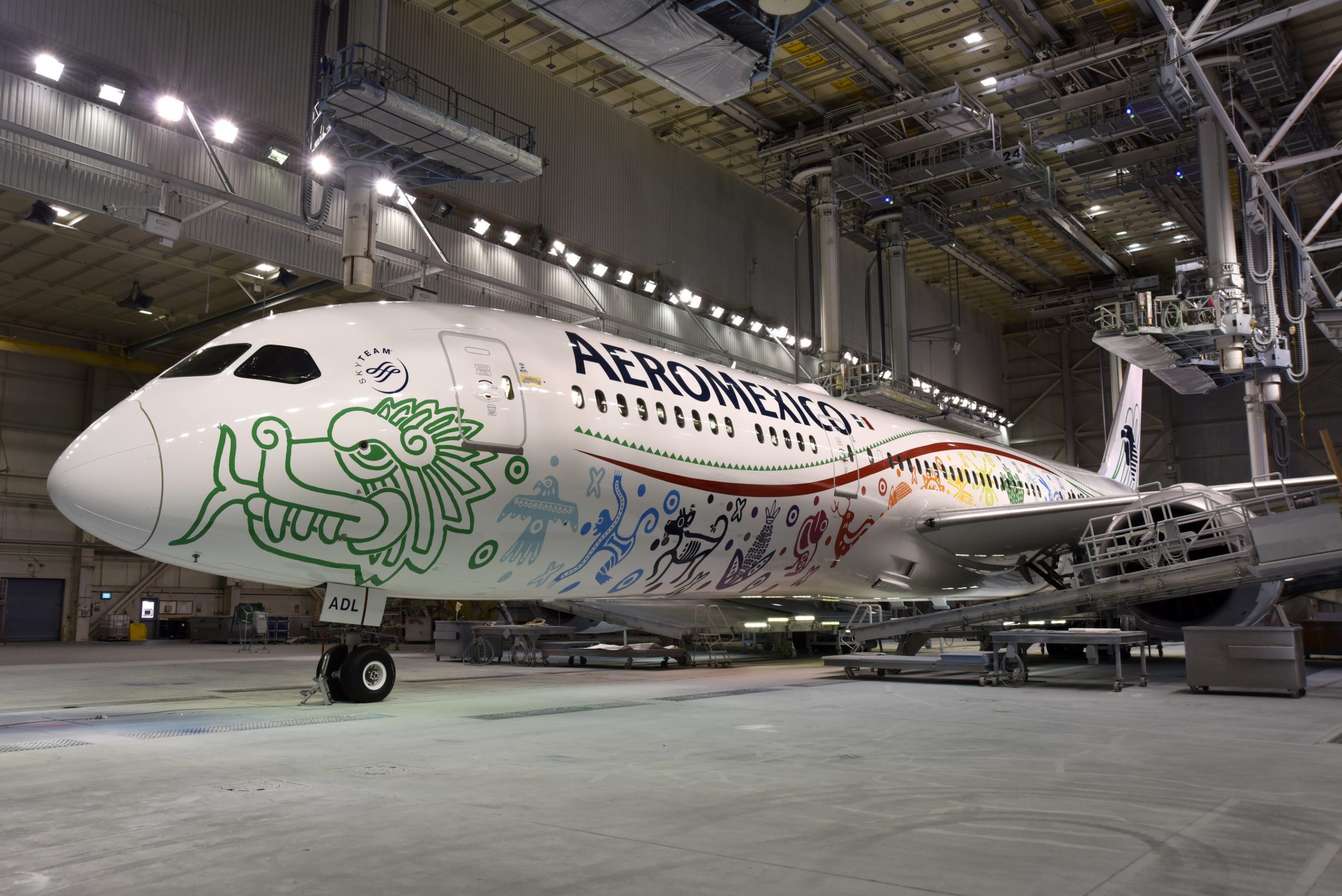
Livery of the Week: Aeromexico’s ‘Quetzalcoatl’ 787
Aeromexico’s ‘Quetzalcoatl’ 787-9 Dreamliner is eye-catching indeed. The airline created a stand-out design.
Aeromexico's 787-9 in a special livery (Photo: Aeromexico)
Editor’s Note: AirlineGeeks is excited to launch our ‘Livery of the Week’ series. Every Friday, a team member will share an airline livery, which can be from the past, present, or even a special scheme. Some airline liveries are works of art. The complexity associated with painting around critical flight components and the added weight requires outside-the-box thinking from designers. The average airliner can cost upwards of $200,000 to repaint, creating a separate aircraft repainting industry as a result.
Have an idea for a livery that we should highlight? Drop us a line.
Aeromexico has kept its share of unique liveries over the years. The Mexican flag carrier once had a standard polished aluminum livery across its fleet until 2006 when newer aircraft became increasingly less reliant on all aluminum components. Given that it is made of 50% carbon fiber material, Boeing’s 787 Dreamliner is certainly no exception to this.
Taking delivery of its first 787 in 2013, Aeromexico painted the aircraft in its refreshed standard livery, which is also on the carrier’s current 737-800 fleet. The standard paint job features a white fuselage with a red wave along with a dark purple tail.
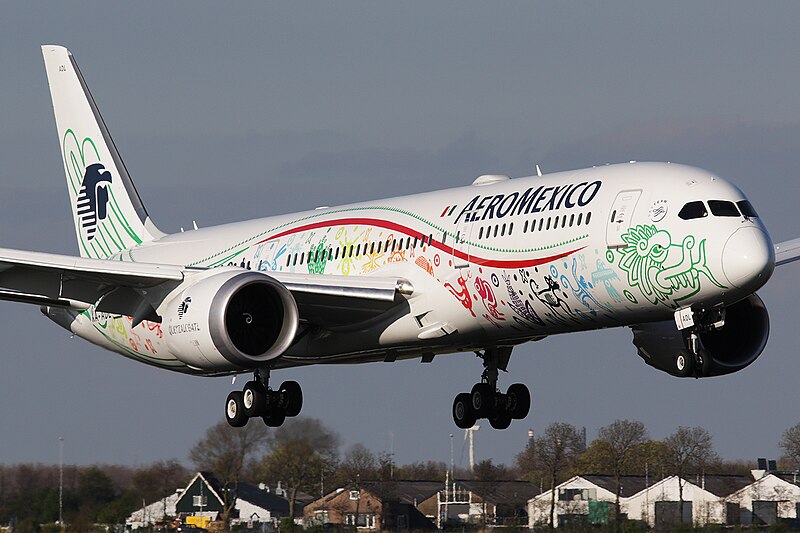
In 2016, Aeromexico took delivery of the longer 787-9 variant, which also came with a special livery. Called ‘Quetzalcoatl’ – which is a deity in Aztec culture – the special livery adorns tail XA-ADL.
‘Tradition and Modernity’
The livery’s vibrant design combines art from the past and present. In a 2016 press release announcing the new aircraft, the airline said: “This is the first time in aviation history in which a design of this type is painted on an aircraft’s livery, offering a unique fusion of tradition and modernity.”
Interestingly, the livery was born out of a social media context two years before the unveiling. According to Aeromexico, more than 1,000 participants presented their designs during the four-week period. The winning design was created by a graphic designer named José Manuel Escudero of Veracruz, Mexico.
“We hope this plane will make our country proud. Quetzalcoatl will fly between major airports in Europe and Asia visited by millions of travelers each year,” said Aeroméxico CEO Andrés Conesa in a press release.
Aeromexico’s XA-ADL (Photo: Bram Steeman, CC BY-SA 2.0 <https://creativecommons.org/licenses/by-sa/2.0>, via Wikimedia Commons)
The special livery is still gracing the skies today, mostly within Aeromexico’s long-haul route network. The airline has 12 Boeing 787-9 Dreamliners in its fleet.
Aeromexico’s ‘Quetzalcoatl’ 787-9 Dreamliner is eye-catching indeed. The airline created a stand-out design while also cultivating the Mexican artistic community.
Looking for a new airplane model? Head over to our friends at the Midwest Model Store for a wide selection of airlines and liveries.
Ryan founded AirlineGeeks.com in February 2013 and has spent more than a decade covering the airline business. His work has been featured by CNN, WJLA, CNET, and Business Insider. His aviation experience spans airport operations, Part 135 regulatory compliance, and airline crew workforce planning, along with time behind the yoke of a Cessna 172 and interviews with airline executives. Ryan now serves as Group President of Firecrown Media’s Aviation Group. He holds a B.S. in Air Transportation Management and an MBA from Arizona State University and teaches Airline Management at Embry-Riddle Aeronautical University.
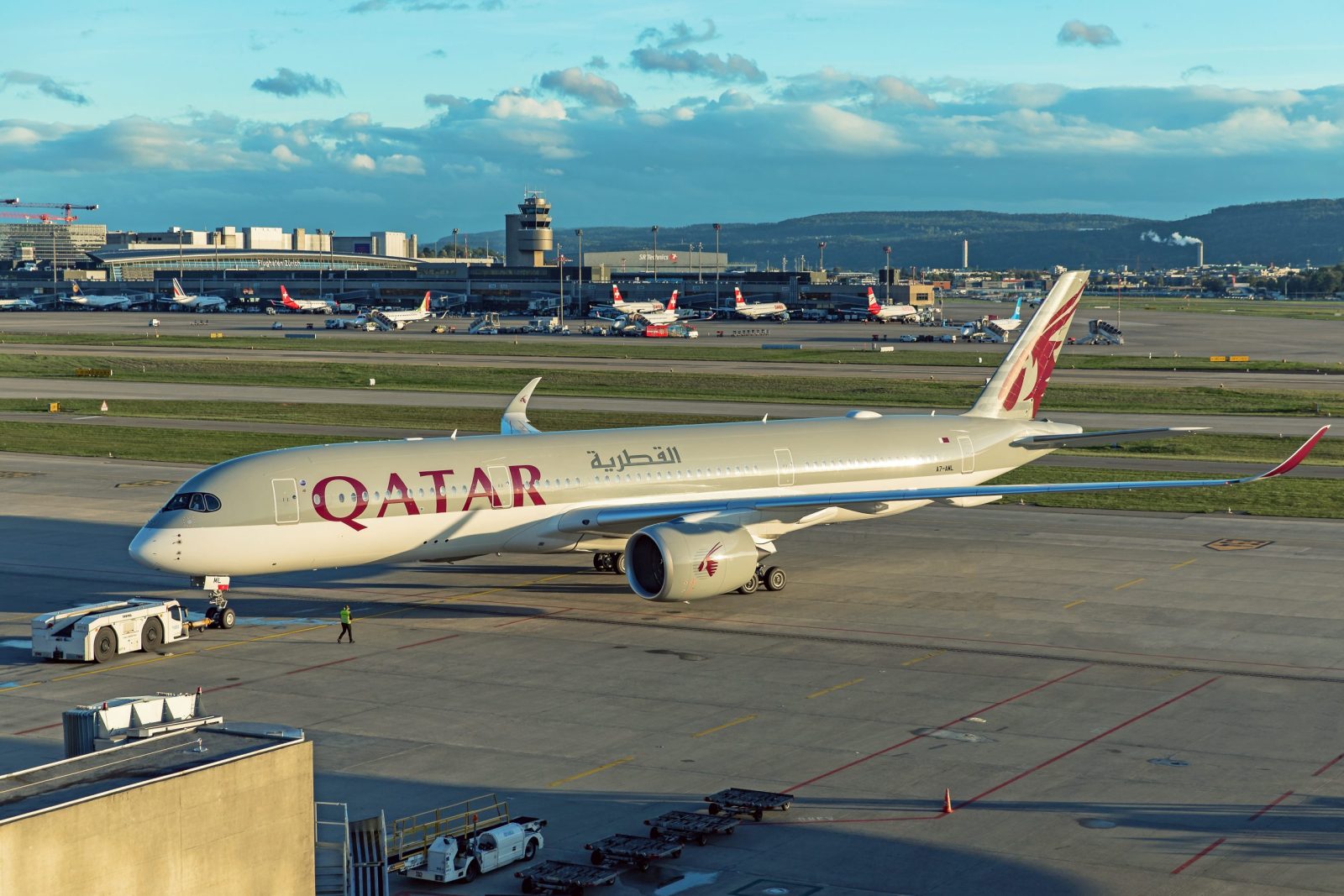
A Qatar Airways A350-900 pushing back for its next flight in Zurich. (Photo: AirlineGeeks | William Derrickson)
Qatar Airways recently announced its financial performance for the first half of the company’s 2023-2024 fiscal year with better-than-expected results.
The airline reported a net profit of $1 billion in the first half of the 2023-2024 fiscal year, a significant increase compared to the same period last year. The first half net profit for the current fiscal year is almost on par with the net profit Qatar Airways saw in the previous 2022-2023 fiscal year, which was $1.21 billion. Qatar Airways is expected to far exceed last year’s performance and end the fiscal year with higher topline revenue than pre-COVID times.
Revenues for the first half of the year were $11 billion, up 7.4 percent compared to the same period last year. Load factors were at 83.3 percent, up from the same period last year. The increased load factors also came with higher yields for the airline at 3.6 percent showing that the airline was making more money with the same seats compared to last year.
Continued Growth
This growth can be attributed to the rebound in international travel along with the return to service of the majority of the airline’s Airbus A350 aircraft which were grounded due to quality issues during the manufacturing process. The return of the majority of the A350 fleet has increased the overall capacity of the airline greatly. Qatar Airways had resorted to flying older jets and leased aircraft from other airlines such as Cathay Pacific to maintain its schedule.
Passenger counts have steadily been increasing and the airline has been growing to match that. There are plans for significant fleet expansion with around 150 aircraft currently on the order books. There have been a number of new destinations announced from Doha as well. New routes include flights to many secondary cities across the globe such as Chittagong in Bangladesh and Kinshasa in the Democratic Republic of Congo.
The airline has also announced resumptions of service from Doha to Beijing, Birmingham, Buenos Aires, Casablanca, Davao, Marrakesh, Nice, Osaka, Phnom Penh, Ras Al-Khaimah, and Tokyo Haneda.
While the airline is bullish on the future, it has identified several potential headwinds that could impact forecasts. The continued geopolitical tensions across several regions add to the overall uncertainty since it is possible there will be an impact on demand for air travel. Additionally, a strengthening U.S. Dollar has impacted earnings to date and this is likely to continue.
Fuel prices continue to be an ever-present concern due to the two factors above with the potential of overall fuel costs for the airline continuing to increase. The carrier’s long-time CEO will also be departing his role in November.
Hemal took his first flight at four years old and has been an avgeek since then. When he isn't working as an analyst he's frequently found outside watching planes fly overhead or flying in them. His favorite plane is the 747-8i which Lufthansa thankfully flies to EWR allowing for some great spotting. He firmly believes that the best way to fly between JFK and BOS is via DFW and is always willing to go for that extra elite qualifying mile. Hemal's opinions are his own and do not reflect those of his employer.
JetBlue Will Exit Amsterdam Market in 2024
JetBlue will not be granted slots at Amsterdam Schiphol in summer 2024 and will be forced to vacate the airport per recent reports.
JetBlue's first passenger-carrying Heathrow arrival (Photo: JetBlue)
The Dutch slot coordinator, Airport Coordination Netherlands, or ACNL, confirmed that JetBlue will not have any landing and take-off slots at Schiphol next summer. This is amid a series of reductions that Schiphol is to undertake in the coming years to reduce the environmental impacts of the airport.
JetBlue currently has two daily flights into Schiphol, from JFK and Boston. Both routes were launched earlier this year during the summer season of 2023 and were planned to continue into the winter season and onwards. The airline was confident going into the market and was determined to ‘lower fares and enhance the customer experience for those flying between the U.S. and Amsterdam,’ as JetBlue CEO Robin Hayes has commented.
The airline has recently launched further expansions in the transatlantic market, building on its success with the current routes to London and Paris. From Summer 2024, new daily flights to Paris from Boston and additional flights from New York-JFK will be launched. New seasonal destinations, Dublin and Edinburgh, will also receive daily flights throughout the summer season, with less premium-focused A321neos operating the routes.
Schiphol Controversy
The previous Dutch government proposed a cap on flight movements in Schiphol with the goal of reducing noise pollution in the area as well as greenhouse emissions. The original proposal was to reduce the number from 500,000 per year to 460,000, but the Dutch transport minister has announced that it will be capped at 452,000 instead from next summer, according to Reuters. The government has previously expressed a desire to cap the flights at 440,000, even lower than the proposed cap and represent a cut of over 10 percent of current flights.
There are still uncertainties surrounding the case, with some stakeholders still hopeful that the course will reverse. Airlines including KLM, the base carrier at Schiphol, have appealed with the Dutch court and foreign government agencies, including the U.S. Department of Transportation, have expressed their concerns to the Dutch government regarding the drastic reduction. With the Tweede Kamer election in less than a month’s time and a new government expected to form, the policy could change.
Impacts
Air India has recently operated its last flight from Schiphol as it also failed to obtain the appropriate slots. Having entered the market just earlier this year, Air India did not have historical slots at the airport and was not going to last until next summer regardless if the cap goes into effect. All airlines with historical rights will receive 3.1% fewer slots, while 24 airlines that do not have such rights will not get any slots to operate. JetBlue is believed to be among the 24 airlines.
JetBlue has encouraged the U.S. government to take reciprocal actions if the Schiphol cap goes into effect, suggesting restrictions on KLM flights flying into JFK. Such practices are not uncommon as national aviation authorities tend to protect their home carriers wherever possible. Reciprocal measures can also be expected from other countries as more airlines become impacted. It is a concern for KLM that other countries might attempt to restrict KLM flights from Amsterdam, according to KLM CEO Marjan Rintel.
A KLM A330-300 touching down in Amsterdam (Photo: AirlineGeeks | Fabian Behr)
KLM will also take a blow to its network when the cap goes into effect and it will have to operate with around 17 fewer daily flights. As an airline that operates around a hub-and-spoke system and relies partly on transit traffic, the reduction can affect its revenue and ability to connect to certain destinations. KLM-Air France have protested the cap on multiple occasions as its implementation looms closer. Some speculate its recent acquisition of SAS stake has been influenced by the cap and has strategic significance for the growth of the group.
Schiphol’s position as one of the major hubs in global aviation will be threatened as its competitors such as Istanbul grow while it is forced to reduce traffic. There will also be impacts on the ticket fare as competition on many routes out of Amsterdam will disappear.
Anthony is an aviation enthusiast who grew up around the world from St. Louis to Singapore, and now lives in Amsterdam. He loves long-haul flying and finds peace in the sound of engine cruising. He aspires to share his passion for the sky though writing and providing another angle on the stories.
Delta Making ‘Small Adjustment’ to Corporate Headcount
Delta is making a 'small adjustment' to its corporate staff headcount, which includes layoffs. This is one of a few time a major U.S. airline has publicly confirmed layoffs post-COVID.
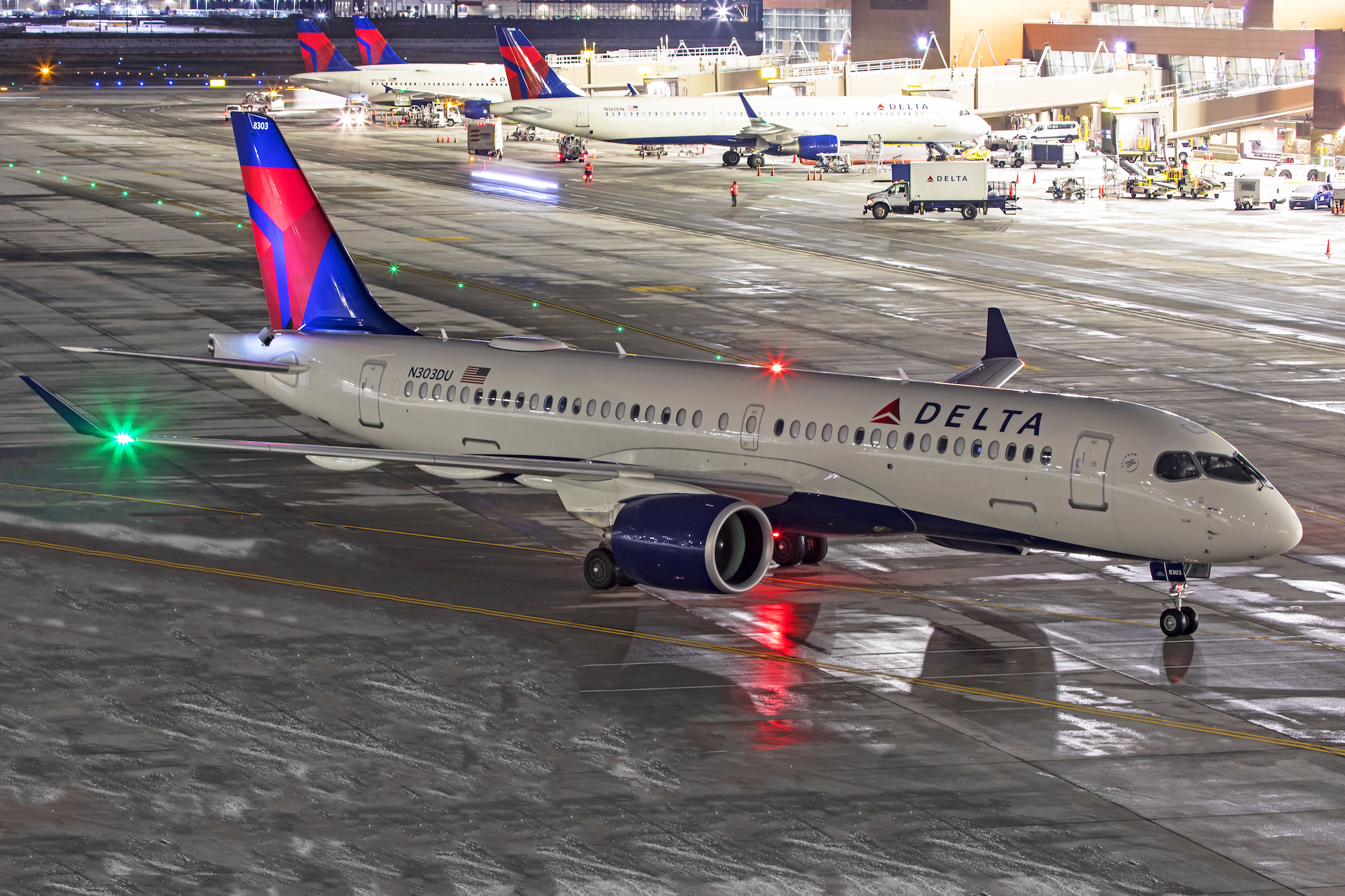
A Delta A220 (Photo: AirlineGeeks | William Derrickson)
Delta is laying off some of its management and corporate staff, as first reported by CNBC. The Atlanta-based airline joins a very short list of carriers who have cut jobs in the wake of the COVID-19 recovery. The U.S. airline industry employs over 760,000 people, per 2022 U.S. BTS data.
According to the CNBC report, the layoffs only extend to corporate and management staff members, not frontline workers. The airline did not specify departments or the number of layoffs, instead calling it a “small adjustment.”
“While we’re not yet back to full capacity, now is the time to make adjustments to programs, budgets and organizational structures across Delta to meet our stated goals — one part of this effort includes adjustments to corporate staffing in support of these changes,” a Delta spokesperson told CNBC.
Layoffs Despite a Strong Q3
In Q3 2023, Delta posted a $1.11 billion profit, one of the highest among its immediate competitors. On the company’s Q3 earnings call, executives emphasized the continuation of strong domestic and international demand.
“Revenue for the full year is expected to increase 20% over last year, which was the high end of our expectations on steady domestic demand and continued strength in international,” Delta’s CEO Ed Bastian said in a prepared statement during the call.
Delta employs nearly 90,000 people, per DOT Form 41 Annual Employee Statistics data. Only the company’s pilots are part of a labor union.
In an Instagram story viewed by AirlineGeeks, an anonymous poster suggested that the layoffs would extend into the communications, marketing, and possibly more departments. However, this has not been verified. Often characterized as ‘management’ in the airline industry, the term can refer to non-unionized corporate staff.
Ryan founded AirlineGeeks.com in February 2013 and has spent more than a decade covering the airline business. His work has been featured by CNN, WJLA, CNET, and Business Insider. His aviation experience spans airport operations, Part 135 regulatory compliance, and airline crew workforce planning, along with time behind the yoke of a Cessna 172 and interviews with airline executives. Ryan now serves as Group President of Firecrown Media’s Aviation Group. He holds a B.S. in Air Transportation Management and an MBA from Arizona State University and teaches Airline Management at Embry-Riddle Aeronautical University.
Inside Look: Boeing Concludes EcoDemonstrator SAF Emission Test with NASA
Boeing and NASA shares initial observation from the flight tests. AirlineGeeks got a behind the scenes look at the Douglas DC-8 jetliner chase aircraft and Boeing's latest 737 EcoDemonstrator aircraft.
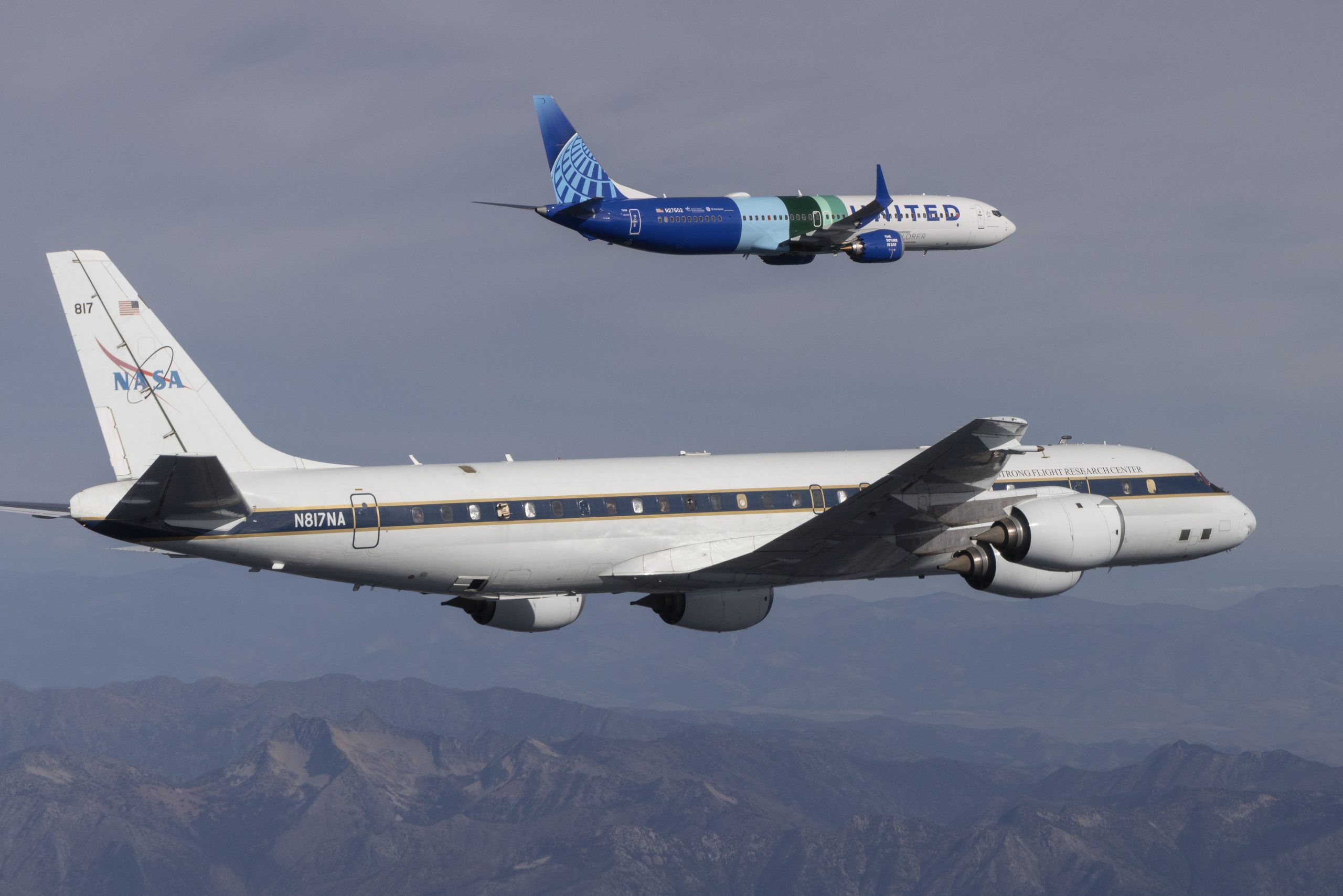
Boeing and NASA concluded flight test studying contrails. (Photo: Boeing)
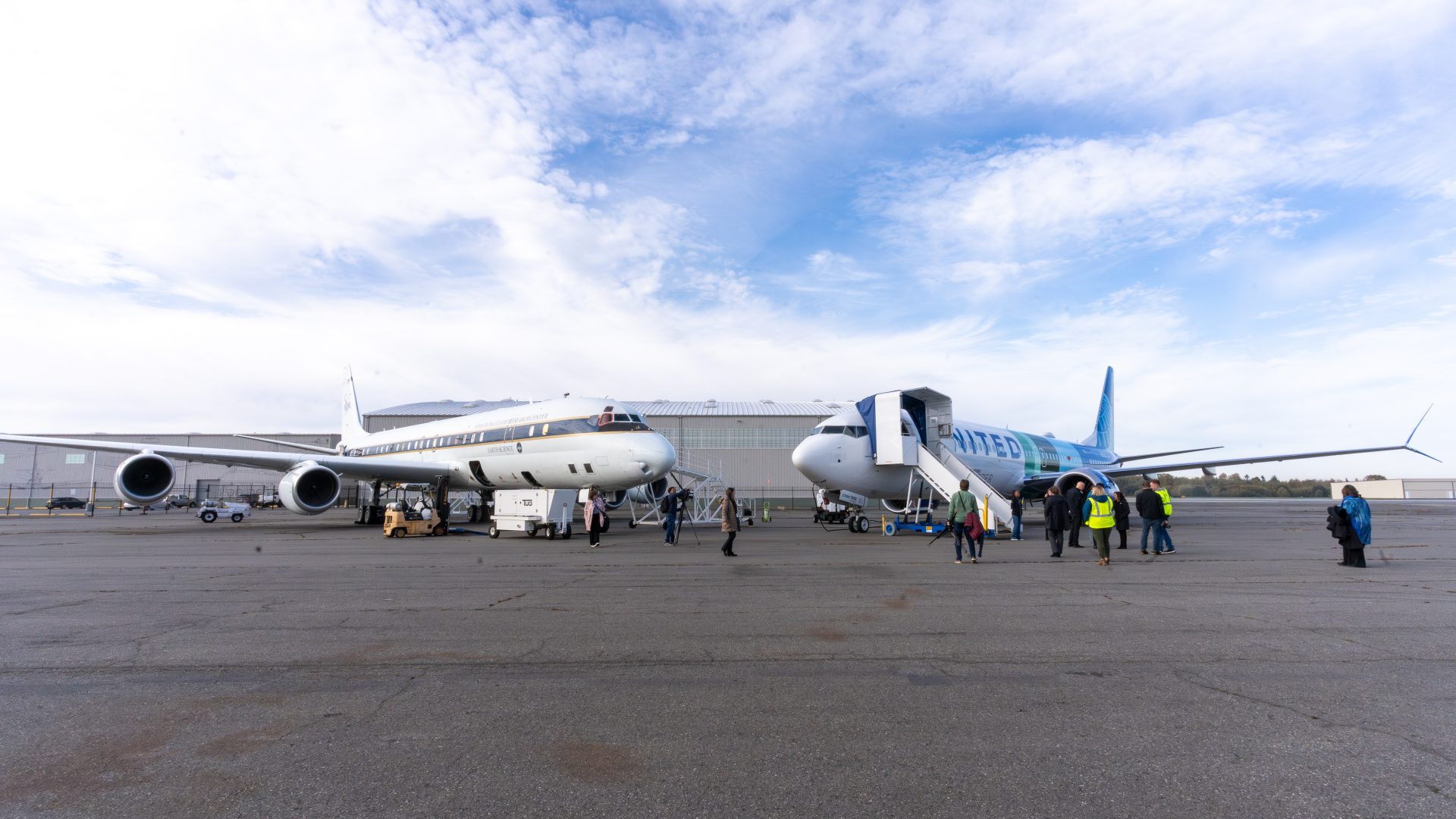
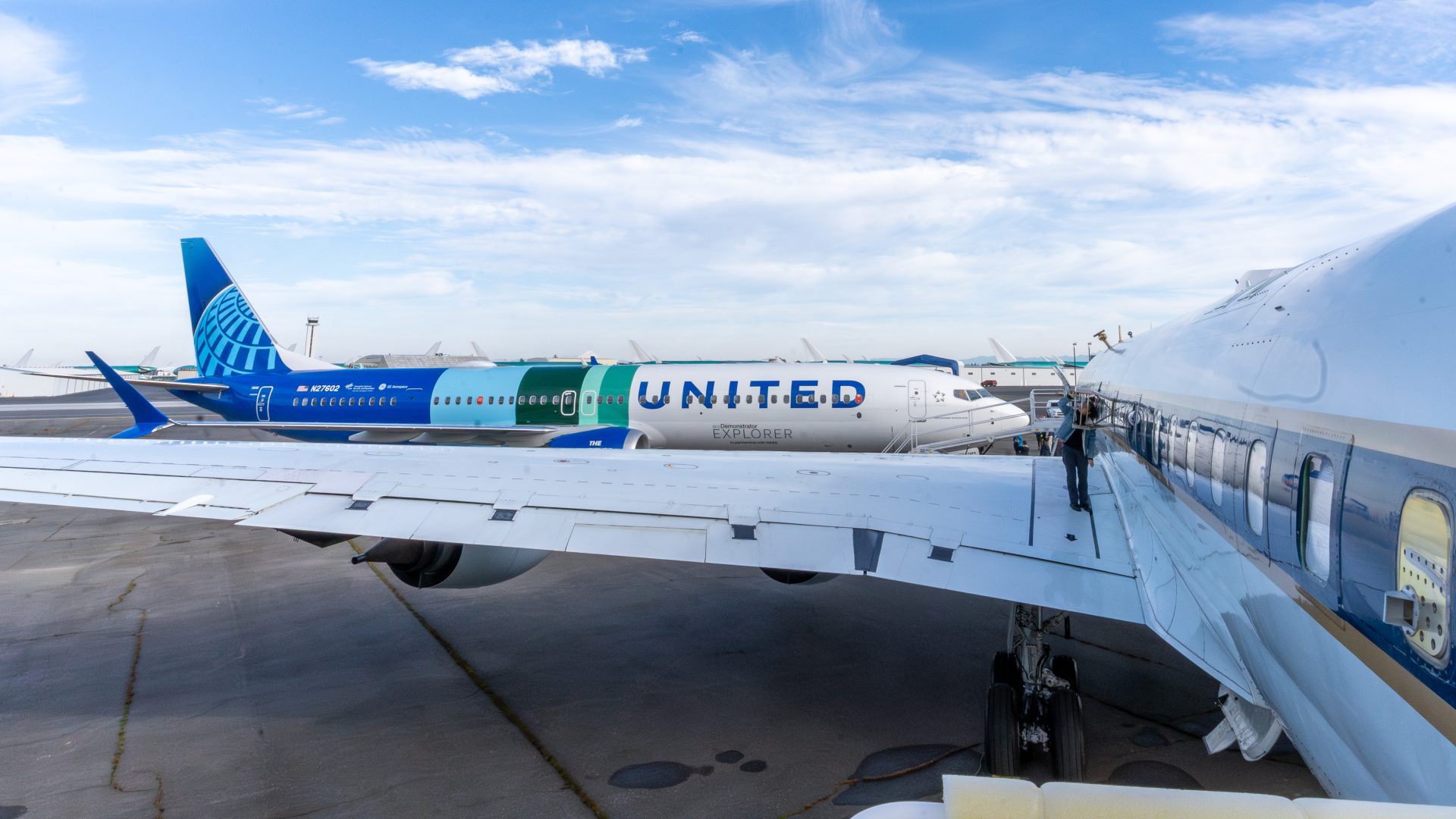
Boeing has concluded a series of flight tests with NASA studying emissions from Sustainable Aviation Fuel (SAF) and its effect on the formation of contrails. The duo performed 10 test flights using the Boeing 737-10 EcoDemonstrator airplane and NASA’s Douglas DC-8 jetliner Airborne Science Laboratory. Each flight lasts from three to five hours, spanning from Montana to the Pacific coast. DLR, FAA, GE Aerospace, and other industry stakeholders also partake in the campaign.
Boeing and NASA conducted a series of flight tests studying emissions. (Photo: AirlineGeeks | Fangzhong Guo)
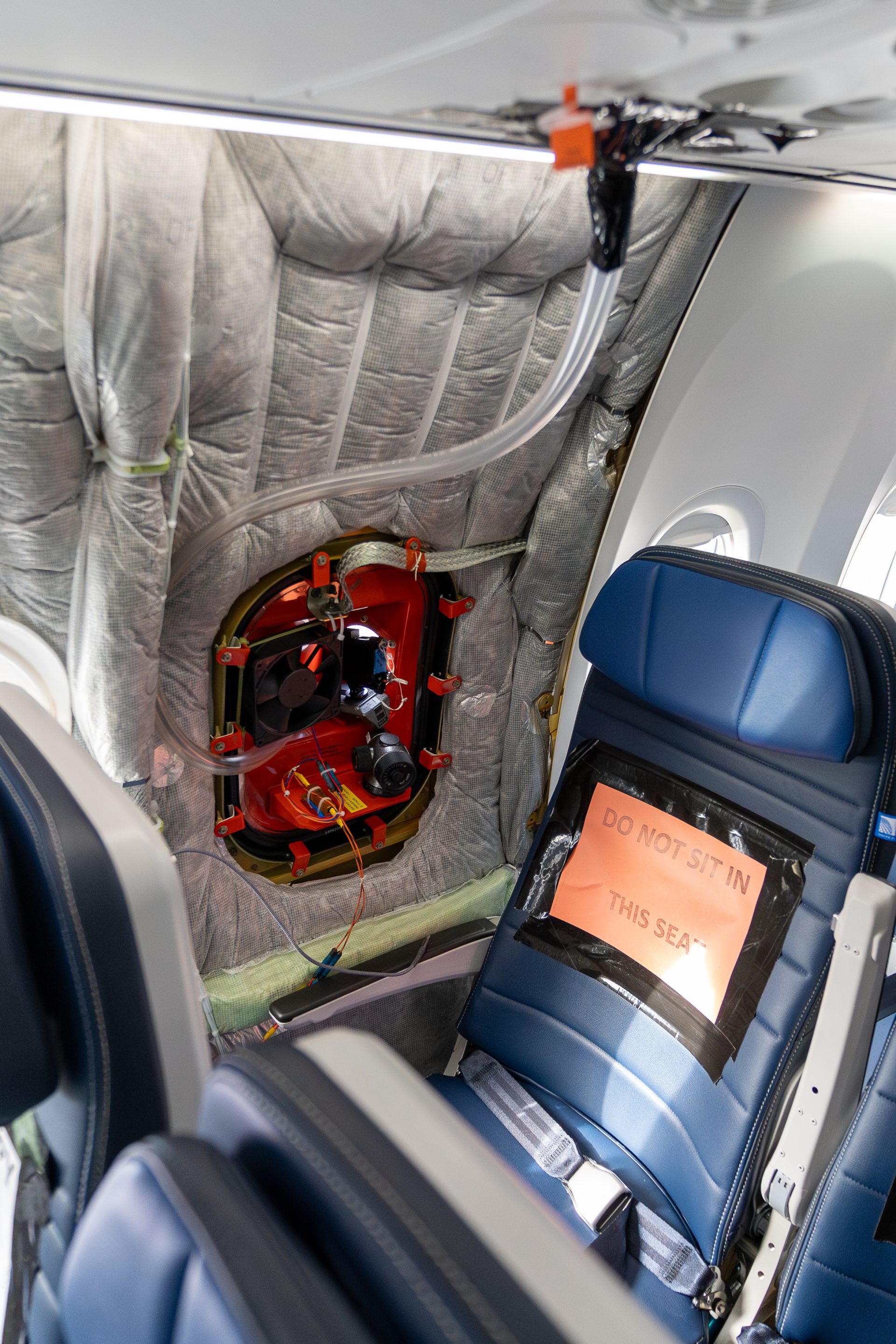
Boeing flew the EcoDemonstrator airplane with low-sulfur conventional aviation few in the wing tanks and SAF in the center tank. The flight crew alternated fuel supply during the cruise while the DC-8 flew behind the commercial jet and measured emissions produced by each type of fuel and contrail ice particles. The pair also gathered data to study the contrail formation visually. NASA collected satellite images of the contrail, and Boeing recorded the formation process from within the airframe using GoPro cameras.
Boeing Engineers mounted GoPros to study the formation of contrails. (Photo: AirlineGeeks | Fangzhong Guo)
The consortium hosted a debrief on Tuesday, sharing initial observations, and AirlineGeeks got a behind-the-scenes look at the test during the event.
A panel of scientists briefing the media. From the left Richard Moore, principal investigator, NASA-Boeing ecoDemonstrator Emissions Flight Test; Nicki Reid, operations engineer/DC-8 mission manager, NASA Airborne Science Program; Bill Griffin, ecoDemonstrator program technical lead, Boeing; Steve Baughcum, emissions technical fellow, Boeing; Cassi Miller, senior staff engineer, GE Aerospace; Christiane Voigt, research team lead, DLR. (Photo: AirlineGeeks | Fangzhong Guo)
Initial Observations
During the debrief, the group shared more details about the logistics efforts that went into conducting these flight tests.
Since the primary focus for this test lies on non-carbon emissions from the SAF compared with the traditional jet fuel, the group delicately procured the same fuels with low sulfur content throughout the life of the EcoDemonstrator program to limit variability between the tests.
Nicki Reid, operations engineer/DC-8 mission manager, also shared more details about the flight operation. Each test run lasts about 20 to 30 minutes on a fuel type. The aircraft would then turn around while maintaining the same altitude and power settings so the environmental factors are relatively constant.
NASA Douglas DC-8 following the EcoDemonstrator’s contrails. (Photo: Boeing)
While not many results have been shared and won’t be ready for several months, NASA’s principal investigator Richard Moore shared that the team has observed that contrails from the new 737 MAX 10 are much thinner and less sustained than those coming out of the DC-8.
Cassi Miller, the senior staff engineer from GE Aerospace, also thinks that these first tests with both CFM LEAP-1B engines running on 100% SAF could help the company push regulations forward to go beyond the current 50% SAF blend limit.
There is consensus that the amount of ice crystals forming in the contrails will have a warming and cooling effect on the environment. The group hopes that data collected from these tests can help scientists improve the accuracy of existing models.
An Inside Look
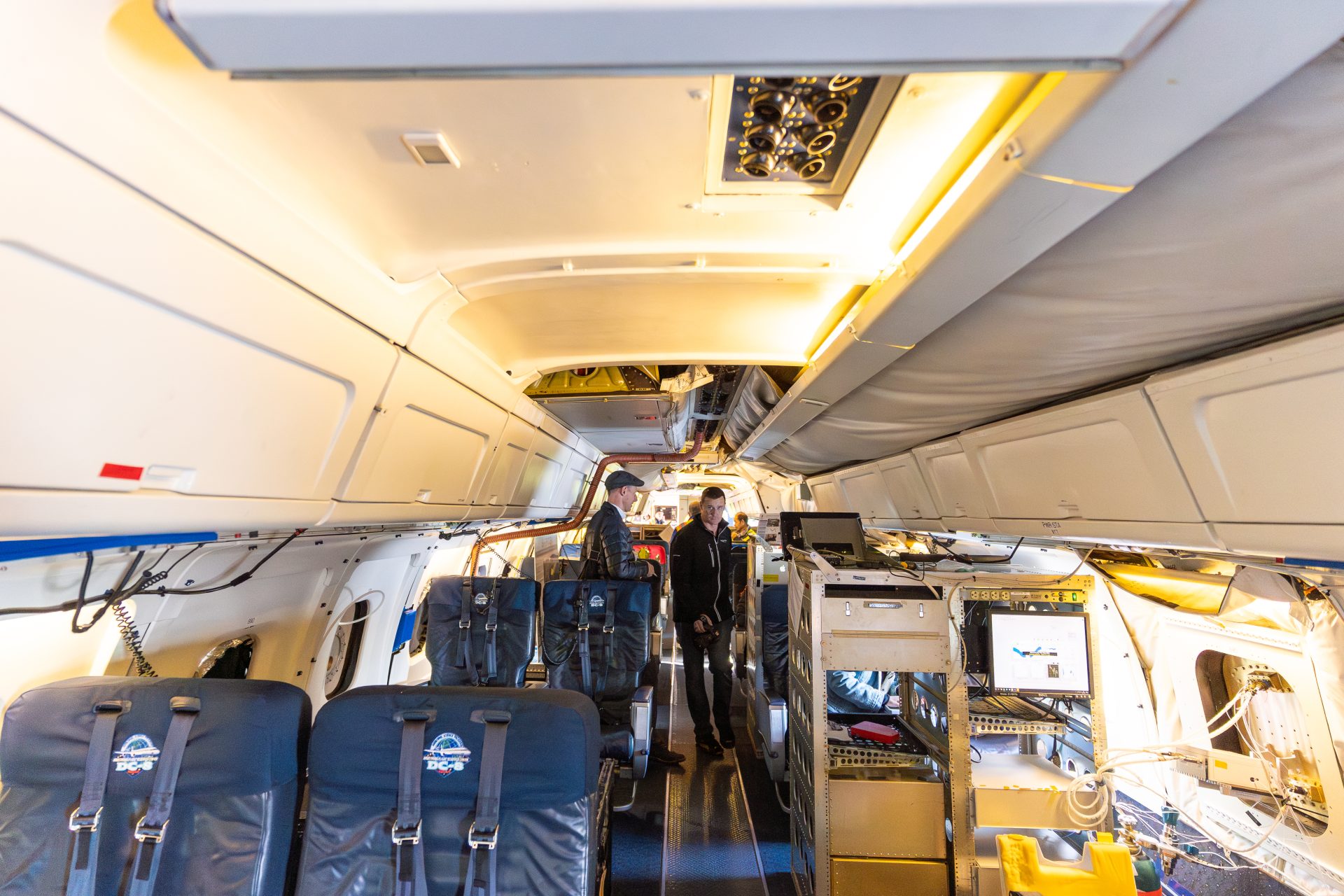
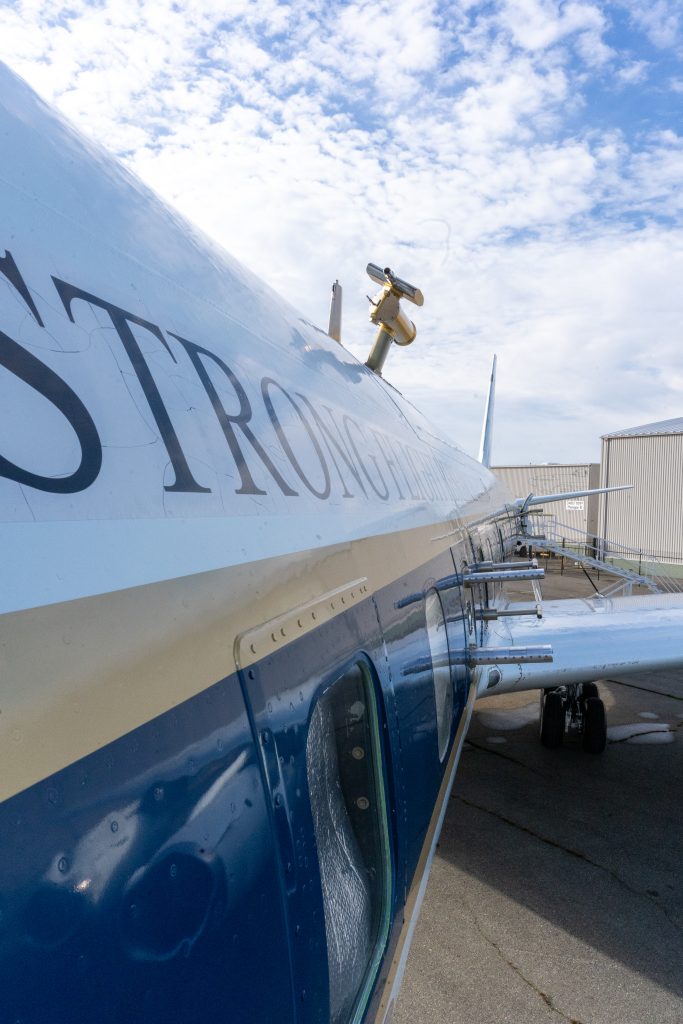
The DC-8 hosted 17 instrumentations onboard to measure emissions from the latest generation Boeing jet. For instance, it carried the Langley Aerosol Research Group Experiment (LARGE). The “classic” suite of instrumentation measures in-situ aerosol microphysical and optical properties of samples from an inlet on the top of the plane. The equipment groups small particles into droplets and measures the quantity in five groups ranging from 3nm to 32nm.
The NASA DC8 is filled with test equipment. (Photo: AirlineGeeks | Fangzhong Guo)
Cloud Aerosol and Precipitation Sensor mounted on the side of the NASA Douglas DC-8 jetliner. (Photo: AirlineGeeks | Fangzhong Guo)
The Right Amount of Dramamine Needed
Flight crew Andy Barry and Tracy Phelps also explained how they flew the DC-8 behind the MAX.
” In the visible conditions, we know exactly where it is. They (NASA Scientists) liked us sweeping in and out since they want to clean out and get that ambient environment, then we get back in the wake and sample again. It’s really intense flying, very hands-on.”
NASA Crew Tracy Phelps talking about the flight test in the cockpit. (Photo: AirlineGeeks | Fangzhong Guo)
When the contrails are not visible, the flight crew had to predict the location of the contrail based on models established from previous DLR campaigns. However, that does not always produce the most accurate models, and the plane would respond rather radically when it went into the primary wake. As a NASA engineer says, “You dialed in the right amount of Dramamine after a few flights.”
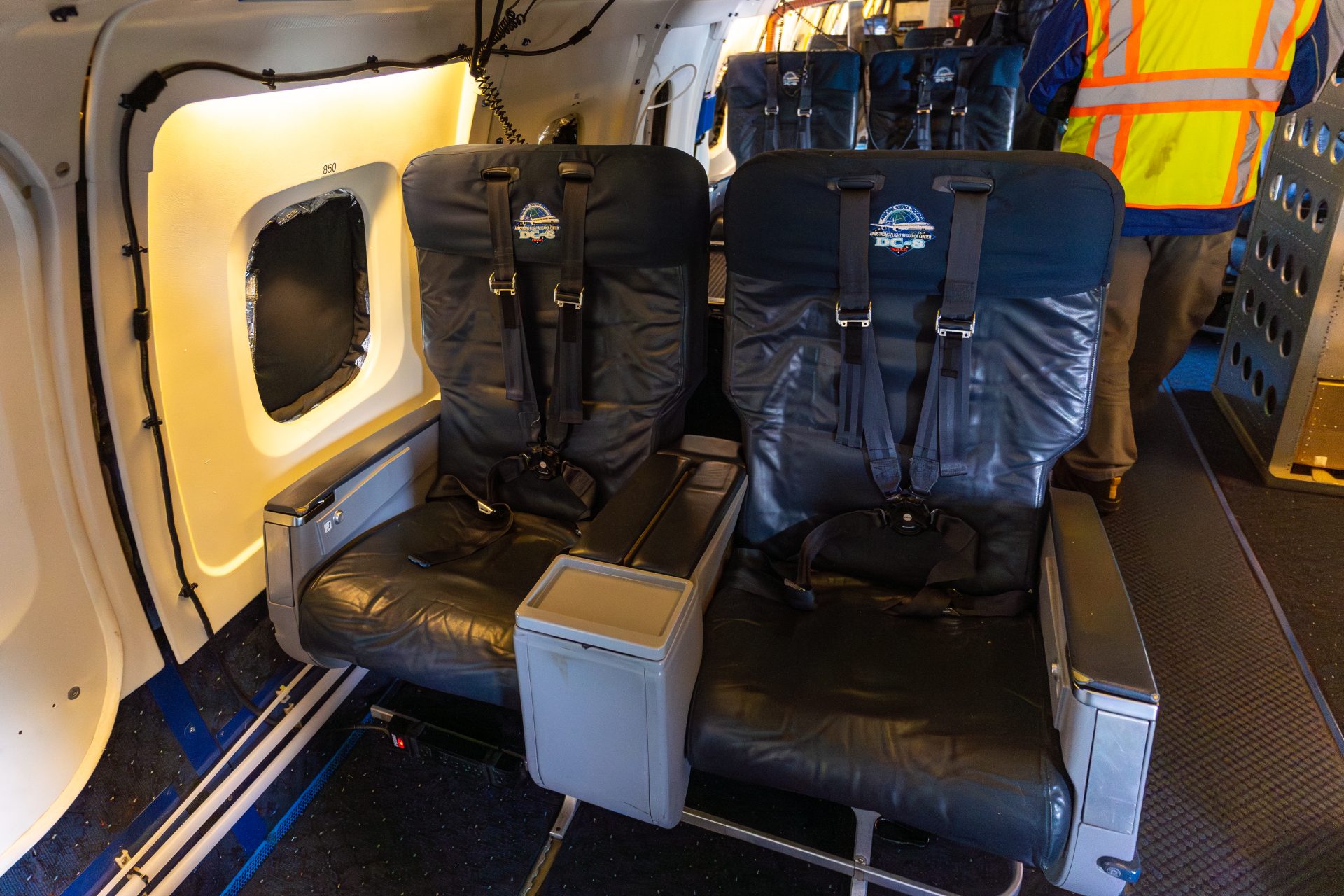
Every seat is equipped with a five-point-harness due to the maneuvers of test flights. (Photo: AirlineGeeks | Fangzhong Guo)
A NASA engineer making equipment adjustments on the wing. (Photo: AirlineGeeks | Fangzhong Guo)
Lunch is Important in Flight Testing
While the DC-8 focused on measuring outputs from the EcoDemonstrator, the Boeing engineers onboard needed to ensure that it was producing consistent results.
The aircraft is equipped with sensors to measure particle levels in the clean air so the parties can estimate the location of the contrails. The engineers are constantly monitoring that the engines are running as expected when it’s running on 100% SAF. All this could be valuable data points to pave the way for certifying running 100% SAF in commercial flights.
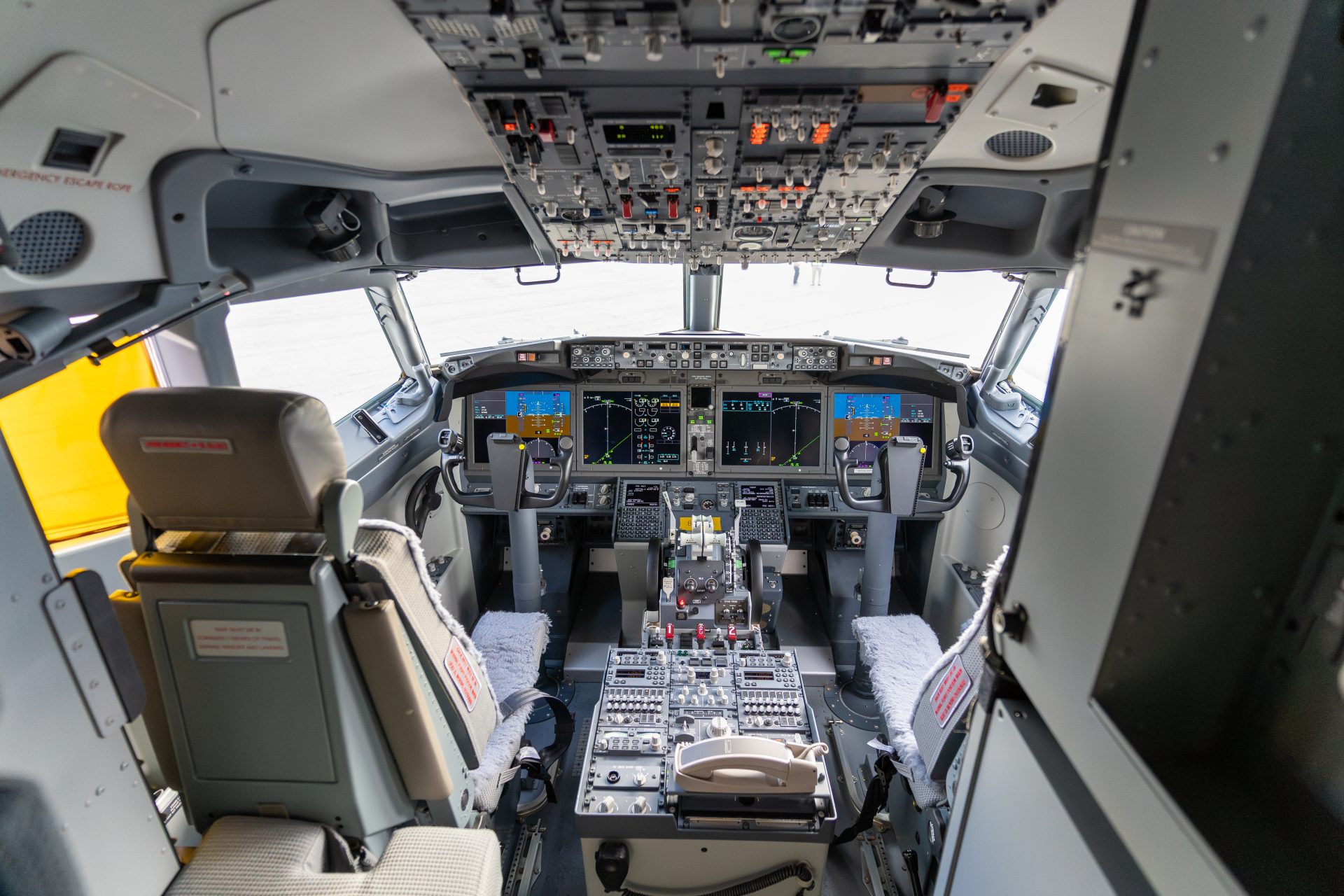
Cockpit of the Boeing 737 MAX 10. (Photo: AirlineGeeks | Fangzhong Guo)
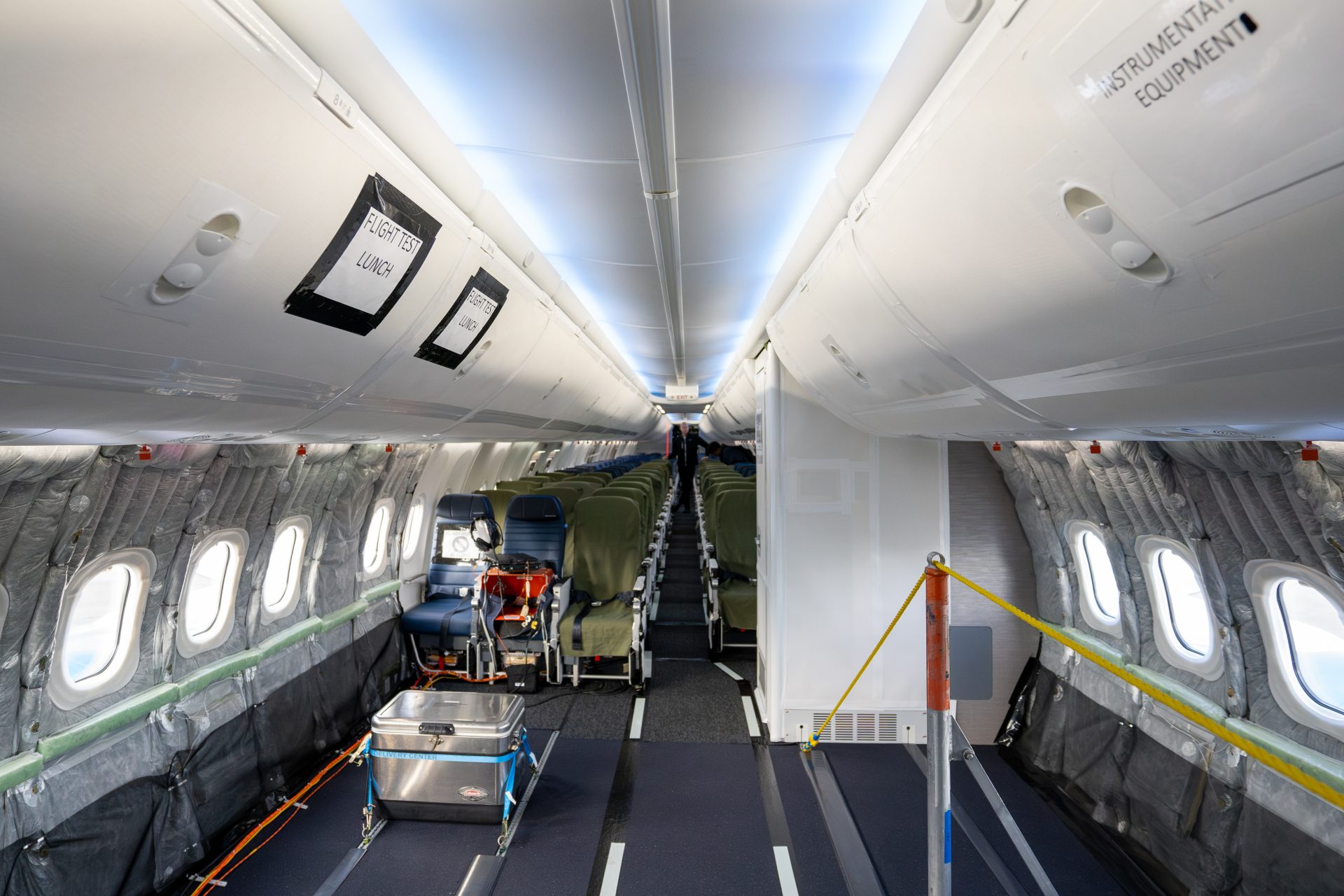
Although the aircraft just came off the production line, it did not have a fully equipped galley. The flight test team has designated two overhead stowage bins for their lunches.
The EcoDemonstrator has a partially furnished cabin. (Photo: AirlineGeeks | Fangzhong Guo)
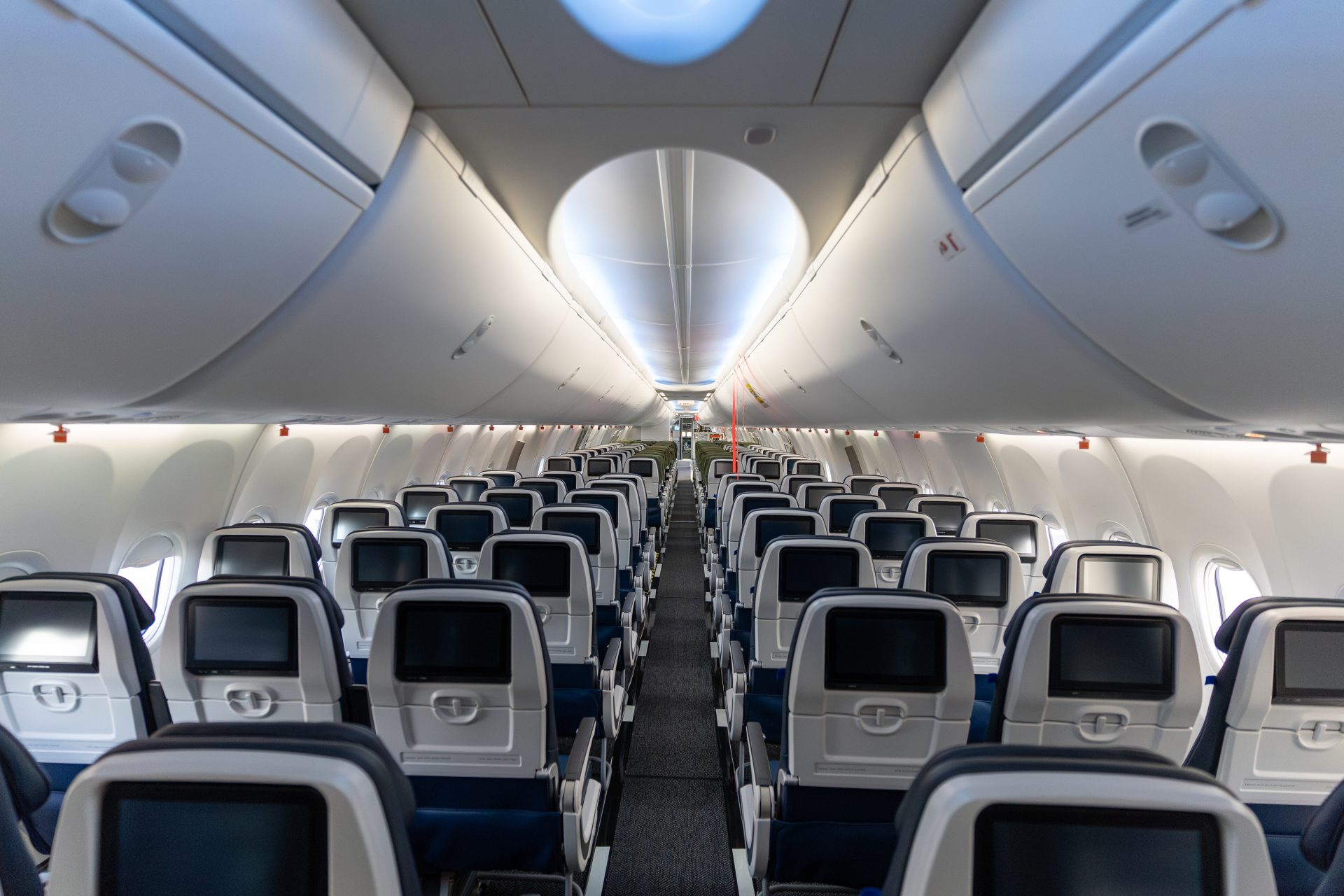
A preview of what’s to come on United Airlines Boeing 737 MAX 10. (Photo: AirlineGeeks | Fangzhong Guo)
Fangzhong grew up near an OEM airport in northeastern China, where he developed his enthusiasm for aviation. Taking upon his passion, he's now working as an aircraft interior design engineer. Besides working in the aerospace industry, Fangzhong enjoys trying out different types of airplanes and seeing how airplane interiors have evolved. So far, he's flown on over 80 types of aircraft. He also planespots in his spare time. His rarest catches included the 747 Shuttle Carrier Aircraft and AN-225.
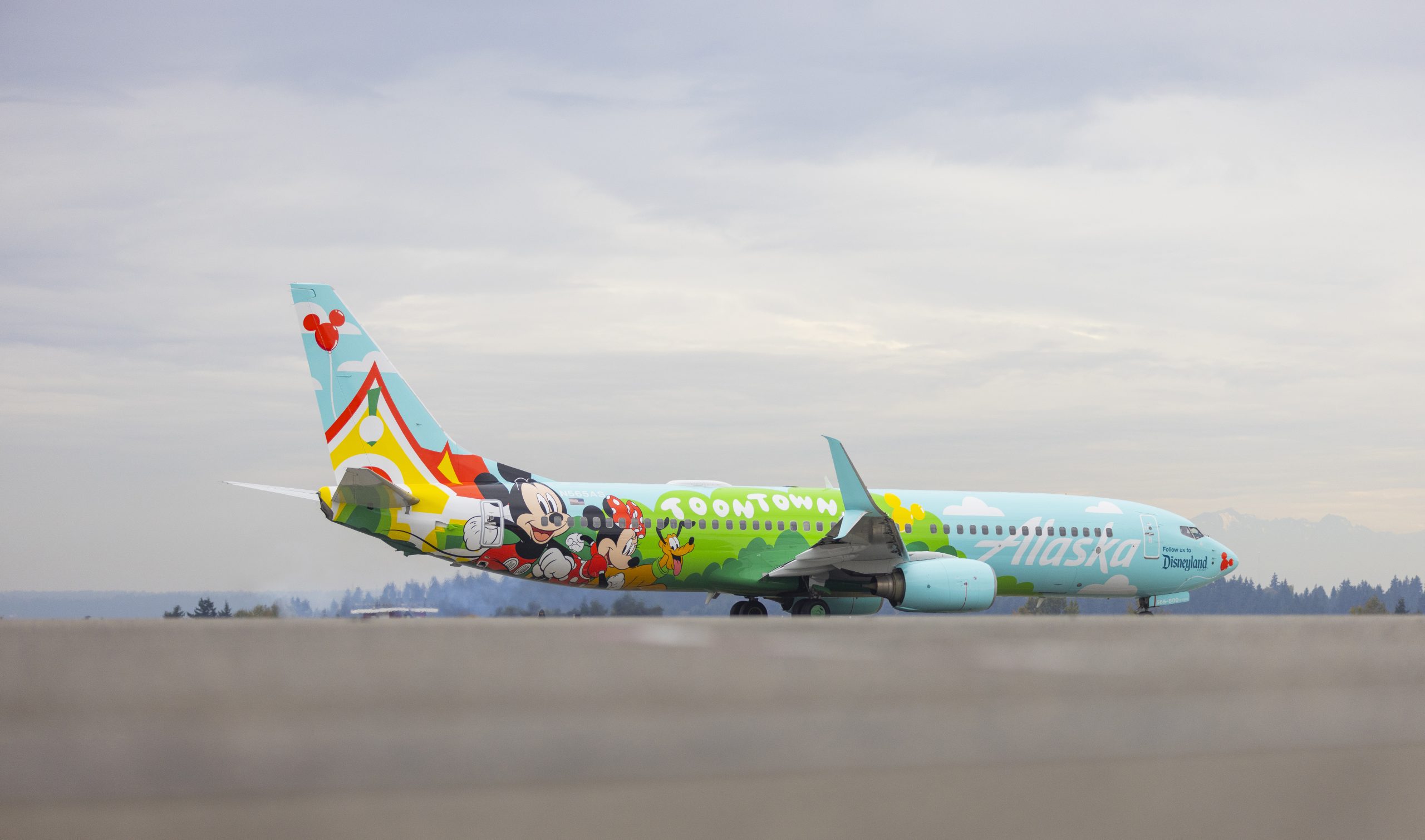
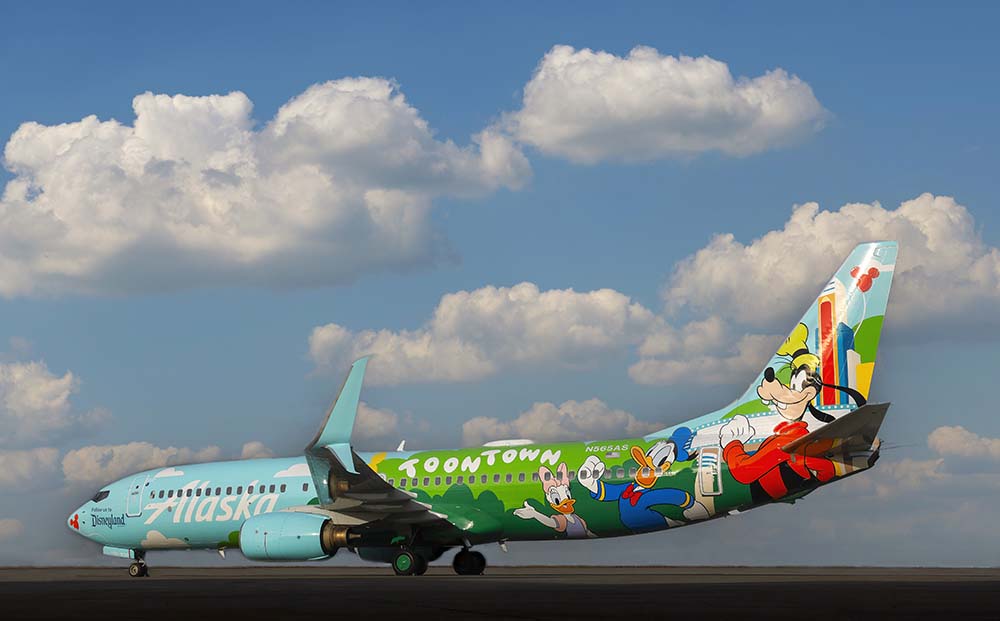
On November 1, 2023, Alaska Airlines unveiled a special livery inspired by Mickey's Toontown at Disneyland Park. The aircraft is painted on a Boeing 737-800 registered as N565AS. (Photo: Alaska Airlines)
Alaska Airlines unveiled its latest Disneyland-themed livery this week. The aircraft, named “Mickey’s Toontown Express,” is adorned with images of Mickey Mouse and his friends.
Mickey’s Toontown Express
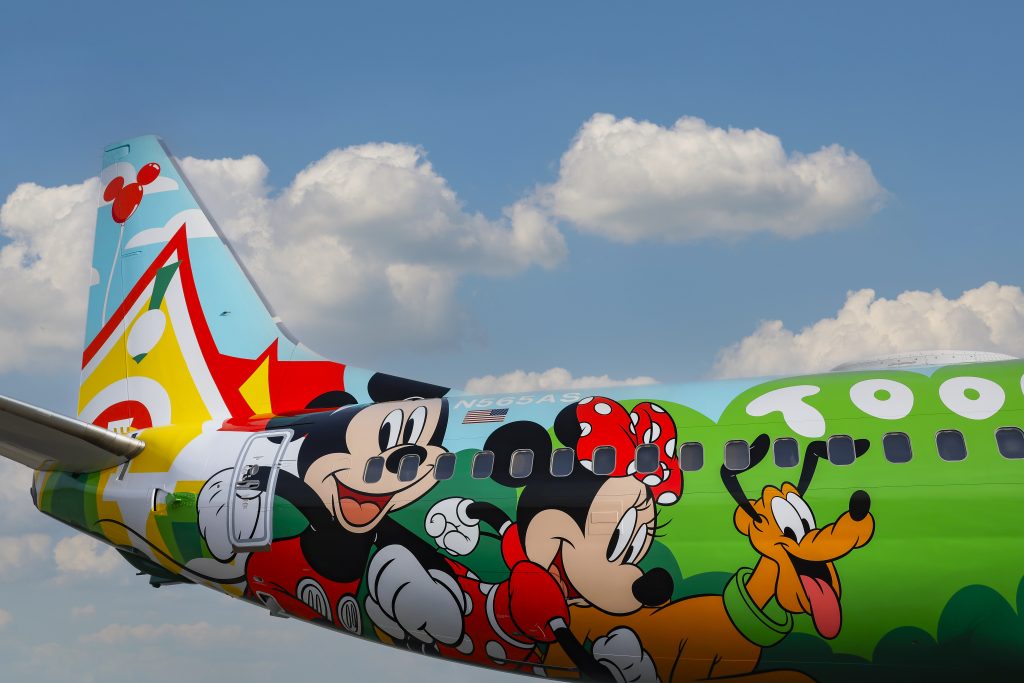
The new livery is painted on a 17-year-old Boeing 737-800 aircraft, registered as N565AS. Both sides of the aircraft feature colorful imagery of popular Disney characters, including Mickey and Minnie Mouse, Donald Duck and Goofy. Their chipmunk friends, “Chip ‘n’ Dale,” are painted by the boarding doors and the inside of the winglets to greet passengers. On board, the aircraft will offer activity books and snack packs with designs featuring the various characters. The newly, renovated Mickey’s Toontown at Disneyland Park, a whimsical animated neighborhood geared towards children, inspired the paint job.
The tail of Alaska Airlines’s “Mickey’s Toontown Express” livery (Photo: Alaska Airlines | Joe Nicholson)
The aircraft flew its first passenger flight with the new livery on Wednesday, Nov. 1. On this first day of operations with the new paint job, the plane fittingly flew two roundtrips between Seattle-Tacoma International Airport and John Wayne Airport in Orange County, Calif., the closest airport to the Disneyland Resort.
“It’s heartening how much our Disneyland Resort-themed airplanes spark joy in our guests — young and young at heart. What makes this even more special is the return of Mickey Mouse on an Alaska Airlines plane since he made his debut on our fleet eight years ago,” Sangita Woerner, Alaska’s Senior Vice President of Marketing & Guest Experience said in a press release.
Alaska Airlines Boeing 737-800 N565AS with its “Mickey’s Toontown Express” special livery after leaving the paint shop at Spokane International Airport on October 31, 2023 (Photo: Alaska Airlines | Joe Nicholson)
Prior to entering service with the new livery, the aircraft a few weeks in the paint shop at International Aerospace Coatings (IAC)’s facility at Spokane International Airport in Washington. According to Alaska, it took over 400 hours and 20 days to hand-paint the aircraft. The airline published a video showing the painting process for the plane.
Alaska’s Longstanding Disneyland Partnership
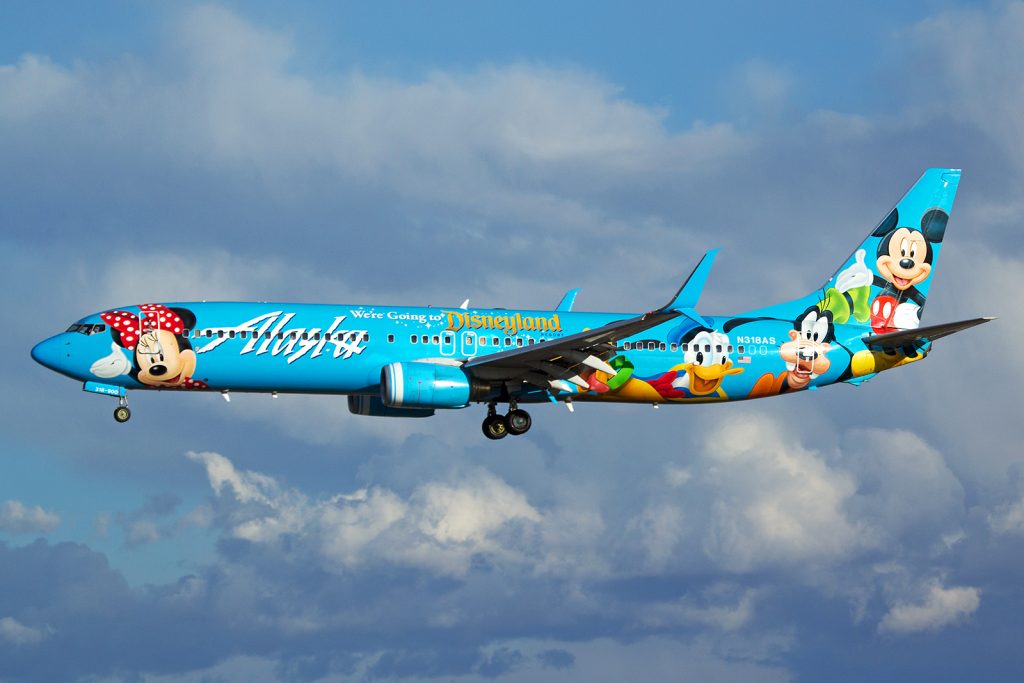
The Seattle-based carrier has had a longstanding relationship with the Disneyland Resort, with the two having collaborated on eight special liveries to date. From the first Disneyland-themed special livery in 2004 – painted on a Boeing 737-400 registered as N784AS and named “Spirit of Disneyland” – to the latest Toontown-inspired addition, Alaska aircraft have displayed over a dozen different Disney characters over the past two decades.
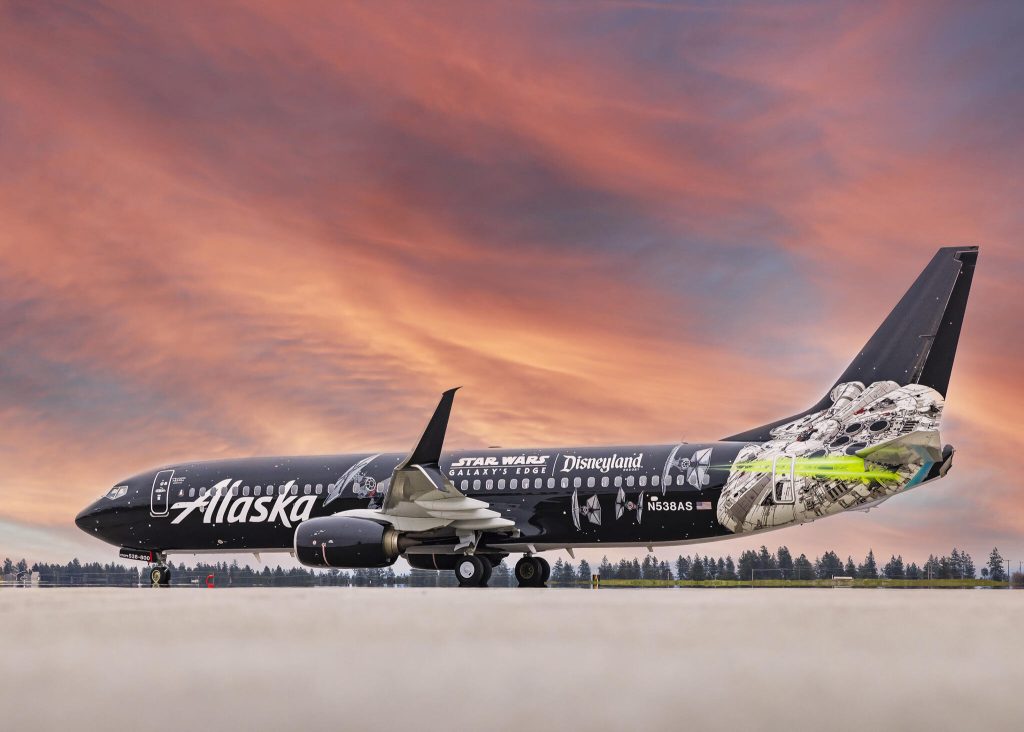
Two other Alaska Boeing 737-800s – N537AS and N538AS – are currently painted in Disneyland liveries. N537AS has a livery called “Friendship and Beyond at the Disneyland Resort,” featuring Woody, Buzz, Lightyear and Jessie from the Toy Story film series. Meanwhile, N538AS has a sleek black livery called “Star Wars Transport to the Disneyland Resort,” in celebration of the Star Wars: Galaxy’s Edge area of the theme park.
“Our relationship with Alaska Airlines is more than 25 years strong and truly celebrates the magic of Disney,” said Sybil Crum, Vice President of Marketing and Commercial Strategy at Disneyland Resort. In talking about the latest special livery, she added: “The plane’s artwork marks Alaska Airlines’ eighth transformation of an aircraft featuring Disney artistry and exhibits the excitement and playfulness of the re-imagined Mickey’s Toontown. We’re so delighted for the opportunity to create even more memorable experiences for our guests together.”
An Alaska 737-900ER in a the “Spirit of Disneyland II” livery (Photo: AirlineGeeks | William Derrickson)
Andrew is a lifelong lover of aviation and travel. He has flown all over the world and is fascinated by the workings of the air travel industry. As a private pilot and glider pilot who has worked with airlines, airports and other industry stakeholders, he is always excited to share his passion for aviation with others. In addition to being a writer, he also hosts Flying Smarter, an educational travel podcast that explores the complex world of air travel to help listeners become better-informed and savvier travelers.