Stories

Commission Recommends Conditions for Takatso Consortium’s Acquisition of South African Airways

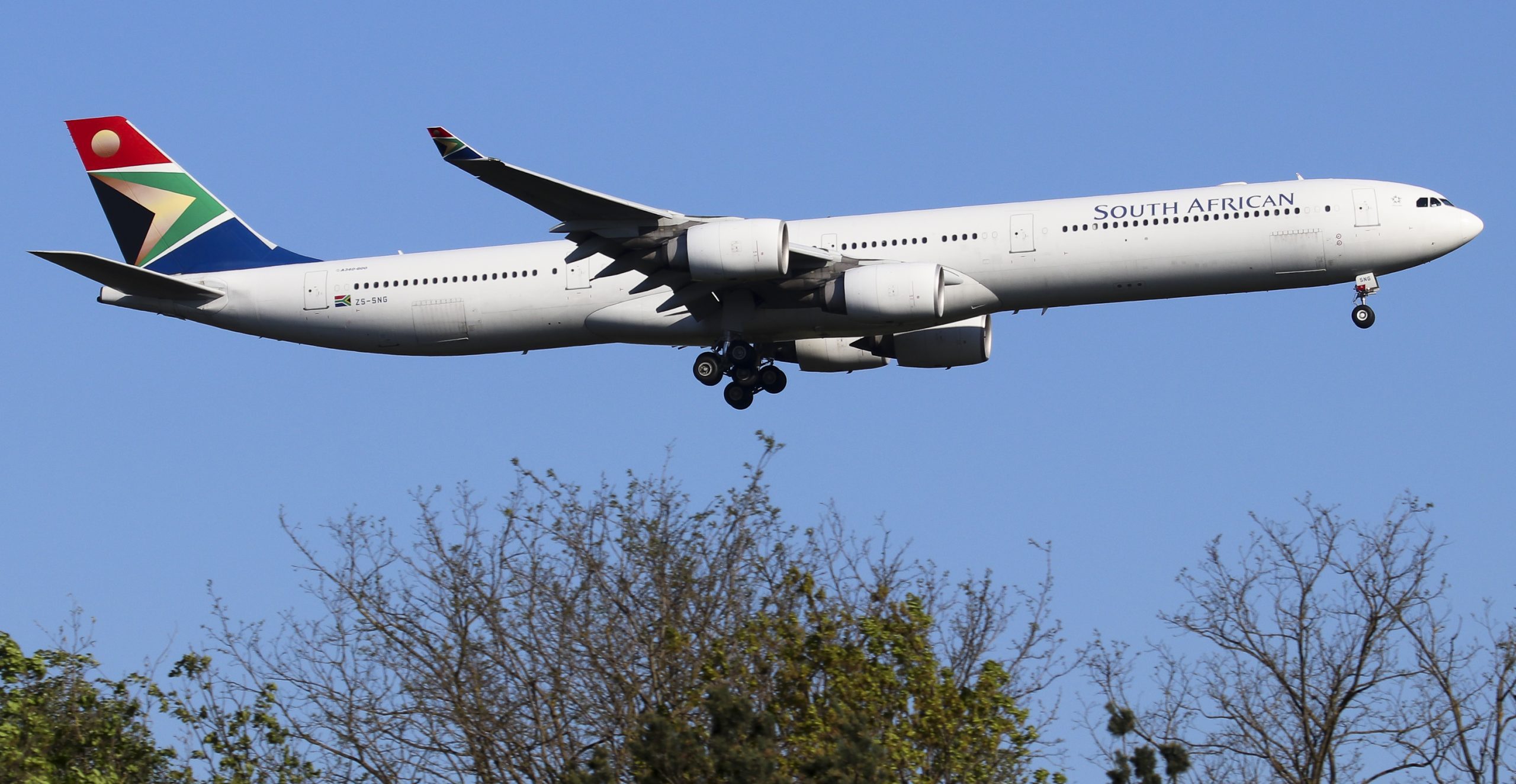
A South African Airways A340-600 on approach to Frankfurt. (Photo: AirlineGeeks | Fabian Behr)

South African Airways (SAA) has been in the midst of a semi-privatization process, with the Takatso consortium poised to acquire a majority stake. However, the Competition Commission has recommended that two companies, Syranix and Global Aviation, who co-own low-cost airline LIFT, leave the consortium before it acquires SAA. The commission stated that their presence in SAA would lead to a substantial reduction and brake on competition in the market for national passenger airlines.

The Competition Commission’s Concerns

In a statement, the Competition Commission expressed apprehension that the Takatso consortium’s acquisition of SAA could reduce competition in the domestic passenger airlines market. The commission highlighted the potential for Takatso to gain access to SAA’s competitively sensitive information, given its majority stake in the airline. This concern is further amplified by the concentrated nature of the domestic passenger airlines market, where barriers to entry are high, and coordinated effects are possible. To remedy this, the commission and the parties involved have agreed to a divestiture condition. This condition stipulates that Global Aviation and Syranix, both minority shareholders of Takatso, must fully divest from the consortium before the merger’s implementation.

The Competition Commission’s recommendation also included a moratorium on layoffs. Takatso will have to maintain a minimum number of employees at SAA. The deal was initially rejected by Takatso, but after some negotiation, the consortium agreed to the terms set by the commission, including the divestiture of Syranix and Global Aviation.

Takatso’s Response and the Minister’s Support

Gidon Novick, a co-founder of LIFT, a low-cost airline operated by Global Aviation, stated that they had not agreed to sell their minority stake and intended to remain as minority shareholders without board representation or access to sensitive information. Novick highlighted the industry practice of airlines cooperating in various ways, citing SAA’s previous partnership with Airlink. On the other hand, Public Enterprises Minister Pravin Gordhan welcomed the Competition Commission’s decision, emphasizing that it would strengthen SAA, provide necessary capital, and position it as an essential economic enabler for the country.

Implications for Takatso Consortium

The Takatso consortium, led by infrastructure investment firm Harith, is now faced with the requirement of complying with the commission’s conditions. Harith will become the sole company in Takatso, as Global Aviation and Syranix fully divest. Harith’s stake in Lanseria Airport, though previously subject to scrutiny, was deemed unlikely to raise concerns by the commission.

SAA has been in the red since 2011 and was sold for around €3 to Takatso in May 2022. The consortium must invest nearly $200 million in SAA, with the state adding $120 million, and retaining 49% of the capital. Harith General Partners Proprietary Limited, an asset management company that has invested in the development of the Johannesburg-Lanseria airport, is leading the consortium. SAA seeks to redevelop its long-haul business as part of the investment plan.

South Africa and Kenya announced a strategic partnership agreement in November 2022, with the objective of launching a pan-African airline group by 2023, which would bring together South African Airways and Kenya Airways. This followed a cooperation protocol signed by the two national companies two months earlier, with the aim of promoting the exchange of expertise, innovation, digital technologies, and best commercial practices.

Victor Shalton

Victor Shalton's love for aviation can be traced to when he was 11-years-old. As a seasoned aviation writer, he takes pride in providing the best aviation coverage around the globe and is passionate about advancing his skills in the aviation space. In addition, he loves travelling, writing, arts and while his speaking engagements have taken him around the world, he is proud to call Nairobi home.

GoFirst Gripes With Pratt & Whitney Ahead of Relaunch

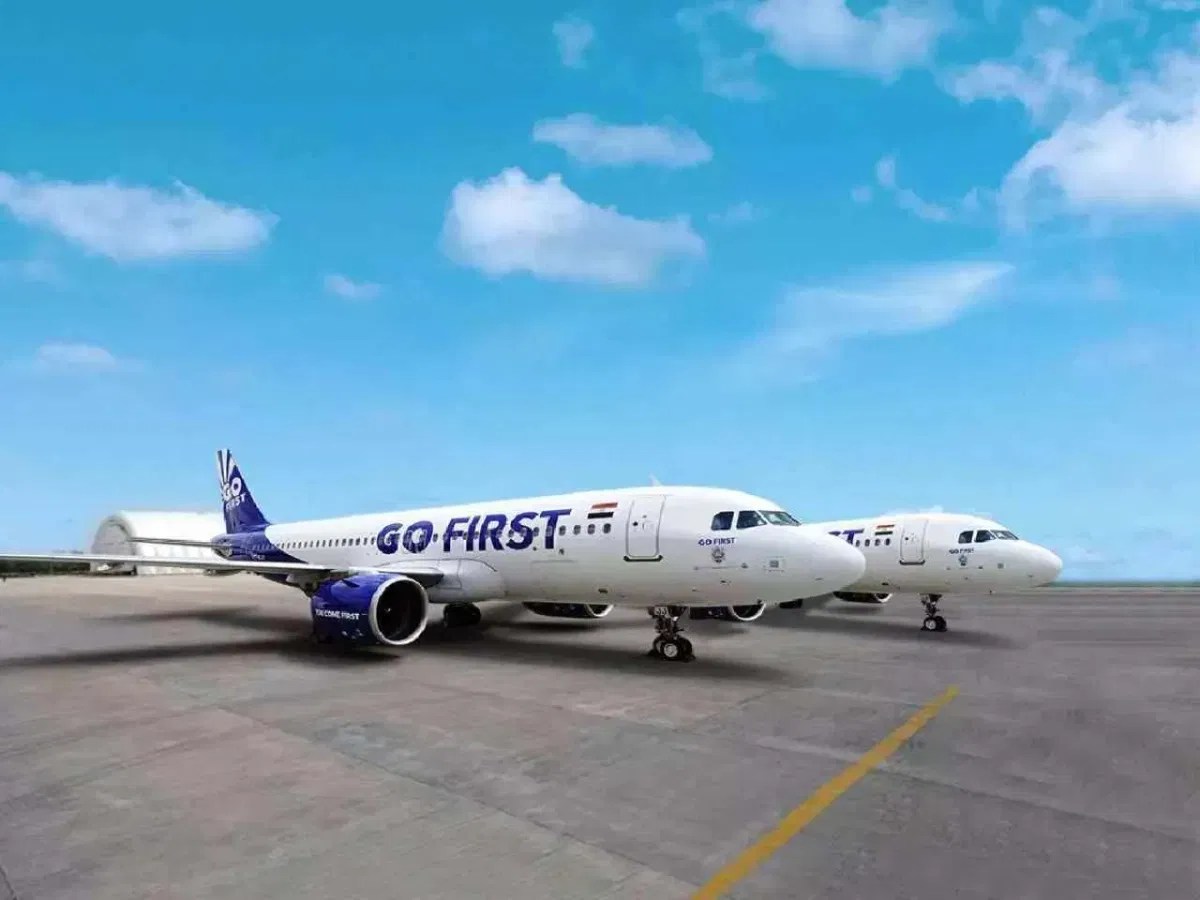
(Photo: News9live.com

Internal sources have revealed to the website MoneyControl that Indian budget airline GoFirst plans to resume flights on May 24. The airline filed for bankruptcy protection at the start of May due to engine problems on its aircraft.

GoFirst will return with a smaller operation, operating four fewer aircraft than it currently has. The airline reports it has 51 departure slots at Delhi’s main airport and 37 departure slots in Mumbai.

“We acknowledge the flight cancellations might have disrupted your travel plans and we are committed to providing all the assistance we can,” the airline said. “As you are aware, the company has filed an application for immediate resolution and revival of operations. We will be able to resume bookings shortly. We thank you for your patience.”

GoFirst’s Engine Problems

GoFirst’s fleet of Airbus A320NEO family aircraft is equipped entirely with Pratt & Whitney engines. Certain engines made by the airline have lately become notorious for their relatively high failure rate; GoFirst started experiencing problems with these engines after receiving its first Pratt & Whitney-powered A320NEO in 2017.

GoFirst has been battling with Pratt & Whitney for years over these engines. The two parties originally agreed that the engine manufacturer would compensate GoFirst for engine support. This agreement only lasted until 2019, part of the reason why GoFirst now says that the parts it is owed have been withheld.

In February 2023, Pratt & Whitney suggested a plan to offer replacement engines to GoFirst. Even at that time, up to half of GoFirst’s planes had been grounded due to engines with their Pratt & Whitney engines, costing the carrier over $1 billion. However, the engine maker said it could provide extra engines at a rate ¼ as fast as these engines failed. GoFirst subsequently filed for emergency arbitration, after which Pratt & Whitney was ordered to provide serviceable spare engines to the airline.

Back in Court

Now, as GoFirst prepares to restart flights, it has approached a court in Delaware to attempt to enforce the arbitrator’s decision. However, Pratt & Whitney says it faces additional risks as a result of the airline’s bankruptcy filing. The engine maker says it will pursue legal action against GoFirst, saying the airline, instead of being a victim, is nothing more than another insolvent airline that cannot uphold its contracts.

“Go First’s recent bankruptcy filing has radically changed the field of play in terms of Go First’s need for relief and IAE’s risk,” said a filing by International Aero Engines, in which Pratt & Whitney is a shareholder.

“Go First airline’s allegations that Pratt & Whitney is responsible for its financial condition are without merit. Pratt & Whitney will vigorously defend itself against Go First’s claims, and is pursuing its own legal recourse,” said a Pratt & Whitney spokesperson.

Other Pratt & Whitney Engine Issues

Pratt & Whitney says that GoFirst just wants to jump the line for engine delivery while the manufacturer recovers from ongoing supply chain issues. However, GoFirst is not the only airline suffering from Pratt & Whitney engine problems. Fellow Indian carrier IndiGo is also experiencing Pratt & Whitney issues on their Airbus aircraft, and KLM Cityhopper is experiencing issues with its Embraer E2 planes, which are powered by the same engines that GoFirst and IndiGo are using. Iraqi Airways has grounded its entire fleet of Airbus A220s, all powered by the same model of Pratt & Whitney engines, while Iraq’s Civil Aviation Authority investigates the engine issues.

“KLM Cityhopper is consulting with Embraer and engine manufacturer Pratt & Whitney to seek a solution for these issues, which have no impact on flight safety,” KLM said in a statement in May.

“The entire Indian aviation sector is hit due to sub-standard products supplied by the engine makers,” Go First chairman Varun Berry said in a statement.

“P&W cannot wash their hands off their liabilities after supplying sub-standard engines which has led to huge losses for all airlines. 18% of Indian aviation capacity is currently grounded due to non-supply of engines by P&W,” Berry continued.

“Supply chain recovery following the pandemic remains stressed. We believe the situation will stabilize throughout 2023. This will support the increased output of new and overhauled engines. In the interim, we are providing direct logistical support to our suppliers. We are expanding our MRO (maintenance, repair, and overhaul) capacity and working to reduce shop visit turnaround times to improve service availability,” a spokesperson for Pratt & Whitney said.

John McDermott

John McDermott is a commercial pilot pursuing a career in professional flight. His passion for aviation began in an Ann Arbor bookstore with a tale of enemy pilots during World War 2, and he hasn't looked back. Besides flying and writing for AirlineGeeks, John volunteers with Professional Pilots of Tomorrow and travels whenever he gets the chance.

Kenmore Air Partners with Alaska Airlines

A Kenmore Air airplane in front of the Space Needle. (Photo: AirlineGeeks | Fangzhong Guo)

Local Kenmore, Washington-based airline Kenmore Air, announced through an email with its customers that they would begin partnering with the Seattle-based airline. Kenmore Air is the largest floatplane operator in the United States, flying over 80,000 passengers a year including their land-based operations which fly under their ‘Kenmore Air Express’ banner on board the Cessna 208 Caravan.

A Kenmore Air airplane in front of the Space Needle. (Photo: AirlineGeeks | Fangzhong Guo)

The benefit will be mostly seen north of Seattle at Paine Field, where Kenmore Air Express operates flights to Orcas Island and Friday Harbor in an island group known as the ‘San Juan Islands’. Alaska Airlines’ passengers can now book flights in a single itinerary to the San Juan Island from other destinations with a connection in Paine Field.

An Alaska Airlines E175 at Paine Field (Photo: AirlineGeeks | Katie Bailey)

In addition, Alaska mileage members can now earn miles when flying on Kenmore flights. Brett Catlin, the vice president of loyalty, alliances, and sales for Alaska Airlines did have something to say about this new partnership in a press release on Kenmore’s website; “Our guests can fly with us from destinations across the West such as Anchorage, San Francisco, and Las Vegas to Everett, and then hop on a convenient flight with Kenmore Air to enjoy all the San Juans have to offer – and earn Mileage Plan miles along the way.”

Kenmore and Alaska are both local airlines, with Seattle-Tacoma and Kenmore Harbor being located only 21 miles away from each other, folks in the region are accustomed to both airlines. And now, with the partnership, changing between the carriers is now easier than ever.

All data, documents, and quotes were pulled from public airline websites and schedule data.

Joey Gerardi

Joey has always been interested in planes for as long as he can remember. He grew up in Central New York during the early 2000s when US Airways Express turboprops ruled the skies. Being from a non-aviation family made it harder for him to be around planes and would only spend about three hours a month at the airport. He was so excited when he could drive by himself, the first thing he did with his driver's license was get ice cream and go plane spotting for the entire day. He graduated from Western Michigan University in 2022 with a B.S. in Aviation Management & Operations and a Minor in Business, and currently works for a major airline in his hometown.

Qatar Airways Resumes Nonstop Service to Auckland

A Qatar Airways Airbus A350-1000 XWB enters the Terminal 8 ramp at JFK Airport. (Photo: AirlineGeeks | Shaquille Khan)

Qatar Airways will be resuming daily nonstop service to Auckland from Doha starting in September 2023. The route was first introduced in 2017, when at the time it was the world’s longest flight. It unfortunately was a victim of the pandemic and the flight was cut since New Zealand had closed its borders for a considerable amount of time.

The route will be operated by an Airbus A350-1000 that features 46 business class and 281 economy suites. This aircraft choice will guarantee all business class passengers QSuites, Qatar Airway’s current generation business class product. All A350 aircraft have QSuites, while most of Qatar Airways’ long haul fleet features QSuites. The exception being Boeing 787 and Airbus A380 aircraft.

Flights are scheduled to optimize connections from Europe, specifically the United Kingdom and Ireland.

The flight schedule is as follows:

Doha to Auckland: QR920 departs at 1:50AM and arrives a day later at 2:45AM

Auckland to Doha: QR921 departs at 3:00PM and arrives at 11:15PM


Currently Qatar Airways does fly to Auckland but it’s not nonstop service. The airline first flies to Adelaide, Australia then continues onward to Auckland. The benefit of nonstop service will also be extended to passengers who have already been booked these flights to Auckland via Adelaide since passengers previously booked on this route will be re-accommodated on the nonstop flight.

Returning to Growth Post COVID

The resumption of nonstop services comes as the airline seeks to rebuild and expand its route network as the world adapts to living with COVID-19. While the airline did maintain a significant portion of its route network through the pandemic, some routes were cut. As travel returned, an additional challenge cropped up, the lack of aircraft. Qatar Airways faced challenges with Airbus over quality issues of certain A350 aircraft. This led to several aircraft being grounded resulting in limited capacity.

Most of these challenges have been resolved with Airbus and it’s expected to see the airline continue to grow.

Recently the airline has had Boeing 737 MAX aircraft enter service as part of a strategy to grow flights within the Gulf Cooperation Council.

The airline has also expanded outside of the Gulf Cooperation Council with the resumption of flights to Morocco and Birmingham in the UK. The flights Casablanca and Marrakesh in Morocco will operate four time a week to and from Doha. The flights will operate through the summer season with Marrakesh as a seasonal tag that will operate until early September. The flight to Birmingham will also operate during the summer schedule daily.

All three destinations will be served using Boeing 787-8 aircraft with 22 seats in business class and 232 seats in economy.

Hemal Gosai

Hemal took his first flight at four years old and has been an avgeek since then. When he isn't working as an analyst he's frequently found outside watching planes fly overhead or flying in them. His favorite plane is the 747-8i which Lufthansa thankfully flies to EWR allowing for some great spotting. He firmly believes that the best way to fly between JFK and BOS is via DFW and is always willing to go for that extra elite qualifying mile. Hemal's opinions are his own and do not reflect those of his employer.

Emirates Group Reports Most Profitable Year Ever

An Emirates A380 in Dubai.
An Emirates A380 in Dubai. (AirlineGeeks | Hisham Qadri)

A few days ago, the Emirates Group released its annual report for 2022-23, which turned out to be its best ever, with a new record profit. Following the lifting of almost all pandemic-related restrictions worldwide, there was a complete turnaround from last year’s loss.

Emirates Group posted a record profit of AED 10.9 billion ($3.0 billion) compared to last year’s loss of AED 3.8 billion ($1.0 billion). 

Targeted investments

To support the expansion of its operations and strengthen the Group’s future capabilities, Emirates intensified its global recruitment activities during the last year. As a result, the Group’s total workforce grew by 20 percent to 102,379 employees from more than 160 different nationalities.

In 2022-23, the Group has invested heavily in new aircraft, facilities, equipment, businesses and cutting-edge technology. Upcoming goals include:

  • A comprehensive multi-billion dollar aircraft cabin refurbishment program; 
  • An order for five new 777 Freighters;
  • Construction of a new pilot training center; 
  • New training aircraft for its cadets at the Emirates Flight Training Academy;
  • Construction of a new advanced cargo facility in Erbil, Iraq.

In addition, the airline’s strategy of using modern and efficient aircraft has always been at the forefront. Last year, Emirates received two new 777 freighters. It also retired 4 older aircraft, including 2 A380s, 1 Boeing 777-300ER and 1 freighter, bringing its total fleet to 260 aircraft at the end of March, with an average fleet age of 9.1 years. Emirates’ order book stands at 200 aircraft.

Fewer restrictions, better performance

Emirates’ total passenger and cargo capacity increased by 32 percent in 2022-23, as the airline continued to restore passenger services across its network. Emirates also signed codeshare agreements with new partners, notably United Airlines and Air Canada, expanding the airline’s connectivity in the Americas to more than 200 new points.

As a result, Emirates’ total revenues increased by 81 percent to AED 107.4 billion ($29.3 billion), while total operating costs increased by 57 percent over the previous fiscal year. Fuel accounted for 36 percent of operating costs compared to 23 percent in 2021-22.

Emirates SkyCargo

Last year, the cargo division signed commercial agreements with United Airlines and Air Canada to expand the reach and capacity of its network for customers. Emirates SkyCargo contributed 16 percent of the airline’s revenues and recorded a solid AED 17.2 billion ($4.7 billion), down 21 percent from last year’s best performance, but still strengthening its leadership in the cold chain transportation of temperature-sensitive pharmaceuticals.

Emirates ended the fiscal year with an exceptional level of liquidity of AED 37.4 billion ($10.2 billion), up 79 percent from the end of the previous year. HH Sheikh Ahmed bin Saeed Al Maktoum, Chairman and Chief Executive of the airline and Emirates Group, expressed his pride in this achievement, which is “not only a full recovery but also a record result.”

Vincenzo Claudio Piscopo

Vincenzo graduated in 2019 in Mechanical Engineering with an aeronautical curriculum, focusing his thesis on Human Factors in aircraft maintenance. In 2022 he pursued his master's degree in Aerospace Engineering at the University of Palermo, Italy. He combines his journalistic activities with his work as a Reliability Engineer at Zetalab.

Trip Report: Surviving the World’s Longest Flight

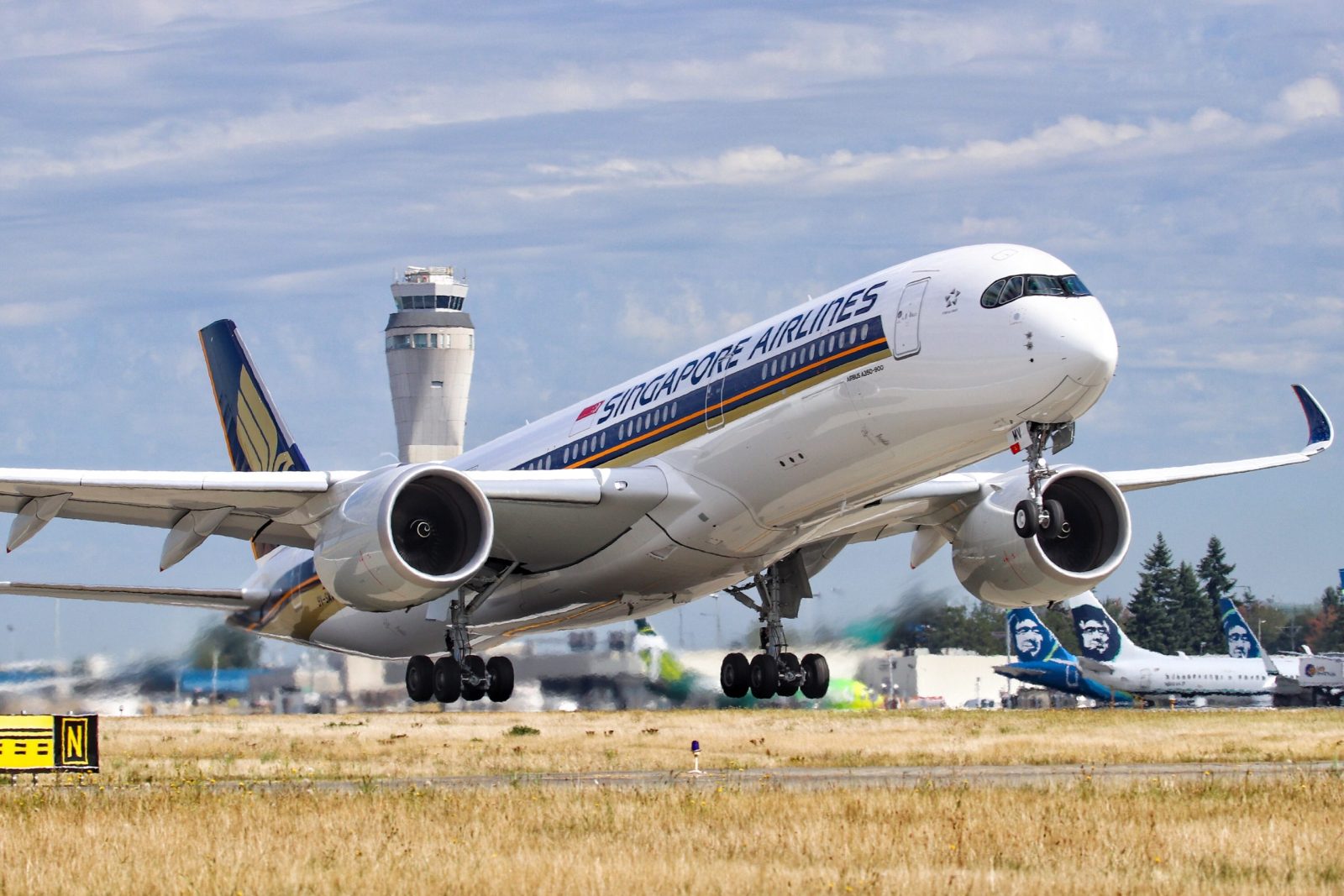
A Singapore Airlines A350 performing the inaugural flight from Seattle. (Photo: AirlineGeeks | Katie Zera)

Flying on flight SQ24 has been ot the top of my aviation bucket list for a while now. The opportunity to fly on the world’s longest flight isn’t something you can do every day but I wanted to see what it would be like to survive on an airplane for nearly a full day.

Check-in and Lounge

Check-in for this Singapore Airlines flight was done in Jakarta as a part of my connection. The staff was friendly and helpful and I was on my way promptly. While I didn’t have time to utilize the lounge during my layover in Singapore all business class passengers are invited to utilize the SilverKris lounge at Changi Airport.

Boarding

Singapore Changi does the security screening at each gate so once you clear security you are essentially in a box that you can’t leave without having to go through security once again. It is worth noting that there are no restrooms in the secure area so plan accordingly. Once boarding was called all passengers pushed their way to the jet bridge with no real organization. I was seated in 29K, the last row of business class and if you find yourself in the second business class cabin I recommend using the economy jet bridge, it saves a good bit of time.

The Seat

Laying flat at an angle  (Photo: Taylor Guglielmino)

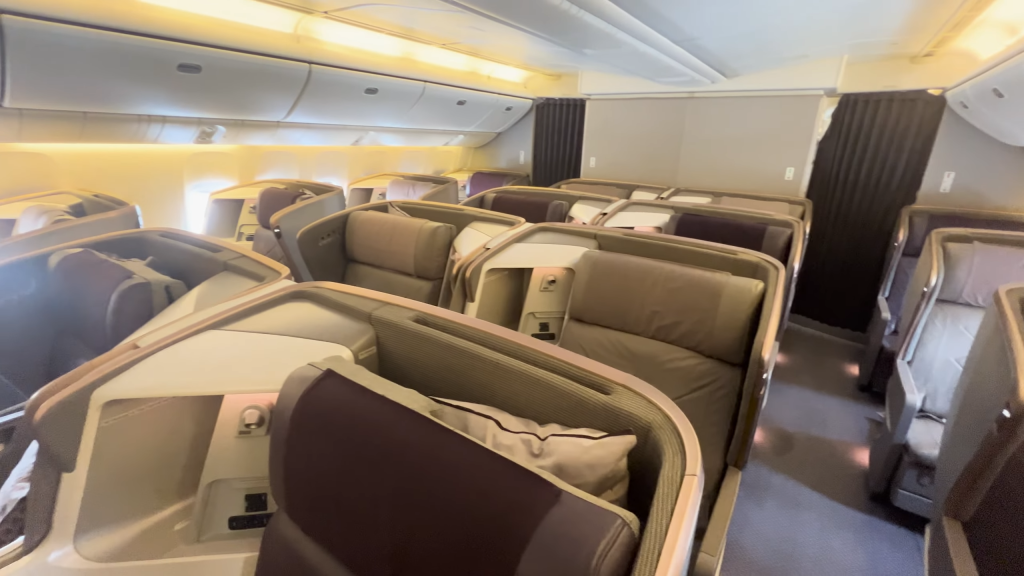
The seat is large and comfortable with ample storage space near the window as well as under the footwell. The main complaint that many have, and I tend to agree, is that you are required to sleep diagonally across the seat. I found that you can get comfortable, even on your back, when the seat is in bed mode. The trouble with Singapore Air’s seat comes when you try to put your feet up, the seat is facing straight ahead but the footwell is at a 45-degree angle towards the window.

The Singapore Airline Business Class Cabin (Photo: Taylor Guglielmino)

The Food and Service

The food on this flight was average, I went for a mixture of Southeast Asian and Western and I ordered all my meals via “Book the Cook.” My first meal started with a seared tuna salad followed by a main course of Chicken and Rice that was underwhelmingly underseasoned. To finish an ice cream thing was plopped down in front of me along with a fruit plate, I learned that these were just the last two things on the cart so that’s what I was given with no real explanation. The second dinner service started with Singapore Airlines’ famous chicken satay, which I believe must have been the mid-flight snack that I missed out on because I was asleep. Following the satay was a salmon salad with potatoes and eggs and finally for the main I was served the beef steak with polenta and vegetables.

The service on this flight was well below expectations and well below what SQ advertises, ultimately I felt ignored while the passenger directly across the aisle waited on hand and foot. When I asked for an amenity kit and slippers, which is what the information left at your seat tells you to do, the flight attendant made it seem like I was bothering him. Ultimately it was a very poor showing for the SQ crew on this flight.

In Conclusion

The big question at the end of this is, Will I fly Singapore Airlines again? It’s a hard maybe, I won’t go out of my way to fly with them again considering there are so many very good airlines in Asia but when the time comes I will give SQ another shot and I’ll report back. I’m happy I got to fly on this route and it definitely checks something off my AvGeek bucket list and that is the whole reason I took this flight.

If you’d like to watch the video trip report of this flight it can be found here:

Emirates Announces $200 Million Investment in Green Aviation

Emirates 777-300ER
An Emirates 777-300ER. (Photo: AirlineGeeks | Katie Zera)

There’s a growing push towards sustainability within the aviation industry. We’re starting to see greater investments in sustainable aviation fuels. The European Union is pushing for it through legislation and some airlines are exploring it on their own.

There are a lot of differing opinions on this, some say it’s not ever going to be a viable alternative and others feel that it’s a necessary stopgap while the technology develops to allow for more environmentally friendly power sources for commercial aircraft such as fully electric power or hydrogen cells.

Recently, Emirates Airlines announced a significant commitment of $200 million over the next three years to fund research and development around the reduction of fossil fuels in commercial aviation.

The airline plans to invest in the development of fuel and energy solutions in order to aim to reduce environmental impact. Sir Tim Clark, the President of Emirates Airlines said, “It’s clear that with the current pathways available to airlines in terms of emissions reduction, our industry won’t be able to hit net zero targets in the prescribed timeline.”

Current Fuel Saving Techniques

Right now, there a couple of things that airlines are doing to reduce fuel consumption. The first is that airlines as using more fuel-efficient aircraft. Emirates, for example, has a significant number of new fuel-efficient aircraft on order.

Second, fuel-efficient practices. This can vary from more efficient routings flying across the world, using ground power units at the gate instead of the auxiliary power unit on aircraft, to using just one or two engines while taxiing after landing.

Airlines have a dual incentive for reducing fuel consumption. Fuel is a significant cost for airlines so any reduced fuel burn is direct savings and it also helps on the environmental side.

There are a couple of smaller-scale things airlines can do such as develop fuels such as synthetic fuels but currently they’re prohibitively expensive. Other airlines have tried developing green fuels and have succeeded but it’s still small in scale. There really aren’t any large alternative technologies to reduce carbon emissions.

This highlights the current challenge the industry faces when it comes to reducing carbon emissions, the technology available is still limited and there is no viable alternative yet. The investment from Emirates is not to do things like buy sustainable aviation fuel or carbon offsets but is instead for the development of actual technology that the airline and broader industry can use.

Emissions Will Grow

There’s a long way to go but it’s going to require a concentrated and consistent effort from airlines and governments around the world.

Aviation is going to continue to grow. Airlines are placing massive orders for aircraft across the globe, and it’s expected that there will be massive growth in countries such as India and China for years to come. Emirates is planning on doubling its air cargo capacity over the next decade.

As the industry grows, carbon emission emissions attributed to aviation will increase. While in the grand scheme of things so far there are much greater polluters in the world, they are slowly working to be reduced and aviation will grow to be a larger slice of the emission pie are cars start to electrify and more green power sources are used.

Hemal Gosai

Hemal took his first flight at four years old and has been an avgeek since then. When he isn't working as an analyst he's frequently found outside watching planes fly overhead or flying in them. His favorite plane is the 747-8i which Lufthansa thankfully flies to EWR allowing for some great spotting. He firmly believes that the best way to fly between JFK and BOS is via DFW and is always willing to go for that extra elite qualifying mile. Hemal's opinions are his own and do not reflect those of his employer.

Aviation Conference Focuses on Industry Challenges from Training Perspective

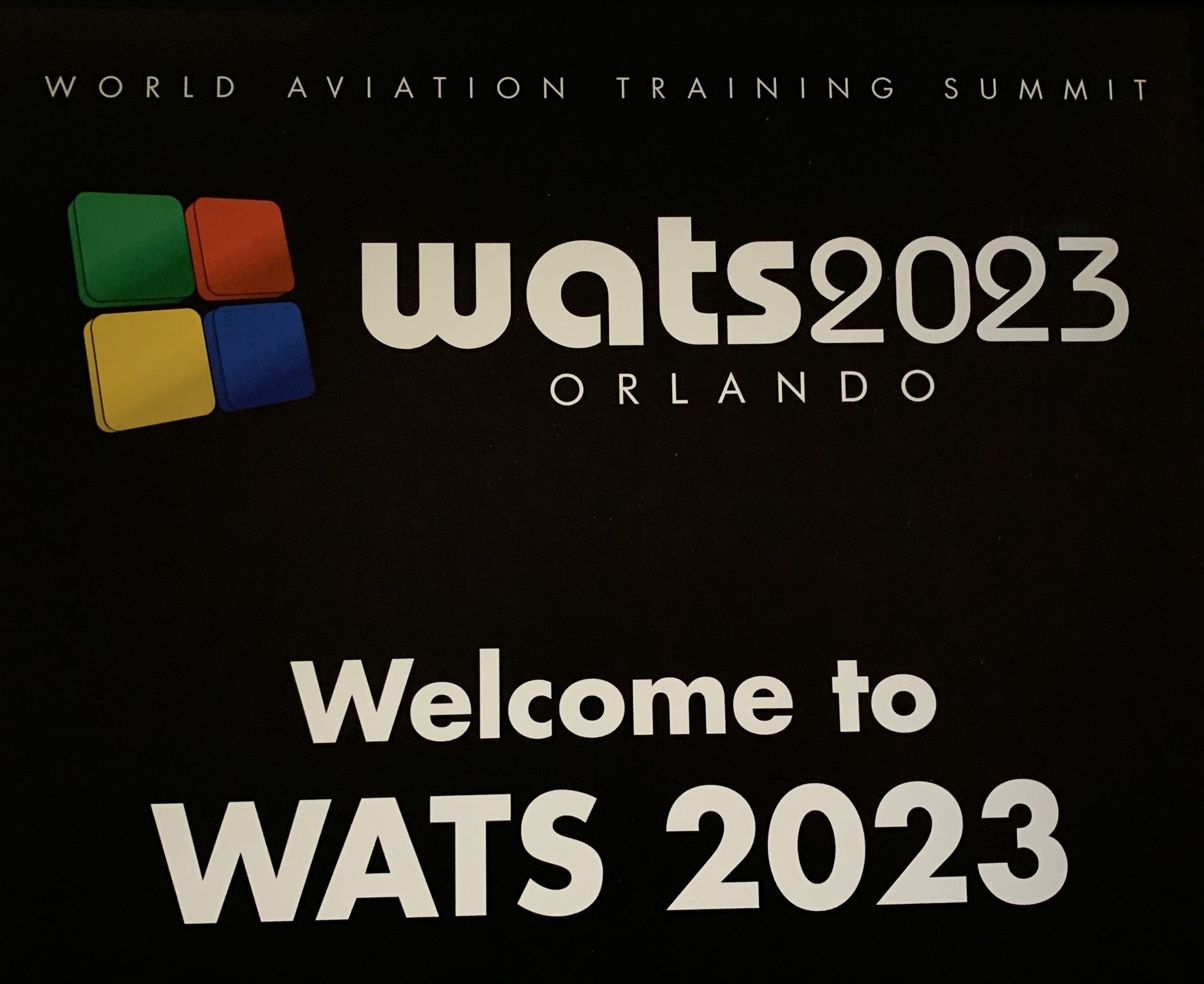
The World Aviation Training Summit celebrated its 25th anniversary in Orlando, Florida. (Photo: AirlineGeeks | John Flett)

The aviation industry continues to exhibit positive signs of post-pandemic growth as the northern summer schedule gets underway. A number of airlines are approaching or have surpassed 2019 planned capacity levels though this does differ by region.

The North American and European markets were unhindered by travel restrictions last year but some countries in South East Asia have only recently removed COVID-19 restrictions. Only last week announced that ‘all travelers and returnees will no longer be required to submit either a certificate of a negative result of COVID-19 test conducted within 72 hours prior to departure, or a valid COVID-19 vaccination certificate of three doses or equivalent.’

Though the industry is displaying positive signs of returning to pre-pandemic levels of operations it is not without a number of challenges. Airport caps on aircraft movements, production line delays of new aircraft and strategic flight cancellations are all indicators of an industry faced with a worldwide workforce shortage.

Exceeding customer service expectations is a focus of the industry but above all is doing so in a manner that achieves and maintains the highest level of safety.

With aviation organizations vying to be attractive employers to retain staff and with a technologically savvy generation entering the workforce, whilst maintaining and enhancing the industry’s safety record, engaging training has become a focus.

The World Aviation Training Summit (WATS) is an annual event organized by the Halldale Group that brings together ‘aviation training professionals, serving airlines, aircraft manufacturers, regulators, training providers and the training industry.’

WATS recently celebrated its 25th anniversary in Orlando, Florida with over 1100 attendees networking and attending a wide range of sessions. The summit offers three separate streams related to pilots, cabin crew and maintenance in addition to joint sessions on commonalities such as the regulatory environment.

WATS opened with a panel of flight operations executives from airlines and major aircraft manufacturers discussing the current aviation environment, issues the industry faces and how improved training can assist in overcoming challenges and delivering on the paramount goal of safety.

The use of technology and AI in training was spiritedly discussed throughout the four-day summit and WATS provides a forum for these and other subjects to be debated. Halldale Group founder and chief executive officer Andy Smith says the aim of WATS is “not just to improve training, it’s to improve overall safety. It’s going to take the entire community to do this and we cannot sit there and expect the regulator to get it right. And with this much change going on it’s going to need the suppliers, the end users, the educational groups to get this right.”

In addition to WATS, the Halldale Group organize the European Airline Training Symposium (EATS) and the Asia Pacific Airline Training Symposium (APATS). The chair of WATS, Rick Adams, highlighted a few of the initiatives the events feature that deliver toward a broader industry collaboration. “This started in Europe with a head of training meeting a number of years back. That also led to an aircrew training policy group that actually helps to advise EASA on an unofficial basis. We’re rolling that over to here starting this year with this conference.”

Smith sees the value of a WATS-initiated aircrew training policy group (ATPG) as being “immediate and “there to help the regulator move their key issues forward. But, it’s also become a sort of sounding board for where they might go next.

An ATPG can also come to the regulator and say, hey, you know, we ought to be looking at this and then (the regulator can) either say no, yes or will you do it and we’ll listen. The good thing is that we already have an ATPG in Africa and there’s one coming for the LATAM region. And I believe there’s one coming for India as well. This idea of teaming up to solve training problems is great. We are part of that, so we’re trying to drive that forward.”

The impact of industry needs, technological changes and the next-generation workforce have seen EASA recently update the guidelines for cabin crew initial training to allow for the use of virtual methods. EASA Guidelines on Initial Cabin Crew Training state: “Digital learning can replace classroom training, specific hands‐on exercises, or traditionally simulated exercises if well designed e.g. to include the necessary interaction to fulfill the training needs and requirements of the subject or part of it.”

The guidelines go on to say, “The method should be approved by the NAA, when satisfied that the method’s effectiveness in strengthening the trainee’s knowledge and skills and in enhancing the desired learning outcome has been demonstrated. Digital learning could be selected as a training tool when it is deemed suitable to attain the learning outcome and its use results in an equivalent or increased level of competence for the trainee.”

Smith and Adams are positive about the impact that WATS and the other events have on the aviation industry’s training environment. A key part of what the summits do is to continue the conversations beyond the annual events. Adams mentioned that, “in between the live event in Europe, we’re doing a virtual event kind of mid-year update with that same group (Heads of Training).”

“The whole point is to keep the discussion going and enable people to address issues as they need to,” adds Smith. “We’ve stood up as sort of Super LinkedIn, if you will, which allows people to talk to each other, but also allows the creation of working group spaces and so forth.”

The networking and collaborative element of WATS, bringing together aviation professionals from major airlines, aircraft manufacturers, training organizations and associated industries, allows for valuable discussions. Adams puts “the highest value” of the conference on what he calls “the hallway conversations.” Explaining that “you bump into somebody, either you know them or maybe they know you, and you discuss a particular topic or maybe it evolves into other topics.”

Summing up the value of collaborative efforts to improve safety within the industry through more effective training, Andy Smith states: “If you’re going to address real issues, you’ve got to be open, honest. And if you can’t do that, you’re not going to make much progress.”

The next WATS is scheduled to take place in Orlando, Florida between April 29 to May 2, 2024.

APATS 2023 will be held on Aug. 29-30 in Singapore.

EATS 2023 will be held on Nov. 8-9 in Cascais, Portugal.

John Flett

John has always had a passion for aviation and through a career with Air New Zealand has gained a strong understanding of aviation operations and the strategic nature of the industry. During his career with the airline, John held multiple leadership roles and was involved in projects such as the introduction of both the 777-200 and -300 type aircraft and the development of the IFE for the 777-300. He was also part of a small team who created and published the internal communications magazines for Air New Zealand’s pilots, cabin crew and ground staff balancing a mix of corporate and social content. John is educated to postgraduate level achieving a masters degree with Distinction in Airline and Airport Management. John has held the positions of course director of an undergraduate commercial pilot training programme at a leading London university. In addition he is contracted as an external instructor for IATA (International Air Transport Association) and has been a member of the Heathrow Community Fund’s ‘Communities for Tomorrow’ panel.

Alaska Airlines Debuts New Salmon-Themed Livery

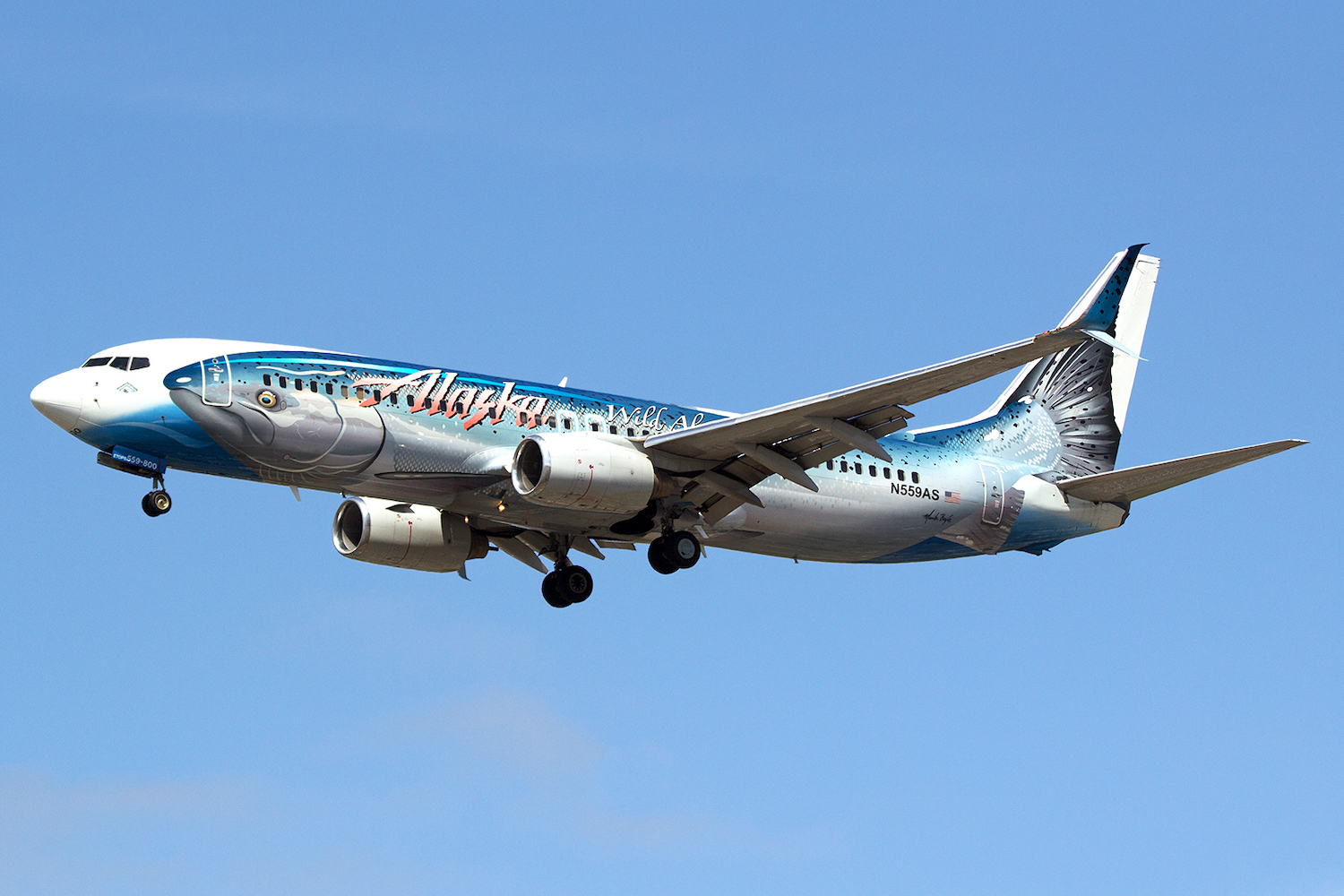
Alaska's newest special livery (Photo: Alaska Airlines)

On Thursday, Alaska Airlines unveiled a new special livery in Anchorage, Alaska. The ETOPS-certified Boeing 737-800 registered as N559AS, previously known as “Salmon Thirty Salmon II,” has been repainted into a livery encompassing Native Alaskan heritage in a new salmon-themed livery. 

In April, the aircraft operated its last flight in its previous livery leaving the public unknown if another special salmon livery would be seen. Emerging a little under a month after its last flight, the aircraft rolled out sporting its new livery in Amarillo, Texas, and flew to Anchorage on May 9 according to Flightradar24

Alaska’s original special Salmon livery (Photo: AirlineGeeks | William Derrickson)

The livery was designed by Alaska native, Crystal Kaakeeyáa Rose Demientieff Worl. The flying work of art features multiple salmons on the tail and fuselage with a blue background. The livery has significant cultural importance to her and her ancestors stating in a press release from the carrier, “It feels good to say that I live in Juneau and fish and hunt here and eat off this land. My family’s been here for a long time, and I can say my ancestors are from here, and I’m eating the same food in the same place that they once were, and that’s really special to be able to share that and say that and feel that—and to create and retell their stories through my eyes. It’s powerful.” 

While Crystal designed the aircraft, the livery will have significant importance not only to her but also to Native Alaskans. Emily Edenshaw, President and CEO of Alaska Native Heritage Center, believes that the livery will do more than catch the attention of those that see the aircraft pass by. In a statement included in the Alaska Airlines press release, she mentions “Alaska has always been, and will always be, a Native place with deep, rich cultural heritages. For too long, Alaska has been viewed primarily through a geographical lens, when it is the many Indigenous cultures and peoples that truly make our state unique. We honor and appreciate Alaska Airlines’ commitment to ensuring that from the moment someone sets foot on this airplane, they will have an opportunity to learn about Alaska’s First Peoples, who have inhabited Alaska since time immemorial.” 

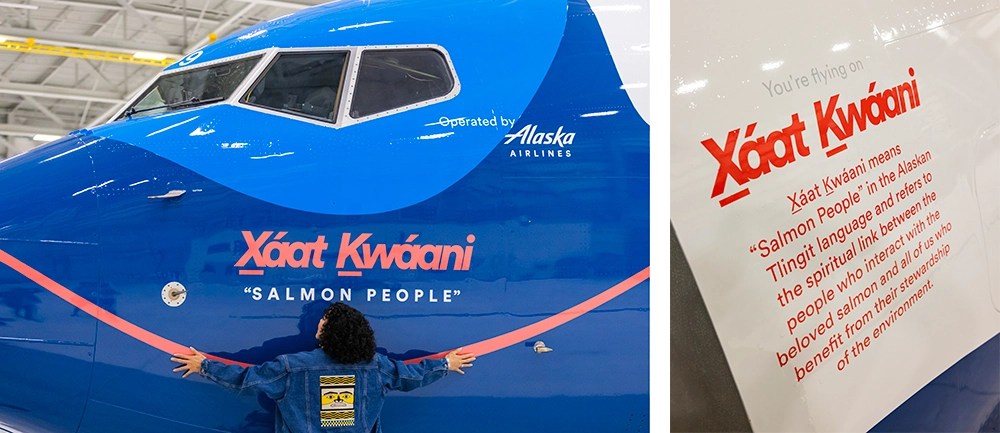
The aircraft’s name is Xáat Kwáani which translated to English as Salmon People. According to the carrier, this is the first aircraft in the United States to be named in an Alaska Native language. 

Xáat Kwáani is the first aircraft named in an Alaska Native language in the United States. (Photo: Ingrid Barrentine | Alaska Airlines)

Other Special Liveries

The new livery will join other environmentally themed liveries already in Alaska’s fleet. The carrier is currently flying a 737-900 in a partnership with Boeing outfitted as an ecoDemonstrator, testing out new technologies that will lower emissions and future environmental impact. This aircraft has a mountain landscape design. 

Alaska’s ecoDemonstrator 737-900 aircraft. (Photo: Alaska Airlines)

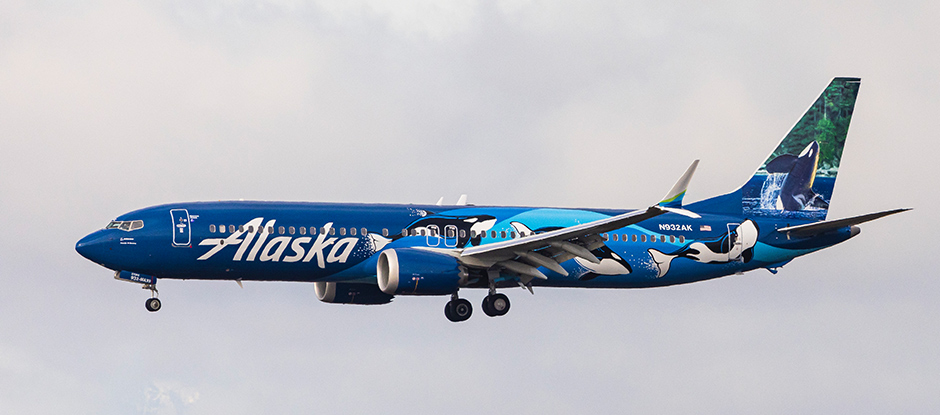
Another wildlife-themed livery can be seen on one of the carrier’s Boeing 737-9 MAX aircraft. Dubbed West Coast Wonders, the livery features Orca whales swimming and according to Alaska “honors the shores we call home and the natural life of the Pacific Ocean and West Coast waters.”

Alaska’s “West Coast Wonders” Orca-themed 737 on approach. (Photo: Alaska Airlines)

The aircraft will re-enter service on May 12, beginning where the previous livery left off. Operating Flight 62, Xáat Kwáani will fly down the Alaskan coast from Anchorage making stops in Juneau, Sitka and Ketchikan before finishing out the flight number in Seattle. Rejoining the fleet of over 200 Boeing 737s, the aircraft will fly throughout Alaska’s network sharing Crystal’s artwork and the cultural significance behind it across North America. 

Zach Cooke

Zach’s love for aviation began when he was in elementary school with a flight sim and model planes. This passion for being in the air only intensified throughout high school when he earned his Private Pilot Certificate. He then attended Embry-Riddle Aeronautical University, earning his certificates and ratings to later flight instruct and share his passion for aviation with others. He now resides in the North East living out his dream as an airline pilot.

Lufthansa Group Enhances Connectivity to East Africa with Increased Capacity

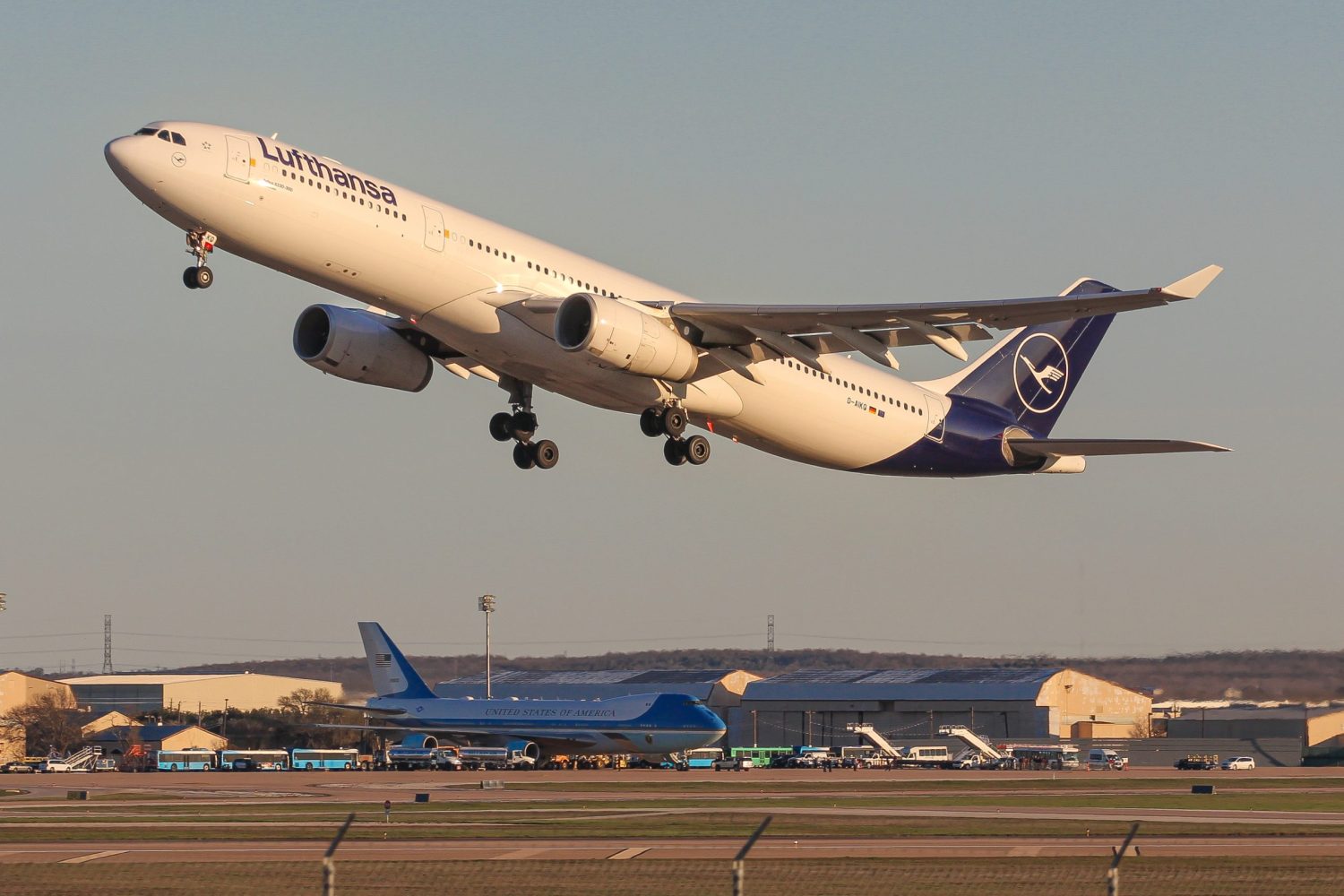
A Lufthansa A330 departing Austin in 2019 with Air Force One in the background. (Photo: AirlineGeeks | Mateen Kontoravdis)

Europe’s Lufthansa Group is bolstering its connectivity to East Africa by significantly increasing its capacity to the region. The strategic move aims to cater to the surging demand for air travel and strengthen Lufthansa’s presence in this dynamic market.

Effective from June 3. 2023, Lufthansa is set to elevate its operations by introducing daily flights between Frankfurt, Germany, and Nairobi, Kenya. This notable development marks a significant milestone for Lufthansa, as it will be the first time the airline operates daily flights to the Kenyan capital.

The enhanced flight schedule will provide passengers with flexibility and convenience when planning their journeys between Europe and East Africa, according to Kevin Markette, General Manager of East Africa at Lufthansa Group.

Departing each evening at 22:25 local time, the Frankfurt-Nairobi flight is tailored to meet the needs of both business and leisure travelers. per a company press release. Arriving in Nairobi at 20:30 hours, passengers will have ample time to connect with various destinations in Europe during the day, ensuring seamless travel experiences.

Markette, General Manager of East Africa at Lufthansa Group, expressed his enthusiasm about the expanded frequency, stating, “Kenya remains a key focus market for Lufthansa in East Africa, and this decision to maximize our offering into the country is driven by the significant increase in demand and the unwavering support from the local community within the region.”

In addition to the increased frequency to Nairobi, Lufthansa Group’s leisure carrier, Eurowings Discover, will also expand its services to East Africa. Commencing from June 20, 2023 to Sept. 12, 2023, the current four weekly flights between Frankfurt and Mombasa will be increased to five weekly flights.

Brussels Airlines Grows Africa Network

Recognizing the importance of the entire East African region, Lufthansa Group continues to invest in expanding its network and connectivity. Brussels Airlines, a subsidiary of Lufthansa Group, will increase its capacity between Brussels and Kigali. Originally planned as a seasonal increase, the current frequency of four weekly flights will now be maintained throughout the winter season of 2023. This adjustment complements the daily flights offered by Brussels Airlines between Brussels and Entebbe, further emphasizing the commitment of Lufthansa Group to the region.

Victor Shalton

Victor Shalton's love for aviation can be traced to when he was 11-years-old. As a seasoned aviation writer, he takes pride in providing the best aviation coverage around the globe and is passionate about advancing his skills in the aviation space. In addition, he loves travelling, writing, arts and while his speaking engagements have taken him around the world, he is proud to call Nairobi home.
Sign-up for newsletters & special offers!

Get the latest stories & special offers delivered directly to your inbox

SUBSCRIBE

Uh-oh! It looks like you're using an ad blocker.

Our website relies on ads to provide free content and sustain our operations. By turning off your ad blocker, you help support us and ensure we can continue offering valuable content without any cost to you.

We truly appreciate your understanding and support. Thank you for considering disabling your ad blocker for this website