








Stories

Trip Report: Surprises and Delights Across the Pacific with Philippines Airlines

Philippine Airlines
A Philippine Airlines aircraft. (Photo: AirlineGeeks | William Derrickson)

This trip report is the first in a series of stories that took me from Los Angeles to New York’s JFK Airport via Manila, Jakarta and Singapore. This trip was completely funded independently and is an honest opinion on the airlines included. This week I will introduce you to Philippine Airlines — the airline that surprised me more than any other on this trip.

Check In

The check-in experience at LAX ahead of this fully booked Boeing 777-300 flight was nothing short of chaotic. I was dropped off on the far North Side of Tom Bradley International Terminal, TBIT for short, and the check in desk for PAL where on the far south side but the lines stretched to furthest away doors with no real coordination. It was only once I actually found the PAL desks did I know I was in the right place.

Fortunately for me I was seated in the business class cabin and was able to immediately move to the front of the line. The lady that checked me was incredibly helpful and was even able to check me in to my connecting flight that was, technically, 3 days in the future. Security was a breeze as I utilized both my Clear and TSA PreCheck membership.

Post-security, my number one goal was to find the Star Alliance lounge to kill a few hours prior to my flight. The Star Alliance lounge is probably the best alliance lounge at LAX. Most of this praise is due directly to the fact that it has an outdoor terrace with partial view of the Delta ramp and, more impressively, a plethora of fire pits and comfy couches to lounge on.

Unfortunately, all the spot were taken, so I turned my attention to the so called “media room” where I asked the staff to turn on the Australian GP Formula 1 race. While the race didn’t go the way I had hoped the shower suites were available about an hour before my departure, there’s nothing better than a shower right before a 15 hour flight. The lounge provides towels, dental kits, shaving kits and all the bath amenities you could need and there is no time limit on the use of one of the rooms.

Boarding

PAL flight 103 departed from gate 206 this particular evening which is quite the hike from the main part of TBIT, but the hallways under the tarmac are lined with moving walkways, so it only took about 15 minutes to get the gate.

The boarding process began with the gate agents making the announcement that, “Because this is an international flight, masks are required.” This seemed like a completely arbitrary statement and proved to be completely false as most crew and passengers went the entire flight without wearing a mask.

Normally, this would be something I would let go but the gate agents work for the airline and should know the requirements of flying between the United States and the Philippines. The boarding process officially started with some of the gate agents holding up signs with the different boarding groups on them. I really like this idea, as it takes away the desire of some people to crowd around that gate well before their group is called.

Onboard

Onboard I found my seat, 6A, and settled in. PAL uses a rather outdated 2-3-2 business class cabin, which was the main point of dread going into this flight. Seeing as I had booked a window seat on a fully booked flight, I was nervous about having to crawl over a stranger at 3 o’clock in the morning.

The seat was, however, incredibly comfortable. Bountiful legroom and when the bed was in lie flat mode I felt very closed off from the rest of the cabin. If you are a side sleeper like I am, you’ll love how much room these seats have when you’re trying to fall asleep. Major points here!.

The Cabin crew on this flight were nothing short of outstanding, I would like to particularly say thank you to Karen for all the help throughout the flight. The crew were always there when you needed something but weren’t overbearing or hovering. If PAL sees this article just know that you have some amazing people flying on your aircraft.

Food

Meal service started with a scented hot towel and a place setting with metal cutlery. Next was a canapé of prawn toast. To start I chose the duck breast with grain salad. The flavor was great, but the duck was slightly dry.

For the main, I had the beef bulgogi that had a mixture of beef, mushrooms and tofu. This dish was delicious, and I would consider it the best dish of the entire flight. Garlic bread was offered along side, it was the standard grocery store variety, not quite Emirates quality but very good.

Dinner service concluded with a small carton of Häagen-Dazs chocolate ice cream. Breakfast was beef adobo, a dish I was relatively unfamiliar with but the mixture of beef with its sauce and rice and scrambled eggs was wonderful. The beef was tender and flavorful, the eggs weren’t over cooked and fluffy and the rice was perfectly cooked, this just proves that you can get breakfast right, even after 13 hours in the air!

In Conclusion

Philippine Airlines isn’t an airline that I had heard much about prior to booking and to be honest, I was not expecting much but I cannot wait to fly with them again. PAL continued to surprise me. The crew were great, the food was some of the best in the sky and the lie flat seats can compete with Singapore’s when it’s time to sleep.

The carrier has a few things they need to update to compete with the best airlines in the world. I believe that PAL can be a force to be reckoned with in Southeast Asia . The only drawback of flying with PAL is that they are not part of an airline alliance despite ANA, who’s a Star Alliance member, owning 9.5% of the carrier’s shares.

I cannot wait to fly with Philippine Airlines again, and I am already to looking to book my return to Manila as soon as possible.


U.K. Manchester Airport Group Sees Strong Recovery in 2023

A Virgin Atlantic Boeing 747 taxis past Terminal Two at Manchester Airport (Photo: Manchester Airport)

U.K.’s Manchester Airports Group (MAG) is in line with London’s Heathrow and Gatwick, making a remarkable recovery after the pandemic as four million passengers had flown through its airports in March. The group’s rolling 12-month passenger totals for the period ending March 2023 has reached 54 million, 88% of 2019 levels.

MAG owns Manchester Airport, London’s Stansted Airport and the U.K.’s East Midlands Airport. Touting its own operational performance, the group said that 99% of passengers at Stansted and Manchester Airport passed through security in 15 minutes during the Easter Holidays.

Manchester Airport, the gateway to Northern England has hired more than 2,000 new employees since last April. The airport was spotted the long queues since the travel restrictions were lift in March 2022. As a result of the previous travel chaos, Manchester has prepared itself for emergencies as a new resilience team had been set up. One hundred members are trained in a variety of roles across the airport, handling from check in to baggage handling.

Manchester Airport has recorded 1.9 million passengers in March, 30% higher than March last year and 92.5% pre-pandemic levels.

“We are pleased to have delivered a really positive start to the summer season, including during the busy Easter weekend.” Chris Woodroofe, The Managing Director of the airport said.

In addition, Stansted welcomed nearly two million passengers in March. It recorded 94% of the passengers volume of 2019, increasing 32% to same time last year. Stansted has boosted its summer schedule by adding the new flight operation to Bergen, Norway, Athens and Rome.

“Our preparations to meet rising passenger demand across May due to the multiple bank holidays, including the King Charles III coronation weekend, and the peak summer season continue to go well.” Gareth Powell, the Managing Director of Stansted said.

However, East Midlands Airport missed the mark and had served 183,000 passengers in March, only 72% of pre-pandemic levels. The airport has experienced “some good recovery” but “slower than we expected”. The airport is looking forward a 90-95% in some of its peak seasons and about four million customers over the next 12 month.

“We look forward to welcoming back passengers this year, many of whom still won’t travelled overseas since before the pandemic.” Mike Grimes, Customer Service & Security Director of East Midlands Airport said.

New Rules on Liquids in the U.K.

In the meantime, Britons could save their time at security checkpoints. London City Airport has recently introduced the new CT full security scanner as the passengers don’t need to remove their laptops and can carry liquid containers up to two liters in size their carry-on bags in line with the national aviation authority’s new security rules.

The CT technology has been used in New York’s LaGuardia Airport and Amsterdam Airport Schiphol. The airports around the U.K. must install the new system by June 2024.

Denver Air Connection Expands in Minneapolis

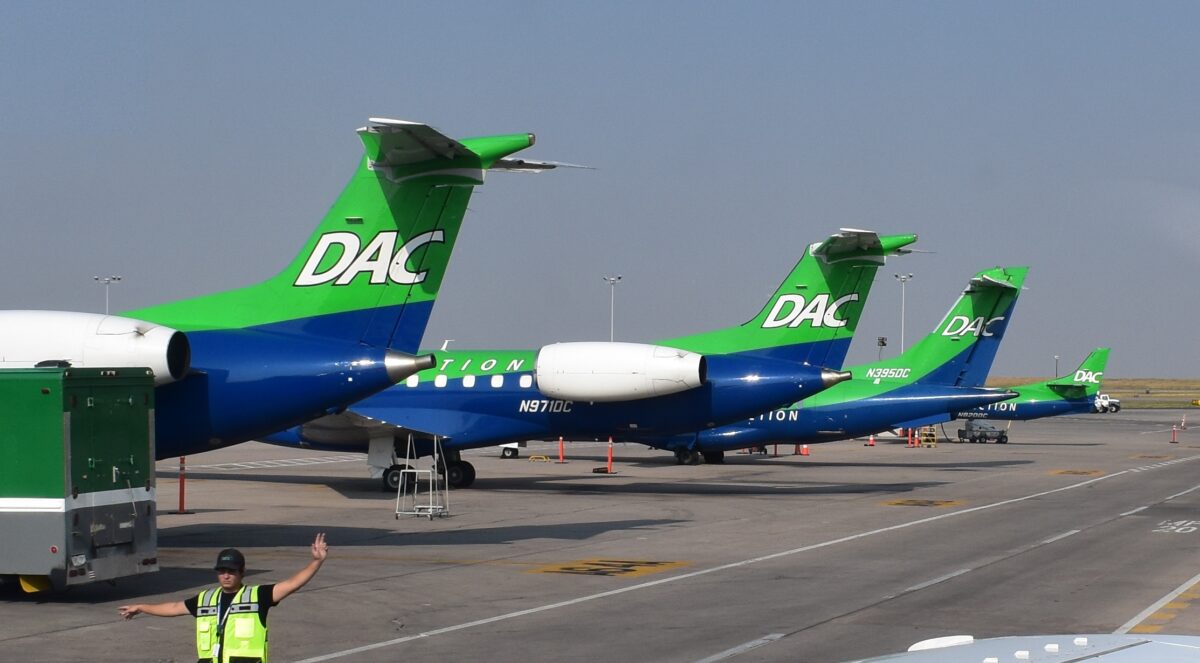
Denver Air Connection airplanes lined up in Denver.
Denver Air Connection airplanes lined up in Denver. (Photo: AirlineGeeks | Joey Gerardi)

Denver-based Denver Air Connection, or more commonly known as DAC, will be expanding from its Minneapolis/St. Paul hub, which is due to a contract refresh. Pierre, S.D., an EAS community the airline has served since June 2021 when SkyWest terminated their contract here, along with nearby Watertown, S.D., which have a joint EAS contract and are usually awarded together, just had their contract re-awarded to Denver Air Connection once again.

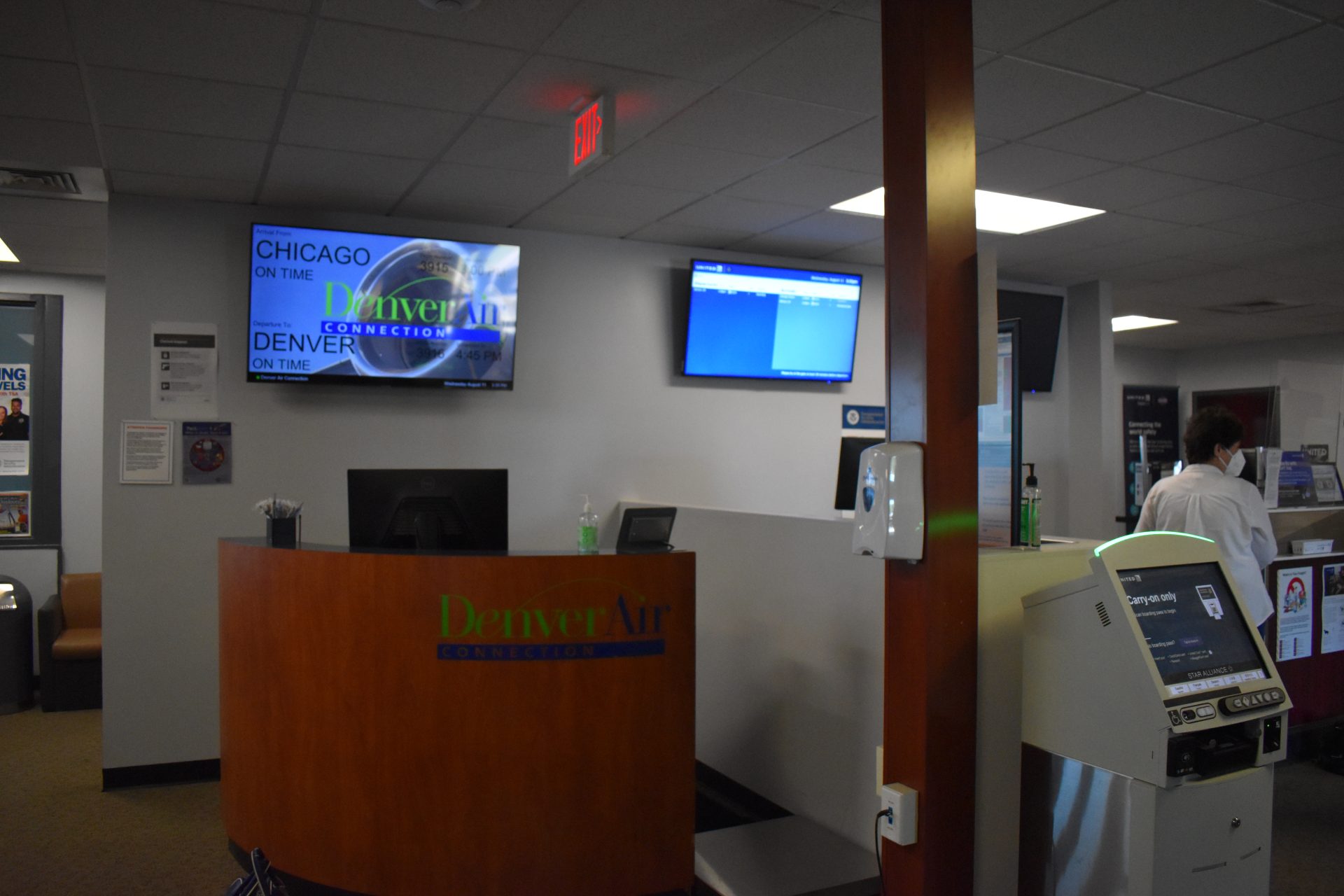
The DAC check-in desk in Watertown (Photo: AirlineGeeks | Joey Gerardi)

Back in 2021, the contract for the two communities was awarded to DAC, with Watertown’s proposal including flights to both Chicago O’Hare and Denver, while Pierre only got Denver flights.

Under the new contract, Watertown will continue to receive what it already has, nonstop flights to both Chicago and Denver. But, Pierre will be adding a new destination; Minneapolis/St. Paul, in addition to the Denver flights currently operated. Up to four of the 12 weekly flights from Pierre will now be going to Minneapolis.

This will be the first time Pierre has had flights to Minneapolis or any destinations east of the city since Great Lakes Airlines served the airport before it collapsed in March 2015. This will also be the city’s first jet service to Minneapolis since the 1980’s as all flights to Minneapolis between 1980 and 2015 were on propeller-driven aircraft.

These flights will be the airline’s third destination out of Minneapolis as they already serve Thief River Fall, Minn. and Ironwood, Mich. from the airport. The new contract is set to begin on June 1, 2023, but flights have not gone on sale as of yet given the contract was just awarded to the airline a few days ago and they need time to get resources together before beginning to sell the flights.

Flights and schedules are subject to change and all information in this article was obtained through publicly viewable documents.

Joey Gerardi

Joey has always been interested in planes for as long as he can remember. He grew up in Central New York during the early 2000s when US Airways Express turboprops ruled the skies. Being from a non-aviation family made it harder for him to be around planes and would only spend about three hours a month at the airport. He was so excited when he could drive by himself, the first thing he did with his driver's license was get ice cream and go plane spotting for the entire day. He graduated from Western Michigan University in 2022 with a B.S. in Aviation Management & Operations and a Minor in Business, and currently works for a major airline in his hometown.

Rome Fiumicino Airport Renovates Terminal 1

Rome "Leonardo Da Vinci" Airport (Photo: Aeroporti Di Roma - ADR)

A few days ago, the new Terminal 1 was inaugurated, with a capacity of 6 million passengers for domestic and Schengen destinations. Last year, boarding area A was inaugurated at Rome’s Leonardo da Vinci Airport, but the former boarding area C is also scheduled to open before the summer of 2023, and the renovation of the former pier D is scheduled to begin in the coming months.

The Aeroporti di Roma (ADR) Group, which operates both the Leonardo da Vinci International Airport at Fiumicino and the Giovan Battista Pastine Airport at Ciampino, both near Rome, was inaugurated in 1961, replacing Ciampino Airport, which remained in service only for domestic and charter flights. In 1991, Terminal 1 was inaugurated, which was closed in July 2020 due to the effects of Covid-19 on air traffic. In October 2022, its renovation began, with the aim of optimizing the operational space and increasing the overall comfort of the terminal.

The new area covers nearly 25000 square meters and was built without excavating or increasing the existing infrastructure by reusing construction materials. The departures area is equipped with 22 gates, more than half of which are equipped with jet bridges, 12 new loading bridges for direct boarding of aircraft, 44 self-boarding gates, as well as digital columns integrated into the structures. A new baggage handling system has been installed in the arrivals area, with 3 new baggage reclaim carousels for additional capacity for an additional 3 million passengers per year.

This is just the latest achievement of Rome’s airport, as there is a major investment program of about 10 billion euros ($11bn) until 2046, of which 2.5 billion have already been implemented. These renovations and improvements are also being carried out with a view to the next major international events, such as the Jubilee in 2025.

All the renovation, design and development work is “Made in Italy”, carried out by the ADR Group’s team of architects and engineers using the Building Information Modeling (BIM) methodology, and has involved all the structural and plant components of the terminal, with the aim of maximizing the spaces dedicated to passengers and facilitating their orientation within the airport. Passengers will now be able to scan a QR code placed on the LED walls of the boarding gates and listen to a guide to their destination, with interesting facts and places to visit, which can also be downloaded and listened to during the flight. These audio guides are created by Chora Media, an Italian storytelling company founded in 2020 with the aim of spreading news, history and art through different series of themed podcasts.

The inauguration was attended by ADR Group President Claudio De Vincenti and ADR Group CEO Marco Troncone. Also present, given the importance of the event, were the Italian Minister of Infrastructure and Transportation, Matteo Salvini, the Undersecretary of Culture, Vittorio Sgarbi, the President of the Italian Civil Aviation Authority (ENAC), Pierluigi Di Palma, the CEO of ITA Airways, Fabio Lazzerini, the President of the Lazio Region, Francesco Rocca, the Mayor of the City of Rome, Roberto Gualtieri, the Deputy Mayor of Fiumicino, Ezio di Genesio Pagliuca, and Prefect Fabrizio Gallo, Director of the Fund for Religious Buildings of the Italian Ministry of the Interior.

Vincenzo Claudio Piscopo

Vincenzo graduated in 2019 in Mechanical Engineering with an aeronautical curriculum, focusing his thesis on Human Factors in aircraft maintenance. In 2022 he pursued his master's degree in Aerospace Engineering at the University of Palermo, Italy. He combines his journalistic activities with his work as a Reliability Engineer at Zetalab.

Boeing 737 Deliveries Halted By ‘Quality-Related Problem’

Parked Boeing 737 MAX jets at Boeing Field, most of which destined to Chinese carriers. (Photo: AirlineGeeks | Fangzhong Guo)

Boeing is facing fresh challenges with the delivery of some of its 737 MAX aircraft with Reuters reporting the manufacturer has ‘quality-related problems with certain components made by one of its main suppliers.’ It is reported that some deliveries of new aircraft have been halted for inspections to take place which will result in delays for airlines awaiting planes ahead of the Northern summer.

Boeing disclosed the problem on Thursday and it involves ‘the installation of two fittings that join the aft fuselage made by Spirit AeroSystems to the vertical tail, which were not attached correctly to the structure of the fuselage before it was sent to the planemaker.’ According to Reuters Boeing and Spirit AeroSystems will need to inspect a number of 737 -MAX 7, -MAX 8 and -MAX 8200 aircraft.  News of the issue caused Spirit AeroSystems shares to drop 20 percent and Boeing’s shares 7 percent on Friday.

The manufacturer had been hoping to increase the output of its most popular aircraft from 31 per month to 38 by June and 42 by January 2024. In the first quarter of 2023, Boeing delivered 111 737s and was targeting 400 of the aircraft to be delivered this year. Last month Airline Geeks reported that both Boeing and Airbus were seeking to increase their workforce of engineers by sourcing new staff in India. This was to counter the continual delays to delivery schedules that were seeing airlines and lessors exercise their right to compensation due to missed delivery deadlines.

Ryanair is Boeing’s biggest European customer for the 737 and was expecting deliveries of 24 MAX 8200s prior to the commencement of the summer holiday season in July. In the calendar year 2023, the airline was scheduled to receive 51 Boeing 737 aircraft to add to its current fleet of 540. The Irish Times reported the carrier as saying they were ‘assessing with Boeing how this will impact’ those deliveries.

The Irish Times also noted that Boeing had advised the U.S. Federal Aviation Administration (FAA) of the issue. The manufacturer advised the FAA that the current development ‘was not an immediate “safety of flight issue”’ to aircraft already in operation and that the regulator had agreed. Reports are that the issue may go back to 2019 though some versions of the 737 use parts from a different supplier. Boeing is therefore making an assessment of the total number of aircraft impacted and it is expected that the FAA ‘is likely to issue an airworthiness directive that would mandate an inspection-and-repair regime.’

John Flett

John has always had a passion for aviation and through a career with Air New Zealand has gained a strong understanding of aviation operations and the strategic nature of the industry. During his career with the airline, John held multiple leadership roles and was involved in projects such as the introduction of both the 777-200 and -300 type aircraft and the development of the IFE for the 777-300. He was also part of a small team who created and published the internal communications magazines for Air New Zealand’s pilots, cabin crew and ground staff balancing a mix of corporate and social content. John is educated to postgraduate level achieving a masters degree with Distinction in Airline and Airport Management. John has held the positions of course director of an undergraduate commercial pilot training programme at a leading London university. In addition he is contracted as an external instructor for IATA (International Air Transport Association) and has been a member of the Heathrow Community Fund’s ‘Communities for Tomorrow’ panel.

Air Serbia Expands Route Network to Tel Aviv and Ankara, Receives New A320

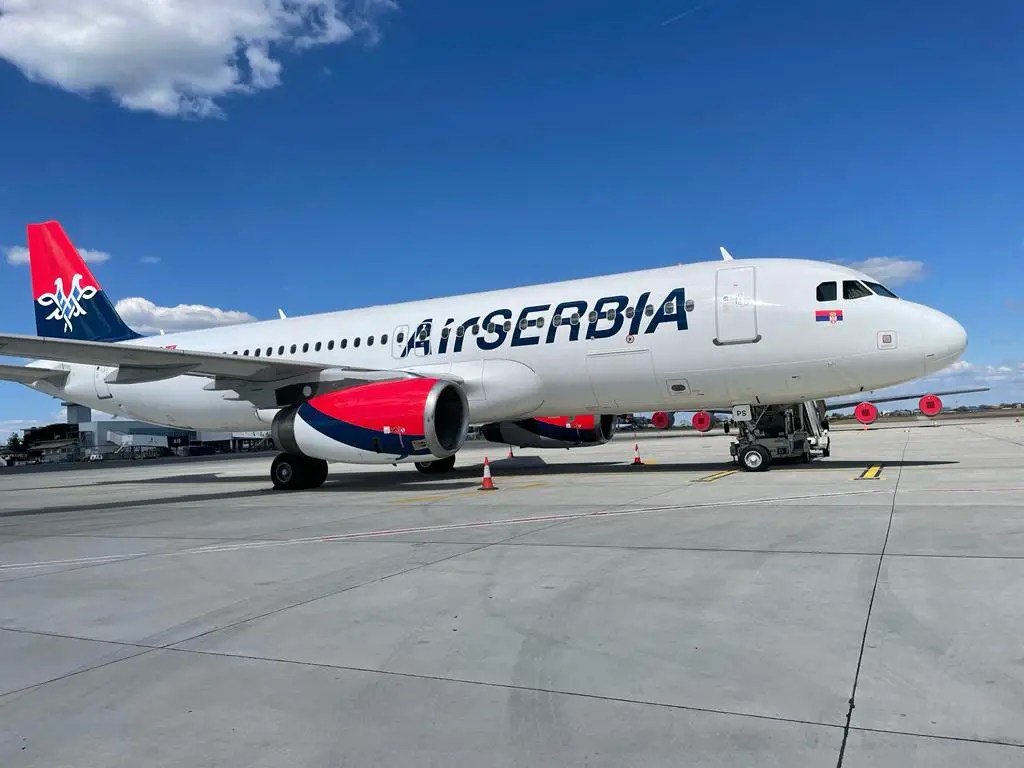
Air Serbia Airbus A320
An Air Serbia Airbus A320. (Photo: Air Serbia)

Air Serbia launched two new routes from Belgrade Nikola Tesla Airport to the Middle East. The airline landed in Tel Aviv (Israel) and Ankara (Turkey) in early April.

The Belgrade-Tel Aviv route was inaugurated on April 6. Flight JU812, which departed at 1:30 PM local time, was the first service on a route that will operate three times a week: Tuesdays, Thursdays, and Sundays. A fourth flight will be added on Mondays starting on May 8. The Airbus A319 aircraft is scheduled for this route.

“Tel Aviv is one of the most modern centers in the Middle East. By adding this cosmopolitan city to our destination network, we have opened the doors of Israel to all who wish to visit it. Just 50 kilometers away is Jerusalem, a city whose history dates back to the fourth millennium BC, making it one of the oldest in the world. The average flight time to Tel Aviv is two hours and fifty minutes and will be operated by Airbus A319 aircraft,”said Bojan Aranđelović, Air Serbia’s Head of Network Planning and Scheduling.

The service to Ankara (ESB) was inaugurated on April 7, departing from Belgrade at 12:30 AM local time. This itinerary will be operated with four weekly flights on Tuesdays, Thursdays, Fridays, and Saturdays, also with Airbus A319 aircraft.

“The introduction of direct flights between the two capitals will strengthen Serbia and Turkey’s great economic, social, and cultural cooperation and further improve the mobility of people and goods. In one week, specifically on April 15, in addition to Istanbul and Ankara, Air Serbia will also begin operating flights to Izmir, while in the upcoming summer season, we will offer charter flights to Antalya, Alanya, Bodrum, and Dalaman,” said Boško Rupić, Air Serbia’s Chief Commercial and Strategy Officer.

The addition of Tel Aviv and Ankara to Air Serbia’s route network increases its offering to the Middle East. Customers can make connections to Central and Western Europe, the Balkans, and the United States via Belgrade.

A new A320 for Air Serbia

The airline announced that it received its third Airbus A320, registered as YU-APS, on April 12. The aircraft is 11 years old and previously belonged to low-cost carrier WizzAir. It was painted in Air Serbia’s colors in the Netherlands and has a cabin equipped with Recaro Slim seats, with a capacity for 180 passengers.

“With the arrival of the new Airbus A320 YU-APS, our company will have three aircraft of this type in its fleet. The continuous modernization of our fleet, management system, technical support, and crew training are the strategic objectives of the Serbian national airline,” said Marijan Kocić, Air Serbia’s Director of Operations.

“Last year we expanded our fleet with eight new aircraft. An Airbus A319 and an A320 were added to our fleet, our regional aircraft fleet was rejuvenated with the addition of five ATR 72-600s, and since December, our second Airbus A330-200, which bears the image of the famous Serbian scientist and inventor Mihajlo Pupin, has taken off. This is the second addition to our fleet since the start of 2023, and we are very proud of it,” continued Kocić.

Air Serbia’s fleet consists of:

  • 5 ATR 72-600
  • 10 Airbus A319
  • 3 Airbus A320
  • 2 Airbus A330-200

Overall, Air Serbia’s expansion of its route network to Tel Aviv and Ankara is a significant milestone in its growth strategy, providing passengers with greater connectivity and convenience. The addition of the third Airbus A320 to the fleet also demonstrates the airline’s commitment to modernization and innovation.

This article was originally published in Aviacionline, as part of current syndication agreement.

Late Takeoff, Excess Weight Cause Near-Miss for Boeing 737-200 in Colombia

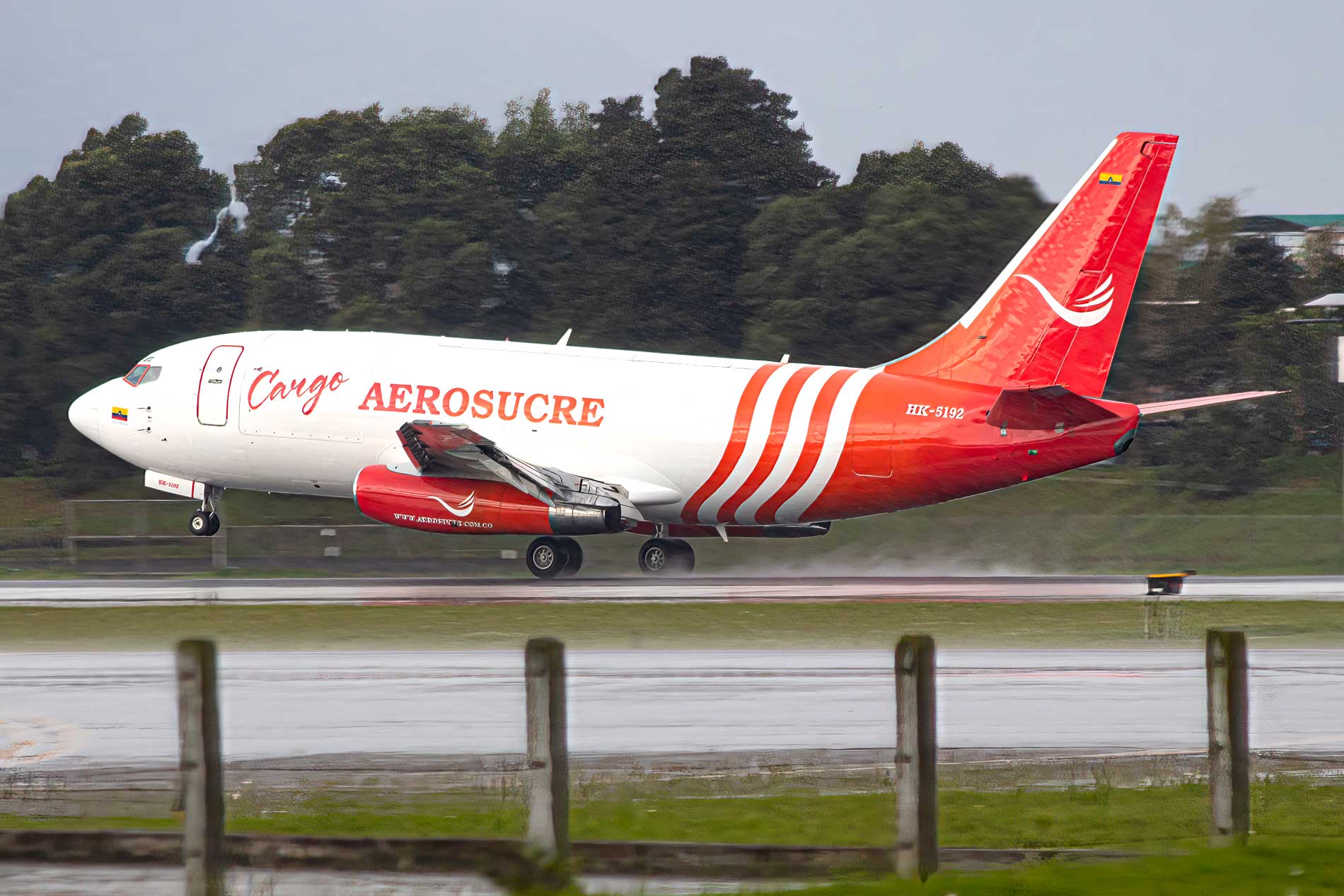
Aerosucre Boeing 737-200
Aerosucre Boeing 737-200 (Photo: Aerosucre)

Aeronáutica Civil de Colombia, the state body in charge of regulating civil aviation in the South American country, has published the final report on the serious incident involving an Aerosucre Boeing 737-200 that occurred in February last year at Germán Olano Airport in the city of Puerto Carreño.

See also: FAA Takes Action Following Recent Incidents in U.S. Commercial Aviation

The Aerosucre Boeing 737-200 incident

On 3 February 2022, the Aerosucre Boeing 737-200 registered as HK-5192 was performing a non-scheduled air cargo transport operation between the aforementioned aerodrome and El Dorado International Airport in Bogotá. Five occupants were on board: the two pilots in charge of flying the aircraft, an observer first officer, an aeronautical technician and an operations dispatcher.

The Boeing 737-200 experienced a near-miss incident after taking off from Germán Olano Airport, with the late rotation and excess weight cited as primary factors. The plane struck a tree approximately 250 meters from the runway’s end, causing the number 1 engine to lose thrust. Security cameras captured the aircraft narrowly clearing power lines and residential houses.

After reaching an altitude of 2,500 feet and flying roughly 30 nautical miles from the airport, pilots requested to return, activating established ground handling protocols. The plane landed safely without further assistance, and all five occupants exited unharmed.

Colombian investigators determined the late rotation resulted from the aircraft’s extreme weight and atmospheric conditions during takeoff. The calculated weight was 49,240 kilograms, while the actual weight should have been limited to 48,965 kilograms due to rising outside temperatures. The excess weight caused a delay in acceleration and increased distance to reach rotation speed, reducing the margin for avoiding obstacles.

The pilot-in-command pulled the yoke back at 138 knots, but the aircraft only lifted off the ground at 151 knots. The final Aeronáutica Civil report cited “overconfidence on the part of the crew” in assuming weight reduction during taxiing and the “low situational awareness” to anticipate performance-affecting changes. The operations dispatcher’s influence to proceed despite limited performance conditions was also noted.

Furthermore, the weight and balance calculation failed to account for the weight of the three occupants accompanying the pilots, adding to the excess weight during takeoff.

Wingo Suspends Flights between Bogota and Mexico City: Impact and Options for Passengers

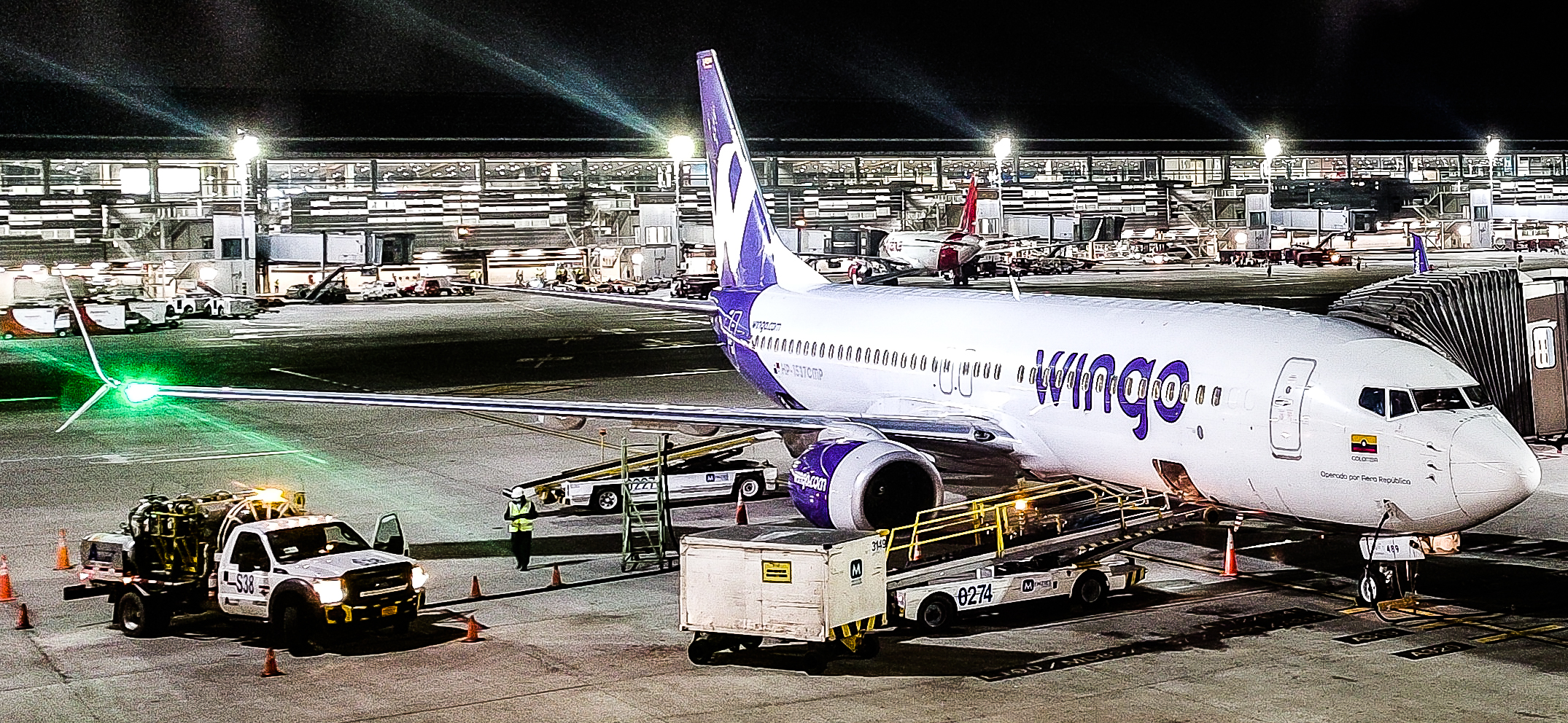
A Wingo Boeing 737-8 at Bogotá Airport
A Wingo Boeing 737-8 at Bogotá Airport (Photo: Pablo Diaz- Aviacionline)

Wingo, Copa Holdings’ low-cost airline, has announced that it will suspend its flights between Bogota (BOG) and Mexico City (MEX) starting from April 16. Until then, the company will continue to operate up to three flights per week.

The low-cost airline began operations in Mexico on December 1, 2016, when it inaugurated its flights between Bogota, Mexico City, and Cancun. Prior to the change in corporate image and model, Aerorepublica operated these links.

Wingo and its flights to Mexico

The decision of the low-cost airline to cease its flights between Bogota and Mexico City is a response to the need to add new offers of seats in other destinations. In the coming weeks, Wingo will add three new routes in the domestic market of Colombia: Barranquilla (BAQ), Bucaramanga (BGA), and Pereira (PEI) from Bogota.

Currently, the company has nine Boeing 737-800 aircraft, with a capacity of 186 passengers.

However, Wingo will maintain its operations in Mexico by connecting:

Cancun-Cali, with three flights per week. Cancun-Medellin, with four flights per week. Cancun-Bogota, with seven flights per week.

According to the Federal Civil Aviation Agency (AFAC) of Mexico, in 2022, Wingo transported 250,282 passengers between the two countries.

What to do if you had tickets with Wingo?

According to a statement, Wingo will comply with what is established by aeronautical regulations. In the first instance, it informed the competent authorities of the decision to cease that link, in addition to initiating a protection plan for travelers.

For tickets for flights after April 19, passengers can choose the following options:

Change route without penalty Request a refund of 100% of the ticket value and obtain additional compensation equivalent to 30% of the airfare. This payment can be obtained in a voucher or in the form of payment of the ticket. April travelers can request the endorsement option through Copa Airlines to fly to the destination.

Colombian airlines continue to dominate flights between Mexico and Colombia

The market between Mexico and Colombia has been severely affected by the recent events of 2023. The disappearance of VIVA and the decrease in Wingo’s offer of seats will affect the offer of seats between the two countries. Colombia and Mexico were among the few countries in the region with few sanitary restrictions due to COVID-19, which made them attractive to tourists from both states.

The airlines of both countries took advantage of the demand to expand massively between 2021 and 2022. According to information obtained through Cirium, Colombian airlines (Avianca, Wingo, and VIVA) have dominated with more than 60% of the share the monthly flight offer in 2022.

However, Mexican airlines will take advantage of the gaps left by other airlines: Viva Aerobus recently added two new routes, connecting Bogota with Monterrey and Guadalajara.

Silver Airways’ $1M Lease Debt Threatens Operations at Fort Lauderdale Airport

A Silver Airways ATR 42 600 on display at the Farnborough Airshow. (Photo: AirlineGeeks | Fabian Behr)

Silver Airways, a Fort Lauderdale-based, Florida regional airline, is facing issues at its home airport. Broward County commissioners, the county that oversees the Fort Lauderdale-Hollywood Airport, announced in 2022 that the airline was delinquent on lease payments owed to the county since 2021. 

While airlines operate into and out of airports, they do not own the space. Just as a business may lease out an office from a landlord, airlines lease out gate and terminal space and pay landing fees to the airport or governing body. Since 2021, Silver hadn’t paid fees to the county which included badges, gate use, joint use and landings among others. According to the county, the amount had come to a total of just under one million dollars. An agreement was made in 2021 to pay a reduced amount to the county, however, Silver did not act on this according to Alexander Williams, one of Broward County’s attorneys. 

Silver Airways’ future hinges on Board vote

While this issue arose last year, the board of commissioners has an upcoming vote next week in which the Fort Lauderdale-based carrier’s lease future is on the table. The board will vote on whether to terminate Silver’s lease at the airport or further await repayment and allow the carrier to continue operating. Both parties want to achieve a solution that is mutually beneficial to the company, county and taxpayers of Broward County. 

The regional carrier operates ATR 42s and 72s combining to make up a fleet of 18 strong. The ATR 42-600s offer 46 seats while the 72-600s offer 70 seats. Silver primarily operates into and out of Florida and the Caribbean, with hubs in Fort Lauderdale, Orlando and Tampa. Their route structure spans as far north as Greenville-Spartanburg and east to Dominica in the Caribbean. The company recently began operating ATR 72-500Fs on behalf of Amazon Air as well. 

See Also: Fort Lauderdale Airport Closes Amid Flood Emergency, 700 Flights Canceled

Zach Cooke

Zach’s love for aviation began when he was in elementary school with a flight sim and model planes. This passion for being in the air only intensified throughout high school when he earned his Private Pilot Certificate. He then attended Embry-Riddle Aeronautical University, earning his certificates and ratings to later flight instruct and share his passion for aviation with others. He now resides in the North East living out his dream as an airline pilot.

Fort Lauderdale Airport Closes Amid Flood Emergency, 700 Flights Canceled

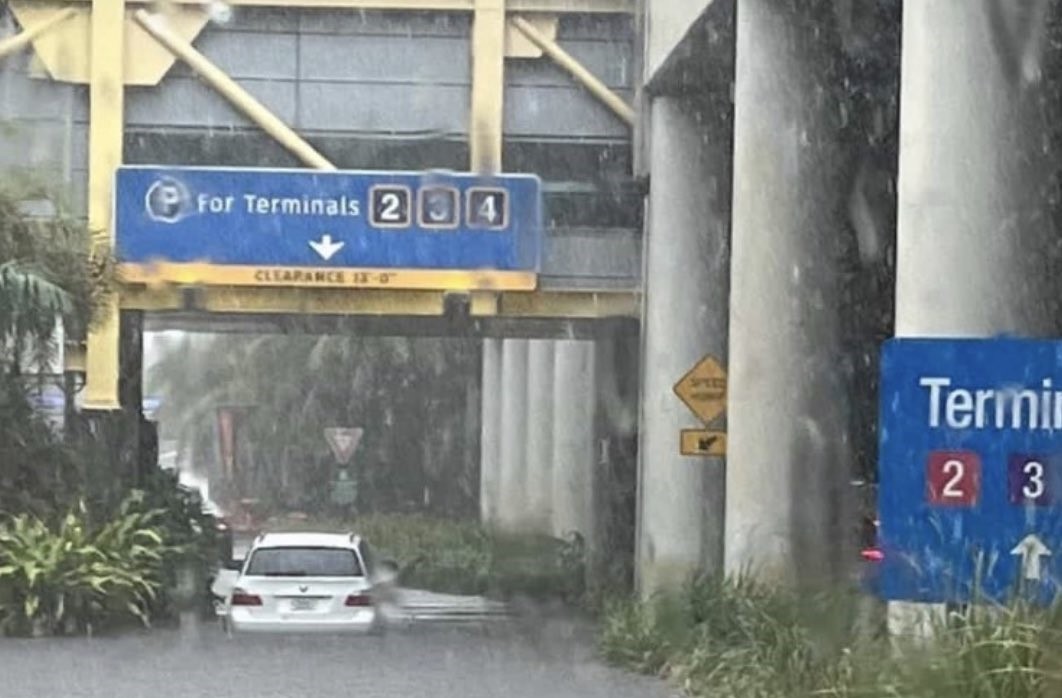
Fort Lauderdale Airport Flood
An image of the Fort Lauderdale Airport, affected by heavy rains and flooding. (Photo: @WPBF_BROOKE - Twitter)

On Wednesday night (April 12), South Florida was hit by a severe storm system that brought heavy rainfall, leading to the declaration of an emergency in the region. Fort Lauderdale-Hollywood International Airport (FLL) was forced to cancel flights as taxiways, aprons, runways, and main access roads became flooded.

According to the National Weather Service (NWS), the alert for torrential rain, strong wind gusts, and even tornadoes remains in effect. An estimated 300 to 500 millimeters of rain fell in the last 12 hours.

Fort Lauderdale-Hollywood Airport closed

The severity of the storm compelled the closure of the airport due to the flooding of several access points for passengers, vehicles, and aircraft. The airport announced that it will remain closed until noon on Thursday (April 13). However, the reopening depends on weather conditions and the rapid drainage of the floodwaters.

As per Flightradar24, the last flight to land was a Spirit Airlines Airbus A320neo, registration N937NK, arriving from St. Thomas (STT) at 20:02 local time. By that point, around 60 flights had been diverted to nearby airports or returned to their departure points.

While most flights continued to be canceled, the only two flights that managed to take off from Fort Lauderdale were Air Transat’s two Airbus A321neos, bound for Montreal (YUL) and Toronto (YYZ), departing at 20:55 and 22:05 respectively.

FlightAware, a flight tracking platform, reported nearly 700 flights canceled between Wednesday and Thursday.

The most affected carriers are JetBlue, Spirit Airlines, and Silver Airways, all of which have significant operations at FLL. Consequently, their flight schedules for the coming days will also be impacted, as dozens of aircraft remain stranded at the airport.

Airlines urge passengers to contact their call centers for information on flight statuses and possible solutions, as airport confirms that is expecting to reopen no earlier than 12pm on Thursday. April 13.

Sign-up for newsletters & special offers!

Get the latest stories & special offers delivered directly to your inbox

SUBSCRIBE

Uh-oh! It looks like you're using an ad blocker.

Our website relies on ads to provide free content and sustain our operations. By turning off your ad blocker, you help support us and ensure we can continue offering valuable content without any cost to you.

We truly appreciate your understanding and support. Thank you for considering disabling your ad blocker for this website