








Stories

Delta Returns to London Gatwick after 11-Year Hiatus

Delta's newest transatlantic route will be operated by a 767-300 (Photo: AirlineGeeks | Fabian Behr)

On April 10, Delta Air Lines began nonstop service between New York (JFK) and Gatwick (LGW), bringing back service to London’s two main airports. The reactivation of this route coincides with the airline’s 45th anniversary of the start of operations between the United States and United Kingdom.

See also: After three years, Delta resumes non-stop flights to Cuba

The company’s last scheduled service to Gatwick (LGW) was on April 17, 2012 with a daily flight from Atlanta (ATL) on Boeing 767s. Delta is the only U.S. legacy airline to operate at London’s second major airport.

Flight DL 62 was operated on a Boeing 767-300ER registered to registration N196DN, which took off from John F. Kennedy International Airport (JFK) at 23:54 local time and landed at Gatwick Airport (LGW) at 11:24 the following day, after six hours and 30 minutes.


Delta began flying to the U.K. 45 years ago this month at Gatwick, so it is fitting that we are starting our operations from Gatwick to the U.S.“, said Nicolas Ferri, Delta’s vice president for Europe, Middle East, Africa and India.

Delta will compete on the New York (JFK) – London Gatwick (LGW) route with British Airways, Norse Atlantic Airways and JetBlue Airways. This segment moved 699,766 passengers in 2019 according to data obtained through UK Civil Aviation Authority (CAA).

Delta’s schedule to Gatwick

  • New York – London/Gatwick Flight DL 62 JFK 23:35 – LGW 12:00+1 daily flights.
  • London/Gatwick – New York Flight DL 63 LGW 14:10 – JFK 17:00 daily flights.

The route is operated on Boeing 767-300ER aircraft with 226 seats in three classes (26 Delta One/35 Comfort+/165 Main Cabin) and promotional fares are available from USD 752 round trip.

The carrier’s service to Gatwick (LGW) offers convenient connections to New Orleans (MSY), Nashville (BNA), Miami (MIA), Los Angeles (LAX), San Diego (SAN), San Francisco (SFO), Salt Lake City (SLC) and Seattle (SEA). All of the carrier’s U.K.-U.S. flights will be operated in cooperation with Delta’s joint venture partners Virgin Atlantic, Air France and KLM.

Delta is a big name in the transatlantic market and to be able to offer passengers from London and the South East the opportunity to travel with them between Gatwick and New York City is fantastic, providing not only greater choice but also greater competition. It also demonstrates Gatwick’s strong appeal as an airport for major long-haul airlines“, said Stewart Wingate, chief executive of Gatwick Airport.

In addition to its services to Gatwick (LGW), Delta also operates at Heathrow (LHR), London’s main airport where it has non-stop flights from New York (JFK), Atlanta (ATL), Boston (BOS), Detroit (DTW), Minneapolis (MSP), Los Angeles (LAX), Seattle (SEA) and Salt Lake City (SLC). The airline has scheduled 40,716 seats per week between the United States and the United Kingdom for the summer season.

Aerolíneas Argentinas Changes Boeing 737 MAX to Airbus A330 for Cuba and Punta Cana Flights

An Aerolineas Argentinas A330-200 (Photo: BriYYZ from Toronto, Canada (Aerolineas Argentinas Airbus A330-200 LV-FNL) [CC BY-SA 2.0 (https://creativecommons.org/licenses/by-sa/2.0)], via Wikimedia Commons)

Aerolíneas Argentinas recently modified its reservation system with new changes in its operations to Punta Cana and Havana. Currently, the company serves five times a week in the case of the Dominican city, and twice weekly services to the Cuban capital. The aircraft currently used for these operations are the Boeing 737-8, with capacity for 170 passengers in two classes.

See also: Aerolíneas Argentinas Cargo incorporates its first Boeing 737-800(SF)

Starting July 1st, Aerolíneas Argentinas will operates its flights to Punta Cana with the 265-seater Airbus A330-200 aircraft, while on July 7th it will do the same with Havana. According to the reservation system and Cirium platform information, the A330 operations are scheduled for the rest of the year. In addition to this change, the carrier will stop operating between Punta Cana and Havana, starting to fly to the Cuban city via Cancún.

See also: Aerolíneas Argentinas reduces flights to Punta del Este as high season ends

Aerolíneas Argentinas – Punta Cana schedule

Flight From ETD To ETA
AR 1324 Buenos Aires (EZE) 2:50 a.m. Punta Cana (PUJ) 9:35 a.m.
AR 1325 Punta Cana (PUJ) 11:35 a.m. Buenos Aires (EZE) 8:20 p.m.

Flight frequency

  • AR 1324/1325: Monday, Wednesday and Saturday.

Aerolíneas Argentinas in the Caribbean – July onwards

  • Cancún (CUN)
  • Havana (HAV), vía Cancún
  • Punta Cana (PUJ)

On June 30th will be the last flight of the route Buenos AiresPunta CanaHavana and return.

See also: Aerolíneas Argentinas statistics in the Argentina – Brazil market (January and February)

Aerolíneas Argentinas Initiates Sale of its Last Airbus A340-200

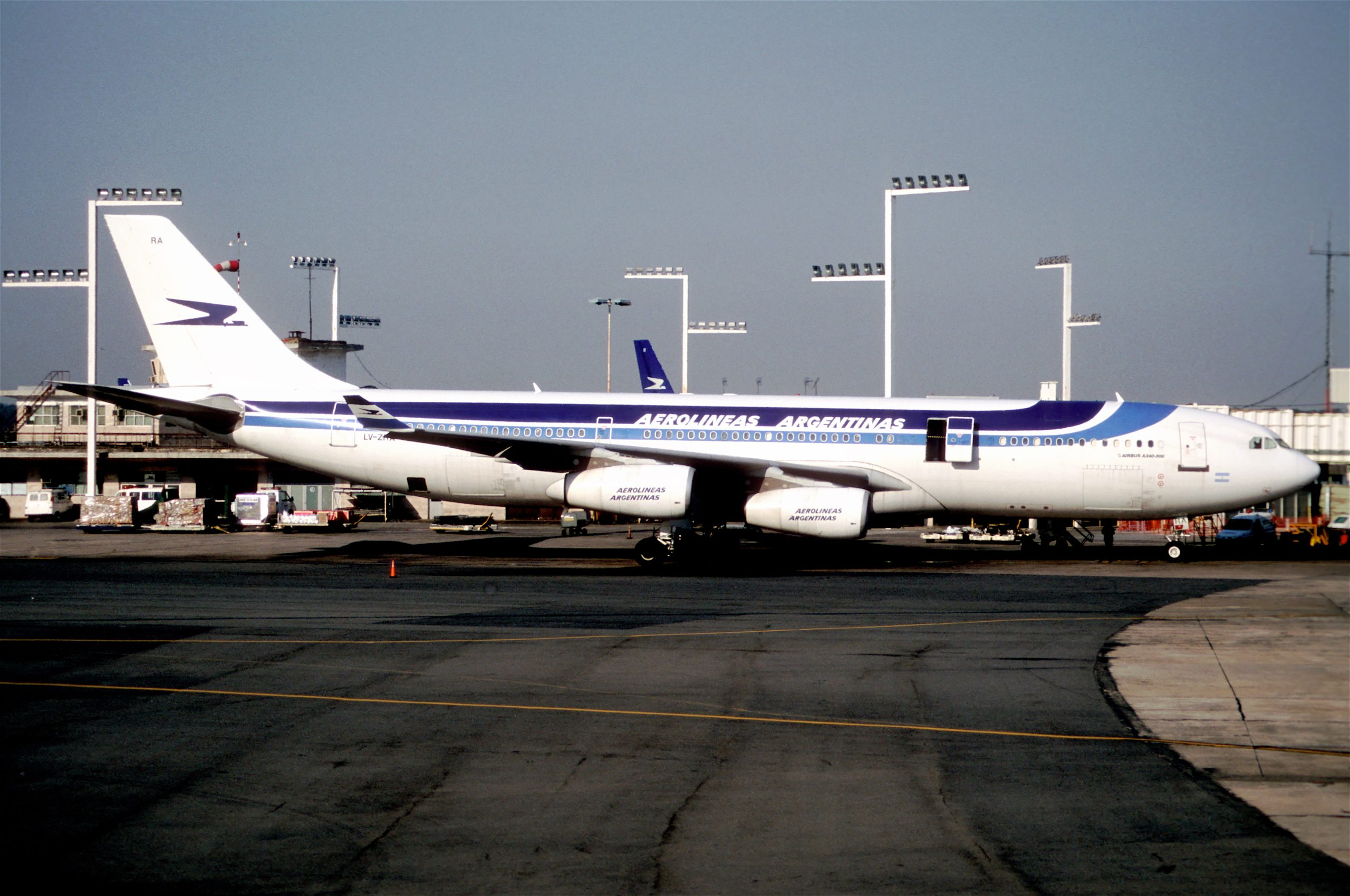
Aerolineas Argentinas Airbus A340-211 LV-ZRA
Aerolineas Argentinas Airbus A340-211 LV-ZRA at Ezeiza Airport. (Photo: Wikimedia Commons)

Aerolíneas Argentinas has initiated the sale of its last Airbus A340-200, with registration LV-ZRA (msn 85), which has been stored in Buenos Aires since 2014. Potential buyers are encouraged to request more details via an email provided on the airline’s website, and offers for the aircraft will be accepted until May 1st.

The airplane, grounded since March 2, 2014, retains all essential components despite its extended storage period. The Request for Proposal (RFP) from the Argentine flag carrier is aimed at lessors and financial institutions, suggesting anticipation of a possible return to service for the A340.

The Airbus A340 is a wide-body, long-range commercial aircraft that debuted in the early 1990s. It was designed to compete with Boeing’s 747 and McDonnell Douglas’ MD-11 in the global market for long-haul flights.

Over the years, the A340 has undergone several modifications, resulting in the A340-200, -300, -500, and -600 variants. However, the A340’s popularity waned as the industry shifted toward twin-engine aircraft such as the Airbus A350 and Boeing 787, which offer better fuel efficiency. Production ceased in 2011 after delivering 377 aircraft.

The history of Aerolíneas Argentinas’ last four-engine aircraft

Delving into the history of the LV-ZRA Airbus A340-211 (c/n 085), it first took flight on March 3, 1995, with the registration F-WWJP in its pre-delivery test series. Cathay Pacific Airways (PAL) received it with the registration VR-HMU on April 4, 1995.

Following a series of temporary storage, cancellations, and repaints, the aircraft donned Aerolíneas Argentinas colors on August 6, 1999, and was registered as LV-ZRA on August 12, 1999. Ultimately, the ZRA was stored in Buenos Aires in April 2008 and withdrawn from service on March 2, 2014.

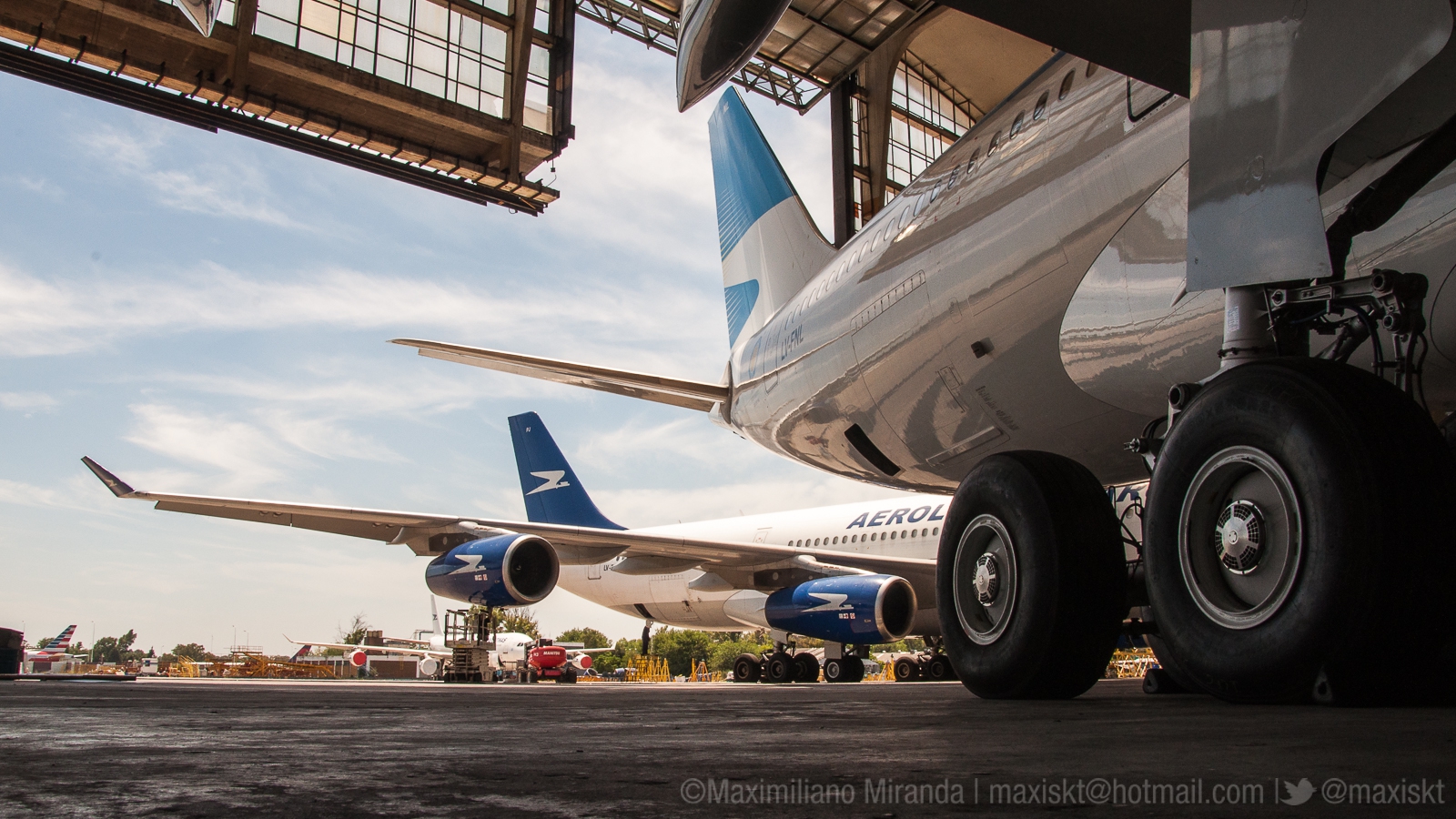
The A340-211 LV-ZRA can be seen in the background, with its engines covered, in the hangar area of Ezeiza Airport. (Photo: Maximiliano Miranda)

Considering its 28 years of age, this high-fuel consumption four-engine aircraft has little chance of returning to the skies, and if it does, it is unlikely to be with a top-tier airline.

This article was originally published in Aviacionline, as per our syndication agreement.

JetBlue Targets Europe: Amsterdam Joins Transatlantic Network

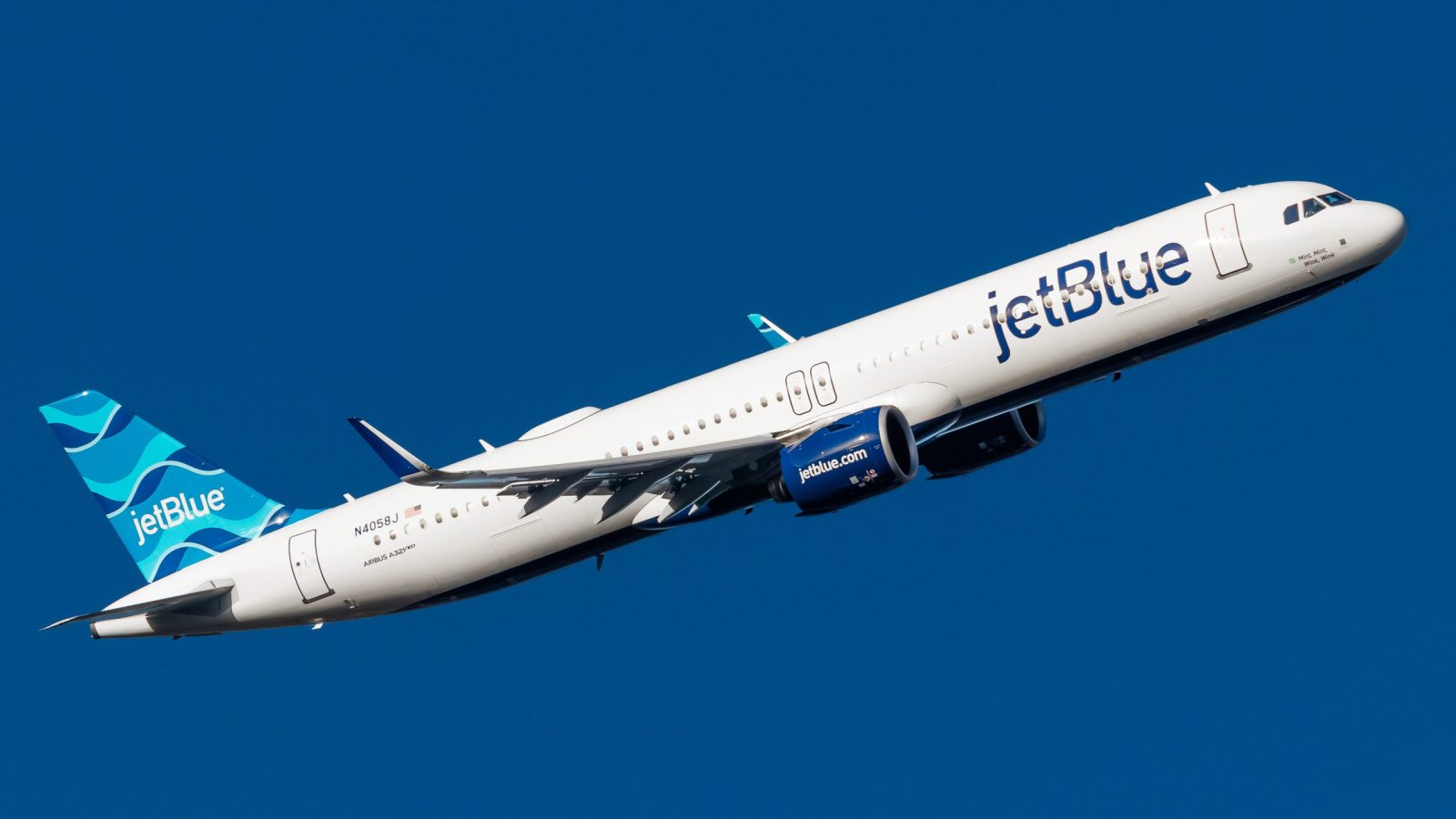
JetBlue Airbus A321 departing London Heathrow [AirlineGeeks | James Dinsdale]

JetBlue has recently announced plans to expand its transatlantic services, introducing a new route between New York’s John F. Kennedy International Airport (JFK) and Amsterdam’s Schiphol Airport (AMS) later this summer.

The airline also plans to introduce a service between Boston and Amsterdam, contingent upon receiving government authorization to operate. The Dutch capital follows London’s Heathrow and Gatwick airports, which JetBlue has been servicing since 2021, and Paris, where the airline will arrive in June.

JetBlue CEO Robin Hayes commented, “This route has long been in need of some competition. For too long, traditional US airlines have cornered customers with high fares and mediocre service. As we’ve done in London and Paris, we’ll lower fares and enhance the customer experience for those flying between the US and Amsterdam.”

Amsterdam’s challenges for JetBlue operation

A recent Dutch court ruling determined that the Dutch government had not adhered to the law when attempting to reduce Amsterdam Schiphol Airport’s annual air traffic movement limit. This decision has bolstered JetBlue’s confidence in entering the market. Hayes added, “Our formula of combining a customer-focused experience with consistently low fares is not something found in Europe. We’re confident that customers, Amsterdam airport officials, and the Dutch government will be delighted with JetBlue when they witness firsthand the positive impact we can have.”

Flights will operate daily on Airbus A321 Long Range (LR) aircraft, featuring 24 redesigned Mint Suite seats, 114 basic seats, and the Airspace cabin interior.

In June, the New York-Amsterdam market will see forty weekly flights in each direction, operated by three airlines:

  1. Delta Air Lines: Fourteen weekly flights (seven on A330-300 and seven on A330-900).
  2. KLM: Nine weekly flights on B777-200, five weekly flights on B787-9, and five weekly flights on B787-10.
  3. United Airlines: Seven weekly flights on B777 (operating from Newark).

JetBlue’s expansion into Amsterdam demonstrates the airline’s determination to disrupt the transatlantic market, offering competitive prices and superior customer service. As the airline continues to broaden its reach, industry experts and passengers alike will be closely watching JetBlue’s impact on the European market.

Atlantic Airways To Begin Flights To New York in August

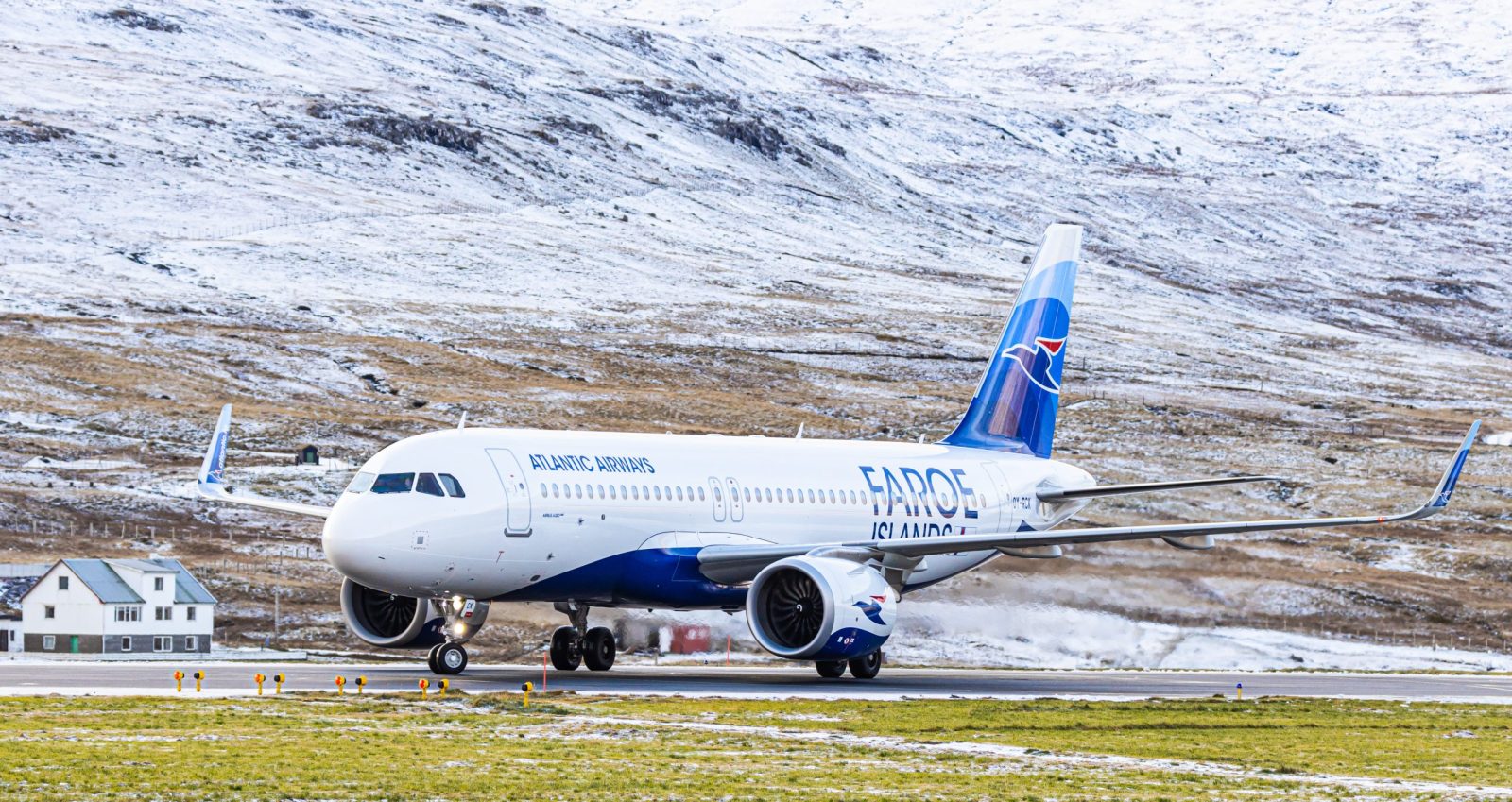
Atlantic Airways A320neo
An Atlantic Airways Airbus A320neo in Vágar, Faroe Islands (Photo: Atlantic Airways)

Faroe Islands-based Atlantic Airways has announced in a press release that it will begin operating very limited flights from the Faroe Islands to New York this summer.

Flights will begin on Aug. 22 and will only operate for six weeks until Oct. 4. The once weekly flights will leave the main airport in the Faroe Islands, named Vágar, on Tuesdays, and the return flight back will leave the U.S. on Wednesdays. Flight time will be roughly six-hours according to the airline.

Another thing to note is the airline isn’t operating directly into John F. Kennedy International Airport, but has instead noted that they plan on operating into Stewart International Airport, which is located around 70 miles north of the city, but the airline will offer a bus between Stewart and New York that passengers can book separately when getting the flight to Stewart.

Currently the airline only operate flights to 10 destinations outside of its main hub all of which are in Europe, and all of which operates less than daily and most of which aren’t year round either. However this does makes sense given the company only has three aircraft: a single Airbus A320 and two Airbus A320neos, along with two helicopters that are used for domestic hops within the islands.

The new service to New York has been teased and rumored for many years, and the very short timespan of flights looks like it could be a test to see if the service is viable for a longer period of time in the future. Flights are expected to go on sale May 15.

Joey Gerardi

Joey has always been interested in planes for as long as he can remember. He grew up in Central New York during the early 2000s when US Airways Express turboprops ruled the skies. Being from a non-aviation family made it harder for him to be around planes and would only spend about three hours a month at the airport. He was so excited when he could drive by himself, the first thing he did with his driver's license was get ice cream and go plane spotting for the entire day. He graduated from Western Michigan University in 2022 with a B.S. in Aviation Management & Operations and a Minor in Business, and currently works for a major airline in his hometown.

EgyptAir to Launch Nonstop Flights to Newark in June 2023

EgyptAir 787
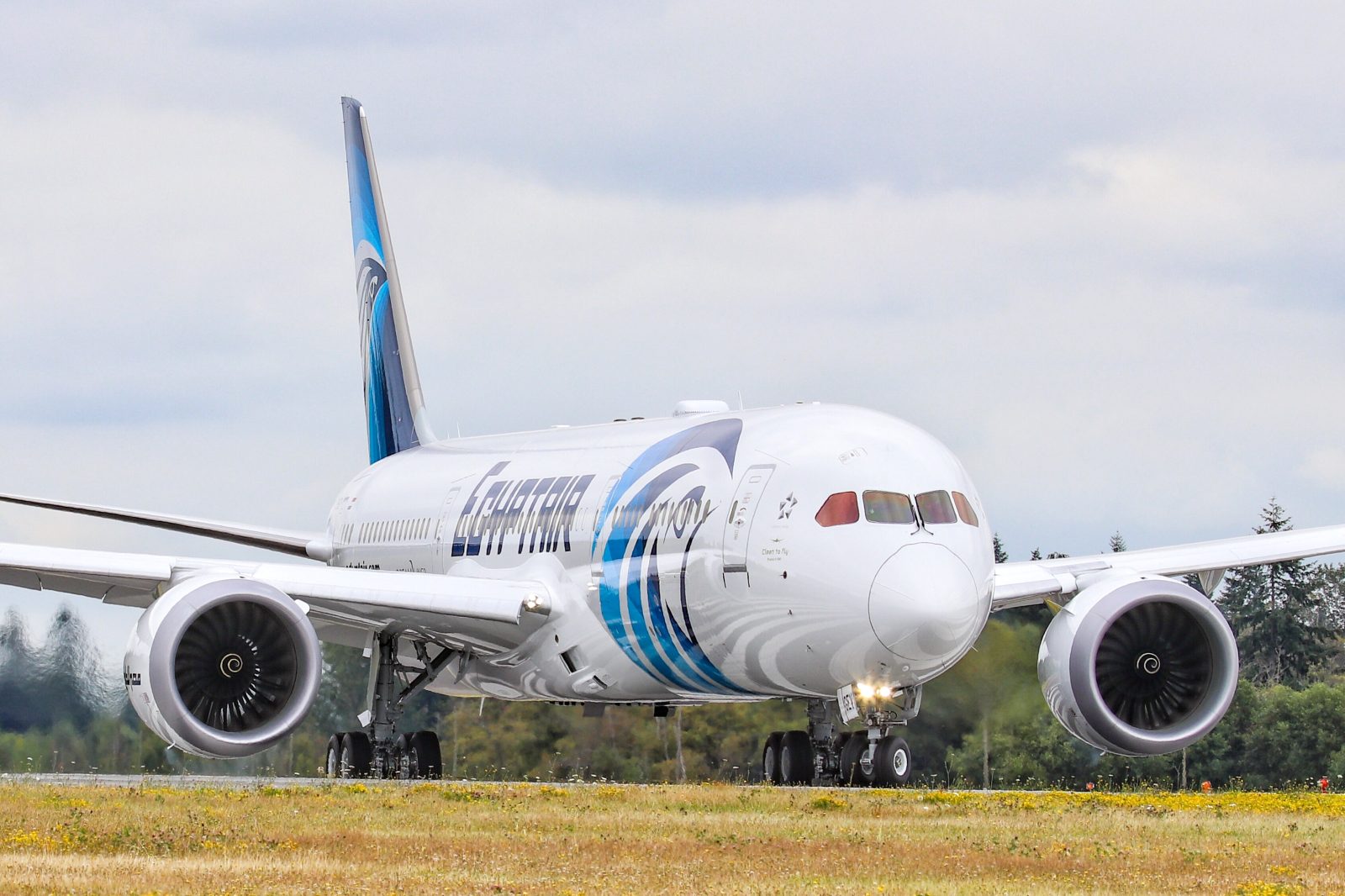
An EgyptAir Boeing 787-9 Dreamliner preparing to depart for Cairo using sustainable aviation fuel. (Photo: AirlineGeeks | Katie Zera)

EgyptAir has recently announced a new addition to its route network with the launch of a new route connecting Cairo to Newark Liberty International Airport in the New Jersey. The airline plans to begin operating this new route starting June 3, 2023, with three flights per week using a Boeing 787-9 Dreamliner aircraft.

The new route will provide travelers with an additional option for getting to the United States, as it complements EgyptAir’s existing service to New York John F. Kennedy International Airport (JFK) which operates daily.

Flights will be flown using the same schedule as the existing Cairo-JFK flight on Mondays, Wednesdays, and Saturdays.

The Boeing 787-9 Dreamliner aircraft that will be used for the new route offers the airline’s standard layout, including 30 seats in business class and 279 seats in economy. Passengers on this route can expect a flight time of approximately 11 hours and 35 minutes.

EgyptAir’s decision to launch this new route to Newark is a strategic move, as the airline will have no direct competition on this route. The airline also has a strong partnership with United Airlines, its alliance partner in the Star Alliance network. This partnership enables EgyptAir to offer passengers a wider range of options for travel within the United States, as it shares codes with United Airlines.

The new services will be flown alongside its existing daily Cairo-JFK flight, adding an additional option for travelers seeking flights between Egypt and the United States. The new flights will feature complimentary meals, beverages, and a range of entertainment options, all of which are sure to delight passengers on their journey.

In addition to the new route to Newark and the daily flights to JFK, EgyptAir also offers flights to other destinations in North America, including Washington-Dulles (four flights per week) and Toronto-Pearson (five flights per week).

Demand for Cairo-New York City

In 2019, the total round-trip point-to-point demand between Cairo and New York City — including both John F. Kennedy International Airport and Newark — was 228,000 passengers, according to data from EgyptAir. The airline will be hoping to tap into this demand with the new nonstop flights to Newark.

The top 10 U.S.-Cairo market segments in 2019 were dominated by New York City, with a total of 228,000 passengers. Los Angeles and Washington, DC followed with 62,000 and 56,000 passengers, respectively. The remaining seven market segments were San Francisco, Chicago, Houston, Boston, Miami, Orlando and Dallas.

It is yet to be determined whether the airline’s new flight to Newark will maintained on a year-round basis, as filling 10 weekly services to the New York City area in the low season period will be a major task. Nonetheless, the airline has expressed confidence in the success of the new route and is eager to expand its route network to provide passengers with more options for travel.

Victor Shalton

Victor Shalton's love for aviation can be traced to when he was 11-years-old. As a seasoned aviation writer, he takes pride in providing the best aviation coverage around the globe and is passionate about advancing his skills in the aviation space. In addition, he loves travelling, writing, arts and while his speaking engagements have taken him around the world, he is proud to call Nairobi home.

Airbus Signs New Agreement with Chinese Government

China Southern Airbus A350-900 MSN398 (Photo: Airbus)

A few days ago in Beijing, Airbus CEO Guillaume Faury signed new cooperation agreements with Chinese aviation industry partners, reaffirming the strategic partnership that Airbus and Chinese aviation began nearly 40 years ago.

The first agreement relates to the expansion of the Tianjin facility, which will increase the final assembly capacity of the Airbus A320 Family by adding a second production line. This important agreement was signed between the European aerospace giant, the Tianjin Free Trade Zone Investment Company Ltd. and the Aviation Industry Corporation of China Ltd. (AVIC, China’s state-owned aerospace and defense conglomerate headquartered in Beijing, the world’s second largest defense company in 2022) in the presence of Chinese President Xi Jinping and French President Emmanuel Macron. This will help Airbus achieve its global target of producing 75 aircraft per month in 2026 across its global production network.

There are already four Airbus A320 Family Final Assembly Plants, two in Europe in Hamburg and Toulouse, one in the U.S. in Mobile, Ala., and one in China in Tianjin, a municipality directly controlled by the Chinese central government. The Tianjin Final Assembly Line (FAL) started operations in 2008 and has assembled more than 600 Airbus A320 Family aircraft, with the first A321neo aircraft scheduled for delivery in March 2023.

The second agreement signed by Airbus is a General Terms of Agreement (GTA) with China Aviation Supplies (CAS) Holding Company (a state-owned enterprise specializing in aircraft procurement and aviation equipment supply) for the purchase of 160 Airbus commercial aircraft, including 150 Airbus A320 Family narrowbody aircraft and 10 Airbus A350-900 widebody aircraft.

Finally, Airbus signed a Memorandum of Understanding (MoU) with the China National Aviation Fuel (CNAF) Group to intensify Sino-European cooperation in the production, formulation of common standards and supply chain optimization of Sustainable Aviation Fuels (SAF), diversifying sources and improving quality to achieve the target of using 10 percent SAF by 2030.

Agreements for the near future

Over the next 20 years, China’s air traffic is expected to grow by 5.3 percent per year, much faster than the global average of 3.6 percent. As a result, China’s demand for passenger and freighter aircraft will increase sharply between now and 2041, accounting for more than 20 percent of the world’s total demand for approximately 39,500 new aircraft over the next 20 years.

These agreements confirm the well-established partnership between Airbus and the Chinese aviation industry. Airbus’ presence in the Chinese market represents more than 50 percent of the market, and by the end of the first quarter of 2023, the Airbus fleet in service in China will exceed 2,100 aircraft.

Once again, China is demonstrating its ever-increasing role in the civil aviation landscape, working with leading global industry partners such as Airbus. However, the production capacity of Chinese-made aircraft, such as the COMAC C919, is expected to reach 150 aircraft per year within five years.

Vincenzo Claudio Piscopo

Vincenzo graduated in 2019 in Mechanical Engineering with an aeronautical curriculum, focusing his thesis on Human Factors in aircraft maintenance. In 2022 he pursued his master's degree in Aerospace Engineering at the University of Palermo, Italy. He combines his journalistic activities with his work as a Reliability Engineer at Zetalab.

Icelandair to Introduce Airbus A321XLR and A321LR into Fleet

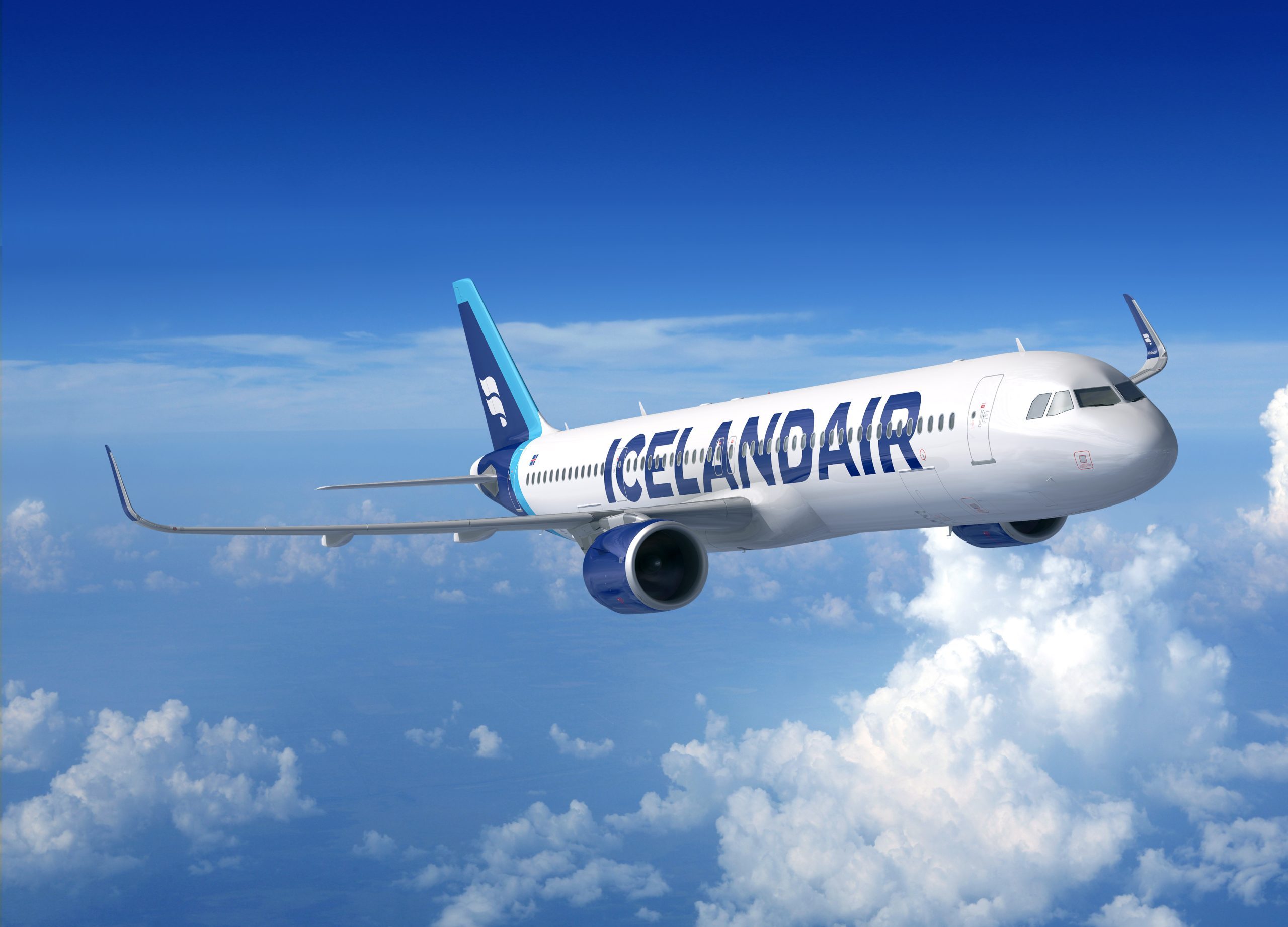
Rendering of A321 in the Icelandair livery [Photo: Icelandair]

Icelandair has confirmed that Airbus A321XLR and A321LRs will replace its fleet of Boeing 757 aircraft and that the airline will begin to operate a mixed Boeing/Airbus fleet from 2025. Bogi Nils Bogason, President and Chief Executive Officer of Icelandair said: “The Boeing 757 has been the cornerstone of Icelandair’s operations since 1990. Its unique capabilities have underpinned the successful development of our extensive route network and competitive transatlantic hub by leveraging Iceland’s unique geographical location to connect North America and Europe via Iceland.”

“We are happy to announce that we have now reached a conclusion regarding Icelandair’s future fleet. We have decided that the capable and fuel-efficient Airbus aircraft, A321XLR and A321LR, will become the successors of the Boeing 757s we are gradually retiring,” Bogason stated. Thursday’s announcement of the signing of a Memorandum of Understanding (MOU) between the airline and Airbus indicated an initial order of 13 A321XLRs with purchase rights for a further 12. Though the first of the aircraft deliveries are slated for 2029 the airline noted that they are ‘currently in an advanced stage of negotiations in relation to four leased Airbus A321LR’ joining the fleet in two years’ time.

The airline had noted in January that an announcement on its future fleet strategy would be forthcoming. This week’s confirmation of the Airbus A321XLR and leased Airbus A321LRs entering the fleet alongside its current Boeing 757, 767, 737 MAX 8 and 737 MAX 9s will mean the airline will have a mixed fleet from 2025.

The A321LR’s Increased Range Will Open Up New Opportunities

With a range of up to 4,000 nautical miles (7,400 km) the leased A321LRs arriving in 2025 will service Icelandair’s current route network. Though with a range of up to 4,700 nautical miles (8,700 km), the A321LR will give the airline further strategic advantages.  As Bogason acknowledged: “The excellent Airbus aircraft will not only allow us to further develop our proven business model around transatlantic flights but also open opportunities for future growth by entering new and exciting markets.”

According to the airline, the addition of the Airbus aircraft to Icelandair’s fleet will ‘reduce operating costs, further support Icelandair’s sustainability targets and offer exceptional customer experience through the aircraft design and unique features.’ By comparison to the 757 (183 seats), 737 MAX 8 (160 seats) and 737 MAX 9 (178) aircraft in the airline’s fleet, the Airbus aircraft will have ‘around 190 seats’ in Icelandair’s configuration.

As recently as last month, Icelandair announced significant growth in customer demand by releasing its most extensive northern winter schedule for 2023-24 with seasonal flights becoming year-round services. At the time, Tomas Ingason Icelandair Chief Revenue Officer said: “I’m delighted that we have been able to increase Icelandair’s capacity by 20-25%, compared to winter 2022/2023. We are always looking for further opportunities to optimize our network and connectivity for customers, so we can make even more travel options available to our passengers.” The addition of the Airbus A321XLR and A321LRs into Icelandair’s fleet will certainly provide further options to the airline’s customers.

John Flett

John has always had a passion for aviation and through a career with Air New Zealand has gained a strong understanding of aviation operations and the strategic nature of the industry. During his career with the airline, John held multiple leadership roles and was involved in projects such as the introduction of both the 777-200 and -300 type aircraft and the development of the IFE for the 777-300. He was also part of a small team who created and published the internal communications magazines for Air New Zealand’s pilots, cabin crew and ground staff balancing a mix of corporate and social content. John is educated to postgraduate level achieving a masters degree with Distinction in Airline and Airport Management. John has held the positions of course director of an undergraduate commercial pilot training programme at a leading London university. In addition he is contracted as an external instructor for IATA (International Air Transport Association) and has been a member of the Heathrow Community Fund’s ‘Communities for Tomorrow’ panel.

Avelo Airlines Expands Route Network in Florida

Boarding Avelo's first ever commercial flight in Burbank. (Photo: AirlineGeeks | Taylor Rains)

On Thursday, Avelo Airlines announced a new destination in its route network: Melbourne, Fla. This announcement comes one day after the airline announced a new service to Daytona Beach, Fla., marking aggressive expansion for the relatively new airline.  The carrier will connect Melbourne with New Haven, Conn. and Raleigh-Durham, N.C. 

With the most recent announcement, the Houston-based carrier will now operate to eight Florida destinations, with two new destinations announced in the past two days. Flights out of Melbourne, Fla. will begin on June 21 with service to New Haven. Raleigh-Durham will begin on June 23. Both services will operate twice weekly. 

Melbourne has seen an uptick in traffic over the past couple of years and significant facility upgrades. In 2021, the airport completed a $72 million expansion to be able to handle new services from TUI to multiple destinations in Europe after the airline left Orlando’s Sanford Airport.

On Wednesday, the airline also announced a new service to Daytona Beach, Fla. The airline will fly from New Haven to Daytona Beach twice weekly beginning on June 22. 

Daytona Beach has seen several operators and routes come and go in recent years. Jetblue operated to the city out of New York’s John F. Kennedy International airport up until January 2019. Silver Airways also made a short stint operating out of the airport to Fort Lauderdale, however, suspended the route in July 2019. This new route will reconnect the Florida city to the northeast. 

Daytona Beach and Melbourne to New Haven will be operated on Boeing 737-700s, while the Melbourne to Raleigh-Durham service will be operated on Avelo’s Boeing 737-800s. However, aircraft swaps do occur and this is subject to change. 

Avelo’s route structure of point-to-point is further exemplified by the announcements of late. Since beginning operations on the East Coast in late 2021, the carrier has added 31 cities to its route map on the eastern seaboard.

Zach Cooke

Zach’s love for aviation began when he was in elementary school with a flight sim and model planes. This passion for being in the air only intensified throughout high school when he earned his Private Pilot Certificate. He then attended Embry-Riddle Aeronautical University, earning his certificates and ratings to later flight instruct and share his passion for aviation with others. He now resides in the North East living out his dream as an airline pilot.

HK Express Receives First A321neo, Enters Into Service with Bangkok Flights

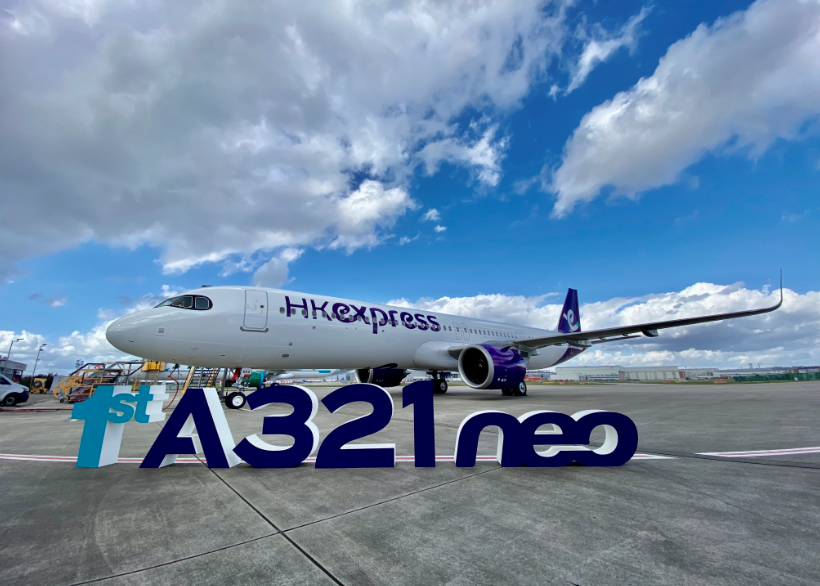
HK Express First A321neo (Photo : Airbus)

HK Express, Hong Kong’s low-cost carrier, has welcomed its first of the 16 Airbus A321neo aircraft — the Airbus’s update to the type with refreshed engines — with the remaining to be delivered over the next two years. The new airline has wasted no time in launching its maiden flight to Bangkok on Sunday.

The new flight features in vibrant shades of purple and white, with the new “e” shaped icon is painted on the winglets, vertical stabilizer and the bottom of the fuselage.

The single-aisle flight arrived at the right time as Japan and South Korea have canceled travel restrictions for passengers from the city, allowing the airline to open up its route network reminiscent of where it sat in early 2020.

The aircraft can hold 236 passengers, carrying six more than the carrier’s current Airbus A321ceo aircraft. However, HK Express has mentioned that passengers won’t be left uncomfortable due to a slightly altered cabin design.

HK Express has emphasized the importance of sustainability. The A321 delivers a reduction in fuel consumption of up to 20% per seat, a key cost saving measure for the airline. In addition, the airline is going to introduce the “Passenger Carbon Offsetting Programme” in the second half of 2023.

“We’re thrilled to welcome the state-of-the-art A321neo aircraft to our fleet at this critical time as demand for international travel remains robust,” HK Express CEO Mandy Ng said in a statement.

HK Express is an all-Airbus operator currently owns a fleet of 27 Airbus A320 family aircraft.

“Airbus is proud to extend our relationship with the Cathay Pacific Group, and this new delivery represents a new milestone in our long relationship. The A321neo’s performance and efficiency will allow HK Express to expand its network, while reducing its carbon footprint.” Anand Stanley, President Airbus Asia-Pacific said.

Return to Pre-Pandemic Levels

After three years of the pandemic, the no-frills airline has seen the light at the end of the tunnel and the travel demand has seen a strong rebound. The airline will spread its wings again, expecting flight operations to return to pre-pandemic levels in the coming weeks, with more than 400 flights per week. The airline is looking forward to the number of weekly flights could reach 500, exceeding pre-pandemic levels.

During the pandemic, HK Express had experienced the severe turbulence and suspended its services for months. Earlier, HK Express reported a loss of nearly 1.36 billion Hong Kong dollars ($173 million) for 2022 as a result of the pandemic. Cathay Pacific acquired HK Express from China’s HNA Group in 2019.

Hong Kong aviation industry is expected to see stiff competition between groups this year. Cathay Pacific and Hong Kong Airlines have begun to consolidate their positions and relaunch routes both new and renewed as travel restrictions begin to fall. Meanwhile, Greater Bay Airlines, the newest airline in Hong Kong, has gotten into gear, acquiring 15 Boeing 737 MAX 9 aircraft — officially rebranded as Boeing 737-9s — to expand its route map.

Sign-up for newsletters & special offers!

Get the latest stories & special offers delivered directly to your inbox

SUBSCRIBE

Uh-oh! It looks like you're using an ad blocker.

Our website relies on ads to provide free content and sustain our operations. By turning off your ad blocker, you help support us and ensure we can continue offering valuable content without any cost to you.

We truly appreciate your understanding and support. Thank you for considering disabling your ad blocker for this website