Stories

JetBlue Hikes Checked Bag Fees

The carrier said it is adjusting prices for “optional services” to keep fares competitive.

A JetBlue A320
A JetBlue A320. (Photo: Shutterstock | Markus Mainka)

JetBlue is increasing fees for checked bags as airline operating costs – most notably for jet fuel – continue to climb.

According to the carrier’s website, the price to check one piece of luggage for flights within the U.S., Canada, Latin America, and the Caribbean is now $39 for off-peak times, up from $35. During peak periods, the cost for one piece of luggage is now $49, up from $40.

If customers book within 24 hours of their planned departure, prices are $10 higher – $49 for off-peak, and $59 for peak.

Members of JetBlue’s loyalty program and JetBlue cardholders have their first bag checked for free.

JetBlue acknowledged the increases in a statement to AirlineGeeks, though it did not detail the exact dollar amounts.

“As we experience rising operating costs, we regularly evaluate how to manage those costs while keeping base fares competitive and continuing to invest in the experience our customers value,” the carrier said. “Adjusting fees for optional services used by select customers, such as checked baggage, allows us to continue offering more competitive fares while delivering the onboard experience our customers love, including complimentary snacks and drinks, unlimited, high-speed Wi-Fi, and seatback entertainment screens.”

“While we recognize that fee increases are never ideal, we take careful consideration to ensure these changes are implemented only when necessary,” JetBlue added.

Jet fuel prices have spiked around the world since the start of the conflict in Iran late last month. In North America, high demand has at least partially offset those expenses, but fares are climbing, and some industry experts expect that trend to continue through the summer at least.

Zach Vasile

Zach Vasile is a writer and editor covering news in all aspects of commercial aviation. He has reported for and contributed to the Manchester Journal Inquirer, the Hartford Business Journal, the Charlotte Observer, and the Washington Examiner, with his area of focus being the intersection of business and government policy.

TAP Air Portugal to Move Operations to JFK’s New Terminal 6

The carrier connects New York and Lisbon.

TAP Air Portugal
A TAP aircraft. (Photo: TAP Air Portugal)

TAP Air Portugal announced Monday that it will relocate operations at New York-JFK to the new Terminal 6, which is set to open its first gates later this year.

TAP connects JFK and Lisbon, Portugal. Flights will continue from the carrier’s current gates until the move to Terminal 6 occurs later this year, officials said. Exact transition dates were not provided.

New York-based consortium JFK Millennium Partners is building a new 1.2 million-square-foot Terminal 6 on the site of the airport’s former Terminal 6 and Terminal 7. The $4.2 billion project includes 10 new gates, six of which will come online in 2026 with the facility’s phase-one opening.

“TAP Air Portugal’s decision to join our T6 family reinforces our vision to create a world-class gateway that connects people and cultures across the globe,” JFK Millennium Partners CEO Steve Thody said in a news release.

TAP will join fellow Star Alliance members Air Canada, All Nippon Airways, Lufthansa, Avianca, and SWISS at Terminal 6. Frontier, Condor, Cathay Pacific, Icelandair, and Kuwait Airways, among others, also plan to use the new facility.

Zach Vasile

Zach Vasile is a writer and editor covering news in all aspects of commercial aviation. He has reported for and contributed to the Manchester Journal Inquirer, the Hartford Business Journal, the Charlotte Observer, and the Washington Examiner, with his area of focus being the intersection of business and government policy.

Air Calédonie Files for Bankruptcy

The struggling carrier is facing an activist blockade at island airports.

An Air Caledonie airplane on Ouvea Island. (Photo: Don Mammoser | Shutterstock)

Air Calédonie, the domestic airline of French collectivity New Caledonia, has filed for bankruptcy amid an activist blockade of its airfields.

According to Le Monde, the carrier began “insolvency proceedings” in France on March 27. The company cited the economic impact of the blockade, which is targeting airports on the Loyalty Islands and the Isle of Pines.

Residents began blocking Air Calédonie flights earlier this month in protest of the airline’s decision to move its main hub from Nouméa Magenta Airport to La Tontouta International Airport, New Caledonia’s main international entry and exit point. The relocation would save the carrier millions of dollars per year but would also increase travel times and fares for domestic customers, who are heavily reliant on air transport.

Le Monde reported that at least one of the activist groups involved called off their blockade after the bankruptcy became public.

For now, Air Calédonie flights are operating as normal.

The carrier has faced mounting financial pressure for some time. Visits to the archipelago plummeted during the COVID-19 pandemic and again during a period of civil unrest in 2024.

Air Calédonie would need to transport around 300,000 customers per year to break even, Le Monde said, but last year it carried only 180,000.

New Caledonia is located in the southwest Pacific, near Australia.

Zach Vasile

Zach Vasile is a writer and editor covering news in all aspects of commercial aviation. He has reported for and contributed to the Manchester Journal Inquirer, the Hartford Business Journal, the Charlotte Observer, and the Washington Examiner, with his area of focus being the intersection of business and government policy.

FAA Limits Parallel Approaches in San Francisco

New “safety measure” coincides with runway construction, agency says.

Aircraft on approach to San Francisco
Aircraft on approach to San Francisco (Photo: Shutterstock | Grindstone Media Group)

San Francisco International Airport will see reduced arrival rates and potential delays as the Federal Aviation Administration implements a change to arrival procedures alongside a major runway construction project, officials confirmed Tuesday.

The FAA is limiting the use of certain parallel approach procedures as the airport prepares for extensive runway repaving work. The project will take two of the airport’s north-south runways out of service for roughly six months.

The construction effort centers on rehabilitating 1R/19L, which primarily handles departures and some arrivals. The work includes resurfacing the runways, upgrading lighting systems, and improving the underlying infrastructure.

During this period, all arrivals and departures will utilize Runways 28R and 28L. Runway 1L will also be used as a taxiway.

“SFO expects less than 10% of flights to be delayed as a result of the runway closure, with delays averaging less than 30 minutes and most likely to occur during peak periods at 9:00 a.m. and 8:00 p.m. – 9:00 p.m.,” the airport said as part of a December statement. Construction is expected to be completed in October.

Curbing Side-by-Side Approaches

At the same time, the FAA is restricting a commonly used arrival technique known as visual parallel approaches. Under normal clear-weather conditions, pilots approaching San Francisco’s closely spaced parallel runways can conduct side-by-side approaches after confirming they have the adjacent aircraft in sight.

However, under the updated safety measure, those side-by-side approaches will no longer be permitted — even in clear weather when pilots have visual contact with other aircraft. Instead, aircraft will be required to fly staggered approaches, with one aircraft offset from the other on the parallel runway.

The FAA emphasized that simultaneous approaches were already prohibited during periods of poor visibility.

“San Francisco International Airport (SFO) will experience some flight delays due to a runway repaving project and an FAA safety measure,” an FAA spokesperson said in a statement. “The airport’s runway project will put the two north-south runways out of service for approximately six months. The FAA safety measure prohibits flights from making side-by-side approaches to SFO’s parallel east-west runways in clear weather when the pilots acknowledge having the other aircraft in sight. It requires staggered approaches, with one aircraft offset from the aircraft on the parallel runway.”

San Francisco is known for having some of the closest parallel runways among major U.S. airports, a layout that already limits simultaneous instrument approaches in low-visibility conditions. During such periods, arrival rates can drop significantly as aircraft must be spaced farther apart.

The FAA said it is continuing to evaluate options to maintain safety while improving arrival throughput at the airport.

Ryan Ewing

Ryan founded AirlineGeeks.com back in February 2013 and has amassed considerable experience in the aviation sector. His work has been featured in several publications and news outlets, including CNN, WJLA, CNET, and Business Insider. During his time in the industry, he's worked in roles pertaining to airport/airline operations while holding a B.S. in Air Transportation Management from Arizona State University along with an MBA. Ryan has experience in several facets of the industry from behind the yoke of a Cessna 172 to interviewing airline industry executives. Ryan works for AirlineGeeks' owner FLYING Media, spearheading coverage in the commercial aviation space.

Delta Partners With Amazon Leo for High-Speed Internet

The airline is planning an initial installation on 500 aircraft, beginning in 2028.

Delta 737-900ER
A Delta Boeing 737-900ER (Photo: Shutterstock | Markus Mainka)

Delta has selected Amazon Leo as its partner as it works to roll out high-speed, low-latency wireless internet service across its fleet.

The carrier said Tuesday that it will link its aircraft to Amazon Leo’s growing constellation of low-Earth-orbit satellites, which can provide Wi-Fi speeds comparable to a terrestrial home or office. Delta is planning an initial installation on 500 aircraft, beginning in 2028.

Officials did not say which aircraft will get the new technology first.

“This agreement gives us the fastest and most cost-effective technology available to better connect the world today, and it deepens our work with a global leader that shares our ambition to build what’s next, creating even stronger human connection for our people and our customers for years to come,” Delta CEO Ed Bastian said in a news release.

Delta’s current wireless offering for loyalty members, Delta Sync Wi-Fi, is provided by Viasat and sponsored by T-Mobile. Airline leaders said that, as part of the new agreement, Amazon Leo will help expand Delta Sync Wi-Fi, creating gate-to-gate connectivity.

Delta also said it will incorporate other Amazon technologies, including artificial intelligence, to enhance customer experience, though it did not provide further details.

A growing number of airlines are signing deals for low-latency satellite-based internet in a bid to draw customers who increasingly expect a functional connection while flying. The strength and speed of internet service provided through constellations like Amazon Leo and Starlink allow passengers to stream, work, shop, game, and upload as much as they would at home.

JetBlue has also signed on to Amazon Leo, and American is reportedly deciding between Amazon Leo and Starlink.

Zach Vasile

Zach Vasile is a writer and editor covering news in all aspects of commercial aviation. He has reported for and contributed to the Manchester Journal Inquirer, the Hartford Business Journal, the Charlotte Observer, and the Washington Examiner, with his area of focus being the intersection of business and government policy.

Alaska Debuts New Business-Class Suites

The premium offering will arrive later this spring on new 787 Dreamliners.

International Business Class
Alaska's new International Business Class. (Photo: Alaska Airlines)

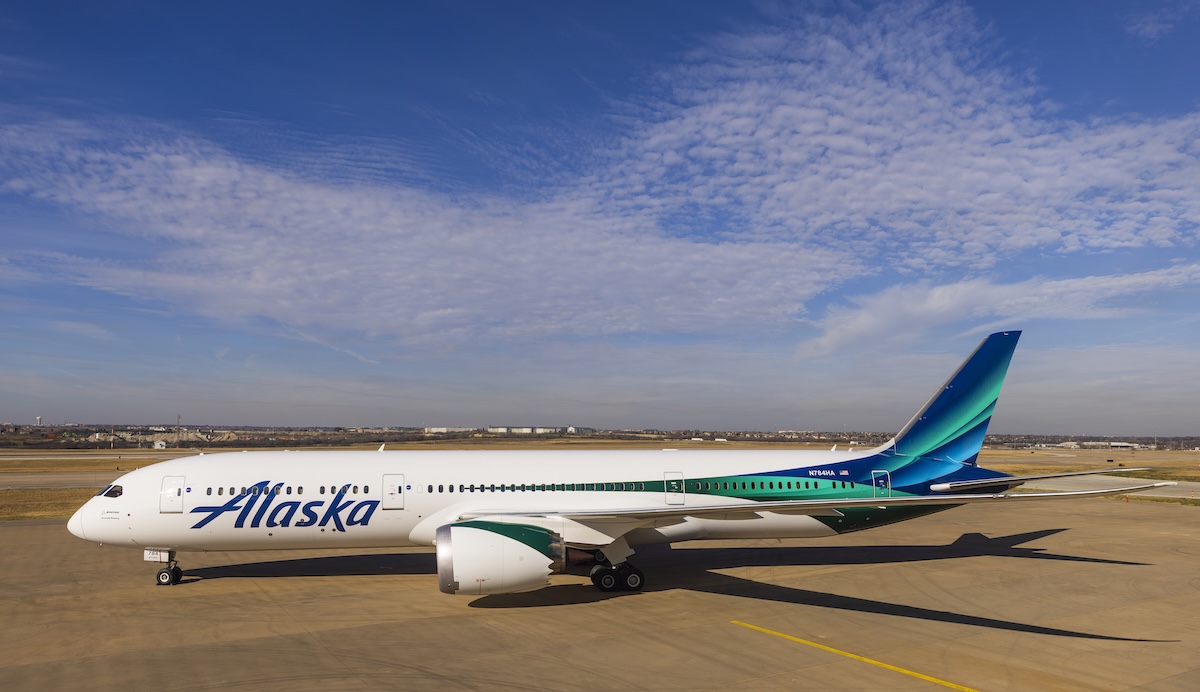
Alaska on Tuesday unveiled a new luxury offering, International Business Class, which comes with suite-style lie-flat seats, meal service, and other amenities.

The carrier said International Business Class cabins will be installed on new Boeing 787 Dreamliners operating long-haul routes to Europe and Asia. The new seats will become available later this spring, with a rollout continuing through the year.

This is the first time Alaska has offered an enclosed, suite-style product. Similar premium seats with privacy partitions or doors are offered by Delta (Delta One Suites) and American (Flagship Suites) and are being installed by United (Polaris Studio).

“We set out to design a business class experience that is both sophisticated and authentically Alaska – premium, comfortable, and thoughtfully created for our guests,” Andrew Harrison, Alaska’s executive vice president and chief commercial officer, said in a news release. “When we debut our new product this spring, it will raise the bar and redefine long-haul travel, while continuing to deliver the remarkable care that sets Alaska apart on the global stage.”

Alaska's new International Business Class. (Photo: Alaska Airlines)
Alaska’s new International Business Class. (Photo: Alaska Airlines)

The new premium offering comes with privacy doors, 18-inch high-definition entertainment screens, a multi-course meal service, noise-reducing headsets, personal power outlets, bedding, pillows, an amenity kit, a custom reusable water bottle, and access to Alaska’s airport lounges.

Airline officials said International Business Class will be offered on upcoming flights between Seattle and Rome, set to commence April 28, and on Alaska’s existing Seattle-Seoul connection. The seats will be introduced on flights between Seattle and Tokyo this fall.

Service to Reykjavík, Iceland, beginning on May 28 using a 737 MAX, will feature its own “upgraded premium experience” uniquely tailored to that route, the carrier said.

Zach Vasile

Zach Vasile is a writer and editor covering news in all aspects of commercial aviation. He has reported for and contributed to the Manchester Journal Inquirer, the Hartford Business Journal, the Charlotte Observer, and the Washington Examiner, with his area of focus being the intersection of business and government policy.

American Pilots Demand Meeting With Board of Directors, Give Ultimatum

The APA has criticized the airline for its comparatively weak financial performance and difficulty handling operational disruptions.

American 737-800
An American Boeing 737-800. (Photo: AirlineGeeks | William Derrickson)

Leaders of the labor union that represents pilots at American Airlines again demanded a meeting with the carrier’s board of directors and laid out a potential path forward if they are refused.

In a video posted on Sunday, Allied Pilots Association President Nick Silva and Vice President Chris Torres reiterated concerns about American’s profitability, the “erosion” of its culture, and its difficulty bouncing back from operational disruptions. Despite assurances from management, they said, it is increasingly clear that the airline does not have a plan to turn things around.

“Candidly, it’s been more of the same,” Torres said of recent discussions.

The two officials also dinged American for questioning operational decisions made by captains, ignoring contractual obligations in the selection of hotels, and harassing pilots over use of sick time.

“Our pilots should be willing to go the extra mile to help keep the operation from derailing, but not when they feel dismissed and disrespected,” Torres said.

The APA has become increasingly outspoken in its criticism of American leadership since early February, when the carrier released its fourth-quarter and full-year 2025 earnings reports. The results showed a widening profitability gap between American and its two closest competitors, United and Delta, and prompted the Association of Professional Flight Attendants to issue a vote of no confidence in American CEO Robert Isom.

The APA considered a similar move but ultimately decided instead to ask for a meeting with American’s board. But 48 days later, that request has not been answered, Torres said.

He also claimed that Isom “flatly refused” to include board members in any future discussions.

“We still await a response from the American board, but if they choose not to hear this message directly, we will begin to take it to all American Airlines stakeholders,” Silva said. “We’ve already demonstrated our professionalism and integrity, and the message is simple – our company must do better, no matter who is running it.”

The union did not elaborate on the strategy or say who it considers a “stakeholder.” The most obvious interpretation would be the airline’s investors.

American executives have acknowledged the widespread disappointment with recent earnings but maintain the airline is positioned to improve in 2026.

Zach Vasile

Zach Vasile is a writer and editor covering news in all aspects of commercial aviation. He has reported for and contributed to the Manchester Journal Inquirer, the Hartford Business Journal, the Charlotte Observer, and the Washington Examiner, with his area of focus being the intersection of business and government policy.

Lufthansa Technik Adds New Facility in U.S.

The expansion will support MRO across the Americas.

A Lufthansa A320neo in Oslo. (Photo: AirlineGeeks | William Derrickson)

Lufthansa’s maintenance, repair, and overhaul division has opened a new facility in the U.S.

The 25,000-square-foot building is the third on Lufthansa Technik Component Services’ campus in Tulsa, Oklahoma. It includes 90 new workstations, an upgraded avionics workshop, and expanded administrative areas supporting MRO operations across the Americas.

Officials said the facility will handle the repair and overhaul of integrated drive generators used on the Airbus A320ceo, A320neo, Boeing 737 Next Gen, and 737 MAX.

A second phase of the project will add space and enable additional capabilities, mainly in pneumatics and complex avionics. Renovations are also taking place at the two other buildings on the LTCS Tulsa campus.

Lufthansa Technik
Officials at the ribbon cutting for the new Lufthansa Technik building. (Photo: Lufthansa)

The new facility’s services are fully integrated into Lufthansa Technik’s global network, which has major component hubs in Hamburg and Frankfurt in Germany and Shenzhen, China.

The broader campus also offers customer service support, material management services, warehousing capabilities, and component availability from material stores across the region.

“The Americas represent a key market for MRO services worldwide,” Harald Gloy, COO of Lufthansa Technik, said in a news release. “With this expansion, we build on our long-standing presence on the continent and further reaffirm our commitment to delivering world-class technical services close to our customers.”

Lufthansa Technik is a subsidiary of Lufthansa Group and has its headquarters at Hamburg Airport.

Zach Vasile

Zach Vasile is a writer and editor covering news in all aspects of commercial aviation. He has reported for and contributed to the Manchester Journal Inquirer, the Hartford Business Journal, the Charlotte Observer, and the Washington Examiner, with his area of focus being the intersection of business and government policy.

Air Canada CEO to Retire After Condolence Video Controversy

Michael Rousseau was criticized for speaking about a recent fatal accident almost entirely in English.

Air Canada Airbus A320
An Air Canada Airbus A320 aircraft (Photo: Shutterstock | Joel Serre)

Embattled Air Canada President and CEO Michael Rousseau will retire later this year, the carrier announced on Monday.

Rousseau, who has led Canada’s largest airline since 2021, faced intense criticism last week after speaking almost entirely in English in a video statement on the collision of an Air Canada regional jet and a fire truck at LaGuardia Airport. The message, which provided details about the accident and extended the carrier’s sympathies to those killed and injured, included only two words in French – “bonjour” at the beginning of the statement, and “merci” at the end.

The near exclusion of French – one of the country’s two official languages, spoken by around 8 million Canadians – was slammed on social media, and by elected officials, including Prime Minister Mark Carney and lawmakers from Quebec.

According to CBC, Rousseau was summoned to Ottawa to explain the statement.

Air Canada later said that Rousseau’s “ability to speak French does not allow him to convey such a sensitive message as effectively as he would have liked in that language.”

Rousseau will retire by the end of the third quarter of this year. He has agreed to remain available to the airline to ensure a “seamless and smooth transition,” officials said.

In a news release, Vagn Sørensen, chair of the board of directors, thanked Rousseau for his contributions to the company, including during his previous tenure as CFO and deputy CEO.

“We are grateful for the determined leadership he has provided not only in steering our company through the 2007-2008 financial crisis, COVID, and other challenges, but also in capturing opportunities such as the acquisition of Aeroplan, in restoring the solvency of our pension plans, and in advancing customer centricity and employee well-being priorities,” Sørensen said.

In regard to succession planning, Air Canada said it has spent over two years developing “high potential executives” for leadership posts. It also launched an external global search for potential CEO candidates in January.

The board will take into account a number of different factors when selecting a new chief executive, officials said, including the ability to communicate in French. Consulting firms Egon Zehnder and Korn Ferry are assisting in the search.

“It has been my great honor to work with the dedicated and talented people of Air Canada and to represent our outstanding organization, including as chair of the Star Alliance chief executive board and on the board of directors of the International Air Transport Association,” Rousseau said in a statement. “I look forward to supporting our company during this important transition period.”

Rousseau’s lack of French has been criticized before, but not to the extent seen last week. In 2021, he said he did not need to speak French to get by in Montreal, where Air Canada has its headquarters.

Zach Vasile

Zach Vasile is a writer and editor covering news in all aspects of commercial aviation. He has reported for and contributed to the Manchester Journal Inquirer, the Hartford Business Journal, the Charlotte Observer, and the Washington Examiner, with his area of focus being the intersection of business and government policy.

TSA Agents Could See First Full Paycheck in Weeks

President Donald Trump has instructed the Department of Homeland Security to pay TSA employees immediately, though it is not clear where the money will come from.

TSA checkpoint
TSA PreCheck lanes. (Photo: Joni Hanebutt/Shutterstock)

Long security lines at some U.S. airports could begin to ease Monday if President Donald Trump’s executive order instructing the Department of Homeland Security to pay TSA agents takes effect.

Trump signed the order Friday afternoon when it became clear that the U.S. House of Representatives would not take up a DHS funding bill passed earlier Friday by the Senate. The order directs Homeland Security Secretary Markwayne Mullin to pay TSA agents immediately, though it is not clear where the money would come from.

According to The Hill, the White House could tap into funding made available through the One Big Beautiful Bill Act, which became law last year.

Officials have said pay will restart over the next few days.

Travelers passing through airports such as Atlanta, Houston Bush, JFK, and New Oreans have faced occasional long lines at TSA checkpoints since the partial shutdown of the federal government began last month. Democrats and some Republicans in Congress are blocking funding for the Department of Homeland Security, which TSA operates under, in a bid to reform the Trump administration’s immigration enforcement policies, which came under intense public scrutiny earlier this year.

The impasse has left TSA agents working without pay. So far, over 480 have quit the agency, and a growing number are calling out of work. At some airports, such as Atlanta, absentee rates have reached 50%.

The Senate passed a bill early Friday morning that would restore pay for the entire Department of Homeland Security except for Immigration and Customs Enforcement and Customs and Border Protection. Employees of those agencies are still being paid despite the partial shutdown through allocations made in the One Big Beautiful Bill Act.

Republicans in the House opted not to take up the Senate’s legislation and instead advanced their own bill, which would fund all of DHS for 60 days.

Zach Vasile

Zach Vasile is a writer and editor covering news in all aspects of commercial aviation. He has reported for and contributed to the Manchester Journal Inquirer, the Hartford Business Journal, the Charlotte Observer, and the Washington Examiner, with his area of focus being the intersection of business and government policy.
Sign-up for newsletters & special offers!

Get the latest stories & special offers delivered directly to your inbox

SUBSCRIBE