An ITA Airways Airbus A330-200 at Rome Fiumicino Airport.
(Photo: ITA Airways)
Italy’s national airline is the second European carrier to join Inmarsat’s IRIS program. Starting in Summer 2023, ITA Airways’ entire fleet will operate digitally connected flights to and from Italy using the innovative datalink technology developed with the European Space Agency (ESA).
Inmarsat (International Maritime Satellite Organization) is a British company founded in 1979 that provides advanced mobile satellite telecommunications services worldwide, making operations more efficient and secure. It manages satellite communications for 84 nations through a network of geostationary satellites capable of covering almost the entire globe, excluding the polar regions.
The IRIS program will enable aircraft to fly more fuel-efficient routes by providing digital satellite communications to replace VHF data links, which are nearing capacity due to airspace congestion, minimizing flight delays, saving fuel and reducing the environmental impact of air travel.
IRIS technology benefits airlines and air navigation service providers by providing the bandwidth and reliability needed to enable more efficient digital exchanges between aircraft and ground systems through trajectory-based operations.
This 4-dimensional trajectory-based operation will improve airspace management by promoting operational efficiency for airlines, avoiding holding patterns, accessing better routes and optimal altitudes, and using continuous climb and descent paths. The additional data link capability provided by the SB-S will also power a range of onboard digital applications, such as AI flight profile optimizers and real-time weather applications.
The Italian carrier will equip its entire fleet of new Airbus A320neo and A330neo aircraft with Inmarsat’s SwiftBroadband-Safety (SB-S). ITA Airways’ aircraft will play a key role in the IRIS demonstration flights, which will take place in European airspace in 2023.
The IRIS technology will enable Air Traffic Management (ATM) operators to optimize the use of airspace and reduce CO2 emissions by 8-10% through the use of fast and reliable data links between aircraft and the ground.
ITA Airways is not alone in equipping its aircraft with Inmarsat SB-S, as Virgin Atlantic, Jet2, Transavia Airlines and EasyJet have also signed up.
In the period from 2023-2024, Airbus plans to deliver 72 aircraft with Light Cockpit Satcom (LCS) on board, compatible with IRIS. These new technologies and their deployment on many European commercial airlines will contribute to the implementation of the Single European Sky ATM Research (SESAR), a project to completely overhaul European airspace to manage air traffic for the “Single European Sky.”
Once again, ITA Airways is demonstrating a strong focus on environmental impact and is committed to achieving its goal of being Europe’s greenest airline by 2026.
Joel Klooster, Senior Vice President of Aircraft Operations and Safety at Inmarsat Aviation, said in a press release: “The addition of ITA Airways, just months after EasyJet joined, demonstrates the continued strong interest in the IRIS program as it prepares to enter commercial service in Europe later this year, followed by full global implementation.”
Vincenzo graduated in 2019 in Mechanical Engineering with an aeronautical curriculum, focusing his thesis on Human Factors in aircraft maintenance. In 2022 he pursued his master's degree in Aerospace Engineering at the University of Palermo, Italy. He combines his journalistic activities with his work as a Reliability Engineer at Zetalab.
A JetBlue A321 departs Pinal Airpark's 6,000-foot runway to return to active service (Photo: AirlineGeeks | William Derrickson)
On Tuesday, the United States’ Department of Justice (DOJ) announced that they would launch a lawsuit to block the $3.8 billion JetBlue Airways and Spirit Airlines merger that has been in the works since July 2022. The DOJ also created a lawsuit to block the major merger of American Airlines and US Airways back in 2013, but the two companies ultimately merged after concessions were made.
While that merger consisted of two industry giants, three years later, Alaska Airlines bought Virgin America in 2016, bringing two west coast airlines together. This put Alaska in a strong position to operate out of Los Angeles and San Fransisco. However, once again, the DOJ intervened and required the Seattle-based carrier to scale back its partnership with American.
Reasons for Lawsuit
In the DOJ’s announcement, the main reason for the lawsuit is the proclaimed adverse impact that the merger would create for the budget conscience traveler, customers looking for the lowest fair possible. While JetBlue is considered a low-cost carrier (LCC), Spirit is regarded as an ultra-low-cost carrier (ULCC).
In a statement distributed by the Department, the combination of the two airlines would create fewer flight options for consumers while also raising fare costs due to a reduction in competition. Further concern was mentioned that Frontier Airlines and Spirit are the two heavy hitters in the ULCC market.
With Spirit’s ultra-low-cost model going to the wayside to join JetBlue’s, the Department worries that ultra-low fare offerings would dwindle, hurting many Americans who rely on these fares. JetBlue is taking heat on another front from the DOJ as well, with a current lawsuit filed in an attempt to dismantle the Northeast Alliance, which the Long Island City, N.Y.-based carrier currently has with American. The ruling on that lawsuit is currently being awaited.
JetBlue & Spirit Rebuttal
Meanwhile, JetBlue and Spirit both argue that a merger would directly rival the Big Four and reduce fares overall for consumers as the newly formed whole would have a greater share in the overall market. JetBlue’s CEO Robin Hayes made a statement that the airline would continue the push for a completed merger and the “DOJ has got it wrong on the law here and misses the point that this merger will create a national low-fare, high-quality competitor to the Big Four carriers which – thanks to their own DOJ-approved mergers – control about 80% of the U.S. market.”
In a press release provided by Spirit, the two companies have come to a settlement with the state of Florida for the merger. Fort Lauderdale and Orlando will both see an increase in seat capacity by 50% along with new jobs being created in both markets. Another note that was mentioned is the commitment to serve 50 new routes not currently offered by either airline, showing that large-scale growth is in the plan.
Market Share
According to data from OAG, a route and market share analysis from August of 2022 showed JetBlue and Spirit operating 474 total routes, both domestically and internationally. However, only 38 of these routes overlap with each other, the majority being international flights out of Fort Lauderdale-Hollywood International Airport.
This limited competition between the two on routes means that if the merger were to be completed, the new combined airline would be operating 436 total routes using the August schedule. Thus, launching the merged airline to control 7.9% of the market, making them the fifth largest airline in terms of seats offered.
However, this number would decline based on information that has been given by JetBlue that aircraft currently operated by Spirit would receive updated cabins. This would result in economy seats seeing a change in pitch of 4 inches to 32 inches being offered.
Customers would see a decrease in the number of seats available on a given route currently held by Spirit from 182 seats on their highest capacity Airbus A320 to 162 seats which are currently installed on JetBlue’s redesigned A320s. Both carriers have aircraft on order, so available seats offered by each airline will continue to increase based on future growth plans.
Route Networks
While Spirit is headquartered in Miramar, Fla., just southwest of Fort Lauderdale-Hollywood International Airport, JetBlue has its headquarters located in Long Island City, N.Y. Both have overlapping bases in Fort Lauderdale and Orlando. While the Miramar-based carrier does operate a large Fort Lauderdale hub, the overall route structure the airline uses is aimed toward being point-to-point. This is evident through routes from outstation to outstation such as Cleveland, Ohio to New Orleans or Hartford, Connecticut to Montego Bay, Jamaica.
Meanwhile, JetBlue tends to operate on the hub and spoke route structure, with most flights originating or ending at one of their five hubs. There are exceptions to this for the New York-based airline, however, the overwhelming majority of routes operated are of the hub and spoke structure.
While both airlines are considered low-cost, fare types and onboard products are vastly different with JetBlue offering the higher fare on average. One of the biggest differences the average passenger sees is free inflight entertainment along with snacks and drinks currently offered by JetBlue.
Spirit does offer these to consumers as well, however at an additional cost which passengers can choose to select or not. JetBlue entered the basic fare market in 2019 offering Blue Basic which is similar to base fares which are offered by Spirit in that customers need to pay for bags and seat assignments prior to 24 hours before departure. However, inflight entertainment along with snacks and beverages are still included in this fare with JetBlue.
Zach’s love for aviation began when he was in elementary school with a flight sim and model planes. This passion for being in the air only intensified throughout high school when he earned his Private Pilot Certificate. He then attended Embry-Riddle Aeronautical University, earning his certificates and ratings to later flight instruct and share his passion for aviation with others. He now resides in the North East living out his dream as an airline pilot.
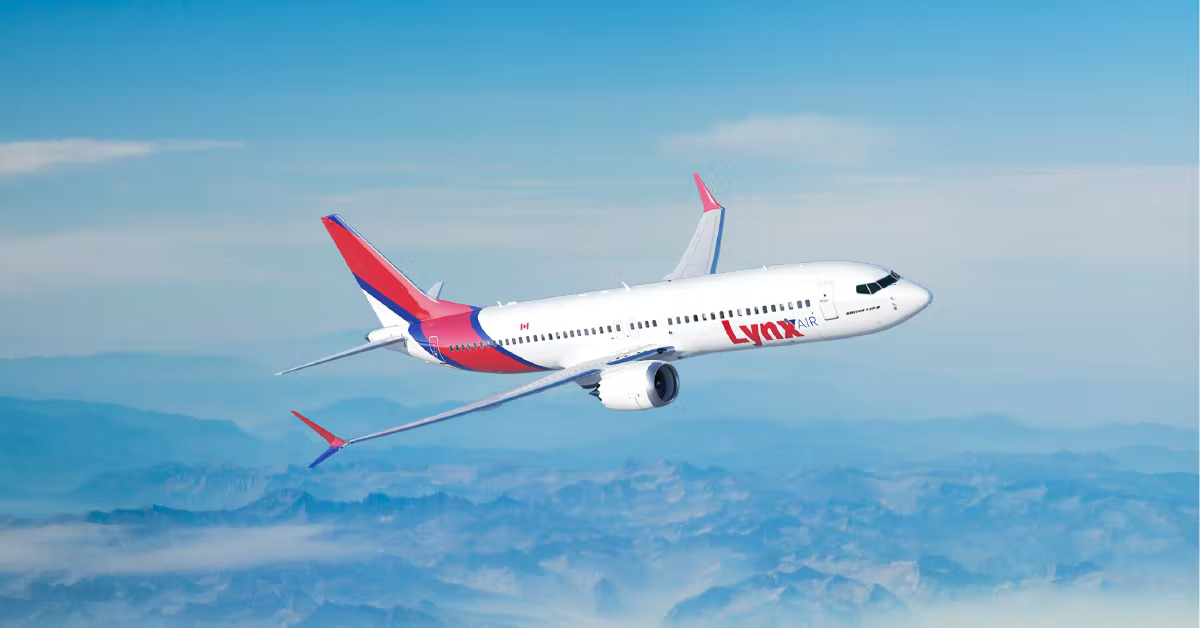
Lynx Air Adds Montréal to Expanding North American Network
Lynx Air — the Canadian ultra low-cost carrier — will commence operations from Montréal’s Pierre Trudeau International Airport in June. Canada’s second-largest city will become the fifteenth North American destination on the Calgary, Alberta-based carrier’s network with services to Calgary International Airport and St. John, Canada’s International Airport.
Merren McArthur, chief executive officer of Lynx, said, “We are delighted to be adding the vibrant city of Montreal to the Lynx Air network in the lead-up to summer. While Montréal is a very popular destination, it is currently under-served by low-cost carriers, and Lynx aims to change that.”
Lynx will operate between two to four flights per week, commencing on June 5 from Montreal to Calgary and St. John’s, ‘depending on the market.’ The carrier operates six Boeing 737 MAX 8 aircraft with a configuration of up to 189 seats. The announcement of the addition of Montréal to the airline’s network comes just under a month before the one-year anniversary of Lynx’s operations commencing and has been welcomed by all three airports.
Stéphane Lapierre, Vice President, Airport Operations and Air Services Development, ADM Aéroports de Montréal, said: “ADM Aéroports de Montréal is very pleased to welcome Lynx Air to YUL for the first time. The announcement of these direct flights to Calgary and St. John’s is a great contribution to the development of domestic air services at YUL.” Lapierre added: “ADM is always looking for ways to offer our passengers the best possible service for both business and leisure travelers, and Lynx Air will certainly enhance the domestic flight options from Montréal.”
Lisa Bragg, Director of Business Development and Marketing with the St. John’s International Airport Authority, stated: “We are thrilled with the expansion of Lynx Air’s service out of St. John’s. This new Lynx route from St. John’s to Montréal and onward to Calgary further enhances our passenger choices in flying and reinforces the partnership we are building with Lynx.” The airline has already operated ‘through-flights’ from St. John’s via Toronto’s Pearson International Airport to Calgary and Edmonton, Canada’s International Airport.
Carmelle Hunka, Vice President, External Affairs, ESG, Enterprise Risk & General Counsel for The Calgary Airport Authority, said, “The addition of Montréal to Lynx Air’s route offerings out of YYC showcases the success it has seen in its YYC operations. We are thrilled with the success our collaboration has had over the last year and look forward to continuing to support Lynx’s growth and expansion in the years to come.”
The expansion of Lynx Air’s network referenced by YYC’s Hunka has included inaugural services last month to Phoenix’s Sky Harbor International Airport, Los Angeles International Airport and Las Vegas’ Harry Reid International Airport.
John has always had a passion for aviation and through a career with Air New Zealand has gained a strong understanding of aviation operations and the strategic nature of the industry. During his career with the airline, John held multiple leadership roles and was involved in projects such as the introduction of both the 777-200 and -300 type aircraft and the development of the IFE for the 777-300. He was also part of a small team who created and published the internal communications magazines for Air New Zealand’s pilots, cabin crew and ground staff balancing a mix of corporate and social content.
John is educated to postgraduate level achieving a masters degree with Distinction in Airline and Airport Management. John has held the positions of course director of an undergraduate commercial pilot training programme at a leading London university. In addition he is contracted as an external instructor for IATA (International Air Transport Association) and has been a member of the Heathrow Community Fund’s ‘Communities for Tomorrow’ panel.
Lufthansa Allegris First Class "Suite Plus" rendering (Photo: Lufthansa)
Lufthansa and Swiss International Air Lines (SWISS) have recently revealed new interiors as part of their parent company’s major investment in the onboard cabin experience. Both carriers are part of the Lufthansa Group, which also owns Austrian Airlines, Brussels Airlines and Eurowings. The company appears to be harmonizing its offerings, as the new cabins for Lufthansa and SWISS feature the same seats but with different finishes for each airline.
Lufthansa Allegris
Lufthansa’s new long-haul experience is called “Lufthansa Allegris” and includes new offerings in all classes of service. The German flag carrier is introducing Lufthansa Allegris on new Boeing 787-9 aircraft that are slated to be delivered later in 2023. The airline’s new First Class will be introduced on Airbus A350-900s in 2024. Lufthansa currently operates both types of aircraft, including three Boeing 787-9s from a Hainan Airlines order and four second-hand Airbus A350-900s from Philippine Airlines. However, these aircraft currently have the configurations of their previous airlines, while Lufthansa’s other Airbus A350-900s have the company’s own current interiors.
Lufthansa Allegris on the Boeing 787-9 will have 28 Business Class seats, 28 Premium Economy Class seats and 231 Economy Class seats. Airbus A350-900s will be configured with four First Class seats, 38 Business Class seats, 24 Premium Economy Class seats and 201 Economy Class seats. Existing aircraft in the fleet, including the carrier’s Boeing 747-8s, will also be retrofitted with the new cabins.
First Class
Lufthansa’s new First Class suite will be fully enclosed, with ceiling-high walls and fabric flexible doors. There will be four seats on the airline’s Airbus A350-900s, with the two center seats are being called the “Suite Plus.” The product consists of two adjacent seats that turn into a double bed. It appears that the Suite Plus seats will only be available as a pair, meaning that the cabin will have three suites but four seats.
Lufthansa Allegris First Class “Suite Plus” Rendering (Photo: Lufthansa)
The new suites will also feature a personal wardrobe, suite-width screens, and wireless charging. They will also have a heating and cooling system that allows passengers to set their own temperature.
Lufthansa Allegris First Class Suite Rendering (Photo: Lufthansa)
Business Class
Business Class will also feature a heating and cooling system, wireless charging as well as a personal minibar and wardrobe.
Lufthansa Allegris Business Class Rendering (Photo: Lufthansa)
Lufthansa states that it will have seven different seating options in its new Business Class:
The first row of seats will be suites with doors in a 1-2-1 configuration. The center two seats will be a double suite.
The cabin will have staggered seats. Individual “throne-style” seats in the center section are being called “Extra-Space Seats.”
Seats directly beside the window are being called window seats.
Some seats will have an extra-long 2.2-meter bed.
The last window seats in the cabin will be window seats with extra privacy and a baby bassinet.
The center seats in the last row of business class have a retractable center console.
Window seats that are closer to the aisle in the staggered configuration and other aisle seats in the center section are being called “Classic Business Class Seats.”
Lufthansa Allegris Business Class Cabin Rendering (Photo: Lufthansa)
Premium Economy Class
These seats will be hard-shell seats with approximately 39 inches of pitch. They will also have wireless charging.
Lufthansa Allegris Premium Economy Class Rendering (Photo: Lufthansa)
Economy Class
Economy Class will feature 31 inches of pitch, tablet holders and USB ports. Interestingly, Lufthansa has also stated that passengers may have the option to book a free seat beside themselves.
Lufthansa Allegris Economy Class Rendering (Photo: Lufthansa)
SWISS Senses
SWISS’ name for its new onboard experience is “SWISS Senses.” As previously mentioned, the hard products appear to be the same as those being installed on Lufthansa’s aircraft, except with SWISS finishes.
The new cabins will be debuting in 2025 and will be installed first on their Airbus A330-300s, followed by their Boeing 777-300ERs. SWISS is also set to receive five Airbus A350-900s that will come with the new cabins installed. The airline’s older Airbus A340-300 fleet is scheduled to be retired in 2025.
First Class
Like the new Lufthansa product, SWISS’ new First Class will have a heating and cooling system, ceiling-high doors and walls, personal wardrobes and large screens with 4k resolution.
SWISS Senses First Class Rendering (Photo: SWISS)
Business Class
While the Business Class seats are in the same staggered configuration as seen in Lufthansa’s new cabins, SWISS is categorizing the seats into only five types: Privacy Seat, Extra Long Bed, Double Seat, Extra Space Seat and Classic Seat.
SWISS Senses Business Class Rendering (Photo: SWISS)
Premium Economy and Economy Class
As seen in the photos below, the Premium and Economy Class are the same as the ones being installed with Lufthansa Allegris. The Premium Economy Class seats are ZIM Aircraft Seating’s ZIMprivacy product and Recaro’s CL3810 was selected as the Economy Class seat.
SWISS Senses Premium Economy Class Rendering (Photo: SWISS)SWISS Senses Economy Class Rendering (Photo: SWISS)
A Refreshed Onboard Experience
The parallel announcements from the two airlines show a move to standardize the products being offered across the Lufthansa Group fleets. The group will invest 2.5 billion Euros ($2.67 billion) into products and service.
“Every guest has their own understanding of premium, which is why we focus on maximum individuality and exclusivity,” said Lufthansa Chief Executive Officer Jens Ritter at the launch of the “First Class Suite Plus” in Berlin. “The Allegris range promises individuality, exclusivity, and premium service along the entire travel chain.”
“This is the most comprehensive cabin renewal in the history of our company,” SWISS Chief Executive Officer Dieter Vranckx stated in a press release. “As a premium airline, we want to pay due and full regard to our customer’s desire for more individuality. And with this extremely high-quality product, we can continue to meet all our high aspirations.”
Andrew is a lifelong lover of aviation and travel. He has flown all over the world and is fascinated by the workings of the air travel industry. As a private pilot and glider pilot who has worked with airlines, airports and other industry stakeholders, he is always excited to share his passion for aviation with others. In addition to being a writer, he also hosts Flying Smarter, an educational travel podcast that explores the complex world of air travel to help listeners become better-informed and savvier travelers.
Air China and Shenzhen Airlines aircrafts in Guangzhou's Baiyun Airport (Photo: Lei Yan)
On March 2, China’s international flights exceeded 500 flights for the first time in three years. Since the pandemic, China has adopted harsh quarantine requirements for all international travelers, and such measures were just released two months ago on January 8. Since then, the public expected an expeditious recovery of China’s international flights. However, after two months, the total international flights still only account for less than 10% of what it was in 2019, despite the 500% growth compared to the same time in 2022.
Over the past two months, the majority of China’s international flight resumption has been focusing on short-haul flights with destinations in Southeast Asia. In late March, when the summer-fall season of flight schedule commences, more flights to the Middle East and Europe will resume. However, the flights are still considerably fewer than they were in 2019.
On Europe routes, traditional mainlines such as Beijing to Frankfurt will increase to 10 flights per week, with 7 Lufthansa flights and 3 Air China flights. Back in 2019, 28 weekly flights were operated between two cities. Similar stories are observed among flights connecting other major European cities such as Amsterdam, Paris, Madrid, and London.
On North American routes, no advancements have been made as the authorities from both sides of the Pacific reached an impasse regarding adding flights between the countries. Currently, 24 weekly flights are operated between China and US, and 10 weekly flights are operated between China and Canada. For the past three years, North American carriers were leveraging Seoul as the technical stop, so that the crews can avoid laying over in China under the quarantine requirement. At this moment, all US carriers have canceled the technical stops in Seoul for their flights, as their crews can now lay over in China without any quarantine.
Destinations in Australia and New Zealand are also expecting more flights from China. Though not as much as they were before the pandemic, now there will be daily flights connecting China to destinations in Oceania, some of which to multiple Chinese cities. Flights to China and Africa are not recovering as quickly as in other regions, and so far the connection between China and the continent is largely relying on transiting through the Middle East.
Several Competing Factors
When it comes to resuming international flights, the game between different authorities can get complex. Different calculations, including epidemic control, slot availability, and even political factors, are in play when it comes to flight resumption.
For Asian countries, their connections to China are considered important, as they may have more economic ties and immediate interests with China than countries not in the region. Korea, Singapore, the United Arab Emirates and Thailand all announced ambitious plans to resume flights from China. Korea is even planning to resume flights to China back to 608 flights per week soon, the same level it was in 2019.
As for Europe, authorities are more cautious when resuming flights to China. European authorities are concerned that, as Russian airspace is closed for most of the European carriers, Chinese carriers may have an advantage for flights between China and Europe. So far, a relatively conservative resumption plan is in place to slowly retain connections between firsttier Chinese cities, such as Beijing, Shanghai, and Hong Kong, as a priority. The situation that even second-tier Chinese cities are connected to Europe may need to wait for a longer time to reappear.
As for North America, countries have the same concerns as the Europeans. As the atmosphere between China and US is still intense, the authorities are still reluctant to approve any applications for new routes. As of this moment, Chinese carriers and US carriers each have 12 weekly slots between the two countries, and will likely maintain this level until May or even further.
Additionally, as Chinese flights were disappearing for the last three years, flights between North America and Europe have been thriving. Airport slots have been occupied by those newly opened transatlantic routes, and it would be hard for Chinese carriers to reacquire available slots for them to operate at European airports.
As the country finally reopens to international travelers, the public is expecting more opportunities to travel between China and the rest of the world. However, the world now is a lot different than it was before the pandemic, and it is still uncertain when will international flights in and out of China will be fully resumed.
Lei is from Inner Mongolia, China, and now lives in Guangzhou. He grew up in an aviation family, where his passion began. During his time at Penn State University, he studied Industrial Engineering specializing in operations research, and he graduated with an honor’s thesis on airport gate assignment optimization. Now, he is a Purchasing Manager with Procter & Gamble. In his free time, he enjoys flying, reading, and wandering around the city.
Air Mauritius Resumes Flights to New Delhi, Boosting Outbound Tourism
An Air Mauritius Airbus A330-900 at the Paris Airshow 2019 (Photo: Airbus)
Air Mauritius has announced that it will resume direct flights to New Delhi in May, providing a major boost to outbound tourism from India to Mauritius. The move comes after a three-year absence of Air Mauritius operations in New Delhi. The airline will operate two weekly flights using its Airbus A330 aircraft, with a business and economy class configuration that has a capacity of 254 seats.
Poor Connectivity
Until now, the only direct service to Mauritius from India has been to Mumbai, making it challenging to restore tourist traffic from India to the Indian Ocean island. Lack of flights from other cities in India, notably New Delhi, has been a long-standing issue raised in various forums. With the resumption of direct flights, Air Mauritius aims to address this challenge and facilitate greater connectivity between the two countries.
The flight duration from New Delhi to Port Louis will be 7 hours and 30 minutes. According to the airline’s press statement, flight MK745 will depart from Delhi every Thursday and Sunday at 8 a.m., arriving in Port Louis at 2 p.m. the same day. The flight from Port Louis to New Delhi will depart every Wednesday and Saturday at 9:15 p.m. arriving in New Delhi at 6:15 a.m.
Air Mauritius is proud to celebrate 50 years of presence in Mumbai in April this year. In its press statement, the airline’s CEO, Krešimir Kučko, expressed excitement about the resumption of operations to New Delhi and the opportunities it presents to explore new avenues with Air India. Seamless connectivity via both Mumbai and New Delhi will be offered to and from a number of destinations in India, Kučko said.
Air Mauritius boasts one of the youngest and most modern fleets in the world, with the latest generation aircraft such as the Airbus A350-900 XWB and the Airbus A330-900neo. The airline is committed to providing safe and comfortable flights to its customers while ensuring the highest standards of hygiene and safety protocols.
The resumption of flights to New Delhi will open up new opportunities for travellers from India to explore the diverse and beautiful island of Mauritius. Visitors can expect to enjoy its sandy beaches, turquoise waters, and abundant marine life, along with a rich culture that reflects its history and people-to-people ties with India.
Mauritius has been a popular destination for Indian tourists, with its visa-free policy for Indian passport holders and cultural similarities between the two nations. The resumption of direct flights to New Delhi is expected to further strengthen these ties and encourage more people to visit the island.
The resumption of Air Mauritius operations to New Delhi is a significant development that will facilitate greater connectivity between India and Mauritius. It will provide a major boost to outbound tourism from India to the island, opening up new opportunities for travellers to experience its unique culture and natural beauty. With the highest safety and hygiene standards in place, Air Mauritius is committed to providing a safe and comfortable travel experience to its passengers.
Victor Shalton's love for aviation can be traced to when he was 11-years-old. As a seasoned aviation writer, he takes pride in providing the best aviation coverage around the globe and is passionate about advancing his skills in the aviation space. In addition, he loves travelling, writing, arts and while his speaking engagements have taken him around the world, he is proud to call Nairobi home.
The first look at the Greater Bay Airlines 737.
(Photo: Oriental Daily)
Greater Bay Airlines becomes the first Hong Kong carrier to acquire the 737 Max. Boeing and the airline have inked a deal for an order for 15 models of the -9 variant in Hong Kong. The first aircraft is expected to deliver in Aug. 2024, with the remaining deliveries by 2027 with the deal potentially being a shot in the arm after the pandemic.
In the meantime, the airline has signaled to develop long-haul operations after signing a letter of intent to buy five 787 Dreamliners. Greater Bay Airlines could be the first Hong Kong carrier to buy 787 Dreamliners as well.
The new aircraft could carry more than 190 passengers in a two-class configuration, allowing the airline added capacity to meet the travel demand.
Greater Bay Airlines launched services last July with three leased Boeing 737-8, it currently operates four immensely popular destinations from Hong Kong, such as Tokyo and Seoul, South Korea.
“The new order will bring fantastic growth possibilities to GBA and enable us to strive for excellence in an innovative way for our valued customers.” Cho Bau Wong, chairman of the airline said.
“GBA’s commitment to 737-9s is a major endorsement of our 737 MAX family and its ability to serve new markets.” Stan Deal, president and CEO of Boeing Commercial Airplane said during his first trip to Hong Kong in four years.
Mr. Deal revealed that Boeing has intense competition with Airbus. In the first phase of choosing the Boeing 737-800 as the airline’s jet, Boeing has begun holding talk with the airline. But the manufacturer has made every effort to seal a contract.
“The business model that Greater Bay Airlines represented, any time we work with an airline, they tend to want to share with us their future plans.” Deal said.
Expanding The Route Map
After nine months of launching the services, Wong said the performance of the company is slightly better than expected. Greater Bay Airlines is well known for focusing on the Southern China market. However, the airline hasn’t unveiled its plan to expand its route map to mainland China thus far.
The airline has revealed its strategy for developing its business by starting new services to Manila, Philippines, and Ho Chi Minh City, Vietnam. In addition, the new flight operation to Osaka, Japan will be launched by the end of April. Meanwhile, the airline considers planning to bring in several additional 737-800 to meet its expansion needs before the delivery of the 737-9.
Also, Greater Bay Airlines will cooperate with Hong Kong International Airport to give away a number of air tickets. In the wake of the pandemic, Hong Kong’s aviation and travel industry were left behind. With a view to attracting tourists from around the world, the government has carried out a global promotion in March.
Sun Country 737-800 in the EAS community of Eau Claire, Wis. (Photo: AirlineGeeks | Joey Gerardi)
Roughly one year ago, in March of 2022, SkyWest requested to terminate 29 Essential Air Service communities around the United States. We are now a year later and a lot has changed, and it is not the only airline that has requested to terminate EAS communities as fellow commuter airlines Boutique Air and Cape Air have made similar moves.
There are some communities that went through the EAS process rather quickly and started their new airlines within a month or two of the process beginning. On the other end of the spectrum, there are some communities that still haven’t chosen a new carrier and are going through the process a second or even third time as they never got the result they wanted.
We will go over the 29 communities that were in that request, where they are in the process and what has happened to them since then.
Alamosa, Colo.
This small community in Colorado was one of the first to receive a new airline under the EAS program with services starting in early June 2022. Denver Air Connection now serves this airport with flights to Denver on a mix of Embraer E145s and Dornier 328 Jet.
A Denver Air Connection Embraer E145 at Chicago O’Hare (Photo: AirlineGeeks | Joey Gerardi)
The destination is the same as with SkyWest/United, so the only thing that has changed is the airline and aircraft type servicing them.
Pueblo, Colo.
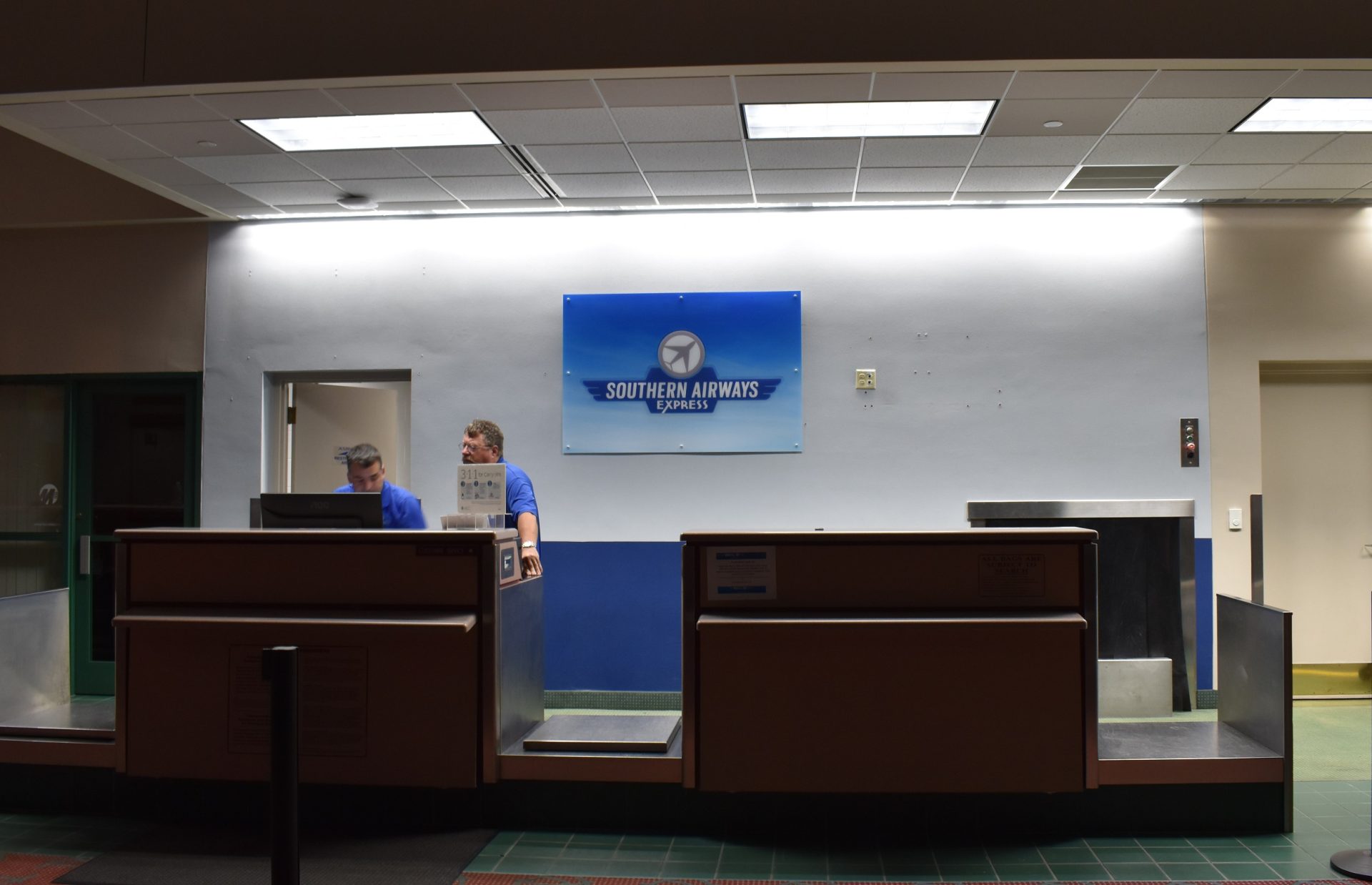
The second Colorado community in the SkyWest ordeal also is seeing a new airline, Southern Airways Express did begin services to Pueblo from Denver in mid-January 2023. Flights operate on board an 8-seat King Air 200. Pueblo is the airline’s second destination from their new Denver hub.
Fort Dodge and Mason City, Iowa
These two communities have been linked together for a long time, even before SkyWest served there and the pilot shortage come around and they continue to be linked together. Skywest under the United Express brand continues to serve both communities with a nonstop flight to Chicago O’Hare and the tag flight between Mason City and Fort Dodge using the airline’s 50-seat CRJ-200 aircraft.
The Department of Transportation has issued an ‘Order Extending Service Obligation’ until March 11, which will keep the airline in the community until a new carrier is chosen and begins service. Even though the order expires soon, it will be extended like it has four times previously, and will continue to be until a new airline is chosen.
Sioux City, Iowa
SkyWest still remains in this community as well, Boutique Air did bid for this community but was rejected as they didn’t want to waive the right to dual-engine aircraft. The ‘Order Extending Service Obligation’ also applies to this community until another airline has been chosen and starts service.
Dodge City and Liberal, Kansas
These two communities aren’t linked together in a flight but do have a similar time frame. SkyWest has been trying to start a new brand of flying called ‘SkyWest Charters LLC’ or SWC for short, which will utilize CRJ-200s that are retrofitted to only have 30 seats instead of 50 seats. That way they can fly and operate under a ‘Public Charter’ under 14 CFR part 380, therefore being able to hire pilots with fewer hours. Up to this point, SWC has not yet been approved for a commuter authority certificate but it is in the works.
What SWC is proposing for both Dodge City and Liberal is flights to Denver Intl. and either Chicago O’Hare or Houston Bush as a second airport. Flights would have a United codeshare according to the document but would use the SkyWest Airlines branding for the aircraft, ticket counters, and other such items. The contract has yet to be awarded and they remain with the service they had before the termination request.
Paducah, Kentucky
Contour Airlines began service here in early December of 2022, they offer flights to Charlotte on board their 30-seat Embraer E135 or E145 aircraft. This is an Essential Air Service proposal, unlike the other contracts that Contour usually enters into, which are alternate EAS contracts.
A Contour Embraer E135 nicknamed “Pride of Contour” (Photo: AirlineGeeks | Joey Gerardi)
Cape Girardeau, Missouri
Not far away from Paducah, is another community that is now receiving Contour Airlines. The airline began service in December of 2022 offering nonstop flights to Nashville on the airline’s 30-seat Embraer E135 or E145.
Houghton, Mich.
This airport, located in Michigan’s upper peninsula will continue to see the same service for many years to come. The DOT has selected SkyWest/United Express for service to Chicago O’Hare on board the CRJ-200. This is the same service they had before so nothing is changing, the only difference is the subsidy they will be getting which is much higher than it was previously going from $2,204,520 a year to $6,507,497 a year.
Muskegon, Mich.
Muskegon has also begun service with a new carrier, with Southern Airways Express beginning flights to Chicago O’Hare on board the 8 or 9-seat Cessna 208 Caravan. AirlineGeeks had the opportunity to go on the inaugural flight of this airline out of Muskegon, which can be found HERE.
Fort Leonard Wood was one of the few communities that came out on top with more destinations than it had before. Previously with SkyWest, they only got service to one city, Chicago O’Hare. Now with Contour Air, they get nonstop flights to both Nashville and Dallas Ft. Worth, making it possible to connect in the small community between the two larger cities. Services began in the Fall of 2022.
Devils Lake and Jamestown, N.D.
These two cities are in the same spot as Dodge City and Liberal, they have received bids for SkyWest Charters, or SWC, for flights to two airline hubs under the SkyWest branding. As of now the service to these two communities get flights to Denver with SkyWest under the United Express brand as well as a tag flight between the two communities.
With the SWC proposal, it would separate each community and they would both get nonstop service to two hubs. They are proposing service to Denver Intl. and Chicago O’Hare from both of the communities, and just like the other SWC proposal, it would be under the SWC brand but with United codeshares.
Jamestown has also received a bid from North Pacific Airways, which would utilize Dash-8s to Minneapolis/St. Paul 14 times a week. The contract has yet to be awarded to anyone and they remain with the service they had before the termination request.
Kearney, Neb.
Kearney also has received a new airline, Denver Air Connection began flying to the community in November of 2022. They now see 12-weekly flights to Denver Intl. on the airline’s 50-seat Embraer E145.
North Platte, Neb. and Salina, Kansas
These communities have also yet to select a new carrier and rejected the proposals that were submitted the first time as the previous applicants didn’t satisfy one or more of the requirements put forth by the EAS program, they didn’t like the applicants and wanted to keep SkyWest, or they didn’t have dual engine airplanes and the city didn’t want to waive their right to that.
The most recent round of airline proposals for both communities was due on March 1, 2023, but have yet to be posted on regulations.gov at the time of writing this article.
Scottsbluff, Neb.
Another community with the SkyWest charters proposal is in the works here as well. The airline is proposing 9 weekly round-trip flights on the proposed 30-seat CRJ-200. Flights would have a United Airlines codeshare and would offer flights to both Denver Intl. and Chicago O’Hare. The contract has yet to be awarded and they remain with the service they had before the termination request.
Eau Claire, Wis.
This was perhaps the most interesting outcome of any EAS community I have ever seen and did cause a lot of debates on whether or not the airline actually fit the requirements for an EAS contract, but it happened. Sun Country was selected for the EAS contract in this small community with twice weekly year-round flights to Minneapolis/St. Paul, and seasonal service to a mix of Orlando, Ft. Meyers, and Las Vegas, the last of which will become the longest EAS route in the entire country.
Flights are flown on board the airline’s 186-seat Boeing 737-800, the largest aircraft to be regularly scheduled on an EAS route. AirlineGeeks had the opportunity to fly on the Inaugural flight to this community, the trip report of which can be found HERE.
Sun Country’s ticket counter in Eau Claire (Photo: AirlineGeeks | Joey Gerardi)
Shenandoah, Vir., Clarksburg, W.V. and Lewisburg, W.V.
All three of these communities were awarded an EAS contract with Contour Airlines and have very similar services and started roughly at the same time. All will receive 12 weekly flights on board Contour’s 30-seat E135 or E145 aircraft and each has its own nonstop flights to Charlotte. Flights to each of the communities began in December 2022.
The remaining six communities; Johnstown, Penn.; Joplin, Mo.; Meridian, Miss.; Hattiesburg, Miss.; Victoria, Texas; and Decatur, Ill. have all remained in virtually the same place application and EAS process-wise as when they started, and that place is nowhere. They have all had EAS proposals the first time around but they all rejected their respective bidders for one reason or another. They instead have chosen to remain with SkyWest, but with greatly reduced flight frequencies, in hopes that as the pilot shortage slowly improves they will regain the original number of weekly flights and destinations that they had prior to starting this debacle.
They also all have an “Order Extending Service Obligation” which expired on March 1, 2023, and hasn’t yet been extended but almost definitely will be as no carrier has been chosen yet. They also have a “Hold in rate” amount, which the DOT is giving the airline to keep them in the communities until a new carrier is chosen, and isn’t any payment on top of the normal subsidy they usually get when serving the cities, but is a rate they pay them on a monthly basis.
It would also be interesting to note that SkyWest hasn’t submitted a proposal for their 30-seat SkyWest Charters idea in any of these six communities. None of them are in a bidding or application process either, meaning they hope to weather out the storm and bet that things will eventually get better for SkyWest and they’ll return to the normally allocated service on the 50-seat SkyWest CRJ-200s.
Overview
It is evident from this massive EAS termination process, that some communities are open to change with some of them happening very early on relative to the normal EAS process. But other communities are very resistant and don’t want anything except their 50-seat SkyWest/United Express branded service, and they are willing to accept a little less now hoping that they go back to full service hopefully soon.
Some airlines have come out better than they were before the process began, while at the same time, there are other airlines that probably got a lot less than they were expecting. The EAS map is definitely more diverse than it was before with the United logo covering fewer and fewer cities on it, and other airlines doubling the number of EAS contracts and routes they have. And of course, the Sun Country wild card in Wisconsin was a big surprise as well to the entire aviation community.
One year ago the top three EAS airlines were United-branded SkyWest with over 40 contracts, Cape Air with 18, and Delta-branded Skywest contracts with 15. Flash forward almost a year later, United-branded SkyWest is still at the top but now with 27 contracts, Southern Airways Express is now at 19 contracts up from 13 a year ago, and Contour is at 17 up from only eight a year ago.
The EAS map one year ago, March of 2022 (Photo: Gerardi Aviation)The EAS map now, March 2023 (Photo: Gerardi Aviation)
SkyWest isn’t the only airline that is requesting termination in EAS communities, Boutique Air requested termination with plans to rebid their communities citing higher costs, and Cape Air did the same citing pilot shortages for them. There is still a lot that could happen in the process and it does take time, but who knows what it will look like when it’s all said and done.
Joey has always been interested in planes for as long as he can remember. He grew up in Central New York during the early 2000s when US Airways Express turboprops ruled the skies. Being from a non-aviation family made it harder for him to be around planes and would only spend about three hours a month at the airport. He was so excited when he could drive by himself, the first thing he did with his driver's license was get ice cream and go plane spotting for the entire day. He graduated from Western Michigan University in 2022 with a B.S. in Aviation Management & Operations and a Minor in Business, and currently works for a major airline in his hometown.
Italy Continues to Experiment With Drones to Transport Blood
A few days ago, in the Milan area, blood samples to be analyzed were transported by drone. D-Flight – a company of the ENAV Group (and a subsidiary of Leonardo), Telespazio (which provides services for drone traffic management) and ENAC (Italy’s National Civil Aviation Authority) carried out a series of flights with a specially equipped drone to transfer untested blood samples (dangerous goods) collected at the Opera and Rozzano centers of Cerba HealthCare Italia.
ENAC Director General Alessio Quaranta commented that the Milan trial is the first operational authorization in a specific category issued by ENAC, in accordance with Regulation (EU) No. 2019/947, for the safe transport by drone of biological samples, which the regulations classify as dangerous goods.
ENAC’s goal is for such services to become commonplace as soon as possible, encouraging the creation of a system that works in synergy, as realized between ENAV (Italian National Flight Assistance Board) and D-Flight. Experimentation and coordination with actors in the unmanned world are making the possibility of using drones in various activities more and more concrete, benefiting the sustainability and efficiency of services in Italy.
Maurizio Paggetti, Chief Operating Officer of ENAV and CEO of D-Flight, said that this represents a further step towards the realization in Italy of U-Space, an airspace dedicated to drones. U-Space will enable all types of operations, from the simplest to the most complex. The portion of airspace designated for drones will be up to 400 feet (120 meters) above the ground, with restrictions in some areas. Within this airspace, there are several categories of remotely piloted aircraft authorized to fly, subdivided according to technical specifications by the European regulation issued by the European Union Aviation Safety Agency (EASA). The objective of U-Space is to ensure integration between traditional air traffic and remotely piloted aircraft.
The flights, which took place on Monday, February 27, were conducted in BVLOS (Beyond Visual Line Of Sight) mode, meaning that the pilot had no visual contact with the drone. The aircraft, which took off and landed in a controlled fenced area (3×3 meters), is a hexacopter with a ballistic parachute, a dual communication channel and an EASA-verified flight termination system, weighing 25 kilograms with its load. The flights, carried out by the company Nimbus, which designed and developed the drone and the box for the safe transport of blood for analysis, covered rural and urban areas.
This is not the first time this type of transport has taken place in Italy. In October 2018, ABzero, had delivered blood bags with a drone, via a smart capsule that allowed the transport of blood, blood products and organs by controlling temperature and humidity conditions.
This type of experiment is of paramount importance to significantly reduce the time of blood transport and to evaluate the impact of flight on the red blood cells and platelets transported.
Vincenzo graduated in 2019 in Mechanical Engineering with an aeronautical curriculum, focusing his thesis on Human Factors in aircraft maintenance. In 2022 he pursued his master's degree in Aerospace Engineering at the University of Palermo, Italy. He combines his journalistic activities with his work as a Reliability Engineer at Zetalab.
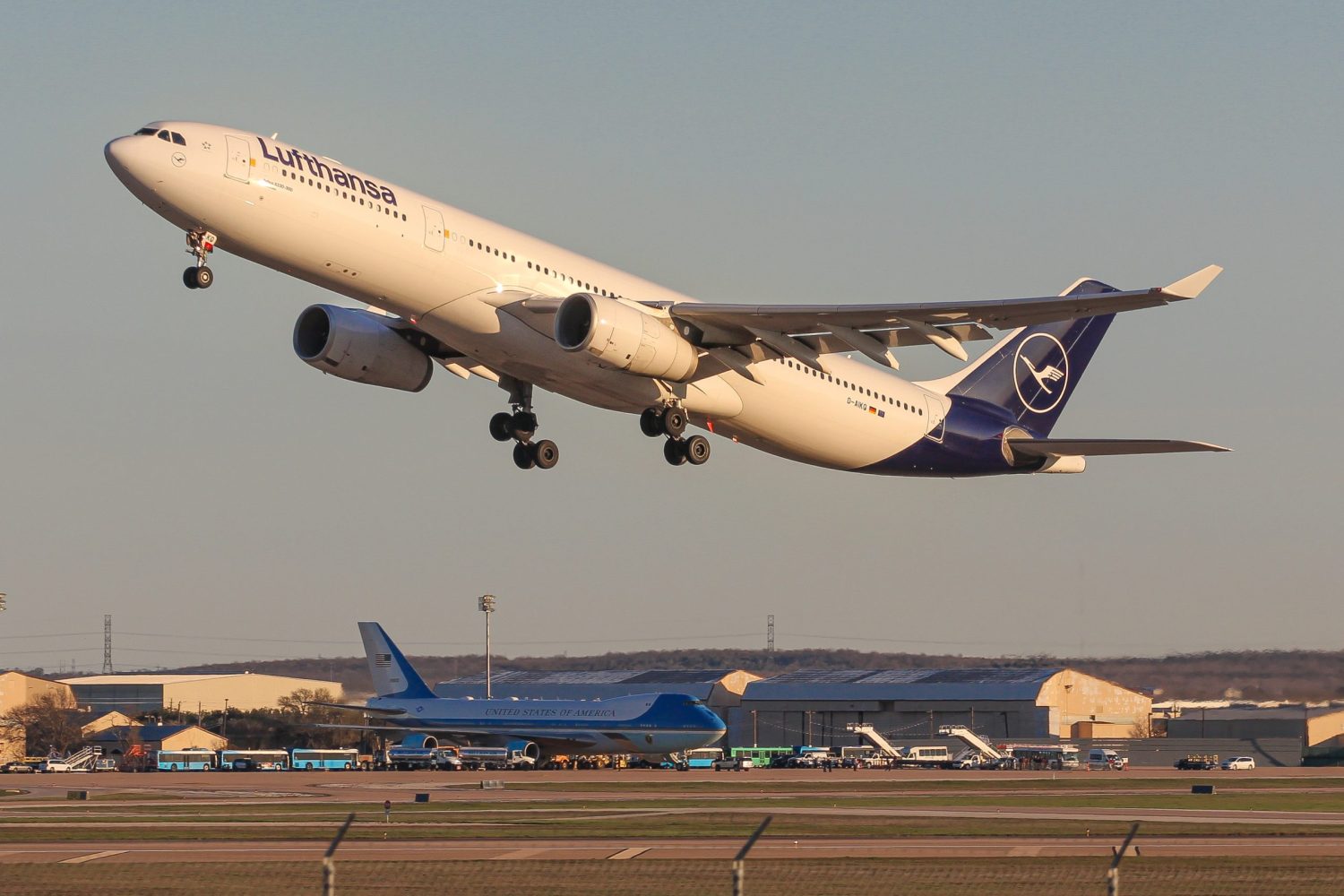
A Lufthansa A330 departing Austin in 2019 with Air Force One in the background. (Photo: AirlineGeeks | Mateen Kontoravdis)
Lufthansa Group has posted an operating profit of €1.5 billion ($1.59 billion) for the 2022 calendar year. “Lufthansa is back,” stated Carsten Spohr, chief executive officer of Deutsche Lufthansa AG. “In just one year, we have achieved an unprecedented financial turnaround. With an operating profit of 1.5 billion euros, the Lufthansa Group has achieved a much better result than expected. Demand for air travel remains high in 2023.” Deutsche Lufthansa AG is the parent company of airlines Lufthansa, Austrian, SWISS, Brussels Airlines, Lufthansa CityLine, Air Dolomiti and Eurowings Discover.
In the previous financial year, the German consortium posted a €1.7 billion ($1.8 billion) loss on revenues of €16.8 billion ($17.8 billion). In 2022 the group saw revenues almost double to €32.8 billion ($34.75 billion). Passenger demand across the airlines of the Lufthansa Group more than doubled from 47 million carried in 2021 to 102 million in 2022.
Reflecting on the ‘unprecedented financial turnaround’, Remco Steenbergen, Chief Financial Officer of Deutsche Lufthansa AG said: “I have always made it clear that returning to a strong balance sheet was one of our top priorities in overcoming the crisis. Only a strong balance sheet provides the resilience needed to invest in the future of our business and to manage future crises. That is why I am extremely pleased with the progress made last year. We remain firmly committed to generating consistently strong free cash flows and continuing the deleveraging in 2023 and beyond.”
The Lufthansa Group had undertaken an ambitious transformation process and cost-cutting program across all areas of the business. The company reported that over 90 percent of this strategy had been completed through the end of the 2022 reporting year. The Lufthansa Group is also negotiating with the Italian Ministry of Economy and Finance on potential investment in the Italian airline ITA Airways.
Other elements of the group’s strategy include the evaluation of selling what it calls ‘non-core assets.’ In a press release highlighting the 2022 result Deutsche Lufthansa AG reports that ‘AirPlus and LSG’s remaining catering business, following the sale of the European part, will be sold as soon as market conditions permit. Preparations for a possible partial divestiture of Lufthansa Technik are proceeding according to plan as talks with selected investors have already begun.’
Looking forward to the upcoming European summer the Lufthansa Group expects to operate at 85 to 90 percent of 2019 pre-pandemic capacity. However, a note of caution was raised in that ‘capacity development will be limited by the bottlenecks still expected in the European aviation system.’ This follows previously announced cuts to summer schedules impacted by labor shortages within the aviation industry particularly affecting major airports.
Striking an optimistic note for the future of the Lufthansa Group Spohr said: “We are investing billions in new fuel-efficient and state-of-the-art aircraft. With innovative services, a new premium cabin on board, and new digital tools, we want to remain the quality and innovation leader in our industry.”
In addition, Spohr added: “Likewise, it is our ambition to drive forward effective climate protection, for example by being the first airline group worldwide to introduce Green Fares. The Lufthansa Group is already number one in Europe and number four worldwide. For our guests and our employees, we want to continue to grow, shape the future and expand our market position.”
John has always had a passion for aviation and through a career with Air New Zealand has gained a strong understanding of aviation operations and the strategic nature of the industry. During his career with the airline, John held multiple leadership roles and was involved in projects such as the introduction of both the 777-200 and -300 type aircraft and the development of the IFE for the 777-300. He was also part of a small team who created and published the internal communications magazines for Air New Zealand’s pilots, cabin crew and ground staff balancing a mix of corporate and social content.
John is educated to postgraduate level achieving a masters degree with Distinction in Airline and Airport Management. John has held the positions of course director of an undergraduate commercial pilot training programme at a leading London university. In addition he is contracted as an external instructor for IATA (International Air Transport Association) and has been a member of the Heathrow Community Fund’s ‘Communities for Tomorrow’ panel.
Sign-up for newsletters & special offers!
Get the latest stories & special offers delivered directly to your inbox