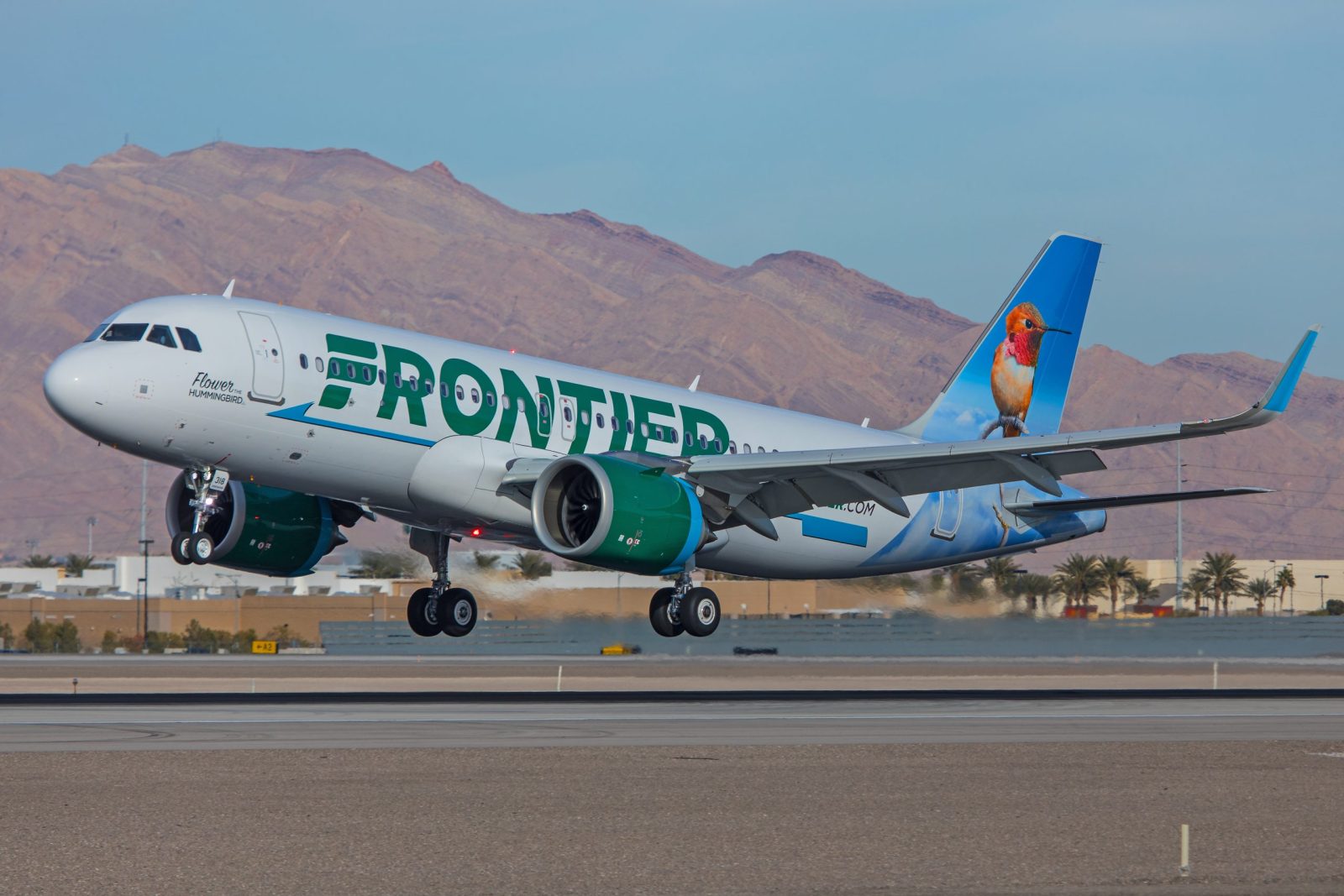
A Frontier Airbus A320neo in Las Vegas. (Photo: AirlineGeeks | William Derrickson)
Remember when American Airlines sold an all-you-can-fly lifetime pass for just $250,000? Then ended up revoking them because, well, allowing the most avid frequent fliers, who have the cash ready, to fly as much as they want wherever they want for a fixed price is not usually a good business decision. It’s been 40 years since then and yesterday Frontier Airlines announced a ‘first-of-its-kind,’ ‘all-you-can-fly’ pass for a year, not without numerous caveats of course.
The Denver-based carrier announced that starting May 2, 2023, passengers who have purchased the pass will be able to fly on any Frontier flight for just $0.01 plus a variety of taxes and fees per flight. The price is certainly appealing at first glance: $599 for the entire year which for some people could be an incredible bargain. Per Frontier’s website, the pass is subject to a lengthy list of blackouts and restrictions that depending on your schedule may not make such a pass worth the money:
“Flights will be available to book and fly starting May 2, 2023
Flights can be booked and confirmed the day before flight departure
Flights must be booked at flyfrontier.com
Flights are subject to blackout periods:
2023: May 25, 26, 29; June 29, 30; July 1-5, 8, 9; August 31; September 1, 4; October 5, 6, 9; November 18, 22, 24-27; December 16, 17, 22-24, 26-31;
2024: January 1, 15; February 15, 16, 19; March 3, 10, 15-17, 22-24, 29-31; April 5-7, 12-14. Blackout dates for May 2024 and beyond will be posted in advance of accepting any enrollments for pass periods which cover those dates.
Flights do not include any add-on products (like bags or seats), you can still customize your travel
Access to all U.S. destinations, including Puerto Rico
Taxes, fees, and charges apply at the time of booking
A fare of $0.01 will be charged for each segment booked
Flights and seats are subject to availability; last seat availability is not guaranteed
Travel not eligible to earn miles or status
Travel qualifies as an activity and will extend your FRONTIER Miles expiration
The GoWild! Pass is non-transferable. The pass holder is the only allowed passenger to travel with GoWild! Pass privileges.
Your pass will automatically renew for successive one-year terms unless you cancel”
Is it worth it?
The blackout dates shown above unsurprisingly restrict travel before and after many major United States holidays and peak seasons. Whether or not this is a bargain is heavily dependent on the type of traveler. Frontier however sees potential in being the first in a long time to offer such a pass. Barry Biffle, the CEO of Frontier Airlines told Travel and Leisure magazine that “There’s a lot of empty seats that go every year…we’ve seen an explosion in leisure travel,” adding that “It’s probably one of the coolest products we’ve ever offered as an airline. It gives people that freedom of unlimited travel.” The limited $599 price will expire at the end of Thursday, Nov. 17 before being priced at $1,999, a far cry from the promotional offer.
The move speaks to a greater push from Frontier to capitalize on the high demand for domestic and short-haul international travel in the United States. Whether or not other carriers choose to follow suit remains unclear and for now, Frontier is looking to differentiate itself from its low-cost competition with this unique pass.
Ezra Gollan is a student, photographer and aviation enthusiast based in New York, New York. He has spent over half a decade around New York City’s airports as a photographer.
Major U.S. Carriers Prepare for Busiest Thanksgiving Holiday since 2019
A Delta 737-800 in Seattle. (Photo: AirlineGeeks | Katie Zera)
With the removal of most if not all travel restrictions after the COVID pandemic U.S. airlines are expecting the busiest Thanksgiving in three years. Thanksgiving falls on Thursday, Nov. 24 and traditionally the busiest day to travel is the Sunday following the holiday as well as the Wednesday prior to the holiday.
Delta Air Lines is expecting close to 6 million passengers to travel in the period between Nov. 18 through Nov. 29. Though this number equates to an average of 500,000 travelers per day, it does fall a little short of the 2019 figure of 6.3 million passengers traveling on Delta within the same date range. Delta Chief Executive Officer Ed Bastian gave confidence that holiday season travelers can rely on the airline over the coming weeks.
“Thanks to the hard work of our more than 80,000 people around the globe, Delta customers can expect the very best service and industry-leading reliability as they reconnect this holiday season,” Bastian said. “Our teams are ready to serve.”
American Airlines Chief Executive Officer Robert Isom echoed the confidence of his competitor when discussing the upcoming Thanksgiving holiday period. Speaking at the Skift Aviation Forum on Wednesday, Isom said, “Look, we’ve had three hurricanes in the last few months. We’ve had all sorts of issues. But October was one of the best months in terms of performance … I look at the holidays as a busy time, but it’s something I know we’ve had more pilots on hand, more attendants and team members. We’re ready.”
Part of the reason for his confidence is that the airline is seeing a less constricted holiday travel period. With remote working and changes to the way in which business is conducted post-pandemic, Isom has seen these affect traditional travel trends and patterns.
“It’s interesting. Travel, as it’s come back, we’re doing things differently. People are spreading out, going past nine-to-five. I see it all over the place, and that bodes well. For our airports and airlines, we’re not all beholden to the structure of the past,” Isom added.
United Airlines is expecting record post-pandemic numbers of passengers with Reuters reporting the carrier will have its busiest travel day since March 2020 on Sunday, Nov. 27. The airline is forecasting 5.5 million passengers in the period of Nov. 18 to Nov. 30 — a 12 percent increase over the same date range in 2021. United is adding 275 extra flights on the Sunday after Thanksgiving, to accommodate an estimated 460,000 travelers.
United States Transportation Secretary Pete Buttigieg is equally confident with regard to the aviation industry’s preparedness for the upcoming holiday season. Reflecting on the issues the industry faced over the summer period and acknowledging the improvements gained, since Buttigieg did sound a note of caution. “As we get ready for Thanksgiving and then the winter holiday travel season, we’re not out of the woods yet,” he said.
John has always had a passion for aviation and through a career with Air New Zealand has gained a strong understanding of aviation operations and the strategic nature of the industry. During his career with the airline, John held multiple leadership roles and was involved in projects such as the introduction of both the 777-200 and -300 type aircraft and the development of the IFE for the 777-300. He was also part of a small team who created and published the internal communications magazines for Air New Zealand’s pilots, cabin crew and ground staff balancing a mix of corporate and social content.
John is educated to postgraduate level achieving a masters degree with Distinction in Airline and Airport Management. John has held the positions of course director of an undergraduate commercial pilot training programme at a leading London university. In addition he is contracted as an external instructor for IATA (International Air Transport Association) and has been a member of the Heathrow Community Fund’s ‘Communities for Tomorrow’ panel.
Interview: Tamarack Aerospace Group On Active Winglet Technology
Concept art of the Tamarack-Ampaire ECO Caravan. The ECO Caravan is equipped with Tamarack's active winglets. (Photo: Ampaire)
The story of flight is the story of technology, and more specifically, the advancement of technology. From the sands of Kitty Hawk to the asphalt of Los Angeles International Airport, evolution is the word best suited to describe aviation. Buried beneath the materials, powerplants and control systems of today lay an archaeological treasure trove of what came before.
However, as a friend frequently reminds this writer, we are living in a new age — the renaissance of aviation. The future has its roots here and now, and it’s these roots that will define aviation’s future as we know it.
Recently, AirlineGeeks reported an interesting development in the realm of sustainable aviation, however this time it wasn’t some potion of biofuels. Providing enhanced efficiency and aircraft performance, Tamarack Aerospace Group has been developing and installing its SMARTWING active winglets on a variety of aircraft — real proof that there is still much to be done in the field of aerodynamics.
We wanted to know a bit more about these active winglets and the role they will play in the future of commercial aviation, so AirlineGeeks caught up with Tamarack’s President Jacob Klinginsmith to find out.
A Short History of Tamarack
AG: How did Tamarack start? Where did this organization of yours begin?
JK: Our founder and CEO, Nick Guida, was doing traditional wing modifications as an engineer for other companies, like Aviation Partners and BLR, and others. As an engineer, he was helping design these, and he saw some of the penalties that came with doing traditional wing modifications.
They would take away some of the aerodynamic benefits because of the structural penalties. So they would end up with less optimised aerodynamic winglets, and also structural penalties from the extra weight due to the necessary reinforcement for the wing, compromising the winglets on the end. He had a background in engineering and structures and fatigue, so he was doing these projects, and he realized — this was in about 2010 — there’s load alleviation technology, which has been around since the seventies on the L 1011.
If we put a load alleviation system with a wing with modification, it’s targeting reducing the load on the wing that’s added by the winglet, we can do much more beneficial work with the winglet aerodynamically and just mitigate those loads with a system so that 99% of the time you’re getting all the aerodynamic benefit, but you don’t have all this extra structural penalty with life reductions and extra weight from reinforcing the wing.
So he had that epiphany on his way home from a Steely Dan concert, kind of sitting in the airport thinking. And so he sat down and did some math. He had the, you know, the background as a loads engineer to do the math and see how it would work. And it worked on paper. And so he formed the company in 2010. I started with him right when he was starting. I had been working at Quest Aircraft, working on the Kodiak, and so we flew it to prove the concept in in actual flight, not just on paper. And the rest is sort of history, you know, with getting patents together, certification around the world. And now we’re approaching 10% of the Citation fleet with the technology on there. But it was never only meant to be Citations – that was just a place to start.
A Smart Approach to Winglets
AG: Just how universal is SMARTWING technology?
JK: Well, the underlying technology is meant to be universal, and we’ve designed the architecture to be modular so that some of our base components can be applied on different platforms. But the agencies, you know, FAA, EASA and other agencies around the world, they require each platform to be certified individually because the aerodynamic design is custom or bespoke to a particular platform, and you can see that on the Citation product – the winglets have a certain look and shape and on the King Air they have a really different look and shape because it’s really tailored to get the most aerodynamic benefit.
AG: According to your website there was some good performance and flying quality improvements – some pretty drastic improvements. What impact does SMARTWING have on the performance and flying qualities of a given aircraft?
JK: It definitely has a big impact. I mean, the big picture is we’re adding a lot more wings to the airplane so flying performance is automatically improved because of the extra wing that we’re adding in addition to the wing. So, that’s like probably the single biggest thing for each 1000 feet of altitude higher that you’re climbing. It’s about a 3% improvement in a specific range. When you climb the aircraft, for example, on the Citation jets, they may be stuck in the thirties – 30,000 feet or so. And that’s the most they can climb when they’re heavier or it’s hot without the winglets. With the winglets, they’re able to climb up to the ceiling in the forties. And so each thousand feet higher is 3% better fuel consumption. So that makes a big, big difference.
With the handling quality specifically, we’re adding more wings, so we’re adding some stability. On the Citation M2s, we’re able to take away the yaw damper limitation on those planes because we add stability to the platform at high altitudes. So that’s definitely a big benefit for stability. One thing that’s really unique to what we’re doing with the active load alleviation — that’s aerodynamic damping — so it’s providing ride smoothing, which is something that you’re seeing on modern aircraft like the 787 and some of the higher-end business jets. They’re doing that alleviation to provide just passenger comfort. And so we’re able to add that on as part of our modification, which is stability, safety and comfort.
AG: Have you seen a potential for it to go further down the commercial road, such as Boeing and Airbus? Is that on the horizon or are we still in a bit of an earlier stage?
JK: It’s definitely on the horizon from our point of view. You know, a lot of the Boeing aircraft have the legacy traditional winglets on them. Those have done excellently to provide fuel savings and carbon emissions reductions, but only in the neighborhood of like three or four percent. So what we would like to do is take those off and put on something that’s better. We’re starting with the Airbus A320 CEO (current engine option) generation because we see a big value proposition for that fleet, but there’s certainly a huge value proposition for other fleets as well.
AG: If you were to implement that, would that be arranged through an airline as an aftermarket feature or do you think that’s something you can work with during the manufacturing stage?
JK: Both. Originally when Aviation Partners started making the winglets, such as the blended winglets for the 737s, that started with basically a partnership with airlines. Boeing came around and they started implementing them in the production line. So we wouldn’t be surprised to see something similar, but you know, that’s all of that is just up to the dynamics of how the business comes together.
AG: Can you talk me through the installation process? It sort of seems like it’s simpler than it sounds.
JK: That’s another really important point – that’s a huge value proposition. What we’re doing with our technology and a traditional wing. That modification will require pretty extensive structural reinforcement, which takes a long time in some cases.
Right now we’re doing installations in under 10 days – including paint – because we don’t have to be invasive on the structure.
So the process is the plane comes in, and we take the original wing tips off the short wing tips. We attach the structure and we call it winglet Wednesday because if a plane comes in on Monday, it has winglets on it by Wednesday, structurally, and the rest of the time is running the electrical systems and doing the paintwork.
So that’s a big benefit of what we’re doing. On a larger airframe, of course, that’s gonna be potentially longer. But the concept is the same. The downtime is really reduced because we’re not so invasive into the structure as a lot of the other modifications.
The Future of Flight
Repetition for emphasis, the work of Tamarack highlights that we truly are living in a renaissance of aviation. While the glory days often are recalled with grainy footage of Lindbergh, the screaming jets of Edwards in a post-war 20th century, and even the pioneering Space Shuttle, it is worth noting that this age is what future generations will reflect on. What will evolve from this technological boom remains to be seen, but it’s a ride worth climbing on.
Mike’s love affair with flight and mechanical objects in the sky began at an early age, fascinated by space documentaries and the vintage Flight Simulator ’95. He currently works as an instructor for UAVs and is training to receive his Private Pilot Licence with the goal of working in manned flight instruction. An avid reader of all things aviation and manned space flight, Mike stays close to developments in aerospace while reminiscing and sharing the rich history of flight with others. He loves writing, engineering and science.
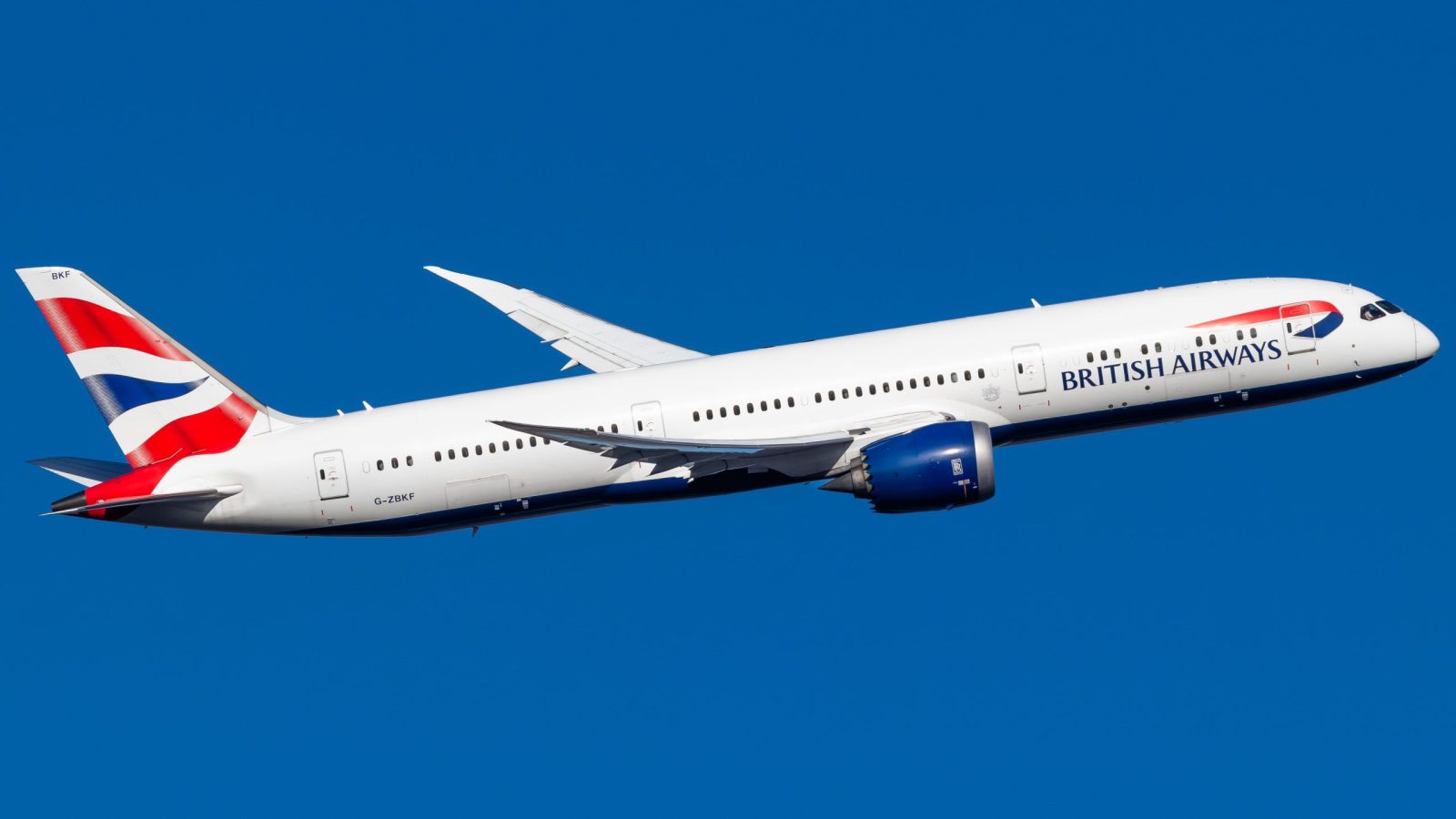
A British Airways Boeing 787-9 Dreamliner (Photo: AirlineGeeks | James Dinsdale)
Starting June 5, 2023, British Airways will have a new non-stop service between London’s Heathrow Airport and Cincinnati. The company will serve more than 300 transatlantic flights per week by next summer, the most of any British carrier.
Cincinnati becomes the company’s 27th U.S. destination and the 26th U.S. service served from Heathrow International Airport. British Airways will be the airline offering the most non-stop flights to U.S. cities from the United Kingdom.
“This is the first time we have flown this route and we are looking forward to connecting two cities that have so much to offer. Not only will this open these destinations to customers on both sides of the Atlantic, but it will also enhance connectivity between the Cincinnati region, Europe and beyond, with opportunities to connect to our wider network through London,” said Neil Chernoff, British Airways’ Director of Networks and Alliances.
Cincinnati adds London connections
London will be Cincinnati’s second transatlantic service, complementing Delta’s nonstop service to Paris. According to data obtained through Eurostat 113,057 passengers were moved in 2019 between Cincinnati and Europe.
This new route will provide enhanced air connectivity to the states of Kentucky, Ohio and Indiana with Europe, where it will have the opportunity for convenient connections to popular business and leisure destinations via London’s Heathrow Airport.
The last non-stop operation between London and Cincinnati was on August 30, 2009, served by Delta with four flights a week on Boeing 767-300ERs to London’s Gatwick Airport (LGW).
“The economic impact of this transatlantic flight is exponential for business travel, economic development and tourism between the United Kingdom and our area of the United States. We look forward to a strong partnership with our new friends across the pond for many years to come,” said Candace McGraw, executive director of Cincinnati’s Northern Kentucky International Airport.
Recently its joint venture and Oneworld alliance partner, American Airlines increased its operations at Cincinnati, thanks to increased demand from business and leisure passengers domestically. The Dallas/Fort Worth-based airline is offering 12 nonstop services from CVG via its main hubs and other point-to-point routes.
The route will be operated on Boeing 787-8 Dreamliner aircraft with a capacity of 214 seats in three classes (35 Club World/25 World Traveller Plus/154 World Traveller) and promotional fares start from GBP 499 ($593) round trip. Tickets are now available for purchase from the airline’s website.
JetBlue's first A321neo arrives from Hamburg at New York's JFK Airport. (Photo: AirlineGeeks | Tom Pallini)
JetBlue is taking another step in its transatlantic expansion by announcing that it will begin flying to Paris-CDG, France, its second European destination after London and the first in continental Europe, starting in the summer of 2023.
The U.S. carrier did not provide specific details on the date of the inaugural flight or frequency but did indicate that it will initially operate from New York-JFK and will later add Boston.
The market between France and the United States is one of the most important in the world, with 8.8 million seats offered in 2022 according to information obtained by Aviacionline through Cirium.
“JetBlue is offering something completely unique to what you get from the big global legacy airlines on these routes – where a single high-fare joint venture operates nearly three-quarters of the flying,” said Robin Hayes, JetBlue’s chief executive officer, referring to the Delta/Air France-KLM joint venture.
“The response to our London service is proof that combining great service with low fares works. We can’t wait to bring our reimagined Mint and core offerings to Continental Europe’s most visited city,” he added.
“Atout France would like to welcome JetBlue into the family of carriers that have chosen to service France,” said Anne-Laure Tuncer, Director USA Atout France, and regional coordinator for the Americas. “With so much pent-up demand, JetBlue is just in time to have their American customers experience the vitality and diversity of France’s offerings, new culinary itineraries, exciting upcoming sporting events – such as the Rugby World Cup 2023 and the Paris Summer Olympic and Paralympic Games 2024 – and everything else France is known for.”
JetBlue currently operates five daily flights between the United States and London: one flight from Boston to London-Gatwick and one daily to London-Heathrow, two flights from New York-JFK to London-Gatwick and one daily flight to London-Heathrow.
Planespotting outside of the terminal at Little Rock's Bill and Hillary Clinton National Airport. (Photo: AirlineGeeks | Fangzhong Guo)
I recently took a trip from Seattle to Little Rock, Ark., on an interline ticket with Alaska Airlines and American Airlines. It was a trying experience with mediocre integration, delays, and poor customer service. Here’s what happened.
Booking
The booking process was straightforward. I booked the personal trip with Alaska using miles. Although the Seattle-based carrier does not serve Little Rock directly, it was able to offer connectivity through its alliance partner, American. Since the itinerary includes partner flights, finding available flights is more complicated. Therefore using the flight calendar is helpful since it won’t error out when a specific day has no flights.
Schedule Changes
I booked this flight several months in advance, which meant it unavoidably saw many schedule changes. While it’s understandable that the flight schedule shuffled a lot after the summer of airline chaos, the inconsistent notifications for them were inexcusable.
For the most part, I found out about the changes when I opened the app for my other trips. However, I did receive an email notification for the last schedule change. Even more difficult was that I needed to call customer service to confirm the changes every time. In one of the changes, the customer agent informed me I was booked on connecting flights that overlapped. This experience is undoubtedly divergent from Alaska’s promise of a one-stop seamless experience for codeshare flights.
My flight from Seattle to Little Rock, Ark. (Photo: gcmap)
Seat Assignment
After several schedule changes, I was flying from Seattle to Little Rock with a stop in Chicago and then at Dallas on my way back. Both flights in and out of Little Rock would be on American Eagle, while the others would be on Alaska. Both American Eagle flights are Alaska’s codeshare flights, but my reservation only showed me the American flight numbers. However, Alaska’s codeshare information page also showed flights with the operating carrier’s flight numbers, so I don’t know which flight number was in my booking.
Seat assignment is another annoyance for my booking. Despite promising benefits of a one-stop seat assignment experience, I could only select my seats on American’s website. This composition of my itinerary also created issues within American’s app since it would redirect me to the mobile website for seat selection.
Unlike what the Alaska website stated, I could check in from either airline’s app. Although I would still go to the operating airline’s app for the boarding pass since neither app displays seat or gate information for the other airline on its boarding passes.
The Delay
The Many Delays
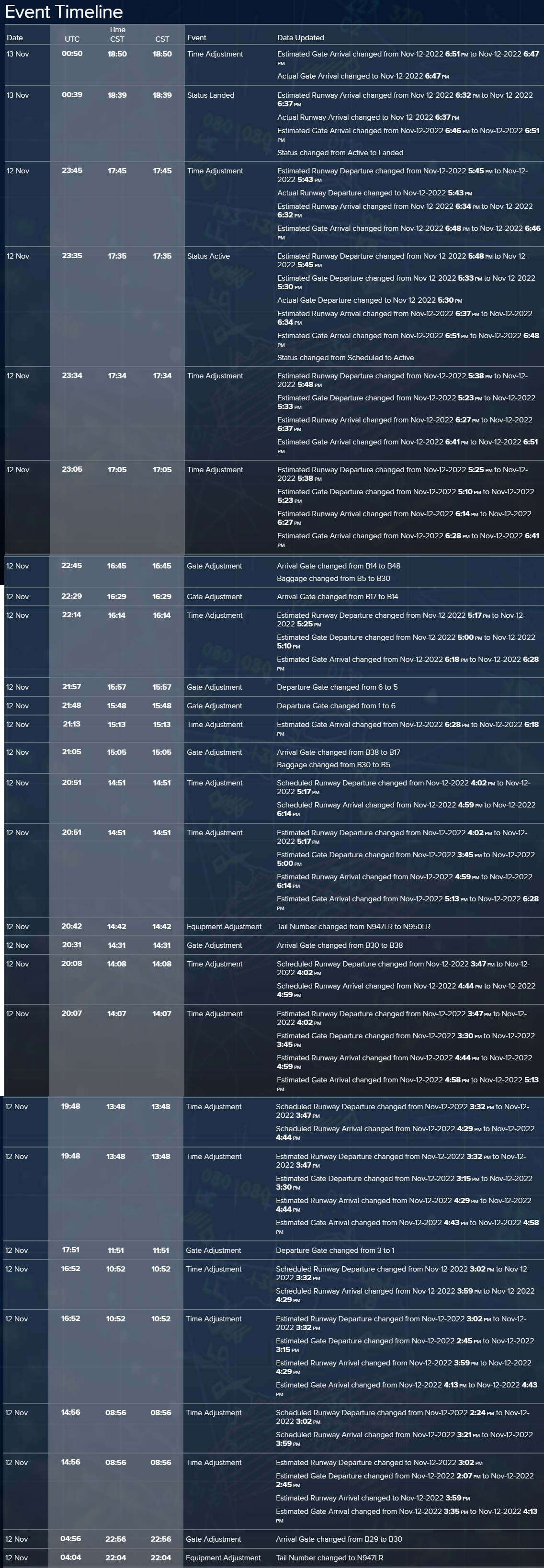
My outbound flight was uneventful. On the morning of my return flight, though, the American app notified me of a slight delay for my 2 PM Dallas flight. It was 11 a.m., and I received four delays totaling one and a half hours. I decided to use that time planespotting at Little Rock. Since I had a two-and-a-half-hour layover and a very short flight, the delay did not worry me.
While I was spotting at the airport, more delays started eking out. My flight received three incremental delays cutting another 45 minutes out of my transit. I called Alaska customer service to rebook my Seattle flight. The Seattle-based carrier had another flight that night three hours later than my original flight, but two American flights would depart earlier. So the agent tried to book me on the earlier flights but failed, and I took the seat on the later flight.
When I was going through security, the Dallas-based carrier slapped another delay on my flight. This one was the largest one, with 1 hour and 15 minutes. It also caused more concern at the gate since many connections were in jeopardy. It kept the agent busy, but eventually, they took care of all passengers.
American issued many incremental delays for my flight. (Photo: FlightStats)
The meal voucher debacle
At 4:15 p.m., the flight was delayed for another 10 minutes to 5:10 p.m. However, the incoming flight had yet to leave the gate at Dallas/Fort Worth International Airport, so there was no chance for our flight to leave at 5:10 p.m. Since the delay was over three hours, I decided to ask the gate agent for a meal voucher.
American’s customer service plan states for delays caused by the airline, “Meal vouchers if your delay is three or more hours after your scheduled departure.” Our flight delay came from crew rest rules. Therefore passengers were entitled to this compensation. However, here’s the first significant disconnect in their customer service plan. The gate agent insisted the policy was four hours and refused to give out vouchers even when I tried to show them the policy on the company’s website.
It is stressful in this situation for the gate agents since they have to rebook a lot of passengers. Still, at the end of the day, they represent the airlines. When the gate agent did not show compassion and struck harsh tones, I knew not to waste time talking to them and went straight to filing a complaint with the airline.
American Airlines policy regarding delayed flights. (Photo: American Airlines)
Other customer services
In the meantime, I still wanted a meal voucher since getting reimbursement from the airlines is challenging. I had a 10-hour delay earlier this year. I did not know I needed the voucher and was refused reimbursement by the airline. I tried using Twitter DM and received responses in about 20 minutes, but they couldn’t do anything. To quote their words, “We can offer only our apology.”
After landing in Dallas, I asked the customer agent for a voucher. He suggested that it should only be issued at the departing airport. However, he acknowledged since they didn’t provide any assistance, he’d help me there. This attempt revealed another interesting issue with AA’s booking system. While the agent could locate my reservation and the 10-plus flights due to the schedule changes, he couldn’t find my delayed flight in my reservation. In turn, he provided me with a phone number for customer service and said they could email a voucher. In addition, although I already received my updated boarding pass for the last leg, the AA system still shows that I have missed my flight.
I followed his instruction and called customer service. While the agent tried to be helpful, she also needed to become more familiar with the latest rule. I worked with her to locate the policy on AA’s website, and we agreed that my flight was eligible for the benefit. However, there was nothing they could do after spending 30 minutes on the phone. She informed me that ground agents were the only ones who could issue vouchers. This failure is another disconnect between the different customer service departments at American Airlines.
Not many options are open around 7 p.m. at Dallas-Fort Worth International Airport. (Photo: AirlineGeeks | Fangzhong Guo)
I ended up paying for food myself. There was not many option either since most places have already closed. At this point, I also felt like I should try all forms of customer service, so I tried using the chat function in the app. Unsurprisingly, there was no way to reimburse the meal. The only suggestion they could give was to fill out the complaint form rather than connect me with a customer relationships representative. If you are wondering, you’ll be able to change your flight in case of a delay.
At last, customer relations replied to me the day after my flight. They offered me flight credit instead of a reimbursement. The exchange was quick and easy.
Takeaways
Interline Experience
Alaska failed to provide the one-stop experience it promised. Seat selection is cumbersome, and managing schedule changes are unnecessarily burdensome.
On the day of the flight, neither airline’s app could provide boarding passes with rich information for the other airline’s flight. Rebooking and itinerary updates across airlines are far from seamless.
It’ll be ok dealing with the quirks when there is no flight disruption. Based on my experience, one might be better off booking through an OTA when a multiple-airline itinerary is necessary.
Customer Service
I have two other long delays this year, and I think it’s fair to compare the experiences. Mechanical issues caused both delays, the first was 4 hours with Delta, and the second was 10 hours with Alaska.
At the airport
During my previous delays, both airlines provided frequent updates on the progress from mechanics regarding the repair. While my delay with American was human-factor related, they could’ve provided updates for things like finding new crews for our flight. I reached the gate later than our original departure time, so I can’t comment on the first hour of delay. For the two hours that I was in the terminal, the airline made no effort to provide updates until the flight boarded in Dallas. It was also an annoyance to receive eight incremental changes for only a three-hour delay.
My previous delays were shortly after breakfast, so the airlines brought snack carts around the three-hour mark. Snack carts also helped reduce the need for issuing an actual voucher, so I didn’t want one when my Delta flight was delayed. My Alaska delay happened at an airport with two vending machines as concessions, so snacks were at least the best they could offer. In the case of American, the carrier could have done more to improve the delay experience since the delay was approaching dinner time.
Behind the scenes
The Dallas-based carrier also fell short from a customer service channel perspective. Delta has its popular iMessage platform. While sometimes the wait time can be long, I received a flight credit after a short chat with an agent. This rendered features from AA’s app and Twitter channel somewhat limited. Both channels could only link me to filing a complaint rather than connecting me to a customer relations representative.
Overall, most airline agents are happy to help with your travel needs. I enjoyed my conversation with customer service at Dallas B28 and on the phone. While I did not have a great experience with the gate agents at Little Rock, it’s partly due to poor flow down of company policy. It’s also understandable that the gate agents are just as frustrated during a delay as you since they have to process all the rebookings and changes at the airport.
Fangzhong grew up near an OEM airport in northeastern China, where he developed his enthusiasm for aviation. Taking upon his passion, he's now working as an aircraft interior design engineer. Besides working in the aerospace industry, Fangzhong enjoys trying out different types of airplanes and seeing how airplane interiors have evolved. So far, he's flown on over 80 types of aircraft. He also planespots in his spare time. His rarest catches included the 747 Shuttle Carrier Aircraft and AN-225.
Canada, India Expand Bilateral Agreement to Allow Unlimited Frequencies
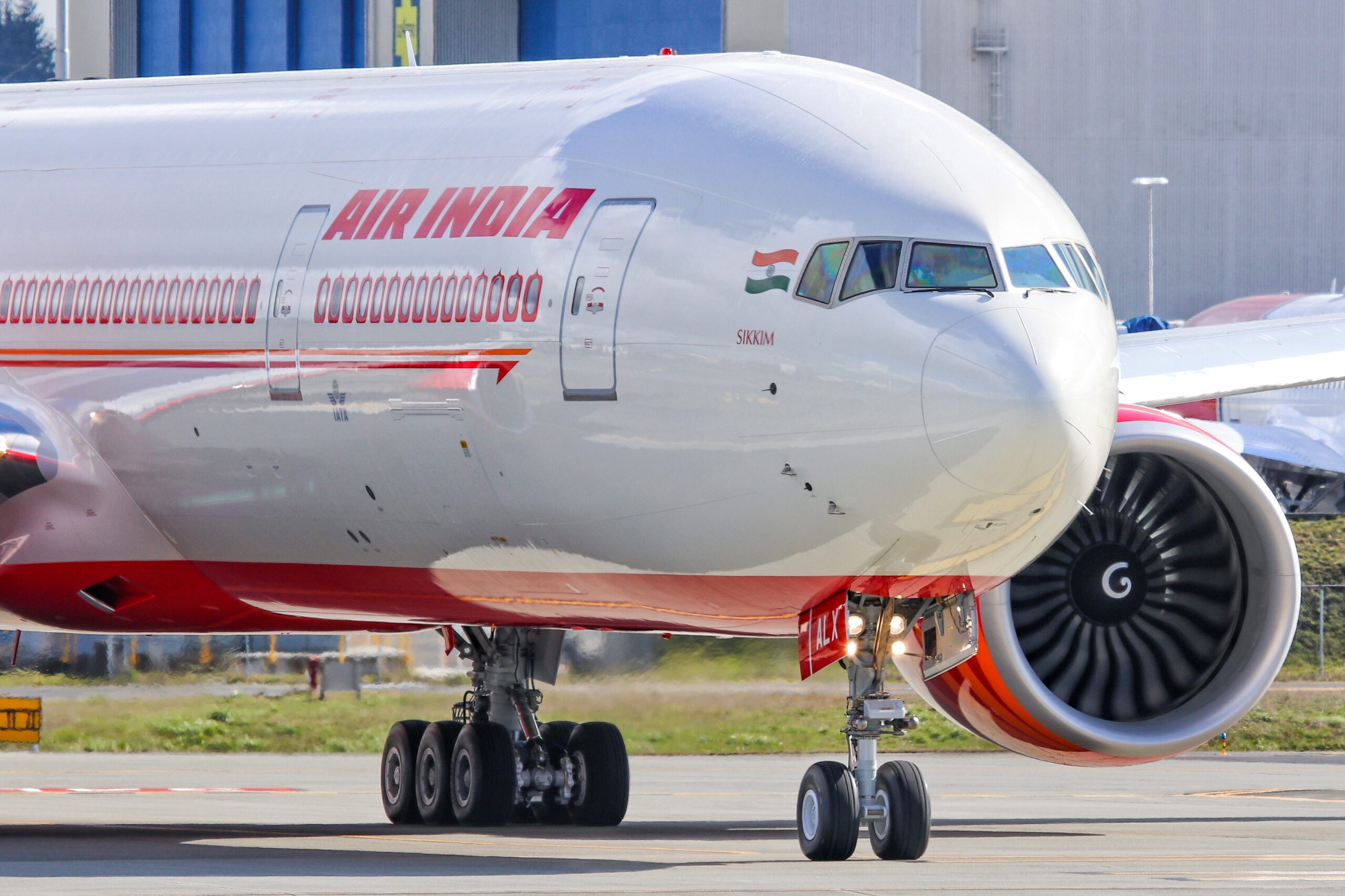
An Air India 777-300ER (Photo: AirlineGeeks | Katie Bailey)
As China continues to pursue its zero-Covid-19 strategy imposing heavy restrictions on international travel and countries in East Asia continue to feel the impact of the closure of Russian air space to European and North American carriers, efforts are being made to boost commercial relationships with other Asian countries that represent viable commercial partners for Western economies.
While in Bali, Indonesia for the G20 Summit — a meeting of leaders from 20 of the world’s largest economies — scheduled for this week, Canadian Prime Minister Justin Trudeau has announced an expanded Air Transport Agreement between Canada and India that will now remove all frequency restrictions to the flights between the two countries.
“Today, we are announcing an agreement between Canada and India, that will allow an unlimited number of flights between our two countries,” Trudeau said, as reported by the news agency Asian News International.
“The expanded air transport agreement between Canada and India is a positive development for air transport relations between our countries,” added the Honorable Omar Alghabra, Canada’s Minister of Transport in a statement. “We are pleased to expand this relationship with additional flexibility for airlines to serve this growing market. By making the movement of goods and people faster and easier, this expanded agreement will continue to facilitate trade and investment between Canada and India and help our businesses grow and succeed.”
The new Air Transport Agreement has defined six entry points per country that carriers will be able to serve with their flights. The Indian cities that will be allowed to receive flights from Canada are Bangalore, Chennai, Delhi, Hyderabad, Kolkata, and Mumbai, while their Canadian counterparts will be Toronto, Montreal, Edmonton, Vancouver and two additional airports that will be selected by India.
India is currently Canada’s fourth biggest trading partner, and there are approximately 700,000 Indian citizens living and working in Canada, according to Apoorva Srivastava, India’s consul general in Canada who spoke at a press conference at Toronto’s Pearson International Airport. “Indian students form the largest chunk of international students coming and studying in Canada. We currently have 230,000 and a lot more ready to come to Canada for educational purposes,” Postmedia reported.
Existing Services by Air Canada and Air India
Air Canada is currently the only Canadian carrier designated to fly between Canada and India: the carrier flies non-stop to Delhi’s Indira Ghandi International airport with daily flights from both Toronto, and there is also an additional thrice weekly service from Montreal. Both flights are operated with a Boeing 777-200LR aircraft.
The Montreal-based carrier has also launched a direct seasonal service between Toronto and Mumbai that will be operational between Nov. 7, 2022 and March 24, 2023. The flight will have a stop at London Heathrow, and Air Canada has obtained the Fifth Freedom rights to sell seats on the London-Mumbai route, therefore entering the very competitive UK-India market. This route will be flown with a Boeing 787-9 aircraft.
Air India is the only designated Indian carrier to fly to Canada. The carrier operates a daily non-stop service from Delhi to both Toronto and Vancouver using a Boeing 777-300ER aircraft.
Vanni fell in love with commercial aviation during his undergraduate studies in Statistics at the University of Bologna, when he prepared his thesis on the effects of deregulation on the U.S. and European aviation markets. Then he pursued his passion further by obtaining a Master’s Degree in Air Transport Management at Cranfield University in the U.K. followed by holding several management positions at various start-up carriers in Europe (Jet2, SkyEurope, Silverjet). After moving to Canada, he was Business Development Manager for IATA for nine years before turning to his other passion: sports writing.
RwandAir Begins Non-Stop Flights Between London Heathrow and Kigali
To cater for increased demand, RwandAir operated its first non-stop direct flight between the Rwandese capital Kigali and London last week. The African airline has been operating flights to London via Brussels for the past five years, with service to Brussels now operated separately.
Services started at the beginning of November with the inaugural flight WB710 operated by an Airbus A330-200, which can accommodate 20 passengers in Business class, 21 in Premium and 203 in Economy. The Rwandan national company will offer four flights per week between its base in Kigali and London Heathrow Airport.
Departures are scheduled for Tuesday, Thursday, Saturday and Sunday at 11:35 p.m. arriving the next day at 6:20 a.m., with return flights leaving Britain Monday, Wednesday, Friday and Sunday at 8:30 p.m. landing the next day at 7:00 a.m.
Simon Rickman, RwandAir UK country manager, said: “We are excited our first direct flight has landed at London Heathrow today. The UK is an incredibly important market for RwandAir as we know these new direct services will prove very popular with our customers, who will highly value our shorter journey times and increased connections to onward destinations across Africa.”
Ross Baker, Heathrow’s chief commercial officer, said, “We are delighted to see RwandAir expand their operations by launching a new non-stop route linking London and Kigali through Heathrow, the UK’s hub airport.
“It is fantastic that demand for travel is increasing again, boosting connectivity for passengers and cargo.”
RwandAir remains without competition on this route launched in May 2017. The airline which has been using Airbus A330s on the London route has flown London-Kigali via Brussels for the last five years. It originally operated from London Gatwick but, after three years, switched to Heathrow in 2020.
The new flights increase access for high-end leisure customers “who want to experience a close encounter with Rwanda’s world-famous mountain gorillas, go on safari in Akagera National Park,” according to Rwandair, “and admire the majestic landscape of Rwanda in The land of a thousand hills”.
The airline, however, is not abandoning the line between Kigali and Brussels-Zaventem, on which it shares its codes with Brussels Airlines: rotations – operated on the A330-300 – are offered on Tuesdays, Thursdays and Saturdays at 12:30 a.m. to arrive at 8:00 a.m., and leave the Belgian capital at 9:00 p.m. to land the next day at 5:30 a.m.
The airline currently flies to 28 destinations across East, Central, West, and Southern Africa, while its intercontinental flights include flights to the Middle East, Europe, and Asia.
The Rwandese flag carrier operates a mixed fleet comprising of two B737-700NGs, two Bombardier CRJ-900 NextGens, two Bombardier Q-400 Next Gens, four Boeing 737-800NGs, one Airbus A330–200 and one Airbus A330–300.
Victor Shalton's love for aviation can be traced to when he was 11-years-old. As a seasoned aviation writer, he takes pride in providing the best aviation coverage around the globe and is passionate about advancing his skills in the aviation space. In addition, he loves travelling, writing, arts and while his speaking engagements have taken him around the world, he is proud to call Nairobi home.
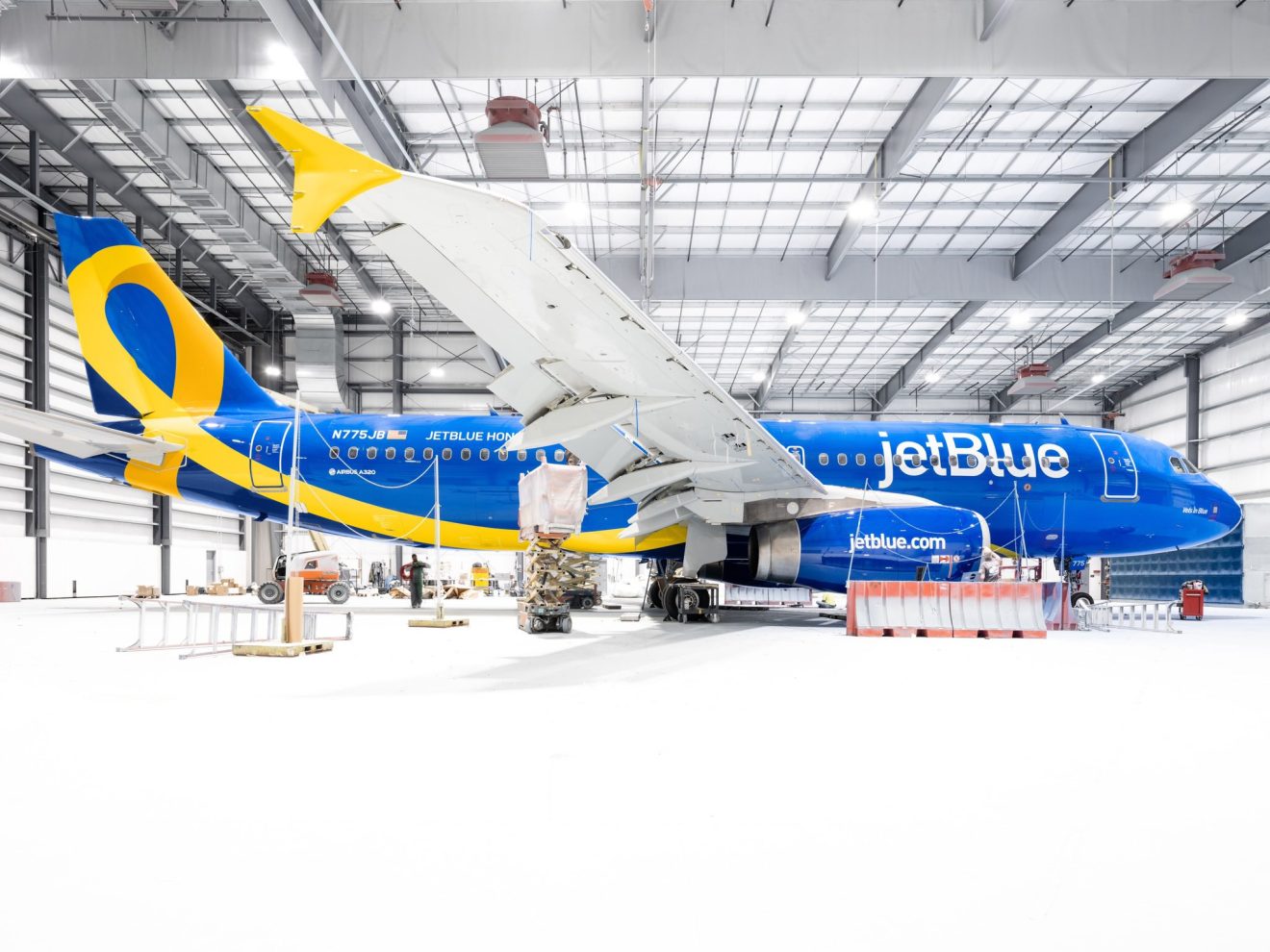
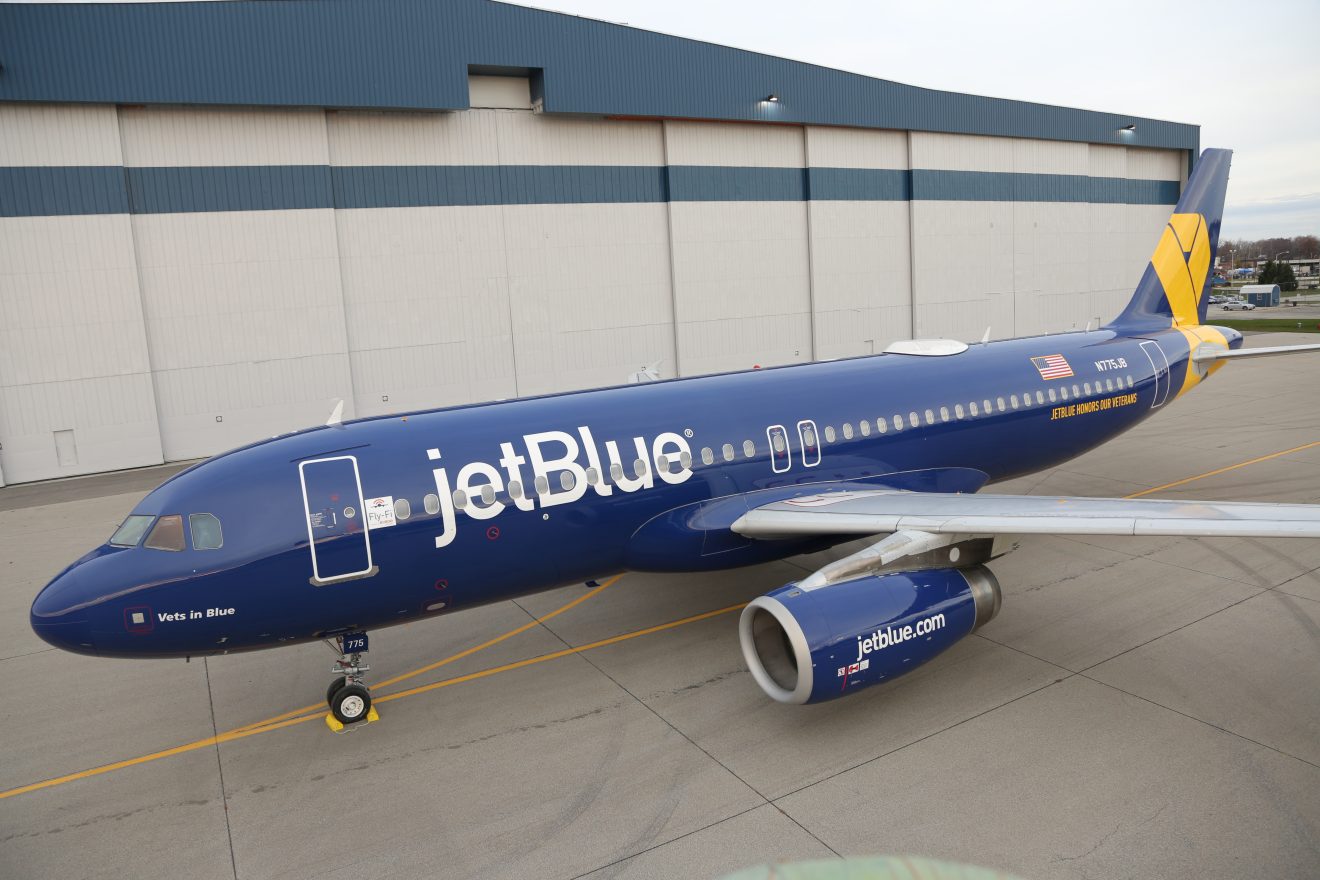
JetBlue's updated "Vets in Blue" livery (Photo: JetBlue)
JetBlue’s special livery that honors our veterans, appropriately named “Vets in Blue” has had a major refresh to its livery. The airline has many special liveries, about 16 of them, all unique and feature colorful designs, some of which pay tribute to groups such as the New York City Firefighters and Veterans while others are a creative way to show off the airline like their Blueprint livery on the airlines Embraer E190 aircraft.
The airline, which has been presenting these full aircraft special liveries since 2010, unveiled the original ‘Vets in Blue’ livery back on Veterans Day in 2014. The new refreshed livery will remain on the same tail number it has since 2014, N775JB, an Airbus A320 that was delivered new to JetBlue in 2009 in the standard livery.
JetBlue’s new “Vets in Blue” livery (Photo: JetBlue)
The updated livery will feature a refreshed ribbon, which now goes from the tail section up to the rear section of the wings, unlike the old livery where the ribbon was only near the back of the plane. The plane will still say “JetBlue Honors Our Veterans”, but the titles will now be above the windows instead of under them like before. Perhaps the biggest change and most notable change is the shade of blue they used, on the old livery the main color of the aircraft was a dark blue section of the plane whereas with the new update it features a much brighter blue color.
JetBlue Airbus A320 “Vets in Blue” livery (Photo | Jetblue)
The old livery was unveiled the same year as when the first USO, United Service Organization Center, was opened at a New York City area airport, which also happened to be located right in JetBlue’s home at JFK Airport, Terminal 5.
Joey has always been interested in planes for as long as he can remember. He grew up in Central New York during the early 2000s when US Airways Express turboprops ruled the skies. Being from a non-aviation family made it harder for him to be around planes and would only spend about three hours a month at the airport. He was so excited when he could drive by himself, the first thing he did with his driver's license was get ice cream and go plane spotting for the entire day. He graduated from Western Michigan University in 2022 with a B.S. in Aviation Management & Operations and a Minor in Business, and currently works for a major airline in his hometown.
Air Astana Secures Three Additional Boeing 787-9s from Air Lease Corporation
Air Lease Corporation Boeing 787-9 (Image: Boeing)
Air Lease Corporation announced long-term lease placements for three new Boeing 787-9 aircraft with Air Astana, the national carrier of Kazakhstan. The aircraft are scheduled to deliver to Air Astana beginning in early 2025 through spring 2026 from ALC’s order book with Boeing.
“We are pleased to announce this lease placement for three new Boeing 787-9 aircraft with Air Astana today,” said Steven Udvar-Házy, Executive Chairman of Air Lease Corporation. “These three ALC Dreamliner aircraft will greatly enhance Air Astana’s long-range capabilities and passenger comfort as the airline expands international routes from Kazakhstan.”
“ALC is honored to announce this lease placement with longtime customer Air Astana and be a part of the airline’s fleet modernization program by adding three highly efficient new Boeing 787-9 aircraft to Air Astana’s fleet,” added Alex Khatibi, Executive Vice President of Air Lease Corporation.
“The Boeing 787-9 is an important aircraft to Air Astana’s fleet modernization as we expand our routes and focus on passenger experience,” said Peter Foster, President and Chief Executive Officer of Air Astana. “The Dreamliner offers fuel-efficiency and range flexibility that will greatly add to our current fleet operations.”
Fleet renewal plans
Air Astana is updating its current fleet and the 787 will replace the three 8-year-old Boeing 767-300s that is operating for its twin aisle, long-haul routes. Initially, the 787s were set to be delivered in 2017 but economic conditions pushed the entry into service to 2019.
The carrier has also released two Embraer E190 to the market, which were taken by Dominican carrier Sky High. The Caribbean company expects to end 2022 with four E190s former operated by the Kazakh operator. The E190s will be replaced by a significant order of 30 Boeing 737 MAX Air Astana closed in November 2019.
The airline operates scheduled domestic and international services from its main hub, Almaty International Airport, and from its secondary hubs, Nur-sultan Nazarbayev International Airport, Atyrau Airport, and Aktau Airport. The Air Astana Group operates a fleet of forty aircraft with an average age of 5.2 years split between Air Astana, its full-service airline established in 2002, and FlyArystan, its low-cost airline established in 2019.
This article was originally published by Redacción on Aviacionline in syndication with AirlineGeeks.