








Stories

Interview: Expedia VP of Airline Partnerships On the Changing Game for Airlines, Travelers

Construction of the Nancy-Bird Walton International Airport runway, Western Sydney. (Photo: Western Sydney Airport)

Air travel was dead in late-2020. Airlines had slashed their schedules to fractions of 2019 levels, potential travelers had hunkered down to protect themselves from Covid-19 and airports had little to do but sit idly by.

But where travel had disappeared, hope still shined that the end of the pandemic would be just around the corner. And to keep feeding on that hope, airlines were forced to adapt, encouraging customers to book flights knowing their plans were far from certain.

As a part of that plan, airlines brought customers levels of flexibility that were all but unheard of in years prior. That flexibility — fewer restrictions on flight changes, especially for completely different destinations or dates — helped to keep cash flowing in during a time when it was desperately needed.

But as customers have came back in force in both last year and this year, the environment has changed dramatically. Airlines have struggled to manage the whipsaw in demand even as passengers are clamoring for seats at prices that are sometimes multiples higher than in 2020 or even 2019.

A New Environment

Though the situation today and two years ago could not be more different, many of the passenger trends that emerged in 2020 have stuck around. Expedia Vice President of Global Air Partnerships Julie Kyse is seeing that ring true in flyers’ search for flexibility in their bookings.

“Having more flexibility has become even more important for travelers since the pandemic,” Kyse said. “People know that you may have to cancel your trip at the last minute. Covid is still out there. People are making smart decisions, but they want to be able to have flexibility as far as that’s concerned. So we are seeing more and more of them choosing fares that have that flexibility attached to it. At this point in time most of the airlines have gotten away from their cancel for any reason-type policies back to more normalcy, so it’s part of the fare product.”

Along those lines, customers are searching for more control in their reservations, something the company is looking to accommodate.

“We’re trying to institute what we’re calling Smart Shopping, which I’m hoping will be launched by the end of the year in some shape or form whereby a customer can come in and indicate what their preferences are,” Kyse said. “‘I’m a traveler, and it’s important for me to have a carry-on bag.’ Well, I’m not going to show you flights that are the cheapest that don’t have a carry-on bag included. I’m going to show you the flights that have them.”

First on the list: seats.

“We’re doing more and more seat assignment sales,” Kyse said. “We recently moved the seat assignment process up in the funnel. It used to be buried at checkout, but a lot of customers want to know where they’re oging to sit before they get to the checkout stage of their purchase. When we did that, we saw a 94% uplift on customers choosing their seats.”

With regard to ticket prices, Kyse and Expedia have seen similar trends to direct airline purchases, which Kyse attributes to continued pent-up demand rolling through 2022. This has come despite the fact that online travel agencies like Expedia are often connecting airlines with a different type of customer than will search for flights on airline-specific websites.

Customers also continue to book flights further out than before. That, along with universal increases for domestic and international searches on Expedia’s platform, is contributing to Kyse’s optimism for the state of the industry moving into 2023, as customers continue to both anticipate and contribute themselves to strong demand in the months ahead.

“One of the trends that we’re seeing is that more and more are looking to book further out. In the last three years, we were seeing really close-in bookings, within 30 days,” she said. “Our searches for three to six months out and six to nine months out, those searches have doubled. And I think that’s tied to people wanting to make sure they secure great prices.”

Parker Davis

Parker joined AirlineGeeks as a writer and photographer in 2016, combining his longtime love for aviation with a newfound passion for journalism. Since then, he’s worked as a Senior Writer before becoming Editor-in-Chief of the site in 2020. Originally from Dallas and an American frequent flyer, he left behind the city’s rich aviation history to attend college in North Carolina, where he’s studying economics.

U.K.’s Doncaster Sheffield Airport Ceases Operations

Doncaster Airport (Photo: https://www.peel.co.uk/wp-content/uploads/2020/02/newdsa.jpg)

While the travel demand is on the rise in the U.K., Doncaster Sheffield Airport has announced it will begin winding down its operations due to lack of tangible proposals. The struggling airport will continue to work closely with the passengers to minimize the disruption. Doncaster Sheffield mainly provides flight operations to Europe from the U.K.

Earlier, Doncaster said that the airport was challenged by the impact of the pandemic and increasingly environment considerations. The circumstance of the airport was exacerbated in the wake of the withdrawal of Wizz Air from the airport in June. TUI became the sole airline at Doncaster as a result.

It is believed 3,000 jobs will be affected, well beyond the 800 people directly employed by the airport. According to local media, Manchester Airport Groups, which owns Manchester Airport, London Stansted and East Midlands Airport, would offer job interview to all affected staffs.

The airport revealed that it is reeling from the high operating cost but lack of current or prospective revenue streams. Oliver Coppard, South Yorkshire’s Mayor was “devastated” on the decision which may affect the local economy.

Liz Truss, the new Prime Minister of the U.K., pledged to save Doncaster. Earlier, South Yorkshire Mayoral Combined Authority (SYMCA), which helps to oversee the area, had tried to do everything to save Doncaster and said a potential takeover the airport by a credible consortium could take place. SYMCA went even further by offering public money to the airport to fund its operating losses until Oct. 31, 2023. However, Peel, the parent company of the airport, turned down the proposal from the council.

“We will not accept any public sector grant to cover the costs of an airport that is not viable due to its lack of adequate forward revenues and high operating costs.” Steven Underwood, Chief Executive of Peel Group said.

According to Civil Aviation Authority, Doncaster handled 1.4 million passengers in 2019. In 2021, it handled nearly 310,000 passengers, the airport shared 5% of the market.

Peel Group acquired the airport site in 1999. Doncaster spread out its wings and became an international airport in 2005. But the airport fell short of making profit in spite of the increase of passenger numbers.

Last Carrier Standing

TUI, the only carrier at Doncaster, will operate its flight until Nov. 4.

“We’re incredibly disappointed about the decision to close Doncaster Sheffield Airport to passengers.” Andrew Flinthman, the spokesman of TUI in response to the closure of the airport.

“There are a number of other airports in the region that we operate from, including East Midland, Leeds Bradford and Manchester, so we will continue to offer great holiday options to a variety of destinations to those living in the area.” Flintham added. TUI has served Doncaster since 2005.

Qantas Appoints New Jetstar CEO

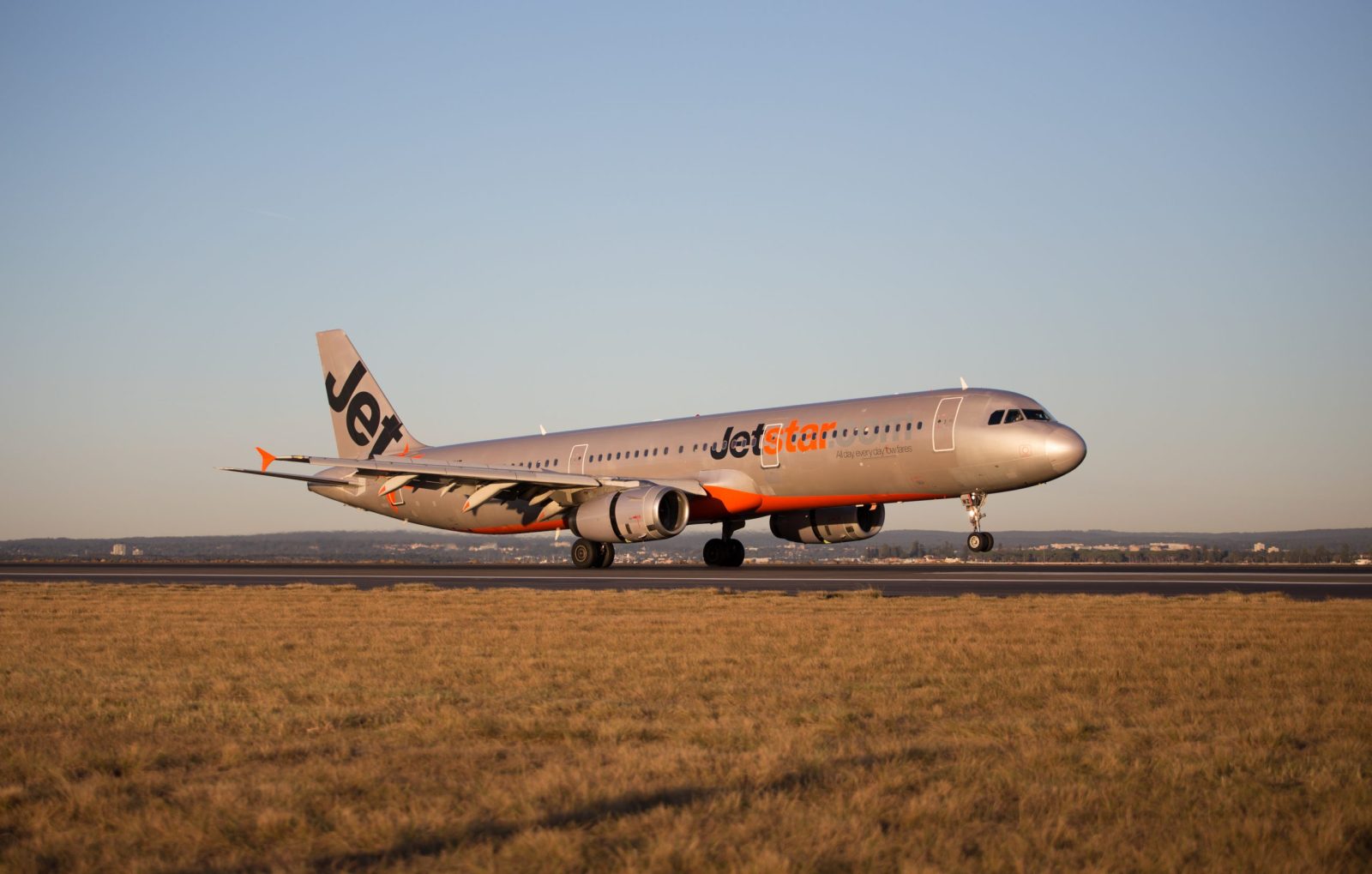
A JetStar A321 in Sydney (Photo | AirlineGeeks | Hisham Qadri)

The Qantas Group appointed a new Chief Executive Officer for its budget subsidiary Jetstar, having made the announcement on Sept. 26. Selected to replace Jetstar’s current CEO, Garreth Evans, will be Stephanie Tully — the airline’s current Group Executive and Chief Customer Officer. The transition is expected to take place over the next month, with the formal handover aimed for November. The news follows an earlier announcement that Evans would be leaving the role by year’s end.

Executive Manager of Network, Revenue Management and Alliances, Markus Svensen, will fill the void left by Tully. Svensen — who is currently responsible for overseeing much of Qantas’ international and domestic commercial strategy — will also become a member of the Group Executive Committee, which reports to Qantas Group CEO Alan Joyce.

In a statement, Joyce said that “these appointments come at an important time for us (Qantas Group). The team is working incredibly hard to overcome challenges facing the whole industry as it gets back on its feet, and the data shows we’re almost there,” adding that “managing this kind of executive renewal internally means we keep our momentum and can leverage a huge amount of corporate knowledge, including through the transition.”

Airline Faces Backlash

The announced changes to Qantas Group’s executive arrangement are the latest moves from the airline giant, still facing domestic backlash over its perceived customer service shortcomings. Last week, Qantas found itself the recipient of more anger as it was announced that it would be limiting vegetarian in-flight meal options, stating that “if the option on a particular flight is not suitable for vegetarians, we try to offer an alternative of a small sweet or savory snack which is vegetarian.”

In line with its recent pattern, the airline assigned blame to issues surrounding COVID, adding, “We had to make a lot of alterations to our service during COVID and we’re still in the process of bringing things back and updating others.”

Amid the pressure from customer and media scrutiny, including allegations that Qantas’ internal culture is “a ruthless regime of cost-cutting and out-sourcing”, the airline has been proactive in promoting the improvement of its on-time flight and cancellation percentages. Despite a drop in cancellations from 7.5% in June to 4.7% in August, it is still far behind its growing competitor Regional Express, having itself canceled only 0.8 percent in August.

Growing Opportunities for Australian Competition

The negative perception of Australia’s largest airline means, as a byproduct, a possible benefit for Australian airline competition. With Rex’s recent growth, continuing to expand its Boeing 737 fleet, and new Australian addition Bonza expanding its footprint, dissatisfied Qantas passengers will have additional options in both routes and price competition.

In June’s Australian Competition and Consumer Commission report on airline competition, despite the sheer weight of Qantas, “Canada’s experience suggests that Australia’s domestic market may be large enough to support more competition than the traditional duopoly of the Qantas Group and Virgin, such as that offered by Rex and Bonza.”

Mike Mangano

Mike’s love affair with flight and mechanical objects in the sky began at an early age, fascinated by space documentaries and the vintage Flight Simulator ’95. He currently works as an instructor for UAVs and is training to receive his Private Pilot Licence with the goal of working in manned flight instruction. An avid reader of all things aviation and manned space flight, Mike stays close to developments in aerospace while reminiscing and sharing the rich history of flight with others. He loves writing, engineering and science.

Canada Ends Restrictions for Unvaccinated Travelers, Mask Mandate

Billy Bishop Toronto City Airport (Credit Nieuport.com)

It has been almost two and a half years since the Covid-19 pandemic devastated the air transport industry, forcing airlines to slash their schedules and inducing governments to introduce strict restrictions on passengers’ mobility. While some countries started to progressively relax restrictions months ago, some governments have decided to take a more prudent approach keeping in place some of the new norms that had been introduced during the peak of the infection waves.

Last Monday, the Canadian government announced in a press release that all restrictions to international mobility that are still in place will not be extended beyond their current expiration date of Sept. 30, effectively restoring the situation that was in place until March 2020, before the beginning of the Covid-19 pandemic.

As of Oct. 1, all travelers, regardless of citizenship, will no longer have to:

  • Submit public health information through the ArriveCAN app or website;
  • Provide proof of vaccination;
  • Undergo pre- or on-arrival testing;
  • Carry out Covid-19-related quarantine or isolation;
  • Monitor and report if they develop signs or symptoms of Covid-19 upon arriving in Canada.

Canada had so far allowed only vaccinated foreigners to enter the country and was imposing a 14-day quarantine on its unvaccinated citizens returning from an international trip. Furthermore, it was sample-testing international passengers entering Canada at one of its main points of entry, imposing 5-day isolation to those who tested positive. This was making some visitors, especially Americans, very reluctant to travel North of the border because of the possible risk of being stuck in a hotel room for five days with all the consequent disruptions to their plans.

The Government has also decided to scrap the very controversial ArriveCAN app, a cell phone application that international travelers wishing to enter Canada had to use to provide advance information to the Canada Border Services Agency before their arrival in the country. Unclear instructions, technical problems and a general difficulty to use this type of tool on behalf of older travelers caused numerous delays and long lines at airports and road crossings when traffic flows started to rebound, causing the general public to resent the solution and ask for its demise.

Transport Canada is also removing existing travel requirements. As of Oct. 1, travelers will no longer be required to:

  • Undergo health checks for travel on air and rail; or
  • Wear masks on planes and trains.

Air Canada Requests More Changes

Canadian carriers obviously welcomed the decision and expressed their satisfaction with the removal of the mandates.

“Air Canada welcomes the removal of these restrictions, acknowledging that air travel is safe and that the measures were not justified by science. We believe it will greatly facilitate travel, help stabilize the country’s air transport sector and support Canada’s economy. Customers and crew will still have the option to wear masks and we also encourage customers to monitor their own health to be sure they feel well and fit to travel,” said Craig Landry, Executive Vice-President and Chief Operating Officer at Air Canada in a statement.

But the country’s biggest carrier also took the opportunity to encourage the government to do more for aviation and reform the air transportation system in Canada.

“While today’s announcement is a positive step, we urge the government not to lose momentum. Lessons learned during the pandemic should now be applied to streamlining the air transport system in Canada and to enact further reforms,” the statement read. “This includes improving processes, such as security and customs at airports, developing new trusted traveler programs, deploying new technologies and, more fundamentally, re-examining the user-pay model that finances air transportation in Canada, whose weaknesses and interdependencies were exposed by Covid.”

Unlike their counterpart in the U.S., airlines in Canada did not benefit from any kind of government subsidies during the difficult months of the pandemic when they had to ground most of their fleets and layoff most of their staff – they could rely on support funding that was made available to all businesses, but no air transport-specific program was launched. In addition to that, Canada is one of the few countries where the air transportation system is not seen as a strategic infrastructure for the country, and the cost of it is almost entirely paid by passengers.

Vanni Gibertini

Vanni fell in love with commercial aviation during his undergraduate studies in Statistics at the University of Bologna, when he prepared his thesis on the effects of deregulation on the U.S. and European aviation markets. Then he pursued his passion further by obtaining a Master’s Degree in Air Transport Management at Cranfield University in the U.K. followed by holding several management positions at various start-up carriers in Europe (Jet2, SkyEurope, Silverjet). After moving to Canada, he was Business Development Manager for IATA for nine years before turning to his other passion: sports writing.

Qatar Airways Wins the “Airline of the Year” Award by Skytrax

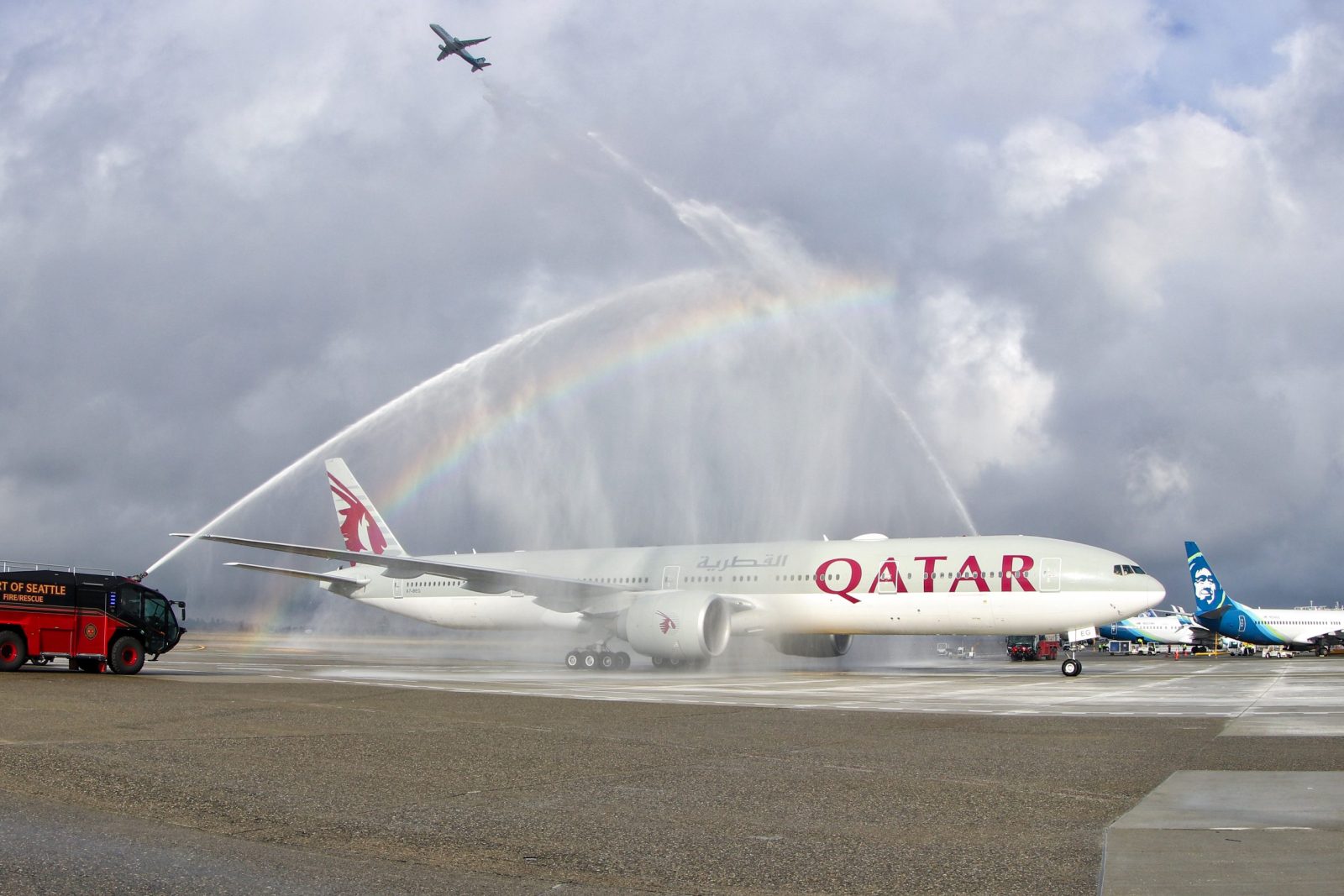
A Qatar Airways Boeing 777 (A7-BEG) receives a water cannon salute as it arrives in Seattle. (Photo: AirlineGeeks | Katie Zera)

Skytrax, a British civil aviation research company founded in 1989, is responsible for compiling special rankings devoted to airlines and airports to help travelers choose the airline best suited to their needs. Each year since 1999, it has introduced the Skytrax World Airline Awards, conducting international surveys to identify the best airports, the most efficient airlines, the best-qualified cabin and ground staff, the best-quality in-flight entertainment and catering, and other determinants of air travel.

Skytrax is among the industry’s best-known organizations for giving annual awards to airlines. This year’s Best Airline of the Year 2022 award was won by Qatar Airways. The airline has already won this award six other times, in 2011, 2012, 2015, 2017, 2019 and 2021, when the airline was also the first globally to receive the Skytrax COVID-19 safety rating.

Qatar Airways, founded on Nov. 22, 1993, will soon celebrate its 25th anniversary this year. The airline is one of the largest and most diverse in the world, with more than 200 aircraft, including Airbus A320, A321, A330, A350, A380 and Boeing 777, Boeing 787. Qatar Airways Group Chief Executive Officer since 1996, His Excellency Akbar Al Baker, said being named World’s Best Airline has always been a goal since Qatar Airways was created, and winning it for the seventh time, while also garnering three other awards is a testament to the hard work of the entire staff. In fact, Qatar Airways won three more awards, in addition to Airline of the year, namely World’s Best Business Class, World’s Best Business Class Lounge Dining, and Best Airline in the Middle East, as it did in 2019.

With less than two months to go until the start of the 2022 FIFA World Cup in Qatar, the first in the Middle East, the emirate’s airline, Qatar Airways, has boosted its all-inclusive travel packages for fans who want to secure a seat at the world’s biggest soccer event. The tournament will take place in eight stadiums designed to evoke symbols of Arab culture. Al Bayt Stadium will host the opening match with a capacity of 60,000, while Lusail Stadium will host the tournament’s final, with a capacity of 80,000.

As a reminder, Qatar Airways, as FIFA’s Official Airline Partner since 2017, has already sponsored major events, including the 2019 and 2020 editions of the FIFA Club World Cup™ and the FIFA Arab Cup™, hosted in Qatar. In August, Qatar Airways 100 days before the start of the World Cup launched the Journey Tour in London, U.K. with an interactive bus that continues to tour 13 European cities, offering fans a variety of interactive experiences, including learning about the history of Qatar and the FIFA World Cup™ and meeting Sama, the first MetaHuman cabin crew.

Vincenzo Claudio Piscopo

Vincenzo graduated in 2019 in Mechanical Engineering with an aeronautical curriculum, focusing his thesis on Human Factors in aircraft maintenance. In 2022 he pursued his master's degree in Aerospace Engineering at the University of Palermo, Italy. He combines his journalistic activities with his work as a Reliability Engineer at Zetalab.

JSX Expands in Colorado

JSX Embraer aircraft
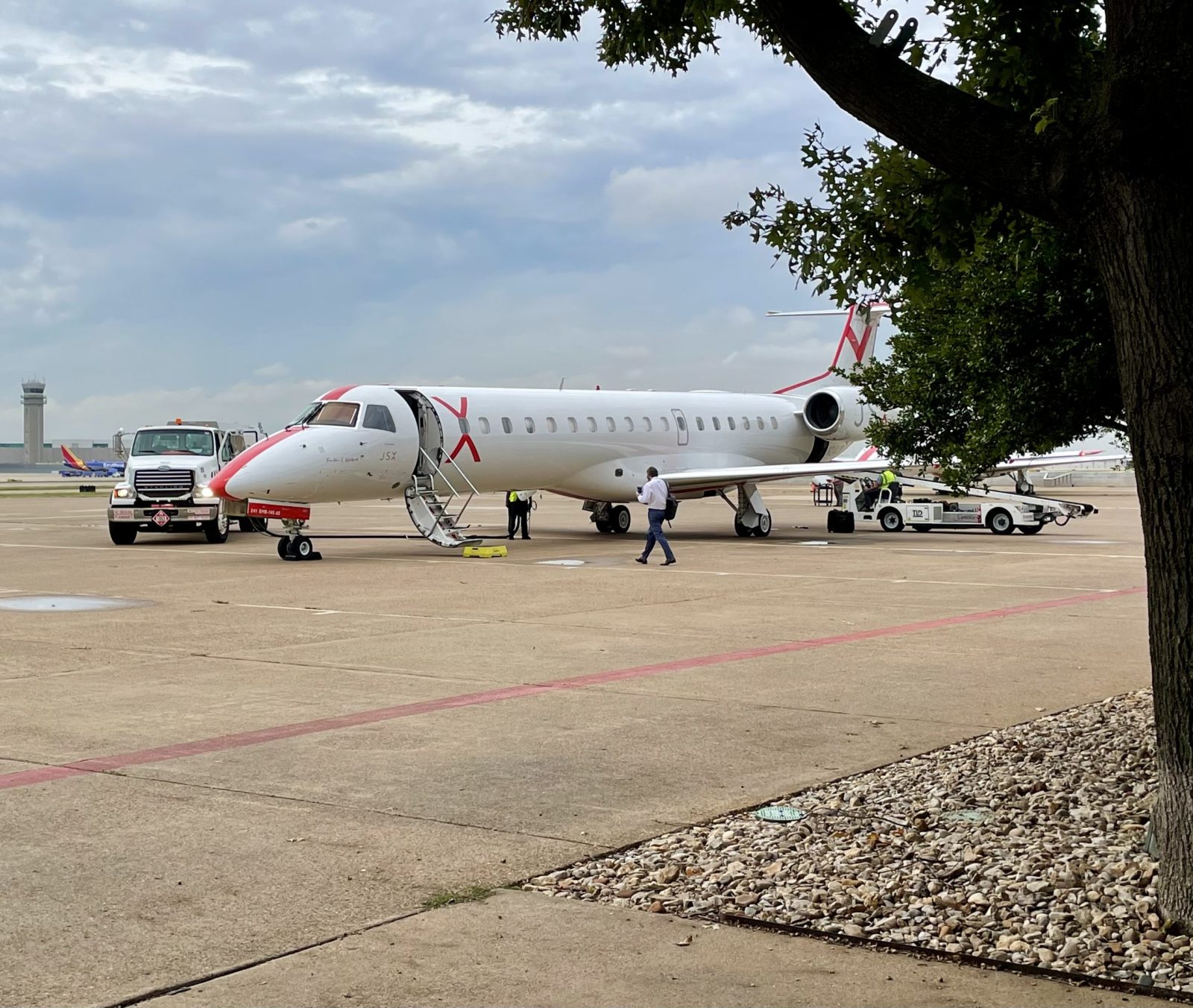
A JSX E145 prepares for its next flight at Dallas Love Field. (Photo: AirlineGeeks | Mateen Kontoravdis)

Last week Dallas-based carrier JSX announced it would begin new one-stop flights from Austin to Gunnison/Crested Butte by way of Dallas Love Field, now the carrier is announcing the addition of new flights from another city in Colorado, Denver.

The airline will be expanding its current service at Denver Boulder Airport, the second airport in the city to have commercial airline service after the much larger Denver Intl. JSX is currently the only airline to offer flights out of Denver/Boulder Airport, also known as Rocky Mountain Metro Airport or RMMA , the last airline to serve RMMA before JSX was Denver Air Connection before they moved all of their flights to Denver Intl. in 2017.

At the present point in time, JSX operates four daily flights into and out of RMMA, with two of them heading to each Burbank and Dallas Love Field on most days of the week. The new destinations they have announced from the secondary Denver airport include Las Vegas and Phoenix Sky Harbor. Flights to both new cities start on November 3rd, 2022, and with each occurring five times a week, operating on Thursdays through Mondays.

All flights are scheduled to operate using the airlines Embraer E135s or E145s, both of which feature 30-seats.

Executive 1×1 seating on the carriers Embraer jets (Photo: JSX)

This is a major accomplishment for the airline as they only started operating in Denver as a whole in August of 2022, showing that the bookings have done very well for the city into the future doubling the number of destinations and flights a week from the city. 

All flights and Schedules are subject to change.

Joey Gerardi

Joey has always been interested in planes for as long as he can remember. He grew up in Central New York during the early 2000s when US Airways Express turboprops ruled the skies. Being from a non-aviation family made it harder for him to be around planes and would only spend about three hours a month at the airport. He was so excited when he could drive by himself, the first thing he did with his driver's license was get ice cream and go plane spotting for the entire day. He graduated from Western Michigan University in 2022 with a B.S. in Aviation Management & Operations and a Minor in Business, and currently works for a major airline in his hometown.

U.S. Carriers Seek to Capitalize on Additional Cuba Flights

American Airlines in Charlotte
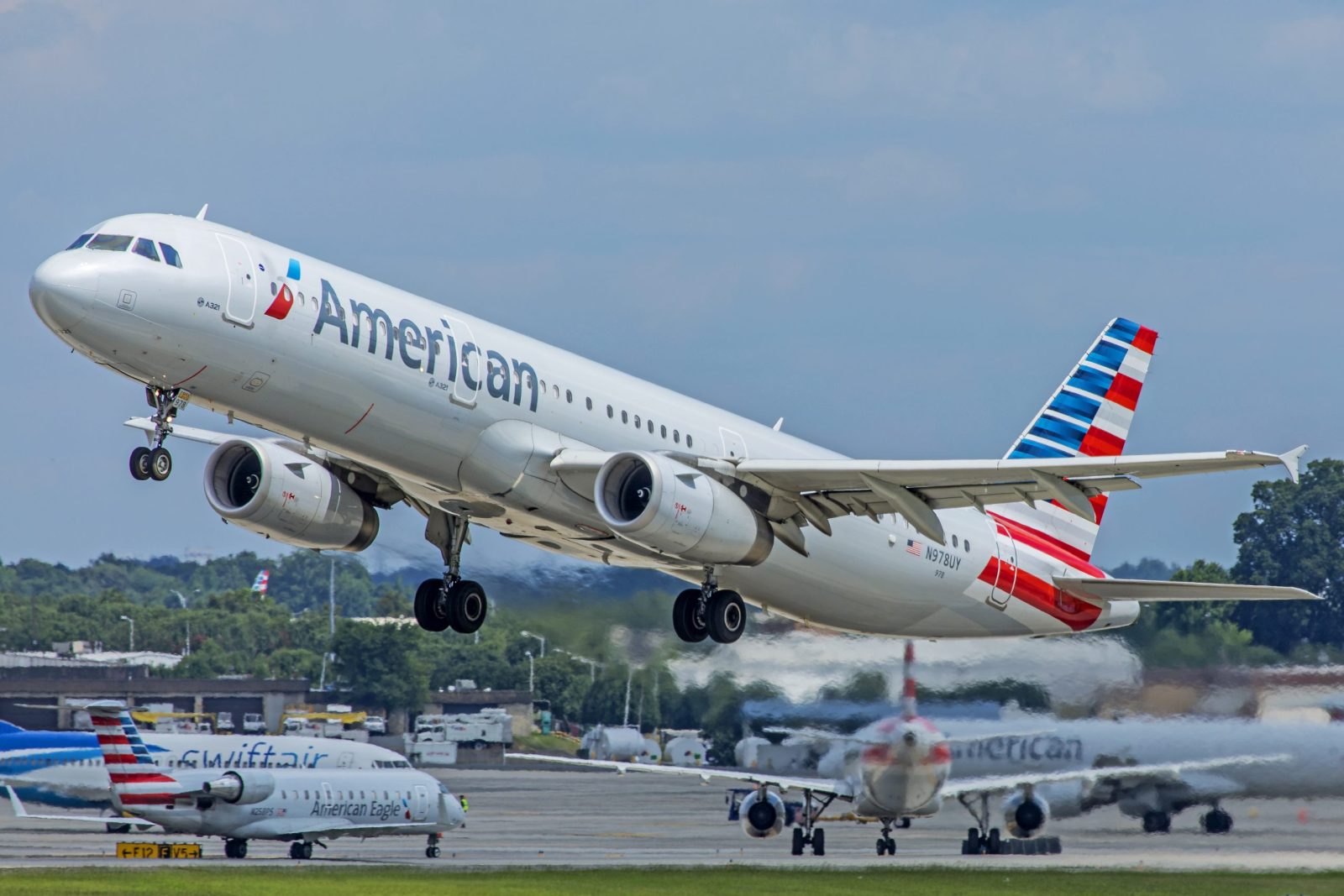
An American A321 in Charlotte. (Photo: AirlineGeeks | William Derrickson)

United Airlines has requested an additional 30-day waiver from the U.S. Department of Transportation (DOT) ahead of an Oct. 31 deadline to resume flights to Cuba. Reuters reports that the airline has been faced with challenges to relaunch the service that was suspended at the beginning of the Coronavirus pandemic.

According to the news organization United has to “undertake significant work including re-negotiating multiple contracts with service providers that have lapsed, building out necessary infrastructure in Terminal 3 at Havana, Cuba’s airport where United is being relocated.” Prior to March 2020, the airline was operating a total of seven flights each week to the island from Newark, N.J. and Houston, T.X.

News of United’s extension request for Cuba flights comes during a week when the current U.S. administration agreed to increase flights between the two countries. Under the former administration of President Trump flights to Cuba were restricted after flight bans had been lifted under President Obama. At the time of the imposition of restrictions Trump administration Secretary of State Antony Blinken cited “support of the Cuban people” and “the foreign policy interests of the United States” as the rationale.

The announcement of increased services to Cuba comes in the same week as President Joe Biden’s administration confirmed Wednesday that the United States Embassy in Cuba will begin processing full immigrant visas early next year. Florida Politics quotes Ambassador Brian Nichols, the Assistant Secretary for Western Hemisphere Affairs, saying, “Supporting the Cuban people and Cuban-American families remains a top U.S. priority.”

Visa processing for Cuban citizens was paused in September 2017 and this week’s announcement will be positive news for U.S. airlines wishing to capitalize on the significant visiting friends and relatives market (VFR).

American Airlines has been granted an additional 13 weekly departures from Miami, and JetBlue will have a weekly departure from Fort Lauderdale, Fla. The flights are in addition to six daily American Airlines flights and three JetBlue flights on weekdays to Havana, Cuba from Miami and Fort Lauderdale typically operated. USDOT has determined that both airlines must commence the additional flights by the middle of December.

Reuters also reported that the lifting of a ban on flights to smaller Cuban airports had been of interest to American Airlines. According to the article, American had sought approval in July to operate flights from Miami to Santa Clara, Holguin, Matanzas/Varadero and Santiago de Cuba, in Cuba.

At the time of lodging, the request with the U.S. DOT American stated that the flights “will enhance service and access between the U.S. and these non-Havana points, after more than two years during which such service was suspended.”

John Flett

John has always had a passion for aviation and through a career with Air New Zealand has gained a strong understanding of aviation operations and the strategic nature of the industry. During his career with the airline, John held multiple leadership roles and was involved in projects such as the introduction of both the 777-200 and -300 type aircraft and the development of the IFE for the 777-300. He was also part of a small team who created and published the internal communications magazines for Air New Zealand’s pilots, cabin crew and ground staff balancing a mix of corporate and social content. John is educated to postgraduate level achieving a masters degree with Distinction in Airline and Airport Management. John has held the positions of course director of an undergraduate commercial pilot training programme at a leading London university. In addition he is contracted as an external instructor for IATA (International Air Transport Association) and has been a member of the Heathrow Community Fund’s ‘Communities for Tomorrow’ panel.

Opinion: The Airline Behind Its Own Demise

A Qantas Boeing 787 departing LAX. (AirlineGeeks | James Dinsdale)

It is high time we address the elephant in the room: Qantas is its own worst enemy. From Australian icons to domestic disasters, the demise of Qantas has seen the airline assign blame to everything (and everyone) except itself. It’s little wonder, then, that the Flying Kangaroo is incapable of resolving its many issues — it cannot see that the wound in its foot is self-inflicted.

To be clear, this is not to say that all of Qantas is at fault here. The unsung heroes of the post-pandemic world are truly the nameless thousands of airline staff, many of whom are the flight crews and ground staff of Qantas. For many years, Australia’s flag carrier had a reputation of being the finest in the world, and just to get a job with Qantas was an achievement in itself. To fly for Qantas was to have joined the elite of aviators, the top percentage of the top percent. Heck, John Travolta would be your wingman!

Reflecting on its safety record, who could argue with the classic Rain Man scene? When Charlie says “Ray, all airlines have crashed at one time or another, but that doesn’t mean that they are not safe”, Raymond responds with “QANTAS. QANTAS never crashed.” To their credit, Qantas has never crashed  — not yet.

To be fair, these are two very big ticks in two very big boxes for an airline. But it is the third box, alone and empty, which explains why Qantas will continue to slide down the dismal hill of disaster – the customer service box.

There is great irony in Qantas’ slogan, ‘the Spirit of Australia’. It’s the spirit that keeps Qantas aloft (or so it would believe with wishful thinking), and it’s all but absent from what was once Australia’s favorite airline. For an airline to claim itself as the personification of a national spirit — the spirit of its customer base — Qantas sure knows how to add injury to its insulted customers. Oh yes, literally insulted customers.

“Qantas sure knows how to add injury to its insulted customers.”

Proof that the first cut is the deepest, the rift began when airline CEO Alan Joyce suggested that its paying passengers were not “match fit” for travel. He might as well just call them stupid. For a time, it seemed that maybe all the delays and lost baggage were simply symptomatic of newly opened borders, but then that time ended.

Stage two began when the Australian Federal Court ruled that Australia’s largest airline illegally outsourced 2000 ground staff. Suddenly, it appeared the delays and lost baggage were caused, not by stupid passengers, but by the airline itself. Reinforcing the fact that its issues are the result of its own actions, the airline sent out managers and executives to aid in the logistical nightmare it had created. In keeping with its slogan, this suggested that “the spirit” of Qantas’ customer base had a thing for not arriving in Los Angeles despite the fact that the baggage had arrived.

For Australians who’ve long loved their airline, frustration has evolved into anger, and it seems those flames just blaze with whatever Qantas does next.

In an effort to save face, Joyce addressed the media to apologize. Stating that the airline hasn’t been “good enough,” he extended an apology, but quickly pointed the finger elsewhere, stating “while factors out of our control like weather can have an impact on our schedule, we expect things to keep improving each week.”

If things like “the weather” have been truly to blame, we are witnessing the supernatural: with a cancellation rate of 4.7% compared to competitor Regional Express’ 0.8% for August 2022, it would suggest that it storms only when Qantas flights are due to fly. The last time this writer checked, TRegional Express and Qantas both use the same airports.

The Airline’s Reputation

With the airline evading responsibility with only a token apology, it seems it was only willing to promise a “plan” to return Qantas to its former glory, and an all but meaningless Frequent Flyers offer of $50 towards a return flight from Australia or New Zealand. The airline would be lucky if the offer was taken up. Painfully for many, Joyce’s apology statement fails to mention anything about the return of over $1 billion Australian Dollars it withheld from passengers with canceled flights.

As Qantas continues its evasive behavior, shying away from any genuine accountability, it has continued to prove it really has no care for its customer base. Little wonder, then, that its competitors – such as Rex – are thriving in the wake of Qantas’ disaster. Commenting on Qantas’ lack of customer service, Rex Deputy Chairman John Sharp AM stated: “Contrary to what other carriers want you to believe, shocking reliability and equally appalling customer service is not an inevitable outcome even in today’s very challenging environment,” adding that “we (Rex) are able to keep our OTP and cancellation rate close to pre-COVID levels.”

It is a statement that, despite coming from a competitor, is not without merit. The real spirit of any airline is its internal culture, and it’s no surprise that Qantas’ is unraveling into a mess. A recent report by Australia’s ABC found that staff within the airline “described a ruthless regime of cost-cutting and out-sourcing.” This is no lie.

The issues within Qantas’ culture began to show with news of flight crew having to sleep on rows of seats. Love them or not, Australia’s aviation fatigue laws require flight crew to have adequate rest and stop over time between flights. With these laws come, you guessed it, the added expense of accommodation, and so it was no real surprise to see Qantas was hiring staff from New Zealand in what seemed an effort to bypass these requirements. Evidently, so this culture would suggest, profits come before safety.

It’s worth noting that the culture of an airline is directly connected to its performance. Comparing Qantas cancellations to that of Hawaiian Airlines — an airline whose home base had similarly strict COVID lockdowns as Australia — the difference is massive. In June 2022,  Qantas saw a 7.5% cancellation rate, while Hawaiian had canceled just 0.11% of its flights.

This writer’s recent review of Hawaiian found its positive company culture to be both a positive customer experience and positive safety culture. It’s a sobering analysis.

The numbers don’t lie; the issues Qantas faces are entirely the result of it having shot itself in the foot. For all its talk of ‘Operation Sunrise’, new fleet purchases and promises to improve, the evidence — presented by itself — seriously questions if it values its slogan. Qantas’ pomp of being the one airline to connect the abroad Australian with his home, using its rich Aussie heritage as its backbone, it finds itself wanting. Perhaps Qantas ought to buy a new mirror before a new fleet — it might even be tax deductible!

Mike Mangano

Mike’s love affair with flight and mechanical objects in the sky began at an early age, fascinated by space documentaries and the vintage Flight Simulator ’95. He currently works as an instructor for UAVs and is training to receive his Private Pilot Licence with the goal of working in manned flight instruction. An avid reader of all things aviation and manned space flight, Mike stays close to developments in aerospace while reminiscing and sharing the rich history of flight with others. He loves writing, engineering and science.

Air Austral Strives to Restore Its Prospects As It Submits a Restructuring Plan to the European Commission

(Photo: Anna Zvereva via Wikimedia Commons – https://commons.wikimedia.org/wiki/File:Air_Austral,_F-OLRC,_Boeing_787-8_Dreamliner_(49589490037).jpg)

The rescue Air Austral — a French airline based in the country’s Indian Ocean territory of Réunion — will not go through a merger with Corsair, also in great financial difficulty after the health crisis, and strongly defended by the French government but fiercely rejected by the elected representatives of the Reunion regional council.

The airline’s restructuring now lies in the hands of Brussels as it submitted a restructuring plan, including a fresh cash injection of 55 million euros ($54 million), to the European Commission for approval.

“Our restructuring plan has just been notified to the European Commission by the Interministerial Committee for Industrial Restructuring (CIRI),” Joseph Brema, CEO of the struggling Reunionese airline, announced on Friday in a letter to his collaborators. Agence France-Presse obtained a copy of the letter.

Air Austral lost three quarters of its customers in 2020-2021. At the end of 2021, its debt reached 161 million euros, in addition to 55 million lent by its shareholders, a total greater than its annual turnover at the time.

The State, for its part, guaranteed several loans and granted rescue aid. Public aid has received the green light from the European Commission, provided that the Reunion airline restructures.
Air Austral, which employed 848 people at the end of 2021, is currently 99% owned by a semi-public company, Sematra, bringing together, in particular the Réunion region (73.5%), Caisse des dépôts (13.6%), and the department (11.4%).

A Clear Set of Goals

According to Joseph Brema, who took office in June, the plan sent to Brussels on Sept. 16 is comprised of three parts: A commitment by Reunionese investors to contribute 55 million euros to the capital; a debt restructuring project, which is discussed with creditors and still needs to be approved by a commercial court and a commercial strategy.

“I remain, like our current reference shareholder Sematra, optimistic about the follow-up that will be given,” said Joseph Brema, saying he hoped “a rendering of the decision [in] the current [of] the first half of October.”

This intervention by Reunionese investors now rules out the possibility of a merger between Air Austral and its competitor Corsair, qualified at the end of 2021 as a possible ‘option’ by the Minister of Public Accounts at the time, Olivier Dussopt.

Air Austral serves several destinations in the Indian Ocean and mainland France from Reunion and operates ten aircraft: three Boeing 777s, two Boeing 787s for long-haul flights, three Airbus A220s for medium- and long-haul routes, and two Boeing 737s for medium-haul destinations.

Brussels must now examine the file and validate it, amend it or reject it by mid-October, ensuring that it complies with the public aid system. The restructuring file of the company and its debt retains the takeover of the company by a dozen private shareholders from Réunion.

Victor Shalton

Victor Shalton's love for aviation can be traced to when he was 11-years-old. As a seasoned aviation writer, he takes pride in providing the best aviation coverage around the globe and is passionate about advancing his skills in the aviation space. In addition, he loves travelling, writing, arts and while his speaking engagements have taken him around the world, he is proud to call Nairobi home.

Where Does the 737 MAX Stand in China: Carriers Wait for the CAAC’s Move on COMAC

Parked Boeing 737 MAX jets at Boeing Field, most of which destined to Chinese carriers. (Photo: AirlineGeeks | Fangzhong Guo)

Despite all the hype built up around the two COMAC C919s that flew from Shanghai to Beijing last week, the Civil Aviation Authority of China (CAAC) — the country’s civil aviation regulator — did not award the plane its type certificate (TC) on Sept. 19. Regulators typically don’t set target dates for milestones. However, many have speculated the date since it coincides with the plane’s designation.

The next significant date on the calendar would be Oct. 1, the National Day of China. The country has been keen to show off its achievements at its annual celebration. Therefore, it would not be surprising if the original target was to have the new aircraft awarded it TC just before the National Day.

Now that the certification of the first C919 seems imminent, will the Boeing 737 MAX finally return to Chinese skies?

Mixed Feelings at Boeing

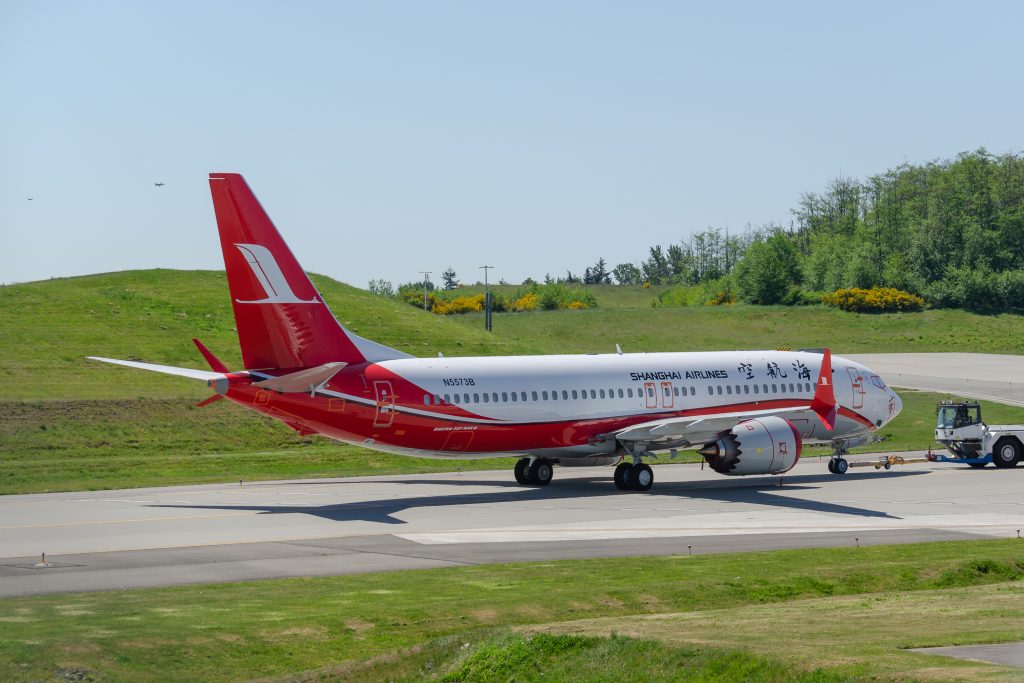
One of the Shanghai Airlines 737 MAX in storage at Paine Field Airport. (Photo: AirlineGeeks | Fangzhong Guo)

Boeing might be the biggest beneficiary of the C919 certification. Due to the complicated political environment, many have speculated that CAAC wouldn’t recertify the 737 MAX until it certifies the C919. Once the country’s ruling party can claim the win for its domestic-built airplane’s certification, it could open the doors for Boeing and let its airline customers in China start growing their MAX fleets again.

The Boeing Zhoushan factory expects the situation to change. Boeing ferried its first post-grounding 737 MAX to China in March. However, the airplane did not arrive at the factory until late July due to technical issues and Covid-19-related restrictions. In August, Boeing China’s President also stated that the Zhoushan 737 Completion and Delivery Center is “ready for the resumption of the 737 MAX delivery in China.”

A Turn for the Worse

However, much geopolitical tension still remains, a fact that could hinder the 737 MAX from returning to Chinese skies. The pressure hit a climax after U.S. Speaker of the House Nacy Pelosi visited Taiwan in August. In the month following, Boeing announced it would start removing engines from its Chinese Operators’ inventories to support new productions. Concerns are also growing about the effect of strict Covid-19 restrictions on domestic traffic growth.

On Sept. 15, Boeing CEO David Calhoun suggested the company would begin remarketing airplanes earmarked for the Chinese Operators. Due to the grounding, China-bound 737 MAXs account for over half of the 290 aircraft on hand. The Chicago-based company expressed unwillingness to sit on the inventories indefinitely.

According to surprising new information from the CAAC on September 20, the two parties met on the day before Boeing’s Sept. 15 statement. The timing cast some doubt on the substance of Calhoun’s threat, but it’s clear the manufacturer is getting impatient. It’s also possible that CAAC only released the statement to lower the tension in response.

Operators Quietly Reworking the MAX

Despite the recent revelation, airlines appear to be optimistic in the months leading up to September. Three airlines have started flexing 737 MAXs that stayed grounded even after completing rework at the start of the year. In addition, two airlines have only recently started reworking their 737 MAXs for service.

According to social media posts, on Aug. 19, Xiamen Airlines completed rework on one of their 737-8s, registration B-1288. The all-Boeing airline spent 3,500 man-hours in getting the plane ready and ferried it to its home airport, Xiamen Xiang’an International Airport, on Aug. 20. However, it flew the same aircraft back to its storage location on Aug. 31. The plane made a short hop to its Fuzhou, China hub before continuing to Yinchuan, China, where the aircraft was stored for the past three years. 

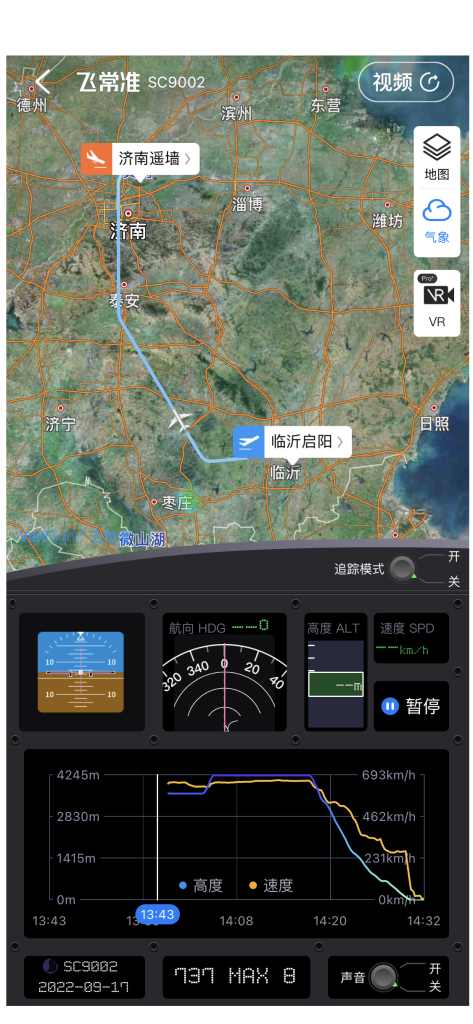
Flight track of a Shandong Airlines Boeing 737-8 ferry flight. (Photo: Variflight)

According to the Chinese flight tracking service Variflight, Shandong Airlines also moved one of its 737 MAXs last month. The aircraft carries registration number B-1120, first flew on Aug. 15 from Linyi, China, to its hub at Jinan, China. It subsequently made three roundtrips between Jinan and Linyi on Aug. 26, Sept. 5 and Sept. 17. The Jinan-based airline had to lease five used 737 NGs in 2021 due to the grounding of the 737 MAX. Therefore the official ungrounding would be well-received by the all-Boeing airline.

However, there is no definitive signal in the public domain that the plane will return to commercial service soon. While it’s a positive sign that more operators started getting the MAX ready, it won’t be a surprise if the CAAC keeps the Boeing jet grounded until C919 starts commercial service.

Fangzhong Guo

Fangzhong grew up near an OEM airport in northeastern China, where he developed his enthusiasm for aviation. Taking upon his passion, he's now working as an aircraft interior design engineer. Besides working in the aerospace industry, Fangzhong enjoys trying out different types of airplanes and seeing how airplane interiors have evolved. So far, he's flown on over 80 types of aircraft. He also planespots in his spare time. His rarest catches included the 747 Shuttle Carrier Aircraft and AN-225.
Sign-up for newsletters & special offers!

Get the latest stories & special offers delivered directly to your inbox

SUBSCRIBE

Uh-oh! It looks like you're using an ad blocker.

Our website relies on ads to provide free content and sustain our operations. By turning off your ad blocker, you help support us and ensure we can continue offering valuable content without any cost to you.

We truly appreciate your understanding and support. Thank you for considering disabling your ad blocker for this website