
Stories

SpiceJet Flights Limited in Light of Safety Issues

A SpiceJet 737 (Photo: Jane Mejdahl [CC BY-SA 2.0 (https://creativecommons.org/licenses/by-sa/2.0)])

Earlier in the week, it was announced that Indian aviation regulator, the Directorate General of Civil Aviation, ordered SpiceJet to cut its schedule in half for the next eight week. The airline will only be able to fly a maximum of 50 percent of its flights while under “enhanced surveillance” by the DGCA. The news was initially reported by Ajay Awtaney, an aviation journalist based in India, in a tweet on Wednesday.

This comes after a string of issues the airline has been facing in terms of airline safety and operations. SpiceJet aircraft were involved in nearly 10 incidents between June 19 and July 5. These incidents range from severe mechanical issues to smoke filling the cabin in-flight.

Continued Safety Concerns

The decision was made after a number of inspections and other investigations done by the DGCA. The regulatory authority didn’t express confidence in SpiceJet’s handling of the situation and response to the show cause notice sent by the DGCA. In order for the number of flights to be increased during this eight-week period, the airline will need to show that it has “sufficient technical support and financial resources to safely and efficiently undertake such enhanced capacity”.

Previous investigations have also shown the airline lacks adequate safety oversight and has substandard maintenance resulting in degradation of safety. This along with the most recent investigation findings show a systemic issue with SpiceJet that is not being resolved.

SpiceJet insists that there will be no flight cancellations because of this order since the airline is already flying at half capacity due to thin demand during the summer. This also comes at a time when a significant number of travelers are actively avoiding the airline. According to a survey conducted by LocalCircles, 44 percent of fliers surveyed said they are avoiding traveling on SpiceJet due to safety concerns. This is compared to 21 percent who are avoiding Air India and IndiGo.

This is a bit bizarre. If what SpiceJet said is true, then it’s likely the DGCA knew this. If they did, then it’s a laughable attempt at trying to take action. On the other hand if this isn’t true, then it’s just SpiceJet directly lying to passengers.

Other Problems

Adding to these issues are SpiceJet’s financial woes. A DGCA investigation last year showed the airline is habitually late in paying suppliers and vendors which has resulted in a shortage of spare parts. In addition, the lessor of three of the airline’s aircraft is pushing the Indian government to deregister the aircraft due to unpaid lease payments. These three aircraft are formerly Jet Airways Boeing 737s for which SpiceJet took over the leases when Jet Airways suspended operations.

It’s also most likely going to face some legal troubles since the planes also still feature the Jet Airways livery. When SpiceJet took the aircraft the airline simply stuck a SpiceJet decal over the Jet Airways text on the aircraft and covered up part of the Jet Airways logo on the tail.

Jet Airways is currently in the process of coming back to life later this year and has asked the DGCA to compel SpiceJet to remove the Jet Airways livery off of these planes in order to prevent any confusion when the airline restarts operations.

Overall, things aren’t looking that great for SpiceJet. It is facing problems from every direction and it is unclear if it will be able to successfully handle all of the challenges as they come. The airline is continuing to bleed money and its share price is in the gutter.


Hemal Gosai

Hemal took his first flight at four years old and has been an avgeek since then. When he isn't working as an analyst he's frequently found outside watching planes fly overhead or flying in them. His favorite plane is the 747-8i which Lufthansa thankfully flies to EWR allowing for some great spotting. He firmly believes that the best way to fly between JFK and BOS is via DFW and is always willing to go for that extra elite qualifying mile. Hemal's opinions are his own and do not reflect those of his employer.

Aeroméxico Reduces its Losses During the Second Quarter, But Remains in the Red

Aeromexico Boeing 787
An Aeromexico Boeing 787 Dreamliner flares for landing. (Photo: AirlineGeeks | William Derrickson)

Grupo Aeroméxico released its final report of its financial results for the second quarter of 2022. After announcing its exit from the Chapter 11 process in March, the company increased revenues by 91.5% compared to the same period of 2021. While losses narrowed by 1.815 billion Mexican pesos, it still recorded a negative balance.

According to the company’s report, all the conditions previously established in the Restructuring Plan (“Plan de Reestructura”), which came into effect on March 17, were met. “The company will continue to comply with its post-exit obligations and covenants, including the covenants under the indenture governing the exit financing,” it said.

The increase in revenues was favored by a greater dynamism in demand and the initiatives carried out to mitigate the impact of the rise in fuel prices, according to the airline’s report, sent to the Mexican Stock Exchange (BMV).

Grupo Aeroméxico’s main financial results for the second quarter of 2022 and comparison with the same period in 2021

  • Revenues reached 19.175 billion Mexican pesos, representing an increase of 91.5%.
  • The company’s capacity, measured in available seat kilometers (ASK), increased by 56.8%.
  • Revenue measured by available seat kilometers increased 22.2% year on year.
  • Between April and June, EBITDA was 2.913 million Mexican pesos, an increase of 1.024 million from that reported in the second quarter of 2021.
  • The final operating result showed a positive balance of 626 million Mexican pesos. The figure represents an increase of 1.840 million.
  • The cost per seat available per kilometer (CASK) was 0.045 dollars. Thus, it was 23% lower compared to what was recorded between April and June 2021. According to Aeroméxico, the reduction «shows the efficiency the company has achieved in its structural cost».
  • The cash balance at the end of the quarter stood at 17.786 billion Mexican pesos, approximately 883 million dollars. Excluding restricted cash, the figure was 17.015 million pesos, equivalent to about 845 million dollars.
  • The company reported a net loss of 947.9 million Mexican pesos, a positive differential of 1.851 million compared to the second quarter of the previous year.
  • Total fuel expenses amounted to 8.351 million Mexican pesos. The figure represents an increase of 204.2%. The average fuel price was 22.17 Mexican pesos per liter during the second quarter. Compared to the same period in 2021, it grew by 45.4%.
  • Workforce expense increased 26.1%, mainly due to the sharp growth in the number of operations. Traffic and ground handling expenses increased 61.4%. However, maintenance expenses decreased 14.9%.
  • Grupo Aeroméxico carried 5.551.000 passengers, up 41.6% compared to the same period in 2021.

Fleet of Aeroméxico

  • During the second quarter of 2022, it added six new Boeing 737 MAX aircraft.
  • As reported by the company, Grupo Aeroméxico’s operating fleet consisted of 140 aircraft as of Jone 30, 22 more than at the same date in 2021.
  • The average age of the fleet is 7.7 years.
  • Currently, Aeroméxico operates 98 aircraft (18 Boeing 787 Dreamliner, one 737-700, 36 737-800, 31 737 MAX-9 and 12 737 MAX-8). Aeroméxico Connect’s fleet consists of 42 operational Embraer 190.

This story was originally published by Agustin Miguens of Aviacionline in syndication with AirlineGeeks. 

Ryan Ewing

Ryan founded AirlineGeeks.com in February 2013 and has spent more than a decade covering the airline business. His work has been featured by CNN, WJLA, CNET, and Business Insider. His aviation experience spans airport operations, Part 135 regulatory compliance, and airline crew workforce planning, along with time behind the yoke of a Cessna 172 and interviews with airline executives. Ryan now serves as Group President of Firecrown Media’s Aviation Group. He holds a B.S. in Air Transportation Management and an MBA from Arizona State University and teaches Airline Management at Embry-Riddle Aeronautical University.

Panamá Pacífico International Airport Resumes Operations

The terminal at Panama Pacifico (Photo: Photo: Aeropuerto Tocumen)

On Thursday, Panamá Pacífico International Airport (BLB) resumed commercial operations, following the completion of the renovation works on its passenger terminal.

The facility had been closed in March 2020, as a consequence of the COVID-19 pandemic. Since then, Tocumen S.A. moved forward with expansion and modernization works, with the aim of offering an additional option to travelers.

“The reopening of Panamá Pacífico airport marks a key milestone in the process of recovery of Tocumen’s operations as an operating company and for national tourism, because it opens a new door to Panamá as a destination for leisure and shopping,” said Raffoul Arab, General Manager of the airport.

The executive celebrated the completion of the work and said that the renovated building will optimize operational capacity and provide a higher quality service to airlines and their customers.

From now on, the airport will be able to receive up to two aircraft simultaneously. This will reduce waiting times and improve service for all users.

The project, which required an investment of 998.472 dollars, included the expansion of boarding lounges, arrivals and baggage claim areas, adaptation for commercial areas, improvements in check-in and migration posts, renovation of bathrooms, construction of rain gutters, waterproofing of roofs and renovation of air-conditioning systems, among other adaptations.

Importance for low-cost airlines

The restart of services coincided with the return of Ecuadorian airline Aeroregional. Initially, it will operate two weekly charter flights to and from Guayaquil (GYE) on Boeing 737-400 aircraft. Other low-cost airlines, the airport’s main operators, are expected to resume flights in the coming weeks.

Currently, it is the only airport in Latin America dedicated to low-cost airlines, after the Argentinian government closed El Palomar Airport (EPA) in Buenos Aires for commercial operations at the end of 2020.

This story was originally published by Agustin Miguens of Aviacionline in syndication with AirlineGeeks.

Ryan Ewing

Ryan founded AirlineGeeks.com in February 2013 and has spent more than a decade covering the airline business. His work has been featured by CNN, WJLA, CNET, and Business Insider. His aviation experience spans airport operations, Part 135 regulatory compliance, and airline crew workforce planning, along with time behind the yoke of a Cessna 172 and interviews with airline executives. Ryan now serves as Group President of Firecrown Media’s Aviation Group. He holds a B.S. in Air Transportation Management and an MBA from Arizona State University and teaches Airline Management at Embry-Riddle Aeronautical University.

Singapore Airlines Reports Dramatic Surge in Passenger Numbers

A Singapore Airlines A380 coming in to land in Los Angeles. (Photo: AirlineGeeks | William Derrickson)

Together with low-cost subsidiary Scoot the airlines of SIA Group carried 5.1 million passengers in Q1 2022-23. This number is a 158.2% increase over the previous quarter when Singapore was restricting travel to the country. Since April the island state has opened fully to vaccinated travelers and as a result, SIA Group is reporting ‘forward sales staying buoyant for the next three months up to October 2022.’

SIA Group, of which flag carrier Singapore Airlines is but one subsidiary, posted a record first-quarter profit of S$556 million ($402 million) for the period from April – June (Q1 2022/23). Unlike the calendar year approach of U.S. business, the financial year in Singapore commences on 01 April and ends on 31 March. The result for the SIA Group is the highest for the first quarter and the second largest quarterly profit in the organization’s history. These impressive results were achieved with capacity at only 61 percent of pre-pandemic levels.

SIA Group reported that by the end of Q1 2022-23 Singapore Airlines was operating a fleet of 127 passenger aircraft and seven freighters. During the quarter one of two recently delivered Airbus A350-900s entered into operation along with three Boeing 737-8’s the airline had received in the 2021/22 financial year. Scoot was now operating 55 passenger aircraft and together the SIA Group’s fleet had an average age of six years and three months.

The airlines of SIA Group were hit particularly hard by the pandemic given there is no domestic market to cater to. Travel restrictions across the globe and the country’s strict entry requirements have constrained an earlier recovery. Restrictions in part of East Asia continue to limit a full restart for the Group in some key markets and prior connectivity from these regions to Europe. Though the group was able to reinstate services in the quarter to Cebu, Davao, Hat Yai, Kota Kinabalu, and Medan in South East Asia.

At the end of the reporting quarter, the passenger airlines of SIA Group were operating to a total of 98 destinations in 36 countries and territories with the cargo network serving 107 destinations. According to the report the pre-pandemic network for the SIA Group consisted of ‘137 destinations in 37 countries and territories, including Singapore’ and it is projected that the Group’s airlines will be at 76 percent of pre-pandemic capacity by the end of 2022.

In the Northern Winter operating season (30 October 2022 to 25 March 2023) as more countries ease or remove travel restrictions, the Group will be seeking to capitalize on the increased passenger demand. Singapore Airlines is planning to increase services to Japan and restore its pre-pandemic network in India in addition to adding flights to Los Angeles and Paris. Scoot is also planning to expand Japanese services with non-stop services to Tokyo-Narita and Osaka and add capacity to existing destinations such as Manila, Seoul and Bangkok.

John Flett

John has always had a passion for aviation and through a career with Air New Zealand has gained a strong understanding of aviation operations and the strategic nature of the industry. During his career with the airline, John held multiple leadership roles and was involved in projects such as the introduction of both the 777-200 and -300 type aircraft and the development of the IFE for the 777-300. He was also part of a small team who created and published the internal communications magazines for Air New Zealand’s pilots, cabin crew and ground staff balancing a mix of corporate and social content. John is educated to postgraduate level achieving a masters degree with Distinction in Airline and Airport Management. John has held the positions of course director of an undergraduate commercial pilot training programme at a leading London university. In addition he is contracted as an external instructor for IATA (International Air Transport Association) and has been a member of the Heathrow Community Fund’s ‘Communities for Tomorrow’ panel.

Beijing Reopens Its Doors to International Flights

An Air China 747-8i at San Francisco International Airport (Photo: AirlineGeeks | William Derrickson)

On July 27, Lufthansa resumed its first Beijing flight, LH722, service from Frankfurt. The flight has been suspended for 907 days due to the pandemic. Lufthansa previously served the one-way flight from Beijing to Frankfurt, with the plane entering China in Shenyang, and then repositioning to Beijing. The resumed direct flight will ease the operational challenges posted to carriers, as well as hassles to passengers.

Halted International Flights

Previously, as part of the efforts to reduce the possibility of Covid-19 spreading in the nation’s capital, China rerouted all international flights bound to Beijing to alternative destinations for passengers to complete quarantine first.

Once in 2021, Beijing briefly reopened its border for international flights. However, due to the need to serve massive international flights for the Winter Olympics, the border closed again to commercial flights bound for Beijing.

Make Beijing International Again

Etihad Airways first kicked off its direct flights from Abu Dhabi, UAE to Beijing on June 30, and it has been operating smoothly. Since late July, more and more carriers are planning their flights back to Beijing. As of this moment, Air China, Lufthansa, Air France, ANA, and Korean Air have all announced the resumption of direct international flights to Beijing.

To reduce the effort of inspection and quarantine, all Beijing-bound international flights, and regional flights from Hong Kong, Macau, and Taiwan will arrive at Beijing’s Capital International Airport. Beijing’s Daxing International Airport is still only open to domestic flights.

Departure hall of Beijing Daxing International Airport | Photo: Lei Yan

Begin to Open

Since the pandemic, international travel in and out of China has been virtually non-existent. Strict quarantine rules and testing requirements stopped almost all travelers who do not have an absolute necessity to go to China, and the limited and expensive flights also blocked a lot of passengers from even boarding a plane. Moreover, the government introduced a fusing mechanism, which stops the operations of certain flights, if that flight carries more than 5 or 10 positive Covid-19 cases.

Since June, the Chinese Authorities are revising the regulations and quarantine requirements. Now, it is easier to get tested before boarding, and the quarantine period has shortened from 14 days to 7 days. However, the widely criticized fusing mechanism is still not updated.

Outside of Beijing, carriers are also resuming international flights over major cities in China. Hainan Airlines announced that it is going to resume flights to Madrid, Rome, Moscow, Belgrade, Serbia, and Tokyo; China Southern announced new flights to Kuala Lumpur, Malaysia, Islamabad, and other Central-Asia destinations. Air China announced new flights from Ulaanbaatar, Mongolia, Athens, Greece, Milan, Italy, and multiple other European destinations.

The resumption of the flights are indicating that China is heading to reopen its border. Not only new destinations have been added to the list, existing destinations, such as Dubai, Helsinki, and Singapore, are seeing frequency increases since earlier this year.

The lockdowns have severely hurt the business environment in China, especially the stability of supply chains. The authority is now slowly experimenting with new measures to open the border while containing the spread of Covid-19 to a relatively small scale. The public is demanding more aggressive change in policy, as most countries in the world reopened their borders.

Lei Yan

Lei is from Inner Mongolia, China, and now lives in Guangzhou. He grew up in an aviation family, where his passion began. During his time at Penn State University, he studied Industrial Engineering specializing in operations research, and he graduated with an honor’s thesis on airport gate assignment optimization. Now, he is a Purchasing Manager with Procter & Gamble. In his free time, he enjoys flying, reading, and wandering around the city.

Boeing Forecasts Positive Cash Flow by 2022 End

Boeing 787-10
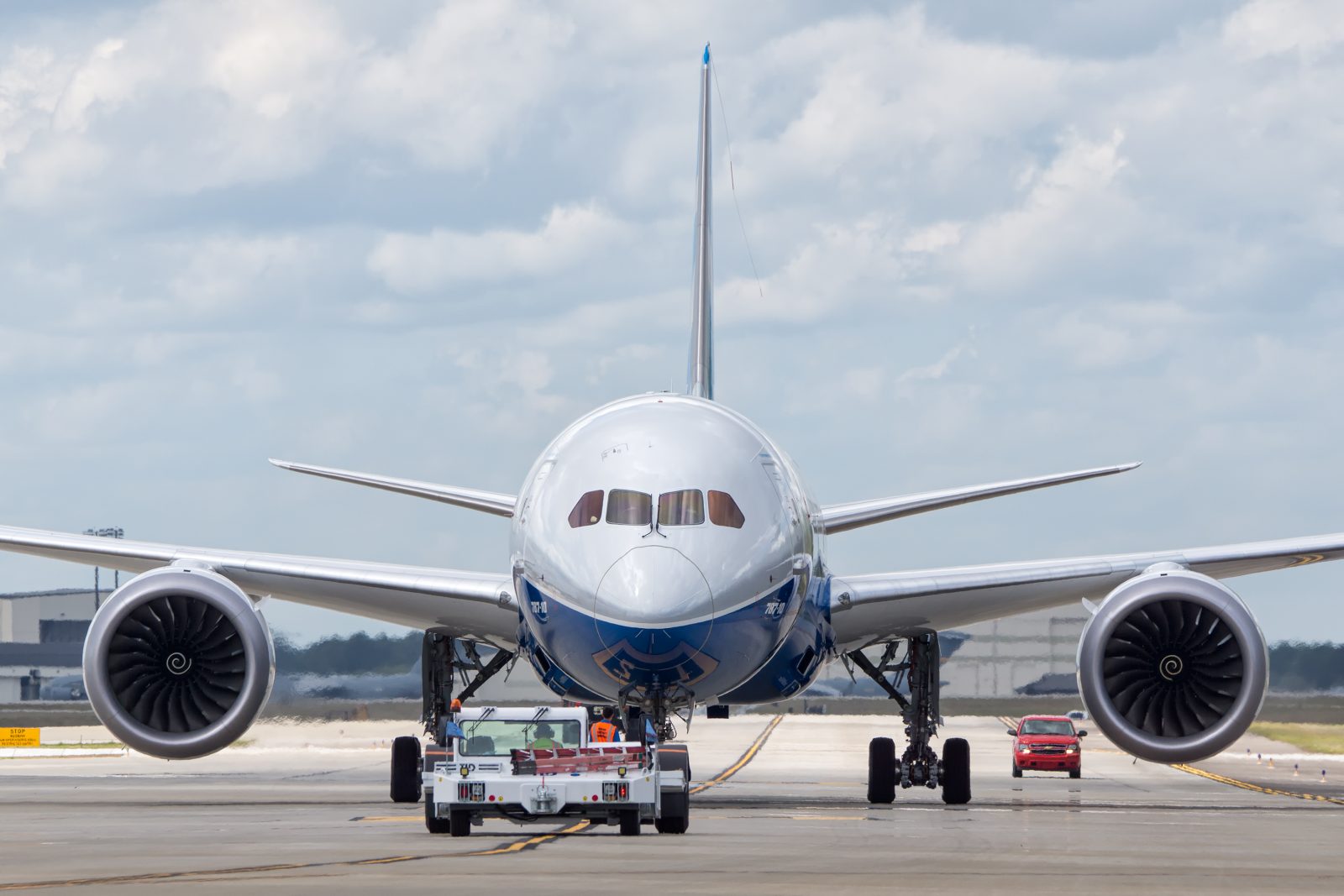
A Boeing 787-10 is towed in North Charleston. (Photo: AirlineGeeks | Chuyi Chuang)

U.S.-based Boeing released its second-quarter earnings report on Wednesday morning, reporting revenue of $16.7 billion, down 2 percent from its second-quarter earnings one year prior and $0.89 billion lower than analysts’ expectations.

Boeing recorded GAAP earnings per share of $0.32 and a loss per share of $0.37 (non-GAAP), thus exceeding analysts’ prediction of a loss of 14 cents per share. The aircraft manufacturer is on track for a positive cash flow by year’s end, recording a cash-flow surplus of $0.1 billion this quarter. In the second quarter of 2021, Boeing had burned through $483 million in cash flow

“We made important progress across key programs in the second quarter and are building momentum in our turnaround,” stated Boeing President and Chief Executive Officer, Dave Calhoun in a press release.

The second quarter results can largely be contributed to the unfavorable performance and significantly lower volume in its defense sector. However, this was partially offset by its increased performance in its commercial airplane sector. The company’s deliveries of commercial aircraft rose to 121, up 42 from last year’s 79 deliveries in the second quarter. This resulted in a revenue hike of $6.2 billion, three percent greater than 2021.

The recovery of its 737 MAX has had a significant impact on the company’s performance recently. The manufacturer is slowly, but surely reviving the reputation of the aircraft, producing an average of 31 per month. Since late 2020, the aircraft has also racked up a total of 1.5 million flight hours.

“Even with demand high, we won’t chase production rates or push our system too fast,” Calhoun stated in a staff note Wednesday. “With safety and quality at the forefront, we will prioritize stability and predictability.”

The Boeing Company has had a stent of rough goings the few years. As the company seemed to have found its legs following the 737 MAX issues, new complications had arisen with its 787 Dreamliner production.

Following a delivery hiatus of the 787 Dreamliner extending more than a year due to many production flaws, the return of aircraft production and deliveries looks to be on the horizon as it nears the final stages of works with the FAA. The company’s quarterly revenue was most certainly offset by the large decrease in 787 deliveries.

Earlier this year, Boeing had stated that the Dreamliner problems would cost the company $5.5 billion, including $2 billion in irregular manufacturing costs as it slowed production to avoid a large backlog of inventory.

The return of 787 deliveries is vital for the U.S. manufacturer as customers pay the bulk of an aircraft’s price when they take delivery of the planes.

As the company continues to work through its issues, they were still able to secure a large number of Commercial Airplanes orders. The company received 169 737 MAX orders along with 13 freighters, including seven 777-8 Freighters from Lufthansa Group.

Boeing’s backlog includes over 4,200 airplanes valued at $297 billion.

Chase Hagl

Chase Hagl grew up in Twin Falls, Idaho. His love and passion for Aviation landed him in Orem, Utah where he obtained a B.S. in Aviation Management with a minor in Business Management from Utah Valley University. Chase currently works as a flight attendant in Charleston, SC and is also the primary Inflight ASAP ERC representative for startup airline, Breeze Airways. His experience in the aviation industry spans back four years, working in areas including agriculture application, customer service, maintenance, and flight ops. In his free time, Chase enjoys road biking, astronomy, and flying.

Grottaglie Spaceport in Southern Italy to be Dubbed ‘Cryptaliae Spaceport’

Artists concept of a Skykraft satellite carrier in orbit. Image: Skykraft

The Grottaglie airport in Apulia (Southern Italy), has already a strategic role within the aerospace world. It is part of the international program for the on-site production of the Boeing 787 “Dreamliner” fuselages, but is currently interested in its further development as a strategic infrastructure for Europe for the growth of the aerospace and aeronautics sector, as confirmed by the identification of the same as the first Italian spaceport intended to host suborbital flights.

The spaceport is a complex of facilities, physical and technological, suitable for launching missile launchers for scientific and military purposes, able to follow the first phases of flight. On July 25, a Memorandum of Understanding was signed by the Apulia Region, the Italian aviation authority (ENAC) and the company that manages airports in Apulia (Aeroporti di Puglia), to begin with public or private applications from the aerospace sector and give the chance to kick off the first partnerships.

Grottaglie Airport has long since shown considerable interest in aerospace. In May 2019, the Apulian airport hosted the International Conference “Grottaglie Spaceport for Europe,” which brought together leaders of European aerospace players from both institutions and commercial sectors to exchange and share their views on plans for the Grottaglie spaceport.

A significant role within the new space economy sector has commercial suborbital transportation, which, by taking advantage of emerging technologies, will allow flight operations for research and experimentation activities in microgravity and, in the future, for launching satellites into orbit. Grottaglie Airport has been identified as a site to develop a regulatory development project to enable commercial suborbital transport operations and support the development of this particular sector.

The concept of space tourism also continues to grow in popularity, and there are a growing number of companies engaged in activities in this emerging field, such as Virgin Galactic, SpaceX and Blue Origin.

Grottaglie Airport will not only be a Spaceport for the European strategic development of autonomous access to Space (suborbital flights and re-entries to the base of space operations, etc.), but also an aeronautical test bed for the development, testing and certification of industrial and scientific research projects in the aeronautical/aerospace field.

The Grottaglie airport will be the first spaceport in Italy, as well as the first in Western Europe.

Vincenzo Claudio Piscopo

Vincenzo graduated in 2019 in Mechanical Engineering with an aeronautical curriculum, focusing his thesis on Human Factors in aircraft maintenance. In 2022 he pursued his master's degree in Aerospace Engineering at the University of Palermo, Italy. He combines his journalistic activities with his work as a Reliability Engineer at Zetalab.

COMAC’s C919 Finishes Testing Stages, Nears Certification

A Comac C919 conducting high-speed taxiing (Photo: COMAC)

According to a social media post by The Commercial Aircraft Corporation of China(COMAC) on July 23, the COMAC C919 has completed all flight test tasks and is in the final certification phase.

The completion marks a significant milestone for the program and could mean certification in the coming months. For reference, the country’s first home-grown passenger jet, COMAC ARJ21, received its certification a month after completing flight tests.

While the first ARJ21 delivery happened two years after certification, COMAC anticipates delivering the first C919s merely months following certification. China Eastern Airlines is the launch customer for the type and expects to receive three airplanes in 2022.

The Chinese manufacturer released a video of its test airplanes performing an elephant walk to celebrate this accomplishment. In the meantime, the first production C919 is performing route simulation tests across the country.

The Airplane

C919 is a narrowbody airplane with 150 seats, directly competing with the Boeing 737 family and Airbus A320 family. While the type currently has 169 firm orders, all are from domestic airlines or lessors. The plane bears the country’s ambition to challenge Boeing and Airbus’s duopoly in this segment.

The airplane’s main structure uses aluminum alloys, similar to the construction of the A320 and 737. In addition, it also uses the CFM-Leap engines as its primary powerplant. Despite the similar designs, the airplane only has a range of 2200 nm to 3300nm, well below that of its competitors. The airplane’s main structure uses aluminum alloys, similar to the construction of the A320 and 737. In addition, it also uses the CFM-Leap engines as its primary powerplant. Despite the similar designs, the airplane only has a range of 2200 nm to 3300nm, well below that of its competitors. However, the specification strikes an outstanding balance between cost and performance since the aircraft primarily targets the domestic market, whose longest route is only 2100nm.

Uncertain Future

Like any major technological uptake, the C919 is developed with much international collaboration, especially since COMAC started the project at the peak of globalization in the late 2000s. Therefore, it selected many western suppliers for critical components, such as avionics and engines to lower the development cost and reach a global market.

However, the situation has changed, and events like the U.S.-China trade war cast great uncertainty on the plane’s future. For instance, the country’s latest turboprop project, MA700, suffered significant delays, because it lost its engine supplier, Pratt & Whitney. Similarly, both Russian commercial airplane programs ground to a halt and had to redesign for domestic alternatives due to western sanctions. The Chinese government views that as another cautionary tale about its reliance on the west.

Russia’s MC-21 with its domestically developed PD-14 engine. (Photo: Irkut Corporation)

In addition to distancing itself from Russia to avoid more sanctions, China is also accelerating the development of domestic alternatives. However, critical replacements, such as the engine are likely still years away from commercial introduction. Not to mention, the engine is only one of the few roadblocks C919 would face should the country and the west’s relationship fall apart.

Timeline

2008 – The C919 program was launched with a targeted first flight time in 2014.
2015 – The Shanghai-based company unveiled the first airplane at its factory in Shanghai during a roll-out ceremony following several delays.
2017 – C919 made its maiden flight on May 5, with its planned entry into service slipping into 2020.
2018 – The state-owned manufacturer grounded its test fleet for modifications, further pushing the first delivery into 2021.
2022 – The company announced the completion of its flight test campaign on July 23.

Fangzhong Guo

Fangzhong grew up near an OEM airport in northeastern China, where he developed his enthusiasm for aviation. Taking upon his passion, he's now working as an aircraft interior design engineer. Besides working in the aerospace industry, Fangzhong enjoys trying out different types of airplanes and seeing how airplane interiors have evolved. So far, he's flown on over 80 types of aircraft. He also planespots in his spare time. His rarest catches included the 747 Shuttle Carrier Aircraft and AN-225.

Australia’s Regional Express Moves to Electrify Turboprop Aircraft

A Regional Express Saab 340B (Photo: Bidgee, CC BY-SA 3.0 AU , via Wikimedia Commons)

Australian airline Regional Express announced on July 21, 2022, it will be forming a partnership with Dovetail Electric Aviation in an effort to lead the way in converting turboprop aircraft to full electric propulsion.

Collaborating together, and operating under the Dovetail brand, the two will work to develop and certify the retrofitting of regional and general aviation aircraft, with Rex providing both a test bed and its resources for that development. The move is well suited for Rex, with its regional airline base an ideal starting point for commercial electric aviation.

According to the airline’s Deputy Chairman, John Sharp, the collaboration means Rex will be “at the forefront of developments in sustainable regional aviation,” adding that it will play a part in helping “national efforts in achieving the target of net zero emissions by 2050.”

Short Sectors To Be Electrified First

Given the fact that first-generation electric aircraft will have short-range capabilities, Rex and Dovetail’s owner Sydney Aviation Holdings are well situated for early adoption of electric propulsion systems. In addition to Rex’s regional routes, Sydney Aviation Holdings’ sightseeing company Sydney Seaplanes will also offer opportunities for electric aircraft.

Speaking of the possibilities the new partnership offers, Sharp stated: “Australia, with its very high utilisation of regional aviation and large number of aircraft capable of conversion, is a perfect incubator for the electric aviation industry. Significantly lower operating costs of electric aircraft will also help to stimulate regional aviation services between communities not currently served by scheduled flights.”

In contrast to the concept, design and implementation of brand new electric aircraft, Dovetail believes the conversion of turbine aircraft to electric propulsion systems offers faster certification, along with improved costs. With this efficiency, Dovetail estimates converted aircraft can achieve certification in four years, compared to an estimated eight to ten years for brand new aircraft.

Dovetail will convert aircraft with MagniX propulsion systems, operating with battery packs and hydrogen fuel cells. Founded in Australia in 2005, MagniX propulsion systems are designed with redundancy in mind, with an allowance for failure of at least one section of its 3-phase architecture. Additionally, the flat torque curve of electric motors means high torque can be produced at low RPM, eliminating the need for gearboxes and, in turn, removing the costs usually associated with their maintenance.

The conversions are estimated by Dovetail to reduce noise by 30-40%, as well as reduced operating costs by approximately 40%.

Sharp concluded: “We are delighted to partner with Sydney Seaplanes and Dante Aeronautical (also owned by Sydney Aviation Holdings) in Dovetail Electric Aviation and to lend our aviation and engineering expertise to advance its progress, while also accelerating Rex’s journey to a zero emissions future.”

Australia’s Best Performing Domestic Airline

The month of June saw Rex continue its reign of reliability among domestic airlines, according to the Bureau of Infrastructure and Transport Research Economics (BITRE). Having lowered its cancellation rates from May’s 1.4% to just 0.7%, Rex has improved its departure and arrival reliability with 82.7% of departures on time and 80.0% of arrivals on time, an additional improvement when compared to the month of May.

The statistics continue to paint a damning picture of Qantas – the Flying Kangaroo – with its group’s reliability dropping to 58.7% for departures and 59.4% for arrivals. In terms of cancellations, Qantas crept up to 7.5%.

Mike Mangano

Mike’s love affair with flight and mechanical objects in the sky began at an early age, fascinated by space documentaries and the vintage Flight Simulator ’95. He currently works as an instructor for UAVs and is training to receive his Private Pilot Licence with the goal of working in manned flight instruction. An avid reader of all things aviation and manned space flight, Mike stays close to developments in aerospace while reminiscing and sharing the rich history of flight with others. He loves writing, engineering and science.

Virgin Atlantic and Kenya Airways Announce Interline Agreement

Virgin Atlantic 787-9
A Virgin Atlantic 787-9 departing London Heathrow. (Photo: AirlineGeeks | William Derrickson)

Kenya Airways and Virgin Atlantic have announced an interline agreement, aiming to provide convenient connections for customers between Africa and Europe.

The interline agreement will allow passengers to connect travel with a single ticket between points of the networks of both carriers.

Under the agreement, Kenya Airways will extend its reach in the U.S., the Caribbean, and Israel via London. Customers flying to London will be able to connect with Virgin Atlantic-operated flights to Boston, Washington, Atlanta, Austin, Miami, Orlando, Las Vegas, Seattle, San Francisco, Los Angeles, Antigua, Barbados, and the Bahamas, Jamaica, Grenada, and Tel Aviv among others.

On the other hand, the agreement enables Virgin Atlantic passengers to book a through ticket to Nairobi and enjoy seamless connections to Kenya Airways destinations across Africa including Tanzania, Uganda, Seychelles, Mauritius, Zambia, Zimbabwe, and Madagascar among other destinations served by KQ.

Kenya Airways’ 787 Dreamliner arrives at JFK. (Photo: AirlineGeeks | Tom Pallini)

Kenya Airways Chief Commercial & Customer Officer, Julius Thairu said in a press release, “We’re incredibly excited to announce this new partnership with Virgin Atlantic. We also see opportunities beyond the continent and look forward to expanding our relationship even further to serve destinations across the Middle East, the US, and the Caribbean. This agreement will advance our strategy to strengthen our major African hubs with connecting traffic and offer new growth opportunities for both carriers. Additionally, this alliance has a substantial economic impact by enhancing trade and promoting travel across the continent.”

The partnership with Virgin Atlantic is another milestone and has been added to the list of the Kenyan carrier’s strategic agreements that includes global airlines such as South African Airlines, Delta Airlines, JetBlue, British Airways, and Africa World Airlines among others.

Improved Balance Sheet

As the Kenyan carrier forges new partnerships to expand its reach, the SkyTeam Alliance carrier recently reported a net loss of $130.5 million (Ksh15.8 billion) for the financial year ended Dec. 31, 2021.

This indicates a 56.58% decrease when compared to the net loss of $313.2 million (Ksh36.2 billion) which the airline reported during the comparable period in 2020.

The company explained that it was able to reduce its annual net loss by implementing various cost containment measures, whilst preserving and diversifying its revenue. Specifically, operating expenses were cut by 3.62%.

The airline noted it carried 2.2 million passengers in 2021, with an average seat load factor of 60.8% as demand peaked during the December holiday period.

It also operated 16% more frequencies in 2021 compared to 2020, with 25% more passenger traffic than the previous year, while achieving an impressive On-Time Performance (OTP) of 84%, an improvement of 13 percentage points over 2020.

Cargo operations meanwhile continued to outperform expectations, as revenue stood at Kshs. 13,433 million ($113,646) showing a marked improvement of 49% compared to 2020.

This improved cargo performance was supported by high global demand and increased cargo uplift capacity following the second 787 freighter repurposing in February 2021 that saw a monthly KQ Cargo increment of 500 Metric.

Victor Shalton

Victor Shalton's love for aviation can be traced to when he was 11-years-old. As a seasoned aviation writer, he takes pride in providing the best aviation coverage around the globe and is passionate about advancing his skills in the aviation space. In addition, he loves travelling, writing, arts and while his speaking engagements have taken him around the world, he is proud to call Nairobi home.
Sign-up for newsletters & special offers!

Get the latest stories & special offers delivered directly to your inbox

SUBSCRIBE

Uh-oh! It looks like you're using an ad blocker.

Our website relies on ads to provide free content and sustain our operations. By turning off your ad blocker, you help support us and ensure we can continue offering valuable content without any cost to you.

We truly appreciate your understanding and support. Thank you for considering disabling your ad blocker for this website