An Air Serbia Airbus A330-200 on approach to JFK in New York City (Photo: AirlineGeeks | Joey Gerardi)
Air Serbia — the Serbian national airline —with a hub in Belgrade, Serbia has announced plans to increase service to the United States, one aspect of which will include a new destination on its route map.
In a press release from the airline which was posted to their website, they announced they will increase service to the current airport they serve in the United States, JFK in New York City, from two weekly flights to three weekly flights, starting this coming winter season. Flights between the Serbian capital and New York City will now operate every Tuesday, Thursday and Sunday.
Boško Rupić, the General Manager of Commercial and Strategy at Air Serbia did have something to say about this increase in flights to New York, “The addition of another weekly flight to New York during the winter season is a clear indicator that our flight over the Atlantic is working out well and that it represents one of Air Serbia’s strongest routes.”
The airline also announced they would be adding flights to Chicago O’Hare, giving the first link between the two cities in over 30 years. Flights to Chicago will operate on a twice-weekly basis similar to how flights to New York began six years ago. While they have announced the flights will operate twice a week, they didn’t mention which days of the week the service would operate.
Although there is not an exact start date yet for the Chicago flights, the airline did mention in its press release that they would start the new Chicago flights in April of 2023. Boško Rupić also had some comments regarding the new destination in the United States, “With one of the biggest diasporas from Serbia and other countries in the region, for a long time now, and for us, it [Chicago] is a route of exceptional strategic importance. We expect great passenger demand for the new flights with Chicago as their final destination, as well as those using the city as a layover for further destinations.”
The airline only has a single long-haul aircraft, an Airbus A330-200, which features famous Serbian scientist Nikola Tesla on the tail of the aircraft. Before the flights begin to Chicago next spring, the airline will need to and has plans to introduce another Airbus A330-200 to its fleet which is set to arrive at the airline sometime this fall.
Joey has always been interested in planes for as long as he can remember. He grew up in Central New York during the early 2000s when US Airways Express turboprops ruled the skies. Being from a non-aviation family made it harder for him to be around planes and would only spend about three hours a month at the airport. He was so excited when he could drive by himself, the first thing he did with his driver's license was get ice cream and go plane spotting for the entire day. He graduated from Western Michigan University in 2022 with a B.S. in Aviation Management & Operations and a Minor in Business, and currently works for a major airline in his hometown.
El Al Reintroduces Boeing 777 Commercial Passenger Flights to Meet Rising Demand
An El Al 777 (Photo: Sourcr: Aero Icarus from Zürich, Switzerland Derivative:MathKnight, CC BY-SA 4.0 , via Wikimedia Commons)
El Al — the Israeli flag carrier — has announced it will bring back its Boeing 777s, as demand for travel continues to rise. The airline had said earlier in the year that it would refit the fleet, with the airline’s new cabin product, in order for them to be ready should they be needed for the summer travel demand.
Most of El Al’s Boeing 777s are over 20 years old, and while it is unclear how many have been refitted, it is clear that El Al — like almost every other major airline — needs more capacity and needs it fast.
The airline said the aircraft would be deployed on routes to Phuket, Thailand; Dubai, The United Arab Emirates; Athens, Greece and Bangkok. Flightradar24 showed 4X-ECD, a 20 -year-old 777, en-route from Tel Aviv to Paris, after what looked to be months of test flights within Israel.
El Al’s Boeing 747 fleet had been retired since November of 2019, as El Al had finally expanded its long haul fleet and network with 15 new Boeing 787-8 and 787-9 Dreamliners. This was, at last, offering a hard product that could stack up to its competition.
It seemed logical to think that El Al would have little reason to refurbish 20-year-old 777s, given that the fleet will most likely age out in the coming years, but if there is one thing that can be learned from El Al’s Boeing 747 operation, it is that these aircraft will be flown, until they are just no longer up to passenger standards. Many of the carrier’s 747s had reached the 24-25 year service mark by the time they were scrapped. For comparison, United Airlines operated many of its 747’s for about 19 to 20 years on average. United also had a considerably larger number of aircraft on hand ready to replace the Queen of the Skies.
The Airline’s Scramble to Meet Demand
El Al’s need for added capacity does not come as a shock to anyone with the mayhem and travel surge that has occurred for the summer of 2022. The airline had said it would suffer millions in damages if the airline’s 777s do not operate and fly when travel demand is at its highest peaks.
El Al has seen a significant spike in demand through Tel Aviv this year and has sold tickets on its website, with the 777 being listed as the operating aircraft.
El Al has found itself in a scramble on the labor side of things recently. The airline recently settled with Histradut — Israel’s largest labor union representing El Al pilots.
The new agreement will have all El Al pilots earning pre-COVID 19 salaries. Looming mass cancellations such as what occurred with SAS last month meant that El Al needed to act quickly. The airline has not published plans for reintroducing the aircraft to crews, though it says proper testing and training has been done.
Ezra Gollan is a student, photographer and aviation enthusiast based in New York, New York. He has spent over half a decade around New York City’s airports as a photographer.
With the Designer: Virgin Atlantic Shows Off Innovative A330neo Cabins
Virgin Atlantic presented a mockup of its upcoming A330neo in London. (Photo: AirlineGeeks | Mateen Kontoravdis)
Virgin Atlantic’s first Airbus A330neo is preparing to touch down in the U.K. this September. The arrival of the first aircraft will mark a major milestone in the carrier’s fleet transformation over the past five years. The airline placed a firm order for up to 16 A330-900s in 2019, making up 6% of all A330-900s on order as of July 2022. The new aircraft is 11% more fuel efficient compared to the current A330-300 fleet and will replace the 10 current A330-300s that Virgin Atlantic operates. The aircraft will also assist with future capacity growth.
With a distinct and unique cabin on board each of its fleet types, Virgin Atlantic spent over five years researching and developing the right cabin for its upcoming A330neo. Last week, AirlineGeeks had the opportunity to tour mockups of the cabin with Henry Buckley, Design Manager at Virgin Atlantic, at an event in London that showcased the fascinating final products that will fly onboard the new aircraft.
Adding Virgin Atlantic’s Unique Touch to Each Jet
Buckley and his team had been hard at work over the past few years. After delivering brand new cabins for the airline’s flagship Airbus A350-1000, the team pivoted all attention towards the A330-900 to ensure the airline can create a unique experience that fits the profile of the new aircraft.
An overhead view of the new social space that will be featured onboard Virgin Atlantic’s A330neo. (Photo: AirlineGeeks | Mateen Kontoravdis)
When boarding the new aircraft, frequent flyers will immediately notice that they are onboard a new jet. Virgin Atlantic’s signature social space, The Loft, has been upgraded on the A330neo. Upper Class passengers have access to this space throughout the flight.
Every Virgin Atlantic fleet offers a unique social space for Upper Class passengers. (Photo: AirlineGeeks | Mateen Kontoravdis)
The new Loft on the A330neo features space for up to eight passengers to relax with four seats. The space features dual 27-inch touchscreen monitors with access to Virgin Atlantic’s inflight entertainment. Up to eight Bluetooth headsets can connect to the screens, enabling passengers the option to view content together. The Loft also has seat belts so that passengers can continue to utilize the space when there is turbulence.
Buckley pointed out some of the unique characteristics of the space such as the elevated seating arrangement. This enables passengers to be able to easily converse with the cabin crew and other passengers that may prefer standing. Buckley’s team also included four types of charging options to ensure passengers have the option also to stay digitally connected while enjoying the space.
The mini fridge/freezer will be fully stocked with snacks and drinks for passengers to enjoy throughout their flight. (Photo: AirlineGeeks | Mateen Kontoravdis)
The Loft also features a self-service fridge and freezer that will be stocked with snacks, ice cream, and drinks throughout the flight. From the distinctive lighting to various unique features, The Loft is an amenity that other airlines competing with Virgin Atlantic don’t offer for their premium passengers.
A New Cabin for All Passengers
In the front of the cabin, Virgin Atlantic is introducing two brand new, extra spacious Retreat Suites. Buckley’s team was determined to create an exclusive space that builds on the Upper Class experience. The two suites feature plenty of additional space, large lockable storage lockers, customizable mood lighting, electronic privacy dividers, and larger 27-inch IFE screens. The fully flat bed measures out to 6 feet, 7-inches. The suite also includes a wireless charging station, AC, USB-A, and USB-C ports.
The two new Retreat Suites offer additional space and added amenities for customers. (Photo: AirlineGeeks | Mateen Kontoravdis)
The airline selected the Thompson Aero VantageFirst for its Retreat Suite. The two suites are positioned together in the middle section of the first row of the Upper Class cabin. Virgin Atlantic is the only airline flying between London and the U.S. with a seat that allows passengers to create their own, private social and dining space for up to four people.
The Retreat Suite offers the potential to dine with up to four people. (Photo: AirlineGeeks | Mateen Kontoravdis)
The new Retreat Suites will be sold as a $240 premium for passengers traveling in the Upper Class cabin. Passengers flying on board an A330neo will have the opportunity to upgrade from Upper Class to the Retreat Suite beginning two weeks prior to a flight. This concept is similar to the JetBlue Mint Studio, which offers more space than the Mint Suite and can be purchased for an additional sum before your flight.
Virgin Atlantic’s new Upper Class focuses on creating a flexible space that caters to various passengers’ needs. Buckley selected the Thompson Aero Vantage XL seat for the new 30-seat Upper Class cabin featuring sliding doors for added privacy. This is the same seat that Delta Air Lines uses for its business class cabin on board its A330neo fleet. Atlanta-based Delta owns a 49% share of Virgin Atlantic.
Virgin Atlantic’s brand new Upper Class seat onboard its A330neo fleet. (Photo: AirlineGeeks | Mateen Kontoravdis)
The new Upper Class seat has a 17.3-inch IFE screen and the bed length measures 6-feet 4-inches. Similar to the Retreat Suite, the Upper Class seats also have a lockable storage compartment, customizable mood lighting, and a wireless charging station.
The seat includes a large tray table that can easily be used as a workstation with space for a laptop and notepad. The back of the seat also has a unique cushion-like texture that makes it comfortable to relax against when the seat is in the lie-flat position.
The new Upper Class product also features a sliding door for added privacy. (Photo: AirlineGeeks | Mateen Kontoravdis)
While Virgin Atlantic already boasts a competitive transatlantic product with its A350 Upper Class, the A330neo seat takes it a step further with a spacious layout that includes multiple passenger-oriented innovations.
In Premium Economy, the airline is installing 46 Collins MIQ seats, each with 38-inches of legroom. This is the same seat used by other airlines around the world for international premium economy and domestic first class. These seats will offer a calf rest and a wireless charging station. The IFE screen will be 13.3 inches and there will also be AC and USB-A ports on each seat.
The A330neo will feature 46 Premium Economy seats. (Photo: AirlineGeeks | Mateen Kontoravdis)
Economy will feature 184 seats designed with a new, eco-friendly fabric. The Economy Delight seats will feature 34-inches of legroom while the standard seats will have 31-inches. Similar to Premium Economy, each seat will have a 13.3-inch IFE screen. Each seat will also have direct access to AC and USB-A ports.
Virgin Atlantic’s A330neo economy seats are made up of lighter material to reduce cabin weight and aircraft fuel burn. (Photo: AirlineGeeks | Mateen Kontoravdis)
New Innovations from Nose to Tail
In addition to the new physical product, tech-focused upgrades are improving the passenger experience throughout the entire cabin. All IFE screens will be Bluetooth compatible, allowing passengers to connect personal headsets to their screens. Passengers can also connect their personal devices to the IFE screen in every seat. This allows passengers to browse the IFE library, control their seat (in the premium cabins), and activate the call bell and reading light all from their own device.
Henry Buckley, Design Manager at Virgin Atlantic, worked with his team for over five years to develop the new A330neo cabins. (Photo: AirlineGeeks | Mateen Kontoravdis)
Each A330neo will also be equipped with Viasat WiFi. Passengers can purchase a 1-hour pass for $7.20 or a full flight pass for $22.80. The airline is also using faux leather throughout the cabin to boast a more sustainable interior. By using faux leather, the airline estimates that it will save about 3,000 cows across its entire A330neo fleet.
Preparing for a NEO Fleet Member
In 2019, Virgin Atlantic became the only U.K. airline to announce firm order for the A330neo. The order is worth $4.7 billion at the list price. The A330neo fleet will have 262 seats, while the airline’s 787-9 fleet flies with 264 seats onboard each jet.
Virgin Atlantic is currently preparing for the delivery of the first A330neo which is expected this September. (Photo: AirlineGeeks | Mateen Kontoravdis)
The A330neo, however, has a higher premium seat density with one additional Upper Class seat and 11 extra Premium Economy seats. On the other hand, the aircraft will have 14 fewer economy seats than the airline’s Dreamliners.
Following the delivery of G-VJAZ in September, Virgin Atlantic expects to take delivery of three additional A330neos by February 2023. The final new aircraft is expected by 2026. Boston will receive the inaugural A330neo flight in October and the airline’s next U.S. destination, Tampa, will see the aircraft by November. With the introduction of A330neo flights across the Atlantic, Virgin Atlantic will continue to position itself as a top player amongst the various carriers that connect the U.K. with North America.
Stay tuned for additional exclusive coverage of Virgin Atlantic’s 24/7 Maintenance Operation at Heathrow and an in-depth look at the airline’s newest route to Austin, Texas.
Mateen has been interested in aviation from a very young age. He loves learning about different aspects of the industry. Mateen has been an editor for the website since early 2017. Most recently, Mateen is additionally the website’s overall strategist. In addition to writing for AirlineGeeks, Mateen is a sophomore at the University of Texas studying Human Dimensions of Organizations. You can also find him on Instagram (@Plane.Photos) where he enjoys sharing his aviation photography with thousands of people on a daily basis.
TAP Air Portugal Makes First Flight Using Sustainable Fuel
A TAP Air Portugal Airbus A321NEO climbs out of Munich.
(Photo: AirlineGeeks | Fabian Behr)
TAP Air Portugal, Galp and ANA – Aeroportos de Portugal, SA have formalized a strategic alliance for the development, production and supply of sustainable aviation fuel (SAF), made from waste, recycled used oils and other sustainable raw materials.
The first flight in Portugal powered by SAF was performed on the Lisbon (LIS) – Ponta Delgada route operated in an Airbus A321neo, with 39% renewable source (HEFA), with lower total carbon emissions compared to traditional fossil fuels
(Photo: TAP Air Portugal)
The emissions reduction on this flight was 7.1 tons of carbon dioxide equivalent, representing a 35% reduction in total CO2 emissions.
This alliance, formally signed at a ceremony attended by TAP CEO Cristinine Ourmieres-Widener, Galp CEO Andy Brown and ANA CEO Thierry Ligonniere, is part of the European Commission’s Fit for 55 climate package, which incorporates the «RefuelUE Aviation» legislative initiative aimed at increasing the supply and demand for and use of UAS in the European Union by 2% by 2025, 5% by 2030 and 63% by 2050.
This move is a strategy for the positive mobility of ANA and VINCI Airports to significantly reduce their emissions (scopes 1 and 2) and the emission reductions of their partners (scope 3), working together to achieve net zero emissions (NetZero) by 2030.
Nine of ANA’s 10 airports have achieved Level 4 airport carbon accreditation from the Airports Council International this year, an accreditation that confirms the high performance of these airports on the journey towards carbon neutrality.
This story was originally published by Rainer Nieves Dolande on Aviacionline in syndication with AirlineGeeks.
Ryan founded AirlineGeeks.com in February 2013 and has spent more than a decade covering the airline business. His work has been featured by CNN, WJLA, CNET, and Business Insider. His aviation experience spans airport operations, Part 135 regulatory compliance, and airline crew workforce planning, along with time behind the yoke of a Cessna 172 and interviews with airline executives. Ryan now serves as Group President of Firecrown Media’s Aviation Group. He holds a B.S. in Air Transportation Management and an MBA from Arizona State University and teaches Airline Management at Embry-Riddle Aeronautical University.
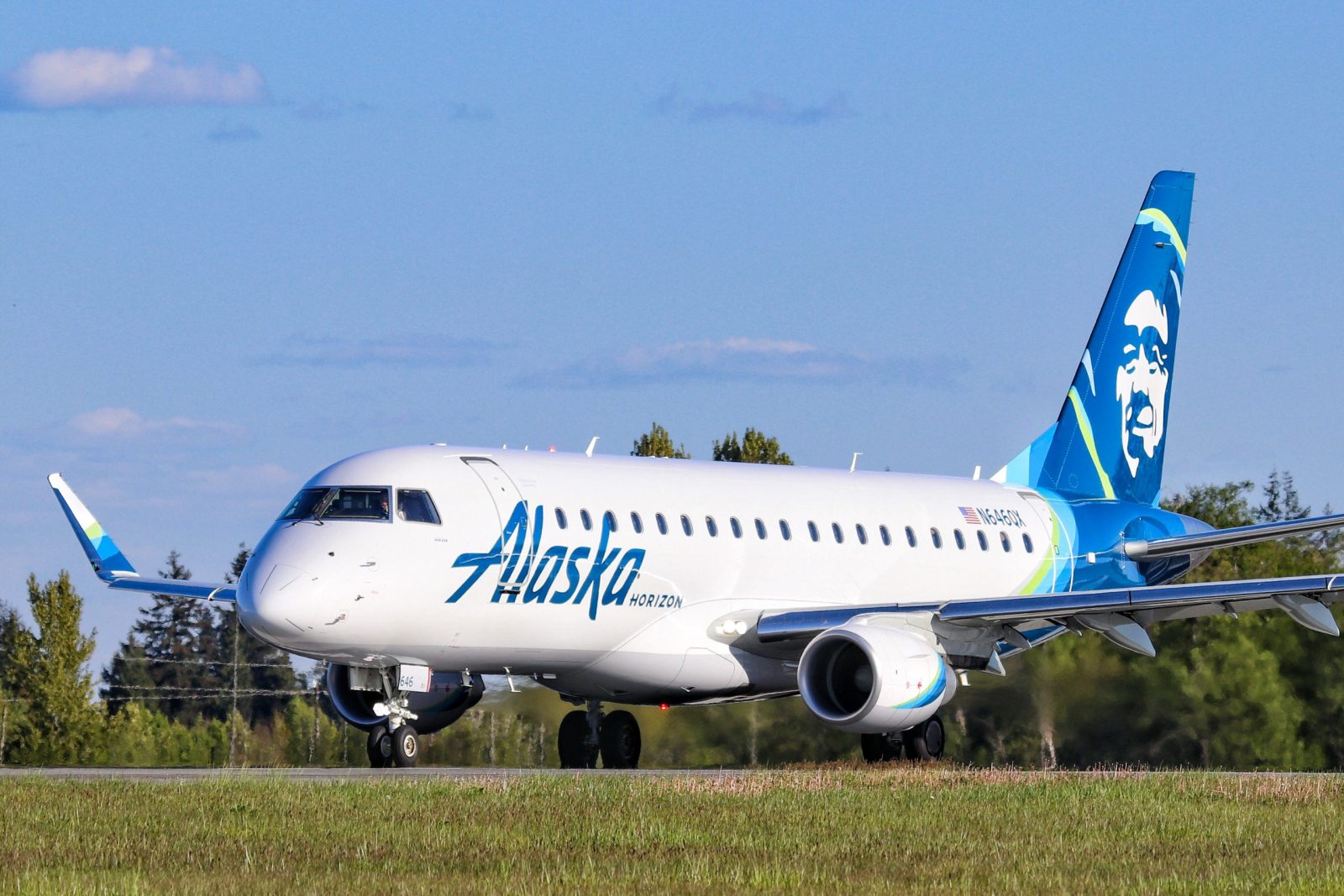
An Alaska Airlines E-175 operated by Horizon Air at Paine Field. (Photo: AirlineGeeks | Katie Zera)
Alaska Air Group has announced an order for eight new E175 aircraft and options for 13 more. The E175 aircraft will fly exclusively for Alaska Airlines under a capacity purchase agreement (CPA) with Horizon Air. The contract value, including options, is $1.12 billion based on list price.
The new 76-seat Horizon aircraft in this order will be delivered in Alaska’s livery and three-class configuration over the next four years, beginning in the second quarter of 2023. The aircraft features 12 seats in First Class, 12 in Premium Class and 52 in the Main Cabin.
Onboard services include free entertainment with more than 1,000 movies and television programs. In addition, customers seated in First Class enjoy 110-volt electricity at all seats according to the airline.
Mark Neely, vice president of Americas at Embraer Commercial Aviation, said in a press release, “The E175 is the backbone of the U.S. regional network, powering airport hubs across the country, as well as producing the connectivity that all communities need to thrive, both economically and socially.”
The new Embraer aircraft are set to gradually replace the company’s thirty-two DHC-8-Q400.
According to data obtained by Aviacionline through Cirium, currently, 39.3% of Horizon Air’s Embraer operations are from Seattle (SEA), 14.5% from Portland (PDX) and San Francisco with 13.4%.
This story was originally published by Gaston Sena on Aviacionline in syndication with AirlineGeeks.
Ryan founded AirlineGeeks.com in February 2013 and has spent more than a decade covering the airline business. His work has been featured by CNN, WJLA, CNET, and Business Insider. His aviation experience spans airport operations, Part 135 regulatory compliance, and airline crew workforce planning, along with time behind the yoke of a Cessna 172 and interviews with airline executives. Ryan now serves as Group President of Firecrown Media’s Aviation Group. He holds a B.S. in Air Transportation Management and an MBA from Arizona State University and teaches Airline Management at Embry-Riddle Aeronautical University.
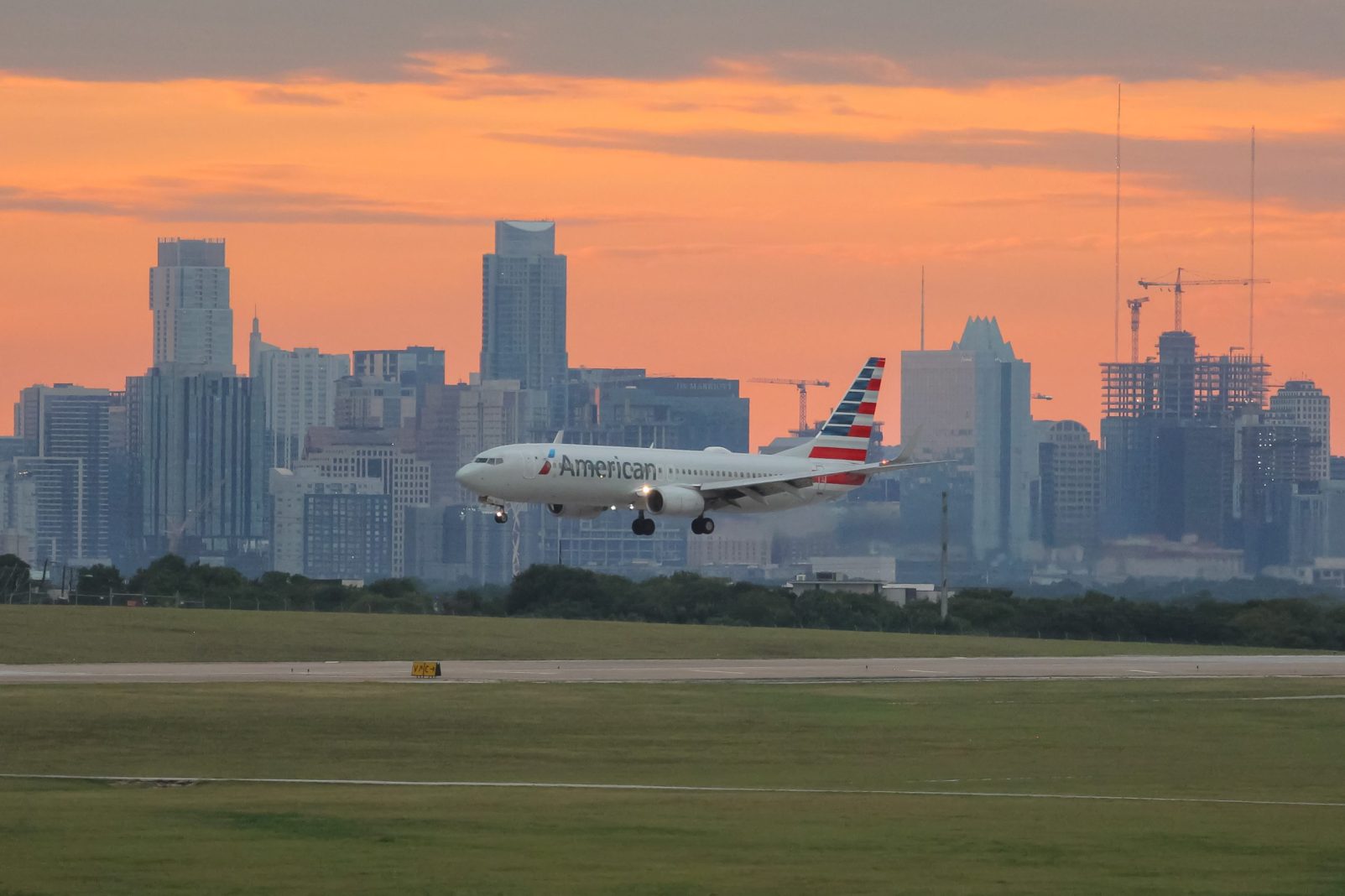
An American Airlines jet landing on runway 18R with the Austin skyline in the background. (Photo: AirlineGeeks | Mateen Kontoravdis)
American Airlines has announced a company record second-quarter revenue earnings of $13.4 billion for Q2 2022. The revenue figure is a 12.2 percent increase over the same quarter in 2019, despite capacity being down 8.5 percent. This gave the world’s largest airline a net profit of $476 million to end the second quarter with $15.6 billion of total available liquidity.
American Airlines’ chief executive officer Robert Isom said, “We are very pleased to report a quarterly profit, excluding net special items, for the first time since the start of the pandemic, driven by the strong demand environment and the hard work of our team. The American Airlines team has stepped up to meet the surge in demand for air travel while running a reliable operation in very challenging conditions. We are encouraged by the trends we’re seeing across the business, and we remain well-positioned for the continued recovery.”
American Airlines reported a robust operational performance for the second quarter with the airline and its regional partners operating more than 500,000 flights. The airline said: ‘In the second quarter, American flew a schedule that was more than 25% larger than its closest competitor as measured by total departures.’ Passenger enplanements exceeded 53 million with an average load factor of 87 percent, a ten-point increase over Q2 2021.
The airline’s presentation to support the Q2 2022 results gave insight into the areas of the operation that are contributing to American Airlines’ pandemic recovery. The revenues from the domestic leisure and short-haul international networks are over 120 percent of 2019 levels. Domestic business revenues have reached 110% of 2019 though the airline states that corporate/government revenues are only at 75% of pre-pandemic levels.
American Airlines’ long-haul operations are still below pre-pandemic levels given the travel restrictions that were still in place for part or all of the quarter. The pre-departure testing requirement for entry to the U.S. was removed in the second week of June so airlines are only just experiencing the benefits of an increase in international travelers. The next quarter will also encompass the European summer holiday period that has seen significant demand for air travel albeit with some negative operational impacts for airlines and airports on both sides of the Atlantic.
Looking ahead to the third quarter of 2022 American Airlines forecasts revenues to again be above those for the same quarter of 2019. The increase in passenger demand but decreased capacity should see revenues 10-12% higher than in Q3 2019. Capacity in terms of available seat miles (ASM) is forecast to be down 8-10% though the cost of operation of that capacity (CASM – Cost per available seat mile) excluding fuel and special items will see a 12-14 percent increase compared to the same quarter in 2019. Overall the forecast is that the total revenue per available seat mile (TRASM) will be up by 20-24% over Q3 2019 and American will see another profit in Q3 2022.
American Airlines touted a positive remainder of the summer by stating, ‘American is proud to offer customers the youngest fleet among U.S. network carriers and the largest network of any U.S. airline, with an expected average of more than 5,400 daily departures for the remainder of the summer.’
John has always had a passion for aviation and through a career with Air New Zealand has gained a strong understanding of aviation operations and the strategic nature of the industry. During his career with the airline, John held multiple leadership roles and was involved in projects such as the introduction of both the 777-200 and -300 type aircraft and the development of the IFE for the 777-300. He was also part of a small team who created and published the internal communications magazines for Air New Zealand’s pilots, cabin crew and ground staff balancing a mix of corporate and social content.
John is educated to postgraduate level achieving a masters degree with Distinction in Airline and Airport Management. John has held the positions of course director of an undergraduate commercial pilot training programme at a leading London university. In addition he is contracted as an external instructor for IATA (International Air Transport Association) and has been a member of the Heathrow Community Fund’s ‘Communities for Tomorrow’ panel.
Alaska Airlines Announces Launch of Electronic Bag Tag Program
Alaska Airlines set to launch electronic bag tags, becoming the first-U.S.-based carrier to do so (Photo: Alaska Airlines)
On Wednesday Alaska Airlines announced the launch of their new electronic bag tag program – the first amongst U.S. carriers. The digital tags are designed to replace the current paper tags and will ultimately allow customers to get through the check-in process quicker.
The electronic bag tag will allow guests to skip the kiosk completely, as there is no need for a printable tag. Guests will be able to set up the electronic bag tag from the airline’s mobile app for their upcoming flight from the comfort of their own homes. Upon arrival at the airport, customers will drop their bags off at the self-bag drop and be off to security.
“This technology allows our guests to tag their own bags in just seconds and makes the entire check-in process almost all off-airport,” stated Charu Jain, senior vice president of merchandising and innovation at Alaska in a press release. “Not only will our electronic bag tags allow our guests to quickly drop off their luggage after they arrive at the airport, but the devices will also give our employees the opportunity to spend more one-on-one time with guests who ask for assistance and reduce lines at our lobbies.”
Alaska Airlines predicts that the new tags will cut the baggage dropoff process up to 40 percent.
The Seattle-based carrier will initially introduce the tags at the San Jose International Airport in California. The bag tags will go hand-in-hand with their new self-bag drop system introduced in March to the SJC airport.
With the same intentions as the new high-tech bag tags, Alaskas’ self-bag drop incubators allow customers to bypass a part of the check-in process that is commonly known for significantly increasing check-in wait times. This is just another step in the airline’s attempt to augment the said process.
Set to launch later this year, the tags will be introduced in several phases. Phase one will include 2,500 tags that will be distributed to Alaska Airlines’ frequent fliers. Members of the carriers’ Mileage Plan will have the option to purchase the devices in early 2023.
Alaska will purchase the tags from the Dutch-based manufacturer, BagTag. BagTag currently provides many other carriers with similar products that include Austrian, China Southern, Dolomiti, Lufthansa, and Swiss.
“We are very proud to announce the first American carrier adopting our EBT solutions,” said BAGTAG Managing Director Jasper Quak. “Alaska Airlines’ relentless efforts to make their passenger journey a true 21st-century experience makes us very confident in a successful rollout among their guests.”
The tag selected by Alaska will be “battery-less”, never having to be recharged by its users. The devices utilize two durable screens that are attached to baggage just like any other bag tag, using an industrial-strength plastic zip tie.
Chase Hagl grew up in Twin Falls, Idaho. His love and passion for Aviation landed him in Orem, Utah where he obtained a B.S. in Aviation Management with a minor in Business Management from Utah Valley University. Chase currently works as a flight attendant in Charleston, SC and is also the primary Inflight ASAP ERC representative for startup airline, Breeze Airways. His experience in the aviation industry spans back four years, working in areas including agriculture application, customer service, maintenance, and flight ops. In his free time, Chase enjoys road biking, astronomy, and flying.
Azerbaijan Airlines Signs MOU with Boeing for the Purchase of Four 787 Dreamliner
An Azerbaijan Airlines Boeing 787-8 in London (Photo: AirlineGeeks | William Derrickson)
At the Farnborough International Airshow, Azerbaijan Airlines and Boeing signed on Wednesday a memorandum of understanding (MOU) for the purchase of four 787-8 Dreamliner aircraft. Azerbaijan Airlines currently operates two aircraft of this type.
According to both companies, the airline aims to increase its 787 fleet up to ten aircraft by 2030. The additions would allow it to open new routes in Central Asia.
“Today’s agreement extends our long-term partnership with Azerbaijan Airlines as they renew their fleet to capitalize on the growing long-term travel demand,” said Stan Deal, President and CEO of Boeing Commercial Airplanes in a press release. “The global in-service 787 fleet has been the most-utilized widebody during the market downturn and we are confident in the proven performance capabilities of this airplane,” he added.
In addition to the two Boeing 787-8s currently in its fleet, Azerbaijan Airlines operates one Boeing 757-200, two 767-300s and one 777-200. It also operates four Airbus A319s, seven A320s, one A340-500, one A340-600 and two Embraer 190s.
Jahangir Asgarov, the company’s President, noted that the airline was the first in the region to operate the U.S. manufacturer’s popular long-range model. “Over the years, our 787 airplanes have provided impeccable performance, and the addition of more long-haul airplanes will further expand the geography of Azerbaijan Airlines’ route network,” he said.
This story was originally published by Agustin Miguens on Aviacionline in syndication with AirlineGeeks.
AirlineGeeks.com was founded in February 2013 as a one-person blog in Washington D.C. Since then, we’ve grown to have 25+ active team members scattered across the globe. We are all here for the same reason: we love deep-diving into the fascinating realm of the airline industry.
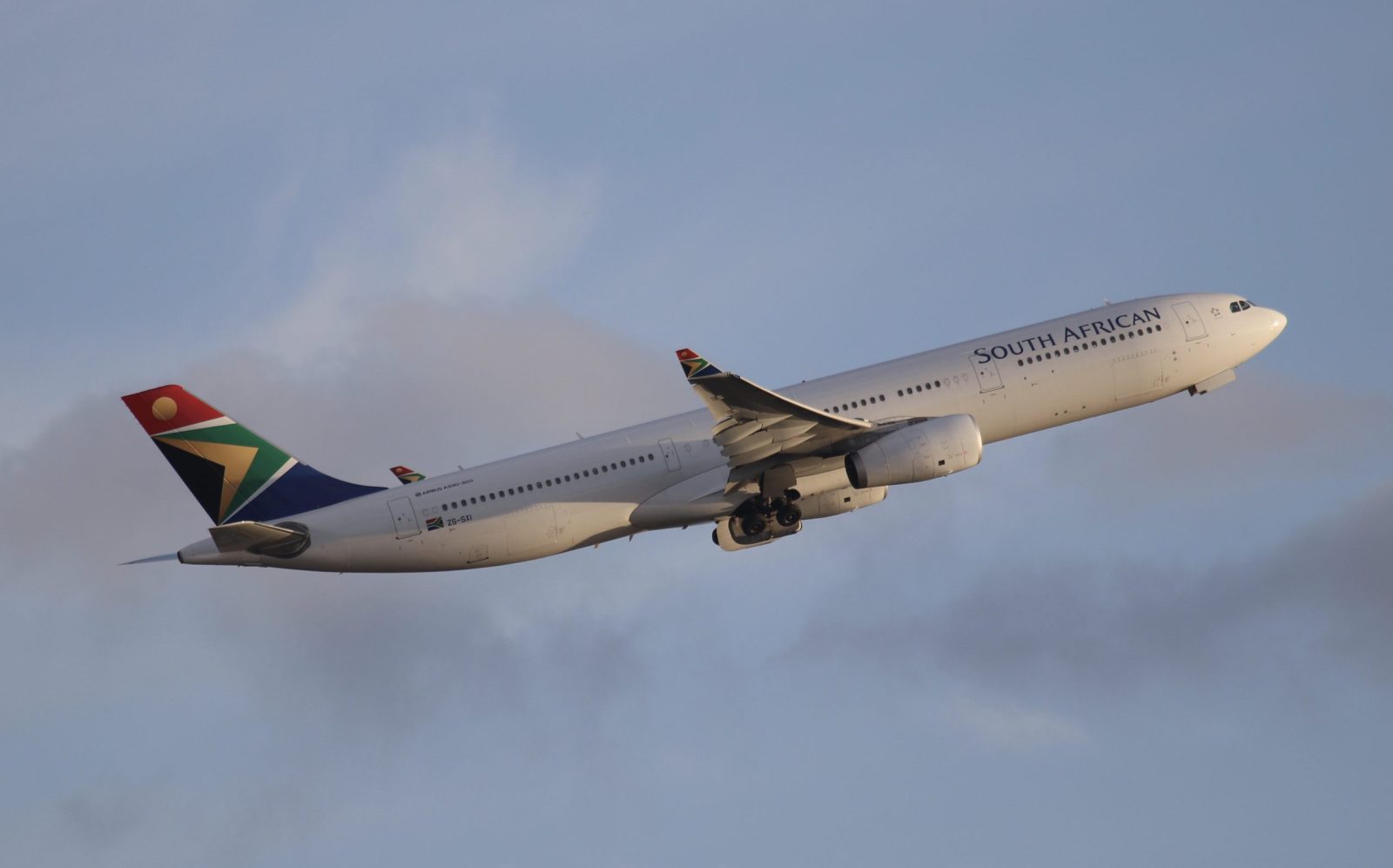
A South African A330 taking off. (Photo: AirlineGeeks | James Dinsdale)
Kenya Airways and South African Airways continue to enhance their strategic pact as they gear towards a pan-African entity. Earlier this week, South African Airways struck a codeshare agreement with Kenya Airways, enabling both airlines to cooperate more closely by offering their passengers seamless travel while offering a wider range of operations.
This announcement also comes as demand for air travel rebounds and will see Kenya Airways’ KQ code used for South African Airways flights within Southern Africa including Cape Town, SOuth Africa; Durban, South Africa and Harare, Zimbabwe.
The airline’s code will in turn be used for Kenya Airways flights within Kenya and East African destinations including Nairobi, Kenya; Dar es Salaam, Tanzania; Entebbe, Uganda; Mombasa, Kenya and Kisumu, Kenya.
South African Airways’ customers will continue to have the ability to earn Voyager Miles on these new codeshare flights. The deal enables travelers to combine flight segments and baggage on a single ticket.
In a joint press release, the two airlines said they are evaluating their codeshare partnership and will see the addition of Zanzibar, Tanzania; Kilimanjaro in Tanzania; Juba, South Sudan; Douala, Cameroon; Lusaka, Zambia; Ghana and Nigeria. These destinations are subject to government approval as the airlines seek to offer more options for travelers within Africa.
Allan Kilavuka, Kenya Airways CEO and Group Managing Director said; “We are very pleased to implement the codeshare with SAA which offers our shared customers more options and flight combinations. As part of our Strategic Partnership Framework, we will contribute to making it easier for passengers to reach exciting new destinations within Africa. The additional destinations we believe will offer better customer journey thanks to the number of frequencies and connections created as well as many opportunities for trade and tourism.”
A Kenya Airways Boeing 787-8 at Schiphol Airport. (Photo: AirlineGeeks | James Dinsdale)
John Lamola, interim CEO of South African Airways said, “Through the codeshare agreement with Kenya Airways, South African Airways’ valued clientele will gain new travel choices to markets across East Africa via Kenya’s extensive network and hub in Nairobi, providing for seamless travel and status recognition. We are looking forward to introducing Kenya Airways customers to our award-winning service, and to working closely with Kenya Airways as our partnership will improve the connections between our respective networks.”
African Aviation Industry’s Potential Growth
Last year, Kenya Airways and its South African compatriot teamed up in November to sign a strategic partnership. This pact will enable the two companies to combine under the roof of a common holding company, signaling a move toward post-pandemic Pan-African airline consolidation.
The two airlines will still, retain their respective brands and talent under this partnership expected to launch in 2023.
The respective chief executives of the two national carriers see the chance to unlock the potential of greater air connectivity within Africa as they focus on achieving synergies that ensure lower costs and route expansion, under the holding firm, the companies have since noted without providing details.
As the airline chiefs work on developing plans for a pan-African operation, the unanswered question is, will African aviation bypass the stage of a continent with “huge potential?”
Victor Shalton's love for aviation can be traced to when he was 11-years-old. As a seasoned aviation writer, he takes pride in providing the best aviation coverage around the globe and is passionate about advancing his skills in the aviation space. In addition, he loves travelling, writing, arts and while his speaking engagements have taken him around the world, he is proud to call Nairobi home.
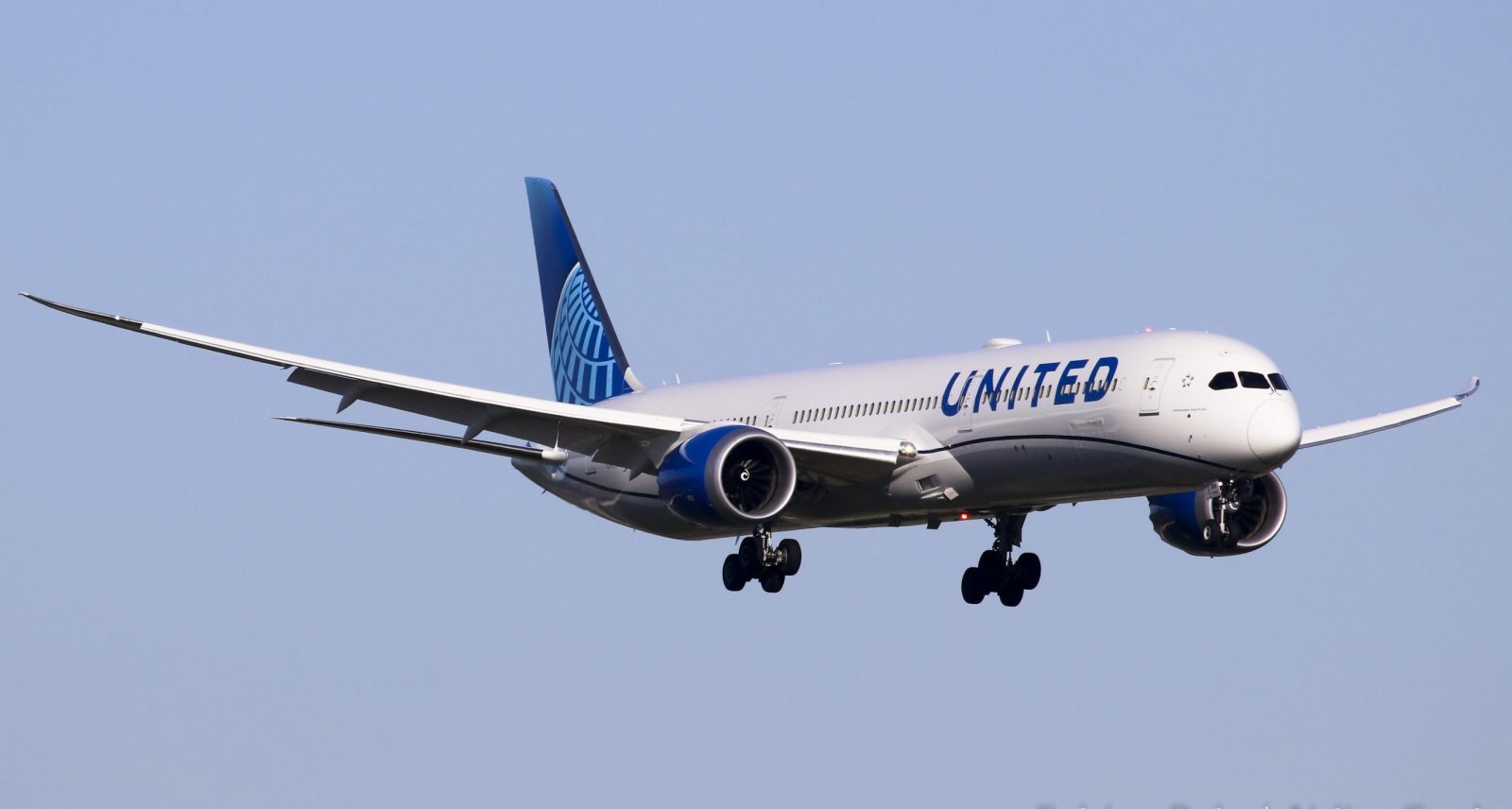
A United 787 Dreamliner descends into Amsterdam. (Photo: AirlineGeeks | Fabian Behr)
United Airlines recently announced a leadership reshuffle that appears to play to the strengths of several key leadership personnel. This comes at a time when the industry is dealing with significant challenges due to a sudden return to travel that many airlines were unprepared for.
United has done a relatively good job compared to its peers. It has carefully managed staffing and capacity to avoid significant meltdowns that American Airlines, Southwest, and Delta Air Lines have faced. Overall, the staff is more satisfied with the management and most labor disputes have been avoided.
This goes to show that the airline led by Scott Kirby generally does know what they’re doing and this reorganization is posed to create a stronger airline while also rewarding key players for their performance.
Leadership Changes
Here’s the breakdown:
Toby Enqvist was the Chief Customer Officer and will now be taking on the role of Chief Operations Officer.
Linda Jojo will be taking on the role of Chief Customer Officer from the role of Chief Digital Officer. This is especially notable since Linda has been responsible for a significant number of positive improvements for customers. The biggest of which has been the revamp of the United Airlines mobile app which is arguably industry-leading in functionality and ease of use.
Greg Hart is Executive Vice President of United Next, the initiative to renew the United fleet. He will take on additional responsibilities by managing TechOps, the maintenance, repair, and overhaul division of the airline.
Andrew Nocella is United’s Chief Commercial Officer and will be taking on additional responsibilities by overseeing inflight and club menu along with product design. This move is to consolidate oversight of the hard and soft product design.
Ankit Gupta, who was recently promoted to SVP of Domestic Planning and United Express in October 2021, will now become Senior Vice President and Chief Air Operations Officer. This involves oversight of Flight Ops, Inflight, and NOC teams along with coordination of commercial and network planning teams.
Patrick Quayle, Senior Vice President International Network and Alliances, will now be Senior Vice President of Global Network Planning and Alliances. This will be in addition to oversight of the domestic United network.
Jason Birnbaum, Senior Vice President Digital Technology, will become Chief Information Officer and continue to report to Linda Jojo.
Jon Roitman, Chief Operating Officer, will step down from his position but will remain on the board as an advisor.
United has taken several calculated steps to reorganize top leadership in a move to better poise the airline for the future.
Political Moves
This is in addition to several steps the airline has taken to cozy up with the government. The airline was among the first to announce a vaccine mandate and has received direct recognition from the White House over the airline’s assistance in flying in baby formula. Scott Kirby also has been appointed to the U.S. Department of Homeland Security Advisory Council and has made several announcements regarding environmental conservation efforts from the White House. United’s Chief Communications Officer, Josh Earnest, was a former White House Press Sectary under the Obama Administration.
United is playing a very calculated game here with multiple players. It is evident their house is in order and they are taking calculated steps to become friendly with the government and the public.
Hemal took his first flight at four years old and has been an avgeek since then. When he isn't working as an analyst he's frequently found outside watching planes fly overhead or flying in them. His favorite plane is the 747-8i which Lufthansa thankfully flies to EWR allowing for some great spotting. He firmly believes that the best way to fly between JFK and BOS is via DFW and is always willing to go for that extra elite qualifying mile. Hemal's opinions are his own and do not reflect those of his employer.
Sign-up for newsletters & special offers!
Get the latest stories & special offers delivered directly to your inbox