Stories

How Commercial Airlines Help Predict the Weather

All of Mesa's airborne aircraft. At even given time there are nearly 100 birds airborne. Weather is currently impacted Texas operations. (Photo: AirlineGeeks | Tom Pallini)

We all know that aviation touches everyone’s lives in some way, either directly or indirectly. In this interconnected world, there isn’t much that can’t be attributed to aviation to some degree. If someone digs deep enough, more often than not an aviation angle is found.

One surprising place that commercial aviation lends a helping hand is weather prediction. It’s common knowledge that various meteorological agencies around the world use a slew of tools to help accurately forecast the weather, however, not everyone knows that many commercial aircraft are among those tools.

Development of the Technology

In the case of the United States, the government has been using aircraft for atmospheric research since 1904, shortly after the historic Wright Brother’s flight in 1903. These early observations were initially quite rudimentary and eventually phased out in the late 1930s by radiosondes, and weather balloons.

As aviation grew in the United States, it again caught the interest of the government in atmospheric data collection. The advent of aircraft data links in the 1970s opened up the possibility of automated weather reports to be collected and transmitted by aircraft.

By the 1990s, technology had developed enough and with the agreement of various airlines in the United States,  a system for aircraft to collect weather data and transmit it to the National Weather Service was born. It goes by different names depending on where in the world it’s being referred to. It can go by MDCRS- Meteorological Data, Collection and Reporting System, which is the weather portion of ACARS- Aircraft Communications, Addressing, and Reporting System. It can also be referred to as AMDAR, Aircraft Meteorological Data Report, this is generally preferred by World Meteorological Organization and the National Weather Service.

The system has grown within the United States and globally since its creation and countries around the world use weather data collected by aircraft for their weather forecasts. A major benefit was the reduction in the need for radiosondes as aircraft could collect similar data for 1% of the cost. Several studies have also shown that AMDAR data can at times be slightly superior to data collected from radiosondes. This results in significant forecast model improvements allowing for weather forecasts to be created all the way out to 10 days.

Data collected and analyzed by the National Weather Service is also shared with airlines for their operational purposes.

AMDAR Uses

The data are collected by various existing sensors on aircraft and are used in a variety of forecasts from understanding low-level wind shear all the way to things like precipitation forecasts and thunderstorm prediction. The data can also be used in emergency situations to create dispersion models in the event of the release of hazardous materials into the environment.

This system has many advantages and disadvantages. The National Weather Service gets access to a large swath of data that it previously couldn’t. On the flip side, during bad weather events when flights are often canceled, there is a drop in the data that is collected. The reduction in air travel due to the COVID-19 pandemic also impacted the amount of data available to the National Weather Service.

It is clear that the benefits are numerous and this system is here to stay. As technology develops, meteorologists will be able to create more accurate forecasts. This not only helps us on a daily basis but can also help save lives during severe weather events. All in part to an unexpected contribution by commercial aviation.

Hemal Gosai

Hemal took his first flight at four years old and has been an avgeek since then. When he isn't working as an analyst he's frequently found outside watching planes fly overhead or flying in them. His favorite plane is the 747-8i which Lufthansa thankfully flies to EWR allowing for some great spotting. He firmly believes that the best way to fly between JFK and BOS is via DFW and is always willing to go for that extra elite qualifying mile. Hemal's opinions are his own and do not reflect those of his employer.

Emirates Opens World’s Largest Vertical Farm

Bustanica Seedlings (Photo: Emirates Airlines)

Emirates Flight Catering is a huge operation based in Dubai that supplied over 225,000 meals a day prior to the pandemic and has a staff of over 6,000. It provides catering services for all Emirates flights along with many other airlines and airport lounges in Dubai.

It operates with chefs from 69 different nationalities all developing food to cater to passengers traveling across the world. This naturally requires a significant amount of ingredients coming in 24 hours a day, 365 days a year. Given the UAE’s location, sourcing certain ingredients can pose a challenge. Supply chains are tightening all over the world and it’s becoming considerably more challenging to source goods.

This is a problem for a huge commercial kitchen operation that needs to operate on strict deadlines. One innovative solution Emirates Flight Catering has come up with is the development of the world’s largest hydroponic farm in partnership with Crop One, a large player in indoor vertical farming.

Hydroponic Farming

The facility, named Bustanica, is a 330,000 sqft facility right outside of Dubai’s Al Maktoum International Airport. It that will produce over 2.2 million pounds of primarily leafy greens annually, which equates to a daily output of approximately 6,600 pounds of produce. There are future plans to grow fruits and vegetables along with the current leafy greens such as kale, spinach, lettuce, and arugula.

The facility has also taken considerable steps to ensure a growing environment free of pests and unwanted plant growth. This essentially eliminates the need for pesticides or herbicides. Craig Ratajczyk, CEO of Crop One, goes as far as to say that customers buying produce from Bustanica can eat it straight from the bag and washing the produce could actually introduce contaminants.

Most of this will go to Emirates Flight Catering starting in July for use onboard in various salads and as components of other dishes. Eventually, as production ramps up, Bustanica also plans on selling produce directly in supermarkets within the United Arab Emirates.

Environmental Impact

There is a significant environmental benefit to this approach as well. Hydroponic farms are inherently better for the environment due to their smaller footprint than traditional farms without compromising food output. This along with reduced soil erosion allow for ethical growing that reduces the overall environmental impact of feeding people.

Additionally, it is expected that Bustanica will require 95 percent less water than conventional farms to grow the same amount of produce. Water is also regularly recycled after cleaning. A significant amount of water savings for a country with a desert climate with a negligible amount of readily available fresh water.

Not only is this a big step for Emirates to run the largest vertical farm but also a big step towards expanding hydroponic farming techniques across the world. Bustanica meets several business needs for a consistent supply of produce for the airline’s catering kitchens while also working towards environmental targets established by the UAE government. It’s a move that many airlines can look to as the entire industry shifts towards more environmental responsibility.

Hemal Gosai

Hemal took his first flight at four years old and has been an avgeek since then. When he isn't working as an analyst he's frequently found outside watching planes fly overhead or flying in them. His favorite plane is the 747-8i which Lufthansa thankfully flies to EWR allowing for some great spotting. He firmly believes that the best way to fly between JFK and BOS is via DFW and is always willing to go for that extra elite qualifying mile. Hemal's opinions are his own and do not reflect those of his employer.

Trip Report: PLAY to Brussels via Reykjavik

PLAY Airbus A321neo in flight (Photo: PLAY)

When WOW Air, the ultra-low-cost carrier connecting passengers between the United States and Europe via Iceland went under, the future of no-frills, transatlantic travel seemed uncertain. Many believed it simply could not be done; that an airline cannot feasibly operate medium to long haul flights at rates that, depending on the season, were cheaper than a roundtrip ticket between New York and Los Angeles.

Enter PLAY, an Icelandic ultra-low-cost start-up from former WOW Air executives that is looking to do nearly exactly what WOW did but with even fewer bells and whistles and a more simplified operation. The carrier began serving the United States in the spring of 2022 with flights to Baltimore and soon following with New York Stewart and Boston.

I flew aboard PLAY’s A321neo and A320neo aircraft from Boston through to Brussels to see how it compared to other emerging low-cost carriers. 

Purchasing my ticket

PLAY’s website is minimal in classic Scandinavian fashion. The interface is useful and does little else besides letting you book a ticket. Fortunately, PLAY is shown on the GDS. This means PLAY’s fares appear on Google Flights and other third-party flight finding services. My roundtrip ticket, before seats, came in at $578 USD. Pretty darn good for a July round trip ticket to Europe when the next cheapest option that included a stop in Dublin was nearly $1,300 USD. Mind you I also booked this fare on July 1st for a July 13th departure and I would imagine there are cheaper seats to be found on PLAY and legacy carriers. There is no premium option on PLAY unless you consider a $40 exit row seat premium. 

Being that a ticket on PLAY is a ticket for a seat and a seat only, you are given a variety choices from bags bundled with priority boarding to seat selection. PLAY includes one personal item in every ticket with carry-on bags starting at around $50 USD on each leg and checked bags starting at around $70 USD though bag rates are dependent on route and time.

I was traveling with a traditional carry-on backpack packed completely full but opted to decline purchasing a carry-on plus priority boarding with the idea that I could probably get it to pass as a personal item even though I knew it wouldn’t really fit under the seat in front of me. 

Check-in and Experience at Boston

I was able to check in online 24 hours before my scheduled departure on PLAY’s website. The airline does not offer an app and I am unsure if an app is coming given that it is roughly a year old. Boarding passes also cannot be added to Apple Wallet which is unfortunate as it is a simple feature that makes travel that much easier. PLAY also has yet to set up a relationship with TSA’s PreCheck program.

When checking in I was given the option to add my Known Traveler Number (KTN) but the system continued to decline my KTN saying that “letters were not allowed” and a little Google search gave me my answer. A gate agent in Boston told me that the carrier is working to allow passengers with PreCheck to use it but until then you are left with the standard TSA lines and procedures. 

Check-in at Boston opens two hours prior to departure. A bit late for a transatlantic flight especially in the summer but I headed straight for security anyway given that I had checked in online and was not checking a bag. PLAY operates out of Boston Logan’s terminal E, the main international terminal. It is by no means the greatest terminal in the world but it is clean and offers good seating, Wi-Fi, power outlets at most seats and a variety of restaurants including the famed Legal Sea Foods should you need your clam chowder fix before embarking on a flight across the ocean. Our flight departed out of gate E3 on the lower level. 

Boarding began slightly after the scheduled 6:20 pm. Families traveling with small children and passengers with disabilities are allowed to board first. As I mentioned, there is no premium seating. Following the first two groups, an announcement was made for those with priority boarding to board. The reality was that little was done to check this. Passengers formed a long line in no real order and we headed down the jet bridge towards the A321neo that would take us to Reykjavik. 

Onboard experience

On routes from the United States to Iceland, PLAY alternates between A320 and A321neo aircraft and if you do your research on your Google Flights, you too can score a whopping 34 inches of pitch for yourself. That isn’t a typo. It’s more legroom than you would get on any legacy economy seat and even products like United’s Economy Plus and Delta’s Comfort Plus on widebody aircraft.

Mind you this is an A321neo. You can thank Mexican low-cost carrier Interjet for not taking these aircraft a few years ago. They’ve remained in their original configuration with PLAY though there are rumors that they’ll be refurbished next year with the knee-crunching 28 inches of pitch you can find on all of PLAY’s A320neo aircraft so take advantage while you can. 

I was in 38A, a window seat I paid $10 USD for. Seat selections are sold on a per leg basis which makes sense given the change in aircraft type in Reykjavik. I surprisingly found myself closer to the middle of the plane instead of the back despite row 38 generally being pretty close to the rear on a narrow body. The seats are minimal but comfortable and offer decent recline and even adjustable headrests.

There are no personal entertainment screens on the seatbacks so bring your own entertainment. Larger screens flip down from overhead every 3-5 rows displaying a map along with the weather and local time in Hermosillo, Mexico City and Cancun in case on your trip to Europe you wanted to keep tabs on the temperature in Mexico. An update could probably save a few passengers every flight from wondering if they had boarded the non-existent PLAY Airlines flight to Reykjavik with a quick pit stop in Central America. The information is also displayed in Spanish.

Onboard service

As is to be expected, nothing is free. There is a menu offering a range of snacks and sandwiches along with alcoholic and non-alcoholic drinks that can be purchased when the crew rolls the cart through or by pressing the flight attendant call button at any point in the flight. Prices ranged from 3 euros for sodas and candy bars to 9 euros for sandwiches and alcoholic drinks. 

Transferring in Reykjavik

We touched down in Reykjavik around 4 a.m. local time and found ourselves in a quiet and clean airport with backpackers sleeping at nearly every bench. Automated passport control was closed for EU/EEA/CH citizens but luckily the line wasn’t too long at this hour. I would imagine that during peak hours it isn’t quite as simple though in comparison to many larger airports it is quiet. 

Short Hop to Brussels

About as uneventful as it gets, our flight to Brussels contained little to get excited about. The flight was operated by an A320neo that had previously been with Interjet and then Russian carrier SmartAvia. Nearly all signage onboard was in Russian as well and a crew member said they had only operated this plane for a week.

There was the same buy-on-board menu as was on our flight from Boston. As for legroom, there is none. 28 inches of pitch definitely isn’t unbearable on a 2 or 3-hour flight but after coming off of a red eye, it feels 10 times worse than it actually is. Most passengers slept before we began our descent into a shockingly sunny Brussels. 

Final Thoughts

With airfares the way that they are right now, PLAY is a very good option if you are looking to save some serious cash and are willing to suffer a bit more to get to your destination. The A321neos have great seats thanks to the interiors coming from Interjet while the A320neos are about as bare bones as it gets. I would definitely do it again for the price and the variety of destinations on offer is fantastic. Whether or not PLAY sticks remains to be seen but for the time being it is a very good low-cost option over the Atlantic.

Ezra Gollan

Ezra Gollan is a student, photographer and aviation enthusiast based in New York, New York. He has spent over half a decade around New York City’s airports as a photographer.

AirAsia X Relaunches Services to Australia and New Zealand

An Air Asia Airbus A330-300.
An Air Asia Airbus A330-300. [AirlineGeeks - Hisham Qadri]

AirAsia X, the Malaysian no-frills carrier, has announced to resume its service from Malaysia to both Australia and New Zealand. South-west Pacific is an important market for AirAsia X, it carried over a million passengers to Australia and New Zealand in 2019. AirAsia X is the affiliated airline of AirAsia Aviation Group providing long-haul services in Asia.

“As the world reopens and travel restrictions ease, we are confident these new services will prove popular.” Benyamin Ismail, Chief Executive of AirAsia X said.

The airline will operate flights between Kuala Lumpur, Malaysia to the Australian cities of Perth, Melbourne, Sydney and Auckland, New Zealand, starting from Nov. 1. The flight will fly to Auckland via Sydney. AirAsia X is set to operate three times a week in these Australian cities with Airbus A330 aircraft, it is expected the services will be gradually added to the daily operation in early 2023. Earlier, the airline announced a two-times-a-week from Kuala Lumpur to Sydney, starting on Sep. 2.

Meanwhile, the passengers could stand to benefit from the new route, AirAsia X will offer a competitive price on the route from Auckland to Sydney. Auckland Airport welcomes the decision.

In response to the new route, Scott Tasker, the General Manager Customer and Aeronautical Commercial said, “The new service will not only provide more choice for trans-Tasman travelers looking for competitive fares route on the popular route between Sydney and Auckland but is a great option for those wanting to connect through to AirAsia’s extensive Asian network.”

AirAsia X has suspended its service to Melbourne since 2020. In 2018, the airline has moved its services to Melbourne Avalon Airport. However, the new services between Kuala Lumpur and Melbourne will shift to Melbourne Tullamarine Airport (MEL) in the future.

Melbourne Tullamarine Airport mentioned that the airport is the destination of choice for budget airlines. The airport is already the hub of Jetstar, the subsidiary of Qantas.

Since the travel restrictions were lifted, AirAsia X has enhanced its services by adding multiple destinations. Earlier, the airline announced the new long-haul routes from Kuala Lumpur to Honolulu, London, Dubai and Istanbul, and other Asian destinations by the end of the year. The airline has ceased its operation to London in 2012.

New Services to London and Honolulu

The airline said the fares to London will generally be higher, as a result of the surging price of fuel.

“The return to London and first-time flights direct to Dubai and Istanbul will be a game-changer for great value long haul travel,” Ismail said.

AirAsia X hopes its new business model, combining cargo and passengers enables the carrier to make a profit. According to the airline, it owns a fleet of 39 Airbus A330 aircraft including 15 in its affiliates, 13 in AirAsia X Thailand and two in AirAsia X Indonesia.

Since the country’s border reopened in April, the travel demand in Malaysia has surged. According to Malaysia Airports, the international passenger movements reached 1.03 million in May, the highest record since 2020.

Farnborough International Air Show 2022 Kicks off Monday

Airbus aircraft at the Farnborough Airshow (Photo: AirlineGeeks | Fabian Behr)

Despite the scorching heat of this summer, the aviation world is not standing still. On Monday, the Farnborough International Air Show 2022 (FIA) will be held at Farnborough Airport in England. Since its first show in 1948, Farnborough has seen the debut of many famous planes, including the Vickers VC10, Concorde in 1970, the Eurofighter, the Airbus A380 in 2006, and the Lockheed Martin F-35 Lightning II.

After three years of a pandemic and restrictions, the FIA is a significant opportunity for aerospace companies to showcase development progress and innovation to a global, face-to-face audience.

In 2020, the live Farnborough Airshow was cancelled for the first time in its 72-year history due to the pandemic. The FIA organization launched the world’s major digital trade event for the aerospace and defense industries, called FIA Connect, held also in 2021.

The launch of FIA Connect saw more than 250 senior executives, academics, and politicians joined by 14,000 delegates from 97 countries. It served as a crucial opportunity for the industry to come together during a time of unprecedented challenge as the impacts of COVID-19 took hold.

Along with FIA 2022, on July 18, the Aerospace Global Forum (AGF) will also begin, providing a single global platform to drive immediate action, accelerating the transition to the Net Zero goal.

In the opening ceremony, Prince of Wales Charles will virtually welcome global industry leaders, CEOs, government, climate change experts and aerospace professionals to the forum. Future-focused topics, best practices and insights on seven central themes will be discussed: Space, Future Flight, Security, Sustainability, Innovation, Future Workforce, and Future Financing on the main stage.

Exhibitors will include, to name a few, Airbus, Boom Supersonic, Boeing, Dassault, Embraer, Aviation, GE Aviation, Inmarsat, Leonardo, Lilium, Lockheed Martin, MBDA, Microsoft, NASA Glenn Research Center, Northrop Grumman, Rolls-Royce, RUAG, Vertical Aerospace, and many more. The complete list is here.

The Farnborough International Airshow will be held from Monday, July 18, through Friday, July 22.

At the Air Show, there will be the daily flight exhibition, sponsored by Accenture, which will take place every afternoon and will feature the most advanced aircraft in both commercial and military. Parallel to the flight display, there will be a static exhibition that will offer visitors the opportunity to see the aircraft up close.

Editor’s Note: AirlineGeeks will provide continuing coverage of FIA22. Stay tuned to our Twitter and Instagram

Vincenzo Claudio Piscopo

Vincenzo graduated in 2019 in Mechanical Engineering with an aeronautical curriculum, focusing his thesis on Human Factors in aircraft maintenance. In 2022 he pursued his master's degree in Aerospace Engineering at the University of Palermo, Italy. He combines his journalistic activities with his work as a Reliability Engineer at Zetalab.

Sun Country Selected for Essential Air Service Contract

Sun Country Boeing 737s sitting at its main base in Minneapolis/St. Paul (Photo: AirlineGeeks | Joey Gerardi)

Essential Air Service (EAS), the government-funded program providing air service to small communities around the U.S., has been in the newS a lot recently. With new contracts being selected almost every month around the country, and SkyWest requesting to terminate more than 30 of these contracts, it is a very confusing time for the program with a lot of unknowns for the many communities in the program.

A United Express CRJ-200 in Ogdensburg, N.Y. (Photo: AirlineGeeks | Joey Gerardi)

SkyWest, under the United Express banner, requested to terminate just over 30 of these EAS contracts at the beginning of the year, each of the communities began the EAS bidding process and each city had its prospective bidders and proposals from the airlines.

There were a few airline proposals that were a bit of a shock, but none more so than Eau Claire, Wis. This small community located 85 miles east of Minneapolis/St. Paul Airport had three airlines submit proposals to the Department of Transportation: Boutique Air, Sun Country, and Southern Airways Express, the latter of which revoked its proposal.

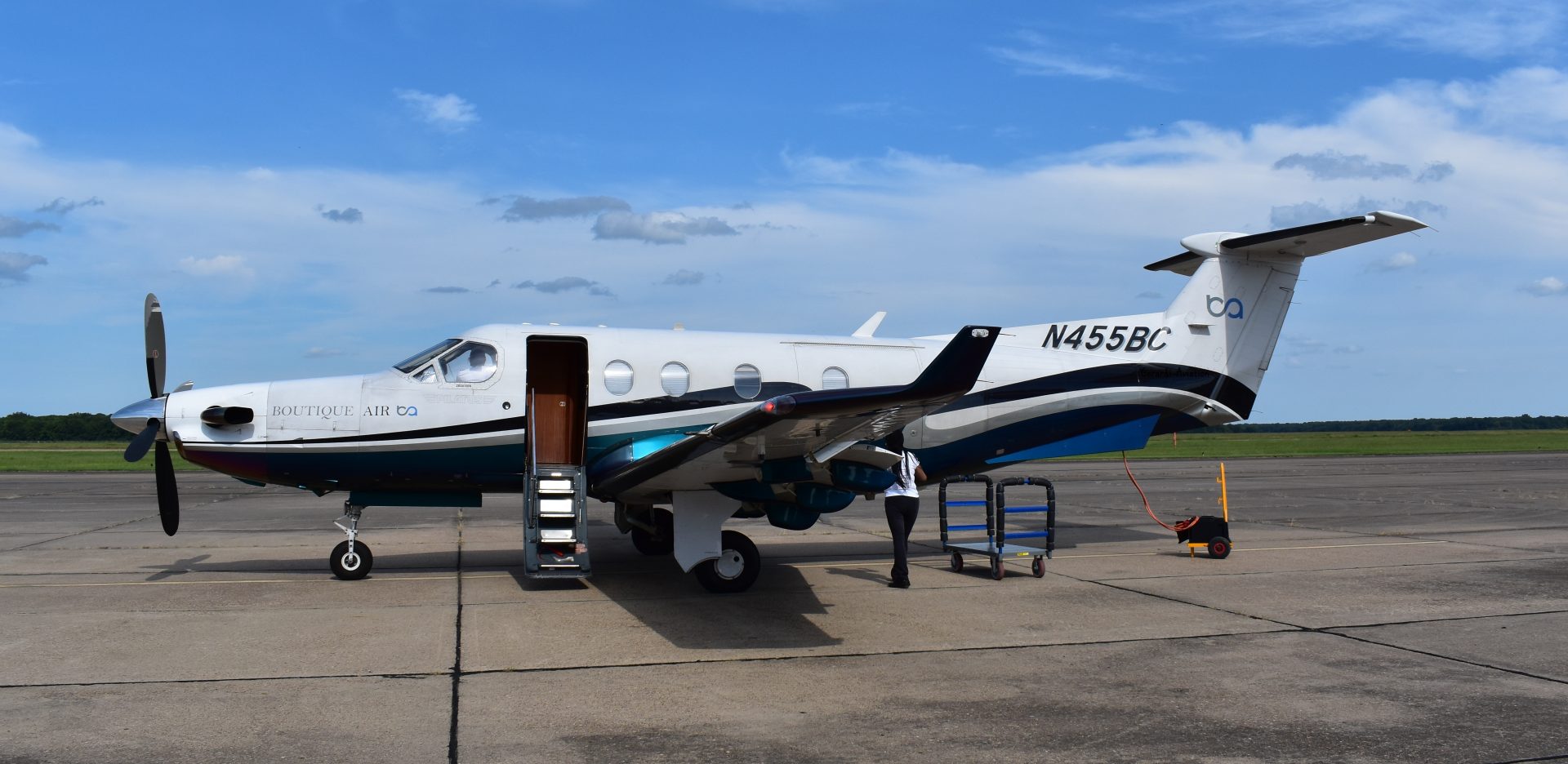
A Boutique Air Pilatus PC-12 in Greenville, Miss. (Photo: AirlineGeeks | Joey Gerardi)

Boutique proposed service to Minneapolis/St. Paul for multiple flights a day, Sun Country proposed service to four airports all of which at less than daily frequencies. One of the requirements to operate EAS flights is they must meet a certain number of daily flights unless they are otherwise waived.

The carrier that rescinded its proposal; Southern Airways Express, even sent in a letter to the DOT saying how they hope Boutique Air gets selected as Sun Country doesn’t meet certain requirements. The following is an excerpt from the two-page letter Southern Airways Express sent to the DOT:

“Under no circumstances should the Department accept Sun Country’s proposal, whether by waiver or otherwise, even if there is support for the proposal. To do so would set a horrendous precedent and invite a host of similarly untenable EAS applications from carriers operating large aircraft….For DOT to subsidize such service would make an outright mockery of the EAS program, its goals, and its well-established precedents over more than 40 years.”

The airport director of the Eau Claire Regional Airport sent a letter to the DOT to “request that the Secretary waive the EAS minimum frequency requirement of 49 U.S.C. 41732 (b)(1)(a) as related to frequency of service for the duration of this Sun Country EAS contract to serve Eau Claire.” and it appears the DOT did accept the airports request as Sun Country has been awarded the EAS contract on July 13, 2022.

However, at the posting date of this article, the DOT has yet to post a response to Southern Airways Express’ opposition to selecting Sun Country. It would be worth noting that the other carrier proposing service, Boutique Air, only operates single-engine Pilatus PC-12s and would require the airport to waive their right to two-engine aircraft for this and possibly future EAS contracts.

Contract Terms and Service Details

So with the contract selected, here are the details of the service. While the contract has been chosen, the airline hasn’t formally announced an exact start date for its Eau Claire service, the contract is scheduled to start on Dec. 1, 2022 and will run for two years until Nov. 30, 2024. All services will be flown using 186-seat Boeing 737-800 aircraft, the largest on any EAS contract in the entire country.

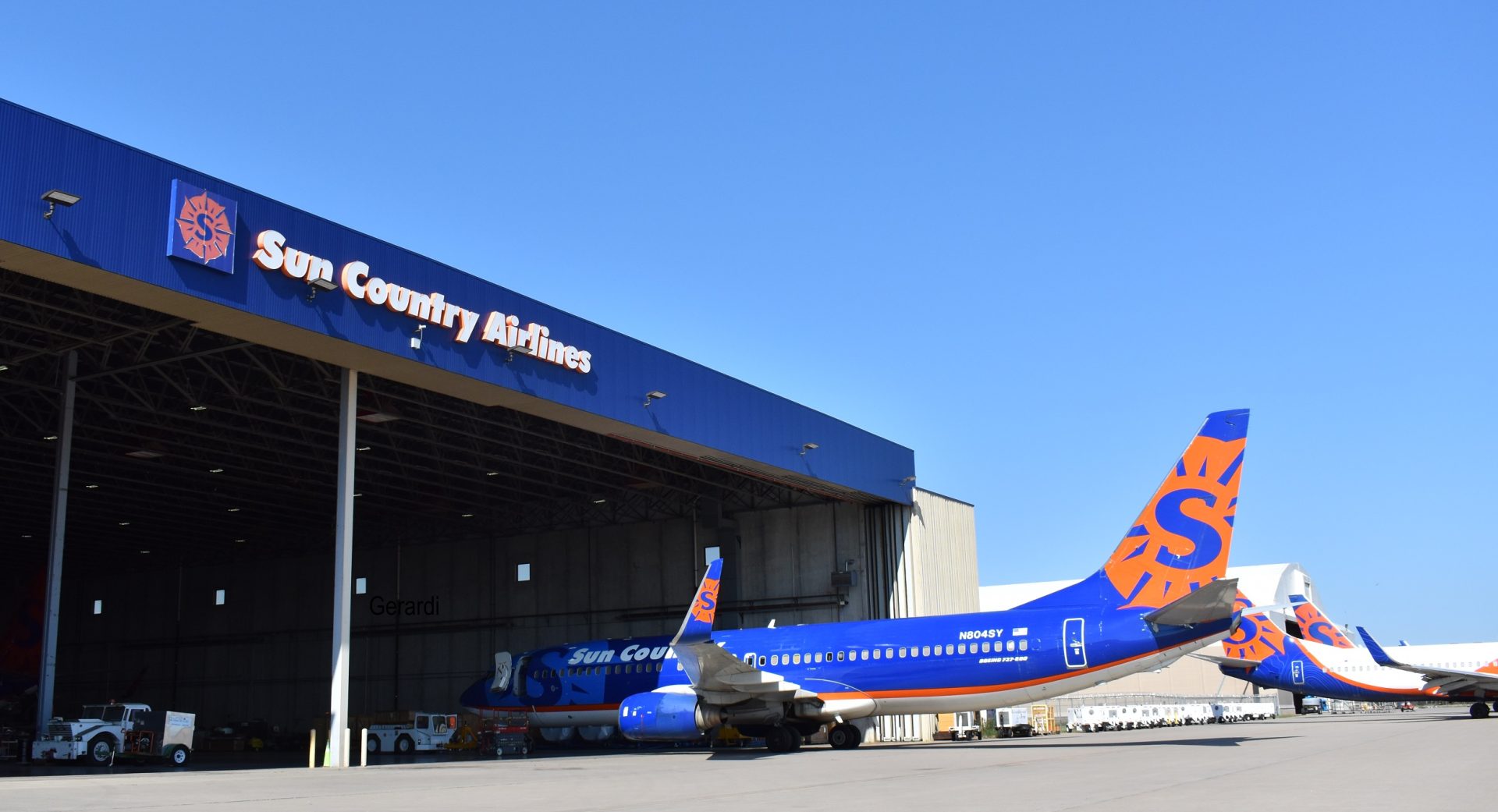
A Sun Country 737-800 at the airline’s hangar in Minneapolis (Photo: AirlineGeeks | Joey Gerardi)

The airline will operate flights twice-weekly year-round to Minneapolis/St. Paul, in addition, it will operate an average of two flights a week to Ft Myers, Orlando, or Las Vegas and the destination they do serve will depend on the season and month. The annual subsidy of the contract will be $6,460,988 per year for the two years. The airline did mention they’d provide bus service to their hub at Minneapolis/St. Paul on the days when there are no flights, but that is not part of the EAS contract.

The Las Vegas flight will become the longest EAS flight route in the entire country at 1,380 miles, overtaking the current record holder which is Alaska Airlines on their Anchorage to Adak EAS flight that comes in at 1,192 miles.

Joey Gerardi

Joey has always been interested in planes for as long as he can remember. He grew up in Central New York during the early 2000s when US Airways Express turboprops ruled the skies. Being from a non-aviation family made it harder for him to be around planes and would only spend about three hours a month at the airport. He was so excited when he could drive by himself, the first thing he did with his driver's license was get ice cream and go plane spotting for the entire day. He graduated from Western Michigan University in 2022 with a B.S. in Aviation Management & Operations and a Minor in Business, and currently works for a major airline in his hometown.

Australian Domestic Airlines Nearing Full Recovery

A Qantas A380 arriving at Sydney Airport (Photo: AirlineGeeks | Hisham Qadri)

Australia’s domestic airline industry is approaching full recovery, according to statistics released by the Australian Competition and Consumer Commission in its June report on airline competition in Australia. Releasing its report on June 8, 2022, the independent competition and consumer authority focused on data gained from April 2022, part of a larger review of Australia’s domestic airline competition. The data reveals a post-pandemic recovery amounting to nearly 90% of pre-COVID levels, as well as increased airline and airfare competition.

The highlights of the report, as defined by the ACCC, include evidence of increased consumer confidence despite new COVID variants, as well as consumer benefits of increased airline competition, concerns about increasing fuel costs and their impact on passengers, and an evaluation of Australia’s domestic market share. The report concludes with lessons Australia can gain from analyzing Canada’s domestic airline competition.

Increasing Passenger Levels

Increased passenger levels began earlier this year, following eased travel restrictions in several Australian states, most notably Queensland and Western Australia. The open borders culminated in April’s 4.5 million passenger peak during the Easter holiday period, reflecting 89% of pre-pandemic levels. Of this 89%, Qantas (including Jetstar) reported a flight capacity of 110%, with the first airports to reach and surpass their 2019 passenger numbers being holiday hot-spots Gold Coast airport and Sunshine Coast airports respectively.

In terms of route popularity and growth, it was the Gold Coast that proved to have the highest recovery rates, with some routes far exceeding pre-pandemic numbers. The three most popular routes – all destined for the Gold Coast – included the Canberra route, peaking at 193% of pre-pandemic levels, Melbourne at 126%, and Adelaide at 125%. As for the usual ‘Golden Triangle’ – routes between Sydney, Melbourne and Brisbane – increases were noted also, with Melbourne-Sydney reaching an 82% recovery with 563,000 passengers, Brisbane-Sydney at 81% with 322,000 passengers, and Brisbane-Melbourne increasing the fastest at 89% with a passenger total of 272,000.

While the data shows a strong consumer drive for holidays on the back of eased restrictions, the report noted additional factors for increased travel, such as increased competition. Expansion of regional airline Rex, which has challenged both Qantas Group (including Jetstar) and Virgin, has resulted in lower airfares, with the report stating that “growing numbers of Australians are benefitting from direct competition between all 3 of the main airline groups,” with both Qantas and Virgin having lowered their prices to match or undercut Rex airfares in previous months.

ACCC ‘Reviewing’ Airline Competition

Despite concerns that airfares may have “bottomed out” thanks to increasing oil prices, there is an ever-increasing voice from both industry and consumers that Qantas’ actions have been domestically detrimental. The three main factors behind this negative perception of the Australian flag-carrier revolve around poor customer service, alleged ‘anti-competitive conduct’, and its proposal to purchase all remaining shares of Alliance Airlines.

Reinforcing this perception, the report makes specific mention of all three of the above-mentioned factors, with the ACCC noting that it is reviewing each of the issues.

On the matter of poor customer service, the report stated: “The ACCC is looking into these issues, including whether Qantas’ conduct may raise concerns under the Australian Consumer Law.” The issues, mentioned in this opinion piece, include long call hold times and a credit policy where passengers could only use credits for flights of equal or greater value than their original bookings. Addressing this concern, the report states: “The practical effect… is that customers who seek to book using a flight credit issued for flights booked on or after 1 October 2021 are made to use a different flight booking portal and, in some cases, are not shown cheaper fares that may be available when booking using other payment methods on Qantas’ website.”

Qantas’ customer service has since sunk to new lows, with travel website Traveller recently adding that “the rants are currently well outweighing the raves… with complaints to Traveller about Qantas overwhelmingly dominating our inbox,” adding that it was “close to having to declare a pause on Qantas-related missives.” Issues, such as lost baggage, have been attributed to a third-party contractor after Qantas outsourced about 2000 workers despite the billions of dollars in government support over the years. Recently, Qantas lost an appeal against the Australian Federal Court’s decision that the sacking of those workers was illegal, further staining the airline’s reputation.

Regarding Qantas’ alleged ‘anti-competitive’ behavior, the report noted: “In concluding our investigation, we noted that a range of factors impacted the competitive dynamics in the market at the time, particularly the COVID-19 movement restrictions and border closures,” adding that “COVID-19 related measures have now been relaxed and this will simplify evaluating the impact of any future capacity increases or pricing practices by airlines in response to new competition. The ACCC will continue to pay close attention to any behaviour that may be anti-competitive.” The investigation commenced after Rex complained Qantas had added capacity to routes that were both historically low in passenger count and operated by Rex, with its CEO, the Hon John Sharp AM saying: “This behaviour is all the more unconscionable after receiving over $2 billion in federal bailouts over the past 2 years.”

Qantas also faces additional scrutiny after it recently proposed to purchase shares of Australian airline Alliance Airlines. Already owning 19.9% of shares, Qantas plans to acquire all remaining shares, raising concerns of the impact on domestic airline competition. Alliance Airlines already leases aircraft and supplies parts to Virgin, as well as operating remote fly-in fly-out services to mining communities in regional Australia. On this matter, the report stated: “We are assessing the proposed acquisition to determine whether it has the effect or likely effect of substantially lessening competition.”

Australians May Have “Missed Out”

The ACCC report concluded with the comment that “Australian consumers may have missed out on cheaper travel and additional routes because fewer airlines have entered the Australian market.” In its assessment of domestic aviation, comparing Australia and Canada with both economic and geographic similarities, the ACCC found that Canada’s low-cost carriers (LCC) have been a primary driver in domestic growth. This growth was attributed to both new and expanding airlines, delivering “providing both affordable travel and competition.”

Speculating that Qantas’ subsidiary Jetstar exploited the LCC gap in Australia over the past ten years, the report said that “any prospective LCCs would have known that they would need to compete directly with a profitable, well-established rival with strong financial backing of a large airline group, potentially deterring new entry.” It’s Canada’s example which gives confidence that new-comer Bonza can establish a footing in Australia to further add competition and growth in what the ACCC sees as a “concentrated” airline industry.

The report expressed its confidence in Bonza, stating that: “Canada’s experience suggests that Australia’s domestic market may be large enough to support more competition than the traditional duopoly of the Qantas Group and Virgin, such as that offered by Rex and Bonza.”


Mike Mangano

Mike’s love affair with flight and mechanical objects in the sky began at an early age, fascinated by space documentaries and the vintage Flight Simulator ’95. He currently works as an instructor for UAVs and is training to receive his Private Pilot Licence with the goal of working in manned flight instruction. An avid reader of all things aviation and manned space flight, Mike stays close to developments in aerospace while reminiscing and sharing the rich history of flight with others. He loves writing, engineering and science.

Pittsburgh International Airport Sees Great Benefits Just One Year After Going Live With Microgrid

It’s been one year since Pittsburgh International Airport installed a first-of-its-kind microgrid, becoming the first airport to ever run completely on natural gas and solar energy.

Since going live, the airport has not only seen great environmental impacts but substantial economic benefits as well, saving the airport upwards of $1 million in energy costs alone. The airport isn’t the only entity benefiting from the microgrid, as the surrounding campus is powered by the grid as well.

The airport was able to accomplish this through the addition of 9,360 solar panels and five natural gas-fired generators that sit on approximately eight acres of the airport’s property. The airport’s solar panels, combined with the generators, produce more than 20 megawatts of electricity, 43 percent more megawatts than the 14 megawatts needed during peak demand. The power generated from the microgrid can supply power to the airport’s airfield, terminal buildings, Hyatt Hotel and the gas station Sunoco.

“We’ve lowered our energy costs, we’ve lowered our carbon output and we have guaranteed ourselves resiliency and redundancy,” stated Christina Cassotis, CEO of the Allegheny County Airport Authority. “That’s really important to an airport.”

With its current grid, the airport will cut carbon dioxide emissions by 8.2 million pounds per year, a significant impact for an industry that is under constant scrutiny for generating the largest share of greenhouse gas emissions. Airports worldwide are contributing to the goal by utilizing more sustainable energy options such as solar, wind, biomass, hydro and geothermal, all solutions contributing to the industry-wide goal of cutting carbon emissions in half by the year 2050

“We are really proud of the microgrid and we see this as one example of the work we are doing in sustainability,” stated Cassotis in a press release. “It’s really led to a reconsideration by the industry of what’s possible.”

“We all need aviation and a lot of us want it to be more sustainable, so we want to be at the forefront of making that happen and we are doing it right here.”

Room For Growth

With the first anniversary being this month (July), the airport has seen energy cost savings of $1 million. As a result of the great success, the airport already looks to add to the microgrid, further increasing cost savings and its environmental impact. The airport is considering doubling the number of solar panels on site, which would bring the total to 18,720 panels.

The microgrid isn’t the only sustainable initiative of the airport, it extends beyond this. The airport is currently working on alternative fuel strategies, repopulating the communities honeybee population, and completing the Terminal Modernization Program – A program by Allegheny County Airport Authority that’s designed to make Pittsburgh International Airport the “smartest” airport in the world by implementing technology provided through an agreement with Carnegie Mellon University.

“We are looking at using any and all materials in our new terminal that come out of, for example, ripping up the ramp and crushing the concrete – that will be the base layer of our roadway system,” stated Cassotis.

Pittsburgh International’s new microgrid is as beneficial as it is impressive. It is a step in the right direction for the community and industry as a whole and should serve as an excellent example for the industry going forward.

Chase Hagl

Chase Hagl grew up in Twin Falls, Idaho. His love and passion for Aviation landed him in Orem, Utah where he obtained a B.S. in Aviation Management with a minor in Business Management from Utah Valley University. Chase currently works as a flight attendant in Charleston, SC and is also the primary Inflight ASAP ERC representative for startup airline, Breeze Airways. His experience in the aviation industry spans back four years, working in areas including agriculture application, customer service, maintenance, and flight ops. In his free time, Chase enjoys road biking, astronomy, and flying.

Dash Air Shuttle to Start Service on Olympic Pennisula

A Dash Air Shuttle airplane in the shop (Photo: Dash Air Shuttle)

Dash Air Shuttle will start Service between Port Angeles, Wash, and Seattle on August 11, 2022. The company will offer up to four roundtrips at the inaugural and plan to expand to up to six daily roundtrips by summer 2023.

Service Details

The new service will arrive at Seattle’s primary airport Seattle-Tacoma International Airport (SeaTac). While the flights arrive and depart at SeaTac, passengers won’t have to go through security as the flights depart from the private terminal at Signature Flight Services. Although, the airline will have its check-in counter at the main terminal and provides a shuttle service to take the passengers to the airplane. Locating in the main terminal offers easier access for people departing Seattle. Therefore the shuttle addition may be a justifiable choice. On top of the additional shuttle service, the airline does not offer any interline agreement yet, making connecting via SeaTac less worry-free.

Shuttle van in Dash Air Shuttle’s fleet. (Photo: Dash Air Shuttle)

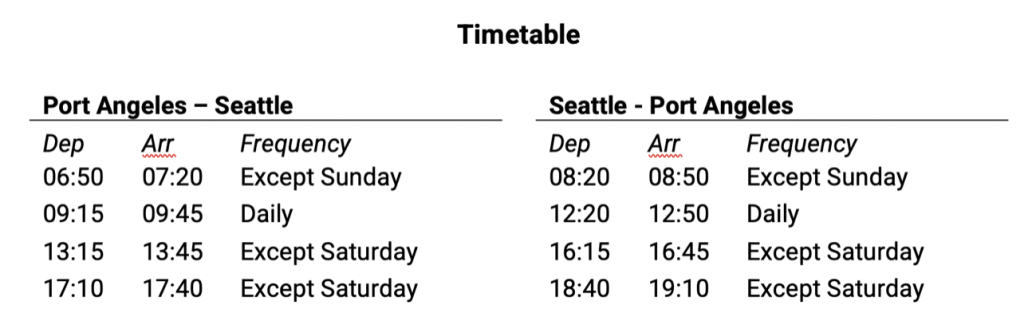
The number of trips is lower than the expected five daily roundtrips, with the intended late-night Seattle departure missing. The earliest flight departs Port Angeles at 06:10, and the last flight returns from SeaTac at 18:40. The airline initially planned an additional 22:30 flight back from SeaTac, which would have provided more flexibility for business travelers. However, since the flights departing Seattle do not go through security, the 18:40 flight can still be viable for same-day travels. Flight time will be around 30 minutes.

Dash Air Shuttle’s initial schedule. (Photo: Dash Air Shuttle)

The Pacific Northwest-based airline acquired three Cessna C402 airplanes from the New England-based Cape Air in 2021 and will sublease them to Backcountry Aviation for passenger service. Several regulatory delays postponed the inaugural by more than a year from the company’s original plan, but the two parties worked through the difficulties and can now start flying.

Prospect

The full fare is $159 with promotional rates of $89 at the start. The cost is cheaper than similar regional flights, which may help kick off demand.

While the airline only offers service to Seatac at the moment, the company’s reservation page showed Paine Field in the destinations list. The airline later clarified the entry was used as part of their system test and has since removed it. However, it could be an indicator of what’s to come. Paine Field has been a popular destination for small commuter airlines. San Juan Airlines started operating flights out of the north of Seattle airport in 2019, and Kenmore Air will start its flight from the airport on July 14, 2022.

The Tukwila, Wash,-based airline shows a lot of resemblance to Cape Air. The similarity is in both fleet choice and route selection. Both companies started flights that cut travel time significantly. The flight between Port Angeles and Seattle is 72 miles with a 30-minute block time, comparable to Cape Air’s first route between Provincetown, Mass, and Boston. Despite the short distance, both city pairs require detouring around a sound and take two and a half hours by road when there’s no traffic.

Dash Air Shuttle’s first route compared to Cape Air’s first route. (Photo: gcmap)

Several other operators have previously provided services between Port Angeles and Seattle. San Juan Airlines and Kenmore Air flew to King County International Airport north of SeaTac. Passengers can then take a shuttle to the region’s hub airport. While the latest flight still contains a shuttle ride, the ride will have more predictable traffic than the old one. San Juan Airlines dropped out of the competition with Kenmore Air in 2005, while Kenmore dropped theirs in 2014 amid increasing fuel prices. Horizon Air was the predecessor to the two commuter airlines but flew to SeaTac instead. However, its service was on the larger airplanes, and it ended up dropping the route citing low load factors. The earlier contenders on this route failed due to financial problems. Dash Air Shuttle appears to be suited to avoid all these challenges. The route may be here to stay this time.

Fangzhong Guo

Fangzhong grew up near an OEM airport in northeastern China, where he developed his enthusiasm for aviation. Taking upon his passion, he's now working as an aircraft interior design engineer. Besides working in the aerospace industry, Fangzhong enjoys trying out different types of airplanes and seeing how airplane interiors have evolved. So far, he's flown on over 80 types of aircraft. He also planespots in his spare time. His rarest catches included the 747 Shuttle Carrier Aircraft and AN-225.

Furious Emirates Rejects Heathrow Airport’s Passenger Cap, Refusing to Cut Flights

An Emirates Airbus A380 on final approach. (Photo: AirlineGeeks | James Dinsdale)

Emirates Airlines has rejected Heathrow airport’s (LHR) request to airlines to stop selling tickets and remove capacity from the U.K.’s hub airport. In a strongly worded statement released on Thursday, the airline says the airport’s demands are a “blatant disregard for consumers”. The airline states that Heathrow is seeking to “force Emirates to deny seats to tens of thousands of travelers who have paid for, and booked months ahead, their long-awaited package holidays or trips to see their loved ones.”

With six Airbus A380 flights per day to and from Heathrow the airline says that “our ground handling and catering – run by dnata, part of the Emirates Group – are fully ready and capable of handling our flights.” A week after providing European travelers with some certainty on summer operations the Dubai-based carrier has hit back at Heathrow management who this week announced a cap of 1000,000 passengers a day until mid-September. The Emirates statement makes clear that “the crux of the issue lies with the central services and systems which are the responsibility of the airport operator.”

The statement continues, “The bottom line is, the LHR management team are cavalier about travelers and their airline customers. All the signals of a strong travel rebound were there, and for months, Emirates has been publicly vocal about the matter.  We planned ahead to get to a state of readiness to serve customers and travel demand, including rehiring and training 1,000 A380 pilots in the past year.”

Former British Airways chief executive and current director general of the International Air Transport Association (IATA) Willie Walsh also condemned Heathrow’s passenger cap. BBC News reports Mr. Walsh stating: “To tell airlines to stop selling – what a ridiculous thing for an airport to say to an airline. I am surprised Heathrow have not been able to get their act together better than this. Airlines have been predicting stronger traffic than Heathrow has been predicting… they clearly got it completely wrong. Heathrow is trying to maximize the profitability that they get from the airport at the expense of airlines.”

In response to the criticism from airlines, Sky News reports Heathrow airport as saying they had no choice but to introduce a passenger cap. “For months we have asked airlines to help come up with a plan to solve their resourcing challenges but no clear plans were forthcoming and with each passing day, the problem got worse. We had no choice but to take the difficult decision to impose a capacity cap designed to give passengers a better, more reliable journey and to keep everyone working at the airport safe.”

Heathrow’s statement further adds: “We have tried to be as supportive as possible to airlines and our 100k cap on daily departing passengers is significantly higher than the 64k cap at Schiphol. It would be disappointing if instead of working together, any airline would want to put profit ahead of a safe and reliable passenger journey.”

Issues at multiple European airports have been reported for several months now with staff shortages being the main problem. The impact on the traveling public has been considerable with multiple last-minute flight cancellations and governments stepping in to try to minimize disruptions. Airlines have taken steps to mitigate issues, particularly with lost hold baggage with reports that Icelandair carry two baggage handlers on flights to Amsterdam Schiphol and Delta Air Lines operated an empty aircraft to repatriate 1000 bags from Heathrow.

John Flett

John has always had a passion for aviation and through a career with Air New Zealand has gained a strong understanding of aviation operations and the strategic nature of the industry. During his career with the airline, John held multiple leadership roles and was involved in projects such as the introduction of both the 777-200 and -300 type aircraft and the development of the IFE for the 777-300. He was also part of a small team who created and published the internal communications magazines for Air New Zealand’s pilots, cabin crew and ground staff balancing a mix of corporate and social content. John is educated to postgraduate level achieving a masters degree with Distinction in Airline and Airport Management. John has held the positions of course director of an undergraduate commercial pilot training programme at a leading London university. In addition he is contracted as an external instructor for IATA (International Air Transport Association) and has been a member of the Heathrow Community Fund’s ‘Communities for Tomorrow’ panel.
Sign-up for newsletters & special offers!

Get the latest stories & special offers delivered directly to your inbox

SUBSCRIBE

Uh-oh! It looks like you're using an ad blocker.

Our website relies on ads to provide free content and sustain our operations. By turning off your ad blocker, you help support us and ensure we can continue offering valuable content without any cost to you.

We truly appreciate your understanding and support. Thank you for considering disabling your ad blocker for this website