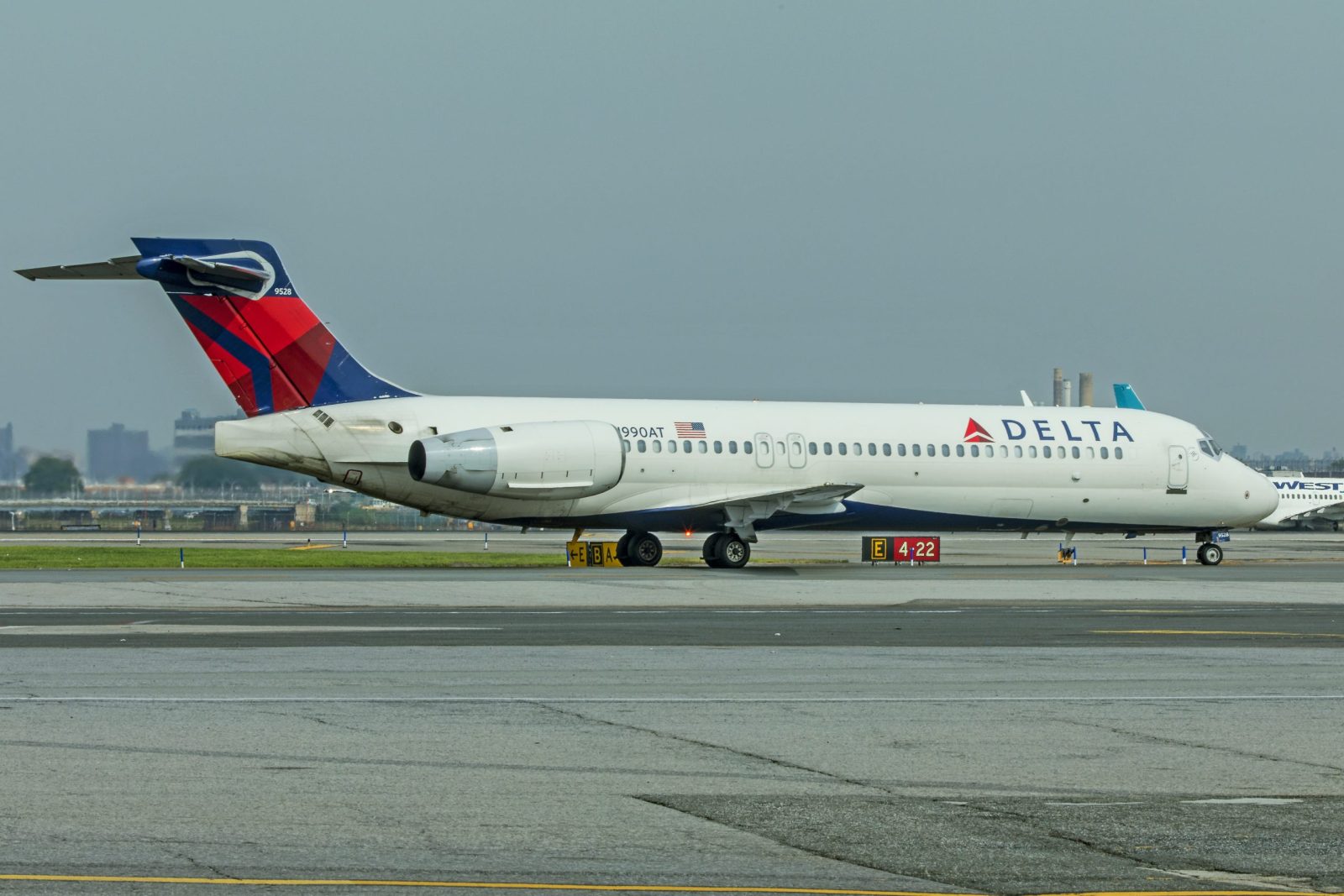
A Delta Boeing 717 aircraft (Photo: AirlineGeeks | William Derrickson)
Delta Air Lines released its financial results for the second quarter of the year. Revenues exceeded the company’s projections for the period, while earnings per share came in below expectations. Rising costs hurt earnings between April and June, although demand for air travel did not wane despite rising inflation in the United States.
“I would like to thank our entire team for their outstanding work during a challenging operating environment for the industry as we work to restore our best-in-class reliability,” said Ed Bastian, Delta’s CEO. “Their performance coupled with strong demand drove nearly two billion dollars of free cash flow as well as profitability in the first half of the year, and we are accruing profit sharing,” he added.
The company reported net revenues of $735 million in the second quarter of the year.
Delta’s capacity decreased 18% compared to the same period in 2019. However, revenue was up 10%. The company reported that they anticipate capacity will continue to be lower than 2019 during the next quarter. However, it will continue to get closer to the same levels.
Freight revenues, meanwhile, reached $272 million. The figure represents a 46% increase compared to the same period in 2019. Maintenance, repair, and overhaul (MRO) services generated revenues of $178 million and already recovered 85% of pre-pandemic capacity.
Domestic flights continued to lead the recovery, while international services grew. Revenues from domestic connections increased by 3%. Meanwhile, revenue from international routes recovered by 81% compared to the same quarter in 2019. The Latin American and North Atlantic markets posted better numbers than three years ago, while Pacific operations saw a significant improvement following the relaxation of restrictions in Australia, South Korea, and Japan.
It is important to note the increase in fuel costs this year. Compared to the same period in 2019, the price of fuel increased by as much as 41%. The situation drove up the cost per seat and per mile by 44%, to 20.89 cents between April and June this year.
This story was originally published by Agustin Miguens of Aviacionline in syndication with AirlineGeeks.
AirlineGeeks.com was founded in February 2013 as a one-person blog in Washington D.C. Since then, we’ve grown to have 25+ active team members scattered across the globe. We are all here for the same reason: we love deep-diving into the fascinating realm of the airline industry.
An Ethiopian Boeing 737 MAX departs after delivery from Boeing Field (Photo: Boeing)
Ethiopian Airlines has resumed its Boeing 737Max deliveries for the first time, since the aircraft type suffered a fatal accident when flight 302 crashed in March 2019.
The new aircraft registered as ETAWJ, departed Boeing’s facility in Seattle on June 30 and flew to Addis Ababa, Ethiopia, with a stopover in Manchester, U.K. Delivery to its final destination took place earlier this month on July 2.
The airline currently has five Boeing 737Maxs in its fleet. This delivery follows the airline’s decision to return the aircraft type to its scheduled flight operations.
Ethiopian Airlines has an order for 25 more Boeing 737 MAX8s. Further deliveries are expected later this year, according to the airline.
“Its active fleet includes four aircraft configured with 16 seats in Business class and 144 in Economy class. They returned to service in February 2022 after recertification by the FAA, EASA in Europe, Transport Canada, CAAC, ECAA and other regulatory bodies, but also after said aircraft was returned to service by more than 34 airlines worldwide,” said former CEO Tewolde GebreMariam. “We took enough time to monitor the design change work as well as the rigorous 20-month recertification process.”
Industry-wide Return of the 737 Max
Since the return to service of the Boeing 737 MAX in December 2020, 190 countries around the world have re-approved it, 41 airlines are flying it and nearly 600 planes are in the air. In Africa, Ethiopian Airlines is the largest operator of the 737 MAX.
Last year, the airline indicated that it had finally reached an amicable settlement with the American aircraft manufacturer over the fatal accident of flight 302 (ET-AVJ, MSN 62450), which killed 157 people. The final report of the said accident is still awaited.
Boeing reported the delivery as part of its June orders and delivery report. Overall, it was also the busiest month for 737 Max deliveries, since the grounding ended in late 2020, with 43 of the planes being delivered to customers. It was also the busiest month for any kind of commercial plane deliveries by Boeing since March of 2019, with a total of 51 deliveries.
It is a sign that demand for the plane is returning to pre-crash levels. Up to this point, Boeing has delivered 443 of the 737 Max jets since the grounding ended, with 181 of those being delivered so far this year, up from 105 delivered in the first half of 2021.
Boeing has faced myriad problems in recent years — beyond the drop in demand for passenger planes that occurred during the pandemic. It is still waiting for approval to again begin delivering the 787 Dreamliner widebody passenger planes that have been halted due to quality control issues.
Deliveries are crucial to Boeing’s operations and commerce, as it gets most of the money from airline sales at the time of delivery.
Victor Shalton's love for aviation can be traced to when he was 11-years-old. As a seasoned aviation writer, he takes pride in providing the best aviation coverage around the globe and is passionate about advancing his skills in the aviation space. In addition, he loves travelling, writing, arts and while his speaking engagements have taken him around the world, he is proud to call Nairobi home.
El Al has returned multiple planes to lessors after cutting all of its services. The airline is negotiating with its government and unions to accept a state aid package.
(Photo: AirlineGeeks | William Derrickson)
Israeli flag carrier El Al has announced it reached an agreement with its pilots to restore salaries to pre-COVID-19 levels in an effort to cancel fewer flights. The airline agreed that such salaries will be in effect by the start of 2023 and would remain until the contract expires in 2025.
The importance of better wages in the long term
Histadrut, Israel’s largest and most prominent workers union, pushed El Al to bring back the wages saying it was the best chance for the carrier to meet demand. Histadrut Chairman Arnon Bar-David said in a press release, “El Al and the other Israeli airlines are an important strategic asset for the country, and I welcome the fact that we have reached agreements that will allow efficient and continuous operation of the company’s aircraft, along with returning pilots’ salaries to their former state. The aviation industry in general, and El Al in particular, have had two difficult years, and now that demand for flights is at its peak, I am sure the agreement will bring El Al back to growth. I thank Avi Edri, the company’s management, the pilots’ committee and everyone who contributed to the agreement. We will continue to work for the workers in all sectors of the economy.”
El Al, like many of the world’s airlines, is battling a serious shortage while also facing demand that is pushing the carrier to its operating limits.
The airline had announced in June that it would halt services to Toronto, Warsaw, and Brussels in October but it remains unclear whether the new labor agreement will change things. The win for the pilots union should also prove to benefit El Al down the road as was outlined by Bar-David in his statements. Airlines must recognize the importance of raising wages for pilots and staff at a time when everyone is working under immense pressure with the busy summer season already in full swing.
Carriers like SAS have had fallouts in recent weeks due to disagreements over wages and new pilot hiring and are now facing bankruptcy and an operating schedule that only can only be fulfilled about halfway.
Airlines see profits while wages remain low
Histadrut also pointed out the fact that many of the world’s airlines are beginning to see their financials recover while continuing to keep wages down. “The pilots of the Israeli airlines, including EL AL pilots, have significantly reduced their salaries in order for the airlines to survive. “Today, after the aviation industry recovers, it is time to restore the status quo and pay tribute to the employees of the Israeli airlines who saved the industry from collapsing,” said the Chairman of the Histadrut’s Transportation Workers’ Union, Avi Edri. Whether or not El Al will decide to resume services it had planned to cancel or expand further remains to be seen but the labor agreement was a clear step in the right direction.
Ezra Gollan is a student, photographer and aviation enthusiast based in New York, New York. He has spent over half a decade around New York City’s airports as a photographer.
Manchester Airports Group Sees Recovery in Passenger Traffic
The baggage hall at the new Terminal Two extension then releases customers into a spacious Arrivals Hall (Photo: Manchester Airport)
Manchester Airports Groups (MAG), the parent company of London Stansted Airport, Manchester Airport and East Midlands Airport in the U.K., revealed that it had lost £320 million ($385 million) for the financial year of 2021-22. The combined losses for the group for the last two years have reached £755 million. Compared to last year, the revenue increased by 159%.
“With travel restrictions in place for nearly all of the last 12 months, it was another uncertain and unpredictable year for MAG and the wider aviation industry.” Charlie Cornish, CEO of the group said.
London Stansted Airport, the second busiest airport in 2021, has served 10.3 million passengers in the last financial year, an increase of 232%, but the latest figure was far from the pre-Covid levels, only 36% of 2019’s count. MAG has forecasted the passenger volumes will be a step closer to the level of 2019 soon.
The group saw the passenger number had increased significantly as a result of the travel restrictions lifted in March in the country. The group recorded from 37% of pre-pandemic levels by January to 70% by March, and 82% of pre-Covid levels by May. MAG said its recovery has outpaced the other airports in the country.
However, Britons are reeling from the shortage of staff nationwide. Manchester Airport and Stansted were spotted the long queues since the travel restrictions were lifted in March. MAG admitted the recruitment has taken longer and more difficult than its expectation, but mentioned it has been working hard for several months to bring its operations back to full strength. The group has hired over 1,500 new employees since January. According to MAG, more than 92% of passengers waited less than 30 minutes to pass through security last month. The group has worked closely with the airlines to avoid large-scale cancellations.
Earlier, Chris Woodroofe, the new managing director of the Manchester Airport, expected the peak-time queue would continue over the coming months.
“It is not going to be as good as it was in 2019, but what it will be is considerably better than it was three or four weeks ago,” Woofroofe said. Woodroofe stepped into Karen Smart’s shoes, who stepped down due to the travel chaos at the airport.
Meanwhile, after two years of the pandemic, Stansted has started developing its facilities. Stansted is looking forward to building a solar farm that meets the electricity needs of the airport, but the plan needs to be approved by the government and Uttlesford District Council. The council was against the expansion of Stansted years ago, but Stansted won its appeal against Uttlesford District Council last year. Stansted was given a green light to the expansion project, increasing its maximum passenger numbers from 35 to 43 million every year.
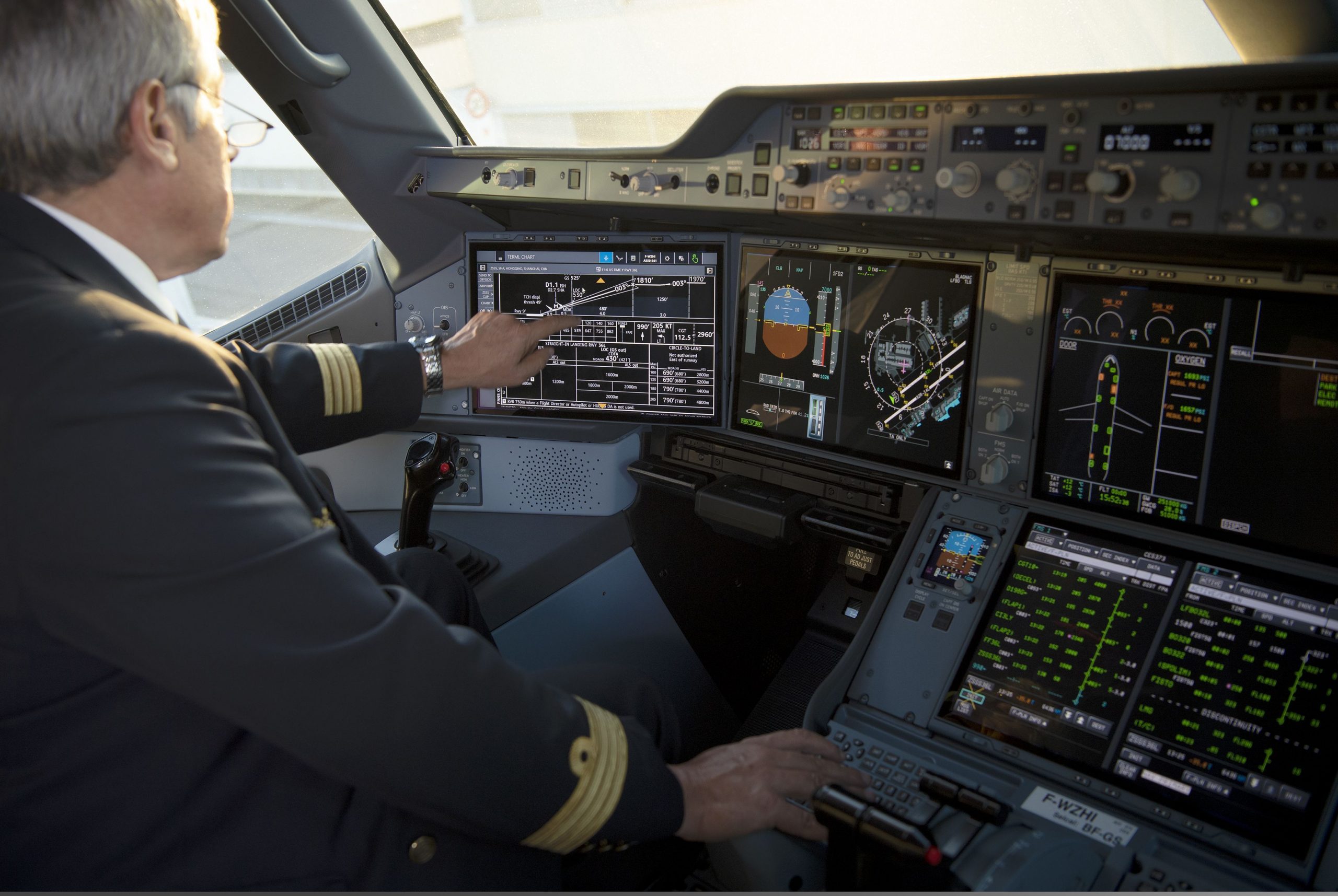
A pilot utilises one of the three new touchscreen displays in the A350. (Photo: Airbus)
“They were called test pilots. And no one knew their names,” – The Right Stuff
So begins the story of Tom Wolfe’s The Right Stuff, and the story of modern aviation. For every new engine, every new system, and every new aircraft, it is this unique breed of pilot who has risked all for the sake of aviation’s advancement. It seems fitting, then, that the test pilot offer his prophetic perspective on aviation’s future.
This week, AirlineGeeks was privileged to meet with one such test pilot, Mr. Mark Jones Jr. A graduate of the United States Air Force Test Pilot School, Jones has extensive test pilot experience and has flown over 30 different types of civil and military aircraft. He has worked for HondaJet, performed high altitude drops for NASA’s Ares rocket recovery system from a C-17 Globemaster, and continues to consult for the Federal Aviation Administration.
NASA Ares airdrop with C-17 flown by Mark Jones Jr. (Photo: Mark Jones Jr.)
AirlineGeeks took the opportunity to discuss some of the most current – and disputed – topics regarding aviation’s future.
What About Widebody Aircraft
For a period of time, the future of airlines seemed secure in the concept of ‘sardines in a can.’ By filling the fuselage of one almighty aircraft, an airline could offer its passengers the biggest bang-for-buck, utilizing the so-called jumbo-jet Boeing 747 and, later, the super-jumbo Airbus A380 to carry hundreds of customers. It was a promising path until, well, it wasn’t so promising.
At the risk of oversimplifying the facts (and this writer will certainly do so), both aircraft have shown themselves to be sensitive to the equally sensitive global economy. Despite the initial manufacturers’ objectives of producing aircraft that make mass transportation affordable, the commercial market was already showing signs that smaller, twin-engine airliners were the next step forward long before COVID-19 made its appearance. Airbus, for its part, was forced to cease its A380 operations much earlier than anticipated, with Singapore Airlines retiring its first A380 in 2017.
Earlier this year, Qantas announced its plans to utilize its Airbus A350 fleet for its ultra-long-haul flights as part of its Project Sunrise. It’s a clear indicator that, for at least some, the glory days of the super-jumbo are over. AirlineGeeks wanted to if this decision is the start of something bigger.
AG: With the earlier-than-expected closure of A380 manufacture, it seems to some that commercial aviation doesn’t see such a need for high-volume aircraft. Is this a game of passenger numbers or is it something else?
Jones: “The A380 is an incredible act of engineering, carries a lot of people, and has some of profitable characteristics. On the other hand, it’s really inconvenient at airports, and in terms of parts and maintenance, is extremely challenging because it’s such a big aircraft. I think that’s a challenge to the business model of a lot of the operators. At some point, you get tired of having the biggest car in the neighborhood; it loses its new car smell and you realize it’s kind of annoying because when people park on both sides of the road, it’s hard to get it through. It’s a highly complex topic, and at the end of the day, it’s about choice.”
“My least favorite part (about the airline experience) is getting on and off a plane. You’re surrounded by people, and that problem is exacerbated by the size of the A380. Maybe it’s better suited to cargo or the ‘Vomit Comet’.”
AG: While a few airlines have started operating their A380s, Qantas appears to be leaning toward smaller A350s for its long-range flights to London, etc. Is this the future of airlines?
Jones: “What happens when they cancel an A380 flight? How easy is it to reschedule all those passengers? How many airplanes does it take to reschedule all those passengers if you can’t get another A380? If you’ve got a smaller airplane like an A350, it’s easier to make a small move and find a plane of similar size, that carries similar amount of people, and that’s got similar economics to it.”
“The A380 is kind of a unicorn. Everything about it is one of a kind: the economics, the maintenance, the size, number of passengers. All of the other airplane types are easier to synergise in contrast to the A380.”
Is Boeing Still Going?
With the limelight glaring on Boeing, this topic was a proverbial ‘no-brainer.’ In light of the 737 MAX disasters, and the associated fall-out, Boeing has found its once stable footing to be not so rock solid. Given the most recent suggestion that Boeing may be canceling its 737 MAX 10, all eyes are closely following the manufacturer’s next move.
AG: Despite the criticism, and ‘documentaries’, is Boeing still a major player in aviation’s future?
Jones: “I don’t think they’ve demonstrated that they are either technically capable or trustworthy in recent years, and there are a lot of things I could point to. The KC-46 is over cost and behind schedule, and whenever they deliver it to the Air Force it’s got tools stuck in the fuel tanks, the Starliner seems like a train wreck every time it goes up for launch, the 787 and 737-Max are both getting additional scrutiny now by the Department of Transportation, and they’re always making headlines.”
“The company recently made some very public statements about two things which are hurting its reputation: first, the EICAS – the crew warning system on the 737 – and, second, what they’re doing to reinvigorate safety at the company in the wake of the 737-Max accident… all of those things, together with what the board is saying every time they are in the news, make me think they’re not the kind of company I think we should do business with, but then again, I’m not buying those airplanes or making those decisions. It makes it hard to trust them, and it makes it hard to wish them well.”
Airmanship and Automation
The pilot’s office – the cockpit – has long since evolved from the days of old. Gone are the days of dead-reckoning, visual references, a magnetic compass and brass stopwatch – the pilot of today is, in many ways, simply a passenger with a window seat. While the technological advancement is beyond that which Jules Verne could ever foresee, the impact of this automation is seen as a detriment to the pilot.
AG: As highlighted in the latest Top Gun movie, aircraft are gradually becoming more and more automated. Will they become entirely automated, without someone in the cockpit?
Jones: “I think some parts of it will. Some of the very small UAV cargo delivery seems like a good way to have a fully automated system, but for aircraft that carry important things like people, I don’t think we ever want to take people out of that loop. For example, with the B-21, I can see you might hand the aircraft to a ground control station that flies it over the ocean, just like we do now with the MQ-9. If for some reason that B-21 detects some jamming, maybe there’s a big red button in the cockpit that the pilot can press that puts him back control, doing what he’s supposed to do.”
“I think that’s true whether it’s a B-21 or a passenger jet. You always want somebody there to put brains, eyes and ears right there. The Top Gun quote which supports this decision is when Tom Cruise walks into the hangar, holds up the training manual, and says: ‘You guys know this training manual cover to cover – so does your adversary. What he doesn’t know is your limits,’ and I think that’s true today and tomorrow.”
“In my opinion, airmen are the advantage, whether the airman is a civilian in a Cessna 152 or a Navy pilot in an F-18.”
AG: Are there aspects of pilot training that are being neglected due to automation?
Jones: “Automated aircraft like drones are very specific things, but they are airplanes which are capable of more. I mean, why aren’t we using drones like the MQ-9 to land in places where we don’t want to land planes with people in them? In places where there are risks, a catastrophe, a natural disaster area, why not land a drone there and use it to carry cargo or something like that. I think automation is limiting our imagination.”
“Nowadays, aircraft require us to use our brains for a lot of things. There are all of the pretty pictures and colours on the navigation display. When I learned to fly in a Cessna 152, I had to look at my chart and say ‘that’s an airfield’ and look out the window to verify that. Now with my G3000, I can scroll an arrow over the airfield and find 10, 20 or 100 extra pieces of information – most of which I’m probably not going to need right now – and that stuff is vying for my attention and keeping me from looking at things like attitude, altitude, airspeed and so on. So now my brain power is trying to figure out all that the automation is doing and preventing me from being an airman and reverting back to basic airmanship.”
“Airmanship is a very difficult skill to train, very difficult to define, and I think it probably erodes quickly. There’s something to be said about growing your airmanship through the basic stick and rudder skills, and then being able to build stuff on top of that. Most airplane accidents aren’t because some automated feature flew the plane into the ground; most occur because humans aren’t doing the right things. In this age, we have the most advanced tech, the safest airplanes, it’s curious that pilot training takes so long. Charles Lindberg literally learned to fly because some guy hopped in the airplane with him for about 50 minutes… almost everything else he learned was from teaching himself. It’s interesting how it’s taking so long today when, many years ago, you could nearly teach yourself to fly.”
A Breed Far From Extinct
“The end is inevitable, Maverick.Your kind is headed for extinction.” – Rear Admiral, Top Gun: Maverick
Despite the iconic line from the film Top Gun: Maverick, the test pilot – and the aviator’s place in aviation’s future – are far from over. The discussion with Mr. Mark Jones Jr. offered insights into far more than just aviation’s future. Indeed, the very future of flight depends on the pivotal role of test pilots.
Disclaimer: The opinions expressed are not of the Department of Defense or the United States Air Force.
Mike’s love affair with flight and mechanical objects in the sky began at an early age, fascinated by space documentaries and the vintage Flight Simulator ’95. He currently works as an instructor for UAVs and is training to receive his Private Pilot Licence with the goal of working in manned flight instruction. An avid reader of all things aviation and manned space flight, Mike stays close to developments in aerospace while reminiscing and sharing the rich history of flight with others. He loves writing, engineering and science.
As the world rebounds from the effects of the coronavirus pandemic, Cayman Islands-based Cayman Airways has announced the intentions to fly nonstop from the Cayman capital of Grand Cayman to LAX located on the west coast of the United States. This is a notable accomplishment as the route will be the only nonstop flight from the U.S. West Coast to the Cayman Islands.
The furthest flights west in the United States from the Caribbean currently are Nassau in the Bahamas to Denver, which is served by United seasonally, and Denver to Grand Cayman which is flown by Cayman Airways.
Many airlines have tried service from the Caribbean to the West Coast but none lasted, the most recent attempt was Alaska Airlines and their short-lived LAX-Havana, Cuba flight which ended in January of 2018 after less than a year of service.
The 737 MAX has been a benefit to the Cayman fleet and it helped the carrier launch their two longest routes from the carrier’s island home to Denver and now Los Angeles.
A Cayman Airways 737-300 in Grand Cayman (Photo: AirlineGeeks | Justin Sinanan)
The start date for the new service to LAX will be Nov. 5, 2022, but it is still unknown what the frequency of the route will be. Denver is served once per week by the carrier.
Cayman Tourism Minister Kenneth Bryan did have something to say about the new route in a press briefing that was posted on Cayman news website Cayman Compass; “While the flight itself might not bring much profitability for the national flag carrier, the knock-on financial implications on the stayover tourism industry made it extremely worthwhile.” This will be the carrier’s big feather in its cap as the only airline operating regular West Coast to Caribbean service.
Editor’s Note: This article will be updated as more information becomes available on the new route.
Joey has always been interested in planes for as long as he can remember. He grew up in Central New York during the early 2000s when US Airways Express turboprops ruled the skies. Being from a non-aviation family made it harder for him to be around planes and would only spend about three hours a month at the airport. He was so excited when he could drive by himself, the first thing he did with his driver's license was get ice cream and go plane spotting for the entire day. He graduated from Western Michigan University in 2022 with a B.S. in Aviation Management & Operations and a Minor in Business, and currently works for a major airline in his hometown.
Emirates Provides Certainty to European Passengers in Uncertain Times
An Emirates A380 at LAX (Photo: AirlineGeeks | William Derrickson)
Emirates Airlines has provided certainty to its customers ahead of the European summer holidays. The Dubai-based carrier issued a statement on Thursday advising that the airline “has been co-ordinating with its ground handling partners at airports around the world, ensuring they are up-to-date with operational requirements and are prepared to support smooth passenger movement.”
The airline announced that it is scheduled to operate 24,000 passenger flights to and from 129 airports in July and August. Confidence to key European markets was given in the release given the chaotic scenes witnessed in recent weeks at a number of airports impacted by last-minute and strategic cancellations by both airlines and airport authorities.
Emirates advised that the Airbus A380 would be deployed to over 30 cities in its network including Amsterdam, Dusseldorf, Hamburg, London Gatwick, London Heathrow, Rome, Paris, Madrid, Manchester, Milan, Vienna, and Zurich. The airline’s service to London Stansted would also be reinstated at the beginning of next month.
With airlines around the world struggling to match operational integrity with the capacity offered to the market, Emirates’ decision to provide reassurance to travelers is to be welcomed. This extends to their hub airport in Dubai with the airline confirming they have ‘worked closely with other stakeholders at Dubai Airport to support its flight schedule and services, provisioning additional resources to ensure efficient operations at the hub, including for transiting passengers.’
Emirates’ announcement comes ahead of a U.K. government deadline to airlines on Friday to confirm schedules ahead of the U.K. school holidays. The government issued an airport slot amnesty and a 22-point plan to address the continuing challenges faced by the aviation industry. The amnesty would allow airlines to not operate flights into constrained airports without fear of losing the slots at the next scheduled period.
Part of the U.K. government’s plans is to support the aviation industry to recruit, retain and train staff through a project called ‘Generation Aviation.’Along with a number of industry and third-party collaborations the government has also ‘changed the law so the industry has more flexibility to train staff and allow them to deploy staff quickly and flexibly while maintaining security standards.’ Funding has also been made available to support the initiatives and to assist commercial airports and ground operators with fixed costs.
As a result of the government ultimatum, British Airways confirmed the cancellation of 10,300 flights until October. The airline stated: “The whole aviation industry continues to face significant challenges and we’re completely focused on building resilience into our operation to give customers the certainty they deserve.” BBC News reported that this brings to 30,000 the number of BA-cancelled flights since April.
John has always had a passion for aviation and through a career with Air New Zealand has gained a strong understanding of aviation operations and the strategic nature of the industry. During his career with the airline, John held multiple leadership roles and was involved in projects such as the introduction of both the 777-200 and -300 type aircraft and the development of the IFE for the 777-300. He was also part of a small team who created and published the internal communications magazines for Air New Zealand’s pilots, cabin crew and ground staff balancing a mix of corporate and social content.
John is educated to postgraduate level achieving a masters degree with Distinction in Airline and Airport Management. John has held the positions of course director of an undergraduate commercial pilot training programme at a leading London university. In addition he is contracted as an external instructor for IATA (International Air Transport Association) and has been a member of the Heathrow Community Fund’s ‘Communities for Tomorrow’ panel.
Demo Flight Gone Horribly Wrong: The 2012 Mount Salak Sukhoi Superjet Crash
An SSJ-100 in a flight test facility (Photo: A.Katranzhi, CC BY-SA 2.0 , via Wikimedia Commons)
In Indonesia, a Sukhoi SSJ100 crashed after disobeying an instrument warning.
All 37 occupants and eight crew members were killed when a Russian-built Sukhoi Superjet 100 crashed into Mount Salak in Indonesia on May 9, 2012, when it was conducting a demonstration tour of Asia.
In 2001, Sukhoi determined the demand for a regional airliner with a range of between 3,000 and 4,500 kilometers by studying the Russian aviation market. Sukhoi predicted that 800 of the aircraft may be sold. 200 to 300 would be sent to airlines from Russia and the Commonwealth of Independent States.
Tour in Asia
In 2012, Sukhoi already had orders for the SSJ100 from Aeroflot, Malév, and Armavia, but it wanted to know whether airlines in Asia would be interested in the aircraft. As is customary for aircraft manufacturers seeking overseas consumers, the company chose to travel Asia with the aircraft.
The aircraft made a good demonstration in Kazakhstan before heading to Pakistan, but a leak in one of its engines prevented it from taking prospective customers on a test flight. Another SSJ100 was sent to Indonesia to continue the tour while the plane was flown back to Moscow.
Several representatives of Indonesian airlines boarded the aircraft, which departed from Halim Perdanakusuma International Airport (HLP) at about 14:00 local time. The pilots asked for permission to descend from 3,000m to 1,800m at 14:26. (10,000 ft to 6,000 ft). After receiving clearance to lower its height, the aircraft requested permission to orbit to the right two minutes later. This was the final time the plane and air traffic control spoke, and it was also approved.
The Pilots Disregarded EGPWS Alerts
The andesitic stratovolcano Mount Salak, which is 2,100 meters (7,524 feet) tall and last erupted in 1938, was located close to the aircraft. The crew was informed by the aircraft’s Enhanced Ground Proximity Warning System (EGPWS) shortly after the aircraft made a right turn with the warning “Terrain Ahead, Pull Up.” The pilots were alerted of the necessity to maneuver the aircraft in order to avoid crashing a moment later by the sound of a second warning, “Avoid Terrain.”
The pilots disabled the EGPWS because they thought it was broken rather than paying attention to the alert. The aircraft’s warning system sounded a few seconds later with the message “Gear Not Down” to indicate that the aircraft was approaching the ground but had not yet lowered its landing gear. The captain disengaged the autopilot and slightly raised the nose, but it was too little too late as the plane slammed into the mountain.
Its investigation
On Dec. 18, 2012, the final crash investigation report was made public. It found that the aircraft’s terrain warning system had been operational and had alerted the pilots to the hazard. However, the pilots disabled the system because they mistakenly thought it was broken, despite the fact that the surrounding area was obscured by a heavy cloud cover.
A conversation that was going on in the flight deck contributed to the accident. The investigators also learned that the pilots of the plane were unfamiliar with the region’s rough terrain and were operating without the necessary charts.
Putu Deny Wijaya was always an aviation enthusiast by heart, growing up in Indonesia where air transport is very vital. His first love is The Queen of The Skies, serving the trunk routes between Jakarta and Denpasar. He brought along this passion with him throughout college by conducting his bachelor study abroad in the Netherlands for the purpose of experiencing a nonstop 14-hour long-haul flight. For Putu the sky's the limit when talking about aviation. He hopes that he would be able to combine his passion for aviation and knowledge of finance at the same time.
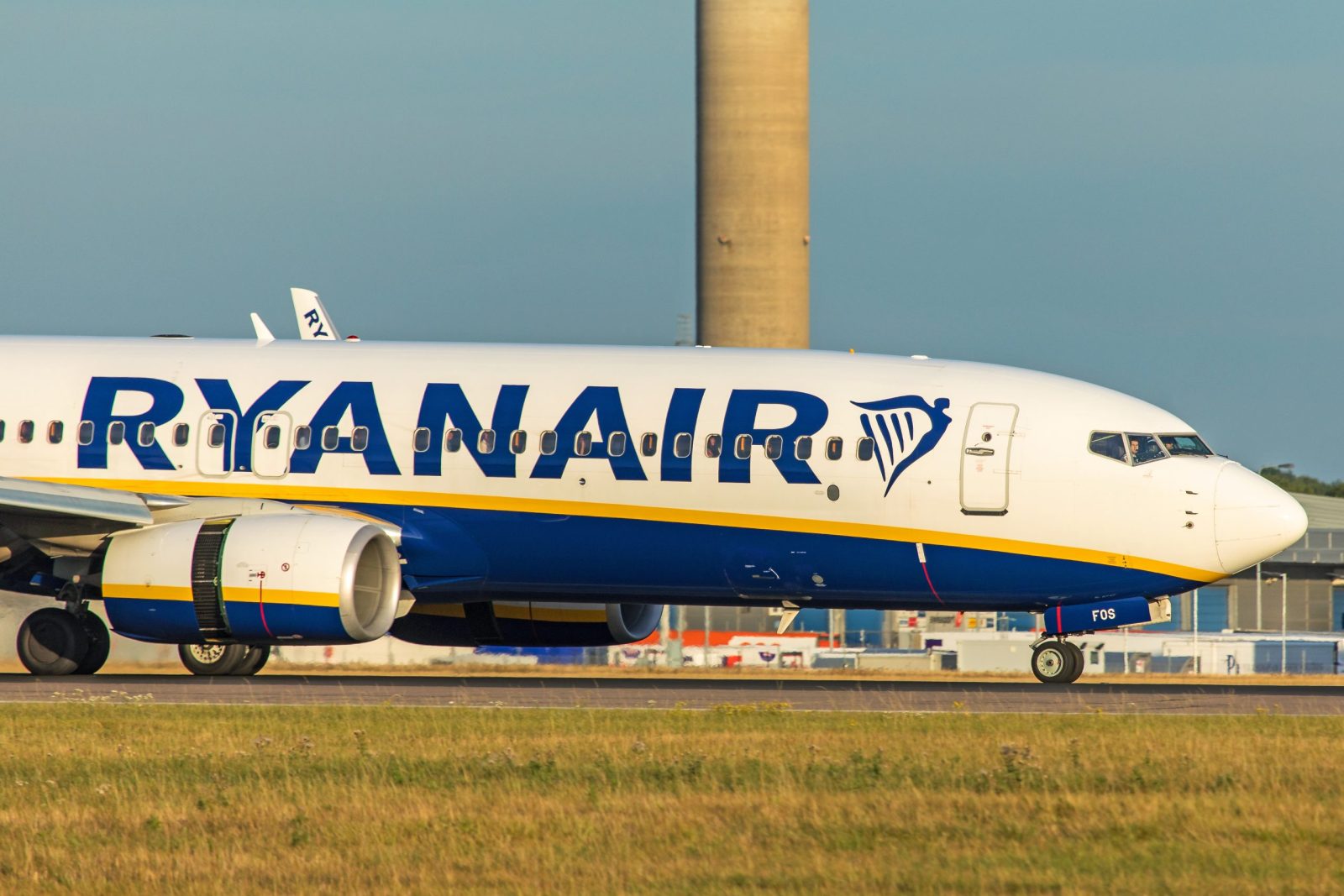
A Ryanair 737 taxiing in London. (Photo: AirlineGeeks | William Derrickson)
Ryanair, Europe’s largest low-cost airline, announced this week that it will return to Belfast International Airport (BFS), Northern Ireland. According to the company, it will offer twelve routes from the airport from March 2023. In total, it plans to operate around 115 flights a week to and from the airport.
The Belfast-based company’s fleet will consist of two aircraft. The establishment of the new hub will require an investment of 200 million and will create “over 60 highly paid aviation jobs” directly, according to Ryanair. In addition, the opening would contribute to the creation of more than 650 indirect jobs.
“We are delighted to have reached a long-term agreement with Belfast International’s management, which will underpin future Ryanair growth at the Airport over the coming years,” said Jason McGuinness, the company’s Director of Commercial.
In addition, the company said that in order to consolidate the recovery of aviation in the United Kingdom, “the government needs to immediately support airlines» by «scrapping the aviation tax (APD) entirely for all flights.”
This U.K. tax applies to commercial passenger air transport operations departing from the United Kingdom or the Isle of Man using aircraft with an authorized take-off weight of more than 5.7 tonnes or aircraft with more than twenty passenger seats.
In October 2021, the British administration introduced a 50% reduction in the tax for flights between U.K. airports. The new amount will apply from April 2023, in a bid to boost regional connectivity. However, Ryanair says it is “simply insufficient.”
This story was originally published by Agustin Miguens on Aviacionline in syndication with AirlineGeeks.
AirlineGeeks.com was founded in February 2013 as a one-person blog in Washington D.C. Since then, we’ve grown to have 25+ active team members scattered across the globe. We are all here for the same reason: we love deep-diving into the fascinating realm of the airline industry.
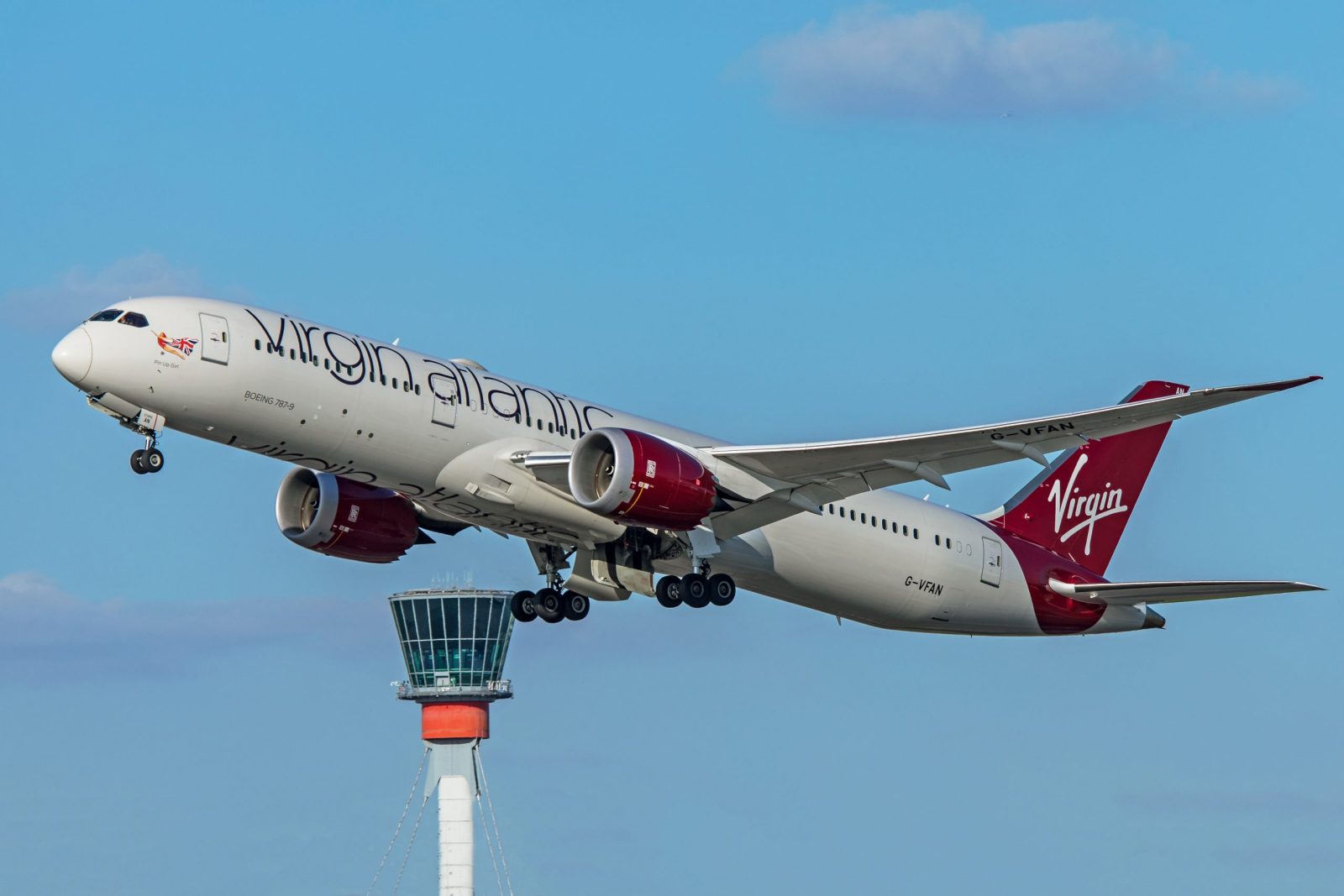
A Virgin Atlantic 787-9 departing London Heathrow. (Photo: AirlineGeeks | William Derrickson)
On Wednesday Virgin Atlantic announced that it will continue its transatlantic expansion with a new nonstop service from its London Heathrow (LHR) hub to Tampa, Florida (TPA). Service to The Sunshine State will begin on November 3, 2022, just in time to capture the winter demand.
The carrier will initially operate the city pair four times weekly, quickly increasing frequency to daily service three and a half weeks later on November 28.
Virgin Atlantic Flight 129 will take off from Heathrow at 1:25 P.M. and arrive in Tampa at 6:35 P.M. the same day for a total 10-hour and 10-minute block time.
The return flight, VS130 will depart Tampa at 8:50 P.M. and arrive in London at 10:15 A.M. the following day for a total block of 8 hours and 25 minutes.
VS129 LHR-TPA 1:25 P.M. – 6:35 P.M.
VS130 TPA-LHR 8:50 P.M. – 10:15 A.M.+1
Tickets go on sale later this month on July 13 with Return Economy fares starting at £436 per person or $520, Premium from £937 per person or $1,117 and Upper Class from £2,256 per person or $2,690.
The announcement makes the London-based carrier the only airline directly connecting the Tampa Bay region with London’s hub airport, London Heathrow. The route’s closest competitor is British Airways, offering nonstop service between London Gatwick and Tampa four times weekly. In 2019, before the impact of Covid-19 on the travel industry, Department of Transportation data shows British Airways served 165,224 travelers between the two cities.
Why Tampa?
Tampa continues to see unprecedented growth within the Tampa Bay Region. Over three years, between 2018 and 2021. Tampa has seen a 4.2 percent growth in population and draws in five million people within the Tampa Bay, St Pete and Clearwater areas. The region is also the third fastest-growing US metro area for entrepreneurs in 2021, making the area a prime candidate to capture those business travelers.
“Florida is very much a firm favorite for our customers ever since our first flight to Miami back in 1986. With the popular theme parks and the stunning beaches of St Pete and Clearwater within easy reach, we know it’s an area our customers will love to explore” stated Juha Jarvinen, Chief Commercial Officer at Virgin Atlantic. “The region has a booming economy with high profile businesses moving to the area and many budding entrepreneurs registering start-ups in the city. We look forward to forging new relationships within the Tampa Bay community and cannot wait to welcome existing and new customers, flying them safely to explore this exciting region.”
The carrier will offer more than 190,000 seats each year to and from the city of Tampa, Florida’s third-largest city.
Tampa will complement Virgin Atlantic’s already served Florida routes of Miami and Orlando, which offer daily service to and from Heathrow. The carrier will operate its Boeing 787-9 Dreamliner on the new route. Configured with a 258-seat layout, the aircraft includes 192 Economy seats, 35 Premium and 31 Upper-Class seats
Chase Hagl grew up in Twin Falls, Idaho. His love and passion for Aviation landed him in Orem, Utah where he obtained a B.S. in Aviation Management with a minor in Business Management from Utah Valley University. Chase currently works as a flight attendant in Charleston, SC and is also the primary Inflight ASAP ERC representative for startup airline, Breeze Airways. His experience in the aviation industry spans back four years, working in areas including agriculture application, customer service, maintenance, and flight ops. In his free time, Chase enjoys road biking, astronomy, and flying.
Sign-up for newsletters & special offers!
Get the latest stories & special offers delivered directly to your inbox