A Turkish Airlines Boeing 777-300. (Photo: AirlineGeeks | William Derrickson)
Turkish national flag carrier Turkish Airlines announced that it will be reinstating regularly scheduled passenger flights to several destinations in Saudi Arabia following the country’s decision to lift strict COVID-19 travel restrictions.
According to a statement issued by the airline on July 4, 2022, Turkish Airlines will resume flights from Turkey to four major cities in Saudi Arabia including Riyadh, Jeddah, Dammam, and Medina. The flight resumption follows the government of Saudia Arabia’s decision to remove Turkey from its ‘red’ list of countries.
“The flights to Saudi Arabia have resumed to pre-pandemic conditions and Saudi citizens can travel to or transit through Turkey again,” the statement said.
“With the resumption of Tourist, Turkish Airlines passengers with connecting flights in Istanbul Airport with 6-24 hours between their flights will have the option to discover İstanbul and its cultural and historical wonders,” Turkey’s largest airline noted.
The airline also announced that passengers would be able to fly to Turkey “without a PCR test or vaccination card and masks are not mandatory in the aircraft.”
Saudia Already Flies to Istanbul
Saudi Arabia lifted all COVID-19 air travel restrictions on June 4, 2022, a decision that allowed its citizens and travelers to fly to Turkey, India Ethiopia, and Vietnam, countries banned from the air travel network due to high COVID-19 infection rates, without further restriction.
Saudia, formerly known as Saudi Arabian Airlines, launched flights from Madinah to Istanbul Airport and Jeddah to Istanbul following a two-year pause due to the COVID-19 pandemic.
Flight SV257 from Jeddah to Istanbul resumed service on May 7, 2022, with the first flight operated by A330-300 Flightradar24 ADS-B data shows.
The route was suspended in March 2020 when the pandemic spread around the world. It was reactivated in October 2020 as a cargo-only service but then suspended again at the end of August 2021.
Saudia said it would also fly to Istanbul from Madinah and Riyadh.
Flights from Jeddah and Medina are now scheduled to operate every day, while trips from Riyadh are to be held on Tuesdays, Thursdays, and Saturdays, according to Turkish media Hürriyet Daily News.
The carrier’s resumption of passenger flights to Turkey comes in the wake of Turkish President Recep Tayyip Erdoğan’s visit to Saudi Arabia in late April 2022 in which he pledged then to “reactivate a great economic potential” of cooperation between the two countries, which have had a sour relationship since the Arab Spring in 2011 due to their conflicting political interests in the region.
LCC rival Flynas continues to serve Istanbul Sabiha Gökcen from Jeddah and Riyadh while Pegasus Airlines also operates from Sabiha Gökcen to Jeddah and Riyadh.
Victor Shalton's love for aviation can be traced to when he was 11-years-old. As a seasoned aviation writer, he takes pride in providing the best aviation coverage around the globe and is passionate about advancing his skills in the aviation space. In addition, he loves travelling, writing, arts and while his speaking engagements have taken him around the world, he is proud to call Nairobi home.
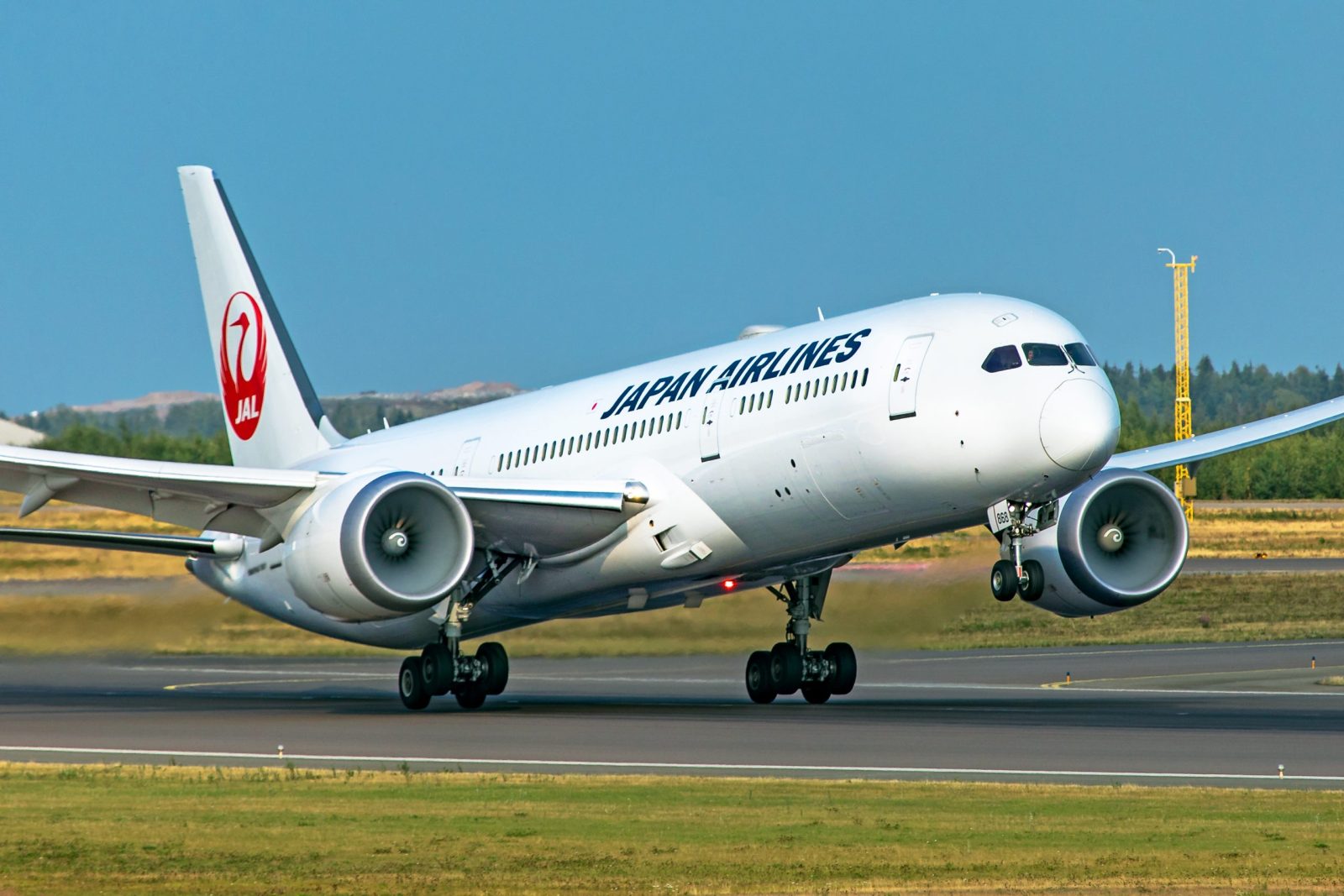
A Japan Airlines 787-9 departing. (Photo: AirlineGeeks | William Derrickson)
Japan Airlines is looking to modernize its fleet and subscribe to more fuel-efficient aircraft, according to Bloomberg.
The airline owns 45 Boeing 737 aircraft with a median age of 12.5 years old and looks to replace them with Boeing 737 MAXs or Airbus A320Neos. It is expected to be a contract of 30 to 50 narrow-body aircraft. Boeing and Airbus have declined to comment on the potential order.
“Upgrade to fuel-efficient aircraft and for short-haul fleet replacement we are considering the early introduction of new small and medium-sized aircraft,” the airline said in a statement and didn’t provide further information.
It comes after the airline has revealed the intention of replacing its aging Boeing 767 and Embraer SA regional aircraft. Earlier, Japan Airlines announced its plan of subscribing to the Boeing 787 Dreamliner or Airbus A321 to replace its fleet of Boeing 767, Airbus A220 and Embraer E2 models for regional aircraft. However, the airline hasn’t made the decision at the moment.
“We have got a fairly large 787 fleet, so whether it is an A321 that could then be used quite well within Asia as well, we really haven’t looked at the full decision,” Ross Leggett, Deputy Senior Vice President route marketing, international relations and alliances of the airline, said.
The airline currently owns a fleet of 31 Boeing 767s, 18 Embraer E170s, 14 Embraer E190s and 49 Boeing 787 Dreamliners.
After being hit hard by the Covid-19, Japan Airlines is seeing a silver lining. According to Leggett, the domestic capacity had reached 100 percent of pre-pandemic levels in May, and the travel demand was about 85 to 95 percent of 2019.
Borders Reopen
Japan has gradually reopened its border, paving the way for the recovery of international travel. After two years of suspension, flight operations between Tokyo’s Haneda Airport and Seoul, South Korea’s Gimpo International Airport have resumed. The route was suspended since the pandemic began. Japan Airlines will join All Nippon Airways, Korean Air and Asiana Airlines to operate a total of 16 flights a week.
“The Gimpo-Haneda route bears a significant symbol of bilateral exchanges. The flight resumption is expected to serve as a chance to revitalize exchanges.” Korea’s Land Minister Hee-Ryong Won said. Compared to Tokyo’s Narita Airport and Incheon International Airport in Seoul, South Korea, Haneda and Gimpo are closer to downtown.
Japan Airlines will also enhance its route from Tokyo’s Haneda Airport to Singapore to a daily operation next month. In the meantime, the airline strengthens its codeshare joint business partnership with Malaysia Airlines. In August, Malaysia Airlines will operate a twice-weekly service from Kuala Lumpur, Malaysia to Tokyo’s Haneda Airport. Malaysia Airlines will operate its Airbus A330-300 on this new route. Travelers are expected to benefit from a seamless connection between Japan and Malaysia.
An SAS A320 in Oslo.
(Photo: AirlineGeeks | William Derrickson)
SAS — Scandinavia’s largest airline — now stares directly in the face of collapse, following disputes over wages with its pilot union on Monday. Talks came to a halt, initiating a strike that is likely to cause havoc in the European skies for the coming months. According to the airline, roughly 50 percent of its scheduled flights will need to be canceled, as around 1,000 of the airline’s pilots in Sweden, Norway and Denmark will go on strike.
“We deeply regret that our customers are affected by this strike, leading to delays and canceled flights. We know all our passengers have been longing for this summer holiday and have booked travels for themselves and their loved ones. SAS employees are working hard to help our customers that have been affected by this unfortunate situation,” Anko van der Werff, President & CEO of SAS, said in a press release. “A strike at this point is devastating for SAS and puts the company’s future together with the jobs of thousands of colleagues at stake. The decision to go on strike now demonstrates reckless behavior from the pilots’ unions and a shockingly low understanding of the critical situation that SAS is in.”
Financial Woes Continue
Anko van der Werff is certainly right when it comes to SAS’s financial situation. The carrier is in deep trouble and needs large amounts of cash that it says are necessary to improve its outlook. The airline is partly owned by the government of Sweden and Denmark. The Norwegian government sold its stake in SAS in 2018 though they are still creditors and said they are open to converting the debt to equity.
SAS’s struggles have prompted it to search for opportunities to convert debt to equity. SAS said in February that it would need to raise 9.5 billion Swedish Kronas ($946 million) in order to stay afloat and convert at least 20 billion Swedish Kronas of debt into equity.
The SAS pilot union was reportedly upset over SAS’s plans to hire pilots from its Connect and Link subsidiaries, instead of hiring back pilots who were furloughed when the pandemic sent the industry to a standstill. SAS says flights from SAS Link and SAS Connect will not be impacted by the strike though this represents a small portion of the carrier’s operations.
The effects of SAS canceling around 50 percent of its flights are sure to be felt throughout Europe — particularly with the busy summer season ahead. Airlines within the Star Alliance network will also feel the impact when it comes to connection options for passengers and codeshares.
It remains unclear as to when the SAS and the pilots union will re-engage in talks.
Ezra Gollan is a student, photographer and aviation enthusiast based in New York, New York. He has spent over half a decade around New York City’s airports as a photographer.
China’s Big Three Airlines Place $37 Billion Order for 300 Airbus Jets
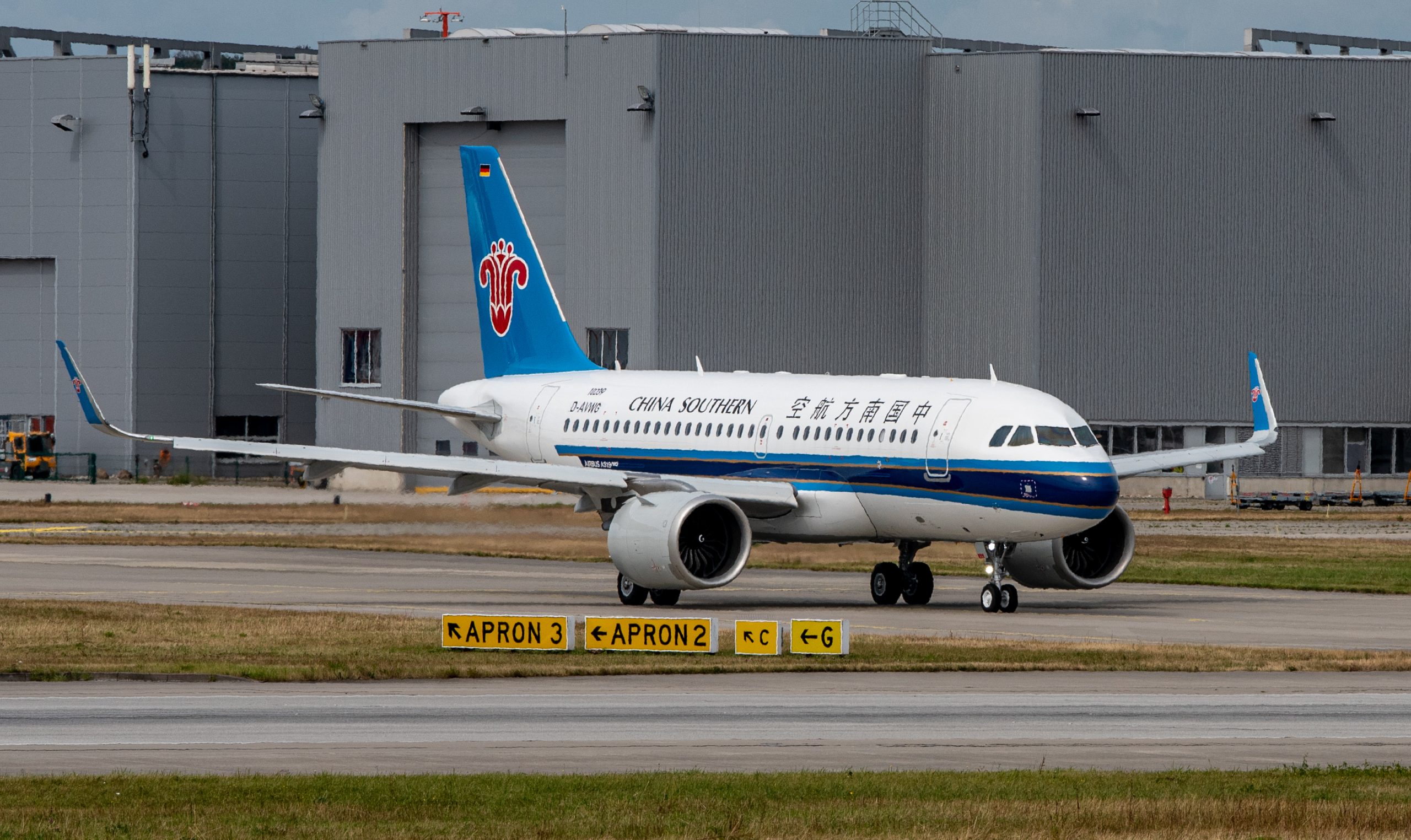
On Friday, Air China, China Southern, and China Eastern, placed a massive order for Airbus A320neo series jets. Total order mounted to 292 confirmed orders worth $37 billion, including 96 orders from Air China, 96 orders from China Southern, and 100 orders from China Eastern. The ordered jets will deliver from 2023 to 2027. The massive order is a significant sign of the market recovery of the Chinese aviation market. Boeing expressed its disappointment amid the announced orders.
After the market closed on July 1, China Southern released the statement first to announce its 96 orders of the Airbus A320neo. The jet will be used for China Southern and its subsidiaries. The order will add 13% more capacity to the current China Southern fleet.
Air China released its statement shortly after China Southern’s release. Air China Group will order 96 of the same type of aircraft from Airbus, among which, 64 will be assigned to Air China, and 32 will be assigned to Shenzhen Airlines and its subsidiaries. Shenzhen Airlines is a subsidiary of Air China based in the southern tech hub of China.
Lastly, China Eastern announced its order of 100 Airbus A320neo jets. The statement mentioned that the 100 Airbus A320s will enable the carrier to continue expanding its network during the recovery from the pandemic, and will also upgrade the carrier’s fleet with newer, more efficient aircrafs.
In the statements released by those carriers, the detailed mixes of Airbus A319/A320/A321 are not confirmed. Local aviation communities are looking forward to having the latest Airbus A321XLR joining the Chinese fleet.
As of the moment this article is published, the orders are yet to be approved by the boards of the three carriers and authorities. However, carriers releasing the statements at the same time sends a signal of high confidence to obtain the necessary approvals in time.
“These new orders demonstrate the strong confidence in Airbus from our customers. It is also a solid endorsement from our airline customers in China of the performance, quality, fuel efficiency, and sustainability of the world’s leading family of single-aisle aircraft,” said Christian Scherer, Airbus Chief Commercial Officer and Head of International in the statement released by Airbus.
Boeing, on the other hand, expressed its disappointment in this announcement, and attribute its failure to compete with Airbus to geopolitical differences. The long-term opponent of Airbus said it’s going to “continue urging a productive dialogue between the U.S. and China governments.” Boeing’s 737MAX series jet, the competitor of Airbus A320neo, is still grounded in China, and Boeing has invested major efforts to have the jets fly again in China.
The Airbus A320neo is acclaimed by passengers and carriers around the globe. The successful jet has earned more than 8.000 orders so far, and its latest A321XLR recently made its first flight.
Recently, as the Covid-19 pandemic is phasing out, Chinese authorities have significantly loosened the restrictions on domestic travel. Restrictions for international travel are also reduced, and new flights are introduced between China and Europe, and the Middle East. The government has signaled that more international flights will resume in the coming months.
Only a short moments after the announcement of reducing pandemic control restrictions, the search for flights and trains increased by over 200%, according to a popular travel booking site. Traveling demand for the public is still high, and further reducing the restriction is expected to further release additional demands from travelers and tourists. The massive demands represent a positive outlook of the future of the Chinese aviation market by the capital.
Lei is from Inner Mongolia, China, and now lives in Guangzhou. He grew up in an aviation family, where his passion began. During his time at Penn State University, he studied Industrial Engineering specializing in operations research, and he graduated with an honor’s thesis on airport gate assignment optimization. Now, he is a Purchasing Manager with Procter & Gamble. In his free time, he enjoys flying, reading, and wandering around the city.
Trip Report: JetBlue Raises the Bar for Transcontinental Flying
Onboard JetBlue's A321LR featuring the new Mint suite. (Photo: AirlineGeeks | Mateen Kontoravdis)
Since its commercial debut in 2014 between New York City and Los Angeles, JetBlue Mint has set the bar high for the domestic premium flying experience. The airline’s unique business class service proved to be a big success and was quickly expanded past the flagship transcontinental route, with cities across the country and in the Caribbean receiving the business class product as well.
As JetBlue set its sights on expanding across the Atlantic, the airline introduced an all-new Mint seat in February 2021 ahead of its first London flight. Development of the new seat took over five years of internal research and development. The final result was a unique seat that you can’t find onboard any other airline.
Following the delivery of the airline’s first Airbus A321LR, N4048J, the new seat began flying on the same route the original Mint debuted on seven years earlier. Today, the new Mint product can regularly be found on domestic flights between New York and Los Angeles and onboard all flights from New York and Boston to London.
I experienced the new Mint Suite during a recent transcontinental trip from New York to Los Angeles to understand how the seat is changing the competitive landscape of one of America’s most lucrative domestic routes.
Departing From JetBlue’s Home at T5
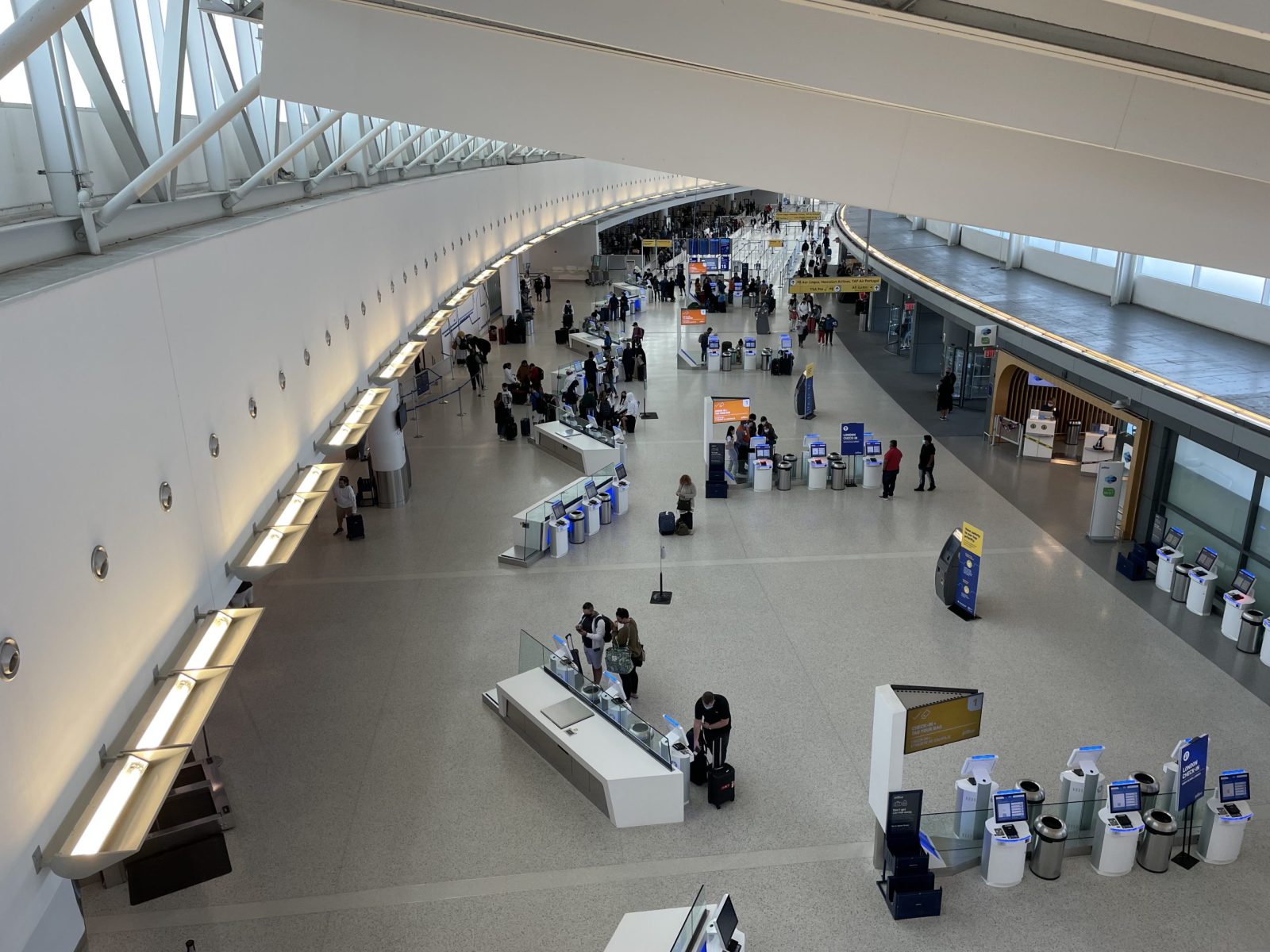
My travels began at JetBlue’s home in JFK’s Terminal five. The 26-gate terminal also conveniently houses several JetBlue partner airlines including Aer Lingus, Hawaiian Airlines, and Cape Air. The check-in area features many self-service kiosks which allow passengers to perform various steps of the check-in process on their own including bag tagging, ultimately simplifying the bag drop process. There is also a dedicated check-in area for Mint passengers flying from T5.
Arriving at T5, JetBlue’s home at JFK. (Photo: AirlineGeeks | Mateen Kontoravdis)
Overview of the JetBlue check-in area at JFK’s T5. (Photo: AirlineGeeks | Mateen Kontoravdis)
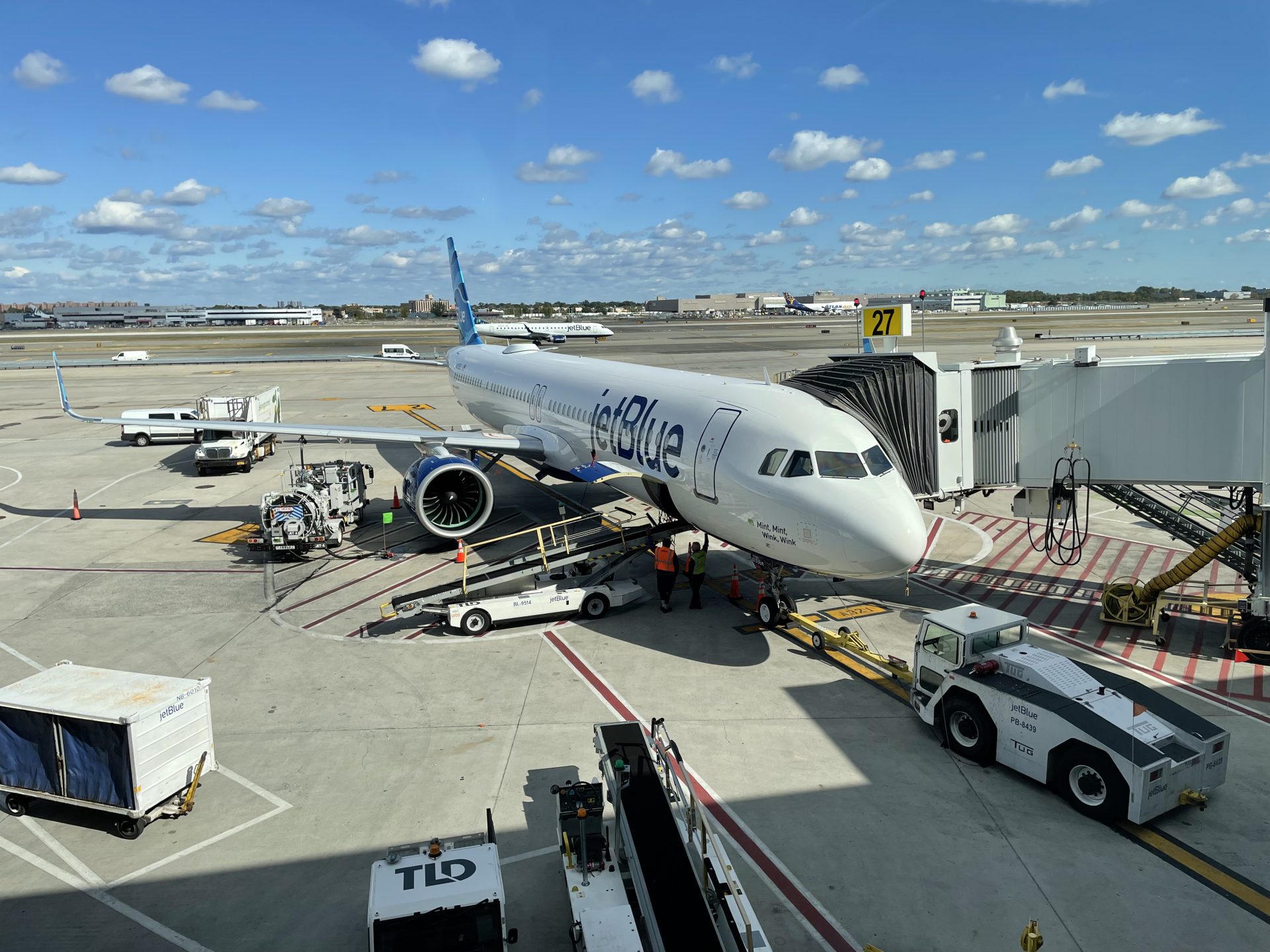
I didn’t have any bags to check and went straight to the security checkpoint. While T5 doesn’t have a Clear lane, there was a TSA PreCheck lane. Clearing security was a breeze and I was soon on my way to gate 27 for the departure.
Inside JetBlue’s T5 which features 30 gates. (Photo: AirlineGeeks | Mateen Kontoravdis)
A Juice Bar with power outlets next to gate 27. (Photo: AirlineGeeks | Mateen Kontoravdis)
Unlike other airlines flying transcontinental flights, JetBlue does not offer any lounge access for its premium passengers. Aer Lingus is currently the only airline that has a lounge within T5. The gate area, however, offered plenty of power outlets and fantastic views of the ramp.
The A321LR, N4058J, flying me to Los Angeles. (Photo: AirlineGeeks | Mateen Kontoravdis)
The flight was delayed 1.5 hours due to a technical issue with the brand new A321LR. Despite the delay, the airport staff adequately communicated with passengers and regularly announced updates on the flight’s status.
Onboard “Mint, Mint, Wink, Wink”
Once on board, I had a glimpse of the beautiful new Airspace cabin by Airbus. With larger overhead bins and mood lighting throughout, the space felt modern and elegant.
While the Mint cabin looks great in photos, it looks even better in person. Our aircraft, N4058J, featured 22 Mint Suites and 2 Mint Studios. The Studio seats are located in the first row of the aircraft and feature additional space and a seat to dine with a companion. The A321LR features 24 total Mint seats and is primarily used on flights to London. The domestic A321neo will feature a smaller cabin up front with just 14 Mint Suites and 2 Studios.
Onboard JetBlue’s A321LR featuring the new Mint suite. (Photo: AirlineGeeks | Mateen Kontoravdis)
The passenger view of the Mint suite while seated. (Photo: AirlineGeeks | Mateen Kontoravdis)
Once settled in, the flight attendant stopped by each seat to introduce herself, note that this flight would be carbon neutral, and offer a tour of the seat. This was a nice gesture, and as a first-time Mint flier, I appreciated learning about the versatile functions of the new seat.
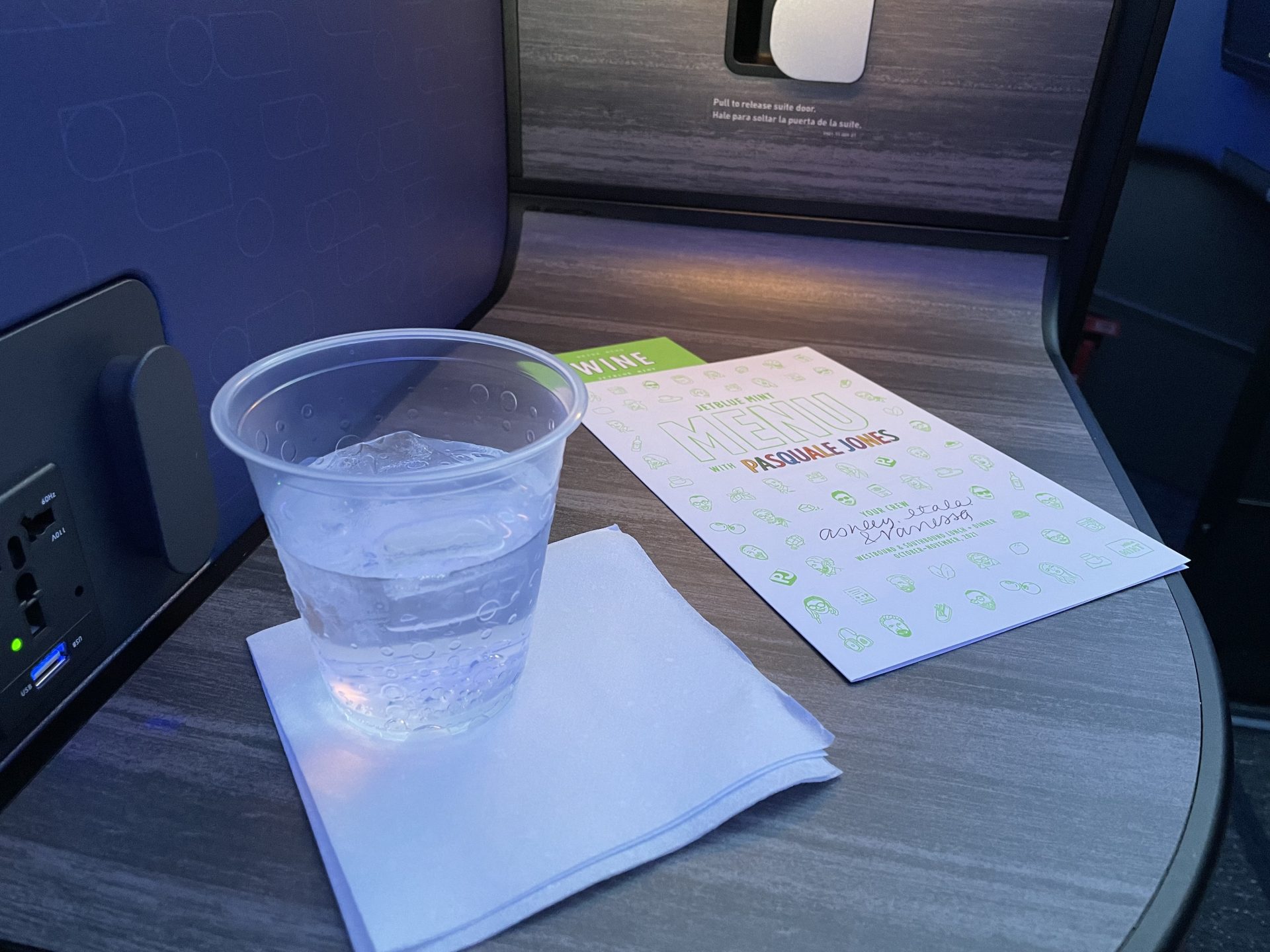
As boarding continued, the same flight attendant came by once more to offer a pre-departure drink, with the choice of champagne, mimosa and sparkling water. She also dropped off the menu for today’s flight. The menu also has a barcode that can be scanned to learn more about the physical Mint seat and the airline’s various inflight service partners such as Tuft & Needle, Wanderfuel, and Master & Dynamic.
As we made our way to the runway, the purser also stopped by each Mint passenger’s seat to introduce herself and welcome us on board. By 1:50 p.m. we were speeding down JFK’s runway 31L and on our way.
In-flight Features
Once airborne, a flight attendant came around with amenity kits for each Mint passenger. JetBlue has partnered with Wanderfuel, a health and wellness-focused travel product kit provider. Wanderfuel has curated four unique amenity kits for the airline, and I received the “Flow” kit which is handed out on lunch and dinner flights.
JetBlue’s “Flow” amenity kit is offered on lunch and dinner flights. (Photo: AirlineGeeks | Mateen Kontoravdis)
The kit included a vitamin gummy pack, face mist, vegan hand cream, hydration pack, socks and moisturizing wipe. There was even a small handout with information about each product and recommendations for which stage of the flight to use each product to arrive “refreshed.”
Each Mint passenger was also given a Master & Dynamic headset to use throughout the flight. The headphones were comfortable and offered adequate sound quality.
JetBlue’s Mint Suite offers a 17-inch screen and a Master & Dynamic headset. (Photo: AirlineGeeks | Mateen Kontoravdis)
JetBlue has installed an 18-inch seat-back screen in each Mint Suite. The system offered a diverse selection of entertainment options with over 200 movies and tv shows available. The aircraft also offers free wifi for all passengers and Live TV. Passengers can also pair their phone with the TV screen to use it as a remote.
In addition to fast wifi, the Mint seat also had multiple power outlets and USB ports to stay charged up while in flight. The seat also had one wireless charging dock for compatible devices.
Each Mint seat features a wireless charging station. (Photo: AirlineGeeks | Mateen Kontoravdis)
Laptop and phone storage unit. (Photo: AirlineGeeks | Mateen Kontoravdis)
There were also multiple storage compartments throughout the suite and a dedicated space to store a laptop and phone.
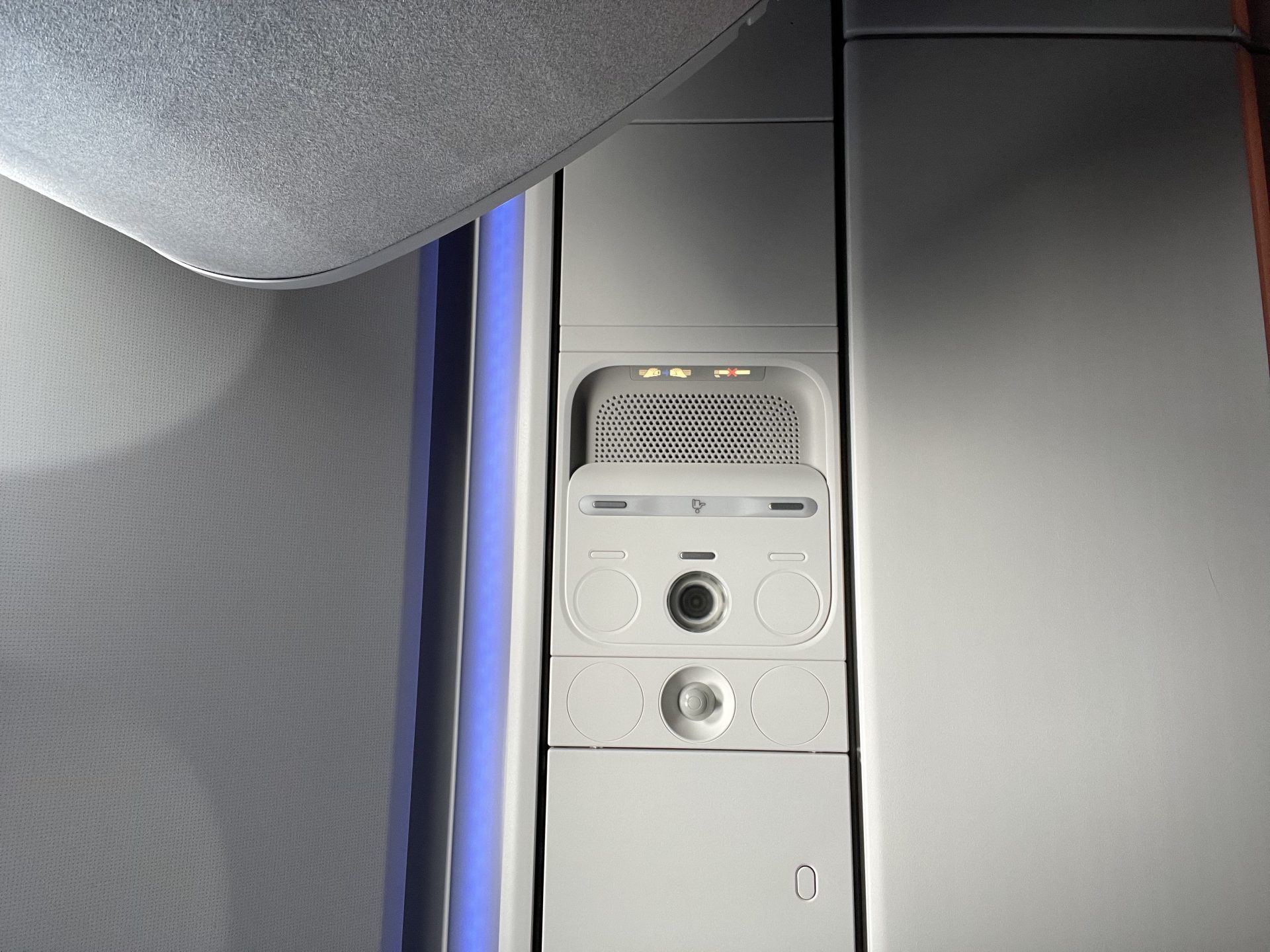
Each seat also had an A/C vent and reading light. This vent is a huge plus for passengers traveling on longer flights to be able to semi-control the climate of the suite.
JetBlue Mint Suite Passenger Service Unit. (Photo: AirlineGeeks | Mateen Kontoravdis)
Despite being on board a narrow-body aircraft, the airline has done a fantastic job utilizing every single inch of space within the suite. When seated, the suite feels very spacious. In fact, the seat felt roomier than other business class seats that can be found flying between New York and London. And on the domestic front, this is the most innovative seat flying between New York and Los Angeles.
Delicious Dining at 35,000 Feet
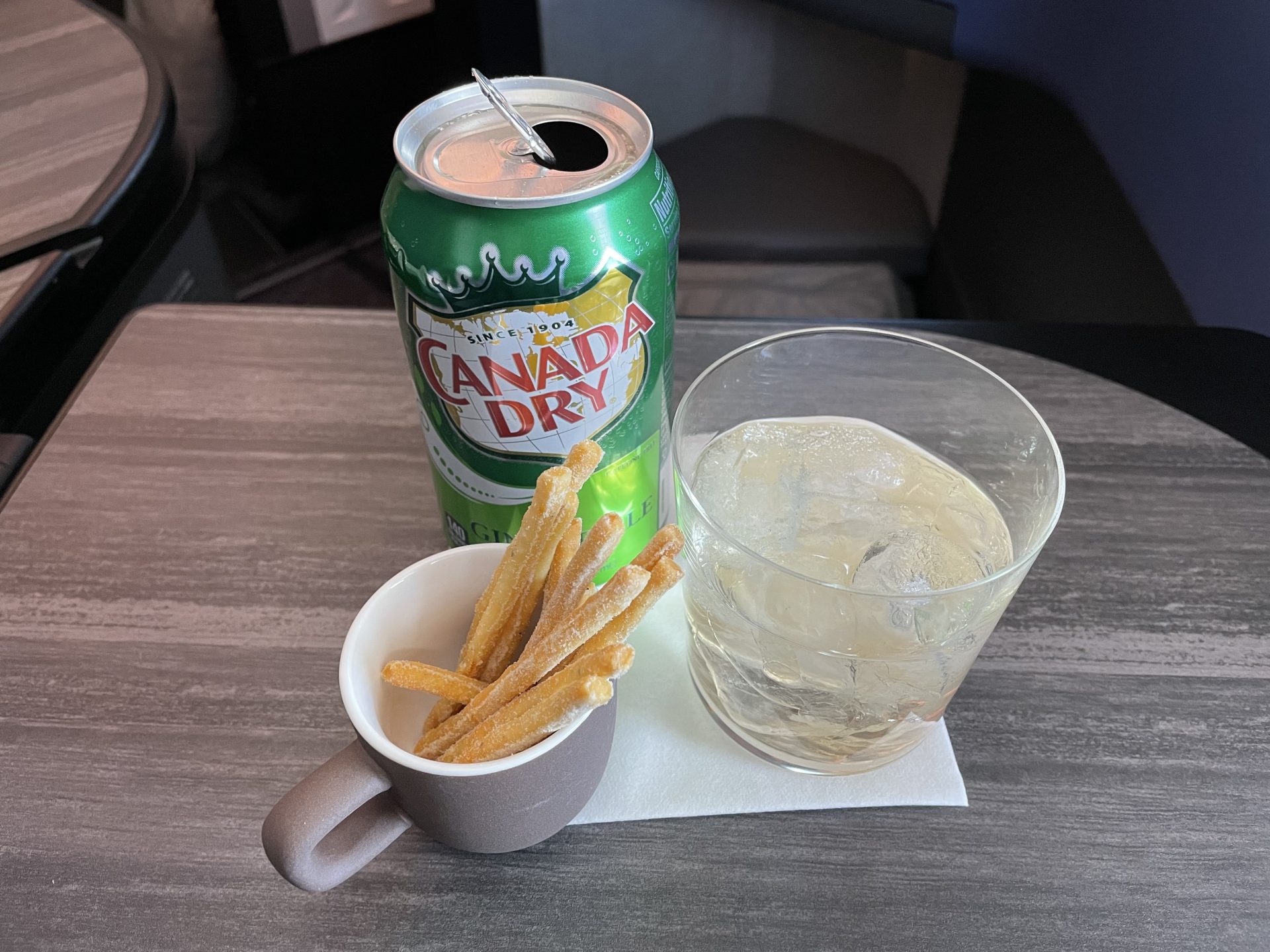
Once airborne, the three flight attendants working the Mint cabin immediately began the lunch service. The meal began with a drink service and some Italian breadsticks to snack on. About 45 minutes later, my food was delivered.
Inflight drink and snack prior to the lunch service. (Photo: AirlineGeeks | Mateen Kontoravdis)
JetBlue has partnered with NYC-based Delicious Hospitality Group (DHG) to curate its various Mint menus. The menu onboard my flight was made in partnership with Pasquale Jones, a well-known NYC restaurant that is owned and operated by DHG.
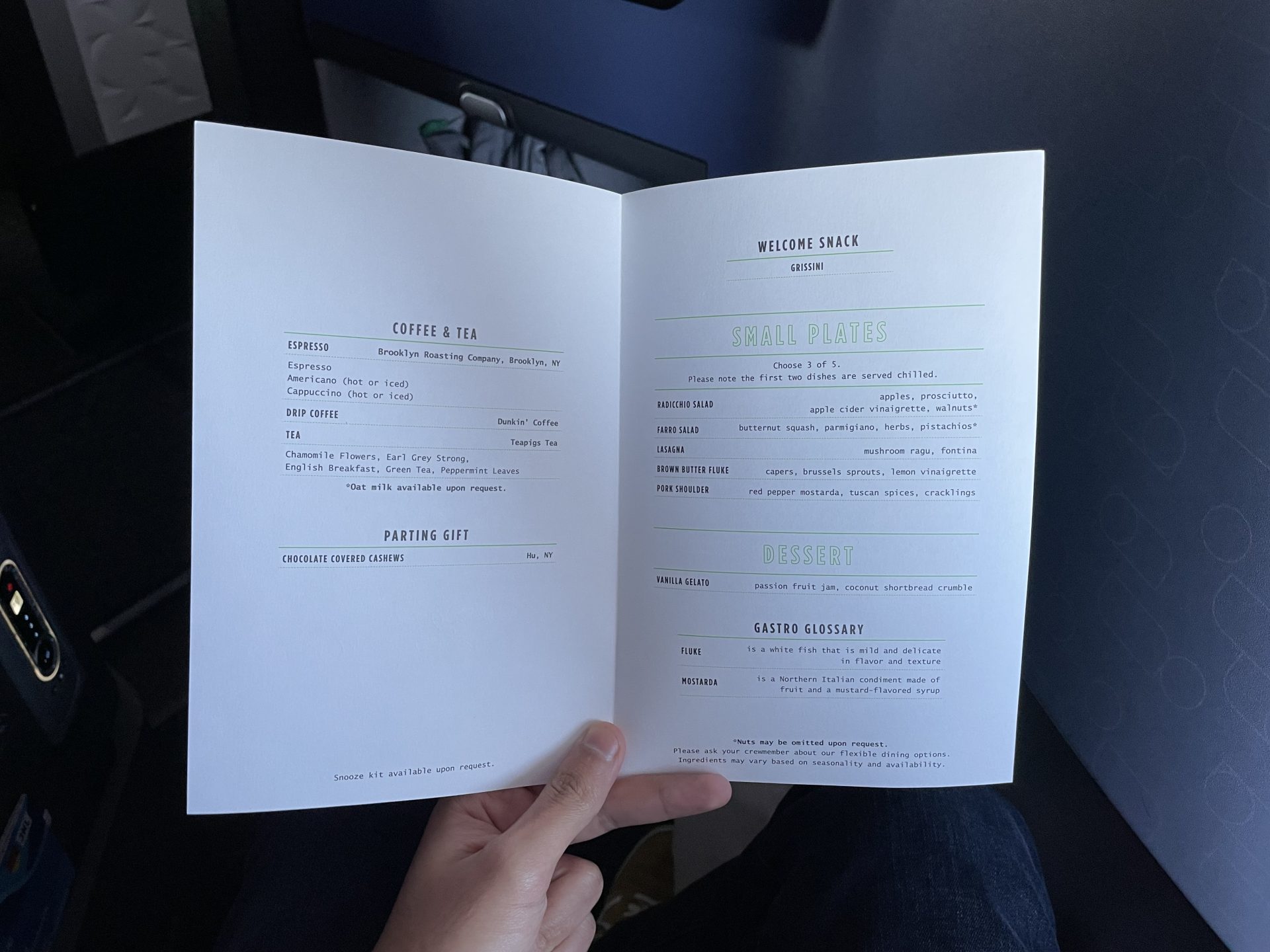
JetBlue Mint Westbound Lunch menu designed by Pasquale Jones. (Photo: AirlineGeeks | Mateen Kontoravdis)
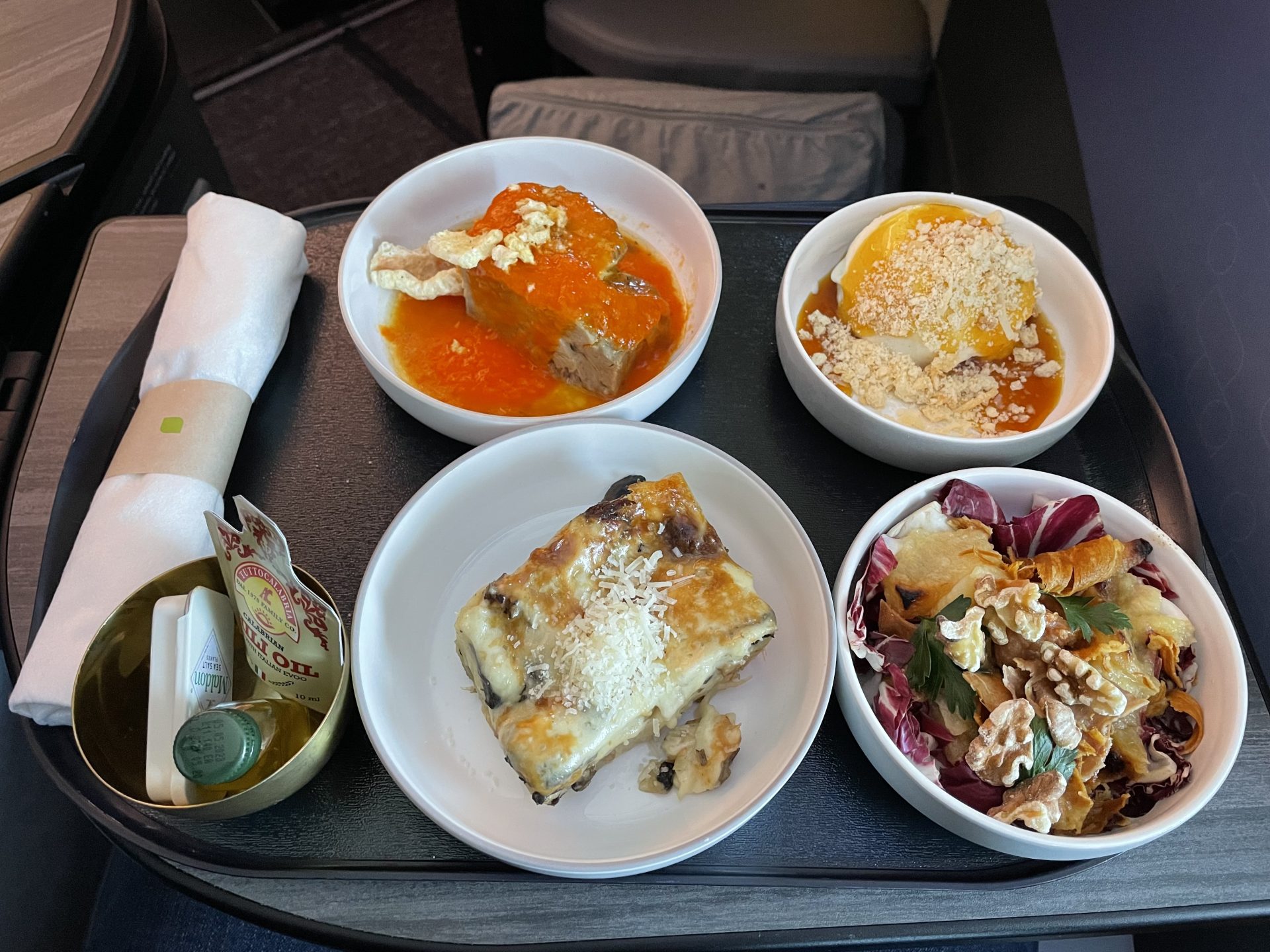
The menu features five interesting small plates, two cold and three hot. Passengers can choose their three favorite plates to enjoy. The menu also includes a Spotify QR code with a playlist curated for the inflight meal. This was a unique touch and I enjoyed discovering some new artists while eating.
JetBlue Mint Lunch service featuring three plates and dessert. (Photo: AirlineGeeks | Mateen Kontoravdis)
I went with the Radicchio Salad, Pork Shoulder, and Lasagne. When considering that I was dining at 35,000 feet, I was very impressed with the quality and creativity of the meal. Despite being advertised as small plates, the portions were more than adequate. The vanilla gelato marked a sweet ending to an already fantastic meal service.
Transcontinental Snooze
Following lunch, the cabin lights were dimmed and I decided to take a nap to test out the new seat in the 76-inch lie flat position. JetBlue offers snooze kits with earplugs and eye shades for Mint customers, but none were catered on today’s flight.
The airline has partnered with Tuft & Needle for its inflight bedding. The blanket was very comfortable, as was the memory-foam pillow. The airline also worked with Tuft & Needle to build a comfortable foam mattress within the actual Mint seat. When in the lie-flat position, the bed felt cozy and spacious.
The Mint Suite in the lieflat position. (Photo: AirlineGeeks | Mateen Kontoravdis)
Spacious and cozy bed in-flight. (Photo: AirlineGeeks | Mateen Kontoravdis)
Each seat also has a door. With the door shut, the suite offered ample privacy from the rest of the cabin, perfect for a snooze.
I ended up sleeping for over two hours, so I’d mark this as a very successful test of the Mint bed’s comfort. I woke up just under 30 minutes prior to our landing in Los Angeles. The flight attendant working my section of the cabin stopped by to offer me a bag of chocolate-covered nuts and a hand-written thank you letter.
Until We Mint Again
The purser also stopped by each Mint suite one final time to thank each customer for flying JetBlue and to ensure we had a great experience on board. Before I knew it, we had touched down in Los Angeles and we were on our way to the gate. Time flies when you’re having a great time, and this JetBlue flight was no exception.
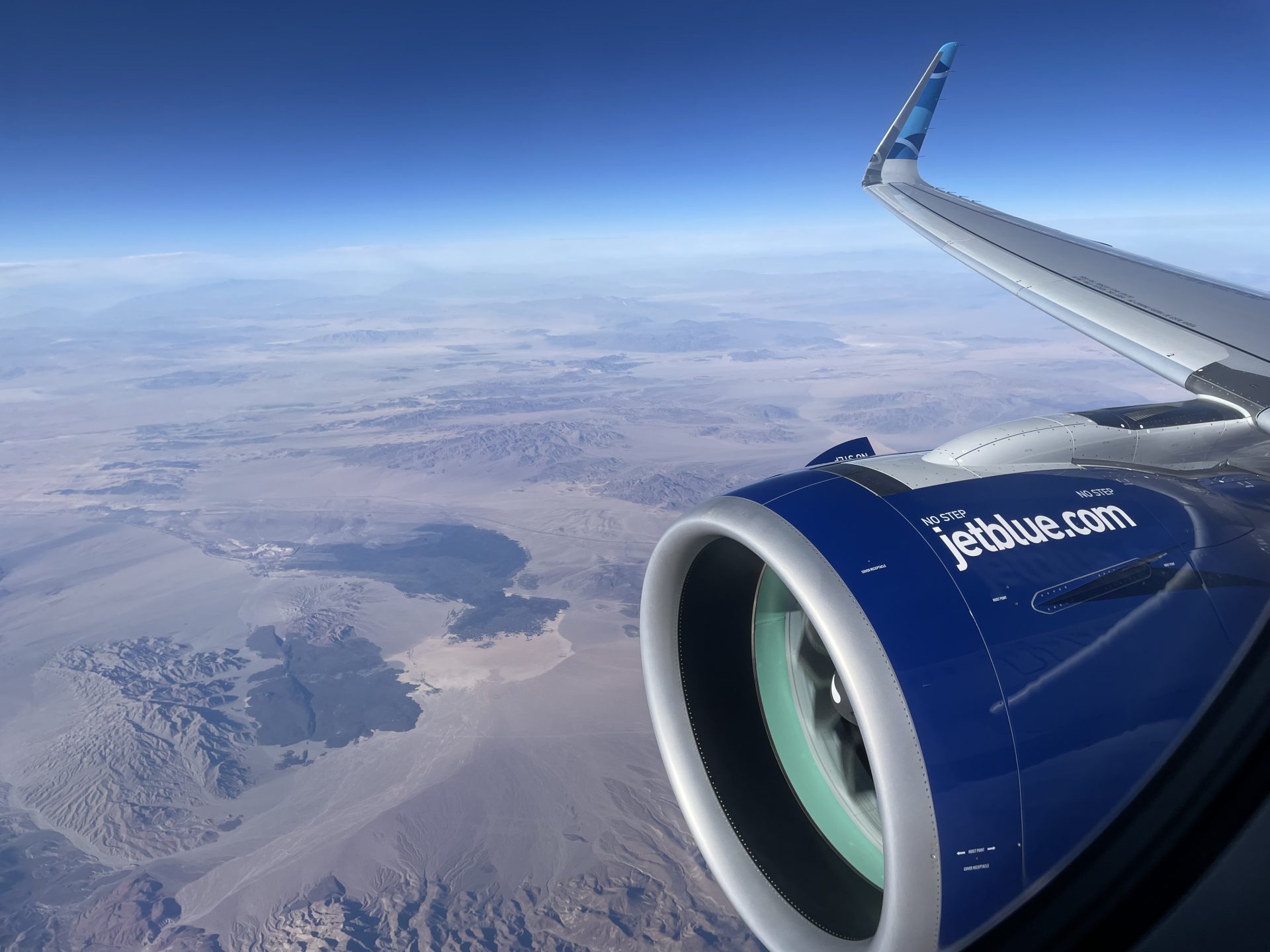
Beautiful inflight views while cruising over California. (Photo: AirlineGeeks | Mateen Kontoravdis)
Going into this flight, I knew that JetBlue had built a unique business class seat, but the service that came with it was what truly set the entire Mint experience apart from other airlines. The flight attendants offered attentive service throughout the entire trip and the often-overlooked soft product was as refined as the physical seat itself. Despite only being a domestic flight, I arrived in Los Angeles feeling as if I had just come off an international business class flight. As JetBlue expands its footprint and takes delivery of more Mint-equipped jets, I look forward to one day flying this product on a flight to Europe.
Mateen has been interested in aviation from a very young age. He loves learning about different aspects of the industry. Mateen has been an editor for the website since early 2017. Most recently, Mateen is additionally the website’s overall strategist. In addition to writing for AirlineGeeks, Mateen is a sophomore at the University of Texas studying Human Dimensions of Organizations. You can also find him on Instagram (@Plane.Photos) where he enjoys sharing his aviation photography with thousands of people on a daily basis.
Electrifying Flight: Ampaire – Pioneering Electric Aviation
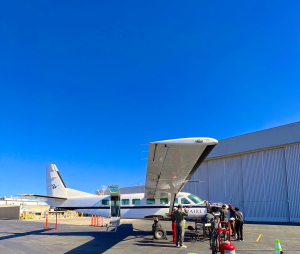
Ampaire's Electric EEL, a modified Cessna 337. (Photo: Ampaire)
From canvas to composites, the airplane as we know it has been redefined throughout the history of flight. Yet, despite the Wright Flyer having long faded into obsolescence, the principles of flight remain. Those principles – control, lift and propulsion – comprise a three-legged stool on which all aircraft must stand; it’s a stool that Ampaire understands well.
In the age of carbon reduction, the principle of greatest attention is propulsion. Racing to reduce carbon emissions, engine and fuel manufacturers alike have set their sights on sustainable aviation fuel (SAF) as a replacement for conventional jet fuels. While a positive step, there is a question that must be answered: what next? Ampaire’s Dr. Susan Ying, SVP, Global Operations helped AirlineGeeks answer that very question.
Ampaire – Pioneering Commercial Electric Aircraft
Headquartered in Hawthorne, California, Ampaire has been pioneering electric aircraft since 2016, with its first flight in 2019. Having first attracted this writer’s attention in 2021 at the Society of Experimental Test Pilots (SETP) Virtual Symposium, Ampaire’s objectives lie beyond electric urban air mobility (UAM), focusing instead on the future of commercial aviation. It’s this objective that has defined their approach to developing the technology necessary for electric airlines of the future.
Following a three-phase approach, Ampaire has outlined a plan that it believes will deliver electrified aircraft to the industry in the fastest and most reliable way possible. The stages, aptly defined as ‘today’, ‘tomorrow’, and ‘beyond’, are far from realized; Ampaire validated its first stage in a project collaborated with Hawaiian airline Mokulele Airlines in 2020.
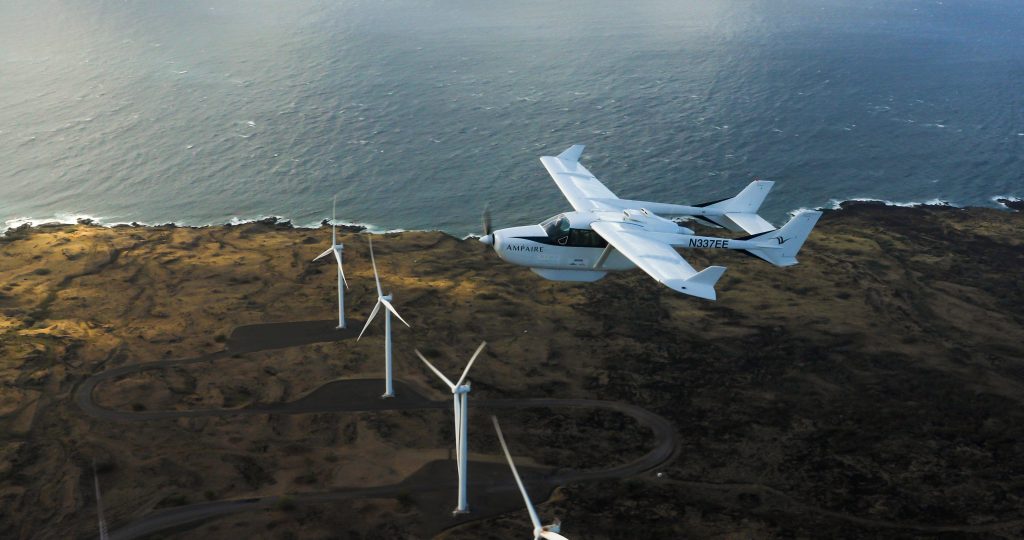
Ampaire’s Electric EEL, a modified Cessna 337, flying over Hawaii. This aircraft makes up the ‘today’ stage. Photo: Ampaire
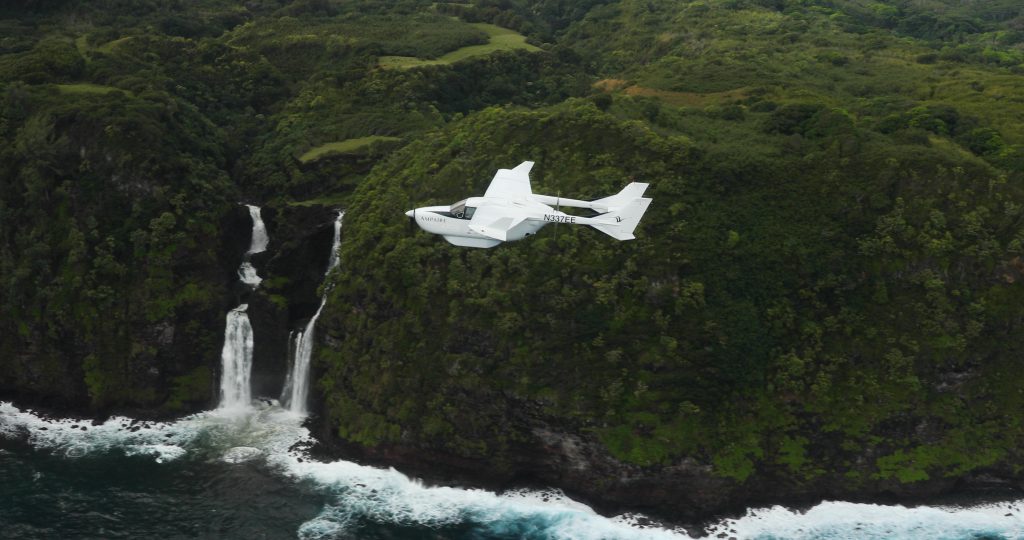
Using a hybrid-electric propulsion system, Ampaire’s Electric EEL – a modified Cessna 337 Skymaster – made history in December 2020 by completing the first-ever airline flight trial along an actual airline route. The route, Kahului Airport to Hana Airport – both in Maui – allowed for the technology to be tested in real-world conditions, complete with weather, community needs, and operational schedule. The aircraft, having flown a total of 22 flights, demonstrated 100% dispatch reliability, while proving that a half-conventional engine and half-electric engine system demonstrated no reduction in take-off and climb performance.
Ampaire’s Electric EEL, a modified Cessna 337, flying over Hawaii. Photo: Ampaire
Hybrid Aviation – The Next Step in Commercial Flight
While test pilot symposiums and research are of great interest to the learned Avgeek, the impact is in the application. Dr. Ying answered our questions on how Ampaire is applying that research, and what effect new propulsion technology will have on infrastructure.
AG: Most airlines seem to be transitioning to SAF, but the step to follow this seems to be electric. How is Ampaire leading the way in electric aircraft development? Has hybrid been a more logical approach to addressing future aviation needs?
Ampaire: The best near-term method of reducing harmful aviation emissions is to combine SAF with electric propulsion. Our first commercial product, the Eco Caravan combines a SAF-capable engine with an electric engine. With this combination, we can reduce emissions by nearly 100 percent. We expect to certify this aircraft in mid-2024.
Ampaire is focused on building sustainable aircraft and is partnering with industry stakeholders on sustainable infrastructure for fuelling them. Today that means SAF distribution and charging facilities (although the Eco Caravan will be plug-in optional to allow it to operate anywhere, regardless of infrastructure). We’ve teamed up with Black & Veatch an engineering firm famous for helping launch the Tesla charging network. Together, we’ll assist airports and air carriers in developing electric charging and SAF availability.
Ampaire’s Eco Caravan. Photo: Ampaire
AG: New aircraft propulsion systems mean airports will be required to adopt new infrastructure. Have Ampaire’s Hawaii flights played a part in defining what that new infrastructure will look like?
Ampaire: Yes, the Hawaii flights with Mokulele Airlines on Maui demonstrated the feasibility of incorporating hybrid-electric aircraft into scheduled flight operations. We can say the same about our demonstration flights in the UK, working with regional carrier LoganAir plus 16 airports, power companies, government agencies and other stakeholders in the ecosystem. Expanding electrical distribution at airports will require investment, but is far easier than creating an entirely new green hydrogen infrastructure, for example.
AG: Electric aircraft today are more commonly associated with short-range UAM. How are Ampaire’s aircraft different?
Ampaire: Total reliance on batteries limits range capability. Hybrid-electric propulsion removes those constraints and is ideally suited for Regional Air Mobility (RAM). The Eco Caravan, for example, can carry the same payload and achieve the same (or better) range as today’s PT-6 powered Caravan. Our technology testbed aircraft, the Electric EEL, has flown nonstop from Los Angeles to San Francisco and from far north Scotland to the southern tip of England—481 statute miles. We are flying out from LAX to Oshkosh this month, further demonstrating a 1,735 miles flight with recharge stops along the way.
AG: One of the biggest topics that must arise is the financial cost. Is it possible to make electric aviation affordable?
Ampaire: We expect early customers to upgrade to a hybrid-electric system at an overhaul interval. By avoiding the overhaul of a turbine engine, capital investment in the upgrade is limited and the lower life-cycle costs are persuasive. Fuel burn is reduced by at least half and total operating cost by a minimum of 25 percent. These are quite large savings in the airline world, which will translate to more affordable flights for passengers, especially for short-haul flights. For example, for a 100 nautical miles trip, the total cost per seat per trip of the ATR 72-600 is 5X higher than the Eco Caravan, the Embraer E175 is 7X higher, while the A320neo is 14 times higher!
AG: By what percentage are CO2 emissions reduced with Ampaire’s hybrid aircraft technology?
Ampaire: Depending on the availability of SAF, emissions reduction can range from 86 percent (using the currently certified 50% blend SAF) to nearly 100 percent (once 100% blend SAF is certified and available). These are savings with the Eco Caravan, an upgrade of a current design. In the future, when we can thoroughly optimize a new airframe for hybrid-electric, we expect even greater efficiencies. Ultimately, we will have new designs with advanced aerodynamics, optimized for all-electric propulsion, zero emissions and even more compelling performance.
Dependability, Affordability, Sustainability
As Ampaire’s tests highlight, hybrid-electric aircraft is a viable solution – and the next step – to humanity’s focus on a greener world. Dependable, this technology not only matches the performances of conventional aircraft but offers answers to questions perhaps not initially considered.
According to Ampaire’s website, their technology can “lower fuel by 90%, maintenance by 50%, and noise by 60%.” For the up-to-date reader, the increases in oil prices and an uncertain global economy are a clear threat to commercial aviation as we currently know it. Therefore, one does not require a proverbial (or literal) PhD to realize the financial benefits for consumers and businesses alike.
While SAF is a positive step forward, more is required, and it’s electrified aircraft that can deliver that ‘more’. Ampaire states: “These tangible environmental, humanitarian and economic benefits make us certain that air travel’s future is electric.”
Aviation’s three-legged stool, while remaining unchanged in principle, will continue to be redefined; technology and advancement demand this. As we fly into the unknown sunset, this seems to be at least one certainty.
Mike’s love affair with flight and mechanical objects in the sky began at an early age, fascinated by space documentaries and the vintage Flight Simulator ’95. He currently works as an instructor for UAVs and is training to receive his Private Pilot Licence with the goal of working in manned flight instruction. An avid reader of all things aviation and manned space flight, Mike stays close to developments in aerospace while reminiscing and sharing the rich history of flight with others. He loves writing, engineering and science.
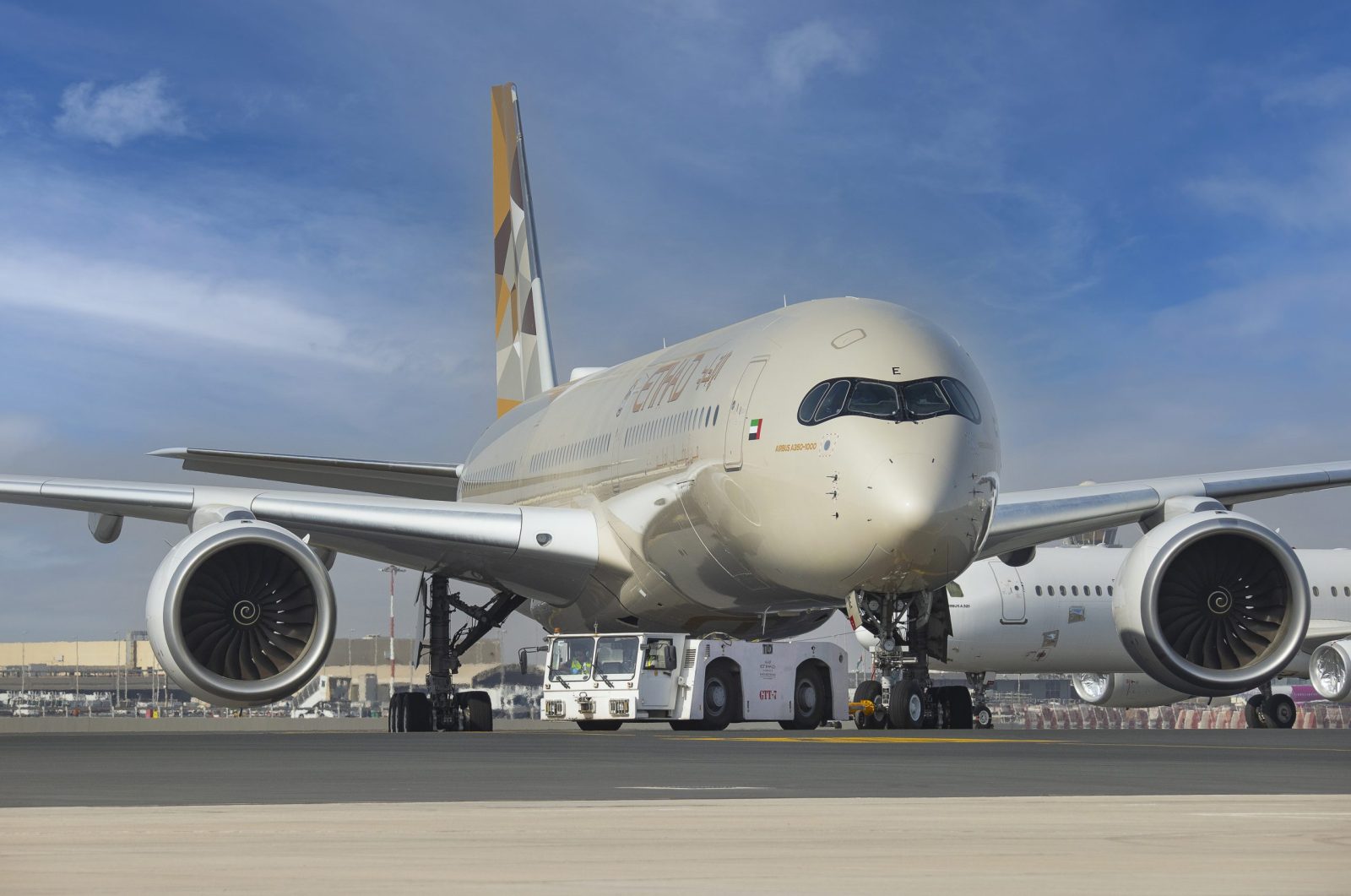
Etihad Airways' new A350-1000 aircraft. (Photo: Etihad Airways)
On 30 June 2022, Etihad Airways celebrated the arrival of its new Airbus A350-1000 (one of five new Airbus A350s to join Etihad’s fleet this year) in the United States, with 371 passengers, following the inaugural commercial flight from Abu Dhabi International Airport (AUH) to New York’s John F. Kennedy International Airport (JFK).
The Airbus A350 XWB is a twin-engine, low-wing airliner made by the European multinational Airbus. Intended for long-haul routes, it features a wide-body configuration, and it is one of the most efficient aircraft types in the world, with a 25 percent reduction in fuel consumption and CO2 emissions compared to previous generation twin-aisle aircraft. Developed from the A330 and A340 families, it was then redesigned with a wider fuselage (hence the name “XWB,” eXtra Wide Body) to meet customer demands.
The Airbus A350 is an aircraft of great interest in commercial and cargo aviation because of its sustainability features. Many airlines have chosen it recently, including Etihad, which, in 2021, formed a partnership with Airbus and Rolls Royce called “the Sustainable50 program”, will use Etihad’s A350s as a flying testbed for new initiatives, procedures and technologies to reduce carbon emissions.
From July 1, all Etihad flights servicing New York and Chicago O’Hare International Airport will be operated by the A350s.
The Airbus A350 aircraft features Etihad’s newest cabin interior, inspired by the shadows cast by Abu Dhabi’s palm trees and is more efficient and sustainable in design. The cabin lighting emulates natural ambient light and is designed to enhance the guest experience, provide an optimum environment for sleeping and reduce the effects of jetlag. Mobile and Wi-Fi connectivity is also available throughout the aircraft.
The aircraft has a two-class configuration, Business and Economy. The Business class is home to 44 Business seats with sliding doors that provide a high level of privacy to each suite and a width of over 20”. Each seat converts into a fully-flat bed of 79” in length and faces forward directly aisle access. Etihad’s spacious Economy cabin is configured with 327 smart seats in a 3-3-3 arrangement, of which 45 ‘Economy Space’ seats have been enhanced with an additional 4 inches of legroom. Guests receive blankets and pillows for additional comfort and amenity kits on longer flights.
Etihad Airways’ new Business offering. (Photo: Etihad Airways)
Etihad passengers traveling to the US have access to Etihad’s US pre-clearance, the only United States Customs and Border Protection facility in the Middle East. This allows passengers bound for the United States to process all immigration, customs and agriculture inspections in Abu Dhabi before they board their flight, avoiding immigration and queues on arrival in the US.
Etihad continues its partnership with Airbus aircraft and confirms its interest in the Airbus A350. Back in February at the Singapore Airshow, Etihad had already become the newest customer for the Airbus A350F (seven A350F freighters ordered), focusing on the future of the widebody freighter market.
Vincenzo graduated in 2019 in Mechanical Engineering with an aeronautical curriculum, focusing his thesis on Human Factors in aircraft maintenance. In 2022 he pursued his master's degree in Aerospace Engineering at the University of Palermo, Italy. He combines his journalistic activities with his work as a Reliability Engineer at Zetalab.
Those that have read my stories and interviews know that I love out-of-the-way or unique airlines, especially the smaller ones that still fly propeller-driven aircraft. So, I was very excited to hear that there would be another airline and brand that I could fly and use a relatively new aircraft type, the Italian-made Tecnam P2012.
Marianas Southern Airways will have a route network within the Commonwealth of the North Mariana Islands, or CNMI for short, and will fly four routes using a new aircraft type for the airline. AirlineGeeks once again had the pleasure of talking to Keith Sisson, the Chief Marketing Officer of Southern Airways Express, about their newest brand and the continual expansion of the Southern Airways name.
AirlineGeeks (AG): You will be the first major commuter airline to serve most of these routes since Cape Air ended its ATR service back in 2018. What led SAE to announce service to these destinations and start a new base so far away from current operations?
Keith Sisson (KS): The only airline providing service throughout The Marianas abruptly ceased operations for a brief time in December of last year. This caused a great deal of panic and concern throughout the island chain. As a result, a group of local business and community leaders started looking for alternative solutions. One of the business leaders has been developing a plan to bring 757 passenger services to Saipan from large Asian and Pacific markets. His group pivoted from those plans in hopes of first finding a solution to the inter-island air service problem. They wanted a partner that had the resources to start immediately, as well as a partner with experience operating within island communities. They noticed what we were doing with our Mokulele brand in Hawaii and reached out. Upon hearing their pitch and then visiting the region, we felt this was a natural fit for our operation.
The route map for Marianas Southern Airways (Map: Southern Airways)
(AG): Why did you select the Tecnam P2012 for these new operations?
(KS): We looked at several aircraft types, including the Cessna Grand Caravan which operates an overwhelming majority of our routes. Ultimately, however, we decided that the Tecnam P2012 Traveller is the best fit for this particular mission due to its ability to efficiently operate on very short routes. Also, we felt very strongly that it was important to operate the flights in this region on new aircraft, and Tecnam had several new Travellers available for immediate purchase.
(AG): Tinian is a route that was never flown by Cape Air, how do you plan on accommodating this island/destination in a way that Cape Air couldn’t?
(KS): We see this as being very similar to our Molokai market in Hawaii. Quite a few airlines have tried and failed to operate service from Molokai in the last 10-12 years, most recently, Ohana by Hawaiian. The driving factor is gauge. There are simply not enough people, and there is not enough demand, to run large aircraft in these markets. Cape’s ATR service was simply too much lift for Tinian. Operating 9-seat aircraft allows us the flexibility to scale-up service during peak travel times and pull back service when there is little demand. This is the key to being successful in the CNMI, we will get high load factors by adjusting frequency on an as-needed basis.
(AG): A lot of those routes will be used by locals commuting throughout the islands, will you be starting a frequent flyer program for these individuals?
(KS): We will extend our “21st Century e-Ticket book” concept to this market that we have deployed in New England and Hawaii. This allows for frequent travelers to pay in advance and receive a discount based on the amount they place on deposit. Members who participate in this program also receive other benefits like free change fees and free bags.
(AG): What will be the daily frequency for each route?
(KS): Initially, we will be offering 66 weekly departures [within the Marianas Islands], with at least double-daily service on most routes. Some routes will start with three or four departures. Ultimately, we intend to grow to over 120 weekly departures, based on demand, of course.
(AG): Being so far from your other current destinations you’ll have to open a new base, where will this be located?
(KS): Our local headquarters for the region will be in Saipan, while dispatch will be based at our Regional Operations Center in Kona, and crew/aircraft scheduling at our Global Operations Center in Palm Beach.
(AG): Will flights here be sterile (TSA) or non-sterile (no TSA)?
(KS): All flights will be operated non-sterile, just like in Hawaii.
Mokulele’s non-sterile terminal in Honolulu (Photo: AirlineGeeks | Joey Gerardi)
(AG): You currently are partners with United Airlines and they operate a hub in Guam, will you offer UA interline/codeshares on routes throughout the commonwealth?
(KS): This is very exciting…Yes! This is a very big deal for locals and visitors alike. Currently, when you fly into Guam, you must stay overnight before you can continue to the CNMI. The same-day connections will be very popular!
As a side note, since this interview took place, United Airlines announced they would begin flights from Tokyo-Narita to Saipan on Sept. 2, 2022. This means passengers heading to/from Tinian can now get to Asia with just a single stop in Saipan on a single itinerary between the two airlines.
(AG): So, this brand will be part of the Southern Airways Express family?
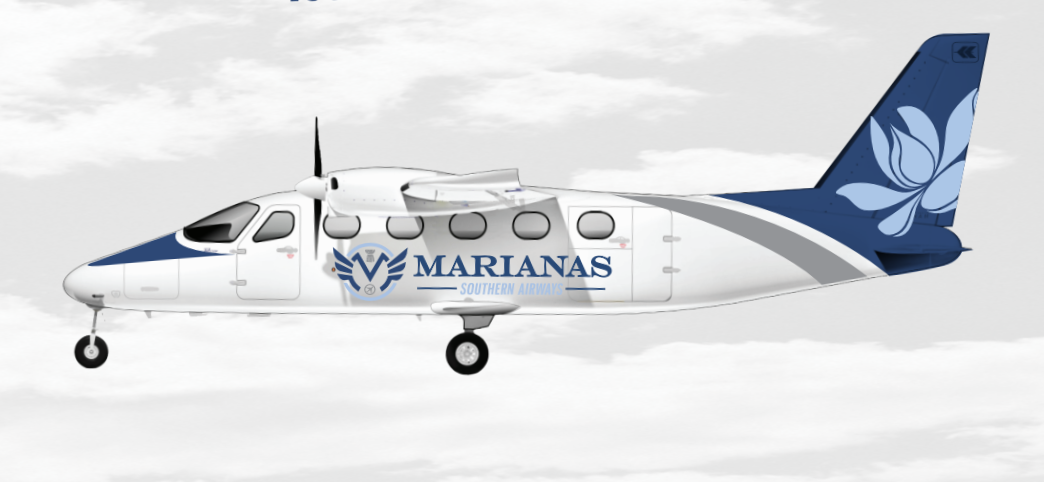
(KS): Yes, we are unveiling a new brand for this region. Very much like Mokulele is a unique brand under the Southern umbrella in Hawaii, the brand in this region will be ‘Marianas Southern Airways’. We felt it very important to include the local name and local icons in the branding. The colors and tail logo will be similar to Southern/Mokulele.
The new brand for the CNMI flights (Photo: Southern Airways)
(AG): So, with operations in the Marianas Islands, Hawaii, and every time zone on the mainland United States, this means the sun will never set on Southern Airways operations (i.e. 24hrs a day). Will this pose any challenges operationally or logistically?
(KS): You bring up a great point! The CNMI is located on the other side of the international dateline. This means that the first departure each day from American soil will begin with Sothern’s Marianas-branded departure from Saipan AND that the very last flight landing each day on American soil may very well be Southern’s Mokulele-branded flight, which will land just before midnight Hawaii Standard Time. America’s flight day will begin and end with Southern Airways!
As far as operational challenges, our customer service center is already a 24-hour operation. We have dispatch offices, maintenance hotline responders, and company leadership in both the Eastern and Hawaii time zones. Because of this, we are already a round-the-clock operation. By the time I am going to sleep in Kona, Hawaii, Stan Little, Southern’s CEO, is waking up in Palm Beach!
(AG): When will flights on each route begin?
(KS): We haven’t announced an official start date yet, but it will be in the month of July.
(AG): The Tecnam isn’t a large aircraft made for long-haul flights, how will you be getting the aircraft out to Guam and the Commonwealth?
(KS): The Tecnams will be flying a world tour! They will leave Italy already painted with our livery and cross the Atlantic, eventually arriving at our Lancaster, Pennsylvania maintenance facility to undergo FAA conformity. Then, the aircraft will travel across the country to our LAX hub, ferry to Hawaii, and then on to Saipan.
Since the time of this interview was conducted, the first Tecnam P2012 Traveller wearing the Marianas Southern Airways livery was ferried across the Atlantic Ocean between June 20 and 23, 2022. The route it took was Aberdeen (ABZ) to Reykjavik (RKV) to Narsarsuaq (UAK) to Goose Bay (YYR) to Bangor (BGR) and finally to Lancaster (LNS). The aircraft carries the registration of N503SA.
Marianas Southern Airways first aircraft (Photo: Southern Airways)
(AG): Your expansion into the Rockies and now this, what will this bring your total number of Southern Airways operated destinations and daily flights up to?
(KS): Including our acquisition of Air Choice One, our new EAS contract in Jackson, Tennessee, our new EAS contract in Show Low, Arizona, and this new expansion to the Commonwealth of the Northern Mariana Islands, we will be serving 48 cities with over 250 peak-day departures.
With this newest expansion, they will become the largest commuter airline in the United States, surpassing Cape Air in both number of daily departures and number of destinations served. In addition, with the expansion across the international dateline, this means the sun will never set on Southern Airways operations, another thing no commuter airline has accomplished since Cape Air served the CNMI back in 2018.
I would once again like to thank Keith Sisson for talking with me about their newest airline brand, and I am sure we will have another interview in the future.
Joey has always been interested in planes for as long as he can remember. He grew up in Central New York during the early 2000s when US Airways Express turboprops ruled the skies. Being from a non-aviation family made it harder for him to be around planes and would only spend about three hours a month at the airport. He was so excited when he could drive by himself, the first thing he did with his driver's license was get ice cream and go plane spotting for the entire day. He graduated from Western Michigan University in 2022 with a B.S. in Aviation Management & Operations and a Minor in Business, and currently works for a major airline in his hometown.
Lufthansa Group Cites ‘Operational Challenges’ As More Flights Suspended
A Swiss Airbus A220 in Frankfurt.
(Photo: AirlineGeeks | Fabian Behr)
The European summer season ramps up further next week with the beginning of school holidays in a number of countries. It has been well documented that aviation has been facing significant challenges in recommencing services with operational pressures on staff numbers and the continuation of degrees of travel restrictions in some countries.
The Lufthansa Group acknowledged these challenges to its customers this week with an email from the Executive Board. The statement read: “As the Northern Hemisphere summer begins and with global travel restrictions now almost all lifted, everyone involved in aviation worldwide is reaching almost daily the limits of the resources that are currently available. And the ramp-up of the complex air transport system from almost zero to now almost 90 percent is clearly not proceeding with the reliability, the robustness and the punctuality that we would like to offer you again.”
As a result, German-based Lufthansa is removing about 2200 flights from its schedule and fellow Lufthansa Group airline SWISS is removing a further 674 flights between August and October. The Local Swiss news site reports that the latest flight suspensions are in addition to those removed from schedules on 08 June. The airline is cited as saying: “Further cuts, unfortunately, cannot be avoided due to resource constraints and operational challenges across the airline industry.”
Lufthansa Group advised passengers that “too many employees and resources are still unavailable, not only at our infrastructure partners but in some of our own areas, too. Almost every company in our industry is currently recruiting new personnel, with several thousand planned in Europe alone. However, this increase in capacity will only have its desired stabilizing effect by the time winter comes.”
The apology to customers by the Executive Board mentioned that the war in Ukraine was also contributing to the issues that airlines are experiencing and that “the situation is unlikely to improve in the short term.” SWISS also added: “We very much regret the further flight plan adjustments that have become necessary and expressly apologize to the passengers affected and our partners for the inconvenience caused as a result.”
The recently announced cuts for SWISS account for approximately two percent of the total scheduled flights. A mix of short-haul and long-haul services is expected to be affected with flights to Dubai and Johannesburg cut. The Local also reports that some U.S. flights will also be affected through the destinations were not immediately confirmed.
The Lufthansa Group Executive Board concluded the communication to customers by stating: “We are doing our utmost to again offer you the quality, the punctuality and the reliability that you can rightly expect from your Lufthansa Group airlines as soon as we possibly can.”
John has always had a passion for aviation and through a career with Air New Zealand has gained a strong understanding of aviation operations and the strategic nature of the industry. During his career with the airline, John held multiple leadership roles and was involved in projects such as the introduction of both the 777-200 and -300 type aircraft and the development of the IFE for the 777-300. He was also part of a small team who created and published the internal communications magazines for Air New Zealand’s pilots, cabin crew and ground staff balancing a mix of corporate and social content.
John is educated to postgraduate level achieving a masters degree with Distinction in Airline and Airport Management. John has held the positions of course director of an undergraduate commercial pilot training programme at a leading London university. In addition he is contracted as an external instructor for IATA (International Air Transport Association) and has been a member of the Heathrow Community Fund’s ‘Communities for Tomorrow’ panel.
A KLM 737-800 aircraft
(Photo: AirlineGeeks | Fabian Behr)
KLM Royal Dutch Airlines completed the repayment of the last part of the loan it had agreed with the Dutch State and private banks in 2020. With the repayment of 277 million euros, the Netherlands’ largest airline finally returned the amount received as part of the aid package to cope with the complications unleashed by the pandemic.
Like many other airlines, KLM relied on financial support from public sources to sustain its capacity during downturns.
Of the 3.4 billion euro credit line, the company drew down a total of 942 million euros. By the beginning of the year, it had completed two repayments. Increased demand for air travel, the cessation of mobility restrictions and greater efficiency in its cost structure made the repayment possible, KLM said.
The company repaid the full 665 million euros from banks in three stages. It paid 311 million euros on May 3 and a further 354 million on June 3. All that remained was to complete the repayment of 277 million euros to the Dutch State.
In an official statement, the company said it is “very grateful to the Dutch government and the banks for their support.” The text adds that “with this step, KLM demonstrates that it takes its responsibility and keeps its promises to financiers, government and society.”
Pieter Elbers, CEO of KLM, highlighted the work of all KLM employees during 2020 and 2021: “I would like to thank all KLM colleagues for this», he said. Furthermore, he assured that «the current operational situation at Schiphol is also tough and, again, demands a lot from our people and our customers.”
Prospects
While the airline industry has been showing definite signs of recovery for months now, KLM has decided to maintain its credit line for the foreseeable future. Rising inflation levels, increasing fuel costs and other input prices, along with geopolitical uncertainties surrounding the Russian invasion of Ukraine, maintain a veil of uncertainty over the state of the airline business in the coming months.
After completing the repayment of the money used, the company will continue to have a credit line of 2.4 billion euros (723 million from the government and 1.735 billion from Dutch banks). Despite this, current forecasts are positive in terms of available financial resources for the coming years.
This story was originally published by Agustin Miguens of Aviacionline in syndication with AirlineGeeks.
AirlineGeeks.com was founded in February 2013 as a one-person blog in Washington D.C. Since then, we’ve grown to have 25+ active team members scattered across the globe. We are all here for the same reason: we love deep-diving into the fascinating realm of the airline industry.