








Stories

Opinion: End of Testing Does Not Mean an End to All Travel Restrictions

Jiaodong Airport
Arrival walkway at Qingdao, China's Jiaodong Airport. (Photo: Lei Yan)

With the U.S. government removing pre-departure testing for flights into the country, airlines and tour operators on both sides of the Atlantic are expecting a bumper summer. This comes as great news to businesses and travelers alike as international travel has seen increased demand as countries lift testing and quarantine restrictions.

According to CNN, London saw numbers of airline passengers from the U.S. that ‘nearly reached pre-pandemic levels during the week of the Platinum Jubilee celebrations in early June. This was a week before the lifting of testing restrictions back to the U.S. with the report stating that 2022 will be ‘three seasons in one.’

Though the news of the removal of U.S. pre-departure testing is a positive one that many other countries adopted earlier, there is still a range of restrictions that travelers may face. The need to prove vaccination status is one requirement that a number of destinations impose. To be certain that there will be no impediments to arrival processing the onus is on travelers to ensure that they meet the individual country’s definition of vaccination status.

Some countries require that inbound visitors have received the initial program of vaccinations plus a booster within a specific timeframe. Other countries will accept just the initial dose or doses of specific vaccines while others do not consider vaccination status at all. Proof of status in a specific language or language also needs to be a consideration.

In addition to this, there may be a need to fill out supplemental information for arrival and this can be confusing for some. The U.S. has an ‘Attestation’ requirement and certain countries have an online or paper ‘Passenger Locator Form’ (PLF) each with its own levels of detail.

The management of these requirements has added a significant amount of stress to the traveling experience and a logistical undertaking for airlines.

As someone who has traveled to a number of countries over the last two years the need to keep up-to-date with the needs of each country has been a significant undertaking prior to each trip. On one occasion the rules changed just days before travel which necessitated an adjustment and scramble for local testing.

With the need for ‘travel testing’ diminishing around the world, it will become more difficult and potentially more expensive to meet the requirements for those countries that still require a test. As a result, travelers may continue to pass on visiting or seek alternative destinations rather than enduring added time and expense.

An element that frustrates travelers as air travel demand rises is the inconsistency in which the restrictions have been managed. Some airlines have adapted online processes to pre-check the documents of their passengers to minimize check-in times. Others have restricted online check-in in favor of manual checks at the airport contributing to congestion and delays.

One thing has been clear and that is the reliance on technology to assist in facilitating the processing of passengers and the varying travel requirements.  For several countries I visited, it was clear that some of the processes and interactions between airlines and the government requirements were still to be clearly established.

Of course, the situation has been ‘unprecedented’ and aviation has had to respond to changing rules with sometimes minimal notice. From my experiences I have found the frontline staff whether at check-in or customs and immigration have been welcoming and patient. Though the pandemic is certainly not completely over with the lessening of travel restrictions in major tourism markets, it is to be hoped that the learnings from the last two years can be analyzed to create future consistent processes.

John Flett

John has always had a passion for aviation and through a career with Air New Zealand has gained a strong understanding of aviation operations and the strategic nature of the industry. During his career with the airline, John held multiple leadership roles and was involved in projects such as the introduction of both the 777-200 and -300 type aircraft and the development of the IFE for the 777-300. He was also part of a small team who created and published the internal communications magazines for Air New Zealand’s pilots, cabin crew and ground staff balancing a mix of corporate and social content. John is educated to postgraduate level achieving a masters degree with Distinction in Airline and Airport Management. John has held the positions of course director of an undergraduate commercial pilot training programme at a leading London university. In addition he is contracted as an external instructor for IATA (International Air Transport Association) and has been a member of the Heathrow Community Fund’s ‘Communities for Tomorrow’ panel.

Dominican Republic and Guatemala Sign Open Skies Agreement

An Arajet Boeing 737 accelerates on the runway. (Photo: Arajet)

The Domincan Republic and Guatemale have entered into an Open Skies Agreement.

The new agreement will allow airlines to combine different flight numbers in aircraft operations, as well as Sixth Freedom traffic rights for passengers on routes operated by designated airlines for both countries and beyond.

Finally, up to seven freedom air traffic rights will be allowed for exclusively cargo flights. In addition, the agreement provides that designated airlines can carry out operations under the shared code regime and on non-scheduled or charter flights.

This agreement will make possible the expansion of flights between the countries and will help airlines to operate between the two territories without frequency limits. Furthermore, the new accordance shows the commitment of both nations to strengthen and contribute to the strengthening of bilateral relations in the field of civil aviation.

Air traffic between the Dominican Republic and Guatemala is carried out through flights under the modality of special permits and non-regular or charter flights.

So far, there are no established routes with nonstop flights. According to a press release from the Civil Aviation Board of the Dominican Republic, since 2018 some 36,838 Guatemalan travelers have arrived in the Dominican Republic.

However, the arrival of these has been through flights with a stopover in Tocumen, Panama or Ft. Lauderdale, F.L.

Other Permissions Granted

The Open Skies agreement implemented by the Dominican Republic has generated a more competitive market for users of air services in the country.

According to a press release, the approval of these agreements has made it possible to increase the country’s air connectivity. Airlines such as Iberia and British Airways have benefited from Open Skies Agreements.

Flights from London and Madrid to the Dominican Republic have increased compared to previous years. On the other hand, special permits are granted to carriers to operate routes not contained in their operating permits. This special permission has the purpose to explore the commercial viability to regularize them in the future.

For example, the Dominican Republic Government granted special permission to Air Antilles Express to operate routes to and from the Caribbean country.

This carrier will carry out 10 round-trip flights on in Fort de France, Martinique to Santo Domingo,  the Dominican Republic via Pointe-à-Pitre, Guadeloupe and Pointe-à-Pitre, Guadeloupe to Punta Cana, the Dominican Republic. The carrier’s flight operations on its routes from Pointe-à-Pitre, Guadeloupe to Fort de France, Martinique and Santo Domingo, the Dominican Republic will also be a part of this schedule. Air Antilles Express will operate five on each route, from July 24 to Aug. 21, with a frequency of one weekly flight on each route operating on Sundays.

The Dominican Republic Air Traffic

The Dominican Republic continues to exceed expectations and break passenger traffic records in the past several months.

From May 1 to May 31 of this year, 1,226,056 passengers were transported by air on international flights through Dominican terminals in 9,170 air operations.

From the 1,226,056 passengers transported on international flights to and from the country, 602,726 passengers entered Dominican territory while 684,285 left.

Regarding cargo operations, from January 1 to April 30, international terminals mobilized more than 31 thousand tons in exports, which represent the capture of more than $1.1 billion in income, and more than 12 thousand tons in imports.

Juan Pedro Sanchez Zamudio

The three things Juan Pedro loves most about aviation are aircraft, airports, and traveling thousands of miles in just a few hours. What he enjoys the most about aviation is that it is easier and cheaper to travel around the world and this gives you the opportunity to visit places you thought were too far away. He has traveled to different destinations in North, Central, South America and Asia. Born, raised and still living in Perú, Juan is a lawyer, soccer lover, foodie, passionate traveler, dog lover, millennial and curious by nature.

Brussels Airlines Increases Flight Operations Across Africa

A Brussels Airlines Airbus A330-200. (Photo: Rolf Wallner [GFDL 1.2 (http://www.gnu.org/licenses/old-licenses/fdl-1.2.html) or GFDL 1.2 (http://www.gnu.org/licenses/old-licenses/fdl-1.2.html)])

Brussels Airlines has resumed two more African routes — increasing the number of destinations the carrier serves in sub-Saharan Africa to 17. On June 11, the Lufthansa Group subsidiary and Star Alliance carrier resumed service from Brussels to Conakry, Guinea and Ouagadougou, Burkina Faso.

Both routes will be operated 3 times weekly with an Airbus A330. Due to the COVID-19 pandemic, Brussels Airlines has not served both destinations for the past two years.

Senior Director of Sales for Brussels Airlines and the Lufthansa Group for sub-Saharan Africa, Philippe Saeys-Desmedt said in a statement that the carrier is “very happy to again expand our market position in our most important continent.”

He added, “We have been able to rehire many of our previous employees, which means we immediately have the experience that is needed to restart our [nonstop] connection between two important African capital cities … and our home base, Brussels Airport.”

The Belgium airline noted that the flights from Conakry and Ouagadougou will arrive in Brussels early in the morning, creating “connection options to the entire Brussels Airlines network in Europe and the US.”

In addition to the two destinations in Guinea and Burkina Faso, flight frequencies to Banjul, Gambia; Lomé, Togo and Monrovia, Liberia will increase this summer to five flights for each of these routes. Frequencies to East African destinations such as Entebbe, Uganda, and Kigali, Rwanda will increase to seven and five times weekly respectively.

Brussels Airport’s Cargo Movement

Meanwhile, the cargo throughput at Brussels Airport remains ahead of pre-pandemic 2019. Throughput at the airport totaled 65,358 tons in May, down 9 percent from the same month of 2021 but up 12.5 percent compared to May 2019 — with Asia leading for both imports and exports.

Airfreight dropped by 4 percent to 52,629 tons and the number of cargo flights decreased by 8 percent compared to 2021, totaling 1,736. That figure is 39 percent higher than the total for May 2019.

There was a marked difference between the freighter segment where volumes fell by 11 percent year on year to 21,044 tons. Cargo in the belly of the aircraft rose by 57 percent to reach 10,687 tons as more passenger flights returned. Belly cargo lagged behind 2019 levels by 22 percent.

Of the full-freighter flights, 34 percent were operated with passenger aircraft. In May, Air Belgium began operating Boeing 747 cargo flights, in partnership with the Hongyuan Group. In addition, Virgin Atlantic inaugurated cargo flights on its Airbus A321, signaling a shift away from ‘freighters’ to freighter aircraft.

Volumes on express services fell by 15 percent to 20,897 tons as the e-commerce market in western Europe slowed. Trucked volumes also decreased, by 25 percent from year to year, to 12,730 tons. According to the airport, more money will be invested to further modernize its cargo zone over the next three years.

Victor Shalton

Victor Shalton's love for aviation can be traced to when he was 11-years-old. As a seasoned aviation writer, he takes pride in providing the best aviation coverage around the globe and is passionate about advancing his skills in the aviation space. In addition, he loves travelling, writing, arts and while his speaking engagements have taken him around the world, he is proud to call Nairobi home.

JetSMART Peru Begins Operations

A JetSMART Argentina A320 taxiing in Mendoza. (Photo: AirlineGeeks | João Machado)

On Tuesday, JetSMART Peru’s inaugural flight took off from Jorge Chávez airport in Lima. The new airline’s first operation is to Arequipa with an Airbus A320neo registered as CC-AWJ.

Perú is the third subsidiary of the low-cost carrier JetSMART after Chile – its home base – and Argentina.

JetSMART will currently have two Airbus A320neo jets based in Perú. The company plans to progressively increase its aircraft in the country with launch of the next routes during the remainder of June, July and August.

Schedule for the first flight of JetSMART Peru

Flight From ETD To ETA
JZ 7001 Lima (LIM) 10:40 a.m. Arequipa (AQP) 12:02 p.m.
JZ 7000 Arequipa (AQP) 2:02 p.m. Lima (LIM) 3:38 p.m.

Upcoming routes to be inaugurated this Tuesday

  • Lima (LIM) – Cuzco (CUZ) – Lima (LIM): JetSMAR Peru’s first flight
  • Lima (LIM) – Trujillo (TRU) – Lima (LIM)

Arequipa and Trujillo are Peruvian cities served by JetSMART Chile. The next additions will be locations that have never seen regular service from the airline.

JetSMART Perú routes

From To Start Flight freq.
Arequipa (AQP) Piura (PIU) June 24 2
Arequipa (AQP) Tarapoto (TPP) August 8 3
Arequipa (AQP) Trujillo (TRU) June 16 2
Cuzco (CUZ) Arequipa (AQP) June 15 3
Lima (LIM) Arequipa (AQP) 7
Lima (LIM) Cajamarca (CJA) August 31 4
Lima (LIM) Cuzco (CUZ) 14
Lima (LIM) Iquitos (IQT) August 24 5
Lima (LIM) Juliaca (JUL) August 17 4
Lima (LIM) Piura (PIU) June 21 7
Lima (LIM) Talara (TYL) August 9 4
Lima (LIM) Tarapoto (TPP) July 5 3
Lima (LIM) Trujillo (TRU) 7

This story was originally published on Aviacionline by Sebastian Polito in syndication with AirlineGeeks.com. 

AirlineGeeks.com Staff

AirlineGeeks.com was founded in February 2013 as a one-person blog in Washington D.C. Since then, we’ve grown to have 25+ active team members scattered across the globe. We are all here for the same reason: we love deep-diving into the fascinating realm of the airline industry.

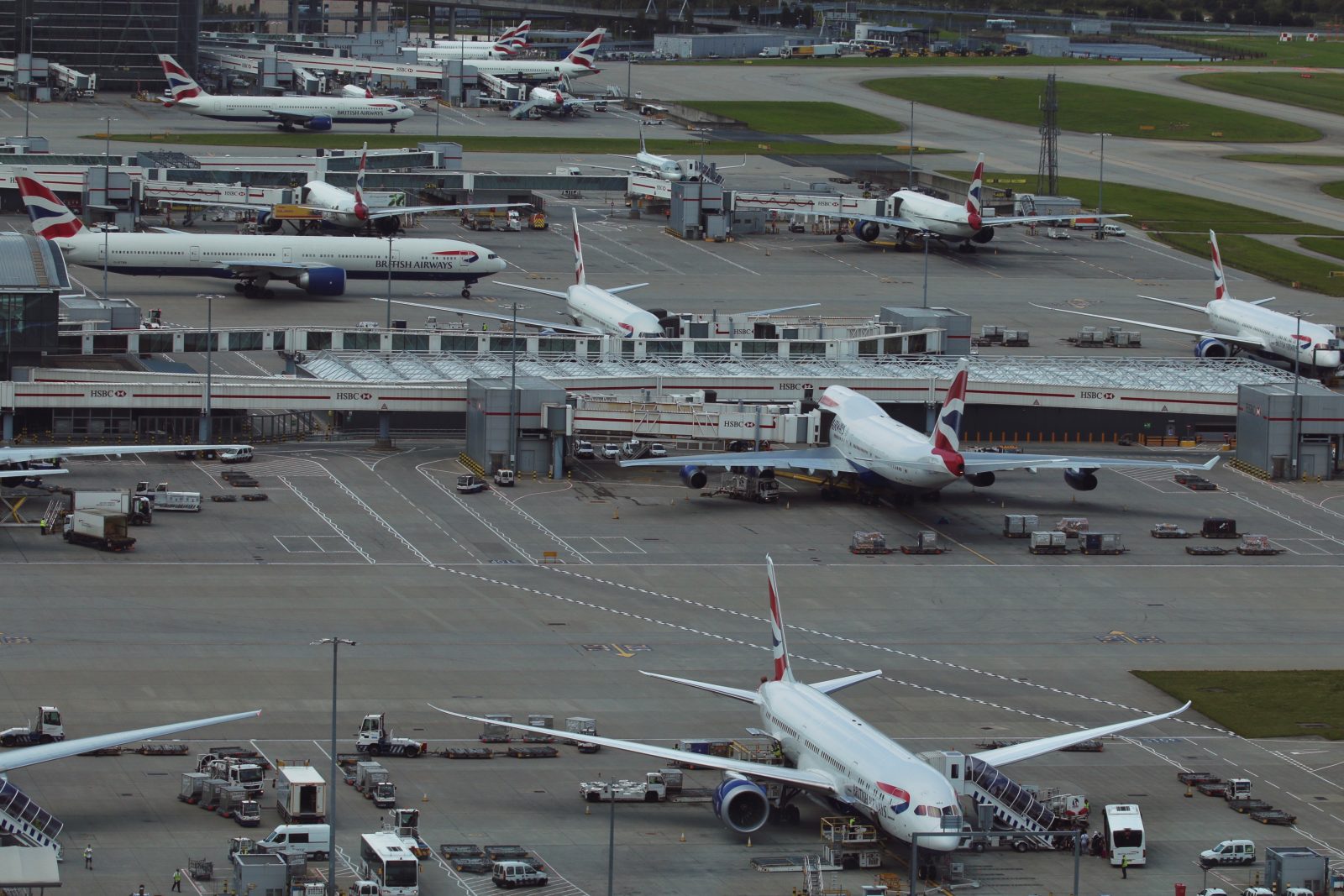
London’s Heathrow Airport Undergoes Recovery Phase For Summer Travel Demand

Heathrow Terminal 5
An exterior view of Terminal 5 at Heathrow Airport (Photo: AirlineGeeks | James Dinsdale)

The U.K. aviation industry has observed a strong recovery after scrapping travel restrictions in March. London’s Heathrow Airport — the busiest airport in the country — recorded 5.3 million passengers had traveled in May, the busiest month since March 2020, the figure has reached 79% of 2019 levels. The airport unveiled that 1.4 million passengers had traveled to North America and nearly two million to Europe last month.

According to the airport, the check-in procedure generally worked well, 90% of passengers were through security in less than 10 minutes. No flights were canceled at short notice than on any normal day, and the Border Force performed well. Heathrow is one of the airports in the country that experienced long lines in recent weeks.

Meanwhile, Heathrow said the operations were smooth during the Easter Holidays and the Queen’s Platinum Jubilee weekend, as a result of working closely with other airports in the U.K. and Europe.

Initially, after lifting the travel restrictions in the country, travelers across the country encountered travel disruptions. Heathrow said that it has rebuilt its capacity despite the resources being limited.

The airlines were also accused of overbooking their flights. The government believed this is one of the reasons of the chaos and demanded the airlines “to address those issue”.

With no end in sight to the travel chaos nationwide, John Holland-Kaye, Heathrow’s CEO urged the airlines and airports have to “plan much better” to avoid further disruptions.

“I think it will take 12 to 18 months for the aviation sector to fully recover capacity,” Holland-Kaye added.

Hundreds of British Airways ground staff at Heathrow have begun voting on strike action over the salaries — an industrial action could take place during the summer holidays.

Terminal Four Reopens

Meanwhile, Heathrow has announced that terminal four will reopen on June 14, which is one month earlier than expected, in response to the demand surge. 30 airlines, including El AI, ITA Airways and Korean Air will move to terminal four. During the closure of the terminal, Heathrow has upgraded its air conditioning, baggage screening machines and restrooms.

The airport also revealed that it will hire up to 1,000 employees to meet the travel demand after the pandemic. Also, the airport increased its customer service team for better service.

In the wake of business travelers returning to the skies, Heathrow expanded its route map to North America. British Airways launched a brand-new service to Portland, Ore. The flag carrier became the only carrier to operate the new route. The five-times-a-week service will be operated by Boeing 787-8 Dreamliner. Also, the carrier has started a new daytime service from Newark, N.J. to Heathrow and relaunched service between Pittsburgh, P.A. to Heathrow.

Iberia Recruits First 20 Pilots from New Training Program

An Iberia Express A320 (Photo: AirlineGeeks | William Derrickson)

Spanish airline Iberia announced on Monday that it will recruit the first batch of pilots since the beginning of the pandemic. In July, it will add 20 first officers who will also become the first pilots coming from the Iberia Cadetes program, which the company launched in 2019.

The increase in personnel is aimed at meeting the increase in capacity programmed for the summer season. In addition, it plans to add another twenty pilots starting in October. All of them will come from the Flight Training Europe academy in Jerez

At these facilities, the airline carries out its training program for new pilots. Iberia Cadetes selects and trains candidates with the “best aptitudes and attitudes,” even if they have little or no previous flying experience. In addition, it offers all the necessary modules and supports the financing for obtaining the airline transport pilot license (ATPL).

Financial support is one of the highlights of the program. The high cost of training is one of the biggest obstacles for applicants. For this reason, some commercial airlines develop this type of program, which usually pays for part of the training. In return, students make a gradual refund of the contribution once they enter the labor market.

“The incorporation of new pilots at Iberia is very good news, the best sign that we are on the road to recover,” said Rafael Jiménez-Hoyos, Iberia’s Production Director.

In the same vein, the company also announced that it has reopened the call for all those interested in enrolling in the program. Applicants will be able to find out about the entry requirements and submit their application through the Iberia Cadetes and Flight Training Europe portal until July 3.

“This new call is undoubtedly a recognition of the success of the Iberia Cadetes program and reinforces the relationship we have maintained with the airline since we started working together in 2017,” said Óscar Sordo, CEO of Flight Training Europe Jerez.

This story was originally written by Agustin Miguens of Aviacionline in syndication with AirlineGeeks.com. 

AirlineGeeks.com Staff

AirlineGeeks.com was founded in February 2013 as a one-person blog in Washington D.C. Since then, we’ve grown to have 25+ active team members scattered across the globe. We are all here for the same reason: we love deep-diving into the fascinating realm of the airline industry.

Pilot Shortages Continue to Cause Significant U.S. Flight Disruptions

A United Express Embraer E175 after rotation. (Photo: AirlineGeeks | Craig Fischer)

Airline passengers this summer can continue to expect record flight cancellations as the aviation industry wages its battle against one of the largest pilot shortages to date. 

Where the crisis has stemmed from

Airlines in the United States have struggled to meet demand that is considered high by pre-pandemic standards for a variety of reasons but the pilot shortage continues to prove to be the most critical piece to the crisis. Airlines need pilots to fill slots and meet extreme demand but the COVID-19 that caused unseen pilot furloughs is the same COVID-19 that exacerbated financial hardships for many Americans making it harder than ever to get into the field and obtain the ratings needed to fly commercial aircraft for a living. 

When the pandemic began, airlines scrambled to find ways to cut losses and many did so by laying off thousands of younger pilots and offering early retirement to its more senior crews. What has become clear is that airlines failed to recognize that the pipeline of pilots coming through the regional airlines would soon begin to move very slowly.

The Colgan Air crash that happened in 2009 in Buffalo prompted congress to raise the minimum flight hours to 1,500 for those interested in a position at a regional airline. This made getting into the career far more costly to meet such lofty hours requirements that many aspiring pilots completely gave up on the dream. 

Now with airlines scrambling to find pilots, some regional airlines are looking to the government to lower the required hours needed. Republic Airways, regional provider for Delta, American and United, recently petitioned leaders to cut training requirements in half to 750 hours and have pilots complete its version of the restricted ATP license.

The airline said in a letter to the Department of Transportation: ​​“The requested exemption would allow selected civilian pilots who complete the rigorous Republic R-ATP program to apply for an airline transport pilot certificate concurrently with a multiengine airplane type rating with a minimum of 750 hours of total flight time as a pilot.” Republic Airways knows that a reduced minimum would lead to a jump in job applications and major airlines would benefit shortly after as pilots flow through. 

The way out for U.S. airlines

With the summer already here, it is likely that many carriers will continue to cancel flights in droves as pilots remain scarce. The spring season has already been a rough one for airlines like Delta Air Lines and Alaska Airlines who have both seen their fair share of cancellations. Others have faced equipment shortages in addition to a lack of pilots. Cutting schedules is likely the best way to avoid significant flight cancellations and maintain a strong passenger experience as the summer season goes on.

Ezra Gollan

Ezra Gollan is a student, photographer and aviation enthusiast based in New York, New York. He has spent over half a decade around New York City’s airports as a photographer.

ITA Airways Privatization Hits Road Bumps

ITA Airways aircraft at Rome Fiumicino Airport. (Photo: ITA Airways)

Potential buyers for Italian flag carrier ITA Airways want more information about the carrier’s business plan and have sent the company more than 200 questions about the airline’s future as it continues to look toward a future away from government ownership. However, the airline’s president, Alfredo Altavilla, remains confident that the sale will take place by the end of June.

According to reports in various Italian newspapers, there appears to have been a slowdown in the process of privatizing the Italian flag carrier, ITA Airways. The two main suitors — MSC-Lufthansa and the U.S. fund Certares — seem to have hesitated in the last week.

Apparently, MSC-Lufthansa’s offer seems the “safer” one, despite having been reduced over time from 1.2 billion euros ($1.26 billion) in January 2022 to the current 1 billion euros with participation set at 60% for MSC, 20% for Lufthansa and the remaining 20% to the Italian Ministry of Economy and Finance, which would become a minority shareholder, as previously desired.

In contrast, the other offer from the U.S. fund Certares seems to be less “concrete” and more just an attempt by KLM-Air France to thwart Lufthansa in its purchase. That purchase proposal is not defined either on price or shareholder stakes — the proposal would be in the range of 600 and 900 million euros, and no shareholder percentages have been defined in any way.

Currently, the airline is 100% owned by the Italian Ministry of Economy and Finance and according to Altavilla, these kinds of offers are part of the sale process and it is quite normal what is happening. According to him, the sale will still be completed before the end of June.

Despite this calmness on ITA Airways’ side, the potential buyers requested more information about its Industrial Development Plan since the war in Ukraine is causing fuel prices to soar.

ITA Airways’ data room had already been opened on May 3 to potential buyers who had viewed confidential and sensitive documents about the carrier for sale, but they complained that it was opened to their advisors for just 20 days — from May 3 to 23 — a too short period to take decisions. Hence the reason for the more than 200 additional questions.

It is important to consider, however, that the longer the sale is delayed, the more the value of the airline will drop, and that is why the situation for the Italian government is not the best. The decision on the future of ITA Airways will be up to the current Italian Prime Minister, Mario Draghi, based on the opinions of consultants specially chosen to evaluate the privatization bids. In January 2022, the airline had hired four advisors to whom it would pay nearly 9 million euros, contract later reduced in March.

ITA Airways is in a great hurry to be sold, as the summer is already upon us and having uncertainty about the near future is never a good thing.

Vincenzo Claudio Piscopo

Vincenzo graduated in 2019 in Mechanical Engineering with an aeronautical curriculum, focusing his thesis on Human Factors in aircraft maintenance. In 2022 he pursued his master's degree in Aerospace Engineering at the University of Palermo, Italy. He combines his journalistic activities with his work as a Reliability Engineer at Zetalab.

Community to See First Commercial Flights in Over 10 Years

An Advanced Air King Air 350 at Phoenix Sky Harbor (Photo: AirlineGeeks | Joey Gerardi)

Gallup, a city located along Interstate I-40 in western New Mexico with a population of just under 21,000 residents will finally be getting commercial air service after 12-years without one. The last airline to serve the community was Great Lakes Airlines, they offered flights to both Denver and Phoenix with an intermediate stop in Farmington, N.M. but that service stopped in 2008.

Hawthorne-Calif. based Advanced Air, will be starting service to this city on August 1, 2022, using one of their 8-seat King Air 350’s aircraft. The route will be flown once daily from their Phoenix Sky Harbor hub and will operate non-sterile out of the Swift FBO at the airport, in Gallup they will be using the main terminal at the Gallup Municipal Airport that carries the ICAO code of KGUP.

Advanced Air check-in inside of the Swift Aviation hangar at Phoenix Sky Harbor (Photo: AirlineGeeks | Joey Gerardi)

It is very rare to see airlines expanding into new airports as pilot and scheduling issues plague the airline industry at this current point in time. And even rarer still, to see a community as small as Gallup get back service after this many years, the community itself only has around 25,000 residents. Although the city is small they do have multiple Native American Reservations surrounding Gallup that add quite a bit to the population.

An employee at the airport did mention that they were awarded a grant to entice airline service, but it is unknown which grant they were awarded specifically. AirlineGeeks reached out to the airport and Gallup City manager’s office to clarify, but they didn’t respond in time for the publishing of this article.

The closest major airport with airline service is Albuquerque, which is a two-hour drive away from Gallup. Other airports nearby with service include Cortez, Colo., and Show Low, Ariz. both of which are just over two hours and are both parts of the Essential Air Service program, and also Flagstaff, Ariz. which is almost a three-hour drive and has two airlines. This flight will cut a 4.5-hour drive to Phoenix down to a scheduled flight time of just over an hour to and from Gallup.

An Advanced Air Super King Air 350 in Albuquerque (Photo: AirlineGeeks | Joey Gerardi)

Although this will be the carrier’s first time in Gallup, it won’t be their first time flying the state as they do serve three other airports in the state of New Mexico. In the state, they already fly to Albuquerque, Silver City, an Essential Air Service city, and Taos, which they operate on behalf of Taos Air using 30-seat Dornier 328Jets with flights to Texas and California.

The one daily flight to Gallup will start and end in Phoenix will the plane leaving in the late morning from Phoenix, with a departure time from Gallup at or just after 12noon on the weekdays. During the weekends the time does get pushed back two hours with the departure time from Phoenix being 11:45 a.m. and the departure out of Gallup being at 2:20 p.m.

This will give the airline three nonstop destinations out of their Phoenix hub and a one-stop flight. They will offer nonstop flights out of Phoenix to Silver City, N.M; Gallup, N.M.;  and Hawthorne, Calif., they will also offer flights to Albuquerque from Phoenix but they will have an intermediate stop in Silver City first in both directions. Gallup will be once daily, Silver City is twice daily five times a week (for a total of 10-weekly flights), and Hathorne will be twice a week.

Advanced Air’s route map out of Phoenix (GreatCircleMapper)

Flights to Gallup are now on sale on the carrier’s website, and we are glad to see another airport rejoining the passenger aviation network in the United States

Joey Gerardi

Joey has always been interested in planes for as long as he can remember. He grew up in Central New York during the early 2000s when US Airways Express turboprops ruled the skies. Being from a non-aviation family made it harder for him to be around planes and would only spend about three hours a month at the airport. He was so excited when he could drive by himself, the first thing he did with his driver's license was get ice cream and go plane spotting for the entire day. He graduated from Western Michigan University in 2022 with a B.S. in Aviation Management & Operations and a Minor in Business, and currently works for a major airline in his hometown.

Qantas To Increase Regional Service

QantasLink Bombardier Dash 8. Source: Qantas

Regional airline QantasLink this week announced it will be expanding its services to the regional Australian town of Broken Hill. The move, which will begin on June 21, 2022, will see Qantas’ regional arm add a third-weekly Sydney-Broken Hill service to its current twice-weekly.

Having started the service in April this year, QantasLink aims to eventually increase the service to five-weekly return flights by November 1, 2022. Utilizing its fleet of Dash 8 Q300s, the airline has allowances for up to 50 passengers per flight, following what it calls “strong support from locals and visitors.” Flights to the outback town of 18,000 have already been booked out, with QantasLink CEO John Gissing stating, “Our bookings looking ahead are great which gives us the confidence to add in another service to offer more convenience for both locals and visitors.”

QantasLink will also look to add additional flights for local events and the September school holiday period, with an eye to cement the routes with the town. “We are proud to serve Broken Hill and as a regional airline born in the outback, we understand the importance of connecting remote communities with major centers. We’d like to thank our customers in Broken Hill for giving us a go,” Gissing said.

Australia’s Regional Routes the New Battle Ground

The route, already serviced by its competitor Rex, is the latest battleground in what appears to be a regional-route rivalry. Rex, a long-time provider of Australian regional services, offers its own Sydney-Broken Hill service with five weekly return flights – a number which QantasLink aims to match.

Having already closed several other regional routes – citing, in part, what it calls Qantas’ “unconscionable” behavior – Rex has been unable to maintain some long-held routes after Qantas recently added its own service to nine of Rex’s. The regional expansion by Qantas, increasing competition with Rex, comes off the back of Rex’s own domestic expansion and new partnership with US airline Delta.

Purchase of Alliance Under Scrutiny

In addition to Rex’s claims of Qantas’ anti-competitive actions, Australia’s competition and consumer watchdog is considering submissions regarding Qantas’ purchase of Alliance Airlines. Despite already owning 20%, Qantas plans to buy the remaining shares of Alliance Airlines, leading some to question the outcome of the deal and its impact on airline competition in Australia.

Alliance, which primarily operates charter flights, also leases aircraft, parts, and maintenance services to other Australian operators. The purchase, if approved, could be a strong step in the direction of the Qantas-dominated domestic airline industry.

The watchdog, the Australian Competition and Consumer Commission, seeks to understand whether sufficient competition in Australia can be maintained. It will also investigate the impacts on price and quality of services, and the “impact if Alliance were to cease providing aircraft leasing or associated aviation services to other airlines after the proposed acquisition.”

Submissions to the ACCC closed on June 3, with the Commission to announce its findings by the provisional date of August 4, 2022.

Mike Mangano

Mike’s love affair with flight and mechanical objects in the sky began at an early age, fascinated by space documentaries and the vintage Flight Simulator ’95. He currently works as an instructor for UAVs and is training to receive his Private Pilot Licence with the goal of working in manned flight instruction. An avid reader of all things aviation and manned space flight, Mike stays close to developments in aerospace while reminiscing and sharing the rich history of flight with others. He loves writing, engineering and science.
Sign-up for newsletters & special offers!

Get the latest stories & special offers delivered directly to your inbox

SUBSCRIBE